Home Blog Page 1243

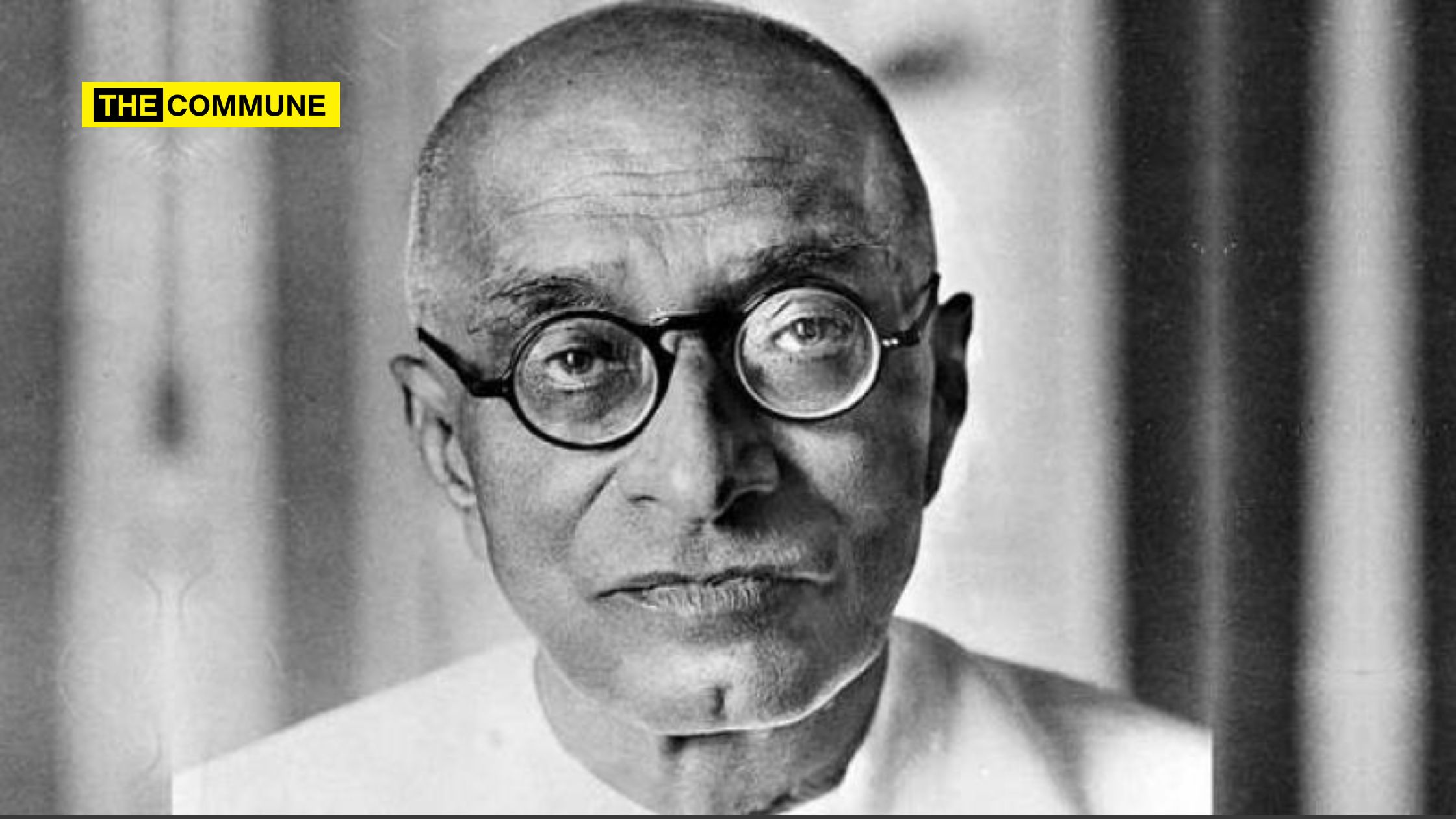
Rajaji As I See

My life’s proud moments can be related to two incidents without knowing what it meant then, later as narrated by my family. One, my father took me to a house on Thirumalai Pillai road, where men had gathered and were talking on hushed hushed tones. The main reason for taking a small child to such a place comes with a hidden reason of giving my mother some respite from me and my tantrums. My father carried me to the room where the person he was supposed to meet, sat. One look at my father and me, asked immediately calling him by his name, so we have a young visitor today? Answer from my father was, couldn’t be managed at home, hence this outing. He asked me to be brought near him, took me and perched on his laps. The moment I went closer to him and changed hands, one look at him I started howling to my heart’s content. Readers, this was none other than our great leader Sri Kamaraj ji who sported a big mush and eyes so big. I am sure that those of whom, saw him for the first time would definitely be daunted and intimidated by his physical aura.

Second incident, my father’s most visited frequent place on Bazulla Road, he took me there with a strict warning I should be quiet, no tantrums, for which I shall be rewarded with goodies on our way back home. The person I saw as a very young child, was seated on a wooden easy chair, very frail looking, sporting dark glasses, next to him was the wooden walking cane. Thankfully, there were no tantrums at all as I wasn’t taken near him. I remember having met RAJA-JI at his home till date vividly. Writing about him gives me immense pleasure and honour. I want to reveal the many facets of him both in the personal and political arena. Many great scholars have written about him and I would like to share with my readers RAJA-JI as I see and admire him. The family was called “Chakravarthy” which means king of kings for their services to humanity, even when they were treated as outcasts by their own brahmin community, be it for conducting the last rites of a harijan by one of his ancestors or for serving food to a harijan by Rajaji in his younger days for which he was also punished.

As a student Rajaji was way ahead amongst his peers, that he was looked upon as a scholar, eminent speaker, articulator and timing of his comments were legendary. So much so that when he was a student at Law College, an interesting incident happened. Swami Vivekananda chose to visit Madras then, he was homed in the same hostel where Rajaji was staying. Swami Vivekananda wanted to have a look around and came into the room where Rajaji stayed. Immediately Swami asked Rajaji who had hung a picture of Lord Krishna, “Why is Krishna always blue in hue? Pat reply from Rajaji was “sea is limitless, so is the sky, so both are blue, God is also boundless so his hue is also in blue”. That day the thought that came into Swami Vivekananda’s mind was that this young boy would rise to eminence and would become very famous. A soothsay which came true.

As we travel back to his start of a bright career as an independent lawyer, at Salem, he started handling criminal, most difficult cases of those times. Owing to his immense knowledge of law combined with natural intelligence, fearlessness, brought him seemingly great fame, success and wealth.  One such incident reported was, when he represented as a counsel for Varadarajulu Naidu, who was arrested for speaking against the government, Rajaji when every day of the hearing stood up to speak for his client, he was asked by the judge then humbly, to be seated. Next day Rajaji politely stood up at the outset and said. “I have and hold you in great respect Honourable Judge sir, but if like a teacher in a classroom, Your Honour asks me to sit down, I shall not be able to discharge my duty and it will not add to the dignity of this court”. Immediately realising his folly, the Honourable Judge apologised to Rajaji, which a rare phenomenon then, won the case for his client with his undeniable arguments’.

As a young and prominent person in Salem, his intense thoughts followed by his actions were towards the betterment of the Harijans and downtrodden people is highly commendable, when he saw people treating them with hatred. I see him as a crusader against all evils, when he started Adult Education, Night Schools for factory workers, Schools for Harijans were all opened. During this time, he set up a committee to prepare a glossary in Tamil for science subjects so that they could be taught in the same language. He also ensured that a plan was made for water to reach the Harijans. Education in the only way, which can stop people from being stuck at what they are and that’s the only way to redeem themselves from their society and look forward to a changed and better lives, this was his foresight.

Rajaji’s travel on eradication of untouchability, remained after he became a politician, that he admitted Harijans into hostel much to chagrin of others. The entry for Harijans in temples was fought by Rajaji with such severity that once when a Harijan ash smeared on his arms and forehead, singing hymns on God, was shooed away from entering a temple and was prosecuted by some fanatics, on reading about this from a daily newspaper, Rajaji took the case on himself and fought for his cause. He tried very hard to bring in a bill to remove this evil in the society rampantly present then, though he brought it to the floor of the assembly he didn’t succeed, but he was the first person to work for a legislation for removal of untouchability. He admitted lots of Harijans into his Gandhi Ashram and his cook was a washerman.

While talking about friends and friendship for life his camaraderie with fellow human beings remains unbeatable to this day. Gandhiji called Rajaji always as his conscience keeper, this was owing to steadfast, firm belief in what ideology he believed in and practised. A Khadi lover all his life, led a simple life this may be said as a common factor between Gandhi ji and Rajaji. Rajaji was the Governor of Bengal way back in 1947-48 for about ten months only, Gandhiji was camped at Beliaghat that he would go over to his camp breaking all the protocols that the position demanded. He had unflinching faith in Gandhiji’s philosophy and principles.

Another incident that Rajaji was said to have done surpassing all the protocols was, he wasn’t the likened person by the people of Bengal for the position of Governor of Bengal though he was appointed just to ease the Bengal partition and its aftermaths. This was so when he was appointed as the Governor of Bengal, that was vociferously opposed by Sarat Chandra Bose whose words were “outrage on Bengal’s sentiments”. This was because of Rajaji’s choice of Gandhiji’s militant non-violent co-operation over Chitaranjan Das’s promotion of council entry. His barbs against the Bengal party at the banks of Narmada river later years, where he openly said its better to travel on a boat whose captain is Mahatma Gandhi and the other boat however seemingly it may look attractive with new paint, flag will drown the people in the middle of the river as it has too many holes”. He made amends with the irked Sarat Chandra Bose by visiting him in person and gotten himself endeared by the Bengalis that, they asked him to preside over their cabinet meetings.

His long-term friendship turned familial and political connections with Gandhiji is no surprise at all that, when Gandhi ji died he was the Governor of Bengal, he attended the last rites of Gandhiji and brought back his ash urn to immerse it in Hooghly river. The day he travelled by boat almost to the middle of the river, as he got up to throw the ashes into the river, his body swayed forward, that immediately two people standing close to him held him back. Later when questioned what had happened to him, he said “the ashes were pulling him forward and he couldn’t stop himself from leaning forwards”.

Rajaji’s verbal duels with Nehru which still talks about his political prowess, peoples’ welfare. He was against the ‘License-permit Raj’, the Nehruvian idea in 1956, thought to be a complete leftist idea. Rajaji was averse to this idea for the simple reason it would take away the individual right to decide what, how, when to produce and pricing of the same. All the industries would be state controlled and lose the individual free thinking, implementing rights and definitely would take away the individual’s movement and freedom. Another issue the leftist idea of Nehru to make all the lands commonly owned was also met out with same negative aplomb by Rajaji that he went on to say, that countries like Russia and China cultivated commonly but did not take away the ownership of the farmers. At times Nehru’s blind thoughts and actions, not considering the impact it would have on peoples’ lives bothered Rajaji so much, that, at one stage he seemed to be opposing for what Nehru stood for. It was so obvious in the political arena.

He opposed to Nehruvian leftist inclination throughout that he was appointed as a leader for the newly found party Swarajya Party in the year 1959, only as a counter to Nehru. He tried forming small opposition groups but nothing worked out. As a mark of respect and friendship on hearing the news of Nehru’s death these were his words, it read “Eleven years younger than me, 11 times more important for the Nation and eleven hundred times more beloved to the Nation, Sri Nehru has suddenly departed from our midst and I remain alive to hear the sad news – and bear the shock…. I am unable to gather my wits. I have been fighting Sri Nehru all these 10 years for what I consider faults in public policies. But I knew all along that he alone could get them corrected…. A beloved friend is gone, the most civilised person among us all. God save our people”.

Nehru was always quick to react and nipping in the bud when oppositions faced him. Rajaji’s presence of mind is immaculate that when there was a proposal by Lord Mountbatten to make him the High Commissioner to Britain to help Nehru, Rajaji immediately retorted back, “You and Edwina are so intensely interested in Jawaharlal Nehru that, may I say, you have no eyes to see or mind to think about others”.

In the years between 1935 and 1937 Rajaji then the proverbial predictor ahead of his times, as the Prime Minister of Madras, wanted Hindi to be included as part of the school curriculum that, the then justice party and DK ideology people strongly protested and conducted severe agitations that he had to withdraw later. Likewise, in 1952-1954, when he brought in “kula kavli thittam” that’s the students get to spend only three hours a day instead of six hours of six-day school, go back home after three hours so sons help their fathers’ in learning their family arts, crafts, profession and the girls get to learn household chores. This was opposed strongly because of the time they get to spend in school for socialisation gets reduced as propagated by Gandhiji. This was included in the 2020 New Education Policy is worth mentioning.

He was a loner who fought all his battles all alone, had he got more support from people each and every decision of his would have been long implemented. He even included people, politicians who came from different strata and different ideology like in the year 1972, he touched the forehead of Karunanidhi and blessed him when he had come to meet him after he won the elections and became the Chief Minister.

Having born in an orthodox brahmin family, he never thought of himself to be great by birth, status, as he proved time and again that his thoughts, intellect, actions, were greater than the man himself. He led such a simple life, that when his postings went up and down position wise he hardly gave them another thought but did his best to the position he was asked to take over. His post-independence position and as last Governor General of India lasted from 1948 to 1950 exactly for 20 months till the India became a republic on January 26th 1950. 1952-54 saw him as the Chief Minister of Madras.

His wife died very young and he became a widower at an early age of 35 with five children to be looked after, when relatives started to pressurise him to get married again, pat came his reply, “I will get married then, I will have another kid and I will have to look after all the six of them”. His sense of dry humour had never lost its charm or got misplaced with people who understood him correctly for what he was.

Having died on 25th December 1972, at the age of 94, three most important traits I admire in Rajaji are, his fearlessness be it expressing his thoughts and by actions. He did them with undaunting courage. Second trait would be his extraordinary genius. The third important trait would be his service-mindedness. Though Brahmin born he had to take in his stride the wrath, snide remarks from his own clan for all that he was doing for the betterment of the lives of the Harijans and Dalit. Some writers say that he was way too fond of Christ and Christians equally to Hindus that he died on 25th December, why it didn’t happen on any other day?

Click here to subscribe to The Commune on Telegram and get the best stories of the day delivered to you personally.
The First Nosejob In Modern Human History

During the third Anglo-Mysore war in 1792 between the East India Company and Tipu Sultan of Mysore, Cowasjee, a Parsi bullock-cart driver and four other British soldiers were taken prisoner by Sultan at Seringapatam, Karnataka.

In a truly barbaric Islamic way, their noses were cut off before releasing along with their amputated noses as a mark of humiliation. For nearly a year, these soldiers went without a nose until Sir Charles Warre Malet, a British minister in the Peshwa court at Poona, came across an oilcloth merchant with a feeble scar on his nose.

The merchant explained that his nose had been amputated as a punishment for adultery and was later rebuilt by a Poona potter using his forehead skin. The oilcloth merchant could never have predicted that his disclosure would spark a chain of events that would establish the “Hindu method” as the gold standard of nose reconstruction worldwide.

Sir Charles summoned the potter recommended by the oil-cloth merchant to reconstruct the noses of Cowasjee and the other four soldiers. This nasikasadhana art had been practised in complete secrecy and passed down from generation to generation within a single family. Cowasjee’s forehead flap nasal reconstruction, on the other hand, was witnessed by Mr. Tho Cruso and Mr. James Findlay, two British physicians from the Bombay Presidency. After the operation, the patient was required to lie on his back for 5-6 days. On the 10th day, bits of soft cloth were put into the nostrils to keep them sufficiently open. The procedure was always successful, and the new nose almost resembled the natural one. After a while, the scar on the forehead was no longer visible.

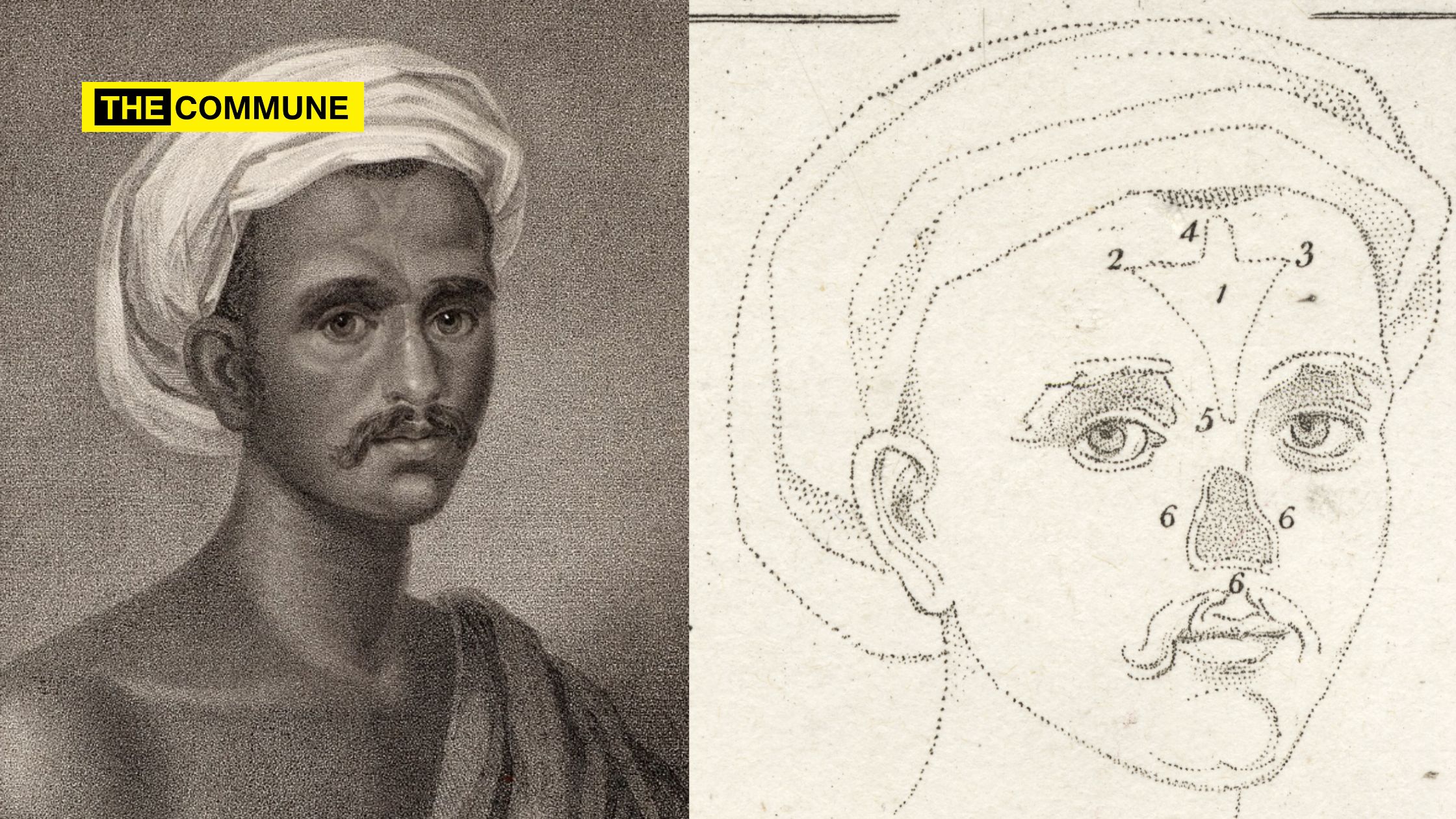
Cowasjee’s portrait depicting the successful surgery was painted ten months later, in January 1794, by the British painter James Wales. In March 1794, the copper portrait appeared in Bombay. The news was published in the Madras Gazette on 4 August 1794, and in October 1794, in a letter to the editor of The Gentleman’s Magazine, Sylvanus Urban described “a very curious chirurgical procedure” of “affixing a new nose on a man’s face” that was unknown to civilised Europeans what had been practised for generations in uneducated India.

In January 1795, the surgical procedure was published as “A Singular Operation,” and Cowasjee’s portrait appeared alongside the article. In April 1795, The Courier published an article titled “Account of the method of supplying artificial noses as practised by the natives of the Malabar coast”, claiming supremacy of the Indian method. After a detailed discussion with Lieutenant Colonel Ward (Cowasjee’s commanding officer), J.C. Carpue, a British surgeon, successfully used this method on two patients in 1814 and published his paper in 1816. The procedure became widely popular in Europe as the “Indian Method,” but not the Hindu Method. Despite many modifications since then, the procedure has stood the test of time and is still the best method of nose reconstruction today.

The publication of the nasal reconstruction in The Gentleman’s Magazine and later by Carpue laid the foundations for modern plastic surgery. The “Indian Method” became popular all over the world, kindled the interest of the Western world, and brought recognition to India as the birthplace of plastic surgery.
The first principles of plastic surgery were articulated by Sushruta in his treatise Sushruta Samhita in 600 BCE and translated into Arabic by Ibn Abi Usaibia in the 11th century, travelling far into Arabia, Persia, and Egypt; however, the Western world became aware of it much later. Susruta described over 300 surgical procedures and about 120 surgical instruments (all his own inventions). He also talks about 385 plant-generated, 57 animal-generated and 64 mineral-generated medicine.

Medicines were produced in the form of Powders, distillates, decoctions, mixtures, gels. He talks of 24 kinds of swastiks, 2 kinds of sandas (pliers), 28 types of needles and 20 kinds of catheters. Sushruta gave a description of 14 kinds of bandages besides the six bone dislocations and 12 kinds of fractures of bones. His book also talks about 28 diseases related to the ear and 26 connected to the eyes.

While Cowasjee was immortalised in British publications, paintings, and engravings. the surgeon whose skills gave Cowasjee a nearly normal nose went unnoticed. Through this, the British attempted to prove to the world that they took good care of their soldiers. By concealing the name of the surgeon, they made sure that India did not get its due recognition.

The case is significant because it is one of the few in medical history where the patient is more popular than the surgeon. However, the event still managed to enable the rightful recognition of India as the origin of plastic surgery and the restoration of its honour. Unlike today’s plastic surgery, it was never about superficial cosmetic surgery in ancient India. It was always about treating serious deformities.

Even today, Indian vaccines, like Covishield, continue to save crores of people around the world.
Attached image is of Cowasjee after surgery by James Wells.

Sources

Carpue J C. “An account of two successful operations for restoring a lost nose from the integuments of the forehead in the cases of two officers of His Majesty’s Army. London: Longman, 1816.

(This article was first published here and has been republished with permission.)

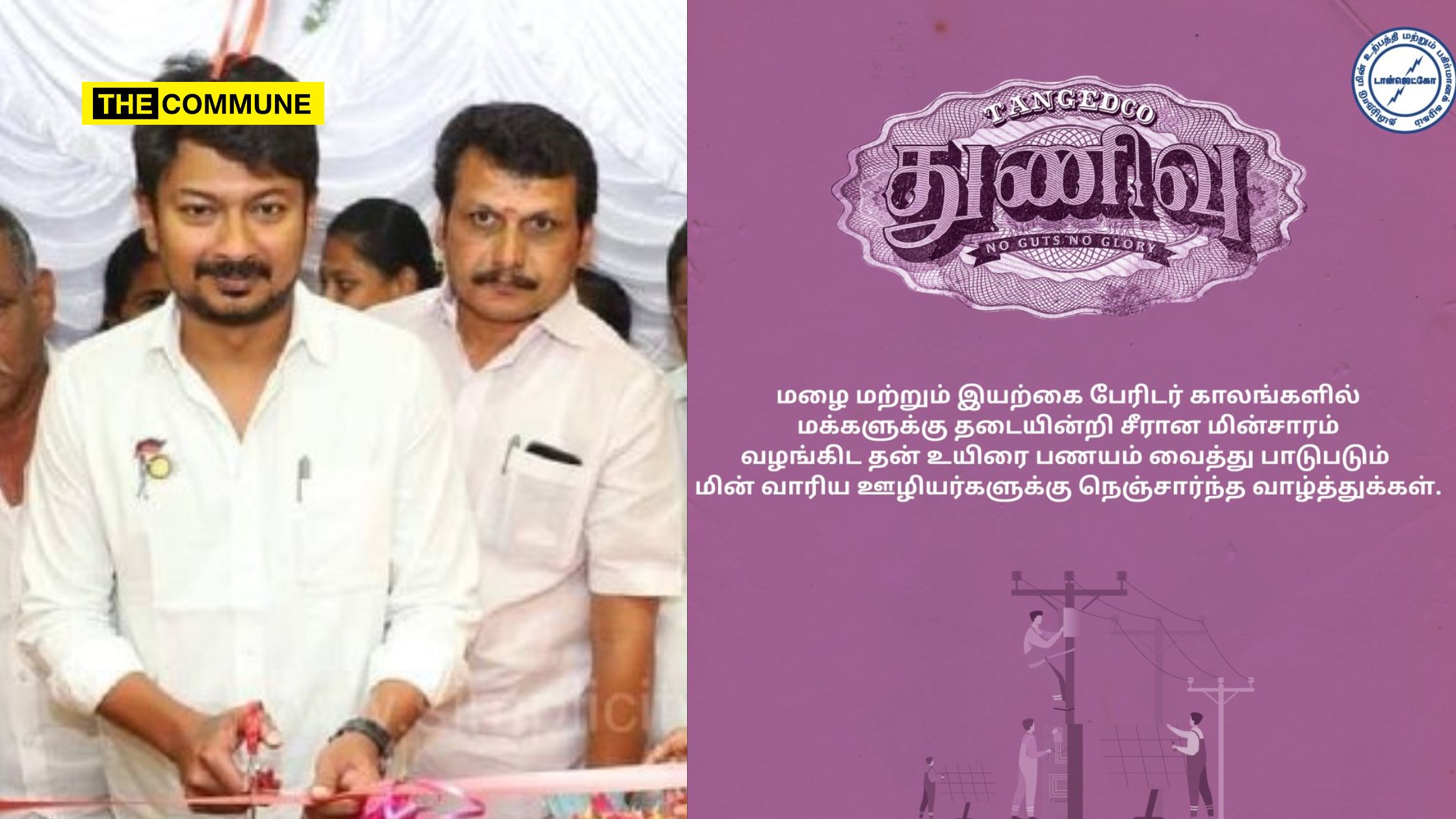
Dravidian Model: TANGEDCO Wishes Employees Using Title Of Film To Be Released Under Udhayanidhi’s Banner

In what can be seen as a government agency promoting a movie, the Tamil Nadu Generation And Distribution Corporation (TANGEDCO) Limited has put a post wishing its employees using the title of film being released by Red Giant Movies, a film production and distribution company owned by DMK Minister Udhayanidhi Stalin, the son of Tamil Nadu Chief Minister MK Stalin.

In its wish for Christmas, TANGEDCO designed a creative using the title of Ajith-starrer Thunivu, which is slated for release for Pongal 2023. The film directed by H. Vinoth is being distributed across Tamil Nadu by Udhayanidhi Stalin’s Red Giant Movies.

This controversial post has led many netizens to ask if whether the TANGEDCO should involve itself in movie promotion business.

There are also many replies to the tweet where Ajith fans can be seen going gaga while others have asked if TANGEDCO would do the same for Vijay’s starrer ‘Varisu’.

This controversial post comes amidst allegations that Red Giant Movies has completely taken over Tamil cinema and has emerged as a monopoly in the film production and distribution business. Since the DMK took power in May 2021, Udhayanidhi Stalin’s Red Giant Films has distributed all major Tamil films.

Click here to subscribe to The Commune on Telegram and get the best stories of the day delivered to you personally.
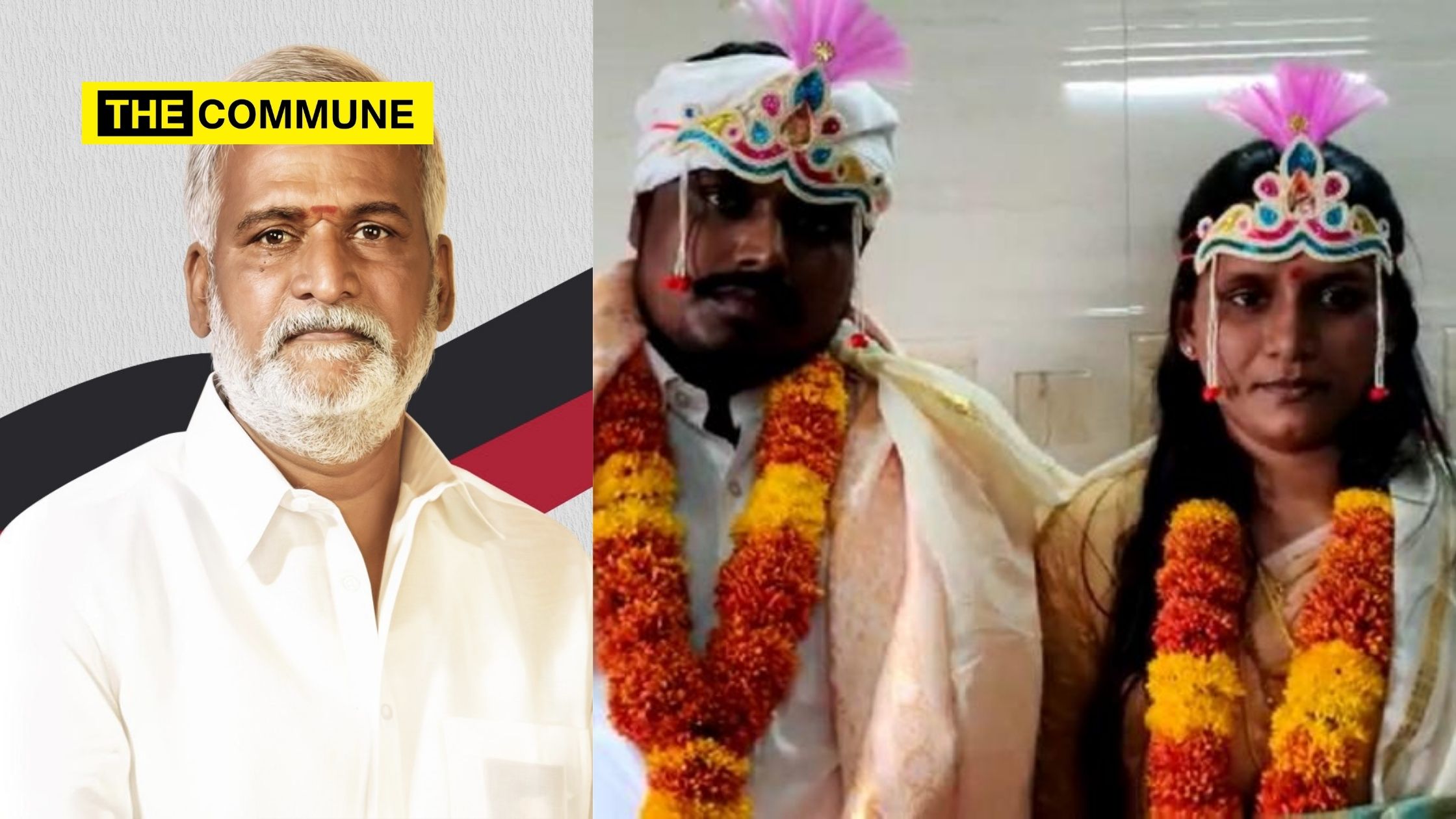
DMK Min Sekarbabu’s Pregnant Daughter Claims Threat To Life From Father Because Of Inter-Caste Marriage

Jayakalyani, the daughter of Tamil Nadu Hindu Religious & Charitable Endowments (HR&CE) Minister PK Sekarbabu had taken refuge in Karnataka with her husband following alleged threats to their life from her father. She had been in love with Satish Kumar, a family friend, for seven years before leaving home to marry him last March.

Jayakalyani fled to Bengaluru as she was afraid her father, Shekarbabu, and maternal uncle, Yuvraj, would murder her and her husband because Satishkumar belonged to a different community (Vanniyar).

In this scenario, Jayakalyani claimed in a video that Sekarbabu and the Tamil Nadu police are conspiring to file numerous false cases against Satish Kumar and extradite him to Tamil Nadu. Both have failed to appear in court for any related cases and are currently on the run.

Jayakalyani claimed she was eight months pregnant in the video. She added that if Tamil Nadu Chief Minister Stalin assures their safety, they are willing to return to Tamil Nadu and that they have all the documents to prove their innocence.

She went on to say in the video, “We are hiding in Bengaluru because my father is threatening our lives. If anything happens to me or my child, DMK Minister Sekarbabu, Police Inspector Chellappa, and my maternal uncle Yuvraj should be made responsible.”

Jayakalyani claimed that they did not even go to court because it was too dangerous to leave their hiding place and that all of the cases filed against her husband were bogus. Jayakalyani is thought to have released the video to inform her family that she is pregnant and hopes that her father will accept her.

Many on social media are questioning the double standards of the DMK saying that while the position themselves to be anti-caste, their own Minister has been accused of going on a witchhunt against his daughter for marrying out of caste.

(with inputs from Samayam Tamil)

Click here to subscribe to The Commune on Telegram and get the best stories of the day delivered to you personally.
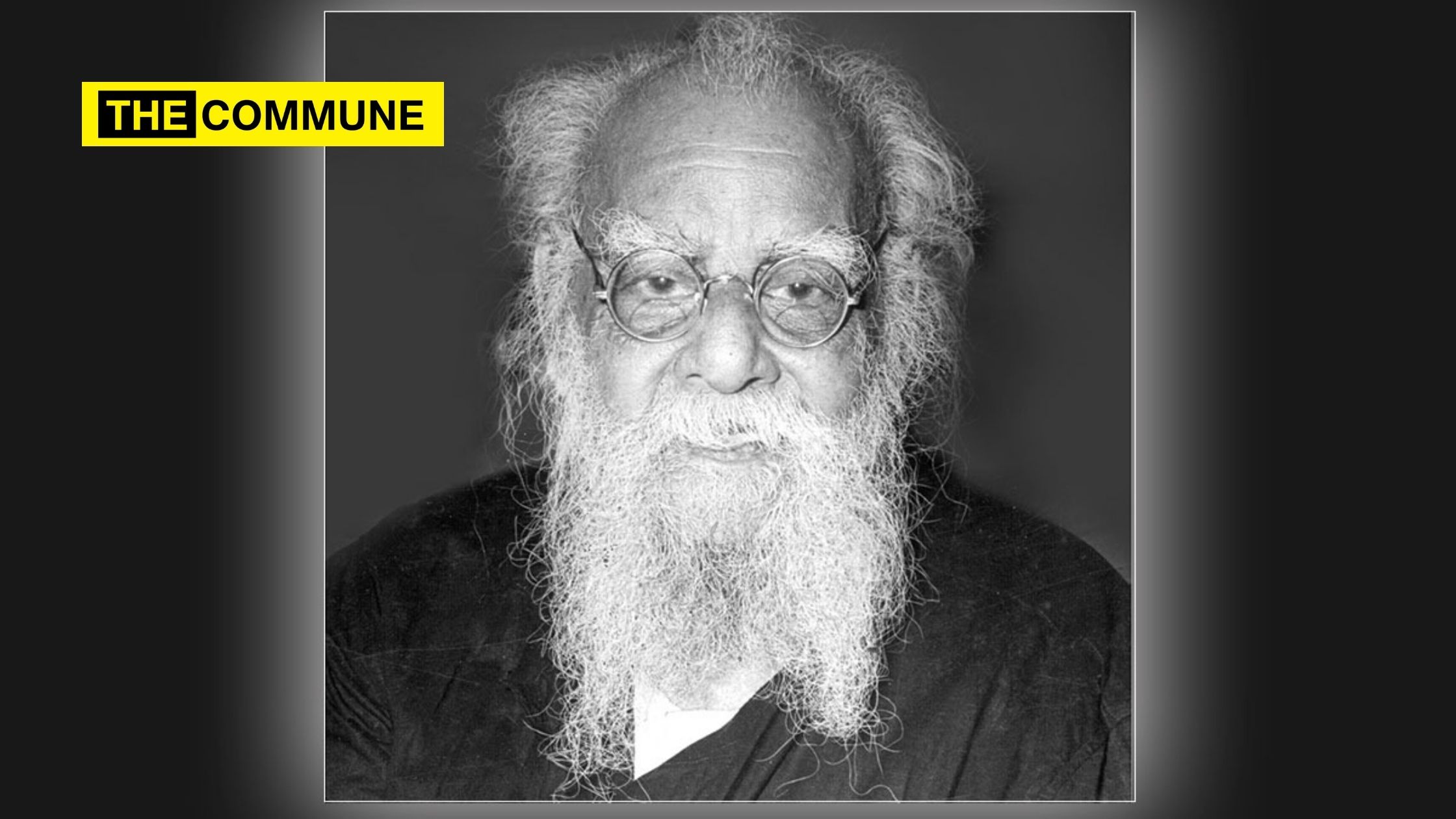
MoIB Hails Pro-British EVR Who Demanded Separate Dravidastan As ‘Freedom Fighter’, Deletes Tweet Later

In a blatant distortion of history, the Ministry of Information & Broadcasting put a tweet hailing E.V. Ramasamy Naicker (hailed as ‘Periyar’ by his admirers), as a freedom fighter.

“Remembering the great freedom fighter & social activist on his death anniversary.”, the tweet read.

It also went on to state that EVR mobilized people from all walks of life against the British, which wasn’t the case as per history.

Following a social media uproar, the tweet was taken down by the Ministry’s handle.

E.V. Ramasamy Naicker is a rabid anti-Hindu bigot known for his pro-British stance when the Indian Freedom Struggle was its peak. He was someone who opposed the very idea of India marking Indian independence day as a ‘black day’. He pleaded with the British to not leave India and pledged allegiance to them asking the Madras Presidency to be ruled from London. He had called for a Dravidistan along the lines of Pakistan and also tried to collude with Muhammad Ali Jinnah for the same.

This isn’t the first instance when EVR has been glorified as a ‘freedom fighter’ by a Central Government institution.

Earlier, the name of EVR was found in the list of freedom fighters prepared by Doordarshan Kendra and All India Radio Chennai for production of programmes for ‘Azadi Ka Amrimahotsav’ marking the the 75th year of independence.

Click here to subscribe to The Commune on Telegram and get the best stories of the day delivered to you personally.
MGR’s Commission Which Recommended UCC, Restricting Christian NGOs & Anti-Conversion Bill

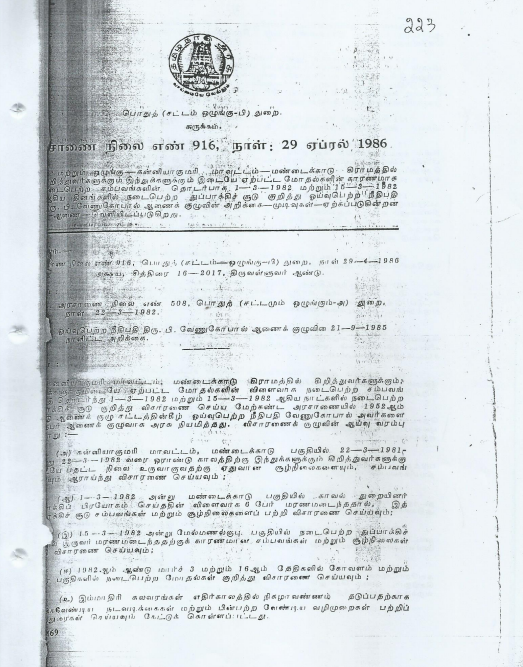
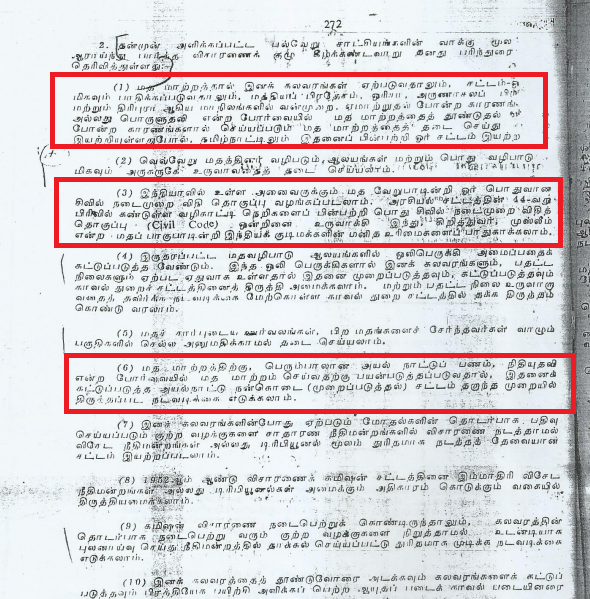
Former Tamil Nadu Chief Minister MGRamachadran has some unspoken chapters that are not widely known in Tamil Nadu. On 29 April 1986, he issued a G.O. (Government Order) supporting an anti-conversion bill and an Act to monitor foreign funds and institutions for conversion, as well as the need for a common civil code.

In 1982, Mandaikkadu Bhagawathi Amman Temple’s Maasi (Tamil month) Kodai Festival was being celebrated as usual. There were allegations on the first day of the festival that Christians were mocking Hindu women and preventing Hindus from immersing their idols in the sea. It is said that Christians prevented Hindus from immersing Hindu idols in Christian areas because they are the majority in the area and the land belongs to Jesus. There was already a controversy between Hindus and Muslims regarding the construction of loudspeakers for worship. As a result, on 1 March 1982, a crowd gathered in front of the Mandaikkadu Bhagawathi Amman Temple.

The police fired 46 times during the riots, killing six people. The riots spread to Kallukkootam, Ethamozhi, Rajakamangalam, Pillaitoppu, Nagercoil, and other places. Two more people were killed in a shooting two weeks later. One person was killed in the riots at Kovalam. Churches, temples, hospitals, and public property were heavily damaged in the riots.

The riots had a significant impact on the livelihood of fishermen along the coast as fishing nets and boats were destroyed. The drinking wells used by them were mixed with diesel and other poisonous substances.

Then Chief Minister MG Ramachandran formed a committee under retired Justice Venugopal with the following objectives: a) to inquire into the incidents of firing which took place on 1 March 1982 and 15 March 1982 in Mandaikkadu village, Kanyakumari District, b) investigate the circumstances and incidents leading to tension between Hindus and Christians during the period of one year from 22 March 1981 to 2 March 1982 in Mandaikkad, Kanyakumari District, c) to suggest measures to be taken and procedures to be followed to prevent such riots from happening in future.

The Inquiry Committee, after examining the various sources of evidence presented before it, made the following recommendations:

Anti-Conversion Law

As religious conversion disrupts social harmony and causes ethnic riots leading to detrimental effect on law and order in the state, the Tamil Nadu government should enact legislation similar to that passed in Madhya Pradesh, Orissa, Arunachal Pradesh, and Tripura to prevent religious conversion through violence, deception, or inciting religious conversion under the guise of financial aid.

Common Civil Code 

Everyone in India, regardless of religion, could be given a common set of civil procedure rules. Following the guidelines outlined in Article 44 of the Constitution, a Common Civil Code can be drafted to protect the human rights of Indian citizens regardless of religion, whether Hindu, Christian, or Muslim.

Restricting Loud Speakers

The installation of loudspeakers in religious places of worship should be restricted. The police code can be amended to regulate and control these loudspeakers, which are causing communal riots and tension. In addition, appropriate changes to the Police Act can be made. Religious processions may be banned from areas where people of other religions live.

Curbing Foreign Funds

Because the majority of foreign money is used for religious conversion under the guise of financial support, steps can be taken to amend the Foreign Contribution (Regulation) Act to control this.

Though the G.O. was issued on 29 April 1986, based on a report filed by the Justice Venugopal commission in connection with the Mandaikadu riots in March 1982, it has still not been implemented.

On 15 December 2022, the Madurai Bench of the Madras High Court issued notice to the state government on a PIL filed to implement a G.O. issued by the then government in 1986.

However, given their track record of appeasing the Christian community, the ruling DMK government will lack the courage to implement the GO.

Click here to subscribe to The Commune on Telegram and get the best stories of the day delivered to you personally.
Complaint Filed Against Christian Org For Intoxicating Minors And Converting Them

On 18 December 2022, villagers of Maruvapalli village, Andhra Pradesh caught a Christian priest, red handed with young children who were lured into the church, despite several earlier warnings by the minor children’s parents and village elders, against unsolicited invitation. The villagers had been complaining for a while about church authorities inviting children as young as six and seven into the Church with incentives like sweets, chocolates and biscuits, luring their children into the Church for conversion activities.

The villagers, including parents of the young children, were shocked to find that the priest and his helpers were getting ready to offer “wine” to innocent minor children. This incident targeting minor children took place at the FMPB Church – a church belonging to the Friends Missionary Prayer Band (FMPB) missionary organization. Plenty of self revealing information regarding this Christian group’s fanatic beliefs and their stated mission of “Evangelize the nation (India) with the Gospel of Jesus Christ”, is available on the missionary organization’s website.

The villagers of Maruvapalli village, Satya Sai district in Andhra Pradesh, alleged that Pastor ‘Keneth Kaniyappa’ of FMPB Church had targetted their children by offering biscuits, chocolates, and cakes in order to convert them to Christianity. The villagers had warned the Church authorities several times, not to target their innocent children for illegal conversion to Christianity through inducements. They suspected that the church was offering their children, free food and snacks and in the process forcing them to listen to stories from the Bible, mentally grooming the young ones for an eventual conversion to Christianity. The villagers appeared to be aware of the typical conversion tactics of christian missionaries via inducements of all types including free food, education, small loans and employment opportunities.

On Sunday, 18th Dec, the villagers searching for their missing children, suspected that their children were taken to the Church without their permission and consent.

With the help of VHP and Shiva Shakthi volunteers, they entered the Church and found their children in it. They also found a tray with small glasses of coloured liquid from a bottle marked “wine” that was ready to be offered to the gullible children.

They informed the local police immediately and expressed their suspicion that the church was using missionary tactics to convert their children to Christianity and if necessary, even drug them with what was labelled “wine”.

The local Police visited the spot, listened to the complaints of the residents and took samples of the “wine” for testing. However, the Police department has not yet registered a case against the church authorities as of this date, even though it has been several days since the disturbing incident, coupled with recorded video proof of overwhelming evidence that the church was indulging in predatory conversions among not just vulnerable adults but innocent young children through inducements.

There are plenty of witnesses to this case of aggressive missionary tactics, hence the villagers are disappointed by the lack of timely action on the Church by the local police department and the local politicians. The villagers are left wondering about the results of the samples of a coloured liquid specifically marked “wine” on a bottle found in the church, that was taken by the Police for further investigation. They have not yet been given updates on any laboratory tests done on the sample of the “wine”.

A few videos taken of the incident show the concern and anxiety of the villagers and their helplessness against the predatory tactics of the church members, in spite of stern warnings. The videos capture footage of young children confirming that the church invites them for free food tasty snacks and asks them to listen to Christian preachings. The children admit they go to the church for the free food but appear confused about the purpose of the teachings in the church, indicating that the church is targeting them early to take advantage of their innocence.

The video also shows the anxiety of the agitated villagers as they complain to the police with their children’s statements as evidence. Videos of angry villagers questioning the christian pastor and holding up a bottle marked “wine” are also in circulation.

On 22 December 2022, the Legal Rights Protection Forum (LRPF), an legal activism organization fighting for rights of Dalits and tribal, filed a complaint with the National Commission for Protection of Child Rights (NCPCR), urging action on the church for converting minors by inducing and drugging.

“The said act of the Church is a suppression of the Right to Freedom of Religion of the children and is in contravention of Article 25 of the Constitution of India. Though the said incident is very serious in nature and attracts the provisions of the Indian Penal Code, Juvenile Justice Act, 2015, and Narcotic Drugs and Psychotropic Substances Act, 1985, no FIR has been registered by the police to date.With this email, we seek your kind intervention into this matter and notice to the Director General of Police, Andhra Pradesh to register FIR under relevant provisions of the law against the Church authorities.”, the complaint read.

About FMPB Church

FMPB Church is a church belonging to the Friends Missionary Prayer Band (FMPB) missionary organization. Their stated mission of “Evangelize the nation (India) with the Gospel of Jesus Christ”.

The FMPB is a missionary movement of Indian Christians with, having established 1150 churches and over 6600 congregations.

The main emphasis of the early period was evangelization of the nation. A ten-year plan was formulated which had the following goals:

  • 11 states- Jammu Kashmir, Punjab, Haryana, Himachal, Rajasthan, Uttar Pradesh, Madhya Pradesh, Bihar, Maharashtra, Gujarat, Orissa
  • 220 districts
  • 440 missionaries

The information published on the missionary organization’s ( FMPB) website points to a fanatic, extremist belief that the whole nation of India needs to be converted to Christianity. It becomes clear that this missionary organization employs aggresive conversion tactics aimed not only at poor, gullible adults but at innocent children as young as six, seven years and older. It is also clear that the organization is well funded.

Excerpts from their published information on the website are disturbing, to say the least:

“FMPB has different kinds of training programs to cater to the needs of different people with a desire to grow spiritually. Church elders, women and young people are trained to grow in the Lord and to do evangelism. Local Evangelists’ Training programs are conducted with systematic methods and curriculum”., the website reveals.

The following statement speaks of their relentless, ruthless expansionist ambitions:

“Its ministry in the unreached frontiers begins with a ‘survey’ which leads to opening of mission stations in receptive areas to preach the Good News, teach the believers, plant Churches, appoint elders, raise Evangelists, train the native leaders and strengthen the Church to become self-supportive, self-governing and self-propagating. These are then integrated with the nearest mainline church bodies so as to continue the cycle of activities described above in unreached areas”.

Click here to subscribe to The Commune on Telegram and get the best stories of the day delivered to you personally.an

The Luxurious Lifestyle Of MK Stalin’s Son & Son-In-law

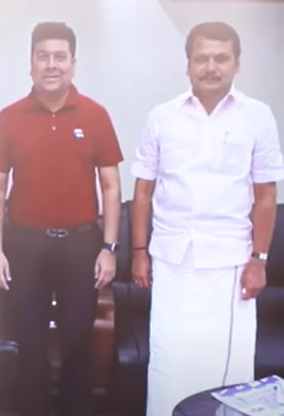
On Sunday (18 December 2022), V. Senthilbalaji, the DMK Minister in-charge of selling liquor to Tamil Nadu people got personal with Tamil Nadu BJP President K. Annamalai leveling allegations about the latter’s watch.

Senthil Balaji’s spat with state BJP chief K Annamalai raged on after the former targeted the latter for wearing a Bell & Ross special edition Rafale watch.

In a social media post, the DMK Minister claimed “Annamalai, (referring to him derogatorily) who claims to own just 4 goats as his property, is wearing a Rafale watch, which costs more than ₹5 lakhs of which there are only 500 wristwatches. If he can show the receipt of that watch in the next one hour, many commoners can also buy and enjoy.”

Calling Annamalai a ‘national disease’, the DMK Minister said “A ‘national disease’, sorry a ‘nationalist’ wearing a foreign watch, how come he rose to the level of wearing a watch worth ₹5 lakh?” The Minister’s choice of words to refer to the BJP leader is indicative of the gutter-level politics of Dravidian Stockists.

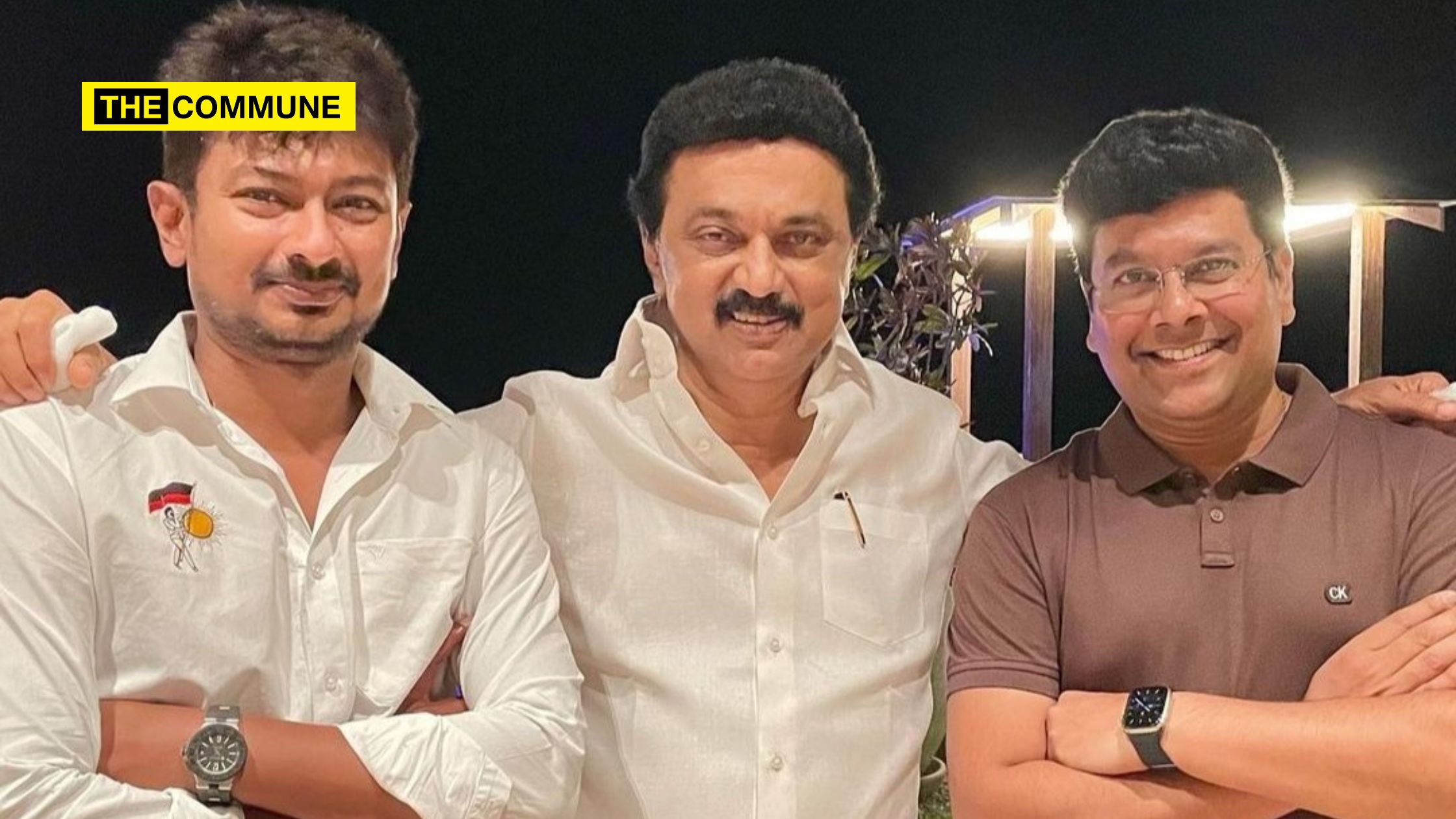
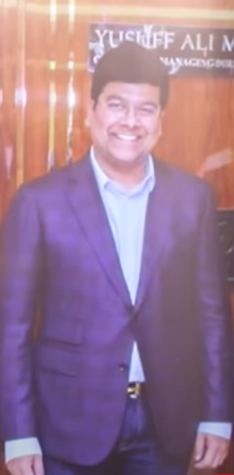
Soon after, details of Tamil Nadu Chief Minister MK Stalin’s son-in-law Sabareesan’s watches and luxurious lifestyle emerged, with many questioning his source of income given his humble background prior to marrying Stalin’s daughter Senthamarai. Political commentator Savukku Shankar and Youtuber Maridhas were among the first to reveal details about Sabareesan’s luxury possessions. These details have been made public in order to demonstrate to the DMK IT wing cadres that they should not throw stones while living in a glass house.

Sabareesan’s Costly Watches, Belts, And Shoes

The details of the luxurious possessions, which Sabareesan flaunts to prove his social status, are taken from pictures available in the public domain.

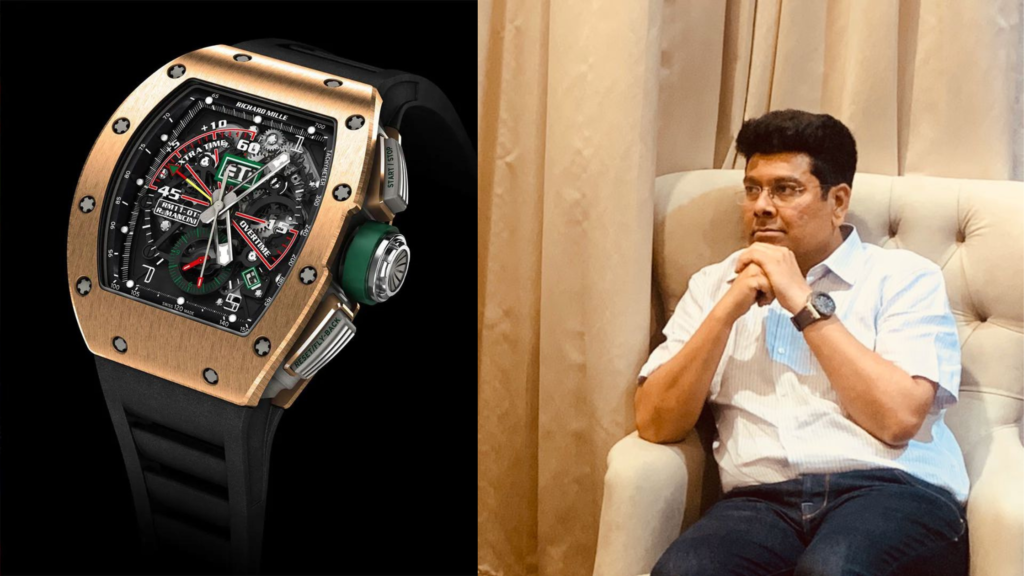
Richard Mille Watch

The watch in the image appears to be a Richard Mille, with a price tag of ₹1.9 crores. Because the watch is not manufactured in India, it must be imported, incurring an import duty of ₹ 2.66 crores. The watch costs approximately ₹4.65 crores in total.

Dominique Guenat and Richard Mille founded Richard Mille in 2001, and the company is based in Les Breuleux, Switzerland. The company is known for its ultra-high-end luxury watches. The brand has been making waves in the luxury timepiece market since it was founded.

This is one of the publically available luxury watches worn by Sabareesan. However, political commentator Savukku Shankar, who obtained information about Sabareesan’s luxury possessions from a source, stated that the DMK Chief Minister’s son-in-law has a large collection of luxury watches worth ₹30 crores.

Hermès Paris Belt

Sabareesan’s Hermes Paris belt costs around ₹4 lakh. It should be noted that authentic Hermes Paris belts are extremely expensive, starting at ₹1,000,000 in India. People sometimes buy gold belt buckles, and Sabareesan is said to have one.

Hermès International, also known as Hermès of Paris or Hermes, is a luxury goods manufacturer based in France. In various valuation and ranking studies published by leading consultancies, it has consistently been ranked as the world’s most valuable luxury brand. Hermès is a brand that has become synonymous with luxury.

Salvatore Ferragamo

In one of the photos with DMK’s Liquor Minister Senthilbalaji, Sabarisan can be found wearing a Salvatore Ferragamo belt which is approximately costs ₹1.5 lakh.

Louis Vuitton Shoes

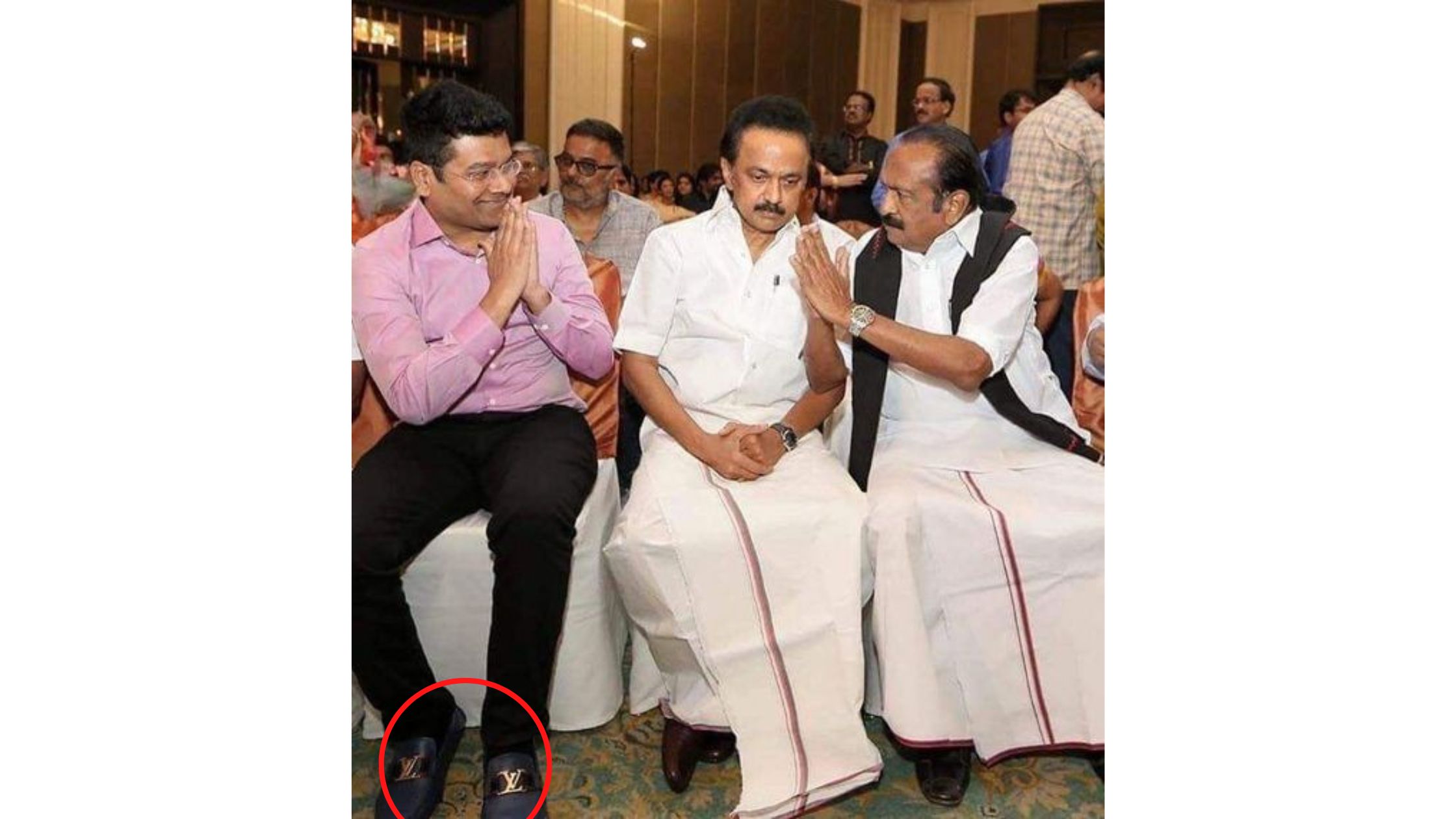
Sabareesan was spotted wearing Louis Vuitton shoes at the wedding of actor Parthiban’s daughter Keerthana. Sabareesan’s branded shoe costs around ₹1,96,000.

Louis Vuitton Malletier, commonly known as Louis Vuitton is a French high-end luxury fashion house and company founded in 1854 by Louis Vuitton. The label’s LV monogram appears on most of its products, ranging from luxury bags and leather goods to ready-to-wear, shoes, watches, jewelry, accessories, sunglasses, and books. Louis Vuitton is one of the world’s leading international fashion houses. It sells its products through standalone boutiques, lease departments in high-end departmental stores, and the e-commerce section of its website. For six consecutive years (2006–2012), Louis Vuitton was named the world’s most valuable luxury brand. Its 2012 valuation was US$25.9 billion. In 2013, the valuation of the brand was US$28.4 billion with revenue of US$9.4 billion. The company operates in 50 countries with more than 460 stores worldwide.

Gucci Footwear

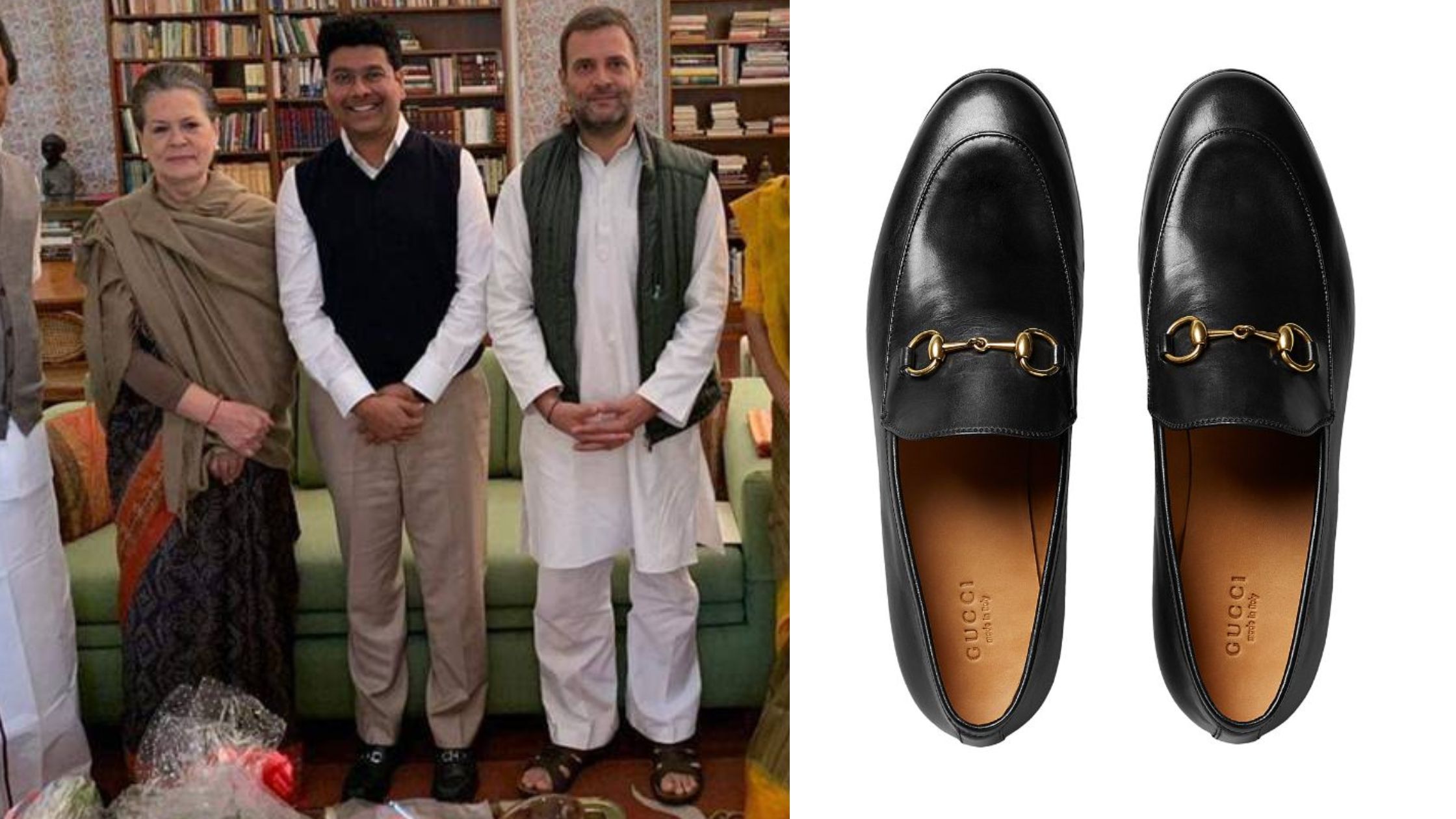
In December 2018, Sabarisan along with MK Stalin and Kanimozhi had met the Gandhi Family. In the picture, Sabarisan can be found wearing Gucci footwear costs anywhere between ₹80,000 to ₹4 lakhs.


Scott Sports’ Sportswear

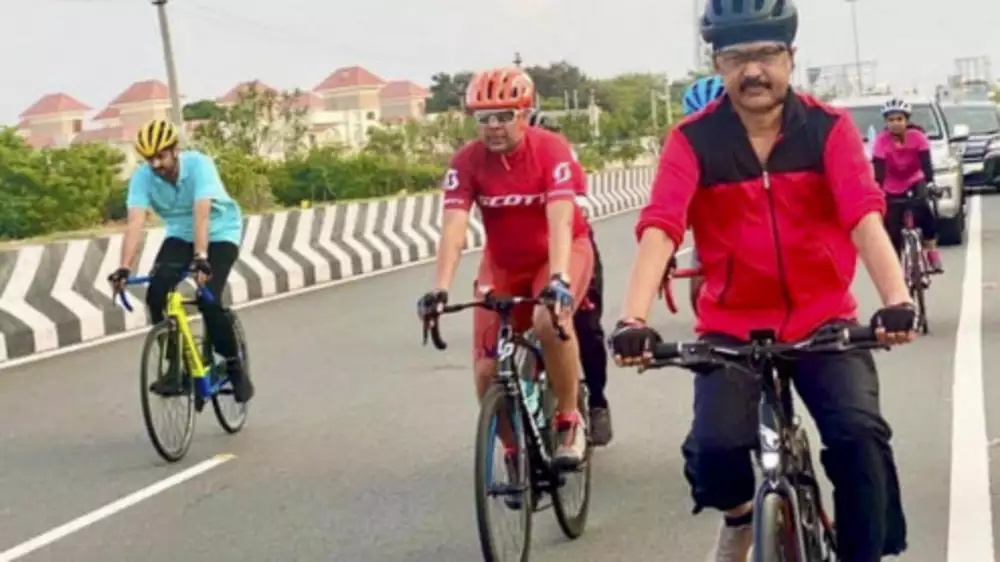
Sabareesan, who used to cycle, was spotted wearing Scott Sports’ branded sportswear and cycles, which cost several lakhs. According to a conservative estimate of the items used during the cycling, Sabareesan was riding a cycle worth ₹5 lakhs and wearing a helmet and t-shirt worth ₹42000 and ₹34000, respectively.

Scott Sports SA (formerly Scott USA) is a Swiss producer of bicycles, winter equipment, motorsports gear and sportswear. The company’s main office is in Givisiez, Switzerland, with branches in Europe and in the United States, South Africa, and India.

Ralph Lauren Shirts

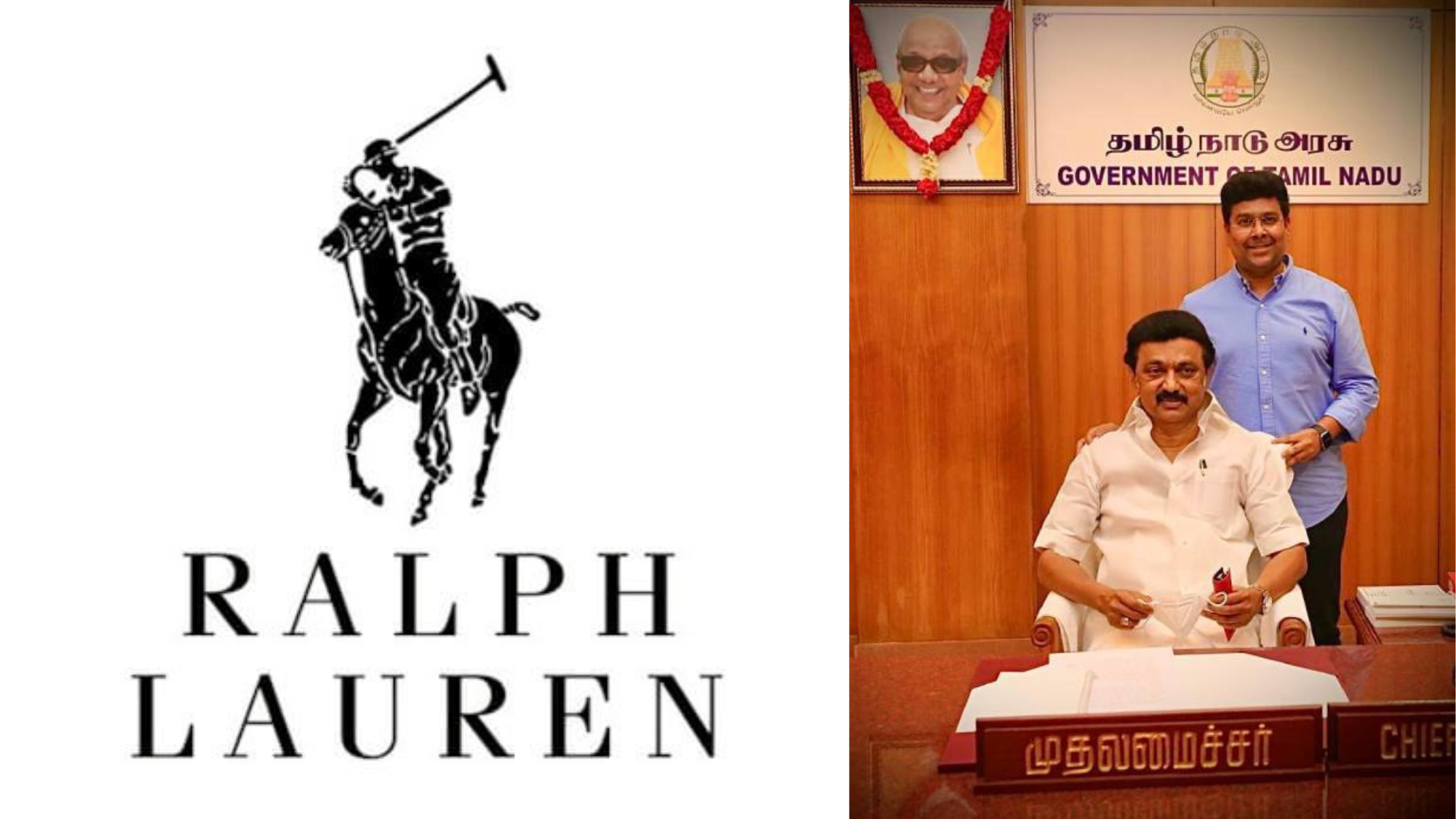
Even the ordinary shirts worn by Tamil Nadu Chief Minister’s son-in-law cost thousands of rupees. He is seen with MK Stalin wearing a ₹35,000 Ralph Lauren shirt.

Burberry Shirt

In one of the pictures, Sabarisan can be seen wearing a Burberry shirt which costs around ₹34,000.

Udhayanidhi’s Costly Cars And Watches

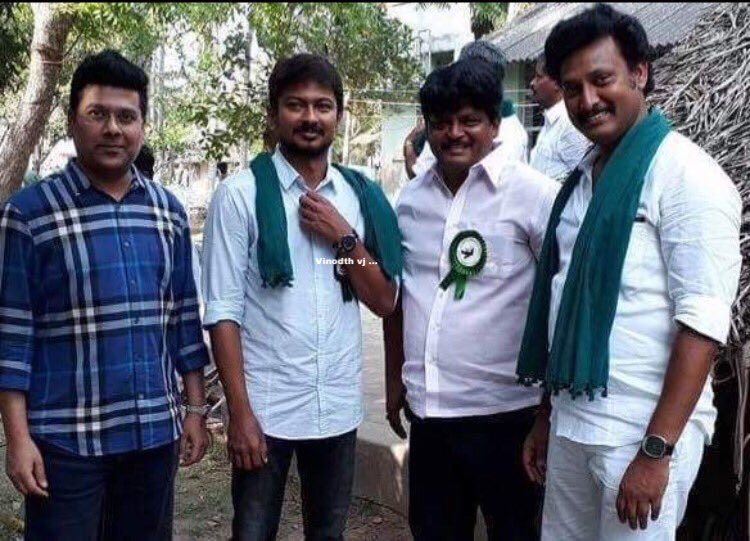
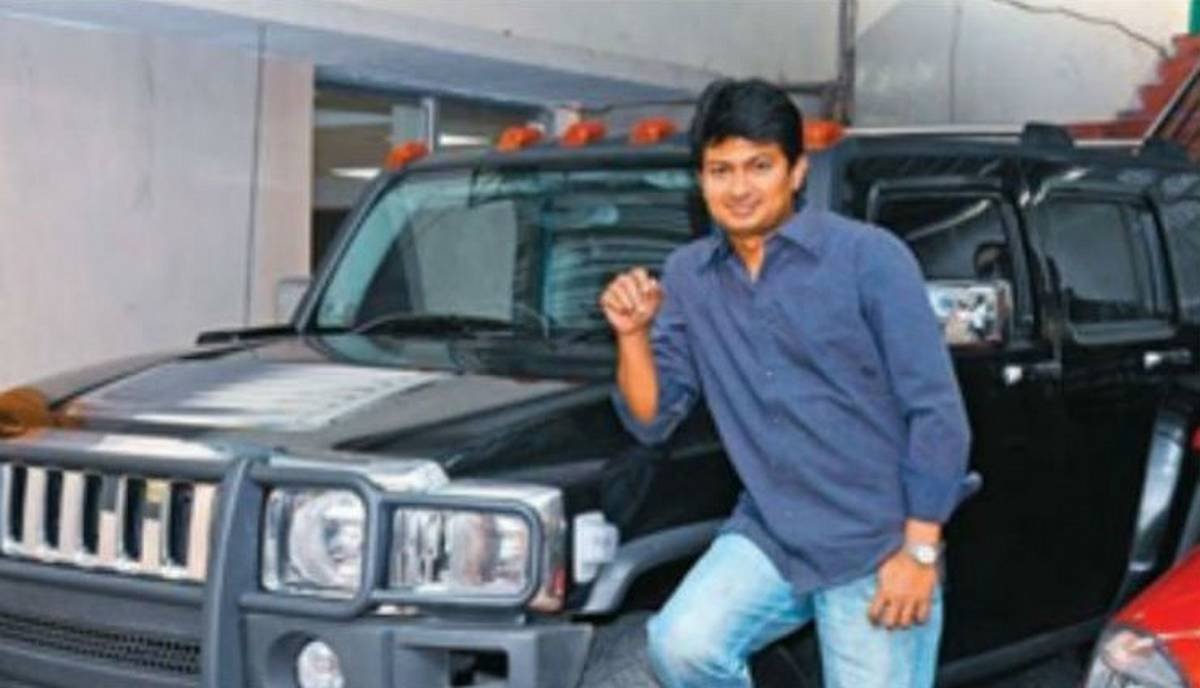
Not only does MK Stalin’s son-in-law flaunts his opulent possessions; his son Udhayanidhi Stalin, who is known for his car and watch collections, is no exception. It should be noted that in his mid-20s, Udhayanidhi Stalin purchased a Hummer car worth more than ₹1 crore and was summoned by the CBI since he purchased the car from an illegal car smuggler. He was made to surrender the car before CBI.

Udhayanidhi’s Panerai Watch

Following the uproar over Annamalai’s watch, BJP cadres began circulating images of Udhayanidhi with actress Keerthy Suresh, in which he was wearing a luxury watch. He was spotted wearing a Panerai Submersible PAM watch, which costs approximately ₹15 lakhs.

Udhayanidhi Hummer Controversy

Udhayanidhi Stalin surrendered his illegally imported Hummer Sports Utility Vehicle to the Central Bureau of Investigation (CBI) in May 2013. The investigating agency wanted to seize the alleged ‘illegally’ imported vehicle. A Hummer car was imported in 2007 by Alex Joseph, a car importer based out of Hyderabad, who allegedly later sold it to Udhayanidhi. From 2007 to 2011, Joseph is alleged to have imported highly-priced cars from abroad to India evading Custom Duties and he counted the rich and powerful among his customers.

Udhayanidhi’s Car Collections

Udhayanidhi has a wide range of cars ranging in price from several lakhs to a few crores. It’s worth noting that MK Stalin stated in his election affidavit stated that he doesn’t own a car. MK Stalin, on the other hand, drives his son Udhayanidhi’s car.

Udhayanidhi owns a Range Rover Sports worth ₹1.8 crores, a Range Rover Vogue SE worth ₹1.1 crores, a Land Rover Freelander HSE worth ₹47 lakhs, a Toyota Land Cruiser Prado VXL worth ₹1 crore, a Toyota Innova 2.5V worth ₹19 lakhs, a Toyota Innova Crysta worth ₹25 lakhs, a Volvo XC90 D5 worth ₹1 crore, an Audi Q7 worth ₹90 lakhs, a Mercedes Benz GLE 250D worth ₹70 lakhs, and a Porsche Cayenne worth 1.9 crores,

Stalin’s Indulgence

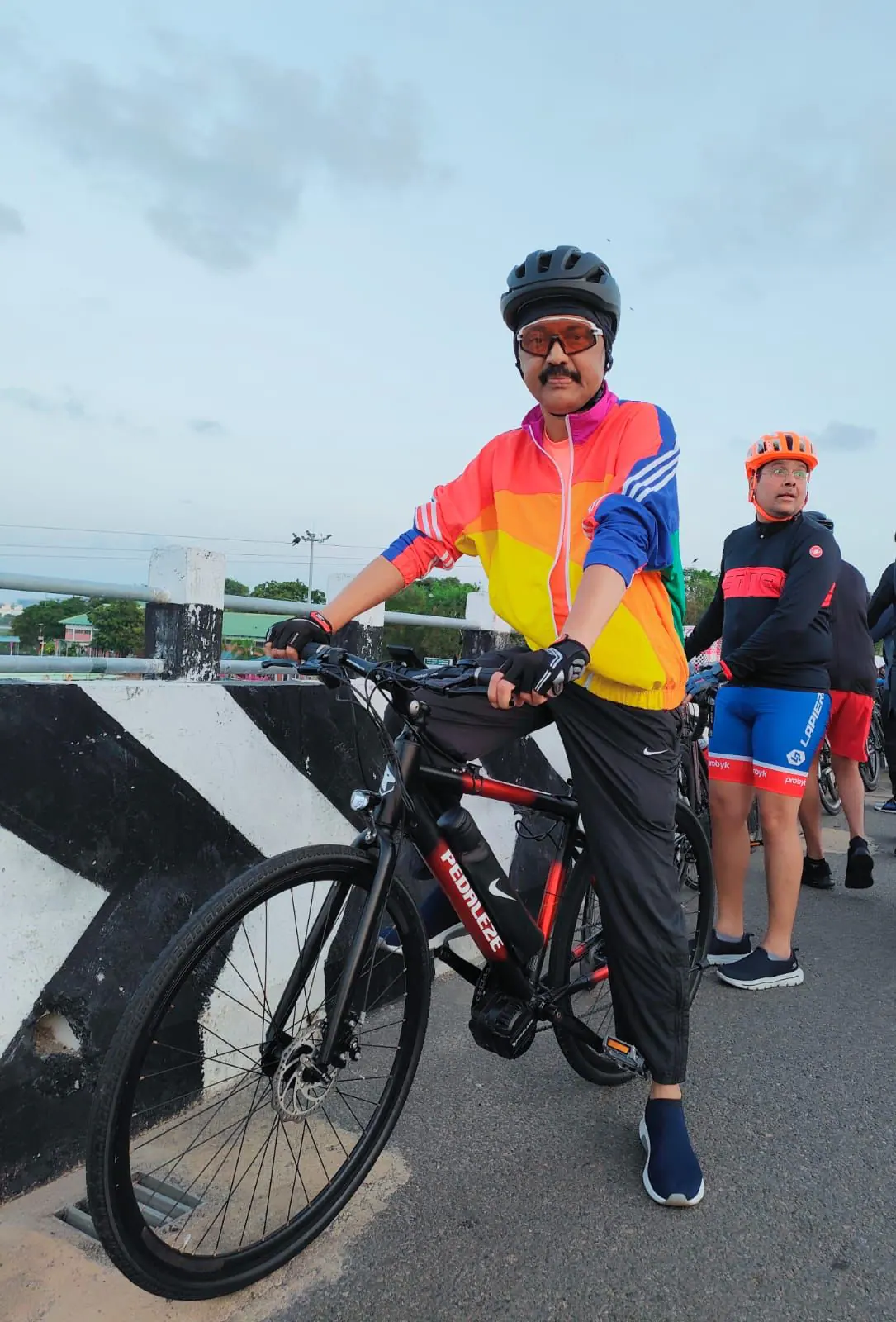
MK Stalin, the Chief Minister of Tamil Nadu, rode a Daijo Pedeleze C2 Elite model bicycle, which costs around ₹ 85000. Pedaleze is an Indian E-Bike brand that offers state of art features and technology making it all the more desirable and worth the investment.

Before the 2021 assembly election, CM Stalin was riding a Merida Reacto bicycle that cost ₹178,000.


It is ironic that the DMK has the audacity to talk about austerity in public life when its first family lives a life of luxury.

Click here to subscribe to The Commune on Telegram and get the best stories of the day delivered to you personally.
Lakshadweep: How Its Long-Inverted Demography Is Being A Thorn In Strategic Development Of The Island

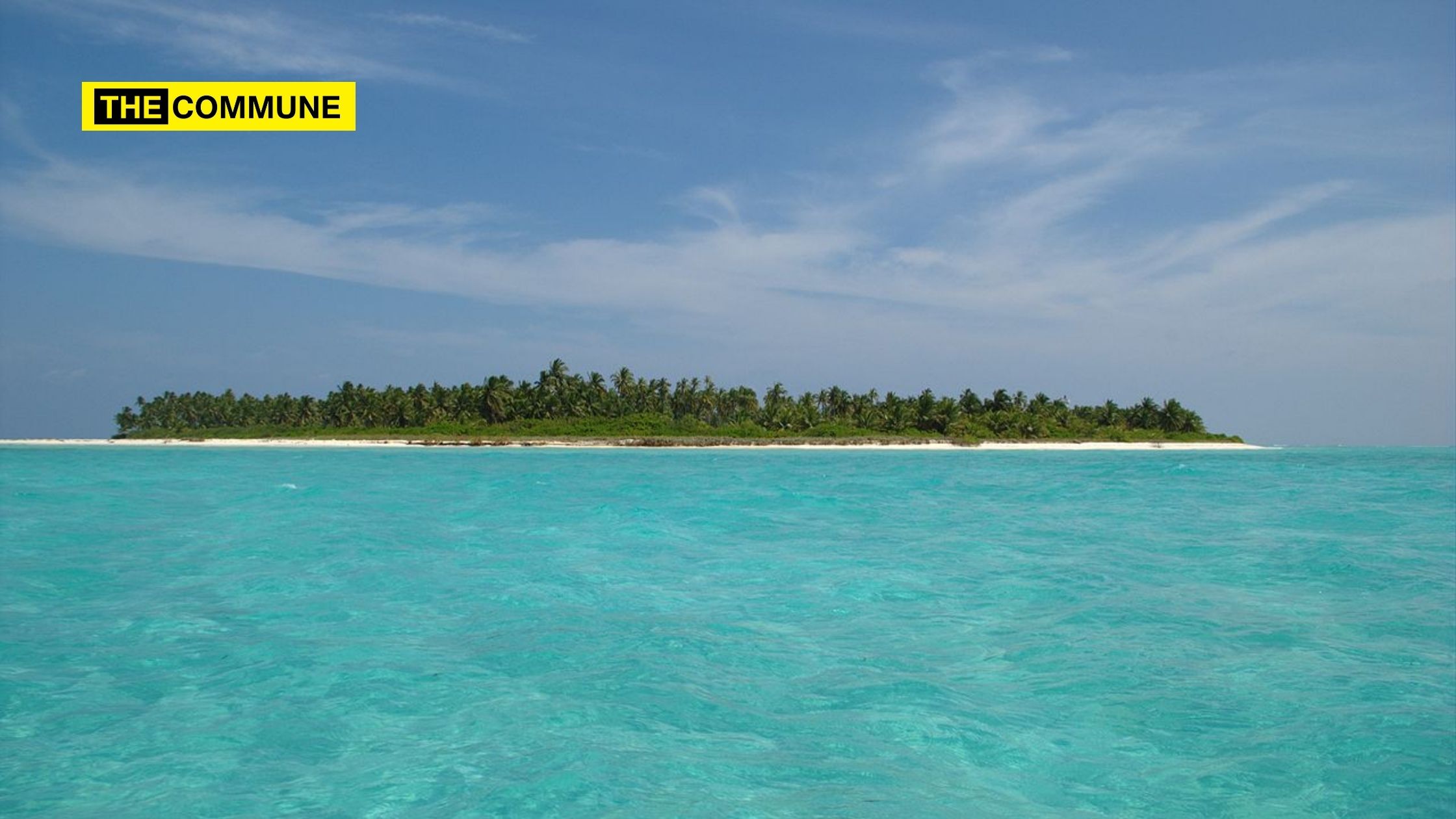
The tiniest Union Territory of India, Lakshadweep is an archipelago consisting of 12 atolls, three reefs and five submerged banks.The name Lakshadweep in Malayalam and Sanskrit means ‘a hundred thousand islands’. Out of the present 36 islands only 10 islands are inhabited. It is only 496 kms from the coastal city of Kochi in Kerala.It is a uni-district Union Territory with an area of 32 Sq.Kms and is comprised of ten inhabited islands, 17 uninhabited islands attached islets, four newly formed islets and 5 submerged reefs. The inhabited islands are Kavaratti, Agatti, Amini, Kadmat, Kiltan, Chetlat, Bitra, Andrott, Kalpeni and Minicoy. Bitra is the smallest of all having only a population of 271 persons (Census 2011). The uninhabited island Bangaram has been enumerated during 2011 census operation and has a population of 61 persons.

According to the 2011 Census, Lakshadweep has a population of 64429 persons.Nearly 96% of the population who are Janajaatis, are Muslims and majority of them belong to the Shafi School of the Sunni Sect. Malayalam is spoken in all the islands except Minicoy where people speak Mahl which is written in Divehi script and is spoken in Maldives also. The entire janajati population has been classified as Scheduled Tribes because of their economic and social backwardness. According to the Scheduled Castes and Scheduled Tribes list (modification orders), 1956, the inhabitants of Lakshadweep who and both of whose parents were born in these islands are treated as Scheduled Tribes. There are no Scheduled Castes in this Union Territory.

Defense Setup In Lakshadweep  

The Indian defence infrastructure in Lakshadweep has been enhanced over the years. In 2010, then defence minister A.K. Antony commissioned coast guard stations in Kavaratti and Minicoy, thus boosting the presence of the Indian Coast Guard. In 2012, the second Manmohan Singh government commissioned the first naval base in the islands—INS Dweeprakshak, in capital Kavaratti. In the same year, a coast guard station in Androth was commissioned. In 2016, a naval detachment was commissioned on Androth Island.

Besides surveillance, these detachments work as observance and reporting organisations. There are also plans for a fully operational navy base in Lakshadweep. A bigger facility on Minicoy is also under consideration, because of its proximity to the Maldives (71 nautical miles).

Development Vs Narco Jihad

World renowned Hawaii is a state in the Western United States, located in the Pacific Ocean about 3,623.16 miles 5,830.92 kms from the US mainland. Hawaii comprises 8 major islands. The Praful K Patel administration wants to develop the archipelago as Indian Hawaii, attracting tourists who mostly see Maldives as the destination.

The picturesque group of 36 atolls famous for its rich biodiversity and blessed with the hue of natural opulence, was propped up in the news last year not for its turquoise water bodies but for the draft of reforms proposed by its Administrator, Praful Khoda Patel. Yes, Lakshadweep, ensconced on the southwestern tip of India, was up in arms against the Administrator.

Radical groups such as the Popular Front of India have already infiltrated Lakshadweep. The geographical proximity of Lakshadweep to the Maldives and Sri Lanka increases the likelihood of the impact of political turmoil in these nations. Growing presence of China in the Indian Ocean and the age-old challenge posed by pirates in the Indian Ocean could make Lakshadweep a hotbed of criminals and anti-national activities. Last year, Rs 3000 crore worth of drugs were seized by the Coast Guard off Minicoy Island. A Sri Lankan fishing boat Ravihansi with 300 kgs Heroin and 5 AK-47 rifles with 1,000 live rounds was also caught by the security agencies. It is just a case ‘Narco Jihad’.

In 2019, there were intelligence reports which suggested the movement of 15 ISIS terrorists from Sri Lanka to the Lakshadweep Islands. Over the population of 64429 people there are only 349 policemen & 9 police stations.

This inadequate proportion also backs the anti-national crime to flourish.

The 26/11 attack on Mumbai was the first maritime jihadi war in the modern times. Following this attack, India carried out a comprehensive review of coastal and island security. As a consequence, the vulnerability of Lakshadweep was found to be of great concern. Samudri Jihad is not for capture of territory. Island territories such as Lakshadweep can be used as a base to destabilize the mainland economically and physically by jihadi means. In the reckoning of jihadi organizations, which includes the Pakistani State, the vastness of the Indian Ocean provides huge scope for Narco Jihad. The frequency, scope and magnitude of this jihad against India is increasing.

Tuna Fish Scam Case

In July 2022, CBI received information relating to irregularities in the procurement of Massmeen (dry tuna fish) from fishermen of Lakshadweep Island during the year 2016-2017. Lakshadweep MP Md. Faizal Khan & his nephew reportedly gave false assurance of a higher rate and exported the same through M/s. Lakshadweep Co-operative Marketing Federation Ltd to Sri Lanka. On June 25, a combined surprise inspection was performed at the LCMF Ltd offices in Kavaratti (Lakshadweep) and Calicut (Kerala).

It is worth knowing that when the draft Lakshadweep Development Authority Regulation (LDAR) 2021 proposed a new law to ban cow slaughter and beef, which was in line with the prevailing law in most of the states in India. Opposing the proposals, MP Mohammed Faisal had said that eating beef was constitutional right of the people of Lakshadweep and that the new proposals were aimed at undermining the ‘Islamic character’ of the island where Muslims constitute 96% of the total population.

The Much-Needed Reforms 

Alcohol and drug addiction among the youth in the UT has been on the rise. Immediately after assuming responsibility in December 2020, Praful Patel had conducted 18 raids across the UT to fight the growing menace.

Additionally, Goonda Act was imposed in the Union Territory to restrict the smuggling and distribution of alcohol and drugs.The administration also had pulled down Anti-CAA/NRC posters placed by radical Islamist outfits throughout the island.

Among the policies of the new administration that were being opposed are, banning candidates with more than 2 children from contesting Panchayat polls, a rule that is already in use in several states, the removal of illegal storage facilities along the coast, and the strict order to boat owners against leasing/renting their boats to individuals without proper permission from authorities.

Nexus That Fuelled Protests

Ayesha Sultana, a Lakshdweep based filmmaker, who hails from Chetiah island had alleged that the Central government used biological weapons for the spread of COVID-19 in Lakshadweep.

However, BJP’s Lakshdweep unit president Abdul Khader filed a complaint against the anti-national filmmaker. According to the FIR lodged by the Kavaratti police, a case under sections 124 A (sedition) and 153 B (hate speech) of the Indian Penal code was registered against the filmmaker.

CPIM leader and Rajya Sabha MP Elamanam Kareem & Kerala Indian National Congress leader V T Balram extended their support to orthodox protesters.

As protests flare-up in the region, actor Prithviraj Sukumaran came out in the support of the people of the Union Territory drawing the attention of the authorities.

The Root Cause: An Inverted Demography

The islands of present-day Lakshadweep were first mentioned by a Greek sailor in the 1st century CE as a source of tortoise shell.

The initial native culture of the islands was Dharmic in nature. Author Bichitranand Sinha states in his book ‘Geo-economic survey of Lakshdweep’ that Architecture of old mosques there is influenced by ancient Hindu temples. The matrilineal Marumakkathayam system of inheritance which prevails in present muslim people was once a key character of native population.

The advent of Islam dates back to the 7th century around the year 41 Hijra. An Arab Fakeer named Ubaidullah travelled all the way to Amini island to propagate Islam through a self-woven tale that Prophet Mohammad commanded him to do so in his dream. He was able to inveigle a young woman in his love and married her giving her new name Hadeemat Beebi. This enraged natives so both escaped to Adrott island. There they faced same opposition initially but later were able to convert natives to Islam through flattery. From this island they went to left ones & preached of Islam.  At last, he returned to Adrott died and got buried. There is still a Marabout or Mukbara.

Succession Of Commands That Ruled

Local traditions attribute the first settlement on these islands to the period of Cheraman Perumal, the last king of Kerala. It is believed that after his conversion to Islam, at the behest of some Arab merchants, he slipped out of his capital Cranganore, the present day Kodungallor – an old harbour town Kochi, for Mecca. When his disappearance was discovered, search parties went after him in sailing boats and left for the shores of Mecca, in search of the king from different places. It is believed that one of these sailing boats of Raja of Cannanore was struck by a fierce storm and they were shipwrecked on the island now known as Bangaram. From there they went to the nearby island of Agatti. Finally the weather improved and they returned to the mainland sighting other islands on their way. It is said that after their return another party of sailors and soldiers discovered the island of Amini and started living there. It is believed that the people sent there were Hindus. Even now unmistakable Hindu Social stratification exists in these islands despite Islam. Legends say that small settlements started in the Islands of Amini, Kavaratti, Andrott and Kalpeni first and later people from these islands moved to the other islands of Agatti, Kiltan, Chetlat and Kadmat.

Muslim missionary activity in the 7th century and continued contact with Arab traders eventually led to the conversion of all the islanders to Islam. Sometime before 1100 a small Hindu kingdom on the Malabar Coast won the islands, and after the fall of the Kulashekhara dynasty of Kerala in 1102 they passed to the Kolathiris, another small Hindu dynasty. Later in the 12th century, after a Kolathiri princess married a Muslim convert, a separate kingdom (including the islands that eventually formed Lakshadweep) was set up in the Kannur(Cannanore) area of Kerala in order to protect the Keralan tradition of matrilineal descent.

It is possible that the first European to visit the islands was the Italian explorer Marco Polo—if the “female island” mentioned in his 13th-century travelogues was indeed Minicoy Island, as some have speculated. In 1498 the Portuguese arrived in the islands. They subsequently built a fort to control trade, particularly in coir. Residents of the islands staged an uprising in 1545.

Successive bibis (female muslim rulers) and their husbands ruled the islands until control of the northern group of islands, the Amindivis, passed to Tipu Sultan, the bigot sultan of Mysore, on the mainland, in the 1780s. When Tipu was killed in battle with the British in 1799, the Amindivis came under British control. The bibi and her husband were permitted to retain the other islands and receive income from them in exchange for an annual payment to the British. These payments repeatedly were in arrears, and in 1908 the bibi ceded to the British direct administration of these islands. Sovereignty was transferred to India on Indian independence in 1947, and the islands were constituted a union territory in 1956.

Fight Abrahamic Orthodoxy

In Oct 2022, Rajnath Singh unveiled the first statue of MK Gandhi in Lakshadweep on the occasion of the latter’s 152nd birth anniversary. The figurine installed in Kavaratti Island is a six-foot tall bronze statue of Gandhi.

About 11 years ago, an attempt was made by the Congress-led UPA regime to install a bust of Gandhi on the islands. A Rs 2 lakh statue of MK Gandhi was sent to Lakshadweep in the vessel MV Amindivi to be installed at Kavaratti in September 2010.However, the bust of MK Gandhi could not be offloaded at Lakshadweep as Muslims objected to the installation of any such statues citing Sharia Law. They protested that it will promote idol worship & Hinduism. However, the administration hid the matter pretending it was due to bad weather.

The battle in Lakshadweep is between Developmental Reformism and Abrahimic Orthodoxy. However, it is just the commencement of war against Abrahimic Bigotry that prevails in the archipelago.

Sources

1. Geo-economic survey of Lakshadweep – Bichitranand Sinha

2. Britannica.com

3.HISTORICAL ASPECTS OF LAKSHADWEEP

Dr.Baiju K.Nath

Assistant Professor, Dept. of Education, University of Calicut

Kerala, India

and

Sayyid Ali Akbar

M.Ed. Student (2012-13)

Dept. of Education, University of Calicut

This article was originally published in Bharat Voice and has been republished here with permission.

“I’m Proud To Be A Christian, I’ve Married A Christian”: DMK Crown Prince Udhayanidhi Stalin Reveals

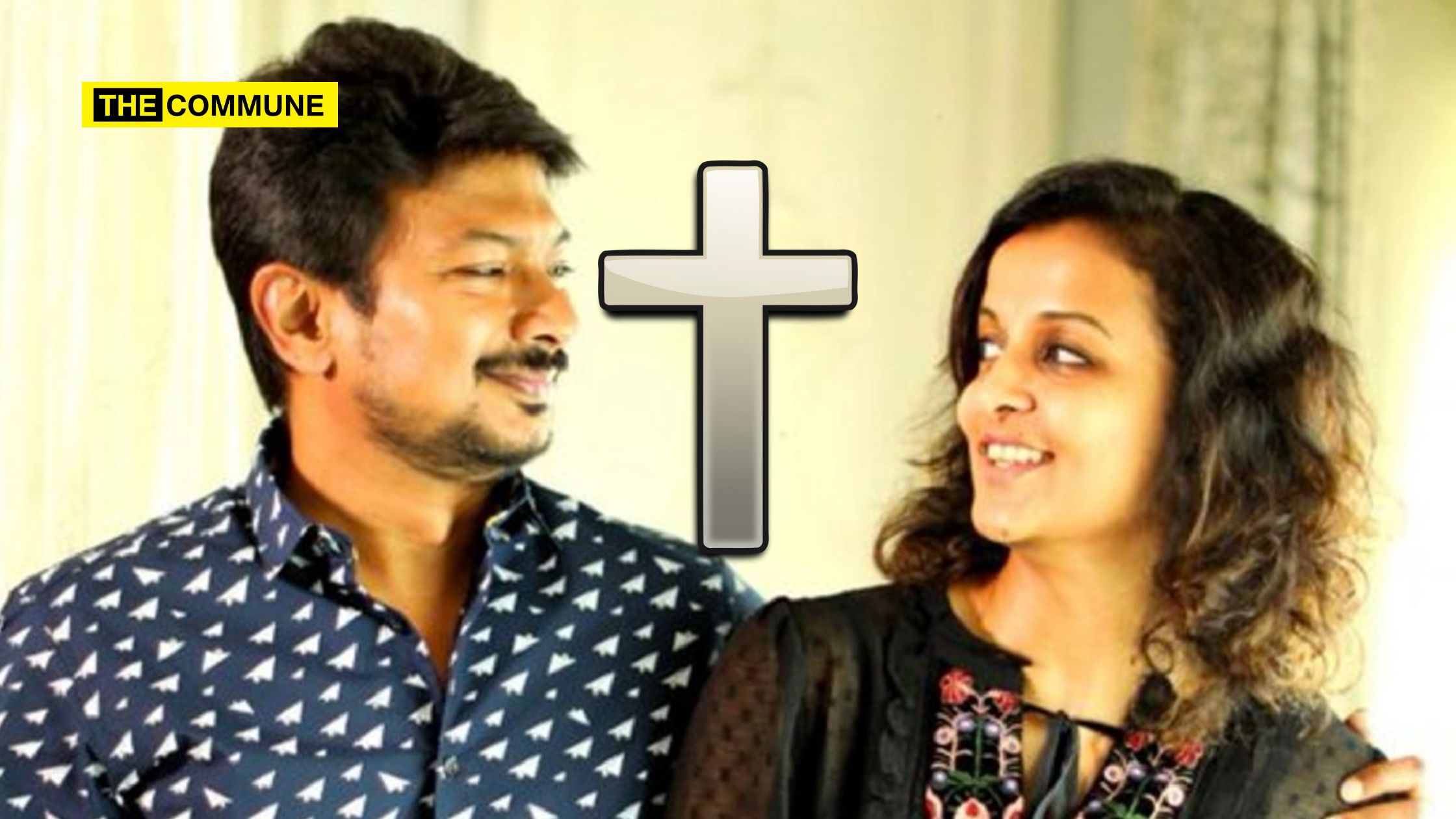
Tamil Nadu Chief Minister MK Stalin’s son Udhayanidhi Stalin, who was coronated as a Minister in his father’s cabinet recently, spilled the beans that he and his wife are Christians while speaking at a Christmas celebration event organized on Thursday (22 December 2022) at Chennai’s Harbour constituency.

“I’m proud to call myself a Christian. Today, all Sanghis (a colloquial reference denoting devout Hindus and supporters of RSS-BJP) will be burning. Because Sekarbabu (Tamil Nadu Hindu Religious & Charitable Endowments Minister) is saying ‘Hallelujah’, Udhayanidhi is saying ‘I’m a Christian’. Yes, I will say that I’m a Muslim too.”, DMK Minister Udhayanidhi Stalin said.

“I studied here at the Don Bosco school, Egmore. I got my degree from Loyola College. I loved and married a Christian woman (Kiruthiga Udhayanidhi). On that note, I feel delighted to be participating in this Christmas event.”, Udhayanidhi further added.

It is noteworthy to mention that Udhayanidhi had claimed that both he and his wife are atheists when a controversy broke around him sharing a picture of a Vinayagar idol.

Udhayanidhi Stalin further added “Everybody is asking what is this ‘Dravida Model regime, Dravidian Model regime’. Our chief (MK Stalin) keeps referring to ‘Dravida Model regime’. What is that ‘Dravidian Model regime’? I’m telling you now. A HR&CE Minister is saying ‘Hallelujah’. This is what is called ‘Dravida Model regime’. He had organized a even bigger event for Ramzan. On the outside, he may be roaming around with a mala. But this is what is social justice regime. This is what Periyar, Anna, Kalaignar, Anbazhagan has taught us. That is what our chief is implementing as ‘Dravida Model regime’.”

This is not the first time that senior leaders of the DMK have resorted to appeasing Christians.

Earlier, DMK MLA and Tamil Nadu Assembly Speaker M. Appavu stoked a controversy saying that the MK Stalin-led government in the state was formed by Christians and for Christians.

Tamil Nadu Finance Minister PTR Palanivel Thiagarajan hailed Christian Missionaries as torchbearers of social justice who had contributed to the development of the region.

Chennai Mayor R Priya of the DMK had met with controversial Christian pastor Bishop Ezra Sargunam who is know for spewing vitriol against Hindu faith.

CM Stalin himself had said that his government was formed because of Christians while participating in the platinum jubilee celebrations of the Church of South India in September 2021.

Click here to subscribe to The Commune on Telegram and get the best stories of the day delivered to you personally.