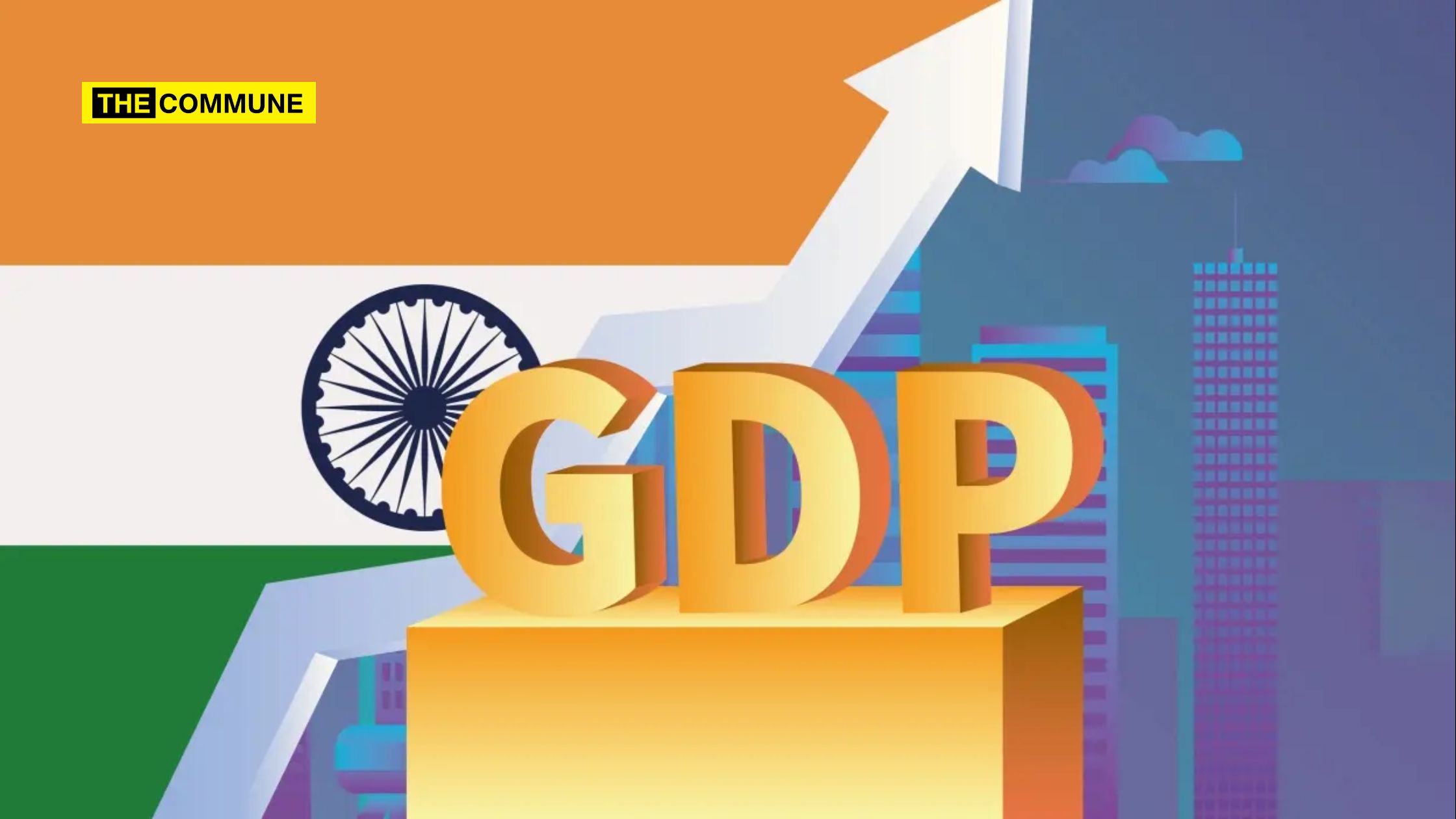
The National Statistical Office (NSO) data, released on Thursday, reveals that India’s Gross Domestic Product (GDP) expanded by 7.8 percent in the first quarter of the fiscal year 2023-24. This growth rate exceeds the 6.1 percent growth of the previous quarter but is notably lower than the 13.1 percent growth recorded in the same quarter of the fiscal year 2022-23.
India maintains its status as the fastest-growing major economy, outpacing China’s GDP growth of 6.3 percent for the April-June period. The government explained that the Quarterly Estimates of GDP are based on indicators and use a benchmark-indicator method, projecting quarterly estimates from the previous year using relevant performance indicators.
According to NSO data, the agricultural sector saw a growth of 3.5 percent, an improvement from the 2.4 percent recorded in the corresponding period of the fiscal year 2022-23. However, growth in the manufacturing sector slowed to 4.7 percent in the initial quarter of the current fiscal year, down from 6.1 percent in the same period last year.
After the Monetary Policy Committee (MPC) meeting in August, the Reserve Bank of India (RBI) projected a 6.5 percent growth rate for the entire fiscal year, with 8 percent growth anticipated for Q1. The International Monetary Fund (IMF) adjusted its GDP growth outlook for India in 2023 to 6.1 percent. Similarly, Fitch Ratings revised its forecast for India’s economic growth in fiscal year 2023-24 to 6.3 percent from the earlier prediction of 6 percent, as of June.
Click here to subscribe to The Commune on Telegram and get the best stories of the day delivered to you personally.
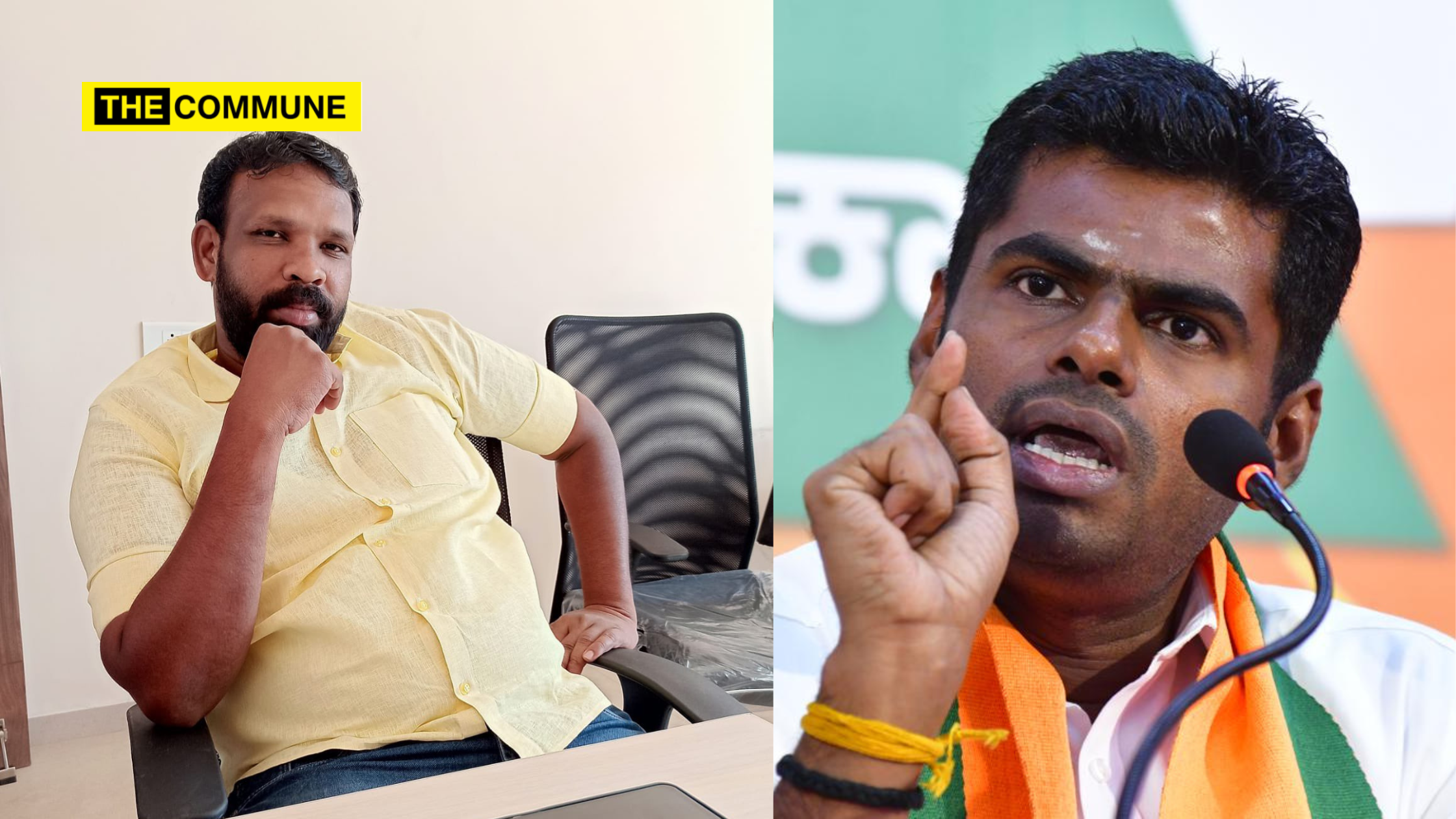
In a tragic incident that has sent shockwaves through the political landscape of Tamil Nadu, a case has been registered against seven individuals, including a DMK executive, following the brutal murder of a local BJP leader. Jagan Pandian, the Tirunelveli BJP general secretary known for his active participation in public affairs and real estate ventures, was hacked to death near his residence in the Moolikulam area, adjacent to Palaiyankottai in the Nellai district.
The unfortunate incident took place yesterday (30 August 2023) as Jagan Pandian was returning home on his two-wheeler after concluding his daily work. After parking his vehicle near his residence, he was standing beside a nearby canal when unidentified assailants attacked him, inflicting fatal injuries before fleeing the scene. Neighbors who rushed to the spot upon hearing Jagan’s cries discovered him lying lifeless in a pool of blood.
Responding to the incident, the local police arrived at the crime scene, recovered the body, and dispatched it to the Government Medical College Hospital for post-mortem examination. A murder case was registered, and investigators began reviewing CCTV footage from the vicinity. In an effort to gather evidence, a sniffer dog named Barani was brought in to aid the investigation. Over a hundred police personnel were deployed to ensure security while a comprehensive probe into the incident was launched.
Tamil Nadu BJP Annamalai took to his Twitter handle to condemn the incident and cautioned that the DMK’s endeavor to hinder the BJP through violent means would be ineffective. He also mentioned that any effort to help the criminals including DMK members responsible for the incident from legal accountability would result in serious repercussions.
“I was taken aback upon learning the news of the unfortunate demise of Jagan Pandian, the general secretary of the BJP youth wing in Tirunelveli North, due to a brutal attack carried out by elements associated with criminal activities. My heartfelt condolences go out to his family. I want to assure everyone that the party stands united in offering support to Jagan Pandian’s bereaved family, and I am determined that those responsible for this heinous act will face legal consequences,” expressed Annamalai through his Twitter account.
In sharp criticism of the ruling DMK, Annamalai remarked, “These anti-social elements, unable to tolerate Jagan Pandian’s tireless efforts in public service and the positive reputation he was building among the masses, resorted to this malicious deed.”
“I’ve come to know that a person named Moolikulam Prabhu, associated with the DMK and reportedly close to Palayamkottai MLA M Abdul Wahab, is named in the First Information Report (FIR) filed by the police. Currently evading law enforcement, it seems the DMK is making efforts to shield him. I want to make it clear to DMK members that any attempt to shield criminals from legal accountability will not be allowed. The DMK’s strategy of using violence to suppress the BJP’s voice will not achieve success,” he asserted.
Annamalai called upon the state police to promptly apprehend all those truly responsible for Jagan Pandian’s tragic death and to ensure rigorous legal action is taken. He emphasized that the ruling party (DMK) should not permit criminals to escape justice. “I also feel compelled to caution that the BJP will not stand by idly if there are any efforts to release the actual perpetrators from the clutches of the law,” Annamalai concluded.
திருநெல்வேலி வடக்கு மாவட்ட @BJP4Tamilnadu இளைஞரணி பொதுச் செயலாளர், சகோதரர் ஜெகன் பாண்டியன் அவர்கள், சமூக விரோதிகளால் வெட்டிக் கொலை செய்யப்பட்டுள்ளார் என்ற செய்தி அறிந்து மிகுந்த அதிர்ச்சியடைந்தேன். அவரது குடும்பத்தினருக்கு, ஆழ்ந்த இரங்கல்களைத் தெரிவித்துக் கொள்கிறேன். சகோதரர்… pic.twitter.com/L4r9rvF9ek
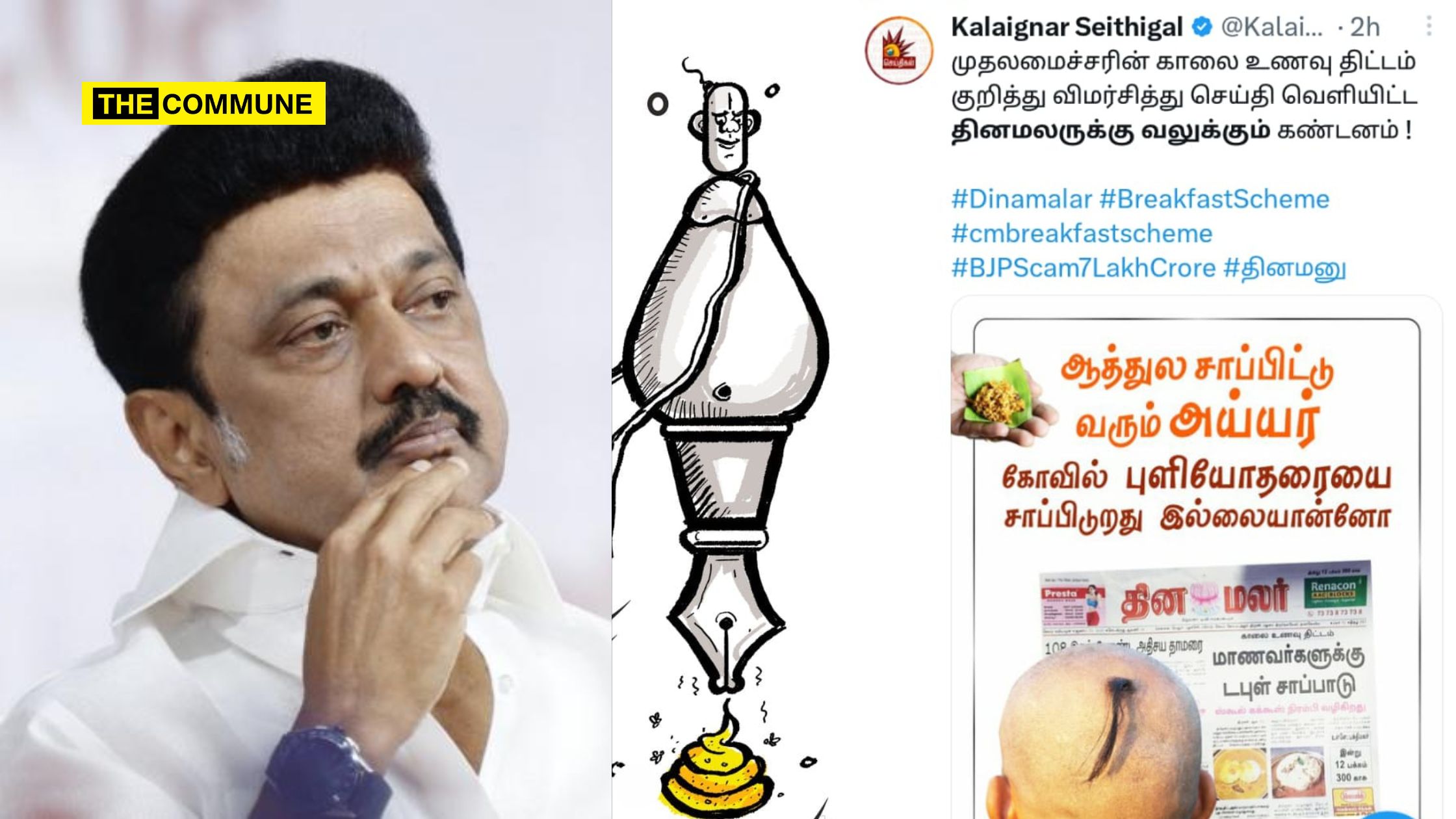
Tamil news daily, Dinamalar is in the news for an objectionable headline in the 31 August 2023 edition. The headline of the article on the front page of the newspaper critiquing the Chief Minister’s Breakfast Scheme read “Breakfast Scheme – Double meals for the students” and a byline that said, “Toilets in schools overflowing”.
Unacceptable for a mainstream paper to mock the breakfast scheme in this manner — ' toilets are overflowing'.. I condemn this strongly.
Such foul takes endanger brahmins. #D accounts use this as launchpad for anti-B propaganda by portraying this as voice of brahmins as a whole. pic.twitter.com/iDJUm65S2I
The Dinamalar article implied that the introduction of the new breakfast program, in addition to the existing mid-day meal initiative, has led to an increase in students’ restroom usage due to having consumed an excessive amount of food.
Tamil Nadu Chief Minister MK Stalin hit out at the newspaper article by posting about it on social media platform X. He however chose to bring Sanatana Dharma and Brahmins into the picture.
He posted, “One race to do the hard work, one race to do the eating and fattening – at a time when Manuvadhis were ruling, the great Dravidian party was formed to bring in social justice in the form of “everything for everyone”. ‘Whatever you give the Shudras, never give them education’ – this idea was smashed and the education revolution was created by the Dravidian movement regime. In an era when we are launching the Chandrayaan to the Moon, if Sanatanam can publish such a headline, then what kind of games would it have played 100 years back? What would have been the condition of the poor? The malice has not disappeared yet! I strongly condemn #Dinamanu!”
உழைக்க ஓர் இனம் – உண்டு கொழுக்க ஓர் இனம் என மனுவாதிகள் கோலோச்சிய காலத்தில் 'எல்லார்க்கும் எல்லாம்' எனச் #சமூகநீதி காக்க உருவானதுதான் திராவிடப் பேரியக்கம்.
'சூத்திரனுக்கு எதைக் கொடுத்தாலும் கல்வியை மட்டும் கொடுத்து விடாதே' என்பதை நொறுக்கி, கல்விப்புரட்சியை உருவாக்கிய ஆட்சி… pic.twitter.com/M8H94rVn68
MK Stalin’s son, DMK Youth Wing Secretary and Minister for Youth Welfare and Sports Development, Udhayanidhi Stalin took a dig at “Aryans” saying, “The Dravidian model will observe if education is overflowing. The Aryan model will observe if toilets are overflowing.”
கல்வி நிரம்பி வழிகிறதா என்று பார்க்கிறது திராவிட மாடல்.
In Tamil Nadu, Brahmins are equated with Aryans and are derogatorily addressed as Aryavandheri Papaan meaning Aryan Brahmin immigrants/settlers.
As if waiting for an opportunity to criticise Hinduism and take potshots at Brahmins, a huge number of DMK supporters also posted distasteful tweets targetting Brahmins. Some of them are quoted below:
This tweet says, “If Mother F***** brahmins are feeling the heat/feeling jealous, this scheme is a historic success. This breakfast scheme will speak about the achievements of the Dravidian movement for centuries. The measure of our success is directly proportional to the level of jealousy of the Brahmins.”
பாப்பார தாயோலிகளுக்கு வயிறு எரிகிறது என்றால்…இந்த திட்டம் வரலாற்று வெற்றி. திராவிட இயக்க சாதனைகளை காலை உணவு திட்டம் நூற்றாண்டுக்கும் பேசும்..
— Schumy Vanna Kaviyangal (@Schumy_Official) August 31, 2023
In another tweet that quotes the Editor/Founder of Dinamalar who posted a condemnation note about an objectionable article. The tweet says “The one word that is “their” favourite is sorry.” Here the one who has posted it has used the term “Avaa” which is a derogatory term for Brahmins and is like a slur used against them.
In this tweet captioned, Action Reaction, the picture on the left is a screenshot of the news article by Dinamalar on the Breakfast Scheme, on the right, there is a toilet roll with a morphed news article that reads “Let’s protect the sanctity of the poonol/janeu” with a byline “Today on the occasion of Avani Avittam, Sacred thread changing ceremony was held at Sringeri Math, near Bypass Road, Madurai.”
In another tweet captioned “Strong condemnation of Dinamalar who criticised the Chief Minister’s breakfast plan!”, the image shared in the tweet reads, “The “Iyer” who eats at his home, doesn’t eat the Puliyodharai given at the temple”. The language used in the image mocks “Iyer bashai” – the language/dialect of Tamil spoken by Tamil Brahmins. .
The auspicious occasion of janeu changing – Avani Avittam, performed by several communities (other than Brahmins) in Tamil Nadu has been mocked in this post. While Dinamalar did carry an article about the festival, the photo and other information cannot be corroborated.
Another handle whose bio suggests that she is Deputy District Co- ordinator (south) Coimbatore DMK IT wing, tweeted, “Why should a slave have blood in his body”, these are the lines of Poet Kannadasan. Some people who are in the highest position of journalists are slaves to the fascist forces and are doing such despicable things. Their downfall is not far off.”
The image shared in this tweet portrays the news daily as one run by Brahmins as indicated by the janeu and the shikha. This use of imagery has been written about extensively in this article which shows how the Dravidians use Nazi-style propaganda to spread vitriol about Tamil Brahmins
"அடிமையின் உடம்பில் ரத்தம் எதற்கு." இவை கவிஞர் கண்ணதாசனின் வரிகள்.
செய்தியாளர் என்ற மிக உயர்ந்த பொறுப்பில் இருக்கும் சிலர் பாசிச சக்திகளுக்கு அடிமையாகி இவ்வாறான கீழ்த்தரமான காரியங்களை செய்து வருகின்றனர்.
While many have condemned Dinamalar for the objectionable headline about a noble scheme, the episode has been twisted by DMK and other Dravidianists to spew venom against Hinduism and Tamil Brahmins. An X handle named anbudan Bala pointed out how problematic it is to equate Dinamalar with the entire Brahmin community and whether it would be right in violently abusing the perpetrator caste of the Vengaivayal incident.
Dinamalar was founded by TV Ramasubbaiyer in 1951. The fact that the founder was a Tamil Brahmin was enough for the Dravidoids to start spewing venom against Tamil Brahmins as always.
The news daily has issued a clarification from the Editor K Ramasubbu saying the said news was not published in the Dinamalar editions of Chennai, Coimbatore, Madurai, Pondicherry, Tirunelveli, and Nagercoil that are edited by Mr. K. Ramasubbu. This only appeared in the Dinamalar Erode and Salem editions of the newspaper edited by Mr. R. Sathyamurthy.
திரு கி.ராமசுப்பு ஆசிரியராக கொண்ட தினமலர் சென்னை,கோவை ,மதுரை ,பாண்டிச்சேரி ,திருநெல்வேலி ,நாகர்கோவில் பதிப்புகளில் மேலே குறிப்பிட்ட செய்தி வெளிவரவில்லை.
திரு R. சத்தியமூர்த்தி ஆசிரியராக கொண்ட தினமலர் ஈரோடு,சேலம் பதிப்புகளில் இந்த செய்தி வெளியாகி உள்ளது
The followers of the Dravidian ideology do not leave any stone unturned to mock, abuse, and spew venom at the Brahmins of the state and this is one such instance. The founder of the ideology, EV Ramasamy Naicker established the Dravidian ideology whose base or foundation is Brahmin hate. They also make it a habit to launch verbal assaults against Hinduism and Hindus.
The members of the DMK burnt copies of the newspaper in protest and have warned of further protests at Dinamalar offices in the coming days.
The eagerly anticipated schedule for Pondy LitFest 2023 has been unveiled, promising an exciting lineup of events spanning three days. Set to take place from 15 September to 17 September 2023, at the elegant Hotel Atithi in Puducherry, this literary extravaganza is sure to captivate book enthusiasts and thinkers alike.
Finally, what everyone has been waiting for!
The #PLF2023 schedule is here, ladies and gentlemen.
Just to remind you once again, the festival takes place on 15th, 16th and 17th September at Hotel Atithi, Puducherry. It is free and open to all. See you there 🙏🏽 pic.twitter.com/BeLHhwwwCc
The festival kicks off at 4:30 PM with a grand inauguration ceremony, followed by the formal book launch of Anand Ranganathan‘s bestseller, “Hindus of Hindu Rashtra.” The occasion will be marked by a stimulating discussion with the author himself, joined by Vishnu Shankar Jain, Meenakshi Jain, and Ratan Sharda. Alo Pal will moderate this engaging discourse.
Day 1 will also witness the presentation of the prestigious SMaRT-Swarajya Awards.
Day 2 – 16 September 2023:
Day 2’s proceedings commence bright and early at 9:30 AM, with Vikram Sampath taking center stage to explore “Veer Savarkar and the Early Revolutionary Movement in India” in the festival’s first programme of the day.
The day’s agenda includes several captivating book launches and subsequent discussions:
“This is Sanatan Dharma” by Gautam Chikermane, featuring Partho Sanyal as a contributing moderator.
“Vedas Made Simple” by Pariksith Singh and Dushyanth Sreedhar, followed by an in-depth discussion.
A thought-provoking lecture by Swapan Dasgupta.
Other enriching discussions of the day encompass diverse topics such as:
Indian Knowledge Systems and the Perpetuity of Civilization – Featuring Prafulla Kelkar (Contributing Moderator), Sandeep Balakrishna, Sampadananda Mishra
Godi Media – Supine, Constructively Critical or Pointlessly Combative? Featuring Abhijit Iyer Mitra (Contributing Moderator), Shehzad Poonawalla.
Civilizational Memory Validated: The Case for Mathura and Kashi featuring Vishnu Shankar Jain and Meenakshi Jain, moderated by Alo Pal
Chandrayaan and Beyond: India’s Space Race featuring Aloke Kumar and Gautam Desiraju
India’s Neighbours: Pakistan, China and the Seas featuring Srikant Kesnur, Anil Chopra and moderated by Shiv Aroor
Domestic Politics and Strategic Autonomy featuring Rahul Shivshankar, Rashmi Samant, Ashok Chowgule and moderated by Ratan Sharda.
Day 3 – 17 September 2023:
The final day of Pondy LitFest 2023 promises an equally riveting lineup, including:
A compelling speech on “India’s Strategic Autonomy and Air Power” by Air Marshal Anil Chopra.
An exploration of “Revisiting Ganga-Jamni Tehzeeb” by historian Meenakshi Jain.
Engaging discussions on Day 3 include:
History, Narratives and Research featuring Disha Ahluwalia, Prasenjit Basu, Vijayalakshmi Vijaykumar, Vikram Sampath, and Nandini Sengupta (Contributing Moderator)
Breaking News Into Pieces: What Ails The Media – featuring Shiv Aroor, Rahul Shivshankar, Monika Halder, Abhijit Majumder, moderated by Deep Halder.
India’s Soft Power featuring Lalitha Kumaramangalam, Swapan Dasgupta and Abhijit Iyer Mitra (contributing moderator)
India’s Neighbours: Looking East featuring Sandeep Unnithan, Deep Halder, Srikant Kesnur and Abhijit Iyer Mitra (Contributing Moderator)
Is India Witnessing Amrit Kaal? Featuring Gautam Desiraju, Prasenjit Basu, Ashok Chowgule, and Monika Halan (Contributing moderator)
Tackling Neglected Diseases- Indian Healthcare Breakthroughs featuring Anand Ranganathan and Shailja Singh
26/11: 15 Years On – featuring Sandeep Unnithan and Shiv Aroor
Is the Indian State Designed To Fulfill Our Strategic Goals -featuring Prafulla Kelkar, Abhijit Iyer Mitra, Abhijit Majumder, and Anand Ranganathan (Contributing Moderator)
The festival will also see the book launch of “The Never Dying Fire” and a discussion featuring Devdip Ganguli and Rakhal Venet on 17 September 2023.
Pondy LitFest 2023 promises to be a stimulating and thought-provoking event, bringing together a diverse array of voices and ideas in the beautiful setting of Puducherry. Don’t miss out on this unique opportunity to engage with some of the brightest minds of our time.
Click here to subscribe to The Commune on Telegram and get the best stories of the day delivered to you personally.
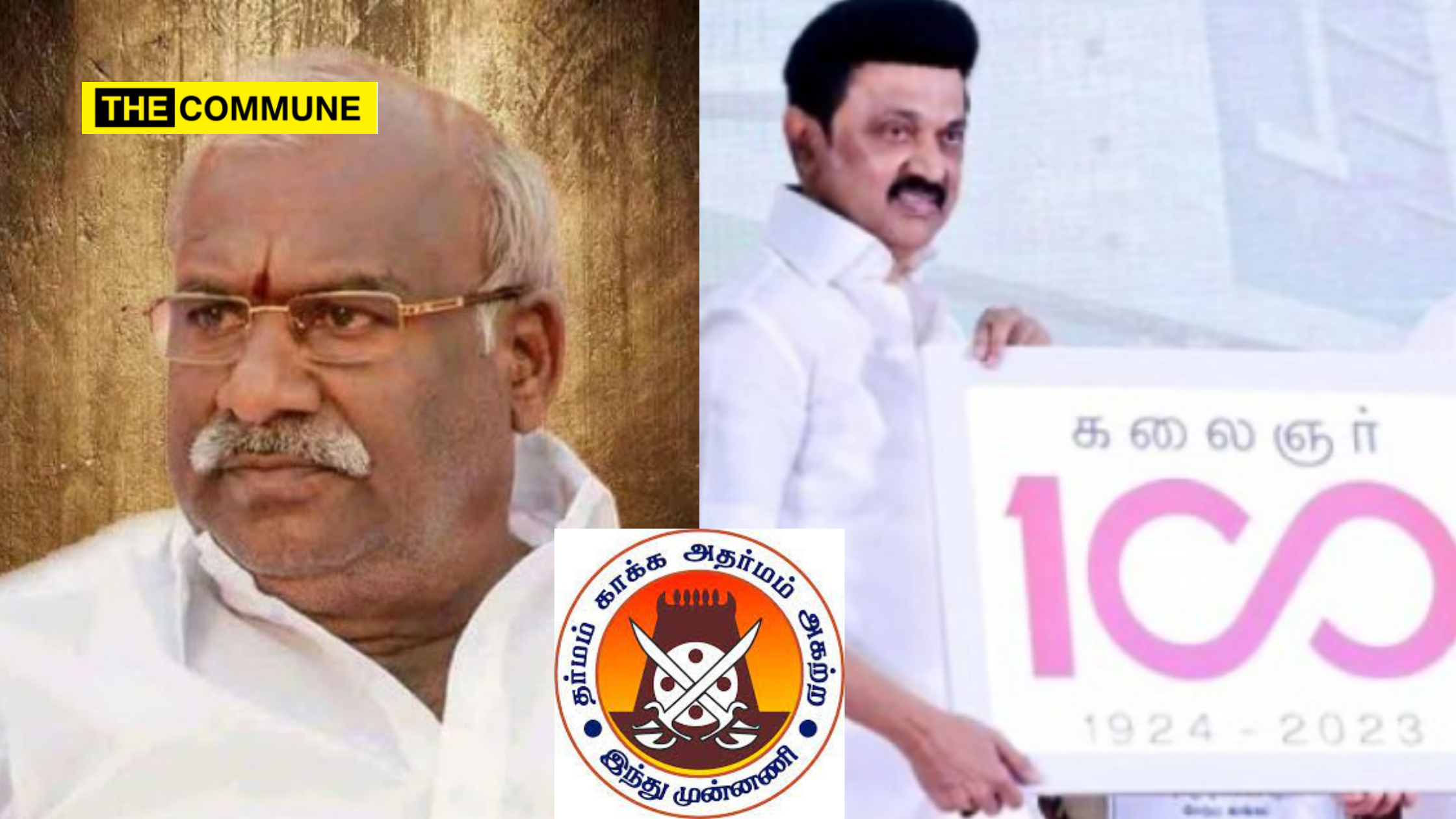
The Dravida Munnetra Kazhagam (DMK) government’s initiative to commemorate the centenary function of the late Chief Minister Karunanidhi through various competitions for school and college students under the banner ‘Kalaignar 100′ has sparked controversy. Critics argue that the programs are subtly designed to influence students with the party’s ideology, leading to concerns about the politicization of education.
Hindu Munnani State President, Kaadeswara Subramanium, has issued a press release strongly condemning what he perceives as the DMK’s attempt to indoctrinate students with their political views through school and college events.
Kaadeswara Subramanium said, “The school education department has announced competitions for school and college students on the occasion of the centenary celebrations of former Chief Minister Karunanidhi. It is reported that the District Collectors are forcing the government staff to conduct these events. It is to be noted that the topic chosen for these competitions looks like the topic given to DMK training camps, which has shocked parents and educators. ”
In addition, he remarked, “In schools, we observe the birthdays of different leaders. For instance, Karmaveer Kamaraj’s birthday is commemorated as Education Day, and former President Radhakrishnan’s birthday is celebrated as Teacher’s Day. There is typically no political dimension to these occasions. However, the direct imposition of Dravidian ideology through the events by the DMK government is unacceptable. Doing so is reprehensible. DMK dares to do such activities thinking that students as slaves of the state government.”
Kaadeswara Subramanium further said, “The government headed by Chief Minister Stalin is constantly focusing on his father Karunanidhi’s centenary celebrations and taking various measures which make people frown. DMK under MK Stalin is attempting to create historical markers for their family lineage. However, the act of imposing Dravidian ideology onto students’ minds, in this pursuit, can be viewed as contradictory to democratic principles.”
He expressed, “Within school textbooks, their images have been coercively integrated into the curriculum, accompanied by inaccurate narratives about Dravidian leaders. Fabrications such as the claim that Dravida Kazhagam president E. Ve Ramasamy received South Asia’s Socrates award from UNESCO have been incorporated into Tamil Nadu’s educational materials. Despite the falsehood of these assertions, students are compelled to both read and reproduce them as responses in examinations conducted by the Tamil Nadu government. This, in turn, risks instilling incorrect information into the minds of students. Despite the Tamil Nadu government acknowledging these inaccuracies within the syllabus, the school education department appears reluctant to rectify them. It’s noteworthy that certain media outlets, which are disseminating misleading information, have refrained from addressing this issue.”
Subramanium went on to say, “Hence, the Tamil Nadu government should discontinue these authoritarian endeavors of advancing their ideology under the guise of Karunanidhi’s centenary commemorations. On behalf of Hindu Munnnani, we earnestly beseech the school education department to disallow any endeavors to propagate Dravidian ideology, even if undertaken by private entities. Swift and appropriate measures should be promptly taken by the Tamil Nadu government to rescind the competition announcement. We implore you to avoid any delays that might trigger student protests.”
Click here to subscribe to The Commune on Telegram and get the best stories of the day delivered to you personally.
The Aatmanirbhar Bharat Rozgar Yojana (ABRY), an innovative employment incentive program by the Central Government, has exceeded its original goals for job creation, demonstrating its effectiveness in promoting employment growth and recovery amidst the COVID-19 pandemic.
Launched on October 1, 2020, the ABRY was formulated to encourage the emergence of fresh job opportunities by providing financial aid to employers of businesses registered under the Employees’ Provident Fund Organization (EPFO). This initiative aimed to motivate the hiring of unemployed individuals, including those who lost their jobs due to the pandemic. It covered both the employee and employer contributions (24% of wages) for establishments with up to 1000 employees, while larger establishments received coverage only for the employee’s EPF contributions (12% of wages) concerning new hires.
Initially open for registration until March 31, 2022, the ABRY had a target to benefit about 7.18 million workers throughout India. However, by July 31, 2023, the program had already enrolled over 7.58 million new employees, surpassing its initial target for job generation.
So far, a total of 152,380 establishments have taken advantage of the ABRY scheme, employing 6,044,155 new workers. Meeting all eligibility criteria, these establishments and employees have received benefits totaling Rs. 9,669.87 Crore under the program. The scheme ensures that benefits are disbursed based on specific eligibility conditions, met by beneficiary businesses and employees on a monthly basis.
The program has significantly contributed to the revival of the job market, highlighting its pivotal role in driving economic recovery during these trying times.
Click here to subscribe to The Commune on Telegram and get the best stories of the day delivered to you personally.
In a welcome move for consumers across the nation, the Union Cabinet announced a significant reduction in the price of the 14.2 kg LPG cooking gas cylinder on Tuesday. This price cut of ₹200 comes as a special gesture to celebrate the upcoming festivals of Raksha Bandhan and Onam. The announcement was made by Union Information and Broadcasting Minister, Anurag Thakur, who stated that this reduction is a gift extended by Prime Minister Narendra Modi to the women of the country.
Currently priced at around ₹1,100 per cylinder, the cost of a 14.2 kg LPG cylinder will now be reduced to ₹900, effective from Wednesday. This decision by the government aims to alleviate the financial burden on households, particularly given the festive season.
The price reduction isn’t limited to just the general public; it extends to the beneficiaries of the Pradhan Mantri Ujjwala Yojana (PMUY) as well. Under this scheme, which provides LPG connections to women from economically disadvantaged backgrounds, the price of a cylinder will now be ₹703. It is noteworthy that in March this year, the government had already extended a subsidy of ₹200 per LPG cylinder for beneficiaries under the PM Ujjwala scheme. Moreover, Anurag Thakur shared that the government is planning to distribute 75 lakh new LPG connections free of cost through the Ujjwala scheme, which currently supports 9.6 crore beneficiaries.
However, following the announcement of the price reduction in gas cylinders by the Central government, social media witnessed a surge in demands from Tamil Nadu residents for gas subsidies as promised by the Dravida Munnetra Kazhagam (DMK) in their 2021 election manifesto. An old video resurfaced featuring DMK leader MK Stalin vowing to provide a ₹100 per cylinder subsidy once the party came into power.
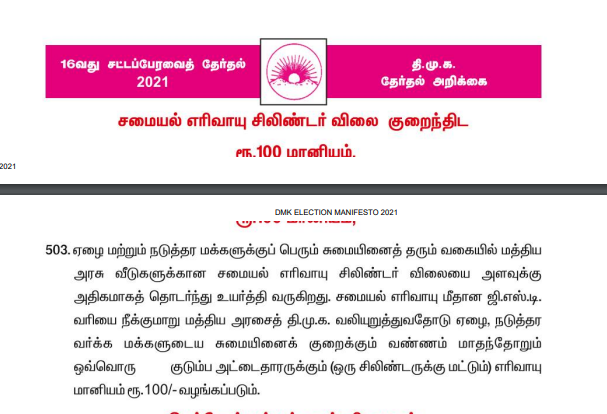
The 2021 election manifesto of DMK about gas cylinders states, “The central government has been excessively increasing the prices of domestic cooking gas cylinders, which puts a significant burden on the poor and middle-class people. DMK urges the central government to eliminate the GST tax on cooking gas to ease the burden on the poor and middle class. We promise to provide a monthly subsidy of Rs 100 per cylinder to every family cardholder.”
With over 2 years having passed since taking office, the DMK government’s failure to deliver the pledged subsidy has attracted criticism and negative attention. Interestingly, it’s important to note the linguistic shift in the manifesto. The DMK, which had been using the term ‘Maththiya Arasu’ (Central government) instead of ‘Ondriya Arasu’ (Union Government) – a term with secessionist undertones – in its 2021 manifesto, has discontinued this nomenclature after coming to power in 2021.
Click here to subscribe to The Commune on Telegram and get the best stories of the day delivered to you personally.
In a disturbing incident that occurred in Kathua, Jammu & Kashmir, a minor student attending a government school reportedly suffered physical assault at the hands of a lecturer and the school principal. The alleged reason for this assault was the student’s act of writing ‘Jai Shri Ram’ on the classroom blackboard. This incident transpired on 25 August 2023 at HSS Bani, with the victim being a tenth-grade student who required hospitalization due to the injuries sustained during the attack.
A video in which the student recounts the ordeal was widely shared on social media. In the video, he describes how he was subjected to severe beatings by his teacher, Farooq, and the school principal, all because he had written ‘Jai Shri Ram’ on the blackboard. It was only the next day that his father admitted him to the hospital.
The Kathua Police has confirmed the incident and taken action by filing an FIR against the two accused individuals. The charges include various sections of the Indian Penal Code, such as voluntarily causing harm, wrongful confinement, deliberate insult aimed at provoking a breach of peace, and criminal intimidation. Additionally, they have been charged under the Juvenile Justice Act.
The accused individuals in this distressing case are identified as the school Principal, Mohammed Hafiz, and lecturer Farooq Ahmed. The police have assured the public of a prompt arrest of both suspects. Furthermore, the government of Jammu and Kashmir has formed a high-level investigative committee, led by the Sub-divisional magistrate (SDM) of Bani, with the participation of other education officials to probe into the matter.
How Ravish Kumar Reacted
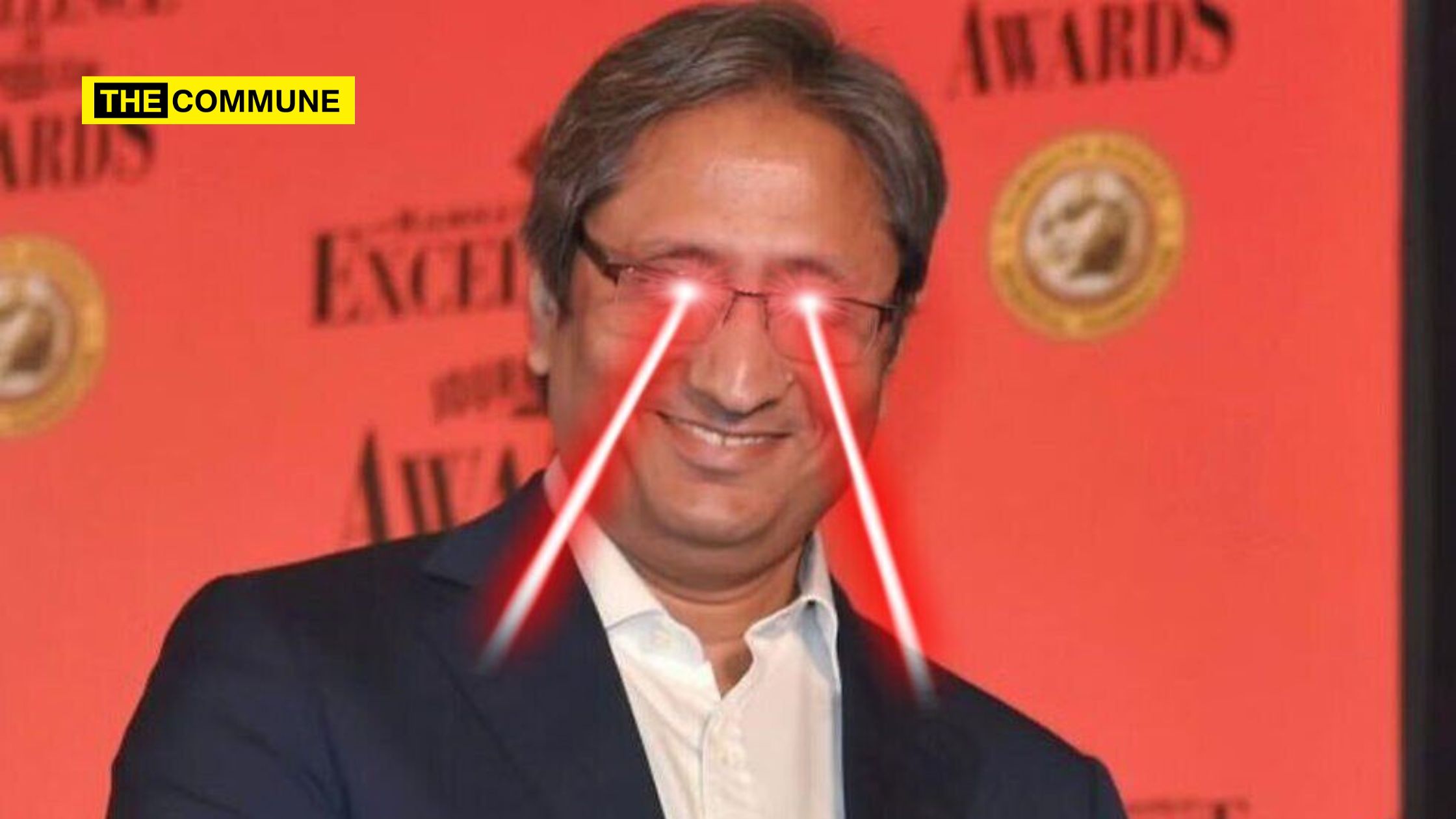
A clipping of a video featuring former NDTV journalist, Ravish Kumar, has been making the rounds on social media platform X.
Boy beaten brutally for writing Jai Shri Ram in Kathua school
Ravish first says there's nothing to prove incident is true, then shamelessly blames the kid for writing Jai Shri Ram. Is it a crime?
Same Ravish supported Hijab in school, shows kids pelting stones on Army as victim pic.twitter.com/ruiim3DPu2
In this video, Ravish Kumar is seen asking “serious” questions about the Kathua incident. While he starts by saying, that not much information is out there about the incident, he also asks questions like, “There is not much information about the Kathua incident. But it must be investigated as to why the student wrote Jai Shri Ram on the board, why he felt it had to be written, is the classroom the ideal place for this? how did this idea/thought come to his mind, because of which ideology, what have we done with this slogan? we cannot ignore the politics behind raising this slogan.”
In his 30-minute long video titled “Schools Poisoned by Communalism”, he speaks elaborately about casteism and communalism in schools. His focus is primarily on the Muzaffarnagar incident where a teacher allegedly told her students to beat another student (who happens to be a Muslim) because he failed to memorise the tables. He highlights that anti-Muslim venom is spreading in schools, colleges & private coaching institutes, and warns viewers that they must be wary of such things.
Love For Zubair
In the video, he doesn’t fail to show his support and solidarity to his fellow alleged journalist Mohammaed Zubair. He says, “Muhammad Zubair has exposed the truth of numerous hate videos; and prevented the spread of hatred. Not only this, he has also exposed the truth of many false videos made against the BJP, thus displaying exemplary journalistic ethics. But Amar Ujala has described him as an “alleged media person”!?”
He claims many statements on this incident have emerged and that the statements have also changed. He also states that the video was so horrifying that the “viewers’ minds went numb” and that “we all know there is much discrimination on religion and caste in Indian schools.”
Worry For The Kids
Next, he speaks about how the religious angle is being dismissed or made dubious, but there is no denial of slapping/hitting here. He also says, “It is bound to have an adverse effect on the kids. What will be the effect on the self-confidence of the kid who was slapped; the children asked to slap could likewise develop the audacity to hit anyone.”
Shifts Blame On Hindus
Next, Ravish Kumar goes on to say that since the father of the aggrieved child has said that there is no Hindu vs. Muslim angle and that the situation is fine, does this resolve the entire matter? He asks, “Is it not the truth of Indian schools that now, the audacity for anti-Muslim discrimination has even reached the Principals and teachers? Everyone knows what kind of things –picked up at their homes– the kids say to their fellow Muslim classmates. You will find tons of samples in the media reports.”
Book On Experiences Of Muslims In India
He then introduces a book named “Mothering a Muslim” by Nazia Iram. explores the experiences of Muslim mothers in South Delhi and other cities whose children face discrimination and bullying in schools. Muslim children are subjected to hurtful labels like “terrorists” and “Pakistani,” causing deep psychological impact. The book highlights that even young children are affected, with some as young as five years old experiencing religious-based bullying.
Nazia Iram interviewed Muslim mothers and found that around 85% reported that their children had been bullied on religious grounds, leading to beatings, bullying, and ostracization.
Selective News Reporting
He then picks out selective incidents from different parts of the country to prove that there is an inherent hatred for Muslims among the people. He says, “Schools & teachers infected with anti-Muslim politics & ideology will turn them into rioters.” In the case of the Muzaffarnagar episode, he claims that “the majority community should’ve also come forward”, thereby blaming the “majority community” Hindus for anything and everything that occurs.
Farmer Leaders
Next, he goes on to talk about “farmer leaders” with special mention to Rakesh Tikait – the one behind the Farm Laws protest that led to unrest. He claims that because of the hard work of those farmer leaders, who are “uniting people against the politics of Hindu vs. Muslim by holding Panchayats in Haryana villages day & night. After the Nuh riot, the farmer leaders have done a brilliant job. They are calling panchayats at various places and openly challenging the rioters. Consider this meeting of the United Kisan Morcha: this was its first mahapanchayat. Anti-Muslim activities are being openly condemned in these gatherings and the emphasis is on brotherhood. There are calls to avoid riots at all costs. This is a very good thing happening in Haryana villages. This is a grassroots-level protest. Farmer leaders have openly come out against anti-Muslim politics and have started talking about brotherhood.”
Lip Service For Kathua Incident
Finally, with just a few minutes to spare in the video, he comes to the Kathua incident. He says that the incident at Bani Government High School, Kathua district, J & K is no less dangerous. He claims, “The newspaper wrote that: according to the students, after he wrote ‘Jai Shri Ram’, the Urdu teacher Farooq Ahmed dragged the student to Principal Mohammad Hafiz, and he beat up the student severely. There is no further information about this incident, nor have we been able to gather more. In protest against this incident, the local people demonstrated outside the school; the huge crowd broke the school gates and entered the campus.
Compare & Contrast With Muzaffarnagar Incident
Ravish Kumar proves yet again, why he is worth every penny he is paid. He compares the fact that protests took place after the child was thrashed and says, “This could have endangered the safety of other students too. But in the Muzaffarnagar case, there were no crowds in protest; instead, leaders of different organizations came to persuade the father and bury the incident.”
He then warns parents saying, “You send the kids to study spending lakhs of rupees; even there, children are falling prey to this kind of politics. Where did they learn all this? Well, you do know very well! The communalism fires are burning in schools and colleges. From teachers to the school administration, children, their parents, grandparents, families… everyone is playing with fire. Everyone knows, no one is innocent. Your children are being made into future rioters through family and institutions. No one knows when they will kill someone, or break the law, all while shouting slogans and scuffling.”
Ravish Kumar – The True Sepoy
Like a true brown sepoy being faithful to his paymasters, Ravish churns out yet another false propaganda video focusing selectively on “anti-Muslim” sentiments, completely forgetting that there is another side to everything he says. He gave the Muzaffarnagar incident a communal angle while whitewashed the Kathua incident, just a less than 5 min lip service to the boy who had been thrashed by his teacher and principal for writing Jai Shri Ram on the board while blaming the boy for doing it and fearmongering that if this “fire” is not put out, children will turn into rioters in the future. Did he forget who instigated the Nuh violence, did he forget who did what to the Kashmiri Pandits?
Just for replying to a post derogating Hindu deities on social media, a huge mob gathered in front of a Hindu minor’s home in Bareilly late evening and gheraoed a police station too. Did Ravish Kumar bother to question that mob? Did it not endanger anyone’s life?
Did Ravish Kumar question why slogans such as “Sar Tan Se Juda” are raised every now and then by people of a particular community, does he not think that the same community has inferiority complex that even a slight comment on them can agitate them to such an extent? Or will he make songs similar to the ludicrous Monu Monu to shift the blame for every violent occurrence on Hindus?
Click here to subscribe to The Commune on Telegram and get the best stories of the day delivered to you personally.
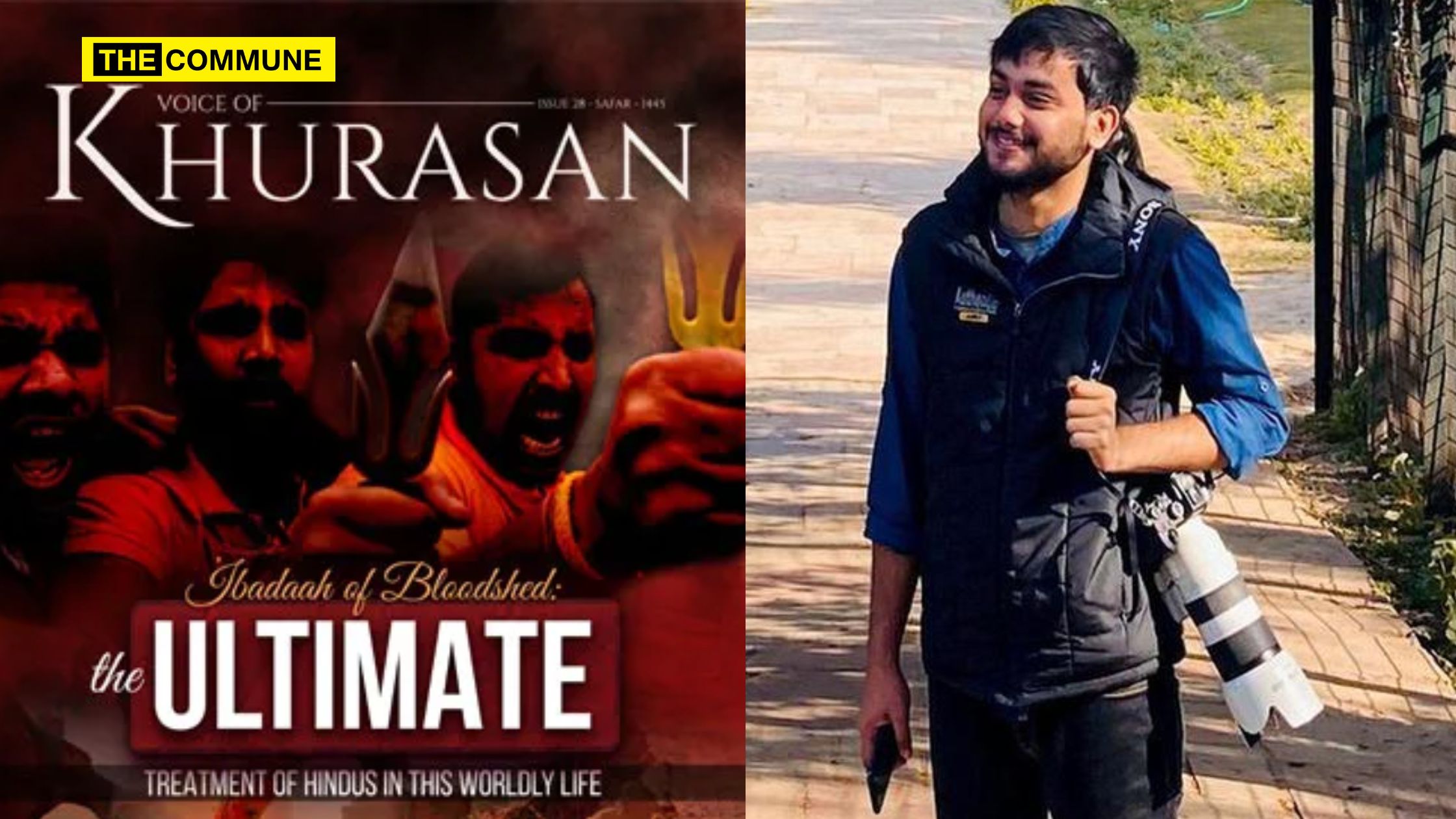
The Islamic State of Iraq and Syria (ISIS), also known as the Islamist State, has published the 28th edition of its propaganda magazine called “Voice of Khurasan”.
This magazine is released by the ISIS publication front al-Azaim Foundation. In this recent issue, the ISIS publication has targeted Hindus, particularly in the context of the Nuh violence that unfolded during the shobha yatra. The extremist group called for violent actions against Hindus, advocating for their killing, and the destruction of their homes, businesses, crops, and religious idols in the name of Islam.
Furthermore, the publication issued threats towards Anil Vij, the Home Minister of Haryana, due to his involvement in the demolition of illegal structures after the Nuh violence. ISIS seemed angered by the arrest of more than 500 suspected Islamists associated with the anti-Hindu violence in Nuh. They also pointed fingers at Monu Manesar and Bittu Bajrangi for allegedly inciting violence, despite police confirming their innocence in this matter.
According to OpIndia, in a chapter titled “Bring Back The Golden Ages of Crashing Idols,” ISIS labeled Hindus as cowards who were unable to repel Muslim invaders. They argued that British colonization was responsible for the decline of Muslim rule in India, while gloating over the destruction of Hindu temples during invasions. The publication also accused certain imposters within the Muslim ranks of aiding British efforts to suppress Islamic rule.
The article continued to accuse India and Hindus of oppressing and persecuting Muslims. It criticized Hindus for pursuing legal actions to claim the disputed structure at Gyanvapi. The article highlighted the emergence of the Ayodhya dispute and how it reflected a growing Hindu resistance against Islam and Muslims.
As the Indian Supreme Court permitted an archaeological survey of the disputed site, ISIS disparaged the court as “The Supreme Court of the Hindu Tawagheet,” using a term from Islamic doctrine that signifies worshiping entities other than Allah.
The article ultimately called for “Jihad” against Hindus, urging Muslims in India to engage in violence against them. It advocated for burning Hindus alive, destroying their properties, and employing various lethal methods to eliminate them.
Additionally, in another section titled “Ibadaah of Bloodshed: the Ultimate Treatment of Hindus in This Worldly Life,” ISIS targeted Anil Vij and accused him of permitting a Hindu procession armed with weapons through Muslim-majority areas in Nuh. They also blamed Monu Manesar and Bittu Bajrangi for allegedly inciting violence through social media videos, despite evidence to the contrary.
ISIS accused Hindus of killing an Imam and demolishing Muslim houses, while denouncing police actions and Supreme Court decisions. The group threatened to avenge what they saw as injustices committed by Hindus, calling for more violence against them.
The magazine also quoted Meer Faisal, an Islamist and a self-proclaimed journalist. He was cited in three posts from July 30, which ISIS likely used as a basis for its propaganda magazine.
Meer Faisal’s has history of spreading false information accusing Hindus of violence and promoting divisive narratives. He had once spewed venom saying all non-Muslims are the same, “kafirs” (an insulting term in Islam for those who don’t believe in Allah).
Click here to subscribe to The Commune on Telegram and get the best stories of the day delivered to you personally.
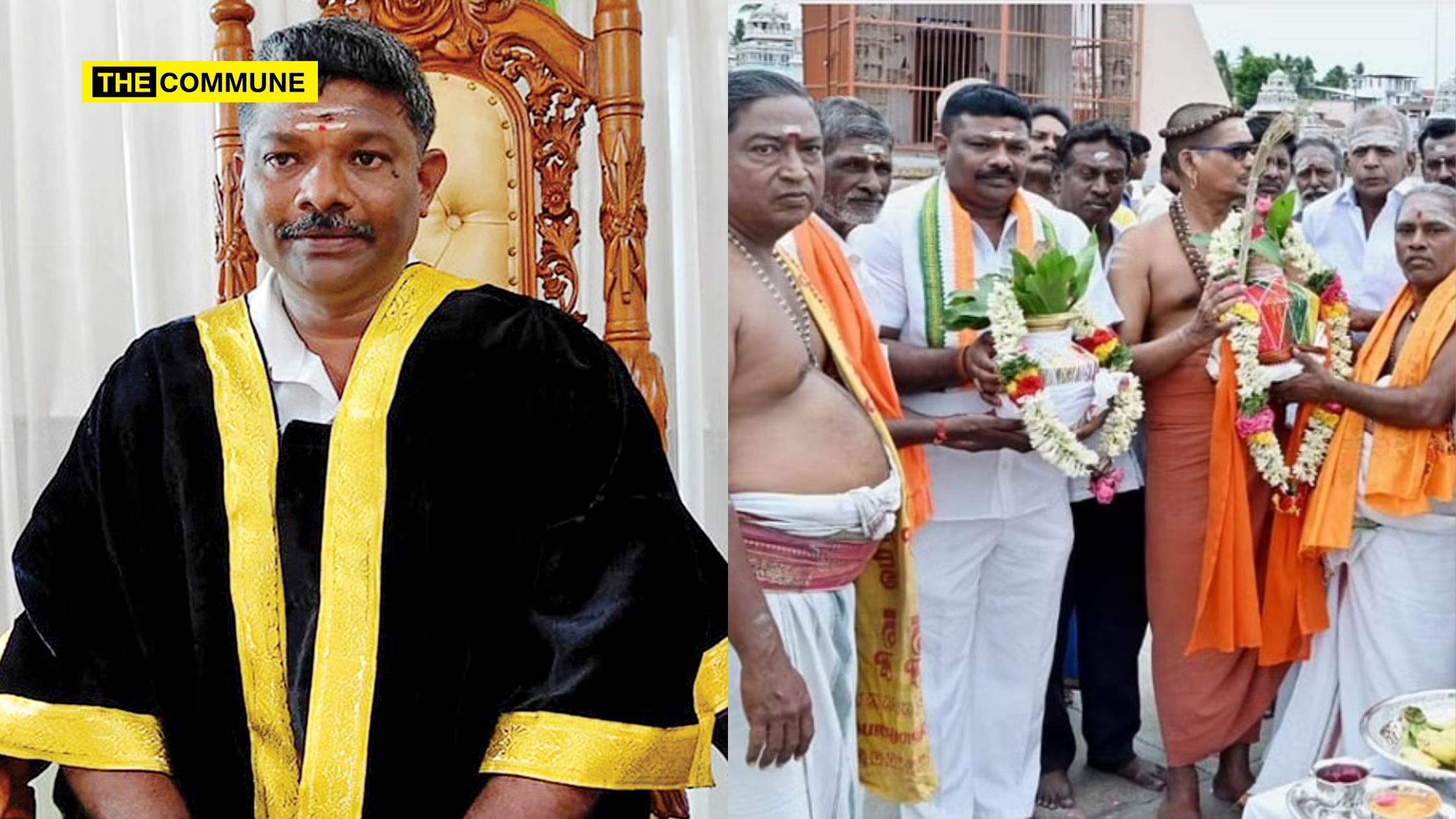
The meeting of the Kumbakonam Corporation was held a few days ago at the Corporation Hall under the chairmanship of Mayor K. Saravanan who belongs to the Congress party.
The Deputy Mayor S.P. Tamilazhagan and Corporation Commissioner Lakshmanan too participated. A large number of ward councillors belonging to different parties were in attendance.
Right after the meeting startedthe 4th ward councillor Benazir Nihar belonging to the Indian Union Muslim League objected to the Mayor participating in the event where Hindu organizations collected water from the Mahamaham tank to be sent for the Ayodhya Ram Janmabhoomi Temple Kumbabishegam ceremony.
She said “It is wrong of the Kumbakonam Mayor who belongs to the secular Congress party to have participated a few days ago, in an event where holy water from the Kumbakonam Mahamaham tank was sent to the Ayodhya Ram Temple for Kumababisheam ceremony, on behalf of Hindu organizations. He should explain why he acted in violation of his paty’s principles.”
It was also pointed out that members of his own party (Congress) had pasted wall posters condemning the Mayor for participating in it.
“This has caused embarassment for alliance parties like us.”, the IUML councillor Benazir Nihar added.
Responding to this, the Mayor reportedly said that it happened unexpectedly when he was on his way to partake in a protest.
“Since there was a delay in starting the protest I went to the Mahamaham tank. There the Suryanarkovil Adheenam met and spoke with me placed and the holy water laden pot in my hand and I had no choice but to accept it. This incident is no way related to me violating my party’s principles.”, Mayor Saravanan said.
Unsatisfied with the response, the Deputy Mayor Tamilazhagan advised the Mayor that he should fully realize the responsibility of a Mayor and act in such a way that he does not cause emabarassment to his party or his allies.