Home Blog Page 1143

Tamil Puthaandu Is On Chithirai 1 And Not Thai 1, Dravidoids’ Attempt To Christianize The Festival Must Be Rejected Lock, Stock & Barrel

tamil new year puthandu dmk

Puthaandu or the Tamil New Year marks the first day of the first month (Chithirai) of the Hindu Tamil calendar that is based on the solar cycle. It usually falls on the 14th of April of the English Gregorian calendar.

Not just by Tamil Hindus, the commencement of the new year is celebrated as Vishu in Kerala, Rongali Bihu in Assam, Pohela Boisakh in Bengal, Bishuva Sankranti in Odisha, Jud Sheetal in parts of Bihar, etc. Even countries like Malaysia, Indonesia, Bali, Cambodia, Laos, Sri Lanka, Thailand, etc also celebrate the traditional New Year around this time.

However, the DMK and other ‘Dravidian Stockists’ observe Pongal (which occurs around January 14) as Tamil New Year as they argue that celebrating Chithirai 1 as the beginning of a new year amounts to following a ‘Brahmin-dominated’ or Sanskritic tradition which goes against Dravidian ideologies.

But no matter how much the ‘Dravidian Stockists’ try to distort and deride our culture which is based on science, there is also enough evidence in ancient Tamil literature that the first day of the Chithirai month marks the beginning of a new year.

Evidence In Tamil Literature For Chithirai 1 Being Tamil New Year

“திண்ணிலை மருப்பின் ஆடு தலையாக விண்ணூர்பு திரிதரும் வீங்கு செலல் மண்டிலம்”

Thinnilai Marruppin Aadu Thalaiyaaga Vinnurpu Thiritharum Veengu Sella Mandilam

The above quote by Nakkeerar, a famous Tamil poet of the Sangam age, notes that the world runs with the goat (Mesha Rasi/Aries) as the first sign.

Not only in this Sangam song, many ancient Tamil songs that are about the astronomical predictions and changes in position of planets and starts.

Kudalur Kizhar is another poet of the Sangam era whose poems are part of the Kurunthogai (166, 167, 214) and Purananuru (229). In the poem in Purananuru, where he predicts the death of Chera ruler Yanaikatchei Mantharanj Cheral Irumborai (62-42 BC), he mentions Chithirai month and Mesha rasi.

In essence, the first month of the year is the month of Chithirai during spring when the Sun enters Mesha (Aries) zodiac sign. The year ends with the month of Panguni when the sun comes up in Pisces. This is the solar calendar that is followed across the country while there are many communities in different states that follows the lunar calendar.

Image
Source: India In Pixels

There is a reason why the harvest festival is celebrated in Thai (January) and the New Year in Chithirai (April). Earlier, after harvesting the crops in the Thai month (January-February) farmers take short period of rest in the months of Masi and Panguni (February-April) and start their farming again from Chithirai (April) which marks the beginning of the spring season.

Stanley Rajan, a Tamil blogger has written an essay in Tamil where he explains how ‘Chithirai 1’ as Tamil New Year is very much a Tamil practice. In the essay, he mentions a song called ‘Yermangalam’ in Silapathikaram which mentions a line ‘Chithira Mezhi Vaibhavam’ that talks about a festival marking the seasonal change for the Tamil people. It literally means that in the Chithirai month, the king will plow the land to mark the beginning of the new year.” He also quotes various other texts to help explain his point.

So, the festivals that we celebrate are part of ancient knowledge and tradition handed over to us by our ancestors. They also signify the rich cultural heritage of this land.

Hence, Puthandu is not a day that can be changed to the whims and fancies of a bunch of politicians and their stooges to peddle their nonsensical agenda.

Agenda Of DMK And Other Dravidian Stockists

The current DMK government wants to make the Pongal festival which falls on the Tamil month of ‘Thai’ as Tamil New Year. They say that old Tamil texts and history shows that Tamil New Year was actually celebrated in the month of January. They argue that after 2nd or 3rd Century BC, Sanskrit culture and language started influencing Tamil culture and language. Apparently, a few scholars saw details of the year beginning in Thai in classical Tamil literature, such as the anthologies of Sangam-era poems like Natrinai and Ainkurunuru and the grammar book Tholkappiam. But as we’ve seen above there is enough proof in ancient Tamil literature that busts these deliberate distortions.

The other argument put forth by the DMK and their minions is that Thiruvalluvar’s birth date was once found out to be in the month of January around 31 BCE, and the 60-year-cycle of the Sanskrit Calendar was replaced with the Tamil Calendar beginning with the Thiruvalluvar Era. So the argument is that, by the logic of following a calendar starting from the Thiruvalluvar era, the year should also begin at the same time.

But that’s no the real motive for the DMK. They want to attack the Hindu faith and debase Tamils from their Hindu roots.

The English New Year is celebrated on January 1st, which comes 6 days after Christmas, the day considered as the birth date of Jesus Christ. But, in Tembavani, Veeramamunivar says that the actual birth date of Jesus Christ is actually ‘Margazhi 25th’ which comes somewhere in the first week of January, before Pongal. So, it is being speculated that the party might want to make ‘Thai 1’ as Tamil New Year, in order to bring it closer to Jesus Christ’s actual birth date. The theory basically says that the idea behind changing the date is to Christianize the concept of Tamil New Year.

The decision to change the New Year isn’t new. Back in 2008, when the ruling government in Tamil Nadu was DMK, the then Chief Minister, M Karunanidhi passed the Tamil Nadu New Year (Declaration) Bill 2008, changing the Tamil New Year from Chithirai 1 (April 14th) to Thai 1 (January 14th or 15th).

This ridiculous change was in action for three years until it was rescinded by the AIADMK in August 2011. No matter how hard the inimical forces might try to delink Hinduism with Tamil culture, they will fail. Miserably.

The DMK’s move to delink Tamil and Hindu culture did not find any resonance with the Tamil people as Tamil people continue to celebrate New Year on Chithirai 1 rejecting the DMK’s move to the dustbin.

And it will remain there!

Tamil people should reject the DMK’s move to christianize Tamil culture lock, stock and barrel.

(With inputs from Sundar Raja Cholan‘s Facebook Post in Tamil)

Click here to subscribe to The Commune on Telegram and get the best stories of the day delivered to you personally.
Otto Von Bismarck: The Realpolitikal Statesman

Otto von Bismarck, the illustrious statesman of Prussia, is a towering figure in world history. Bismarck’s unshakable commitment to Realpolitik and his keen understanding of military strategy helped to unify Germany and make it a world power. He was a follower of the Machiavellian principle .With his formidable intellect, he could build alliances with neighbouring powers of Prussia and maintained a balance of power in Europe-something  that Europe strived for in every century. In Henry Kissinger’s words: “With a few brusque strokes, Bismarck solved the riddle that had stymied European diplomacy for two generations: how to unify Germany and reorganize Central Europe. He had to overcome the obstacle that Germany comprised 39 sovereign states grouped in the so-called German Confederation.”

Born on the first day of April in the year 1815 in the charming village of Schönhausen in Prussia, Bismarck’s life would be marked by a relentless pursuit of power and a singular vision of a united and strong German nation. His father, Karl Wilhelm Ferdinand von Bismarck was a Junker (landed nobility) estate owner and a former Prussian military officer and his mother, Wilhelmine Luise Mencken was the well-educated daughter of a senior government official in Berlin. The nobility and army of Prussia were predominantly from Bismarck’s ancestors, leaving a legacy that characterized his childhood and adulthood. Bismarck was educated at Johann Ernst Plamann’s elementary school, and the Friedrich-Wilhelm and Graues Kloster secondary schools, where he took a keen interest in learning German, Latin and history. In 1832, he joined the University of Goettingen to study law. As a student in the University of Goettingen, he fought many duels and made many friends. With an effortless fluency in French, English, and Russian, Bismarck was well equipped to navigate the complex and shifting political landscape of 19th century Europe

In 1838, Bismarck began a shortened compulsory military service in the Prussian Army and afterwards returned to Schönhausen, to run his family estates. In 1847, Bismarck, aged thirty-two, was chosen as a representative to the newly created Prussian legislature. There, he gained a reputation as a royalist and reactionary politician with a gift for incisive rhetoric. Throughout his reign, Bismarck has held many positions, including ambassador to Russia and Paris among many other positions. In 1851, he was appointed Prussian representative to the Federal Diet of the Confederation in Frankfurt where he strived to maintain Prussian supremacy. In 1859, he was moved to a new position in St Petersburg, Russia, however, he continue his struggle for Prussia within the confederation. On 23 September 1862, Wilhelm-I, the king of Prussia (Prussia was ruled by the House of Hohenzollern), appointed Bismarck Minister President and Foreign Minister. Bismarck took charge at a time when relations among the Great Powers (Great Britain, France, Austria and Russia) were at a low due to the Crimean War and the First Italian War of Independence. In the midst of this disarray, Bismarck’s plan was to restructure the European balance of power with the creation of the German Empire as the dominant power in continental Europe through diplomacy, reorganization of the army and military strategy. He gave the famous ‘Blood and Iron’ speech infront of the Budget Committee, when the Prussian House of Representatives weren’t willing to increase the budget for Prussian military. This was one of the first signs of Bismarck being a man of Realpolitik, and not a mere politician with oration skills.

Before unification, Germany was a collection of small kingdoms that came into existence following the Treaty of Verdun in 843 AD. These kingdoms would form the basis of the Holy Roman Empire. Yet, there was no homogenous German identity until the 19th century. This was in part due to the autonomy of the princely states and most inhabitants not ruled directly by the Emperor of the Holy Roman Empire largely identified with their prince instead of the German emperor. The scenario changed upon the defeat and dissolution of the Holy Roman Empire by France during the Napoleonic Wars in 1806. Even though a German Confederation was re-established following the French defeat in 1815, a huge wave of German nationalism swept through the region at the beginning of the 19th century

Bismarck’s political ideology was firmly rooted in the conservative tradition, which emphasized the importance of a strong monarchy and was suspicious of any activity or movement that would threaten the stability of the State. Bismarck was a proponent of Realpolitik, a pragmatic approach to politics that emphasized practical solutions over ideological purity. He recognized that military power was an essential component of national strength and was willing to use it to great effect in his efforts to unify Germany. Bismarck oversaw three major wars during his time in office: the Danish War of 1864, the Austro-Prussian War of 1866, and the Franco-Prussian War of 1870-71. In each of these conflicts, Bismarck was able to secure significant territorial gains for Prussia, which helped to strengthen the country’s position in Europe. The German Empire was formed on January 18, 1871, when King Wilhelm I of Prussia was proclaimed the Emperor of Germany at Versailles. 

Proclamation of the German Empire in the Hall of Mirrors, Versailles, France. Wilhelm I stand on the dais, and Bismarck wears white in the center of the painting. By Anton von Werner, public domain.

Once the German Empire was established, Bismarck skilfully pursued a policy of maintaining dominance and preventing large-scale armed conflicts within Europe. For this aim, Otto von Bismarck navigated with the principles of keeping France at bay – to avoid French revanchism. The second objective was to maintain cordial relations and form an alliance with Austria and Russia – the two other major powers. Emperor Kaiser Wilhelm I called Bismarck’s work in building and maintaining a complex system of alliances “juggling on horseback”, as it was incredibly delicate. Without a diplomat of Bismarck’s skill holding everything together, the system seemed likely to collapse. In 1871, Bismarck was raised to the rank of Fürst (Prince) and was also appointed as the first Imperial Chancellor of the German Empire.

As the Chancellor, Bismarck pursued a conservative state-building strategy in designed to make ordinary Germans—not just his own Junker elite—more loyal to throne and empire, implementing the modern welfare state in Germany in the 1880s.Some of the legislations passed during Chancellorship- Sickness Insurance Law of 1883, Accident Insurance Law of 1884 and Old Age and Disability Insurance Law of 1889. Germany, along with many parts of Europe, was affected by the Long Depression of 1870s. A downturn hit the German economy for the first time since industrial development began to surge in the 1850s. To aid faltering industries, the Chancellor abandoned free trade and established protectionist import-tariffs.

Just as everything comes to an end, Bismarck’s Chancellorship came to an end in 1890, over differences with the young monarch-Emperor Kaiser Wilhelm-II. It was the ultimate paradox that the man, who had dominated Europe by exalting stability, would conclude his career at the whim of a young inexperienced sovereign. The First World War broke out during Wilhelm-II’s reign.

After being active in German politics for few years, Bismarck retired to his estate near Hamburg, Germany and finally passed away on 30th July 1898, at the age of 83.Bismarck’s contribution to German society was immeasurable, and his legacy as a statesman and politician is still felt in Germany and Europe today. His efforts to modernize the country’s economy and infrastructure helped to make Germany one of the leading industrial powers in the world, and his social welfare policies improved the lives of the working class and reduced social unrest.

A number of geographical locations around the world have been named in Bismarck’s honour, the famous ones being Bismarck Sea, Bismarck Strait and Bismarck Archipelago. Indian freedom fighter and first Home Minister- Sardar Vallabhbhai Patel, who merged 500 princely states into India after it got Independence from the British, has been famously called as the Bismarck of India

In conclusion, Otto von Bismarck was one of the famous visionary statesmen in the history of Europe, whose life and accomplishments continue to inspire awe and admiration. Bismarck is often cited as the quintessential realist, relying on power at the expense of ideals. With an unshakable commitment to Realpolitik, a fierce intellect, and a singular vision of a united and strong German nation, Bismarck left an indelible mark on the course of history that will be felt for generations to come.

Click here to subscribe to The Commune on Telegram and get the best stories of the day delivered to you personally.
Traditional Millets Should Be Included In Our Diet: Sadhguru On Tamil New Year

Sadhguru, Founder- Isha Foundation, today extended the Tamil New Year greetings emphasizing the inclusion of traditional millet in the diet.

He said, “Happy Tamil New Year to all the Tamils in the world. In our Tamil culture, we call soil ‘Thaai Mann’ because, for thousands of years, we have been farming and realize the soil is the source of our life like our mother. However, in the last twenty or thirty years, we have left our soil unprotected. To protect our soil, we all should include millets like Pearl millet, Kodo Millet, Little millet, and Finger millet in our diet.”

“Tamil is not just a language. It’s our pride…In our Tamil culture, literature, everywhere, there were siddhas and yogis. Because how we are internally is important. We created a temple before creating a town. Our spirituality is more important than everything, whether it is the economy or family life. Because we want to live as a temple, we have kept a temple as an emblem of Tamil Nadu. This is Tamil culture. My blessings and best wishes for this Tamil New Year,” added Sadhguru.

(This is an official press release from Isha Foundation. The Commune was not involved in creating this content.)

Click here to subscribe to The Commune on Telegram and get the best stories of the day delivered to you personally.
Milords, Please Do Not Initiate Contempt Of Court For This Article

There is currently a heated debate over the state of India’s judicial system. Various government officials, including the Law Minister and Vice President, have made statements both for and against the need to overhaul the system. Recent decisions by the Supreme Court, such as involving the Chief Justice of India in selecting members and the Chief of the Election Commission, have fuelled this debate further by bringing in the points about the separation of powers and the proper role of the judiciary as envisaged in the constitution. Critics argue that judges participating in administrative processes could create conflicts of interest. This discussion follows demands to reform the judiciary, allegations of corruption against judges, and long-standing issues with court backlogs and vacancies. But time and time again the all-mighty judiciary has withstood attempts at reformation aimed at making the system transparent and has created a self-indulging towering institution that holds all the power without responsibility. In this context, as logical Indians we must debate and discuss about the system which presides over the country’s legal system. As the Lordships preside over matters of utmost importance to citizens, they must realise that no system is infallible, including Judiciary and citizens of the state want to witness a more transparent judicial system with checks and balances.

How Judges Who Upheld ‘Emergency’ Went Up The Ranks Without Accountability 

The case being referred to here is the ADM Jabalpur case of 1976, also known as the “habeas corpus case”. During the Emergency in India, several people were detained by the government without trial or legal recourse. A group of petitioners had filed writ petitions in the Supreme Court of India seeking the release of these detainees. However, in a controversial judgment, most of the judges in the Supreme Court, including Justice Yeshwant Vishnu Chandrachud, Justice K.K. Mathew, Justice Mirza Hameedullah Beg, and Chief Justice A.N. Ray ruled that during the Emergency, the right to life and personal liberty could be suspended, and that the courts could not interfere with the government’s actions, even if they were illegal. Only Justice H.R. Khanna dissented from the majority opinion and held that the right to life and personal liberty could not be suspended even during an emergency. The decision of the majority of judges in the ADM Jabalpur case has been widely criticized for eroding the independence of the judiciary and for upholding a gross violation of human rights. The fact that the family members of some of the judges who upheld the Emergency in this case have gone on to hold influential positions in the judiciary or government has led to further questions about the accountability and transparency of the judicial system. 

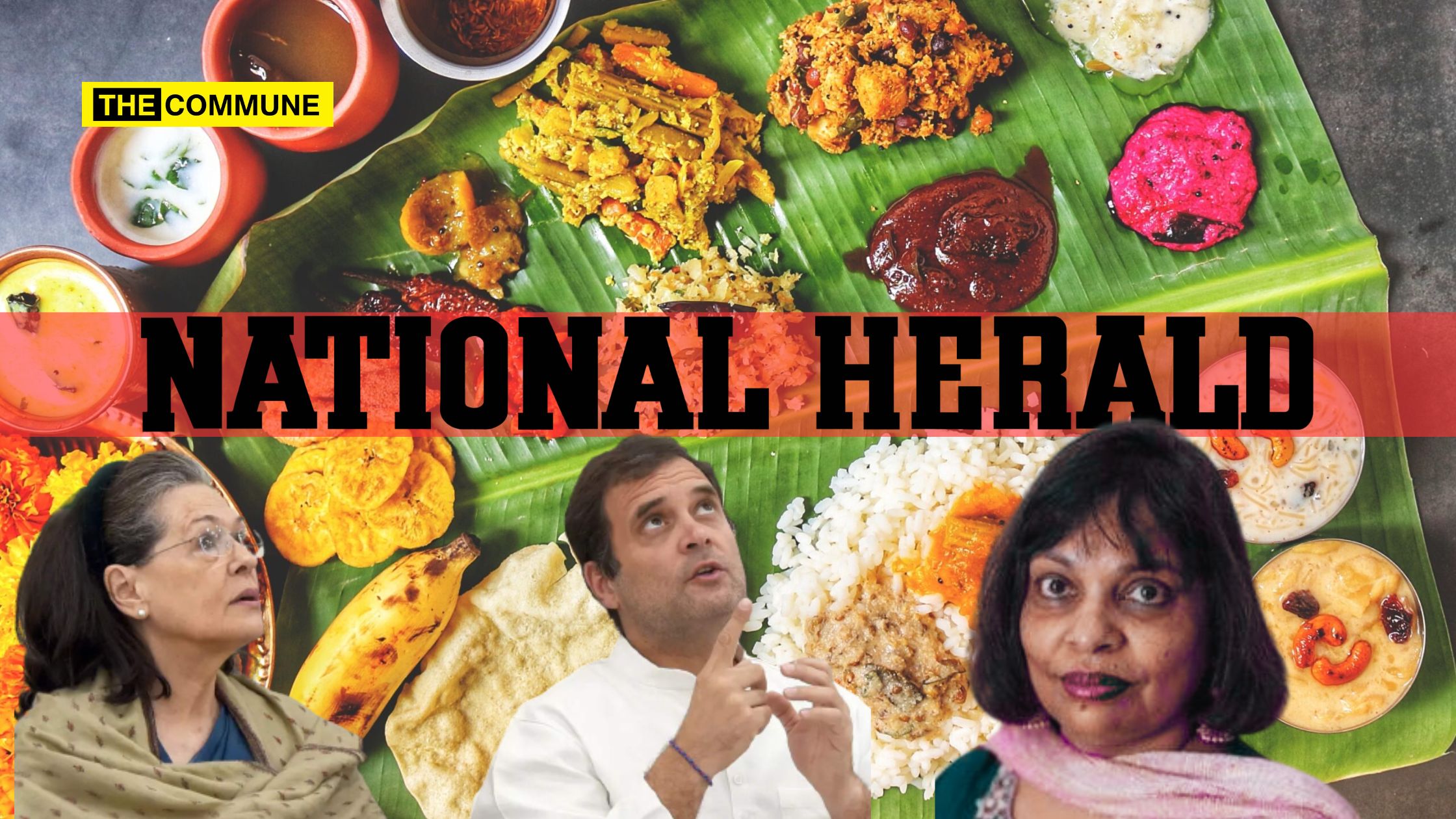
Justice YV Chandrachud was one of the judges who upheld the Emergency in India in the ADM Jabalpur case. After his retirement, he was appointed as the Governor of Maharashtra and then as the Chairman of the Press Council of India. His son, Dhananjay Chandrachud, is currently CJI of India. Justice KK Mathew is another judge who wrote in favour of the government in this case. After his retirement, he was appointed as the Chairman of the Law Commission of India. His son, Kurian Joseph, was also a judge in the Supreme Court of India. Another Judge was Justice Beg, after his retirement, he was appointed as the Chairman of the National Herald newspaper, which is a mouthpiece of Congress. Finally, Justice AN Ray, was the Chief Justice of India during the Emergency and had also upheld the Emergency in India in the ADM Jabalpur case. His son, Dipak Kumar Ray, was a judge of the Allahabad High Court and later served as the Chief Justice of the Patna High Court.

It is true that it is up for anyone to speculate whether there was a ‘quid-pro-quo’ or not between the judiciary and government then, but the situation has opened enough speculations that judges who wield the pen are no saints. 

Fallacy Of Judicial Appointment System 

In the days of ADM Jabalpur, it was an executive driven appointment system. To revamp it, the Supreme Court came up with a collegium system on its own albeit doubtful results, bypassing constitutional mandates. The current system of judicial appointment has emerged through the ‘Three Judges Case.’ It refers to 3 Supreme Court judgments in the 1980s-1990s that established the Collegium system for appointing judges to the higher judiciary. Before this, the appointment of judges was made by the executive branch of the government, which some believed led to political interference in the judiciary. Under the Collegium system, the Chief Justice of India, and a group of senior judges of the Supreme Court make recommendations for the appointment and transfer of judges in the higher judiciary. The system was designed to ensure the independence of the judiciary and prevent political interference in the appointment process. However, what emerged as a possible solution became a menace soon. The Collegium system has faced criticism over the years. The situation has become akin to the fence eating the crop. One of the main criticisms is that the process is not transparent, as there is no public disclosure of the criteria used to select judges or the reasons for rejecting candidates. This lack of transparency has led to allegations of nepotism and favouritism in the appointment process.

There have been several instances of criticism against the Collegium system, which is responsible for the appointment and transfer of judges in the higher judiciary in India. We must look at these instances which has come from within the judicial system to have an informed understanding. In 2015, a group of retired judges and lawyers wrote a letter to the then Chief Justice of India, H.L. Dattu, expressing concern over the lack of transparency in the Collegium system. They stated that there was no public disclosure of the criteria used to select judges or the reasons for rejecting candidates, which they believed led to allegations of nepotism and favouritism. In 2018, four senior judges of the Supreme Court held a press conference to publicly criticize the functioning of the Collegium system. Justices Jasti Chelameswar, Ranjan Gogoi, Madan Lokur, and Kurian Joseph alleged that the Collegium system was “opaque and arbitrary” and cited examples of allegedly deserving candidates being passed over for promotion or appointment. They also questioned the lack of diversity in the judiciary. In 2019, former Supreme Court judge, Justice A.K. Ganguly, had also expressed concerns about the lack of transparency in the collegium system, stating that the process was “opaque” and that there was no way to determine the criteria used for selecting judges. He had called for greater accountability and transparency in the appointment process. In 2021, former Supreme Court judge Markandey Katju criticized the Collegium system in an opinion piece in the Indian Express. He argued that the Collegium system was responsible for the appointment of “mediocre” judges and that the judiciary needed serious reform. He suggested that the appointment process should be made more transparent and that there should be a system of oversight to ensure that the best candidates were selected for the job. All these instances were after the attempted passing of NJAC and still judiciary is resisting the reforms. 

In 2015, the government had proposed the National Judicial Appointments Commission (NJAC) to replace the collegium system. However, the Supreme Court had struck down the NJAC, citing concerns over its constitutionality. But did the Supreme Court suggest an alternative path? The answer is ‘No’. The Supreme Court has not only stuck down something reformatory in the process but also held on to the system which has proven itself to be opaque, questionable, and disastrous for smooth functioning of Justice system. It seems that data tell us in India, ‘Justice is always denied because it was delayed.’

Judicial Priorities

The collegium system has also been criticized for its failure to address the issue of judicial vacancies. As of January 2022, there were over 400 vacancies in the higher judiciary, which has contributed to the growing backlog of cases in the Indian judicial system. According to data from the National Judicial Data Grid, as of December 2021, there were over 47 million pending cases in the Indian judicial system, including over 4 million cases pending in the high courts. Critics have argued that the collegium system is not equipped to handle the issue of vacancies and that a more structured process is needed. 

Instead of resolving this logjam, the current Chief Justice of India is more concerned about why the toilets in Supreme Court have only male and female signs and not a universal toilet where “gender non-confirming” people can come and relieve themselves.

Lack Of Diversity And Representation

Then there is the issue of lack of diversity in the judiciary. According to a report by the Vidhi Centre for Legal Policy, as of 2019, only 11.3% of judges in High Courts were from the Scheduled Castes (SC) and Scheduled Tribes (ST) communities, while these communities make up about 25% of India’s population. In the Supreme Court, the representation of SC/ST judges has been historically low, with only 6 out of the 247 judges appointed till September 2021 belonging to these communities. The representation of Other Backward Classes (OBCs) in the judiciary is also low. According to the same Vidhi report, as of 2019, only 12.5% of judges in High Courts were from the OBC community, while they make up about 41% of India’s population. In the Supreme Court, there have been only a few OBC judges till date. The case is same regarding representation of Christians and Muslims also. According to the same Vidhi report, as of 2019, only 6% of judges in High Courts were Muslims, while they make up about 14% of India’s population. The representation of Christians is even lower, with only 0.7% of judges in High Courts being Christians, while they make up about 2.3% of India’s population. With respect to gender, women are also underrepresented in the higher judiciary. As of 2021, there are only 11 women judges out of a total of 34 judges in the Supreme Court of India, and the representation of women in the high courts is also low. While judiciary has pushed through reservation and equal representation in all sectors, the same judiciary itself has fallen wayside in ensuring diversity in the judiciary.

The Controversies

Justice Ranjan Gogoi was appointed as the 46th Chief Justice of India in October 2018. However, in April 2019, he faced allegations of sexual harassment by a former female employee of the Supreme Court. The woman had submitted a complaint to the Secretary General of the Supreme Court, which was later placed before a three-member in-house committee consisting of Justices S.A. Bobde, Indu Malhotra, and Indira Banerjee. However, Justice Gogoi presided over the committee as its head, which led to criticism that he was presiding over his own case and that it violated the principles of natural justice. The principle of natural justice requires that a person cannot be a judge in his or her own case. The idea behind this principle is that a judge must be impartial and unbiased, and it is not possible for a person to be impartial in a case where they are personally involved. In Justice Gogoi’s case, critics argued that he should have recused himself from the committee to ensure that the allegations against him were investigated impartially. However, Justice Gogoi defended his decision to preside over the committee, stating that it was necessary to uphold the integrity of the judiciary. The matter sparked a debate about the independence and impartiality of the judiciary, as well as the need for better mechanisms to handle allegations of sexual harassment in the workplace. Ultimately, the in-house committee cleared Justice Gogoi of the allegations, but the controversy surrounding the case highlighted the importance of ensuring that the judiciary upholds the principles of natural justice and is accountable to the people it serves.

Another Chief Justice who was embroiled in controversy was N.V.Ramana. In 2014, the then Chief Justice of Andhra Pradesh High Court, Justice Kalyan Jyoti Sengupta, had written to the Chief Justice of India alleging that Justice Ramana was involved in a land scam in Andhra Pradesh.

The allegations pertained to the sale of government land in Amaravati, the proposed capital city of Andhra Pradesh, during Justice Ramana’s tenure as a judge in the Andhra Pradesh High Court. Justice Sengupta alleged that the land was sold to benami (anonymous) buyers at low prices, and that Justice Ramana’s name had come up in the investigation into the scam. In 2020, another controversy erupted when a letter written by Andhra Pradesh Chief Minister Y.S. Jagan Mohan Reddy was leaked to the media. The letter alleged that Justice Ramana was influencing the functioning of the Andhra Pradesh High Court to protect certain interests, and that he had close links with a former judge who had been implicated in a corruption case. Despite the allegations, Justice Ramana was appointed as the Chief Justice of India in April 2021.

These issues have been particularly concerning for any citizens as it has become difficult to believe judiciary only works in a transparent manner. The Lordships must address these concerns by standing up and facing the allegations, so that truth comes out. 

Please Do Not Initiate Another Contempt Of Court

There have been several instances of contempt of court in recent times in India showing the ‘thin skinned’ nature of Indian judiciary and the author fears that he will be one among them if the author proceeds further. One of the most prominent cases in recent times showing this thin-skinned nature was against senior lawyer Prashant Bhushan, who was held guilty of contempt of court for his tweets criticizing the judiciary. But the attempt of judiciary to bend his knees failed as he filed a review on top of only paying 1 rupee in fine. Another case was against stand-up comedian Kunal Kamra, who was accused of contempt for his tweets against the Supreme Court. The Delhi High Court also initiated contempt proceedings against news anchor Amish Devgan for his derogatory remarks against a Sufi saint. Indian judiciary is intolerant of criticism and dissent and it is evident from these instances. It seems that the only instance where in the Hon’ble Court indulge in allowing dissent is only in judgements.

There is an old proverb even though its origin is not clear it holds true in case of Indian Judiciary “The caravan moves on and the dogs bark.”  

This quote means that despite obstacles or criticisms, progress will continue to happen. The Indian judiciary shall welcome the reforms to allay fears of citizens and to set aside concerns regarding its functioning. If the concerns of citizens are set aside the judiciary is ought to lose the trust of people whose rights it intends to protect. Thus, your Lordships may accept this humble petition to reform our precious judiciary.

Click here to subscribe to The Commune on Telegram and get the best stories of the day delivered to you personally.
Subbulakshmi Paati’s Heartening Letter To PM Modi

PM Awas Yojana: 88 Lakh Houses Given To Urban Poor Since 2015

CR Kesavan, the great-grandson of the country’s first Indian Governor-General C Rajagopalachari, met with Prime Minister Narendra Modi in New Delhi on Wednesday after joining the Bharatiya Janata Party (BJP). During the meeting, he shared a ‘touching’ letter written by his house cook, N Subbulakshmi, with PM Modi.

PM Modi took to Twitter shortly after the meeting ended to share the letter. According to Prime Minister Narendra Modi’s Twitter post, Subbulakshmi, who is from the Tamil Nadu district of Madurai, has battled financial problems her entire life. She did, however, thank the Prime minister for the PM Awas Yojana, which enabled her to build a new house despite financial constraints.

Subbulakshmi also mentioned in the letter how her first home gave her respect and dignity. She sent a picture of the newly built house through Kesavan to get it autographed by PM Modi as a gesture of gratitude and blessings. PM Modi signed on the photograph of Subbulakshmi’s house and wrote that it is blessings like this that give him great strength.

PM Modi on his Twitter handle, said, “Today I met @crkesavan who shared a very touching letter from N. Subbulakshmi Ji, who works as a cook in his house. Hailing from Madurai, N. Subbulakshmi Ji faced many challenges including financial problems. She successfully applied for a home under the PM Awas Yojana.”

He further said, “Like N. Subbulakshmi Ji, there are countless people whose lives have been changed due to the PM Awas Yojana. A home has brought a qualitative difference in their lives. This scheme has been at the forefront of ushering women empowerment too.”

Here is her full letter translated from Tamil to English.

I am N.Subbulakshmi hailing from Thiruvedakam village near Cholavantan in Vadipatti taluka of Madurai district, Tamil Nadu. I belong to very backward Arunthathiyar community (Scheduled Caste).

My family was pushed into backwardness as we battled to make ends meet on a daily basis. I now work as a cook at Rajaji’s great grandson CR Kesavan’s house.

I recently applied for a house in our Madurai plot through the Pradhan Mantri Awas Yojana on February 4, 2021, and received ₹2,10,000 in four installments under the scheme. We have now constructed our generation’s first cement house.

This building has given us a sense of dignity and respect. We have benefitted a lot by this scheme and we are living a dignified life in our hometown. The main reason for this is the government and its plans, which are being implemented under your leadership.

On behalf of my family and the people of the country who benefited from this scheme, I pray to God that your government and your programmes continue to expand.

Pradhan Mantri Awas Yojana was launched on 25th June 2015 and intends to provide housing for all. The Mission provides Central Assistance to the implementing agencies through States/Union Territories (UTs) and Central Nodal Agencies (CNAs) for providing houses to all eligible families/ beneficiaries against the validated demand for houses for about 1.12 cr. According to the data, over 73 lakh people have finished constructing their new homes under the scheme. Meanwhile, the government claims to have spent a total of 8.28 lakh crore on the scheme’s implementation.

Click here to subscribe to The Commune on Telegram and get the best stories of the day delivered to you personally.
Baby Elephant Dies After Falling Into Water Tank Of Actor Sathyaraj Relative’s Unused Bungalow Located In Elephant Path

A baby elephant died after falling into the water tank of actor Sathyaraj’s sister’s house in the Periyanaayakkan Palayam area of Coimbatore.

Elephants thrive in the forest areas adjacent to Coimbatore’s hill areas. The wild elephants of the Western Ghats, particularly those near Periya Nayakkan Palayam, frequent Thondamuthur for food and water. Wild elephants used to visit the foothills of this region in groups or individually for water.

Aparjitha, a relative of actor Sathyaraj, owns a bungalow near the forest area in Coimbatore’s Periyanaayakanpalayam district, where elephants used to cross in large numbers. According to locals, Sathyaraj’s relative will rarely use this bungalow.

In this case, an unpleasant stink had been noticed by the local residents near the house a few days ago. When the bungalow workers went to investigate, they discovered that a baby elephant had fallen and died in the water tank on the ground floor of the house.

The forest department was immediately notified, and a team comprised of a Periyanayakanpalayam forest officer and anti-poaching guards went there to investigate. A physical examination of the baby elephant was conducted, under the supervision of Forest Veterinarian Dr. Sukumar and Govanur Government Veterinary Assistant Vetrivel, in the presence of District Forest Officer Jayaraj.

It was discovered that the deceased was a female baby elephant aged one to two months which died four to five days ago. The baby elephant got abrasions on its legs and head when it fell into the water tank. As there was not enough air inside the tank, the elephant died of suffocation.

Following the incident, the water tank where the baby elephant died was permanently closed. Netizens and local residents demanded that the house, which was rarely used and was causing disturbances to the wild elephants, be completely demolished and that action be taken against Sathyaraj’s relative for her negligence.

(With inputs from Dinamalar)

Click here to subscribe to The Commune on Telegram and get the best stories of the day delivered to you personally.
PM Flags Off Rajasthan’s First Vande Bharat Express Between Ajmer And Delhi Cantt

The Prime Minister, Shri Narendra Modi flagged off Rajasthan’s first Vande Bharat Express train via video conferencing today.

Addressing the gathering, the Prime Minister congratulated the land of valour Rajasthan for getting its first Vande Bharat Train that will not only ease the travel between Jaipur Delhi but will also give a push to the tourism industry of Rajasthan as it will help the access to places of faith like Theerthraj Pushkar and Ajmer Sharif.

In the last two months, the Prime Minister recalled getting the opportunity to flag off six Vande Bharat trains in the country including the Delhi-Jaipur Vande Bharat Express and gave the example of Mumbai-Solapur Vande Bharat Express, Mumbai-Shiridi Vande Bharat Express, Rani Kamlapati-Hazrat Nizammuddin Vande Bharat Express, Secunderabad-Tirupati Vande Bharat Express and Chennai Coimbatore Vande Bharat Express. The Prime Minister pointed out that approximately 60 lakh citizens have traveled in the Vande Bharat Express since its inception. “The speed of Vande Bharat is its main speciality and it is saving the time of people”, the Prime Minister said. According to a study, the Prime Minister noted that those who travel by Vande Bharat express save 2500 hours on every trip. He highlighted that the Vande Bharat Express is developed while keeping in mind manufacturing skills, safety, fast pace and beautiful design. Reiterating that the citizens have highly appreciated the Vande Bharat Express, the Prime Minister said that the Express train is the first semi-automatic train to be developed in India and one of world’s first compact and efficient trains. “Vande Bharat is the first train to be compatible with the indigenous safety Kavach system”, Shri Modi said. He pointed out that it is the first train to scale the heights of Sahyadri Ghats without needing an extra engine. “The Vande Bharat Express realizes the spirit of ‘ ‘India First Always First’”, he said. The Prime Minister expressed delight that the Vande Bharat Express has become synonymous with development, modernity, stability and ‘Atmanirbharta’.

The Prime Minister lamented the fact that an important and basic need of the citizens like railways was turned into an arena of politics. He said India inherited a fairly big railway network at the time of Independence, but political interest dominated the need for modernization in the years after independence. Politics was evident in selection of railway minister, announcement of trains and even in recruitments. Land acquisition was done under the false pretense of railway jobs and many unmanned crossings continued for a very long time and cleanliness and safety took a back seat. The situation took a turn for the better after 2014 when people elected a stable government with full majority, “When the pressure of political give and take receded, railway heaved a sigh of relief and sprinted to new heights” he said.

The Prime Minister said that the government at the center is making Rajasthan a land of new opportunities. He said that the central government has done unprecedented work for the connectivity that is so important for a state like Rajasthan which has tourism as an important part of its economy. Shri Modi mentioned the dedication of Delhi Dausa Lalsot section of Delhi Mumbai Expressway in February. The section will benefit Dausa, Alwar, Bharatpur, Sawai Madhopur, Tonk, Bundi and Kota districts. The Prime Minister informed that the central government is working on about 1400-kilometer-long roads in the border areas in Rajasthan and more than 1000-kilometer-long roads are proposed in the state.

Underlining the priority that is being accorded to connectivity in Rajasthan, the Prime Minister mentioned starting of work on the railway line from Taranga Hill to Ambaji. This line was a century old pending demand which is now being fulfilled. He also informed that broad gauging of Udaipur-Ahmedabad line has already been completed and more than 75 percent railway network has been electrified.  Shri Modi remarked that the railway budget for Rajasthan has been increased 14 times since 2014, from 700 crore in 2014 to more than 9500 crore rupees this year. Speed of doubling of the railway lines also doubled. The gauge change and doubling has helped tribal areas like Dungerpur, Udaipur, Chittorgarh, Pali and Sirohi. Dozens of stations are being upgraded under Amrit Bharat Railway Yojana, he added.

Keeping in mind the convenience of the tourists, the Prime Minister informed that the government is also running different types of circuit trains and gave the example of Bharat Gaurav circuit trains that have made more than 70 trips so far ferrying more than 15 thousand passengers. “Be it Ayodhya-Kashi, Dakshin Darshan, Dwarka Darshan, Sikh pilgrimage sites, Bharat Gaurav circuit trains have been run for many such places”, the Prime Minister said. Noting the positive feedback received on social media by those traveling, the Prime Minister said that these trains are continuously strengthening the spirit of Ek Bharat – Shreshtha Bharat.

The Prime Minister highlighted the One Station One Product campaign and said that Indian Railways has made another effort over the years in taking the local products of Rajasthan across the country. He pointed out that Indian Railways has set up around 70 One Station One Product Stalls including Rajasthan Jaipuri quilts, Sanganeri block print bed sheets, rose products, and other handicrafts that are being sold in these stalls. He noted that small farmers, artisans and handicraftsmen of Rajasthan have got this new medium to reach the market. Concluding the address, the Prime Minister said that this is an example of everyone’s participation in development. “When the infrastructure of connectivity like rail is strong, then the country is strong. This benefits the common citizen of the country, benefits the poor and middle class of the country”, the Prime Minister concluded and expressed confidence that the modern Vande Bharat train will play an important role in speeding up the development of Rajasthan.

The inaugural train will run between Jaipur and Delhi Cantt. railway station. The regular service of this Vande Bharat Express will start from 13th April 2023 and will operate between Ajmer and Delhi Cantt with stops at Jaipur, Alwar and Gurgaon.

The new Vande Bharat Express will cover the distance between Delhi Cantt. and Ajmer in 5 hours 15 minutes. The present fastest train in the same route, Shatabdi Express, takes 6 hours 15 minutes from Delhi Cantt. to Ajmer. Thus, the new Vande Bharat Express will be faster by 60 minutes as compared to the present fastest train running on the same route.

Ajmer-Delhi Cantt. Vande Bharat Express will be the world’s first semi high speed passenger train on high rise overhead electric (OHE) territory.  The train will improve connectivity of major tourist destinations in Rajasthan including Pushkar, Ajmer Sharif Dargah etc. Enhanced connectivity will also provide a boost to socio-economic development in the region.

(With inputs from PIB).

Click here to subscribe to The Commune on Telegram and get the best stories of the day delivered to you personally.
 

India’s Covid Success Story, A Role Model In Crisis Management Says Union Minister Dr Jitendra Singh

Union Minister of State (Independent Charge) Science & Technology; Minister of State (Independent Charge) Earth Sciences; MoS PMO, Personnel, Public Grievances, Pensions, Atomic Energy and Space, Dr Jitendra Singh said here today that India’s Covid success story is hailed the world over as a role model in Crisis Management.

Delivering the inaugural address of the National Conference on “Disaster Resilient Methodologies on Pandemic” at Jawaharlal Nehru University (JNU) here, Dr Jitendra Singh said that India’s Covid management was hugely successful under the able leadership of our Prime Minister Shri Narendra Modi. During the Covid pandemic, when the world thought that India would be the biggest Covid hotspot, we emerged stronger and within 2 years, came out with 2 vaccines and provided the same to more than 50 countries around the world, he added.

Dr Jitendra Singh said that as compared to other countries, India’s strategy against Covid was more effective than any other countries in the world. Due to this pandemic we got to know the loopholes as well as strengths of our system. He added that from the very onset of the pandemic, Prime Minister Modi used to personally monitor the Covid management twice a day.

The Minister said that India has deep and strong inherent potential. Before Covid, the country was not known for preventive healthcare. But turning the adversity into a virtue, India emerged as a role model of Preventive healthcare. This is one of the best success stories India under Prime Minister Modi has given to the world. It has raised our esteem on the global stage, he added.

Dr Jitendra Singh said that with each challenge the country has emerged stronger, and this is because right from May 2014, our Prime Minister has been preparing the nation for different catastrophes. Citing the assistance provided by India during the 2015 Nepal earthquake or launching the SAARC satellite, he said that we are serving not only our community but also our neighbouring communities which is a practice very much rooted in our Indian ethos.
The Minister said that during the first lockdown in that disastrous and chaotic situation, NGOs, government and corporates came together to tackle this situation. SPARC, Pune and RSS Jankalyan Pune sheds light on work done regarding the same during these times in the form of case studies which are to be published today. Though the books consist of case studies of western Maharashtra, I believe that it is a short representation of the work done in the GVP model in entire India. Such practical knowledge which can be gained by case studies in this book should serve as reference in all the disaster management centers / institutes and universities, he added.

The Minister mentioned that Covid has not only taught us how to handle adversity but has generated unexplored interest in biotechnology among the youth. He added that before 2014, there were only 50 biotech StartUps, but now there are almost 6,000. Also, India’s bioeconomy has grown 8 times in the last 8 years under Prime Minister Modi from $10 billion in 2014 to over $80 billion in 2022.

Dr Jitendra Singh concluded by saying that today’s youth will define India at 2047 when India will celebrate its freedom centenary as they have the privilege and opportunity to contribute to the making of ‘New India’ as envisaged by Prime Minister Narendra Modi.

(With inputs from PIB)

Click here to subscribe to The Commune on Telegram and get the best stories of the day delivered to you personally.

CPI (M) MP Su Venkatesan Peddles Lies Again, This Time About Revocation Of Recognition Of Volleyball & Basketball Training Centers In Tamil Nadu

CPI(M) leader Su Venkatesan, a Member of Parliament from Madurai who is known for deliberately misinterpreting Central Government circulars and notifications to spread the narrative that the BJP-led central government is discriminating against Tamils, has now concocted yet another half-truth regarding Sports Authority of India.

Quoting the circular of Sports Authority of India (No. 518/SAI/OPS/STC Review/2022-23), dated 5 April 2023, Communist MP Su Venkatesan said that the only volleyball training center in Tamil Nadu has been shifted to Varanasi and that orders are passed to cancel the recognition of volleyball and handball training centers in Mayiladuthurai.

He added, “Another training center in Tamil Nadu, Salem, has basketball accreditation, but there are no vacancies for women. There is no other volleyball training center in Tamil Nadu. So, where will Tamil Nadu’s female athletes go for volleyball and basketball training? This is discrimination against Tamil Nadu.”

He urged the Union Minister for Youth Affairs and Sports Anurag Thakur to withdraw what he claimed as an “unjust order”.

However, the MP is incorrect on multiple counts. Firstly, the circular mentioned by the MP Su Venkatesan is applicable to only the STCs. STC is the SAI (Sports Authority of India) Training Centres. Presently there are only 2 STCs in Tamil Nadu. Therefore, the circular is not applicable to the entire state of Tamil Nadu but only to the 2 STCs. However, MP Su Venkatesan attempted to portray that the entire Volleyball and Basketball training for women in Tamil Nadu is coming to a standstill after the order.

The STC scheme is aimed at grooming junior-level sports persons in the age group of 10-18 years who have been scouted from the grassroots. Facilities provided to the trainees include boarding, sports kit, stipend, competition exposure, education expenses, medical, insurance, and other expenses. Presently there are 67 STC Centers in the country having a total strength of more than 4800 trainees.

For strengthening the potential STCs with sufficient FoPs (Field of Play) and accommodations, the Sports Authority of India has revised the strength of each SAI Training Center. Based on infrastructure availability, the strength of intake in certain sports was increased while others were decreased across India. As a result, some sports covered by STCs in Tamil Nadu saw an increase, while others saw a decrease.

It should be noted that nowhere in the circular posted by Su Venkatesan it is mentioned that the recognition of Volleyball and Basketball training centers in Mayilaaduthurai will be revoked. However, the MP preferred to use the phrase “revocation of recognition” for Volleyball and Basketball training centers in Mayilaaduthurai in order to peddle a false propaganda that the Union Government is discriminating Tamils.

Though the Sports Authority of India’s circular makes changes to the existing strength of the STCs, the circular clearly states that the regional directors have the final say on whether to increase or decrease the strength for which adequate accommodation and FOPS are available. However, MP Su Venkatesan  ignored this part to peddle his lies.

Sports Authority of India circular reads, “If there is a need of increasing/decreasing the strength in any discipline adding/ deleting any discipline for which sufficient accommodation and FOPS are available, Regional Director may take up this separately by giving suitable justification.”

Su Venkatesan has employed this tactic of “North vs South” several times in the past to incite Tamil people against BJP and North Indians. He has went to the extent of peddling blatant lies in such attempts.

It is important to mention that leading news outlets like Vikatan and others, without verifying the facts, have published this lie of MP Su Venkatesan. This is the second time within a fortnight, the Communist MP has peddled lies by misquoting central government circulars. Last week, he lied about Hindi being made mandatory for the Loco Pilot who drives the Chennai to Coimbatore Vande Bharat Express during the inauguration by Prime Minister Narendra Modi.

Click here to subscribe to The Commune on Telegram and get the best stories of the day delivered to you personally.
TN BJP Leader Arrested Allegedly For Remarks Against MK Stalin & DMK Min Senthilbalaji

Vice President of Tamil Nadu BJP’s Industrial Cell Mr. Selva Kumar was arrested by the Tamil Nadu police on Wednesday (12 April 2023) morning.

He has been arrested allegedly for criticizing Tamil Nadu Electricity and Liquor Minister Senthilbalaji. Initial reports say he was arrested for calling Senthilbalaji as “Ganja Balaji” owing to the rising drug menace in the state.

It is said that he was arrested by the cyber crime police allegedly on the basis of instructions from the DGP office and has been charged under two sections. The complaint was reportedly filed by a DMK IT Wing functionary named C. Harish.

Allegedly, Selva’s close aides nor their advocate were not informed about the reason for Selva’s arrest.

It is noteworthy to mention that Selva Kumar’s arrest comes in light of BJP Tamil Nadu President K. Annamalai declaring that he will be releasing the asset details of DMK Ministers and leaders.

Annamalai has also put a social media post condemning Selva Kumar’s arrest saying “I strongly condemn the DMK government for arresting Mr. Selva Kumar, the state vice president of the Tamil Nadu BJP industrial unit. By arresting those who speak out against the wrongdoings of the ruling party the incompetent DMK government dreams of suppressing voices against the ruling party and stifling freedom of expression. BJP Tamil Nadu cadres won’t be afraid of such intimidatory tactics.”

Selva Kumar has been a vocal critic of DMK especially its Minister Senthilbalaji. Earlier, BGR Energy, a company whose promoters are believed to be backing the ruling DMK in Tamil Nadu, had issued a legal notice to BJP Tamil Nadu President K. Annamalai and Selva Kumar for an alleged ‘defamatory tweet’ in light of the corruption allegations against the state electricity department.

Click here to subscribe to The Commune on Telegram and get the best stories of the day delivered to you personally.