Home Blog Page 113

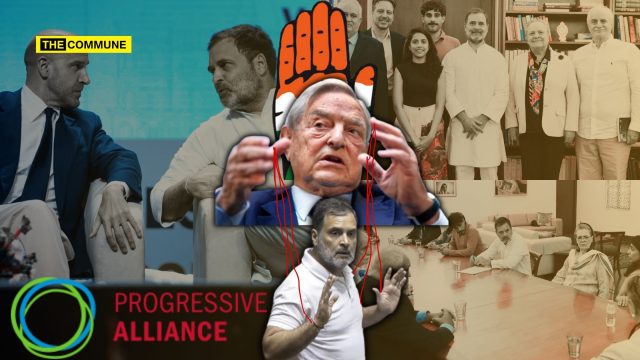
The Real Hydrogen Bomb: Rahul Gandhi’s Secret Role In George Soros-Backed Progressive Alliance That Is Linked To The Global Left’s Deep State Network

For years, the term “global conspiracy” has been dismissed as a fringe theory. Today, that theory is exposed as a coordinated reality. Operating in plain sight, a powerful network of political parties, NGOs, and billionaire donors is waging a silent war against conservative leaders and national sovereignty across the globe. At the center of this web for India is the Indian National Congress and its leader, Rahul Gandhi.

The Atom Bomb: The Progressive Alliance

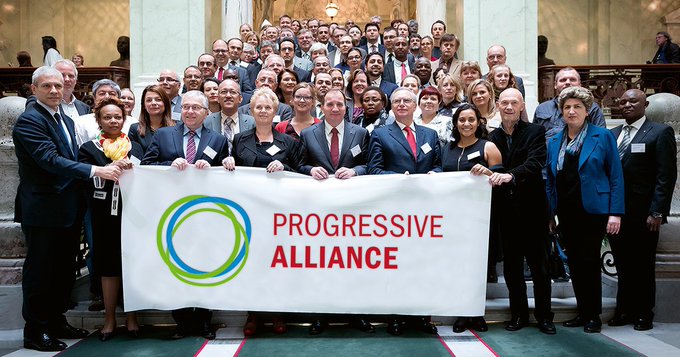
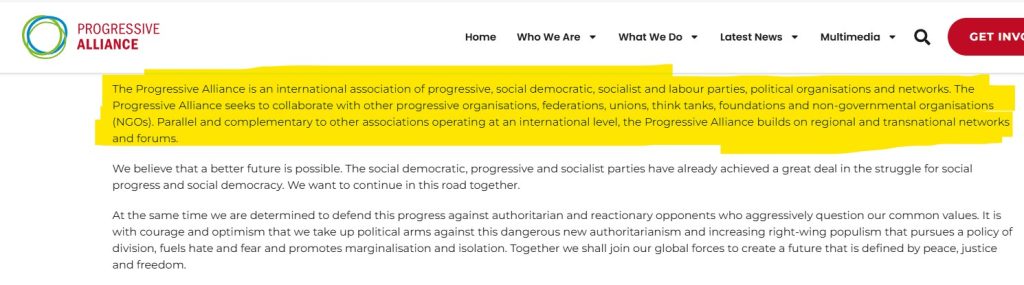
The engine of this global operation is the Progressive Alliance – a formal coalition of over 140 left-wing, socialist, and progressive political parties from around the world.

This group is not a recent phenomenon. It was established in 1951 by the London-based Fabian Society – the same organization that founded the British Labour Party. Originally named the Socialist International, it rebranded in 2014 to become the Progressive Alliance we see today.

This is not merely a group of parties; it is a complete ecosystem. It collaborates seamlessly with progressive NGOs, think tanks, activist groups, unions, and federations, creating a unified front with immense resources and influence.

The Stated Agenda vs. The Real Target

The Alliance publicly champions a suite of universal values:

  • Equality
  • Wealth redistribution
  • Gender rights
  • LGBTQ rights
  • Multiculturalism
  • Fighting racism and intolerance
  • Climate change

However, their key objective, clearly defined in their own literature, is to use their political arms to counter right-wing populist ideology. In practice, this means all right-wing parties and their affiliated institutions are treated as adversaries.

This explains the relentless, coordinated targeting of these sovereign leaders by a seemingly disconnected network of media, activists, and political opponents across different countries. The pattern is too consistent to be a coincidence.

The Bomb Shell: Membership And Power

The membership list of this alliance reads like a who’s who of the global left:

  • Democratic Party (USA)
  • Labour Party (UK)
  • Social Democratic Party (SPD – Germany)
  • Indian National Congress (India)

Each of these parties commands its own vast domestic ecosystem. When they unite under a single banner, the scale of their power is staggering. The Democratic Party of the USA, arguably the most powerful political machine in the world, is a key pillar of this alliance, backed by the influence of figures like Obama, Clinton, Biden, and the funding of George Soros and the globalist deep state.

This connection sheds light on Rahul Gandhi’s frequent and mysterious visits to the United States during the Biden regime. These were not simple vacations; they were likely strategic meetings.

The Board Members

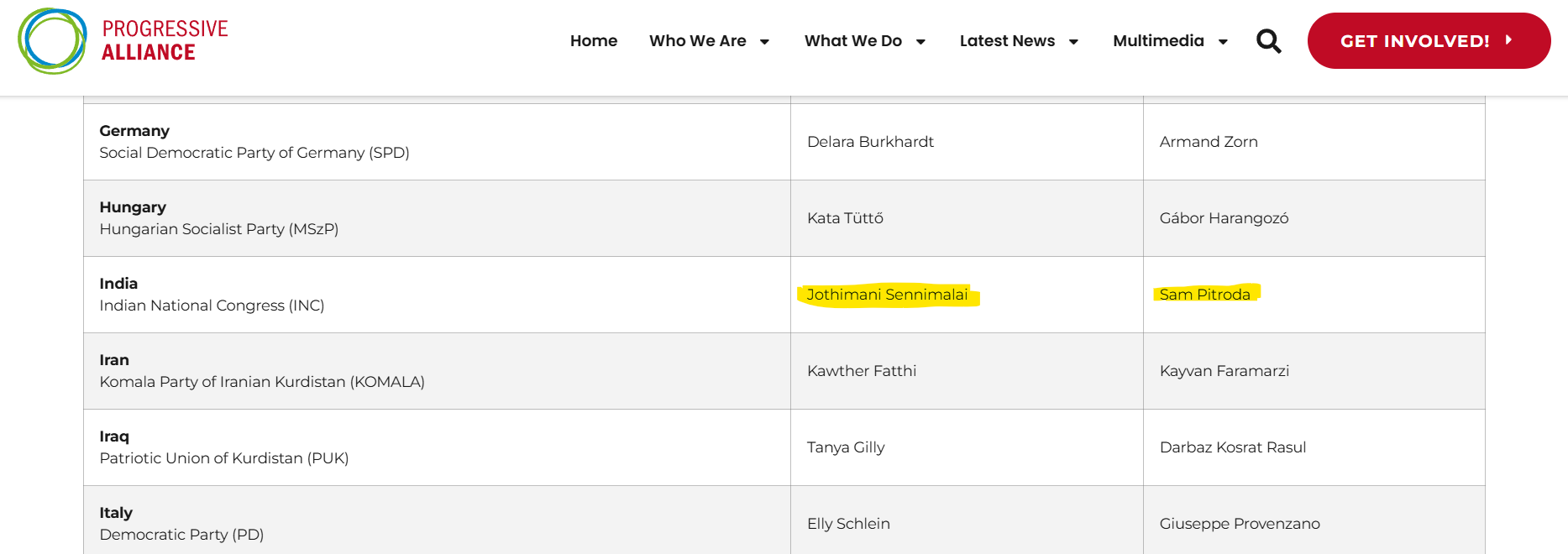
Congress MP from Tamil Nadu, Jothimani Sennimalai and Rahul Gandhi’s motormouth aide Sam Pitroda are members of the Board.


The Hydrogen Bomb: Rahul Gandhi, Executive Member

Now, we get to the core of the revelation. This is the Alliance’s Presidium, which acts as its executive body. As clearly listed, one of its members is Rahul Gandhi. The question must be asked: why is his picture not displayed? Why this level of secrecy around the involvement of India’s principal opposition leader in a global political organization?

The evidence confirms it: Rahul Gandhi is an executive member of this deep state arm.

The Hyderabad Connection And The Plan Against India

The alliance isn’t just operating abroad. Its activities have come directly to Indian soil.

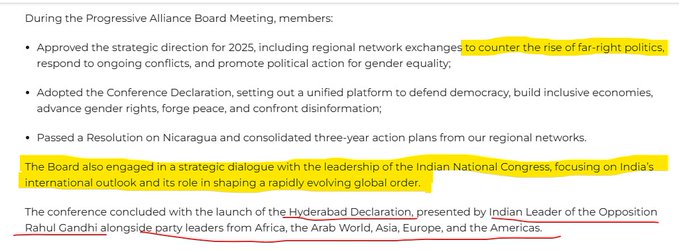
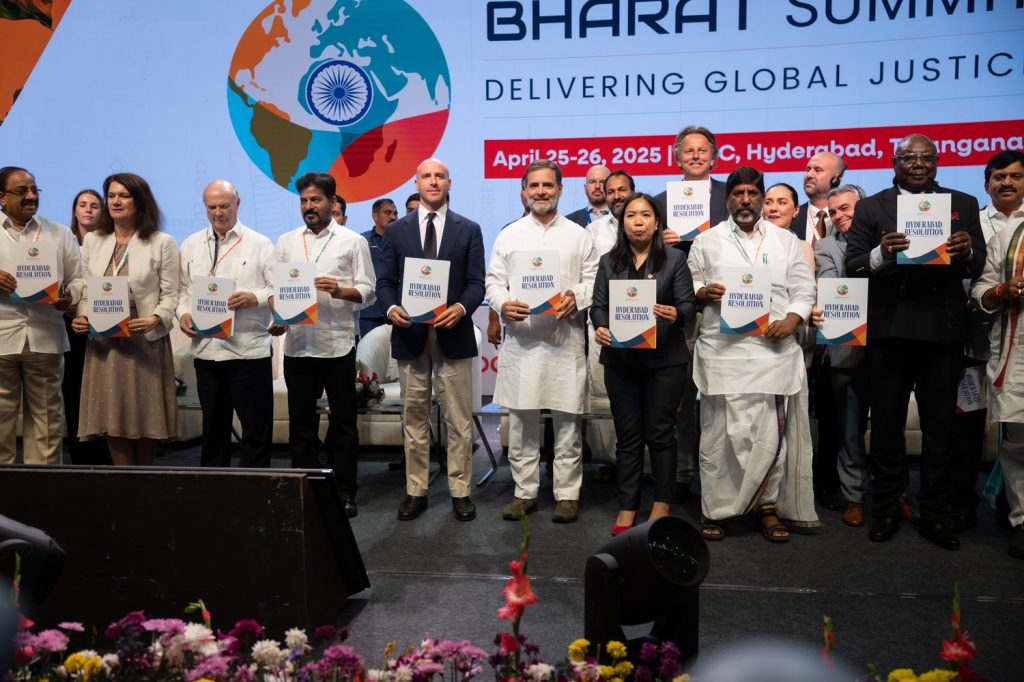
Their last meeting was held in Hyderabad on April 25-26 of this year. At this meeting, they passed resolutions focused on creating “regional network exchanges” with the explicit goal of countering the rise of far-right politics – a clear reference to the BJP.

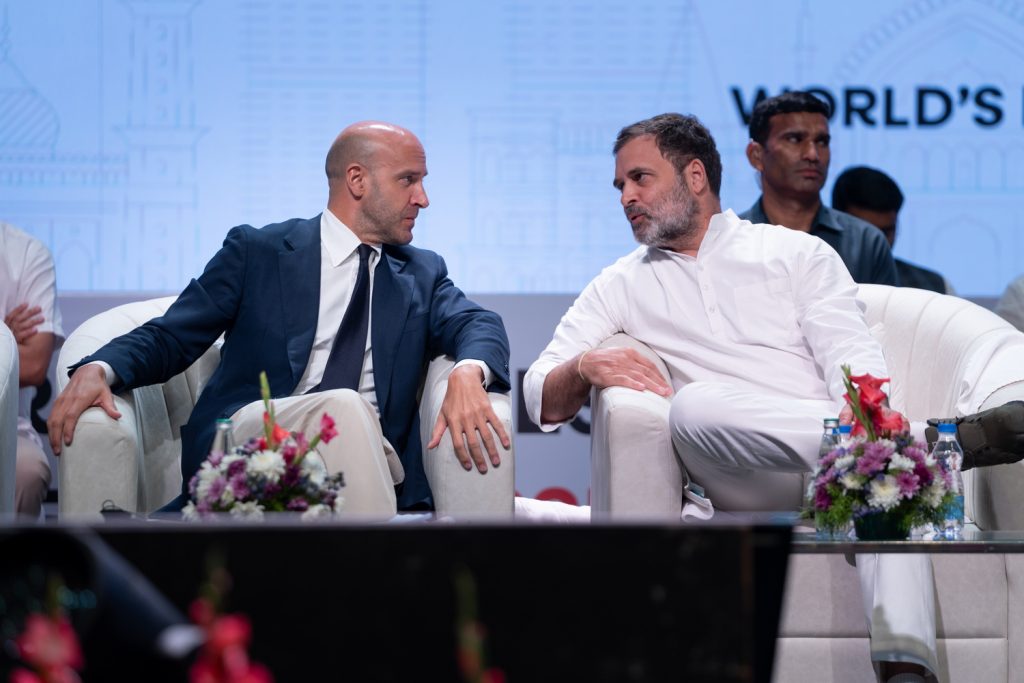
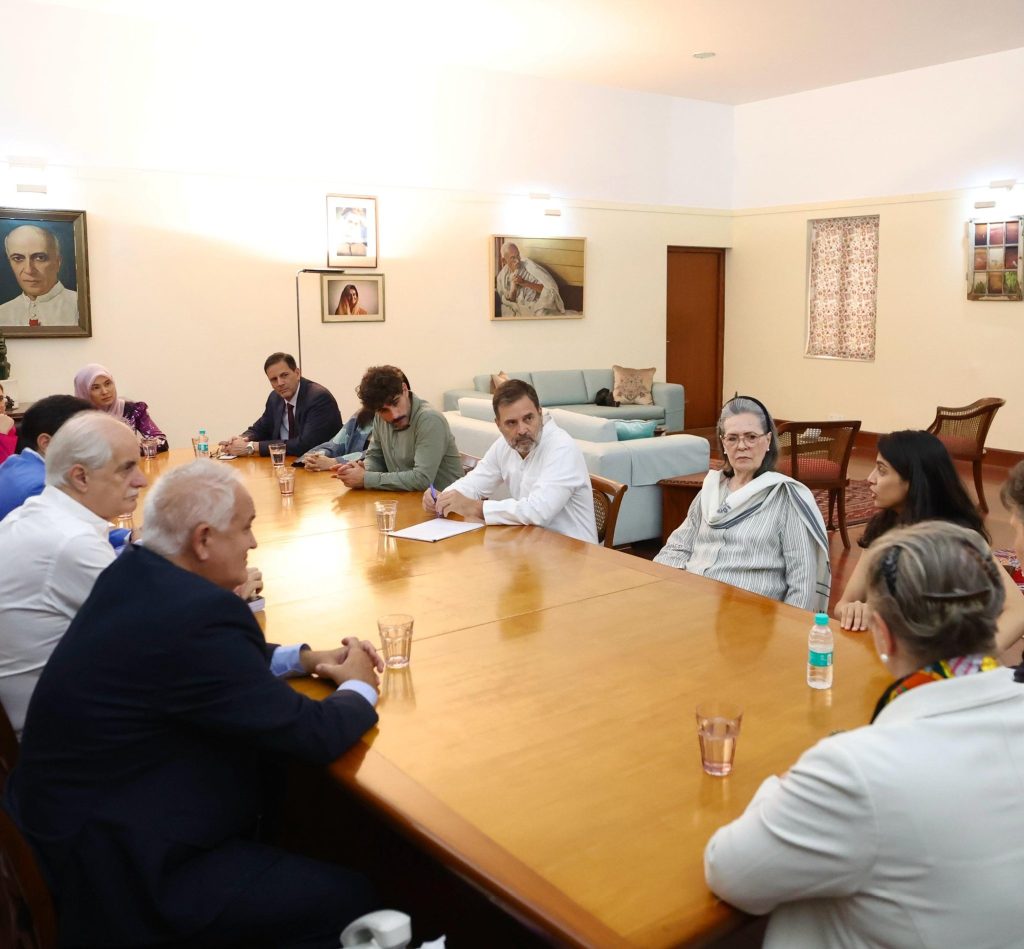
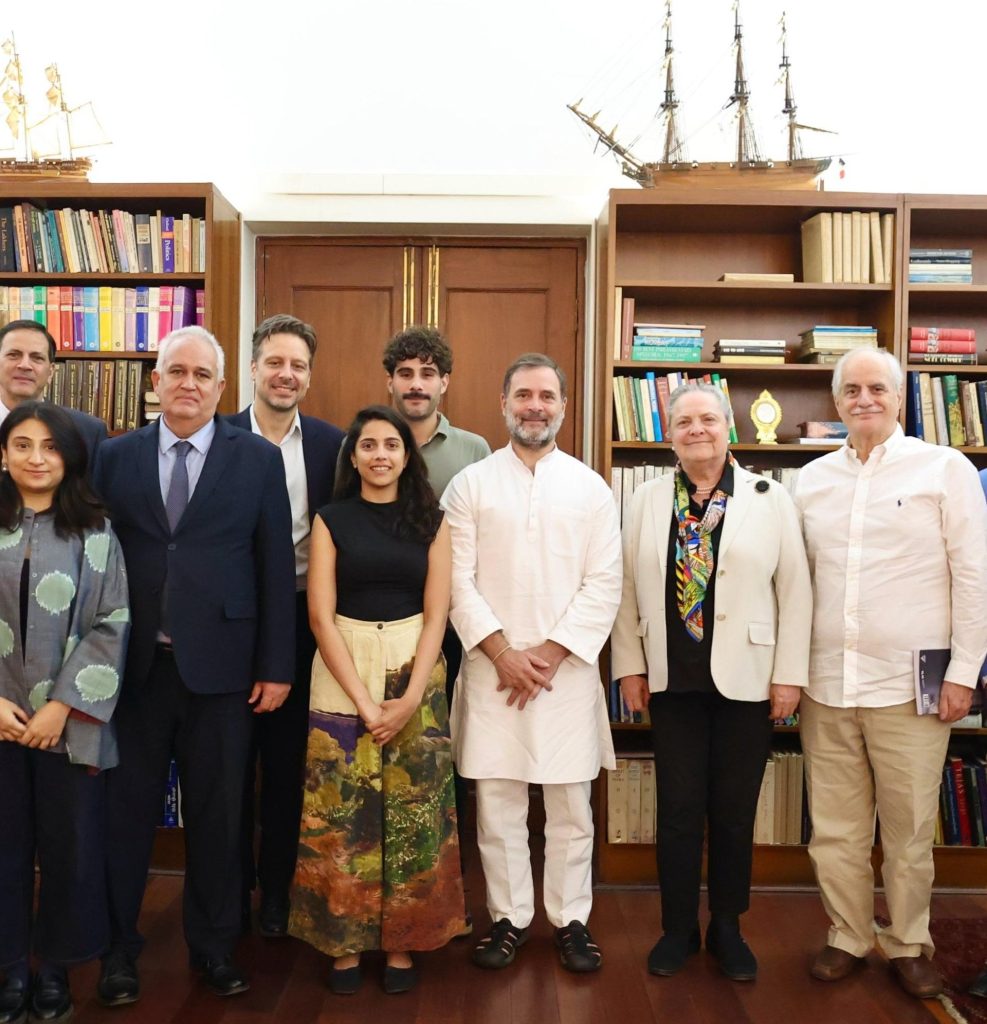
This is a direct declaration of a global left ecosystem vs. BJP war. Furthermore, delegates from the Alliance were also photographed visiting 10 Janpath for private meetings with Sonia Gandhi and Rahul Gandhi, solidifying the partnership.

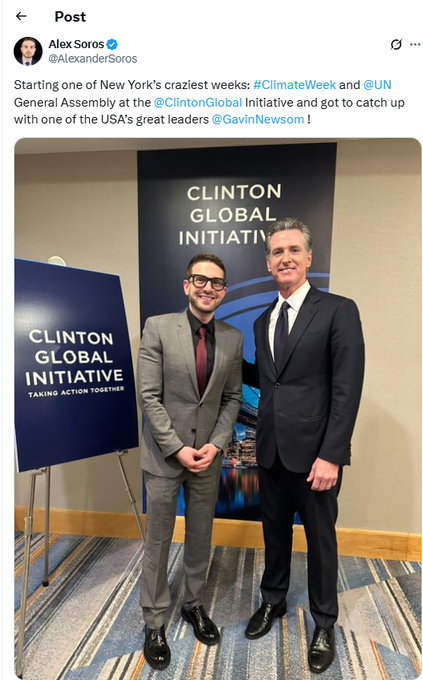
The Man Behind The Curtain: George Soros

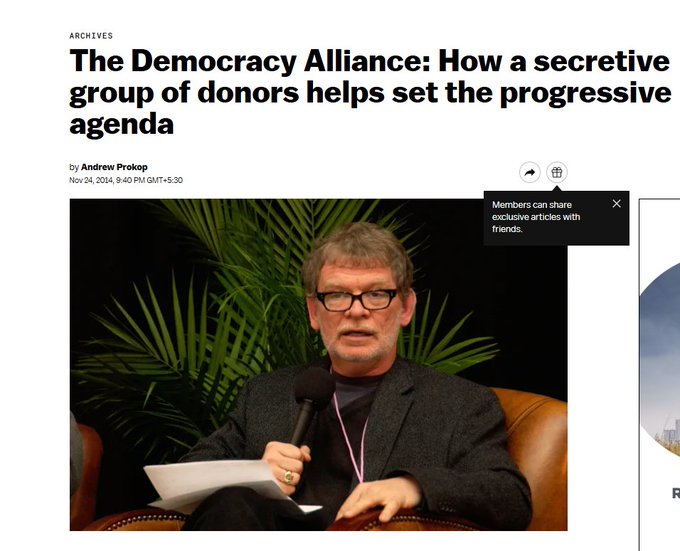
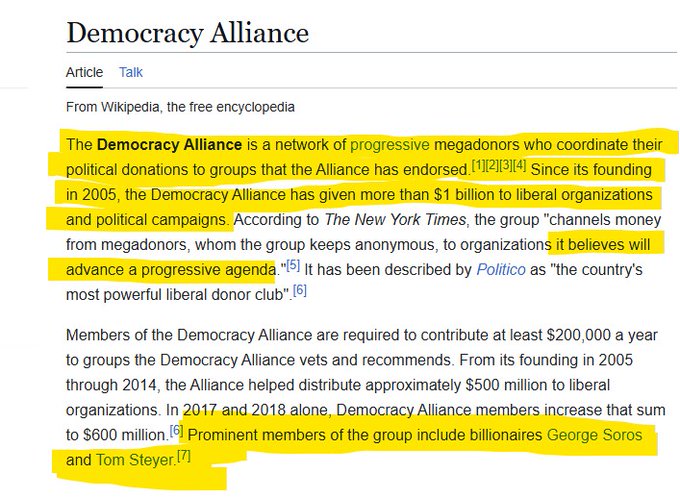
Every network needs funding. The financial engine for this operation is the Democracy Alliance – a network of progressive mega-donors who coordinate their political donations to left-wing causes.

Since its founding in 2005, it has funneled over $1 billion to liberal organizations and political campaigns. At the center of this web of finance stands George Soros.

The dots connect perfectly: the targeting of Modi, the attacks on Adani, the Open Society Foundations’ funding of media and activists, and their backing of Rahul Gandhi. Is the Progressive Alliance the force behind the ‘Vote Chori’ campaign? The answer is yes, because the toolkit is identical.

The Democratic Party in the USA, a key Alliance member, is running a nearly identical campaign against Donald Trump. The architect of both?

George Soros, who is now preparing the next “hydrogen bomb” for the Indian political landscape.

The Historical Roots: The Fabian Society

The origins of this web lead back to the Fabian Society, created in 1884 in Britain and backed by dynasties like the Rockefellers and Rothschilds.

This society founded influential institutions like the Council on Foreign Relations, Chatham House, the UN, and the London School of Economics, completing the circle of the globalist deep state.

Intriguingly, the Fabian Society was created in 1884. The Indian National Congress was created in 1885 by the British. Annie Besant, a founding member of the Fabian Society, was also President of the Congress. Gandhi, Jinnah, and Nehru were all connected to the Fabian Society.

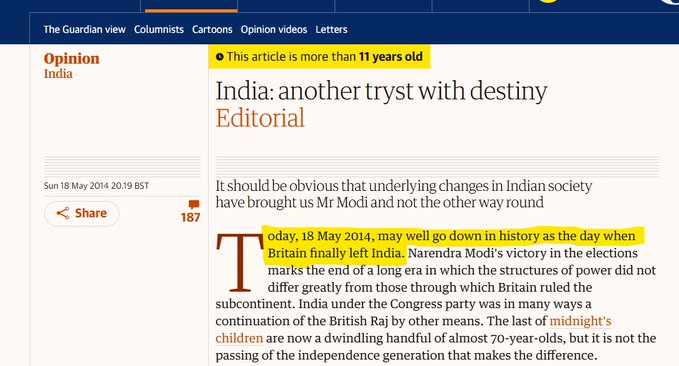
A Fabian government under Clement Attlee was in power in Britain from 1945-1951 – the very government that transferred power to Nehru and Jinnah. One is forced to ask a chilling question: did the British truly leave, or have they been ruling India indirectly through the Congress party until 18 May 2014?

As a key member of the Progressive Alliance, the Congress would be expected to advance its agenda of wealth redistribution, multiculturalism, and LGBTQ rights if it comes to power.

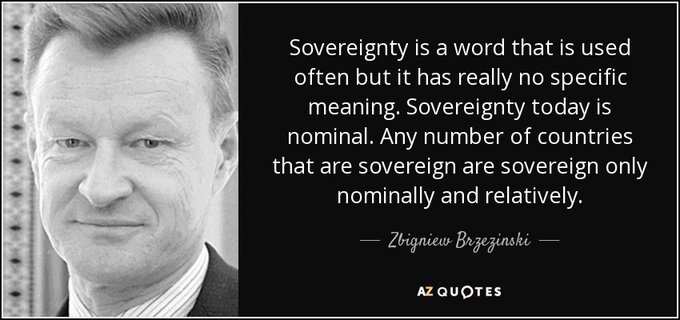
But the real, sovereign question remains: Under the Congress and this global alliance, would India truly remain a sovereign nation? The evidence suggests it would answer to a higher, globalist authority.

(This article is based on an X Thread By The Chronology)

Subscribe to our channels on Telegram, WhatsApp, and Instagram and get the best stories of the day delivered to you personally.

The Infiltration Of Radical Left At IIT Bombay: Examining Instances Of Anti-Hindu, Anti-India Sentiments From 2019-2025

The Indian Institute of Technology Bombay (IIT-B), one of the nation’s premier educational institutions, has found itself repeatedly embroiled in controversy over the past six years. A pattern of incidents involving certain faculty members, student groups, and hosted events has sparked intense public and political backlash, with accusations of promoting anti-Hindu and anti-India sentiments.

This report details 14 such instances, from 2019 to 2025, that have raised serious questions about the academic and political environment within the institute, often leading to official inquiries, cancellations, and widespread condemnation.

#1 The “Pyramid Of Capitalist India” Poster (2025)

In September 2025, a workshop co-hosted by IIT-B featured a poster depicting PM Modi, Amit Shah, and Yogi Adityanath under the caption “WE FOOL YOU.” It also portrayed the army and police as “WE SHOOT AT YOU.” The institute swiftly distanced itself, claiming no prior knowledge of the provocative imagery, and condemned the content. It removed its name from all event materials, halted its association, and launched an investigation into how the event was approved, amid widespread national outrage. However, the fact remains that the event was co-organized by New Political Economic Initiative of IIT-Bombay which has ties to Ford Foundation.

#2 The Ford-Funded NPEI Initiative (2025)

The New Political Economic Initiative (NPEI) at IIT-B, led by UK citizen Prof. Anush Kapadia, faced scrutiny for its research. Backed by a $4 million Ford Foundation grant, the initiative was accused of pushing political propaganda, such as an unsourced claim about Maharashtra’s beef industry employing lakhs. Critics questioned the academic rigor of its outputs and the appropriateness of such externally funded programs operating within a government-funded technical institute. The involvement of foreign funding in sponsoring politically sensitive academic projects has raised concerns about external influence on India’s publicly funded institutions. NPEI has consistently promoted the idea that Indian democracy is in decline, framing its work in ways that align with Western think-tank narratives critical of the Modi government.

#3 Praise For MIT Pro-Palestine Speech (2025)

In June 2025, Professor Anupam Guha from the public policy department praised a controversial MIT graduation speech that was strongly pro-Palestine, calling the student’s actions “admirable” and courageous.

His public endorsement of the speech, which was critical of Israel, drew significant criticism from those who felt it legitimized a one-sided narrative against a key Indian ally.

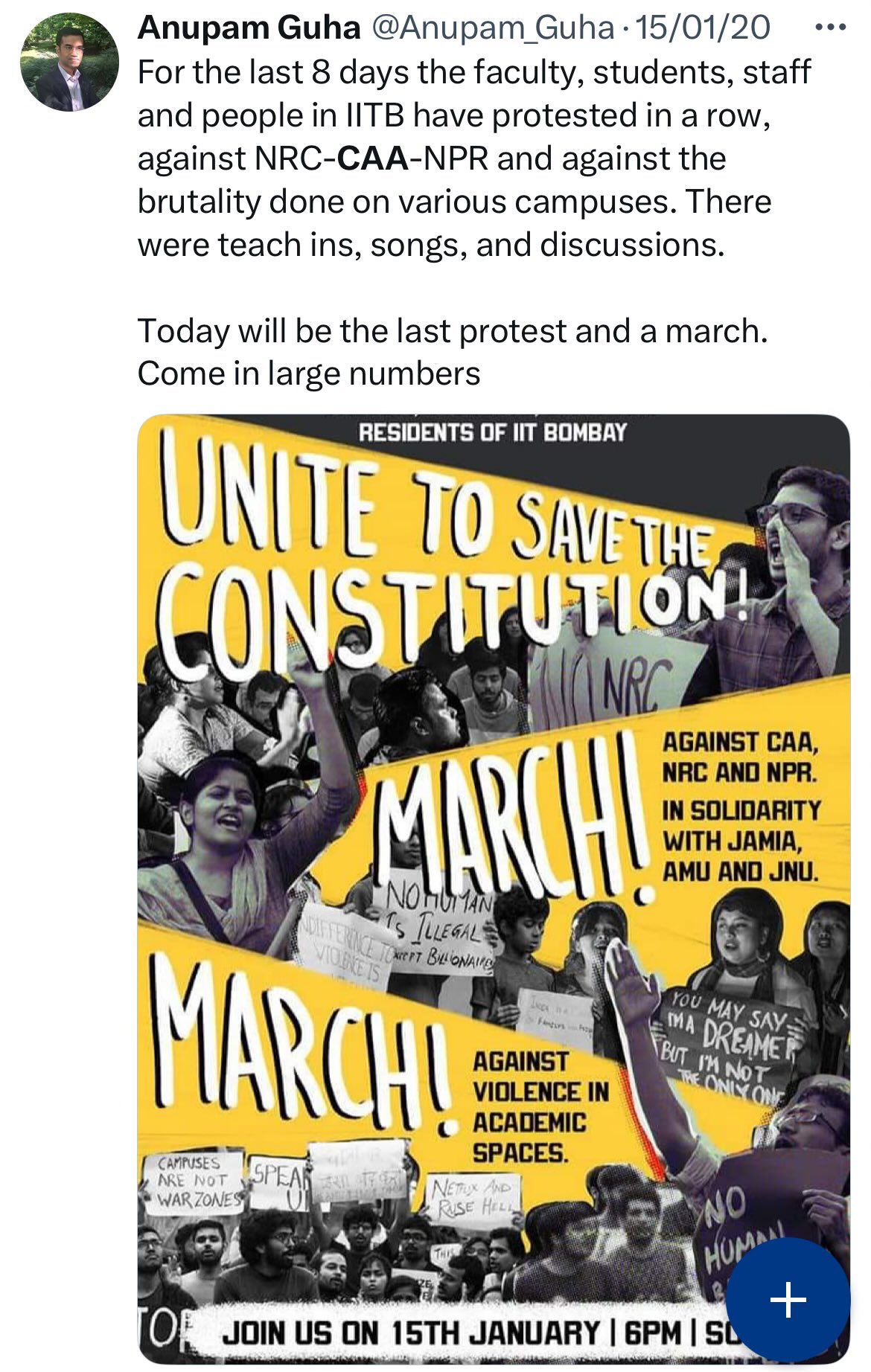
#4 Fuelling Anti-CAA Protests (2025)

Professor Anupam Guha was again at the center of controversy in January 2025 for his active role in amplifying anti-CAA (Citizenship Amendment Act) protests.

Despite being a government employee, he used his platform to urge people to protest against the law and was accused of amplifying separatist voices, particularly concerning Kashmir, thereby challenging the state’s sovereignty.

#5 Inviting A Rape Accused And Terror Sympathizer For Diwali (2024)

IIT-B faced massive student protests and public fury in October 2024 for inviting filmmaker Mahmood Farooqui, who was previously convicted (later acquitted) in a rape case, as the chief guest for its Diwali celebrations. The outrage was compounded by his past signing of a mercy petition for 26/11 terrorist Ajmal Kasab. Bowing to pressure, the institute cancelled the event.

#6 Cancelled Talk By Achin Vanaik (2023)

In November 2023, IIT-B invited Professor Achin Vanaik, known for his pro-Palestine and anti-Hindu views, for a talk. After student protests over his past comments glorifying suicide bombing and criticizing Hindutva, the institute cancelled the event citing “unforeseen circumstances,” highlighting the tension between free speech and inflammatory rhetoric on campus.

#7 Lecture Glorifying Palestinian Militants (2023)

Professor Sharmishtha Saha invited Sudhanva Deshpande, who during a lecture in November 2023, glorified Palestinian militants Zakaria Zubeidi and Ghassan Kanafani, the former being a member of a group specializing in suicide bombings. The lecture, which called for armed rebellion, occurred on the same day the Vice President of India was on campus, creating a stark contrast.

#8 Equating Vegetarianism to Militancy (2023)

In an October 2023 op-ed, Professor Suryakant Waghmare equated upper-caste vegetarianism to “militancy,” accusing it of enforcing social hierarchy. He dismissed environmental reasons for the diet, linking it instead to “cow nationalism” and discrimination, sparking outrage for its sweeping generalization and derogatory characterization of a common cultural practice.

#9 Published Research Paper On OpIndia (2023)

A research paper from IIT-B’s Ashank Desai Centre, authored in part by an Alt News staffer, analyzed Opindia’s content. The May 2023 paper concluded the portal fostered “anti-Muslim narratives,” a finding critics dismissed as biased, given the author’s association with a far-left fact-checking website itself accused of political partiality and shielding Islamists.

#10 PhD Student’s Anti-Hindu Remarks (2023)

A February 2023 video showed PhD student Amarkant Thakur insulting Hindus and Lord Ram on campus, blaming “Brahminical society” for mistreating Dalits and claiming “Jai Shri Ram” chants perpetuated caste hierarchy.


View this post on Instagram


A post shared by APPSC IIT Bombay (@appsc.iitb)

The incident, which occurred in the presence of security, raised questions about campus discourse and respect for religious sentiments.

#11 Rally Supporting Sedition Accused (2020)

On Republic Day 2020, left-leaning student groups held a “Reclaim the Republic” rally supporting Sharjeel Imam, accused of sedition for speeches calling to “break India,” and demanding the release of UAPA-booked activists. The event showcased a strong political faction within the student body aligning with individuals accused of threatening national integrity.

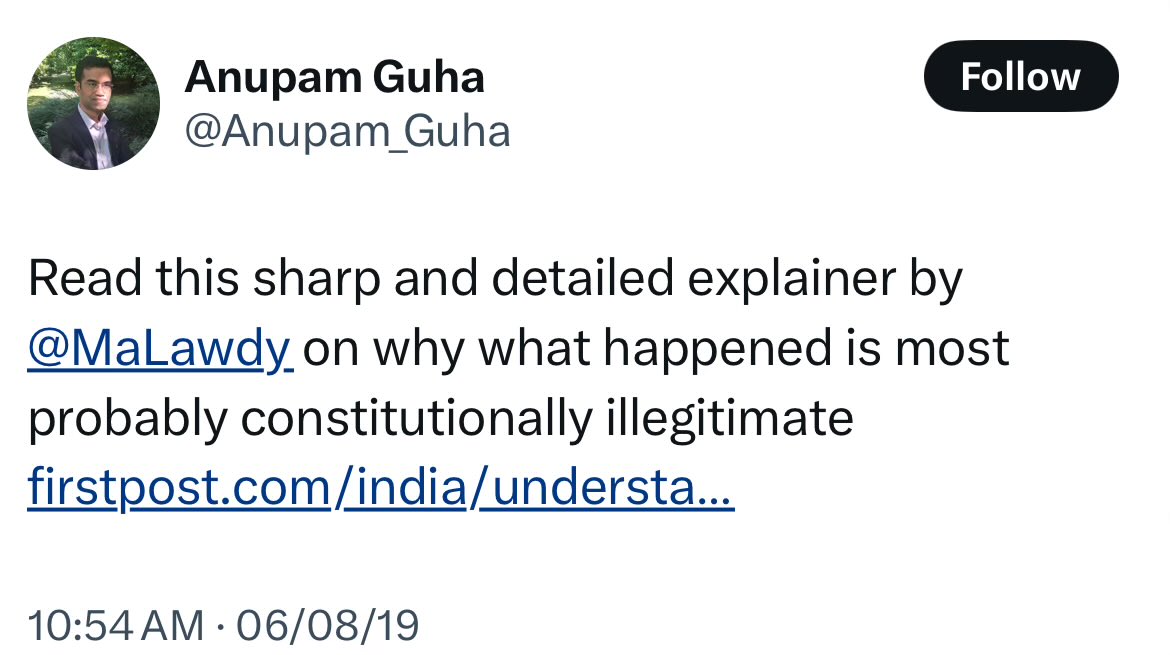
#12 Calling Article 370 Abrogation “Illegitimate” (2019)

In August 2019, Professor Anupam Guha endorsed an article branding the historic, Parliament-passed abrogation of Article 370 as “constitutionally illegitimate.”

His public challenge to a central government policy and a subsequent Supreme Court validation sparked accusations of overstepping academic boundaries into political activism against national interests.

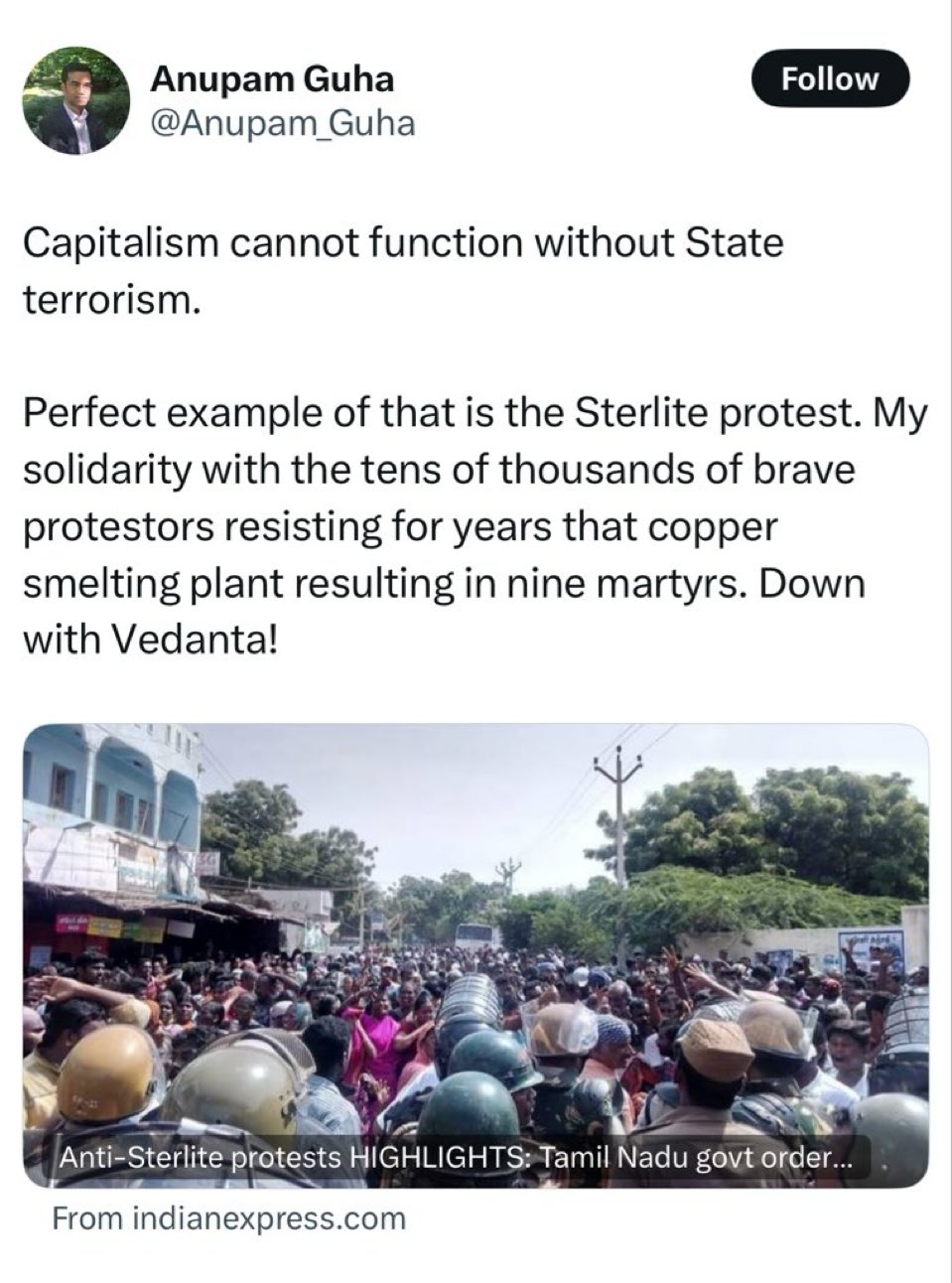
#13 Sterlite Protest “Martyrs” Tweet (2019)

During the violent Sterlite plant protests, Professor Guha posted that “capitalism cannot function without state terrorism” and referred to those who died as “martyrs.”

His comments were seen as justifying violent protest and blaming state forces, ignoring the complex circumstances of the clashes that led to the fatalities.

#14 Management School’s Handle Posts Anti-BJP Tweet, Later Claims It Was “Hacked” (2019)

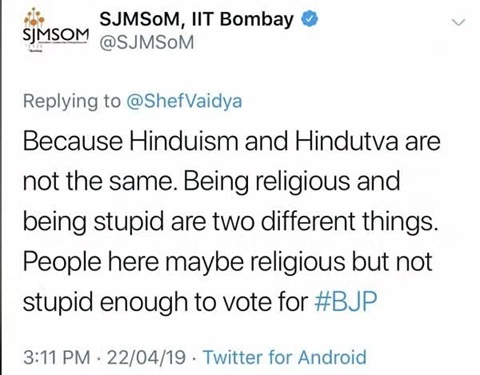
In April 2019, the official Twitter account of IIT-B’s management school posted a tweet claiming Hinduism and Hindutva are different and that people in West Bengal were “not stupid enough to vote for BJP.”

Image Source: Swarajyamag

The school later claimed the account was hacked, but the incident damaged its reputation and revealed the highly charged political undercurrents within the institute.

#15 IIT B Prof Mocked Hindu Practices And Promoting Anti-India Narratives

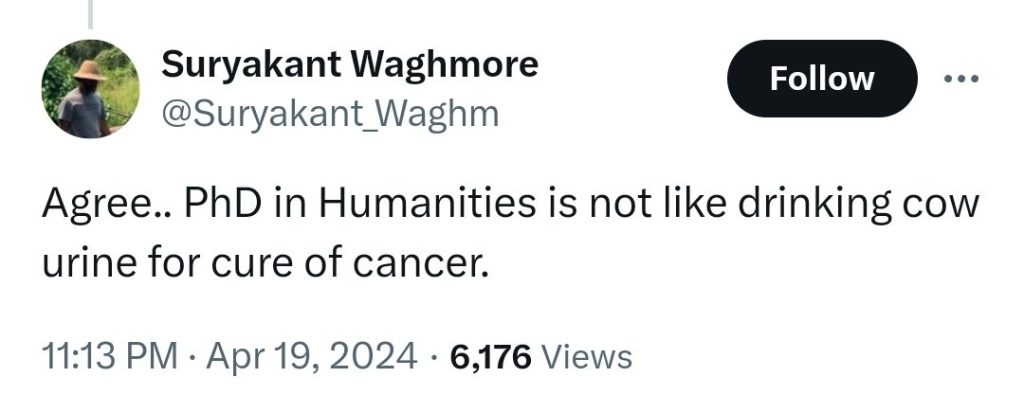
Humanities Professor Suryakant Waghmore’s disdain for Hindu traditions is well-documented. He once compared a PhD in humanities to “not drinking cow urine for cancer cure,” mocking Hindu beliefs.

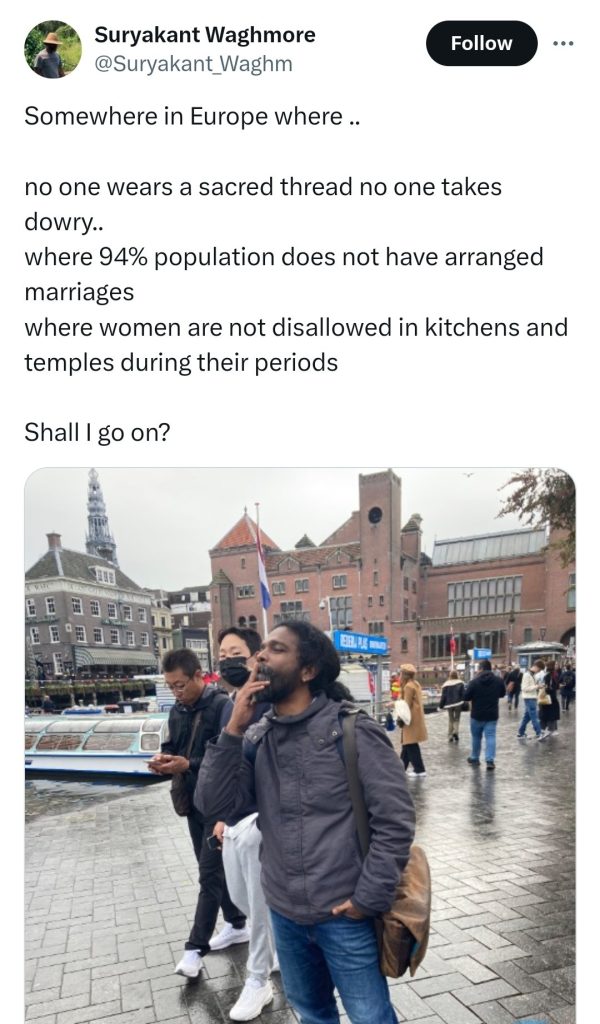
He posted a photo from Europe with the caption, “Somewhere in Europe where… no one wears a sacred thread, no one takes dowry… where 94% of the population does not have arranged marriages, where women are not disallowed in kitchens and temples during their periods. Shall I go on?”

His research paper “The Dominant Victim” argues that upper-caste Hindus claim “imagined victimhood” to overshadow Dalit struggles.

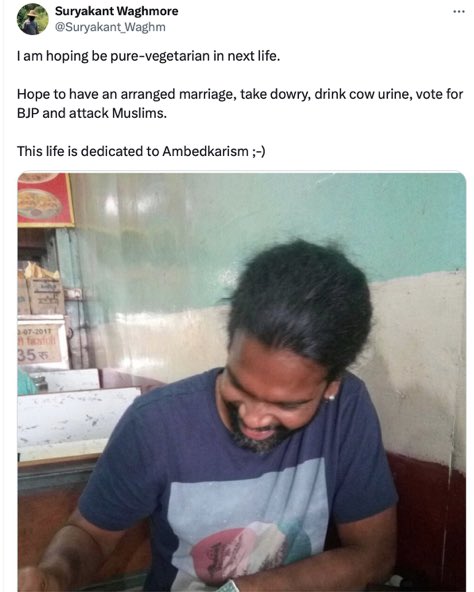
His social media posts and public interviews regularly attack vegetarianism and Hindu practices. In a widely circulated post, he wrote, “I am hoping to be pure vegetarian in next life. Hope to have an arranged marriage, take dowry, drink cow urine, vote for BJP and attack Muslims. This life is dedicated to Ambedkarism.”

#16 Allegations of Bias

In 2024, IIT Bombay’s PhD entrance exam included a question on Hindutva, which many saw as an attempt to screen out Hindu applicants.

When students protested, Waghmore mocked them by posting a video of himself dancing, further fueling accusations of unprofessionalism.

#17 Double Standards Of ‘Secularism’

IIT Bombay faced criticism over its contradictory stance on food segregation after the administration was seen facilitating elaborate meal arrangements for Ramadan while previously “refusing” its approval for vegetarian-only tables, calling it “exclusionary and casteist.”

An internal email sent by the General Secretary (Health Advisory HA) on behalf of “Ramadan volunteers” informed students about Sehri (pre-dawn meal) arrangements for those observing the fast. Hostels were divided into zones for easy access, and meals would be delivered to female hostels based on headcount. Students interested in availing of the facility were asked to register.

However, this move ignited accusations of selective religious favoritism. IIT-B buckled under pressure for a decision to allocate just a few tables for vegetarian students.

In 2023, posters marking “vegetarians only” seating areas appeared in a hostel mess, triggering outrage from the Ambedkar Periyar Phule Study Circle (APPSC). The posters were torn down, and RTI inquiries later confirmed that IIT-B has no official policy allowing separate eating spaces. The administration followed up with a warning email, declaring that no student had the right to designate areas for specific food preferences.

Even though the vegetarian-only tables were open to all castes and religions, the move was labeled discriminatory” and a Brahminical imposition. Some activist students even went as far as to deliberately consume non-vegetarian food at those tables in protest.

Yet, the same faculty and student groups that opposed vegetarian tables have raised no objections to Ramadan-specific dining arrangements. This has led to allegations that IIT-B selectively enforces its so-called secular principles—opposing dietary preferences linked to Hindu and Jain traditions while bending over backward to accommodate Islamic practices.

This extends beyond seating arrangements. While vegetarian tables were deemed casteist, halal food remains unquestioned on campus. Critics argue that if separate tables for vegetarians were seen as divisive, then so should halal-only meat, which actively excludes non-Muslim butchers. However, IIT-B faculty and leftist student groups remain silent on this inconsistency.

Subscribe to our channels on Telegram, WhatsApp, and Instagram and get the best stories of the day delivered to you personally.
From Rafale To Nicobar: How Congress Opposed India’s Development Projects (2017–2025)

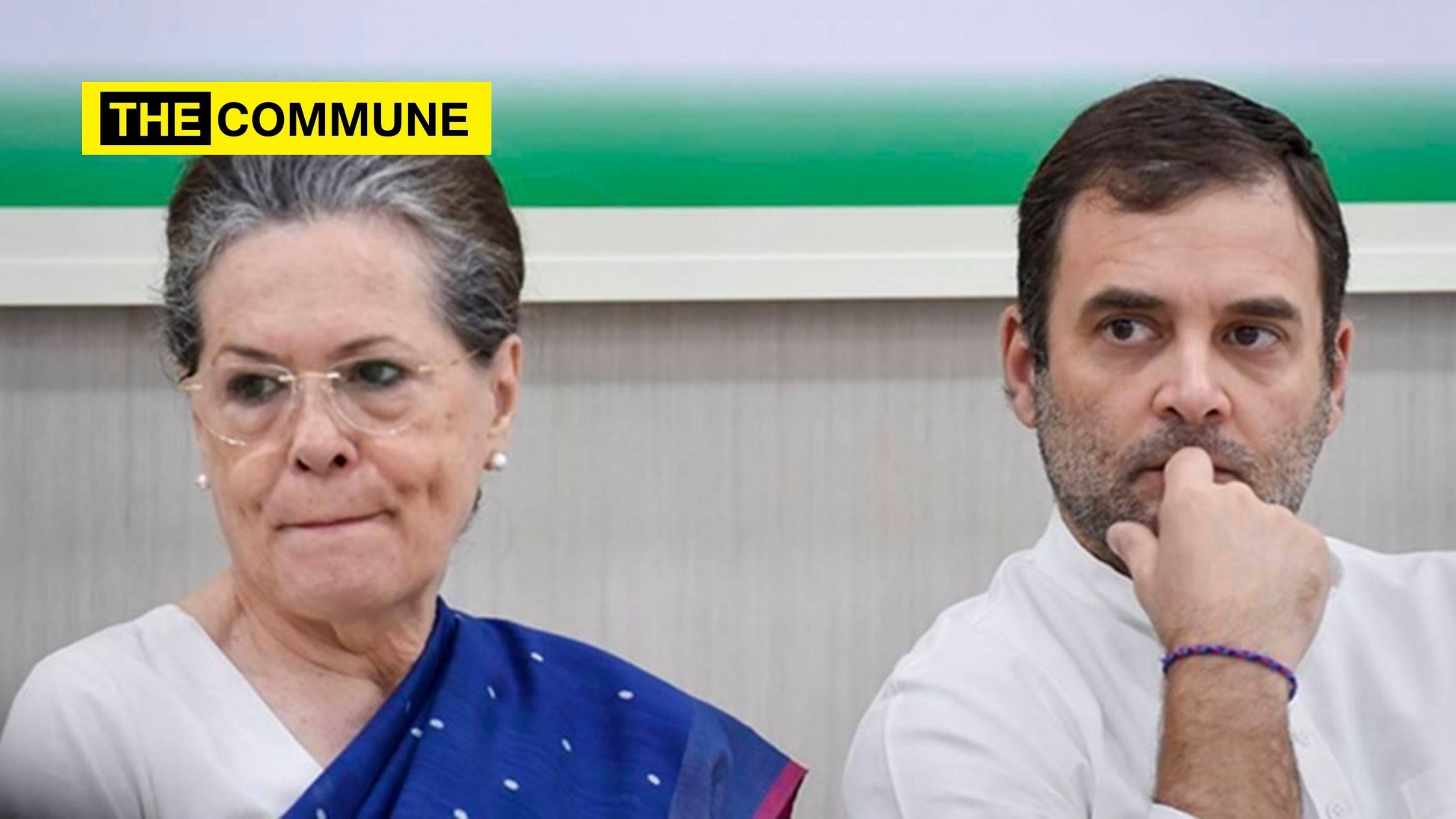
sonia rahul gandhi national herald congress india

On 8 September 2025, in an editorial for The Hindu titled “The Making of an Ecological Disaster in Nicobar,” Sonia Gandhi condemned the ₹72,000 crore Great Nicobar Project. She branded the initiative a “misguided and extravagant expenditure” and an “ecological disaster in the making,” arguing it poses an “existential threat to the island’s indigenous communities” and endangers its “unique and fragile ecosystem.”

This report highlights ten incidents from 2017 to 2025 in which the Indian National Congress opposed key Indian development projects.

#1 Congress Calls Great Nicobar Project “A Misadventure”

On 8 September 2025, Congress leader Sonia Gandhi, in a column for The Hindu titled “The Making of an Ecological Disaster in Nicobar”, dismissed the ₹72,000 crore Great Nicobar Island Project at Galathea Bay as a “completely miscalculated expenditure.” She warned that the proposed major port would pose an existential threat to the island’s indigenous communities and devastate its unique ecosystems. Rahul Gandhi echoed her stance, sharing the editorial and cautioning that the project would displace villages, endanger tribal populations, and irreparably damage the fragile environment.

#2 Congress Protests Vizag Steel Plant Privatization

On 6 September 2025, at the Andhra Pradesh Udyamala Aikya Vedika meeting in Visakhapatnam, state Congress leader Sunkara Padma Sri, along with members of farmers’ forums, opposed the privatization of the Visakhapatnam Steel Plant and the large-scale land acquisitions for green energy projects. Padma Sri argued that farmers were being displaced in the name of green energy while vast tracts of land already acquired for projects such as Lepakshi Knowledge Hub and Jindal Alumina remained idle. The gathering expressed strong resistance to both central and state government policies on the steel plant and land acquisition.

Congress leader YS Sharmila issued a stern ultimatum to Visakhapatnam Steel Plant management, accusing it of authoritarianism and ignoring workers’ grievances as a strike looms. Posting on X, she condemned the “arrogant” stance, cited termination of 2,000 contract workers and planned layoffs of 3,000 more, suspensions of dissenting employees, and eight months’ unpaid salaries for regular staff. She demanded immediate reinstatement, clearance of pending wages, revocation of the January 2021 privatization decision, and a formal merger with SAIL.

#3 Congress Terms Chhattisgarh Skywalk Reconstruction Wasteful

On 17 May 2025, the Chhattisgarh Congress opposed the state government’s decision to reconstruct the skywalk in the capital, calling it an impractical and wasteful project. Party spokesperson Dhananjay Singh Thakur argued that despite heavy expenditure, the skywalk remained incomplete and failed to serve its purpose. He urged the government to drop the plan and instead build a flyover that would address traffic concerns more effectively.

#4 Congress Questions Centre on Kutch Renewable Energy Park

On 12 February 2025, the Congress demanded clarity from the Union government over a Guardian report alleging that rules on land allocation near international borders were altered to benefit the Adani Group’s renewable energy project in Gujarat’s Rann of Kutch, close to the India-Pakistan border. The following day, Congress MP Manickam Tagore submitted a notice in the Lok Sabha seeking an adjournment motion to debate the reported relaxation of national security protocols for the Khavda Renewable Energy Project.

#5 Congress Opposes Nagpur-Goa Shaktipeeth Expressway

On 29 June 2024, proceedings in the Maharashtra Legislative Council were adjourned after Opposition Maha Vikas Aghadi (MVA) members staged protests against the proposed Nagpur-Goa Shaktipeeth Expressway. Raising the issue through a calling attention motion, Congress MLC Satej Patil, along with other legislators, demanded that the project be scrapped, questioning the need for a new expressway when an existing road already connects the route.

#6 Congress Alleges Corruption in Bharatmala Highway Projects

On 3 September 2023, the Congress accused the Central government of corruption and favoritism in the Bharatmala Pariyojana highway projects, citing a CAG report that flagged inflated costs and lack of transparency. Congress president Mallikarjun Kharge had earlier, on August 14, raised concerns over corruption in infrastructure projects, while party leader Jairam Ramesh alleged that contracts were awarded to Prime Minister Modi’s close associates and electoral bond donors. The Bharatmala Pariyojana aims to develop 35,000 km of national highways to improve freight movement across India.

#7 Congress Resists Aarey Metro Car Shed Project

On 30 June 2022, Maharashtra Congress president Nana Patole opposed the state government’s decision to construct the Mumbai Metro car shed in Aarey, arguing that it posed risks to public health. Despite the pressing need to expand metro infrastructure in the city, the Congress revived objections similar to those raised during earlier protests under the Fadnavis and Maha Vikas Aghadi governments, thereby stalling progress on the project.

#8 Congress Demands Suspension of Central Vista Project

On 7 April 2020, Congress leader Sonia Gandhi wrote to Prime Minister Narendra Modi urging suspension of the ₹20,000 crore Central Vista project, calling it wasteful during the pandemic, and also advised a two-year ban on all non-COVID government advertisements. Senior Congress leader Anand Sharma, on May 2, 2020, echoed the demand, terming the project and proposed mega secretariats in 17 state capitals a “criminal waste” of public money. Later, on 7 May 2021, Rahul Gandhi tweeted that the Central Vista was a “criminal wastage,” urging the government to prioritize people’s lives over extravagance.

#9 Congress Stages Protest Against Rafale Deal

On 13 February 2019, Congress leaders Rahul Gandhi, Sonia Gandhi, and former Prime Minister Manmohan Singh led a protest outside Parliament against the Rafale deal, carrying paper planes and posters to allege corruption in the multi-crore aircraft purchase. Earlier, in December 2018, MPs from Congress and CPI(M) had submitted adjournment motion notices in the Lok Sabha over the issue. However, on 14 December 2018, the Supreme Court dismissed all petitions seeking a court-monitored probe, stating that no evidence of commercial favoritism was found in the deal.

#10 Congress Questions Viability of Bullet Train Project

On 14 September 2017, the Congress party raised objections to the Ahmedabad-Mumbai bullet train project, questioning its economic feasibility. Party leader Mallikarjun Kharge clarified that while Congress was not opposed to development projects, the bullet train was not economically viable and therefore an unsustainable investment.

Subscribe to our channels on Telegram, WhatsApp, and Instagram and get the best stories of the day delivered to you personally.
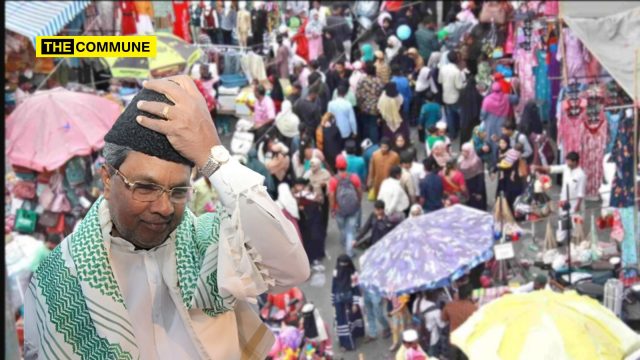
Peak Appeasement Politics: Karnataka Congress Govt Allocates ₹398 Crores For ‘Development Of Muslim Localities’

The Congress-led government in Karnataka, under Chief Minister Siddaramaiah, has approved a substantial grant of ₹398 crore for the development of Muslim-dominated areas across the state. The decision was finalized during a cabinet meeting held at the Vidhana Soudha, and has since sparked a political debate.

According to sources, the government aims to upgrade socio-economically backward neighbourhoods in 22 urban Assembly constituencies, transforming them into what it calls “model colonies.” Critics, however, allege that the move is a strategic attempt to secure minority votes ahead of upcoming elections.

This is not the first time the Siddaramaiah administration has been accused of appeasement. Earlier this year, the state government withdrew legal cases against individuals linked to the 2019 Chittapur stone-pelting incident, which targeted Hindu activists. The individuals reportedly had connections to extremist outfits.

Additionally, Chief Minister Siddaramaiah has defended the government’s decision to allocate 4% reservation for Muslims in public contracts under the Other Backward Classes (OBC) category, stating that supporting underrepresented groups is a constitutional responsibility inspired by Dr. B.R. Ambedkar’s vision.

2025 Budget Raises Eyebrows Over Targeted Benefits

The 2025 Karnataka State Budget, as analysed by political observers, appears to include several policies directly benefiting the Muslim community. These include:

  • ₹500 crore allocated for launching 250 “Maulana Azad Model English Medium Schools”, modeled on Karnataka’s public school system.
  • ₹400 crore set aside for upgrading 100 Urdu medium schools across the state.
  • ₹150 crore earmarked for the restoration and renovation of Waqf properties.
  • An additional ₹1,000 crore dedicated to the Chief Minister’s Minority Colony Development Programme, a broader plan focusing primarily on Muslim-populated areas.
  • Budget provisions for building a new Hajj Bhavan and establishing a Karnataka State Open University (KSOU) campus to cater to educational needs of “deprived” Muslim students.

Further, the state has introduced social welfare schemes specific to the Muslim community:

  • ₹50,000 wedding assistance for economically weaker Muslim couples.
  • Monthly honorariums raised to ₹5,000 for muezzins and ₹6,000 for pesh imams.
  • Funding for the construction of women’s colleges on Waqf-owned land.
  • Infrastructure support for cultural and social initiatives within the Muslim community.
  • 50% tuition reimbursement for Muslim students, along with an increase in the foreign education scholarship from ₹20 lakh to ₹30 lakh.

Opposition parties and critics have slammed the Congress government for what they see as blatant religious favoritism. They argue that such targeted allocations risk deepening communal divides and reflect a vote-centric approach to governance rather than an inclusive development strategy.

They further claim that while the state government promotes Urdu schools and Muslim-centric programs, it continues to foster divisions on linguistic and cultural lines such as the recent Hindi vs. Kannada debates creating inconsistencies in policy direction. The Siddaramaiah government’s recent budget and policy decisions have reignited the debate over minority appeasement in Indian politics. While the administration maintains that these efforts are aimed at uplifting marginalized communities, critics view them as a calculated electoral move designed to consolidate a specific vote bank.

(With Inputs From OpIndia)

Subscribe to our channels on TelegramWhatsApp, and Instagram and get the best stories of the day delivered to you personally.

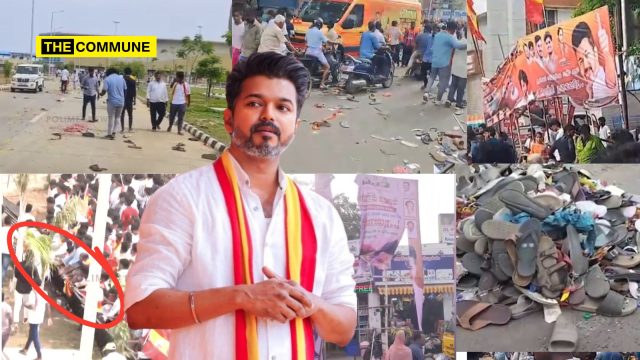
TVK Cadres Create Chaos, Break Barricades At Trichy Airport, Damage Property, And Litter

The launch of Tamilaga Vettri Kazhagam (TVK) chief Vijay’s state-wide campaign from Tiruchirapalli on 13 September 2025 once again revealed that the party’s base, rather than reflecting disciplined political enthusiasm, largely resembled an unruly fan club.

From early morning, TVK supporters began flooding Trichy Airport, eagerly awaiting Vijay’s arrival. As the actor-politician landed at 9:29 a.m. and exited the terminal by 9:40 a.m., the crowds surged forward in excitement. Despite the presence of police barricades and security personnel, the overwhelming number of cadres made crowd control nearly impossible, with several barricades eventually being breached.

Once Vijay left the premises, the airport approach roads were littered with discarded slippers, torn banners, and trash, giving the area a messy and unhygienic appearance. Scenes from the airport suggested chaos, not a well-coordinated political movement.

Lack of Discipline: Firecrackers, Banner Tearing, and Traffic Gridlock

Despite police warnings ahead of the event, many TVK supporters went ahead with unauthorized celebrations including bursting firecrackers and even damaging their own party’s banners, adding to the disarray. The incident has raised concerns over the maturity of TVK’s cadre base and their ability to function within democratic norms.

Vijay’s convoy, which began moving from the airport in his campaign vehicle, faced massive delays due to the crowd-packed roads. It reportedly took over two-and-a-half hours to cover just 5 kilometers, reaching TVS Tollgate by noon. As of four hours into the journey, he had still not completed the 8-kilometer stretch to Marakkadai, where he was scheduled to deliver his campaign address.

City Disrupted as Trichy Grinds to a Halt

With supporters overflowing into streets and junctions, traffic was thrown into chaos across several key areas of Tiruchi. Major routes including Pudukottai Road, Palakkarai Underbridge, and the Head Post Office junction were jammed for hours. Commuters were left stranded, and day-to-day activities across the city were disrupted.

Adding to the logistical troubles, many shops remained closed, leading to drinking water shortages for the cadres who had been standing for hours along the rally route. At the Marakkadai junction, thousands crammed into the area near the M.G.R. statue, waiting for Vijay’s delayed speech.

Although authorities had allocated 10:35 a.m. to 11:05 a.m. for Vijay’s public address, the delays completely threw the schedule off balance. The overall execution reflected poor planning and crowd management, casting doubts on TVK’s readiness to function as a serious political entity.

While the enthusiasm for Vijay’s political entry is undeniable, Saturday’s events in Tiruchi painted a picture of fandom overtaking political purpose. The unruly behavior, violation of public norms, and lack of discipline not only disrupted the city but also raised questions about TVK’s preparedness to transition from personality-driven fanfare to meaningful political action.

If the party hopes to be taken seriously in Tamil Nadu’s political landscape, it must urgently instill discipline, respect democratic processes, and move beyond celebrity spectacle.

Previous Instance in Coimbatore

This isn’t the first time such disorder has unfolded Coimbatore Airport faced a similar situation back in April 2025, echoing the recent chaos at Trichy. During Vijay’s arrival, the airport descended into confusion as hundreds of TVK supporters swarmed the premises to greet him. This was despite clear police instructions capping the number of attendees at 50.

Crowds ignored the restrictions, parked vehicles recklessly, and reportedly damaged barricades, grills, and even airport trolleys near the terminal entrance. To make matters worse, local TVK leaders failed to cooperate with airport authorities or communicate the anticipated crowd size in advance.

There was no evidence of any organized crowd control or preventative planning from the party’s side. Supporters behaved more like unrestrained fans than disciplined political cadre, paying little regard to rules or the functioning of a sensitive public facility.

The situation disrupted regular airport operations and left portions of the terminal in a state of disarray. The lack of responsibility and foresight shown by TVK during the episode drew sharp public criticism and raised further concerns about the party’s organizational maturity.

Subscribe to our channels on TelegramWhatsApp, and Instagram and get the best stories of the day delivered to you personally.

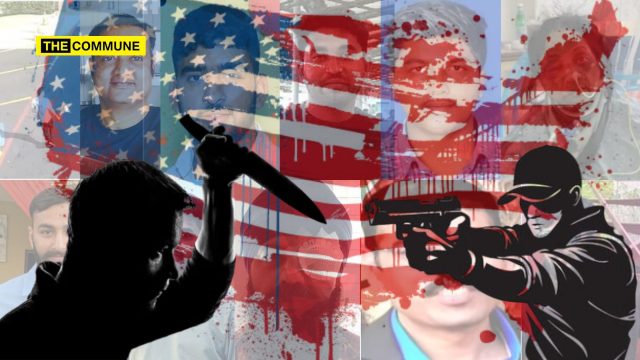
United States Of Xenophobia: Rising Racism And Hate Crimes Against Indians In The US

On 12 September 2025, Indians across the world woke up to the dreadful news of the beheading of Indian American motel owner by his co-worker, a Cuban.

50-year-old Indian-origin motel manager, Chandramouli “Bob” Nagamallaiah, was brutally killed in Dallas, Texas, after an argument with a co-worker escalated into a fatal machete attack.

According to the Dallas Police Department, the incident took place on Wednesday morning when Nagamallaiah, originally from Karnataka, instructed his colleague Yordanis Cobos-Martinez, 37, not to use a malfunctioning washing machine. Police said the instruction was relayed through another staff member, which allegedly angered Cobos-Martinez.

Surveillance footage showed Cobos-Martinez retrieving a machete and attacking Nagamallaiah. The victim fled towards the motel office, where his wife and 18-year-old son were present. Despite their attempts to intervene, Nagamallaiah was fatally assaulted in front of them.

Police confirmed that Cobos-Martinez, who has a prior criminal record including arrests for auto theft and assault in Houston, was apprehended shortly after the attack. He has been charged with capital murder and is being held without bond. If convicted, he could face life imprisonment without parole or the death penalty.

A disturbing video of the incident circulating online shows the accused carrying out the assault and disposing of the victim’s head in a dumpster.

This brought out worries among the Indian community as to whether the US was becoming unsafe for Indians.

But this isn’t the first time such a hate crime against an Indian is occurring in the United States of America. In this report, we compile the various hate crimes committed against Indians in the US over the past few decades.

The FBI has documented rising hate crimes against Indian Hindu Americans, with 14 cases reported in 2018 alone. According to a 2021 survey, 50% of Indian Americans report experiencing racial discrimination, with 26% being called offensive names by strangers.

Let’s start from the 1980s.

The Dotbusters Campaign (1987-1993)

The most systematic hate campaign was conducted by the “Dotbusters” gang in Jersey City and Hoboken, New Jersey, targeting the growing Indian-American community. The Dotbusters operated between 1975 and 1993. They were responsible for a series of assaults and threats directed primarily at Indian Americans, particularly those of Hindu faith, with a notable surge in attacks beginning in the fall of 1975. Their name is a reference to the bindi, the customary mark worn on the forehead by many Indian women, which the group maliciously mocked as a “dot.”

Navroze Mody Murder (Hoboken, New Jersey, 1987): The Indian Parsi man was beaten into a coma and died after being attacked by a group of youths. The convicted attackers received charges for aggravated assault, but the case was not officially pursued as a hate crime.

Kaushal Saran Assault (Jersey City, New Jersey, 1987): An Indian Hindu man was beaten into a partial coma with severe skull and brain damage. The defendants were acquitted of federal civil rights charges.
Syed Hassan and Vikas Aggarwal Attack (1987): Brutally attacked by a “dot buster” group, with reportedly inadequate response from the Hoboken Police Department

The Dotbusters published a letter in The Jersey Journal stating: “We will go to any extreme to get Indians to move out of Jersey City. If I’m walking down the street and I see a Hindu and the setting is right, I will hit him or her… They are a weak race physically and mentally. We will never be stopped”.

Dunkin’ Donuts Shooting (Maryland, 1999): Kanu and Mukesh Patel were shot execution-style. This incident, just slightly outside the 30-year window, is noted for its severity and impact on the community.

Specific Violent Attacks (2000s)

Most of the time, hate crimes go undocumented. What we have compiled here is the documented crimes across the US. The September 11 attacks triggered a wave of bias-motivated violence often mistakenly targeting Sikhs, Hindus, and other South Asians perceived to be Muslim or Arab.

28 April 2000 – Pittsburgh (Carnegie), PA: White racist Richard Scott Baumhammers went on a multi-site shooting spree targeting minorities in Pittsburgh suburbs. At an Indian grocery in Carnegie, he shot two men of Indian descent – 30-year-old Anil Thakur died and 25-year-old Sandip
Patel was wounded. Police identified Baumhammers’s attack as racially motivated (“ethnic intimidation” under PA law) . Baumhammers was captured and later convicted of murder and
hate crimes.

Balbir Singh Sodhi – 15 September 2001 – Mesa, AZ: Balbir Singh Sodhi, a Sikh man (Indian-born), was fatally shot at his gas station by Frank Silva Roque two days after 9/11. Roque reportedly said he “wanted to kill a Muslim” and targeted Sodhi because of his turban. Sodhi’s murder is widely considered the first hate-crime killing after 9/11. Roque was arrested the next day; prosecutors treated the case as a hate crime, and he was convicted of first-degree murder.

September 2001 – West Sacramento, CA: In the immediate 9/11 aftermath, a man vandalized the Sikh Temple of Sacramento (West Sacramento). The attacker jumped a fence, defiled the temple’s pool of holy water, and threatened to bulldoze the building. He was charged with a hate crime; community leaders later noted that the temple itself urged forgiveness, and the charges were ultimately dropped.

Vasudev Patel Murder (Dallas, Texas, October 2001): Mark Stroman shot and killed Vasudev Patel as part of a revenge spree for the 9/11 attacks. Stroman also killed another person and injured a Bangladeshi immigrant.

Attacks on Individuals and Businesses: Numerous incidents were reported, especially in the aftermath of the 9/11 attacks:

  • A man praying at a Hindu temple in Queens was attacked with a BB gun.
  • An Indian Hindu man in Richardson, Texas, was assaulted and beaten.
  • A convenience store owned by Ashwin Patel in Somerset, Massachusetts, was firebombed with a Molotov cocktail.
  • An Indian Hindu faculty member at New Mexico State University was attacked in a parking lot.
  • Bomb threats were called into a hotel owned by Indians in Augusta, Georgia.
  • The Sultan Sandwich Shop in Mesquite, Texas, owned by Raj Desai, was burned down in a suspected arson
  • Other assaults occurred in Broken Arrow, Oklahoma; Anaheim, California; Kent, Washington; and Plainsboro, New Jersey.

Saurabh Bhalerao Assault (Boston, Massachusetts, 2003): On June 25, 2003, Saurabh Bhalerao, a pizza deliveryman in Boston, was violently assaulted by a group of four to five individuals while on the job. The attackers beat him, stole his belongings, and subjected him to torture by burning him with cigarettes. He was then forced into the trunk of his own car. During this harrowing ordeal, Bhalerao turned to prayer, invoking Lord Rama to help him remain calm and resilient.

Home Vandalism (Wayne, New Jersey, 2006): A Hindu family’s home was vandalized with anti-Hindu slurs and threats to burn down the house and kill their children.

Vishal Wadhwa Assault (South Lake Tahoe, California, 2007): Attacked by Joseph and Georgia Silva, who used racial slurs like “Indian piece of garbage,” “terrorists,” and “relatives of Osama Bin Laden.” Wadhwa suffered a broken orbital socket.

Hate Crimes In The 2010s

4 March 2011 – Elk Grove, CA: Two elderly Sikh men (Surinder Singh Atwal, 75, and his son Gurmej Atwal, 42) were found shot dead alongside a road. Police had no alternative motive and noted the victims’ “obvious Sikh appearance,” which strongly suggested a hate crime. The case remains unsolved; community members decried what they believed was a racially motivated murder.

5 August 2012 – Oak Creek, WI: A white racist (Wade Michael Page) attacked the Sikh Temple of Wisconsin, killing six worshippers (five of whom were Indian-born) and wounding four
others. This mass shooting was publicly denounced as a “heinous act of hatred and terror” and led DOJ to begin tracking anti-Sikh hate crimes. Page shot himself after police intervention. (This
crime was explicitly marked as anti-Sikh hate; it prompted new hate-crime tracking.)

27 December 2012 – Queens, New York: Sunando Sen, 46, Indian immigrant pushed in front of subway train by Erika Menendez (31) who said she hated “Hindus and Muslims” since 9/11. Menendez sentenced to 25 years for hate crime manslaughter.

30 July 2014 – Queens (New York), NY: Sandeep Singh, a 29-year-old Sikh man of Indian descent, was dragged and severely injured when a pickup truck driver, Joseph Caleca, shouted “terrorist” at him and ran him over. Caleca was arrested and charged with attempted murder and assault as hate crimes. (Singh survived; Caleca pleaded guilty and was sentenced to prison on hate crime charges.)

February 2015 – Bothell, WA: Vandals spray-painted anti-Hindu graffiti on the Hindu Temple and Cultural Center in Bothell. A large, reversed swastika and “Get out” were painted on the temple wall. Temple leaders and police treated this as a hate-motivated incident. (No arrests were reported, investigation remained open as a bias crime.)

3 March 2016 – Spokane Valley, WA: A man (Jeffrey C. Pittman) broke into the Sikh Temple of Spokane, desecrating the Sikh holy book and causing extensive damage. He was caught inside the temple and arrested. He was charged with malicious harassment (a Washington hate-crime statute) and other counts. Community leaders condemned the act as hate-motivated vandalism against the Sikh (Indian-origin) congregation.

22 February 2017 – Olathe, KS: Adam Purinton, a U.S. veteran, opened fire at Austin’s Bar & Grill during a Kansas–Texas basketball game, yelling racial slurs. He killed Srinivas Kuchibhotla (32, an Indian-born engineer) and wounded two others (including Alok Madasani, another Indian national). The FBI immediately investigated it as a bias/hate crime. Purinton was arrested the next day; he pleaded guilty to murder and federal hate-crime charges and in 2018 was sentenced to life in prison.

2 March 2017 – Lancaster, South Carolina: Harnish Patel, 43, store owner shot dead outside his home. Three arrested with police documents describing incident as “smash an Indian” case.

August 2017 – Plano, Texas: Three Indian-American women verbally abused by Emeraldo Upton, who was charged with hate crime.

September 2017 – California: Tejinder Singh charged with hate crime after ranting against fellow customer at Taco Bell.

19 March 2019 – East Harlem, Manhattan: Jaswinder Singh, taxi driver slashed in throat by passenger who asked demeaning questions about his race and religion (“Where you come from, why you come like this over here”).

Hate Crime In The 2020s

April 2022 – Richmond Hill, Queens, New York: Two Sikh men assaulted and robbed, turbans removed during attack. Nirmal Singh, 70, seriously injured in separate attack. Multiple incidents investigated by NYPD Hate Crime Task Force.

19 October 2023 – Queens, NY: Jasmer Singh (66), a Sikh man of Indian origin, was beaten after a minor traffic accident. The attacker, Gilbert Augustin, called him “turban man” and punched him, causing fatal injuries. Prosecutors treated this as a hate crime, charging Augustin with assault as a hate crime. In June 2025 Augustin pleaded guilty and was sentenced to 10 years in
prison . (Victim died next day; the case received broad media coverage as a hate-motivated roadrage killing.)

October 2023 – Indiana: Varun Raj Pucha, 24, was stabbed to death in a hate crime at a public gym in Valparaiso, Indiana, on 29 October 2023. The student from Khammam, Telangana, was attacked brutally, leading to an arrest.

16 January 2024 – Lithonia, Georgia: Vivek Saini, 25, MBA student beaten to death with hammer 53 times by homeless man Julian Faulkner. Not classified as hate crime but part of concerning pattern of violence against Indian students.

25 September 2024 – Sacramento, California: BAPS Hindu Temple desecrated with expletive-laden graffiti saying “Hindus go back!”.

25 February 2025 – Florida: Lil Lal, 67, an Indian-origin nurse, was brutally attacked by psychiatric patient Steven Scantlebury (33) who said “Indians are bad” while punching her face. The attack left her disfigured and at risk of permanent blindness. Scantlebury was charged with hate crime and attempted second-degree murder.

March 2025 – Chino Hills, CA: The BAPS Shri Swaminarayan Mandir (a large Hindu temple) was defaced with anti-India graffiti (“F— Modi and Hindustan,” and the word “murdabad” meaning “death to” appear). Local deputies launched a hate-crime investigation. No suspect was immediately identified. The vandalism drew condemnation from the Hindu community, which described it as an anti-India hate incident.

5 March 2025 – Wisconsin: Praveen Kumar Gampa, 27, was shot dead in a suspected robbery attempt near his residence in Wisconsin on March 5, 2025. The Indian student from Telangana was pursuing his postgraduate studies. It is not clear if this was a hate crime or whether the altercation led to the student’s death.

23 July 2025 – Chicago, IL: A 31-year-old Indian student was shot in the abdomen during a verbal argument with a pedestrian in Chicago on July 23, 2025. The victim, who was inside his car at the time, sustained critical injuries and was hospitalized. The incident underscores the dangers faced by Indian students in urban areas, with police still investigating the motive.

10 August 2025 – Greenwood, IN: The BAPS Swaminarayan Hindu Temple was vandalized with anti-India and anti-Modi graffiti on its sign and walls. The Indian Consulate and Hindu American
Foundation denounced it as “despicable” and a hate-motivated desecration of a religious site. Authorities are investigating; the incident is being treated as a hate crime (local media report it was among several recent temple attacks)

6 September 2025, California: Kapil, a 26-year-old Indian security guard, was shot dead on September 6, 2025, after confronting a man urinating in public outside his workplace in California. Hailing from Haryana, India, Kapil’s death sparked outrage. The investigation is ongoing, and the Indian community awaits justice.

10 September 2025 – Dallas, TX: Chandra Mouli “Bob” Nagamallaiah, 50, was brutally beheaded during a dispute at a motel in Dallas, Texas, on September 10, 2025. The Indian-origin manager was attacked by a co-worker, who has since been arrested and charged with capital murder. The Indian Consulate is assisting the family, highlighting the severity of the incident and raising concerns about workplace safety for Indian expatriates.

Other Instances Of Crimes Where Indians Were Victims

Here are a few other instances of crimes against Indians but these were not necessarily classified as hate crimes.

January 2025 – Food Delivery Worker Murdered in Washington DC: Koyyada Ravi Teja, 26, was shot at point-blank range while delivering food in Washington DC on 18 January 2025. The Hyderabad native died on the spot in the broad daylight attack.

November 2024 – Student Killed During Store Robbery in Chicago: Sai Teja Nukarapu, 22, was fatally shot during an attempted robbery at a Chicago store where he worked part-time on 29 November 2024. Despite cooperating with the assailants, he was mercilessly killed.

November 2024 – Whistleblower Found Dead in San Francisco Flat: Suchir Balaji, 26, was found deceased in his San Francisco apartment on 26 November 2024. While authorities found no immediate evidence of foul play, his sudden death under mysterious circumstances has raised questions and concerns among the Indian community.

April 2024 – Student Dies in Ohio in Tragic Accident: Uma Satya Sai Gadde, an Indian student in Ohio, died in a tragic accident on 6 April 2024. Details remain sparse, but the incident has added to the growing list of unfortunate deaths involving Indian students in the U.S.

March 2024 – Student Kidnapped and Killed in Cleveland: Mohammed Abdul Arfath, 25, was kidnapped and killed in Cleveland after a ransom demand in March 2024. The master’s student at Cleveland State University was a victim of a brutal crime that shocked the Indian student community.

March 2024 – Dancer Shot Dead in St. Louis: Amarnath Ghosh, 34, a talented Bharatanatyam and Kuchipudi dancer, was shot dead in St. Louis on 2 March 2024. The Kolkata native’s death remains under investigation.

March 2024 – Engineering Student Found Dead in Boston: Paruchuri Abhijit, 20, was found dead in an abandoned car on his Boston University campus on 11 March 2024. The engineering student from Andhra Pradesh’s death is under investigation, leaving many in shock.

January 2024 – Freshman Found Dead of Hypothermia in Illinois: Akul Dhawan, an 18-year-old University of Illinois freshman, was found dead from hypothermia on 20 January 2024, just 500 feet from where he was last seen after leaving a campus club. Police said he was denied reentry, refused a rideshare, and could not be reached by friends. With temperatures below zero and alcohol intoxication, he succumbed to the cold. His father criticized campus police for inadequate search efforts.

February 2024 – Tech Executive Dies After Street Altercation: Vivek Taneja, 41, co-founder of Dynamo Technologies, died after a physical altercation in Washington DC on 10 February 2024. He was knocked down and hit his head, succumbing to injuries later.

February 2024 – Purdue Graduate Found Dead in Nature Preserve: Sameer Kamath, 23, a Purdue University PhD student, was found dead at Crow’s Grove Nature Preserve on February 5, 2024. The U.S. citizen of Indian origin had completed his master’s in mechanical engineering, and his death remains unexplained.

February 2024 – Student Attacked by Armed Robbers in Chicago: Syed Mazahir Ali, a student at Indiana Wesleyan University, was attacked by four armed robbers in Chicago on 4 February 2024. The Hyderabad native was robbed of his phone, and his family sought help from Indian authorities to travel to the U.S.

February 2024 – Business Student Found Dead in Ohio: Shreyas Reddy Beniger, 19, was found dead in Ohio on 1 February 2024. The business student at the University of Cincinnati had a U.S. passport, and no foul play is suspected, but the family awaits clarity.

January 2024 – Purdue Student’s Body Recovered on Campus: Neel Acharya, an Indian student at Purdue University, was found dead on campus after being reported missing by his mother on 28 January 2024. Authorities discovered his body at 500 Allison Road in West Lafayette, though the cause of death remains unknown. Neel, a double major in computer and data science at the John Martinson Honors College, was remembered as academically gifted and charismatic.

January 2024 – Student Beaten to Death with Hammer in Georgia: Vivek Saini, 25, was brutally assaulted with a hammer by a homeless man he had helped in Georgia on January 16, 2024. The MBA graduate from Haryana was killed in a shocking act of violence, leading to an arrest.

January 2024 – Two Students Found Dead Under Suspicious Circumstances: Dinesh (22) and Nikesh (21) were found dead under suspicious circumstances in Hartford, Connecticut, on January 15, 2024. Hailing from Telangana and Andhra Pradesh, their deaths remain unexplained, causing anguish among their families.

November 2023 – PhD Student Shot Dead in Cincinnati: 
Aaditya Adlakha, a 26-year-old Indian doctoral student at the University of Cincinnati Medical School, died after being shot inside his car in Ohio on 9 November 2023. Police found his vehicle with multiple bullet holes after it crashed into a wall; he was hospitalized in critical condition and died two days later. No arrests have been made. Adlakha, from north India, previously studied at Delhi University and AIIMS.

April 2023 – Student Killed at Gas Station Robbery: Saiesh Veera, 24, was shot dead during a robbery at an Ohio gas station on 21 April 2023. Just days from graduating with a master’s degree, the Andhra Pradesh native’s death was a tragic loss.

January 2023 – Newly Arrived Student Shot Dead in Chicago: Nandapu Devansh, 23, was shot dead during a robbery in Chicago on 24 January 2023, just 10 days after arriving in the U.S. Another student from Hyderabad was injured.

January 2023 – Student Killed in Police Hit-and-Run in Seattle
Jaahnavi Kandula, 23, was hit and killed by a police vehicle in Seattle on 23 January 2023. The officer was recorded laughing afterward, sparking outrage. The Andhra Pradesh student’s death led to suspensions and protests.

October 2022 – Purdue Student Murdered by Roommate: Varun Manish Chheda, 20, was stabbed to death by his roommate at Purdue University on 5 October 2022. His roommate, Ji Min “Jimmy” Sha, 22, a junior cybersecurity major and international student from Korea, was arrested minutes after the 911 call and taken to the police station. Police said he fatally attacked Varun Manish Chheda, stabbing him multiple times in the head and neck. The incident was described as an unprovoked assault. Sha was subsequently arrested and formally charged with murder.

June 2022 – Graduate Found Dead with Gunshot Wound: Sai Charan Nakka, 25, was found dead from a gunshot wound on 19 June 2022. The University of Cincinnati graduate from Andhra Pradesh’s death remains under investigation.

December 2019 – Graduate Students Die in Hit-and-Run: Judy Stanley and Vybhav Gopisetty, graduate students at Tennessee State University, died in an accident. According to the local police, Stanley and Gopisetty died in an apparent hit-and-run incident in South Nashville, Tennessee, on the night of 28 November 2019.

July 2018 – Student Killed in Restaurant Robbery: Sharath Koppu, 25, was fatally shot during a robbery at a Kansas City restaurant where he worked on 8 July 2018. The University of Missouri-Kansas City student from Telangana was a victim of senseless violence.

The pattern of violence, discrimination, and tragic deaths of Indians in the United States, spanning from the Dotbusters campaign of the 1980s to the most recent murders and temple desecrations in 2025, highlights a disturbing reality of the country. The cumulative toll of these crimes reflects both targeted bigotry and the vulnerabilities faced by Indian students, workers, and families abroad. For the Indian diaspora, these incidents are not isolated but part of a larger climate of fear, grief, and calls for justice.

Subscribe to our channels on Telegram, WhatsApp, and Instagram and get the best stories of the day delivered to you personally.
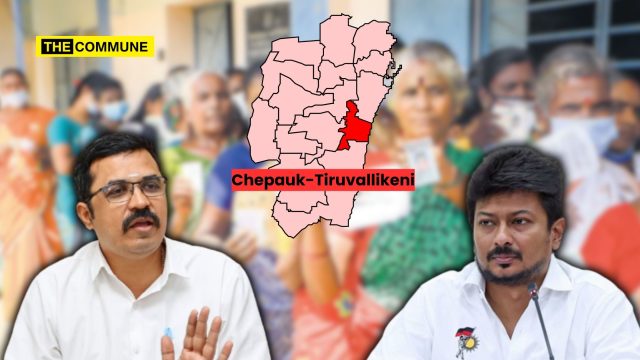
AIADMK Exposes Massive Fake Voters In DMK Scion Udhayanidhi Stalin’s Chepauk-Tiruvallikeni Constituency

The AIADMK has levelled serious allegations against the ruling DMK, accusing it of orchestrating large-scale voter fraud in Tamil Nadu. The DMK, which has harped on to Rahul Gandhi’s “vote chori” campaign commenting about electoral irregularities in other states, is turning a blind eye to the manipulation happening under its own administration says AIADMK.

Speaking at a press conference, AIADMK spokesperson and IT Wing head Kovai Sathyan alleged that tens of thousands of ineligible voters including deceased individuals, people who have relocated, and duplicate entries remain on the electoral rolls across Chennai. According to him, this was part of a deliberate attempt to engineer vote fraud in the upcoming elections.

Discrepancies In Chepauk Constituency

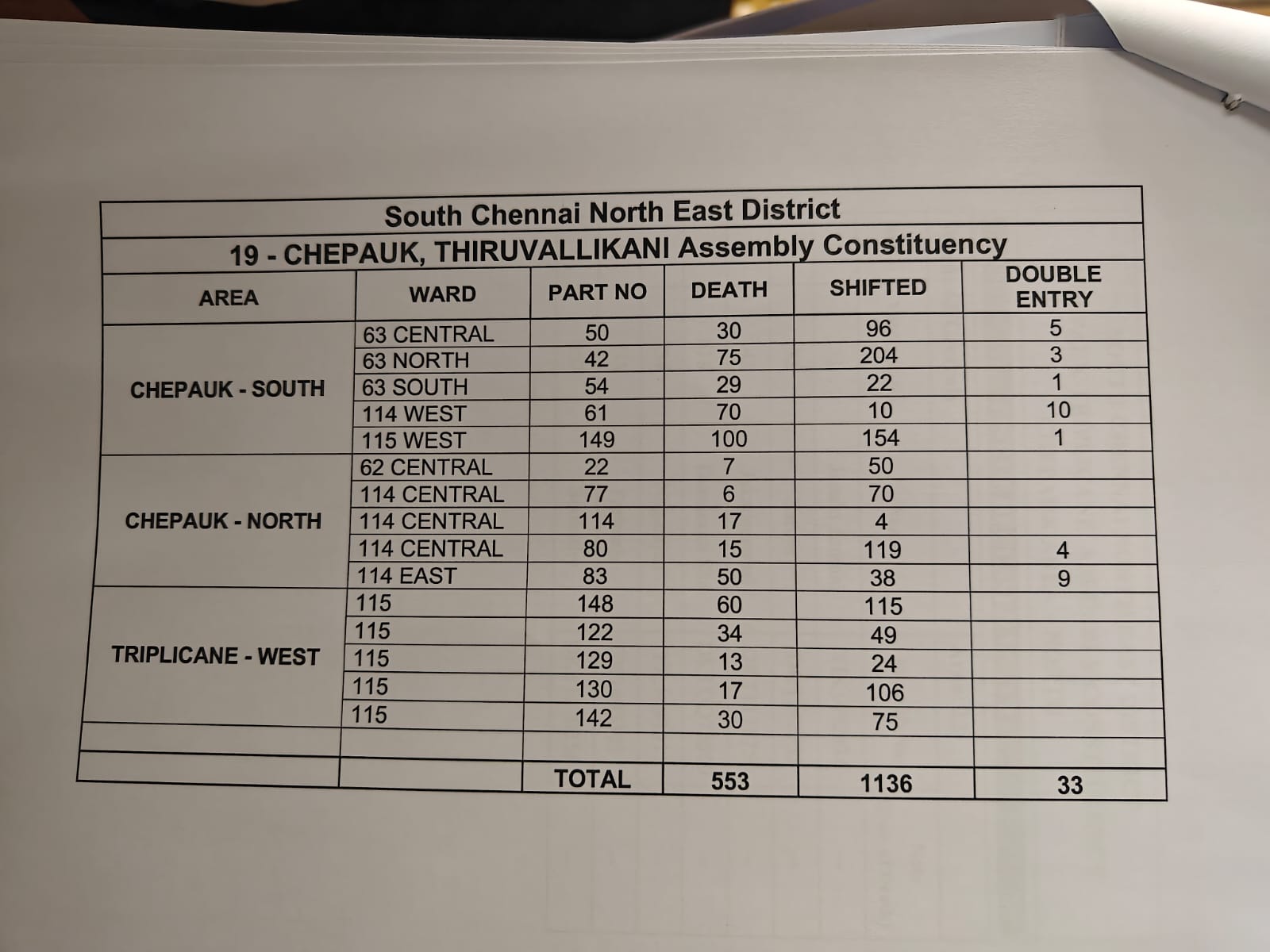
Citing data from the Chepauk–Triplicane Assembly constituency, currently represented by Deputy CM Udhayanidhi Stalin, Sathyan said the AIADMK conducted a door-to-door verification in 15 out of 220 booths. The survey revealed a total of 1,722 ineligible entries:

  • 553 deceased voters
  • 1,136 relocated individuals
  • 33 duplicate names

“In just 15 booths 1,722 voters were not there. If this is the situation in just 15 booths, what is the situation in all 220 booths?” Sathyan asked.

Similar Issues Found In Thousand Lights

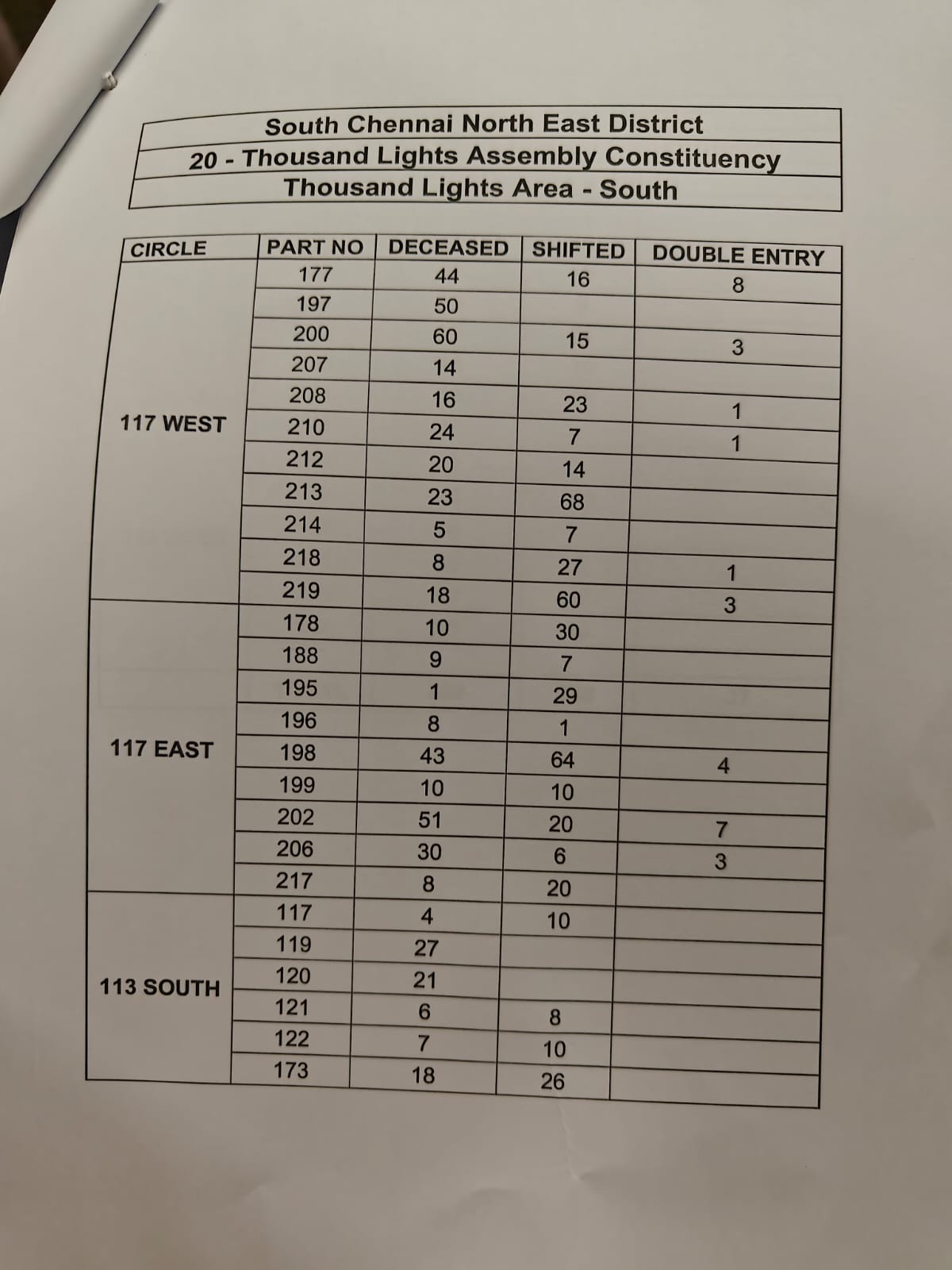
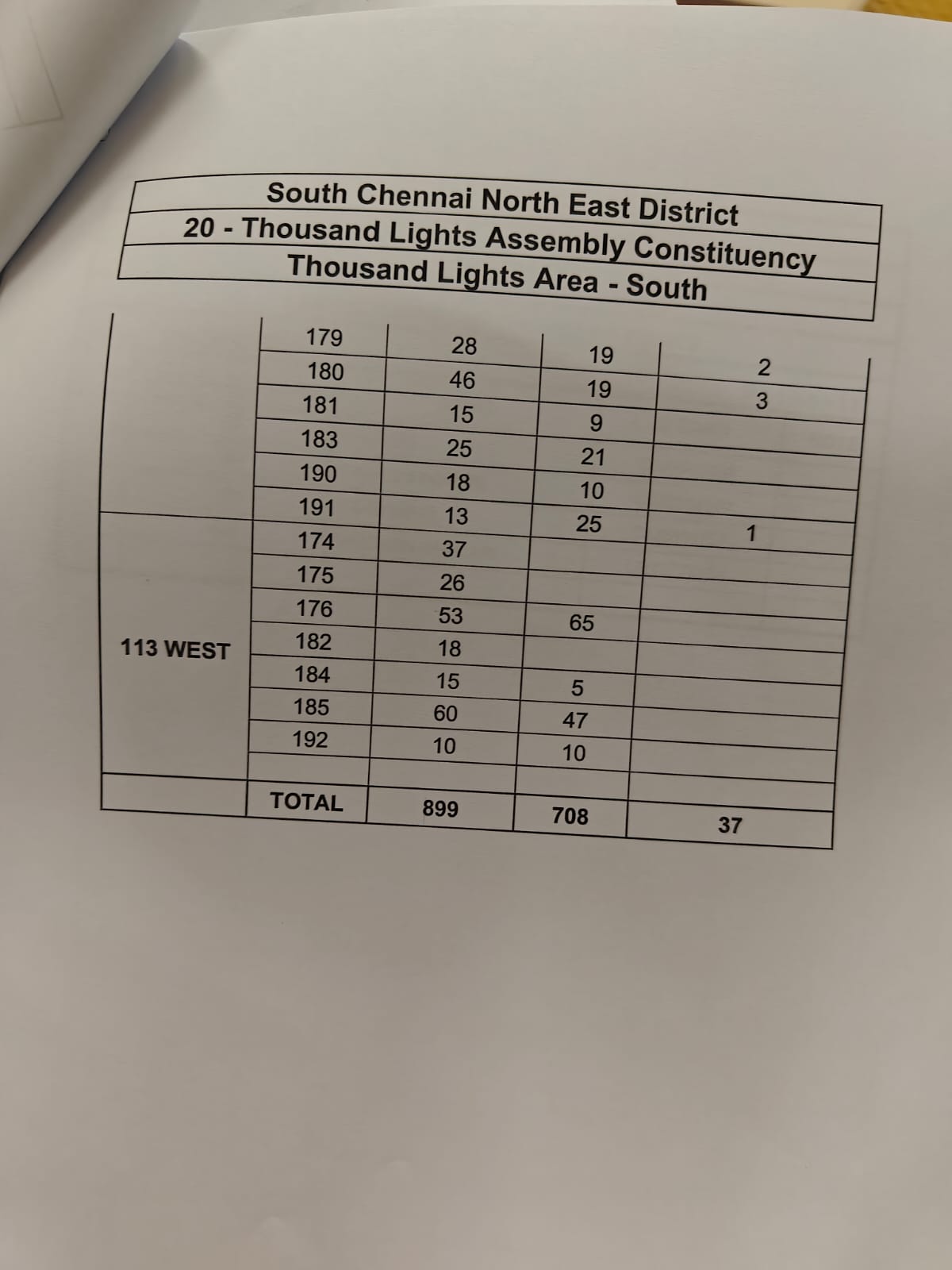
A similar exercise in the Thousand Lights constituency revealed 1,244 invalid entries across 39 booths:

  • 899 deceased voters
  • 708 people who had shifted
  • 37 duplicate entries

These findings, Sathyan said, were compiled and submitted to the District Collector along with the relevant voter lists for official action.

20,000 To 30,000 Fake Voters Per Constituency

According to Sathyan, such discrepancies are not isolated. Based on internal assessments, he alleged that each constituency in Chennai may contain between 20,000 to 30,000 invalid voters. “These are not mere clerical errors,” he said. “This is a systematic ploy to enable fraudulent voting.”

He also questioned why Booth Level Officers (BLOs) are relying on political parties to supply documentation such as death certificates, when it is their legal responsibility to verify voter eligibility. “When we report deceased voters, BLOs ask us for the death certificates. This is the job of government officials, yet they push the burden onto our PLAs (Party-Level Agents),” he added.

The AIADMK spokesperson revealed that the party has already sought legal remedies in several constituencies and obtained court orders directing the removal of invalid voters. In RK Nagar, he said, the party successfully removed 28,000 fake entries via judicial intervention.

However, he expressed frustration that even after court orders, the names are being re-added to the electoral rolls. In Thousand Lights, he said the party had a similar order for the removal of 3,000 votes, which were mysteriously restored.

“We were back in court on 3 July 2025, and officials gave an undertaking that they would act. But till now, no meaningful action has been taken,” he said.

Sathyan emphasized that the Election Commission of India (ECI) often deflects responsibility to the State Election Commission, which in turn relies on state government officials to implement voter roll revisions. “The problem is that all these officials function under the DMK-led state government. When the very machinery tasked with fixing the issue is controlled by the ruling party, can we expect impartiality?” he questioned.

He also alleged that the DMK’s IT wing may be involved in digitally tampering with voter data, including online manipulation of electoral rolls. He claimed that voters displaced by infrastructure development still remain on the lists despite no longer residing in the area.

Sathyan concluded by calling out the hypocrisy of the DMK, which he said is quick to criticize vote fraud in states like Bihar but remains silent about alleged irregularities in Tamil Nadu. “How can the DMK speak about democracy elsewhere while nurturing a fraudulent electoral base in its own backyard?” he asked.

He said AIADMK will not stay silent and will continue its efforts, both legally and politically, to ensure clean and fair elections. Reports have already been submitted to the Chief Election Commissioner of India and the Tamil Nadu State Election Commissioner, with more documentation expected to follow.

“This is not a complaint we’ll file and forget. We’re committed to seeing this through to the end,” Sathyan declared.

Kovai Sathyan’s Full Speech Of The Press Meet:

“A BLA (Booth-Level Agent) from our party, acting on the orders of our General Secretary, recently went to every household in Chennai’s constituencies to verify the voters’ list. We found many irregularities, which we brought to the attention of the District Collector. We met with him in person to point out the errors in the voters’ list and requested that he take action.

The key finding in this is particularly in the Chepauk-Triplicane constituency, which is represented by Deputy Chief Minister Udhayanidhi Stalin. There are a total of 220 booths. Among the 220 booths we chose a sample of 15 booths to verify the voters’ list over the past month. In just these 15 booths, we found a discrepancy of 1,722 votes between the list we had and the on-ground reality. Of these, 553 were deceased, 1,136 had moved (migrated), and 33 were double entries. In just 15 booths 1,722 voters were not there. If this is the situation in just 15 booths, what is the situation in all 220 booths? Similarly, we conducted a house-to-house check in 39 booths in the Thousand Lights constituency. We found 899 deceased voters, 708 voters who had shifted, and 37 double entries, for a total of 1,244. We have submitted all this data, along with the voters’ list, to the District Collector. On average, there are 20,000 to 30,000 fake voters in each constituency in Chennai. We believe this is a deliberate effort by the DMK to facilitate fake vote during elections.”

He added, “We have informed the State Election Commission and the Central Election Commission about this. Every time we report these issues, we are told that it is the responsibility of the state government to appoint people to verify this and take action. The question here is: all the government officials and employees who are supposed to do this are under the control of the state government. So why is it that for thousands of fake votes in each constituency, no action is being taken? This is a major question. In addition, we have gone to court and obtained orders to remove names from the voters’ list. For example, in the Thousand Lights constituency, we got a recent order to remove 3,000 votes, but they were added back to the list. We have also shown the court order to the District Collector and asked for the reasons why it was added back. Similarly, in RK Nagar, 28,000 votes were removed through a court order. Do we have to go to court for every constituency, or it raises suspicion whether the state government deliberately neglecting its duty to allow the DMK to use these as fraudulent votes in the upcoming elections?” 

Subscribe to our channels on TelegramWhatsApp, and Instagram and get the best stories of the day delivered to you personally.
Tirunelveli Govt Teacher Suspended Over Sexual Harassment Complaint; He Alleges Vendetta By Female HM For Exposing Her Fund Collection Irregularities

A government school teacher in Tirunelveli district has been suspended after several female students lodged a sexual harassment complaint with the District Collector.

The accused, Guru Vinayagam, a 52-year-old English teacher at Tharuvai Government High School, located near Munneerpallam, was reportedly accused of using inappropriate language and engaging in sexually inappropriate behavior towards girl students.

Following the complaint, District Principal Education Officer Sivakumar conducted an inquiry into the matter. Based on the findings, he issued an order placing Guru Vinayagam under suspension pending further action.

Responding to the allegations, Guru Vinayagam claimed the complaint was motivated by retaliation. He stated, “This accusation was made out of revenge because I questioned the headmistress regarding the collection of money from girl students.”

Further investigation into the matter is expected as authorities review the case.

(With Inputs From Dinamalar)

Subscribe to our channels on TelegramWhatsApp, and Instagram and get the best stories of the day delivered to you personally.
Documenting 43 Attacks On Ganesh Chaturthi Celebrations Across India (2017-2025)

2025’s Ganesh Chaturthi visarjan processions and other celebrations saw quite a number of attacks across the country and in neighbouring Nepal and Bangladesh. This is not a new occurrence.

In this report, we have documented 43 separate incidents between 2017 and 2025 where Ganesh Chaturthi processions and celebrations were targeted by violent attacks, vandalism, and organized disruptions across India. These events, occurring in states including Maharashtra, Gujarat, Uttar Pradesh, Madhya Pradesh, and Karnataka, reveal a persistent pattern of violence during one of the nation’s most beloved Hindu festivals.

The incidents range from stone-pelting and physical assaults on devotees to the desecration of idols, arson, and inflammatory sloganeering, often leading to injuries, communal tension, and police intervention.

#1 Idol Immersion Attack – Bhopal, MP (2025)

On 8 September 2025, in the Gautam Nagar area of Bhopal, Madhya Pradesh, a Ganesh idol immersion procession was violently attacked. As the procession passed a mosque in the Arif Nagar area, it was pelted with stones, causing damage to the idol. Devotees from the Gautam Nagar area retaliated, leading to a clash. The police intervened to control the situation, which had escalated from a religious ceremony into a serious public order incident.

#2 Stone-Pelting on Procession – Maddur, KA (2025)

On 7 September 2025, in Maddur, Karnataka, a Ganesh Chaturthi procession faced a brutal attack. Miscreants pelted stones at the procession, resulting in injuries to eight Hindu devotees. The attack appeared to be a coordinated effort to disrupt the peaceful religious observance. Police registered a case against several unidentified accused persons and launched an investigation into the incident to apprehend those responsible.

#3 Procession Disrupted – Janakpurdham, Nepal (2025)

On 30 August 2025, in Janakpur, Nepal, a Ganesh immersion procession was attacked. The incident occurred near Jhayadi Chowk on the banks of the Dhanush Sagar pond. Two devotees were injured in the stone-pelting. Madhesh Police reached the spot and brought the situation under control, detaining several individuals for questioning regarding the violent disruption.

#4 Planned Disruption Attempt – Vadodara, GJ (2025)

On 26 August 2025, in Vadodara, Gujarat, a planned attempt to disrupt Ganesh Chaturthi was foiled. As preparations for idol immersion were underway, miscreants including Salim Mansuri and Mohammad Irshad Qureshi planned to attack the procession by throwing eggs. Vadodara Police acted on intelligence and detained three individuals from these organizations, preventing a potential major incident.

#5 Clash During Procession – Davangere, KA (2024)

On 19 September 2024, in Davangere, Karnataka, a Ganesh immersion procession was violently attacked. As the procession from Venka Bhovi Colony reached Chamrajpete Circle, a Muslim mob, allegedly angered by the chanting of ‘Jai Shri Ram’, began pelting stones and shouting Islamic slogans. The assault resulted in serious injuries to four policemen and several Hindu devotees.

#6 Temple Vandalism and Threats – Chhindwara, MP (2024)

On 3 November 2024, in Chhindwara, Madhya Pradesh, Mohammad Taufiq broke into a Lord Ganesha temple in Junnardev ward. He vandalised the idols and threatened to kill an elderly woman who tried to stop him. Alerted by her alarms, local residents apprehended Taufiq and handed him over to the police.

#7 Procession Attacked in Muslim-Majority Village – Siddharthnagar, UP (2024)

On 4 November 2024, in the Dumariyaganj area of Siddharthnagar, Uttar Pradesh, a Ganesh and Lakshmi immersion procession was attacked by Muslim rioters in the village of Mali Mainha. Two female devotees were injured in the assault. Police have registered a case against several unknown accused.

#8 Stone-Pelting on Religious Procession – Akola, MH (2024)

On 18 September 2024, in the Nandipeth area of Akola, Maharashtra, Muslim rioters pelted stones at a Ganesh idol procession. The attack left several devotees and policemen injured. In response, police detained 68 individuals suspected of involvement in the stone-pelting.

#9 Idol Shattered, Protestors Lathi-Charged – Bhiwandi, MH (2024)

On 17 September 2024, in Bhiwandi, Thane, Muslim miscreants near the Hindustani Mosque pelted stones at a Ganesh idol during visarjan, shattering it. When the devotees protested the attack, police intervened with a lathi-charge, resulting in serious injuries to multiple people.

#10 Stone-Pelting at Immersion Procession – Siddharthnagar, UP (2024)

On 17 September 2024, in the Shohratgarh area of Siddharthnagar, Muslim rioters pelted stones at a Ganesh immersion procession at Marwari Square. In response, devotees participating in the procession staged protests, demanding action against the miscreants.

#11 Devotees Attacked with Weapons – Kheda, GJ (2024)

On 17 September 2024, in the Gaon area of Kheda, a Muslim mob of 150-200 people attacked a Ganesh Visarjan procession with sticks and pipes as it approached a mosque. The mob was reportedly angered by the music from a DJ. Police detained more than 10 armed individuals on charges of violence.

#12 Procession Halted After Dispute – Shegaon, MH (2024)

On 17 September 2024, in Shegaon town, Buldhana, a Muslim mob pelted stones at a Ganesh immersion procession following a dispute between two individuals. The procession was forced to halt for two hours as devotees demanded the arrest of the culprits.

#13 Ambush Attack in Darkness – Jalgaon Jamod, MH (2024)

On 17 September 2024, in Jalgaon Jamod town, Buldhana, Muslim miscreants switched off streetlights and ambushed a Ganesh Visarjan procession by pelting stones from the roofs of houses. The attack resulted in serious injuries to many Ganesh devotees and three policemen.

#14 Stone-Pelting During Immersion – Aara, CG (2024)

On 17 September 2024, in Aara village, Balrampur, Muslim rioters violently pelted stones during a Ganesh idol immersion. Many people, including Sheela Yadav, suffered serious head injuries. Balrampur Police detained Hashib, Imam, Ittakhab, and Islam on charges of violence.

#15 Group of Women Attacked During Immersion – Yavatmal, MH (2024)

On 17 September 2024, at around 10:30 PM in Dhanki village, Umarkhed, a group of women from the Shiv Chhatrapati Ganesh Mandal were attacked by Muslim rioters while going for Ganesh immersion. Ganesha idols were damaged in the attack. Police filed a report against 74 Muslim miscreants.

#16 Women Harassed and Devotees Attacked – Trilokpuri, Delhi (2024)

On 16 September 2024, in Trilokpuri, an armed Muslim mob attacked a crowd returning after Ganesh Visarjan. Two devotees were seriously injured. Eyewitnesses reported that the miscreants also pulled the dupattas of women.

#17 Seditious Slogans During Attack – Farrukhabad, UP (2024)

On 16 August 2024, under the Shamshabad police station area in Farrukhabad, a Muslim mob attacked people returning after Ganesh Visarjan with sticks and bricks. The rioters also raised slogans of ‘Pakistan Zindabad’.

#18 Provocative Slogans and Threats – Balrampur, UP (2024)

On 16 September 2024, in Balrampur, a Muslim mob participating in a Barawafaat procession waved green flags in front of a Ganesh pandal and shouted, ‘If you want to live in India, you have to say Khwaja-Khwaja.’ The Siddhi Vinayak Seva Samiti complained that the miscreants were shouting indecent slogans, including ‘Palestine Zindabad,’ and issuing threats.

#19 Stone-Pelting Damages Idol – Jalgaon, MH (2024)

On 15 September 2024, in the Gandhilpura area of Amalner, Jalgaon, local Muslim fundamentalists pelted stones at a procession by the ‘Dosti Group Ganeshotsav Mandal’ on the pretext of throwing gulal. The stone-pelting damaged the right side of the Ganesh idol.

#20 Planned Attack on Returning Devotees – Jhansi, UP (2024)

On 15 September 2024, in the Madarganj locality of Jhansi, Muslim rioters first abused Hindus during Ganesh immersion for throwing gulal and shouting slogans. Later, while the devotees were returning, the rioters attacked them in a planned manner. Jhansi police took Shahid and two others into custody.

#21 Arrests for Stone-Pelting on Pandal – Bhilwara, RJ (2024)

On 14 September 2024, in Sanganer, Bhilwara, Muslim rioters pelted stones at a ‘Shri Ganesh Mahotsav Event’. Bhilwara police arrested three youths, Firoz Ali, Sapan, and Mohammad Bilal, all residents of Momin Mohalla, in connection with the case.

#22 Organizer Attacked and Threatened – Daund, MH (2024)

On 14 September 2024, in the Daund area of Pune, Yasin Ismail Sayyed attacked and threatened to kill Sitara Torve over a Ganesh Mahotsav event she had organized. A case was registered against Sayyed under relevant sections of the Indian Penal Code.

#23 Violence Erupts Over Firecracker – Mahoba, UP (2024)

On 14 September 2024, tension flared in the Kasautori area of Mahoba when miscreants in a Muslim-dominated area, angered by a child bursting a firecracker during a Ganesh Visarjan procession, resorted to violent stone-pelting and threw water on participants.

#24 Women Injured in Procession Attack – Raigad, MH (2024)

On 12 September 2024, in Murud city, Raigad, two minor Muslim youths pelted stones at a Gauri Ganpati immersion procession passing through the Bhogeswar Pakhadi area. Six women were injured in the attack.

#25 PFI Members Arrested for Procession Attack – Mandya, KA (2024)

On the night of 11 September 2024, in Badrikoppalu village near Nagamangala, Mandya, Muslim rioters pelted stones at a Ganpati immersion procession near a mosque. Armed rioters also set fire to 4-5 parked bikes. Police arrested Yusuf and Nasir of the Popular Front of India (PFI).

#26 Children Incited to Break Idols – Surat, GJ (2024)

On 10 S

New York Times Columnist Elizabeth Spiers Spews Venom Against Dead American Conservative Activist Charlie Kirk

The leftist rant unstopping even after the cruel assassination of conservative Charles Kirk, New York Times columnist Elizabeth Spiers has spewed venom in a piece titled “Charlie Kirk’s Legacy Deserves No Mourning,” in an article published in The Nation. She writes, Charles Kirk, 31, died after being shot at a public event in Utah, moments after responding to a question about mass shootings, but rather than expressing basic human decency or sympathy, Spiers instead used the tragedy as an opportunity to unleash a politically charged tirade against Kirk, celebrating his death as some sort of moral correction.

Spiers makes it clear she holds no regard for Kirk’s life or legacy, describing him as a “bigot” and “Christian nationalist” who, in her words, “profited from hate.” She paints a picture of a man defined not by ideas or debates, but by prejudice a view many see as not only biased but deliberately dehumanizing.

She writes, “He was an unrepentant racist, transphobe, homophobe, and misogynist who often wrapped his bigotry in Bible verses because there was no other way to pretend that it was morally correct. He had children, as do many vile people.” Spiers’s disdain for Kirk is so intense that she even questions why anyone would mourn him, comparing the idea of honoring his legacy to writing a flattering obituary for Joseph Goebbels.

This rhetoric is not only disrespectful it’s inflammatory. Kirk, the founder of Turning Point USA, was a prominent conservative voice who built his platform engaging with students across campuses, challenging progressive orthodoxy, and advocating for individual rights, traditional values, and free speech. But for Spiers, none of these matter. She dismisses his achievements and influence entirely, insisting his success was rooted in bigotry rather than ideology.

Instead of acknowledging Kirk’s impact on political discourse or the tragic nature of his assassination Spiers fixates on his past statements, cherry-picking quotes to portray him in the worst possible light. Her writing goes beyond criticism; it reads more like a personal vendetta, laced with mockery and disdain and this is not criticism it’s character assassination. She accuses Kirk of being anti-Black, anti-women, anti-LGBT, and anti-immigrant, offering no room for nuance or complexity. She writes, “The man who said, ‘Black women do not have brain processing power to be taken seriously. You have to go steal a white person’s slot’ said it while wearing a nice shirt and a tie on a podcast… That does not make it any less racist.”
Spiers even takes aim at Kirk’s children and family, implying that fatherhood doesn’t mitigate his so-called harm. The cruelty here is striking especially given that Kirk’s family is now mourning an assassination. She says, “He had children, as do many vile people.” She adds, “I don’t know if Kirk was a good father, but if he was, that does little to mitigate the damage he did to other people’s children.”
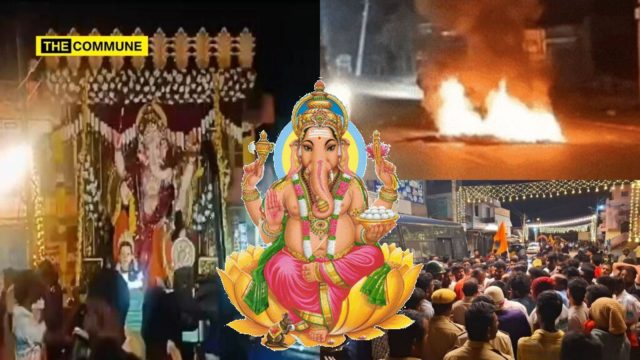
To further her case, she invokes his views on the Second Amendment, suggesting that Kirk’s support for gun rights somehow makes his death by gunfire poetic justice. She even drags his family into the mix, coldly stating that “having children does not redeem him,” and suggesting that his kids would be better off learning to reject his values. This level of cruelty, especially directed at a grieving family, reveals more about Spiers’s own worldview than it does about Kirk’s.

At one point, she questions whether civility itself is a moral value, openly admitting that she sees no reason to “be nice” about Kirk’s death because, in her view, the harm he caused outweighs the tragedy of his murder. “It is rude of me to say all of this, because we live in a culture where manners are often valued more than truth,” it’s a chilling statement, one that seems to justify hatred under the guise of social justice.

What’s perhaps most disturbing is Spiers’s attempt to delegitimize Kirk’s entire life’s work. She denies that his organization contributed to political debate, calling it a front for indoctrination rather than engagement. Yet, countless students, activists, and supporters would argue otherwise. Whether one agreed with Kirk or not, he sparked conversation, motivated youth participation in politics, and gave a voice to a side often shut out in academic and media circles.

In one particularly telling passage, Spiers writes that she doesn’t celebrate Kirk’s death—but also doesn’t feel obligated to respect his life. That admission reveals more about her approach than about Kirk himself. She writes, “I won’t celebrate his death, but I’m not obligated to celebrate his life, either.”

Spiers and others may celebrate the silencing of that voice, but many Americans see this as a dangerous step away from democratic norms. Her op-ed is not a call for reflection or accountability; it’s a justification for hatred against anyone who holds conservative views.

In the end, the tragedy of Charlie Kirk’s death is compounded by the disgraceful response from figures like Elizabeth Spiers who see no value in human life unless it aligns with their politics. While many across the spectrum have condemned the violence and offered condolences, Spiers chose instead to dance on a grave. And that, perhaps, is the most revealing part of all.

Subscribe to our channels on TelegramWhatsApp, and Instagram and get the best stories of the day delivered to you personally.