Home Blog Page 1066

What The Canonization Of Tamil Christian Saint Devasahayam Pillai Means
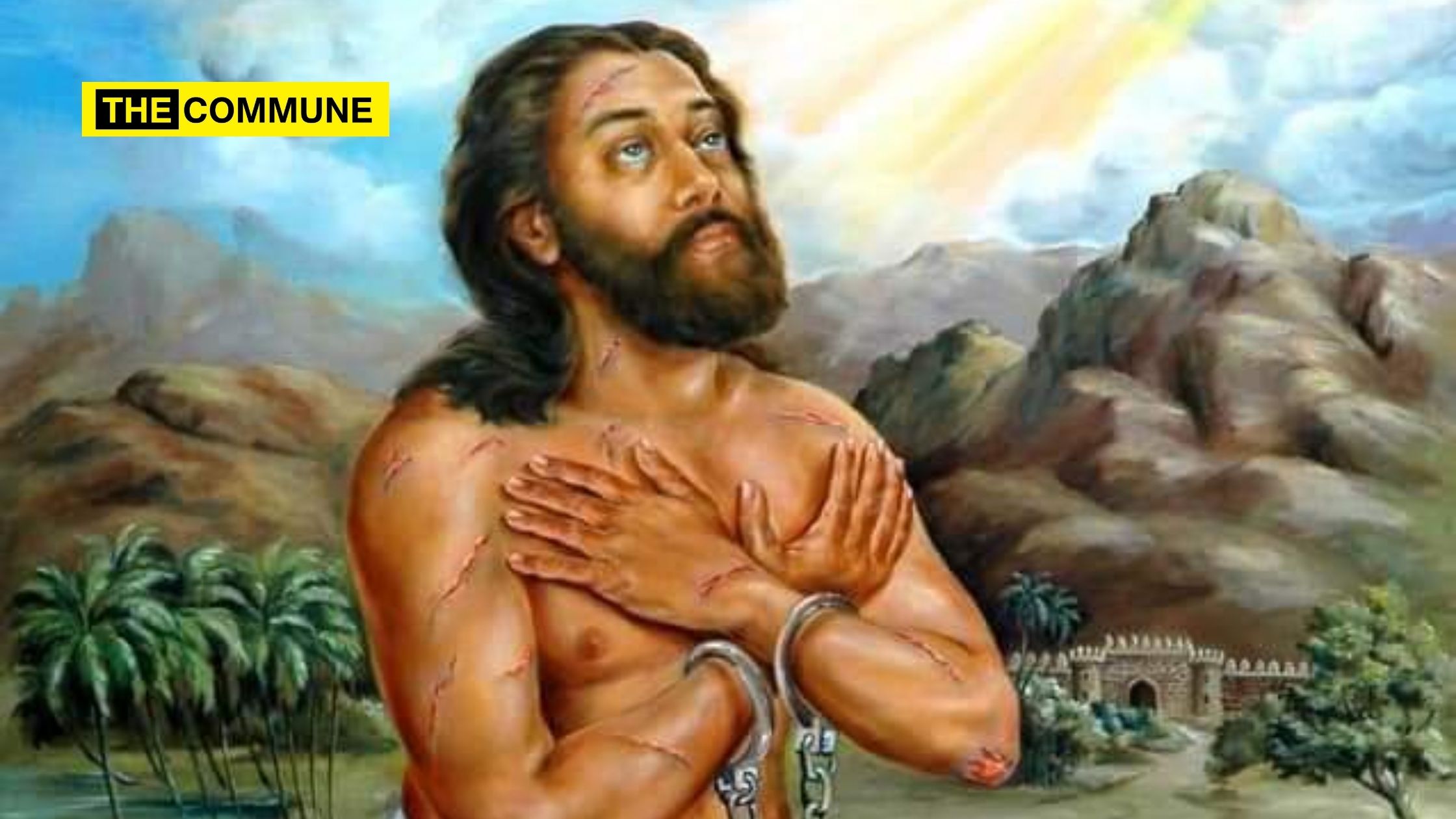
On November 10, the Vatican announced that ‘Devasagayam’, who is said to have lived in the 18th century principality of Travancore, would be canonized. The media especially the ones in Tamil Nadu went berserk.

They praised the Vatican’s decision and proudly announced that Devasagayam is the first Indian to be canonized in history. Look at the respect Christianity has given to a Tamilian – was the central theme in almost all major stories. They also didn’t forget to mention that Vatican’s announcement is an award of recognition given for the sacrifice made by Devasagayam.

So, who is this Devasagayam Pillai? What was the motive behind his sudden canonization? What is the reason for the lifting of the Nair identity of the Devasagayam when it is said that there is no caste in Christianity? We met Bala Gautaman, a historian and director of the Center for Vedic Scientific Research, with many such questions. He says there are some things we need to know before analyzing the matter of Devasagayam in detail. An award is a recognition given to a person who has done a particular deed. For example, for our country, soldiers who exhibit great valour on the battlefield are given awards like Veer Chakra and Bharat Ratna for being the best citizen. Similarly, there are reasons behind the titles given by the Vatican.

The Vatican is not a holy place like Kasi or Rameswaram as most people think. It is a political capital. Its head-of-state is the pope. Their political ideology is ‘Christianity’. The Vatican is trying to bring its other countries under its control by spreading this ideology. Christian missionaries are their soldiers who are currently working to spread Christianity. But a few centuries ago, the Vatican used military force to bring many European nations under the control of Christendom. Many countries today remain Christian as a result of the war waged by the Vatican’s sectarian army. The Vatican still controls those countries. But when it comes to war, casualties happen on both sides right? Thus, in honor of veterans who have served in the Vatican’s Army, the title given by the Vatican Government is ‘Venerable’!

That is, the Vatican is a government. Venerable is the title that honors those who fought and sacrificed in support of the Vatican government without loyalty to their own government! War here does not simply mean fighting with the sword. It refers to all the tricks done to destroy other native religions and cultures. This has been menioned by the famous second century pastor Tertullian himself. As Tertullian’s view is accepted by “Pope John Paul II” and he too recogonizes “martyr of the Vatican”.

The Vatican conferred the title of “Venerable” in 2012 in anticipation of the canonization of the character “Devasagayam”. What does this mean? Devasagayam was not loyal to India but to the Vatican. Just like how Islamic movements celebrate the traitors responsible for the Coimbatore bombings as martyrs and honor them with the title of ‘Ghazi’.

Now, let’s look at how Devasagayam has been given the title of Saint.

Pope John Paul II when he arrived in India in 1999 had said that the Church took root in Europe in the first millennium, in Africa and in the Americas in the second millenium.

“May the third Christian millennium witness a great harvest of faith on this vast and vital continent”, he said back then.

India is the most important country in Asia India has been a Hindu country for about 500 years of Islamic rule and the next 200 years of British rule. Most Southeast Asian countries follow Indian culture. So, if you want to catch Asia, you have to catch India.

And how to capture India? That is why the Vatican has taken up the weapon of the title of ‘Saint’.

The Vatican’s plan is to find someone in any of the countries they think should be converted and give them the title of ‘saint’.

During the colonial period, Christian missionaries wrote and spread false adventure stories to spread Christianity among the local people. This has been done in many countries since India. There is even a template for these adventure stories. The villains are the native people. They will be portrayed as savages, worshipers of Satan, and oppressors of the poor. Later it was written that the hero of the story spread Christianity and upheld social justice and that some local miscreants who did not like it killed the Christian hero.

When the locals hear this story, they feel a hatred for themselves. There will be hatred over their culture. It also gives the impression that Christianity has elevated their status. Utilizing this, Christian missionaries create a cult similar to that of Sai Baba around the hero of their story.

If the cult has become very popular among the locals, they will declare the title of sainthood. By the time the cult would have become popular among Hindus too. Even if the canonization is announced, the title will be given only after a year of dragging. Do you know why? Until then, they will keep on talking about that person. The plan is to spread the story of anti-indigenous people across the country and to make the respective people hate their culture and support Christianity.

That is what they are currently doing in the matter of ‘Devasagayam’.Christian adventure stories in general can be divided into two types. One is a false story written with a real character. Second is fake story written with a second fake character! The story of Devasagayam is an example of the second type.! Let us first find out what is mentioned on the website owned by the Christian Churches about Devasagayam.

Devasagayam Pillai was born in 1712 in a Nair family. His real name was Neelakanda Pillai. He was in government service in the princely state of the Maharaja of Travancore. In 1741, the Dutch lost to Travancaore King Marthanda Varma in the Battle of Colachel. Eustachius De Lannoy’, commander of the Dutch forces, joined Marthanda Varma as commander-in-chief. Neelakanda Pillai got the friendship of Dutch commander Eustachius De Lannoy’ . Through him Neelakanda Pillai was inspired by Christianity. Later, in 1745, he converted to Christianity and changed his name to Devasagayam Pillai through a pastor named ‘Pellatari’ from Vadakkankulam.

Devasagayam Pillai, who converted to Christianity, was accustomed to all sections of the society irrespective of caste. He converted the people by ‘understanding the superiority of Christianity’. This was not to the liking of the dominant castes of Nair and Namboodiri. Thus, Devasagayam was reported to the king of Travancore. He was subsequently arrested in 1749. The Church states that he suffered torture by the king of Travancore while in prison. And it was during that time that ‘many miracles were performed by the grace of Jesus’. He was eventually shot by the king’s soldiers on Kattthadi Hill near Aralvaymozhi.

This is the story concocted by Christian missionaries. Take a good look at this story. Does the template of the Christian adventure story fit in perfectly? However, historians say that such a story never really happened in history.

Renowned Kerala historian A. Sridhara Menon in an interview to the Pioneer magazine said that the story is a completely fabricated fantasy.

President of the Indian Institute of Historical Studies (ICHR) Mr. MGS Narayanan, argues that there was never an army commander under Marthandavarma by name of Devasagayam.

Mr. Nagam Aiya, who wrote the history of Travancore said “It is unbelievable that converts in the country have a habit of portraying their ancestors as priests custom; It is on that basis that this story was conceived.” This has been mentioned in Travancore Manual Vol II page 129-130, M.Nagam Aiya.

Not only that. Christian missionaries say that Devasagayam had a wife named Bhargavi who had a child and that she too had converted to Christianity. If you visit the tomb of that Bhargavi today, not all the Tamil characters written on it are ancient characters. That means everything is freshly made half-set!Whichever Marthanda Varma king is blamed for killing Devasakaya’s child for converting to another religion, that king is the one who allotted the land tax free to Varapuzha Church (Travancore Manual, Vol-I page 16, T.K.Veluppillai). So, there is no evidence that Devasagayam Pillai lived in Travancore. There is also no evidence that the king of Travancore was a Hindu fanatic. King Marthanda Varma built a church in Udayagiri fort for the same De Lannoy and paid 100 rupees a month to the priest who worked in that church! (Travancore Manual, Vol-I page 16, T.K.Veluppillai).

But the Vatican does not care about that. The Vatican has so far canonized many. Today Devasagayam has been canonized and Hindus will be converted to create unrest between communities.

This article was originally published in Mission Kaali and has been republished here with permission after making suitable edits.

Click here to subscribe to The Commune on Telegram and get the best stories of the day delivered to you personally.


Lachit Borpukhan: The Ahom Warrior Who Sent The Mughals Running

The land of Assam, on whose lovely lap the mighty Brahmaputra majestically flows, has given birth to many daring and dauntless warriors under Ahom dynasty. They had maintained their sovereignty with grit and gallantry, firmness and fortitude for almost six centuries [1228-1826] against the mighty, monstrous, mean, malicious Moghul marauders, thanks to their proud and patriotic, relentless and resolute kings. The awesome Ahoms fought and won against the Mughal empire seventeen times! In fact, they were the only dynasty not to fall to the Mughal Empire at all. 

Advent of Lachit Borphukan

Lachit Borphukan was born on 24th November, 1622 to Momai Tamuli Borborua, the first Borborua (Governor of upper Assam and Commander-in-Chief of the Ahom army) under Prataap Singha. As was the tradition in Ahom society, the young Lachit was taught philosophy and arts besides military skills.

By dint of sheer hard work and dedication he was considered for appointment to the position of a Soladhara Barua (scarf-bearer) of the Ahom King. That position was the modern day equivalent of a principal secretary. Gradually Lachit was elevated to other important positions like Superintendent of the Stable of Royal Horses (Ghora Barua) and Superintendent of the Royal Household Guards to the Ahom king Chakradhwaj Singha.

Impressed by his prowess and pugnacity, the king promoted Lachit to be one of the Borphukhan. In the Ahom system of governance Borphukan was one of the five patra mantris (councillors) who possessed both executive and judicial powers.

The Scenario

At the time when our narration starts, Ahom king Chakradhwaj Singha was at the helm. The predatory Mughals were at the peak of their power and with an awesome and alarming army. They were menacingly moving and marauding many parts of India. When the most barbaric and brutal Aurangzeb ascended the throne at Delhi, he could not swallow the ignominy of defeat at the hands of a smaller force and therefore he repeatedly attacked the Ahom kingdom. Luckily for him, there was an interim internal discord among the Ahoms which he utilised and temporarily captured Gauhati. He wanted to go ahead and capture Saraighat on the other side of Brahmaputra. But alas, he made a fatal error and got the bitterest experience of his life there!

In August 1667, Lachit accompanied by Atan Burhagohain, undertook a downstream expedition on Brahmaputra, to retake Gauhati.

Making Kaliabor his base camp, Lachit reconquered Gauhati, occupied Rangamahal forts and through a midnight assault occupied Itakhuli. Firuz Khan, the faujdar of Gauhati was taken as prisoner, and with the help of river warfare, Lachit removed the Mughals from Umananda and Barhat. As a recognition for his victory, he was presented with the Hengdang, a gold plated sword by the king.

The Battle Of Saraighat

Aurangzeb, incensed at the successive defeats, sent a huge army under the command of Raja Ram Singh and Mirza Raja Jai Singh to retake Gauhati. By February 1669, Ram Singh reached Rangamati, accompanied by Rashid Khan. It was a massive army with 4000 troopers, 30,000 infantry men, 21 Rajput chiefs with their contingents, 18,000 cavalry, 2000 archers and 40 ships. In addition the forces of Koch Bihar too joined the ranks, making the Ahoms virtually a miniscule mosquito!

And alas! Once again in the history of our motherland the different sects of her sons were thirsting for the blood of their own brethren and falling a prey to the common foe, furthering the interests of the Islamic invader!

Since Lachit was an expert strategist in gorilla warfare wherein a small contingent can cleverly control and contain a large army, the king chose him as Commander in Chief.

Lachit was initially aghast at the brobdingnagian size of the foe vis-a-vis the lilliputian size of his own. He knew that on an open field his army had no chance to fight, let alone any attempt for victory. Therefore he ingeniously utilised the undulating hills and the Brahmaputra river in his military tactics to tackle the huge enemy. The Ahoms were allied with the Jaintias, Garos, Nagas, the Rani of Darrang.

The place that was chosen was Saraighat where the Brahmaputra was the narrowest point, hardly a width of one km, ideal for naval defence, which was their strong point, so that Ahom Navy could keep the Mughals in check. Lachit set up a series of mud embankments in Gauhati, and ensured that the Mughals would be forced to take the river route to the city. Lachit set up his headquarters at Andharu Bali, a sandbank in south bank of Brahmaputra between Kamakhya and Sukreshwar hills and monitored the war operations. The north bank was under Atan Burhagohain [another intrepid hero of the episode].

Artful and adroit in mountainous terrain gambit, Lachit manoeuvred the situation with craft, cunningness, courage and confidence, causing colossal casualty to the enemy who did not possess even an iota of such skills. Consequently, the Moghul army was literally decimated.  Ram Singh, who was the head of Aurangeb army was very furious. He even tried to offer huge bribe to Lachit to abandon the territory. It did not work. Then he adopted a dirty, despicable deception. 

A letter attached to an arrow was shot into the Ahom camp, mentioning that Lachit had been paid one lac to vacate Guwahati. When the letter reached the king, he initially got suspicious of Lachit. But, his minister convinced the king that it was a hoax and vouchsafed for Lachit’s loyalty.  Still, the king sent a crazy order that Lachit should come out in the open and fight the enemy in plain terrain, a move which was definitely disadvantageous and dangerous to Lachit. To prove his loyalty, Lachit came out and continued the battle in the Allaboi plains.  Initially Ahoms were successful and they even captured the local mughal commander. But, they had to face point blank the full force of the Mughal cavalry led by the fierce and ferocious Ram Singh.

At this crucial stage, Lachit had unfortunately fallen ill and his physician advised him strongly to take rest for awhile so that he could resume the battle after recovery. But, here was Lachit’s response:

“When my countrymen are suffering from invasion, and when my army is fighting and sacrificing its life, how can I think about resting my body due to a mere illness? How can I think about going home to my wife and children when my entire country is in trouble?”

Since he was physically not fit to stand and fight, Lachit changed his game plan so that he can somehow continue to lead the fight. He got seven boats ready, loaded them with bows and arrows. Stationing himself in the boat, he directed his army from the front. Inspired by and imbued with his indomitable spirit, his army fought with full resolve as a result of which the Mughals under Ram Singh suffered heavy casualties and retreated. Lachit won the war. 

The Battle of Saraighat, fought on the banks of the Brahmaputra in Guwahati in 1671, is considered as one of the greatest naval battles on a river which resulted in the victory of Ahoms over the Mughals.

The intensity of his passion and patriotic spirit was unbelievable as indicated by the following incident. In the Saraighat war, he wanted an earthen wall and a bridge constructed overnight as a second defence and he assigned the task to his uncle. In the morning, when he saw that it was not done, he got furious and killed his own uncle instantly. He justified his action by asserting that his country is greater than his uncle!

After his defeat, the Moghul Commander-in-chief, Ram Singh wrote to Aurangzeb: “Every Assamese soldier is an expert in rowing boats, shooting arrows, digging trenches and in wielding guns and cannons. I have not seen such specimens of versatility in any other part of India. Glory to the King. Glory to the Commander. One single individual leads all the forces. Even I, Ram Singh, being personally on the spot, have not been able to find any loophole.” The Barphukan’s victory is recorded in a stone inscription in Guwahati.

Legacy

The renouned historian Sitaram Goel remarked that Lachit Borphukhan’s name should be taught in all Indian households like that of Shivaji and Banda Bahadur. 24th November, Lachit’s birthday is now being celebrated each year as Lachit Divas (Lachit Day) statewide in Assam where they commemorate the heroism of Lachit Borphukan.

Our Prime Minister Narendra Modi paid a rich tribute to the great Ahom general on his birth anniversary on Tuesday, November 24, 2021. Modi tweeted, “On his birth anniversary, I salute Lachit Borphukan. He is India’s pride and his valour during Saraighat war can never be forgotten.”

A refreshing fact is that following repeated demands, our present government has now included a chapter on him in the CBSE curriculum. It is high time that we go ahead and make necessary corrections in our history books so that blossoming brain of the beginner is bred with authentic, accurate narrations of our proud past. The aim should be that an elementary school student in the remotest village of Tamilnadu should know enough about Lachit Borphukan, Chhatrasal, Banda Bahadur, Tanaji Malusare, while his counterpart in the farthest village in Arunachal Pradesh should be aware of Marudu brothers, Velu Nachiar, Kittur Chennamma etc, so that one can emotionally empathise, ideologically identify with the other and [the tree of national integration can grow and flourish.] or the seed of national integration can sprout, swell, spread throughout the length and breadth of the nation.

TN Govt curtails wind and solar power generation, industrialists shocked

The DMK government in Tamil Nadu has ordered to stop the generation of wind power by one-third of the proportion causing dismay among wind power generators and industrialists in the state.

The DMK government’s move comes at a when the state’s power demand has been crossing 17,000 MW owing to the scorching summer. It is also worth mentioning that the state has been witnessing frequent unannounced power cuts.

The peak wind season in Tamil Nadu is from April to October. However, the state is seeing good winds blowing since March 15, a month earlier than usual. The DMK government on the other hand has ordered for the curtailing of one-third of the wind power at a time when the winds are gushing.

Industry experts have pointed out that states like Karnataka are selling their surplus green power on the exchange while it is going waste in Tamil Nadu. Reportedly, Karnataka sold its surplus green energy in the power exchange generating over ₹2,000 crore.

Wind power generators have expressed shock over the curtailment by the State Load Despatch Centre (SLDC) and Tamil Nadu Generation and Distribution Corporation (TANGEDCO).

Mr. Venkatachalam, Chief Advisor of the Tamil Nadu Spinning Mills Associationalso noted that the even production of solar energy is being curtailed.

“May 15 being a Sunday, the air-conditioning and industrial load was less. They curtailed wind energy significantly. Last week, they took wind energy and sold it to other States. Solar energy is also being curtailed,” Mr. Illango, Director of Tamil Nadu Electricity Consumers Association (TECA), was quoted saying in a report by The Hindu.

Other industry experts have pointed out that Tamil Nadu is the only state that was dialing down on renewable energy generation.

According to a 2022-23 policy note of the Tamil Nadu Energy Department, Tamil Nadu has the highest installed wind energy capacity of 8,615.22 MW, which accounts for around 25% of the country’s wind energy capacity.

“They consider thermal energy to be their own energy. Wind energy and solar energy as somebody else’s”, K. Kasthuri Rangaian, Chairman of the Indian Wind Power Association was quoted saying in The Hindu’s report.

Shyam Sekhar, an investment professional and portfolio manager taking a jibe at the Dravidian Model said “Power producers pay by the megawatt to get connected to grid. Then they pay to avoid Govt stopping buying their power during the wind season. Then, they pay bribes to get paid for power sold to the state electricity distribution co.”

Many are also questioning the government’s move asking if the renewable energy production is being curtailed to favour BGR Energy.

Recently, it was reported that TANGEDCO has allotted 660 MW super-critical Ennore Thermal Power Station expansion project worth ₹4,442 crores to BGR Energt Systems Ltd violating all procedures.

(With inputs from Simplicity and The Hindu)

Click here to subscribe to The Commune on Telegram and get the best stories of the day delivered to you personally.
Maharanas: The Untold Story Of Sisodiyas Of Mewad Who Resisted Islamic Invasion

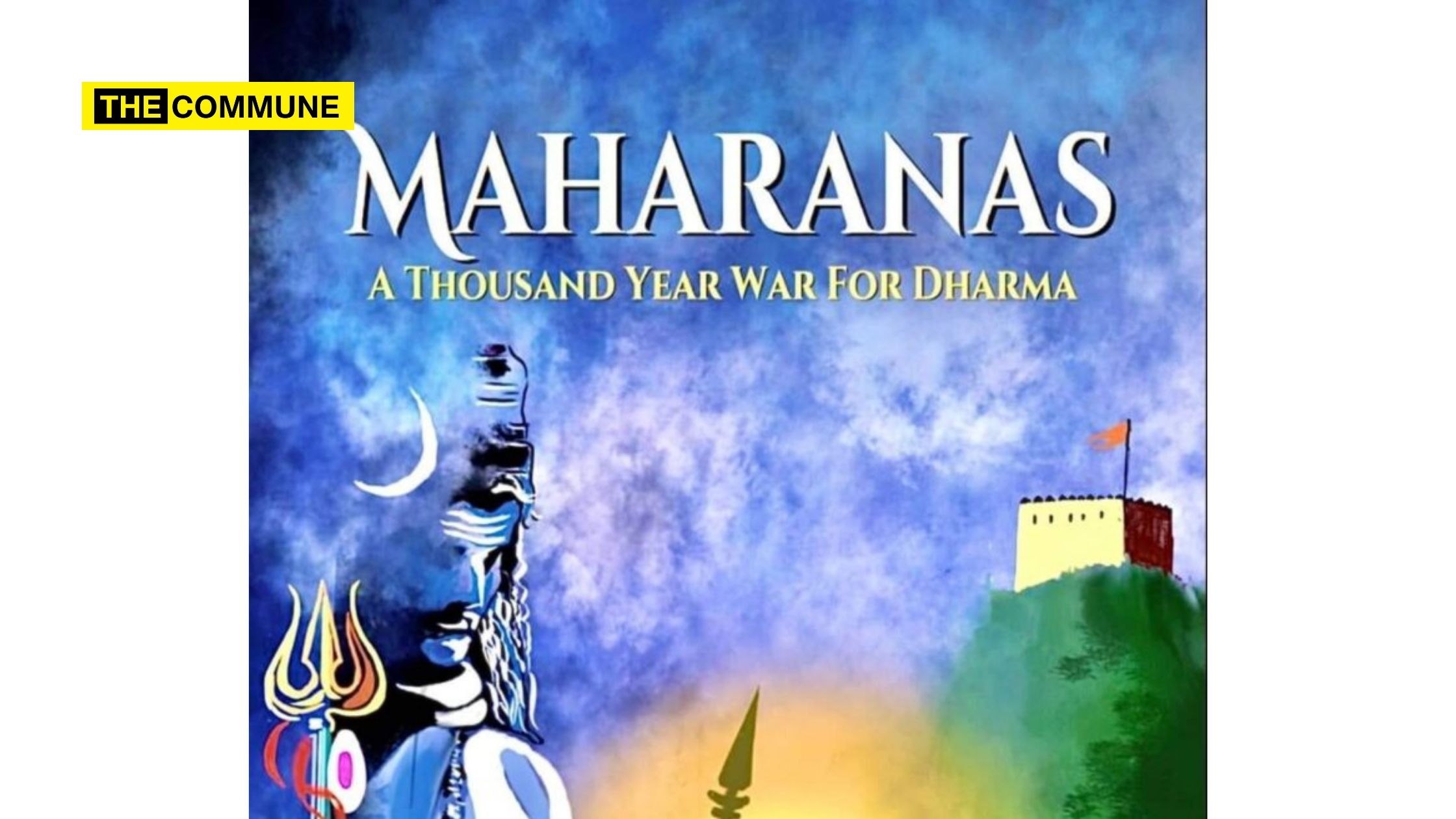
Any Islamist apologist or pseudo-liberal historians in Bharat who claim that the invading Muslim horde from the hot deserts of Arabia and later from Central Asia could have easily converted the Sanatanis of Bharat to Islam are lying. Arguments such as Hindus are still the majority in India because Islam is a religion of peace and those who converted to Islam because of social injustices is a lie and the book “Maharanas’s, A Thousand Year War For Dharma” is a testament to counter all the lies.

The book, “Maharanas’s, A Thousand Year War For Dharma” written by Dr Omendra Ratnu proudly chronicles the history of the Sisodiya Rajputs who stood guard, lost countless generations of their sons and daughters in protecting Maa Bharati and resisted one thousand years of Ghazwa e Hind by a marauding, ruthless and bloodthirsty Musalman.

This book at best can only be described as a synopsis of the one thousand-year illustrious history of the proud legacy of the Rajputs of Mewar or Mewad and also it would be impossible to write about all the Maharanas as many left a distinguished legacy that would require volumes. As one reads this book it is evident that the level of self-sacrifice the Sisodiya Rajputs made is unparalleled in the history of Bharatvarsha because, without divine power (Page 70), it would be impossible for just one lineage to keep the resistance alive for one thousand years.

Also, it is impossible to comprehend how one family and the residents of one kingdom endure so many hardships and suffering, yet they remain defiant and relentless to fight for Dharma. It is amazing that kings after kings who were outnumbered and outwitted in the fight stood firm against the aggression of Islam (Page 71).

Perhaps the answer to why the Maharanas were so blessed is because of their humility. After the loss of Chittorghar which was the impenetrable bastion of the Rajputs, the Sisodias who were known as Rawal after their founder, the great Bapa Rawal, they decided they will no longer be kings but stewards or caretakers and the kings of Mewar will be known as Rana and the true king will be their deity Eklingji, an avatar of Lord Shiva. This shows a remarkable shift in their human consciousness as kings became servants of Mahadev and became great warriors by deed (page 73).

The book is steeped in the Indic way of storytelling by Dr Ratnu and reads like our folk tale and stories that were told to us by our grandmothers and the author felt three particular instances mentioned in this book be told.

The first one is the story of Raja Dahir Sen’s daughters who were taken as sex slaves, something unheard of in Sanatan Bharat. The two daughters of Dahir were named Surya Devi and Premela Devi who tricked the Caliph Al Hajjaj of Bhagdahd into believing that Mohammed Bin Qasim had killed their father and brothers had violated their honor and then presented them to him. The enraged Caliph had Bin Qasim wrapped and stitched in an oxen hide and the Mlechcha suffocated and died. The brave Devi were then buried alive in a wall, but they kept their honor and with their intelligence took revenge (Page 35).

The second story is that of Bhisham of Rajasthan, Prince Choonda the eldest son of Maharana Lakshya Singh Lakha who forsook his claim to the throne for his father. To ensure there will be no future animosity, Choonda swore an oath that none of his descendants will ever lay claim to the throne and that promise was kept for over five hundred years by his sons and grandsons who always fought for Mewar selflessly. There is no account of such self-sacrifice and loyalty in the entire history of Bharatvarsha.

The third story that must be told is that of Panna Dhai (foster mother), who sacrificed her own son to save prince Uday Singh who will father perhaps the most valiant Rajput King Maharana Pratap Singh who is regarded as त्याग का प्रतिबिम्ब, a beacon of sacrifice and Kshatriya Dharma. If Panna who was not a Rajput but a Gurjar had not saved the infant Uday Singh, history would be different and having a non-Rajput as a foster mother shows social cohesion amongst Hindus (Page 148).

Dr Ratnu in his book had to cover a lot of ground and in that process, he has also managed to successfully dispel many historical inaccuracies and fallacies that have plagued our history books for decades to make us feel ashamed and subservient. One of the most important facets of this book is, that whenever we were attacked by the mindless death cult described in ancient Rajasthani as Asuras and Mlechchhas (page 45), all Hindus irrespective of Varna fought alongside these Dharma Rakshak Devapurshas.

However, under the cloak of secularism and obscurantist narration of our liberal academia and Bollywood famous for demeaning our history and culture, the glorious resistance of Rajputs was hidden from us and we were fed lies about “one thousand years of slavery” when we fought and resisted all along. How many of us had even heard of Rana Hammir Singh who had lost everything but somehow through divine intervention managed to win Chittor back and also he had imprisoned Mohammad Bin Tughlaq and extolled massive penalties from the Delhi Sultanate. Rana Lakha took Firoz Bin Tughlaq prisoner and again the Muslims were forced to pay reparations.

Who knew that Rana Kumbha had fought fifty-six battles and never lost, however, in our schools, we are taught about Alexzander of Macedon and Julius Caesar. Also, Kumbha defeated and took prisoner Sultan Mahmud Khilji of Malwa and made him pay reparation. Rana Kumbha was so successful, that his reign and influence reached Afghanistan and East of Malwa. Rana Sanga fought one hundred battles and defeated Ibrahim Lodhi twice. But these facts were kept from us.

How many of us were told lies about the Delhi Sultanate that they ruled vast swaths of land in India, but in reality, they ruled just a few hundred kilometers of Delhi and survived only on war economy by plundering. The fact is after the defeat of Prithviraj Chauhan in the Second Battle of Tarain by Mohammad Ghori, infighting led to the assassination and rebellion of twenty-five rulers in rapid succession of the Delhi Sultanate. It also speaks of the volume of unethical practices when it comes to ruling. Almost all Islamic empires suffered from succession planning and Pakistan as an Islamic State is a prime example because of the absence of Dharma and the presence of only greed and lust.

Christian missionaries, Marxist historians, and promoters of the Ganga Jamuna Tehzeeb gave an entire civilization an inferiority complex and for a long time had the upper hand in portraying Islam as a religion of peace and also as a major contributor to our society and culture. In reality, all the Islamic invaders were only known for their abject violence and debauchery.

History is written by the victors and in Bharat, history has been written by Islamic apologists and leftists who conveniently erased Bappa Rawal from our memories and how for five hundred years, the Arab and Turkik invaders were never allowed to enter our motherland. This part of history is never told to us because any reference that glorifies Sanatana Dharma in post-independence India will give Hindus revivalist feelings of our great past.

Dharmo Rakshati Rakshita, Har Har Mahadev!

This article was originally published in Samvada World and has been republished here with permission.

Click here to subscribe to The Commune on Telegram and get the best stories of the day delivered to you personally.
Muslim World League Supports Save Soil

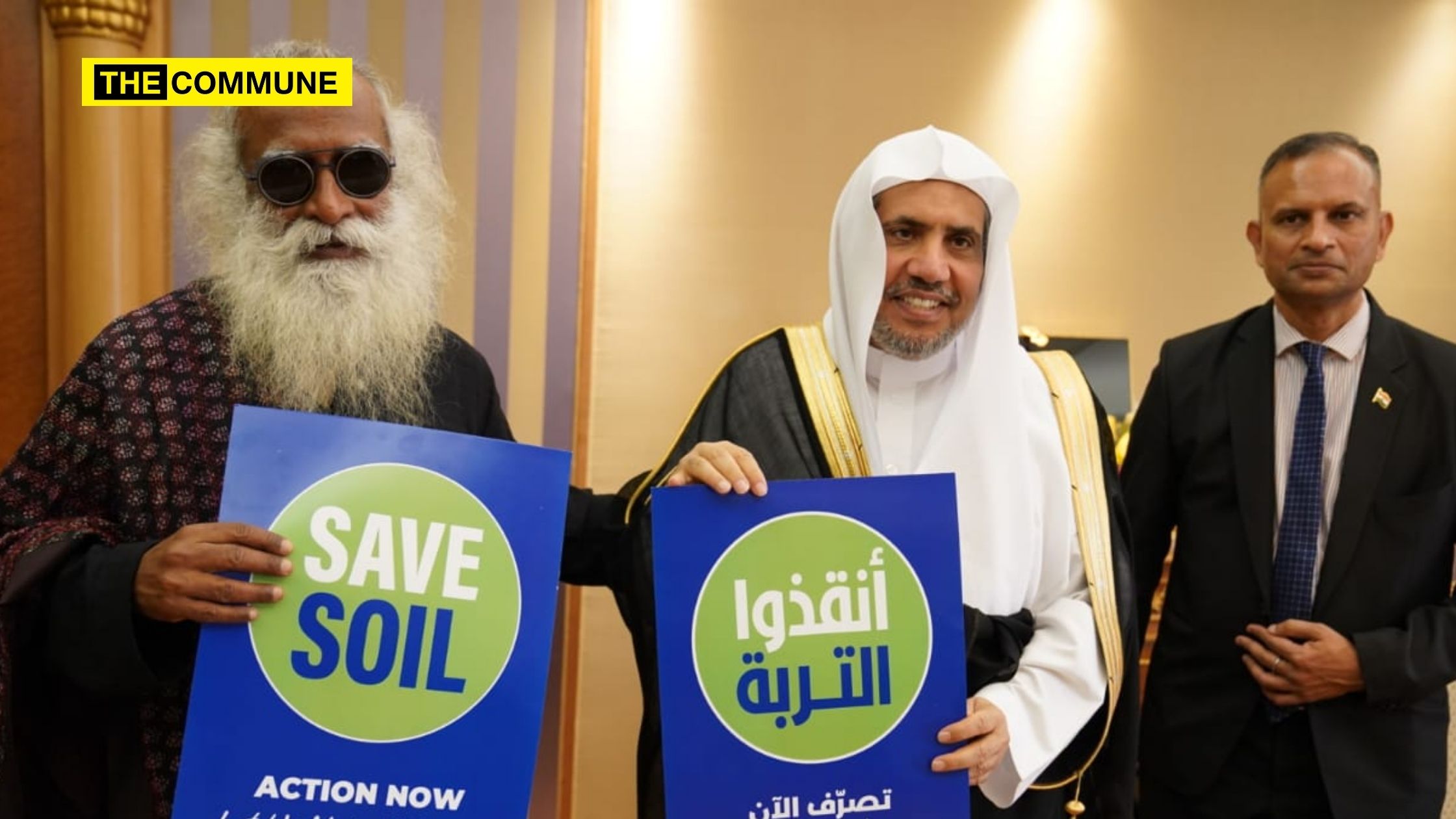
The Muslim World League, one of the most influential international non-governmental Islamic organizations, pledged its support for the global Movement to Save Soil from extinction. 

“We have already loved you a lot. We loved you even before seeing you and when we saw you, we fell in love even more,” the Secretary General of the Muslim World League, His Excellency Dr. Al-Issa told Sadhguru, Founder-Isha Foundation, during their meeting. Sadhguru launched the Save Soil Movement this March and is currently on a 100-day, 30,000-km lone motorcycle journey across Europe, Central Asia and the Middle-East in an effort to build global consensus for urgent policy-driven action to save soil from extinction.

“We request you to move the Muslim world to support the soil, not to support me, but to talk about soil, support soil,” Sadhguru said in his appeal to the Secretary General. “In so many ways we have found differences between each other in terms of nationality, race, religion, caste, creed. It has become very important that we find some common factors or common ground for all of us. Soil is that one thing,” Sadhguru said with a translator facilitating the dialogue. He added that “soil is not only an ecological issue, it is also a way of bringing Humanity together.”

“As for the Muslim World League, we are completely ready to help you in whatever way possible, to support your objectives,” Dr. Al-Issa responded.

The Secretary General embraced Sadhguru warmly before posing with the Save Soil placard and declared “Let us make it happen on the ground through practical and serious initiative with tangible impact.”

Sadhguru also invited Dr. Al-Issa to visit him. “Now that you expressed your love, you have to come to my home,” he said.

Later, Sadhguru posted a couple of tweets on his successful meeting with the Muslim World League: “Wonderful to see the #MuslimWorldLeague embrace #SaveSoil. May the region be a shining example of commitment to sustainable ecological solutions and the long-term security & wellbeing of its people. #SaveSoil.“ 

https://twitter.com/SadhguruJV/status/1525121049276592130?t=G_ue2lDYtmSHb2hA9rMsFw&s=19

“Wonderful to have the impassioned support of the #MuslimWorldLeague. Every aspect of human wellbeing is enriched by rich soil. Time to unite as one Humanity with a single focus on Soil revitalization. #SaveSoil. Let us make it happen.” 

In Saudi Arabia on day ____ of his journey, the Indian Embassy in Riyadh hosted a Save Soil event which was attended by the Charge d’Affaires, Mr. N. Ram Prasad. Saudi Arabia’s Environment Minister His Excellency Dr. Mohammad bin Abdulkarim Al-Issa also expressed support for the Movement to Save Soil.

Sadhguru will also visit Bahrain, UAE and Oman during the Middle-East leg of his journey. 

Click here to subscribe to The Commune on Telegram and get the best stories of the day delivered to you personally.
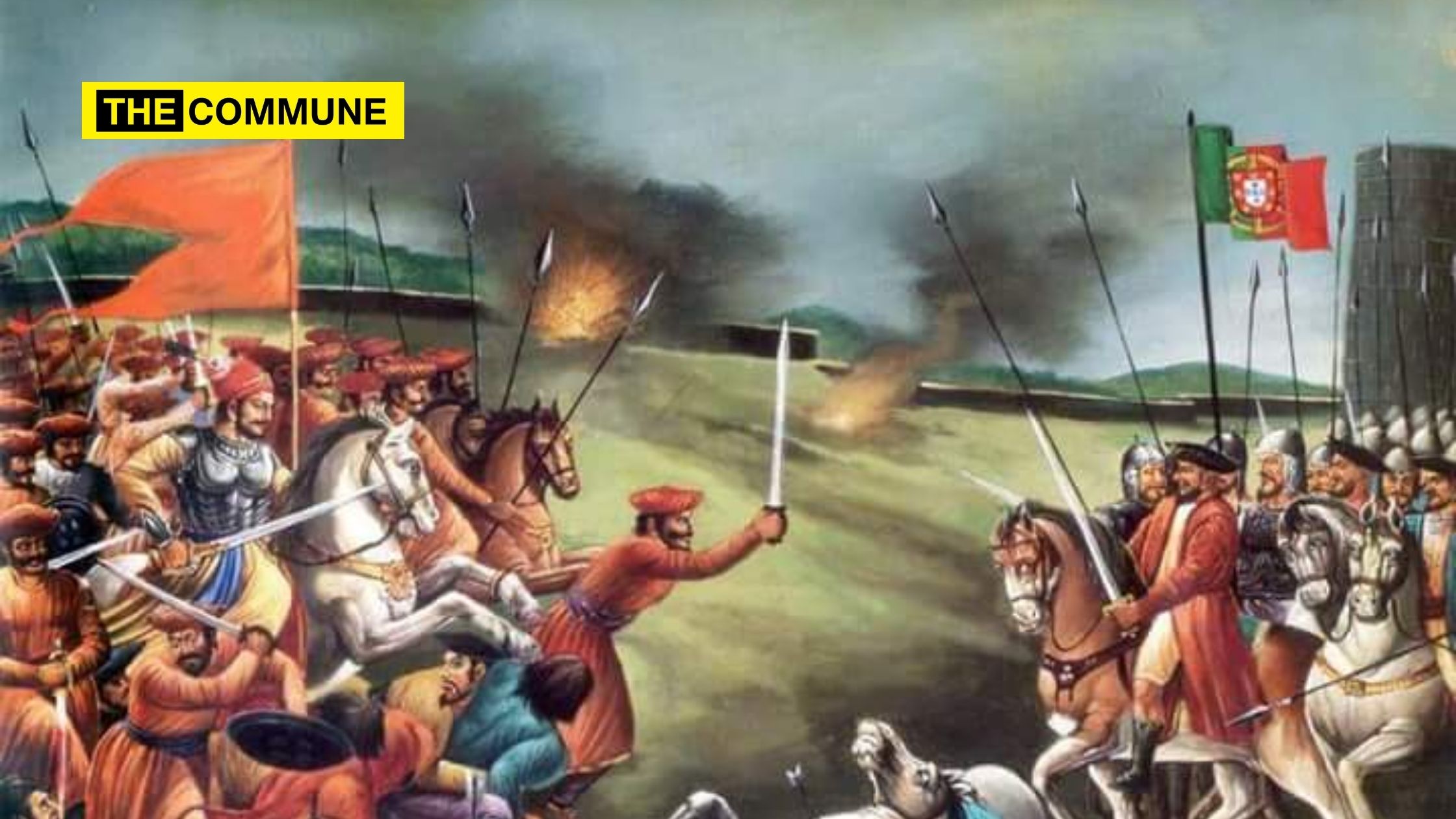
When Will Indian History Be Unshackled From Its Past

“The most effective way to destroy people is to deny and obliterate their own understanding of their history.” ― George Orwell.

Many in school dread history as a subject. While the other subjects like mathematics, sciences, geography, economics apart from the languages that we study in schools are likely to have a palpable role to play in providing us with some pragmatic, practical, purposeful knowledge for our progress in future life, one is prone to ponder as to what pertinent purpose is going to be provided at all in studying history. Why should we know the past on which we do not have any control at present and consequently cannot attempt any corrective action?  Is it not an absolutely futile exercise?

But, the answer is ‘no’. An emphatic ‘NO’. We are the products of the collective history of our nation, the crux, completion, culmination and consummation of our past. We derive our customs, conventions, creed, culture and civilisation from the past. We take pride, a justifiable pride at that, at our hoary history, its heroes, their honourable feats, the hallowed values bequeathed to us by them. In addition and more importantly, we can learn vital lessons from the past and, in case our predecessors had faulted somewhere, we can avoid, at least, monotony in making mistakes.

But what do we have as history today?

Do we get such lofty emotions or, for that matter, any worthwhile lessons while reading our history now? No. The reason is simple. What we are studying in our schools is not the real history, but false, fabricated, fictitious, farcical fish stories by a forum of fake, fraudulent pseudo historians. Yes. It is just a concocted, counterfeit, corrupted, camouflaged chronicle compiled by colonial/pseudo-secular/communists cloaked as history. 

In every lesson, we are loaded with ginormous conquests of foreigners over us: Starting from Alexander, through the Moghul invaders and upto the British rulers. We are told to repeat parrot-like, Alexander the Great, Akbar the Great etc. But, were they really great? Alexander was in fact, miserably defeated by Chandragupta Maurya and he ran away to save his life. Akbar was defeated by Maharana Pratap of Mewar. Also, the atrocities of Akbar were no less gruesome than that of the notorious Aurangzeb. But, these facts are never revealed to us. And as for as Asoka is concerned, he is grudgingly included as ‘Asoka the Great’, only for the sole reason that he switched over to Buddhism, which has now been conveniently misinterpreted by the pseudo historians as absolutely hostile to Hinduism in furtherance of their sinister agenda.

We are stuffed with the complete genealogy of the Moghul rulers, the succession of British viceroys; we are indoctrinated with imaginary stories of their victories, their ‘humanitarian’ approach towards their subjects, while our own native kings are either completely ignored or relegated to the background with as much negative statements as they can, as a result of which the nascent minds of the young neophytes are nurtured with favourable feelings about the foreigners vis-a-vis a dismal, depressing, disheartening, demoralising, discouraging perspective of our own rulers. We routinely repeat with awe and ardour names of Babar, Humayun, Akbar, Jehangir, Shah Jehan, Aurangzeb  as also Robert Clive, Warren Hastings, Corwallis, Wellesley, Minto etc. But, how much do we know of the details of the abilities, adventures, achievements about our own Chola, Chera, Pandya, Pallava, Chalukya, Maurya, Gupta, Haryanka, Vijayanagara, Hoysala, Shishunaga, Sungas, Kanvas apart from the sixteen mahajanpadas? The list is just indicative, not exhaustive. 

Okay. We understand. The reason is simple. Before independence our history books were written by our alien rulers and one should not be puerile enough to presume that they will project the positive side of our nation, since, apart from pillage and plunder of our properties and possessions, propagation of and pushing their faith on the provincial population was their prime purpose. For achieving their diabolical aim, they deliberately disparaged and deprecated all our glorious past and thus succeeded in creating an indelible inferiority complex in the credulous common man. 

Still, the perplexing question is that why are we still continuing the same curriculum even after seven long decades? Should we not have promptly and painstakingly pored into the pages of our past to present the positive records of our rulers with precision and perfection?

Incidentally, a deep analysis of history will reveal that even those ‘victories’ of the foreigners were not achieved by any innate talent or intrinsic superiority in them but only thanks to the pathetic fact that the enemies were able to ignite the basic weakness of jealousy among the different local rulers successfully and defeat one with the help of the other. Consequently, the vital lesson that we should learn today from our original history is the most elementary axiom, ‘United we stand; divided we fall’. This is the first chapter in our ancient Panchatantram stories, titled, ‘Mithra Bedham’. Unfortunately, even today, looking into the dirty feuds and despicable disputes we are dealing in day in and day out, it seems that we have not learnt that cardinal, crucial lesson at all.

Now, here are a just few names: Lachit Borphukan, Chhatrasal, Banda Bahadur, Tanaji Malusare, Durgadas Rathore, Kittur Chennamma, Velu Nachair, Abbakka Rani, Onake Obavva. Do our history books tell anything about them? Does anyone know that they are warriors of extraordinary valour, indomitable spirit, ever ready to sacrifice their lives for the honour of our motherland and have fearlessly fought with the foreign intruders and defeated their mighty armies in many cases? Many of them are women possessed with vigour, valour and valiance. Still, they may be, at best, known in their local areas, mostly as folklores. That is all. [In fact, such restrictive localised knowledge within the limited vernacular area will have pernicious effect and will impregnate narrow parochialism instead of a nationalistic perspective in the pliable mind.]  But, the exploits of Allauddin Khilji, Timur,  Gazni, Robert Clive etc. are eulogised with extreme extravagance in all our history books. Further, flagrant falsehood and fanciful fables are unabashedly forced into the books to create an impression that the aliens were altruistic in their approach. The time has now come for us to execute a tectonic shift in the teaching text of our school books and provide our children with the genuine history of our motherland, legacy of her nonpareil heroes, glory of her heritage, elegance of her lineage, the pride of place that our nation had been occupying till invasion by the aliens, so that our future generation grow up with their heads held high, hearts brimming with patriotic spirit, propelling them to face the world with courage, confidence and composure, with pride, poise and a positive perspective.

Click here to subscribe to The Commune on Telegram and get the best stories of the day delivered to you personally.
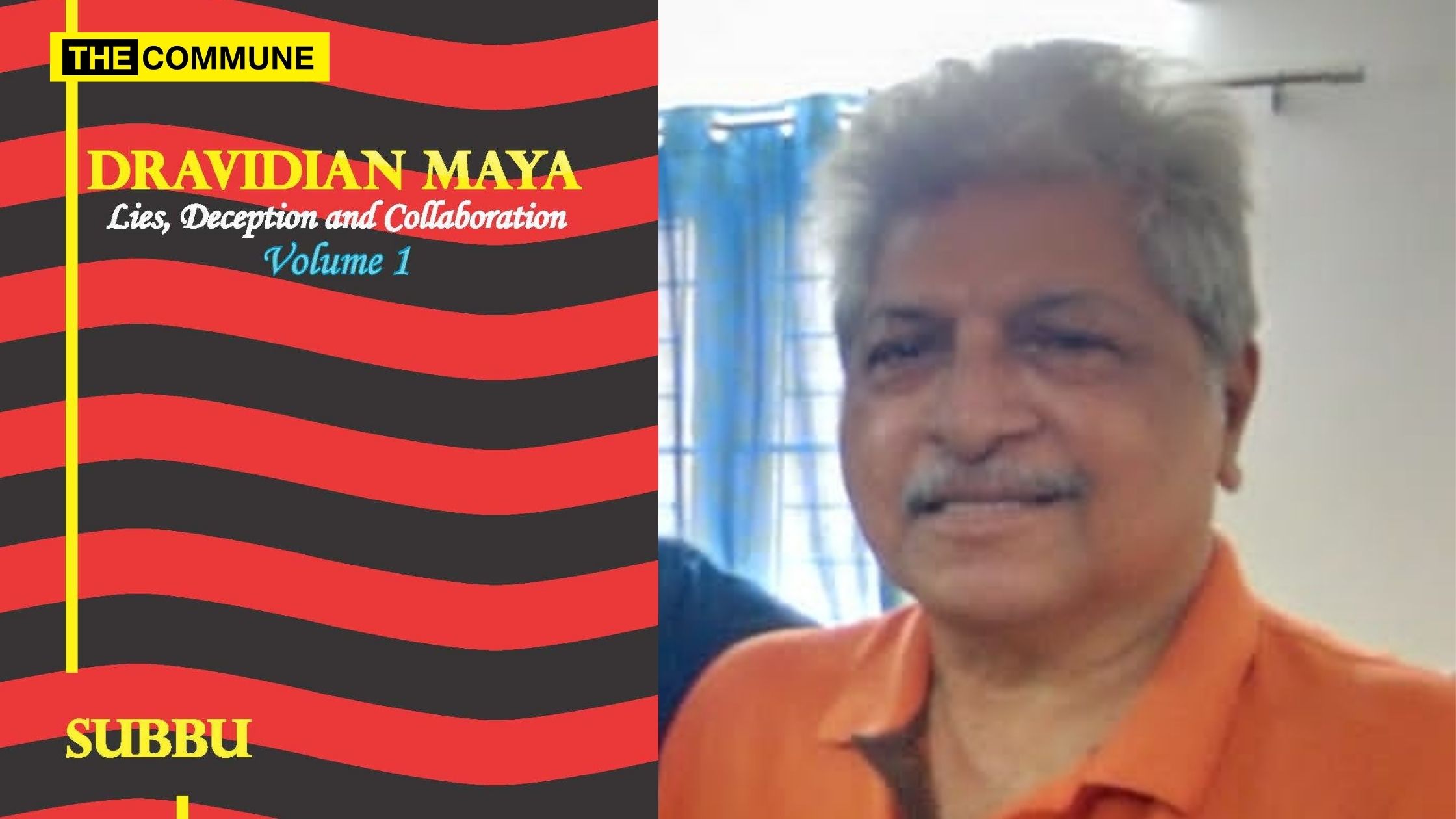
Dravidian Maya: Book exposing fallacies of ‘Dravidian Model’ to be released

‘Dravidian Maya: Lies, Deception and Collaboration’, the English-translated version of the Tamil best-seller ‘Dravida Mayai’ written by acclaimed author V.R. Balasubramaniyan will be released on May 17, 2022.

The English version is brought out by Aadharam Knowledge Centre and Rare Publications.

The launch of Volume 1 of the book will be presided by BJP Tamil Nadu President Thiru. K. Annamalai. Dr. T. Devanathan Yadav, Chairman of Win TV, will receive the first copy of the book.

The book launch will happen at Rasika Ranjini Sabha in Mylapore, Chennai.

Dravida Maayai, originally written in Tamil, consists of three books that details about the Tamil political scene from 1917 to 1981.  Subbu shot into fame after his eye-opening narrative in the three series book ‘Dravida Maayai’

It exposes the fallacies of the much-hyped ‘Dravidian Model’ of politics championed by the DMK and its affiliates.

Balasubramaniayan aka Subbu, formerly a sub editor with The Indian Express, has also written several other books in Tamil.

Arunagirinathar: A brief history of the Tamil Sage Arunagirinathar, Thankapa Thakkam – a collection of articles in various Tamil magazines are some of the other books written by him.

Apart from being an author, Subbu is also an Editorial Advisor of Tamil magazine ‘Kaavalar Voice’. He is also a Member of the Consultative Committee of the National Book Trust.

Click here to subscribe to The Commune on Telegram and get the best stories of the day delivered to you personally.
One Year Of ‘Vidiyal’: Reality ‘Dawns’ On People

It has been a year since the MK Stalin-led DMK came to power. Chief Minister Stalin assumed office at a time when the state was facing the rage of the delta variant of the corona virus.

Just a day after taking oath as Chief Minister, Stalin imposed a full lockdown for a period of 14 days, a move he had vehemently opposed when he was an Opposition leader.

Little did the people know that it would be the first of the many flip-flops to come.

But to give credit where due, the Tamil Nadu government did a commendable job in containing the pandemic, far better than the neighbouring Communist-ruled Kerala.

However, that seems to be the only good thing that the DMK government has done in the past one year.

While the ‘Dravidian Stockists’ may paint a picture of honey and milk flowing in the streets of Tamil Nadu, in reality, it is only brimming with sweat, as people put up with long hours of power cuts in the scorching summer.

And people can’t even talk about it as the Hon’ble State Electricity Minister has warned of severe action against those who spread ‘rumours’ and ‘fake news’ about power cuts on social media. Hail ‘Dravidian Model’ of Free Speech!

Given that the media in Tamil Nadu is also infested with ‘Dravidian Stockists’ and kneel down with a begging bowl at the gates of Anna Arivaalayam, it is important that the abject failure of this government on many fronts is brought to light.

Duping Makkal Kazhagam

The DMK in its manifesto had promised to reduce petrol and diesel prices by ₹5 and ₹4 respectively. After much grilling, it was announced that the price of petrol would be reduced by ₹3. Nothing has been to reduce the prices of diesel and LPG cylinder. When the State Finance Minister Palanivel Thiagarajan  was asked in a press meet whether the government will reduce fuel prices, he retorted saying “Have we put any date on fulfilling the promise?”

That is when it ‘dawned’ on the people – none of the promises made by the DMK have any dates mentioned!

A thought started echoing in the minds of the people – “Is this the ‘dawn’ (vidiyal) that was promised?”.

On 9th August 2021, Finance Minister Palanivel Thiagarajan released a white paper in order to absolve the government’s inability to fulfill the many unfulfillable promises and to shift the blame on the previous AIADMK regime. This white paper became the premise for taxing citizens more.

The minimum fare in Metropolitan Transport Corporation (MTC) buses was increased from ₹5 to ₹10. The DMK and its allies like the MDMK had protested when the AIADMK government tried to do the same.

Property tax has been increased to the tune of 50-150%. It is pertinent to mention that the DMK in its manifesto had promised to not increase property tax. So, that’s another flip-flop.

State-owned Aavin has increased the prices of milk powder, curd, ghee, and other milk products.

In essence, the DMK has hit at the belly of the working middle-class.

But even if these are considered as compulsions of time and a bitter pill for the greater good, the DMK should not be forgiven for duping the Tamil Nadu women and youth.

Till today, the DMK government has been playing needless politics over the National Eligibility and Entrance Test (NEET), putting the future of students in jeopardy. Their claims of abolishing NEET will never bear fruition. But, it is not too late. The DMK must accept defeat over its claims of abolishing NEET and move on, which they will eventually do once the President of India returns the NEET Abolition Bill.

The most despicable has been the promise of jewel loan waiver.

The DMK had promised in its election manifesto that it will waiver the gold loans under 5 sovereign (40 grams) taken by people in co-operative banks.

MK Stalin during election campaign had stated that had assured to waive jewel loans of up to five sovereigns availed by the poor, farmers and particularly women. CM Stalin’s son Udhayanidhi Stalin who is now the Chepauk-Tiruvallikeni MLA, had instigated people to pledge their jewels and take loans during election campaigns saying that they would be waived off when DMK comes to power. As a result of this, many in rural Tamil Nadu had pledged their jewels and taken loans.

However, in December 2021, the DMK government declared that 35 lakh jewel loans of the 48 lakh are ineligible for loan waiver.

Likewise, the DMK had also promised that it would bring back the old pension scheme for state government employees once it came to power. However, Tamil Nadu Finance Minister PTR Palanivel Thiagarajan had said that a decision could not be taken on the implementation of the old pension scheme as the state’s financial situation was dire and that the government will go bankrupt if it gives everything away for free to everyone.

Corruption, Commission, Collection

The DMK is a party that is synonymous to corruption, ‘scientific corruption’ to be precise. The present regime too is living up to that legacy. Multiple allegations of corruption have cropped in just a year.

The Sweet Scam – Instead of giving orders to state-owned milk cooperative Aavin, for the supply of ghee sweets on the occassion of Deebavali, the state transport department had reportedly amended the tender rules to favour a single company that shares close ties with then DMK Transport Minister Raja Kannappan’s son. After the scam caused embarassment for the government, CM Stalin passed an order to procure sweets from Aavin. The Minister’s portfolio was later changed to Backward Classes Welfare.

Pongal Gift Scam – There have been several complaints of missing items and poor quality of items given as part of the government’s ‘Pongal Gift Pack’. Worms, lizards and other insects were found in some of the items like tamarind, wheat packets, etc.

Irregularities were reported in the procurement of sugarcane from farmers. While the DMK government had said that it would procure sugarcane at a price of ₹33 per cane (10% higher than last year), farmers ended up selling their produce at a rate of ₹14-15 per cane with DMK functionaries siphoning off ₹18-19 per cane.

The BGR Energy Scam – There are allegations that the state electricity generation and distribution agency TANGEDCO has offered ₹4,442 crore deal violating all procedures, to a company named BGR Energy Systems Limited, whose promoters are believed to be backing the ruling DMK.

TASMAC Scam – Many bar owners gathered in front of the house of Minister Senthilbalaji over irregularities in rewarding of bar tenders. They had also approached the courts filing a case against wrongful sale of bar tenders. There is an accusation that the tenders were majorly given to those belonging to the Karur district.

Pathetic State Of Law & Order & Police Brutality

Just immediately after the DMK came to power, an ‘Amma Unavagam’ located in J.J Nagar near Maduravoyal, Chennai was attacked by DMK goons. DMK goons in Karur district ransacked a shop belonging to an AIADMK cadre causing extensive damage to the property along with a person getting injured seriously. Over 60 families have been rendered homeless in Thiruvottriyur due to atrocities committed by DMK cadres in the area. And the list goes on and on with multiple reports of attacks on women and DMK functionaries indulging in land grabs and other atrocities.

On the other hand, there have been several instances of death due to police torture. Vignesh (25), a Scheduled Caste youth who was taken to the G5 Secretariat Colony police station reportedly died due to custodial violence. Another incident was reported in Tiruvannamalai where a man named Thangamani, belonging to the Scheduled Tribe succumbed to injuries reportedly due to police torture. In another incident that happened in January 2022, a physically-challenged man named Prabhakdaran was locked up for allegedly stealing jewelry from a provision stores owner. He died on January 12. Prabhakaran’s relatives have alleged police torture as the reason for the death. In June 2021, a fruit stall owner named Murugesan was thrashed to death by police in the middle of the road.

Infesting Institutions With Anti-Hindu Elements

While the Dravidian Stockists cry of the ‘RSS’ capturing institutions, in Tamil Nadu, rabid anti-Hindu demogogues have been rewarded for their loyalty.

Suba Veerapandian, best known for his anti-Hindu speeches, has been admitted to the advisory committee to Tamil Nadu Textbook and Educational Services Corporation. He has also been appointed as the Chairperson of ‘Social Justice Monitoring Committee’.

Suba Vee had supported lyricist Vairamuthu who has been accused of sexual harassment by multiple women. In fact, Suba Vee himself has allegation of of sexual harassment against him. He also reportedly has links to the Lulu Sex Racket.

Another rabid Hindu-hater who has been appointed to the committee is S. Abdul Hameed who identifies himself as Manushyaputhiran.

Father Mariasusai, a Maoist-sympathizing Christian priest has been appointed as a member of the Tamil Nadu Public Service Commission by the DMK government. Father Mariasusai has an extremely controversial past as he allegedly had a close relationship with the deceased ‘Urban Naxal’ and fellow Christian priest Stan Swamy.

Prominent pattimandram (Tamil debate) icon Dindigul I. Leoni who is also the DMK’s propaganda wing secretary has been appointed as the head of the Tamil Nadu Textbook & Educational Services Corporation. He had made sexist remarks on women while campaigning for the 2021 Assembly elections.

Anti-Hindu Politics Of DMK

From Day 1, the DMK government has been meddling in the affairs of the Hindu faith. Several temples have been razed down under the garb of ‘clearing encroachments’ pinnning it on the High Court.

In January 2022, an Anjaneya temple in Varadharajapuram, Mudichur, in the Kancheepuram district, was ordered to be demolished  despite heavy opposition from local residents and devotees.

The Vasudevar Temple in Sulur, Coimbatore, has been demolished.

Seven temples have been demolished in Kumarasamy Nagar, Coimbatore. One of the temples is said to be over one hundred years old.

A Sivan Temple in Sriperumbudur was demolished because it was built on government land.


On the other hand, the DMK government has turned a blind eye to encroachments made by other religious places. A church built by encroaching a water canal in Kilkattalai, Chennai has not been brought down despite the structure being marked in 2017.

Back in October 2021, the Madras High Court had directed the HR&CE Department to evict the Queensland amusement park from 21 acres of land in Poonamallee belonging to Kasi Viswanathaswami temple and Venugopalaswami temple.

The amusement park owner late ‘Oorvasi’ Selvaraj who also founded the King’s Engineering College, was a former Congress MLA and his wife Nalini Selvaraj is today a prominent Christian evangelist.

Despite the Court’s order, no action has been taken to evict the encroachers from the temple land.

The HR&CE department itself has been functioning inimical to the interests of temples and Hindu society. It has given permission for the construction of a fish market near the Kandasamy and Aadimottaiyamman temples in Chennai.

It has also proceeded with melting temple jewellery and convert them into gold biscuits for mortgaging them and raise funds for secular purposes.  The HR&CE department has also formed a committee to build 10 colleges using Hindu temple funds. The committee members include DMK MP Kanimozhi, an avowed atheist and Geetha Jeevan, Minister for Social Welfare and Women Empowerment, who is a Christian.

The HR&CE took over the decades old Ayodhya Mandapam in Chennai, despite no substantial proven financial mismanagement.

And in the recent incident of pandering to the rabid anti-Hindu outfits like Dravida Kazhagam, the DMK Government has banned the centuries-old Pattina Pravesam ceremony of the Dharmapuram Adheenam in which Hindu devotees carry the seer of the Dharmapuram Adheenam in a palanquin.

What The DMK Is Good At

The DMK has excelled in a couple of things:

– Satiating their separatist itch by emphasizing on India being a ‘Union’ and deliberately calling the Central government as ‘Union’ Government.

Scripting and staging dramas to boost Stalin’s public image. Be it cycle rides along ECR or having tea at a tea shop. Be it meeting the Narikurava women who was allegedly denied Annadanam in temple, appointing ‘alleged’ dancer Zakir Hussain who was reportedly denied entry in Srirangam temple or meeting the kids whose vox pops had gone viral on social media. The DMK’s propaganda machinery is working at unimaginable levels.

– Hunting down and harassing political adversaries and the party’s critics.

– Last but not the least, pasting stickers for successful Central government schemes.

But people cannot be taken for granted for a long time. They have started seeing through the fallacies of this government. The DMK will go down as a party that has earned high anti-incumbency within a year of coming to power.

The clock is ticking. Four more years to go.

Click here to subscribe to The Commune on Telegram and get the best stories of the day delivered to you personally.
The Overlooked Aspects Of Tamil Nadu Temples

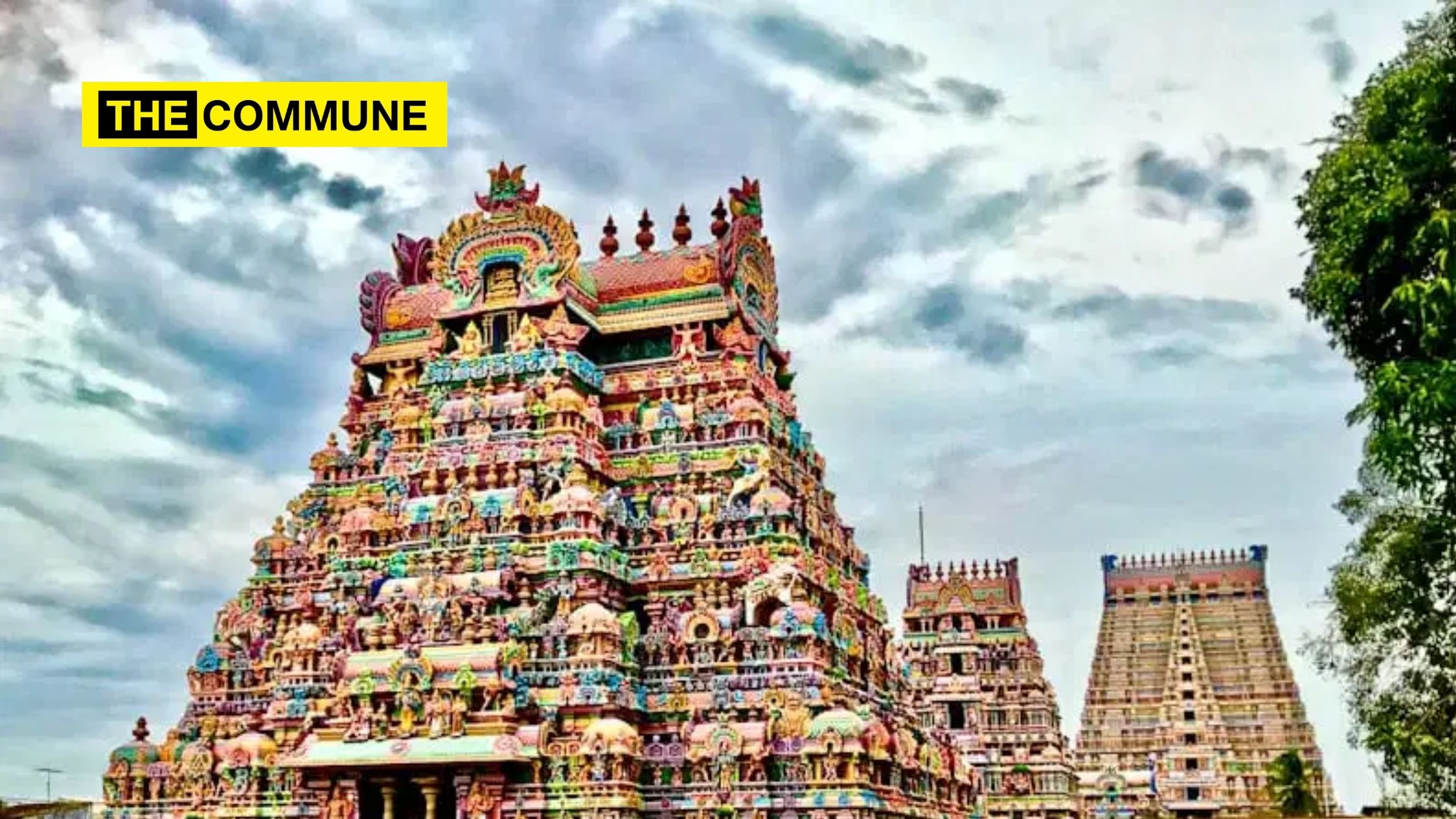
The main purpose of visiting a temple is worship. So, when you visit a temple like the Madurai Meenakshi Amman temple, you might go with the thought of having a good darshan of the deities. Once that purpose is fulfilled, if you happen to wander across the temple, probably when you are coming in circumambulation, you might notice just one intricately carved pillar at the 1000 Kaal mandappam. When you manage to take in the beauty of the pillar and look around you, you would be drowning in 985 such exquisite pillar with unique designs and unimaginable craftsmanship. But how many of these architectural marvels have you noticed at the Meenakshi Amman temple? 

Now, this is the case with most devotees visiting any Temple in Tamil Nadu. Tamil Nadu is known for its majestically built temples with significant architectural styles. But, how many of us spend time analysing and understanding the architecture of the temples we visit? We are usually smitten by the grace and elegance of the deity, and fail to notice their abodes – the temple itself. There is so much to think about and understand why a part of a temple is designed in a particular way. Surely, learning about architectural importance will enhance our experience of visiting a temple. But, it is difficult because of the lack of material to understand the same. 

The two major styles of temple architecture in India are the Nagara style, which is predominantly found in the North and the Dravida style, which is found in the South. Sometimes, some temples are built in the Vesara style, which is found to be a mix of both Nagara and Dravida styles. Built by the Cholas, The Airavateshwara temple, The Gangaikonda Cholapuram temple and the Brihadeeshwara temple, are all known for their grandeur and architectural excellence. Apart from these, the temples of Mahabalipuram built by the Pallavas, are known for their style of design. 

“References from the Sangam Literature tell us that early temples in Tamil Nadu were built with perishable materials like wood, mud etc. and therefore most of these did not stand the test of time. The first Pallava king to build temples with imperishable materials was Mahendravarman I, in the 6th Century CE. The Mandagapattu Tirumurti Temple built by him was the first rock-cut temple in Tamil Nadu, which was built without wood, brick, mortar or metal. Temples that were built after this period, by the Pallavas, Cholas, Cheras, and Pandyas, were all mostly built with imperishable materials. Only by analysing the Garbha Griha (Sanctum), the Mandapa, and other elements inside the temple, especially the inscriptions, can we find out which dynasty built the particular temple,” said Raghuram SK, a historian with an MA in Museology from the National Museum Institue of History of Arts, Conservation and Museology, New Delhi. 

We are generally aware of the larger architectural aspects of the temple, namely, the Gopura, the Garbha Griha, the Devakoshtas (shrines of other Devatas), and the mandapas. However,  2 parts of the temple that have not been spoken about much are the Bali Peedam and the Madapalli. 

Generally, the Bali Peedam is understood as a place where a ‘Bali’ or sacrifice is made for the deity. However, in no temple today, the Bali Peedam is used for that purpose. While it is natural to assume that the Bali does not take place in temples today because of laws against the same, it is important to note that the Bali Peedam originally itself had nothing to do with an actual sacrifice. In a book called ‘Kalai Iyal Rasanai Katturaigal’ historian Kudavayil Balasubramanian has written, “The tradition of offering rice (neivedhya) to the deity, with mantras, music, songs and dance, is what we mean when we say ‘giving Bali’.” So, the Bali Peedam is still used for the same purpose of offering neivedhya to the deity, even today. 

The Madapalli is the temple kitchen, where the offerings for the deity are prepared. When asked about the architectural aspects of the same, Balaji, founder of the Youtube channel ‘Smriti- The Vedic Lifestyle’, said, “The Madapalli is generally found in the Agni Moolai (South-East) of the temple. The size of the Madapalli depends upon how much of neivedhya has to be prepared for the deity. More the amount, the larger the size. The goddess of the Madapalli is called Madapalli Naachiyar, and she is always present inside the temple Madapalli. There should be a well inside, the water from which will only be used for cooking. Only Bronze utensils are used for cooking and are transferred to brass utensils once done. To top it all, only firewood stoves are used for cooking, not gas stoves.”

There are architectural differences even between Saivaite and Vaishnavite temples in Tamil Nadu. The Rajagopura of Vaisnavite temples is often different from that of Saivaite temples. Just by observing the Devakoshtas (shrines for other Devatas) in the temple, we can learn whether the temple is for Lord Shiva or Vishnu. “In Saivaite temples, we will typically have shrines of Dakshinamurthy in the South, Ardhanari or Lingothbhavar in the West, Brahma or Durga in the North. On the other hand, in Vaishnavite temples, we generally have lesser Devakoshta images. Similarly, in terms of architectural design elements, Shiva temples have more designs than Vishnu temples. Having knowledge of these aspects and analysing the same can help us identify whether a temple is a Saivaite one, a Vaishnavite one, or even a Shakta one for that matter,” Raghuram explained. 

When temples were initially built in Tamil Nadu, they were not only places of worship but were also places that were used in a holistic approach that was meant for providing a livelihood for thousands of people. So temples evolved from places of worship to places of administration. “A temple was working as a treasury for the entire village or town around it. The mandapas in and around the temples were places where the entire village would assemble like a Panchayat, to make important decisions, or address the grievances of the residents. Agraharams or small housing facilities were also built around the temples as a means of residence for those who worked in and for the temple. Inscriptions in temples have provided us with enough evidence to prove this. So, the architecture also tells us a lot about how temples functioned in those days,” Raghuram added. 

In the end, devotees visit temples for worship. But, there is so much more to temples, especially in Tamil Nadu, in terms of architecture, that surely would help in enhancing our temple worship experience.  Without the knowledge and understanding of temple architecture, devotees are indeed failing to appreciate the contributions of our ancestors.

Click here to subscribe to The Commune on Telegram and get the best stories of the day delivered to you personally.
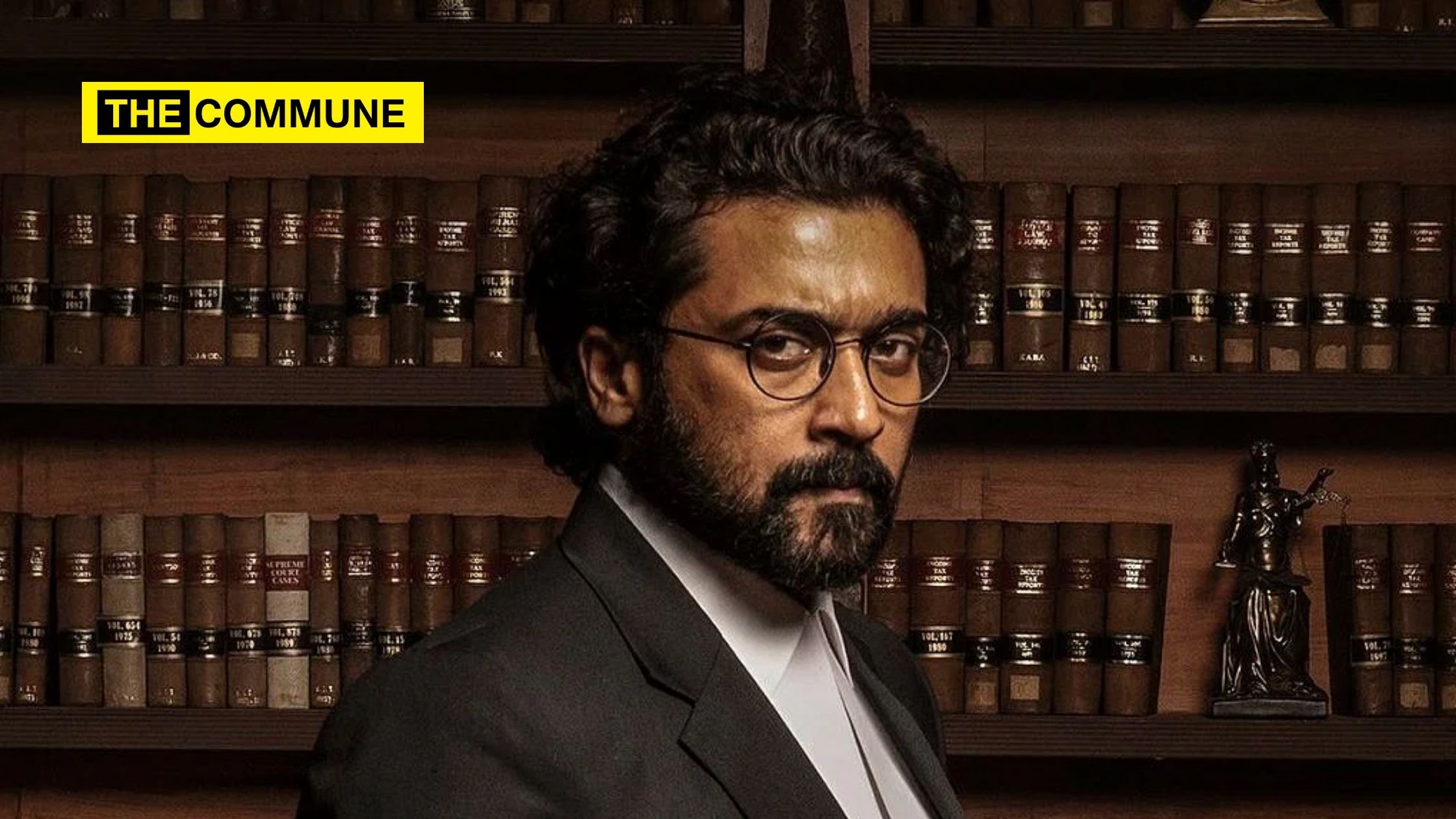
Jai Bhim continues to haunt Suriya & co; court orders to file FIR against actor and director for defaming Vanniyars

The controversy around Jai Bhim continues to haunt actor and virtue-signaller Suriya with the Saidapet Court now directing the Chennai Police to file a case against actor Suriya, his wife Jyothika and Jai Bhim’s director TJ Gnanavel.

The development comes following a complaint filed by the Rudra Vanniyar Sena, who had said in their petition that several scenes in the controversial film showed Vanniyars in poor light.

The petitioners pointed out that the villain in the movie had been shown from the Vanniyar Community with their sacred motif ‘Agni’.

The Court first heard the case on April 29 and has now directed the Tamil Nadu Police to file case against actor Suriya, his wife Jyothika and director of the film TJ Gnanavel.

The court noted that prima facie a case is made out as some cognizable offence is disclosed in the complaint.

The court has now forwarded the complaint to the Inspector of police in Velachery to register an FIR.

The case will be heard again on May 20.

When the film was released, actor Suriya and the crew of Jai Bhim found themselves facing heat after they were caught red-handed peddling false propaganda trying to create rift between different communities.

The main villain (character of SI Anthony Sami) is shown belonging to the Vanniyar community with their sacred motif ‘Agni’ being situated in the frame but in reality, the sub-inspector’s name who implicated Rajakannu and thrashed him was Anthony Sami and is not a Vanniyar but a converted Christian.

Mohan G Thanked “Jai Bhim” Producer!! Check Why | Chennai Memes

After backlash, the makers of the film replaced it with a calendar having the image of Hindu Goddess Lakshmi. Netizens pointed out that this was again a mischievous and deliberate twisting of facts in order peddle a narrative against the Hindu majority in Tamil Nadu.

Jai Bhim also received backlash for trying to instigate violence against Hindi speakers. In one scene, Prakash Raj who plays the role of a police officer slaps a north-Indian (who has been stereotyped as a ‘Marwari’ Saet) for speaking in Hindi and asks him to speak in Tamil.

Click here to subscribe to The Commune on Telegram and get the best stories of the day delivered to you personally.