Home Blog Page 1034

Retd IG Ponn Manikavel Denies Allegations Of FIR Filed Against Him By CBI

“The CBI has not registered any case against me; such an allegation is completely false,” said Ponn Manickavel, a retired IG.

In a pressmeet that he gave yesterday (November 9, 2022) near Kapaleeswarar Temple in Mylapore, Chennai, he said “I retired as an IG from the Idol Anti-Smuggling Unit. Thirteen Panchaloka idols were stolen from the Palavoor temple in Tirunelveli district in 2005. Six of these idols were recovered while digging a dump for a house that belongs to a person named Arogyaraj in Aladipatti, a village near Arupukottai in Virudhunagar district. It was reported that the police, including Kadhar Basha, an inspector with the Anti-Idol Smuggling Unit, seized them and sold them to an international idol smuggling gang.”

He went on to say that Ashok Natrajan, Deputy Superintendent of Police, conducted an investigation and submitted a 47-page report and that based on the report, a case was filed against Kadhar Basha and his accomplices, who were arrested and imprisoned after confessing to the crime.

However, Kadhar Basha filed a petition in Madras High Court claiming that Ponn Manickavel falsely implicated him in the case in order to save another idol smuggler, Dheenadhayalan and that the case should be quashed. The court has also ordered that the case be investigated by the CBI.

Ponn Manickavel continued, “Despite the fact that the CBI filed a case in this matter, neither my name nor Ashok Natarajan’s name was mentioned in the FIR. CBI officials used the same FIR that we filed against Kadhar Basha and his accomplices. The CBI has not filed any charges against me. Such allegations are completely false.”

He further said, “Dheenadhayalan has been smuggling ancient idols through Mumbai to other countries since 1958. The anti-idol-smuggling unit, which began operating in 1983, made several attempts to arrest Dheenadhayalan, but I was the first to arrest him.”

He concluded that his contribution was instrumental in the arrest of another international idol smuggler, Subhash Chandra Kapoor and that associating smugglers with him is completely absurd.

(with inputs from Dinamalar)

Click here to subscribe to The Commune on Telegram and get the best stories of the day delivered to you personally.

 

NIA Raids 45 Locations In Tamil Nadu In Connection With Coimbatore Blast Case

The National Investigation Agency (NIA) has been searching 45 locations in Tamil Nadu as part of its ongoing investigation into the October 23 LPG cylinder explosion in a car in Coimbatore.

Special NIA teams searched the homes of the suspects in the case with the assistance of Tamil Nadu police. The raids are being carried out in response to intelligence agency inputs and information obtained by the NIA from the six arrested suspects.

Searches are underway in Chennai, Coimbatore, and other parts of the state. According to officials, the raids in Coimbatore are taking place in 20 different locations. Door-to-door raids are taking place at a housing board in Pullukadu, near Ukkadam. Searches are also being conducted in Kottaimedu, Podanur, Kuniyamuthur, and Selvapuram.

After taking over the investigation from the Tamil Nadu government, the NIA has been looking into the larger nexus in the case. It is also looking into a possible international angle and the source of both foreign and domestic funding that may have aided the accused in plotting this attack.

(with inputs from Dinamalar)

Click here to subscribe to The Commune on Telegram and get the best stories of the day delivered to you personally.

Trouble Brews For DMK Minister Periyasamy As ED Attaches Assets Worth ₹14.23 Cr In Money Laundering Case

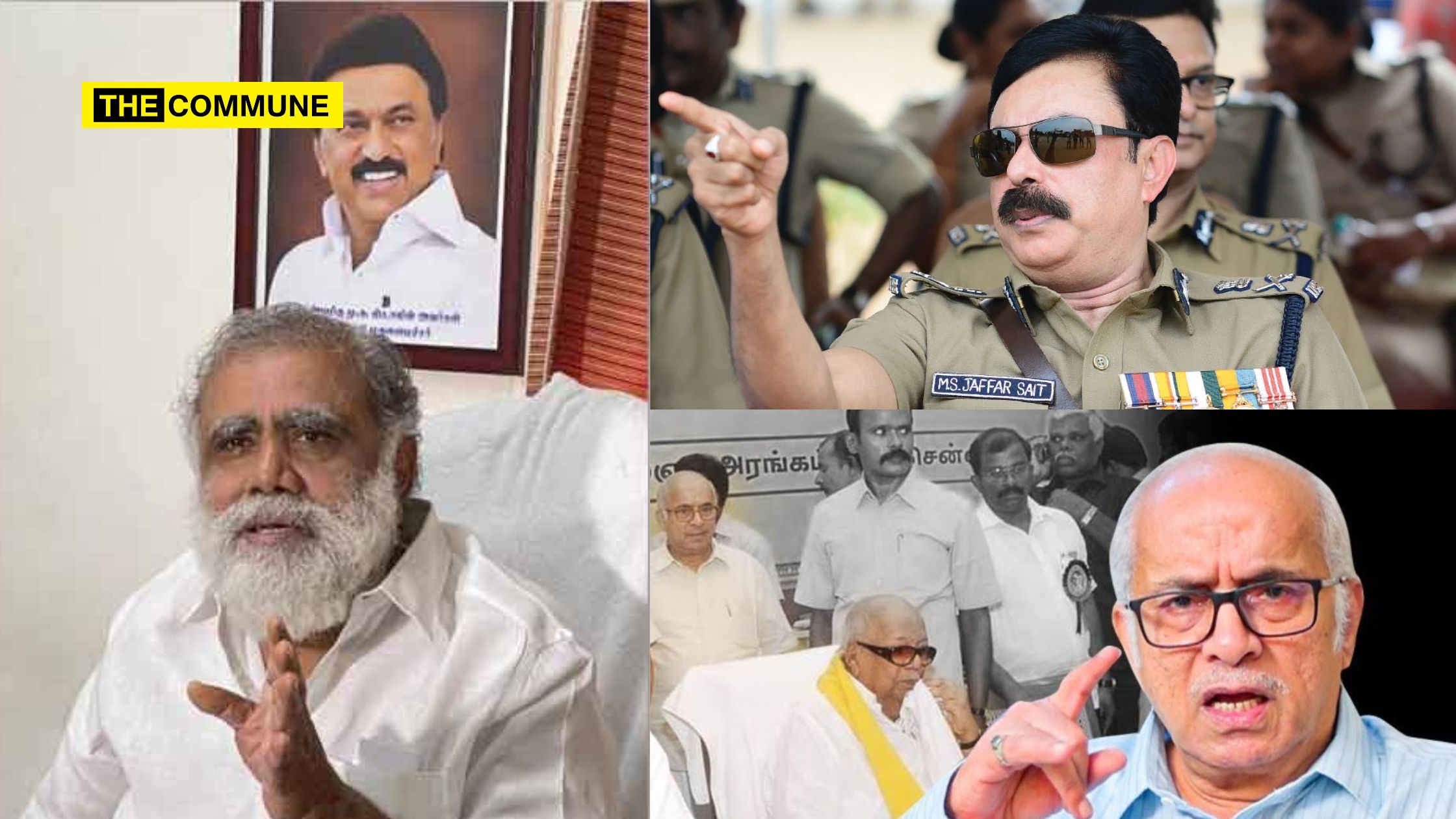
The Enforcement Directorate (ED) has attached assets worth ₹14.23 crores belonging to Parvin Jaffar Sait (wife of former IPS officer M S Jaffar Sait); R. Durgashankar (son of retired Tamil Nadu IAS officer K Rajamanickam), and a real estate developer named T Udayakumar under the Prevention of Money Laundering Act (PMLA).

The ED initiated a money laundering investigation on the basis of an FIR registered by the Directorate of Vigilance and Anti-Corruption (DVAC) against seven individuals including I Periyasamy, former minister for Tamil Nadu Housing department.

According to the ED, investigations revealed that wrongful allotment of government discretionary quota (GDQ) was done by I Periyasamy, the then Tamil Nadu Minister of Housing & Urban Development and is currently the Minister for Co-operation in the MK Stalin-led DMK government.

The ED statement noted that a residential plot was allotted to Jaffar Sait under GDQ without being eligible.

Rajamanickam who was the then Secretary to the then Chief Minister M Karunanidhi got the adjacent plot allotted to his son R Durgashankar in violation of the norms of GDQ, the ED said.

As per the ED, Parvin Jaffar and R Durgashankar entered into an agreement with Udayakumar of Landmark Construction for joint development of the combined land in order to maximize the fruits of crime.

The statement mentioned that Udayakumar funded this project despite knowing that the both of them were not owners of the land.

Out of the total proceeds of crime to the tune of ₹14.86 Crore generated by three of them, movable and immovable properties worth ₹14.23 Crore have been provisionally attached. Further investigation in the matter is under progress.

The ED initiated a money laundering investigation on the basis of an FIR registered by the Directorate of Vigilance and Anti-Corruption (DVAC) against seven individuals — M S Jaffar Sait, then former Inspector General of Police (Intelligence wing), Parvin, wife of Jaffar Sait; K Murugaiya, Executive Engineer, Tamil Nadu Housing Board, Chennai; K Rajamanickam, the then Secretary to former Chief Minister of Tamil Nadu; R Durgashankar, son of Rajamanickam; I Periyasamy, former minister for Tamil Nadu Housing department and  T Udayakumar, proprietor of Land Mark Construction, an ED release stated.

Jaffar Sait retired from the post of the director general of police (DGP) of Tamil Nadu fire and rescue services last year.

Click here to subscribe to The Commune on Telegram and get the best stories of the day delivered to you personally.
Trinamool MP Jawhar Sircar Spews Venom Against Brahmins

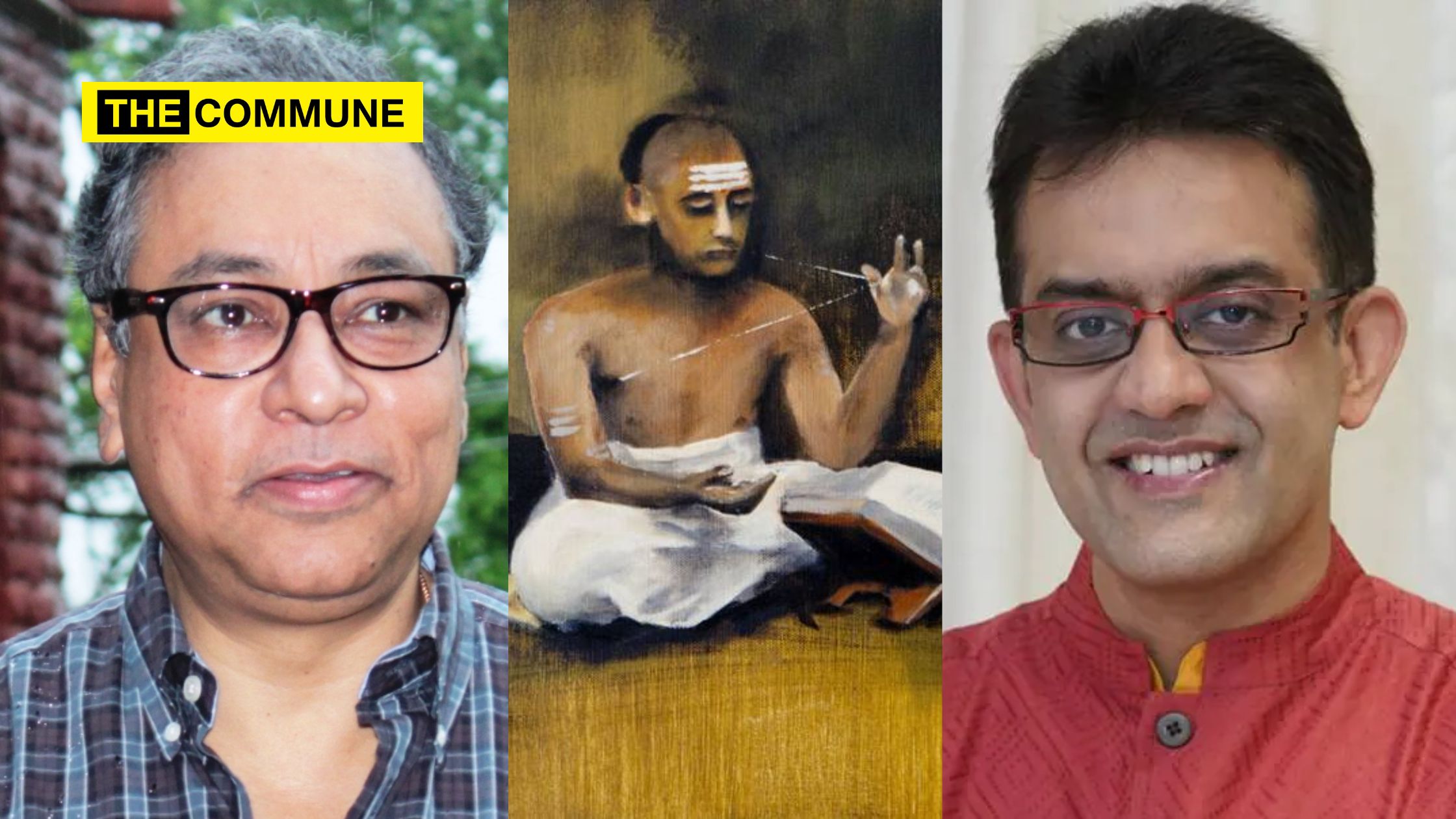
In a tweet on November 6, author and political commentator Anand Ranganathan quoted Vikram Sampath as saying that the Islamic conquest of India was the bloodiest episode in history, resulting in the death of 80 million people and the auctioning of 2.5 million women and that it was ironic to name a railway station near Nalanda after Khilji, who burned Nalanda.

Reacting to the tweet, Jawhar Sircar, a Rajya Sabha MP from the Trinamool Congress, spewed racist venom against Brahmins, saying,” Education does little to cure these rogue and genetically haughty Brahmans. Just because casteist privileges of 1% were curtailed by Muslims, they convince, poison 99% Indians into Islamophobia! Who ensured destruction of all other grand Buddhist architectures? Brahmanic rulers.”

https://twitter.com/jawharsircar/status/1590181947900583936?s=20&t=qHhOzUVyDP6F6M35WL8z9g

In a strong reaction to the tweet, Vikram Sampath pointed that the level of racist venom spewed by Trinamool MP, Jawhar Sircar, who was once the CEO of Prasar Bharati, provides enough reason to push for civil service reforms.

This tweet of Jawhar Sircar has drawn flak from social media users.

Jawhar Sircar is a Member of the Parliament of India who represents the State of West Bengal. He was elected to the upper house, the Rajya Sabha, in August 2021 on a Trinamool Congress ticket. He has served as an Indian Administrative Service officer for 41 years (1975 to 2016), where he rose to the highest rank as Secretary to the Government of India. He headed India’s Culture Ministry from November 2008 to February 2012 and was then appointed as the CEO of India’s Public Broadcaster for five years (2012 – 2017) but he quit a few months prematurely.

Click here to subscribe to The Commune on Telegram and get the best stories of the day delivered to you personally.
DMK IT Wing Dy Secretary Spews Hatred Against Brahmins To Spread Canards About EWS

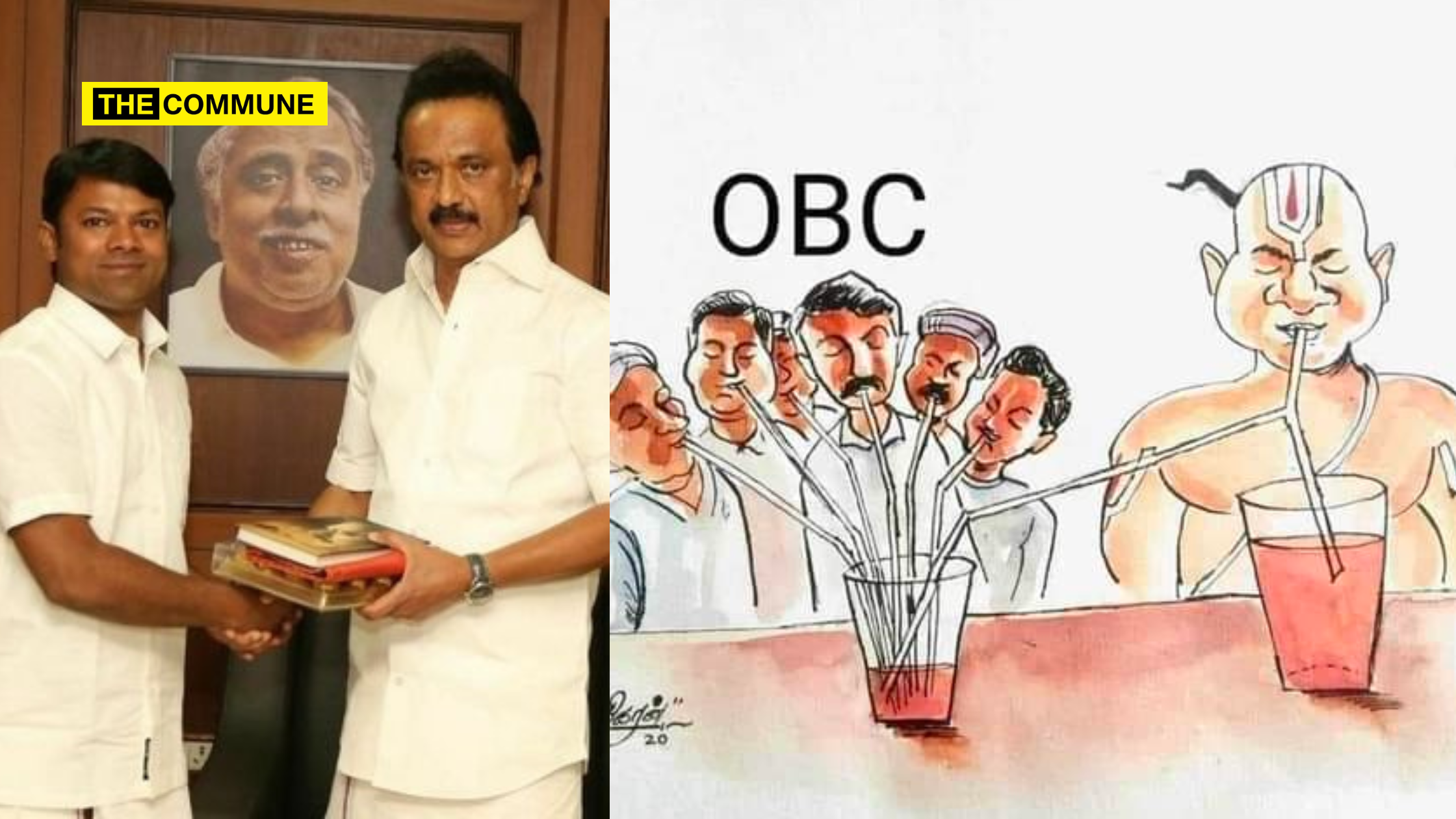
On Tuesday, Isai, the State Deputy Secretary of the DMK’s IT wing, spread hatred against Brahmins and misinformation about EWS (Economically Weaker Section) reservation on his Twitter handle.

The image posted by the DMK IT Wing Deputy Secretary showed a person dressed as a Brahmin with sacred thread (Janeu) and having “Thirunamam” on his forehead, sucking juice from his own glass as well as the glass that belongs to OBCs. The tweet was intended to imply that Brahmins are taking the reservation meant for OBCs following the implementation of the Central government’s 10% EWS reservation.

The tweet was in response to the recent Supreme Court judgement that upheld the constitutional validity of the 10% Economically Weaker Section (EWS) quota brought by the BJP government. However, it should be noted that the tweet was offensive on two counts: one, the 10% EWS quota introduced by the Centre is for 79 forward castes (including Brahmins) in Tamil Nadu as well as other General Category castes throughout India; and two, the 10% EWS quota is given in addition to the 50% reservation given to OBCs, SCs, and STs.

The 79 castes mentioned in the 10% EWS reservation in Tamil Nadu include Brahmins, Muthaliyars, Anglo Indians, 6 categories of Christians including Roman Catholics, converted Christians, Chettiyar, Vellalars, 10 categories of Muslims including Dawood, Nawab, Lebbai, Ravuthar, Maraikkayars, and others, Naidu, Reddiyars, Veera Saivars, Othuvars, Sivachariyars, Nayars, and others.

The judgement of the Supreme Court was a setback for the ruling DMK government, which was one of the petitioners in the Supreme Court seeking an order against the EWS quota.

Click here to subscribe to The Commune on Telegram and get the best stories of the day delivered to you personally.
 

EWS Reservation: The Antidote To The Fradulent Dravidian Model Of Social Justice

There is a sect within the Brahmin community called Soundi Brahmins. They are one of the most ostracized and marginalized communities in Tamil Nadu as they perform the last rites for the departed. They live on the verges of poverty and literally survive on death.

But they come under the General Category or the so-called “Forward Caste” as they come under the larger umbrella of the Brahmin community.

Consider a hypothetical situation where a student belonging to this community manages to get a good score in a competitive exam but that score falls short of the General Category cut-off. On the other hand, there is another student belonging to the Other Backward Class (OBC) community, whose father is a Central government employee and mother a state government school principal, who has scored less than the Soundi Brahmin student but has crossed the cut-off of OBC.

The OBC student will get a seat through the OBC quota. But the reservation scheme that was present until now would deny the opportunity to the Soundi Brahmin student. Since that community neither has any voice nor has the ability to organize itself, they wear it as their fate and get on with their lives picking charred bones from the funeral pyre so that their kitchen stoves can be lit.

Reservation: A Tool Of Representation Or Affirmative Action?

Reservation is absolutely necessary for the underprivileged communities who for generations did not have access to education and employment opportunities.

At the same time, it is important that financial incapacity does not hamper the prospects of meritorious candidates.

Critics of the Economically Weaker Section (EWS) quota say that reservation is not a poverty alleviation programme but a constitutional tool to provide representation to the historically disadvantaged communities. But reservation shouldn’t be seen just as a tool of representation.

Reservation is affirmative action which means that the state is obliged to support any person who is disadvantaged – socially, educationally, or economically.

For the historically socially and educationally backward classes, there is a provision of reservation that will allow them to climb up the socio-economic ladder.

However, the economically backward unrepresented communities have hitherto had no provision to get state support.

The EWS quota would be a boon to the financially disadvantaged like the Soundi Brahmins who cannot get benefits under the existing reservation scheme.

Bringing About Real Social Justice

Tamil Nadu has a long history of rejecting quotas based on economic criteria.

The invincible MGR himself had to give up his idea of reservation based on economic criteria after he suffered a crushing defeat in the 1980 Lok Sabha elections. He later increased the quota for Backward Classes (BC) from 31% to 50% taking the total reservation pie to 69% that secured him a thumping win in the following Assembly Elections. The 69% reservation was later brought under the 9th Schedule of the Constitution by late AIADMK supremo Jayalalithaa making it sacrosanct.

Nobody has ever even thought of extending reservation based on economic criteria. Despite the issue gaining credence at the national level, the then Congress-led UPA government put the issue in the back burner by forming the Sinho Commission.

It was only in 2019 that the BJP-led NDA had the political will and brought in the Constitution (One Hundred and Third Amendment) Act that introduced 10% for economically weaker sections. All political parties except the DMK and its allies have supported the historical decision. Only the BJP, Dr. Krishnasamy’s Puthiya Tamilagam, John Pandian’s Tamilaga Makkal Munnetra Kazhagam, and GK Vasan’s Tamil Maanila Congress have come out in support of 10% EWS reservation in Tamil Nadu.

The Congress as usual is confused with its local leadership in Tamil Nadu defying the stance of national leadership.

But the recent Supreme Court ruling upholding the constitutional validity of the 10% quota for economically weaker sections has dealt a blow to Dravidian parties and their local allies in Tamil Nadu.

Parties such as the DMK, VCK, PMK, and other fringe outfits such as the NTK and MDMK spread lies and misinformation that EWS quota will benefit only Brahmins who comprise less than 3% of the state population. These parties question why they (Brahmins) require reservation when they are already socially and educationally forward.

Contrary to the popular perception created by Dravidian Stockists and a section of the Tamil media that only Brahmins will benefit, the 10% quota for economically weaker sections (EWS) will benefit around 79 castes in Tamil Nadu, including a section of Christians and Muslims.

Here is a list of communities, that will benefit out of EWS – Arcot Mudaliar, Vellala Mudaliar, Sivachariyar, Odhuvar, Chettiyar, Vellalars, Balija Naidu, Reddiyar, Adi Saiva, Veera Saiva, Anglo Indians, 6 Christian communities Roman Catholic Christians, Upper Caste Christian Converts, and around 10 Muslims communities like Dawood, Mir, Lebbai, Rawther, etc.

The Dravidian Model Of Fradulent Social Justice

Many of the DMK Ministers and senior leaders themselves belong to the communities that will benefit out of EWS – PTR Palanivel Thiagarajan (Thondai Mandala Vellalar), KN Nehru (Reddiyar), KKSSR Ramachandran (Reddiyar), P. Sekarbabu (Kammavar), RS Bharathi (Mudaliar) to name a few.

But the party has been opposing the EWS tooth and nail. In fact, many belonging to the above mentioned castes are unhappy about this blind opposition to EWS as they feel that the DMK is trying to deny reservation for their community.

An anecdotal reference notes that members of these communities who fall under general category are being asked to get BC/MBC certificate by mentioning a similar caste.

For example, there are many Naidu castes – Kamma Naidu, Balija Naidu, Gavara Naidu and so on. While Kammavar or Kamma Naidu and Balija Naidu fall under General Category, they are being asked to mention themselves as Gavara Naidu and get BC certificate to get reservation benefits. This ubiquitous fraud that has been normalized is what is the Dravidian Model of social justice.

By opposing the EWS quota, the DMK and its allies are not only denying the reservation benefits to the financially disadvantaged in General Category but is also denying genuine OBC candidates who need reservation.

Are The So-Called Backward Really Backward?

During the Nayakkar rule of what is now known as Tamil Nadu, the entire region was divided into Palayams and ruled by Palayakkars. There were Palayakkar rulers from various Tamil castes. For example, Maravars, who features in the current MBC list of the Tamil Nadu government, ruled Palayams in and around Sivagangai regions. Among the notable Maravars who ruled the Palayams in the Sivagangai regions were Rani Velu Nachiar, Singampatti Jameendhar, Kadambur Jameendhars, and others.

So, why should a ruling class like the Maravars be granted reservation, especially under the Most Backward Class (MBC) category? Members of this caste are proud to claim that they were once the ruling class. How can they be considered socially backward class for reservation if they were the ruling class?

Maravars are not the only ones who claim to be the ruling class while enjoying reservation benefits intended for socially backward classes.

MBC communities also includes the Kambalathu Nayakkars and Thottiya Nayakkars castes, who were once the Palayakkars of Nilakottai and Ettayapuram Palayams. Kattabomman is a well-known ruler from this caste.

Vanniyars who identify themselves as Cholas, Pallavas, or Agni Kula Kshatriyas are also included in the MBC category. Nadars, who was once hailed by late Tamil Nadu Chief Minister J Jayalalitha as the descendants of Chera, Chozha, and Pandyas, are also given Backward Class (BC) reservation.

Barghava Kula Udayar caste, who claim that they have had matrimonial alliances with Chozhas were also given BC reservations. BC reservation is given to Agamudayars, who claim to be the royal descendants of Maruthu Pandiars (Maruthu Brothers). Muthraiyars and Gounders, who claim to be the descendants of Perumbidugu Mutharaiyar and Theeran Chinnamalai king respectively, are also granted BC status. Kallars and Vaandayars, once the ruling class, also enjoy BC status in Tamil Nadu.

When these ruling classes are given reservation in Tamil Nadu, why shouldn’t it be given to the 79 classes mentioned in the General Category in Tamil Nadu? It should be noted that Muslims who ruled India for 700 years are given a special reservation under the category BCM (BC Muslims) in Tamil Nadu.

Can Income Be Made A Criterion For State Support?

It is worth noting that the parties like DMK, VCK, PMK, and others that advocated for raising the OBC Non-Creamy layer annual income ceiling to ₹25 lakhs are opposing the ₹8 lakhs ceiling set for the EWS category.

Though parties, such as the DMK, are opposed to income-based EWS reservations, Tamil Nadu has used income as a criterion in many affirmative action policies. Understanding them and their implications have become critical for evidence-based reservation policy.

In Tamil Nadu, many affirmative action policies choose beneficiaries based not only on caste and religion but also on income. For example, religious minorities, Backward Classes (BC), Most Backward Classes (MBC), and Denotified Communities (DC) are all eligible for pre-matriculation scholarships. The annual scholarship amount ranges from ₹200 for MBCs and BCs to ₹10,000 for religious minorities. The scholarship criteria vary as well: for BCs and religious minorities, it is restricted to beneficiaries whose parents’ income is less than ₹1 lakh. There are no such conditions in the MBC or DC.

However, under the post-matric scholarship policy, religious minorities can receive an annual scholarship of up to ₹13,800 per year, provided that the beneficiary’s parents’ annual income (from all sources) does not exceed ₹2 lakh. The post-matric scholarship for BCs and MBCs is ₹500 per year, but the income limit for parents is stricter — it cannot exceed ₹1 lakh.

Disadvantaged Groups (DG) and Economically Weaker Sections (EWS) are entitled to 25% of seats in private non-minority schools under the “Right of Children to Free and Compulsory Education Act” . Thus, 1.08 lakh seats in Tamil Nadu are set aside for beneficiaries and are provided at no cost. Tamil Nadu has set a ₹2 lakh annual family income cap as the eligibility requirement for EWS seats, irrespective of community.

Using income as a criterion is clearly well established in reservation policy. Because government resources are limited, using a benchmark of family income helps select those who are most deserving of assistance. This is especially important in a state like Tamil Nadu, where OBCs make up 76% of the population, SCs 20%, and STs 1%.

It is critical to comprehend the implications and actual outcomes of these various reservation policies at the caste and community levels. Consistent data collection and evidence-building of reservation policies would ensure the successful achievement of social justice goals.

The government has set the ₹8 lakh income limit for EWS based on the same criteria used for determining OBC creamy layer.

EWS Quota: A Step Towards Discrimination-Less Society

EWS quota is not just about providing support to the economically weaker sections. The EWS quota will also help break the stigma associated with reservations as reservation has always been related with caste and a section of the people look down upon those who come through quota.Thus, the EWS quota is also a progressive step towards a caste discrimination-less society.

The EWS quota is the last piece in the puzzle to make way for a truly just reservation system that recognizes merit as well as representation.

Click here to subscribe to The Commune on Telegram and get the best stories of the day delivered to you personally.

A Glorified Christian Missionary Bigot Hailed By Dravidian Stockists As ‘Veeramamunivar’

வாதகாலன் தமக்கு மைத்துனருக்கு நீரிழிவாம்

போதப் பெருவயிராம் புத்திரருக்கு மாத்திரையில்

வந்தவினை தீர்க்க மருந்தறியான் வேளூரான்

எந்த வினை தீர்த்தான் இவன் ?

vātakkālān tamakku maittuṉaṟku nīriḻivām

pōtapperuvayiṟām puttiraṟku—mātaraiyil

vantaviṉai tīrkka marunt’ aṟiyāṉ vēḷūrāṉ

entaviṉai tīrttāṉ ivaṉ?

Above quatrain (four line poem) means:

His leg is afflicted with elephantiasis,

His brother-in- law suffers from diabetes

His son has obesity- pot bellied person

One who cannot cure his own family members

Whose disease has he remedied to be called a doctor?

This is an audacious sinister attack on Lord Vaitheeswara also known as Vinaitheerthaan of Vaiteeswaran Kovil in Nagapattinam district of Tamil Nadu. As Parali Vaij Nath in Maharashtra (one of the twelve jyothirlinga temples), Lord Vaitheeswara (one more name for Lord Shiva) is revered by the devotees as the Master Healer or the ultimate doctor. That being the case, who will venture to indulge in ridiculing Lord Vaitheeswara?

Before revealing the answer, I wish to explain the above poem in some details. Lord Shiva in Chidambaram is called Nataraja. In dancing pose, he lifts his left leg and acquires the name Kunchitapadam which is also an an offering for Natarajar foot made out of various herbal roots. This is considered to cure many health related diseases and also believed to give moksham. Kunchitam also means an elephant which this poet has cunningly used to call Lord Shiva has elephantiasis.

His brother-in- law, that is Lord Vishnu is also known as Chakkarapani, one who has Sudarshana Chakra in His right hand. The word Chakkarai in Tamil means sugar which has come handy for this fraudster. Why I call him so, I will explain little later.

Next line talks about Vinayaka, aka Lambodhara portrayed as pot belly, a term which even present day journalists use very loosely in their writings. A devotee however knows Vinayaka’s large belly connotes that Lord keeps His devotees in the belly and protects as a pregnant mother protects the baby in the womb. Also the bulging belly  symbolises a rich treasure of wealth – prosperity He maintains to bless the devotees with.

Finally, shloka on Lord Vaitheeswara goes like this:

Balaamebike cha Vaitheesaa, bishaje bhava roginaam

meaning Ye lord, accompanied by Mother Parvati (Baalaambika), redeemer of humans from the chronic disease of birth- death vicious cycle.

The Tamil name Vinaitheerthaan is the verbatim translation which conveys the same concept as the Lord who makes the devotees to exhaust the sins and blessings cycle earned due to the karma over the very many previous births. Thus Shiva is worshipped of the Doctor of doctors, who can cure us not only of our physical ailments when He can provide us permanent relief or Moksha.

A charitable assumption of the intention of the author of the above lines, could be that he was ignorant of the symbolism employed in the Hindu mantras or names. However, history has enough evidences to show that this author had a good footing in Tamil and he is credited with many works both of poetry and prose.

Thus knowingly with an ulterior motive, this author ridiculed, nay poured venom upon Vaitheeswara who is a Kula Devata for lakhs of people like yours faithfully in Tamil Nadu in general and in Cauvery delta in particular.

Let me not delay further to introduce the author of the quatrain, Constanzo Joseph Beschi (8 November 1680 – 4 February 1747) who was an evangelist from Italy sent to continue the Madurai Mission originally propounded by Roberto de Nobili (1577 – 16 January 1656), once again from Italy.

Similar to Nobili, Beschi donned the saffron robe and masqueraded like a Hindu Saint, learnt Sanskrit and Tamil. C J Beschi was a faithful follower of the tricks of Nobili and in fact went very many steps ahead to learn Tamil, Sanskrit and Telugu.

He could convince gullible Hindus and could succeed in converting people mainly from influential castes – Naidu or Saiva Pillaimar community along the Coromandel coast from Tirunelveli to Eluru.  Just to mention two of his works in Tamil. Paramartha Guru Katha was a scathing attack on Hindu Guru Parampara where both the teachers and the students are shown as silly idiots.

Next, Beschi is attributed as the one who simplified Tamil dictionary where as in the ancient Nigandu had established the forward and backward linkages of Tamil and Sanskrit. Look at his chicanery, by playing with the dictionary he could pollute the water in the reservoir or Gangotri.

It is quite unfortunate that a conman is called Veeramamunivar, a brave sage and touted by Dravidian politicians – Christian missionary nexus.

References

Click here to subscribe to The Commune on Telegram and get the best stories of the day delivered to you personally.

What’s All The Fuss About Aachi Masala And Sakthi Masala

Controversy erupted in social media as the Naam Tamilar Party cadres and its IT wing called for a boycott of Sakthi Masala because the company used Tamil text below English and Hindi in its masala packets.

This is not one of the party’s usual fringe activities, as the move allegedly has an ulterior motive to help Sakthi masala’s rival, Aachi masala, a company that has previously promoted anti-Hindu bigots.

Tamil Nadu has become one of the nation’s hubs for “ready-to-use” masalas, having previously been one of the states where these spices would be meticulously hand-picked and ground at home.

With a market value of ₹2500 crore, Tamil Nadu ranks among the largest markets for spices. Sakthi and Aachi, two local brands with a combined market share of 70%–80%, are the market leaders.

With small players operating in each district, the unorganised masala market would be worth over ₹1,000 crore. The unbranded market is assumed to have between 2,000 and 2,500 players, according to traders.

With both the major players – Sakthi and Aachi – attempting to expand their base outside of Tamil Nadu, it is clear that the current controversy is not about fighting alleged insults to the Tamil language, a political tool used by the Stockists and Thambis in Tamil Nadu.

A dig into the political affiliations of the owners of Aachi masala reveals that the current controversy has a hidden agenda.

PC Duraisamy Vs Padmasingh Isaac

P.C. Duraisamy, the founder of the Sakthi Masala, was a small time turmeric trader from a village called Perundurai near Erode. In 1975, he founded Sakthi Trading Company and began trading turmeric. Later, he entered the world of pure spice powders such as turmeric, chilli, and coriander. His curiosity allowed him to enter the masala world fearlessly. He faced numerous challenges, as selling masala powders to traditionally conservative oriental women was difficult at the time. A notable aspect of Sakthi Masala is that a majority of the workforce are physically challenged.

Mr Padmasingh Isaac is the founder and managing director of the Aachi group of companies. The masala baron, who was born in Nazareth in Thoothukudi, began his career as a Godrej sales representative before rising to his current position. As he rose through the ranks, so did the controversy surrounding him and his company, with even the brand briefly being banned in parts of Kerala.

Padmasingh Isaac And His Association With Anti Hindu Bigots

Padmasingh Isaac is the uncle of Isaac Livingstone, the Managing Director of Sathiyam TV, a Christian evangelical news channel that airs sermons of rabid Christian pastor Mohan C Lazarus who is known for spewing hate against Hindu faith. Lazarus had said that “Satan’s grip” is tight only in Tamil Nadu as it is the state with the highest number of temples in India. In February 2021, the Madras High Court came down heavy and issued a warning to the Christian pastor for making reckless statements against Hindus and Hindu religion. Lazarus was also instrumental in instigating the people against Thoothukudi Sterlite factory was Mohan C Lazarus. While addressing a huge gathering of Christians, he peddled without any scientific basis that Sterlite Copper was a toxic factory and said that the Church has risen to shut the factory down.

Padmasingh Isaac was also once honoured by Dravida Kazhagam head K. Veeramani, a fanatical anti-Hindu Periyarist. He expressed pride in receiving the honour from Ki. Veeramani.

Padmasingh Isaac And His Association With Evangelical Tamil Separatists

Padmasingh Isaac has shared the stage with rabid anti-Hindu politician Thirumavalavan and leaders espousing Tamil separatism – Seeman and Vaiko – during the launch of the book “Iniyavale Unakaga” written by Mrs. Joy Isaac, Editor of Sathyam weekly e-newspaper.

Padmasingh Isaac on the extreme left along with Vaiko, Thirumavalavan and Seeman

The anti-Hindu statements of Seeman, Thirumavalavan, and Vaiko are well known, ranging from mocking Hindu rituals and ceremonies to insulting Hindu gods.

It should also be noted that Padmasingh Isaac has funded a CSI Bethel Church in Koyambedu, and there have been rumours of conversions on social media. It is no wonder that he shared stage with the bigots like Seeman, Thirumavalavan and Vaiko.

The ‘Poochi Masala’ Controversy

A 2019 episode involving the quality of Aachi Masala is worth mentioning here. Aachi’s chilli powder failed a food safety test in June 2019 and was subsequently banned in Thrissur in September. The samples from the specific batch were tested in the Regional Analytical Laboratory in Kakkad, and the pesticide content was found to be more than 1 gram per kg, exceeding the allowable limit (0.01 mg per kg).

The pesticide content in this specific batch, titled FDGMS and manufactured in June 2019, was found to be greater than 1 gm and thus banned in Thrissur. Though the company denied the reports, the Masala brand was temporarily banned before being reinstated. This resulted in the hashtag #poochimasala trending in 2019, trying to mock Aachi masala. In Tamil, poochi masala means “Insect Masala.”

These incidents of temporary ban on Aachi Masala and the association of the MD of Aachi Masala with Evangelical Tamil separatists lead one to think that the recent controversy of Sakthi Masala allegedly insulting the Tamil language is the hit job of rival Aachi Masala to disrupt Sakthi Masala’s sales.

It is also being speculated that NTK Seeman instigated the “Tamil being insulted” controversy in order to assist Aachi Masala MD Padmasingh Isaac, who also belongs to the same caste as Seeman, Christian Nadar.

For all the talk about an imagined ‘Hindi imposition’ and insulting of Tamil language by keeping it third, it is noteworthy to mention that there are lot of Aachi Masala packets where only text in English can be found.

Does that make Aachi Masala anti-Tamil?

Click here to subscribe to The Commune on Telegram and get the best stories of the day delivered to you personally.

 

DRDO Launches Testing And Navigation Facility For Sonar Systems Of Indian Navy

US Navy Lakshadweep

Giving impetus to the ‘Aatma Nirbhar Bharat’ and India’s ‘Make in India’ commitment, Defence Research & Development Organization (DRDO) launched Hull Module of Submersible Platform for Acoustic Characterization & Evaluation (SPACE) facility at Naval Physical & Oceanographic Laboratory   (NPOL) Kochi recently. It is a state-of-the-art testing and evaluation facility for sonar systems developed for use by the Indian navy onboard various platforms, including ships, submarines and helicopters.

The SPACE facility is based on the concept design and requirements projected by NPOL and has been constructed by M/s L&T Shipbuilding, Chennai. This will be mainly utilized for evaluating Sonar systems, allowing for quick deployment and easy recovery of scientific packages such as sensors and transducers.

The SPACE is one-of-a-kind facility in the world. The uniqueness of this facility lies in the specially designed submersible platform, which can be lowered up to depths of 100 meters using a series of synchronously operated winches. The design and construction of the platform meet all the statutory needs of Indian Register of Shipping and the vessel classifying authority and strictly adhere to the inspection and registration criteria as per Kerala Inland Vessel Rules.

(Published from PIB)

Click here to subscribe to The Commune on Telegram and get the best stories of the day delivered to you personally.

ST Man In Andhra Accuse State Electricity Dept Officials Of Cutting Power For Resisting To Convert Religion

An incident from Andhra Pradesh has come to light where a Scheduled Tribe man’s electricity connection was allegedly cut by electricity department officials over his resistance to get converted to Christianity.

The incident that is said to have happened in Erukulapaka village of Badangi mandal in Vizianagaram district, was reported in Prajasakthi newspaper, published by the Communist Party of India-Marxist (CPI-M).

Palavarasa Gowru, a Scheduled Tribe (ST) resident who happens to be an elected Mandal/Taluk representative of the opposition Telugu Desam Party (TDP), has lodged a complaint with higher officials of the Electricity Department, against an alleged act of attempted Christian conversion by one of its employees.

Gowru stated that his house and poultry farm have been without electricity since October 15, when his electricity meter was disconnected from the main grid. Apart from this modern-day inconvenience for more than two weeks now, he has lost 60 hens on account of the power cut, causing him financial difficulty. He has gone on record stating that he suspects his electricity meter was disconnected abruptly and without the usual notice period, because he had been refusing aggresive conversion attempts by a man who was recently transferred to his Mandal, named Jayaraju.

Jayaraju, a junior accounts officer in the state electricity department, had allegedly tried several times to convert Gowru to Christianity but Gowru had refused to do so. Gowru claims that his neighbour and himself were picked on and their electricity metres were disconnected because of their refusal to convert.

Gowru mentioned that his current home had been purchased in 2016 with an electricity metre attached to it. It was all fine till February 2020, when he was surprised to receive a bill for ₹27,000. He approached the electricity department, which replaced the faulty metre with a new one. At the time of replacement, he was not told that he was required to clear the unreasonable amount, caused by a faulty metre. Besides, he had always paid a subsidised rural residential and farm bill, because he belonged to the scheduled tribe (ST).

Recently, more than two years after the faulty metre incident and suspiciously, after he had been asked to convert by the newly transferred junior officer, Jayaraju, his meter has been disconnected without prior notice.

Gowru has lodged a complaint with the higher authorities and requested action against Jayaraju but the current Asisstant Engineer (AE), Tentu Srinivas Rao, has stated that electricity supply for Gowru and four others has been halted, on account of unpaid bills. Gowru insists, the real reason is the conversion attempt.

He has also lodged a complaint with the Andhra Pradesh police who reportedly haven’t registered an FIR as a result of which he has approached the state Human Rights Commission on Monday (November 7, 2022).

Gowru has also stated that he would be moving the Andhra Pradesh High Court as well.

Click here to subscribe to The Commune on Telegram and get the best stories of the day delivered to you personally.