Home Blog Page 1008

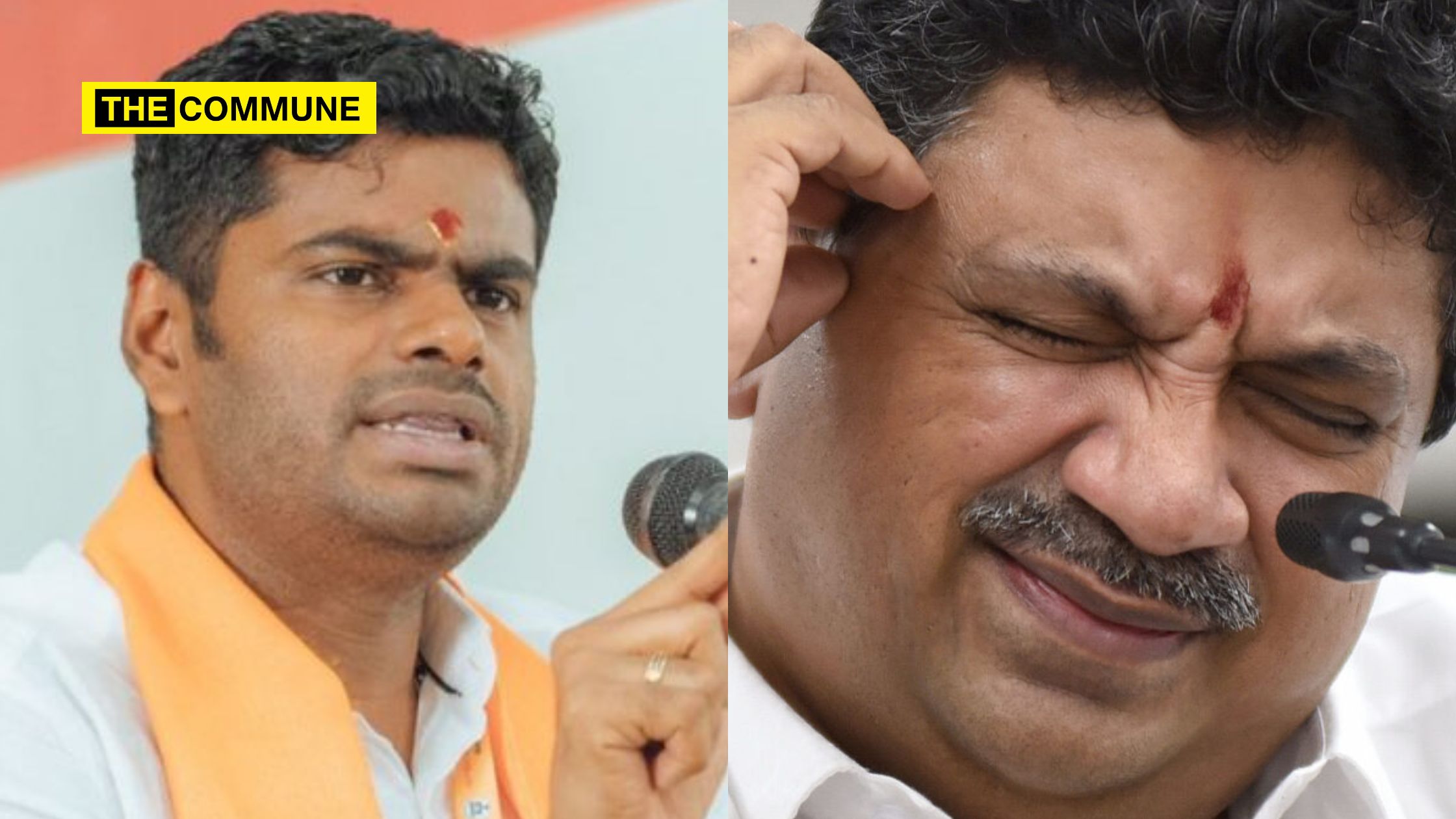
“People Who Came From Ongole Are Called ‘Tamilians’, PM Modi Who Loves Tamil Is A Tamilian By Heart”: BJP TN Head Annamalai

In a recent press meet, Tamil Nadu Bharatiya Janata Party Chief, Annamalai, said that Prime Minister Narendra Modi is a “Tamilian by heart.” Defying conventional notions tied to geographical birthplaces, Annamalai argued that PM Modi’s affinity towards the Tamil language is sufficient to classify him as a Tamilian.

“PM Modi need not have to be born in Tamil Nadu to consider him a Tamilian,” Annamalai declared, adding that, “All who have an affinity towards the Tamil language are Tamilians,” advocating for a broader and inclusive definition of Tamil identity.

Annamalai stated, “We call people who have migrated to Tamil Nadu from Ongole as Tamilians. Then why can’t a person born in Gujarat, who loves Tamil, be called a Tamilian?”.

The remark was a sly jibe at the late DMK patriarch Karunanidhi whose ancestors hailed from Ongole in present day Andhra Pradesh.

Annamalai posed questions regarding the authenticity of Tamil identity within the ruling DMK class. “How many of the 35 Tamil Nadu ministers belong to Tamil Nadu? How many DMK ministers speak Tamil at their homes?” he questioned.

Annamalai concluded by suggesting that the entire landscape of Tamil Nadu politics could be upended by delving further into these questions.

https://www.instagram.com/reel/C1wcvBfLnbx/?igsh=cThxZ2R5am1sN2I4

Here is a compilation of few instances where Prime Minister Modi substantiated Annamalai’s assertions:

1. PM Modi inaugurated the Kashi Tamil Sangamam

2. PM Modi declared the establishment of the Subramania Bharati Chair of Tamil Studies at BHU.

3. Tamil Nadu received significant attention in PM Modi’s Mann Ki Baat broadcasts.

4. PM Modi incorporated quotes from Tamil poet Kambar into his speeches.

5. PM Modi engaged in a conversation in Tamil with a barber from Thoothukudi.

6.PM Modi quotes Avvaiyyar in Chennai

7.PM Modi quotes Sage Thiruvalluvar at Ladakh

8.

Subscribe to our channels on TelegramWhatsApp, and Instagram and get the best stories of the day delivered to you personally.
What Karunanidhi’s Pervy Pen Wrote About Hindu Gods And Other Erotica That He Passed Off As ‘Literature’

Dravidian Stockists and other adulators of Karunanidhi often say that when Karunanidhi’s pen bent down to write, the heads of Tamil people raised high.

While we can’t be certain about their heads, there is a high chance that something else must have got raised for some people.

This is because much of his literature brimmed with lust, characterized by intense sensuality and explicit sexual content.

Moreover, Karunanidhi sometimes employed Hindu deities as characters in his stories, often distorting and misrepresenting them to fictionalize his sexual perversion.

Here are a few:

Slandering Hindu Gods

Love Life Of Ganga

Karunanidhi had penned a short story titled ‘Gangayin Kaadhal‘ meaning ‘Love life of Ganga’ in which he narrates how Goddess Ganga and Moon God Chandra residing on Lord Siva’s head had a secret love affair.

He narrates that Ganga had sexual urge and began courting Chandra in Siva’s matted-locked head.

Here is a dialogue between Ganga and Chandra as written by Karunanidhi.

Ganga… Are you happy with the old man?” ask Chandran to which Ganga replies “If I am happy, why should I search for Chandran!

He further describes Goddess Ganga as someone having extreme ‘sexual hunger’.

In the story, Ganga narrates how she was sexually excited when Rishi Bhagiratha called her from the skies but was disappointed when he sent her to Lord Siva. Throughout the story, Karunanidhi describes Goddess Ganga as if she was a woman with no morals.

This is how Kaunanidhi derogates Goddess Ganga with his perverted sexual imagination:

Bagirathan called me from the skies. My body quivered at the sight of that handsome man. Why body? My heart too quivered. I can’t express in words the sexual hunger I had for him! You need poet Kamban to do it.”

Karunanidhi not only slanders Ganga but also characterizes Lord Shiva as someone ‘who has a schedule for fun in bed’

He writes as Ganga lamenting “My sexual feelings were out of control. I had contacts with a king. He was as powerful as an emperor. I had dreams of trapping him into my life and through him realize all the dreams of my life. But that good for nothing fellow pushed me into the hands of this old man of Kailash. This old fellow is not only old but worn out in the services of Rishis’ wives. That is not all, Chandra. He has Parvati by his side, and maintains a schedule for fun in bed. His women have to take turns. What shall I do? For that matter, what can any young woman like me do? What did Parvati herself do? If you are interested in that story, dear Chandra, you have to ask Brahma himself. Everyday you visit the earth… Will you please put a word of advice to the people of the Earth?

What is that Ganga?

Do not marry off your daughter to an old man. Never consent for a second marriage… Will you please tell this to them?… Please on my behalf… Tell them so that no woman is pushed to my level.

So let it be, darling… Come let us slip to the mane side of Shiva. It will be darker there.

This is how Karunanidhi characterized Hindu gods and for his erotica literature.

Derogating Hindu Goddess Draupadi

In the short story titled Nalayani, Karunanidhi writes how Nalayani carries her leper husband on a basket to a harlot’s house for his sexual pleasure. To the outside world, she is hailed as a chaste woman who would go any extent to fulfil her husband’s desires.

This is how Karunanidhi describes the scene:

Carrying her leper husband on her head in a basket, Nalayini goes, her lovely face laden with sorrow. Wherefore is she bound? Does her husband want to take a holy dip and pray to the Lord? Is she carrying him to satisfy his love of piety? No. No. Then what for? Is he moving from one hermitage to another, using his wife as a vehicle? No. Then where are they bound? This journey is not meant to reach a temple or do obeisance to God! What then? Well! He is journeying to reach a harlot’s house. What for? It is not with the intention of advising her to give up her profession and to turn her mind toward the Lord. That leper’s purpose is not to convert the harlot’s house into a divine place or to preach her about the divinity of the Lord. The sage is going to sleep with the harlot. He doesn’t long to see the triple-eyed Lord. But he is there to allow the meeting of the four eyes and to hug the graceful body.

Later, Nalayani is shown having an affair with Idhaya to whom she exposes her agenda that she took her leper husband to the harlot not because of her devotion towards him but out of disgust.

Don’t make fun of me, Idhaya! I don’t desire to have fun with a leper. But he calls me to his bed desiring me. My hands tremble even to hug him. This is why I sent him to the harlot’s house. Let him quench his thirst without harming my beauty. That was my plan. Can’t you understand my stratagem. Idhaya?

You say that I carried my husband on my head. Correct it. I carried only the basket on my head. He was in the basket. Am I out of my senses to touch a leper with my hands and carry him on my head? I was cautious enough to put him in a basket and then carry him.

Nalayani laments about not being able to enjoy conjugal bliss and Idhaya is then shown granting to his love affair Nalayani a boon in the next birth that will let her have five husbands.

According to Hindu mythology, Nalayani gets reborn as Draupadi, the wife of Pandavas.

Karunanidhi derogates Draupadi in another story titled “As is in the original”.

In this story, a compositor named Kandasamy works at Vedanthi Press. He is given the task of composing an advertisement for the Maha Kumbabhishakam (consecration ceremony) of the Draupadi Amman Temple. The manager, Velayudham Pillai, instructs Kandasamy to strictly follow the original text provided without making any changes.

However, when Kandasamy is appalled by the actions and character of the person sponsoring the event, Ramanathan Chettiyar. Chettiyar is depicted as an immoral and corrupt individual who has committed various wrongdoings, including rape and theft. This portrayal shocks Kandasamy, and he decides to compose the advertisement exactly as per the original text, exposing Chettiyar’s misdeeds.

When the leaflets are printed and distributed, they lead to chaos and public humiliation for Chettiyar during the consecration ceremony. Swami Yogananda, who was supposed to deliver a lecture at the event, is also embarrassed by the content of the leaflet.

Later, when the manager confronts Kandasamy about the controversial content, Kandasamy defends himself by stating that he merely followed the truth as presented in the original Mahabharata epic.

Here’s how Karunanidhi writes:

“I only followed the original, sir.” “Original! What original? Does the original talk of Panchali’s prostitution?”

“Yes! Of course! The real original is Mahabharata; and not this handwritten piece of paper. In the original Mahabharata, Panchali was wife to five men. She was also in love with Karnan. That is how the epic depicts her. And so as per the epic original instead of writing Panchali swayamvaram I felt it should be composed Panchali prostitution.

“Not only that…. This Chettiyar is ‘Kama’ to the core. That is his life’s original. That is why I composed Kamanadhan Chettiyar.

“The Swami supposed to deliver lecture is a Baktha only in the morning but at night he is a Bhoga cat. I didn’t want to change the original truth and that is why I composed ‘Swami Bogananda.” Am I at fault?” Kandasami laughed like a shower of granites falling on a tin roof.

Taking Sly Jibes At Brahma

Karunanidhi wrote a short story called “Vaazha Mudiyathavargal” which starts with a bunch of youngsters returning from a theatre and discussing about the film titled ‘Thilothama’.

In the Hindu puranas, Thilothama is an apsara who was created by the divine architect Vishwakarma at the behest of Lord Brahma, one of the divine trinity. Narada narrates the story of Thilothama to Pandavas and warns them that their wife Draupadi could become a reason for quarrel among them.

Karuananidhi in the short story uses this name for the film in order to peddle innuendo.

Here’s how Karunanidhi pens the scene in which the youngsters discuss the movie.

“How was Thilothoma da?” asked a twenty four year old.

“Are you asking about the movie or…” drawled a minor. (Karuanidhi writes indicating the sexual appeal of the fictional heroine)

“The film was okay. Direction is fine. I didn’t like the story”, a genius inserted his criticism.

“What sir, you didn’t like the story!” A cinema maniac interspersed.

“Brahma is doing ‘galatta’ sir. ” one sympathized.

“He has taken the mythological story as it is.”

“Brahma…is one of the divine trinity. He created Tilottama. If he loves her, his own daughter, father doing his daughter. Yuck! Absurd!”

“Wait, don’t vomit,” the joking man said and concluded. Like this the moving – scattering – ebbing and waning crowd reviewed Tilothama film reviews.

Other Perverted Stories

Father Having Sex With Daughter

In the same story “Vaazha Mudiyathavargal“, the sexual perversion stoops to a new low where in a poverty-stricken father has sex with his own minor daughter. What is up with these Dravidian Stockists’ fetish for father-daughter relationship?

Here’s how the rest of the story goes.

Chinnachami, a forty-year-old policeman, and his daughter Kanta navigate their way through the throng. They return to their modest home, a spartan police line house, where daily life is a struggle and the weight of Chinnachami’s responsibilities as a single parent is palpable.

Chinnachami is haunted by the memory of his late wife, Chandra, and the hardships that followed her death, including his struggle to remarry due to financial constraints and societal pressures. His daughter Kantha, now grown, faces her own societal pressures as a woman of marriageable age without prospects.

Kantha is a modest beauty. She is black only. She is like a grapevine with a nice big face and prominent features.” Karunanidhi writes.

He further notes that nobody said they didn’t like Kantha but that it was Chinnachaami who was worried about the marriage expenses.

Karunanidhi writes that Kantha remained a virgin because of this which worried Chinnachaami.

Chinnachami is a man couldn’t live. Kantha is a woman who couldn’t be kept living by him.“, Karunanidhi writes.

If a wild part of life is spent in vain? At the age of doing sweet talks and being in joy, what if one is dumb and paralyzed? When you are supposed to play to the pleasures of the love song, what if you become lame? Which woman can bear that pain! There are two tattered mats. Two souls torn apart more than a mat! Father-daughter, a worm in the sand!“, Karuananidhi writes.

As they prepare for bed in their simple home, Chinnachami reflects on the injustices of life, questioning the divine reasoning behind the suffering of the poor.

Oh damn God! What are they asking? Are they asking for a silk mattress, a coral bed, a paneer bath, almond milk, cow milk? How many young women are sacrificed to the hunger of the rich man’s heart! Human ‘Maha Vishnus’ who turn into Indra and live their lives by throwing away money. Human intellect has become so blunt as to call the images of poverty, with dried up stomach, chest and the senses, as the ‘work of God’., Karuananidhi writes.

Here’s how he describes the thoughts of Chinnachami:

Chinnachami, little genius!… Don’t do it… you bastard!” A glorious voice came from inside his chest. A minute’s silence. Alas! How much boil in his blood in that one minute! All nerves were shaking. No water on the tongue. Lips are dry. He took his hand slowly. Sweaty palms. Wiping on the dhoti, he placed his hand gently on top of Kantha’s. She moved and lay down panting. “Hey you sinner! Parama Sandala! She is your daughter man! Your daughter. The daughter you gave birth to!,.. Do not do great harm, you fool! You maniac!” Karunanidhi slowly leads the audience to the climax.

The story culminates in a moment of intense emotional and physical connection between the father and daughter.

Chinnachami’s chest heaved. He licked his dry lips once with his wet tongue and lay speechless. A bit of peace. That silence disappeared in a flash. His wet fingers, trembling with venom, again fell on Kanta’s face. It crawled on her like snails. Kantha’s trembling hand touched those fingers, and it light! It didn’t just light. It compressed slowly. As thunders thundered and lightnings flashed…suddenly a storm broke out and an earthquake occurred and the seas began to shake. Two blood-loving bodies. Chinnachami kicked the lamp by his leg. It pitched down and went off, rolling away, spilling oil onto the floor. The fate caused by that fictitious name of God—the doomed society—the law of that society—the two rascals who unknowingly broke that law—cannot live!

Voyeurism

In another short story titled “Temptation”, a married couple Chandra and Kumaresh with their child board a train and a stranger lays his eyes on the woman.  Karunanidhi writes as if the woman too is interested. He voyeuristically narrates the internal turmoils of the husband. As Chandra goes to sleep, the lustful stranger touches her face to which she immediately repulses. The other passengers attack the stranger and he leaves the train. Meanwhile, Kumaresh, overwhelmed by jealousy, throws Chandra’s child out of the train, believing that he has severed ties with her. However, it is revealed that Chandra was innocent, and her child is left miles away from the train station, leading to a tragic and regretful ending.

Rape

In another story, named The Great Escape, a wealthy mill owner named Ramadurai is murdered by one of his workers, Vittal. Vittal’s motive for the murder is that Ramadurai had raped his wife, Thangam.

Here’s how Karunanidhi pens the rape scene:

Unable to control himself Ramadurai pounced on Thangam. The doors got closed.

She howled for help. “Oh, my parrot green! O, my talking statue! Yield to my temptations, O, my golden dove.” He said in a voice laden with lust. She shivered. “Why should you shiver, my walking golden beetle!” Ramadurai hugged her tight. She released herself and blubbered. She fell at her boss’s feet and wailed, “Let me go chaste.” But he advised: “A dirge in the battlefront, a mourning song in the bed of love are coward’s act, my beauty.”

Thangam couldn’t escape from the clutches of that rhino of a man. Her soft lips, the lips that graced only the lips of her husband, now got pressed by the lustful lips of Ramadurai. She lost her senses. That human beast satiated his lust for her. Thangam sagged.

The clock struck six. The doors opened. Ramadurai pushed a hundred rupee note into her hand. Thangam tore it into pieces and ran away.

A Tamil Maupassant?

Henri René Albert Guy de Maupassant was a renowned French writer of the 19th century whose works frequently portrayed the lives of  individuals, their fates, and the societal influences surrounding them in a manner characterized by disillusionment and often marked by a pessimistic outlook. Many of his stories revolve around themes of prostitution, adultery, or sexuality in general.

Many in the Tamil literary circle celebrate Karunanidhi as the Tamil Maupassant. Like Karunanidhi, Maupassant too was hostile to religion except that he did not use his pervy pen to write sexually explicit content involving religious themes and epics.

God forbid, should a pen-shaped monument ever be erected along the shores of Chennai in memory of Karunanidhi, one can only imagine the symbolism it would hold.

(With inputs from Project Madurai)

Vallavaraayan is a political writer.

Subscribe to our channels on TelegramWhatsApp, and Instagram and get the best stories of the day delivered to you personally.
Actors Par Excellence: Suriya & Karthi ‘Cry Inconsolably’ At Vijayakanth’s Memorial A Day Before Participating In Kalaignar 100, Their Father Uses Occasion To Peddle Pro-DMK Propaganda, Netizens Slam Them

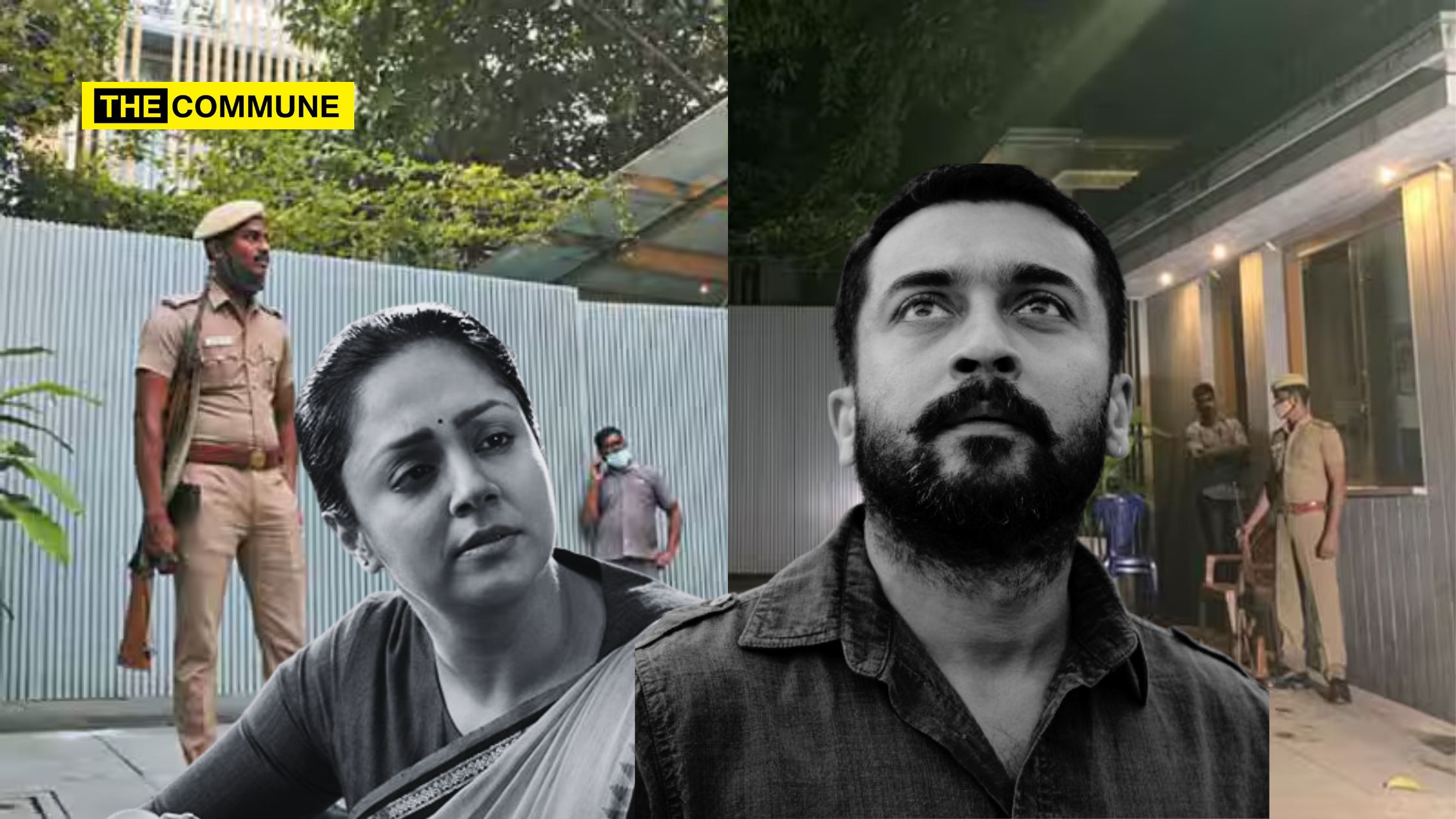
Days after the late actor and DMDK founder ‘Captain’ Vijayakanth was laid to rest, alleged actor Suriya Sivakumar, who is known for towing the DMK line through his statements, visited the late leader’s resting place along with his brother Karthi and father Sivakumar.

Visuals of his visit showed Suriya acting.. oops.. ‘weeping unconsolably’ as he paid his respects. As Suriya laid flowers in homage to the departed leader, he was ‘overcome with emotion’, breaking down in tears. Subsequently, he spent a few moments seated in ‘quiet reflection’. Afterward, he engaged in conversation with Vijayakanth’s family, offering them words of comfort.

Addressing reporters after the visit, Suriya said that Vijayakanth’s demise is very saddening. Again ‘crying’ he said “It is very disturbing to the heart. In my initial years after acting in 4-5 films, I did not get much appreciation. I got an opportunity to act with him in Periyanna. I had the chance to work with him for 8-10 days. He used to care for me like a brother by offering food from his plate. He kept everyone close. I regret for not being able to participate in his last rites.” Vijayakanth also played a cameo in Suriya’s film Maayavi.

https://twitter.com/Muthuhere3/status/1743164148756734186

He had failed to come to the last rights of the leader as he was “busy in shooting” outside the country. Amidst his busy schedule, Suriya had posted a condolence message on Twitter by shooting a video of himself in a moving car.

Suriya’s brother Karthi too who addressed the press with his father went on to sob and say how he was sad about the demise of the late actor. Karthi is the treasurer of Nadigar Sangam (South Indian Artist Association), an organization which was revitalized under Vijayakanth’s leadership. Under Vijayakanth’s leadership the association witnessed a transformative era, marked by numerous public events strategically aimed at fundraising. This financial support proved instrumental in aiding fellow cinema stars facing a dearth of opportunities, setting a compelling example of responsible leadership. His adept leadership not only revitalised the organisation but also rescued it from substantial debts. His innovative approach, notably the organisation of ‘star night shows,’ became legendary in the Tamil film industry.

Karthi said that a condolence meeting would be held on 10 January 2024 for the actor on behalf of Nadigar Sangam.

However, Karthi too did not come for the final rites of the departed leader.

Sivakumar, who had accompanied his sons, did not even hesitate to use the occasion for peddling pro-DMK propaganda.

He went on to say “When someone says ‘Captain’ Vijayakanth, the incident that instantly strikes my mind is this. 14 April 1996. It was the Golden Jubilee celebration of Kalaignar’s Artistic contribution. Nobody had expected such an event! Kalaignar was not in power at that time. Nobody in the cinema industry had extended much support back then. Vijayakanth alone, I don’t know how many lakhs he spent, he spent out of his pocket, he arranged the event. 3.5 lakh people, note it down, 3.5 lakh people had come. From the Gandhi statue to the end of Marina Beach, there was no space for even a single person to enter. Around 50,000 people surrounded the stage and cheered for Kalaignar. When he spoke at the last, he told the people ‘If only you all dropped me just a few metres away, I would reach Fort. St. George.’ You won’t believe. The election came within a month. He became the Chief Minister.

On the other hand, Suriya went on to heap praises on Karunanidhi during the Kalaignar 100 event organized by the Nadigar Sangam. While condoling the death of Vijayakanth, Suriya just focused on Vijayakanth’s role as an actor and did not utter a word about the latter’s role as the leader of DMDK. However, Suriya went on to hail Karunanidhi as a trendsetter of bring out social reforms through art.

In politics, he has brought about a lot of change. Be it equal property rights for women, or ensuring rights for the depressed people. While bringing about change through politics, he brought art also along with him. That is why we fondly and respectfully call him ‘Kalaignar’, Suriya said while speaking at the ‘Nadigar Sangam’ organized event.

https://twitter.com/NaveenSuriya_FC/status/1743646286241280393

Netizens Reaction

Many on social media slammed Suriya and his brother for their duplicity.

He could not attend the funeral of Vijaykanth. But this DMK “Oopi” is able to come early for the Karunanidhi event. Keep this acting elsewhere“, wrote a netizen.

https://twitter.com/Muthuhere3/status/1743164148756734186

Another person shared a meme which said “Are these people hurrying to Vijayakanth’s resting place because people may question them for not being able to attend his funeral but showing up for Kalaignar 100 event?

Subscribe to our channels on TelegramWhatsApp, and Instagram and get the best stories of the day delivered to you personally.
Quarry Businessman Levels Bribery Allegations On DMK Leader Ponmudi, Explains How Corruption Works In DMK & ADMK Regime

In a legal saga spanning over a decade, now dethroned DMK Minister Ponmudi found himself entangled in a complex web of corruption allegations, legal proceedings, and a controversial acquittal. From the initiation of legal proceedings in 2011 to a recent sentencing in 2023, the case has raised eyebrows and sparked debates within both legal and political circles.

The Department of Vigilance and Anti-Corruption took action on 26 September 2011, accusing Ponmudi and his wife of amassing assets exceeding 65.99% between 13 April 2006, and 13 May 2010. Despite being cleared by a Special Court in Villupuram, the Minister’s hometown, the total amount involved in the case amounted to ₹1.36 crore.

A special court in Villupuram acquitted the individuals involved in 2016, overseen by Special Judge T Sundaramoorthy, specializing in cases related to the Prevention of Anti-corruption Act. However, in 2017, the DVAC filed an appeal with the high court, leading to the approval of the appeal.

High Court’s Concerns and Unprecedented Intervention

On 10 August 2023, the Madras High Court expressed apprehensions about the verdict delivered by District Judge Vellore in the disproportionate assets case involving Ponmudi and his spouse. Justice Anand Venkatesh, utilizing his suo motu revision powers, raised questions about the legitimacy of the acquittal of the Higher Education Minister. The 17-page order marked an unprecedented event, causing ripples in the legal and political spheres, particularly within the ruling party. This incident stands as a unique instance where a judge independently examined the legality of a lower court’s decision.

Sentencing And Political Ramifications

In a significant development on 21 December 2023, Justice G. Jayachandran sentenced Tamil Nadu Higher Education Minister K. Ponmudi to three years in prison and imposed a fine of ₹50 lakh for a corruption offense. The verdict triggered immediate disqualification under Section 8(1) of the People’s Representation Act, 1951, upon his conviction.

Despite the verdict, Ponmudi wasn’t required to surrender immediately. His prison sentence has been temporarily suspended for 30 days, providing him with an opportunity to appeal the conviction in the Supreme Court.

Mining Owner Exposes Corruption Challenges In Industry

In a recent interview with Red Pix YouTube channel, Selvam, a mining business owner, who hails from Vazhai Thota Valasu village in Erode exposed several shocking allegations. In the year 1992, Selvam unexpectedly ventures into the drill rod reconditioning business and establishes a company called Drills and Pneumatics in the Krishnagiri district. Despite starting with no capital, he successfully supplies drill rods to various mine owners in the region.

During the years 1994-1996, Selvam’s business flourishes. Around this time, he diversifies into the mining sector, initially engaging in royalty-based operations. He gains significant traction by leasing mines in Karnataka, experiencing notable success.

In Krishnagiri, Selvam turns around a previously unsuccessful quarry through his sheer determination and luck. Despite challenges from the quarry owner, who attempts to force him out, Selvam stands firm. Additionally, he takes on another quarry, rumored to be a benami quarry belonging to Minister Rajakannappan, and achieves success in that venture as well.

Amidst these endeavours, a mines officer, allegedly under political pressure from ADMK’s Anbazhagan, targets Selvam while he operates a revenue quarry. Facing repeated challenges, Selvam decides to establish his own quarry on the land he acquires in Thenkani Kottai, Krishnagiri district. Selvam went on to describe the necessity of bribing officials, from the Village Administration Officer (VAO) to the Tehsildar, to obtain a licence.

He states “I obtained mining application from district mining office, it is a small process, no rocket science with small formalities of attaching Patta, Chitta, Adangal etc by enclosing revenue documents. If you go, you should start from VAO, then Revenue Inspector (RI), surveyor and upto Tehsildar on those periods. If you give Tehsildar an amount (bribe) he will submit the documents to mines office in district. There was Additional Director in mines office, if you give amount them, they will forward it collector. In those days, even collectors wouldn’t receive bribes (but today everyone does), then files reaches to Guindy mines office from Krishnagiri. Then the files should be moved to Secretariat to be signed by minister. We should give a fixed amount that is ₹3 lakh per license in Guindy mining office on that time, the staffs would share among them. In the office, there will be indication only if you go and meet the minister, the file will be further processed to Secretariat”. 

Between 2010 and 2011, during Ponmudi’s tenure as the mining minister, Selvam encountered significant bribery demands he says. To facilitate the process, he apparently navigated through various offices, including the Mines Office in Guindy, Chennai and eventually the Secretariat. During a meeting with Ponmudi at his home in Villupuram, the minister’s personal assistant, Jeeva, allegedly clarified to him that the bribe wasn’t solely for Ponmudi but would be shared among others, including the Kalaignar family. 

“This was around end of 2010, towards the end of Kalaignar’s regime when Ponmudi was Mining minister. To meet ministers there are various channels I went through. ₹3 lakh per acre was the bribe amount. I had 3.61 hectares. It was around 8 acres and had to pay ₹25 lakhs. Without this amount, you cannot process the application he said. I pledged my home and agriculture land went and to see him in Villupuram (with my wife and child) at his house. He is a minister he won’t get money directly, instead his PA was there and minister came after playing shuttle. I asked him (PA) can you please reduce the amount. He repliedThis amount is not fully for Anna, one part goes to party fund, another part for Kalaignar family, remaining smaller part with him. Anna wanted me to communicate this. Don’t think Annan (Ponmudi) is taking the whole share”.  He added that he was not saying this just because Ponmudi the bribe amount and the current situation of politicians in the state. He also said, that he was running from pillar to post for 2.5 years to get this licence and that without bribe nothing would happen. He compares to MGR’s regime when bribes were not even a thing. 

In the ADMK regime under Jayalalithaa, he says there was not much of a problem till she was there. Around the 2014 parliamentary election time, he alleges that nursing PM ambitions, Jayalalithaa stops functioning of businesses that are generating income for the government. He also alleges that businesses were asked to pay an amount for the elections and since Selvam was a great MGR fan, he put up posters all over town which depicted MGR asking Jayalalithaa whether she was aspiring to be a PM. He adds that after parting with quarter of a crore (25 lakhs) to Ponmudi, he could not afford to give up more money as he had to look at his own livelihood. Surprisingly, they started issuing permits to all mining businesses as before. 

Following Jayalalithaa’s demise, CV Shanmugam assumed control and began overseeing mining operations in Krishnagiri district, dictating the course of action. Operations came to a halt due to allegations of insufficient clearance from the pollution board or EC. Selvam contends that this was a strategy to extract more bribes, asserting that their license was valid until 2031 and the new regulations were introduced to harass mine owners. During this period, Selvam claims to have been fined over 3 crores. Under CV Shanmugam’s administration, the bribe amount escalated to 4.5 lakhs per acre.

This situation persisted through the DMK regime, with Selvam initially expressing optimism during the early stages of their rule. However, he alleges a downturn after a few months, attributing the decline to Duraimurugan, the Mining Minister, whom Selvam accuses of mismanaging the mines.

He further goes on to say that one had to pay ₹6 lakhs per acre for a license under the current DMK regime.

The legal journey of DMK Minister Ponmudi, intertwined with corruption allegations and subsequent legal proceedings, continues to unfold. The recent sentencing and the unprecedented intervention by the Madras High Court add layers of complexity to a case that has become a focal point of scrutiny and debate. The mining industry, as highlighted by  Selvam, reflects broader challenges of corruption that persist in various sectors, demanding increased vigilance and reform.

Subscribe to our channels on TelegramWhatsApp, and Instagram and get the best stories of the day delivered to you personally.
Defence Minister Rajnath Singh Calls For More Gurukuls To Be Established In The Country To Preserve Moral And Cultural Heritage

Defence Minister Rajnath Singh emphasized the establishment of more Gurukuls in India to provide modern education while safeguarding the country’s moral and cultural heritage. During the inauguration of ‘Gurukulam Evam Acharyakulam’ at Swami Darshanand Gurukul Mahavidyalay in Haridwar, Uttarakhand, on Raksha Mantri Shri Rajnath Singh emphasized the establishment of more Gurukuls in India. He emphasized the importance of providing modern education while safeguarding the country’s moral and cultural heritage. During the inauguration of ‘Gurukulam Evam Acharyakulam’ at Swami Darshanand Gurukul Mahavidyalay in Haridwar, Uttarakhand, on 06 January 2024, Defence Minister Rajnath Singh expressed concern about the decline in moral values due to the influence of foreign culture. He acknowledged the historical significance of Gurukuls and their role in preserving Indian culture, dating back to the time when foreign invaders disrupted the traditional educational system.

Defence Minister Rajnath Singh linked his call for more Gurukuls to the National Education Policy 2020, highlighting the government’s commitment to instil moral values from primary education onward. He acknowledged the ongoing implementation of the policy across various educational institutions in the country, emphasizing Gurukuls’ potential to contribute significantly to this educational transformation. Contrary to the perception that Gurukuls solely adhere to ancient teaching methods, Singh urged them to embrace modern advancements, including Artificial Intelligence and quantum technology, while continuing to provide traditional education.

The Defence Minister’s speech reflected India’s commitment to cultural preservation, with Gurukuls envisioned as key contributors to this endeavour. He emphasized the broader goal of cultural upliftment beyond mere preservation, aiming for future generations to take pride in the rich cultural heritage of the nation. He concluded by recognizing the global impact of Yoga, citing its celebration as the International Day of Yoga by the United Nations. Furthermore, he urged a similar promotion of Sanskrit to ensure its accessibility and relevance on a global scale.

(With inputs from PIB)

Subscribe to our channels on TelegramWhatsApp, and Instagram and get the best stories of the day delivered to you personally.
Political Commentator ‘Savukku’ Shankar Files Complaint With DVAC Against DMK Ministers And Officials Alleging Corruption In Kilambakkam Bus Terminus Tender Process

Political commentator A. Shankar, also known as ‘Savukku’ Shankar, recently lodged a formal complaint with the Directorate of Vigilance and Anti-Corruption (DVAC) levelling substantial corruption allegations implicating the DMK government and BVG Limited, the recipient of the tender for the operation and maintenance of the Kilambakkam Bus Terminus.

The Chennai Metropolitan Development Authority (CMDA) has entrusted the maintenance and operation of the Kilambakam Bus Stand to BVG India Limited, a private company hailing from Maharashtra. The new bus terminus was constructed by CMDA in Kilambakkam, around 35 kms away from the Chennai city with a total cost of around ₹400 crores.

The complaint alleges a mega scam involving corruption and illegal accumulation of public funds by DMK Ministers in the award of the tender for the Operation and Maintenance of Kilambakkam Bus Terminus. 

The complaint delves into highlighting various irregularities, emphasizing that BVG India Limited, based in Pune, Maharashtra, emerged as the sole participant in the tender process conducted by the Chennai Metropolitan Development Authority (CMDA).

He states “A tender was floated by the CMDA authorities to Operate & Maintain the New Bus Terminus vide tender notice in No.12/23-24 dated 14.08.2023. A company by name and style M/s. BVG India Limited, Pune, Maharashtra submitted bids vide No.865765 dated 19.10.2023 and finance rebids dated 09.11.2023. For whatever reasons, BVG India emerged as the sole participant in the above tender

Despite the absence of other bidders, CMDA allegedly proceeded to award BVG the contract for a 15-year term. He questioned “As there were no bidders apart from BVG India, the CMDA ought to have canceled the tender and called for fresh bids. Surprisingly, the operation and maintenance contract has been given to BVG group for a period of 15 years! Instead of cancelling the tender and calling for a fresh tender, the CMDA on its part chose to award the contract to M/s BVG India Limited, Pune.”

The complaint further notes that there was confusion regarding the formation of a Tender Scrutiny Committee and the legitimacy of negotiations with BVG, especially considering that the committee was not established until later stages. The complaint underscores potential violations of Tamil Nadu Tender Transparency Rules, 2000, and expresses concerns about the rushed inauguration of the bus terminal before completing the necessary formalities.

On 19.12.2023, TN Finance Department, addressed a letter to the CMDA through which CMDA nominated one Thiru. Saravanan, Joint Secretary, Finance as “Member of the External Committee” for evaluation of the tender for operation and maintenance of Kilambakkam Bus Terminal. A question that begs answer is, under what grounds CMDA chose to award the tender to BVG on 23.11.2023 when a tender committee in this regard was not even formed till 19.12.2023. Further, when a Tender Committee was not even formed why was the CMDA conducting negotiations with BVG?” He added.

The delay in registering the Special Purpose Vehicle (SPV) and the Bank Guarantee is highlighted, with CMDA permitting BVG to furnish the Bank Guarantee in its name instead of the SPV’s. Financial aspects are scrutinized, revealing a significant imbalance where BVG stands to earn substantially more than CMDA, leading to a substantial loss for the Government of Tamil Nadu over the next fifteen years.

The entry fee, as fixed by CMDA for private and government buses is as follows :

Omni bus – per bus per day — Rs.150/-

Govt buses – Rs. 25/-

It is mandatory that, a minimum of 1100 buses should enter Kilambakkam terminus. 400 Omni buses are estimated to use Kilambakkam per day. On a rough estimate, entry fee from government and private buses alone comes to 3.20 crores. Further, BVG can rent out the shops in the terminus. A total of 105 shops at an extent of 45,790 sq. Ft is available for BVG to rent out. As per our enquiries, the rate the shops are let out is Rs.500/- per square feet. This works out to 27.47 crores per year. The income from dormitories which is constructed in 21,190 square feet is expected to fetch 2 crores per year. 1,67,680 square feet is allotted for two and four wheeler parking. This is likely to fetch 6 crores per year. Advertisements will fetch 10 crore a year. To sum up, BVG is likely to earn, 48.60 crores per year. In lieu of this, CMDA will get just 2.40 crores. The loss suffered by the government of Tamil Nadu for the next fifteen years runs into hundreds of crores”.

The complaint further details financial estimations, including entry fees, shop rentals, dormitory income, and revenue from parking and advertisements, emphasizing the considerable earnings anticipated by BVG compared to CMDA’s meager share. The complaint accuses specific individuals, including PK Sekar Babu (Minister for HR&CE and CMDA), SS Sivasankar (Minister for Transport Departmen), Anshul Mishra (IAS, Member Secretary of CMDA), Prashant M Wadnere (IAS, Additional Secretary of Finance Ministry), and BVG India, of engaging in a conspiracy to benefit BVG financially at the state exchequer’s expense. The complainant urges the registration of a case under relevant sections of the Prevention of Corruption Act and the Indian Penal Code against the mentioned individuals and the company.

Subscribe to our channels on TelegramWhatsApp, and Instagram and get the best stories of the day delivered to you personally.
Dravidian Stock Govt Doctor Laments About Salary Non-Payment Due To Bureaucratic Delays In Getting Last Pay Certificate

In a revealing account of bureaucratic inefficiencies, a DMK-supporting Dravidian Stock medical professional has expressed significant distress over the administrative hurdles faced by him in getting his salary after being relieved from the post as Urologist at the Government Kalaignar Centenary Superspecialty Hospital in Guindy, Chennai on December 6, 2023.

Despite taking up immediate duties at the new station in Chennai the following day, the doctor has been left without income for a month due to the non-issuance of their Last Pay Certificate (LPC). The LPC, a critical document for government servants during job transitions, is mandated to be sent on the same day as the relieving order. This delay has resulted in the urologist not receiving the salary for December 2023 with grim prospects for January 2024.

A Last Pay Certificate ( LPC), as per govt rules shd be sent on the SAME day, that the relieving order is sent(6.12.23), so that the govt servant is not deprived of his source of income. Yet, even after a month of relief, the clerks who prepare/send the LPC hv still not sent it to my current station inside Chennai.“, the Dravidian Stock doctor wrote on his social media page.

He further added “Without an LPC, I can’t be issued a salary at my new station. I have not received any pay for December, and I am certain I will not receive my January salary either, since it is too late (LPC not arrived). As a govt doctor, if I delay a life saving surgery by even one hour, hell will be (correctly) let loose on me. What is the punishment for dereliction of duty by the clerk at Kalaignar Hospital?

Recalling a past incident at Government Medical College, Salem, the doctor narrated how a refusal to succumb to a bribe led to the LPC being destroyed right before his eyes, with no subsequent action taken against the clerk in question despite a formal complaint.

“When I once joined Govt Salem Medical College as a urologist, the 25 yr old clerk (I was around 40) demanded a bribe of Rs 3000, to issue my first salary. Since I refused to pay a bribe, he simply tore up my LPC in my presence,& calmly said “Do what u can do.” I gave a complaint to the then Dean, but nothing happened since it seems this alcoholic clerk was the chief bribe-collector for that Dean.”, he said.

With no private practice due to health issues, the doctor apparently relies solely on the government salary, emphasizing the gravity of the situation where delayed justice feels like denied justice.

Because of health issues, I don’t hv a private practice . So, don’t have any other income from a medical source. Isn’t delayed justice -buried justice? I have done my doctor’s duty. Has the clerk done his? Kalaignar Hospital is very well staffed by clerks. So they can’t claim shortage of hands, for dereliction of duty. Will govt clerks start working properly atleast after my death (I am certain it will not happen in my lifetime), so that atleast the next gen of doctors, will not suffer?“, he said.

The doctor further observed that the hospital’s clerical staff are heavily unionized, a factor that seems to instill a degree of apprehension in the authorities when it comes to initiating disciplinary action against them.

Even IAS officers can be sacked, but in reality, govt clerks are never dismissed/suspended. Such is the power of their unionised strength.“, he said.

“Is It Your Dad’s Money?” NTK Head Seeman Slams Udhayanidhi Stalin On Kilambakkam Bus Terminus Fiasco And DMK Symbol-Shaped Construction

In a recent press conference, Naam Tamilar Katchi party chief Seeman expressed his dismay over the newly constructed bus stand in Kilambakkam.

Highlighting the distance of Kilambakkam from Chennai which is approximately 40 kilometres, Seeman questioned the rationale behind not having a bus stand in the city itself. He voiced concerns about the inconvenience faced by commuters who would need to travel additional 40 kilometers after disembarking at Kilambakkam to enter the city.

Drawing attention to the proximity of schools to the bus stand, Seeman expressed worry about the safety of students crossing the busy roads amidst the traffic generated by buses. He challenged the DMK government’s long-term vision, accusing them of haphazard planning and sudden decisions such as the proposed demolition of a wall.

Seeman also criticised the DMK for imprinting the party’s symbol. He said, “Who asked for this bus station? ADMK completed 70% of the construction work. You spent 18 or 20 crores and why are you using the “Udayasuriyan” (rising sun) symbol for that? Udhayanidhi is asking, is it your father’s money? I am asking Udhayanidhi, is this your father’s money? Or your grandfather’s money? Why did you name it after your grandfather? Are there no leaders in the country apart from Karunanidhi? Is there no one? If something was written, it was him and for that you want to erect a pen (statue).”

Seeman’s “Ngoppan ootu kaasa?” (Is it your dad’s money?) comes in light of Udhayanidhi Stalin’s disrespectful comments on Union Finance Minister Nirmala Sitharaman when he said “Are we asking for her dad’s money?” when asking for Centre to give relief.

Expressing his discontent, Seeman questioned the DMK’s choice of naming public properties after Karunanidhi. He said, “Coming to hospitals, why are you not considering naming a hospital after Dr. Muthulakshmi Reddy, who was the first to study medicine? Similarly, if a library is being constructed, why not honour Pandithurai Devar, who played a significant role in the growth of the Tamil language during the 4th Tamil Sangam? Did I ask a gallery for Jallikattu? We will build an arena, allow the bulls to run and watch it and dismantle it. Why spend so many crores for that and will you keep your father’s name for that? Why did you name it Tamil Nadu, let it be Karunanidhi Nadu.”

When a reporter asked about the money that was spent for the construction, Seeman said, “400 crores is what they spent. Why are you demolishing the wall now? You completed it so you placed the DMK symbol (rising sun). If ADMK had completed the project, will they keep the twin leaves symbol? Is that your money, your party’s money? It is my money, people’s money. How can you keep the party symbol there? Why is the bus station 40 kilometres outside the city? If I have to come to Chennai, I have to travel 40 kilometres, and if I have to go there, another 40 kilometres, how is this possible? If they had some vision, they will work on finding out where water will stagnate, can we encroach a water body or should we make the water body into a garbage dump, you didn’t know that?”

Subscribe to our channels on TelegramWhatsApp, and Instagram and get the best stories of the day delivered to you personally.
A New Era For Brand Bharat

Under the leadership of Prime Minister Narendra Modi, India has embarked on a transformative journey, redefining its global image and enhancing its brand value. From diplomatic masterstrokes to economic reforms, the Modi government has left no stone unturned in promoting ‘Brand India.’ This comprehensive article delves into the various facets of these efforts, painting a vivid picture of a nation on the rise.

The Pre-Modi Landscape: A Time Of Untapped Potential

Prior to Modi’s administration, bureaucratic inefficiency, corruption, and a lack of assertiveness in international affairs damaged India’s reputation abroad. The country’s potential was recognised but not fully realised. The world saw India as a land of opportunity, but the barriers to entry were high, and the nation’s voice on the global stage was often subdued.

Diplomacy Reimagined: Modi’s Personal Touch

Modi’s personal diplomacy has been a hallmark of his foreign policy. His unique style of building personal relationships with world leaders has brought India closer to key global players. From promoting Indian languages and culture to taking a hard stance against Pakistan’s support for terrorism, Modi has redefined India’s approach to diplomacy. His personal rapport with leaders of the UAE and Saudi Arabia has strengthened India’s position in the Middle East, while his firm handling of situations with China has asserted India’s position in the region.

The G20 Presidency: A Momentous Achievement In Global Leadership

In a historic move, India has embarked on its maiden G20 presidency, marking a significant milestone in its quest for global leadership. With its diverse economy, technological prowess, and unwavering dedication to sustainability, the country is strategically utilising these strengths to shape discussions among the global economic powerhouses. The presidency has outlined several key focus areas, which encompass inclusive growth, digital innovation, climate resilience, and equitable access to healthcare. India, with its unwavering commitment to the principle of ‘Vasudhaiva Kutumbakam’ or ‘the world is one family,’ is determined to cultivate solutions that not only cater to its own citizens but also have a positive impact on the global community.

Economic Reforms: A Magnet For Global Brands

Under Modi’s leadership, India has become an attractive destination for global brands. Structural reforms and a business-friendly environment have led to the entry of companies like H&M, Netflix, Jeep, Ikea, and MG Motor. These brands have not only brought investment but also jobs and technological advancements, contributing to India’s economic growth.

Make In India: A Vision For Manufacturing

One of the flagship initiatives of the Modi government, “Make in India,” aims to transform India into a global manufacturing hub. From easing business regulations to enhancing the investment ecosystem and focusing on micro, small, and medium enterprises (MSMEs), the initiative has been a game-changer. The “Atmanirbhar Bharat Abhiyaan,” or self-reliant India, campaign further promotes local products and reduces dependence on imports. Together, these efforts are reshaping India’s industrial landscape.

Tourism: A Flourishing Industry

India’s tourism sector has seen a remarkable transformation under the Modi government. With its rich heritage, multicultural experiences, and diverse landscapes, India has always been a preferred tourist destination. However, the government’s efforts to promote tourism have brought the country to the forefront of global tourism.

The “Incredible India” campaign has been revitalised, showcasing the country’s picturesque landscapes, spectacular waterfalls, and warm hospitality. From the snow-covered Himalayan heights to the tropical rain forests of the south, India’s tourism offerings are vast and varied.

Iconic destinations like the Statue of Unity have become symbols of national pride, attracting tourists from around the world. The government’s focus on promoting heritage, adventure, art, food, and luxury tourism has created immersive experiences for travellers.

The development of tourist circuits, promotion of adventure tourism, and emphasis on sustainable practises have further enhanced India’s appeal. Festivals and cultural events are being celebrated on a grand scale, inviting tourists to be part of India’s rich cultural heritage.

Education: A Hub Of Knowledge

Under the Modi government, India’s education sector has also seen significant growth. The introduction of the National Education Policy (NEP) aims to transform India into a vibrant knowledge hub. Emphasising quality education, research, innovation, and skill development, the NEP aligns India’s education system with global standards.

International collaborations, research initiatives, and the promotion of Indian languages and culture are part of this comprehensive approach. The focus on digital education, especially during the COVID-19 pandemic, has ensured the continuity and accessibility of education for all.

Healthcare: A Commitment To Well-Being

In the realm of healthcare, the Modi government has launched ambitious programmes like Ayushman Bharat, providing health coverage to millions of underprivileged citizens. The emphasis on traditional Indian medicine, promotion of wellness tourism, and investment in healthcare infrastructure have strengthened India’s healthcare system.

The government’s handling of the COVID-19 pandemic, including the vaccination drive, has been lauded globally. India’s role as the “pharmacy of the world” has been reinforced, with the country supplying essential medicines and vaccines to various nations.

 The Way Forward: A Promising Future

India’s path under Prime Minister Modi is not merely promising; it’s a beacon of global leadership. The G20 presidency adds another feather to India’s cap, emphasizing its role in crafting solutions for complex global challenges. The presidency’s focus on inclusive growth, digital innovation, and climate resilience aligns perfectly with India’s domestic priorities, making its role in global governance even more significant. As India continues to forge personal relationships with world leaders and promote ‘Brand India,’ its G20 presidency stands as a testament to its growing influence and responsibility in global matters. The nation’s brand value has been significantly elevated, reflecting a country that is not just on the path of progress but also a key player in shaping the world’s future.

The Modi government has significantly enhanced India’s brand value on the global stage. Through proactive diplomacy, promotion of Indian culture, economic reforms, and initiatives like “Make in India,” India has gained a rightful place in the international order. The feeling of being a proud Indian has been reignited, and India’s voice is now heard and respected worldwide. The Modi government’s efforts in promoting tourism, education, and healthcare have significantly boosted Brand India. The country’s global image has been uplifted, reflecting a nation committed to growth, innovation, well-being, and cultural richness. The transformation is evident, and the future looks promising as India continues to stride forward on the path of progress.

S Sundar Raman is a Chartered Accountant and the Vice President of BJP Tamil Nadu’s Thinker’s Cell

Subscribe to our channels on TelegramWhatsApp, and Instagram and get the best stories of the day delivered to you personally.
War Of Words Continue As CM Stalin Questions The Central Government On Fund Allocations And Annamalai Retorts With Data Points

The Tamil Nadu CM MK Stalin in his X post on 05 January 2024 has listed out all the achievements that his government has accomplished so far since assuming office and has questioned what the Union government has done so far for the state. In his post, he has also attached a rebuttal video by the Finance Minister Thangam Thennarasu to the various accusations and data points made by the Union government Finance Minister Nirmala Seetharaman during her recent visit to the state.

Answering this allegation, Tamil Nadu BJP chief K. Annamalai posted on X strongly answering the CM, calling the allegations of the CM as ‘hallmark of the DMK’s ecosystem is lies & deceit’. He also posted that the state has received more than ₹10.76 Lakh Crore during the past 9 years of PM Modi’s leadership. He has also asked the CM, ‘What did DMK get TN during the UPA regime except putting our state in a bad light due to rampant corruption?’.

Has The BJP Government Gontributed Anything To Tamil Nadu?

The document shared by the Tamil Nadu BJP Chief K. Annamalai states a few points which draw attention. The document shows how much the state connectivity has improved. We have recently seen improvements to the Chennai and Trichy airports, while other districts such as Neyveli, Ramanathapuram, Thanjavur and Vellore will be connected under the UDAN scheme. Railways connectivity has been improvised with measures such as gauge conversion, electrification and introduction of new Vande Bharat rail routes. Ports have been modernised under the Sagarmala projects. Apart from these measures such as new medical colleges, PMSVANidhi, BIMA Yojana, increasing the number of PM Jan Aushadi Kendras, MSME loans, Smart Cities development, water supply through the Jal Jeevan mission, and Antyodhaya Anna Yojana are to name a few. However, if the CM asks what the centre has contributed to the state, this can mean that the CM is unaware of the developments in his own state or does not like to credit the centre for any achievements in the state. It has been proven time and again that state development is inherently dependent on the cooperation between the state and central administrations. Antagonistic attitudes between the administrators can only cause trouble for the common man.

Subscribe to our channels on TelegramWhatsApp, and Instagram and get the best stories of the day delivered to you personally.