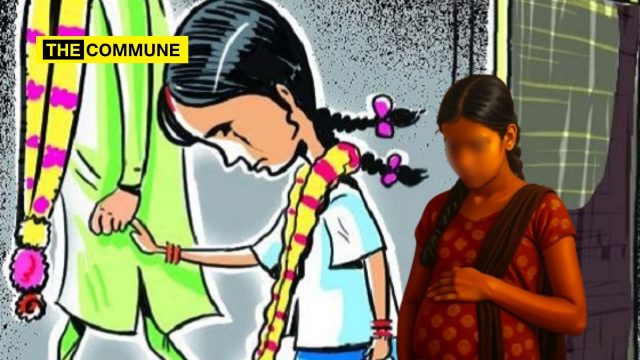
Trichy district was jolted on Monday (31 August 2026) evening when a 15-year-old Class X student delivered a baby boy on her government-aided school premises.
In an absolutely shocking incident, a 15 year old 10th class student delivered a baby boy inside govt aided school premises in Trichy. This raises too many uncomfortable questions. @imrajmohan @CMOTamilnadu
— Srivatsal Subramaniam (@SVatsal14825) September 1, 2026
Just a week earlier, a 17-year-old girl from the city was found to be eight months pregnant in a case of child marriage. These incidents have exposed the grim reality of underage pregnancies among girls below 18 in the district.
Data accessed by Times of India revealed that Trichy district recorded 811 cases of teenage pregnancy until August this year, of which 292 involved girls below the legal age of 18. This translates to an average of almost one girl below the age of 18 being identified as pregnant every day.
The trend has shown little improvement over the past year.
In 2025, the district recorded 1,264 teenage pregnancies, including 471 involving girls below 18.
Of the total teenage pregnancies in 2025, 793 involved girls aged 18 to 19, while 471 were under 18.
In 2026, until August, of the 811 total teenage pregnancies, 519 were in the 18-19 age group, and 292 were under 18.
In many cases, pregnancies are detected only at a later stage when the teenage girl reports to a hospital.
Serious Health Risks for Teenage Mothers and Infants
Studies, including those published in the Tamil Nadu Journal of Public Health and Medical Research (TNJPHMR), have highlighted the serious health risks associated with teenage pregnancies. According to a TNJPHMR study, complications during pregnancy and childbirth represent the leading cause of death among girls aged 15 to 19 years worldwide. The study pointed to higher risks of abortion-related complications, eclampsia, puerperal endometritis, systemic infections, and prematurity.
Infants born to teenage mothers are also more likely to have low birth weight, which can have long-term implications for their health and development. In the recent case of the 15-year-old girl, her baby weighed less than 1.25 kilograms and was currently undergoing treatment in the neonatal intensive care unit. Doctors indicated that a newborn would normally weigh 2.5 kilograms or more.
Medical experts noted that if a pregnancy is detected before 24 weeks, children and parents can be counselled and convinced to opt for a legal abortion.
Causes: Child Marriage, Relationships, Abuse, and Lack of Awareness
Several factors contribute to teenage pregnancies, with child marriage remaining a major driving force, sources said. The other contributing factors include relationships, sexual assault, community and social pressure to marry, sexual abuse, violence, lack of information about sexual and reproductive health and rights, lack of education, and school dropout.
A Child Welfare Committee (CWC) member observed that in many cases, child marriages happen with the consent or knowledge of the parents.
Case Narratives: Lack of Awareness and Curiosity
K Kanchana, programme manager at Thozhamai, recounted some of the cases she had handled. In one instance, a girl said she was in a relationship with a boy but was unaware that she could become pregnant. She realised she was pregnant only after seven months. By then, an abortion was no longer possible, so she married the same boy, who later passed away in an accident.
Kanchana also noted that there had been instances where girls living in very small houses witnessed their parents getting intimate and subsequently became curious about sex. She added that some girls had also been affected by loneliness.
Political Call to Raise Legal Marriage Age
This week, TVK Krishnarayapuram MLA M Sathya raised the issue of rampant child marriages in the assembly and called for the legal marriage age to be increased from 18 to 20 or 21.
Jayanthi Rani, former member of the Tamil Nadu State Commission for Protection of Child Rights and an advocate, explained that for state amendments to be brought in, the proper procedure had to be followed, as a bill already relating to this had been pending with the central government. She noted that it was also a central government Act, and though states were at liberty to bring changes, it should be through the proper procedure of obtaining the President’s assent.
Activists Flag Gaps in Screening and Counselling
Activists said that if schemes such as Rashtriya Bal Swasthya Karyakram (RBSK) and counselling sessions for students had been implemented effectively, the 15-year-old who gave birth on a school campus could have been identified and supported at an early stage. They also pointed to a lack of effective policy interventions to address the issue.
Activists called for high-incidence hotspots to be identified and dedicated officers appointed to monitor them. Child rights activist A Devaneyan said schools and other institutions needed something like a hostel monitoring system as part of the child protection policy that every institution should have.
Health department sources said RBSK officials were not mandated to specifically screen students for teenage pregnancy. A senior official stated that it was only when school authorities notified them that they could screen the student’s abdomen.
A school headmaster said there was a lack of meaningful counselling in schools.
Dr Jeyarani Kamaraj, gynaecologist and chairperson for the Federation of Gynecology and Obstetricians on violence against women and children, said policymakers needed to focus on four key areas: awareness, education, communication about a safe environment, and training healthcare providers.
Shocking numbers: 811 cases of teenage pregnancy so far, 292 of them under the legal age of 18.
Every day underage girl becomes pregnant. https://t.co/3kAyD90UgB pic.twitter.com/M9FLdZ2QBY
— Srivatsal Subramaniam (@SVatsal14825) September 3, 2026
Subscribe to our channels on WhatsApp, Telegram, Instagram and YouTube to get the best stories of the day delivered to you personally.