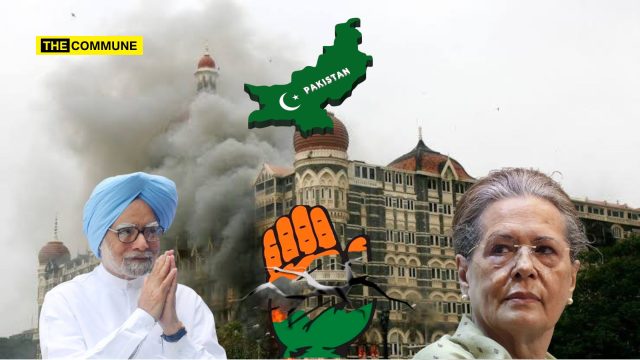
Just weeks after 10 Pakistani terrorists unleashed one of the deadliest terror attacks in India’s history, killing 166 people in Mumbai, the Congress-led UPA government made it clear that it did not want war with Pakistan.
On December 23, 2008, then Prime Minister Manmohan Singh addressed the media outside Parliament. His message to Pakistan was that India was not looking for war, but wanted Islamabad to dismantle its terror infrastructure.
“The issue is not war. The issue is terror and territory in Pakistan being used to promote, to aid and abet these terrorists. I think that is the issue. The issue is not war. Nobody wants war,” Singh said.
“The issue is not war, Nobody wants war”
This was the then India’s leadership speaking, it was not even a month after the 26/11 terror attack.
Aman ki Asha BS was peddled right from the top 👇🏻 https://t.co/Aujk7BoDEa
— Politics Pe Charcha (@politicscharcha) November 25, 2026
The statement came less than a month after the November 26–29 attacks, in which Pakistani terrorists belonging to Lashkar-e-Taiba carried out coordinated shootings and bombings across Mumbai, killing 166 people, including foreign nationals.
Instead of announcing any retaliatory military action, Singh called upon Pakistan to make an “objective effort” to dismantle what he described as its terror machinery.
“We want Pakistan to make an objective effort to dismantle the terror machine. The government of Pakistan knows what it implies,” he said.
He also appealed to the international community to use its influence to persuade Pakistan to comply with United Nations Security Council resolutions against terrorism.
“We would like the international community to use its power of persuasion to persuade Pakistan to comply with the UNSC resolutions,” Singh said.
Pakistan’s Interior Ministry chief Rehman Malik initially claimed that Islamabad had no records establishing Kasab’s nationality and promised a detailed response.
India subsequently handed over a dossier containing evidence linking the Mumbai attacks to Pakistan-based terror networks. The UPA government’s response continued to revolve around dossiers, diplomatic representations and international pressure on Islamabad.
The contrast was stark. Ten terrorists had entered Mumbai from Pakistan, held the city hostage for nearly three days and murdered 166 people. Yet, the Prime Minister’s public message was that nobody wanted war and that the international community should persuade Pakistan to act against terrorism.
The question that remains relevant is whether diplomatic appeals and international persuasion were an adequate response to an attack of this magnitude.
Manmohan Singh’s December 23 statement offers a clear record of how the Congress-led UPA government chose to respond to 26/11: no declared military retaliation, no threat of war, but repeated appeals to Pakistan and the international community to dismantle the terror machinery operating from Pakistani soil.
Subscribe to our channels on WhatsApp, Telegram, Instagram and YouTube to get the best stories of the day delivered to you personally.