
The Enforcement Directorate conducted searches on April 18 and 19 at multiple locations linked to an organisation named The Timothy Initiative (TTI), as part of an ongoing investigation into alleged financial irregularities and activities connected to religious conversions.
According to the agency, TTI withdrew ₹95 crore in a span of six months using foreign bank debit cards across several states. The transactions included ₹6.5 crore withdrawn in Naxal-affected regions of Jharkhand. The agency stated that these withdrawals were carried out by bypassing Foreign Contribution Regulation Act (FCRA) norms, while the organisation itself is not registered under FCRA.
Internal Material Outlines Structured Conversion Approach
Parallel to the financial investigation, research into TTI’s internal publications has revealed that the organisation has produced ten books used by its members. While nine books do not explicitly mention religion, the tenth is described as a training manual for “church planting leaders”, as reported in OpIndia.
The material lays out a structured framework on how to approach Hindu-majority areas, enter villages, and persuade individuals to convert to Christianity. The section on Hinduism is presented not as an academic overview, but as a practical guide for engagement and outreach, followed by instructions under “Apologetic Responses and Witnessing Suggestions”.
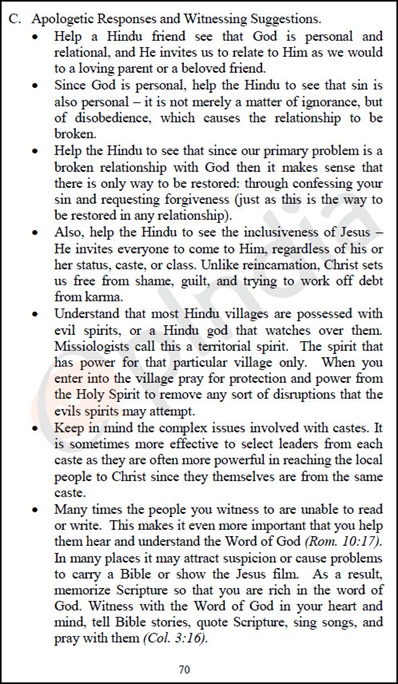
The text explains core Hindu concepts such as karma, reincarnation, and moksha, but immediately moves into guidance on how missionaries should respond to and counter these beliefs. It suggests presenting Jesus as an “avatar” to make the message more relatable to Hindus and framing key doctrines in ways intended to shift belief systems.
Instructions Describe Hindu Villages As “Spiritually Hostile”
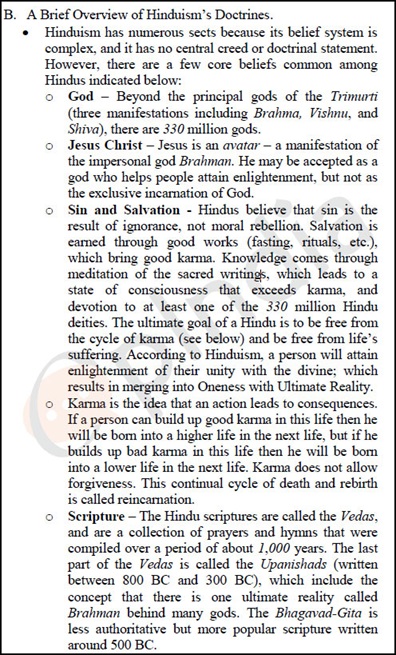
One of the sections in the material instructs missionaries to treat Hindu villages as spaces influenced by “evil spirits” or a “Hindu god that watches over them”. It describes these as “territorial spirits” and advises missionaries to pray for protection and power before entering such areas.
The text places “evil spirits” and “a Hindu god” in the same context and frames the village as a spiritually hostile environment that must be addressed before carrying out missionary work.
Strategy Advises Avoiding Suspicion During Entry
The manual acknowledges that missionary activity in Hindu-dominated areas can attract suspicion and resistance. It notes that carrying a Bible or showing religious films may lead to scrutiny or problems.
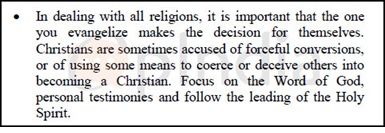
To address this, it advises missionaries to memorise scriptures and rely on oral communication rather than visible religious material. The instructions emphasise entering communities in ways that attract less attention and reduce the likelihood of opposition.
Emphasis On Gradual Engagement Through Soft Methods
Instead of direct preaching, the material encourages missionaries to use stories, songs, prayer, and personal interaction as tools of engagement. These methods are described as a way to gradually introduce religious ideas while maintaining a socially acceptable presence in the community.
The approach outlined focuses on building interpersonal connections and embedding messaging over time, especially in contexts where direct evangelism may face resistance.
A propaganda video of Timothy Initiative is making the rounds on social media. In the video, the converted Hindu is heard saying, “My parents and I wasted all our money visiting Hindu priests and witch doctors, hoping they could help, but nothing changed. Without a job, my family still suffered in poverty. I was discouraged and depressed. During this time, a friend visited me and told me about Jesus. I hated Christians, so I kicked him out of my house, telling him never to come back. Thankfully, he didn’t listen. He persisted until I agreed to go to church with him. That’s where I met TTI church planter Rovin, and my life changed forever. What Rovin shared from the Bible touched my heart. The miracles I heard about and witnessed at the church were unlike anything I had ever seen. Little did I know I would personally experience a miracle that very week.”
First, they mock Hindu symbols and deities as powerless. Then, they present their own deity as source of “miracles”
The propaganda video is by The Timothy Initiative – the same global evangelist organisation now under ED scanner for illegally bringing Rs 95 crore into India in… pic.twitter.com/wCH57iBLH7
— Rashtra Jyoti (@RashtraJyoti) April 30, 2026
Targeting Core Hindu Philosophical Beliefs
The training material also provides specific guidance on countering Hindu philosophical concepts. It describes karma as a system that does not allow forgiveness and instructs missionaries to contrast it with Christian ideas of grace and redemption.
Similarly, it states that Hindus view sin as ignorance and directs missionaries to argue that sin is instead a matter of disobedience and broken relationship with God. The text then positions Christian doctrine as the solution to these perceived gaps.
Organisation Background
TTI was established in 2007 by David Nelms, who had first visited India around 1992. The organisation has continued its activities over the years, with Jared Nelms, son of the founder, currently serving as its president and overseeing its operations, including church expansion initiatives in India.
The findings from the investigation and associated material have brought attention to both the financial operations of the organisation and the structured nature of its outreach activities in India.
Subscribe to our channels on WhatsApp, Telegram, Instagram and YouTube to get the best stories of the day delivered to you personally.