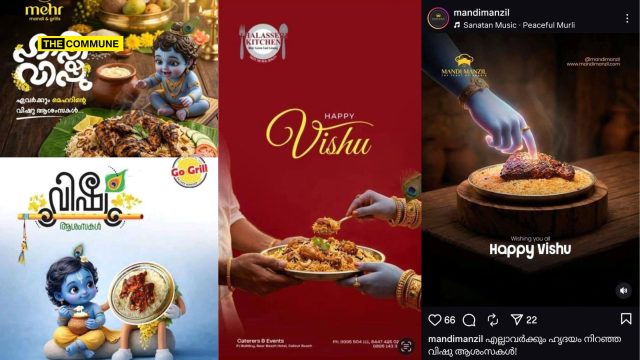
Vishu is one of the biggest festivals in Kerala, especially celebrated by Hindus. Lord Krishna is an integral part of the festival. However, owners of non-vegetarian food outlets which in and around Kozhikode, Alappuzha, Kottayam regions seem to want to rile up Hindu sentiments during the religious festival.
Advertisements for offers during Vishu have caused outrage in Kerala and beyond. A controversy that began with outrage over a Vishu advertisement in Cherthala, Alappuzha has now snowballed into a wider agitation across Kerala, with multiple restaurants coming under scrutiny for using imagery of Lord Krishna alongside non-vegetarian dishes in their festival promotions. What was initially seen as a single incident is now being seen as a larger picture – a broader and deliberate pattern to demean and insult Hindus and Hindu rituals and gods.
It started off with demeaning imagery used by Mehr Mandi & Grills in Alappuzha.
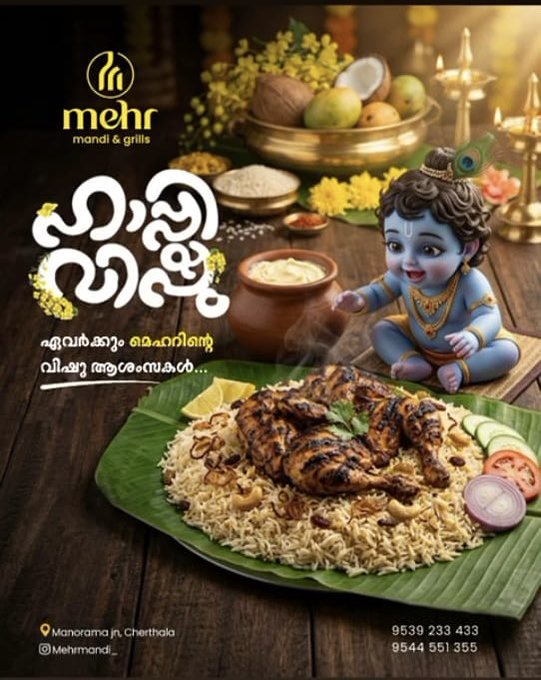
Slowly, posters of such promotions from various other restaurants also started surfacing. These include Go Grill Mandi Mahal Hotel in Erattupetta, Mandi Manzil Hotel Group with outlets in Thiruvananthapuram, Kollam and Alappuzha, and Thalassery Kitchen in Kozhikode.
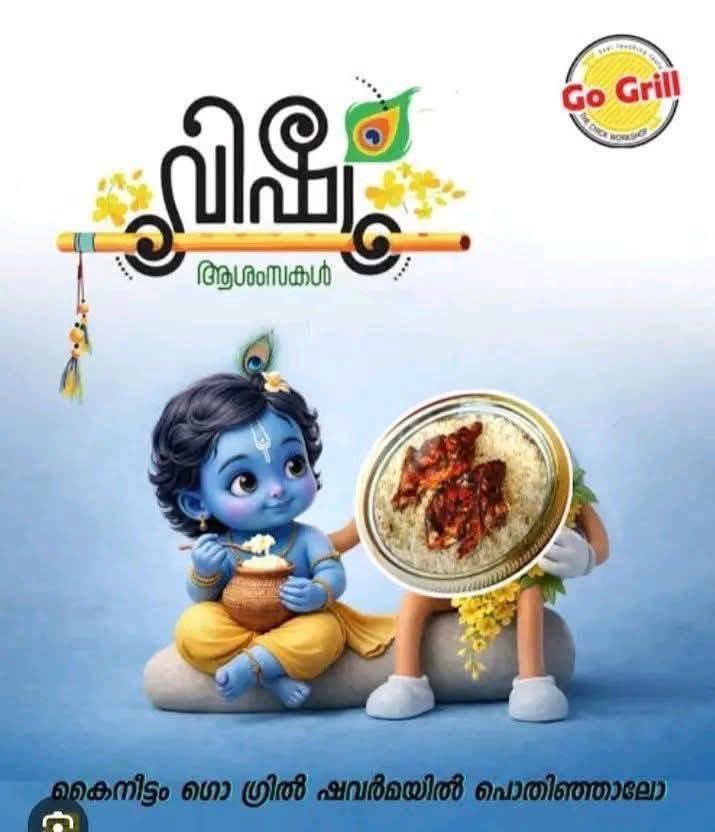
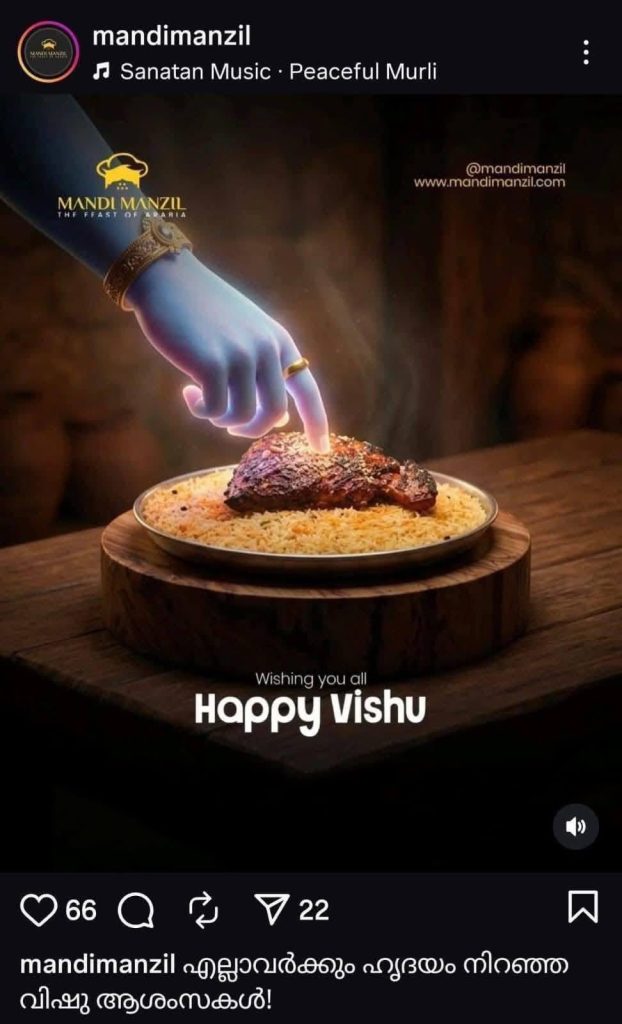
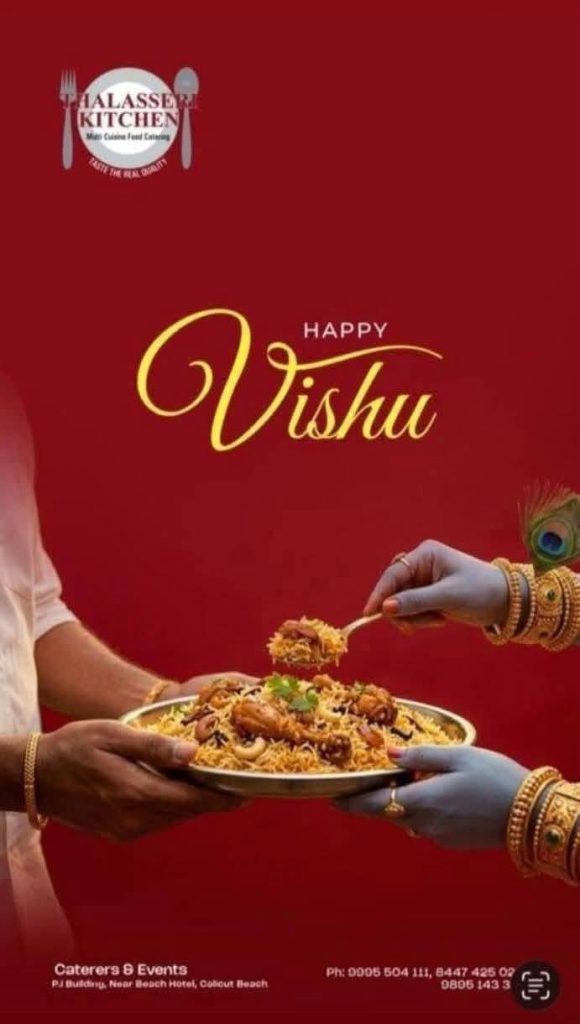
Across these businesses, Vishu-themed advertisements have drawn sharp reactions for placing a revered Hindu deity in close visual association with meat-based food items.
As the news spread further, even more posters emerged.
What about these restaurants… https://t.co/PRnNeQjCOq pic.twitter.com/Yw3DF8bjOR
— SOORAJ KV (@SOORAJKVhindu) April 17, 2026
All these promotional posters follow a strikingly similar visual template. In some instances, Lord Krishna is depicted directly in front of biryani platters, while in others, fried chicken is arranged around or above the deity’s image. Some designs seem to integrate Lord Krishna into elaborate food spreads dominated by non-vegetarian dishes, blurring the line between devotional symbolism and commercial marketing. The repetition of these elements across districts has led to suspicions that this is not a series of isolated creative choices but something more coordinated.
As reported in Organiser, during Ramadan, promotional campaigns from these businesses seemed to focus on themes of fasting, prayer, and community, without hurting religious sentiments or portraying them in contentious contexts. In contrast, their Vishu campaigns prominently feature Lord Krishna in proximity to meat dishes, something that demeans the spiritual tone traditionally linked to the festival.
Vishu, which marks the Malayalam New Year, is centred around the Vishukkani ritual and carries deep religious significance in Kerala households. The presence of Krishna in Vishu observances is not merely decorative but tied to longstanding devotional practices. Against this backdrop, the repeated use of such imagery in commercial advertising is a serious deviation from established norms.
The flashpoint of the controversy was the advertisement released by Mehr Mandi & Grills, owned by Mohammed Shameer along with other partners. The poster, which showed Krishna alongside a non-vegetarian dish as part of a Vishu greeting, quickly went viral and triggered protests. Hindu organisations, including the Vishwa Hindu Parishad, announced demonstrations outside the restaurant.
Following the backlash, Mehr Mandi & Grills apologised and reportedly removed the posters. They claimed that the controversial poster was never shared on any of their official platforms or social media pages, and that it was blocked immediately upon learning of the issue. They reportedly replaced it with a different Vishu greeting poster and apologized to those affected.
Do you really believe this is a“designer’s mistake”? “Poster was outsourced”?🚨🚨
Open your eyes… One poster is a mistake,Four posters is a strategy.
Same Lord Krishna,Same non veg plates,Same timing on Vishu.
This is not carelessness.
This is deliberate.🤷🏻♂️🤬They use your… pic.twitter.com/keUdBRiwS9
— MAHARATHI (@MahaRathii) April 17, 2026
Mandi Manzil seems to have deleted the imagery from their Instagram handle.
The remaining restaurants have not yet issued any apology; there seems to be no posts on their social media as well.
All this points to just one question – how did such a coordinated campaign come to be? Mehr Mandi & Grills blamed the outsourcing partner for such an idea – do all the restaurants outsource their marketing to the same company? Did no one in the restaurant management side take a look at the imagery before publishing? Are the restaurants so naïve that they trust their partners so much? Would the restaurants have kept quiet if such derogatory and demeaning imagery was used for their religious festivals?
Subscribe to our channels on WhatsApp, Telegram, Instagram and YouTube to get the best stories of the day delivered to you personally.