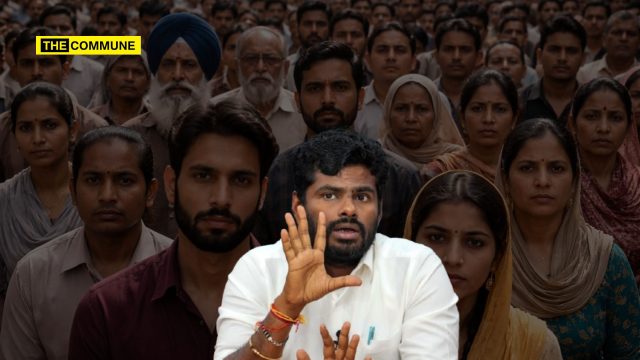
Former Tamil Nadu BJP chief K. Annamalai, who recently quit the BJP and launched his new political platform “We The Leaders,” has sparked controversy over a social media post in which he repeatedly linked a series of crimes in Tamil Nadu to individuals from northern states.
The post came in response to the tragic death of a three-year-old girl in Tiruvallur district following an alleged sexual assault and another case involving the sexual harassment of a ten-year-old girl in Kanchipuram district. While condemning the incidents and demanding stronger preventive measures from the Tamil Nadu government, Annamalai’s statement stood out for one reason: his repeated and deliberate emphasis on the accused being “North Indians.”
After mentioning the arrest of a northern-state migrant in the Tiruvallur case, Annamalai proceeded to list several other recent crimes, from chain-snatching and sexual harassment to rape cases, carefully highlighting the northern origin of the accused in each instance. He then argued that the increasing involvement of migrants from northern states in crimes across Tamil Nadu necessitated stricter monitoring and registration of migrant workers.
It is surprising that in the post he mentioned ‘North Indians’ seven times!
திருவள்ளூர் மாவட்டம் கும்மிடிப்பூண்டி அருகே, 3 வயது பெண் குழந்தை பாலியல் தாக்குதலுக்குள்ளாகி, சிகிச்சை பலனின்றி உயிரிழந்த செய்தி, மிகுந்த அதிர்ச்சியும், வருத்தமுமளிக்கிறது.
இந்தக் குற்றத்தில் தொடர்புடைய வடமாநிலத்தைச் சேர்ந்த ஒரு நபர் கைது செய்யப்பட்டிருக்கிறார். அதே போல,…
— K.Annamalai (@annamalai_k) June 15, 2026
The problem is not with the demand for better documentation of migrant labourers. Maintaining records of migrant workers is a legitimate administrative and policing issue. The concern lies in the manner in which Annamalai framed the discussion by repeatedly foregrounding the identity of the accused as “North Indians” rather than focusing on criminality itself.
For years, Annamalai positioned himself as one of the strongest critics of Dravidian parties and Tamil nationalist groups whenever they raised concerns about migration from northern states. As BJP state president, he frequently accused such groups of engaging in divisive politics, fostering hostility towards fellow Indians, and undermining the principle that every Indian citizen has the right to live and work anywhere in the country.
Yet his latest statement appears to mirror many of the same arguments traditionally associated with Dravidian and regionalist politics.
The political irony is difficult to ignore. The very leader who once condemned attempts to portray migrant workers as a social problem is now publicly compiling lists of crimes and emphasising the geographical origins of the accused. This is a textbook example of identity-based framing – one that risks creating the impression that migrants from a particular region are uniquely responsible for law-and-order issues.
Such an approach becomes even more problematic when viewed in the broader context of crime statistics. Every major state in India records crimes committed by both locals and migrants. Criminal behaviour is not confined to any linguistic, regional or ethnic group. By selectively spotlighting the origin of accused persons only when they happen to be from northern states, critics argue that Annamalai is encouraging a narrative that associates migration with criminality.
This is precisely the type of rhetoric that BJP leaders have historically accused Dravidian parties of promoting.
The shift has naturally led to speculation about whether Annamalai is attempting to reposition himself politically after leaving the BJP. Without the constraints of representing a national party, some observers believe he may be seeking to tap into anxieties surrounding migration, employment and public safety – issues that have long been politically potent in Tamil Nadu.
If that is indeed the strategy, it would represent a significant departure from the politics Annamalai championed during his BJP years. Instead of arguing for national integration and resisting regional fault lines, he would effectively be borrowing from a Dravidian political template that identifies an “outsider” population as a source of local problems.
Subscribe to our channels on WhatsApp, Telegram, Instagram and YouTube to get the best stories of the day delivered to you personally.