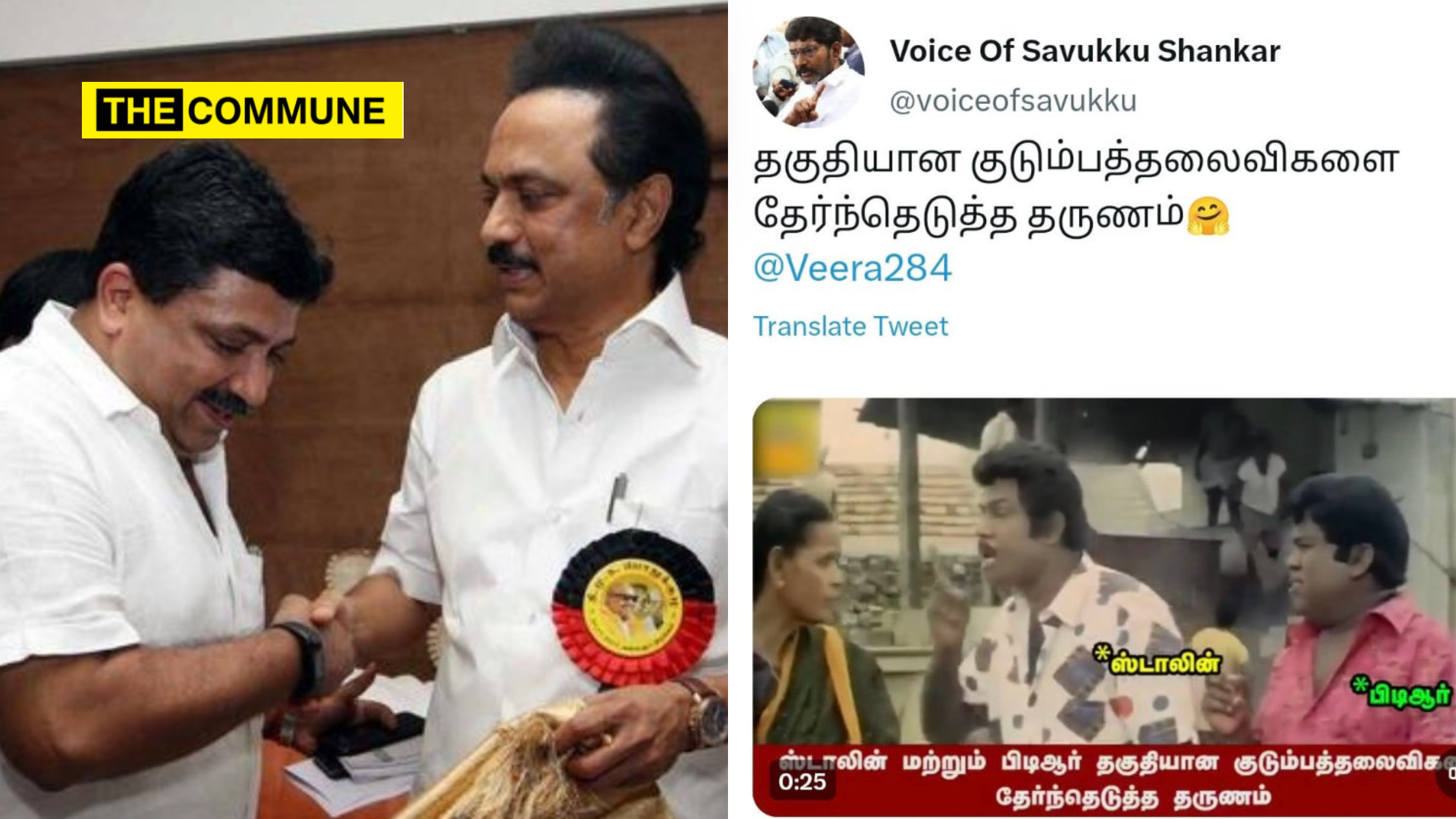
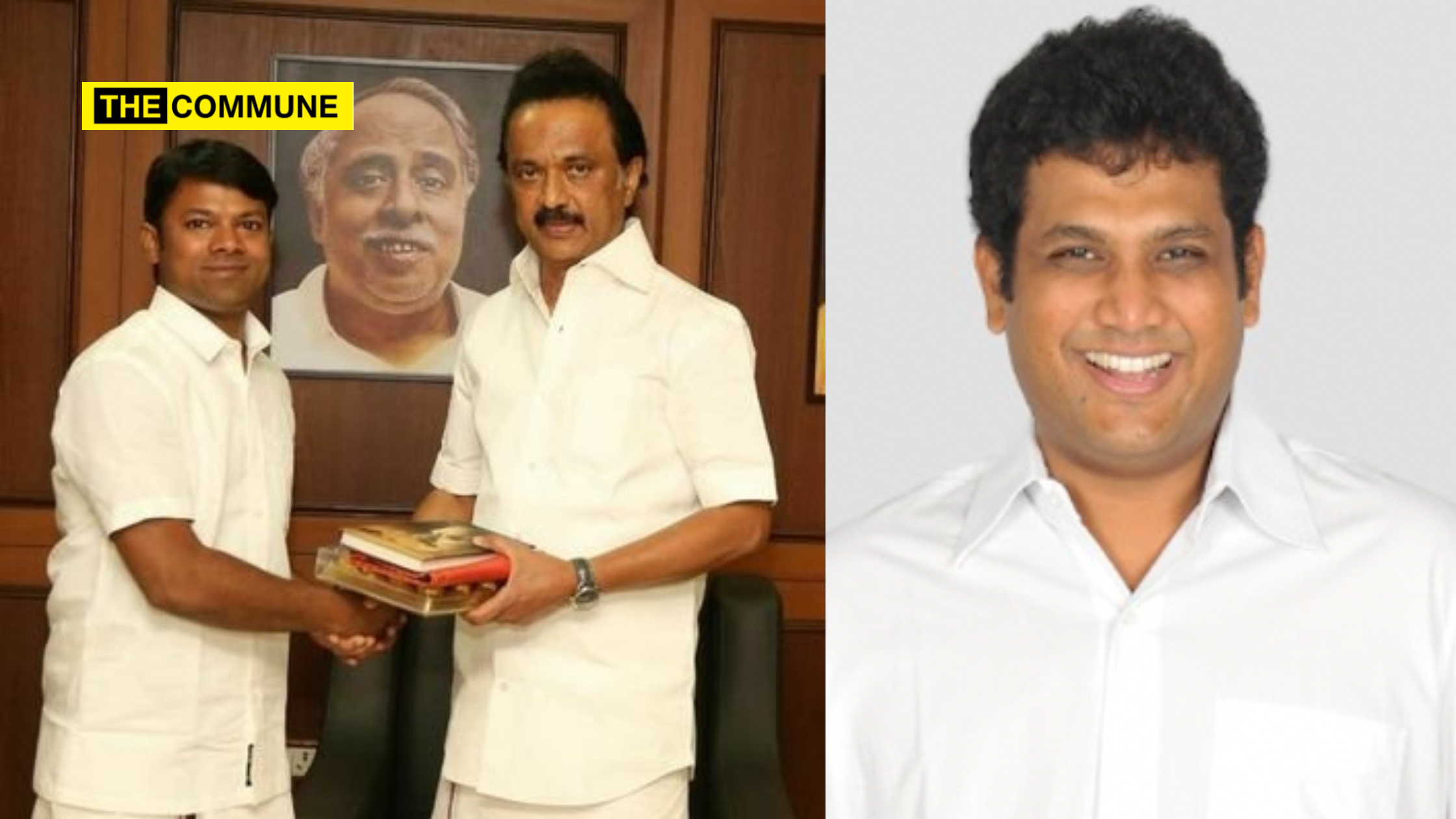
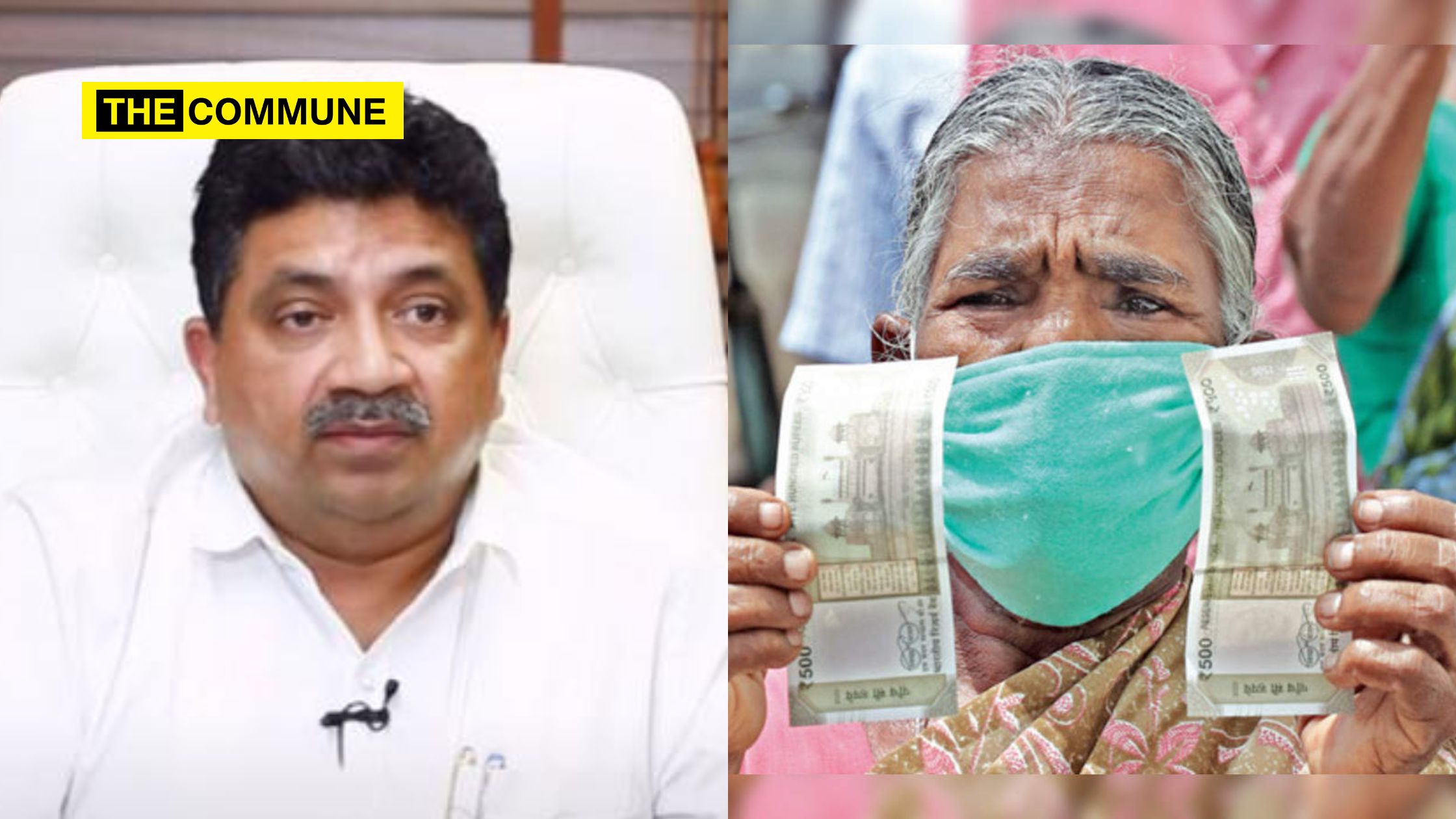
In what appears to be a blatant abuse of power by the ruling DMK government, Tamil Nadu Police arrested one of the admins of Voice of Savukku for a meme targeting Chief Minister MK Stalin, TN Finance Minister PTR Palanivel Thiyagarajan, and the recently announced monthly assistance scheme for women.
The DMK government’s announcement of a ₹7000 crore allocation in the budget 2023-24 for the Monthly Assistance Scheme For Women has sparked outrage from all sides, as the money will not be enough to fulfill the DMK government’s election promise of providing assistance to all 2.2 crore ration cards.
The DMK government in Tamil Nadu said that it will roll out the scheme of providing ‘rightful money’ of ₹1,000 per month to women heads of “eligible households” from 15 September 2023, on the occasion of the birth anniversary of Dravidian stalwart and DMK founder CN Annadurai.
However, the phrase “eligible household” has drawn criticism from a few quarters because the DMK during the election campaign had promised to give “rightful money” to every woman head of the family rather than the eligible household.
Following the DMK government’s announcement that the scheme would be limited to selected female heads of families, memes, and trolls began to flood social media. In one such meme, the Voice of Savukku handle posted a video of Kavundamani and Senthil’s comedy in which Kavundamani picks ladies for factory work. The meme depicted TN CM MK Stalin as actor Kavundamani and FM PTR Palanivel Thiyagarajan as actor Senthil, attempting to poke fun at the DMK government’s selection criteria for the monthly assistance scheme.
This meme of Voice of Savukku irked DMK cadres. Complaints were filed in several police stations by DMK cadres against the Voice of Savukku Twitter handle. Following the complaint, one of the admins of Voice of Savukku, Pradeep was arrested on March 21st late at night. Pradheep has been arrested in Cr No 52/2023 under sections 153, 505 (1) (b), and 509 IT Act for his video meme.
Several Twitter users, including ADMK leaders, shared the same videos for which a case was filed, trending with the hashtag #ArrestMeToo_Stalin.
Sources : Pradheep one of the admins of @voiceofsavukku has been arrested in Cr No 52/2023 under sections 153, 505 (1) (b) and 509 IT Act for this video meme. pic.twitter.com/dT7LcsLorF
Savukku Shankar quoted his sources as saying that the TN Finance Minister PTR Thiagarajan whose lackluster budget is inviting criticism from all quarters was the one who mounted pressure to arrest Pradheep. He further said that Chennai City Commissioner Shankar Jiwal with an eye on the Head of Police Force (HoPF) post, acts like a slave of the DMK government and not as an All India Service Officer. He added that Shajitha Addl SP Cyber Crime CCB made this arrest despite a Supreme Court ruling that arrests should not be made in cases involving sentences of less than seven years.
Reacting to Savukku Shankar’s accusations, TN Finance Minister PTR Palanivel Thiyagarajan said,” I’ve ignored the paranoia of this fantasist, but this is 100% lunacy so I will react. I had no idea this handle (Voice of Savukku) existed, so have not seen the video, nor complained. When “criticism” of the State Budget by a suspended DVAC clerk starts to bother me…I’ll quit public life”
I've ignored the paranoia of this fantasist, but this is 100% lunacy so I will react:
a) I had no idea this handle existed, so have not seen the video, nor complained
b) When "criticism" of the State Budget by a suspended DVAC clerk start to bother me…I'll quit public life pic.twitter.com/15rpVjeSdK
Criticizing the arrest of Voice of Savukku admin by the DMK government for a meme, Tamil Nadu BJP President Annamalai said,” Democracy turns into autocracy when powers are concentrated within one family & become a state of dictatorship in no time. The @arivalayam govt is rattled by even the slightest criticism and has demonstrated its dictatorial behavior by arresting someone for a social media post.” He also stated that if posting a troll video warrants arrest, the entire DMK IT wing should be imprisoned because it is their full-time job.
Democracy turns into autocracy when powers are concentrated within one family & becomes a state of dictatorship in no time.
The @arivalayam govt is rattled by the slightest criticism & has displayed its dictatorial behaviour by arresting a person for a social media post. (1/3)
This is not the first time the DMK government has gone after its critics. In December 2022, Tamil Nadu Police arrested an AMMK functionary for a meme targeting Chief Minister’s son Udhayanidhi Stalin’s Sports Ministry. Just recently, the Tamil Nadu police went all the way to Gujarat to arrest a BJP cadre who had made satirical social media posts on Chief Minister MK Stalin and his father late Karunanidhi.
Immediately after the DMK came to power, political commentator Kishore K Swamy was arrested on June 14, 2021, for allegedly ‘defaming’ DMK leaders MK Stalin, Karunanidhi and Annadurai. The arrest was made based on a complaint by a Kanchipuram DMK functionary. In another similar case, Kalyanaraman of BJP Tamil Nadu was arrested for allegedly derogating Tamil Nadu Chief Minister MK Stalin and his late father Karunanidhi.
Dakshinamurthy alias Seethaiyin Mainthan, a YouTuber and a Tamil nationalist ideologue was arrested on October 15, 2021 for releasing a documentary that exposed the lesser known and hidden facts about E.V. Ramasamy Naicker also known as ‘Periyar’ by his followers.
An FIR was filed against Tamil magazine Vikatan, YouTuber Maridhas and political commentator ‘Savukku’ Shankar for speaking against G Square Realtors, a real estate company reportedly close to the DMK family.
Click here to subscribe to The Commune on Telegram and get the best stories of the day delivered to you personally.
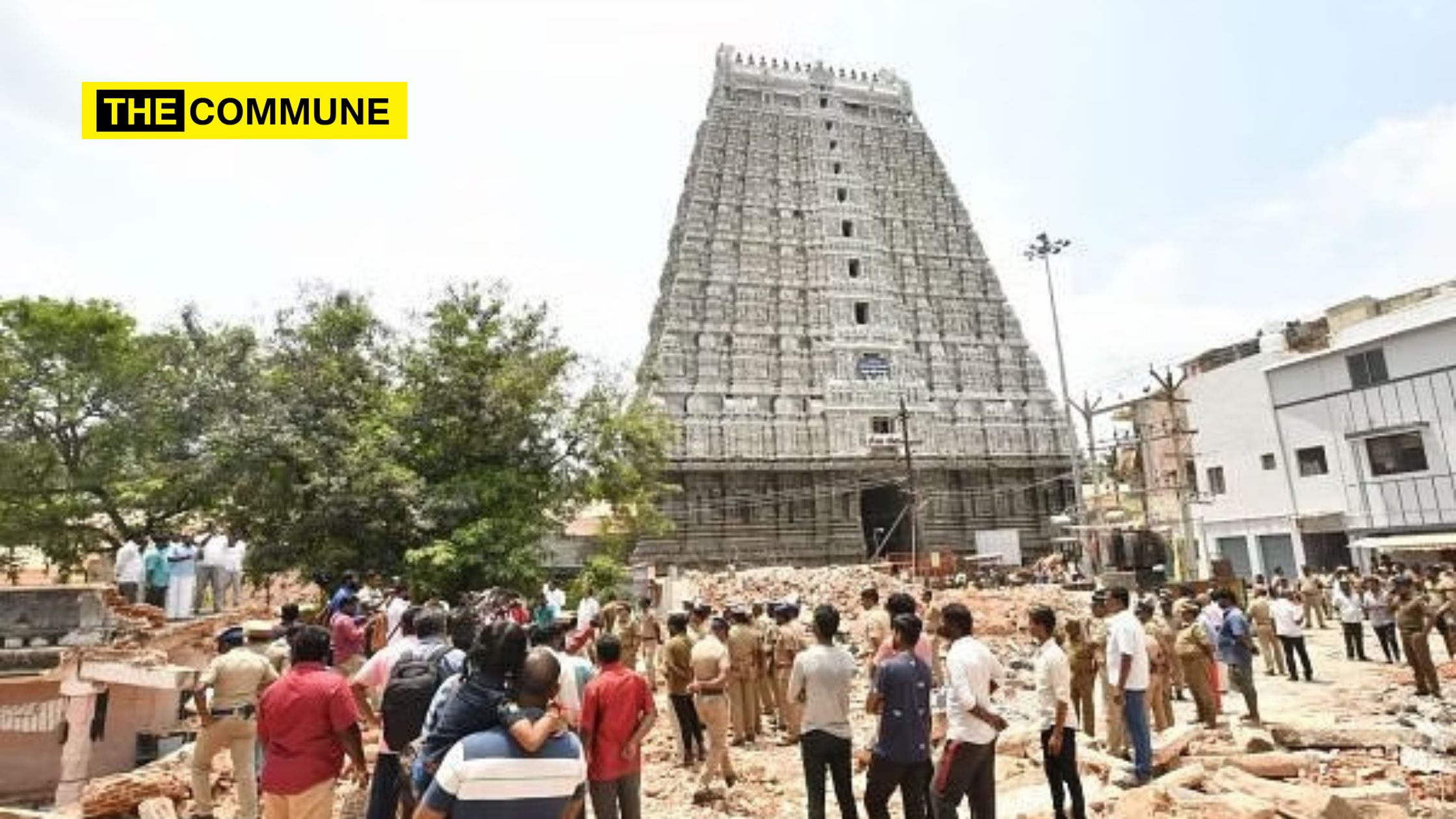
The 400-year-old Ammani Ammal Mutt was reportedly razed down and destroyed by the Tamil Nadu HR&CE department in Tiruvannamalai on 18th March 2023 while clearing encroachments on Mutt-owned land. This has caused a lot of shock and distress to the devotees and followers of Ammani Ammal in and around Tiruvannamalai.
Ammani Ammal belonging to the Chennasamudram area of Chengam near Tiruvannamalai built a Mutt in the 17th century near the Arunachaleshwarar Temple. She had been instrumental in building the North Gopuram (Tower) of the Arunachaleshwara temple and the North Gopuram is also known as Ammani Amman gopuram. She attained Jeeva Samadhi at the end of the 17th century and since then the Mutt has been taken care of by her disciples and other devotees.
However, over the past 30 years, since there was difficulty in finding people to help maintain the temple/Mutt, some people illegally encroached and occupied it.
To resolve this, in 1976, Hindu organizations and social activists approached the courts who ordered that the temple be handed over to the HR&CE department along with Arunachaleshwara temple management will take care of the temple and Mutt.
It was noted that Sankar, Vice President of BJP Tamil Nadu’s Spirituality & Temple Development Division allegedly encroached on the 3800 sqft area of the temple and built a house and a car shed.
To have this removed, the temple administration filed a case in court and three days ago, the court ordered that the encroachment must be removed and the Mutt must be protected. While demolishing the car shed and house, the Mutt building was also reportedly destroyed.
Hindu Munnani leaders, Ammani Amman Mutt devotees came to know of this only when 70% of the Mutt was demolished.
When asked of the temple administration as to why this happened, they said that the Mutt was demolished because it was damaged. Hindu Munnani leaders unconvinced by this reply sat on a Dharna on the half-demolished Mutt on the 19th of March 2023 morning. They raised slogans condemning the HR&CE department for destroying the 400-year-old Mutt which was in good condition and for violating the court order. The Tiruvannamalai Town Police managed to pacify them and later sent them away.
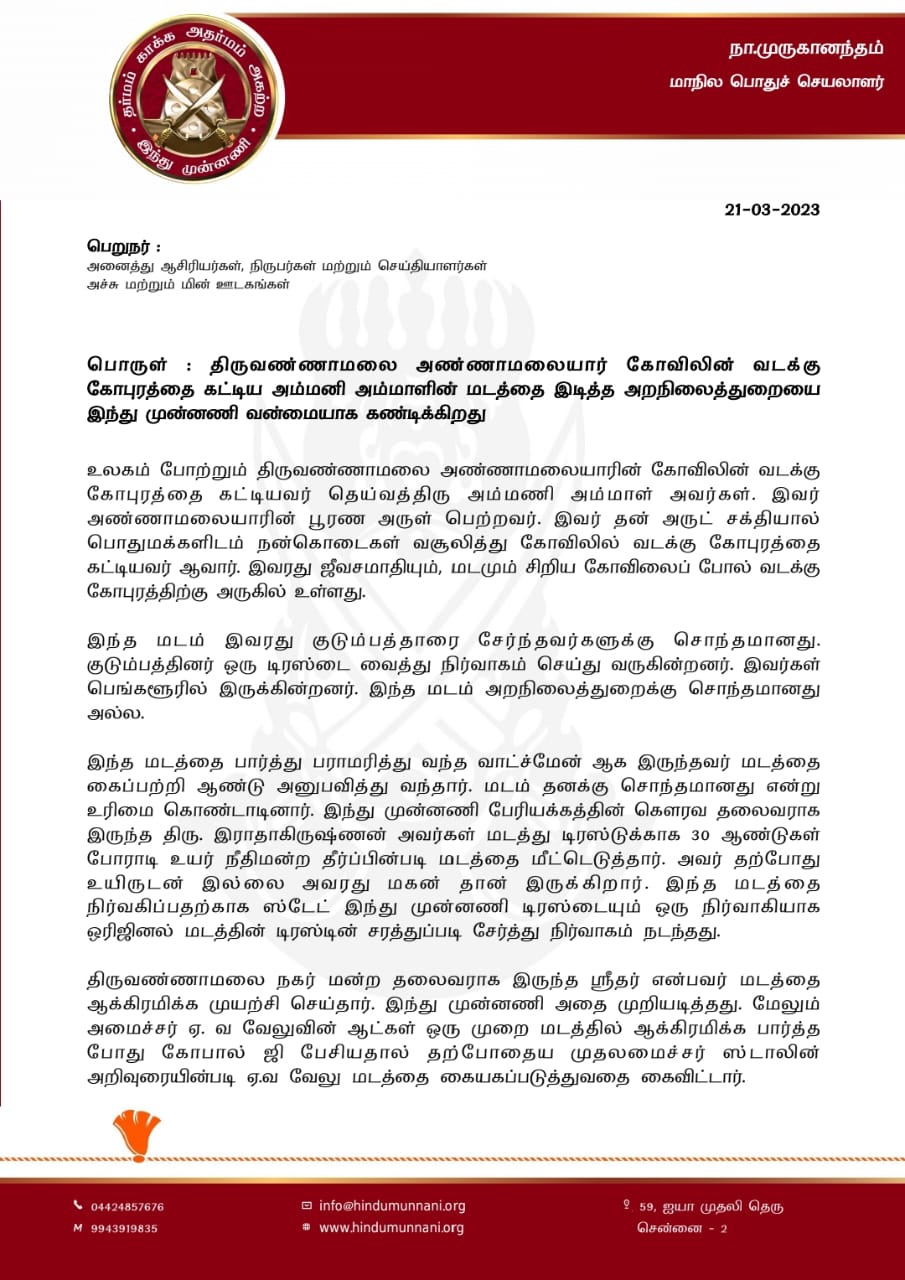
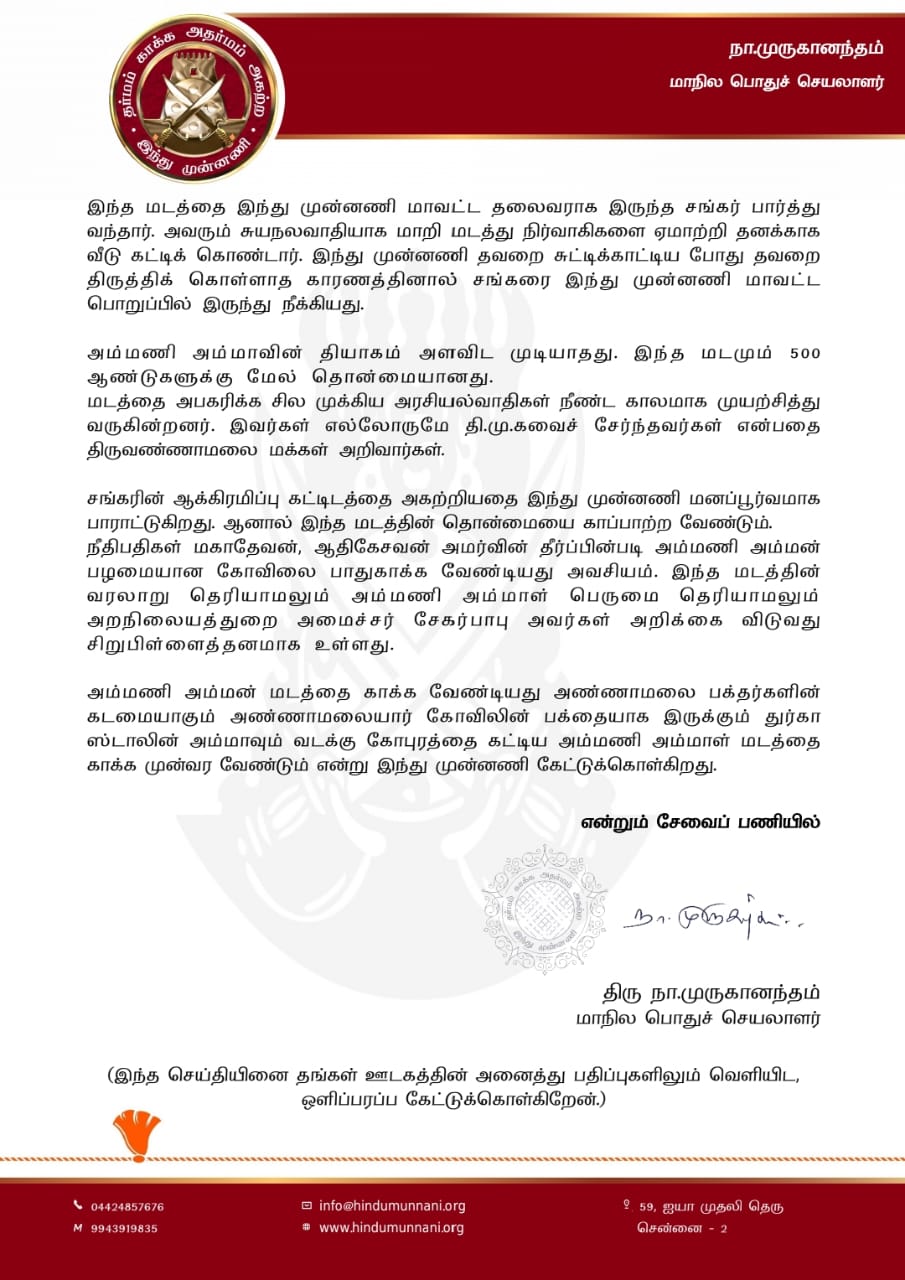
Later, Hindu Munnani shared a press release stating that “The management of this mutt was carried out under the terms of the trust of the original Mutt with the addition of the State Hindu Paramana Trust as an administrator. Sridhar, who was the head of the Tiruvannamalai Nagar Council, tried to occupy the Mutt. Hindu Munnani prevented this move. State Minister for Public Works, EV Velu’s men once tried to encroach on the Mutt, but after the intervention of Shri Rama Gopal of Hindu Munnani, he gave up on taking over the Mutt as advised by present Chief Minister Stalin.”
While Hindu Munnani stated that they welcomed the move to remove the encroachment, it condemned the razing down of the ancient Mutt.
They also called upon Durga Stalin, wife of Tamil Nadu Chief Minister, who is a devotee of Arunachaleswarar, the presiding deity of Tiruvannamalai temple, to come forward to protect the Ammani Ammal Mutt.
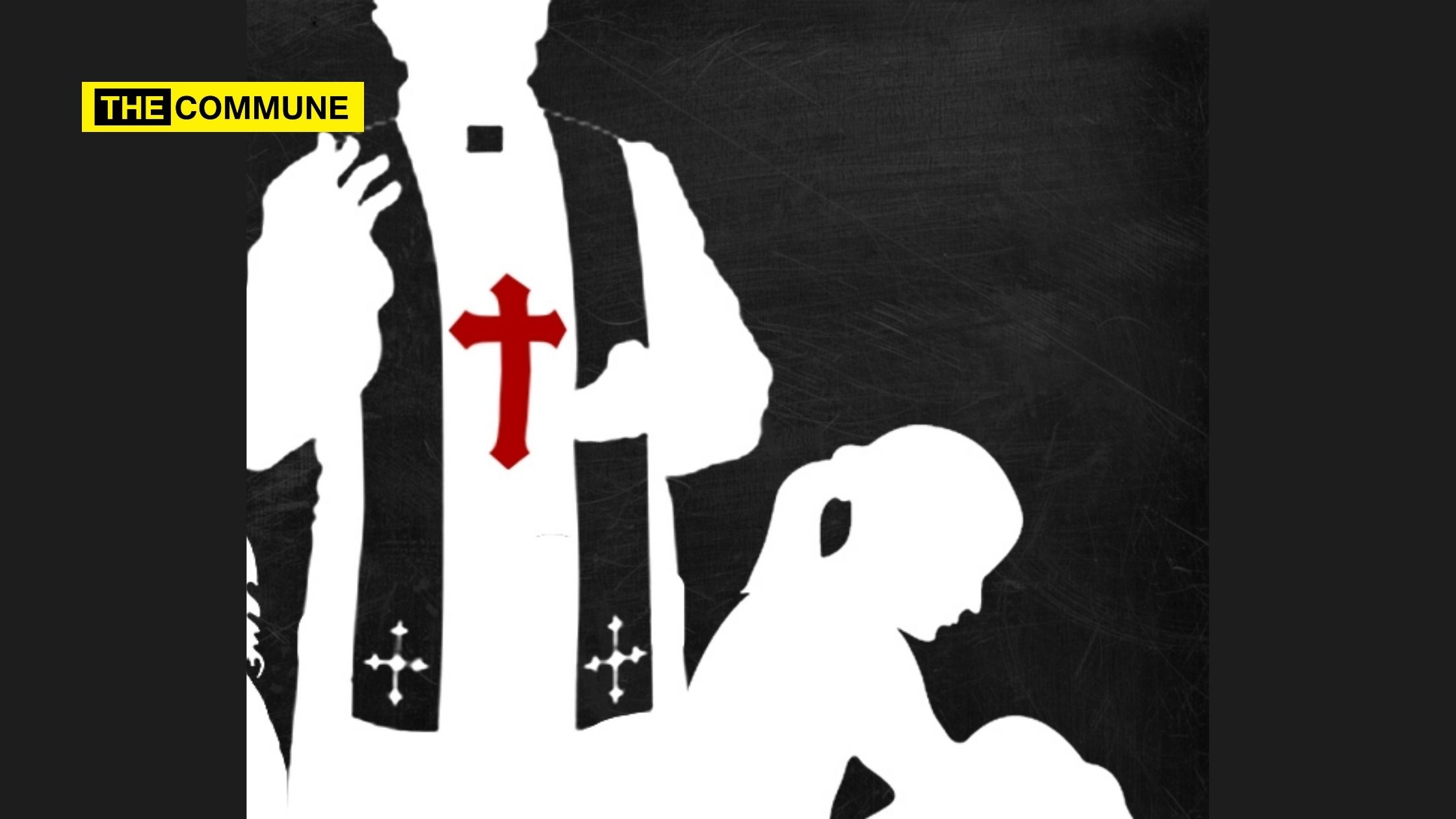
With controversy surrounding Father Benedict Anto, who sexually abused and filmed numerous Christian women who attend church, yet to subside, the news that another church pastor in the Tenkasi district has been accused of abusing women who attend the church has shocked many.
Stanley Kumar, a preacher at a church in Magizhvannanaathapuram near Alankulam in Tenkasi district, has been arrested by police for sexually abusing women. The members of the congregation have filed a complaint with the District Superintendent of Police saying that he misbehaved with women who attend the church. Based on the complaint, pastor Stanley Kumar has been arrested by the Tenkasi Police. It is worth noting that he also belongs to Kanyakumari.
In another such incident, the news of a 50-year-old man claiming to be an advocate and church employee raped a Class XI student several times in the guise of assisting her financially surfaced a few days ago.
Lawrence, 50, of Madurai’s Koodal Nagar, claiming to be a lawyer and working in the church, assured monetary support to a family in financial distress of a Class XI student from Ponmeni, Madurai.
Lawrence has taken advantage of their poverty by visiting their home on several occasions, claiming to be assisting them with his prayer. Later, he developed a relationship with the student and took photos and videos with her. He repeatedly threatened and sexually harassed her by showing those videos.
According to reports, the girl’s father is a construction site worker, and her two elder sisters are both over the age of 18. The incident was discovered after the 16-year-old girl’s mother observed her upset behavior. Her parents filed a complaint with All South Women Inspector Vimala on March 15. The police registered a case against Lawrence under the POCSO Act. The advocate has now been absconding. The police have launched a search operation to nab him.
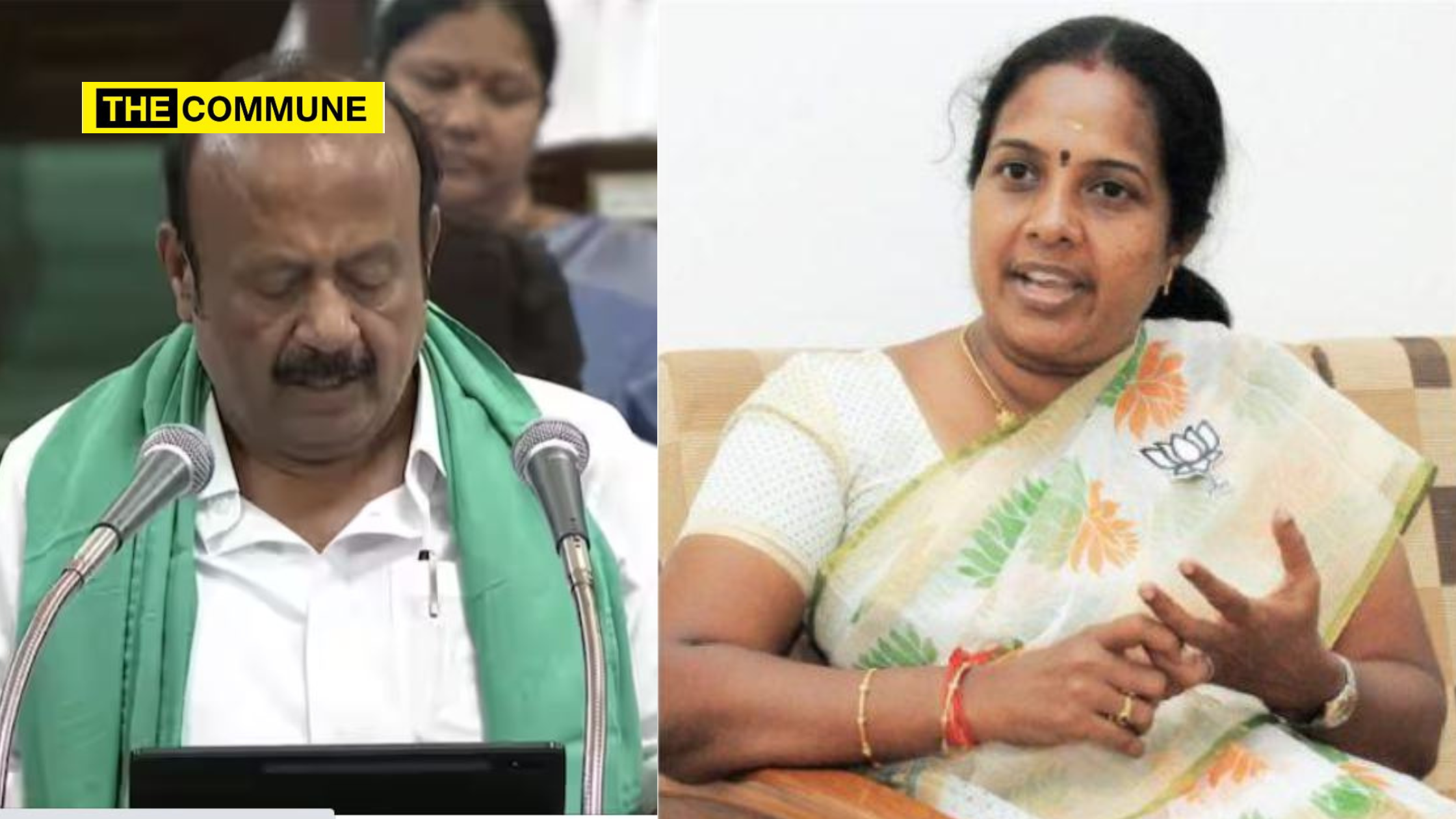
Vanathi Srinivasan, BJP MLA and the National President of the BJP Women’s Wing, criticized the agricultural budget for failing to address the fundamental issues facing farmers. She expressed disappointment that no announcements were made in the budget regarding providing coconut oil instead of palm oil, which would benefit coconut farmers.
In a press release, MLA Vanathi Srinivasan said, “As usual, the Tamil Nadu government’s agriculture budget is full of rhetoric. During the discussion on demands for grants, the Minister of Agriculture read out the policy briefs, announcements, and budgets that had been tabled in the Legislative Assembly. Apart from wearing a green towel to deliver the Budget speech and presenting the Chief Minister with grains rather than a bouquet, there was nothing new in the Budget.”
She added, “Because of Prime Minister Narendra Modi’s efforts, this year has been designated as the World Year of Small Grains. In this regard, announcements in the budget such as the establishment of a small grains organization for ₹82 crores and the provision of small grains in ration shops are welcome steps. These should be fully implemented rather than mere declarations.”
MLA further said, “The real issues facing farmers are not addressed in the budget. The cultivated area and production have increased, according to the budget. However, in reality, even for our necessities like rice, pulses, oilseeds, large onions, and vegetables, we have to depend on other states. Farmers’ problems will end only if the income of the farmers increases. To achieve that, the government should provide a fair price for the farmers’ produce. As the production of food grains increases, the government should formulate schemes to store them and convert them into value-added products. However, there are no specific schemes in this budget to address the issue.”
The press release reads, “Replacing palm oil with coconut oil in ration shops will end the misery of lakhs of coconut farmers. Chief Minister M.K. Stalin made this request when he was the opposition leader. I repeatedly argued in the Legislative Assembly and elsewhere that coconut oil should be provided in the ration shops in place of palm oil. However, the government did not heed my request. Also, small grains that have been promised for distribution in ration shops should be purchased from Tamil Nadu’s farmers.”
MLA went on to say, “All the agricultural lands in Tamil Nadu are being converted into residential plots and buildings due to urbanization. Water bodies are also being encroached upon. If this is not stopped, in the future we will have to depend on other states for all food products. The DMK does not seem to have realized this danger. Half of the farmers’ problems will be resolved, if farmers’ requests for the government to increase the procurement price for sugarcane and paddy to ₹5,000 per tonne for sugarcane and ₹3,000 per quintal of paddy are granted. However, there has only been a small increase in the procurement price.”
MLA Vanathi Srinivasan concluded by saying, “Furthermore, the government does not purchase all of the farmers’ produce, citing the moisture content in food grains. However, there is no solution to this problem in the budget. On the whole, the budget has been prepared with the intention of deceiving the farmers through rhetoric and empty announcements.”
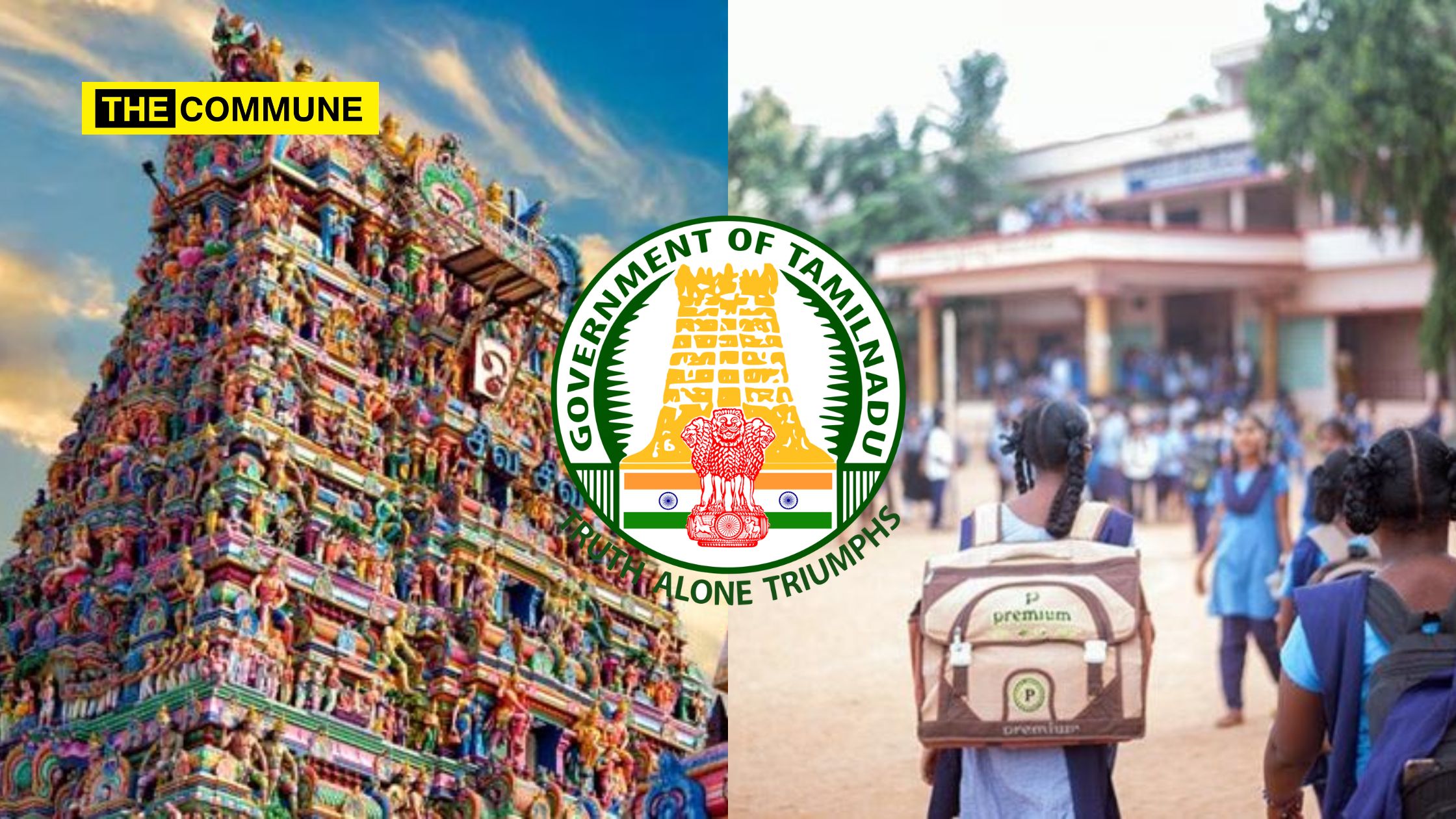
The Tamil Nadu government has decided to bring all schools functioning under various departments such as Adi Dravidar and Tribal Welfare; BC, MBC & Minorities Welfare Department; HR&CE Department;, and the Forest Department under the purview of the School Education Department.
Finance Minister Palanivel Thiagarajan announced this during his budget speech presented in the Assembly on Monday.
The move he said, is aimed at achieving “social justice in the field of education” and improving the quality of schools functioning under various departments.
The decision to bring Adi Dravidar Welfare Schools under the School Education Department was made following requests to the government to operate and maintain these schools through the department. The government has also allocated a significant amount of funds towards the modernization and upgrade of the physical infrastructure of government schools under the Perasiriyar Anbazhagan School Development Scheme. In the upcoming financial year, the government will construct classrooms, laboratories, and toilets at a cost of ₹1,500 crores.
It is to be noted that while schools of Adi Dravidar Welfare and other departments are funded through budgetary allocations of the government, schools which the DMK government claims to be “run by HR&CE department” are actually schools run by Hindu Temples with temple funds in temple properties. It is feared that these schools will be taken over by the HR&CE department.
With the announcement made by Palanivel Thiagarajan, temple activists also fear that temple funds will be diverted for secular purposes.
Schools run by Hindu Temples with temple funds in temple properties declared as run by @tnhrcedept in the Tamil Nadu Budget. #FRAUD Presence of Executive Officers in temples without legal orders, diversion of temple funds for govt purposes, govt servants as Tustees, all #Fraudspic.twitter.com/m2AUlDpn5Q
Last week, there was a report on funds missing from Samayapuram Mariamman Temple. The presence of Executive Officers in temples without legal orders, diversion of temple funds for government purposes, and government servants as trustees are among the fraudulent activities noted.
This move by the DMK government to bring “schools of HR&CE department” under the School Education Department in the name of allocating funds for “better” infrastructure and “social justice” has raised concerns.
Click here to subscribe to The Commune on Telegram and get the best stories of the day delivered to you personally.
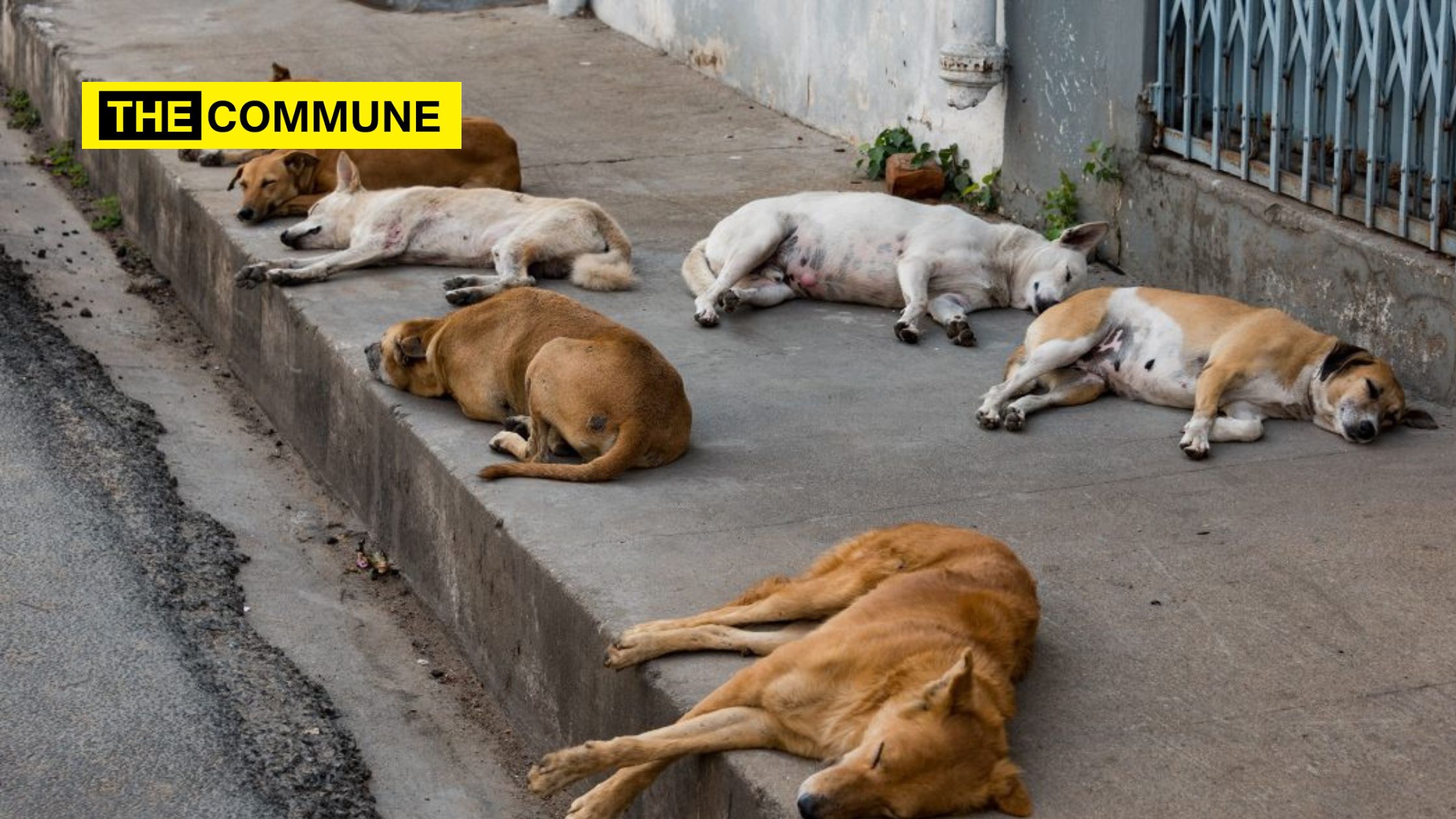
If you are a parent who is worried for the safety of your children after reading about recent dog bite articles forwarded to you in residential WhatsApp groups, and you are thinking of elimination of dogs all together in your area, then this article is for you.
Animals go through worse abuse than humans. Which means both parties are affected in this conflict & this is an important point that seems to be lost in news reporting.
Multiple research studies for decades have highlighted 4 important points to the people across the world. Yet, media never tells you this:
ONE – Dogs & Cats play a very important role in keeping rodent population in control in your area. If you eliminate all the dogs in your area, then rodent infestation can cause more life threatening & contagious diseases than a dog bite or a cat poop can cause. Your local municipal body can only kill so much rats.
TWO – People who have irrational hate or anger towards animals & recommend killing them too often are exposing psychopathic symptoms. Humans who are psychopathic in nature always attack animals first. If dogs & cats are out of the scene, then your children & women are next in line for attacks. This is not a generic statement.
THREE – No dogs in any area, would mean easy access to anti-social elements and thieves to commit crimes without any alarm or interruptions. Your CCTV & security guard can only save you so much.
FOUR – DOGS are natural inhabitants of the earth. They are territorial by nature. If you eliminate one pack of dogs, then a new pack of dogs will take that space & that is nature.
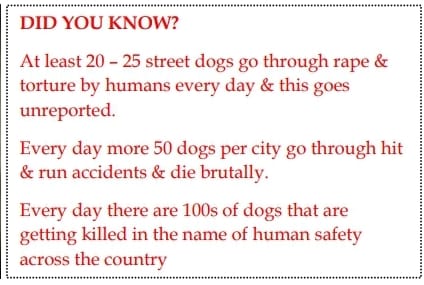
DID YOU KNOW?
At least 20 – 25 street dogs go through rape & torture by humans every day & this goes unreported.
Every day more than 50 dogs per city go through hit & run accidents & die brutally.
Every day there are 100s of dogs that are getting killed in the name of human safety across the country
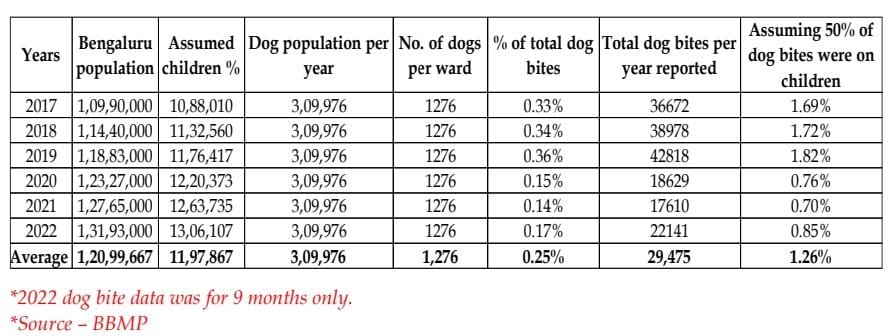
Are dog bites really that high? Let’s take a quick look on the stats here:
Summary of data:
For a population of 1.3 crores people, the dog population is at 2.6%. Even if the dog population is assumed as 5 lacs in 2023 as an exaggeration, then also the population is 3%. As per ABC law if the dog population is controlled aggressively, then the % can come to 1.5% for Bengaluru. Now this is the lowest & still would be the healthiest number. In fact, this 3% if vaccinated & sterilized can still be a decent number to maintain the balance in the
eco-system.
In total the dog bites have not been more than 0.5%. Which in reality is negligible & expected in cities which are densely populated.
Food for thought for citizens:
There is no denial about your worry for safety, but why only elimination is on your mind? Have you wondered, why your residential welfare associations & apartment associations are suggesting culling or relocating of dogs and not a session to understand dogs and co-exist with them?
How are you so sure that this kind of mob mentality will not hurt humans tomorrow? What if you have to deal with hostile/noisy neighbours in your own house and you don’t have a say due to same majority mandate?
Dogs are protected species in our country & Supreme court orders as well as the latest animal laws clearly says killing, maiming, starving, chasing, beating or relocating dogs as well as cats is a punishable offence.
In case a whole crowd is suggesting or planning any of the above then irrespective of them hiring the best lawyer in the country, the whole crowd can be booked for criminal conspiracy to break the law. Needless to say, Karma is also keeping a watch along with nature. No matter what humans do, nature has from time to time restored the balance itself.
ARE YOU REALLY SURE, BREAKING THE LAW IS WORTH IT? THINK ABOUT IT.
Well, even now RWAs / AOAs have opportunity to mend their approach in dealing with dog-human conflict.
a. Reach out to the feeder in your street, talk to them and understand the nature of dogs & triggers for them in your street.
b. Start feeding in assigned spots by partnering with the feeder.
c. Allow your children to interact with street dogs under parental supervision & with oversight from the feeder.
d. Participate in vaccination & sterilization of dogs in your area. Thoughtful feeding, kind residents who don’t walk around with sticks or shoo them away, friendly kids – can actually make the dogs in your street a bundle of joy than a nuisance.
This article was originally published in Bharat Voice and has been republished here with permission.
Click here to subscribe to The Commune on Telegram and get the best stories of the day delivered to you personally.
We pay tributes to the great freedom fighters like Mahatma Gandhi, Jawaharlal Nehru, Sardar Vallabhbhai Patel, Bhagat Singh, Chandra Shekhar Azad, Subhash Chandra Bose and many more. We also remember the sacrifices of the famous women of our nation like Kasturba Gandhi, Kamala Nehru, Sarojini Naidu, Annie Besant, Vijayalakshmi Pandit, Swarup Rani Nehru, Sucheta Kripalani, Rani Lakshmi Bai, Ammu Swaminathan and Captain Lakshmi Sehgal during the freedom struggle.
But here are a few women freedom fighters whom you possibly had never about before.
1. Matangini Hazra
Matangini was born in West Bengal and she played a vital role in the Quit India Movement, Civil Disobedience Movement and Non-cooperation movement. She was fondly called ‘Gandhi Buri’ (Old Lady Gandhi). She was shot dead by the British in Tamluk, Midnapore District in 1942, when she led a procession of 6000 supporters during the Quit India Movement, holding the tricolour and chanting Vande Mataram.
The first statue of a woman freedom fighter put up in Kolkata in 1977 was of Matangini. A road is also named after her in Kolkata.
2. Jhalkari Bai
Jhalkari Bai was skilled in archery and swordplay. Her husband was a soldier in the Jhansi army. Legend has it that she killed a tiger with an axe and challenged a gang of dacoits. Her resemblance to Rani Lakshmi Bai and her fighting tactics led her to join the women’s brigade of Jhansi called ‘Durga Dal’.
She played a crucial role in the Battle of Jhansi, as she disguised herself as Rani Lakshmi Bai, took command of the Army and gave the real queen a chance to escape. Jhalkari Bai’s role marked the participation of Dalit women (Viranganas) in the First War of Independence.
3. Rani Durgawati
A brave queen of Gondwana (M.P.), she started ruling the kingdom in her son’s name, after her husband’s death. When Mughal General Asaf Khan attacked her kingdom, she entered the battlefield. She fought till her last breath and killed herself when defeat was imminent. Rani Durgavati’s martyrdom day, 24 June, is celebrated as ‘Balidan Diwas’. She was honoured with a stamp and the Madhya Pradesh government renamed the University of Jabalpur as Rani Durgavati Vishvavidyalaya.
4. Begum Hazratmahal
She was the wife of Nawab Wajid Jhalkari Bai Ali Shah. She is known for uprooting the British from Awadh. Begum Hazrat Mahal encouraged rural people to unite and fight against the British in the events of 1857. A stamp was released in 1984 in her memory.
5. Rani Avantibai Lodhi
She was the queen of Ramgarh in Madhya Pradesh. When King Vikramjeet, her husband, fell sick, she raised an army of over 4000 troops to fight against the British troops during the First War of Independence in 1857. She was the first Indian queen who fought a guerilla war for more than a year. When the number of British troops increased, she was left with no choice other than to surrender. But she preferred martyrdom and killed herself in the forest outside Ramgarh. A stamp was released in Rani Avanti Bai’s name and a statue was erected in Balaghat.
6. Rama Devi Choudhary
Inspired by Gandhiji, she joined the Independence Movement in 1921. She was imprisoned many times after participating in the Salt Satyagraha movement. She was also a social reformer. She established training centres for tribals, worked for famine relief and protested against the Emergency.
Rama Devi was fondly called “Maa” by the people of Odisha. The Rama Devi Women’s University in Bhubaneswar was named after her.
7. Durga Bai Deshmukh
She was a follower of Gandhiji and also a lawyer. She participated in the Satyagraha. She was elected to Lok Sabha and planning commission as a member. Durga Bai also formed the Social Welfare Board to rehabilitate and improve the condition of women and children. She is a Padma Vibhushan Awardee.
8. Rani Gaidinliu
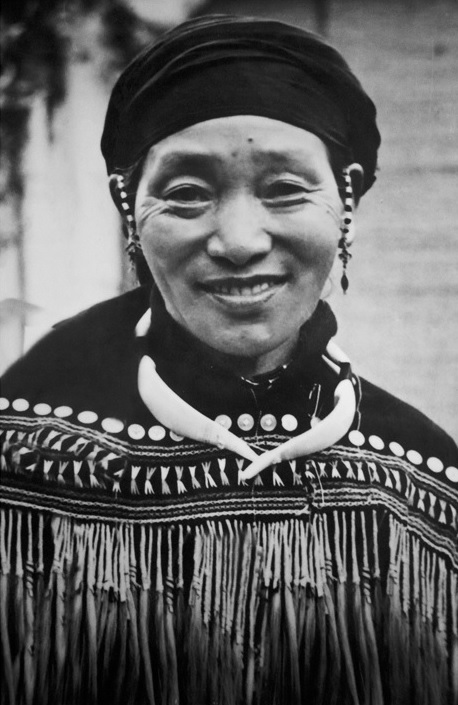
She was born in Manipur and at the age of 13, she started to preach to the people of her tribe. Later she joined her cousin Haipou Jadonang who led the Heraka Movement against the British, at the age of 17 and was sentenced to 14 years long imprisonment. Rani Gaidinliu was not a queen. The prefix ‘Rani’ was given to her following a newspaper interview in which she was described as ‘Queen of the Hills’.
The sacrifices of this Rani of Nagas was fondly acknowledged by Nehruji. A stamp was issued in 1996 and a coin was issued in 2015 in her memory.
9. Uda Devi
She was born in Lucknow. Begum Hazrat Mahal helped her form a women’s battalion under her command. She fought bravely in the war along with her husband. Uda Devi climbed a pipal tree from where she shot dead around 36 British soldiers. In recognition of her bravery, British officers like Colin Campbell bowed their heads with respect over her dead body. Along with other female Dalit participants, she is remembered as a Dalit Veerangana of 1857.
Uda Devi’s statue can be seen in the square outside Sikander Bagh in Lucknow.
10. Madam Bhikaji Cama
Born in Bombay, she was a great freedom activist, social worker and philanthropist. She was the founder of Indian Home Rule. She wrote, published and distributed revolutionary literature. Madam Bhikaji gave away all her assets to set up an orphanage for young girls. She designed a flag and was the first woman to hoist the tricolour. As an Indian ambassador, she travelled to Germany in 1907 to hoist the Indian freedom struggle flag at the International Socialist Congress.
11. Aruna Asaf Ali
Born Aruna Ganguli, she married Asaf Ali, a prominent member of the Indian National Congress. She fought for the rights of political prisoners in Tihar Jail. In 1942, she hoisted the Indian flag during the Quit India Movement at Gowalia Tank Maidan in Bombay. Aruna Asaf Ali is known as the ‘Grand Old Lady’ of the Independence Movement. A Bharat Ratna Awardee, she served as Delhi’s first mayor.
12. Kittur Rani Chennamma
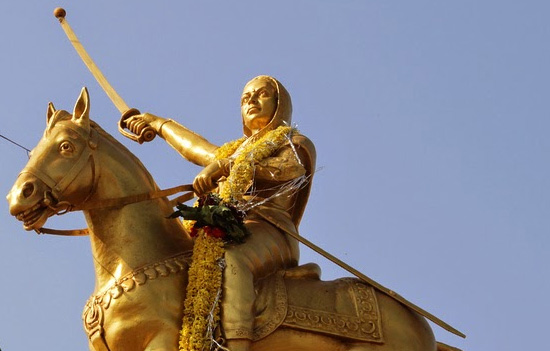
She was the queen of Kittur (Karnataka) who raised her voice against British rule 33 years before the national uprising. She belonged to the Lingayat community and was one of the first freedom activists. Rani Chennamma was trained in horse riding, sword fighting and archery from a young age. She led an armed rebellion against the British policy, Doctrine of Lapse in 1824 and lost her life on the battleground. She became a folk heroine in Karnataka.
Her statues can be seen in Kittur, Bengaluru, Belagavi, Hubballi and also in the Indian Parliament.
13. Belawadi Mallamma
She was the daughter of King Madhulinga Nayaka of Sode or Sonde in Karnataka, and wife of Prince Isaprabhu. During a war between her kingdom (Belawadi) and the Marathas, her husband was killed. But she picked up the sword and fought along with her army. She was the first woman to form a women’s army in the 17th century. The battle lasted for 27 days. She was captured but later Chhatrapati Shivaji released her after seeing her bravery. It is said that when Mallamma attacked, she looked like Goddess Jagadamba to Shivaji.
14. Umabai Kundapur
She was married at the age of nine and her father-in-law encouraged her to complete her studies. She was the founder of Bhagini Mandal and leader of the women’s wing of Hindustani Seva Dal. She provided shelter to freedom fighters. Umabai was an example of selfless service. She refused all honours and voluntary posts that came her way. Gandhiji appointed her as the agent for the Karnataka branch of Kasturba Trust.
15. Rani Abbakka Chowta
She is one of the first female freedom fighters. She was from the Chowta dynasty and ruled a small coastal town called Ullal, 8 km from Mangalore. She fought against the Portuguese who wanted to capture the town. An annual celebration is held each year in Ullal in memory of the queen. Rani Abbakka is also called ‘Abhaya Rani’ (fearless queen) because of her valour.
16. Keladi Chennamma
She became the queen of Keladi after marrying Soma Sekhara Nayak. She gave shelter to Rajaram, Shivaji’s second son, when he was escaping the Mughals. She fought and defeated the Mughal army sent by Aurangazeb. At the end of the war, the Emperor signed a treaty and recognised Keladi as a separate kingdom.
17. Rani Velu Nachiyar
She was the 18th century queen of Sivaganga in Tamil Nadu. Trained in archery, martial arts and horse riding, she was also a scholar in many languages. After her husband’s death, she managed to escape with her infant daughter. Determined to get back her kingdom, she built an army of women (Udaiyal) and trained them in warfare. Haider Ali lent her support. Her commander-in-chief Kuyili’s sacrifice as a human bomb helped Rani Velu in defeating British. A stamp was released in her memory by the Indian Postal Service.
Rani Velu is remembered as ‘Veera Mangai’ due to her bravery. Some scholars refer to her as the ‘Joan of Arc of India’. Grand dance ballets were composed in her honour.
18. Kuyili
She was a Dalit woman warrior and army commander of Queen Velu Nachiyar. She is remembered as the first suicide bomber and first woman martyr in Indian history. She led her army against the British. Drenched in oil she set herself on fire sacrificing her life. She is remembered as ‘Veerathalapathy’ (Brave Commander).
19. Janaky Athi Nahappan
She was a Tamilian and the founding member of Malaysian Indian Congress. She donated her gold earrings and was determined to join the Army as per Subhash Chandra Bose’s appeal for the independence of India. She was one of the first women to join the Indian National Army (INA).
Janaky was also a welfare activist and was awarded the Padma Shri in 2000 by the Government of India.
20. Kamala Devi Chattopadhyay
She was born in Mangalore and was the first woman in India to contest for political office for a seat in Madras Legislative Assembly. Kamala Devi excelled in several roles as a freedom fighter, handicraft enthusiast, feminist, social reformer and theatre actor. She enrolled in Indian National Congress, joined the Seva Dal and quickly rose in ranks. She founded the AIWC (All India Women’s Conference). Kamala Devi participated in the Salt Satyagraha. She refused government posts and dedicated her life to humanitarian services.
21. Tara Rani Srivastava
She was born in Saran (Bihar). She actively participated in the Quit India movement in 1942 along with her husband Phulendu Babu. They formed a crowd outside Siwan police station to hoist the Indian flag. Her husband was shot. But Tara bandaged his wounds and continued to march with courage shouting ‘Inquilab’ and holding the Indian flag. Her husband died, but she continued to support the freedom struggle.
22. Kanaklata Barua
During the Quit India Movement in 1942 at Baranga Bari, she stood at the head of a group of women volunteers with the national flag in hand, as part of ‘Mrityu Bahini’ (Death Squad). She aimed to hoist the flag at the Gohpur police station but was stopped. The British shot her and at the age of 18, she became a martyr. Kanaklata was the youngest Indian female martyr and is also called ‘Birbala’ (Brave Daughter) of Assam.
A ship, ‘CGS Kanaklata Barua’ was commissioned by the Indian Coast Guard in 1997 in her memory.
23. Nellie Sengupta
She was an Englishwoman born in Cambridge, UK. As a young girl, she fell in love with Jatinder Mohan Sengupta, a young Bengali student. After marriage they returned to Calcutta. Sengupta was a lawyer and he decided to join the freedom movement started by Gandhiji. Nellie supported him and went door to door to sell khadi. She was appointed as the President of Congress when many senior leaders were arrested during the Salt Satyagraha.
24. Mata Bhag Kaur (Mai Bhago)
She was the daughter of a landowner in Amritsar. She led a Sikh army of 40 men in the Battle of Muktsar in 1705 against 10,000 Mughals. She also served as the personal bodyguard of Guru Gobind Singh during his years of exile.
25. Savitribai Phule
She was India’s first female teacher at India’s first girl’s school. Born in Naigaon, Maharashtra, she was a social reformer. In the 19th century, she dared to break the stereotypes of society during the British regime with the support of her husband, Jyotirao Phule. She brought about social reform in Maharashtra by educating women.
26. Basanti Devi
She was among the first women to be jailed under British rule for involvement in the freedom struggle. After the arrest of her husband Chittaranjan Das in 1921, she joined the freedom struggle. She took part in the Khilafat movement, Civil Disobedience Movement etc. When Lala Lajpat Rai was killed by police, Basanti Devi called on the Indian youth to avenge his death. She collected gold coins for the Tilak Swaraj Foundation.
27. Moolmati
Ramprasad Bismil was in the Hindustan Socialist Republican Association in 1928 along with Bhagat Singh, Raj Guru, Azad and others. Moolmati was the mother of Ramprasad Bismil. She was proud of her son who was hanged to death by the British. She addressed a public gathering and offered her other son to the freedom movement.
28. Onake Obavva
Obavva was the wife of a guard at Chitradurga Fort. The sultan of Mysore, Haider Ali, was trying to capture the fort. He ordered his men to use a secret passage to enter the fort. Obavva noticed this activity and used a long wooden club called ‘onake’ and killed over 100 men. Her husband was away for lunch. When he returned he was shocked to see his wife standing with a blood stained onake near the dead bodies.
There were many such women warriors in the history of our country. These brave and intelligent women fought with undaunted courage and sacrificed their lives for the nation so that future generations could live in a free country. These unsung women of dedication and unshakable spirit deserve our heartfelt acclaim for their valour and courage.
This article was first published in the Bhavan’s Journal, August 15, 2022 issue. This article is courtesy and copyright Bhavan’s Journal, Bharatiya Vidya Bhavan, Mumbai-400007. eSamskriti has obtained permission from Bhavan’s Journal to share.
This article was later published in eSamskriti and has been republished here with permission.
Click here to subscribe to The Commune on Telegram and get the best stories of the day delivered to you personally.
Tamil Nadu Finance Minister Palanivel Thiagarajan announced on Monday that ₹7,000 crores will be allocated to the rightful money scheme for women heads of families beginning September 15. The budget has limited the number of beneficiaries by stating that the money will only be given to eligible beneficiaries, despite the DMK’s promise to give ₹1000 to every woman head of the family.
In this situation, Tamil Nadu BJP President Annamalai urged the DMK government to pay ₹29000, including backlogs of 28 months. He also urged the DMK government to provide ₹1000 for all 2.2 crore ration cards instead of eligible beneficiaries.
ஆட்சிக்கு வந்து 2 வருடங்களுக்குப் பிறகு, ‘மகளிருக்கு மாதம் ஆயிரம் ரூபாய் வழங்கப்படும்’ என்ற தேர்தல் வாக்குறுதி திமுகவுக்கு ஞாபகம் வந்ததில் மகிழ்ச்சி.
வரும் செப்டம்பர் மாதம் இந்த தொகை வழங்கப்படும்போது, முதல் தவணையில் இதுவரையிலான 28 மாத நிலுவைத் தொகையுடன் சேர்த்து, (1/2)
In response to Annamalai’s tweet, DMK MLA and IT wing secretary TRB Raja peddled fake news that the BJP government had failed to fulfill its election promise to deposit ₹15 lakhs in everyone’s bank account and that he urged the BJP government to deposit ₹75 lakhs with interest for 106 months. Despite the lie being busted by many reports many times, the DMK MLA lied through his teeth on social media. This is not the first time that the DMK leaders have peddled this lie. BJP cadres have been posting the real video of Narendra Modi addressing black money in foreign banks with Tamil translation in response to the lies of DMK MLA TRB Raja.
உங்களுக்கு வேகமா தமிழ் பேசினாலே புரியாது, இதுல ஹிந்தி புரிய வாய்ப்பே இல்லை.
In another instance of DMK leaders spreading lies following the presentation of the Tamil Nadu budget, DMK IT wing deputy secretary Isai stated that Tamil Nadu is the only state in the country that has reduced the revenue deficit by 50%. However, BJP-ruled Gujarat, UP, and Karnataka are all revenue surplus states whereas, Tamil Nadu has only reduced revenue deficit.
Click here to subscribe to The Commune on Telegram and get the best stories of the day delivered to you personally.
The DMK government’s announcement of a ₹7000 crore allocation in the budget 2023-24 for the Monthly Assistance Scheme For Women has sparked outrage from all sides, as the money will not be enough to fulfill the DMK government’s election promise of providing assistance to all 2.2 crore ration cards.
The DMK government in Tamil Nadu said that it will roll out the scheme of providing ‘rightful money’ of ₹1,000 per month to women heads of “eligible households” from 15 September 2023, on the occasion of the birth anniversary of Dravidian stalwart and DMK founder CN Annadurai.
“I am delighted to announce that, beginning with the ensuing fiscal year, women heads of eligible households will receive ₹1,000 per month. The program will greatly benefit women who are the heads of households who have been negatively impacted by the Union Government’s sharp increase in cooking gas prices as well as the overall price increase,” PTR Palanivel Thiagarajan said.
However, the phrase “eligible household” has drawn criticism from a few quarters because the DMK during the election campaign had promised to give “rightful money” to ever women head of the household.
The Tamil Nadu government will spend a total of ₹7000 crore, or ₹1000 crore per month, between September 2023 and March 2024. This means that if ₹1000 crore is spent each month, the government can only pay 1 crore people. This will result in more than 50% of women heads of families in Tamil Nadu being left out of the scheme.
However, MK Stalin while being in the opposition in 2021, stated that all women in Tamil Nadu with ration cards would be given “rightful money” of ₹1000 per month. Social media is now awash with the viral video of MK Stalin promising all the women heads of Tamil Nadu ₹1000 per month.
— Indhavaainko (இந்தாவாய்ங்கோ) 👊 (@indhavaainko) March 20, 2023
அனைவருக்கும்னா கட்சி உறுப்பினர் அனைவருக்கும்னு அர்த்தமா இருக்குமோ ? இல்ல இவர்கள் கொடுப்பது போக மீதி இருப்பவர்களை குடும்பதலைவிகளாக இந்த அரசு மதிக்கவில்லையோ ?#TNBudget2023pic.twitter.com/yCwn8ZrYmR
Finance Minister PTR Palanivel Thiagarajan estimates that the TASMAC, the Tamil Nadu government’s liquor sales company, will see revenue of ₹50,000 crore, an increase of ₹5000 crores from the previous fiscal year.
Increasing TASMAC sales will have severe social cost like alcoholism, weakened labour force, domestic abuse, rising crime rates and accidents. Funding the ₹1000 per month scheme for women household heads by increasing TASMAC sales, is only going to make matters worse for women opine critics.
Click here to subscribe to The Commune on Telegram and get the best stories of the day delivered to you personally.
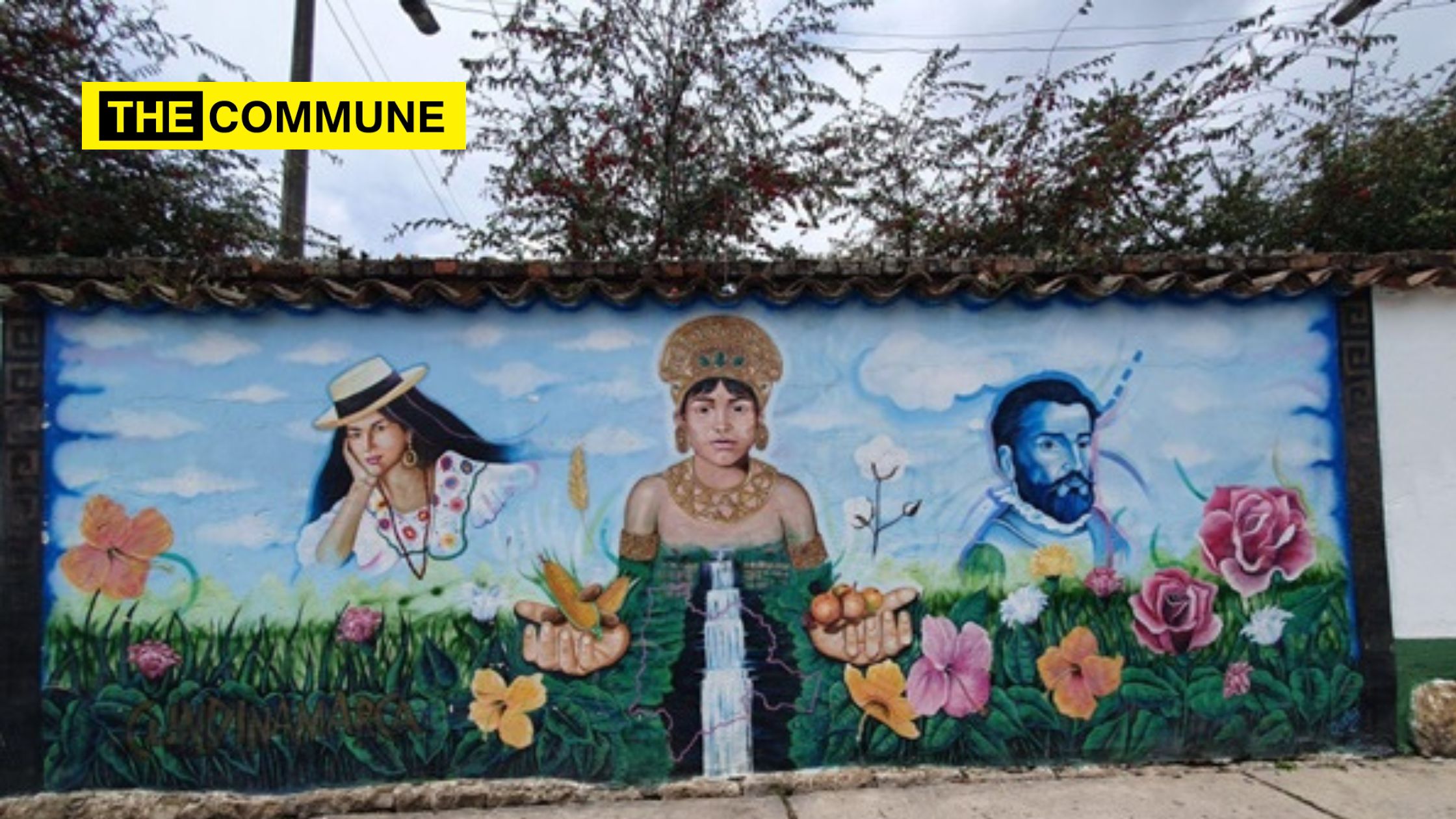
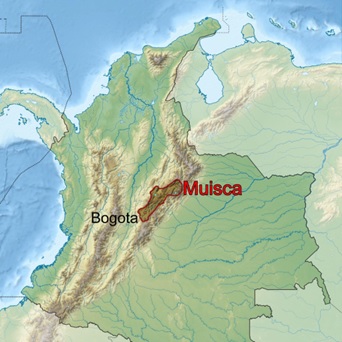
Muisca were the indigenous people who lived in the Cundiboyacense plateau of today’s Colombia, between the eastern and the western Andes covering an area of roughly 30,000 square kilometres. The Muisca tribe was a loose confederation of states that cannot be considered an empire as there was no central authority or emperor. For the autonomy the local chiefs enjoyed, they are considered one of the best-organised tribes in the Americas.
The Caciques
The tribes were organised into groups headed by their own chief, each of whom was ruled by a Cacique. The Caciques were generally referred to as Zipa and Zaque depending on the territory that they ruled over.
By Nwbeeson – Own work, CC BY-SA 4.0, https://commons.wikimedia.org/w/index.php?curid=69397463
The territories of Zipa and Zaque are further subdivided into quiras that roughly fall under 8 major chiefs.
Zipa – Bacatá, Fusagasugá, Ubaté and Guatavita
Zaque – Hunza, Tundama, Sugamuxi, and certain autonomous chieftains
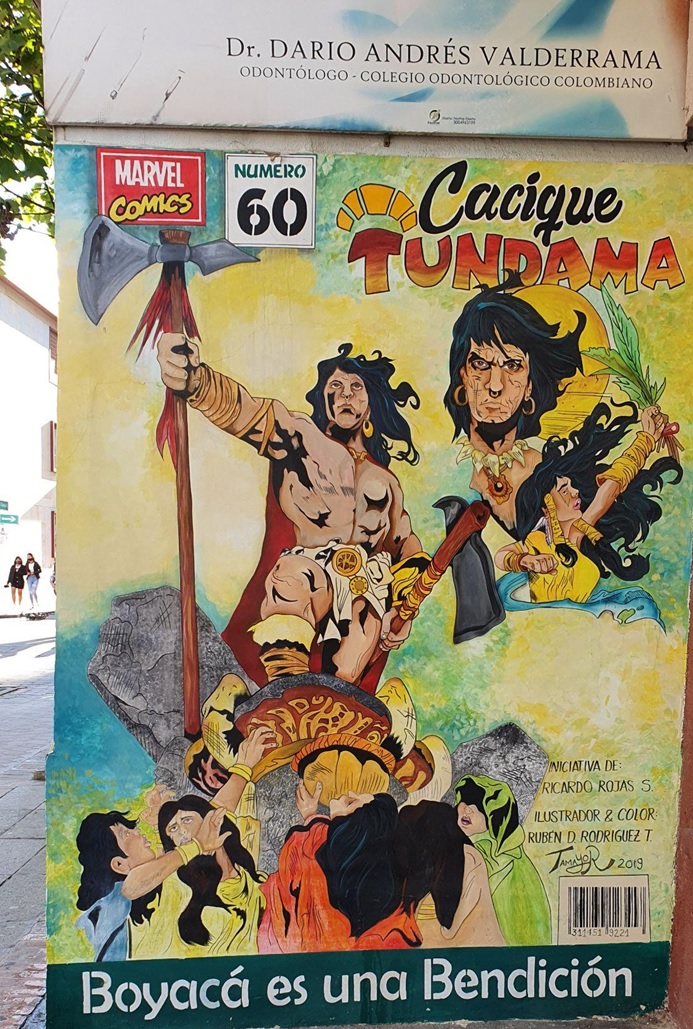
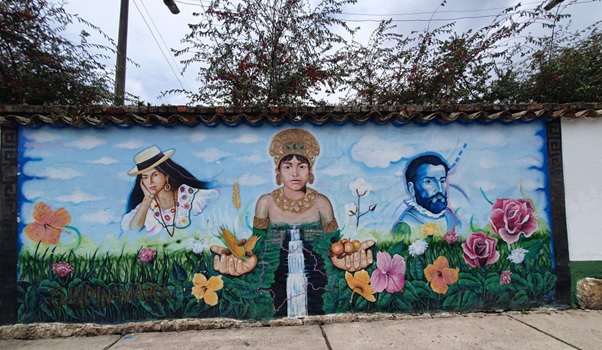
Cacique of Tundama in a mural, in today’s Duitama
The territory around today’s Bogotá was ruled by a Zipa and was called Bacatá in those days. The language of the Muisca was called Chibcha and the influence of Muiscas can be felt over names of the towns and villages even today as most of these are Spanished versions of the existing Chibcha names such as Zipaquirá, Chía, Guachetá, Duitama, etc.
Muisca Society
The society was consuetudinary, in legal terms, this is defined as the existence of customary law or consuetudinary law where: A certain legal practice is observed and is considered a necessity.
The caciques did not exercise absolute power or rigid or strict control over those to whom they owed their power so that they could be considered rulers in the most nominal form of our understanding of the Muisca society. The position of the ruler was inherited, but the line of succession was not patrilineal. Instead, the king was succeeded by his nephew, the oldest son of his oldest sister.
They could be considered one of the first socialist premodern societies where woods, lakes, forests, and rivers could not be owned by someone other than the society. Women played an important role in Muisca society and are given as much importance as men. The women formed the central part of the family, community, arts, mythology, and in heritage. The laws prevented domestic violence, physical violence against women, and state support was provided for pregnant women, widows, etc. When the wife of a cacique died, the cacique was expected to abstain from sex from one to five years in memory of his wife.
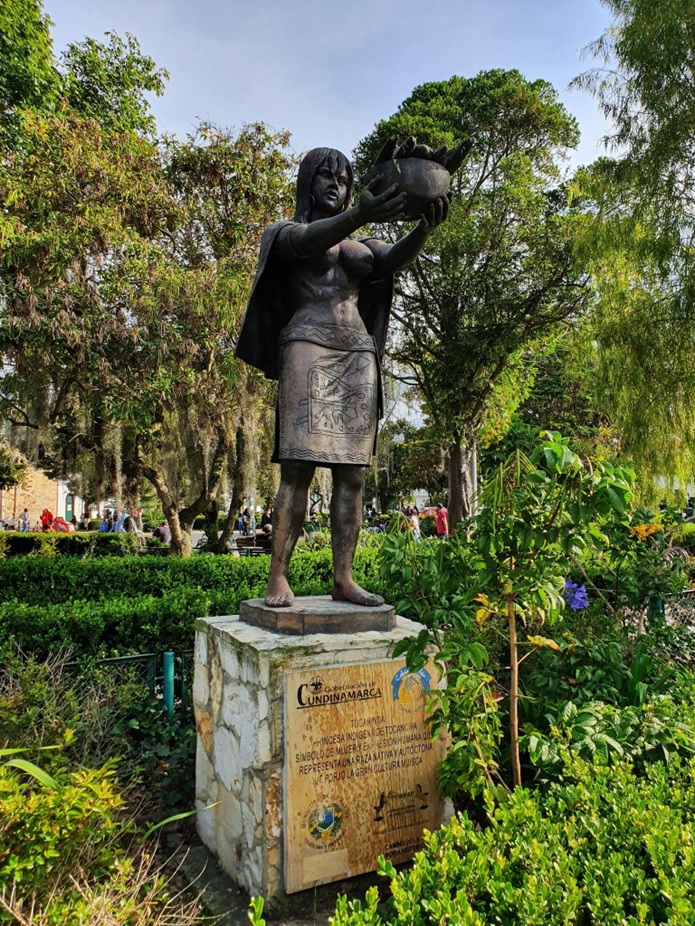
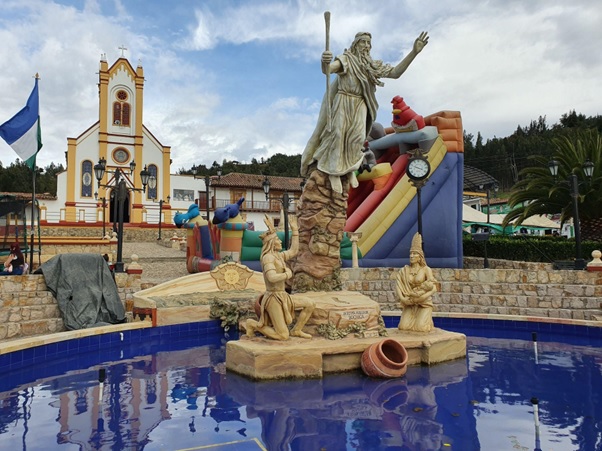
Here is a statue of an indigenous princess from Tocancipá.
Pantheon Of Muisca Religion
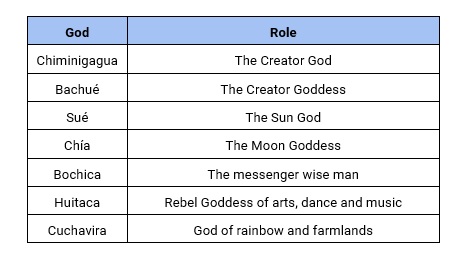
Muisca was a polytheistic society just like most civilizations around the world then. They believed in the legends of creation and the Goddess were considered equal in the Pantheon of the Muisca religion.
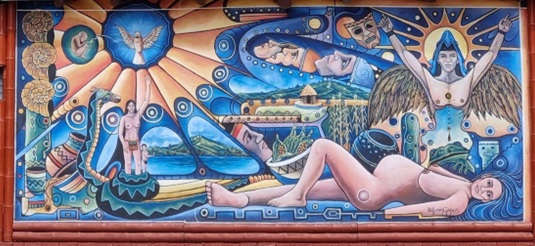
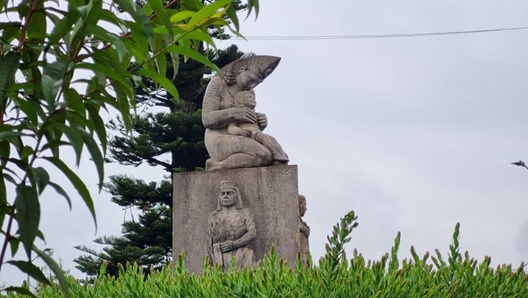
The main creator God was Chimigagua and his female counterpart Bachué whom the Muiscas believed that they descended from. In fact, they believed themselves to be the children of Bachué. Though the list of Gods is long, we will only focus on the 7 main ones for now.
Here is a mural depicting the creation of the Muiscas by Bachué and Chiminigagua.
Sacred Sites Of Muisca
The territory of the Muisca was filled with sacred sites, temples, and lakes that were considered important and holy for the Muisca, honouring their Gods and rulers.
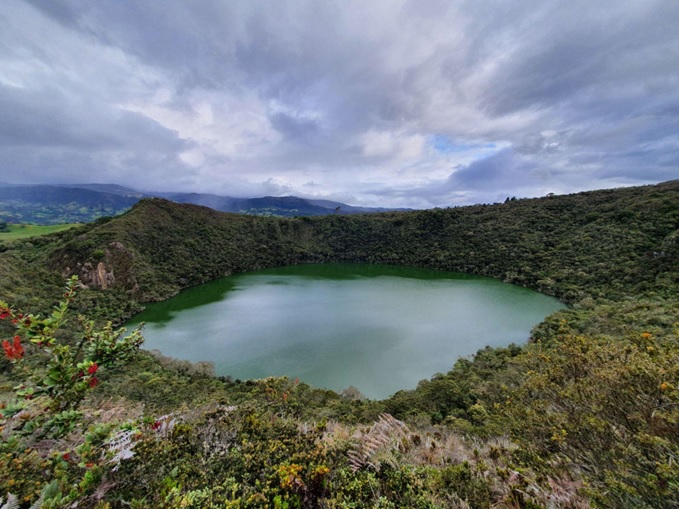
One of the more popular ones here is the Guatavita Lake, famous for the legend of El Dorado (The Golden Man). This lake is located roughly over 3000 metres above sea level and is believed to be the place where the cacique of Bacatá covered himself with gold powder and jumped inside the lake to prove his worthiness to his people. The Spaniards were so involved in the story that they even attempted to drain this lake to find gold, which proved impossible. It was also believed that the Muiscas created this legend to divert the attention of the Spaniards and to let them live alone in peace.
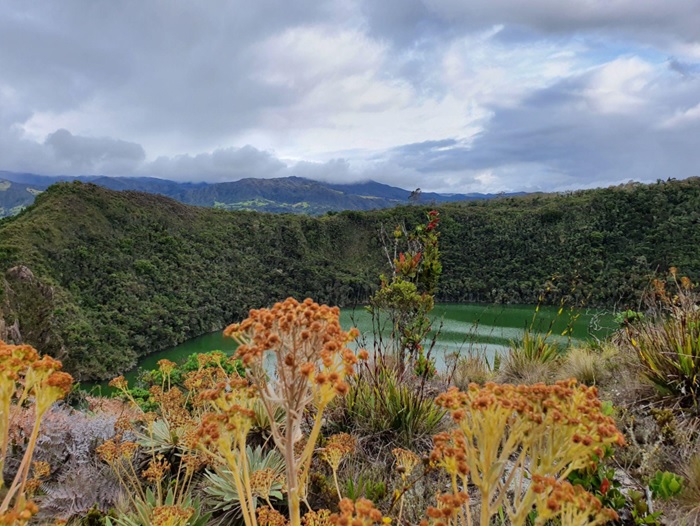
Here is another view of the lake with the lovely frailejónes in the foreground. These are endemic to the Colombian Andes and are considered an important part of the Andean ecosystem as they capture the moisture in the air and send them to the soil thereby giving birth to the rivers of the Andes, including the biggest river in Colombia, the mighty Magdalena.
Another one of the popular sacred Muisca sites is Tota lake, which is considered to be the largest freshwater lake in Colombia and the second biggest in South America next only to Titicaca. Tota lake is about 3015 metres above sea level.
Here is a view of Tota with Cuchavira making an appearance.
Muisca Architecture
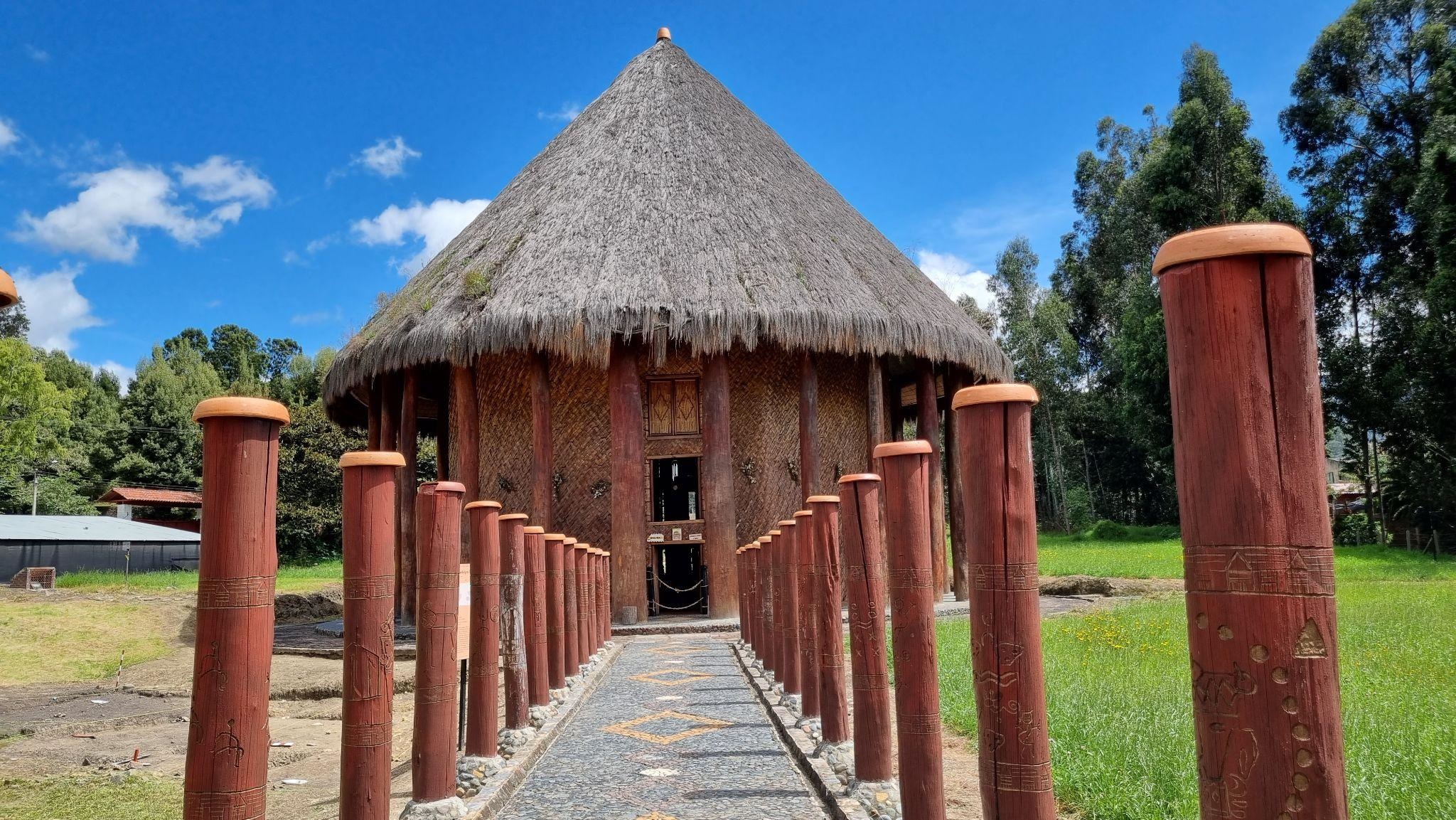
The Muisca were not huge stone builders and hence did not leave us with monumental ruins, unlike Mayas, Aztecs, or Incas. Almost all of the architecture was destroyed by the Spaniards during the time of the conquests. The houses of the Muisca, called bohíos, were circular structures made of poles of wood and walls of clay, with a conical roof. The house of the cacique was ceramic floored, while in normal houses, it was a straw mat. In a typical Muisca village, the biggest of these houses was always the temple while the cacique’s was generally the second biggest.
The most important temple in modern memory of the Muisca is the Sun temple at Sogamoso, in the Boyacá department (state). This temple is believed to have housed Sué. People from all over the Muisca territory and beyond are believed to have visited this temple to perform pilgrimage and offer their produce from their farms. Though Spanish accounts claim that there were children sacrificed to the Gods, I was not able to find any direct evidence to suggest that this practice existed.
This temple was considered to be of astronomical significance as well denoting the passage of the sun each month and the design was meant to be in such a way that on the days of the solstice in June and December, rays fell directly over the central pillar of the temple.
This is a reconstructed model of the Sun temple in Sogamoso.
The temples were also believed to hold the mummies of the dead caciques and are on display in the museum nearby.
Having spent time understanding the civilization of the Muisca, we will have to look at how this civilization fell against the might of the Spanish. Instead of focusing on the conquest per se, our interest will be to look at how the religion of the Muisca was destroyed.
Conquistadores
The conquistadores (conquerors) were originally approved to be a religious force or crusaders by the orders of Queen Isabella. Hence the motivation for all the conquest in the Americas though was primarily to conquer and steal the wealth of the region, it was all done in the guise of propagating the one true religion.
The first encounter of the Muisca with the Spaniards occurred in the 1530s and the conquest of the Muisca by the Spanish happened between the years 1537-40.
Tairona, along the mountains of the Sierra Nevada de Santa Marta, was the first tribe to surrender to the Spaniards. The Sierra Nevada de Santa Marta is a coastal mountain range that runs parallel to the Atlantic coast in Colombia. By 1536, the conquistadores led by Gonzalo Jiménez de Quesada were led by 700 soldiers and 80 horses travelled along the Magdalena river towards the interior lands. Their motivation was the story of El Dorado, whose mythical capital was a city of gold high up in the inner highlands.
Conquest Of The Muisca
Even though the Muisca formed alliances with one another, they did not stand a chance against three factors:
Smallpox – America was closed and the natives did not have immunity against Eurasian diseases. The Spaniards carried smallpox with them and this spread like the plague of late antiquity and the middle ages to which the natives did not have any immunity at all.
Horses – Cavalry was used effectively on the mountains against the Muisca who had not seen such animals in their life.
Superior weapons – The stone age weapons of wooden clubs, darts, stone spears, and slings did not stand a chance against the superior iron weapons and shields of the Spanish
Conversion Through Terror
Now after defeat, the caciques were offered a choice to accept the one true religion or God. This concept was new to the Muisca that were unable to apprehend how their Gods were called false Gods or worse, created to be used and exploited for the use of man. Some of the caciques were burnt at the stake which terrorised the local population. For them, the cacique was a ruler, a priest in short the representative of Chiminigagua, Bachué, Sué, and Chía. I can only imagine the confusion, the fear it caused the local population that witnessed the burning of the cacique.
Destruction Of Temples
Next, to prove their invincibility, the Spaniards went to destroy the sacred temples of Muisca, including the burning and destruction of the Sun and Moon temples. This left the local population nowhere to seek theological refuge.
If you know the history of the Christianisation of the Roman Empire, you will know how the worship of the Sol Invictus or the Invincible Sun had grown popular in the 3rd century, propagated by Diocletian. The Sol Invictus effectively was transmogrified into Jesus, the Son of God by Constantine after he converted to Christianity.
Crescent Moon And Maria
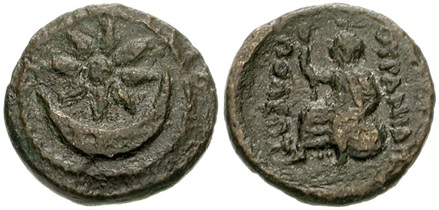
Let us deviate a bit to understand the connection between the crescent moon and Maria. Moon as a deity or Goddess was common across most cultures across the world, from Marama in Polynesia to Kuu of Finnish, from Mawu in Dahomean to Chía in Muiscan culture. The emblem of ancient Byzantine was a crescent and star. Here is one of the earliest representations of the crescent moon in a coin from Byzantium, roughly from 150 BCE.
By Classical Numismatic Group, Inc. http://www.cngcoins.com, CC BY-SA 2.5, https://commons.wikimedia.org/w/index.php?curid=45453907
When Constantine rebuilt the city to make it the capital of the empire around 330 CE, the symbol was transferred to the Christian empire, which lasted for over 1100 years. When in 1453, Constantinople was conquered by the Ottomans, the crescent moon and star were adopted by them to be in their flag and eventually to Islam itself.
Now when Constantine became Christian, he made efforts to adopt the existing Pantheon of Roman Gods into the Christian fold. This included Luna, the Roman Goddess of the moon, and hunting to be given a new identity in the Christian world. She was made to be a slave of Maria and became subservient to artistic representation.
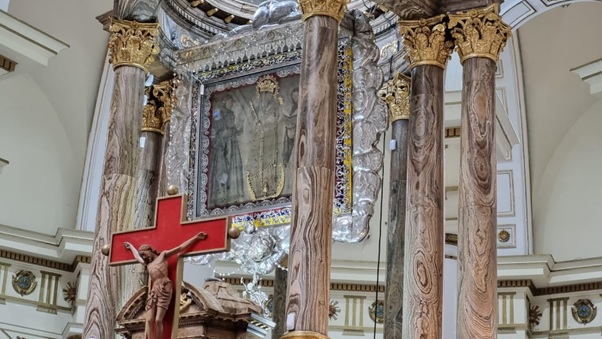
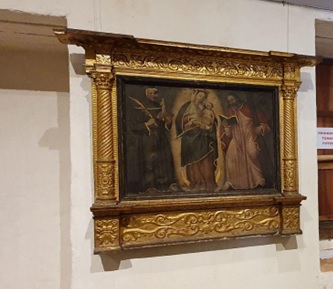
Notice the golden moon below Maria – Iglesia de Nuestra Señora del Rosario, ChiquinquiráPainting from museum of Franciscanos, again moon below Maria, Monguí
In short, it may be said that the Catholic Jesus became the new age Sol Invictus (Invincible Sun) while Catholic Maria became the master of Luna, the Roman Moon Goddess.
Chía And Maria
Now back to the Muisca territory, the Spaniards effectively demonstrated to the local population that they could not only destroy their priest and king but also enslave their Gods. The image of Maria with the moon underneath her was repeatedly propagated to coerce the natives who had nowhere to go and seek clarity. When they saw that their Gods could be enslaved, they knew the time had come. Add to this the mysterious appearances of Maria to native women, only to natives and never the Spaniards, and the destruction of the Muisca religion was complete. Saints were invented to civilise the native population. Today, all churches that stand in the town centres of erstwhile Muisca territories, were built over destroyed temples of the Muisca.
The population was absorbed and either made slaves of the Spanish, and women were raped and or forcefully married to the Spaniards, thereby creating Mestisos, the mixed race. Today along with white Europeans they are about 87% of the total population as per the census 2018.
Transmogrification Of Muisca Religion
Bochicha, the messenger God was made to look like Jesus himself.
Sué became subservient to the Abrahamic God while Chía was made to look like a slave of Maria.
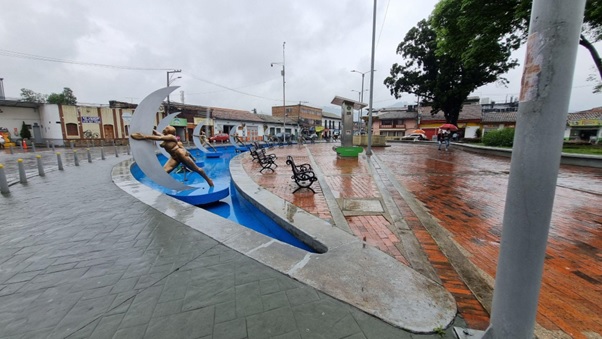
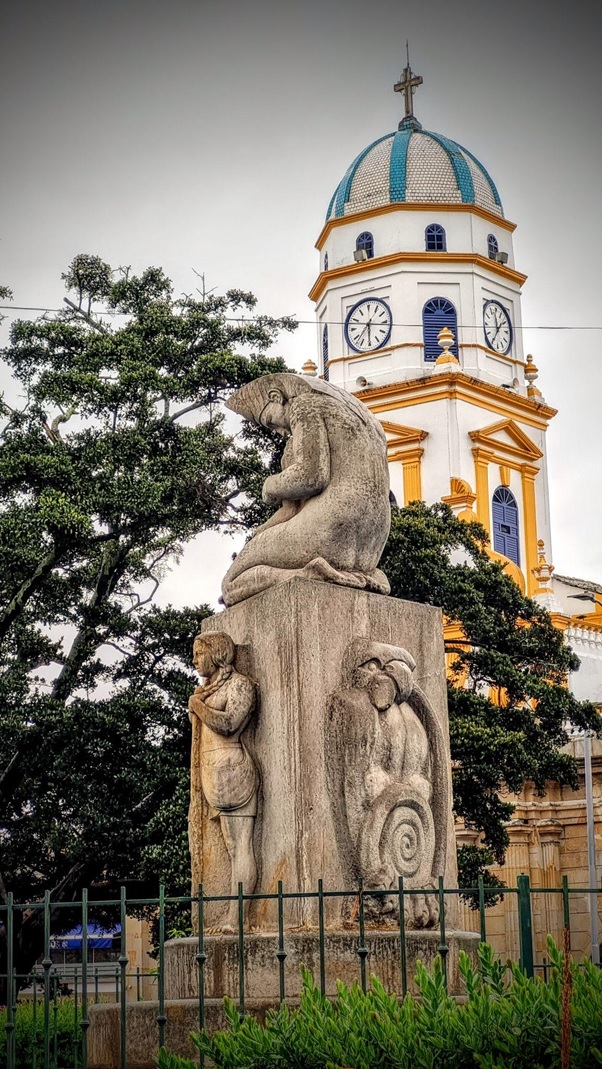
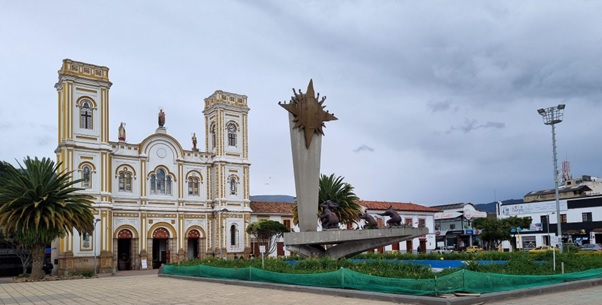
Today Chía is a small town about 30 minutes away from Bogotá. Just as in any Spanish town, the centre is dominated by the church and the plaza. There is a monument to the Goddess Chía in the plaza. While I was collecting materials for this article, I had the opportunity to visit this town. I was struck by the symbolism of Chía the moon Goddess all over the historical centre.
As a student of history and theology, I am supposed to report and write without emotions. Yet I became emotional after seeing this image. Notice how Chía is made to bow before the might of the Catholic church.
Today the Muisca religion exists in all but memory, murals, statues, and in museums. The Musica temples either no longer exist, are churches, or are mere reconstructed models.
Here is a monument to the Sun in Sogamoso. Again, the Sun is subservient and the native is shown to bow and kneel before the Sun which is smaller than the Church behind.
Yet, the spirit of Muisca spirit lives on. In almost all the small towns and villages I have visited in this region, there is some reference to the Muisca, the ancestors that were the children of Bachué. The children who existed before Catholic Jesus was born.
Click here to subscribe to The Commune on Telegram and get the best stories of the day delivered to you personally.