Home Blog Page 96

“Kanchipuram Not A Sangam-Era City” Says Alleged ‘Archaeologist’ And Dravidianist Propagandist Amarnath Ramakrishna At TN Progressive Writers & Artists Association Meeting That Organized “Eradicate Sanatana Dharma” Conference; Literary Classics, Temples Prove Otherwise
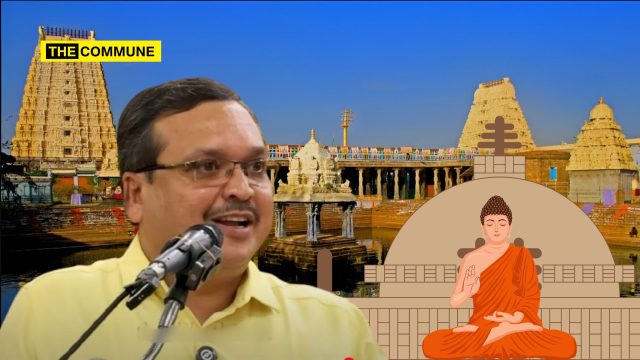
kanchipuram buddhist amarnath ramakrishna

Dravidian sympathiser and archaeologist K. Amarnath Ramakrishna has once again drawn severe criticism from Tamil scholars and historians after attempting to rewrite well-established history of ‘Kanchipuram’. In his latest controversial claim, Ramakrishna asserted that Kanchipuram, a city revered in Sangam literature and celebrated in ancient Tamil poetry was not a Sangam-era city. Instead, he labeled it a later Vedic and Buddhist settlement, pushing yet another narrative to please the Dravidian ideological ecosystem.

His comments were made during a lecture titled “Excavated and Unexcavated” at the centenary symposium on the Indus Valley Civilization, organized by the Tamil Nadu Progressive Writers and Artists Association a group notorious for pushing Dravidianist interpretations of history and the same outfit that hosted a conference with Deputy Chief Minister Udhayanidhi Stalin under the provocative banner, Eradicate Sanatana Dharma.”

Ramakrishna cited the University of Madras’ excavations at Kanchipuram (1975–1982), claiming that their full report was never published. Referring to Professor Gurumoorthy’s study, he pointed out the absence of Black and Red Ware pottery at the site, a common archaeological marker of Sangam-era settlements. According to Ramakrishna, this absence proves Kanchipuram was not a Sangam city, but a later development celebrated by “Vedic people” as Ghatikasthanam, or a center for Vedic learning. He further claimed that excavations near the Kamakshi Amman Temple uncovered a Buddhist stupa conveniently framing the city as primarily Buddhist, thus aligning with the Dravidianist disdain for Hindu heritage.

Speaking at the conference Amarnath Ramakrishna said, “If you look at the place called Kanchipuram, the University of Madras continuously excavated the site for almost seven years, from 1975 to 1982. But does anyone know what information about Kanchipuram was revealed? Does anyone know what they excavated? Only a handful of information, maybe a para, has emerged, but the full report has not yet been released. The complete excavation report for Kanchipuram has not been published by the University of Madras. No one has ever asked for it. Professor Gurumoorthy, who was part of that excavation team, wrote a book called Ceramic Traditions of South India. In that book, he specifically notes that while Black and Red Ware pottery sherds are found in many parts of India, from the Indus Valley Civilization onwards, and are prevalent in Tamil Nadu, they were not found in Kanchipuram. This is a crucial piece of information.

This significant finding suggests that Kanchipuram is not a city from the Sangam period but a later development. This is why Vedic people celebrate it, because Kanchipuram is referred to as Ghatikasthanam. Ghatikasthanam means a place where a school for Vedic traditions was established. The excavations also suggest that the city of Kanchipuram was built at a later time. If you consider the old Chengalpattu district around Kanchipuram, wherever excavations have been carried out, evidence of Black and Red Ware pottery sherds and megalithic burials are found. However, the Kanchipuram excavations revealed that not a single piece of Black and Red Ware pottery was found. This is a note made by Professor Gurumoorthy. Our history is incomplete because such important information remains unreleased. Similarly, Kanchipuram is also a Buddhist city. The trench for the excavation was dug near the Kamakshi Amman Temple. At that site, a Buddhist stupa was unearthed, indicating that a Buddhist stupa existed in Tamil Nadu and the temple was built on top of it. The excavation report has not properly released information about the site of the Buddhist stupa. Because the report has not been published, this information has not been widely disseminated.”

This narrative, however, has been roundly rejected by credible Tamil historians and scholars who accuse Ramakrishna of bending facts to fit ideological agendas. Critics argue that his theory not only ignores substantial literary evidence but also misrepresents the very nature of the Sangam period which was deeply intertwined with Vedic culture.

Take, for instance, the Sangam classic Perumpāṇāṟṟuppaṭai, which explicitly mentions Kanchipuram and its ruler Thondaiman Ilanthiraiyan, “Onnath Tholvar Ulayvidathu Aarthu Kachiyona Kaivan Thondral,” (ஒன்னாத் தெவ்வர் உலைவிடத்து ஆர்த்துக் கச்சியோனே கைவண் தோன்றல்) which translates to, “He who ruled from Kanchipuram roared in triumph when enemies dared defy him.”

The poem goes on to explain how the city got its name from the abundance of Kanchi trees and refers to it as a moodhoor  an ancient, prosperous city known for its festivals and cultural richness. These references make it indisputably clear that Kanchipuram was already a flourishing urban center during the Sangam era long before any Buddhist influence.

Even more telling is the poem that describes Karikala Chola, one of the most iconic kings of the Sangam age, halting at Kanchipuram’s Kamakshi temple to offer worship on his expedition to the Himalayas, “Kachi Valaikachi kaamakotangaval mechiyinithirikum meichathan kaichendu kamba kalitraan karikaalperuvalathaan sempon girithiritha sendu” (கச்சி வளைக்கைச்சி காமகோட்டங்காவல் மெச்சியினிதிருக்கும் மெய்ச்சாத்தன் கைச்செண்டு கம்ப களிற்றான் கரிகாற்பெருவளத்தான் செம்பொன் கிரிதிரித்த செண்டு) which translates to, “In Kanchi, at Kamakottam where Kamakshi adorned with bangles dwells, Karikala Chola worshipped her. With the sacred staff of Sastha in hand, he struck the golden peaks of the Himalayas.”

This verse alone shatters Ramakrishna’s attempt to write Kamakshi and Kanchipuram out of the Sangam-era spiritual landscape. It confirms both the temple’s existence and the continuity of goddess worship in the region, directly contradicting the idea that the site was primarily Buddhist.

Additionally, Perumpanatrupadai also praises the Thiruvehka Vishnu Temple, calling it the resting place of Mahavishnu on Adisesha further evidence that Kanchipuram was a vibrant hub of Vedic and Sanatana culture long before the period Ramakrishna suggests, “Kaandhal am silambil kaliru padinthaangu paambanai pali amarnthen aangan,” (காந்தள் அம் சிலம்பில் களிறு படிந்தாங்கு, பாம்பணைப் பள்ளி அமர்ந்தோன் ஆங்கண்) which translates to, “Just as an elephant rests peacefully in the mountain, the one who reclines on the serpent bed (Vishnu) rests there.”

Ramakrishna’s selective quoting, suppression of literary sources, and reliance on unpublished or partial excavation data has led many to accuse him of being less of a scholar and more of a mouthpiece for political propaganda. His eagerness to label everything “non-Vedic” or “Buddhist” while dismissing Tamil Hindu heritage reflects a broader agenda one that seeks to erase or reframe history to fit a Dravidianist narrative.

In trying to paint Kanchipuram as a non-Sangam, non-Hindu city, Ramakrishna isn’t just wrong he’s actively undermining centuries of Tamil history, literature, and identity. And all for what? To gain applause from a political ecosystem that thrives on historical distortion and selective memory.

Subscribe to our channels on TelegramWhatsApp, and Instagram and get the best stories of the day delivered to you personally.

Supreme Court Stays Madras High Court Order Disqualifying Panchayat Chairman Who Claimed Reservation After Converting To Christianity

Supreme Court Stays Madras High Court Order Disqualifying Panchayat Woman-Chairman For Claiming SC Reservation After Baptism

The Supreme Court on 22 September 2025 stayed a Madras High Court order that upheld the disqualification of a woman Chairman of a Panchayat for holding a post reserved for Scheduled Caste (General) category, citing her conversion to Christianity. A bench comprising Justices Vikram Nath and Prashant Kumar Mishra passed the order while issuing notice on a petition challenging the High Court decision.

The case pertains to the petitioner, elected to the Theroor Town Panchayat in Kanyakumari, whose status as a Scheduled Caste was challenged on the ground that she had embraced Christianity. The respondent argued that the petitioner, born in the SC category, lost her eligibility for reservation upon professing Christianity.

Opposing the plea, the petitioner contended that she had not abandoned her original faith, continued to be a Hindu, and was not professing Christianity. She denied misusing her community certificate as alleged.

The Single Bench of the Madras High Court examined the marriage register, which showed that the bans, a procedure for marriages among baptized Christians. were published three times. The Bench noted that the petitioner was baptized and admitted to the church at the time of marriage. It held that “even if the petitioner was never baptized, she could be considered only as a Christian.”

The High Court described the case as a “shameful field reality” highlighting how election officers were allegedly reduced to “sheer pawns by the ruling party during local body elections,” thereby undermining the vision of Panchayat Raj. It further observed that conferring SC status on a Christian was “nothing but fraud on the Constitution.” The bench stated that “when a person voluntarily submits himself/herself for conducting marriage under the Indian Christian Marriage Act, they would be considered Christian thereafter and their native religion is renounced automatically.” Consequently, it allowed the respondent’s plea, declaring the petitioner disqualified from her post, and upheld this decision in appeal.

The Supreme Court Division Bench, while staying the order, noted: “It is open to the appellant to embrace Christianity and profess the said religion. Article 25 of the Constitution guarantees such a fundamental right. But problem arises when post-baptism, the individual hides the new identity and for the purpose of enjoying the rights conferred by the Constitution pretends as if the erstwhile status continues.”

The court also observed, “The stand of the appellant is not that she reconverted to Hinduism. Her specific case is that she never embraced Christianity. Her claim stands belied by the production of baptism certificate by the learned Additional Advocate General in the open court.”

(With inputs from LawBeat)

Subscribe to our channels on TelegramWhatsApp, and Instagram and get the best stories of the day delivered to you personally.

“Why Are You Using Public Funds For Glorifying Your Former Leaders?” Supreme Court Rejects DMK Govt Plea To Use Public Funds For Karunanidhi Statue

"Why Are You Using Public Funds For Glorifying Your Former Leaders?” Supreme Court Rejects TN Govt Plea To Use Public Funds For Karunanidhi Statue

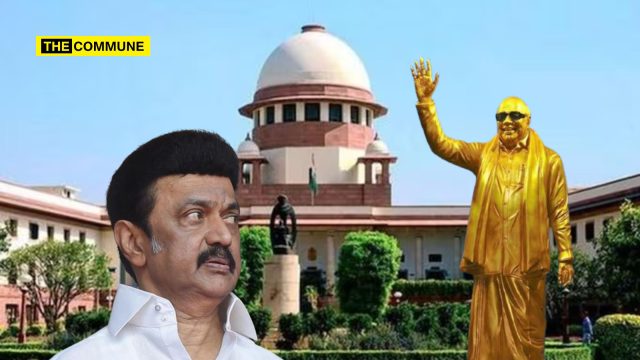
The Supreme Court on 22 September 2025 rejected the Taamil Nadu DMK government’s plea to use public funds for installing a statue of former Chief Minister M Karunanidhi in Tirunelveli district.

A bench comprising Justices Vikram Nath and Prashant Kumar Mishra ruled that public money cannot be used to glorify former leaders. “It is not permitted. Why are you using public funds for glorifying your former leaders?” the bench observed.

The state had sought permission to place a bronze statue and name board near the public arch entrance of the Valliyoor Daily Vegetable Market on the Main Road. The apex court dismissed the plea, upholding the Madras High Court’s earlier decision, which had also denied permission for such installations.

The High Court had cited public inconvenience, including traffic congestion, as a reason for its ruling. It noted that permissions to erect statues in public spaces often create hardships for citizens.

Senior advocate P. Wilson, representing the state, requested clarification regarding the arch, which was not specifically challenged, but the Supreme Court declined to entertain the submission and dismissed the appeal.

The bench advised the Tamil Nadu government to withdraw its Special Leave Petition (SLP) and, if necessary, approach the High Court for appropriate relief.

(With inputs from The New Indian Express)

Subscribe to our channels on Telegram, WhatsApp, and Instagram and get the best stories of the day delivered to you personally.
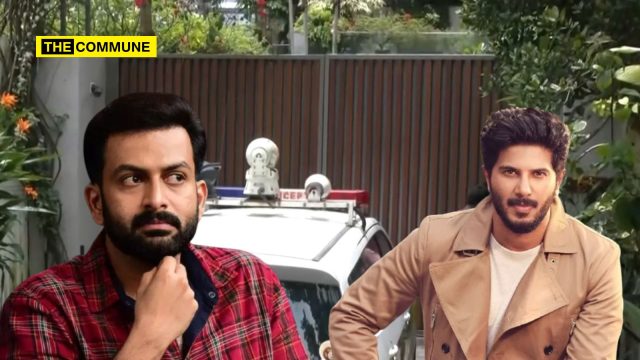
Kerala Customs Seizes Dulquer Salmaan’s Vehicles, Searches Prithviraj Sukumaran’s Premises In Luxury SUV Smuggling Raid

suv smuggling dulquer prithviraj

As part of Operation Numkoor, the Customs and Central Excise Department in Kerala carried out extensive raids across multiple locations targeting a network allegedly involved in smuggling and selling luxury SUVs into the state from Bhutan. The investigation reportedly involves film industry professionals, used car dealers, and business figures.

Officials confirmed that 11 vehicles were seized from seven locations in Kozhikode and Malappuram, including two belonging to actor Dulquer Salmaan. Raids extended to four showrooms, three private homes, and properties of industrialists, techies, and Malayalam film stars, including Dulquer Salmaan and Prithviraj Sukumaran. However, authorities clarified that individuals who may have unknowingly purchased the smuggled vehicles, such as actors or other end users, are not automatically considered suspects in the smuggling network.

According to customs officials, the operation targets a smuggling ring importing high-end pre-owned SUVs from Bhutan without paying taxes. These vehicles were then sold in Kerala after being routed through Indian border states. “Vehicles are either driven in or transported in containers to states near the border. With forged paperwork, they’re typically registered in states like Himachal Pradesh before reaching buyers in Kerala. We’ve identified vehicles with registration plates from Himachal, Karnataka, and Maharashtra,” an official said.

The seized vehicles include Land Cruisers, Land Rovers, Tata SUVs, and Mahindra-Tata trucks, some dating back to 1991. Sources explained that these vehicles are often acquired at minimal cost, refurbished, and resold at significantly higher prices, with many newer models entering the Kerala market in the past two years.

The vehicles confiscated during the raids have been transferred to the customs office at Karipur airport for further investigation. Authorities have collected documents and lists of people allegedly involved in the smuggling operation, which is believed to include second-hand car dealers, intermediaries, and agents.

The ongoing probe has attracted attention on social media due to the involvement of prominent film stars and the scale of the operation, which has seen over 20 locations across the state raided. Customs officials have announced that further details will be shared in a press briefing later in the day.

(With inputs from Times of India)

Subscribe to our channels on TelegramWhatsApp, and Instagram and get the best stories of the day delivered to you personally.

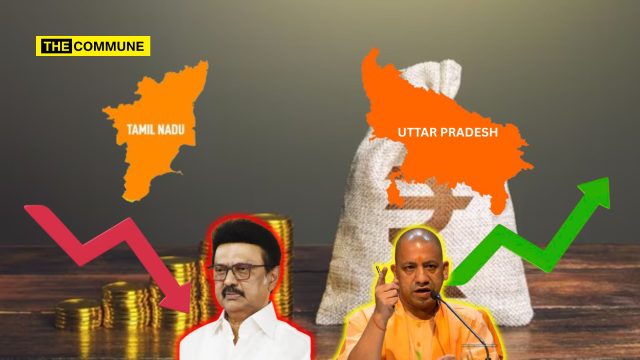
Dravidian Model Tamil Nadu Ranks Second In Revenue Deficit States, Yogi Model UP Tops Revenue Surplus List: CAG Report Reveals

TN Ranks Second In Revenue Deficit States, UP Tops Revenue Surplus List CAG Report Reveals

The Comptroller and Auditor General of India (CAG) has released its decadal report on state finances, highlighting a sharp contrast in fiscal health across the country. While 16 states ended 2022-23 with revenue surpluses, 12 others posted deficits, with Tamil Nadu ranking second-worst after Andhra Pradesh.

UP Tops Revenue Surplus List

Uttar Pradesh led the surplus states, reporting a revenue surplus of ₹37,000 crore in 2022-23, shedding its “Bimaru” tag. Madhya Pradesh also joined the surplus list, marking a turnaround for another state historically considered economically weak.

Other major surplus states included:

  • Gujarat: ₹19,865 crore
  • Odisha: ₹19,456 crore
  • Jharkhand: ₹13,564 crore
  • Karnataka: ₹13,496 crore
  • Chhattisgarh: ₹8,592 crore
  • Telangana: ₹5,944 crore
  • Uttarakhand: ₹5,310 crore
  • Goa: ₹2,399 crore

Several northeastern states – Arunachal Pradesh, Manipur, Mizoram, Nagaland, Tripura, and Sikkim – also figured in the revenue surplus category. Of the 16 surplus states, at least 10 are governed by the BJP, which the report notes may reflect political stability’s role in fiscal health.

TN Among Worst Deficit States

On the deficit side, Andhra Pradesh posted the largest shortfall of ₹43,488 crore, followed by Tamil Nadu at ₹36,215 crore. Other deficit states included:

  • Rajasthan: ₹31,491 crore
  • West Bengal: ₹27,295 crore
  • Punjab: ₹26,045 crore
  • Haryana: ₹17,212 crore
  • Assam: ₹12,072 crore
  • Bihar: ₹11,288 crore
  • Kerala: ₹9,226 crore
  • Himachal Pradesh: ₹6,336 crore
  • Maharashtra: ₹1,936 crore
  • Meghalaya: ₹44 crore

The CAG flagged that West Bengal, Kerala, Himachal Pradesh, and Punjab are increasingly dependent on Revenue Deficit Grants from the Centre to bridge gaps.

Central Assistance and Deficit Grants

In FY23, the Finance Commission allocated ₹1,72,849 crore in grants to states, of which ₹86,201 crore went specifically for revenue deficit financing. The biggest recipients were:

  • West Bengal: 16% of total grants
  • Kerala: 15%
  • Andhra Pradesh: 12%
  • Himachal Pradesh: 11%
  • Punjab: 10%

States Strengthening Own Revenues

Some states, however, have managed to fund most of their spending from their own tax and non-tax collections. The leaders were:

  • Haryana: 80%+ of revenue from own sources
  • Telangana: 79%
  • Maharashtra: 73%
  • Gujarat: 72%
  • Karnataka: 69%
  • Tamil Nadu: 69%
  • Goa: 68%

By contrast, northeastern states, Bihar, and Himachal Pradesh generated less than 40% of revenue internally, making them heavily reliant on central transfers.

Own Tax Revenue Patterns

The report further noted that six states – Haryana, Maharashtra, Telangana, Karnataka, Gujarat, and Tamil Nadu collected over 60% of their revenue from their own taxes.

Northeastern states such as Arunachal Pradesh, Manipur, Meghalaya, Mizoram, Nagaland, Sikkim, and Tripura recorded below 20% own tax revenue, underscoring their dependence on central support.

Other groupings included:

  • 60–70%: Karnataka, Tamil Nadu, Goa, Kerala
  • 50–60%: Andhra Pradesh, Rajasthan, Punjab, Chhattisgarh
  • 40–50%: Jharkhand, Madhya Pradesh, Uttar Pradesh, West Bengal, Uttarakhand

Key Revenue Sources

The CAG identified major streams of state revenue as:

  • State GST (SGST)
  • Value Added Tax (VAT)
  • Excise duties on alcohol, petroleum products, and electricity (outside GST purview)

(With inputs from Indian Masterminds)

Subscribe to our channels on Telegram, WhatsApp, and Instagram and get the best stories of the day delivered to you personally.
Kerala High Court’s Polygamy Verdict: A Sharia Sermon At Taxpayers’ Expense

Kerala High Court’s Polygamy Verdict - A Sharia Sermon At Taxpayers’ Expense

The Kerala High Court’s recent judgment in the case of a 46-year-old beggar seeking polygamy has left many Indians bewildered; both by the facts of the case and the reasoning of the bench. Instead of grounding its decision firmly in the Constitution and the law of the land, the court veered into interpreting the Quran, lecturing on monogamy, polygamy, and Muslim customary law. Last we heard, India was a secular republic and not a Sharia state. But with this judgement, it surely seems there are Sharia courts all around and Sharia law, rather than the Constitution, is what frames the basis of judgements!

If one reads through the judgement, one can conclude that milords have “virtually assumed the theological authority to determine which tenets of a faith are essential to any faith”, as observed by constitutional scholar Rajeev Dhavan.

What Was The Case About?

The facts are stark. A Muslim man who is blind, by his own admission a beggar, marries a second time and intends to marry a third time. When his wife approaches the court for maintenance, the court faces a simple question: Can a man with no means be allowed to evade his responsibilities by hiding behind religious custom? The answer, in any constitutional democracy, should have been a resounding no. Instead, Justice PV Kunhikrishnan embarked on a theological deep dive, interpreting the Quran to conclude that polygamy is an “exception” and that this particular beggar wasn’t following the “true spirit” of the holy text.

The job of the court was straightforward: apply constitutional and statutory law to decide whether a man with no means can shirk his duty of maintenance. Instead, Justice PV Kunhikrishnan chose to interpret the Quran, effectively treating religious scripture, not the Constitution, as the primary authority.

The Taxpayer Subsidy for Religious Choices

The judgment’s implications go further. The court directed the Social Welfare Department to provide the petitioner wives, victims of a man’s deliberate choices, with food and clothing. Wait a minute.

The court’s order effectively creates a perverse incentive: a Muslim man can marry multiple women with zero capacity to support them, and when his wives are left destitute, the state meaning you and I, will pick up the tab.

By directing the state to support the wives, the judgment socializes the costs of one man’s private choices. The message is perverse: a husband may contract multiple marriages without means to support them, while the taxpayer – Hindu, Muslim, Sikh, Christian alike is conscripted as a surrogate provider.

This judicial Solomon has essentially declared that when a Muslim man makes personal religious choices, the burden falls on the state and, by extension, on taxpayers who had no role in these matrimonial decisions! Welcome to Sharia Republic!

The husband in this case reportedly earns ₹25,000 monthly through various means including begging. If he possesses the financial capacity to sustain multiple marriages, a right his personal law ostensibly grants, why should the secular state subsidize the consequences? The court has effectively socialized the costs of religious practices, forcing Hindu, Sikh, Christian, and other taxpayers to fund the lifestyle choices permitted under Islamic personal law.

The court’s logic, that a blind beggar cannot be forced to maintain his wife, so society must step in – this is a dangerous inversion of accountability. The man, despite his claim of begging as livelihood, earns enough from various sources to support a modest lifestyle. If he is able to generate income, why should the state, funded by ordinary citizens’ taxes, subsidize his failure to uphold his marital obligations?

The Real “Robots” Would Have Followed the Constitution

The judge notably said, “judges are not robots.” True. But robots would have followed their core programming without deviation. In this case, the core programming for a judge is the Constitution. A truly courageous court would have done two things – upheld the supremacy of constitutional morality over religious personal law, especially in cases involving destitution and gender justice and enforced the husband’s liability by attaching his admitted earnings of ₹25,000, proving that no one, not even a beggar, is above the law.

Instead, the court took the path of least resistance – moralizing about the Quran and writing a blank check on the public exchequer. This judgment sets a dangerous precedent. It tells Muslim men that they can contract multiple marriages without the means to sustain them, and it tells women that their recourse is not against their husband, but a plea for alms from the state.

The Kerala High Court has not delivered justice. It has delivered an Islamic Sharia-compliant sermon, rewarded fecklessness, and punished the common citizen. If this is the new norm, we might as well replace the scales of justice with a begging bowl.

Subscribe to our channels on Telegram, WhatsApp, and Instagram and get the best stories of the day delivered to you personally.
“We’ve To Give Him Rajya Sabha Seat Next”: Dravidianist Spokie Karu Palaniappan Hints At Vijay Joining DMK In The Near Future

vijay stalin dmk karu pazhaniappan kamal haasan rajya sabha

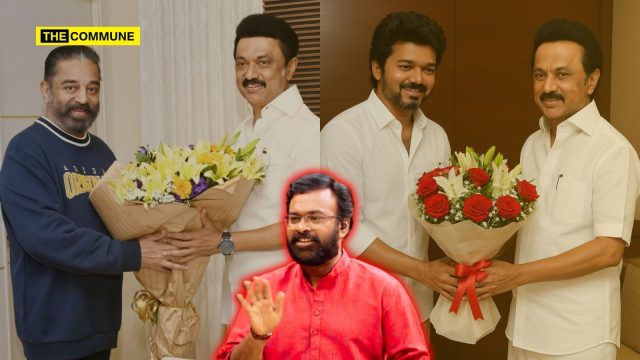
Dravidianist filmmaker and unofficial DMK spokesperson Karu Palaniappan has sparked controversy with his recent statement, saying he would not criticize actor Vijay, as he expects Vijay will also join the DMK in near future and be offered a Rajya Sabha seat. His comment, seen as both a sarcastic dig at Vijay and a veiled swipe at actor-turned-part-time-politician Kamal Haasan, who accepted a Rajya Sabha nomination through the DMK ticket by mortgaging his party Makkal Needhi Maiam (MNM) recently. The statement not only drew attention but also prompted a response from a DMK minister, who acknowledged that Palaniappan’s words had created ripples within the DMK alliance.

The controversial statement was made during a DMK public meeting held near the Anna statue in Tirupattur, Sivaganga district. Themed “I Will Not Let Tamil Nadu Bow Down” and “Oraniyil Tamil Nadu,” the event was chaired by DMK Minister for Cooperatives, K. R. Periyakaruppan.

Addressing the gathering, Karu Palaniappan claimed that over 5 lakh people from the Sivaganga district had joined the ‘Oraniyil Tamil Nadu campaign’. He noted that actor Vijay had recently voiced political opinions aligned against Hindi imposition a stance DMK has long championed and implied that Vijay may align with the DMK in the future hence he refuses to criticize him.

He said, “The Vijay who has come today is also starting by saying ‘we won’t allow Hindi.’ That’s what we’ve been saying. Why don’t you just come and stand with us? Why are you setting up a separate shop? You should only set up a separate shop if you’re selling a new item. We’ve been saying the same thing. Come here. Do you know why I don’t talk (criticize) about Vijay too much? I never talk about him anywhere. It’s because we have to give him a Rajya Sabha seat next time. He’ll be here. If he comes, we have to give him the Rajya Sabha seat. If we rush and talk about it now, it’ll be like the movie Paruthiveeran where, when he comes to eat next month, should we look down at the leaf and pour kulambu (curry)? Shouldn’t we be able to look at their faces and smile? That’s why we shouldn’t say anything in a hurry. You all come.”

Following Palaniappan’s remarks, Minister Periyakaruppan added fuel to the fire by invoking actor-politician Kamal Haasan. He stated that none of today’s actors could compare to Kamal, who once aspired to enter politics independently but eventually accepted a Rajya Sabha seat through the DMK a reference many interpreted as reinforcing Palaniappan’s veiled criticism.

Minister Periyakaruppan said, “Among the actors of today, Kamal Haasan is someone who has received many awards to the extent that one could say there is no other actor like him in this country. He also had a desire to start a political movement and so he started it. He made an attempt. It was only after realizing that his attempt could not achieve complete success that our leader embraced him and gave him the position of a Member of Parliament, a Rajya Sabha member. That’s what brother Palaniappan has so eloquently stated.”

The meeting concluded with Karu Palaniappan, Minister Periyakaruppan, DMK district leaders, and the gathered public reaffirming their commitment to the Tamil Nadu pledge under the “Oraniyil Tamil Nadu” campaign.

(With inputs from Puthiyathalaimurai News)

Subscribe to our channels on TelegramWhatsApp, and Instagram and get the best stories of the day delivered to you personally.
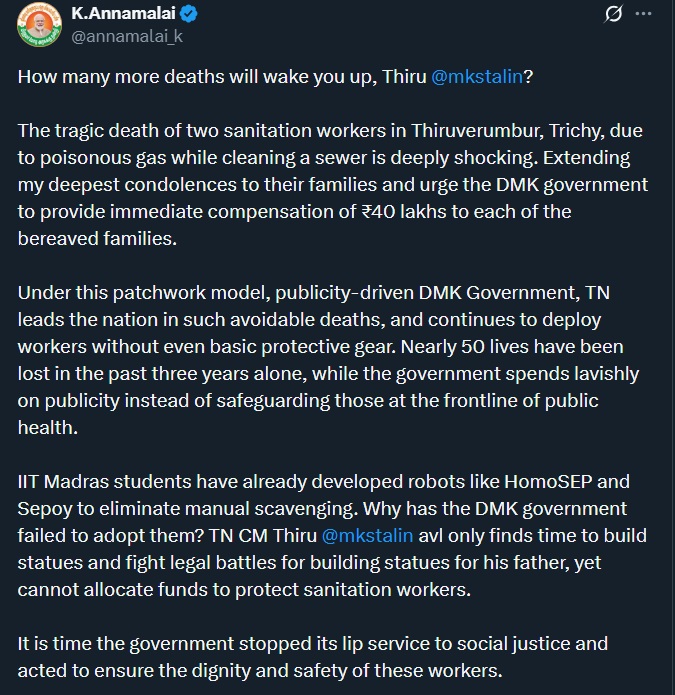
“How Many More Deaths Will Wake You Up?” : BJP Leader Annamalai Blasts DMK Over Trichy Sanitation Workers’ Death

annamalai dmk sanitation worker

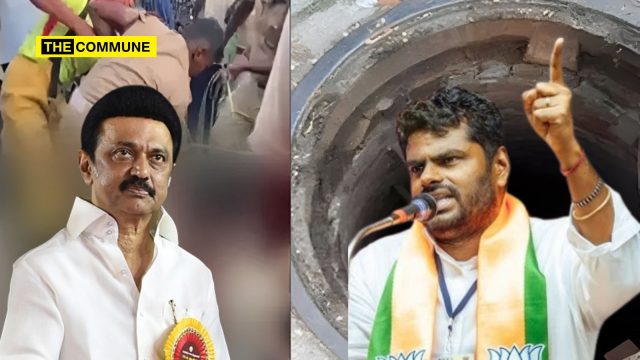
BJP leader K. Annamalai has sharply criticised the DMK government following the tragic deaths of two sanitation workers in Trichy, who died of asphyxiation while cleaning a drainage system. In a strongly worded statement on social media, Annamalai questioned the state’s inaction on preventing such avoidable fatalities, asking Chief Minister M.K. Stalin, “How many more deaths will wake you up, Thiru @mkstalin?”

The two deceased Prabhu from Chinna Salem and Ravi from Thiruvappur in Pudukkottai were reportedly contract workers engaged in manual sewer cleaning when they were overcome by toxic gases. Prabhu collapsed first, and Ravi, in a desperate attempt to save him, also lost consciousness. Both were pulled out by firefighters but were declared dead at the hospital. The Thiruverumbur police have registered a case and are currently investigating the incident.

Calling the DMK government a “patchwork model,” Annamalai condemned its continued use of manual labour in hazardous conditions without adequate safety gear, despite manual scavenging being banned under the 2013 Prohibition of Employment as Manual Scavengers and Their Rehabilitation Act. He demanded immediate compensation of ₹40 lakh for each of the bereaved families and accused the government of prioritising publicity over public safety. He also criticised the state administration for failing to adopt robotic alternatives like HomoSEP and Sepoy, developed by IIT Madras to eliminate manual scavenging.

Full statement of K Annamalai read, “How many more deaths will wake you up, Thiru @mkstalin? The tragic death of two sanitation workers in Thiruverumbur, Trichy, due to poisonous gas while cleaning a sewer is deeply shocking. Extending my deepest condolences to their families and urge the DMK government to provide immediate compensation of ₹40 lakhs to each of the bereaved families. Under this patchwork model, publicity-driven DMK Government, TN leads the nation in such avoidable deaths, and continues to deploy workers without even basic protective gear. Nearly 50 lives have been lost in the past three years alone, while the government spends lavishly on publicity instead of safeguarding those at the frontline of public health. IIT Madras students have already developed robots like HomoSEP and Sepoy to eliminate manual scavenging. Why has the DMK government failed to adopt them? TN CM Thiru @mkstalin avl only finds time to build statues and fight legal battles for building statues for his father yet cannot allocate funds to protect sanitation workers.” 

The broader context of the criticism comes at the backdrop of national data that highlights the ongoing danger of manual scavenging. Between 2020 and 2024, 294 deaths related to sewer and septic tank cleaning were reported in India, with Tamil Nadu, Uttar Pradesh, and Delhi among the states with the highest numbers. Despite the legal ban, unsafe practices continue to endanger workers’ lives across the country.

Subscribe to our channels on TelegramWhatsApp, and Instagram and get the best stories of the day delivered to you personally.
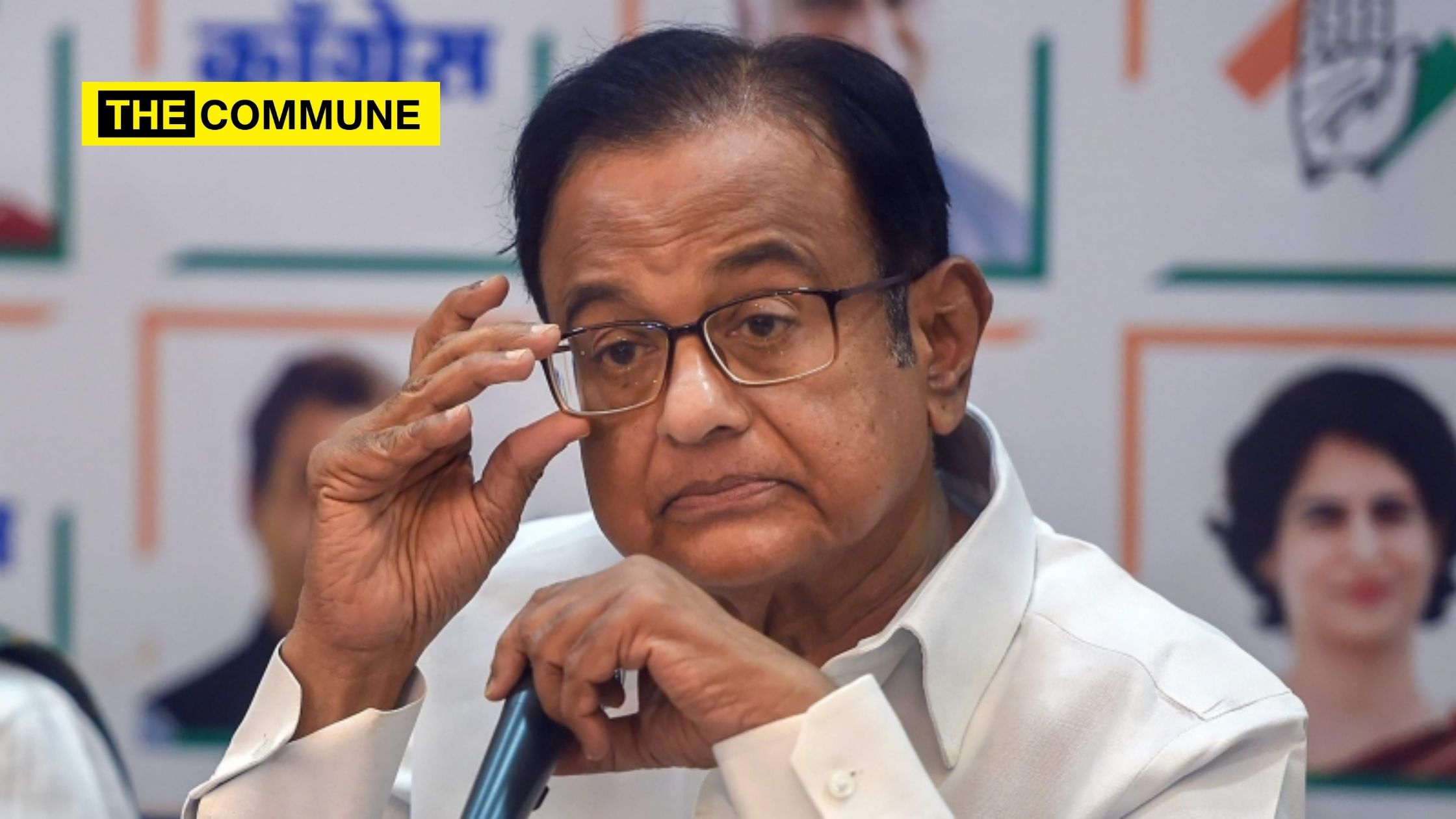
“We Pay ₹20 For An Ice-Cream But Won’t Pay ₹1 More For A Kilo Of Wheat”: When Chidambaram As Finance Minister Justified Rising Inflation

BJP Mocks Chidambaram Article, Says 'No One except Congress Is Interested In His Knowledge'

For the past few days, old videos of former Union Home Minister P Chidambaram have been making the rounds on the internet. Be it is statements on the Maoists or the most recent one justifying inflation, they are an eye-opener for the incoming group of adults who know nothing about the UPA era regime.

In the video that is circulating, Chidambaram in 2012 is seen saying, “… the point of view of the middle class that most of the people belong to, there are many other sections. Yes, food inflation is high. Sometimes, I have written about this once, we are prepared to pay ₹15 for a bottle of water but we will not bear ₹1 increase in price of a kilo of rice or a kilo of wheat. We are prepared to pay ₹20 for an ice-cream cone but won’t pay ₹1 more for a kilo of wheat or a kilo of rice.”

Subscribe to our channels on TelegramWhatsApp, and Instagram and get the best stories of the day delivered to you personally.
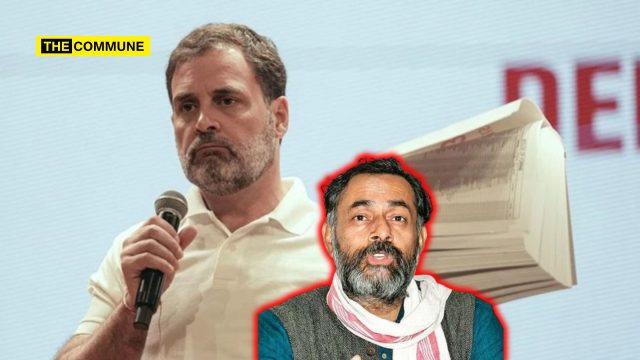
Rahul Gandhi’s Aide Spills The Beans About Congress’ Sinister Plan Of Anarchy, Goes On Tweet Rant To Cover Up Blunder

Rahul Gandhi's Aide Spills The Beans About Congress' Sinister Plan Of Anarchy, Goes On Tweet Rant To Cover Up Blunder

In a stunning revelation that has sent shockwaves across political circles, Congress strategist and longtime Rahul Gandhi aide Yogendra Yadav (known as Salim to his friends) inadvertently exposed the real intentions behind the party’s infamous “vote chori” campaign.

During an interview with Arfa Khanum Sherwani on The Wire, released on 20 September 2025, Yadav admitted that the Congress-led campaign against the Election Commission and the BJP was never about evidence, affidavits, or legal recourse. Instead, he candidly revealed that the exercise was purely a psychological maneuver aimed at manipulating public perception and sowing doubt in the minds of Indian voters about Prime Minister Narendra Modi and the electoral system.

A Campaign Designed to Undermine Democracy

Yadav made it clear that submitting affidavits or going to court is “meaningless” because the purpose was not to prove facts but to influence public sentiment. He acknowledged that Rahul Gandhi’s persistent narrative had already shaped perception, even causing doubt among BJP supporters themselves. “Public perception is syncing with this, and to that extent, Rahul Gandhi has succeeded so far,” Yadav stated, confirming what political analysts have long suspected: the campaign was a strategic ploy to destabilize trust in India’s democratic institutions rather than a legitimate complaint.

This admission lays bare the Congress party’s modus operandi of leveraging the Election Commission, media channels, and orchestrated public rallies not to correct electoral errors but to deliberately tarnish reputations and create a climate of distrust. Yadav even claimed that anti-BJP and neutral voters were beginning to view the ruling party with skepticism, a direct objective of the campaign.

The Party Scrambles to Contain the Fallout

The fallout from Yadav’s candid disclosure has reportedly left the Congress high command furious. After this video became viral, Yadav launched a series of justifications and defensive statements on X to cover up the blunder, claiming misinterpretation and stressing “public discourse” rather than admitting to the strategic manipulation.

Analysts note that these reactive measures are unlikely to undo the damage, as Yadav essentially confirmed that the party has been using fabricated or unverified data to weaken democratic institutions.

Historical Context: Rahul Gandhi’s Agenda

This revelation is consistent with Rahul Gandhi’s infamous 2019 interview with India Today, where he openly stated, “I am going to rip that strength to pieces. I am going to take it and shred it,” referring to PM Modi’s credibility. The Congress party has continued in this vein, orchestrating campaigns, press conferences, and political rallies aimed at undermining the BJP and its governance without providing evidence to support their claims.

The “vote chori” campaign, with its relentless focus on alleged voter fraud, the Special Intensive Revision (SIR) drive in Bihar, and charges of voter disenfranchisement, is merely an extension of this strategy. Despite repeated requests from the Election Commission, neither Rahul Gandhi nor his allies, including Yadav, have submitted affidavits or proof, reinforcing the fact that perception management, not truth, drives the campaign.

By openly admitting that the campaign’s primary goal is to manipulate perception, Yadav has inadvertently revealed the Congress’ willingness to compromise democratic institutions for political gain.

Yogendra Yadav’s unguarded statements have pulled back the curtain on the Congress party’s “vote chori” campaign, exposing it as a calculated attempt to undermine trust in India’s democratic processes rather than a genuine concern about electoral fairness. In the wake of his accidental confession, the party is scrambling to control the narrative through social media defenses and public justifications, but the damage is already done. This only proves that the Congress’ strategy is no longer just political opposition but an orchestrated attempt to destabilize democracy, create anarchy, through manipulation and fear.

(With inputs from OpIndia)

Subscribe to our channels on Telegram, WhatsApp, and Instagram and get the best stories of the day delivered to you personally.