Home Blog Page 94

200-Year-Old Tribal Burial Ground Seized, Fenced Off As Waqf Property In Erode; Protests, Arrests And Court Battle Follow

200-Year-Old Tribal Burial Ground Seized, Fenced Off As Waqf Property In Erode; Protests, Arrests And Court Battle Follow

A long-used tribal burial ground in Thalavadi taluk of Erode district has become the centre of a major controversy after the Tamil Nadu Waqf Board fenced off the land, triggering protests, police action, arrests, and an ongoing legal battle.

The burial ground, located between Panagahalli and Palayam villages near the Tamil Nadu-Karnataka border, spans 9.35 acres and has been used by local tribal and village communities for over 200 years. Villagers say the land, classified as government land under Survey No. 99/2, was suddenly brought under Waqf control without inquiry, consultation, or clear demarcation.

Residents say the burial ground has traditionally served more than 3,000 families from both villages. The situation escalated in early December when officials fenced off the entire site with barbed wire, cutting off access to the burial ground and even blocking a long-used public pathway.

“We have been using this burial ground for generations. Now they say it is Waqf land and have sealed it. If someone dies today, there is not even an alternative place to bury the body,” said Rohith, a resident of Thalavadi.

Villagers allege that just days earlier, revenue officials had assured them that the land was government poramboke, prompting them to suspend initial protests. However, on 11 December 2025, over 300 police personnel were deployed and fencing was erected across the entire burial ground.

A signboard at the site now declares that the kabristan and eidgah in Survey No. 99/2 belong to the Panagahalli Ahle Sunnat Jamaat Mosque Waqf, a claim villagers say was never established through a transparent process.

After a joint petition submitted to the Erode District Collector on 12 December 2025 drew no response, a villager named Basavaraj moved the Madras High Court, challenging the Waqf claim and seeking restoration of access to the burial ground.

In his petition, Basavaraj stated that the land has been used as a burial ground since the 1800s, that it is recorded as government land, and that the Waqf Board claimed ownership without producing valid documents or conducting an inquiry. He also alleged that fencing was carried out with police protection, sidelining local objections.

Hearing the matter on 29 December 2025, Justice D Bharatha Chakravarthy directed the Erode District Collector and the Waqf Board Superintendent (Coimbatore) to file responses and adjourned the case to 22 January 2025.

In the interim, the court ordered that if any death occurs in the village, the Thalavadi Tahsildar must be immediately informed and must personally identify a suitable place for burial or cremation, ensuring rites are carried out according to traditional practices.

Protests, Arrests, and Police-Villager Confrontation

Tensions on the ground intensified after protesters allegedly damaged portions of the fencing. Police subsequently summoned seven villagers for inquiry, prompting villagers to accuse the police of arbitrary action.

According to local accounts, villagers detained a police inspector in protest, waved black flags, and accused authorities of siding with the Waqf Board without evidence.

Later that night, unidentified persons allegedly broke the fencing again and vandalised CCTV cameras. In response, Thalavadi police arrested seven residents from Panagahalli village around midnight, further escalating tensions.

When police returned to summon additional villagers, residents blocked police vehicles and again detained the inspector, leading to heated arguments. Attempts by revenue officials and police to negotiate failed, and protests continue.

Waqf Board and Officials Defend Move, Villagers Push Back

While the Waqf Board chairman declined to comment, Mujib Khan, Thalavadi Union President of the Tamil Nadu Muslim Munnetra Kazhagam, speaking for the Panagahalli Sunnat Jamaat Mosque, claimed the land was handed over to the Waqf Board in 1956 and alleged villagers were being instigated by encroachers fearing eviction.

Villagers have strongly rejected this claim, insisting they possess documents proving the land is government property and accusing the administration of handing over tribal burial land without justification.

Thalavadi Tahsildar Marimuthu said Survey No. 99/2 appears in the Waqf property register and claimed all documents were examined before fencing was erected. He added that Islamic burials had taken place there and that the site was maintained by the Sunnat Jamaat.

Unresolved Dispute, Rising Political Questions

The dispute remains unresolved as the matter awaits further hearing on January 22, against the backdrop of wider debates over Waqf land claims and the non-implementation of recent Waqf Act amendments in Tamil Nadu.

Villagers have categorically rejected proposals to shift the burial ground to alternative land near forest areas outside the village.

Source: BBC Tamil

Subscribe to our channels on WhatsAppTelegram, Instagram and YouTube to get the best stories of the day delivered to you personally.

How IIT Delhi Through Its Humanities Wing, Is Sliding Into Woke Activism

How IIT Delhi, Through Its Humanities Wing, Is Sliding Into Woke, Ideological Activism

The IITs have been in the news for all the wrong reasons over the past year, especially the Humanities departments in their institution. Earlier it was IIT Bombay and IIT Gandhinagar, along with a couple of other woke instances in other IITs. But now IIT Delhi’s Humanities department has gained the spotlight.

Recently, the institution was in the news for the woke caste conference conducted in mid-January 2026.

Caste Conference

The conference titled Critical Philosophy of Caste and Race (CPCR3), held at IIT Delhi from January 16 to 18, 2026, has triggered controversy and prompted the institute to initiate a formal fact-finding inquiry. The event, organised by the Humanities and Social Sciences department, came under criticism after its agenda and speakers were publicly circulated, drawing allegations that it promoted a one-sided ideological perspective under the guise of academic scholarship.

The conference featured sessions comparing caste in India with racial conflicts elsewhere, including a presentation linking Dalits and Palestinians, discussions framed around the 2001 Durban conference on racism, and events such as a book launch and film screening focused on caste and power structures. Critics alleged that the programme relied heavily on Western critical theory frameworks and lacked diverse or dissenting academic viewpoints.

Interestingly, the speakers include Thenmozhi Soundararajan – a US-based activist and the founder of Equality Labs, an organization that claims to advocate for Dalit and marginalized community rights.

Her work, however, places her at the center of a complex web of controversy, linking her to anti-India propaganda, Khalistani extremism, and alleged foreign intelligence networks.

Soundararajan positions herself as a Dalit rights activist, but her methodology and alliances have drawn widespread criticism for promoting division and Hinduphobia. Her organization, Equality Labs, is known for its aggressive push for caste-based legislation in the United States, such as the California SB403 bill. A study by the Network Contagion Research Institute found that Equality Labs’ “Diversity, Equity, and Inclusion” training materials often used dehumanizing rhetoric against Brahmins, increasing anti-Hindu sentiment among participants.

Her affiliations extend far beyond caste advocacy. Soundararajan has documented ties to designated Khalistani terrorist Gurpatwant Singh Pannun, having shared a stage with him at a 2019 event hosted by his organization, Sikhs for Justice (SFJ). This collaboration connected her to a group openly supporting Pakistan-sponsored terrorism.

Image Source: Disinfo Lab

Further scrutiny reveals deeper, more alarming connections. Equality Labs is a key member of the Alliance for Justice and Accountability (AJA), a coalition that includes the Organization for Minorities of India (OFMI)—founded by ISI-linked operative Bhajan Singh Bhinder—and the Indian American Muslim Council (IAMC). Investigations have suggested that Equality Labs has received funding from sources linked to both George Soros and Pakistan’s Inter-Services Intelligence (ISI), with Pakistani citizen Huma Dar, a reported link to the Pakistani Army, serving on its board.

Image Source: Disinfo Lab

Soundararajan’s public statements consistently reveal a strong anti-Hindu bias. She has labeled the Hindu pilgrimage Maha Kumbh Mela as “Islamophobic,” called for the “de-Brahminization” of Yoga, and launched virulent social media attacks, including one targeting former Twitter CEO Parag Agrawal based on his assumed caste. In 2018, she designed the “Smash Brahminical Patriarchy” poster held by then-Twitter CEO Jack Dorsey, a incident that sparked international controversy.

The Architect and a Pattern of Activism – Divya Dwivedi?

At the centre of the storm is Dr. Divya Dwivedi, a faculty member in the HSS department and a primary organiser of CPCR3. Dwivedi’s active online presence is noteworthy – this includes a dedicated YouTube channel and a special journal promoting “critical philosophy of caste and race,” as evidence of a sustained campaign beyond pure academia. Dwivedi advocates for an “India’s future without Hinduism”. During the G20 Summit in New Delhi in September 2023, Divya Dwivedi courted controversy with remarks made to French broadcaster France 24, sharply criticising Hinduism, Prime Minister Narendra Modi, and India’s social structure. Dwivedi said she envisioned an “India of the future without Hinduism,” arguing that caste-based oppression continued to dominate the country. She dismissed positive accounts of development, including a rickshaw puller’s experience with Digital India, as “mediatised anecdotes.” Claiming that a small upper-caste minority still controlled most positions of power, she also described the RSS as a “fascist” organisation representing upper-caste supremacy, drawing strong reactions for portraying India negatively on a global platform.

Additionally, in a 2019 NDTV debate, Dwivedi claimed Hinduism was “invented” in the early 20th century to mask caste realities and called the Hindu majority a “false majority.” She alleged that Gandhi helped construct a new Hindu identity that marginalised minorities and lower castes. Dwivedi further argued that upper-caste leaders created Hinduism as a political umbrella and that this legacy should be “discarded.”

Paper Published Portrays Indian Nationalism As ‘Tyrannical’, Advances Separatist Narrative

An academic paper published in 2023 came under renewed scrutiny after circulating widely on social media. The paper, titled “Tyranny of Indian Nationalism and Resistance in Kashmir: Reading a Kashmiri Narrative with Iqbal and Freud,” was published in March 2023 in the journal Psychoanalysis, Culture & Society by Springer Nature. It was authored by Nazia Amin, who was affiliated with IIT Delhi’s Department of Humanities and Social Sciences at the time and is now an Assistant Professor at BML Munjal University.

The paper characterises Indian nationalism in Kashmir as “tyrannical,” employing Freudian psychoanalytic concepts such as the “primal horde” to depict the Indian state as a coercive authority demanding submission from Kashmiri subjects. Drawing on Muhammad Iqbal, it frames Kashmiri resistance as a psychological and existential rejection of Indian national identity.

The paper’s language and framing moves beyond scholarly critique into normative advocacy while omitting key aspects of the conflict, including terrorism, the exodus of Kashmiri Pandits, and national security concerns.

‘Woke’ Electives In IIT-D’s Classrooms

Recent course offerings and faculty-linked activism indicate how ideological “wokeness” is increasingly entering IIT Delhi’s humanities ecosystem, raising questions about balance in a publicly funded technical institution. One example is the MA-level elective “Queering Gender and Sexuality: Debates and Issues from India” (HSL684), a 3-credit, multidisciplinary course listed on IIT Delhi’s Humanities and Social Sciences portal, whose stated content includes critiques of the gender binary, politics of identity and sexuality, genealogy of LGBTQIA+ movements, and gender and citizenship.

Screenshots circulating online show the course being publicly celebrated by Vaivab Das, a contributor to The Wire, who stated that he designed the course and explicitly argued for “more trans-queer students in departments to broaden the dialogue,” framing curriculum design in activist terms rather than neutral pedagogy. The same individual has published investigative articles critiquing India’s Transgender Welfare Boards as a “trap,” reinforcing perceptions of a consistent ideological position.

When courses are openly championed as vehicles for activism and promoted by authors associated with overtly ideological media platforms, the line between academic inquiry and agenda-setting blurs. Taken together, these materials have intensified concerns that IIT Delhi’s humanities courses are increasingly shaped by activist frameworks rooted in Western identity politics, with limited visible engagement with alternative intellectual, constitutional, or civilisational perspectives.

QS Rankings or DEI Optics?

It is alleged that IIT Delhi’s recent jump in the QS World University Rankings had less to do with research breakthroughs or technological innovation and more with aligning to fashionable global metrics such as Diversity, Equity and Inclusion (DEI). Instead of being driven by path-breaking science, nation-building research, or major inventions, the improvement coincided with the opening of a dedicated DEI office – an indicator increasingly favoured by international ranking frameworks and Western academic journals.

Ideology Over Institution?

Taken together, the caste conference, controversial faculty activism, separatist-leaning scholarship, ideologically driven electives, it all points to a deeper crisis within IIT Delhi’s ecosystem. What is being questioned is not the legitimacy of debate or academic freedom, but the steady drift towards ideological homogeneity in a taxpayer-funded technical institution meant to prioritise balance, rigour, and national responsibility. When activism, selective narratives, and imported identity frameworks dominate classrooms and conferences, the line between scholarship and advocacy collapses. The IIT brand was built on intellectual excellence and public trust, allowing it to become a battleground for partisan ideology risks eroding both.

Subscribe to our channels on TelegramWhatsApp, and Instagram and get the best stories of the day delivered to you personally.
Make-up Artist & Distortionist Ruchika Sharma Shields Her Muslim Abuser, Then Cries ‘Misogyny’ When Challenged With Facts

ruchika sharma

A few days ago, self-styled “historian” and makeup artist Ruchika Sharma triggered backlash at The Debate 2026, organised by the Calcutta Debating Circle, after claiming that Mariyamman was derived from the Christian Mary while arguing the motion “Hinduism Needs Protection From Hindutva.” Sharma, who spoke alongside Mahua Moitra, also asserted that Hinduism was largely shaped by external religious influences. She claimed that the Hindu deity Mariyamman was Mary which scholars and historians rejected, pointing out that Mariyamman is an ancient Tamil rain and fertility goddess rooted in folk-Shaiva traditions, predating Christianity by centuries. Critics accused Sharma of recycling colonial misreadings, ignoring Tamil linguistic evidence, temple history, and epigraphy, and reducing complex indigenous traditions to ideological caricatures.

With this controversy simmering, old videos of her claims started circulating on social media. In one such video, she is seen sitting on a panel discussion of News18 from 6 months ago. In the video, on the topic of brutality by Mughal invaders on Hindus and temples, she said, “I’d like to bring two examples of cruelty and brutality over here which the NCERT has missed and therefore I think NCERT is indulging in incomplete histories. First of all, there is a inscription on a temple in Tamil Nadu by Rajathiraja Chola and his people which says that Rajathiraja Chola in the 11th century went to Ceylon which is today called Sri Lanka and there was a Pandya ruler ruling over there called Veera Salamagan. After he defeated Vira Salamagan what he does is he cuts the nose off of Veera Salamagan’s mother and then loots his entire haram including Veera Salamagan’s sister and Vir Salamagan’s own daughter. They’re both abducted and uh kidnapped and they’re taken back to Tamil Nadu in the Chola Kingdom. This particular example of brutality is just nowhere there. In fact, if you look at any monarch, which monarch has gone and conquered a particular place without instances of brutality? Which particular monarch has not killed people in order to conquer a particular place? If you look at Akbar’s reign for example, since we’re talking about Chittorgarh, this is a person who ruled from 1560 all the way to 1605. Now this is 45 years. In in his 45 years of reign, there is only one instance that the NCERT could pick up and then use that to label him as cruel.” 

The news anchor called out her hypocrisy and lack of understanding of what brutality is while comparing Islamic invaders and Hindu kings.

Following this, she got schooled by historian TS Krishnan about the Chola king and what Meikeerthi of Rajadhiraja Chola actually meant. Sharma was relying on what seems to be a verbatim translation of the Tamil script rather than read it for what it is.

The Meikeerthi of Rajadhiraja Chola itself. It states: “விளங்குமுடி கவித்த வீரசாலமேகன் போர்க்களத்தஞ்சித்தன் கார்க்களி றிழிந்து கவ்வையுற்றோடக் காதலியொடுந்தன் றவ்வையைப் பிடித்துத் தாயைமூக் கரிய ஆங்கவ மானம் நீக்குதற்காக மீட்டும் வந்து வாட்டொழில் புரிந்து”

The question of brutality is a very interesting question of brutality. Rajadhiraja Chola did not personally campaign in Lanka; it was the Chola army that fought three Sri Lankan rulers. The Meikeerthi records that Veera Salamegan fled the battlefield, leaving his family behind, and later returned to fight in an attempt to redeem his honour, where he was defeated. Crucially, the inscription makes no reference to any attack on a harem. As a poetic eulogy, the Meikeerthi uses figurative language, terms such as mūkkariya signify humiliation and loss of honour, not physical mutilation. Interpreting such metaphors literally reflects a poor understanding of Tamil literary conventions, and equating these battlefield episodes with large-scale atrocities against civilians is historically and ethically unsound.

But Ruchika Sharma was relentlessly defending herself while abusing the senior historian.

Despite trying to make sense of a person from the Tamil land, Sharma went on and on about her lies. She then questioned, “Stfu, how dare you negate the suffering of women in Indian history? The last 7 lines are very clear, and a proper show that RW men will do whatever it takes to hide crimes against women when their own community is the perpetrator.”

She blamed “right wing” of trying to hide the crimes against women, just because the king was a Hindu.

So, when she brought up the topic of people trying to hide crimes of the perpetrator, netizens reminded her of her own story – when she tried to hide the abuse she suffered at the hands of a Muslim boyfriend which she revealed in May 2025 when the allegations of sexual abuse and domestic violence made by a woman against Omar Rashid, a contributor associated with The Wire came out.  Sharma shared the survivor’s account and wrote that it was “deeply triggering” due to her own experience of a long abusive relationship. She wrote, “Reading the allegations levelled against Omar Rashid was deeply triggering and very relatable as someone who has now (for the past 3.5 years) been successfully clean of a 10 year-long mentally and physically abusive relationship. The part where she says he would beat her up and then record her as being the hysterical one, is word by word true for my abusive ex too. Wonder if abusive chomus exchange notes on how to torture women!! Equally sad but predictable to see this woman’s harrowing experience be used to fan Islamophobia. This is also the reason why I decided a few moons ago to not call out my aggressor because I know the dingbat Sanghis will just use it to further their own horrible communal agenda. But maybe as she says silence is not the answer.”

Sharma has effectively acknowledged that she remained silent about alleged abuse in her own life to protect a political narrative, while now aggressively accusing others of “negating the suffering of women” for disputing her historically unsupported reading of a medieval inscription. This is a contradiction.

By her own words, silence was acceptable when disclosure threatened an ideological cause. Yet she now adopts absolutist moral outrage, branding disagreement as misogyny and violence against women. That posture collapses under scrutiny. One cannot argue that silence is sometimes necessary for political optics and simultaneously weaponise women’s suffering to shut down scholarly rebuttal.

What this episode ultimately exposes is not a disagreement over history, but a collapse of intellectual and moral consistency. Ruchika Sharma demanded absolute deference to her claims in the name of women’s suffering, while openly admitting that she herself chose silence when speaking out threatened a preferred political narrative. She treated disagreement as violence, scholarship as misogyny, and correction as communal conspiracy.

Instead of admitting that she may have been wrong in interpreting the Tamil scripture, she resorted to abuse. History cannot be written through abuse, selective outrage, or ideological immunity. Feminism cannot function as a switch turned on only when it targets Hindus, and off when it inconveniences other identities. When trauma is invoked not to seek truth but to silence it, scholarship ends and propaganda begins.

Subscribe to our channels on TelegramWhatsApp, and Instagram and get the best stories of the day delivered to you personally.
From Ghaziabad To Sydney, 26 Reported Cases Of Hindu Temples Desecrated By Islamists

Between 2021 and 2026, police across several Indian states and one case abroad, registered multiple cases involving alleged acts of desecration, vandalism, or indecent conduct at Hindu temples and shrines by miscreants from the Islamic community. The incidents include acts of urination, spitting, physical disrespect of idols, and other acts said to have hurt religious sentiments.

In most cases, arrests were made and criminal proceedings initiated under relevant sections of law. In this report, we examine 26 reported incidents.

#1 Urination Inside Katta Maisamma Temple – 10 January 2026 – Malkajgiri, Telangana

Police arrested a 26-year-old man identified as Altaf for allegedly entering the Katta Maisamma temple premises in Safilguda and urinating in front of an idol. The accused, a resident of Bidar, Karnataka, was booked by Neredmet police and produced before a court, which remanded him to judicial custody. The incident came to light after temple staff alerted authorities. Police stated that the case was registered under provisions dealing with insult to religious beliefs and public nuisance.

#2 Alleged Spitting and Urination Near Gorakhnath Temple – 10 December 2025 – Fatehabad, Haryana

In Tohana’s Sunder Nagar area, members of Hindu organisations complained that individuals linked to a madrasa and a mosque deliberately spat and urinated near the Gorakhnath temple. Following written complaints, Fatehabad police registered an FIR against named individuals under provisions of the Bharatiya Nyaya Sanhita for hurting religious sentiments and public misconduct. Police said an investigation was initiated after preliminary verification of claims made by local residents.

#3 Urination on Shivling Near Durga Temple – 3 October 2025 – Bilaspur, Chhattisgarh

A case was registered after a video allegedly showed a man urinating on a Shivling located near a Durga temple in Ashok Nagar, under Sarkanda police limits. The accused, identified as Ashraf Khan, was booked following protests by local residents and Hindu organisations demanding action. Police confirmed registration of a case and said they were examining digital evidence circulated online to establish the sequence of events.

#4 Disrespect to Bahubali Statue at Museum – 23 May 2025 – Dewas, Madhya Pradesh

Police in Sonkatch registered a case after images circulated online showing a youth allegedly sitting on a statue of Bhagwan Bahubali with footwear inside the Gandharvpuri Museum. The photographs were reportedly posted on Instagram. Jain and Hindu groups lodged complaints stating that the act hurt religious sentiments. Authorities said the accused was identified and legal action initiated, while security arrangements at the museum were reviewed.

#5 Urination on Annapurna Idol at Nageshwar Temple – 2 May 2025 – Pune, Maharashtra

A video went viral allegedly showing a youth urinating on an idol of Goddess Annapurna inside the Nageshwar temple in Paud village. Police identified the accused as Chand Sheikh (19). A complaint was filed by local residents, following which police registered a case and detained the accused. Another individual was also booked after allegedly making provocative remarks during the aftermath of the incident.

#6 Urination on Temple Wall, Obscene Gestures Alleged – 30 April 2025 – Jodhpur, Rajasthan

Residents of Dev Nagar complained that two youths urinated on a temple wall and allegedly made obscene gestures when confronted by a local woman. Following protests and a police station gherao, Dev Nagar police detained the accused, including a man identified as Nadeem. Police said the case was registered after statements were recorded from witnesses present at the scene.

#7 Video of Foot on Shivling Circulated Online – 30 January 2025 – Ratlam, Madhya Pradesh

A video allegedly showing a man placing his foot on a Shivling inside a temple surfaced on social media. The accused, identified as Imran Sukkha, was booked after complaints from local Hindu groups. Police said the video was examined and a case registered for insulting religious beliefs. The accused was taken into custody pending further investigation.

#8 Spitting Inside Temple Premises – 19 October 2024 – Sitapur, Uttar Pradesh

Sitapur police arrested a man identified as Shamshad after allegations that he entered a temple near Sadarpur main square, consumed paan, and spat inside the premises. The incident was reported by local residents, and police said immediate action was taken. The accused was produced before a court after being booked under relevant penal provisions.

#9 Urination Outside Hanuman Temple – 27 October 2024 – Indore, Madhya Pradesh

A minor was detained after a video showed him allegedly urinating on the wall of a Hanuman temple on MG Road. Police registered a case under provisions relating to public nuisance and insult to religion. Authorities said counselling was also arranged given the age of the accused, while legal procedures were followed as per juvenile justice norms.

#10 Muthyalamma Temple Durga Idol Damaged in Early Morning Attack – 14 October 2024 – Secunderabad, Telangana

On the morning of 14 October 2024, unrest erupted in Secunderabad after the idol of Goddess Durga at the Muthyalamma Temple in Kummariguda was vandalised at around 4:35 a.m. A local resident noticed the damage and raised an alarm, leading locals to apprehend the suspect, identified as 30-year-old Salman Salim Thakur, a computer engineer. Reports stated he was a follower of Zakir Naik and had been involved in similar incidents in Mumbai earlier. After being beaten by the crowd, he was handed to police and hospitalised. Media reports later described him as mentally unstable.

#11 Bhoolaxmi Temple Goddess Idol Vandalised During Janmashtami – 26 August 2024 – Hyderabad, Telangana

On the night of 26 August 2024, coinciding with Krishna Janmashtami, a goddess idol at the Bhoolaxmi Temple in Rakshapuram was vandalised around 11:30 p.m., triggering protests across Hyderabad. Locals viewed the act as an attempt to disrupt communal harmony ahead of Ganesh Chaturthi. Hindu organisations, including the VHP, gathered at the temple, chanting bhajans and blocking Rakshapuram Road while demanding swift action. Notably, the temple had faced similar attacks multiple times in the past five years. A local Muslim leader later handed over two suspects, claiming one was mentally unstable.

#12 Assault Following Objection to Urination – 30 July 2024 – Lucknow, Uttar Pradesh

Police registered a case after a man allegedly urinated on a temple wall in Rajajipuram. When a local resident objected, he was allegedly assaulted by the accused and others using sticks and rods. The injured filed a complaint, leading to the arrest of three individuals. Police said charges included assault and intentional insult to religious sentiments.

#13 Urination Inside Shiva Temple – 26 June 2024 – Aligarh, Uttar Pradesh

In the Akrabad area, two men identified as Sohel and Irfan were arrested after allegations that they urinated inside an ancient Shiva temple. Local religious leaders lodged a complaint, prompting police action. Authorities confirmed that the accused were taken into custody and an investigation was initiated to verify the allegations.

#14 Meat Waste Dumped Inside Koniyamman Temple Premises – 1 June 2024 – Coimbatore, Tamil Nadu

In June 2024, 41-year-old M Muhamed Ayaz was arrested for allegedly dumping chicken and mutton waste inside the parking area of the Koniyamman Temple on Raja Street, Coimbatore. The act occurred around 9:30 a.m. on 1 June and sparked communal tension in the area. Ayaz, a resident of Podanur, reportedly sourced the meat waste from his brother’s shop. He was arrested on 5 June and remanded to judicial custody the following day under IPC Sections 153A, 504, and 290. Investigations revealed he had allegedly engaged in similar acts earlier, raising concerns over intent.

#15 Urination at Kali Temple Entrance – 12 December 2023 – Dehradun, Uttarakhand

A video circulated showing a man allegedly urinating at the entrance of a Kali temple in the Harrawala area. Dehradun police arrested the accused, identified as Saddam, and registered a case under IPC sections related to religious insult and public mischief. Police said swift action was taken after the video went viral.

#16 Urination on Shiva Idol – 3 November 2023 – Murshidabad, West Bengal

Police registered a case after a video showed a man allegedly urinating on a Shiva idol in a village temple in Salar block. The accused was identified following complaints from villagers. Murshidabad police said legal proceedings were initiated after verifying the authenticity of the video.

#17 Urination at Ram Ghat, Ujjain – 1(December 2023 – Madhya Pradesh

A sanitation worker was arrested after allegedly urinating at Ram Ghat under the Mahakal police station limits. Police booked the accused under IPC Section 295A following public outrage. Authorities stated that the act occurred at a sensitive religious site and was treated seriously.

#18 Desecration at Private Shrine – 7 August 2023 – Sydney, Australia

Australian police registered a case after CCTV footage allegedly showed a woman throwing used sanitary items and soiling a Shivling at a private Hindu shrine. The incident occurred in New South Wales. Police confirmed that charges were filed after reviewing video evidence.

#19 Desecration Across Multiple Hanuman & Local Temples – 22 April 2023 – Muzaffarpur, Bihar

On 22 April 2023, Mohammed Moiuddin caused chaos across multiple Hindu temples in Muzaffarpur. He entered the Hanuman Temple at Kalyani Chowk wearing shoes and stood indecently before the idol, assaulting the priest when confronted. He then moved to another temple and repeated the act before proceeding to a third temple, where he urinated. Witnesses reported that he shouted Islamic slogans during the rampage. Locals apprehended him, and police later described him as mentally unstable, citing medical certificates produced by his family, a claim that failed to calm public anger.

#20 Obscene Acts Inside Vishweshwar Mahadev Temple – 21 December 2022 – Indore, Madhya Pradesh

A man identified as Wasim alias Abdul Tahir was arrested after allegations of obscene behaviour inside the temple’s sanctum. Women devotees recorded a video, which later surfaced online. Police registered a case and detained the accused.

#21 Urination on Shivling in Meerut – 18 October 2022 – Uttar Pradesh

In October 2022, a video surfaced showing Mohammad Shoaib urinating on a Shivling inside a 200-year-old Mahadev Temple in Rasna village, Meerut. The incident occurred on 18 October and quickly went viral on social media, sparking outrage. Police described Shoaib as mentally retarded and a drug addict, claiming intoxication led to the act. His family provided medical certificates to support this claim. Despite the seriousness of the desecration, authorities framed the incident primarily as a mental health issue rather than a deliberate act.

#22 Hanuman Idol Vandalised at Night – 27 September 2022 – Ranchi, Jharkhand

On the night of 27 September 2022, Rameez Ahmed was caught after vandalising a Hanuman temple in Ranchi. He reportedly broke the temple lock and damaged the idol of Bajrang Bali. Locals detained him and alerted the police. Authorities later described Rameez as a “mental patient,” a claim that residents openly questioned, pointing out the precision with which the idol was targeted. The incident intensified concerns over repeated vandalism of Hindu temples and the routine attribution of such acts to mental illness.

#23 Durga Idol Attacked by Two Muslim Women – 27 September 2022 – Hyderabad, Telangana

On 27 September 2022, two Muslim women vandalised a Goddess Durga idol in Hyderabad’s Khairatabad area and attempted to damage a statue of Mother Mary outside a nearby church. When locals intervened, they were attacked by the women. Police later stated that the women were mentally ill, with relatives claiming they were undergoing treatment for schizophrenia.

#24 Attempted Arson of Temple Chariots – September 2021 – Perambalur, Tamil Nadu

In September 2021, Mohammad Khan attempted to set fire to two temple chariots in V. Kalathur village near Veppanthattai. Villagers intervened after noticing flames and caught Khan, who reportedly said he acted out of curiosity and would repeat it if allowed. He was handed over to police, but Hindu Munnani expressed fears that authorities would downplay the act by declaring the accused mentally ill, as had occurred in previous cases.

#25 Desecration at Koragajja Temple – 3 April 2021 – Mangaluru, Karnataka

Three youths were arrested after allegations of placing a condom in a donation box and urinating on a Shivling inside the Koragajja temple. Police registered a case following local outrage and investigation.

#26 Urination at Dasna Devi Temple – 18 March 2021 – Ghaziabad, Uttar Pradesh

A man identified as Asif was booked after allegedly urinating on a Shivling at Dasna Devi temple. Police registered a case after the incident was recorded and shared online.

Subscribe to our channels on TelegramWhatsApp, and Instagram and get the best stories of the day delivered to you personally.
How CSOH ‘Hate Speech’ Report Erases Islamist Hate Crimes And Extremism, While Criminalising Hindu Response

On 17 January 2026, Karnataka Congress MLA Priyank Kharge amplified a report published by the Washington-based Centre for the Study of Organised Hate (CSOH), claiming that a majority of alleged hate speech incidents in India during 2025 originated from Bharatiya Janata Party (BJP)-ruled states and were largely directed at minorities. In his social media post, Kharge presented the report’s conclusions as established facts and used them to attack the BJP, singling out Union Home Minister Amit Shah as one of the principal figures allegedly driving hate speech.

Following Kharge’s post, several media outlets, including The Quint, Alt News, and The Wire, published reports based on the CSOH study. The Quint’s coverage focused on claims of hate speech targeting Christians and Muslims, while The Wire reported that 656 speeches allegedly revolved around what it described as “conspiracy theories” such as love jihad and land jihad.

The CSOH report, titled Hate Speech Events in India, claimed to have documented 1,318 in-person incidents across the country in 2025 and projected a sharp rise compared to the previous year. It asserted that expressions linked to Hindu organisations, religious events, political campaigns, and social mobilisation constituted an organised ecosystem of hate. However, the report largely relied on numerical claims and classifications, without providing specific examples or verifiable transcripts of speeches identified as hate speech.

As the report gained traction among opposition leaders and activist networks, there are severe concerns of lack of scrutiny being applied to its definitions, selection criteria, and analytical framework. A closer examination of the study has raised questions regarding its credibility, intent, and methodology, as it conflates lawful political speech, religious expression, and historical assertion with criminal incitement.

Methodology Under Scrutiny

CSOH stated that it classified hate speech using a “United Nations framework” and adopted a broad definition that categorised any communication deemed “pejorative” or “discriminatory” towards an identity group as hate speech. Such an expansive definition blurs distinctions between constitutionally protected speech and unlawful incitement, allowing a wide range of legal activities to be included in the dataset.

The report also introduced “dangerous speech” as a subcategory, drawing from the “Dangerous Speech Project”. Now instead of demonstrating how specific speeches led to actual or imminent violence, the methodology assumed causality by treating narrative expression itself as evidence of intent. This approach replaces legal thresholds with speculative interpretation and infers intent based on ideological content rather than demonstrable outcomes.

CSOH further suggested that expressions of anger by sections of the Hindu community were not organic responses but the result of strategic planning by what it described as “entrepreneurial merchants of hate”. Such framing leaves little room for acknowledging documented crimes, social anxieties, or legitimate grievances, and that this treatment appears to be applied selectively.

The study classified references to issues such as love jihad, land jihad, demands related to places of worship, calls for boycotts, and concerns about Bangladeshi or Rohingya infiltration as hate speech. These were labelled “conspiracy theories” without examination of police records, FIRs, court proceedings, or government data that might provide context or factual grounding.

Although the report claimed to apply the Rabat Plan of Action’s six-part threshold test, covering context, speaker, intent, content, extent, and likelihood of harm, it did not disclose how these criteria were applied in practice. There was no transparent explanation of how intent was determined or how the likelihood and imminence of violence were assessed.

Data Collection and Alleged Asymmetry

CSOH acknowledged that its data collection relied heavily on social media scraping, activist networks, and selected media reports, and that it specifically monitored Hindu right-wing groups and affiliated political actors. The absence of comparable tracking of Islamist groups, radical clerics, or organisations linked to violence against Hindus, creates an asymmetry that results in a skewed dataset.

The report also admitted that its dataset was not exhaustive and that many incidents lacked verifiable content, further raising doubts about methodological rigour. Despite this, its findings were presented in absolute terms and widely amplified in political and media discourse.

Love Jihad and Omitted Context

One of the most ridiculous aspects of the CSOH study is its categorical dismissal of love jihad as a baseless conspiracy theory. The report did not engage with police complaints, FIRs, court proceedings, or documented cases involving allegations of identity concealment, coercion, or forced conversion.

Data compiled by Hinduphobia Tracker indicates that in 2025 alone, more than 300 cases involving crimes against women in relationships (love jihad) were documented, with the total number exceeding 900 since the platform’s inception. These cases include allegations supported by victim testimonies, police action, and ongoing investigations.

By declaring love jihad fictitious at the methodological level, the CSOH report reframed responses to documented crimes as hate speech while excluding the crimes themselves from analysis. There are multiple cases from December 2025 across states such as Madhya Pradesh, Uttar Pradesh, Bihar, Uttarakhand, and Rajasthan, where police registered cases involving identity fraud, sexual exploitation, blackmail, and alleged coercive conversion.

Historical Commemoration and Religious Opposition

The CSOH report also categorised Shaurya Diwas, observed annually on 6 December to mark the demolition of the disputed Babri structure in 1992, as hate speech. This approach flattened a long-standing historical and legal dispute into a moral accusation, ignoring decades of litigation that culminated in the site being legally handed over to Hindus for the construction of the Ram Temple.

Similarly, opposition to Christian missionary activity was framed as hate speech without examining whether protests or statements were linked to documented grievances, FIRs, or ongoing investigations into alleged inducement-based conversions. The report seems to treat resistance itself as evidence of hostility while excluding scrutiny of missionary practices, including questions of foreign funding and compliance with state anti-conversion laws.

Who Is Behind the Study?

CSOH is headed by Raqib Hameed Naik, who is also the founder of Hindutva Watch and India Hate Lab, the latter being the primary source of data for the CSOH report. Naik is associated with academic initiatives at Bard College and the University of California, Berkeley, and his work has been cited by several international media outlets.

Hindutva Watch has previously faced criticism for selective portrayal of events in India and for conflating ideological disagreement with hate speech. In January 2024, the Hindutva Watch account on X was withheld in India following a report that flagged links between the platform and Pakistan-based propaganda networks.

Conclusion

The CSOH report, amplified by political actors such as Priyank Kharge and media platforms including The Quint, Alt News, and The Wire, has sparked debate over the line between research and activism. Its selective definitions, data collection methods, and omission of documented crimes have resulted in a one-sided narrative that criminalises lawful speech and historical expression while excluding inconvenient realities.

Source: OpIndia

Subscribe to our channels on TelegramWhatsApp, and Instagram and get the best stories of the day delivered to you personally.
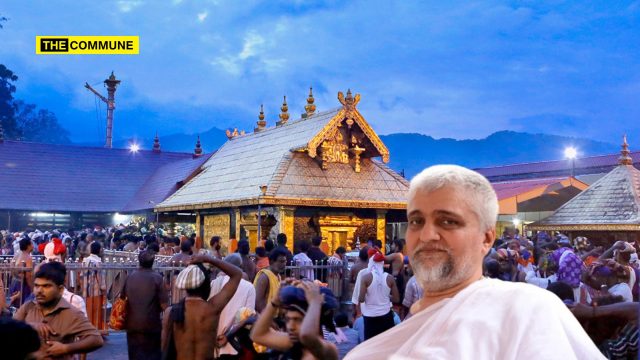
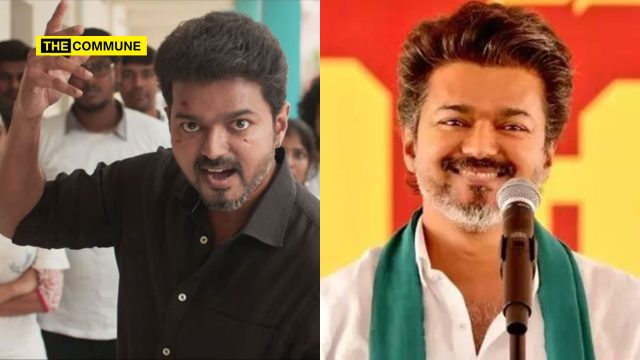
All Talk, No Work: This Is TVK’s Reality

vijay

When an NDTV crew recently met actor-turned-politician Vijay, the interaction was presented as a flattering portrait of a thoughtful, grounded leader in waiting. The reportage leaned heavily on praise — of his sincerity, his clarity, his appeal — projecting Tamilaga Vettri Kazhagam as a well-oiled alternative ready for 2026. But beyond the curated optics of a friendly media interaction lies a far less flattering reality. On the ground, TVK continues to struggle with basic organisational execution, missed schedules, and prolonged silences at critical moments, raising serious questions about whether the image being sold matches the party’s actual capacity to deliver.

Ever since the buzz about the launch of his political party, Vijay and Tamilaga Vettri Kazhagam have been just big on optics and low on substance.

After claiming to launch the party around Ambedkar Jayanti, Vijay formally founded the party on 2 February 2024, which many claim was astrologically aligned.

TVK has attempted to position itself as a disruptive alternate force in Tamil Nadu politics. Through speeches, television visuals and social media messaging, actor-turned-politician Vijay projects confidence, moral clarity and a roadmap to power in 2026. Yet, beneath the spectacle, a persistent problem shadows the party: an inability to execute even its own basic schedules.

The contradiction is becoming harder to ignore – grand promises at the top, administrative drift at the bottom.

Schedules That Never Happen

Multiple internal plans prepared by TVK’s strategy team remain unfulfilled. These include booth committee meetings, a three-district tour, a two-district tour, and even the election campaign committee’s public meeting that was supposed to begin earlier. None of these have been fully carried out.

In Tamil Nadu, where elections are won through disciplined booth-level machinery, this failure is not cosmetic. It suggests an organisation struggling with routine political work – planning, coordination and follow-through. For cadres, this has translated into confusion and frustration. For observers, it raises doubts about whether TVK can scale from rhetoric to governance.

Karur: When Optics Turned Costly

The limits of TVK’s organisational capacity were most tragically exposed on 27 September 2025, at Velusamypuram in Karur district, when a massive crowd crush at a TVK rally killed at least 41 people and injured around 100.

The rally showed Vijay’s undeniable crowd-pull but also the absence of crowd control. Investigations pointed to poor planning, lack of buffer zones, inadequate volunteer deployment and weak command structures. Tamil Nadu’s affidavit before the Supreme Court explicitly cited “reckless, negligent and uncoordinated actions” by TVK organisers, along with Vijay’s delayed response.

Vijay’s first public video message addressing the tragedy came only on 30 September 2025, two to three days after the incident. More striking was what followed: a prolonged absence from live public engagement. His cadre also seemed like headless chicken, unable to decide what to do, how to react, and what to defend.

His first appearance before a live audience after Karur was an indoor “public outreach” meeting near Kancheepuram on 22 November 2025, nearly eight weeks later. His next large open-air public meeting came only on 9 December 2025, in Puducherry.

During this period, district units reportedly drifted without direction. Routine activities stalled, membership drives did not restart, and local leaders hesitated to organise programmes or spend funds without signals from the top. In Karur itself, the district office reportedly remained shut, with no senior TVK leader visiting victims’ families.

For a party promising decisive, accountable governance, the contrast was stark.

Big Promises, Broad Brushstrokes

Even as organisational cracks showed, TVK’s political promises expanded. While the party has not yet released a full manifesto, Vijay’s speeches and statements outline a sweeping vision:

  • A corruption-free, transparent government, described as “as clean as Siruvani water,” with zero compromise on welfare.
  • Framing DMK and AIADMK as “corrupt” forces, while pledging that TVK leaders “will never do corruption.”

From his 22 November 2025 speech onward, Vijay has signalled welfare and economic promises likely to feature in the 2026 manifesto:

  • Permanent housing for all families in Tamil Nadu.
  • A two-wheeler for every household, with eventual upward mobility towards car ownership.
  • At least one stable income source per family and education reforms to improve youth employment.
  • A goal that everyone completes at least an undergraduate degree, with better government schools and colleges.
  • Upgraded government hospitals usable “without fear.”
  • Strong flood-mitigation and disaster-resilience systems, especially for Chennai.
  • Stricter law-and-order enforcement and enhanced safety for women.

On social justice and federal issues, TVK positions itself as strongly pro-Tamil and anti-centralisation:

  • Opposition to the Citizenship Amendment Act (CAA) and the Hindi push linked to the National Education Policy.
  • Demand for retrieval of Katchatheevu to protect Tamil fishermen.
  • Emphasis that “all are equal at birth,” rejection of “landlord politics,” and promises of non-elite, younger leadership.

Women, youth, farmers, labourers, fisherfolk, weavers, the elderly, persons with disabilities and trans persons are repeatedly cited as priority beneficiaries.

Yet, as of January 2026, these remain directional pledges, not a detailed, costed manifesto. TVK has only constituted a manifesto committee and begun consultations. The final document for the Assembly elections is still awaited, but will it arrive on time?

This deepens the central tension: the larger and more ambitious the promises become, the more glaring the party’s execution deficit appears.

Leadership Circle And The Guidance Gap

Another factor contributing to TVK’s execution deficit is the apparent lack of coherent political guidance around Vijay. Key figures in his core team, including Aadhav Arjuna and John Arokiyasamy, have so far failed to translate ambition into operational clarity. While they may be active in messaging and coordination, there is little evidence of structured political mentoring, crisis management planning, or ground-level organisational discipline being imposed from the top.

The repeated failure to complete schedules, the confused response after Karur, and the prolonged silence at critical moments suggest a leadership ecosystem more comfortable with optics and announcements than with the hard, unglamorous work of building a party. For a first-time political entrant like Vijay, the absence of firm, experienced guidance has left the organisation drifting – big on intent, weak on execution.

Lazy Politics Or Growing Pains?

TVK’s approach is seen as lazy politics – heavy on announcements, light on follow-through. Supporters argue the party is young and still finding its feet. But in an election cycle, time is unforgiving.

Tamil Nadu has seen charismatic leaders before. What has decided power, repeatedly, is organisation – booth committees, disciplined cadres, crisis response, and second-rung leadership.

For now, TVK’s reality remains this: a party that struggles to complete a schedule, delayed in responding to tragedy, yet promising to run a state with sweeping reforms. Until execution begins to match ambition, the charge will persist – from within and outside, that TVK is selling a vision far larger than its capacity to deliver.

As 2026 approaches, the question is no longer whether Vijay can inspire crowds. It is whether TVK can prove it knows how to do the unglamorous work of politics – on time, on the ground, and without excuses.

Subscribe to our channels on TelegramWhatsApp, and Instagram and get the best stories of the day delivered to you personally.
The News Minute Turns A Quip Into A Communal Hit Job Against Justice GR Swaminathan

A judge makes a harmless quip at a public function. A media outlet turns it into a morality play about judicial bias, communal danger, and institutional collapse. That is how The News Minute sets a narrative, paints someone they don’t like (especially from the opposite camp) as a bigot.

A recent 3 minute short by The News Minute on Justice GR Swaminathan’s remarks at an event organized by Dhara Foundation recently. The video does not merely critique a judicial order or examine public conduct. Instead, it carefully strings together insinuations that paint a sitting High Court judge as communal, reckless, and politically aligned, all while cloaking the exercise as concern for “public confidence in the judiciary.”

What starts as a quip about the Thirupparankundram Karthigai Deepam court order devolves into a vicious narrative painting a sitting Madras High Court judge as communal, reckless, and unfit. And the hypocrisy? TNM deploys a young Muslim girl, Azeeza Fathima, as their star witness against Sanatana Dharma and this very judge, while staying stone-silent on card-carrying judges who moonlight as political activists.

Contempt In Plain Sight: TNM’s Poisonous Quotes

TNM doesn’t just critique; it poisons the well with statements that scream contempt of court. Consider these direct pulls from their script: “This was not just a joke. It was a reference to a controversy simmering with communal tension in Tamil Nadu.”

Here, TNM flatly labels a lawful judicial order of allowing Karthigai Deepam lamps on the Deepathoon as inherently “communal.” No analysis of the order’s merits, no context on the history of the ritual or annual traditions. Just a smear imputing communal motive to a sitting judge. Under Contempt of Courts Act, 1971 (Section 2(c)), this edges into “scandalizing the court” by attributing bias without evidence, eroding public trust in judicial impartiality.

Worse follows: “Justice Swaminathan allowed it. The order triggered protests and raised serious law and order concerns… a judge whose order almost triggered a law and order situation.”

This is a blatant accusation. TNM holds the judge personally responsible for “triggering” protests and near-riots, as if maintaining order is his job, not the Tamil Nadu Police’s or DMK government’s. Such language implies judicial recklessness, precisely the kind of prejudicial commentary courts have struck down (recall EMS Namboodiripad v. T. Narayanan Nambiar, 1970, where ascribing improper motives to judges was held contemptuous).

The script piles on: “A judge whose order almost triggered a law and order situation, who now faces an impeachment notice, is publicly joking about it and framing his future work in explicitly religious terms.”

The Joke As Evidence, Religion As Indictment

The video treats Justice Swaminathan’s joke about the Deepam controversy as proof of impropriety, asking whether “levity is the right response” from a judge facing impeachment demands. It then ties this to his past public statements on Sanatana Dharma, including remarks such as “if you protect the Vedas, the Vedas will protect you,” and his hope that Sanatana Dharma will live forever.

Judges are allowed to hold beliefs. Judges are allowed to speak on culture and philosophy. What the video does is not question the legal correctness of any judgment but suggest that these beliefs, when articulated, undermine judicial impartiality itself.

That suggestion is serious. It implies that religious conviction is incompatible with judicial office, but only when the religion in question is Sanatana Dharma. Did they forget that it was the same judge who quotes the Bible and Quran with equal ease?

TNM links a pending impeachment (sought by DMK partisans) to “religious” impropriety, suggesting the judge’s personal faith (Sanatana Dharma references) disqualifies him. This isn’t fair comment; it’s a motive-imputing hit-job on a live judicial tenure. As a journalist, as a media house, they do not question the grounds for impeachment – do they need lessons?

What is worse you ask – TNM’s double standards hit peak absurdity when they parade their minion to pontificate on Sanatana Dharma and critique Justice Swaminathan’s beliefs. Yet this same channel ignores judges who flaunt political affiliations, Leftist darlings at rallies, “secular” icons soft-pedaling on Islamist extremism, or post-retirement Congress joiners. No videos, no “public confidence” lectures for them. Why? Because TNM’s outrage is partisan, not principled.

From Critique To Character Assassination

Line by line, the video accumulates insinuations:

  • that the judge’s order was “communal”
  • that it emboldened extremist groups
  • that it risked public disorder
  • that his religious language reveals bias
  • that joking about controversy is unbecoming
  • that impeachment demands lend moral weight

Individually, each claim may sit just within the boundary of harsh criticism. Together, they form a portrait of a judge as irresponsible, partisan, and unfit, without ever saying so explicitly. This is how contempt is laundered through tone.

Indian courts have repeatedly held that while judgments may be criticised, imputing motives, questioning integrity, or suggesting alignment with political or communal forces crosses a line. The News Minute skirts that line not once, but consistently.

The Real Threat To Judicial Credibility

TNM ends with a sanctimonious flourish: “The judiciary… rests on public confidence. And that confidence is shaped… by what judges say and do outside [court].”

Irony alert: it’s TNM’s contempt-laced hit-pieces that shred confidence, selectively targeting Hindu-leaning judges while cheerleading the ideologically aligned. If Azeeza Fathima’s “take” on Sanatana Dharma merits airtime, why not grill DMK ministers who make anti-Hindu statements, call for eradication of Sanatana Dharma? Or summon experts on judges who’ve ruled with blatant political wink-wink?

Subscribe to our channels on TelegramWhatsApp, and Instagram and get the best stories of the day delivered to you personally.
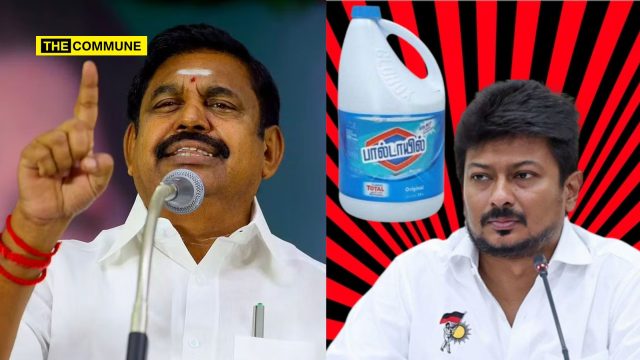
DMK Govt’s ‘Sollin Selvar’ Awardee Surya Xavier Spews Venom Against BJP Leader H. Raja Targeting His Brahmin Identity

In a despicable display of hateful venom that exposes the rotten underbelly of Dravidian politics, Surya Xavier—honored with the DMK government’s “Sollin Selvar” award for ‘Tamil oratory’ in 2021—has once again unleashed a torrent of hate against the Brahmin community. This time, his target is BJP leader H. Raja, whom he viciously mocked while the veteran politician is said to be admitted in hospital for illness.

Xavier’s social media post, dripping with sarcasm and bigotry, not only questions Raja’s Tamil roots but peddles fabricated narratives about his ancestors’ migration and ‘beggary’, all while cloaking his bile in faux concern for Raja’s health.

Xavier’s rant begins by alleging that Raja’s forebears fled Bihar in desperation, seeking sustenance from Tamil Nadu’s temple offerings:

He escalates the slur, claiming they begged for land grants by “showing their buttocks to kings” (“குண்டி காட்டி மானியம்”) in Melattur near Thanjavur, and mocks Raja’s devotion to Ayyanar as his kuladeivam, insisting no such deity fits a “Harihara Sharma” (a clear jab at Brahmin nomenclature).

Xavier makes baseless accusations against H. Raja of harboring a deep-seated wish for the destruction of Tamil families, ending with a sarcastic prayer for Raja’s recovery.

Surya Xavier’s post is a calculated assault on Raja’s Brahmin identity.

Accompanied by an image of Raja, the post reeks of the kind of divisive rhetoric that has long plagued Tamil Nadu’s political discourse, courtesy of the DMK ecosystem.

Surya Xavier is a serial offender who unleashes hateful abuses against Brahmins.

Just a year ago, in January 2025, he ridiculed IIT Madras Director Prof. V. Kamakoti’s scientifically backed comments on the medicinal properties of cow urine (gaumutra) by posting: “Iyer Iyengar Technology (IIT) – We don’t even need a pipe, we will just suck it by mouth.” The crude imagery, aimed at “Iyer” and “Iyengar” Brahmins, was a direct attack on their cultural practices, ignoring peer-reviewed studies from journals like Nature and US patents that validate such traditional knowledge.

Xavier infamously labeled Brahmins as “dogs” in a tirade against former AIADMK Minister Ma Foi Pandiarajan: “They had conspired to make Tamil Nadu as a hunting ground for Brahmin dogs. Ma Foi Pandiarajan is a dog who survives by licking.” He even branded Tamil Nadu Governor RN Ravi as “Aryan” Ravi, fabricating tales of his ancestors migrating from Afghanistan via the Khyber Pass to “control” the region. Such slurs aren’t isolated outbursts; they form a pattern of unbridled hate speech of the Dravidian Model.

What makes this particularly galling is the DMK government’s unabashed patronage of this hate-monger. Chief Minister MK Stalin personally released Xavier’s book, Thirupparankundram – A Comprehensive Historical Study, on January 6, 2026, at the Chennai Book Fair. The 175-page tome, churned out in a mere 25 days of “research,” purports to cover the hill’s geological history, worship traditions, and “religious harmony”—including dargahs and secularism—amid ongoing controversies over the site’s Karthigai Deepam festival. The DMK has defied court orders on the matter and is appealing to the Supreme Court, making Xavier’s book a convenient tool in their arsenal to reinterpret and secularize Hindu sacred sites. Priced at a subsidized ₹200, it’s being peddled as scholarly work, but critics see it as part of a coordinated Dravidianist effort to erode Sanatana traditions under the guise of “harmony.”

Even as they loudly claimed that “Kovattakudi Thenayiram Ayyanaar is our family deity,” those who knew the history of Tamil Nadu laughed through their asses and said that there was no such clan deity for the name Harihara Sharma.

DMK Govt Arrests BJP IT Wing Functionary For Posting About Bihar Migrant Family’s Triple Murder In Chennai

The DMK government in Tamil Nadu has arrested BJP Tamil Nadu IT Wing State Secretary Pravin Raj (known on X as @SanghiPrince) for highlighting a gruesome triple murder case involving a Bihar migrant family in Chennai. The arrest, which occurred amid escalating criticism of the state’s deteriorating law and order, has drawn sharp condemnation from BJP leaders, who accuse the Stalin regime of stifling free speech while failing to curb rampant crimes.

The controversy stems from a shocking incident in Chennai’s Adyar area, where the body of Gourav Kumar, a 24-year-old migrant worker from Bihar, was discovered stuffed in a garbage bag on January 26, 2026. Police investigations revealed that Kumar, who worked as a security guard at a polytechnic college in Taramani, had been brutally murdered along with his wife and their two-year-old child (initial reports mentioned a seven-year-old, but details clarified it was younger).

The perpetrators allegedly dumped the bodies in separate locations, turning a routine missing persons case into a horrific triple homicide.

Pravin Raj had posted about it on X on January 28, blamed the DMK for the crime pointing out the party’s anti-Hindi, anti-North Indian politics.

However, the DMK government’s Fact Check Unit (@tn_factcheck) swiftly jumped in defence with a debunking post the same day, clarifying that the five arrested suspects—Sikander, Narendra Kumar, Ravindranath Thakur, Vikas, and others—were all from Bihar.

Pravin Raj had hit back at the DMK government’s controversial fact-check unit saying “According to this DMK page, ‘Intoxicated goons raping a Bihari woman inside TamilNadu college and killing her husband and then killing the 2 year old child’ is OK, a minor crime. But sharing that news and saying crime against North Indians increased in North Indian hater DMK govt is not ok, a major crime.”

He referenced prior incidents, like the murders of migrant workers named Suraj, accusing the DMK of whitewashing crimes to deflect from law and order failures.

The DMK government proceeded to arrest Pravin Raj, framing his posts as attempts to incite communal discord and spread false narratives about anti-North Indian sentiment in Tamil Nadu. Critics argue this is a blatant misuse of power, especially since the murder did occur in Chennai—highlighting the state’s responsibility for migrant safety, regardless of the perpetrators’ origins.

BJP Tamil Nadu President Nainar Nagendran lambasted the arrest in a strongly worded X post. He assured Pravin Raj’s family of full legal support from the BJP, emphasizing the party’s stand against the DMK’s “rusted iron fist” that prioritizes silencing critics over addressing crimes, and said that the time has come to vote out the tyrannical DMK regime.

This arrest fits a troubling pattern under the DMK regime, where social media users—particularly from opposition parties—are targeted for exposing governance lapses, while actual criminals roam free.

Tamil Nadu has seen a spike in violent crimes, including multiple attacks on migrants, yet the government’s response often veers toward damage control rather than accountability.

This is not the first time the DMK government has gone after Pravin Raj.

Earlier, was booked for a social media post targeting Dharmpuri DMK MP Senthilkumar over the Parliament security breach incident.

In 2023, he was arrested allegedly for posts targeting the DMK and the Congress.

Subscribe to our channels on TelegramWhatsApp, and Instagram and get the best stories of the day delivered to you personally.
“Stalin, Karunanidhi Are Tamil Names?”: TTV Dhinakaran Hits Back At DMK-Congress Ally VCK MP Thirumavalavan For Derogating Rajaraja Chola And Rajendra Chola

VCK chief and MP Thol. Thirumavalavan launched a scathing attack on Tamil Nadu’s iconic Chola emperors Rajaraja Chola and Rajendra Chola, questioning the very “Tamilness” of their names and blaming ancient Tamil kings for the supposed cultural decline of the Tamil people.

Speaking at a public event, Thirumavalavan declared: “Is ‘Rajaraja’ a Tamil name? Is ‘Rajendra’ a Tamil name? They are all people who put northern-language names on themselves, who were mesmerised by the northern language (Sanskrit), who were lost in the sacrificial rituals and yajnas of Brahmins.”

He went further, stating bluntly: “I have no respect for any king. I do not see anyone as some great power. It was in the time of those kings that this country became worthless, became Sanskrit-ised, became Hindutva-ised.”

Thirumavalavan accused the Chera, Chola, Pandya, and Pallava dynasties of sidelining Tamil from its central place in temples and culture: “It was in the time when these Pandya kings, Chola kings, Chera kings, Pallava kings ruled that Tamil, which was in the sanctum sanctorum of the Tamil temples, was thrown out.” He added that these rulers “paved the way for the destruction of our Tamil and the destruction of our culture.”

The remarks have sparked sharp backlash, particularly from those who view the Chola legacy as a symbol of Tamil pride, military prowess, temple architecture, and global maritime influence.

Responding pointedly to the VCK leader’s comments, AMMK leader TTV Dhinakaran hit back with a stinging counter-question saying: “Does he have the courage and boldness to ask if the names of former Chief Minister Mr. Karunanidhi and current Chief Minister Mr. M.K. Stalin are Tamil names?”

Subscribe to our channels on TelegramWhatsApp, and Instagram and get the best stories of the day delivered to you personally.