Home Blog Page 938

Deliverance From Kabul – A Reference To An Actual Event

On August 15, 2021, the Taliban occupied Kabul again. Government employees, private institutions, security forces, the presidency, and Foreign-Afghans were in an awful situation and had even lost their escape route. In those days, the soldiers would take off their uniforms and throw them into the trash. They preferred walking barefoot to having army and police-military boots. The city of Kabul had turned into a zombie city; everyone was trying to escape from this city and did not want to stay in this city and continue to live. All people cultivated the thought of escape in their brains and bones. Because the Taliban, from the first period of its dominance and the last 20 years, killing people, bombing, and committing suicide were their honorable and legal occupation. And they have put the people of Afghanistan in a state of confusion.

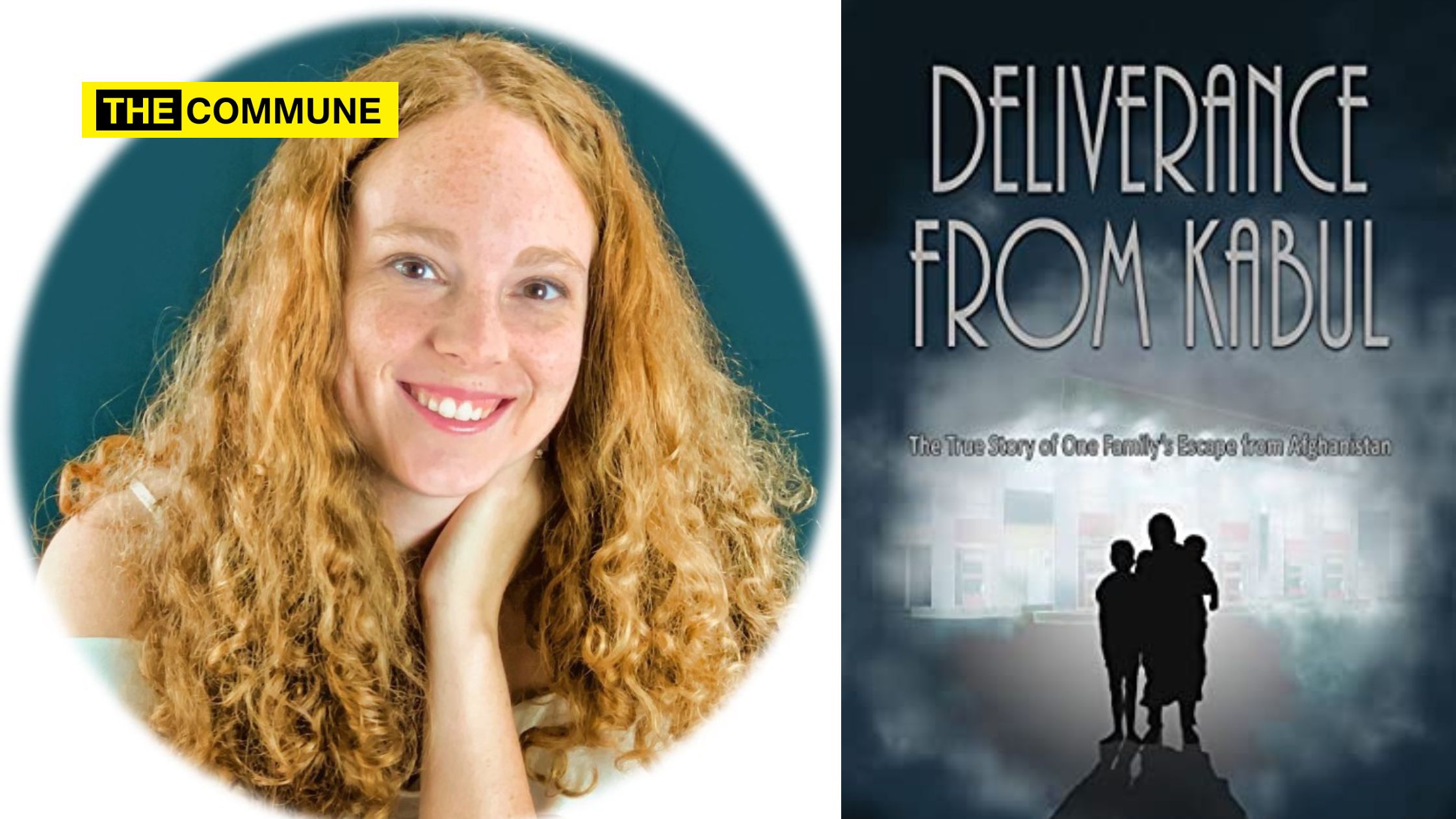
The book “Deliverance From Kabul” describes a part tragic events of August 15 in Afghanistan. This book, written by K. E. Nielsen, translated by Asadullah Jafari “Pezhman” in March 2023, in 90 pages, has been published by Sibesorkh Publishing House in Tehran. Mrs. Nielsen is an American author who teaches TOEFL and ESL programs to adults and children. Nielsen has been teaching English for more than seven years. He has unique perspectives on effective teaching and learning concerning language teaching. Mrs. Nielsen has been writing stories since childhood; with that being said, Nielsen’s stories and teachings are highly praised and famous.

Anyway, the non-fiction book Deliverance From Kabul tells the story of a family, or rather, the story of a woman named Somia with her two children, height and half-height, who were stuck in Kabul airport. This family is an American-Afghan citizen and came to Afghanistan to visit her relatives, but this visit coincides with the fall of the Republican government. Somayeh and her children were in a dangerous security situation. In total, the book includes 13 chapters. Twelve chapters of this book are written about the rescue of Sommia and her children, and one chapter contains shocking reports of the Taliban’s crimes in Afghanistan. The book’s general structure is research fictional, but the text of the book, in addition to pain and fears, also skillfully carries intelligence issues with it. Therefore, I will briefly address three crucial points in the layers of this book.

The Troubles of the US Soldiers Rescue Team

However, it is understood from the layers of the book that the rescue team of the American soldiers was in a bad situation and faced many dead ends in the rescue operation. Among the crowd, it was difficult for the rescue team to identify people whose lives were in danger. Kabul Airport was a refuge for families and those who wanted to escape from Kabul. The weakness of the rescue team of American soldiers is visible in the book and is palpable. From the chats that Somayeh had with Mrs. Nielsen, it is also known that the Americans were in such a situation that the soldiers and their rescue team were unable to understand the events and were confused.

Mrs. Nielsen contacted the American intelligence department several times to save Sommia and her children, and they only made empty promises to her. We can also understand from the book that high-ranking American officials were also in contact with the Taliban group in those days. Some employees of the American embassy in Kabul allowed American-Afghan citizens to enter the American camp with the agreement of the Taliban. For more explanation, I will mention some examples in layers of the book:

When Kyle called me asking why the rescue team hadn’t arrived yet, I texted him and explained; Somia and the group that came to save you were attacked by the Taliban group. That’s why they had to go back. But our colleagues are working hard to get you out of that predicament of Kabul airport” (from the book).

Kyle is an intelligence officer for the US forces in America: “We can’t say definitively what you should do or what you shouldn’t do, but in my personal opinion, I think you have to be patient and see if there is an opportunity to meeting with the rescue team or not. If you don’t get this opportunity again, then go to Jalalabad located in the east of Afghanistan; But for now, you have to be patient until the situation at the Kabul airport clears up. I hope that the situation will return to normal so that we can save you from the marsh called Kabul Airport” (from the book).

In any case, the layers of the book show that the Americans were shocked by the situation and could not even guarantee their own withdrawal. Nielsen has intelligently written in her book that the talks are going on with the Taliban, and they are trying to reach a partial agreement so that the Americans can get out of Afghanistan.

Religion and Beliefs

The topics of religion, faith, and belief are very prominent in this book. The book’s author considered faith and devotion superior to reason and has magnified the subject of religion and belief so that the book should be examined from other angles as well. Sometimes Mrs. Nielsen is more religious and extreme than the Taliban, but with the difference that the Taliban are followers of Prophet Mohammad and Nielsen is a follower of Jesus Christ. In any case, Mrs. Nielsen constantly advises Somia to believe in “God.” Sometimes she sends a message to Somia I am praying for you tonight to get out of the Kabul airport. In the coming nights, I plan to hold a group prayer, you should also pray and with the help of God, you will be saved from there. This part is very interesting and should be deepened to understand the differences in the conditions of religion and faith at any time and place.

Interestingly, Somia escapes from a highly religious, extremist, and fundamentalist group called the Taliban; still, her way to escape is paved by another highly religious person named Nielsen sitting in America. Somia stayed with her small children for several nights at the Kabul airport, and Nielsen organized mass prayers in America. In any case, as an example, I would like to point out some excerpts from the book about Mrs. Nielsen’s prayers and recitations:

I again sent a message to Somia: “Be strong and full of strength. God willing, you will return home and start a new life with new dreams. Be aware that we love you and God loves you more than anyone. God will protect you, (from the book). In the second chapter, she asks Somia to ask for forgiveness from God and ask only him for help. As an example: Whenever I find myself in such situations, I ask God for help and ask for his forgiveness, I close my heart to him and cry out to him: Oh! great God, my life is in your hands. I know that Jesus was killed by wicked and evil people. He can indeed forgive the sins of people and humans, but he defeated death and rose again. I believe in his life. We cannot guarantee anything in life, but those who believe in God, He guarantees everything in their lives.”

Mrs. Nielsen’s messages are effective in that situation, according to her. Because she felt Somia was in a bad case, and in that situation, only self-confidence and turning to God was not another way to calm her down. In this way, Nielsen can be seen as a highly religious person who writes religious dictation for Somia from a distance. But Mrs. Nielsen’s role in getting Somia and her children out cannot be ignored because, besides praying, she threw herself into water and stones to save Somia.

Kabul and Ghost of Dread

The most important part of the book Deliverance From Kabul is the theme of fear. The Taliban have surrounded the Kabul airport. They have no respect for people and treat people as they want. During the few days and nights that Somia stayed at the airport, she and her children were haunted by fear and terror every moment. She hides from every Taliban fighter she sees, tears of fear welling up in her eyes. Even the hope of survival is taken away, and she sends a message to Nielsen to save her from hell called Kabul Airport. Sometimes she cannot express it and writes to Nielsen: I feel that my life will end here. The cause of my death could be two things, either fear or the Taliban forces’ shots. As a sample, I will include some of Mrs. Somia’s SMS below:

Somia replied: I am not really well. I am rolling between all kinds of illnesses, sleep is forbidden, and I don’t know what to do or where to go. When I read the answer to her message and realized that she had fallen ill because of the chaotic situation in the Afghan market, the love and affection that I had planted in my heart for her, my heart started to beating. At that time, I was deeply tormented by my conscience. It was several days that I could not eat a full meal myself. The failure of today’s evacuation plans had numbed me so much that I could no longer move and feel good.

Ultimately, it can be concluded that the book “Deliverance From Kabul” expresses a bitter reality of our homeland, Afghanistan, which happened on August 15, 2021, contrary to the expectations of Afghanistan citizens. The Taliban captured Kabul for the second time by the force of gun violence or under a political deal. Also, this book answers these questions for the readers; Those days when people went to Kabul airport due to the fear of the Taliban, they planned to escape from there, and what happened there? At the same time, this book recounts field narratives from corners of the events of those days.

This piece was written by Aman Shadkam and translated by Asadullah Jafari “Pezhman”

Click here to subscribe to The Commune on Telegram and get the best stories of the day delivered to you personally.

Dear Obama, STFU And Mind Your Own Business!

Barack Obama’s recent interview with Christine Amanpour has received a lot of flak from Indians across the world. In one part of the interview which was shared by the anchor on Twitter, we see Obama has some “advice” for his friend Prime Minister Narendra Modi about democracy and minorities. 

“The protection of Muslim minorities in a majority Hindu India … “Part of my argument would be that if you do not protect the rights of ethnic minorities in India, then there is a strong possibility India at some point starts pulling apart. And we’ve seen what happens when you start getting those kinds of large internal conflicts,” he said.

Well, Mr. Obama, thanks but no thanks. And his words hinting at the possibility of India breaking up if the country did not do more for its minorities – what right does a former President of a first-world country have to comment on a country much more populous than his, a country that is the largest democracy in the world, a country that has had 2 women Presidents and one woman PM.

In the interview, Obama keeps mentioning a “Hindu India” and a “Muslim India”. What does he mean by that? By mentioning pulling apart, does he mean that India will get balkanized like Yugoslavia? Is he even listening to himself? It sounds like Obama wants to pit the Muslim India against a Hindu India. And it is anybody’s guess which side Obama will take. Even after these many years, the white man’s divide and rule mindset has not gone. Maybe his lobbyist friends and colleagues have been feeding him misinformation all along, but no Sir, there is only one India. His words only seem like a grand attempt to manipulate and/or gaslight the already apologetic Hindus to have their country Islamized. 

Mr. Obama, India underwent a painful partition 75+ years ago and today, the citizens will not allow for something so traumatic, heinous, and murderous to happen ever again. 

Obama’s Claim To Fame?

Barack Obama’s claim to fame was just that he was Black, his ethnicity alone played a major role in getting him elected. Well, he was/is a great speaker, an orator. Talks smooth like a butter.

What else did he achieve, oh he apparently got Osama bin Laden killed. Awesome!

But readers, you do remember that America under his presidency meddled with the affairs of Libya, leading to the assassination of Muammar Gaddafi in 2011 and made a mess out of that country in the name of “saving democracy”.

Obama’s Presidential Years 

Obama became POTUS in 2008. Yes, he inherited the Iraq and Afghanistan situation from the previous Bush regime, no doubt about that. He proclaimed he wanted to make the situation peaceful. Well, very good to hear. But what exactly happened? In 2009, within a year of his Presidency, he received the Nobel Peace Prize for his “extraordinary efforts to strengthen international diplomacy and cooperation between peoples”. Amazing.

Did you know in 2016 alone, during his second term, the US dropped 79% of the total bombs dropped in attacks on Syria and Iraq, apart from raining down bullets on people in Afghanistan, Libya, Yemen, Somalia, and Pakistan? That’s seven majority-Muslim countries.

Obama speaks about minorities in India, especially Muslims, but he completely forgot this fact when he bombed all those Muslim countries. Slow claps.

All through the 8 years of his presidency, he kept saying that war must be ended but he never did. We wonder who gave the US the right to meddle in the affairs of any other country, however big or small they may be.

While Prime Minister Modi believes in the fact that this is not an era of war but one of dialogue and diplomacy, Obama justified that “there could be instances when war is “morally justified.” in his Nobel Peace Prize acceptance speech.  

During his 2008 campaign, Obama presented himself as an anti-war candidate which won the hearts of the people, he was an excellent orator and that did the trick. Add to this the fact that he was running to be the first Black President in history. But as his presidency unfolded, many of his supporters were taken aback by the reality. It became evident that Obama, often described as a stubborn pragmatist, took a different approach to governance, particularly in areas like foreign policy. Contrary to expectations, Obama expanded the scope of the “war on terror” to such an extent, while making it sustainable in a way his predecessors never did. 

In his first year as president, Obama used armed drones on a greater scale than Bush had throughout his entire presidency. From the early stages, Obama’s policy stressed the use of targeted killings, employing not only drones but also Special Forces and long-range standoff missiles. Initially wrapped in secrecy, these were later normalized and made public.

This shift towards targeted killings had a profound impact on the trajectory of the “war on terror,” extending its reach across the globe. As a result, the use of drones and other methods gradually expanded, pushing the boundaries of military operations further and further, and fundamentally transforming the nature of the conflict.

Anwar Nasser Abdulla al-Awlaki, an American imam who met his demise in Yemen in 2011 due to a drone strike authorized by President Barack Obama. This incident was the first time ever that a US citizen was killed upon orders by the President.

https://twitter.com/desi_diva1/status/1672056809606062080

During Obama’s tenure as president, the frequency of drone strikes increased significantly, reaching nearly ten times the number conducted under Bush. This heightened use of drones resulted in the deaths of several thousands of people. The Air Force also began prioritising the training of drone operators over traditional aircraft pilots. 

“Light-footprint” Special Forces operated in or moved in a whopping 138 nations – or 70% of all countries in the world – in Obama’s last year in office. Actual fighting took place in at least 13 countries and targeted killing in some of those.

During the Obama presidency, approximately 1.2 million people lost their lives and 38 million people were displaced from or within countries such as Afghanistan, Iraq, Pakistan, Yemen, Somalia, Philippines, Libya, and Syria.

https://twitter.com/njohncamm/status/1672147117341659136

With all this to his name, we Indians want to share our two cents with him, Mr. Obama, please do not resort to taking digs at India or advising us, you might want to focus on Michelle running for President and keep your nose out of India’s internal matters. 

So, Mr. Obama just STFU (sleep tight for US’s sake!)

Click here to subscribe to The Commune on Telegram and get the best stories of the day delivered to you personally.

The Wire Columnist Makes Sexist Derogatory Post About PM Modi, Netizens Call For His Arrest

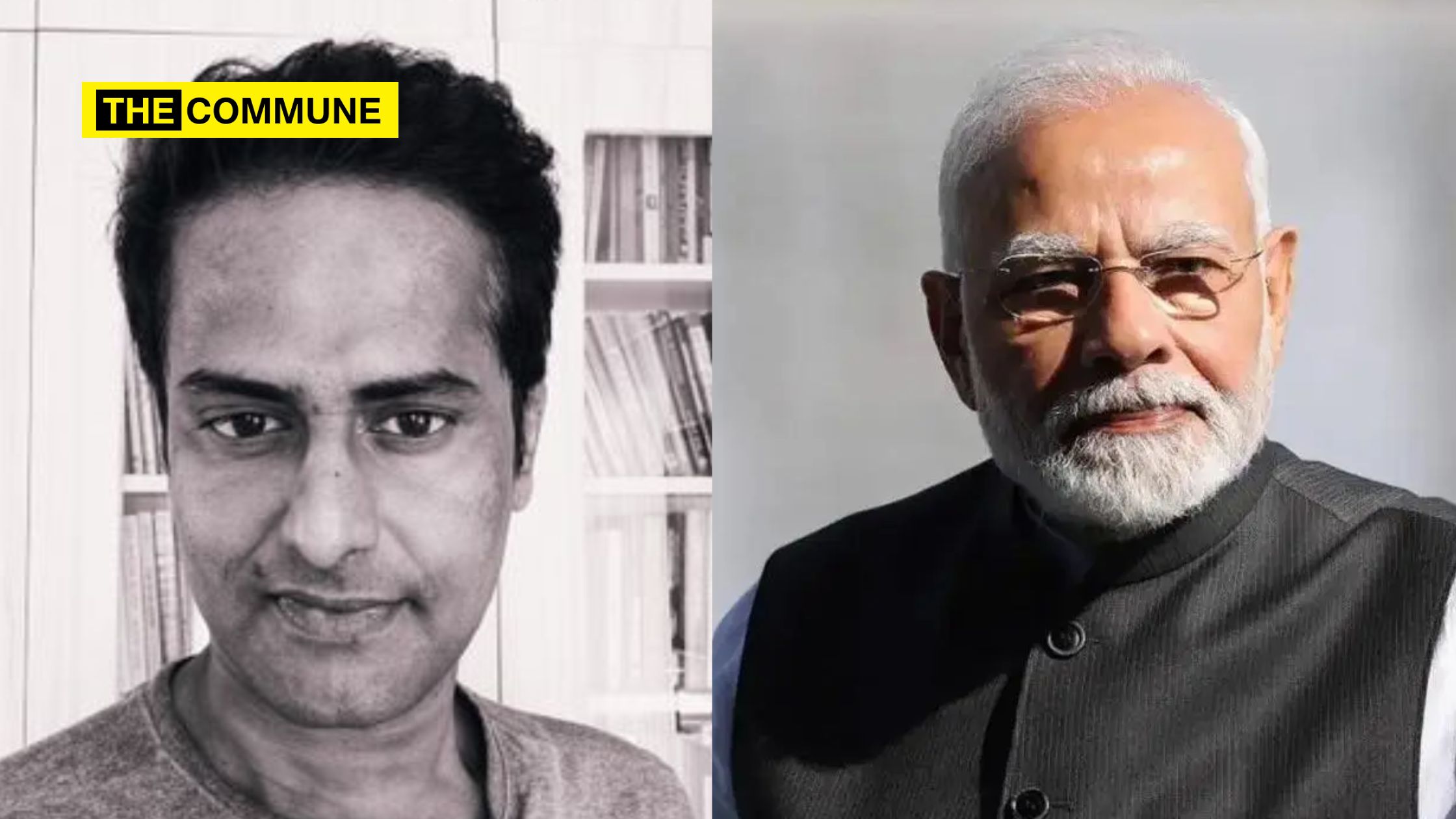
In a recent incident that has sparked outrage, columnist Ravi Nair, who writes for leftist online portals such as The Wire, Janta Ka Reporter, and News Click, shared distasteful and sexist tweets about Prime Minister Modi during his ongoing State Visit to the US. Nair’s post included images allegedly showing PM Modi looking at women’s breasts, leading to a wave of criticism and condemnation.

Nair, who has a history of being a vocal critic of PM Modi and India, claimed that a self-proclaimed celibate should not be staring in such a manner in public forums.

These photos have been debunked as photoshopped and fake long back. In fact, India Today also proved the falsity of the image, stating that PM Modi was not staring at Rihanna, as claimed by Nair.

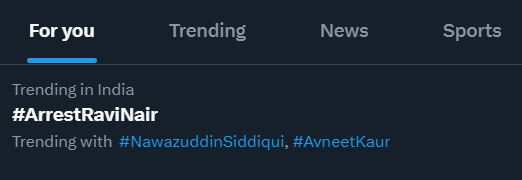
The offensive nature of Nair’s tweet has deeply upset netizens, leading to widespread calls for his accountability. The hashtag #ArrestRaviNair has gained significant traction on Twitter, with users expressing their outrage and demanding legal action against him for his derogatory post.

https://twitter.com/shivam8990ii/status/1672095535166279680

This incident is not the first time Ravi Nair, who identifies himself as a freelance journalist, has courted controversy. Earlier this year, he was found to be consistently sharing tweets against the Adani Group, a prominent conglomerate. More details in this thread:


Additionally, Nair has been associated with the Adani Watch website, run by the Australia-based Bob Brown Foundation, known for its opposition to Adani projects.

Nair’s previous defamatory articles and the false claims made on the Adani Watch website resulted in a defamation suit filed by the Adani group against him.

These instances have further added to the criticism surrounding Nair’s credibility and ethical standards as a journalist.

Click here to subscribe to The Commune on Telegram and get the best stories of the day delivered to you personally.

“President Murmu Is A Widow, So She Was Not Invited For Parliament Opening Ceremony” – Udhayanidhi Stalin Makes Offensive Comment

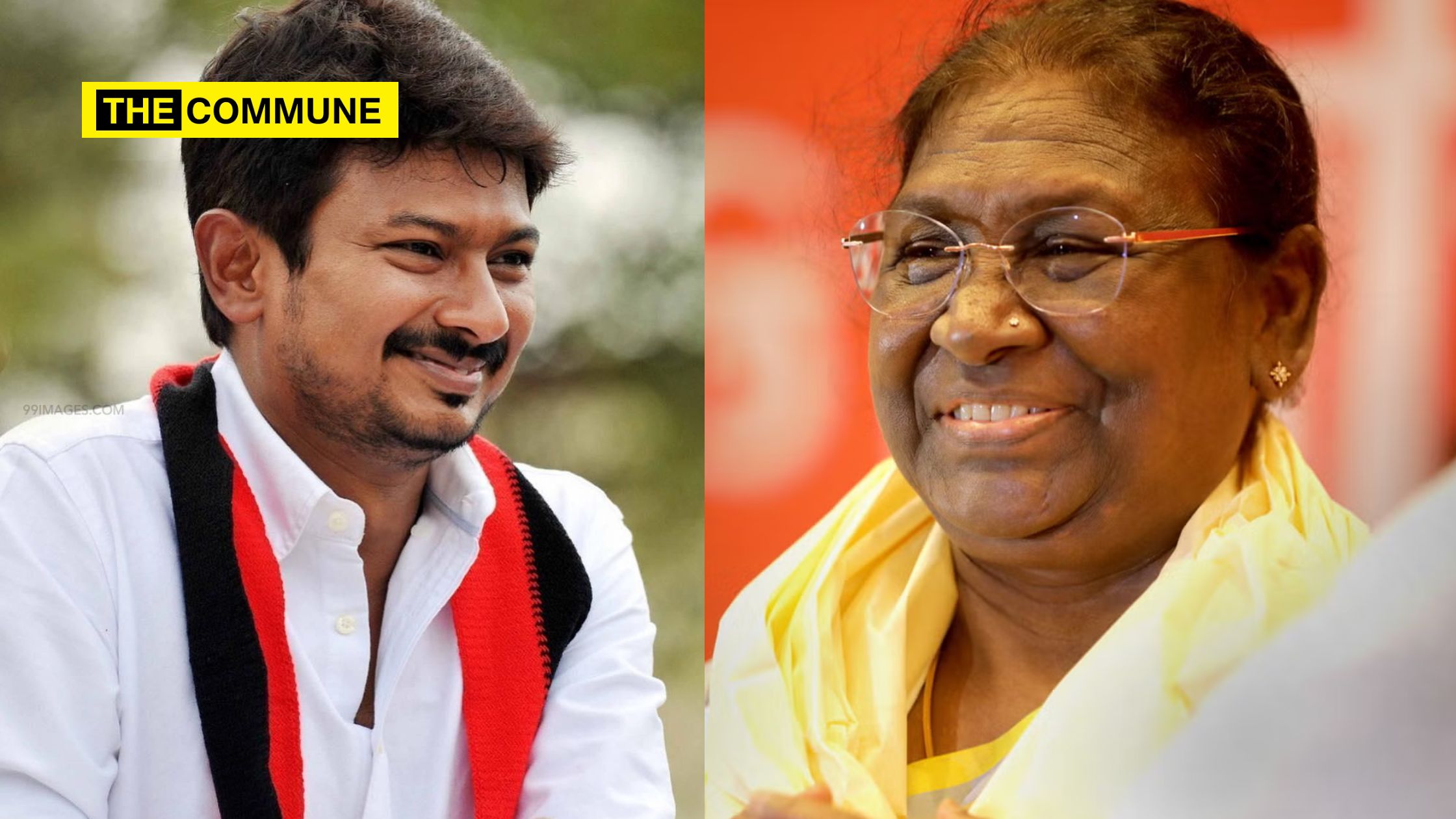
Minister for Youth Welfare and Sports Development of Tamil Nadu, Udhayanidhi Stalin is back in the news for his controversial remarks on President Murmu. Speaking at a recent event, Udhayanidhi Stalin questioned why the government did not invite President Murmu for the opening of the new Parliament building. He said, “Our President, a lady by the name of Draupadi Murmu, was not invited to the opening ceremony. Why? Because she is a widow, because she lost her children, this is Sanatan.”

Netizens criticised that with these words, Udhayanidhi Stalin, who is also the son of the sitting Chief Minister, MK Stalin, echoes the hatred for Hinduism and Hindus as espoused by the Dravidian ideology of the ruling Dravida Munnetra Kazhagam government. 

https://twitter.com/rangakidambee/status/1672098284461072384

A self-proclaimed atheist, Udhayanidhi Stalin also said, “‘I am proud to be a Christian, Sanghis will burn after learning this” at a Christmas event in 2022. 

This is not the first time members of the DMK have spoken in poor taste about Hindus and Hinduism. Just a few months ago, Dharmapuri MP, Senthil Kumar said “Sanatana forces are our biggest enemies. Sanatana forces are those that cannot be changed, such as caste, women’s oppression, Varnashrama Dharmam, and others. Certain practices in Sanatana Dharma, such as Sati, have been eradicated. However, we still have a lot of work to do with regard to the caste Varnashrama system.” 

DMK MP A Raja also has made several speeches against Hindus and Hinduism saying Sanatan Dharma weakens the constitutional. 


DMK Lok Sabha MP TR Baalu’s son and Mannargudi MLA TRB Rajaa who is the Tamil Nadu Industries Minister as well as the secretary of DMK’s IT Wing is known for peddling hate against Hindus particularly Brahmins and also north-Indians. 

Click here to subscribe to The Commune on Telegram and get the best stories of the day delivered to you personally.


From Wordplay On AI To Democracy, QUAD & Global South: PM Modi’s Speech At US Congress Strikes The Right Chord

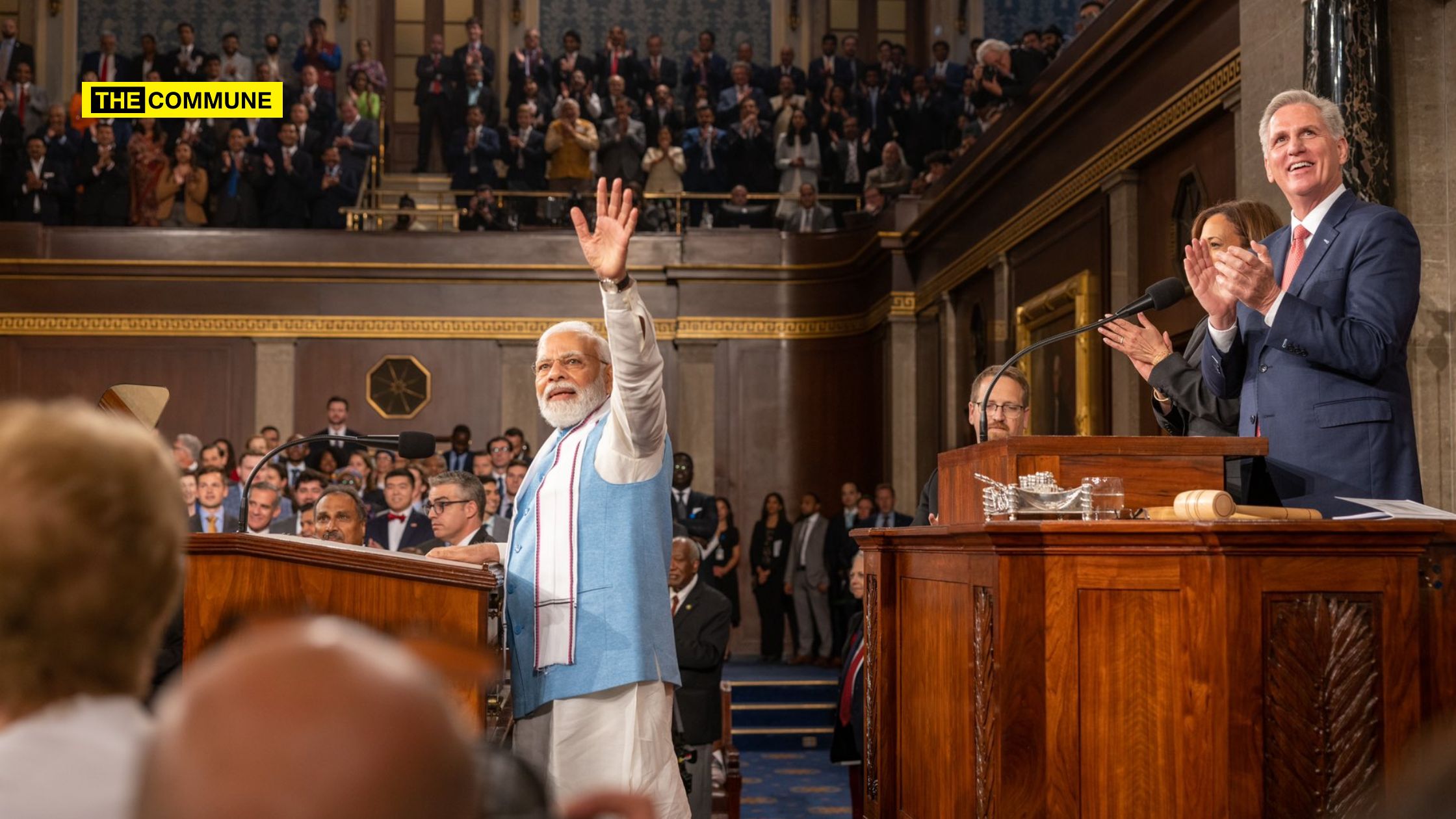
Prime Minister Narendra Modi addressed a Joint Sitting of the US Congress on 22 June 2023 at the invitation of H.E. Mr. Kevin McCarthy, Speaker of the US House of Representatives; H.E. Mr. Charles Schumer, Senate Majority Leader; H.E. Mr. Mitch McConnell, Senate Republican Leader; and Mr. Hakeem Jeffries, House Democratic Leader.

Kamala Harris, Vice President of USA was also present on the occasion.

On arrival at the Capitol Hill, Prime Minister was accorded a formal welcome by the Congressional Leaders. Thereafter, Prime Minister had separate meetings with the House Speaker Kevin McCarthy, and the Congressional Leaders.

In his address, Prime Minister conveyed his appreciation for the long-standing and strong bipartisan support in the US Congress for the deepening of India-US relations.

Prime Minister spoke about the rapid strides made in India-US bilateral relations and shared his vision for elevating bilateral ties. He also outlined the enormous progress made by India and the opportunities that it presents for the world.

Speaker McCarthy hosted a reception in the honour of the Prime Minister. This was Prime Minister’s second address to the Joint Sitting of the US Congress. He previously addressed the US Congress during his official visit to USA in September 2016.

PM Modi received 79 applauses and 15 standing ovations in his recent address at US Congress.

Here’s the full address of the Prime Minister

Mister Speaker,

Madam Vice President, 
Distinguished Members of the US Congress, 
Ladies and Gentlemen, 
Namaskar! 

It is always a great honour to address the United States Congress. It is an exceptional privilege to do so twice. For this honour, I extend my deepest gratitude on behalf of the 1.4 billion people of India. I see that nearly half of you were here in 2016. I feel your warmth as old friends. I can also see the enthusiasm of a new friendship in the other half. I remember Senator Harry Reid, Senator John McCain, Senator Orrin Hatch, Elijah Cummings, Alcee Hastings and others, who I met here in 2016, and who are sadly no longer with us. 

Mister Speaker, 

Standing here, seven Junes ago, that’s the June when Hamilton swept all the awards, I said that the hesitations of history were behind us. Now, when our era is at a crossroads, I am here to speak about our calling for this century. Through the long and winding road that we have travelled, we have met the test of friendship. A lot has changed since I came here seven summers ago. But a lot has remained the same – like our commitment to deepen the friendship between India and the United States. In the past few years, there have been many advances in AI – Artificial Intelligence. At the same time, there have been even more momentous developments in another AI – America and India. 

Mister Speaker and Distinguished Members, 

The beauty of democracy is the constant connect with the people, to listen to them, and feel their pulse. And, I know this takes a lot of time, energy, effort, and travel. It is a Thursday afternoon – a fly-out day for some of you. So, I am grateful for your time. I also know how busy you have been this last month. 

Being a citizen of a vibrant democracy myself, I can admit one thing Mister Speaker – you have a tough job! I can relate to the battles of passion, persuasion and policy. I can understand the debate of ideas and ideology. But I am delighted to see you come together today, to celebrate the bond between world’s two great democracies – India and the United States. I am happy to help out whenever you need a strong bipartisan consensus. There will be – and there must be – a contest of ideas at home. But, we must also come together as one when we speak for our nation. And, you have shown that you can do it. Congratulations! 

Mister Speaker, 

The foundation of America was inspired by the vision of a nation of equal people. Throughout your history, you have embraced people from around the world. And, you have made them equal partners in the American dream. There are millions here, who have roots in India. Some of them sit proudly in this chamber. There is one behind me, who has made history! I am told that the Samosa Caucus is now the flavour of the House. I hope it grows and brings the full diversity of Indian cuisine here. Over two centuries, we have inspired each other through the lives of great Americans and Indians. We pay tribute to Mahatma Gandhi and Martin Luther King Junior. We also remember many others who worked for liberty, equality and justice. Today, I also wish to pay a heartfelt tribute to one of them – Congressman John Lewis. 

Mister Speaker, 

Democracy is one of our sacred and shared values. It has evolved over a long time, and taken various forms and systems. Throughout history, however, one thing has been clear. 

Democracy is the spirit that supports equality and dignity. 

Democracy is the idea that welcomes debate and discourse. 
Democracy is the culture that gives wings to thought and expression. 
India is blessed to have such values from times immemorial. 
In the evolution of the democratic spirit, India is the Mother of Democracy. 
Millennia ago, our oldest scriptures said, 
‘एकम् सत् विप्रा बहुधा वदन्ति’. 
It means – the truth is one but the wise express it in different ways. 
Now, the US is the oldest and India the largest democracy. 
Our partnership augurs well for the future of democracy. 
Together, we shall give a better future to the world, and a better world to the future. 

Mister Speaker, 

Last year, India celebrated 75 years of its independence. Every milestone is important, but this one was special. We celebrated a remarkable journey of over 75 years of freedom, after a thousand years of foreign rule in one form or another. This was not just a celebration of democracy, but also of diversity. Not just of Constitution, but also of its spirit of social empowerment. Not just of our competitive and cooperative federalism, but also of our essential unity and integrity. 

We have over two thousand five hundred political parties. Yes, you heard that right- two thousand five hundred. About twenty different parties govern various states of India. We have twenty-two official languages and thousands of dialects, and yet, we speak in one voice. Every hundred miles, our cuisine changes. From Dosa to Aloo Prantha and from Srikhand to Sandesh. We enjoy all of these. We are home to all faiths in the world, and we celebrate all of them. In India, diversity is a natural way of life. 

Today, the world wants to know more and more about India. I see that curiosity in this House too. We were honoured to receive over hundred Members of the US Congress in India over the last decade. Everyone wants to understand India’s development, democracy and diversity. Everyone wants to know what India is doing right and how. Among close friends, I am happy to share the same. 

Mister Speaker, 

When I first visited the US as Prime Minister, India was the tenth largest economy in the world. Today, India is the fifth largest economy. And, India will be the third largest economy soon. We are not only growing bigger but we are also growing faster. When India grows, the whole world grows. After all, we are one sixth of the world’s population! In the last century, when India won its freedom, it inspired many other countries to free themselves from colonial rule. In this century, when India sets benchmarks in growth, it will inspire many other countries to do the same. Our vision is सबका साथ, सबका विकास, सबका विश्वास, सबका प्रयास. It means: Together, for everyone’s growth, with everyone’s trust and everyone’s efforts. 

Let me share with you how this vision is translating into action, with speed and scale. We are focusing on infrastructure development. We have given nearly forty million homes to provide shelter to over hundred and fifty million people. That is nearly six times the population of Australia! We run a national health insurance programme that ensures free medical treatment for about five hundred million people. That is greater than the population of South America! We took banking to the unbanked with the world’s largest financial inclusion drive. Nearly five hundred million people benefited. 

This is close to the population of North America! We have worked on building Digital India. Today, there are more than eight hundred and fifty million smart phones and internet users in the country. This is more than the population of Europe! We protected our people with two point two billion doses of made in India COVID vaccines, and that too free of cost! I may be running out of continents soon, so I will stop here! 

Distinguished members, 

The Vedas are one of the world’s oldest scriptures. They are a great treasure of humanity, composed thousands of years ago. Back then, women sages composed many verses in the Vedas. And today, in modern India, women are leading us to a better future. India’s vision is not just of development which benefits women. It is of women-led development, where women lead the journey of progress. A woman has risen from a humble tribal background, to be our Head of State. 

Nearly one point five million elected women lead us at various levels and that is of local governments. Today, women serve our country in the Army, Navy and Air Force. India also has the highest percentage of women airline pilots in the world. And, they have also put us on Mars, by leading our Mars Mission. I believe that investing in a girl child lifts up the entire family. Empowering women, transforms the nation. 

Mister Speaker, 

India is an ancient nation with a youthful population. India is known for its traditions. But the younger generation is also making it a hub of technology. Be it creative reels on Insta or real time payments, coding or quantum computing, machine learning or mobile apps, FinTech or data science, the youth of India are a great example of how a society can embrace latest technology. In India, technology is not only about innovation but also about inclusion. Today, digital platforms are empowering the rights and dignity of people, while protecting privacy. 

In the last nine years, over a billion people got a unique digital biometric identity connected with their bank accounts and mobile phones. This digital public infrastructure helps us reach citizens within seconds with financial assistance. Eight hundred and fifty million people receive direct benefit financial transfers into their accounts. Three times a year, over hundred million farmers receive assistance in their bank accounts at the click of a button. The value of such transfers has crossed three hundred and twenty billion dollars, and we have saved over twenty five billion dollars in the process. If you visit India, you will see everyone is using phones for payments, including street vendors. 

Last year, out of every 100 real time digital payments in the world, 46 happened in India. Nearly four hundred thousand miles of optical fibre cables, and cheap data have ushered in a revolution of opportunities. Farmers check weather updates, the elderly get social security payments, students access scholarships, doctors deliver tele-medicine, fishermen check fishing grounds and small businesses get loans, with just a tap on their phones. 

Mister Speaker, 

A spirit of democracy, inclusion and sustainability defines us. It also shapes our outlook to the world. India grows while being responsible about our planet. 

We believe: 

माता भूमि: पुत्रो अहं पृथिव्या: 

This means- “the Earth is our Mother and we are her children.” 

Indian culture deeply respects the environment and our planet. While becoming the fastest growing economy, we grew our solar capacity by Two Thousand Three Hundred Percent! Yes, you heard it right – Two Thousand Three Hundred Percent! 

We became the only G20 country to meet its Paris commitment. We made renewables account for over forty percent of our energy sources, nine years ahead of the target of 2030. But we did not stop there. At the Glasgow Summit, I proposed Mission LiFE- Lifestyle for Environment. This is a way to make sustainability a true people’s movement. Not leave it to be the job of governments alone. 

By being mindful in making choices, every individual can make a positive impact. Making sustainability a mass movement will help the world reach the Net Zero target faster. Our vision is pro-planet progress. Our vision is pro-planet prosperity. Our vision is pro-planet people. 

Mister Speaker, 

We live by the motto of वसुधैव कुटुंबकम or The World is One Family. Our engagement with the world is for everyone’s benefit. The “One Sun, One World, One Grid” seeks to join us all in connecting the world with clean energy. “One Earth, One Health” is a vision for global action to bring quality healthcare to everyone, including animals and plants. 

The same spirit is also seen in the theme when we Chair the G20 – “One Earth, One Family, One Future.” We advance the spirit of unity through Yoga as well. Just yesterday, the whole world came together to celebrate the International Day of Yoga. Just last week, all nations joined our proposal at the UN to build a Memorial Wall to honour the peacekeepers. 

And this year, the whole world is celebrating the International Year of Millets, to promote sustainable agriculture and nutrition alike. During Covid, we delivered vaccines and medicines to over hundred and fifty countries. We reach out to others during disasters as first responders, as we do for our own. We share our modest resources with those who need them the most. We build capabilities, not dependencies. 

Mister Speaker, 

When I speak about India’s approach to the world, the United States occupies a special place. I know our relations are of great importance to all of you. Every Member of this Congress has a deep interest in it. When defence and aerospace in India grow, industries in the states of Washington, Arizona, Georgia, Alabama, South Carolina, and Pennsylvania thrive. When American companies grow, their research and development centres in India thrive. When Indians fly more, a single order for aircrafts creates more than a million jobs in forty four states in America. 

When an American phone maker invests in India, it creates an entire ecosystem of jobs and opportunities, in both countries. When India and the US work together on semi-conductors and critical minerals, it helps the world in making supply chains more diverse, resilient and reliable. Indeed, Mister Speaker, we were strangers in defence cooperation at the turn of the century. Now, the United States has become one of our most important defence partners. Today India and the US are working together, in space and in the seas, in science and in semi-conductors, in start-ups and sustainability, in tech and in trade, in farming and finance, in art and artificial intelligence, in energy and education, in healthcare and humanitarian efforts. 

I can go on and on. But, to sum it up, I would say, 
The scope of our co-operation is endless, 
The potential of our synergies is limitless, 
And, the chemistry in our relations is effortless. 

In all this, Indian Americans have played a big role. They are brilliant in every field, not just in Spelling Bee. With their hearts and minds, talent and skills, and their love for America and India, they have connected us; they have unlocked doors; they have shown the potential of our partnership. 

Mister Speaker, Distinguished Members, 

Every Indian Prime Minister and American President of the past has taken our relationship further. But our generation has the honour of taking it to greater heights. I agree with President Biden that this is a defining partnership of this century. Because it serves a larger purpose. Democracy, demography and destiny give us that purpose. One consequence of globalisation has been the over-concentration of supply chains. 

We will work together to diversify, decentralize, and democratise supply chains. Technology will determine the security, prosperity and leadership in the Twenty First century. That is why our two countries established a new “Initiative for Critical and Emerging Technologies.” Our knowledge partnership will serve humanity and seek solutions to the global challenges of climate change, hunger and health. 

Mister Speaker and distinguished Members, 

The last few years have seen deeply disruptive developments. With the Ukraine conflict, war has returned to Europe. It is causing great pain in the region. Since it involves major powers, the outcomes are severe. Countries of the Global South have been particularly affected. The global order is based on the respect for the principles of the UN Charter, peaceful resolution of disputes, and respect for sovereignty and territorial integrity. 

As I have said directly and publicly, this is not an era of war. But, it is one of dialogue and diplomacy. And, we all must do what we can to stop the bloodshed and human suffering. Mister Speaker, The dark clouds of coercion and confrontation are casting their shadow in the Indo Pacific. The stability of the region has become one of the central concerns of our partnership. 

We share a vision of a free, open and inclusive Indo Pacific, connected by secure seas, defined by international law, free from domination, and anchored in ASEAN centrality. A region where all nations, small and large, are free and fearless in their choices, where progress is not suffocated by impossible burdens of debt, where connectivity is not leveraged for strategic purposes, where all nations are lifted by the high tide of shared prosperity. 

Our vision does not seek to contain or exclude, but to build a cooperative region of peace and prosperity. We work through regional institutions and with our partners from within the region and beyond. Of this, Quad has emerged as a major force of good for the region. 

Mister Speaker, 

More than two decades after 9/11 and more than a decade after 26/11 in Mumbai, radicalism and terrorism still remain a pressing danger for the whole world. These ideologies keep taking new identities and forms, but their intentions are the same. Terrorism is an enemy of humanity and there can be no ifs or buts in dealing with it. We must overcome all such forces sponsoring and exporting terror. 

Mister Speaker, 

COVID-19’s biggest impact was the human loss and suffering it caused. I wish to remember Congressman, Ron Wright and the staff members who lost their lives to Covid. As we emerge out of the pandemic, we must give shape to a new world order. Consideration, care and concern are the need of the hour. Giving a voice to the Global South is the way forward. That is why I firmly believe that the African Union be given full membership of G20. 

We must revive multilateralism and reform multilateral institutions, with better resources and representation. That applies to all our global institutions of governance, especially the United Nations. When the world has changed, our institutions too must change. Or, risk getting replaced by a world of rivalries without rules. In working for a new world order based on international law, our two countries will be at the forefront, as partners. 

Mister Speaker and Distinguished members, 

Today, we stand at a new dawn in our relationship that will not only shape the destiny of our two nations, but also that of the world. As the young American Poet Amanda Gorman has expressed: 

“When day comes we step out of the shade, 
aflame and unafraid, 
the new dawn blooms as we free it. 
For there is always light, 
if only we’re brave enough to see it.” 

Our trusted partnership is like the Sun in this new dawn that will spread light all around. 

I am reminded of a poem that I once wrote : 

आसमान में सिर उठाकर
घने बादलों को चीरकर
रोशनी का संकल्प लें
अभी तो सूरज उगा है ।
दृढ़ निश्चय के साथ चलकर
हर मुश्किल को पार कर
घोर अंधेरे को मिटाने
अभी तो सूरज उगा है।। 

If I were to say it in English, it would be: 

Raising its head in the skies, 
Piercing through the dense clouds, 
With the promise of light, 
The sun has just risen. 
Armed with a deep resolve, 
Overcoming all the odds, 
To dispel the forces of darkness, 
The sun has just risen. 

Mister Speaker and Distinguished Members, 

We come from different circumstances and history, but we are united by a common vision. And, by a common destiny. When our partnership progresses, economic resilience increases, innovation grows, science flourishes, knowledge advances, humanity benefits, our seas and skies are safer, democracy will shine brighter, and the world will be a better place. 

That is the mission of our partnership. That is our calling for this century. Mister Speaker and Distinguished members, Even by the high standards of our partnership, this visit is one of a great positive transformation. Together, we shall demonstrate that democracies matter and democracies deliver. I count on your continued support to the India-US partnership. 

When I was here in 2016, I had said that “our relationship is primed for a momentous future”. That future is today. Thank you once again Mister Speaker, Madam Vice-President and the Distinguished Members for this honour. 

God Bless America. 

Jai Hind. 

Long Live India-US friendship. 

Sadhguru At UNESCO: Yoga Belongs To Humanity 

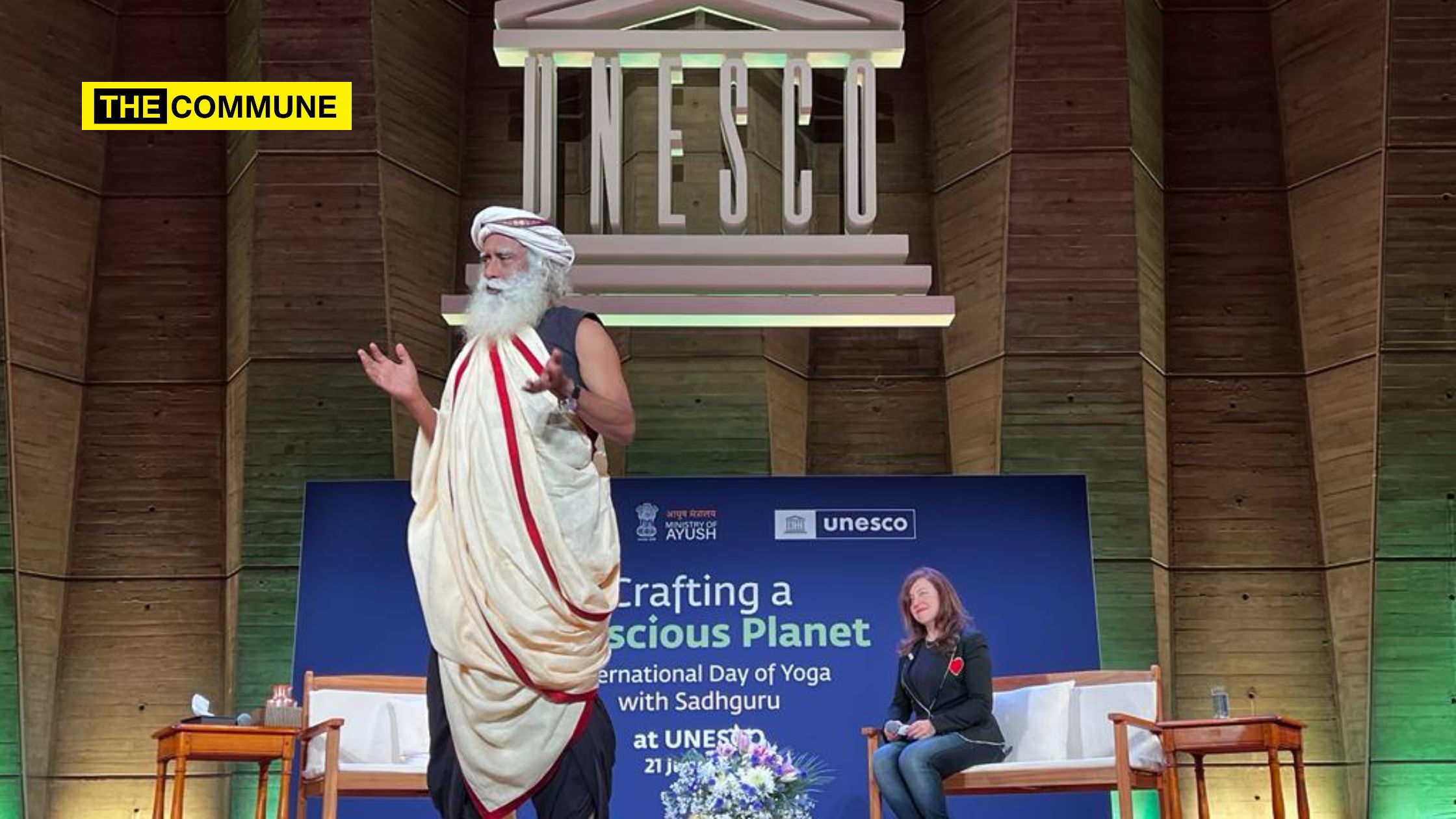
Marking the ninth International Day of Yoga, renowned spiritual leader Sadhguru, Founder-Isha Foundation, addressed a packed auditorium at the United Nations Educational, Scientific, and Cultural Organisation (UNESCO) headquarters in Paris on Wednesday on the theme “Crafting a Conscious Planet”.

Emphasizing that Yoga belongs to humanity, Sadhguru said, “It’s a great pride for all of us that yoga originated in India. Yoga originated in a land that was referred to as Bharat. But everybody must understand, I know some people will disagree with very strong national feelings, but Yoga belongs to humanity.”

https://www.instagram.com/p/Ctwp28-Pgl0/


Explaining this further, he added, “Anything that we discover, we can do. It cannot belong to any group of people. What we invent can belong to people. What we make up can belong to a certain group of people. What we discover as a reality cannot belong to me or you. It is the right of every human being to find a way for their own fulfillment.”

Talking about the International Day of Yoga, the mystic said, “International Day of Yoga is not a day of celebrating it, it is a day of commitment. You remaining physically, mentally in the best possible way is the best contribution you can make to the world.”

Watch the Full Event here.

Sadhguru’s address was followed by an in-conversation with Dr Guila Clara Kessous, UNESCO Artist for Peace. 

To Ms Kessous’s question on the need of yoga to be passed on as a living heritage to humanity, Sadhguru talked about the dire situation in the United States. He shared, “Recently, the Surgeon General of the United States said, one in every two Americans, one in every two is feeling lonely. So just look at this, one in two is feeling lonely in the most affluent nation. When our population is bursting at 8.4 billion, we’re feeling lonely. What is it? That is, we are  building walls of individuality. Walls that you yourself cannot break. You build a wall that you yourself cannot break because these walls are built as self-protection. The walls of self-protection that you built today, tomorrow will turn into walls of self-imprisonment.”

He further added, “So just imagine in a country every second American if they’re feeling lonely, loneliness is the first step towards  mental illness. You’ve taken one step, next will come. So Yoga (Union) means you’re not lonely anymore because only you exist in the universe. Everything is you. Wherever you see, it’s just you. So when you see too much of yourself, you’ll close your eyes and sit.”

Guiding the audience to take up a simple 15-minute meditation practice called Isha Kriya, which is available for free on Sadhguru app, he led them into a meditative process.

Answering a question from the audience on how youngsters can use technology but not get into the loneliness trap, Sadhguru shared that he will be launching a particular aspect of the Conscious Planet Movement in 2024 which will focus on exploring the miracle of the mind through yoga, meditation, art forms like dance, classical martial arts and music. “If two to three billion people use this for a sustained period of time, you will find a much better mental situation in the world,” he said.

The event also saw an address by UNESCO Director-General Audrey Azoulay and Ambassador and Permanent Delegate to UNESCO, Vishal V Sharma and a cultural performance by Isha Foundation’s home-grown band “Sounds of Isha” and a captivating dance performance by Project Samskriti themed around Yoga.

Over 1,500 people attended the event including the ambassadors from Angola, Albania, Palestine, Peru, Morocco, Costa Rica, Romania, Uzbekistan, Santa Lucia, Czech Republic, and Lithuania, dignitaries from the Permanent Delegation of India to UNESCO, the staff members from the UNESCO, global leaders from the world of fashion, music, and business, and the general public.

Click here to subscribe to The Commune on Telegram and get the best stories of the rday delivered to you personally.

Union Ministry Grants CRZ Clearance For Karunanidhi Pen Statue At Marina Beach, BJP Supporters Express Disappointment

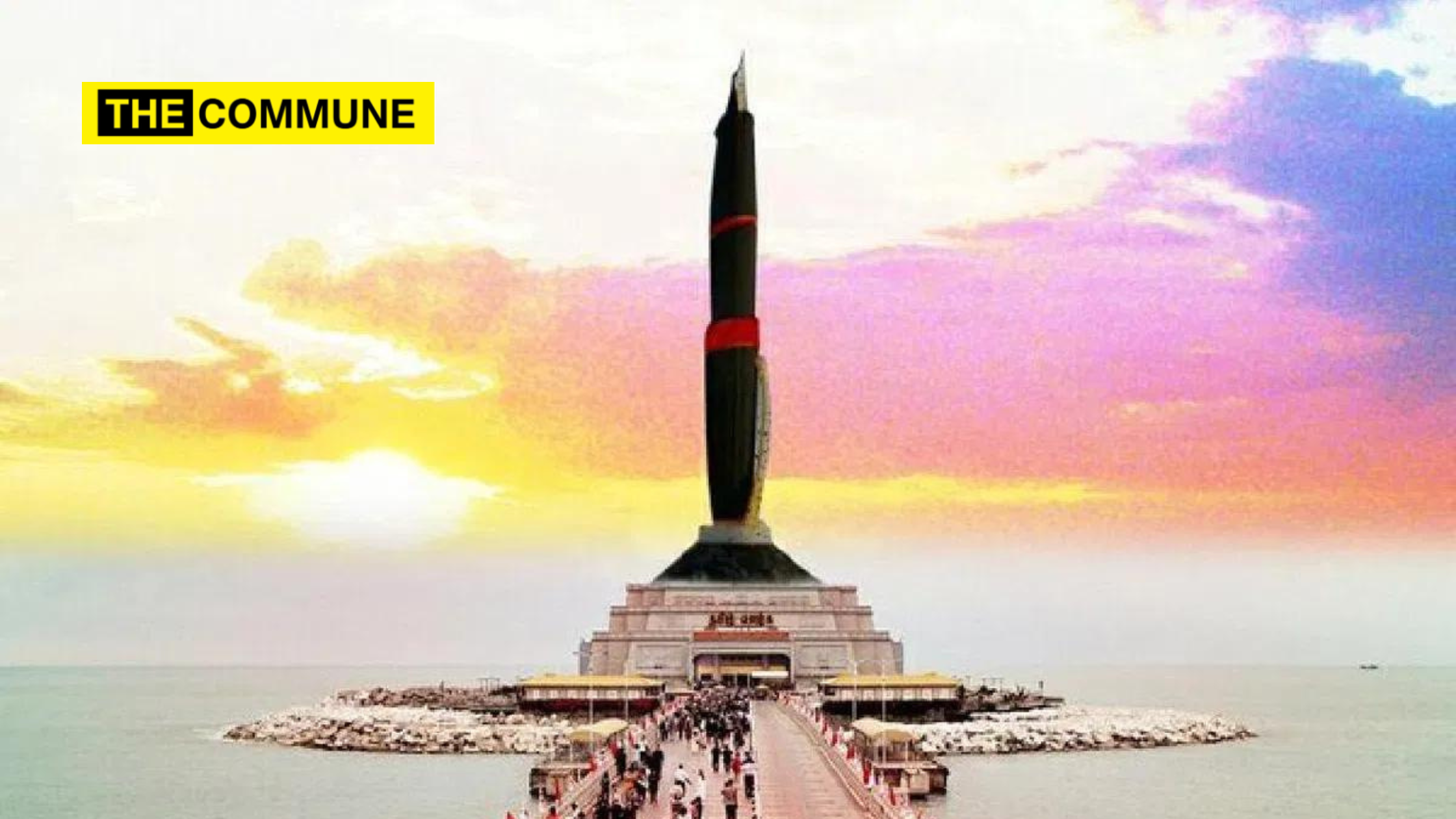
The Union Ministry of Environment has recently provided Coastal Regulation Zone (CRZ) clearance for the construction of the Karunanidhi Pen Memorial in the sea near Chennai’s iconic Marina Beach. This decision comes with 15 specific conditions and certain general conditions outlined by the ministry.

In a letter dated 19 June, the Union Ministry of Environment stated that the CRZ clearance was granted based on the recommendations of the Expert Appraisal Committee (EAC) and the Tamil Nadu Coastal Zone Management Authority.

The proposed Karunanidhi Pen Statue is planned to stand at a height of 42 meters, situated 360 meters away from the coast in the sea. It will be connected to the existing Karunanidhi memorial near Chennai’s Marina Beach through a bridge.

The estimated cost of the project is around ₹80 crore, with a total project area covering 8,551.13 square meters. Approximately 2,263 square meters of sea area will need to be reclaimed to construct the monument.

However, the Union Ministry’s decision to grant CRZ clearance for the Karunanidhi Pen Statue has faced criticism from BJP sympathizers. They argue that the DMK government has been targeting BJP members, especially after the arrest of DMK Minister Senthil Balaji by the Enforcement Directorate. The timing of the permission grant has not been well received by BJP supporters in Tamil Nadu, who claim that local BJP leaders are being unjustly detained by the DMK government in the state.

It is important to highlight that the DMK government has been making plans for the construction of the Karunanidhi Pen Statue at Marina Beach, intending for it to be taller than the Thiruvalluvar statue in Kanyakumari.

This move is seen by some as an attempt by the DMK to elevate Karunanidhi’s stature above that of Thiruvalluvar, suggesting that Tamil Nadu’s prosperity is solely attributed to the DMK and its leaders like Karunanidhi. The decision to allocate a budget of ₹80 crores for the construction of the Pen Statue has faced criticism from the Tamil people, particularly considering the state of Tamil Nadu government’s finances. The approval granted by the BJP government at the center for the Karunanidhi statue has been viewed as a disregard for the sentiments of the people.

Click here to subscribe to The Commune on Telegram and get the best stories of the day delivered to you personally.

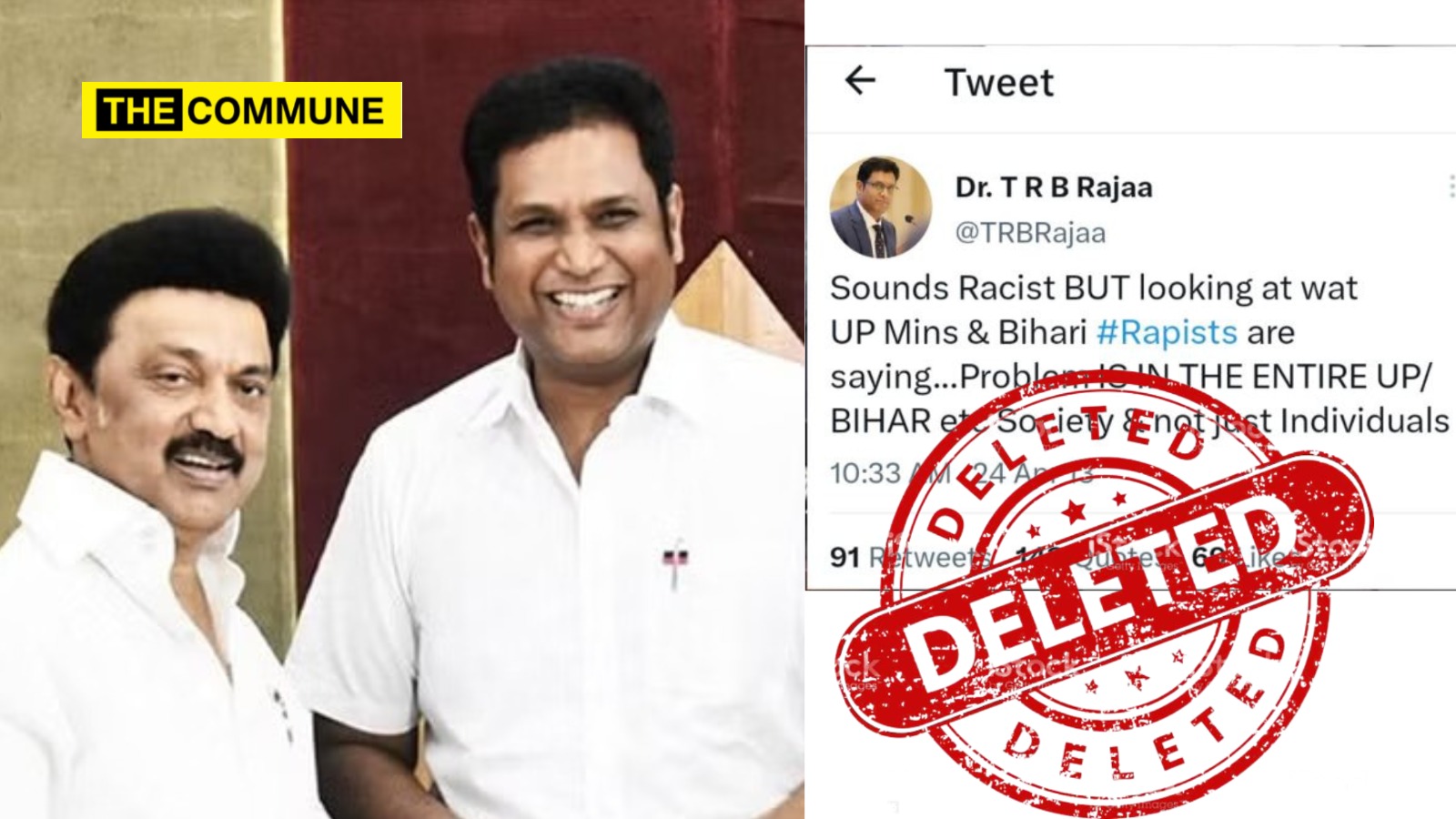
DMK Min TRB Rajaa Deletes Racist Tweet On Bihar People Ahead Of MK Stalin’s Bihar Visit, Demands For Apology Mount

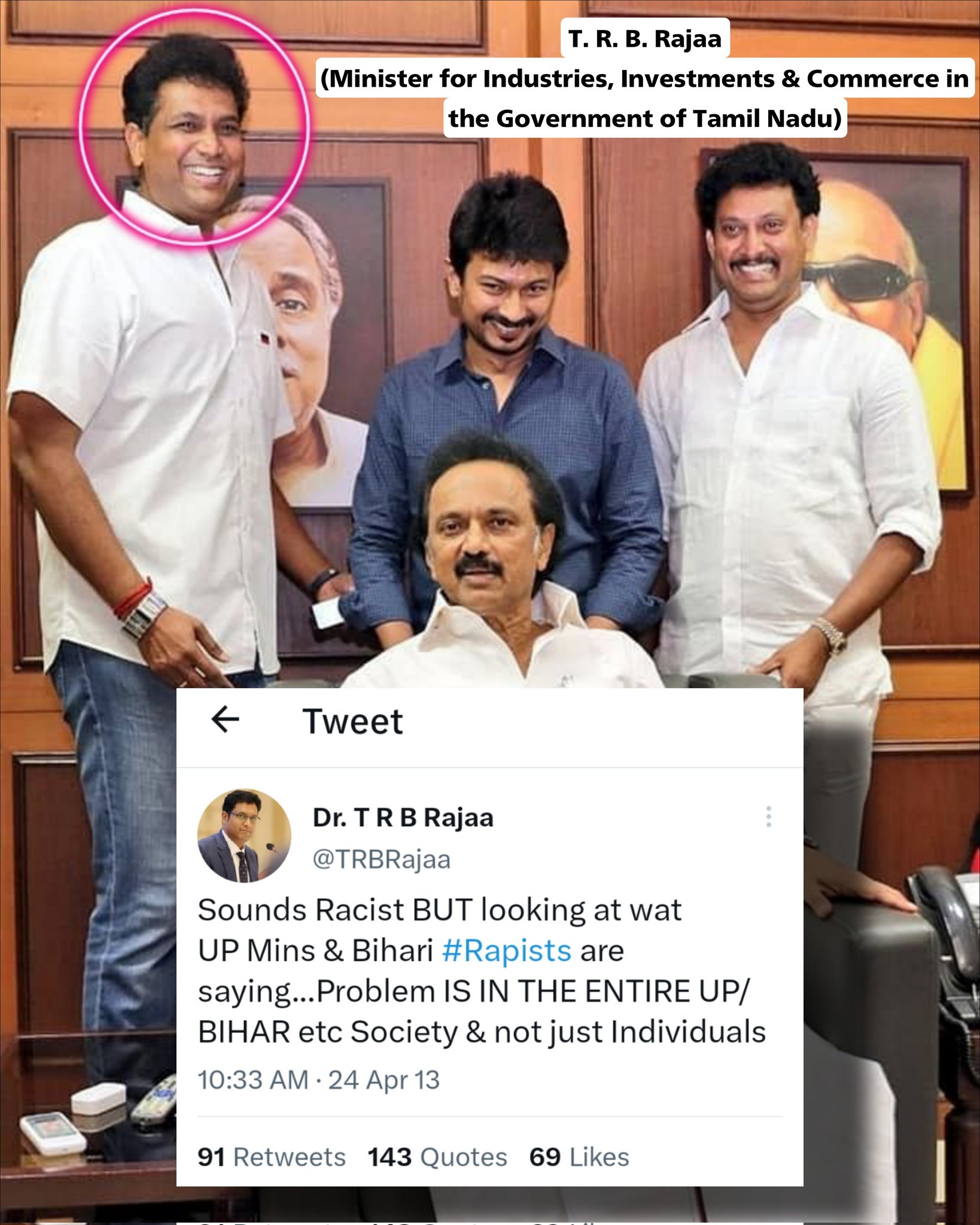
DMK Industries Minister and DMK IT Wing Secretary TRB Rajaa finds himself in the midst of a storm as his past racist tweets targeting the people of Bihar came to light.

These offensive tweets, in which he labeled the entire population of Bihar as rapists and criticized the society as a whole, were deleted by Rajaa ahead of the visit of Tamil Nadu Chief Minister and DMK President MK Stalin to Bihar.

However, the tweets had already gone viral, causing significant outrage among the people of Bihar, who have demanded apologies from both the DMK minister and MK Stalin.

The Twitterverse has been abuzz with the hashtag #GoBackStalin ever since the announcement of MK Stalin’s participation in an upcoming opposition parties meeting in Patna, Bihar, scheduled for Friday, 23 June 2023. The meeting, organized by Bihar Chief Minister Nitish Kumar, aims to unite opposition forces against the ruling Bharatiya Janata Party (BJP) in preparation for the 2024 Lok Sabha elections. Prominent leaders such as Congress President Mallikarjun Kharge, Rahul Gandhi, and TMC Chief Mamata Banerjee are expected to attend the gathering.

As news of MK Stalin’s Bihar visits spread, a significant number of North Indian social media users, particularly those from Bihar, began trending the hashtag #GoBackStalin. They used this hashtag to express their opposition to Stalin’s visit, sharing various racist tweets, speeches, and statements made by DMK ministers and leaders online.

Among the controversial remarks that sparked outrage was a racist tweet from TRB Rajaa dating back to April 2013. The tweet stated, “Sounds racist BUT looking at what UP Mins & Bihari #Rapists are saying…Problem IS IN THE ENTIRE UP/BIHAR etc Society & not just individuals.” This tweet, which made sweeping generalizations and labeled the entire society of Bihar as rapists, caused significant embarrassment for the minister and the DMK, particularly in light of MK Stalin’s upcoming visit to Bihar. Consequently, Rajaa deleted the tweet, following a pattern that has been observed among Dravidian political figures in the past.

However, the people of Bihar are not ready to let the matter go unnoticed. They are demanding an apology from TRB Rajaa for his derogatory comments, which stigmatized the entire population of Bihar. Furthermore, they expect MK Stalin, as the leader of the DMK, to take appropriate action against the minister, given his silence on the matter. As the controversy unfolds, it remains to be seen how the DMK leadership will address the situation and respond to the demands for apologies from TRB Rajaa and MK Stalin.

Click here to subscribe to The Commune on Telegram and get the best stories of the rday delivered to you personally.

CAM Basheer: A Career Terrorist & Face Of Islamic Radicalism In Kerala, A Reminder Against Appeasement Politics Of Pinarayi Government

C A M Basheer, one of the most searched-for terror operators in the country and one of the first extremist leaders of the proscribed Islamic Movement of India (SIMI), was recently caught by airport police just before his flight out of Canada. Chaneparambil Mohammad Basheer, aka CAM Basheer, was apprehended in Canada after being wanted in the 2002-03 Mumbai explosions conspiracy case. Senior police sources in Mumbai claimed attempts are being made for the extradition of Basheer, who is wanted for his suspected participation in the 2002-03 Mumbai explosions, which killed 12 people. Interpol charged him with murder, attempted murder, conspiracy, destroying public property with explosives, possessing forbidden weapons, and performing a terrorist act. One of the group’s early leaders is now one of the country’s most sought terrorists. He is said to be influencing the terrorists within India from outside. Considering these incidents, we will investigate CAM Basheer, Kerala’s face of Islamic extremism, and why it is important in avoiding further radicalization in the state.

Who Is CAM Basheer?

Basheer, the youngest child of the deceased Chaneparambil Abdulkhadar and Beeyathu, was born in 1961 and climbed to SIMI’s position of leadership from Aluva, an area near the village of Kaprassery, where the organisation had a significant foothold before its prohibition in 2001. He rose through the ranks of SIMI until he became the all-India head in the latter part of the 1980s. At the time, extreme forces within SIMI were gaining power, causing its parent organisation, the Jamaat-e-Islami Hind (JIH), to gradually distance itself from the organisation. Basheer was reported to be a major figure in SIMI’s radical stream. The Afghan-Soviet conflict of the early 1980s encouraged many SIMI members to promote the notion of armed jihad. While Basheer’s latest imprisonment in Canada is related to his suspected participation in the 2002-03 serial bombing cases, he has had multiple prior run-ins with the government.

A Career Terrorist

Basheer reportedly brainwashed Muslim teenagers as the leader of SIMI during the 1980s. According to court records from the 2002-03 explosions trial, Basheer made a controversial speech about crimes against Kashmiri Muslims in 1991 during a SIMI conference held at Bandra Reclamation. According to law enforcement records, the gathering was attended by several radicals from Bangladesh, Iran, and Palestine. In mid-1992, he went underground and departed the country. Former companions of Basheer claim that in the mid-1980s, Basheer travelled to Pakistan with a few extremist SIMI members and was trained in the North West Frontier region, which borders Afghanistan. Some members of the gang are also said to have travelled into Afghanistan and met with persons including Abdul Rasul Sayyaf, the Afghan terrorist widely rumoured to have welcomed Osama Bin Laden to Afghanistan. According to court documents, Basheer was urged by the Inter-Services Intelligence (ISI) to transfer additional recruits to Pakistan, but his former companions claim he was unable to persuade too many to do so. Basheer was recognised by the Indian government as a member of the ISI’s K2, an ambitious scheme to develop a uniform nationwide network supporting Khalistani and Kashmiri radicals across the nation. Basheer was allegedly tasked with finding safehouses wherein these violent extremists might conceal and store weapon stockpiles transported through the Gujarat border. In mid-1992, two individuals were detained for reportedly protecting Khalistani terrorists: Saquib Nachan, a close acquaintance of Basheer, and Lal Singh, a Khalistani terrorist. A TADA court in Gujarat eventually condemned them to life in jail. Basheer was identified in the proceedings as an absconder. Basheer’s name appeared on a list of India’s 50 most wanted offenders who were believed to be sheltering in Pakistan in 2011. Basheer, now 62, has kept a low profile over the previous decade while remaining on the intelligence scanner. Security officials assumed he was acting from West Asia and funding SIMI and Indian Mujahideen terror activities. Basheer was supposedly in charge of numerous other extremist individuals, notably Sarfaraz Nawaz, a SIMI leader from Kerala accused of involvement in multiple terror incidents. Nawaz was arrested in Oman in 2009 and extradited to India on suspicion of participation in the 2008 Bengaluru bombing. The 2002-2003 Mumbai bombings case, for which Basheer received an RCN warning, was a series of explosions that occurred between 2002 and 2003. The bombings resulted in the arrest of 16 people, with Basheer being one of the five fugitives in the case. An explosion occurred in the main lobby section of Mumbai Central train station in 2002. In 2003, another bomb occurred in a marketplace in the western part of Vile Parle. The third explosion occurred on 13 March 2003, in a local railway cabin in Mulund. These explosions claimed the lives of twelve people. Police used the Prevention of Terrorism Act (POTA) to arrest 13 people. Bashir was designated as a ‘wanted suspect,’ with authorities alleging that his involvement was to supply finance for the scheme.

A Gentle Reminder To Pinarayi Government

We can all hope that the arrest of CAM Basheer, one of the faces of Islamic radicalism in Kerala will stroke a debate in the state which will provoke the state government into action. But this scenario is unlikely due to the appeasement nature of the Pinarayi Vijayan government.

Kerala is a state afflicted by extreme Islamic impulses, and it is becoming an Islamist haven. The government CPI(M)’s minority appeasement tactics and strategy have also exacerbated the problem. The CPI(M)’s appeasement tactics may be traced back to the period when the present CM was in office. For many years, the CPI(M) has been accused of shutting its eyes or even discreetly backing the extreme actions of the PFI (Successor of SIMI) and its linked organisations. The CPI(M) lacks meaningful ground support from Islamic parties in Kerala and lacks allies to march into a significant Islamic voting base in Kerala. Because of these extreme forces, Kerala is on the verge of collapse. In recent years, many men and women from Kerala are said to have joined the ISKP (Islamic State of Khorasan Province). In its 2020 terrorism assessment, the United Nations warned that there was a significant number of ISIS terrorists in the Indian states of Kerala and Karnataka. The ISIL Indian branch (Hind Wilayah), which was declared on May 10, 2019, has between 180 and 200 members, with significant ISIL operators in Kerala and Karnataka, according to the source. The threat of extremism and terrorism is one of the world’s biggest issues today, posing a significant risk to the stability and peace of our society. Terrorism, whether in the form of violence or love, surely creates significant issues in our society.  For the sake of India’s national security, it is past time for the Kerala government to take the problem seriously, without being misled by vote banks or appeasement, and to take severe action against fringe groups on the ground.


Click here to subscribe to The Commune on Telegram and get the best stories of the day delivered to you personally.

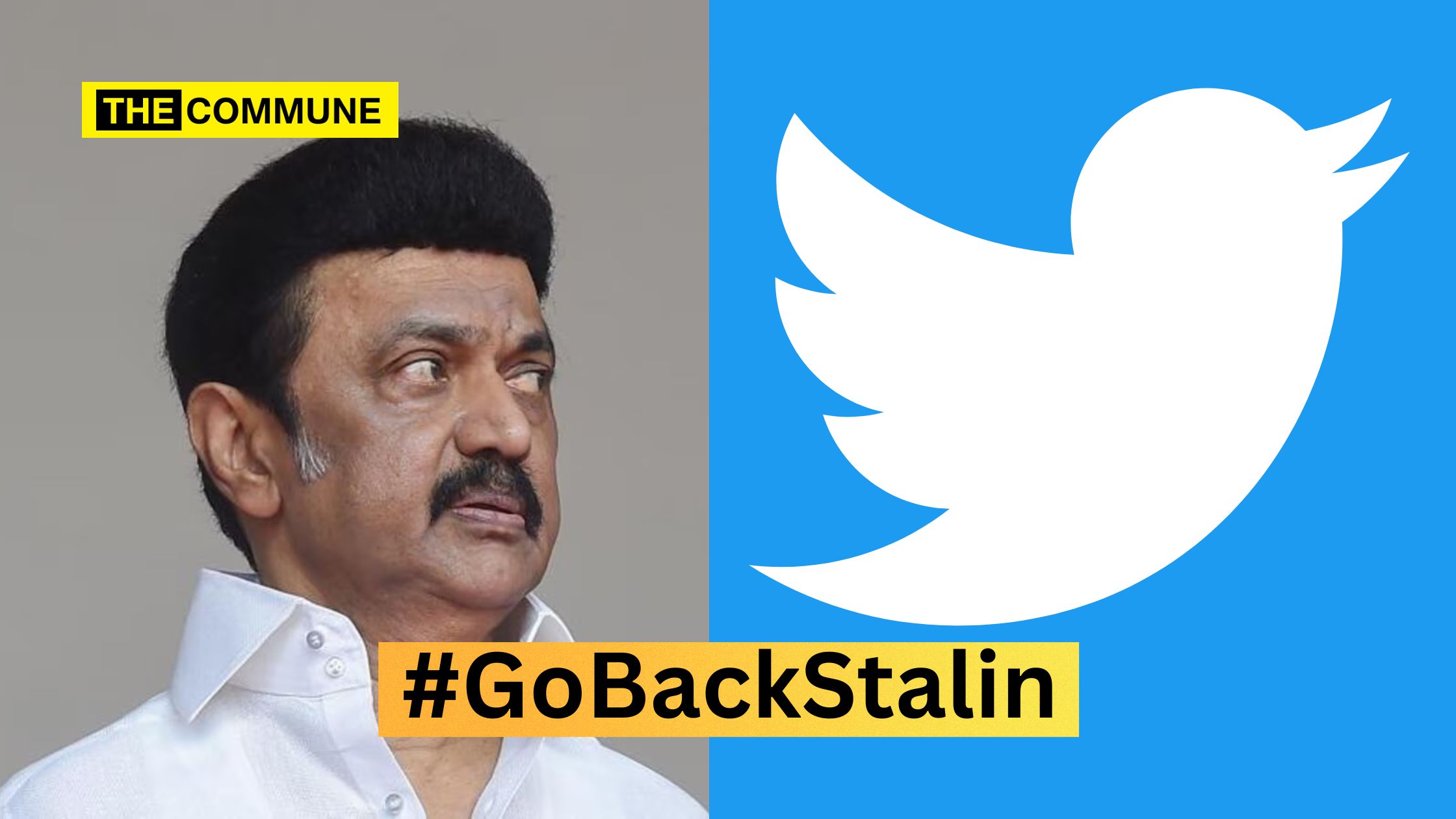
#GoBackStalin Trends Ahead Of Stalin’s Bihar Visit, DMK Leaders Peddling Hate Speech Against North Indians Comes To The Fore

The Twitterverse has been buzzing with the hashtag #GoBackStalin following the announcement of Tamil Nadu Chief Minister MK Stalin’s participation in an upcoming opposition parties meeting in Bihar’s Patna on Friday, 23 June 2023.

The opposition parties meeting, convened by Bihar Chief Minister Nitish Kumar, aims to mobilize opposition forces against the Bharatiya Janata Party (BJP) ahead of the 2024 Lok Sabha elections.

Originally scheduled for 12 June, the meeting seeks to lay the groundwork for a united front of like-minded opposition parties against Prime Minister Narendra Modi and the central government. Prominent leaders such as Congress President Mallikarjun Kharge, Rahul Gandhi, and TMC Chief Mamata Banerjee are expected to attend the meeting.

As soon as Stalin’s Bihar visit hit the news, many north Indians particularly those from Bihar started trending the hashtag #GoBackStalin.

As of Thursday, 22 June 2023, the hashtag has gained significant traction, highlighting public opposition to Stalin’s visit.


In what seems to have originated in Bihar, this trending hashtag reflects the displeasure of internet users towards MK Stalin’s scheduled appearance, mainly due to the DMK often derogating those from Uttar Pradesh and Bihar. The arrest and detention of Manish Kashyap under the National Security Act (NSA) has also added fuel to the fire. Manish Kashyap, a Bihar-based YouTuber, was arrested in Tamil Nadu on allegations of spreading fake news through videos on his channel. He faced charges related to the purported circulation of visuals depicting attacks on Bihari migrant workers in Tamil Nadu.

The arrest of Manish Kashyap prompted widespread debate and disagreement. Tamil Nadu Chief Minister MK Stalin had previously denied allegations of harassment against migrant workers in the state. The incident remains under investigation, and the resentment towards Stalin’s visit stems from the perception that a wrong has been done to Manish Kashyap. A Twitter page called EWS Community has announced a vigorous protest, led by Ashutosh Kumar, in every district of Bihar, particularly in Patna, on the same day.

The DMK and other Dravidian Stockists often peddle that north Indians from Bihar and Uttar Pradesh are stealing jobs of Tamil Nadu and are often derogated as ‘Vadakkans’, ‘Panipuri Vaayan’, ‘Beeda Vaayan’, etc.

Ironically, the DMK and its members who have been accused of harbouring anti-Bihar/anti-Hindi sentiments, is now getting a taste of its own medicine as their leader MK Stalin, heads to Bihar for the opposition parties meeting.

DMK Ministers, including EV Velu, Ponmudi, KN Nehru and TRB Rajaa, have been accused of consistently making derogatory remarks against Hindi speakers and Biharis. Several tweets exemplifying this sentiment have surfaced on social media, highlighting the perceived hypocrisy of DMK’s presence at the Bihar gathering.

Here are a few examples:

TRB Rajaa, the IT Wing Secretary of the ruling Dravida Munnetra Kazhagam (DMK) govt, who is also the Minister of Industries, Tamil Nadu, has a history of abusing Hindus and Hindi-speaking north Indians.

https://twitter.com/TRBRajaa/status/326924215389401089

Read more about how TRB Rajaa abused Hindu BJP supporters here.

As the controversy surrounding MK Stalin’s Bihar visit intensifies, it remains to be seen how this public sentiment will impact the Chief Minister’s reception and the opposition parties meeting agenda.

Click here to subscribe to The Commune on Telegram and get the best stories of the day delivered to you personally.