Home Blog Page 838

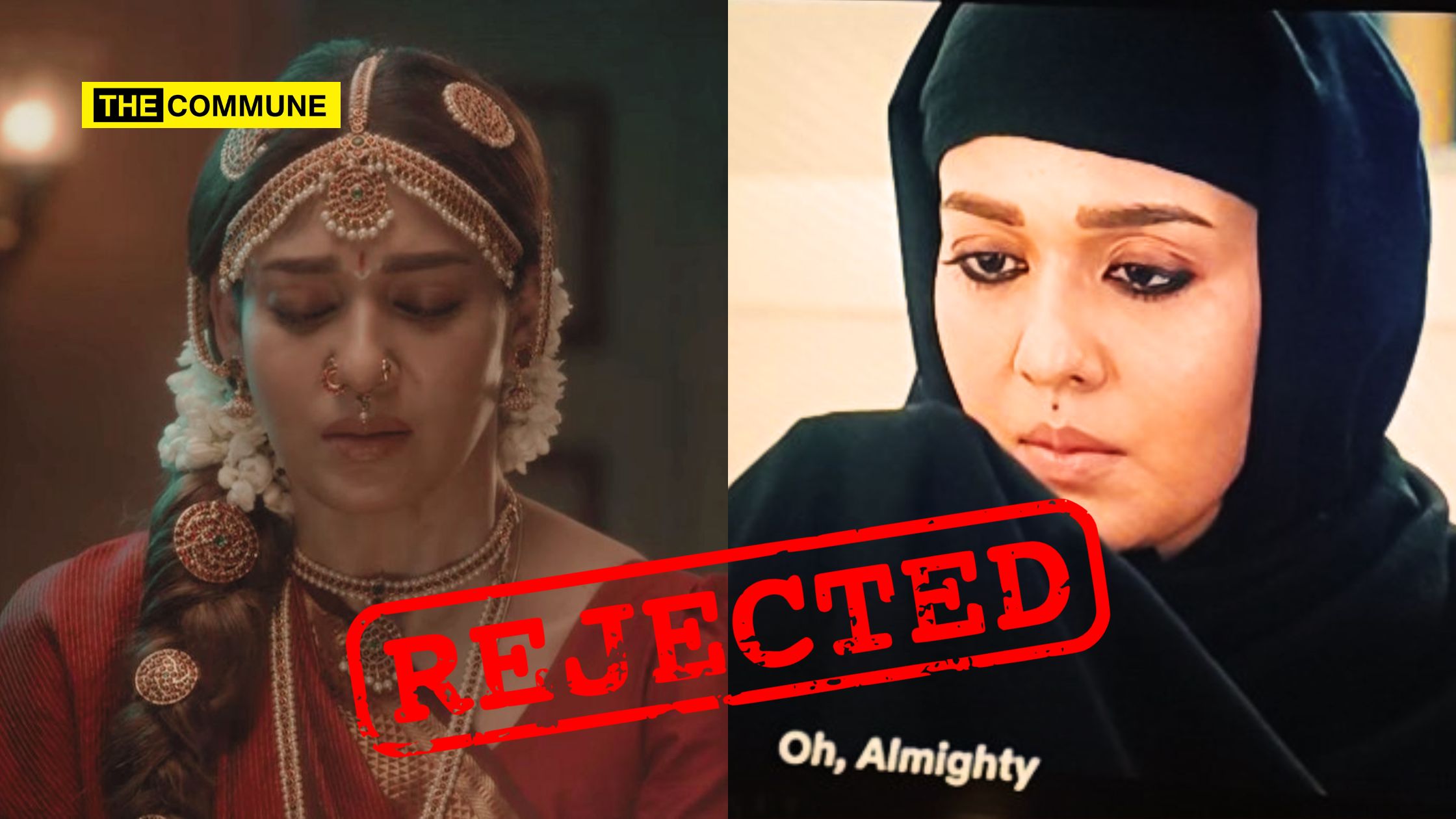
“They Don’t Let Me Wear Slippers, Brits Give Me Boots & Respect Me”: Dravidianists Go Gaga Over Dhanush Glorifying Brits In Captain Miller, But He Fights The Brits After Seeing Atrocities Committed By Them

Captain Miller, a film starring Dhanush in the lead role released in theatres on 12 January 2024. Set in the pre-independence era, the film is about a man who joins the British Army having experienced caste atrocities but later quits and fights the British Army to protect his people after witnessing the horrific atrocities committed by them.

The film has received good response from the audience with a few critics glorifying the movie. However, a clip has gone viral on social media in which Dhanush can be seen mouthing dialogues seemingly favourable to the British.

In the clip in question, Easa/Captain Miller (played by Dhanush) tells his brother Sengolan (played by Shiva Rajkumar)  “Are you fighting for freedom? Whose freedom? You’re going to save our nation from the British and hand it over to the kings who are ruling us? But they’re not letting the us inside the temples built by our fathers and grandfathers. You are fighting for them.”

Sengolan tells Dhanush “It’s not like before. Everything is changing. It will change here as well.”, a dialogue which seems to be hinting at the social reforms ushered in by thinkers and reformists.

Caveat: Reformers like Vivekananda, Arya Samaj, had ushered in a new era breaking the archaic caste rigidities in Hindu society. In Tamil Nadu, C. Rajagopalachari (Rajaji), the Congress Chief Minister of Madras Presidency issued the Temple Entry Authorization and Indemnity Act 1939, under which restrictions were removed on Dalits and Shanars entering Hindu temples. The same year, Madurai A. Vaidyanatha Iyer who was the President of the Tamil Nadu Harijan Seva Sangh and an Indian independence activist, and freedom-fighter spearheaded the temple entry movement in Madras Presidency in 1939 entering the Madurai Meenakshi Temple along with six of Dalit friends including Congress leader P. Kakkan, Muruganandam, Chinniah, Purnalingam and Muthu.

Dhanush then goes on to say “What has changed Sengannen? Tell me. Will they let us inside the sanctum-sanctorum? Tell me Sengannen. Will they let our people enter the sanctum-sanctorum? They treat us like shit. He’s telling me not to wear slippers. If I join the army, the Brits are giving boots to me. He is asking me to stand slouching before him. He’s making me sit as an equal and tells me to eat. He is trampling me. That guy (British) is giving me respect. That respect is my freedom.

When Sengolan questions why should we let people who came for business to rule, Dhanush goes on to say “Oh.. were we independent before the Brits came? They (kings) were ruling then, now they (Brits) are ruling now. We were slaves to them (kings) then, we’re slaves to the them (British) now. How does it matter for us?

This clip has been shared by Dravidianist and DMK propaganda accounts exhilarating and hailing the dialogue saying that’s what EV Ramasamy Naicker (hailed as ‘Periyar’ by his followers) said. They have interspersed the clip with speeches of DMK MP A. Raja justifying EVR’s British-apologist stance.

However, little do the Dravidianists realize that later in the film, Dhanush fights the very same British after he realizes that they’re the biggest threat to his community.

Subscribe to our channels on TelegramWhatsApp, and Instagram and get the best stories of the day delivered to you personally.

A Continuing Story Of Custodial Deaths In Tamil Nadu

Yet another incident of alleged custodial death has sent shockwaves through the state of Tamil Nadu. M. Balakrishnan, a 36-year-old resident of Srivaikuntam, Thoothukkudi, who was wanted in multiple criminal cases, travelled to Erode to meet friends on 26 December 2023. On 27 December 2023, while at a bar in Palayapalayam with five friends, a police team from Erode allegedly detained all six for questioning. Four were released the next day, but Balakrishnan and his friend Prakash were reportedly held in a private lodge and interrogated about an old case. There are also accusations that Balakrishnan faced physical assault during the questioning.

M. Mariyappan, Balakrishnan’s brother, registered a complaint stating that the police severely beat Balakrishnan, leading to his admission to a private hospital in Perundurai on 28 December 2023. He was later transferred to Perundurai Government Medical College Hospital, where he succumbed to his injuries on 2 January 2024.

The family contends that Balakrishnan’s death resulted from the police attack, and they demand accountability from the responsible officials. V. Maharajan, the lawyer representing Balakrishnan’s family, emphasised the injuries on his body and the inadequate responses from both the police and doctors. Consequently, on 5 January 2024, a case was filed at the Madras High Court. After hearing the petition, the court ordered an autopsy at Coimbatore Government Medical College Hospital on 8 January 2024, which was carried out on 9 January 2024. Maharajan expressed concern that evidence in the case had been tampered with and indicated plans to request the court to initiate a murder case.

A case has been registered under section 176 (1A) of CrPC at Chennimalai police station based on the family’s complaint. A post-mortem examination has been conducted, and an ongoing investigation aims to address the family’s allegations.

During the period 2021–22, the National Human Rights Commission of India documented 2152 deaths in judicial custody and 155 deaths in police custody until 28 February 2022 in India. 

As per the 2022 Crime in India report by the National Crime Records Bureau, only three deaths in police custody were reported and officially registered. Notably, no chargesheets were filed, nor were magistrate inquiries initiated for those not under remand. Two cases were reported and registered during remand, but again, no chargesheets were filed, and no magistrate inquiries were instigated. The cited reasons for these cases were attributed to deaths resulting from illness, hospital treatment, and journeys related to ongoing investigations.

However, replying to an unstarred question in Lok Sabha (LS1459), the Ministry of Home Affairs disclosed that the count of custodial deaths in Tamil Nadu rose from 63 in the from 2020-21 to 109 in 2021-22, representing a significant increase of 73%.

Here are some of the recent cases of death attributed to custodial death in Tamil Nadu:

Incident 1:

Rajasekar, a 33-year-old resident of Munthiri Thoppu in Tiruvallur district, was brought to the P6 Kodungaiyur police station on 11 June 2022 for an inquiry related to two burglary cases. He was pronounced dead at the Government Stanley Medical College Hospital on 12 June 2022. The autopsy report revealed multiple external injuries, with two injuries occurring approximately 18-24 hours before his death.

Incident 2:

In Nagapattinam district, a 44-year-old man named Siva Subramanian, employed at a cycle repair shop, died in judicial custody. Siva and his brother Ganesh were detained after a brawl with Venkatesh, who owed Ganesh ₹95,000. According to the police, Siva suffered seizures while in jail and was taken to Nagapattinam Government Hospital, where he passed away on the evening of 13 June 2022. The police attributed his death to alcohol withdrawal symptoms, dismissing reports of custodial torture.

Incident 3:

On 18 April 2022, during a routine night check at Kellys in Chennai, police stopped two youths, Vignesh (25) and Suresh (28), in an auto. The duo, found in possession of ganja and liquor, engaged in a verbal duel with the police. Vignesh later developed health complications, vomited, and had seizures. Despite being rushed to the hospital, he was declared dead. Relatives reported seeing injuries on Vignesh’s body, leading to the suspension of a police sub-inspector, a constable, and a home guard personnel.

Incident 4:

In Tiruvannamalai, Thangamani was taken into police custody on 26 April 2022 for an inquiry into illegal liquor sales. Relatives alleged a false case, stating that the police demanded money for their release. The police claimed Thangamani had fits the next day, leading to his hospitalisation and subsequent death during treatment.

Incident 5:

In January 2022, a physically challenged man named Prabhakaran was locked up for allegedly stealing jewellery. Falling ill in jail, he was rushed to Namakkal Government Hospital and later to Salem Government Hospital, where he died on 11 January 2022. Prabhakaran’s relatives alleged police torture as the cause of death, resulting in the suspension of three police officers.

Incident 6:

In June 2021, Murugesan, a fruit stall owner, died after being beaten by police at the Pappanaickenpatti check post. A video circulated on social media showed Special Sub-Inspector Periyasamy thrashing Murugesan with a lathi until he became motionless. Murugesan had engaged in an argument with the police while being penalised for drunk driving. Periyasamy was arrested following a complaint.

Custodial death stands out as one of the gravest offences in a civilised society governed by the Rule of Law, where the state needs to take necessary steps to curb the issue.

The landmark verdict of 18 December 1996, in DK Basu vs State of West Bengal, laid down 11 guidelines by the Supreme Court, addressing arresting procedures and compensation in case of the detainee’s death.

Incident 7:

In December 2022, Gokul Shree, a 17-year-old teen, was arrested on December 28 by the Railway Police in Tambaram on suspicion of stealing a battery from a railway station. He was sent to a children correctional facility because he was a minor. On December 31, he was rushed to Chengalpet Government Hospital with complaints of seizures, where he passed away within hours.

The preliminary autopsy report showed that the child was subjected to a physical attack, had severe contusions on his legs, and several external injuries on his body. The child was beaten severely before being killed, and the majority of his injuries were were ante-mortem. The parents, however, were not given access to the complete autopsy report.

On the basis of the post mortem report, six prison officials of the correctional facility were arrested. S Mohan, 30, superintendent of prisons, P Vidyasagar, 33, assistant superintendent of prisons, J H Raj, 29, barber at the juvenile home, prison wardens D Vijayakumar, 30, M Saranraj, and teacher R Chandrababu, 40, were arrested.

Incident 8:

In June 2023, the death of a 26-year-old Scheduled Caste (Pallar community) youth, Thangasamy, who was in the custody of the Puliyangudi police in Tenkasi district died. According to reports, Thangasamy was remanded in judicial custody, but he complained of uneasiness, prompting authorities to transfer him to Tirunelveli Medical College. However, his condition deteriorated, and he subsequently passed away.

According to Code of Criminal Procedure (CrPc) Section 176 (I) of the CrPC, in the event of a person’s death or disappearance in custody or if a woman is raped in custody, the Judicial Magistrate holds the authority to order an inquiry. Section 54 of the CrPC also empowers the Magistrate to appoint a medical petitioner to examine accused individuals under trial. The Indian Penal Code (IPC) in Sections 330 (a) and (b) allows for sentences of up to 7 years for policemen involved in cases of torture.

Incident 9:

A 58-year-old jeweller and former town secretary of the Communist Party of India (CPI), P Rajasekaran, allegedly died by suicide on Sunday night (June 25). The incident occurred just days after he was taken into police custody for interrogation. The news of his death had prompted widespread condemnation of the police, with allegations of custodial torture emerging.

Subscribe to our channels on TelegramWhatsApp, and Instagram and get the best stories of the day delivered to you personally.

Aftab, Mohammed Attack Interfaith Couple, Allegedly Rape Woman; TNM Follows Pattern Of Whitewashing Perpetrators

In a disturbing incident of moral policing, an interfaith couple faced a violent attack by a group of six men in a hotel room in Karnataka’s Haveri district. The assailants, a group of six Muslim men, forcibly entered the room where a Hindu man and a Muslim woman were staying, subjecting them to verbal abuse and physical assault, and recording the entire incident. The attack, which occurred on 7 January 2024, prompted widespread outrage after the video went viral on social media.

The footage captured the assailants knocking on the hotel room door, and assaulting and verbally abusing the couple upon entry. The woman, attempting to shield herself with a burqa, was slapped to the ground by one of the attackers. The attackers continued to verbally abuse the couple, dragging them out of the hotel room despite pleas for mercy.

Subsequent videos revealed the woman being forced outside by the attackers, who lifted her hijab and filmed her. Following the assault in the hotel, the attackers allegedly took the woman to another location, where she claimed to have been gang-raped by seven men. The woman reported being abandoned near a bus stop after the assault.

The couple filed a complaint at the Hanagal police station, leading to the arrest of three out of the six attackers identified as Aftab Maqbool Ahmed Chandankatti (24), Samaiullah Lalanavar (23), and Mohammed Isaaq Mandakki (23). Authorities are actively searching for the remaining accused.

In a recent development, a video surfaced where the woman, not initially mentioned in the complaint, asserted that she had been gang-raped during the abduction. She alleged that the assault took place in a jungle at three different locations and involved seven men. Haveri Superintendent of Police, Anshu Kumar, stated that the rape charge emerged later through media reports, and an investigation is ongoing.

Police confirmed that the accused, although not affiliated with any organization, had a previous record in a similar case. The 26-year-old Muslim woman and her Hindu partner were reportedly in a consensual relationship, and the assault occurred shortly after they checked into the hotel on 7 January 2024.

The accused men are facing charges under various sections of the Indian Penal Code, including assault, criminal intimidation, intentional insult, rioting, unlawful assembly, house trespass, and causing hurt. 

How TNM Downplayed The Perpetrators Identity

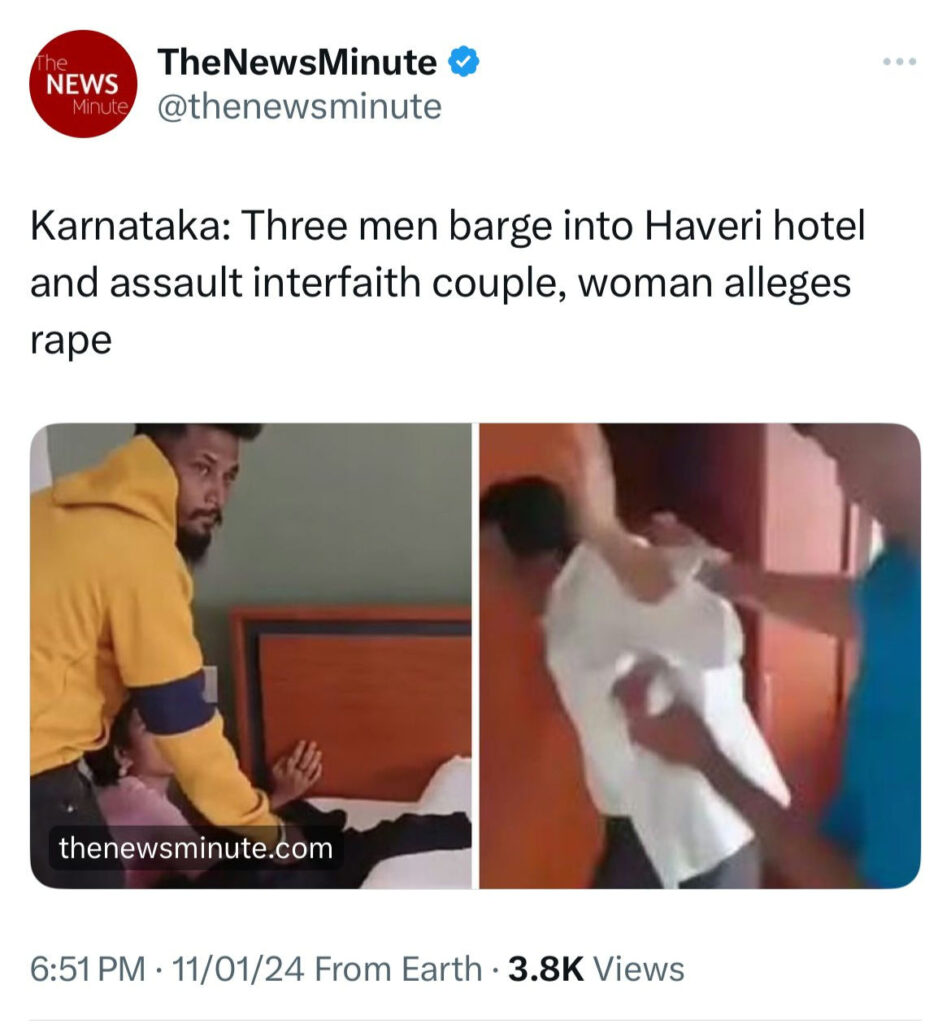
True to their principles, The News Minute shielded the identity of the perpetrators. In their report on the above incident, the article was titled “Karnataka: Three men barge into Haveri hotel and assault interfaith couple, woman alleges rape”.

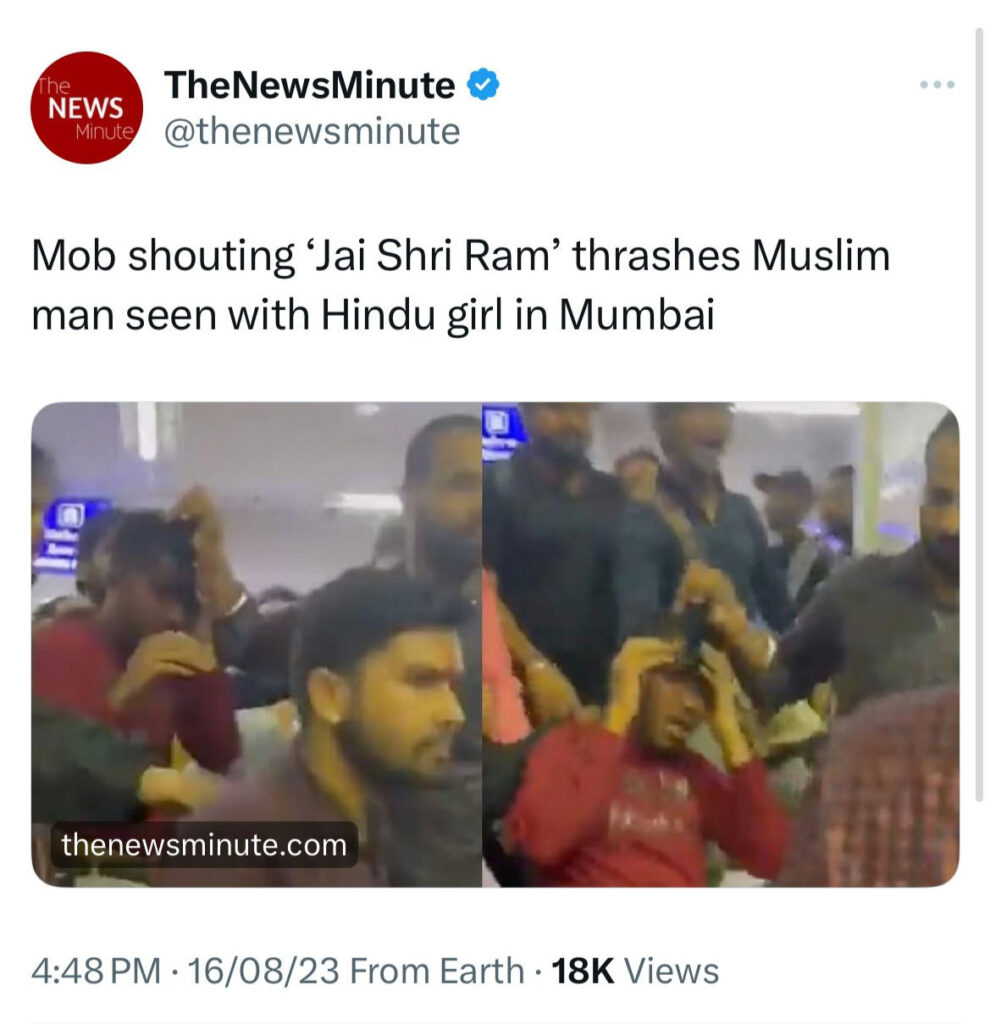
However, if the alleged perpetrators turn out to be Hindus or “upper caste” and if the victim happens to be a Dalit or Muslim, they never fail to specifically highlight it in their headlines. Here is one example – “Mob shouting ‘Jai Shri Ram’ thrashes Muslim man seen with Hindu girl in Mumbai”

Here are a few more instances where TNM has consistently depicted a particular community as victims, even when the actual victim was often someone else, frequently a Hindu.

Instance 1 – Shraddha Walkar Butchering Case 

2022 was rocked by the horrific butchering of Shraddha Walkar by her partner, Aftab Ameen Poonawalla. We all know what happened in that case. As the details unfolded, TNM, in its usual approach, refrained from disclosing the perpetrator’s name, seemingly to depersonalize the gruesome incident. Editor-in-Chief of the portal, Dhanya Rajendran, shared an Indian Express article titled “A toxic and abusive relationship that ended in death” on her Twitter handle and she wrote the following caption, “Shraddha continued their relationship as Aaftab emotionally blackmailed her and said he would die by suicide if she leaves him. The level of entitlement such men have”.

Instance 2 – Giving Communal Colour To Petty Fight

The News Minute reportedly fueled communal tensions by sensationalizing a minor altercation between college students in Dakshin Kannada. The article titled “Dakshina Kannada: Muslim man beaten up for speaking to Hindu woman classmate”  highlighted an alleged attack on Mohammed Saneef without mentioning stalking or harassment, framing it as a “love-related case.” The report indirectly associated the assailants with a Hindu rights organization, lacking direct evidence. 

Instance 3 – Justifying Crime Because Perpetrator Felt Disrespected

In March 2023, The News Minute portrayed a disturbing incident during Holi celebrations in Telangana with bias. Initially justifying Mohammad Shabbir’s act of setting Anjaiah on fire after a playful color smearing, TNM faced backlash on social media for seemingly blaming the Hindu victim. Following criticism, they modified the article without offering an apology.

The headline used by The News Minute (TNM) read: “Upset at being smeared with color, a man allegedly sets friend ablaze in Telangana.” In doing so, TNM appeared to defend the perpetrator right from the start, suggesting that the victim was at fault for smearing colour on Muhammed Shabbir during the Holi festival.

Instance 4 – Shifts Blame On Victim Again, Calls People “Hindu Mob”

In a May 2023 incident in Telangana, an altercation between a gas delivery agent, Lingam, and Imran Ahmed escalated after Imran’s family refused to return an empty cylinder. The situation turned violent, with Imran assaulting Lingam. Subsequent clashes involving Hindu groups were framed by media, including The News Minute, as a “Hindu mob” attacking Imran, downplaying Imran’s instigation.

Instance 5 – Udupi Video Scandal

The Udupi video recording horror where 3 female Muslim students video recorded their Hindu classmates in the washroom of the institution secretly. There are reports of this happening for over a year – read more here and here. The News Minute as mentioned above played the he said-she said card and reported the horrendous incident as a “prank” and whitewashed the whole issue to make the perpetrators look like victims especially because of last year’s Hijab controversy in the region. 

Instance 6 – Justifying Alleged Land Grab By Waqf Board

In September 2022, TNM published an article where it attempted to establish that the village of Thiruchendurai belonged to the Tamil Nadu Waqf Board, rather than the rightful landowners. According to the report, the Waqf Board sent a letter to the Registration Department with documents claiming ownership of the entire village and requesting a No Objection Certificate (NOC) for any land registration in the area.

As the news created controversy, the Tamil Nadu Waqf Board decided to “temporarily allow” property-related transactions in the Tiruchendurai village. The TNM article quoted the Tamil Nadu Waqf Board Chairman, Abdul Rahman, who asserted that their records show the Waqf Board owns 389.03 acres of land in Thiruchendurai.

TNM further corroborated the Waqf Board’s claims by stating, “TNM also verified the Gazette Notification number 570 to confirm that the land had been registered as Waqf property on June 27, 1956.”

Instance 7 – Denying The Existence Of Love Jihad 

At the time of the release of the film, The Kerala Story, TNM published articles attempting to counter the narrative, focusing on communal harmony stories but was accused of brushing aside the reality of “Love Jihad.” The article failed to engage in a meaningful discussion about the well-documented issue of using love for proselytizing by Jihadists. TNM’s response appeared to divert attention from Love Jihad, a serious concern in areas like Malappuram, known for historical events leading to demographic changes and reported instances of forced conversions.

You can read more on these whitewashing habits of The News Minute also referred to as The Naxal Minute or TN Murasoli here.

Subscribe to our channels on TelegramWhatsApp, and Instagram and get the best stories of the day delivered to you personally.
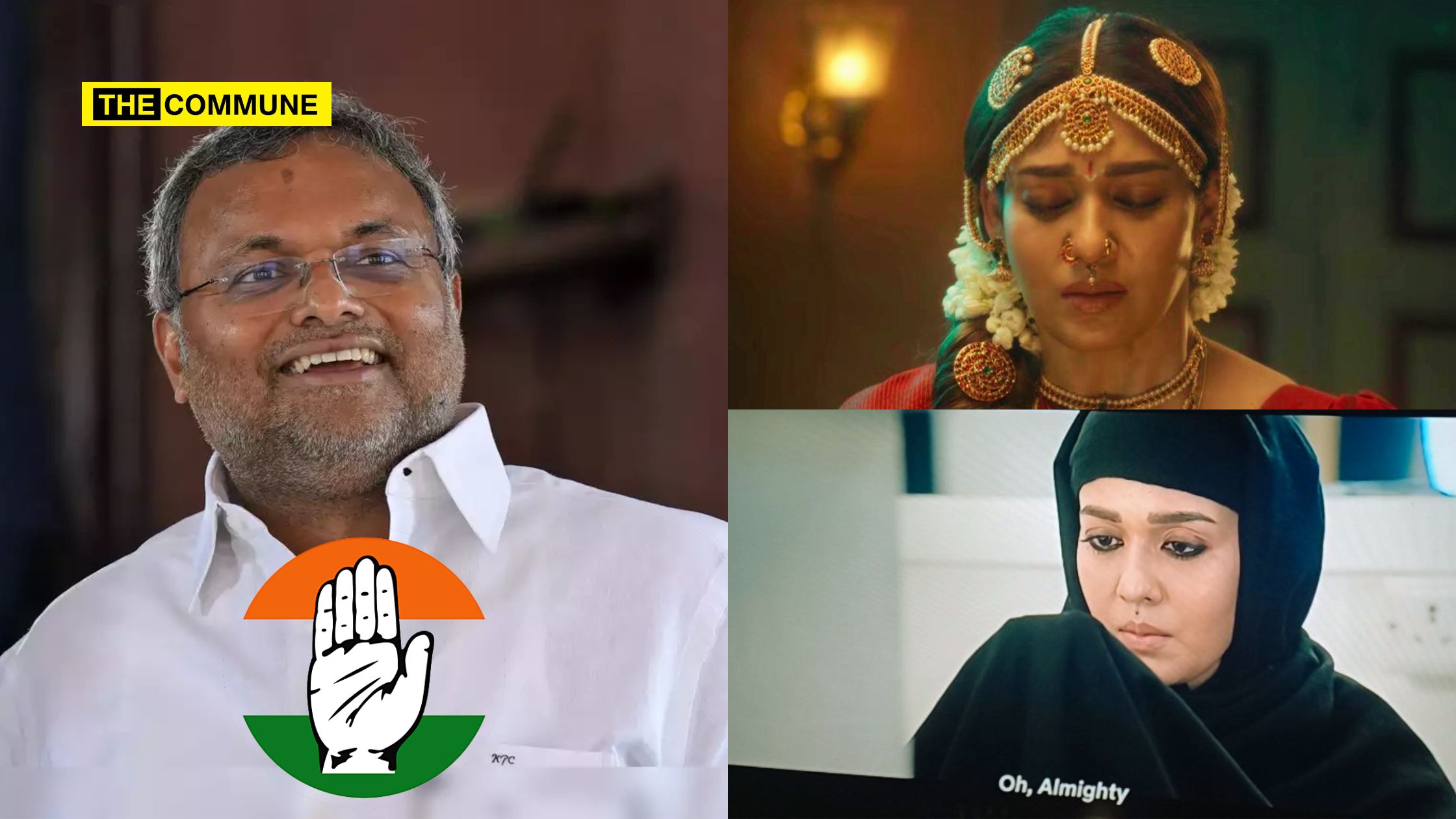
Congress MP Karti Chidambaram Extends Tacit Support To Dravidianist Propaganda Film Annapoorani; Gets Schooled By Netizens

The removal of the film Annapoorani from OTT platfrom Netflix triggered a meltdown of many notable personalities from the film industry and left-leaning politics. The most recent one to join the bandwagon is Sivagangai’s Congress MP, Karti Chidambaram. In a post on his X handle, Karti Chidambaram directed his sarcasm towards ‘To all those getting agitated by dietary choices’. The image shared points to multiple places in Valmiki Ramayana that Lord Rama was a meat lover. It also points to Ayodhya Kaandam 20, 26, 94 chapters, Sargam 52, Shloka 102, Sargam 96, Shloka 1, where references to Lord Rama eating meat are mentioned. Furthermore, verses from the Kamba Ramayanam were quoted in the image to show that fish and honey were served to Lord Rama as offerings.

Netizens were quick to point out to Karti Chidambaram that Lord Rama was a Kshatriya king and there was nothing wrong with him consuming meat or liquor.


Unfortunately, like other trolls on social media platform X, Karti Chidambaram also failed to see that the problem with ‘Annapoorani’ was not just one scene alone but the entire theme of the film.

The portrayal of an orthodox Tamil Brahmin girl as a meat eater, glorifying love jihad, a Hindu girl offering namaz before making biriyani, Hindu girl attending Ramzan iftar for her boyfriend are some problematic scenes in the film. However, those who support the film conveniently hide these and solely focus only on the Sri Ram meat-eating scene mentioned once in the film, thereby guilt-tripping Hindus.

Subscribe to our channels on TelegramWhatsApp, and Instagram and get the best stories of the day delivered to you personally.

“Dravidian Model Synonymous With Minority Appeasement”: Hindu Munnani Head Slams DMK And AIADMK

The State President of Hindu Munnani Kadeshwara Subramaniam has criticised Tamil Nadu Chief Minister M.K. Stalin and his allies, for their focused efforts on minority appeasement. He argues that the majority Hindu population is being overlooked.

The issue at hand revolves around the allocation of burial spaces for Christians and Muslims in district headquarters. The DMK, under M K Stalin, appears to be emphasizing its commitment to minorities, positioning itself as a government catering primarily to their needs.

A press release from Hindu Munnani states that a consultation meeting on minority welfare held at the Chennai Secretariat highlighted the state government’s commitment to addressing the concerns of religious minorities. Chief Minister Stalin separately consulted with leaders from the Christian church and Muslim communities, unveiling various welfare schemes for minorities during the event.

Notable announcements include the permanency of the certificate for minority educational institutions, relaxed procedures for NGOs in terms of registration and subsidy, and the elimination of the renewal requirement for minority educational institutions’ licenses every five years.

Criticism arises from the alleged preferential treatment towards minorities in land acquisition for Christian burial grounds and Muslim graves. The government also plans to ease rules for re-burying bodies in cemeteries and introduced guidelines for family burials.

The Chief Minister, who claims to practice secular politics, cares little about Hindu crematoriums being neglected. Many crematoriums/burial grounds lack basic facilities….Hindus are still alive and denied their rights. Even after death their rights are taken away. Like Hindu temples, Hindu crematoriums are falling into the clutches of the government and are being looted. Modern toilets are being demolished and constructed at the Hindu crematorium site in all the corporation areas including Chennai, Coimbatore, Tirupur, Salem. Similarly, if a Hindu body is buried, it takes a lot of effort to get a death certificate even after providing various documents. Does the Chief Minister not know that the majority of Hindus are being oppressed like this?“, he said adding that many agricultural lands of Hindus have been converted into graveyards.

The announcements are seen by some as a strategic move to secure minority votes and compete with rival political parties, particularly the AIADMK. Both parties are vying for the favour of minority communities, showcasing themselves as champions of their causes.

The DMK and AIADMK are no different when it comes to minority appeasement. They compete and portray themselves as protectors of minorities. During the AIADMK rule many cases were filed against the Islamist outfit called SDPI. But now Edappadi Palaniswami is attending SDPI’s state conference. On the second day of his attendance, Tamil Nadu Chief Minister Stalin is holding a meeting for the welfare of minorities. Edappadi Palaniswami attended the Christmas function at Karumathampatti. Keeping all this in mind, the Chief Minister urgently announces concessions to educational institutions and graveyards for the minorities so that they do not go to the AIADMK side. The Dravidian model government that spends its brains and money on minorities places of worship, graveyards, graveyards in educational institutions should also worry a little about the majority Hindu society.“, he said.

(With inputs from Hindu Munnani)

Subscribe to our channels on TelegramWhatsApp, and Instagram and get the best stories of the day delivered to you personally.
 

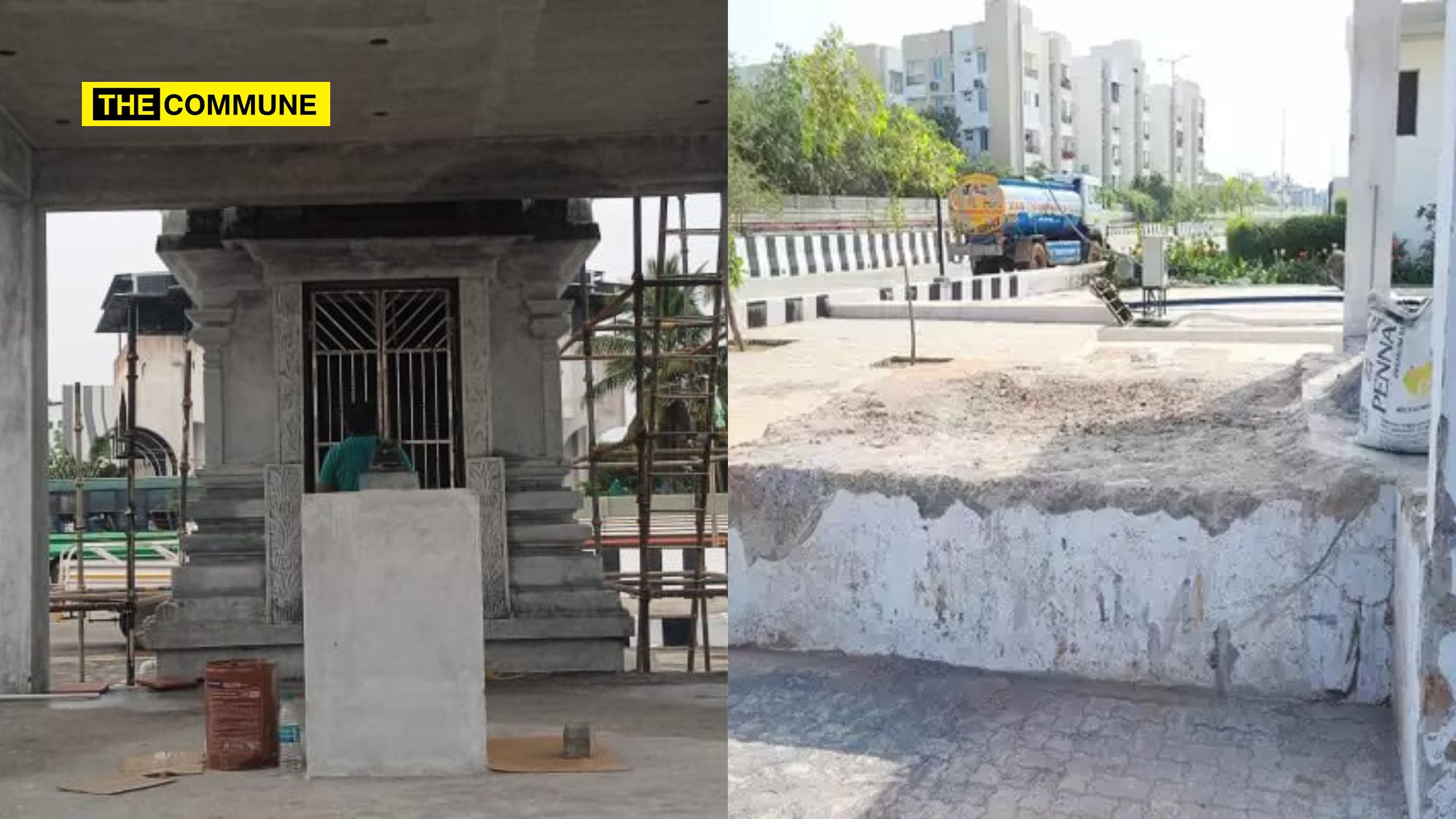
Vinayakar Temple At Kilambakkam ‘Kalaignar Centenary Bus Terminus’ Demolished Overnight 

The recently inaugurated Kalaignar Centenary Bus Stand near Vandalur in Chengalpattu district has become the centre of controversy after the overnight demolition of the Sivasakthi Vinayagar Temple located within the premises. The Chief Minister of Tamil Nadu inaugurated the bus stand two weeks ago and has been mired in controversy ever since. 

The reconstruction of the temple, conducted on a smaller scale by the contractor, drew criticism as concerns were raised regarding the presence of places of worship in government-owned public spaces.

Photos of the demolished Ganesha temple at Kilambakkam bus station surfaced on social media, intensifying the discussions around the issue. The land in question was initially owned by a private company, and a legal dispute ensued. The court eventually ruled that the land belonged to the Chennai Metropolitan Development Corporation, paving the way for the construction of the bus station. 

The Ganesha temple, which had stood at the Kilambakkam new bus stand for over 30 years, was situated near the outpost, now converted into a police station. Devotees from surrounding areas, including Urpakkam, Ayyanchery, and Karanaipuducherry, frequented the temple for continuous worship. The sudden removal of the Ganesha statue and the complete demolition of the temple overnight took locals by surprise, leading to a gathering at the temple site.

The situation escalated as representatives from Hindu Munnani and BJP visited the area. The police, led by Guduvancheri Assistant Commissioner Jayaraj and Guduvancheri Inspector Murugesan, were deployed for security at the Kilambakkam bus station. Anticipating potential protests from Hindu organisations, High-Security Force police were summoned following the order of Tambaram Commissioner Amalraj.

Officials from the Chennai Metropolitan Development Corporation addressed the controversy, stating that the land had been leased by VGP, leading to an ongoing court case. The court’s verdict affirmed that the land belongs to the Chennai Metropolitan Development Corporation. Previous constructions by VGP, including the World Peace Mata Temple and Mandapam, were removed for the bus stand, leaving only the Ganesha temple untouched. Continuous petitions regarding the temple led to the recent decision to remove it, putting an end to the longstanding issue.

(with inputs from Dinamalar)

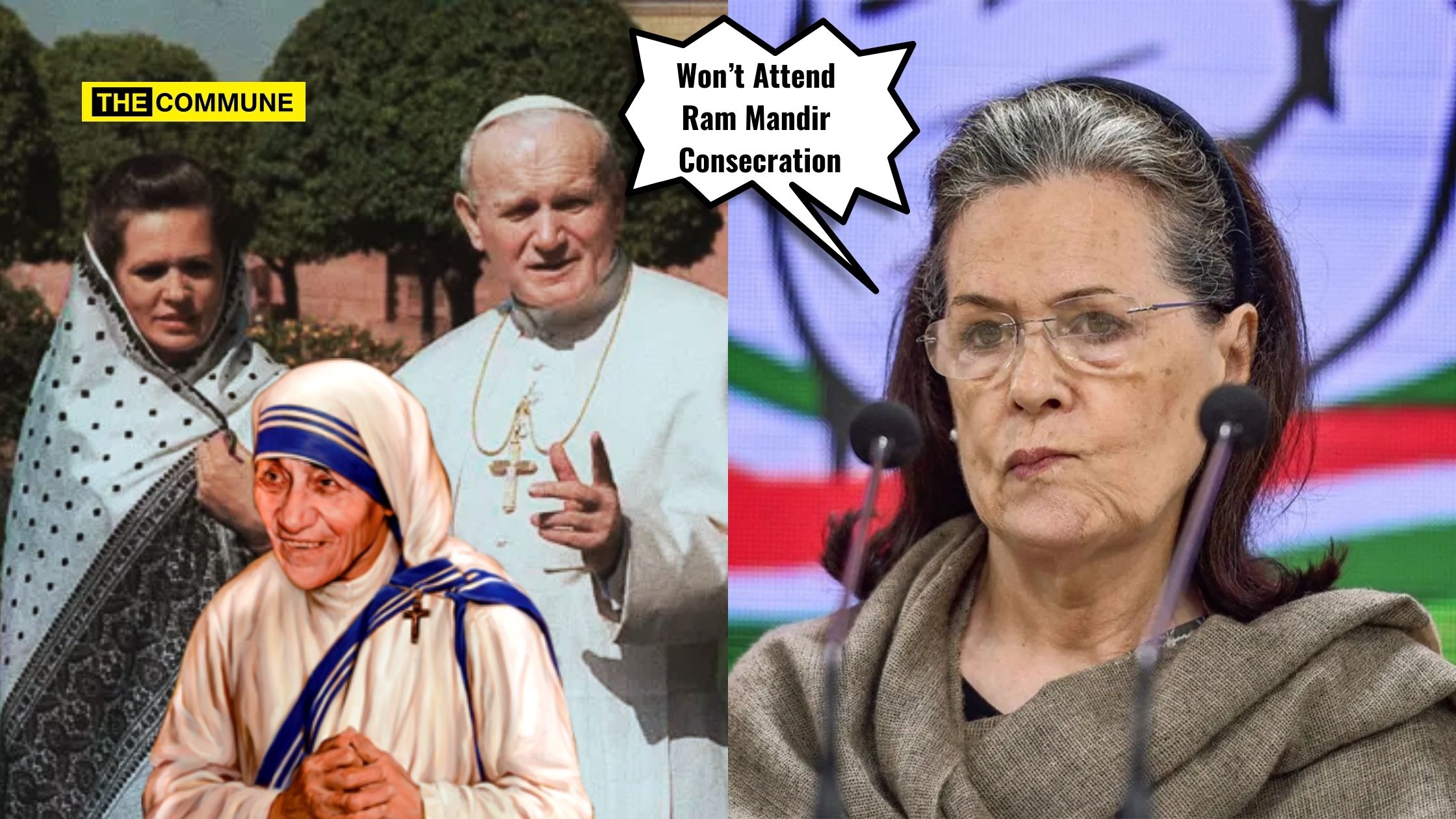
Is Religion A ‘Personal Matter’? Calling Out The Hypocrisy Of INC Towards Different Religions

On 10 January 2024, the Congress formally rejected the invitation to the Pran Pratishtha ceremony at Bhavya Ram Mandir in Ayodhya. The primary reason given by the party for the absence of their top leadership at this important event was the belief that ‘faith is a personal matter.’

Following the Congress’s official statement, a letter from the then-Congress President Sonia Gandhi to Pope Francis in August 2016, regarding the Canonization Ceremony of Mother Teresa, gained widespread attention on social media. In the letter, Sonia Gandhi asserted that every Indian citizen, encompassing nearly 20 million Catholics, felt a sense of pride and happiness in acknowledging Mother Teresa’s deep nobility of spirit, clarity of intent, and dedication to serving God through humanitarian service as recognized by the Pope and the Catholic Church.

She additionally asserted that the canonisation ceremony of Mother Teresa provided an opportunity for all Indians to express gratitude for the time she dedicated to India, serving the poorest and most needy in our nation. Sonia Gandhi emphasized Teresa’s lifelong commitment to selfless service, urging everyone to draw inspiration from her and learn how to practice compassion and loving kindness in our everyday lives. Sonia Gandhi highlighted Teresa’s role in alleviating the suffering of thousands in their final moments, emphasizing that the very ground she walked on became sacred. Margaret Alva and Louzinho Faleiro represented the Congress Party at the ceremony, as Sonia Gandhi was unable to attend due to illness.

In contrast, when examining the Congress Party’s response to the invitation to Bhagwan Ram’s temple, which is described as a “refusal,” it is crucial to note the difference in tone. Congress stated in its release that “religion is a personal matter,” while also accusing the BJP and the RSS of politicizing the Ram Mandir as a project. The party seemed to overlook that the BJP consistently included the Ram Mandir in its manifesto, aligning with their political ideology. The realization of this agenda coincided with the BJP being in power, and the Supreme Court ruling in favour of the Hindu side.

Examining the historical context of the Congress, it is notable that the party referred to Bhagwan Ram as a “myth” in an affidavit presented in court. The Congress party has a tendency to engage in temple politics just before elections, exemplified by instances where leaders like Rahul Gandhi embarked on a “Temple Run” to appeal to Hindu voters. Additionally, it is remembered that India’s first Prime Minister and Congress leader, Pandit Jawaharlal Nehru, opposed then-President Dr Rajendra Prasad’s attendance at the inauguration of the Somnath Temple in Gujarat.

On a different note, it’s important to acknowledge that a documentary by Sky Documentaries titled ‘Mother Teresa: For the Love of God’ has shed light on the darker aspects of her life and the NGO ‘Missionaries of Charity’ she established in Kolkata, West Bengal. This documentary, featuring insights from both close associates and critics, unveils the evangelical fervour that Mother Teresa possessed beneath the facade of love and care.

Over the years, Mother Teresa has faced accusations of being fraudulent, with critics pointing to her adoption of outdated health practices and her enthusiastic efforts to convert the vulnerable into the Christian faith. The documentary aims to document and emphasize the less favourable aspects of Mother Teresa’s ‘sainthood’ and evaluate the credibility of allegations against the controversial evangelist. To delve into the darker aspects of Mother Teresa’s life, one can watch the documentary. Additionally, Christopher Hitchens, a popular author, has also written a book critical of Mother Teresa titled ‘The missionary position: Mother Teresa in theory and practice‘ early in the year 1995.

Symbianian is a freelance writer and a political buff.

(With inputs from OpIndia)

Subscribe to our channels on TelegramWhatsApp, and Instagram and get the best stories of the day delivered to you personally.
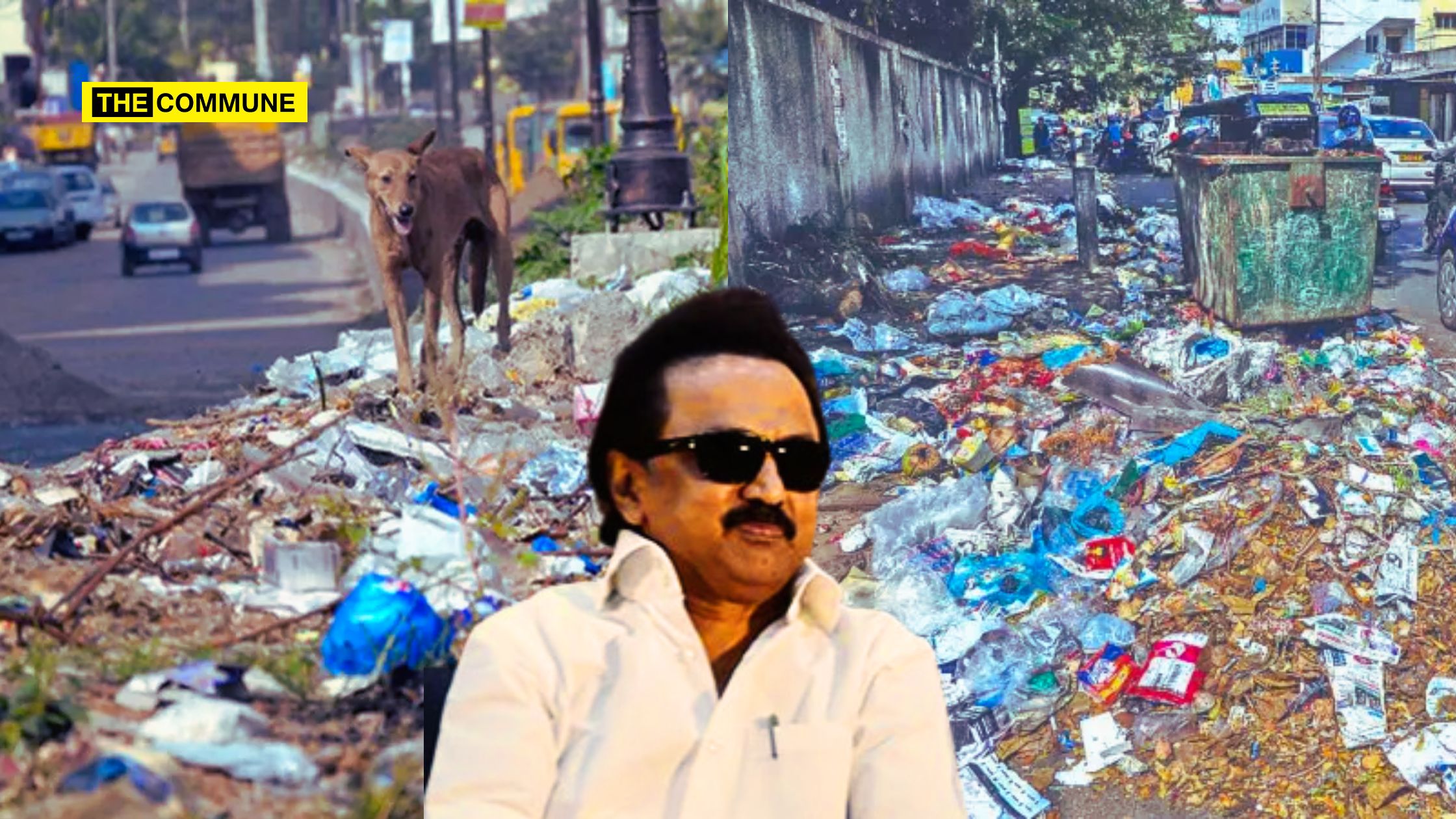
Dravidian Model: Chennai Ranks 199/446, Not One City From TN In Top 100 Clean Cities

In the latest edition of Swachh Survekshan, the world’s largest urban sanitation and cleanliness survey conducted by the Ministry of Housing and Urban Affairs (MoHUA) under the Swachh Bharat Urban Mission, Indore, and Surat emerged as joint winners for the cleanest cities in India. The prestigious Swachh Survekshan Awards were presented by President Draupadi Murmu on 11 January 2024.

Swachh Survekshan, initiated in 2016, has become a significant competition among towns and cities, urging them to enhance cleanliness and waste management services. With the primary goal of fostering large-scale citizen participation and raising awareness about collaborative efforts to improve urban living conditions, the survey assesses cities on 46 indicators.

This year marked the eighth edition of the survey, where over 3,000 assessors evaluated more than 4,500 cities. Key indicators encompassed various aspects, including segregated door-to-door waste collection, hosting zero waste events, provision of disabled-friendly toilets, and effective plastic waste management.

Saswad in Maharashtra secured the Cleanest City Award for urban centers with a population of fewer than 1 lakh. Following Saswad, Patan in Chhattisgarh and Lonavla in Maharashtra claimed the second and third spots, respectively.

How Did TN Fare?

Chennai, however, received a rank of 199 out of 446 in the Swachh Survekshan awards bestowed by the Union Ministry of Housing and Urban Affairs. Notably, no city in Tamil Nadu secured a position within the top 100 ranks. The city scored only 12% in waste processing, with just 21% of landfills undergoing bioremediation.

In the citizen perception survey, Chennai achieved a modest 50%, and only 77% of its toilets were deemed clean. The city’s open-defecation status received just 50% points as well. Despite excelling in health and education indicators, Tamil Nadu exhibited a noteworthy gap in hygiene, cleanliness, and waste management, highlighting the need for targeted improvements in these areas.

Tiruchi City Corporation was the only city from TN that excelled in Swachh Survekshan 2023, securing the top spot in Tamil Nadu among cities with over one lakh population and a national rank of 112 out of 446 major cities. With 5,794.89 marks out of 9,500, it marked a significant improvement from the 2022 survey where it ranked 262nd. Recognized as an ODF++ achiever, Tiruchi met key parameters for open defecation-free status and enhanced public toilet maintenance. The city’s progress was acknowledged at an event in New Delhi.

How Did The So-Called Hindi Heartland Fare?

Bihar secured the 15th position among 27 states in the national Swachh Survekshan 2023 rankings. Patna was the sole Bihar city to feature in the top 100, holding the 77th spot in the national rankings for cities with a population exceeding one lakh. Surat and Indore jointly clinched the top position in the Swachh Survekshan 2023 rankings, with Indore maintaining its dominance for six consecutive years.

Mhow Cantonment Board in Madhya Pradesh earned the title of the Cleanest Cantonment Board. Coming to Uttar Pradesh, Varanasi and Prayagraj received the top honours as the Cleanest Ganga Towns.

Maharashtra, Madhya Pradesh, and Chhattisgarh secured the first three places, respectively, in the awards for Best Performing State.

Netizen Reactions 

Netizens from Tamil Nadu, especially Chennai, were peeved by the results and felt that Chennai did not even deserve the ranking it got. Here are some reactions.

(with inputs from Hindustan Times)

Subscribe to our channels on TelegramWhatsApp, and Instagram and get the best stories of the day delivered to you personally.
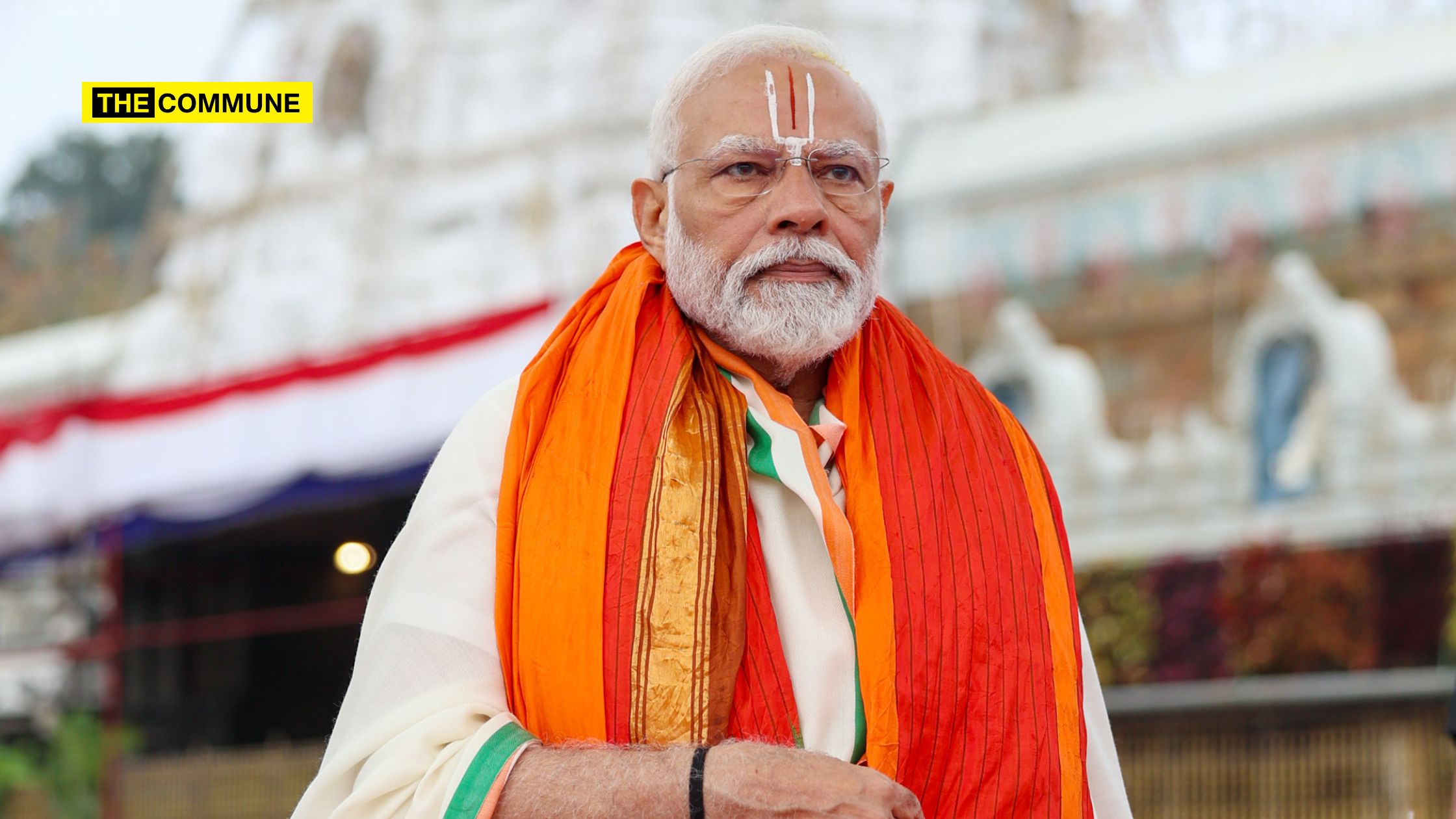
PM Modi Starts 11-Day Fasting And Special Rituals Ahead Of Ayodhya Ram Mandir Consecration

Prime Minister Narendra Modi commenced an 11-day religious observance in preparation for the upcoming grand consecration ceremony of the Ram temple on January 22.

In a heartfelt message shared on X (formerly Twitter), PM Modi expressed his deep emotions about the occasion, stating, “With only 11 days remaining until the consecration of Ramlala in Ayodhya, I consider myself fortunate to witness this auspicious event. The Lord has chosen me as a representative of all the people of India for this sacred consecration.

In light of this, I am embarking on a special 11-day spiritual journey, seeking blessings from all citizens. It is challenging to articulate my emotions adequately at this moment, but I have made an attempt to convey my sentiments,” he concluded.

Subscribe to our channels on TelegramWhatsApp, and Instagram and get the best stories of the day delivered to you personally.
As Netflix Removes “Annapoorani” From Its Catalogue, Leftists And Dravidianists Suffer Meltdown In Social Media

Annapoorani, the latest Nayanthara film that stoked many controversies, was removed today from Netflix. Reactions from supporters and opposers of the film are pouring into social media, trying to politicise the issue as much as possible. The left-liberal cabal has jumped with the usual ‘Sanghi, gamut, Tambrahm (veiled term for Tamil Brahmins)’ jibes and much more. However, none of the handles mentioned that the removal is only temporary and the film will be back once the objectionable content has been removed, as Zee Studios’ statements stated.

Social Media Meltdown

Valaipechu Bismi, one of the three members who run the popular YouTube channel ‘Valaipechu’ shared a post on X that, ‘There is no surprise that Sanghi company (Zee) gave in to the threats of sanghis.’

Shanmugam Muthusamy, film scriptwriter and director of Adangathey, Diesel, posted on his X and Facebook handles, questioning the CBFC. He claimed that such a move makes a mockery of creative freedom. He also asks if government propaganda films like The Kashmir Files alone will be allowed to be released hereafter. Recounting his experience that CBFC denied him to name a character as Rangaraj in his film Adangathey, he asks if permission should be sought from all castes and religions in India before making a film. In his rant, he also questions why government organisations maintained silence when the web series The Family Man allegedly depicted Tamil women in a derogatory manner. He recommends that CBFC should be dissolved. This post was shared as his Instagram status by the film director Nilesh Krishnaa.

Adham Bava, writer, director and producer of the lesser-known film ‘Anti-Indian’ directed by popular YouTuber Blue Sattai’ Maaran, has posted a sarcastic tweet stating that ‘Sanathanam has woken up a little late. It will be uphill for Annapoorani hereafter’ indicating that a film that bombed at the box office could profit from the OTT platform.

Other influential left-leaning handles are also posting on X an interview clip featuring popular religious speaker Dushyanth Sridhar’s interview with Rangaraj Pandey of Chanakya News channel, where he says in the Ramayana Rama and Lakshmana ate meat, intending to trivialise the issue. They argue that the moviemakers said what was in Ramayana, so there is nothing wrong in it.

https://twitter.com/Muthu71196/status/1745351858519257099

The Executive Editor of a leftist media outlet, The South First, called the Netflix and Zee Studios spineless for removing the Hindumisic content.

It has to be noted that Ramesh Solanki, the founder of Hindu IT Cell, filed the complaint with Mumbai police and has mentioned a slew of offensive points from the film rather than pointing out only meat consumption. The offensive scenes include the promotion of love jihad, a Hindu Brahmin girl going to iftaar, and a Brahmin girl offering namaz before cooking biriyani, to name a few.

Everything Hurts

Films hurting religious sentiments are not new in India. The Da Vinci Code, a controversial movie based on Dan Brown’s popular novel, was banned in Tamil Nadu by the then DMK government, stating its release ‘might disturb the peace in the state.’ Apart from films, even food can hurt religious sentiments. Popular pizza chains Dominos and Pizza Hut stopped selling their pork pepperoni due to ‘issues faced with the supply of right quality materials’. However, industry experts had speculated that ‘religious sentiments concerned with various varieties of meat are likely the reasons behind food chains removing the product.’

Subscribe to our channels on TelegramWhatsApp, and Instagram and get the best stories of the day delivered to you personally.