Home Blog Page 822

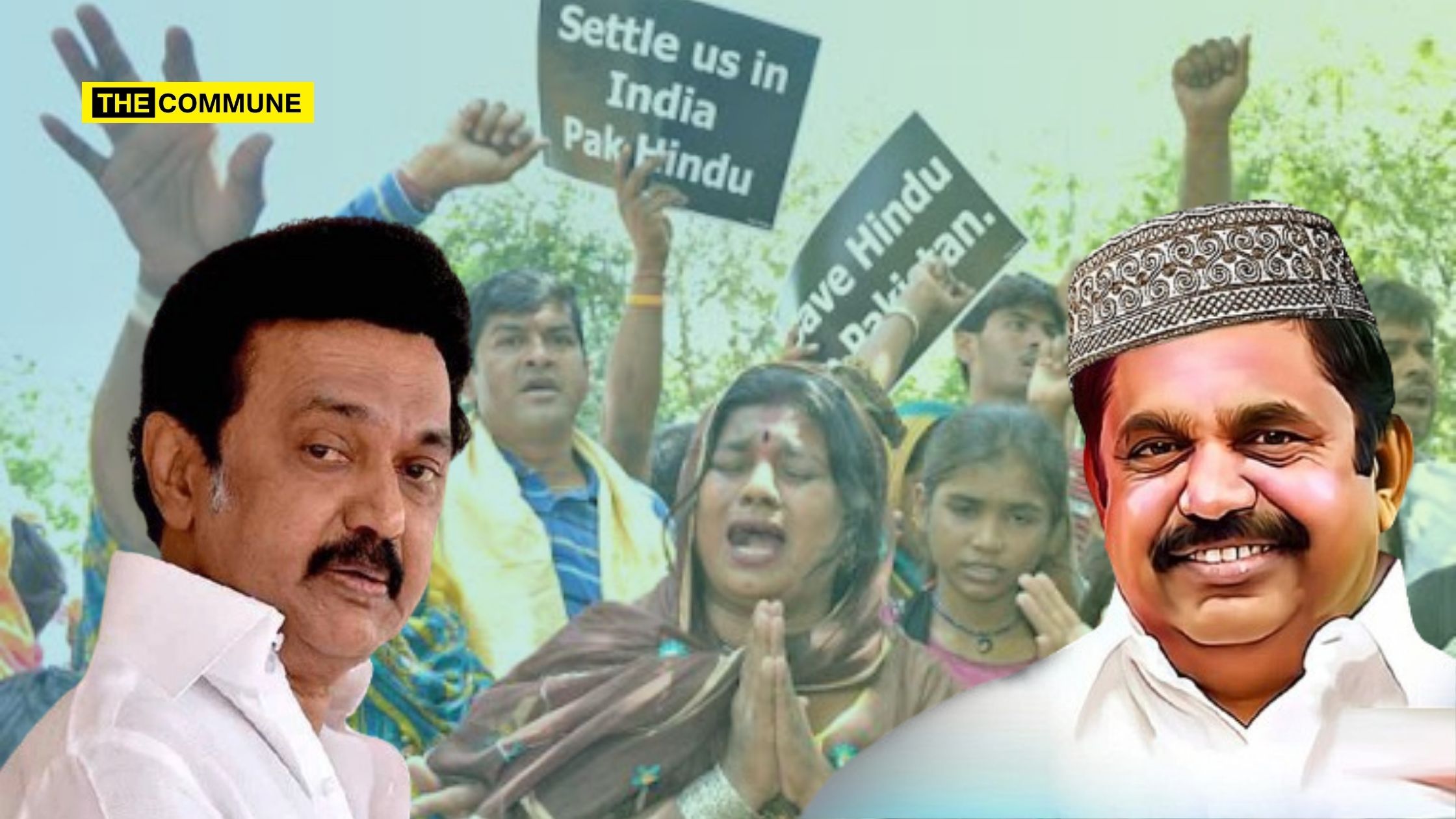
DMK & AIADMK Oppose CAA Implementation, Law Is Meant To Expedite Citizenship Process For Religiously Persecuted Non-Muslim People Of Pak, Bangladesh & Afghanistan

Union Minister of State for Shipping, Santanu Thakur, addressing a rally in Kakdwip, South 24 Parganas district on 28 January 2024, declared plans for the rapid implementation of the Citizenship Amendment Act (CAA) within a week. 

Thakur, who represents the BJP in the Bongaon Lok Sabha seat with a significant Matua community, asserted, “Ram Mandir has been inaugurated. Within the next one week, CAA will be implemented not only in West Bengal but also across the country.” 

In response, the ruling Trinamool Congress in West Bengal dismissed the assertion as mere “poll rhetoric” and pledged to thwart the implementation of CAA in the state. 

The Citizenship Amendment Act enacted by the BJP-led government in 2019, seeks to grant Indian citizenship to persecuted non-Muslim immigrants from Bangladesh, Pakistan, and Afghanistan who entered India before 31 December 2014. Opposition parties allege that this legislation is specifically aimed at targeting Indian Muslims, potentially depriving them of their citizenship if implemented.

It is noteworthy to mention that the state government has no role in in granting/expediting citizenship process.

However, in the latest response to this controversy, Tamil Nadu Chief Minister MK Stalin, currently on a tour to Spain, expressed his dissatisfaction on his official X handle quoting from The Hindu report, stating that, “A Union Minister of state from BJP has said that CAA will be implemented not only in West Bengal but all over India in seven days. ADMK is the very first reason that CAB became an Act that supported and voted in the parliament against Sri Lankan Tamils ​​and Muslims. Although we were an opposition party at that time, the Kazhagam held protests on a very large scale in collaboration with companion organizations got signatures from two crore people, and sent it to the President. As soon as we came to power in 2021, we passed a resolution in the assembly demanding the withdrawal of CAA. The DMK government will never allow the implementation of the Citizenship Amendment Act in Tamil Nadu. The people of the country are watching the BJP government’s subversive activities against religious harmony and the insidious dramas of the ADMK supporting it. I am sure. We will not let CAA set foot in Tamil Nadu! #NoCAAInTamilNadu”


Immediately, there were varied reactions from netizens, with some expressing support for and others opposing the CAA. One internet user commented, “Long live Dravidam. Let grow social justice”


A different online user attempted to elucidate the legislation and mentioned, “With due respect, CAA is for persecuted non-Muslim migrants including Hindus, Christians, Jains, Sikhs, Bhudist and Parsis living in neighbouring Muslim nations. Could you elucidate what is the cause of concern with CAA for DMK. #isupportCAA”

A different user mockingly captioned a picture of the 2021 DMK election manifesto that stated, “The Central Government will be urged to add citizenship to the stateless Sri Lankan Tamils in camps in India by joining the fourth nation Sri Lanka with the three countries mentioned in the Indian Citizenship Amendment Act 2019.”

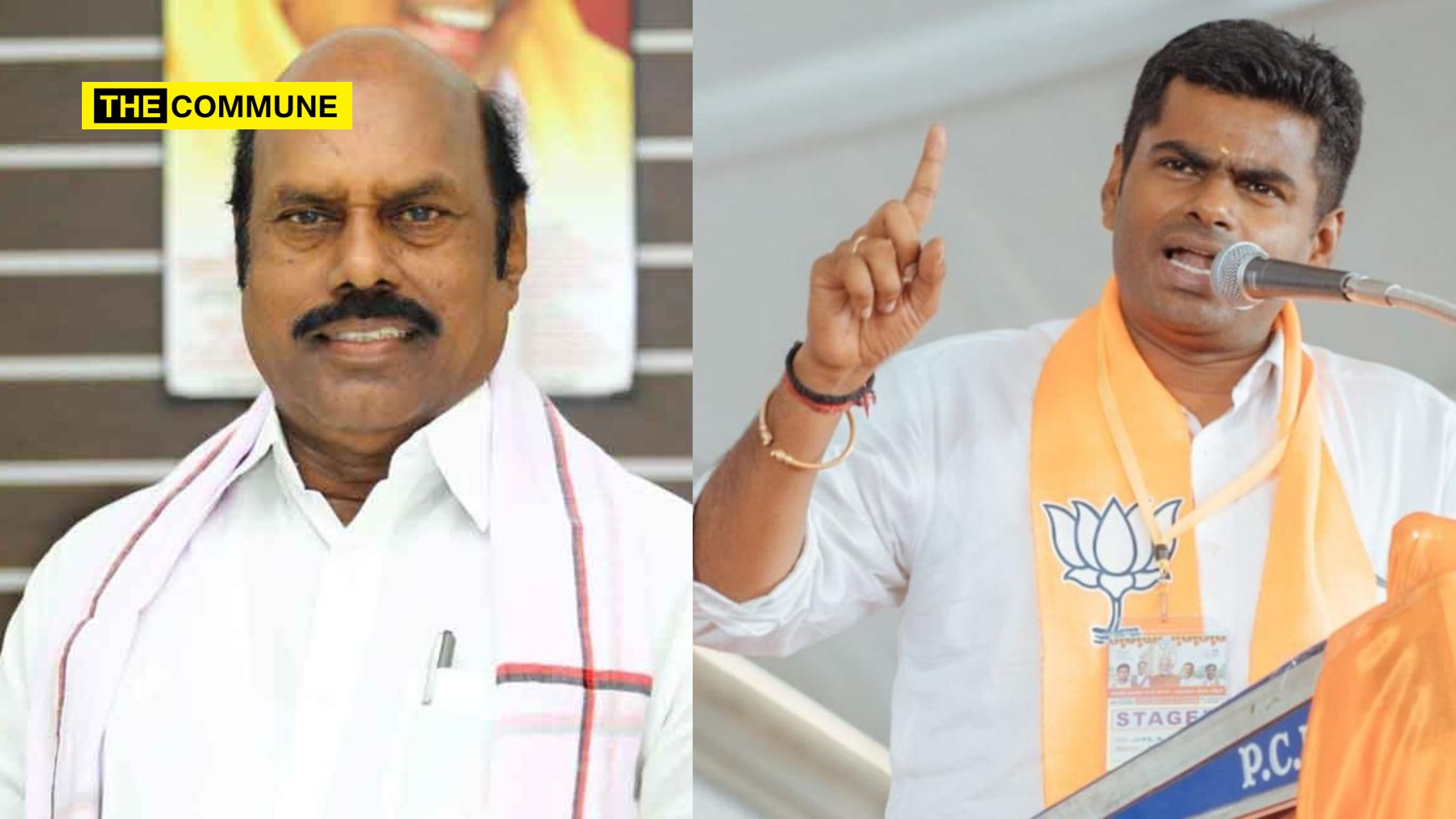
Edappadi K. Palaniswami too opposed the implementation of CAA while slamming the DMK for hoodwinking minorities by voting in favour NIA and UAPA laws.

“All India Anna Dravida Munnetra Kazhagam will never allow minority people to be affected by CAA. We have already told the Assembly during our rule that our government will not stand idly by if the CAA Act creates problems for the Muslims and Eelam Tamils in Tamil Nadu.”, Edappadi K. Palaniswami said in an X post.

He further said “The DMK has been betraying the minorities by making a political capital of and doing drama over communal politics, while cooperate with the BJP when they are in power and opposing them when they are not in power. Having supported the NIA and UAPA laws which affects the minorities severely, people are watching the drama of the DMK, which only shows opposition to the BJP in statements and stage speeches.

Citizenship Amendment Act:

The Citizenship Amendment Act (CAA) facilitates citizenship for non-Muslim communities, including Hindus, Sikhs, Buddhists, Jains, Parsis, and Christians, from Pakistan, Afghanistan, and Bangladesh, who entered India on or before 31 December 2014.

The law is a fallout of the bloody partition of India which put non-Muslim minorities in Muslim-majority neighbouring countries of India at the mercy of the Islamic state. State-sponsored and aided persecution led non-Muslim minorities in these countries to flee and come to India. Hence the law aims to heal the wounds of partition by expediting the citizenship process for those who are staying as refugees in India for decades.

Originating as the Citizenship Amendment Bill (CAB) in 2016, the bill aimed to amend the Citizenship Act 1955.  The intent of the act is to grant citizenship to persecuted non-Muslim immigrants from Pakistan, Afghanistan and Bangladesh.

Home Minister Amit Shah during the Times Now Summit stated, “the Citizenship (Amendment) Act does not contain any provision that strips anyone of their citizenship, nor is it anti-Muslim or anti-minority. Mr. Shah referenced Gandhi’s stance, noting that the Father of the Nation himself advocated for the respectful treatment, dignity, and granting of citizenship in India to non-Muslims facing persecution in Pakistan”.

During a rally in Delhi, the Prime Minister of India emphasized that the opposition is spreading misinformation and falsehoods about the Citizenship (Amendment) Act (CAA). He clarified that both the CAA and NRC have no impact on Indian Muslims.

Subscribe to our channels on TelegramWhatsApp, and Instagram and get the best stories of the day delivered to you personally.

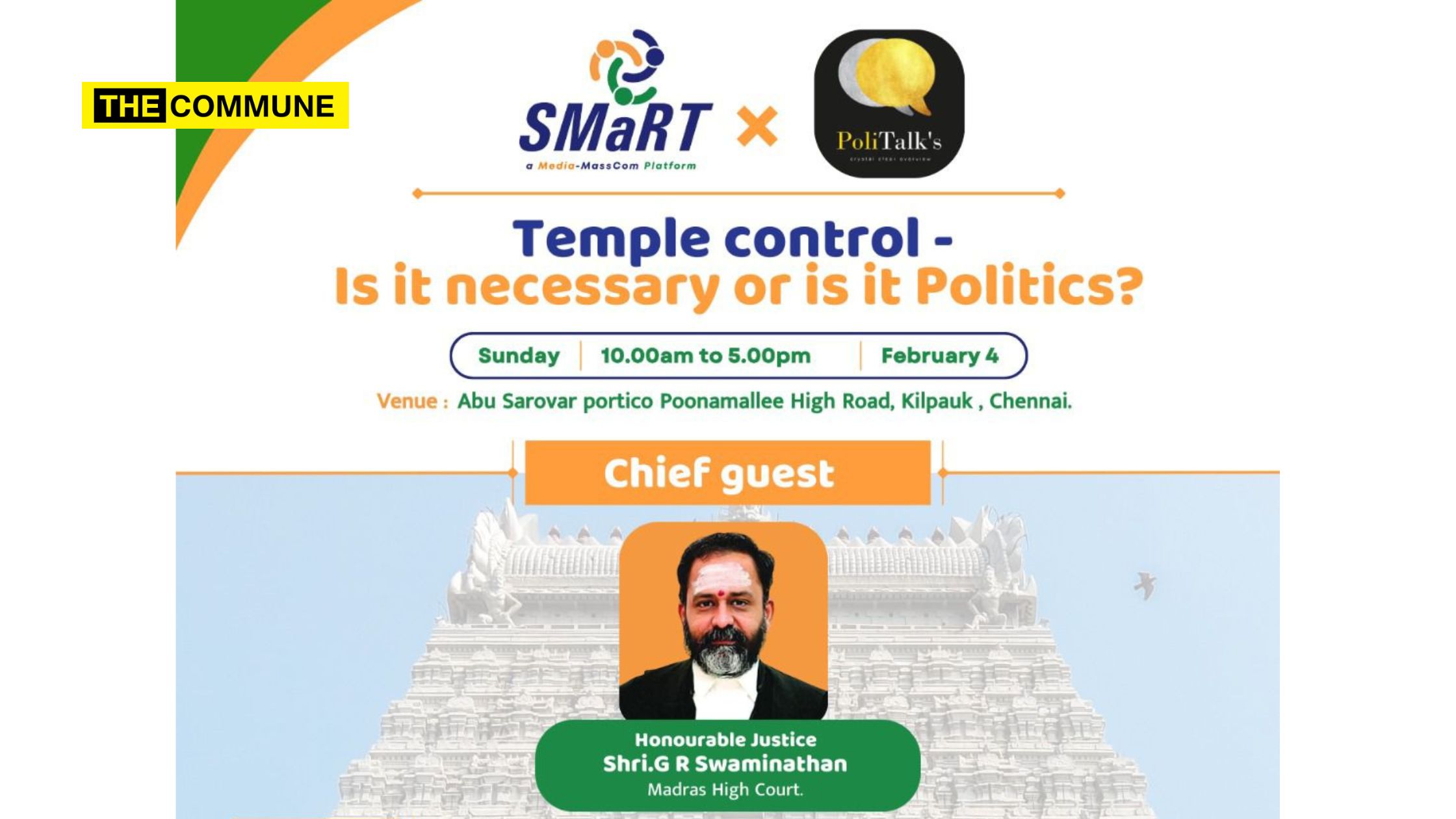
Discussion Forum On Temple Control By SMaRT & PoliTalks Channel, Justice GR Swaminathan To Be Chief Guest

Whether Hindu temples must remain in government control is a hot topic these days. And having a public discussion on this would make things all the more interesting. The focus on government control of temples is quite interesting because the major opposition parties who claim that India is a ‘secular’ state have always been supporting the state control of temples, and temples alone. In the pre-British era, kings of the land constructed the temples and dedicated them to the people for worship and maintaining them. The local communities maintained the temples. They flourished as the centres of dance and art, and at the heart of a massive decentralised trade network as well.

PoliTalk’s, a popular YouTube channel that debunks Dravidian ideology, is organising a discussion forum on this exact theme in association with SMaRT4Bharat, a Media MassCom platform.

To get more clarity on this topic and to intensify public opinion, an event titled ‘Freeing temples: A Necessity Or A Political Tool?’ is being held on 4 February 2024 at Abu Sarovar Portico, Poonamallee High Road, Kilpauk, Chennai from 10 AM to 4 PM.

Renowned personalities such as temple activist TR Ramesh, political commentator Sattai Duraimurugan, Congress member Americai Narayanan, temple activist Rangarajan Narasimhan, and political commentator Sumanth C Raman are speaking at this event. The special guest for the event is Hon’ble Judge GR Swaminathan, Madras High Court along with actor turned political commentator Kasthuri Shankar. Entry is free for all and no registration is needed.

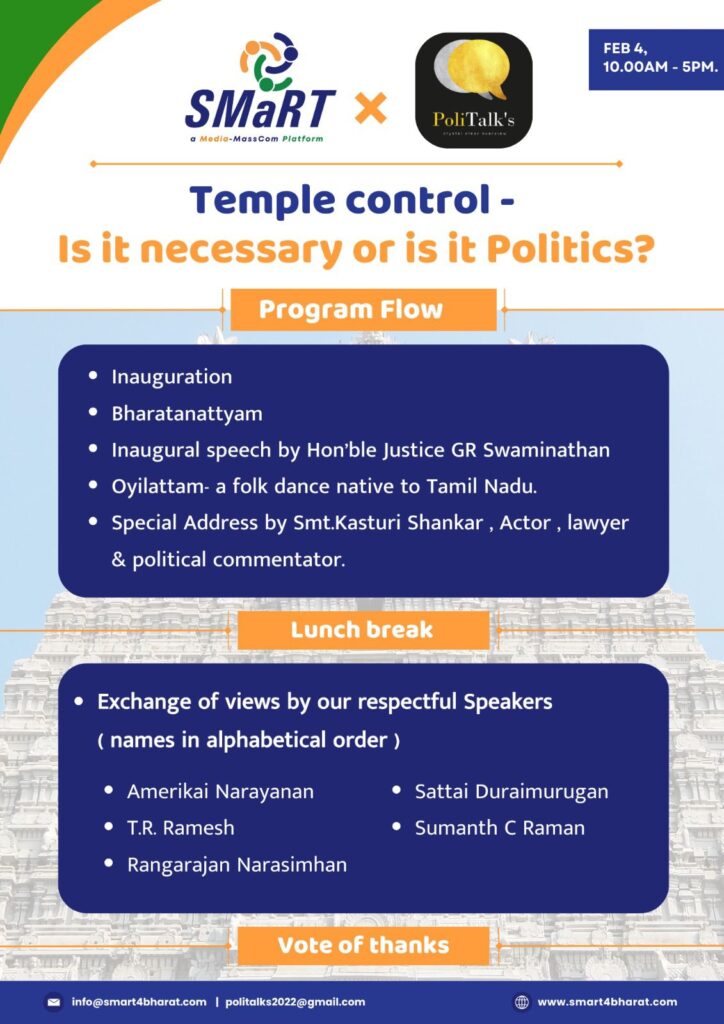
The programme itinerary is as follows:

The programme starts at 10AM in the morning of 4 February 2024 with an inauguration followed by a Bharatnatyam performance. This will be followed by an inaugural speech by Justice GR Swaminathan.

This address will be followed by an Oyilattam performance and subsequently a special address by Kasthuri Shankar.

Following this, there will be a lunch break and post lunch, the discussion will begin. The exchange of views will be done by the speakers (in no specific order) Americai Narayanan, Sumanth Raman, TR Ramesh, Rangarajan Narasimhan, Saattai Duraimurugan. The event is expected to be over by 4PM that day.

Why Is This Topic Important?

Let us look at government control of temples from a Tamil Nadu perspective. The British were keen on taking up the administration of the temples to weaken them and plunder the wealth. The British introduced regulations like The Madras Regulation VII of 1817 to control temple wealth, later formalized under The Religious Endowments Act 1863. Later, The Madras Religious and Charitable Endowments Act 1925, and subsequent legislation, expanded government control over Hindu temples. Finally, post-independence, Tamil Nadu’s Hindu Religious and Charitable Endowments Act 1951 consolidated government control over temple management. Temples, especially in the south, possessed massive property and wealth. The subsequent state governments after independence inherited these laws from the British state governments, continued to interfere in the administration and management of Hindu temples, using their laws and boards. This led to widespread mismanagement, corruption, and loss of temple property and heritage.

Today, at least 18 states in the country regulate the temple administration through various acts and laws. These are: Andhra Pradesh, Bihar, Delhi, Haryana, Jammu and Kashmir, Jharkhand, Karnataka, Kerala, Madhya Pradesh, Maharashtra, Manipur, Puducherry, Punjab, Rajasthan, Sikkim, Tamil Nadu, Telangana, West Bengal.

Due to the state control, temple funds, including hundi collections, face significant deductions for administrative fees and government schemes, diverting resources from traditional purposes. These often lead to the neglected and dilapidated condition of ancient temples, where the hundi collections are negligible. This is especially true in the case of Tamil Nadu, where many temples face mismanagement, with numerous temples generating minimal revenue and struggling to maintain rituals. Over 1,200 deities have been reported missing or stolen from temples, raising concerns about the preservation of religious artefacts.

Subscribe to our channels on TelegramWhatsApp, and Instagram and get the best stories of the day delivered to you personally.
How ‘The Hindu’ Supported Fake News & Misinfo Spreader Account Hindutva Watch After X Took Down The Account

On 27 January 2024, an article appeared in The Hindu newspaper titled, ‘Blocking of Hindutva Watch and prevalence of social media censorship in India‘ penned by the senior sub-editor of the newspaper, Aaratrika Bhaumik. The article discusses how X, a social media platform, has complied with the Indian government’s orders to block accounts and tweets that are critical of its policies or actions. The article also explains the provisions of the Information Technology Act and the Rules that empower the government to issue blocking orders, and the lack of transparency and due process in the censorship regime. It highlights the cases of Hindutva Watch, Saurav Das, Tanul Thakur and others who have faced censorship on X and the implications for their work and expression. In retaliation to the claims made in the article, an X user, going by the username @thehawkeyex posted a rebuttal thread pointing out how the Hindutva Watch (HW) handle had spread fake news and misinformation freely.

On 22 May 2023, the HW handle posted on X said an old mosque was demolished by the Gujarat administration at Dahod, Junagadh for a smart city project. However, the post fails to mention that four old temples were also demolished along with the mosque to make way for the project. Additionally, the masjid also failed to produce necessary land documents in the court for proof of ownership.

On 20 Feb 2024, the HW handle posted an ‘untold story of Jammu massacre’ which claimed 6,00,000 Muslims were murdered in 7 days. However, the photo used for the story was that of the aftermath of devastating riots in Kolkata that happened in 1946.

In October 2023, the HW website reported a story stating, ‘Jeevan Jyoti church demolished citing “illegal construction on government land”’. However, the truth was far from it. The demolition was a planned removal drive with prior notice given to the church administration. Despite this, the government team was attacked by goons.

In September 2023, the HW website again posted misleading news stating that in Uttarakhand a Muslim youth was beaten, head shaved, and face blacked for an alleged interfaith relationship. The truth in this case was the man was accused of rape and hence the punishment was given to him by the community.

In December 2022, the X handle of HW again posted fake news stating that Muslim residents in the Gulmohar colony in Ujjain, UP were asked to vacate to give way for the Kumbh Mela festival to be held in 2028. However, the truth in this case was that the government has been requesting the people to vacate for a long time for multiple road expansion projects which included three Hindu colonies as well.

D-Intent data, a news data research organisation focuses on neutral fact checking and intent analysis, has flagged fifteen ‘news articles’ posted by HW as fake/misleading news articles.

In June 2023, the HW website was booked by the Maharashtra police for, ‘spreading fake news, defaming Hindus, and inciting mob’ during Kolhapur violence.

The user also alleges that the HW founder is a Kashmiri separatist named, Raquib Hamid Naik residing in the USA and colludes with Pakistanis. The technical backend of the site is managed by Adil Kayani who ran a “free Kashmir” campaign and also runs a propaganda website for setting anti-India narratives and secessionist ideologies.

The user further alleges that the co-founder Naik was working as director for the Two Circles Network (TCN) which was founded by Kashif Ul Huda, a terrorist organisation SIMI and Zakir Naik sympathizer.

Furthermore, there was a similar-named HW account on Reddit, which was banned due to hate content policy violation.


(With inputs from The Hawk Eye)

Subscribe to our channels on TelegramWhatsApp, and Instagram and get the best stories of the day delivered to you personally.
“Spiritually Poisonous, Unbreathable Concentrate Of Hindu Malice”: Congress Leader Mani Shankar Aiyar’s Daughter Rant On Ram Mandir Stokes Controversy, RWA Allegedly Tells Her To Apologize Or Leave

Congress leader and former diplomat Mani Shankar Aiyar and his daughter, Suranya Aiyar, have been served with a notice on 27 January 2024 to vacate their residence in Delhi’s Jangpura following a social media post criticizing the consecration ceremony of the Ayodhya Ram Temple on 22 January 2024.

In the short Facebook video, she said “With the forthcoming event in Ayodhya on January the 22nd, the atmosphere here in Delhi, already famous for being polluted in a material sense, has thickened to a spiritually poisonous and unbreathable concentrate of Hindu chauvinism, malice, and bullying. I am deeply anguished by all this as an Indian and as a Hindu, and after thinking hard about what I can do, I decided to go on a fast starting tomorrow Saturday the 20th and ending on Tuesday the 20th day after the January 22nd production at Ayodhya. I’m doing this first and foremost as an expression of love and sorrow to my Muslim fellow citizens of India. I cannot let this moment pass without saying as loud as I can, to my Muslim brothers and sisters that I love you and that I condemn and repudiate what is being done in the name of Hinduism and nationalism in Ayodhya. I am also doing this as an expression of my love for my Mughal heritage. This is not only about feeling protective towards someone else”.

The notice, issued by the Jangpura Extension Welfare Association’s Residents Welfare Associaton (RWA) in New Delhi, advises them against engaging in expressions that may disrupt peace or offend the religious sentiments of other residents.

As an RWA it is our responsibility to see that there is cordial relation between all the residents and we do not appreciate a resident rant which may disrupt the peace in the colony or hurt the religious sentiments of the residents,” the statement read.

 Suranya Aiyar on 20 January 2024 announced the fast to protest against the ‘Pran Pratishtha’ ceremony of the Ram Mandir via her Facebook. The RWA expressed disappointment at her actions, stating that an educated person should understand the significance of the Ram Mandir construction, especially following a unanimous Supreme Court verdict after 500 years.

What Ms Aiyar, said through social media was certainly unbecoming of an educated person, who should have understand that Ram mandir was being built after 500 years and that too after 5-0 supreme court verdict.” the statement further added 

 The RWA urged Mr. Aiyar to condemn his daughter’s comments on the event. They cautioned against provoking people and instigating hatred or mistrust among citizens, emphasizing the impact of one’s actions on the reputation of the community. 

The notice highlighted the limitations of freedom of speech, as per the Supreme Court of India, and urged the Aiyars to refrain from making controversial posts or comments.

You might take the cover of freedom of speech but please remember, as per the Supreme Court of India, Freedom of Speech cannot be absolute”, it further stated

It finally suggests that if the Aiyars believe their actions in protesting the Ram Mandir consecration are justified, they should consider relocating to a different community more tolerant of such expressions.

In case you still think what you have done in protesting against the consecration of Ram mandir at Ayodhya, we would suggest you to kindly move out to another colony, we people and RWA’s can turn blind eye to such hatred”, the letter said.

As a follow-up to this RWA’s reaction, Suranya posted on her Facebook page that the letter was from a Residents Welfare Association of a place she did not live in.

However, Republic TV reported that “The Jangpura RWA president while speaking to Republic TV exclusively, said, ‘The kind of statements that she, as a resident of the society has made, have come to us through others and it has disturbed the peace in the society. Such sort of claims are totally uncalled for. We don’t have any problem with her opinions on Mughals and her sympathy with Muslims but the kind of atmosphere which her provocative statements have created, it can truly disturb the peace and harmony in the society and we, collectively demand an apology from her.”

The Ram Temple consecration ceremony in Ayodhya was a monumental event celebrated by millions of Hindus globally. The temple’s construction, funded entirely by donations from within the country, is ongoing, with the second and final phase expected to be completed by December 2025.

Subscribe to our channels on TelegramWhatsApp, and Instagram and get the best stories of the day delivered to you personally.

Global Clergy Abuse Watchdog Urges UGC-India To Act On Alleged Financial Misconduct By Loyola College, Chennai

In a recent development that has sent shockwaves through India’s educational sector, Ending Clergy Abuse (ECA), a global organization dedicated to human rights advocacy and supporting survivors, has called upon the University Grants Commission (UGC) of India to investigate allegations of financial misconduct at Loyola College, Chennai.

Ending Clergy Abuse (ECA), a global clergy abuse watchdog, has called for swift action against the Jesuit-run Loyola College, Chennai, amid allegations of financial impropriety. Fr. Francis Xavier, former Rector of Loyola College, Chennai stands accused of involvement in the misappropriation of significant sums of taxpayer money, prompting ECA to petition the Chairman of the University Grants Commission (UGC) to pursue appropriate measures.

ECA, boasting a membership spanning over 21 countries across five continents, is known for its relentless pursuit of justice and accountability in cases of abuse and misconduct. In a formal communication addressed to the Chairman of the UGC, the organization raised concerns regarding alleged financial irregularities at Loyola College, Chennai, and urged swift action to address the matter.

In a letter addressed to the UGC Chairman, ECA reiterated concerns raised by its Indian representative, Mr. R. Joseph Kennedy, in a complaint dated 17 December 2022. The letter reads as follows:

Dear Sir,

Ending Clergy Abuse (ECA) is a worldwide organization of human rights activists and survivors from over 21 countries and 5 continents. In our previous complaint submitted by our Indian representative, Mr. R. Joseph Kennedy, Dated: 17 Dec 2022 we presented compelling evidence and concerns regarding the alleged financial irregularities that have come to light, all pointing towards the misuse of University Grants Commission (UGC) funds by Loyola College, Chennai. The alleged misappropriation not only tarnishes the reputation of the institution but also undermines the integrity of the UGC.

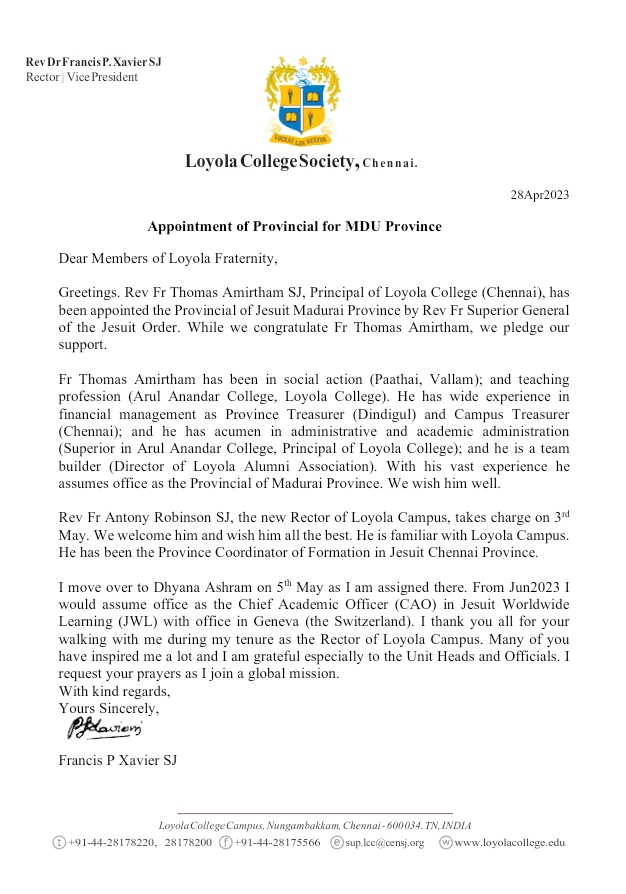
Additionally, it’s important to note that a former two-time principal of the institution, who possesses critical knowledge regarding the misappropriation, has published a book outlining the scandal. This publication significantly reinforces the credibility of the claims and emphasizes the pressing necessity for a comprehensive investigation.

Unfortunately, since then, it is distressing to note that the primary accused individual allegedly involved in the misappropriation of funds, has officially fled the country and is currently residing in Switzerland. This development raises serious concerns about Loyola College, Chennai’s accountability and exhibits a pattern where individuals accused of grave misconduct evade legal consequences by escaping justice.

We implore the UGC to take immediate and decisive action to safeguard the interests of all stakeholders involved. This includes initiating a thorough investigation into the alleged misappropriation and scrutinizing financial documents to uncover the full extent of the irregularities.

We trust that the UGC understands the gravity of the situation and will treat this matter with the utmost urgency.
Thank you for your attention to this matter, the board members of ECA Global,

Murray Heasley | Timothy Law | Simone Padovani | Sergio Salinas | Janet Aguti | Gemma Hickey

The Commune had earlier published an extensive report by Abhinav Vinayak, a freelance investigative journalist, on the misappropriation of UGC funds.

Abhinav, who interviewed Rev Fr. Albert Muthumalai, a former two-time principal of Loyola College, quoted him as saying, “Such a great institution meant to educate students, with high ethics and moral values has become a den of unquestionable corruption.”

Subscribe to our channels on TelegramWhatsApp, and Instagram and get the best stories of the day delivered to you personally.
PG Dental Student Ibrahim Apprehended For Secretly Recording Woman Tenant With Spycam

In a disturbing incident that unfolded in Royapuram, Chennai, a postgraduate dental student was apprehended for illicitly recording a woman while she was bathing in her home. 

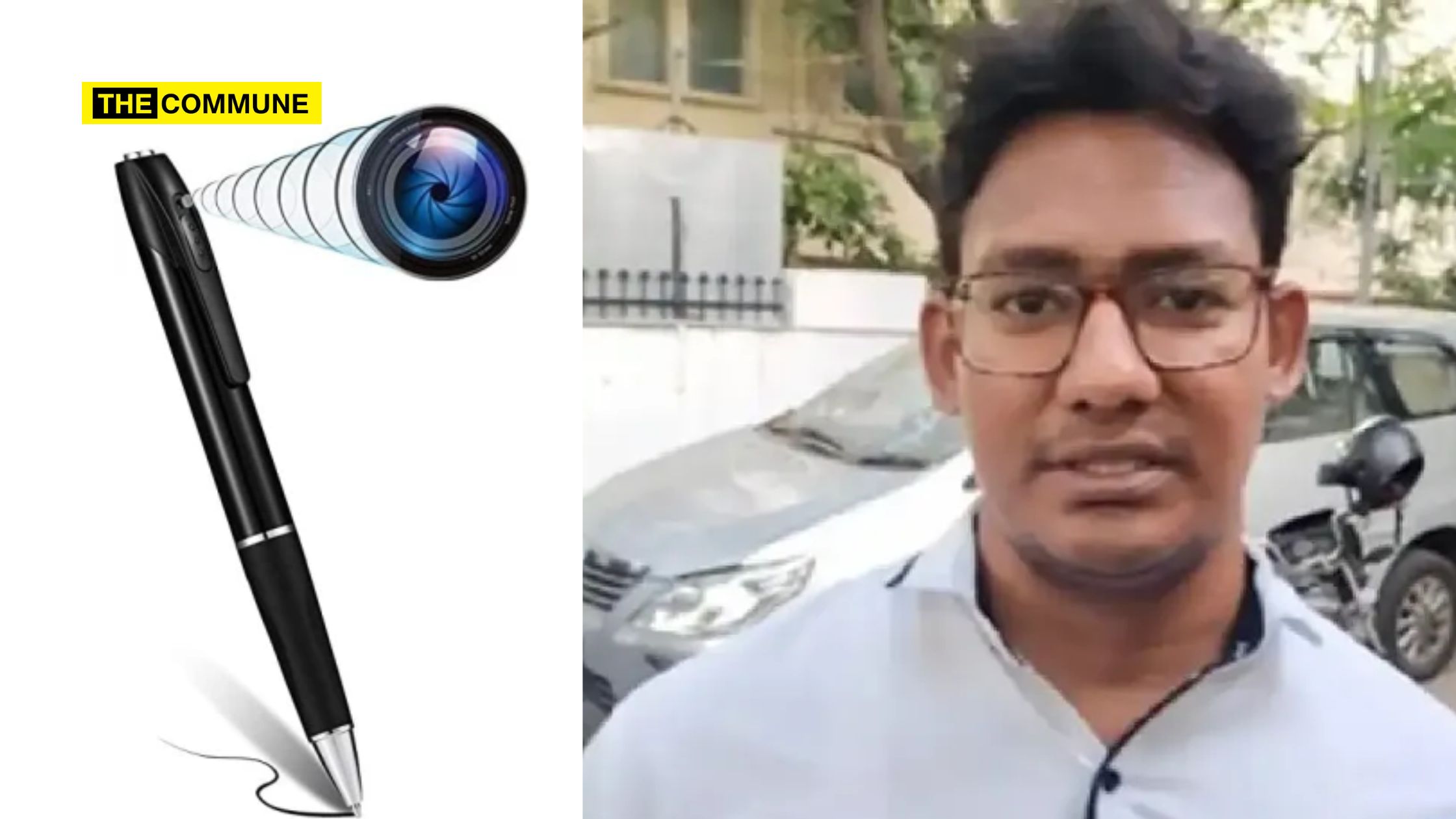
The perpetrator was identified as Ibrahim (36), currently pursuing post-graduation in Dental studies. The accused strategically placed a pen camera near the bathroom of the tenant’s residence, taking advantage of the absence of occupants to capture footage.

Living with her husband and child, the woman became suspicious upon discovering the spy camera pen. She quickly handed it over to her husband for examination. Upon realizing the true nature of the pen, which turned out to be a covert surveillance device equipped with a camera, they filed a complaint with the Royapuram police station regarding the incident. As a result of the complaint, Ibrahim was taken into custody, and investigations are currently in progress.

This incident is reminiscent of the incident in 2019 at an Airbnb in Chennai where a family made a disconcerting discovery – a hidden camera was disguised as a smoke detector in their living room. The increasing affordability of such cameras, disguised as everyday objects like smoke detectors and clocks, poses a growing risk.

(With inputs from News7Tamil)

Subscribe to our channels on TelegramWhatsApp, and Instagram and get the best stories of the day delivered to you personally.
“Those Who Brewed Liquor Once Are Today Father Of Education”: TN BJP Head Annamalai Slams DMK Min EV Velu

Tamil Nadu Bharatiya Janata Party President K Annamalai reached Tiruvannamalai as a part of his En Mann En Makkal Yatra. Tiruvannamalai being the bastion of DMK Minister EV Velu, Annamalai used the opportunity to pounce upon the allegations surrounding the the Minister of Public Works, Highways, and Minor Ports in the state. 

Annamalai commenced by sharing a poignant tale illustrating how former liquor brewers have risen to become esteemed figures in the field of education in Tamil Nadu. He supported this by specifically referencing MLA EV Velu from the Tiruvannamalai constituency as an example.

He said, “He is running Jeeva Velu International School Tiruvannamalai, is he taking donations? Oh, ₹1.5 lakhs fees! Our district head is saying we should pay ₹1.5 lakhs to study in that school. The problem in Tamil Nadu is anyone can become the father of education, someone who brews liquor is the father of education. Somehow, after looting money, he starts a school and gets the title of father of education, and gives money to some private college to get a doctorate. With the help of 4 people who shout slogans, he gives himself the title “Educational Icon”, and in ten years transforms himself from a liquor brewer to the father of education. EV Velu is an example of that kind.

He started a different business after coming to the politics, he is doing ATM business but after starting international school, he sells seats for ₹1.5 lakhs.”

Further, Annamalai challenged Velu, urging him to permit the establishment of the central government’s Navodaya schools in Tamil Nadu and to compete with the high standard of education they offer, emphasizing that children can avail of this education for free.

He stated, “I’m saying dear brother EV Velu If you really have honor and dignity, tell me that you will allow central government’s Navodaya schools in Tamil Nadu. We will bring a hundred schools in a week. Let’s take up this challenge between the international schools in Tamil Nadu and our Navodaya school. If your International school competes with Navodaya and wins, that day I will leave politics. I’m saying this truth standing at the feet of Arunachaleshwarar.”

In addition to that Annamalai criticized Velu, accusing him of operating a high-priced international school catering exclusively to the affluent, at the expense of neglecting the educational needs of the underprivileged.

He said, “You run a private school where only rich people can get education and run an international school where poor people cannot afford to enter and get educated. You are taking five lakhs to issue permission to start a CBSE school”.

He asserted, “Modi is ready to give Navodaya schools, it is a school of international standard, there is not even fee of one rupee, from uniform to food – everything is provided by the central government. What exam should your children pass? IIT, NEET, they will clear everything. I’m challenging you. Let all the fathers of education tomorrow morning we will bring 100 schools in Tamil Nadu, for a district of two to three schools, let’s have 78 schools. After 1 year, let’s have a Learning Ability Test for Navodaya and international school students, if your international school wins that day I’ll leave politics, that day will be my last day in politics. They should accept this challenge”

Navodaya Vidyalaya

Jawahar Navodaya Vidyalaya (JNV) established in 1986, constitutes a network of central schools specifically designed to cater to academically gifted students, particularly those from rural areas in India. The aim is to address the challenges arising from financial, social, and rural disadvantages that could hinder their access to advanced education. Operated by the autonomous Navodaya Vidyalaya Samiti under the Ministry of Education, these fully residential and co-educational schools are affiliated with the Central Board of Secondary Education (CBSE). Despite being present throughout India, Tamil Nadu stands out as an exception to their nationwide coverage, owing to the influence of the education lobby in the region.

Navodaya Schools serve as a valuable alternative education system in India with a specific focus on delivering quality education to rural and talented children. Their merit-based selection process ensures admission is granted based on academic potential rather than financial status. By concentrating on rural areas, these schools provide an educational lifeline to economically disadvantaged students, offering free education, including textbooks, uniforms, and boarding facilities.

Equipped with modern infrastructure, such as well-furnished classrooms, libraries, laboratories, and sports facilities, Navodaya Schools create an enriching learning environment. The establishment of these schools in various states and union territories ensures regional balance, contributing to the overall development of remote and rural areas. Emphasizing holistic development, the schools encourage participation in extracurricular activities, sports, and cultural events. They follow a three-language formula to promote multilingual proficiency and implement a unique migration scheme to foster national integration among students.

By integrating technology into education, Navodaya Schools prepare students for the digital age, and community participation ensures a sense of ownership and collective responsibility. In summary, Navodaya Schools play a vital role in bridging the urban-rural education gap, identifying and nurturing talent in remote areas, and contributing significantly to the socio-economic development of the nation.

Subscribe to our channels on TelegramWhatsApp, and Instagram and get the best stories of the day delivered to you personally.

Cuddalore Dt DMK Councillors To Stage Hunger Strike, Threaten Resignation Over Alleged Neglect By DMK Mayor

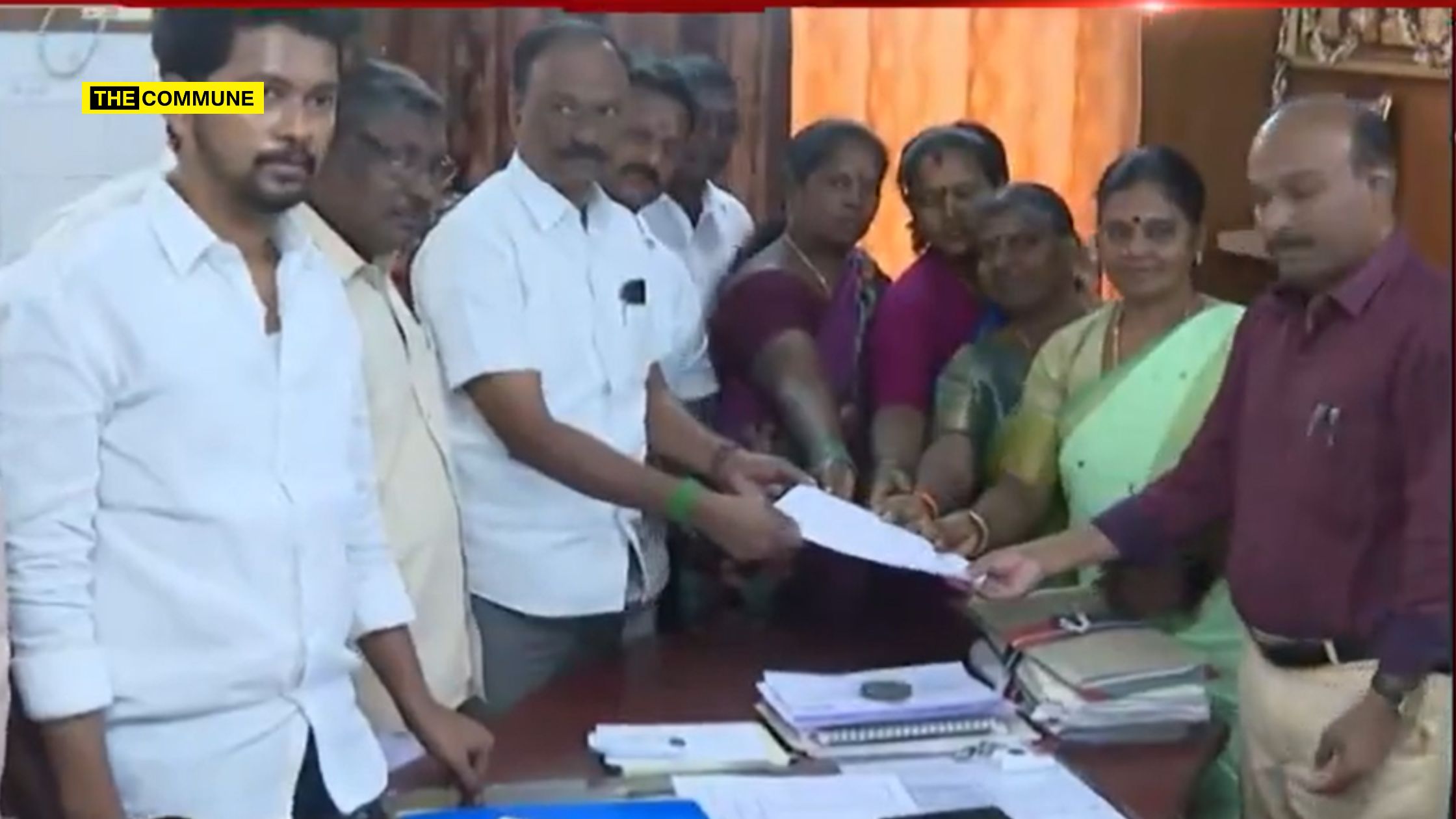
Ten DMK councillors from Cuddalore district have declared their intention to undertake a hunger strike on 31 January 2024. The councillors allege that the basic facilities crucial for their wards’ development have not been provided by the Mayor, Sundari Rajan, who is also a member of the ruling party DMK.

The hunger strike is scheduled to take place in front of the Gandhi statue within the municipality office campus. The councillors assert that their demands have fallen on deaf ears, and their attempts to seek redress from the DMK government have yielded no results.

Councillors their frustration, stating, “We have repeatedly brought our concerns to the attention of the DMK government, but unfortunately, no concrete action has been taken. Our wards are suffering due to the lack of basic facilities, and we can no longer stand idly by.”

The councillors have also issued a stern warning, threatening to resign from their positions if their demands are not met. This move is noteworthy given that the Mayor, Sundari Rajan, belongs to the same DMK party as the protesting councillors.

“We are left with no choice but to take this extreme step to gain the government’s attention. The hunger strike is a last resort, and if our requests are not addressed promptly, we will have no option but to submit our resignations,” they stated.

This is not the first time DMK members especially councillors are expressing displeasure at their party publicly.

In September 2023, thirteen councillors affiliated with the Dravida Munnetra Kazhagam (DMK) in Tindivanam Municipality abruptly walked out of a municipal meeting, expressing deep dissatisfaction with their inability to address basic needs in their wards, citing external pressures limiting their effectiveness. The disillusioned councillors announced their intention to resign, attributing their decision to the City Council’s inaction on pressing issues such as garbage collection, inadequate lighting, and water-related problems despite repeated attempts to address these concerns.

During a Tirunelveli Corporation council meeting on 27 July 2023, women councillors from the DMK staged a protest, accusing former Minister TPM Mohideen Khan of threatening their lives during the selection of candidates for the taxation appellate committee election. The conflict unfolded as the councillors confronted the Mayor and Deputy Mayor about the alleged threat, leading to a disruption in the meeting and a brief departure of the Mayor and Commissioner before their return.

In November 2023, in Ooty, a contentious two-phase project to replace century-old municipal shops with modern establishments has sparked heated debate, with Vice Chairman J. Ravikumar supporting the development and Mustafa, a DMK councilor, vehemently opposing it. The dispute escalated during a municipal meeting, revealing tensions within the DMK party as both councilors, known for making joint decisions in the past, clashed over the construction project, leading to a heated exchange and allegations of corruption.

In December 2023, thirty-eight DMK councillors in Tirunelveli Corporation have formally requested Commissioner Shubham Dnyandeorao Thakare to present a no-confidence motion against DMK Mayor PM Saravanan, citing grievances and corruption allegations. The dissenting councillors, who had previously submitted removal requests to Chief Minister MK Stalin, intensified their protests with public posters accusing the mayor of corruption and sit-in demonstrations, leading to the expulsion of three councillors from the DMK.

Subscribe to our channels on TelegramWhatsApp, and Instagram and get the best stories of the day delivered to you personally.
What Dhanya Rajendran And Her TNM Didn’t Reveal About The Suspended “IRS Officer”

The IRS Officer who was in the news a few weeks ago, Balamurugan, is back in the news again. This time for the fact that he was suspended just a day before his retirement.

IRS officer B Balamurugan stirred controversy by demanding the dismissal of Union Finance Minister Nirmala Sitharaman in a letter dated 2 January 2024. Balamurugan accused the Enforcement Directorate (ED) of operating as an “extended arm of the BJP” under Sitharaman’s leadership, citing the ED’s actions against two Dalit farmers in Salem. The letter alleged that the ED, under Sitharaman, had transformed into a “BJP Policy Enforcement Directorate.”

Balamurugan, Deputy Commissioner of GST and Central Excise in Chennai (North) has a history of writing such letters.

Balamurugan faced punitive measures when he was assigned to the Hindi cell in Central Government departments, intended for the development of the Hindi language. In response, he wrote a letter asserting his Tamil identity, Dravidian roots, and anti-Hindi protest stance, resulting in his suspension.

He faced suspension for participating in protests related to the “murder” of Eelam Tamils which he claimed to be “orchestrated” by the Central Government. During the Russia-Ukraine war, he undertook a fast in “an effort” to halt the conflict.

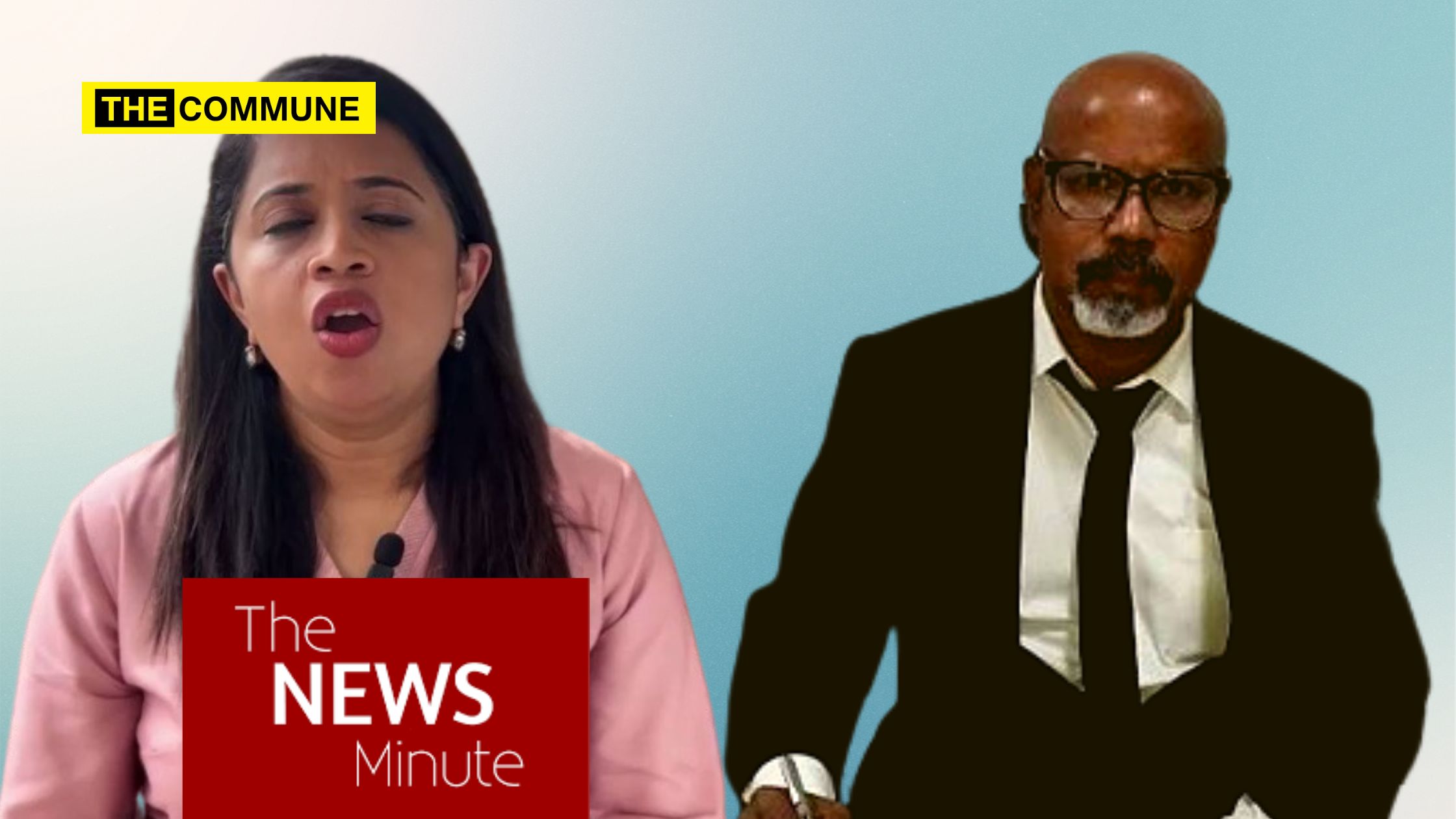
Dhanya Rajendran’s The News Minute took up the “cause” of the Dalit farmers and brought Balamurugan into the spotlight, trying to make a hero out of him. But here is what Dhanya and her team will not tell you.

On 12 July 2021, the Tamil Nadu Forest Department forwarded a letter to the Enforcement Directorate (ED) regarding two farmers, Kannaiyan and Krishnan. The case pertained to the alleged killing of two wild buffaloes, constituting scheduled offenses under sections 51 and 9 of the Wildlife Protection Act, 1972.
The Enforcement Directorate (ED) is obligated to handle wildlife cases due to multiple court orders and the international mandate of the Financial Action Task Force (FATF) to track such instances. FATF imposes an international obligation on organizations to address wildlife-related cases.
Upon receiving the letter from the Tamil Nadu Forest Department, a case was registered, and summonses were subsequently issued. During this period, the Chief Minister of Tamil Nadu was MK Stalin. Subsequently, the Enforcement Directorate (ED) opted to dismiss the cases.

IRS officer B Balamurugan, spotlighted by TNM, wrote a letter to the President urging the dismissal of the Finance Minister. In the letter, he accused her of transforming the Enforcement Directorate (ED) into BJP’s B team. Notably, there is no inherent BJP angle in the situation, and if one exists, it may have been falsely added later for sensationalism.

With The News Minute crying foul over the suspension, the following questions arise:
a) Is Dhanya Rajendran unfamiliar with the authority overseeing the Tamil Nadu Forest Department, which dispatched the communication to ED?
b) Does Dhanya Rajendran lack awareness regarding the Financial Action Task Force (FATF)?
c) Is Dhanya Rajendran unfamiliar with the All India Service rules and the code of ethics?
d) Is the role of the ED solely focused on prosecuting financial and money laundering criminals, or does it involve engaging in what appears to be advocacy journalism, as suggested by her actions?

Subscribe to our channels on TelegramWhatsApp, and Instagram and get the best stories of the day delivered to you personally.
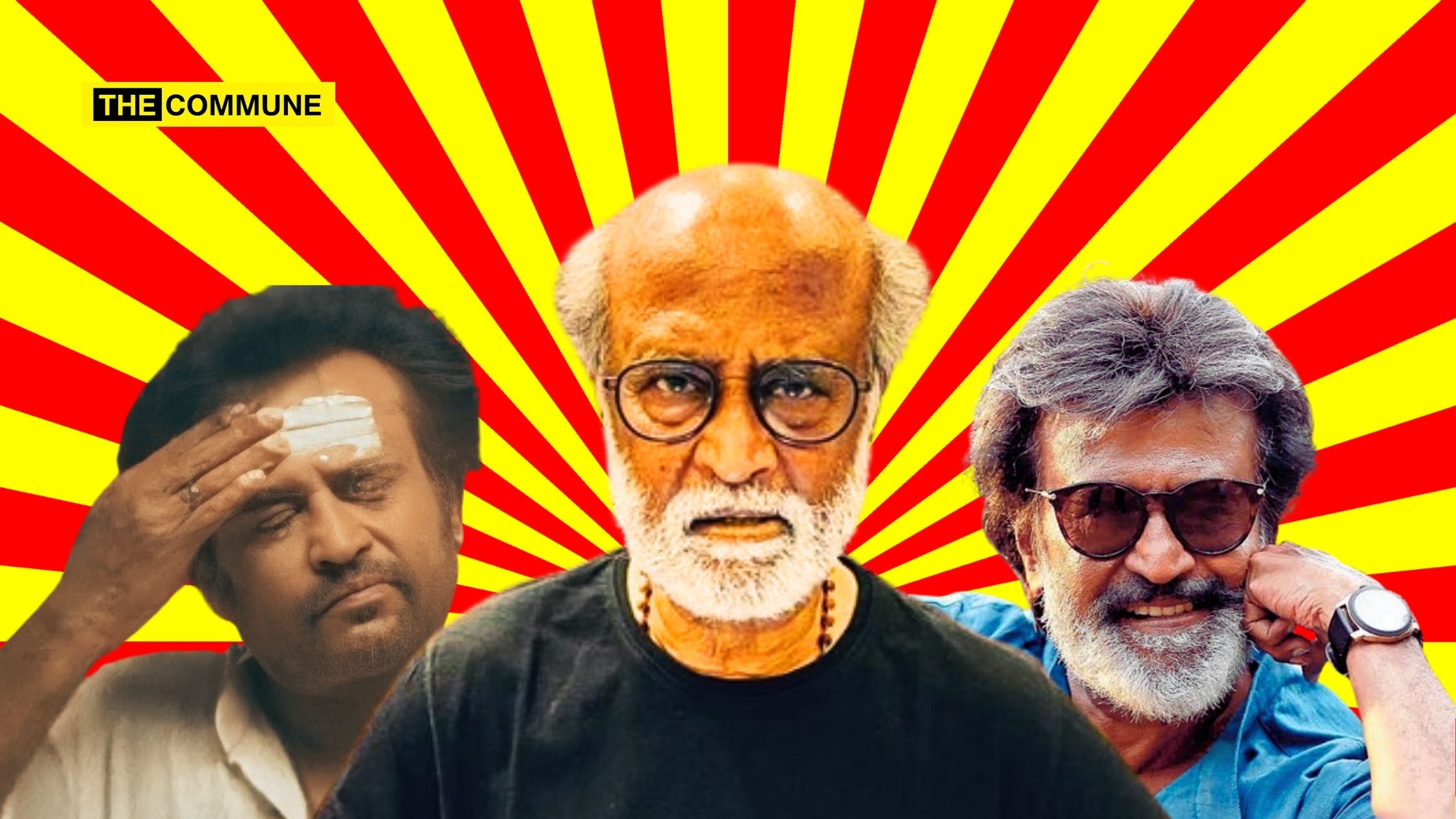
‘Moondru Mugam’ Rajini: The Good Cop, Bad Cop And The Milksop

There is a famous comedy scene from the 2004 Tamil film Kaadhal. The scene set in the room of a bachelors mansion, is a conversation between two aspiring actors and supposedly a director who is jobless. One of the actor aspirants going by the name Virchikakanth has his target set.  “Nadicha hero than sir!” (I’ll act only as a hero), he says to the director when asked about whether he would be willing to do villain roles or character roles. “I’ll wait for it to happen”, Virchikakanth says. This character Virchikakanth hopes that a miracle would happen and that he would become hero one day.

Like Virchikakanth, Rajinikanth too was not ready to settle for being a leader of opposition (villain role) or coalition partner (character role). Though Rajinikanth didn’t aspire to be the hero in Tamil Nadu politics, which is becoming the Chief Minister, he wanted to emerge victor and bring about a ‘system change’. Like Virchikakanth, he too hoped that a miracle (adhisayam and arpudham) would happen where all of a sudden Tamil Nadu people would feel rejuvenated and vote for him. But realpolitik doesn’t work like a Sundar C movie. (Refer: Arunachalam, the film). Sanity prevailed and he called it quits to his political innings dejecting many of his ardent fans.

But his politicking hasn’t stopped. He continues to play the good cop, bad cop and has of late turned out to be a milksop through his actions and utterances in reel and real life.

One day he is in Ayodhya wearing a saffron shawl and a few days later his daughter Aishwarya Rajinikanth swears that he is not a “Sanghi”.

He is a devotee of Mahavatara Babaji and often goes to the Himalayas like a sadhu but has a problem with people painting him saffron.

So, who is Rajini? Is Rajini a Sanghi or not? To find answer to this question, it is important to understand the evolution of Rajinikanth and the various positions he has taken over the course of time. People must look back and reflect on Rajini’s positions before taking a position on Rajini.

The Good Cop Rajini

Rajinikanth is no doubt a self-made man and has earned his place as a ‘Superstar’. He definitely has the grace of God and the blessings of his fans to be where he is today and he has always been grateful for that. At a time when Kollywoodias embraced the Dravidian ideology, he proudly sported the sacred ash on his forehead and a rudraksh over his neck. Being a devotee of Raghavendra Swami, he ensured that he made a film on the Hindu saint as his 100th film. He also paid his tribute to Mahavatar Babaji by making Baba in 2002 in which he takes on the Dravidian Model of atheism and corrupt politicians with Hinduism. And when the film bombed at the box office, he compensated the distributors from his own pocket.

Baba was also a film that put him in political cross hairs with Dravidianist politicians. Karunanidhi, the witty politician that he was, saw to it that the film faced troubles. There were rioters who assaulted movie theatres and destroyed movie prints in numerous locations. Pattali Makkal Katchi (PMK) created a furore over Rajinikanth smoking in the movie. And guess how Rajinikanth dealt with all this? The daring Rajini gave a go ahead to his fan clubs to vote against DMK-PMK alliance and elect candidates of the AIADMK and BJP in the 2004 Lok Sabha elections. This put even the great Karunanidhi in backfoot who later asked Ramadoss to be “patient” until the elections were over. Such was the audacity of Rajini back then.

In 2011, Rajinikanth declared his endorsement of the anti-corruption movement led by Anna Hazare, generously providing his commercial wedding venue, the Raghavendra Kalyana Mandapam in Chennai, for the India Against Corruption members to conduct their fast at no charge.

But this is a Rajini we all know – the superstar actor, the humble and simple man with a spiritual bent.

But there is also the other face of Rajini.

The Bad Cop Rajini

Rajnikanth made a cameo in the film, Valli (1993) in which the actor incorporated messages discouraging Hindus from advocating for Sri Rama’s birthplace. This film produced by Rajinikanth himself had a theatrical release when the watershed Ram Janmabhoomi movement led by Hindu outfits and the BJP, was at its zenith and had culminated in the demolition of the Babri Masjid. Before that he had badmouthed Lord Rama in a black and white movie hailing Ravana as the true gentleman.

In the 2018 film “Kaala”, directed by rabid anti-Hindu filmmaker Pa. Ranjith, Rajinikanth is the black shirt-clad messiah of a chawl fighting the saffron shawl and tilak sporting evil men. There were scenes where Hindu festivals were demonized, with Lord Vinayaka and Lord Ram shown in negative light. Every villain in the film, including the main antagonist Hari (another name for Lord Vishnu), is a practicing Hindu, sporting religious symbols of saffron/Hinduism. Hari frequently talks about Krishna and Rama while justifying his evil deeds and Kaala threatens him, “If stealing my land is your God’s Dharma, then I won’t spare your God either.” It even contained a blatant reference to prominent BJP leader H. Raja to reinforce negative stereotypes about the Narendra Modi Government.

The lead up to the climax show Hari Dada listening to a discourse on Ramayana with full devotion while Rajini, the Ravana fights the saffronists.

In 2018, Rajinikanth and Sun Pictures again collaborated for Petta directed by Karthik Subbaraj , a known sympathizer of LTTE and naxals like Daniel/Thirumurugan Gandhi. Petta too took potshots at Hindutva and on the other hand, Rajini helps in Anwar getting married to Anu.

Both Petta and Kaala took potshots at Hindutva that showed anyone with a tilak on a forehead as a religious bigot. This was the time when Tamil Nadu was riding on a huge anti-Modi and anti-Hindutva wave, thanks to the toiling efforts of the DMK and allies that used every opportunity to portray Modi as anti-Tamil.

Rajini tried to capitalize on this sentiment by positioning himself as being against Hindutva and the BJP. Just like how he added fuel to the fire in 1996 elections, Rajini did the same although not explicitly for the 2019 Lok Sabha elections.

He even distanced himself from outrightly coming in support of Modi (like he did for demonetisation) in the run up to the elections. He struck a tactfully eluding note with his ‘ten persons ganging against one’ remark. NDA alliance (ADMK) went with 1 seat from Tamil Nadu.

Looks like now, he’s also ready to do his bit ahead of the 2024 Lok Sabha elections with Lal Salaam made by his daughter Aishwarya Rajinikanth, and Vettaiyan made by Dravidainist propagandist TJ Gnanavel of ‘Jai Bhim’ fame, in the pipeline. In Lal Salaam which is releasing on 9 February 2024, Rajinikanth plays Moideen Bhai, the good Muslim while another villain (Adithya Menon) is portrayed with a nice red tilak.

Playing Good Cop In Real Life And Bad Cop In Reel Life

Nobody can play good cop – bad cop like how Rajini does. Reel Rajini instigates people to protest while real Rajini says that the state would turn into a cremation/burial ground if there are needless protests while also rightly pointing out how anti-social elements infest peaceful protests and unleash mayhem. Reel Rajini dances to the tunes of Dravidianists and glorifies ideologies of EVR while real Rajini talks about EVR’s anti-Hindu rally while speaking at Thuglak event. Reel Rajini negatively characterizes Lord Ram while real Rajini goes and attends the Pran Pratishtha ceremony of Ram Lalla at Ayodhya. Reel Rajini is a Moideen Bhai who looks at the side of saffron-shawl clad man and says that venom has been injected into people by mixing religion and sports, while real Rajini speaks of justice being done after 500 years with the building of Ram Temple. You get the point right? As the popular Tamil saying goes – ipdi oru uruttu, apdi oru uruttu (roll one this side and another that side).

But it is a fact that the impressions created through the silver screen has a deeper impact on the psyche of the people and the larger society. And so, the reel and real life Rajini cannot be seen in isolation. Real life Rajinikanth chose to work with a rabid anti-Hindu director like Pa. Ranjith. Real life Rajinikanth gave in to the negative portrayal of Lord Ram and Lord Vinayaka and demonized Ram Bhakts. Real life Rajinikanth chose to do Petta that showed Bajrang Dal in bad light. Real life Rajinikanth chose to be a Moideen Bhai in Lal Salaam and justified his daughter’s derogatory usage of the word Sanghi. Real life Rajinikanth has chosen to associate himself with a Dravidianist propagandist director who spewed venom against Brahmins and insinuated Vanniyars as villains. Real life Rajinikanth who is in a position to do the film that he wants, to produce the film that he wants, to influence the filmmaker and modify the script to convey the message that he wants, did not do so.

What prevents the real life Rajinikanth to launch his own production house and produce something like an RRR or Hanu-Man? These are food for thought for Rajini fans inclined towards the nationalistic thought.

The Milksop Rajini

Rajini is said to have become political in the run up to the 1996 Assembly elections when he raised his voice against the then Jayalalithaa government and said “Even God cannot save Tamil Nadu if Jayalalithaa returns to power”.  This statement is said to have swayed votes in favour of the DMK-TMC alliance. But there was already public anger against Jayalalithaa for having hosted the multi-crore, Guiness record breaking, extravagant marriage of her adopted son V.N. Sudhakaran when she was in office. The grandiose image of both Jayalalithaa and Sasikala draped in ornate red silk sarees and adorned with jewels came to be identified with corruption. Rajinikanth just added fuel to the already raging fire. The election saw AIADMK getting routed to just 4 seats with even the mighty Jayalalithaa losing from the Bargur constituency.

The Many U-Turns

Knowing that he must have earned the lady’s wrath, Rajini under the pretext of inviting for his daughter’s marriage met Jayalalithaa at her residence in 2004. It would be wrong to speculate on what transpired between the two during their meet but we all know who Jayalalithaa is. The least she would have demanded was an apology to fix relations. Later on he would go on to call her a reincarnation of Ashtalakshmi in 2006 at a function held to felicitate Jayalalithaa. When Jayalalithaa got bail in the disproportionate assets case in October 2014, Rajinikanth congratulated her. In February 2017, Jayalalithaa was later named as a convict along with Sasikala, Elavarasi and Sudhakaran but proceedings were abated owing to her death. Same case, but different positions at different points of time. From proclaiming that even God won’t be able to save Tamil Nadu to liking her to God, Rajinikanth’s tryst with Jaya came a full circle.

Just days after participating in a hunger strike and vociferously attacking the Karnataka political class over the Hogenakkal project in 2008, he made peace with the pro-Kannada groups when his film Kuselan faced problems releasing in Karnataka. “It was a mistake. I have learnt a big lesson. The mistake will not be repeated. I will be careful while speaking in future and make sure that I don’t hurt anybody”, he said.

In 2002, he had pledged ₹1 crore towards linking river waters. 15 years later in 2017, he was reminded of the promise by a group of farmers. There is still no concrete evidence whether such a fund was given to the concerned Ministry.

His film Darbar, had a dialogue that carries a reference to Sasikala which was removed after opposition from Sasikala group. Now people can say that this is the producer’s choice and Rajini has nothing to do with it. Be that as it may, it does send across a message about how serious he was about ‘changing the system’.

Rajinikanth while declaring his entry into politics, had quoted Bhagawad Gita to say that he would be considered a ‘coward’ if he didn’t abide by the compulsions of time. It was only after his political entry announcement that he did films like Kaala and Petta.

In 2019, the pandemic struck and Rajini too suffered a health setback with a kidney transplant and being under immunosuppressants which was cited as the reason for his withdrawal from politics once and for all just ahead of 2021 Tamil Nadu Assembly elections. The DMK and other Dravidianist parties heaved a sigh of relief. And he went on to do films for DMK family-owned enterprises – Sun Pictures (Annathe, Jailer) and Red Giant (Lal Salaam).

Rajinikanth, who released a picture of his ‘angry face’ expressing shock over the custodial death of Jayaraj & Bennix that happened during AIADMK regime has not uttered a word about the many custodial deaths that has happened ever since the DMK came to power.

Is Rajini A Sanghi Or Not?

During the audio launch of her film ‘Lal Salaam’ starring her father, Aishwarya Rajinikanth said “People label my father as a sanghi. I want to assert here that Rajinikanth is not a sanghi. If he were, he wouldn’t have been a part of Lal Salaam.”. 

She had said that “only a person with humanity would do Lal Salaam” implying that “Sanghis” lack humanity.

The term Sanghi refers to a devout Hindu, a subscriber of Hindutva ideology, an RSS worker, a support of BJP and Prime Minister Narendra Modi and everything in that spectrum. However, it is often used derogatorily by leftists, Islamists and Dravidianists. It can be inferred from Aishwarya Rajinikanth’s statement that the term ‘Sanghi’ was used pejoratively with a negative connotation.

But Rajinikanth defended and buttressed his daughter’s statement saying she didn’t say Sanghi as a ‘bad word’ and that she was only concerned about her spiritual father being branded a Sanghi when he loved all religions. So, what is Rajinikanth implying here? Does he mean to say that Sanghis are religious bigots?

So, to answer the question – Yes, Aishwarya Rajinikanth is right. Rajinikanth is not a Sanghi and cannot be a Sanghi.

A true Sanghi‘s colour always remains saffron. Only a chameleon changes colours.

Kaushik is a political writer.

Subscribe to our channels on TelegramWhatsApp, and Instagram and get the best stories of the day delivered to you personally.