Home Blog Page 81

The Deification Of A Missionary, James Kimpton, In Rural Tamil Nadu

The Deification Of A Missionary, James Kimpton, In Rural Tamil Nadu

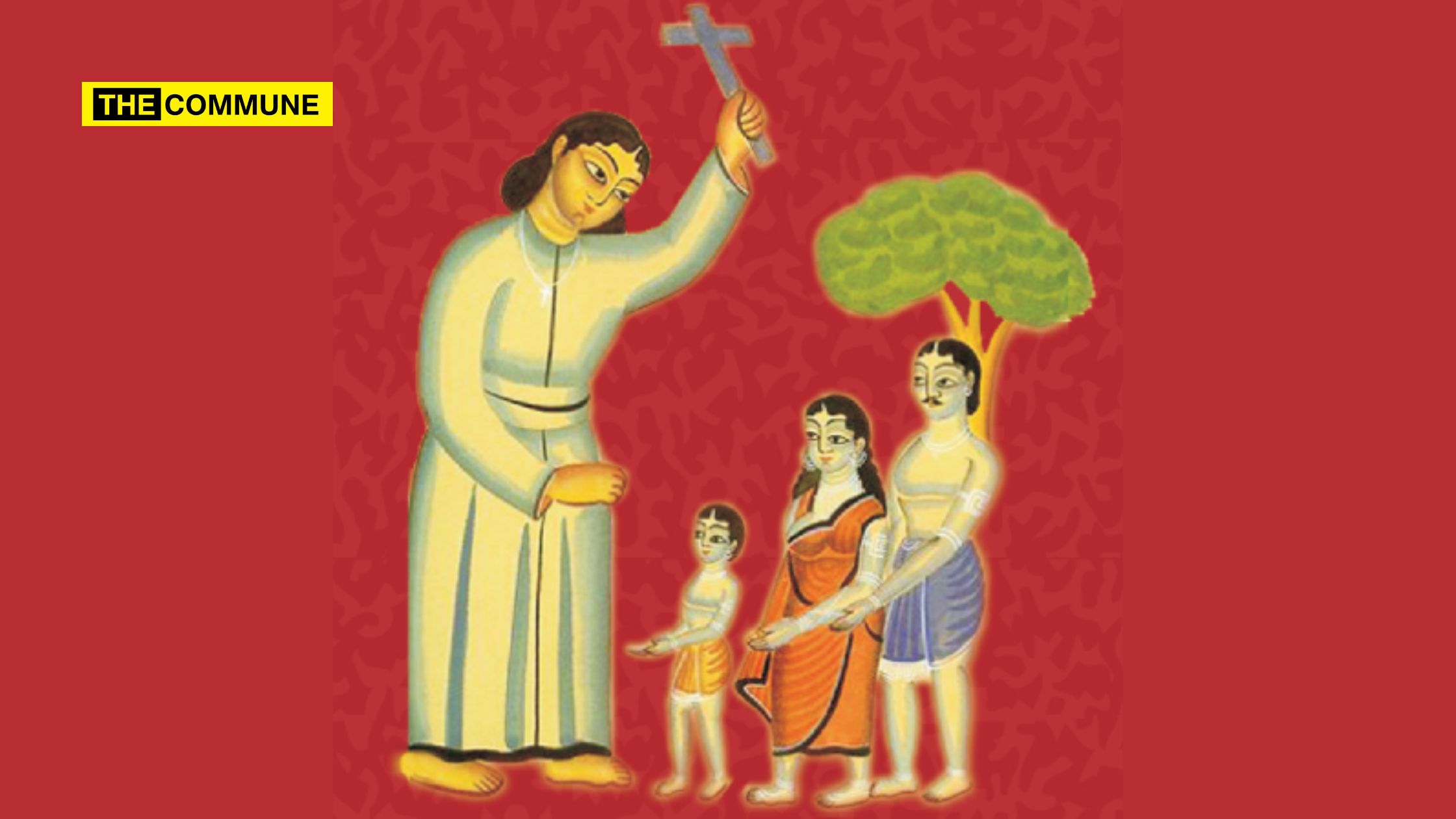
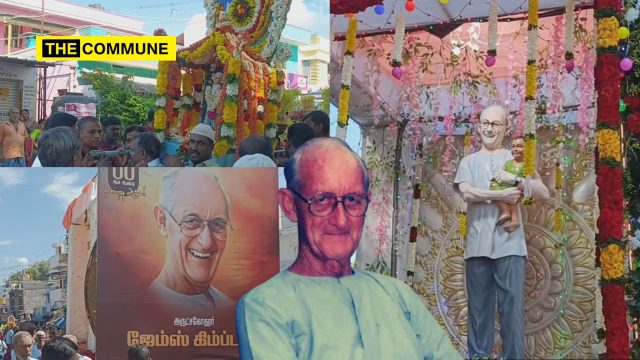
In the villages of G. Kallupatti and Genguvarpatti near Vathalagundu, a curious annual spectacle unfolds every October. Thousands gather to honor a British missionary, Brother James Kimpton with processions, floral tributes, and annadhanams. The late missionary, fondly called “Thatha” (grandfather), is now celebrated like a local deity, his image paraded in chariots through temple-lined streets.

But behind the façade of reverence lies a troubling story of cultural subversion and the long shadow of missionary influence in rural Tamil Nadu.

A Missionary’s Second Home in Tamil Nadu

Born in Wales in 1925, Kimpton joined the Catholic De La Salle Brothers, a missionary order blending education with evangelization. After being expelled from Sri Lanka in 1964 due to that country’s decision to curb foreign religious interference, he found fertile ground in Tamil Nadu. In 1974, he founded Reaching The Unreached (RTU) in G. Kallupatti, a charitable society that quickly expanded into a sprawling welfare empire across Theni and Dindigul districts.

RTU’s projects included orphanages, schools, women’s self-help groups, HIV support programs, and housing schemes, all funded by Western religious and secular organizations. While the visible outcome appeared philanthropic, the institutional control and ideological structure remained firmly under the Catholic order’s grip.

Charity as a Tool of Religious Influence

Kimpton’s public persona was that of a saintly foreigner devoted to the poor, but his alleged model of “service without conversion” followed a well-known postcolonial missionary formula using welfare as a moral gateway rather than a pulpit. The constant presence of Christian symbols, the use of Western names like “Boys’ Town,” and the subtle introduction of biblical moral narratives in daily life quietly normalized Christian authority among Hindu villagers.

This approach did not need overt conversion drives. Instead, it replaced traditional community structures with missionary-administered ones, orphanages instead of gurukulams, foreign-funded schools instead of local schools, imported models of charity instead of dharmic seva. Over time, it fostered a deep dependence on foreign-controlled institutions, ensuring that gratitude and faith flowed upward toward the Church.

Dependency and Displacement of Local Dharma Institutions

The massive scale of RTU’s activities effectively displaced native systems of social support. Rather than empowering local self-governance or temple-based welfare traditions, the organization centralized authority in missionary hands. Even after Kimpton’s death in 2017, the institution remained within Catholic administration under the Capuchin Friars, a clear signal that the project was never meant to become community-owned.

The dependence created through these welfare structures has had enduring consequences. Generations of rural families have come to equate education, healthcare, and charity with Christian institutions, slowly eroding the role of local mutts, temples, and dharma sabhas in social life.

The Deification of a Missionary

Perhaps the most revealing symptom of this long-term influence is the near-deification of Kimpton himself. Villagers now perform rituals for him with molapari, processions, and offerings, practices traditionally reserved for local deities. This phenomenon, while framed as affection, reflects a deeper cultural confusion: the absorption of a foreign missionary into Hindu ritual frameworks, turning spiritual reverence into cultural submission.

Such syncretic devotion blurs the lines between respect and religious influence. It demonstrates how sustained missionary presence, cloaked in welfare, can reshape local belief systems until even villagers begin to sanctify their colonizer.

A Continuing Pattern in Rural Tamil Nadu

Kimpton’s legacy is not isolated. It represents a broader pattern of how Christian missions operate in India’s interior: building goodwill through service, embedding foreign values under the language of “compassion,” and gradually replacing traditional Hindu frameworks of social responsibility.

The result is a slow but steady erosion of indigenous cultural confidence. While Tamil Nadu’s temples and mutts once sustained entire villages through annadhanam and vidya daanam, today the same functions are often outsourced to missionary NGOs with international funding and long-term ideological goals.

A Lesson in Cultural Vigilance

Brother James Kimpton’s story is often presented as one of selfless service, but viewed through the lens of Dharma, it also serves as a cautionary tale. It shows how foreign religious networks can embed themselves deep within rural India, transforming the very meaning of service, charity, and worship.

For a civilization that once viewed seva as sacred duty rooted in Dharma, the veneration of a missionary as a village god is not a mark of harmony, it is a warning of how cultural memory can be reshaped through dependence. As Tamil Nadu continues to navigate questions of faith, identity, and influence, the cult of “Thatha” Kimpton stands as a reminder that every act of foreign charity in a vulnerable land carry more than food and medicine, it carries a message, and a mission.

Subscribe to our channels on TelegramWhatsApp, and Instagram and get the best stories of the day delivered to you personally.

Puthiya Thalaimurai Reportedly Taken Off Arasu Cable, Not A Whisper In Its Social Media Handle Unlike During ADMK Period; Tamil Janam Still Denied Access

Tamil Nadu’s leading news channel Puthiya Thalaimurai was allegedly taken off air by the Tamil Nadu Arasu Cable TV Corporation Limited (TACTV) on Saturday, October 4, 2025, leading to strong reactions from journalists and viewers. The move, reportedly made without prior notice, has revived debates over political control of state-run media distribution and freedom of expression.

According to sources, Puthiya Thalaimurai was removed from the TACTV network, which carries over 150 channels to subscribers across Tamil Nadu. The reason for the removal has not been officially disclosed. Following discussions between the channel’s management and TACTV officials, the channel was reportedly restored in some districts, though it remains unavailable in others.

The Chennai Press Club issued a statement condemning the development, saying that suspending or blocking a news channel’s telecast without prior notice amounted to suppression of press freedom. The organisation urged TACTV to restore the channel immediately, noting that such actions undermine the principles of free and fair journalism.

TACTV officials, including chairman Brajendra Navnit, were unavailable for comment.

This is not the first time Puthiya Thalaimurai has faced such a disruption. In 2017, the channel was temporarily removed from the Arasu Cable network after airing a survey related to the RK Nagar by-election, which was reportedly viewed as unfavourable to politician V.K. Sasikala.

The latest incident has also drawn attention from within Tamil media circles. Commentators have pointed out that when Puthiya Thalaimurai was taken off air during the previous AIADMK government, the channel had publicly raised the issue through its own broadcasts and social media handles. However, this time, despite reports of its removal circulating widely, the channel itself has not made any official statement or post about the issue on its platforms.

Observers note that the incident has also reignited debate over the government’s management of Arasu Cable, which was originally launched to ensure equal access and prevent private monopolies in cable television distribution. Critics allege that the selective inclusion or exclusion of channels based on political convenience contradicts the very principles of equality and justice that the government claims to uphold.

Meanwhile, Tamil Janam TV, another Tamil news channel, has alleged that it has been consistently denied inclusion on Arasu Cable for the past two years despite being available on major private platforms such as Tata Sky, Airtel, Jio, TCCL, and GTPL. Tamil Janam’s editor Anand T. Prasad said the government’s refusal to carry their channel raises questions about political bias and lack of transparency.

புதிய தலைமுறைக்கு வந்தால் ரத்தம்!?

Media analysts have pointed out that Arasu Cable was originally launched to ensure equal access and to prevent monopolies by private operators. However, the selective inclusion and exclusion of news channels based on political considerations has raised serious questions about transparency and accountability in the government’s media policy.

(With inputs from The New Indian Express)

Subscribe to our channels on Telegram, WhatsApp, and Instagram and get the best stories of the day delivered to you personally.

Dravidian Model Chennai: T.Nagar’s ₹165-Crore Steel Flyover Fails To Ease Traffic Congestion, Residents Call It A Cosmetic Fix

T.Nagar’s ₹165-Crore Steel Flyover Fails To Ease Traffic Congestion, Residents Call It A Cosmetic Fix

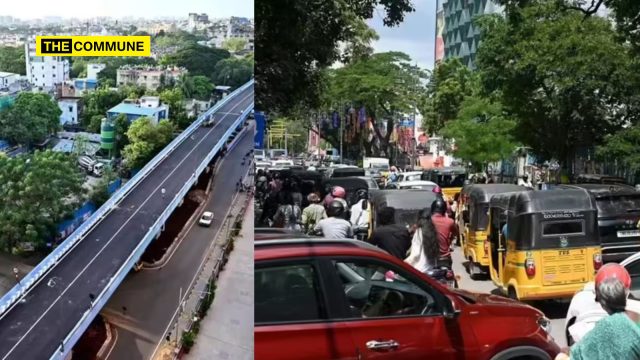
The newly inaugurated ₹164.9 crore steel flyover connecting South Usman Road with CIT Nagar has failed to deliver the relief from traffic congestion that it was expected to bring. The 1.2-kilometre-long structure, which was opened by Chief Minister M.K. Stalin last week, links with the existing 800-metre North Usman Road flyover, forming a two-kilometre elevated stretch through one of Chennai’s busiest commercial zones.

In the days following its inauguration, commuters travelling from CIT Nagar to North Usman Road reported that while the drive over the new flyover took only a few minutes, they were still forced to wait at the four-way Vivek’s Junction immediately after the flyover’s exit. Traffic police currently regulate movement manually, as there is no revised signal plan to manage the increased volume of vehicles being channelled directly from Anna Salai.

Before the flyover was constructed, vehicles from Anna Salai entered T.Nagar through Venkatnarayana Road, passing via the Link Road and South West Boag Road before reaching Panagal Park, resulting in slower movement through congested internal stretches. The new structure now brings a higher volume of vehicles directly to the junction in a shorter time, where they merge with traffic arriving from Venkatnarayana Road, Thyagaraya Road, and the Duraiswamy subway.

Traffic department officials stated that signal timers would be realigned once the new traffic density was assessed. They attributed the current congestion partly to the seasonal rush during the festive period and said that the situation was expected to persist until Diwali. Officials also indicated that discussions were ongoing with the Metropolitan Transport Corporation to consider bus route diversions from Valluvar Kottam.

Residents and commuters said the persistent congestion reflected deeper structural problems in T.Nagar rather than a lack of infrastructure. They pointed to encroachments, roadside parking, and poor enforcement as the main causes of traffic chaos. Several residents said that even with a longer flyover, bottlenecks would continue unless illegal parking and encroachments outside major business establishments were removed. They alleged that parking violations outside textile and jewellery stores were often ignored due to lax policing and corruption.

Greater Chennai Corporation (GCC) Commissioner J. Kumaragurubaran stated that the immediate focus was on reducing signal timings at Vivek’s Junction to allow faster vehicle movement. He said the Corporation’s long-term plan was to construct an additional 800-metre stretch connecting the North Usman Road flyover with the Mahalingapuram flyover, creating a continuous elevated corridor that would bypass the problematic junction. According to him, this extension would serve as a permanent solution, though the project could not be undertaken in the current financial year due to funding constraints.

Once completed, the proposed corridor from CIT Nagar to Mahalingapuram would become Chennai’s longest flyover, spanning four kilometres. The project, originally conceived in 2008, had seen only partial implementation at that time, with two separate flyovers built at Mahalingapuram and Usman Road.

For now, however, the ₹165-crore addition has done little to ease congestion in T.Nagar. Traffic continues to crawl through the same intersections, and the new flyover has merely shifted bottlenecks to adjacent roads, leaving residents questioning the effectiveness of yet another high-cost urban project.

(With inputs from Times of India)

Subscribe to our channels on Telegram, WhatsApp, and Instagram and get the best stories of the day delivered to you personally.
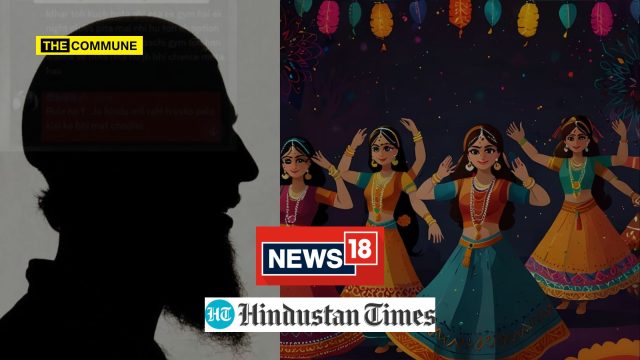
Mohammed Shahid Khan Shares With His Coreligionists Video Of College Girls Celebrating Navratri, Saying “All Hindu Girls Should Be Raped”; Media Sanitises Culprit And Gaslights

A chilling case has emerged from Viva College in Virar, near Mumbai — one that should have sparked national outrage. Instead, much of India’s mainstream media has chosen to downplay, deflect, or distort the gravity of what really happened.

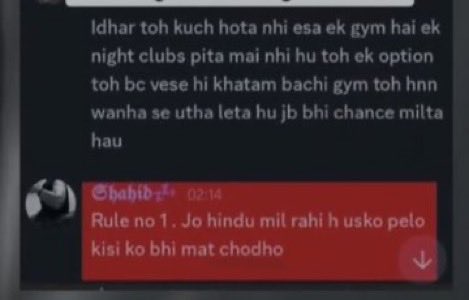
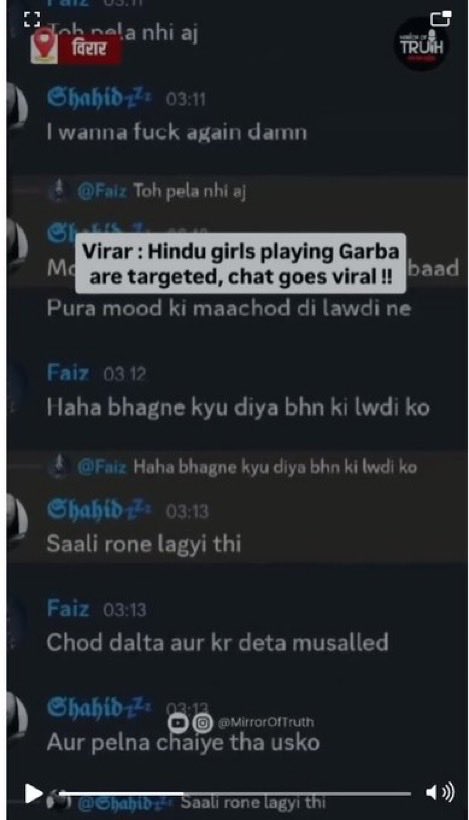
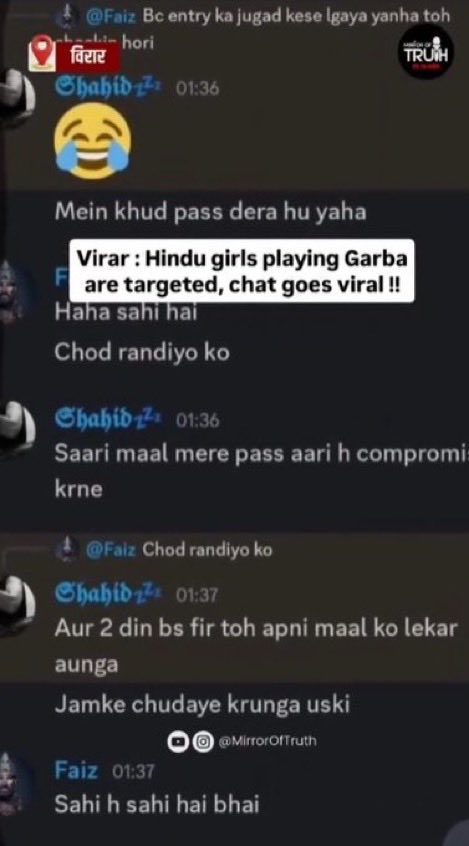
Mohammed Shahid Khan, a first-year student at the college, and several of his associates were reportedly caught sharing videos of Hindu girls dancing during Navratri celebrations in a private chat group. The videos were accompanied by obscene and hate-filled messages calling for the girls to be “targeted, raped, and assaulted,” and referring to them as “prostitutes.” One of the messages used the term “musalled” — a slang expression referring to trapping non-Muslim girls through deceit or coercion.

As per the First Information Report (FIR), New Viva College has been organising Garba celebrations for over twenty years, attracting not only students but also alumni and local residents. This year’s festivities took place between September 22 and 26. During one of these events, a student allegedly filmed girls participating in the dandiya and uploaded the clips on Discord, where another individual later added obscene remarks.

The issue came to light on September 26, when someone informed the college management during the evening event that a student had shared the videos online. Upon investigation, the administration traced the uploads to a mobile phone and WhatsApp number belonging to one of the students. They also found that a separate account, operated under another student’s name, had been used to post indecent comments on the videos.

The college authorities promptly filed a complaint with the Virar Police, leading to an FIR against the accused. The report noted that the students’ actions had “hurt the sentiments of society and caused distress to the girls concerned.” Police officials said an inquiry is ongoing to identify all those involved and to determine how widely the videos were circulated.

This is not just a case of “vulgar videos.” It is a hate crime soaked in religious bigotry, directed explicitly at Hindu women. Yet, the national media seems unable — or unwilling — to state the facts as they are.

Hindustan Times chose to title its report, “Dandiya event in Virar college takes controversial turn” — a bland, misleading framing that makes it sound like a minor disagreement at a festival.

Worse, the report went on to suggest that the communal angle was introduced not by the offenders, but by a BJP leader who “gave the incident a communal tone.”

News18 ran with “Navaratri celebrations at Maharashtra college marred by vulgar videos of girls dancing, probe on.” Once again, the focus was on the videos being “vulgar” — not on the fact that they were shared with violent threats against Hindu women.

Both reports erase the most important truth: this was not some moral-policing incident or mere college mischief. It was an organised attempt to demean and target Hindu women on religious grounds — a pattern that India’s “secular” media ecosystem refuses to acknowledge whenever the perpetrators don’t fit their preferred narrative.

If the roles were reversed, the same outlets would have declared it a national crisis, with primetime panels on rising communal hatred. But when Hindu girls are dehumanised and threatened, the headlines turn euphemistic, and the perpetrators are hidden behind vague terms like “students” or “youths.”

This selective blindness is not journalism — it’s narrative management. And it has dangerous consequences. When hate crimes are reported as “controversies,” when ideological filters decide whose suffering matters, the public loses trust, and justice gets buried under spin.

DMK’s Courtroom Drama, Mockery Of Natural Justice: How Vijay And His Party TVK Were Wronged Without A Fair Hearing And The Larger Conspiracy Against DMK’s Political Enemies

justice senthilkumar dmk vijay

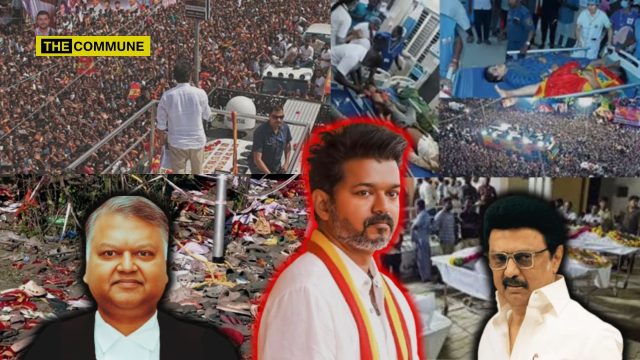
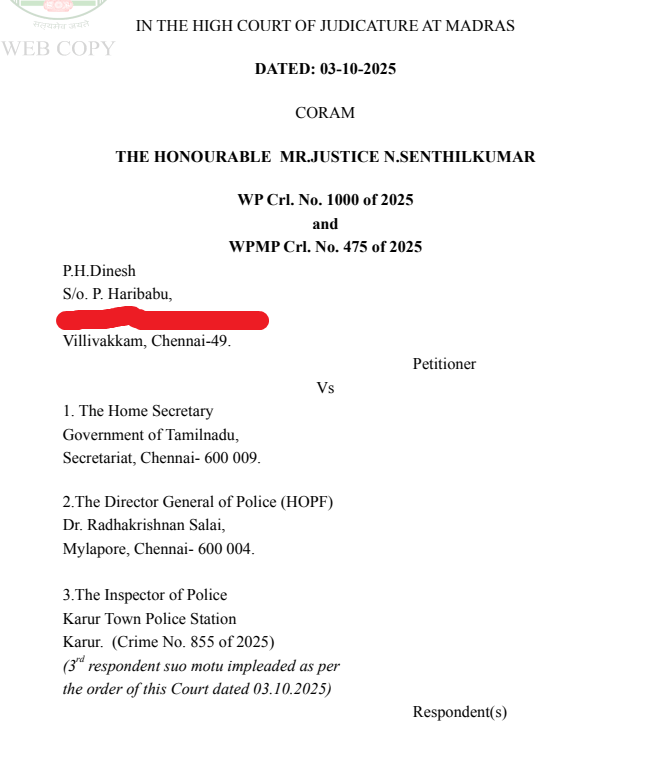
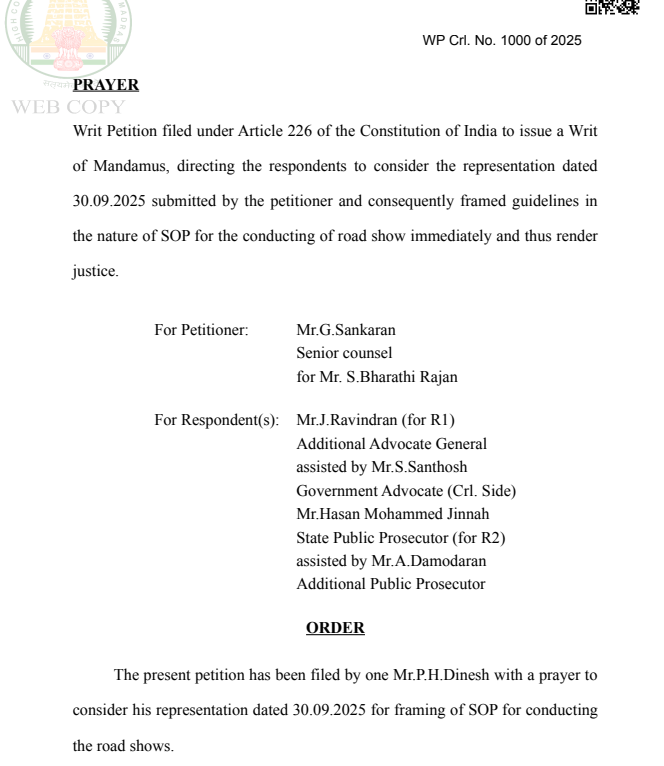
In a stunning display of judicial overreach and political manipulation, the recent proceedings in the Madras High Court surrounding the Karur stampede tragedy have raised troubling questions about fairness, impartiality, and the misuse of institutions for political vendetta. What unfolded on October 3, 2025 was not just a courtroom hearing—it was a meticulously staged political drama scripted to vilify Tamilaga Vettri Kazhagam (TVK) and its leader, Vijay, without even giving them a chance to be heard.

TVK Silenced Before It Could Speak

Shockingly, TVK was not even made a party to the case. The petition—filed by one PH Dinesh from Villivakkam—was heard without including the very party being accused.

No representative from TVK was present, no notice was issued, and no opportunity for defense was granted. Yet, Justice N. Senthilkumar went on to make scathing personal remarks about Vijay’s leadership and mental state—comments that have no place in judicial proceedings. How can a judge, who is expected to uphold neutrality, comment on the “mental state” or “leadership quality” of an individual who isn’t even before the court to defend himself?

A Judicial Free Pass For DMK Propaganda

Within hours of the oral observations, DMK’s media ecosystem sprang into action. Television debates, social media influencers, and Dravidianist propaganda outlets ran coordinated stories amplifying the judge’s remarks—clearly designed to tarnish TVK’s image in the public eye. It appeared less like a coincidence and more like a choreographed operation where the judiciary’s words became political weapons.

The Curious Case

Even more curious is the timing. The Madurai Bench of the High Court was already hearing the anticipatory bail pleas of TVK leaders Nirmal Kumar and Bussy Anand regarding the same Karur incident. So, how did another PIL suddenly make its way to the Madras High Court within days? Enter the DMK—experts in backdoor politics, adept at manipulating institutions to target opponents while maintaining a façade of legality.

The PIL was filed on September 30, and mysteriously, it was listed within just days—a level of judicial efficiency rarely seen for ordinary citizens. Unsurprisingly, the only advocates present were those representing the DMK-led Tamil Nadu government. Why was Vijay not made a respondent, when the entire proceeding revolved around his event and party?

Justice Or Bias?

The judge’s remarks were more political than judicial. Questions such as “What kind of party is this?”, “The leader fled,” and “This shows the mental state of the leader” reflect not a search for truth, but an underlying prejudice. On what legal basis or metric does a judge assess a politician’s leadership quality or mental state?

The judge even referred to a “hit-and-run” case based on YouTube videos and accused the organisers of negligence—without TVK’s side being present to offer context. Ironically, the same video also shows Vijay cautioning bikers to be careful. But without representation, that crucial detail never made it into the record.

A Mockery Of Natural Justice

At the heart of this controversy lies a grave question: has the principle of natural justice been thrown out of the window? The two pillars of natural justice—the rule against bias and the right to be heard—exist to prevent precisely such miscarriages. No one should be a judge in their own cause, and no person should be condemned without an opportunity to present their case. Yet, in this instance, both these foundational principles were violated with impunity.

Had the judge even summoned TVK, condemned the incident, and sought an explanation the next day—it would have been a fair exercise. Instead, he delivered sweeping condemnations that have now become talking points for the DMK’s political propaganda machine.

The Larger Conspiracy: DMK’s Fascism Through Judicial Facade

The entire sequence of events bears the hallmark of an orchestrated DMK operation—using the judiciary’s shoulder to fire its political gun. A tragedy that demanded sober introspection and accountability has been converted into a political weapon to delegitimise Vijay’s nascent political movement. The DMK, afraid of TVK’s rapid rise and mass appeal, is now resorting to cowardly, anti-democratic tactics—targeting opponents through proxies in the courtroom rather than through public mandate.

This move is not just aimed at TVK; it strikes at all opposition parties. This order comes at a time when BJP Tamil Nadu President Nainar Nagenthiran is set to launch a state-wide tour to expose the DMK government’s failure. AIADMK leader Edappadi K. Palaniswami has already been drawing massive crowd for his “Makkalai Kaapom, Thamizhagathai Meetpom” campaign.

The court has effectively ordered that no permission for the conduct of public meetings on State Highways or National Highways will be granted until a Standard Operating Procedure (SOP) regarding public gatherings is framed by the State Government and approved by the Court. So, until the DMK government submits an SOP and gets it approved from the court no party can organize rallies and public meetings which is a brazen attempt at trampling the democratic rights of opposition parties and stifling political dissent with judicial sanction.

A Word Of Advice For Vijay

Vijay, welcome to Politics 101. Do not be disheartened by orchestrated attacks, courtroom theatrics, or propaganda campaigns targeting you and TVK. Politics is a rough, dirty arena, and the challenges you face today will only intensify with time. If your goal is to truly challenge and eventually eradicate the DMK, you must be strategic: join hands with like-minded political actors, build alliances, and surround yourself with advisers who are impartial, wise, and committed to your cause—not clouded by prejudice or personal bias against a party or its leader. Only with preparation, patience, and a clear political vision can TVK navigate these storms and emerge stronger.

Vallavaraayan is a political writer. 

Subscribe to our channels on TelegramWhatsApp, and Instagram and get the best stories of the day delivered to you personally.

Dravidian Model: Hygiene Worker Dies Of Cleaning Sewer In CM Stalin’s Kolathur Constituency, Tamil Nadu Tops In Manual Scavenging Deaths

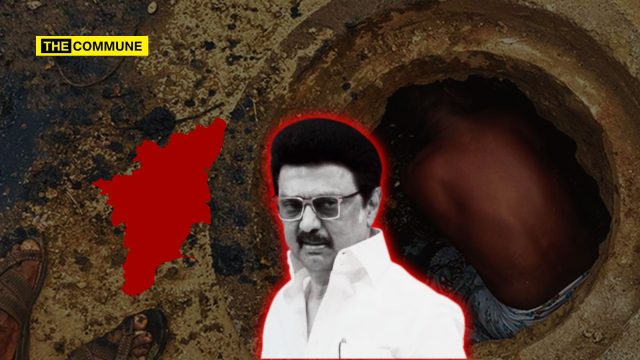
On October 4, 2025, a sanitation worker in Kolathur, Chennai, lost his life after inhaling toxic fumes while cleaning a sewer, and two others were hospitalized.

According to a Times of India report, The deceased was identified as K. Kuppan (37), assisted by T. Sankar (40) and supervisor S. Hariharan (28). The trio entered the drain at Thirupathi Nagar, First Main Road, Third Cross Street around 2:30 p.m., and Kuppan collapsed on inhaling poisonous gas. Sankar and Hariharan attempted a rescue but also lost consciousness. They were rushed to Periyar Nagar Hospital; Kuppan was declared dead there, and his body later transferred to Stanley Hospital for postmortem.

BJP spokesperson ANS Prasad criticized the DMK government over its unfulfilled election promise to eradicate manual scavenging via modern technology, demanding disclosure of sanitation worker fatalities over the past five years.

Meanwhile, the Metrowater Managing Director stated that such sewer work is supposed to be conducted under its supervision, and insisted that Kuppan had entered the drain without authorization.

Just weeks earlier, on September 22, 2025, two contract workers — Prabhu (32) and A. Ravi (38) — died of suspected asphyxiation in Trichy while cleaning an underground drainage (UGD) chamber. Prabhu collapsed first, and Ravi lost consciousness while attempting to rescue him. The workers were engaged under the Phase II UGD project, linking households to a 37 MLD sewage treatment plant. Local authorities suspect the release of toxic gases when rainwater mixed with stagnant sewage after a “dummy block” was removed. A First Information Report (FIR) has been registered under negligence charges.

Subscribe to our channels on TelegramWhatsApp, and Instagram and get the best stories of the day delivered to you personally.

The Myth of Christian Equality: A Look At The Deep-Seated Caste Discrimination In Church

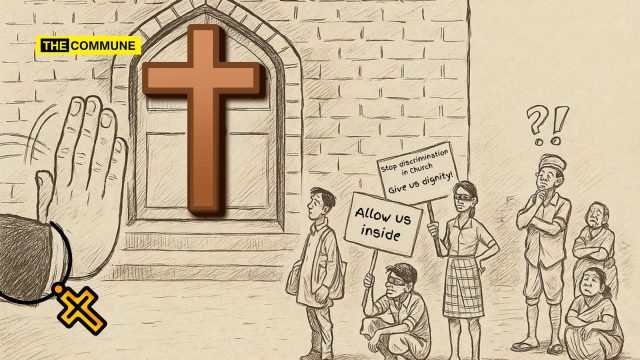
While Christianity is often portrayed as a faith grounded in equality and compassion, divisions run deep within it — across the world, sects such as Catholic, Protestant, and Pentecostal often draw sharp lines and discriminate against one another. In India, this hierarchy takes an even more troubling form: caste-based discrimination.

Despite the perception created that Christianity is an egalitarian faith, the instances of caste-based discrimination indicates otherwise. In this report, we detail 21 incidents from 2008 to 2025 that highlights systemic and persistent caste-based discrimination against Dalit Christians in India. These cases, spanning Tamil Nadu, Kerala, Andhra Pradesh, and beyond, reveal practices of segregation, exclusion, and violence that mirror the very societal hierarchies many converts sought to escape.

The report gains timely significance against recent remarks by Karnataka Chief Minister Siddaramaiah, who asserted that lack of equality within Hinduism drives conversions. However, these incidents starkly illustrate that conversion does not automatically grant liberation from caste prejudice. From judicial interventions to protests and institutional admissions, the struggle for dignity within the church continues, challenging the narrative of religious inclusivity.

#1 Supreme Court Takes Up Parish Discrimination (2025)

The Supreme Court of India agreed to hear a landmark petition concerning caste discrimination within a Catholic parish in Kottapalayam, Tamil Nadu. Filed by Dalit Christians from the Trichy district, the petition accused St. Mary Magdalene Parish of excluding Dalits from annual celebrations and enforcing segregated burial practices. Unlike other congregants, Dalit Catholics were denied the right to hold funeral masses or prayers inside the church. A bench led by Justices PS Narasimha and Manoj Misra issued notices to the Tamil Nadu government and church authorities, demanding responses by April 15.

#2 Alleged Church Exclusion In Kottapalayam (2023)

Dalit Christians in Kottapalayam village, part of the Kumbakonam Catholic diocese, reported blatant caste discrimination in local church activities. They alleged that only members of influential, non-Dalit communities were permitted to become church members, thereby excluding Dalits from participation. Additionally, Dalits were barred from making financial contributions or subscriptions, effectively marginalizing them from the spiritual and administrative life of the parish. These accusations highlight how socioeconomic, and caste hierarchies permeate religious participation, denying Dalit Christians equal standing and voice within their faith community.

#3 Festival Ban In Trichy Church (2023)

In Ayyampatti, Trichy, Dalit Christians accused St. Mary Magdalene Church of prohibiting them from attending annual festivals and using the common community hall for weddings or family functions. The parish reportedly recognized only dominant-caste families as official members, institutionalizing their exclusion.

#4 Caste Bias At Loyola College (2022)

Lawrence D’Cruz, a former student and employee of Loyola College, Chennai, run by the Society of Jesus, alleged caste-based discrimination, harassment, and wrongful termination. He claimed he was assigned menial tasks, subjected to abuse for his Dalit identity, and sexually harassed. His termination in April 2022 was viewed as retaliation. Other individuals also came forward with similar experiences, suggesting a pattern of discrimination against Dalit Christians within the institution.

#5 Protest Over Archbishop Appointment (2022)

The Dalit Christian Liberation Movement (DCLM) protested in Chennai against the appointment of a non-Dalit archbishop, Francis Kalist, in the Pondicherry-Cuddalore archdiocese. The demonstration highlighted broader discontent with the Catholic Church’s disregard for Dalit representation in leadership roles. DCLM leaders expressed frustration that the church continued to ignore the voices of Dalit Christians in Tamil Nadu, perpetuating upper-caste dominance in ecclesiastical hierarchies and denying Dalits a role in decision-making processes.

#6 Silenced Nuns Speak Out (2021)

Sister Robency Amal Helen, a member of the Idente Missionaries, publicly stated that Dalit nuns and former Dalit Christians face significant discrimination within the Catholic Church. Despite the church’s teachings on equality, she revealed that caste-based prejudice remains rampant, affecting the experiences and opportunities of Dalit individuals within religious orders.

#7 Appeal To Pope Francis (2021)

In June 2021, the National Council of Dalit Christians (NCDC) wrote to Pope Francis and Vatican authorities highlighting the rampant practice of untouchability and caste discrimination in Catholic churches across Tamil Nadu and Puducherry. In its letter, the NCDC urged the Pope to intervene and issue a directive to end these practices. The council alleged that the Catholic Bishops’ Conference of India (CBCI), the Council of Catholic Bishops of India (CCBI), along with all 18 Bishops of the dioceses in Tamil Nadu and Puducherry, were wilfully allowing both visible and invisible forms of caste discrimination to persist in the Church.

#8 Madras High Court Issues Notices Over Caste Bias in Tamil Nadu Churches (2021)

The Madras High Court issued notices to the Catholic Bishops’ Conference of India (CBCI), Conference of Catholic Bishops of India (CCBI), 18 bishops of Tamil Nadu, and ministries under the Central, Tamil Nadu, and Puducherry governments over allegations of caste-based discrimination in Catholic churches. The action followed a writ petition by Gnanapragasam Mathew, convenor of the Tamil Nadu Dalit Christian Alliance, who detailed discriminatory practices across 151 villages. The petition alleged systematic exclusion and segregation of Dalit Catholics, prompting judicial scrutiny into entrenched inequalities within the Church.

#9 Dalit Catholics Protest Appointment Of Non-Dalit Bishop In Salem (2021)

In May 2021 Dalit Catholic groups in Tamil Nadu expressed strong discontent over the Vatican’s decision to appoint a non-Dalit bishop for the Salem diocese, which has a predominantly Dalit congregation. On May 31, 2021, Pope Francis named Father Arulselvam Rayappan, a seminary professor belonging to the Vanniyar caste, as the new bishop. Dalit leaders argued that the move ignored long-standing demands for Dalit representation in higher Church leadership and reinforced systemic caste discrimination.

#10 Dalit Christians Demand Dalit Archbishop In Pondicherry–Cuddalore (2021)

In February 2021, the Dalit Christian Liberation Movement (NCLM) rallied in Villupuram demanding the Catholic Church appoint a Dalit Archbishop for the Pondicherry–Cuddalore Archdiocese. Dr. Prof. Mary John, head of NCLM, warned that if the demand was ignored, Dalit Christians would resist the appointment of a non-Dalit bishop. He emphasized that the Church must act with sincerity in its leadership selections. Protesters highlighted decades of systematic discrimination against Dalit Christians in education, employment, entry into priesthood, and episcopal appointments, accusing the Church of treating Dalits as outcasts since the diocese’s inception.

#11 Dalit Christians Protest In Kumbakonam Demanding Dalit Bishop (2021)

In February 2021, Dalit Christians organized a protest march in Kumbakonam Diocese against caste-based discrimination within the Church. Organized by eight Dalit Christian groups, the march highlighted long-standing grievances over exclusion in Church affairs and leadership. Protesters submitted a memorandum to the bishop and diocesan officials, demanding the appointment of a Dalit bishop to ensure fair representation. They argued that despite forming a significant part of the Catholic population, Dalits continued to face systemic discrimination in the Church’s hierarchy, education, and opportunities.

#12 Dalit Christians Protest At Pondicherry-Cuddalore Archdiocese (2020)

In December 2020, the Dalit Christian Liberation Movement (DCLM) staged a protest in front of the headquarters of the Archdiocese of Pondicherry-Cuddalore at Puducherry. The demonstrators voiced strong opposition to the exclusion of Dalit Christians from Church leadership and management. They alleged systemic discrimination in the appointment of priests and demanded that Dalits be given equal representation in ecclesiastical affairs. Protesters argued that despite forming a large section of the Catholic population, Dalits continued to be marginalized.

#13 Honour Killing in Kerala (2018)

A Kerala court declared the murder of Dalit Christian Kevin Joseph an honour killing. Joseph was killed in 2018 for marrying an upper-caste Christian woman just 3 days after the wedding. Fourteen individuals, including the woman’s father and brother, were charged.

#14 Sivaganga Diocese Discrimination (2018)

In April 2018, the Tamil Nadu Untouchability Eradication Front (TNUEF) released a report titled “Dalit Christians Crucified” alleging widespread caste discrimination against Dalit Christians in the Sivaganga Diocese. The report detailed practices of untouchability, including separate churches, graveyards, and the denial of priestly appointments for Dalits. It further alleged that church-run schools, colleges, and hospitals hired staff only from the non-Dalit Christian community. TNUEF also reported that festivals were organized separately for Dalit and non-Dalit Christians.

#15 Church Admits Dalit Discrimination (2017)

Cardinal Oswald Gracias acknowledged that Dalit Christians face heightened discrimination due to their untouchable status. His remarks during the National Council of Dalit Christians’ meeting in Mumbai marked a significant admission by the church hierarchy.

#16 Historic Policy Document (2016)

The Catholic Bishops’ Conference of India released a policy document titled Policy for Dalit Empowerment in the Catholic Church in India, admitting that Dalit Christians faced untouchability and negligible leadership representation. It urged dioceses to submit plans to eliminate discrimination within a year. This was the first official acknowledgment of the issue by the church.

#17 Attack On Dalit Bishop (2016)

In April 2016, three Catholic priests were arrested in connection with the attack and kidnapping of Dalit Bishop Cuddapah Prasad Gallela. The incident occurred on 25 April 2016, when Bishop Gallela and his driver, Vijay Kumar, were blindfolded, beaten, and taken to an undisclosed location, where a ransom of £50,000 was demanded. The arrested priests belonged to the Reddy caste. The South India Dalit Catholic Association criticized the Catholic Church hierarchy in India for its silence and inaction following the assault, highlighting concerns over caste bias within church structures.

#18 Dalits Face Discrimination In Tamil Nadu Churches (2016)

In June 2016, a pilot report, Thadam Thedi, highlighted widespread discrimination against Dalit Christians in Catholic and Protestant churches in Tamil Nadu. Although Dalits account for 22,40,726 of the 39,64,360 Catholics, they are excluded from key positions in church administration. Of the 18 Archbishops in Tamil Nadu, only two are Dalits. G. Mathew, a committee member behind the report, revealed that Dalits often have separate cemeteries and funeral carts, are denied access to common church roads, and in some cases, their bodies are excluded from religious rituals, underscoring systemic caste-based discrimination.

#20 Dalit Christians Face Barriers In Eraiyur Church Festival (2016)

In May 2016, Dalit Christians at Our Lady of Rosary Church, Eraiyur, faced discrimination during the church festival car procession. The local Vanniyar Christian community refused to allow Dalits to enter the church via the main entrance and opposed the car procession passing through Dalit streets. Dalits had long fought for the procession route, which was mandated by a 2010 Madras High Court order. The court had directed the Revenue Divisional Officer (RDO) to hold a peace meeting and issue orders ensuring that the festival car procession could traverse public roads, including Dalit areas, without obstruction.

#21 Deadly Caste Clash At Eraiyur Church (2008)

In March 2008, a violent clash erupted between Vanniyar Christian and Dalit Christian communities in Eraiyur village, resulting in the deaths of two individuals and injuries to three others. The unrest followed rising tensions as some Dalit Christians began an indefinite fast protesting discrimination within the parish by the dominant Vanniyar community. The confrontation highlighted deep-rooted caste divisions within the local Catholic Church, turning the village into a site of bloodshed. Authorities intervened to restore order, but the incident underscored the persistent struggle of Dalit Christians against systemic exclusion and caste-based marginalization.

Subscribe to our channels on Telegram, WhatsApp, and Instagram and get the best stories of the day delivered to you personally.
Rahul Gandhi Says India Should Not Lead The World, Only An Incompetent Defeatist Loser Unfit To Be A Leader Can Say So

rahul gandhi

Rahul Gandhi, the scion of a political dynasty that has long claimed to represent India’s future, has once again revealed the depth of his defeatist mindset on the world stage. Speaking at an event in Colombia, he declared:

I don’t think India sees itself as taking leadership in the world. That’s not our model. We believe in having a partnership. Sorry. We’re not arrogant enough to believe that we should lead the world. India, I don’t think has an intention to one day lead the world.

Stop for a moment and consider what he just said. The heir to one of India’s most storied political families, a man who dares to imagine himself as a future leader of this nation, openly admits that India cannot, will not, and should not aspire to lead. He suggests that we, as a nation, are meant to merely follow, to partner, to accept mediocrity as our lot in life. And this is supposed to inspire confidence?

A Man Who Cannot Dream For His Nation

Leadership begins with vision. True leaders dare to dream — not just for themselves, but for their people and their nation. They inspire, they challenge, they push boundaries. Rahul Gandhi does none of this. He cannot even envision India leading the world, and yet he wants to convince the country that he can lead it. What kind of cognitive dissonance is this? How can a man with such a narrow, defeatist worldview possibly guide a nation of 1.4 billion people, a country of immense potential and historical greatness?

Every word of that Colombia speech drips with insecurity, indecision, lack of audacity, and a lack of ambition. A man who cannot even speak of India as a leader dreams of leading a country. What kind of a leader is that? What kind of imagination, what kind of mindset, allows someone to publicly reject the very idea of ambition for the nation he claims to want to lead?

A Dynasty Of Small Thinking

But should we be surprised? Rahul Gandhi’s mindset is not an accident; it is a family tradition. His grandfather, Jawaharlal Nehru, was an intellectual, but he often framed India’s global role in terms of dependency, non-alignment, and modest aspirations. Giving away UN Security Council seat, giving away Kashmir, giving away Ladakh. His father, Rajiv Gandhi, while energetic and reformist in domestic policies, never succeeded in instilling a sense of India as a global leader. And now Rahul carries forward this legacy — a legacy of timidity, mediocrity, and defeatism. The only person who had some sense of audacity was his grandmother Indira Gandhi, who made Richard Nixon sweat. But his mother being the Italy-born Sonia Gandhi, what can we expect of this half Indian?

Rahul Gandhi’s entire political philosophy seems to be: “We are not meant to lead, we are meant to follow. We are not meant to assert, we are meant to partner. We are not meant to dream, we are meant to compromise.” This is not humility. This is weakness masquerading as modesty. It is a surrender of India’s potential before even stepping onto the global stage.

The Inability To Think Like A Leader

Let us dissect his words further: “We’re not arrogant enough to believe that we should lead the world.” Rahul Gandhi seems to equate ambition with arrogance. He believes that to aspire is somehow conceited. Is that what he teaches the nation? That dreaming is wrong, that leadership is arrogance? No great nation in history has risen by embracing such meekness. Leaders who fear ambition do not lead; they stumble, they falter, and they resign themselves to irrelevance.

And yet, Rahul Gandhi wants Indians to put their trust in him. He wants to convince the world that he is capable of leading this nation. How can a man who cannot even think beyond partnership and cautious cooperation imagine global leadership? How can a man who views ambition as arrogance understand the mindset required to make bold, transformative decisions?

And now we know why his party faces defeat after defeat in every election. It’s because it is run by a person with a defeatist mentality.

The Damage Of Defeatism

This is not just about words; this is about vision. Leaders shape nations with the ideas they espouse, with the confidence they project. Rahul Gandhi’s statement is not just personal—it is politically corrosive. By dismissing India’s potential for global leadership, he is killing aspirations. He is teaching Indians to shrink themselves, to aim lower, to accept mediocrity as a national trait.

Imagine a leader saying to India’s citizens: “You are not meant to lead. You are not meant to dream. You are only meant to cooperate.” That is not leadership. That is a mandate for weakness. That is a declaration that the nation’s ambitions should be curtailed. How can a man who openly articulates such a mindset even be considered fit to govern one of the world’s largest democracies?

Rahul Gandhi Vs. Real Leadership

Compare this with the vision of leaders who have transformed nations. From Hon’ble Prime Minister Narendra Modi asserting India’s global presence, to Franklin D. Roosevelt taking decisive action in times of crisis, to Lee Kuan Yew turning Singapore from a small port into a global hub — leadership requires courage, conviction, and ambition. Rahul Gandhi exhibits none of these. His idea of leadership is political partnership and timid compliance, not bold decision-making or national vision.

He knows he cannot lead, and that is why it seeps into his speeches. This is a man who, despite his lineage, has never won an election convincingly, has never shown political acumen, and has never commanded respect even within his own party. Yet he dreams — absurdly — of leading India.

The Irony Of Partnership

Rahul Gandhi repeatedly emphasizes “partnership” in his speech. Partnership? With whom? With other nations, or with mediocrity itself? The man seems to believe that India’s role on the world stage is to hold hands and tag along, rather than assert, innovate, or influence. Is this the vision India’s youth are supposed to rally behind? Is this the guidance India’s 1.4 billion citizens are supposed to follow?

No nation that aspires to greatness ever rises through partnership alone. Partnerships are tools; leadership is the goal. Rahul Gandhi, in his Colombian escapade, has made it painfully clear that he does not understand the difference.

A Man Who Rejects Ambition

Rahul Gandhi is a walking, talking lesson in why leadership is earned, not inherited. His speeches reveal a man who cannot articulate ambition, who cannot inspire confidence, who cannot even imagine India’s rightful place in the world. He is a man whose family legacy of hesitation, caution, and mediocrity continues to define his political identity.

This is the man who wishes to lead India. This is the man who dares to claim he can take on the mantle of Prime Minister. And yet, when he opens his mouth, he effectively tells every Indian: “We are not meant to lead. Lower your expectations. Settle for mediocrity.”

India’s Global Leadership Under PM Modi

Under Prime Minister Narendra Modi, India has emerged as a global powerhouse, making Rahul Gandhi’s defeatist worldview look utterly pathetic. Economically, India has risen to become the fourth-largest economy in the world, with a GDP of $4.19 trillion, driven by bold reforms, decisive policymaking, and visionary governance. Initiatives like Digital India and UPI have transformed the financial ecosystem, while Make in India and a thriving startup culture have positioned India as a hub of innovation, attracting investment and creating jobs. In defence, India has gone from passive participation to assertive global leadership, with exports skyrocketing from ₹600 crore in 2014 to over ₹24,000 crore in 2025 and ambitious targets for the future, alongside indigenous development of aircraft, missiles, and naval assets.

In space, science, and technology, India under PM Modi has boldly challenged global giants, achieving successful missions to Mars and the Moon and maintaining a robust satellite network for communication, navigation, and defence. Internationally, PM Modi has earned over 25 global awards, cementing India’s reputation as a nation that acts, leads, and inspires. Meanwhile, Rahul Gandhi dares to tell the world that India should not aspire to lead, framing ambition as arrogance and dreaming as a crime. His vision barely stretches beyond timid partnerships and political compromises, exposing him as a man utterly unfit to lead a nation that is confidently asserting itself on the global stage.

Rahul Gandhi: An Incompetent Loser With A Defeatist Mentality Unfit To Be Even Indian Citizen

Let there be no mistake: Rahul Gandhi is not fit to lead India. His worldview is defeatist. His mindset is small. His political career is a catalogue of failures, missteps, and embarrassments. He cannot inspire, he cannot dream, and he cannot envision a world where India is a global leader.

For a country with global ambitions, a population hungry for progress, and a youth eager to see India rise, Rahul Gandhi represents exactly what should be avoided: timidity, mediocrity, and a refusal to dream. His speeches are not just gaffes; they are a mirror of his unfitness.

India deserves leaders who aim high, who think big, who embrace ambition without fear. Rahul Gandhi offers none of these. He is not a leader; he is a cautionary tale. He is a man who knows he cannot lead and, tragically, wants everyone else to know it too.

If India were to put its faith in him, it would be placing its future in the hands of someone who believes mediocrity is a virtue, partnership is a goal, and leadership is arrogance. That is not leadership — that is surrender.

Vallavaraayan is a political writer. 

Subscribe to our channels on TelegramWhatsApp, and Instagram and get the best stories of the day delivered to you personally.
UP Govt’s Crack Down On Illegal Religious Conversions: 15 Incidents Reported In 1 Month

Proselytisation haryana madhya pradesh children attempting to convert christianity sultanpur forced conversion missionary

The country saw several instances of crackdown on illegal religious conversion in the past month. This report details 15 separate incidents of alleged unlawful religious conversion occurring in the state of Uttar Pradesh throughout September 2025, as compiled from various Indian news sources.

The documented cases consistently follow a pattern, accusing evangelical Christian groups and individuals of systematically targeting impoverished, tribal, and Dalit communities. The methods of inducement include promises of miraculous healing, financial aid, job opportunities, and educational support.

In response, law enforcement agencies across multiple districts have taken action, made numerous arrests and registering cases under the stringent Uttar Pradesh Prohibition of Unlawful Conversion of Religion Act. These events have sparked significant legal and social discourse on religious freedom and coercion in the region.

#1 Mirzapur Conversion Racket Busted

On 30 September 2025, Mirzapur police uncovered a major inter-state religious conversion racket, arresting five individuals, including the alleged mastermind, Dev Sahayam Daniel Raj from Tamil Nadu. The gang was accused of systematically targeting poor, tribal, and underprivileged families, luring them with money, sewing training, and “healing prayer meetings” to convert them to Christianity. Investigations revealed the group had already converted nearly 70 people and was in advanced preparations to convert 500 more. A case was registered at the Ahraura police station, and a probe has been initiated to uncover the gang’s funding sources and wider network across state lines.

#2 Gorakhpur Women Arrested for Conversion

On 29 September 2025, in the Sahjanwa area of Gorakhpur, police arrested two women, Lakshmi Yadav and Roshni, for allegedly operating a religious conversion racket. The accused, a beauty parlor operator and her aide, were reported to have lured poor villagers by promising miraculous cures for illnesses and a better life through their spiritual practices. Lakshmi allegedly used a handkerchief in fake healing acts and offered hopes of jobs and money to convince people to read the Bible. Police raided a house in Sahjanwa, arrested the duo, and recovered religious materials related to conversion activities.

#3 Fake Healing Gatherings in Lucknow

In 28 September 2025, Nigohan police in Lucknow arrested a man named Malkhan for allegedly orchestrating religious conversions through fraudulent “Changnai Sabhas” (healing meetings). A convert since 2016, Malkhan used a hall on his farmland as a church to lure Dalit women and children from nearby villages. He performed staged healing acts, such as claiming to cure epilepsy, and offered money to persuade families to adopt Christianity. Using a WhatsApp group named “Yeshu Changnai Sabha,” he spread his influence and conducted baptisms. Police arrested him and launched an investigation into his financial sources and conversion network.

#4 Mass Conversion Attempt in Gorakhpur Village

On 28 September 2025, police intervened in a mass conversion attempt in Bhagoura village, Sahjanwa, Gorakhpur, where approximately 100 women had been gathered inside a house. Members of the Christian community were allegedly carrying out collective conversions at the location. Upon receiving information, law enforcement reached the scene and detained four to five individuals accused of orchestrating the event. An investigation was launched to determine the scope of the operation and the methods used to gather and influence the villagers, highlighting concerns over large-scale, organized conversion activities in rural areas.

#5 Charge Sheet in Kundawali Village Case

On 27 September 2025, police submitted a charge sheet to the court against four accused—Anju, Hridesh Kumar (alias Vicky Pastor), Neetu, and Surendra Pastor—in a conversion case from Kundawali village, Islamnagar. The incident, which occurred on 26 August 2025, involved individuals from Kasganj and Bisauli gathering villagers to conduct Christian prayers and lure them into conversion. Investigations revealed that Pastor Surendra, the alleged mastermind, had already converted over 200 people using financial temptations. The accused pressured villagers by repeatedly visiting their homes and conducting prayers, leading to about 30 conversions before police action was taken.

#6 Marital Fraud and Coercion in Firozabad

On 24 September 2025, in the Tundla area of Firozabad, a case was registered against Brijmohan (alias B.M. Masi) and his family members for allegedly forcing his wife, Jamuna Devi, into religious conversion following a fraudulent marriage. The complainant stated that 11 years after marrying under Hindu rituals, she discovered her husband had concealed his Christian identity. She accused him of assaulting her for worshipping Hindu deities, forcing their daughters to participate in Christian practices, and promising benefits like free education and foreign money if they converted. Police have begun an investigation into the assault and forced conversion allegations.

#7 Tension Over Conversion Gathering in Basantpur

On 22 September 2025, tension erupted in Mohad Ward, near the Shivnath River in Basantpur, Chhattisgarh, when 15-20 people from the Christian community gathered for prayers. Local villagers opposed the gathering, alleging it was a religious conversion meeting intended to lure people into Christianity. The situation required police intervention from the Basantpur police station. The matter was ultimately resolved on the spot through counseling and dialogue, preventing further escalation. This incident underscores the social friction and communal sensitivities surrounding conversion activities in the region.

#8 Eight Arrested in Hardoi for Inducements

On 22 September 2025, in Bhauptuwa village, Adampur, Hardoi, police arrested eight individuals, with Lal Singh as the main accused, for allegedly attempting forced religious conversions. Based on a complaint, it was revealed that the accused organized a gathering where candles were lit, prayers were conducted, and religious texts, including copies of the Bible, were distributed. The villagers were reportedly enticed with promises of monetary benefits and free medical treatment in exchange for converting to Christianity. Cases were registered under the Uttar Pradesh Prohibition of Unlawful Conversion of Religion Act, 2021.

#9 Phoolpur Gathering Targets Hindu Deities

On 21 September 2025, in Baudai village, Phoolpur, police registered a case against 12 named individuals for allegedly using a religious gathering to lure people into Christianity while making offensive remarks against Hindu deities. The meeting, held under the guise of “Changnai Sabhas” or fake healing prayers, was intended to convert members of the local Hindu community. The accused, including Santosh, Ram Ashray, and others, were charged under relevant legal sections. This case highlights the use of derogatory statements against indigenous faiths as a alleged tactic in conversion efforts, further inflaming religious sentiments.

#10 Agra Racket Lured People from Multiple States

On 19 September 2025, Agra police arrested Rajkumar Lalwani and eight others for allegedly running a large-scale religious conversion racket from his home in Kedarnagar, Shahganj. Lalwani lured people from states like Madhya Pradesh, Rajasthan, and Maharashtra under the pretense of providing treatment or solving financial problems. Participants were reportedly subjected to conversion rituals involving meat and blood, and later taken to large prayer gatherings in Ambala. Each Sunday, large meetings were held at an ashram for the converted individuals. Lalwani was remanded to jail, and investigations, including warrants for other accused, continue.

#11 Illegal Church Preyed on Dalits in Phoolpur

On 19 September 2025, in Baudai Katauta village, Phoolpur, Prayagraj, an illegal church was found to be luring poor Dalit villagers with promises of money and other inducements. The church, connected to an entity called the “Changaai Sabha Agriculture School,” was also allegedly holding seminars to influence people against Hinduism. Police questioned two individuals involved and recorded their statements as part of an ongoing investigation into the forced conversions. This incident highlights the specific vulnerability of economically and socially marginalized groups to such alleged conversion activities.

#12 Shahjahanpur Couple Ran Long-Term Racket

On 16 September 2025, Shahjahanpur police arrested a couple, Harjeet Mashi and Sunita Mashi, from the Sidhauli area for allegedly running a long-term forced conversion racket. The duo reportedly lured locals by offering cures for illnesses and financial benefits, pressuring them to adopt Christianity. During the arrest, police recovered religious literature meant for influence and evidence of monetary support from various trusts. The accused were presented in court and sent to jail after cases were registered under relevant sections of the Indian Penal Code and the Uttar Pradesh anti-conversion law.

#13 Basti Church Used Money and Medicine as Bait

On 17 September 2025, in the Chandrashekhar Azad Nagar Ward of Babhnan, Basti, police arrested two individuals, Ram Nihor and Ramtej, for allegedly using a local church to coerce conversions. The accused were reported to have lured people, particularly Hindu women, to prayer meetings by offering money and medicines. Once there, they pressured them to adopt Christianity. A case was registered under the Uttar Pradesh Anti-Conversion Act 2021. The accused were arrested near Marvatia village, presented in court, and subsequently sent to jail.

#14 Farrukhabad Gang Used Online and Offline Methods

On 3 September 2025, Farrukhabad police busted a conversion gang led by Pradeep Mashi operating from the Kadri Gate area. The gang allegedly lured poor and distressed villagers to religious gatherings at Mission Hospital residences, promising to solve their problems and relieve poverty or ailments. Attendees were prohibited from Hindu worship, gradually pressured to convert, and subjected to rituals like tilak removal and meat consumption. The gang also conducted online prayer meetings via Google Meet under the name “Church of God.” Police arrested Pradeep Mashi and seized religious literature and documentation of conversion attempts.

#15 Unauthorized Prayer Meeting in Basti

On 1 September 2025, in the Rani Pokhara Mohalla, Basti, police registered a case against four individuals—Harihar Yadav, Ambika Prasad, Shiv Shankar, and Durgavati—for organizing an unauthorized prayer meeting. The gathering was allegedly held under the pretext of a religious event to pressure locals, particularly from scheduled castes, into adopting Christianity. The police intervention prevented the meeting from proceeding further, and an investigation was launched to ascertain the full intent and activities of the accused, marking one of the first such reported incidents in the state for the month.

Subscribe to our channels on TelegramWhatsApp, and Instagram and get the best stories of the day delivered to you personally.
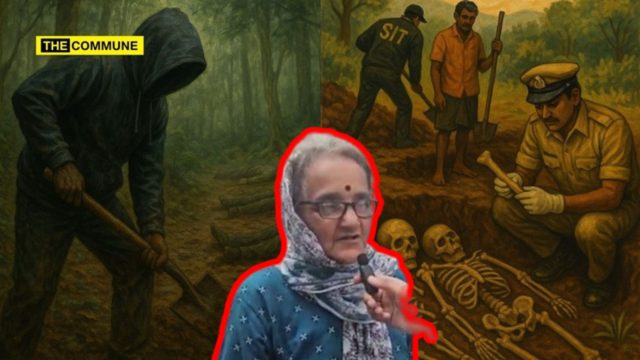
Sujatha Bhat Who Lied About ‘Missing Daughter’ Claims She Was A “Pawn” In Orchestrated Conspiracy Against Dharmasthala, Apologises

sujatha bhat ananya bhat dharmasthala confession

In an explosive and wide-ranging exclusive interview with Asianet Suvarna News, Sujatha Bhat, a central figure in the controversial Dharmasthala case, has come forward to claim she was used as a “pawn” by a political gang, asserting she has no connection to the ‘Burude’ gang and was misled into making false allegations.

Bhat stated that her entry into the national spotlight was orchestrated by individuals including Girish Mattanna and Jayanti T, who contacted her after seeing an older YouTube interview where she discussed a property dispute. She claims they manipulated her personal grievance into a larger, fabricated narrative.

A Web Of Deception: From Delhi To The Supreme Court

Bhat detailed a sequence of events where she was allegedly manipulated. She recounted being taken to Delhi in May with no clear explanation, told only to bring clothes and her Aadhaar card. There, she was taken to the Supreme Court premises but was made to wait outside, completely unaware of the contents of the petition being filed or the purpose of her presence.

“The gang of thieves will come. Another one will come. They will put me in this pit,” Bhat stated, emphasizing her ignorance of the plans being executed around her. She identified Girish Mattanna as the primary point of contact who directed her actions, including instructing her to cry and claim that a missing daughter’s last rites should be performed as per Sanatan Dharma—a story she now says was entirely fabricated.

The Fictional Character of “Ananya Bhat”

A key revelation in the interview was the admission that “Ananya Bhat,” presented as her missing daughter, was a complete fiction. Bhat claimed this character was created by a man named Shivshankar for a YouTube channel interview a year prior, related to her property dispute. She alleged that Girish Mattanna and others later co-opted this fictional character to build their case.

She also admitted to providing an edited photo, removing Ranga Prasad from a picture to support the false narrative, an act she now regrets, stating she did not foresee the consequences.

Financial Struggles And Denial Of Monetary Motive

Forcefully denying any financial gain from her involvement, Bhat stated, “I haven’t taken a single rupee from anyone.” She revealed her current bank balance is a mere 5,000 rupees and described her previous livelihood of selling soup and juice in a park, a profession she can no longer sustain due to public notoriety.

“I was making soup… I used to work up to 500 a day,” she said, contrasting her past simple life with her current predicament where people “look at me like someone committed a murder.”

A Life Of Loneliness And A Plea For Livelihood

The interview painted a picture of a profoundly isolated individual. Bhat spoke of being abandoned by friends and the gang that used her. Following the death of her companion Ranga Prasad in January, she stated she is now “completely alone,” unsure of how she will survive.

Her final plea was not for money but for an opportunity to work and regain her dignity. “They don’t want me to bring lakhs of lakhs to you and keep it in your hand,” she said. “They are saying, ‘Give me a shop or something and I will work and eat there’.”

In another undated video clipping, she is seen saying, “I just want to say this publicly to society: it was my mistake, please forgive me. People might say in other ways that I killed someone, or I stole something, or that I took money, but I have no money with me. I am not someone who would kill anyone. I have no connection at all with that person. I have nothing to do with it in any way. This is my personal matter. Because of someone’s words, I got confused and did what I did. And for that, I bow my head in front of society and ask for forgiveness.”

Subscribe to our channels on Telegram, WhatsApp, and Instagram and get the best stories of the day delivered to you personally.