Home Blog Page 773

Congress Tries It Yet Again In Another Southern State
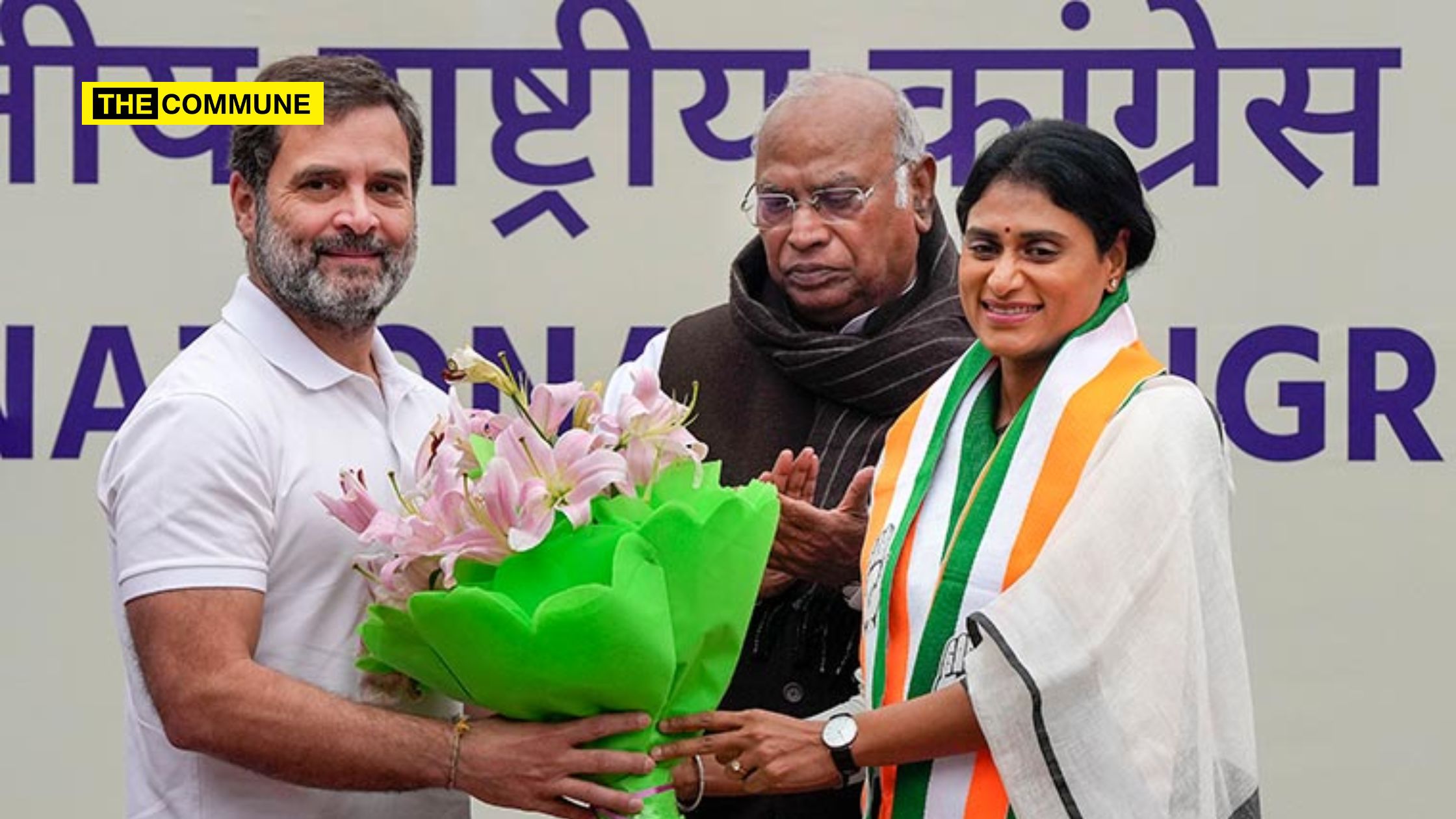
The Congress is at it again. The Andhra Pradesh (AP) unit of the Congress party has announced the tried-and-tested formula of a plethora of financial incentives and welfare schemes ahead of the May 13, A.P state and national elections. They are banking on the appeal of similar “guarantees” marketed ahead of last year’s Karnataka and Telangana state elections, which brought them electoral success.

The state party president is Y S Sharmila, sister of current A.P chief minister, Y S Jagan Mohan Reddy who is the leader of the Andhra-based YSRCP party, a breakaway faction of the Congress party. In a certain sense, both similar-minded, welfarist parties headed by a brother and sister, children of a former Andhra chief minister and lifelong Congress party man, presents a curious case of Congress Vs Congress.

Does the A.P Congress party stand a reasonable chance? The Congress is under unique circumstances in Andhra Pradesh and finds itself on shaky ground even ten years after the larger state of Andhra Pradesh was divided into a residual Andhra and a new Telangana.

It was the Congress government at the Centre that facilitated the division of the larger state, in collusion with Telangana’s BRS party (former TRS). The Congress party’s decision was not in line with the specially appointed Srikrishna Commission’s findings and its recommendations yet the party went ahead with the division of the state, hoping to reap rich political dividends in partnership with the BRS party.

However, the division ended up being an acrimonious matter and didn’t go as smoothly as the Congress would have liked. The people of the Andhra regions of Coastal Andhra/ Uttara Andhra and Rayalaseema put up a prolonged agitation, which in the end, didn’t work in their favour – the people of the Andhra region were left with no capital and fewer industries, companies and job opportunities, both private and public, after the Congress gave in to the demands of K Chandrasekhar Rao’s BRS party and allocated Hyderabad city to the new Telangana state instead of an arrangement (shared union territory status) where the largest city’s revenue would be shared between the two Telugu states.

The Andhra region was left with no capital city and administrative infrastructure and further more, it was faced with a budget deficit because of the loss of revenue from the largest city in undivided Andhra Pradesh, its capital – Hyderabad.

Given the unflattering history, what factors work against the Congress party in A.P?

– People of the Andhra region have not yet forgotten the Congress party’s betrayal and favoritism after having enjoyed decades of unquestioned loyalty from the state.

– The YSRCP party is a breakaway faction of the Congress party. Hence, there is direct competition from the same politicians that understand the typical Congress mindset. The YSRCP is the Congress alternative to its traditional vote bank of the SC and minority votebanks.

– The Congress and YSRCP would be cannibalizing each other voters from the same segments of their vote-bank population. They would end up splitting a fixed vote share between them. Neither may benefit significantly… unless they decide to merge, which is unlikely in 2024.

– Although, both parties target and appeal to the same voter segments and benefit from collaborating or merging with each other, this is unlikely, because of the deep, personal differences between the brother-sister duo, the children of former chief minster of united Andhra, Y S Rajasekhar Reddy. Yet, in the highly opportunistic world of politics….who knows!

– Y S Sharmila representing the Congress, is attempting to compete with the “navaratnalu” (nine welfare schemes) promised by her brother, YS Jagan Reddy who rode to power on the back of these schemes back in 2019, wresting power from the then TDP government.

The Congress party’s recently released election manifesto has promised the following “nine guarantees” in a clear attempt to resonate with the YSRCP’S “navaratnalu” nine welfare schemes. They are:

– Special category status for Andhra Pradesh for 10 years, if the Congress manages to form the government at the Centre.

* Every poor family to receive around Rs 8500 monthly/ Rs. 1 lakh annually, under a women’s “Mahila Mahalakshmi” scheme.

* All farmers eligible for a loan waiver of up to Rs.2 lakhs.

* New MSP (minimum support price) rates for farmers, assuring lesser risk and more profitability in the agricultural sector.

* Assurance to labourers for a minimum wage scheme of Rs.400/day under an “Employment Guarantee” scheme.

* Free education to eligible sections of society, from KG (kindergarten/ preschool) all the way to PG (post graduation).

* Recruitment for around 2.25 lakh A.P state government job vacancies, currently lying vacant under the YSRCP government.

* Free housing scheme with financial asisstance of up to Rs.5 lakhs for every poor or homeless family.

* Guaranteed senior citizen pension of Rs.4,000/month and Rs.6,000 for all disabled People, per eligibility criteria.

The below-mentioned schemes of the YSRCP would provide for a comparison between the “nine” welfarist schemes of the brother and sister duo, both of whom, hail from a life-long Congress culture of greater government control, welfarist schemes without parallel development, greater caste-based reservations and minority appeasement.

Ahead of the 2024 state elections, the YSRCP’s “navaratnalu” nine schemes are a ramped-up, super charged, version of its 2019 schemes, which reportedly met with below-average success, according to pre-poll surveys. They are:

– Rs 50,000 financial assistance to farmers and Rs.12,500 to every farming family, in addition to zero-interest loans as well as free borewells. Cold storage facilities and food processing units were promised in every constituency.

– Fee reimbursement scheme for all students in addition to an allowance of Rs 20,000/ annum.

– All medical treatments of above Rs 1,000 to be paid by the government, for all eligible people holding the “Arogyasree” government health card, regardless of the location, size and speciality of the hospital, anywhere in the state.

– Fast track completion of all irrigation projects including the Polavaram project, promising an end to
water-availability woes to people across many districts.

– A ban on sale of alcohol, implemented in three stages.

– Rs 15,000 annual deposits to mothers in all eligible families, to asisst with one child’s education.

– Outstanding loans taken from women’s co-operative societies with interest would be waived and zero-interest loans will be made available to support women from SC, ST, BC and minority communities, aged above 45.

– A promise to build 25 lakh free homes for the poor.

– Pension age to be reduced from 65 to 60 years with each senior citizen aged above 60, given Rs 2,000/ month and all physically challenged people, to be given a pension of Rs 3,000 per month.

It is noteworthy that a significant percentage of the population considered eligible for the YSRCP’s welfare schemes were reported to be dissatisfied with the disbursement of the various free schemes. All schemes were based on caste and religion, leaving some communities and people in the un-reserved EWS (economically weaker section) category feeling left out.

Andhra Pradesh’s NDA alliance consisting of the TDP (Telugu Desam Party), the JSP (Jana Sena Party) and the BJP are trying to focus on a combination of a few welfare schemes to compete with the YSFCP’s package….along with a promise for overall development of the state as well as increased job opportunities. Their appeal includes the BJP’s likely win in 2024 at the Central level, thus putting Andhra’s NDA coalition in an advantage to bargain for more funding, development and infrastructure for the state, from a friendly central government.

Will the voters of Andhra Pradesh lean towards the tall promises of free subsidies and welfare incentives offered by the YSRCP and the Congress… or would they prefer the NDA alliance’s combination of welfare initiatives along with a guarantee for the development of the state on all fronts and increased job opportunities?

Shivani is a freelance writer from Vijayawada.

Subscribe to our channels on TelegramWhatsApp, and Instagram and get the best stories of the day delivered to you personally
MoSPI Data Exposes 75% Under-Utilization Of MPLADS Funds By DMK-Congress MPs From Tamil Nadu

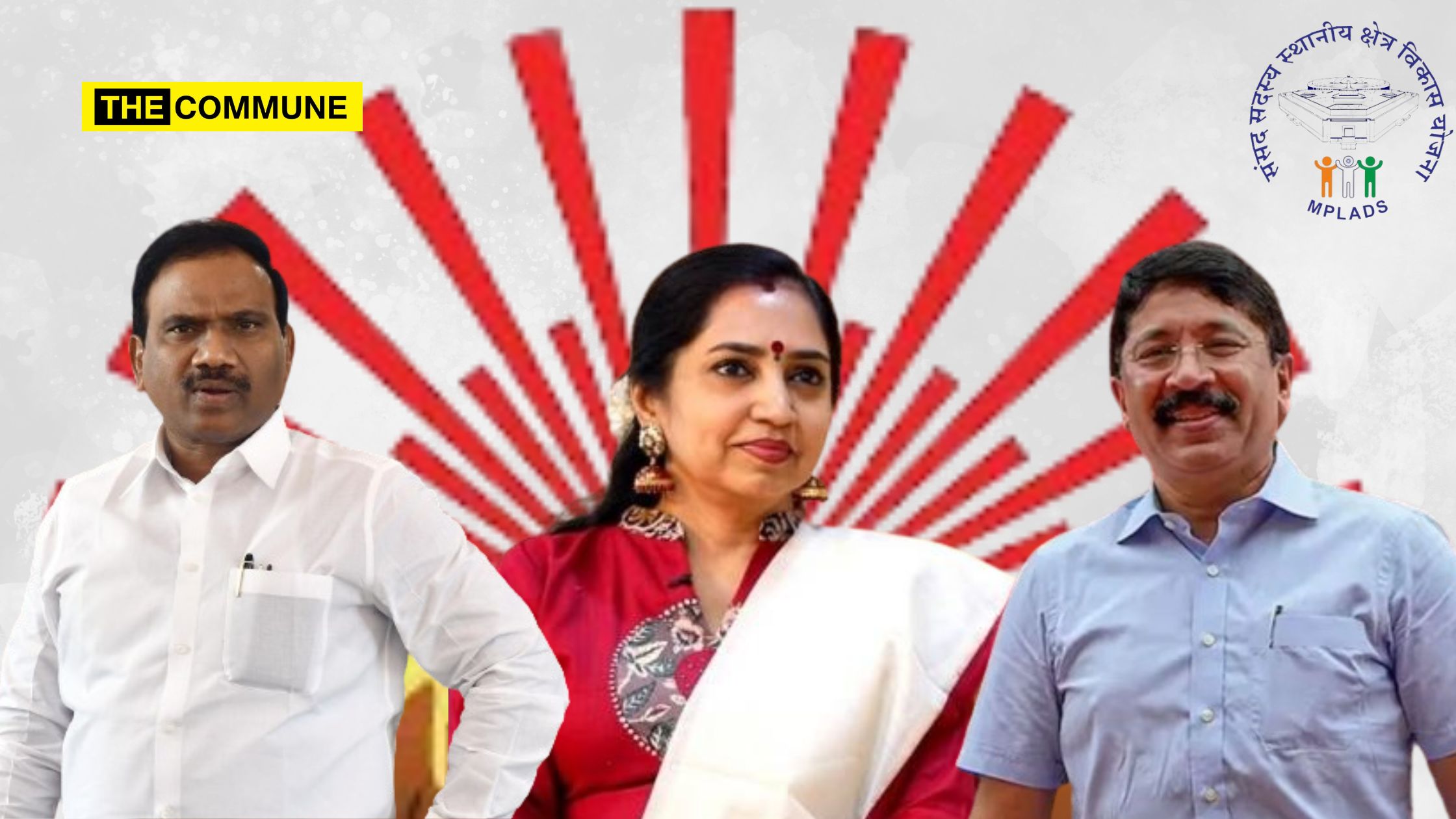
Recently, Dayanand Krishnan, a GIS consultant from Chennai, uncovered concerning statistics through the Right to Information (RTI) Act. According to data obtained from the Union Ministry of Statistics and Programme Implementation, approximately 75% of the funds allocated to the 39 Members of Parliament (MPs) in Tamil Nadu via the Members of Parliament Local Area Development Scheme (MPLADS) between 2019 and 2024 (excluding years impacted by COVID-19) have not been utilized.

The Ministry specified that the annual entitlement for a Member of Parliament under the MPLADS Scheme is ₹5 crore. Additionally, due to the COVID-19 pandemic, MPLADS was suspended from 6 April 2020 to 9 November 2021, with no funds allocated to the scheme for the financial year 2020-21. For the remaining period of FY 2021-22, ₹2 crore was allotted under the scheme for each Member of Parliament.

The release of funds is contingent upon meeting fund-related criteria and the submission of relevant documents by district authorities in accordance with the MPLADS Guidelines, 2016.

According to the response, MPs are not required to wait for actual funds to be released by the Ministry as they are allocated annual drawing limits at the start of each financial year, subject to certain conditions. In this case, the total allocation should have amounted to ₹663 crore, but as evidenced in the data, only ₹367 crore was disbursed, resulting in a 44.64% shortfall, as claimed by Krishnan.

The total expenditure exceeds ₹93 crore, indicating an unspent amount of approximately ₹274 crore, roughly equivalent to 75%, he added.

The highest allocation went to Dravida Munnetra Kazhagham (DMK) Chennai South MP T Sumathy, also known as Thamizhachi Thangapandian (₹14.7 crore), while the lowest allocation was for Arani MP MK Vishnu Prasad of the Indian National Congress (INC) (₹4.9 crore). Communist Party of India (Marxist) Madurai MP S Venkatesan has spent the most funds on various projects (₹6.39 crore).

According to the data, there was no expenditure listed under the Chennai Central and Vellore Parliamentary constituencies. The current Chennai Central MP is Dravida Munnetra Kazhagam’s Dayanidhi Maran, and in Vellore, it is DM Kathir Anand of the same party.

Chennai South DMK MP T Sumathy, also known as Thamizhachi Thangapandian, has directed the allocated funds towards three distinct categories, all channeled through the Chennai Corporation, without allocating any portion to the surrounding panchayats of Chennai. With an allotted amount of ₹14.7 crore rupees, the total expenditure stands at ₹77 lakhs, reflecting a utilization rate of merely 18%.

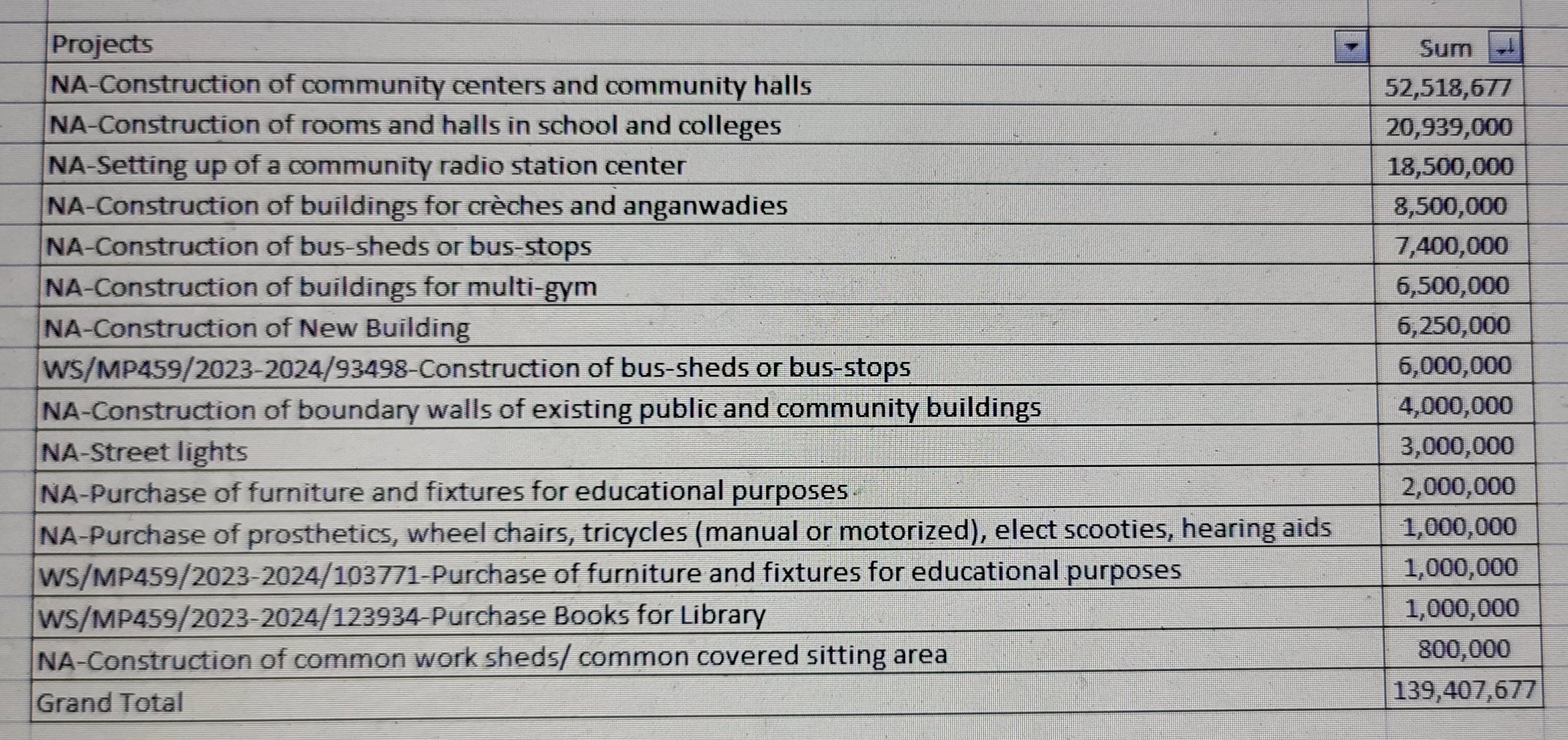
The breakdown of expenditure reveals that a significant portion, amounting to 76%, has been allocated towards constructing bus stops or sheds, totaling ₹5.93 crores. However, concerns are raised regarding the necessity of constructing additional shelters where existing ones already serve, prompting questions about the allocation strategy and the distribution of these facilities. Despite this considerable investment, only two observed are evident, leaving uncertainty about the completion status of the remaining shelters. Moreover, it is notable that MP Thamizhachi Thangapandian has recommended 33 projects, all concentrated within the final three months of FY24, implying a significant surge in activity after a prolonged period of inactivity. Notably, all 33 projects are routed through the Chennai Corporation, with no projects earmarked for the panchayats surrounding Chennai once again.

Image

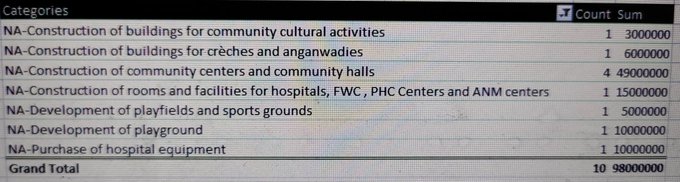
Chennai Central’s DMK MP, Dayanidhi Maran, stands out for his exceptional approach to managing funds allocated for public welfare. Remarkably, he has diligently safeguarded every rupee entrusted to him by the government, ensuring not a single penny has been spent. Despite being allocated an amount of ₹9.8 crores, there has been no expenditure recorded, resulting in a utilization rate of 0%. In November 2023 alone, he recommended 10 projects totaling ₹9.8 crores, reflecting his commitment to serving the community without compromising financial integrity.

Image

The DMK MP A Raja, representing The Nilgiris constituency, allocated a sum of ₹9.8 crores under the MPLADS scheme. However, only ₹37 lakhs has been utilized, reflecting a mere 3% expenditure. Notably, MP A Raja recommended 17 works aimed at constructing bus stops within the constituency. Interestingly, these bus stops varied significantly in cost, ranging from ₹5 lakh to ₹7.5 lakh each. This variance prompts the question, Why is there a lack of standardization in costs, even within the same district.

Image

The data revealed that work remains incomplete in 23 districts, including all three parliamentary constituencies in Chennai, Coimbatore, Pollachi, Tiruppur, Tiruchi, Theni, Chidambaram (SC), Thoothukkudi, Vellore, and Sriperumbudur.

Members of Parliament Local Area Development Scheme (MPLADS)

The MPLAD Scheme, established in December 1993, is a Central Sector Scheme with the primary goal of empowering Members of Parliament (MPs) to propose developmental projects, focusing on building sustainable community infrastructure in their respective constituencies. These projects typically target areas such as drinking water, primary education, public health, sanitation, and road development. Additionally, since June 2016, MPLAD funds have been allowed to be utilized for initiatives like the Swachh Bharat Abhiyan, Accessible India Campaign , water conservation through rainwater harvesting, and the Sansad Aadarsh Gram Yojana.

The implementation of MPLADS involves MPs recommending projects to the Nodal District Authority, which is responsible for executing the approved works and maintaining records of expenditure. MPs receive ₹5 crore annually in two instalments of ₹2.5 crore each, and these funds do not expire at the end of the fiscal year. Lok Sabha MPs allocate funds for projects within their constituencies, while Rajya Sabha MPs allocate funds within the state that elected them. Nominated Members of both houses have the flexibility to recommend projects anywhere in the country.

Subscribe to our channels on TelegramWhatsApp, and Instagram and get the best stories of the day delivered to you personally. 


BJP Releases Manifesto Titled ‘Modi Ki Guarantee’ For 2024 Lok Sabha Elections

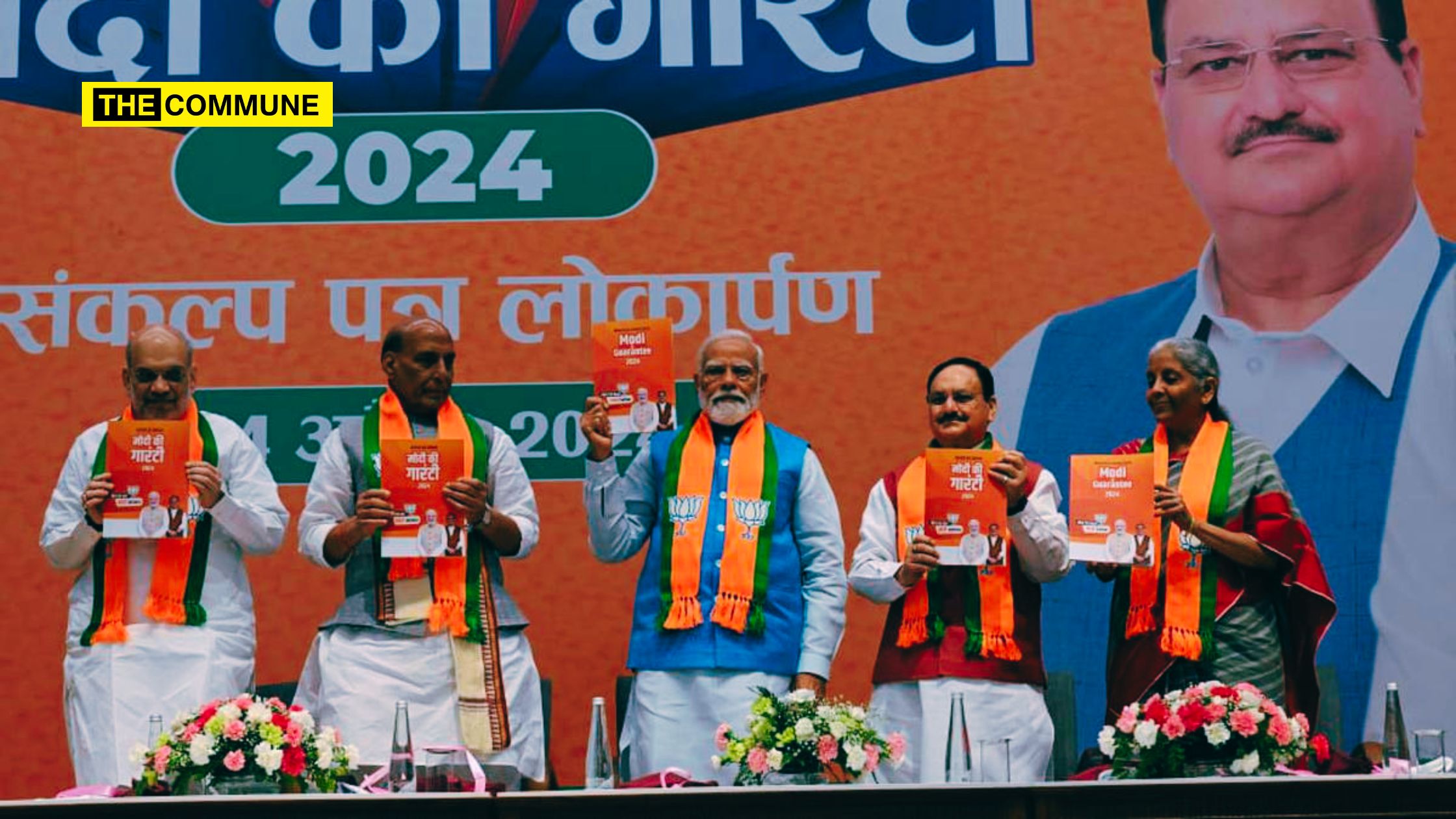
The Bharatiya Janata Party (BJP) unveiled its election manifesto, titled ‘Sankalp Patra’, for the upcoming Lok Sabha elections. The event was graced by the presence of notable figures including Prime Minister Narendra Modi, Home Minister Amit Shah, Defence Minister Rajnath Singh, Union Finance Minister Nirmala Sitharaman, and party President JP Nadda. During the manifesto release, Prime Minister Modi remarked on the auspiciousness of the occasion, coinciding with the celebration of New Year in several states and the observance of Ambedkar Jayanti. Defence Minister Rajnath Singh highlighted the significance of the BJP’s manifesto, likening it to the purity of ‘Modi ki Guarantee’, which he equated to 24-carat gold in Indian politics, asserting its superiority not only within India but also on a global scale.

Following are the promises made the BJP in the 2024 manifesto.

  1.  Uniform Civil Code
  2. One nation, one election, one common electoral roll system
  3. Eliminate Left Wing Extremism
  4. Implement CAA
  5. Build world-class railway stations
  6. Vande Sleeper trains
  7. Super App for all railway services
  8. Facilitate hosting olympics in 2036
  9. Net zero emissions by 2070
  10. Permanent seat at UN Security Council
  11. Revitalize Bharatiya Civilizatioal Monuments
  12. Establish Thiruvalluvar Cultural Centres Globally
  13. Increase Mudra loan limit to 20 lakhs
  14. Ayushman Bharat health insurance for those above 70
  15. Transgender under Ayushman Bharat scheme
  16. Free ration scheme for next 5 years
  17. Indigenous Krishi Satellite for farmers
  18. Special train services for migrant workers
  19. Manned mission to moon

This is a developing story. 

Subscribe to our channels on Telegram and WhatsApp and get the best stories of the day delivered to you personally.

Dravidianist Woman Stages Drama Claiming GST On Sanitary Pads, Her Fake Propaganda Gets Busted

A meticulously orchestrated attempt to tarnish the BJP’s reputation in the Tiruppur constituency has surfaced on social media, alleging verbal abuse and threats directed at a woman in Tiruppur by BJP cadres canvassing for votes. However, what the organized narrators failed to mention is that the woman is affiliated with Dravida Viduthalai Kazhagham, a group aligned with the Dravidian ideology and supportive of the DMK, established in 2012. This revelation debunks the incident as a staged drama, evidently orchestrated by the ruling party, particularly alarming as it unfolds just five days prior to the upcoming Lok Sabha elections in 2024.

https://twitter.com/OnlyTruth2024/status/1778771598063112513


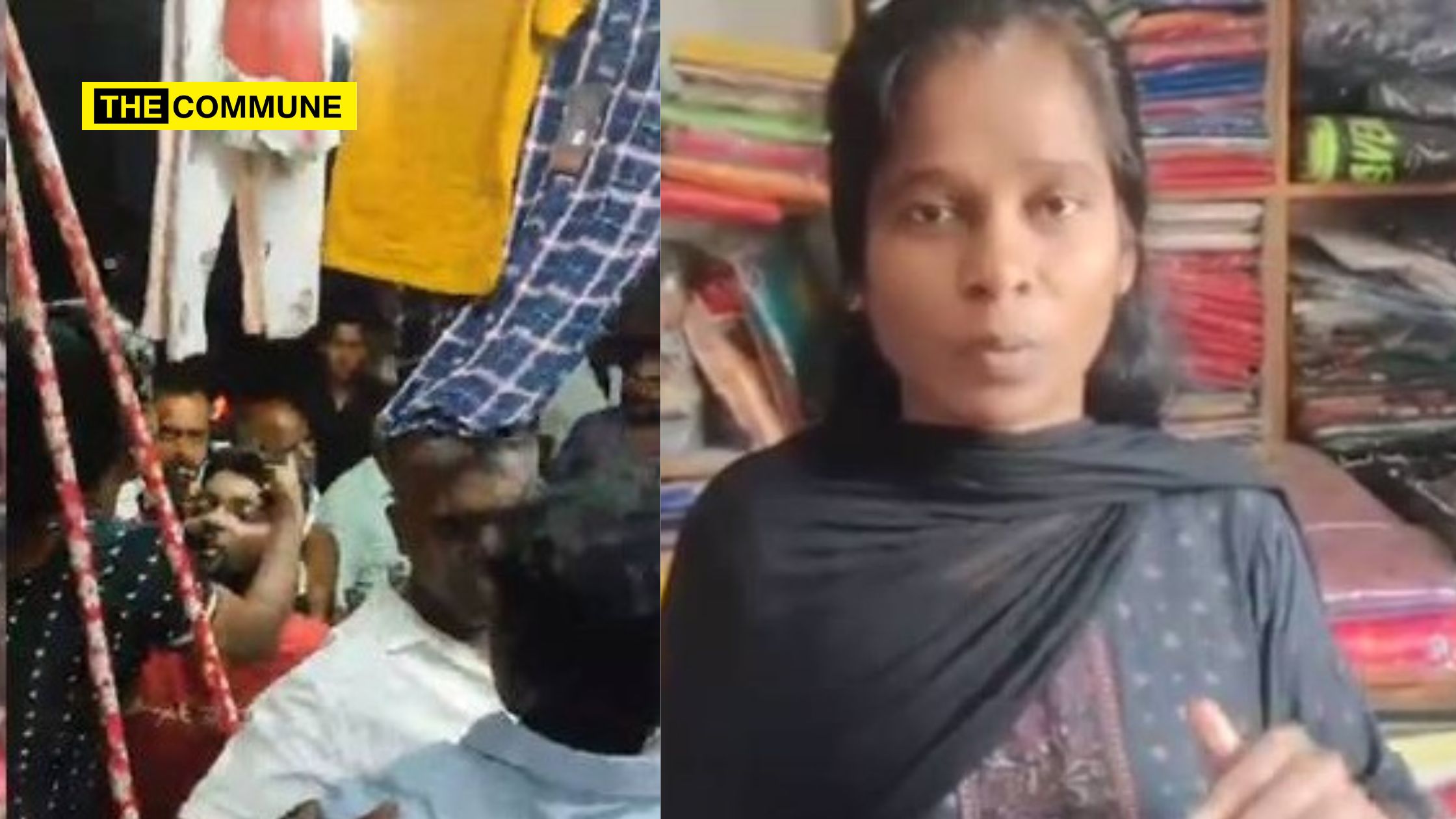
AP Muruganantham is contesting the upcoming Lok Sabha election 2024 in the Tirupur parliamentary constituency representing the BJP. Some BJP members were actively canvassing for votes in the Athuppalayam area in support of their candidate. Sangeeta, a 37-year-old district organizer of the Dravida Viduthalai Kazhagam, owns a cloth shop in the same locality.

When the BJP members approached Sangeeta for votes, she raised questions regarding the Union government’s implementation of GST on essential items like napkins, rice, petrol, diesel, and gas. This questioning reportedly angered the BJP members, leading to a heated argument. Subsequently, Sangeeta retreated into her shop, only to be allegedly confronted by more than ten BJP members who verbally abused and physically attacked her.

Despite Sangeeta’s attempt to reason with them, the BJP members persisted in their verbal assault. Sangeeta filed a complaint with the Velampalayam police and an investigation is underway. In response, the police have filed a case against Chinnaswamy, a BJP district executive committee member, under two sections.

Sangeeta, speaking about the BJP’s attack, stated that the BJP campaign in their area had promised security for women, yet essential items like sanitary napkins are subjected to high GST rates. She highlighted the financial burden imposed on women due to the increased GST on essential goods. Recounting the incident, she described how a group of people entered her shop, verbally abused her, physically assaulted her, and confiscated her cell phone. She emphasized the hypocrisy of the BJP’s claims about women’s safety while attacking her for asking questions and called for protection and strict action against the BJP officials involved in the assault.

The central issue under debate revolved around allegations made by Sangeeta, the district organizer of the Dravida Viduthalai Kazhagam. She contended in a dispute that essential items such as sanitary napkins were still being subjected to high GST rates, despite the Government of India having nullified them to zero percent in 2018. However, Sangeeta, in an attempt to portray herself as a champion of justice during the election period, staged a dramatic performance to emphasize her stance, sadly to be exposed later.

This coordinated performance was subsequently met with disapproval from Tamil Nadu Industries Minister TRB Rajaa, who was specifically assigned by MK Stalin to supervise the Coimbatore and neighboring constituencies. The DMK’s media outlet, The Sun News, and the CPI(M) spokesperson, Sindhan, echoed similar sentiments in their criticism.


Subscribe to our channels on TelegramWhatsApp, and Instagram and get the best stories of the day delivered to you personally.

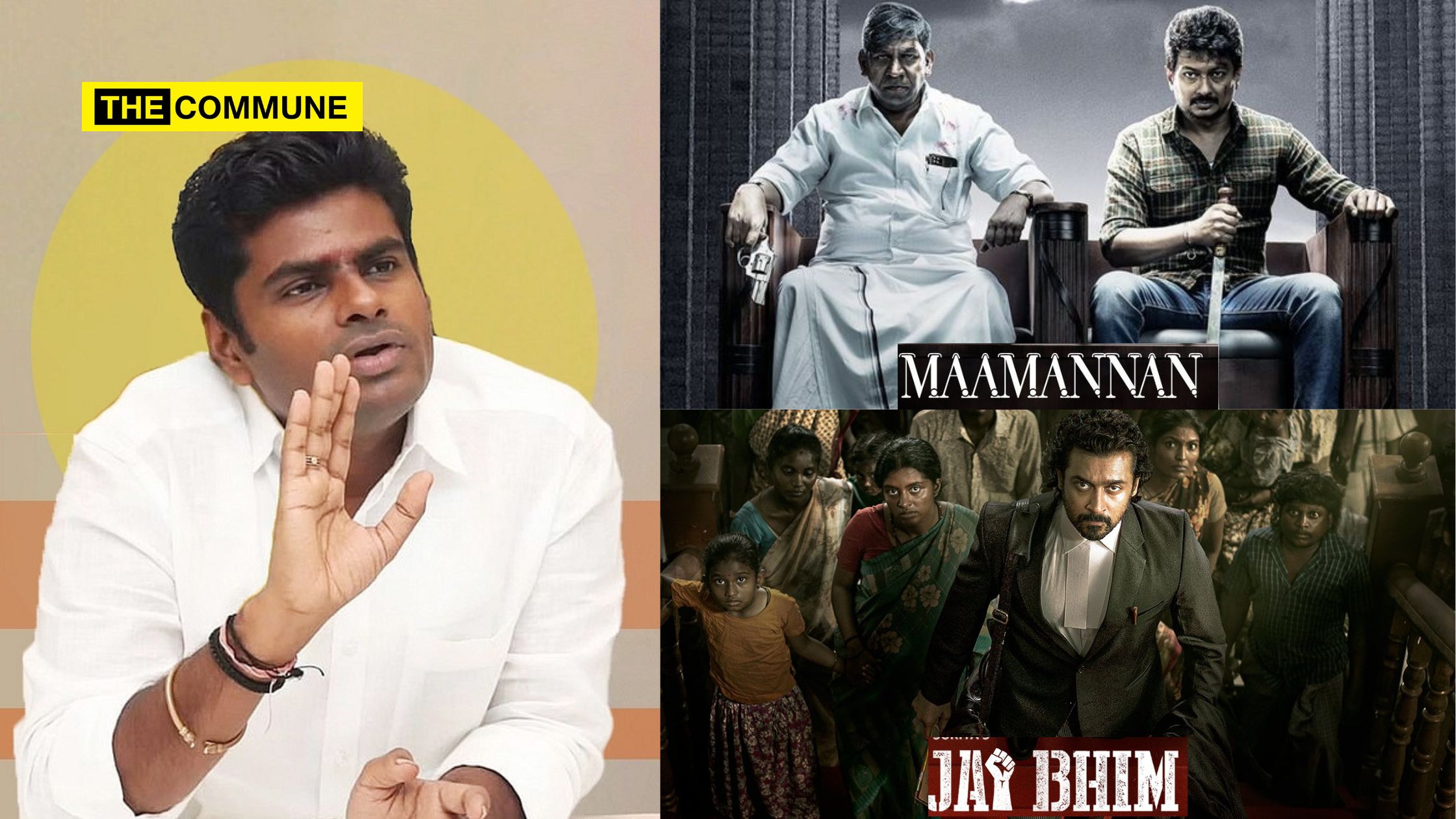
Annamalai Takes Jibe At DMK Propagandist Actor Suriya And Alleged ‘Social Justice’ Filmmakers For Their Duplicity

The DMK and its associates consistently assert ownership over the concept of social justice, positioning themselves as its sole guardians. They suggest that if they lose power and the BJP takes over, everything will change. However, Tamil Nadu state president Annamalai challenged this narrative during a press conference. He highlighted how both the narratives of social justice and the North-South divide are manipulated for propaganda purposes, citing examples such as films featuring actors Suriya’s “Jai Bhim” and Udhayanidhi Stalin’s “Maamannan”.

Annamalai, the BJP state president, expressed strong disapproval of DMK scion and Tamil Nadu minister Udhayanidhi Stalin and his film “Maamannan” during a media interaction in Coimbatore. He remarked that, for decades there has been a narrative suggesting that everything will collapse if the BJP comes into power. Annamalai cited the film “Mamannan” as an example, where there are two towns depicted: one in the south inhabited by virtuous people and the other in the north inhabited by villainous characters who use the words ‘Ji’ depicted to create a propaganda for years.

Annamalai stated, ” He (Udayanidhi Stalin) will take a movie Maamannan, in which there will be two towns, North and South. The bad guys will be in the northern town and the good guys will be in the southern town. There will be a fight between the north town and the south town, like this brother, they will grind the same flour in the machine. If you see bad people, they will say ‘Ji’. Oh ‘ji’ then they are bad people.” 

There after, Annamalai discreetly hinted on actor Suriya’s “Jai Bhim” movie pointing out a prevalent pattern among actors shifting to Mumbai post their film successes. He emphasized the perceived inconsistency among those engaged in producing socially relevant films, implying that their main drive might be financial profit rather than a sincere commitment to social justice. He raised doubts about the authenticity of their efforts, hinting that their behavior contradicts their professed beliefs.

Annamalai stated, “If you go to a cinema and take a film, an actor will come and act in it, and then that actor will go and sit in Bombay. His children would study in Bombay and the actor would say, ‘I have made a film for social justice and this is how it is in Tamil Nadu’. Are all the directors and actors making social justice films show it for free? Money, brother money.” 

Annamalai clarified that there is budget and money involved in everything, his critique is not directed at the film industry as a whole but rather against the use of cinema as a tool for propagandist purposes, as exemplified by “Mamannan.”  He recounted an incident where Udhayanidhi Stalin named a child after a character from the movie “Vikram,” which depicted a character named Rolex involved in drug trafficking. Annamalai questioned the appropriateness of such actions and argued that individuals engaging in such activities lack credibility when discussing political change.

Suriya started dancing to the tunes of the DMK, just weeks after Jayalalithaa’s death. His voice against NEET gave credence to DMK’s propaganda on the exam which was politicizing the suicide of a poor girl. He used the exact terms that a DMK spokesperson would use in TV debates calling NEET and other exams as ‘Manu Needhi’ (Laws of Manu) and even went to the extent of derogating the courts for their stance. The actor also opposed the New Education Policy (NEP) saying that it tried to impose Hindi on non-Hindi speaking states and that the policy as a whole is anti-poor.

Subscribe to our channels on Telegram and WhatsApp and get the best stories of the day delivered to you personally.

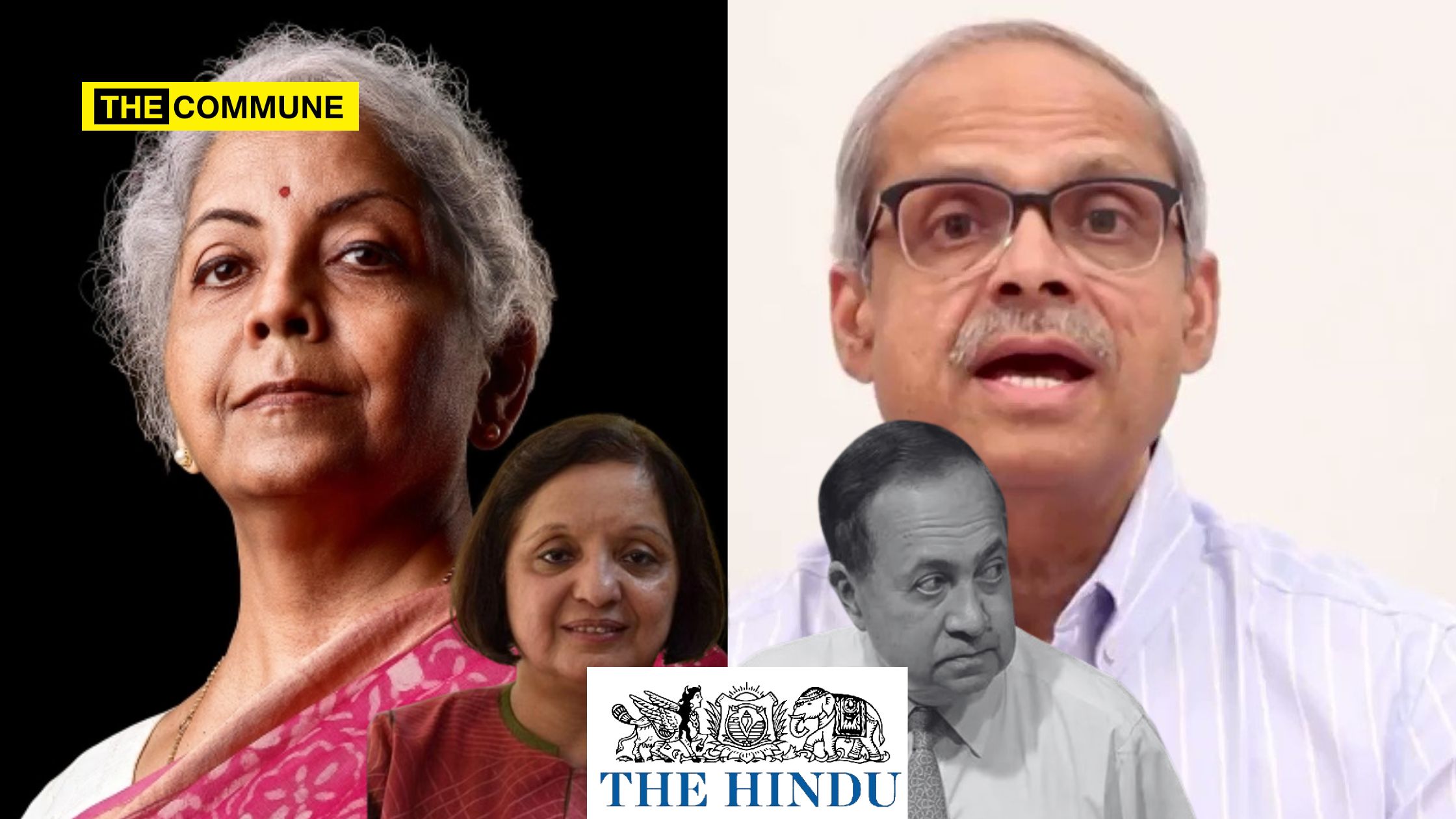
Malini Parthasarathy Slams The Hindu For Trying To Bait FM Nirmala Sitharaman With Her Estranged Husband’s Remarks

Malini Parthasarathy Slams The Hindu For Trying To Bait FM Sitharaman With Her Estranged Husband's Remarks.jpg

Yet another setback for the Hindu group as Malini Parthasarathy, former chairperson and one of the founding director of The Hindu Centre, has slammed the group for attempting to bait Finance Minister Nirmala Sitharaman with comments made by her estranged husband.

The Hindu published an article on Parakala Prabhakar, the husband of Union Finance Minister Nirmala Sitharaman suggested that if the BJP triumphs in the upcoming Lok Sabha elections and Prime Minister Narendra Modi is re-elected in 2024, it would lead to the abolishment of future elections in the country.

Over the years, The Hindu shifted towards becoming the official mouthpiece of the Congress party, evidenced by its endorsement of the party’s official X handle post of an interview. The newspaper subsequently transformed the suggestions outlined in the post/video into an article, indicating a troubling departure from its previously established reputation for unbiased journalism. It selectively highlighted statements from the interview shared by the Indian National Congress (INC) handle, such as Dr. Prabhakar’s assertion that Prime Minister Modi would deliver a divisive speech from the Red Fort, potentially leading to nationwide turmoil akin to the situations in Ladakh and Manipur. Prabhakar also alleged that a return to power for PM Modi and his Cabinet would result in drastic changes to the country’s Constitution and map. Additionally, he cited inflammatory remarks made by BJP leaders, warning that such hate speech would emanate openly from the Red Fort under Modi’s leadership. Prabhakar emphasized that these hate speeches would be overt and widespread, describing them as “Khula Khel” (open play). Furthermore, he predicted that the ethnic tensions witnessed in Manipur would become commonplace throughout India if Modi were to remain in power.

Malini Parthasarathy took to her social media X handle to express her disapproval of a troubling trend. She condemned the use of cheap tactics by certain members of the Hindu group, who repeatedly target Union Finance Minister Nirmala Sitharaman whenever Parakala Prabhakar shared his views. Malini described this behavior as a disgraceful tactic employed by both media outlets and spokespersons from opposition parties. She criticized it as a deliberate attempt to provoke Sitharaman, driven by malicious intent and a misogynistic mindset that refuses to acknowledge women’s capability to succeed independently. Malini emphasized the fact that Sitharaman and Prabhakar lead separate lives, highlighting the unfairness of targeting Sitharaman for comments unrelated to her. She called for an end to this unjust and unwarranted baiting of Sitharaman.

Malini Parthasarathy stated, “It’s a real low blow for media & Opposition party spokespersons to troll the Union Finance Minister @nsitharaman every time economist @parakala makes his own observations. It’s sheer malice & deliberate baiting of Ms Sitharaman by misogynist haters who can’t understand that women can be successful & lead their own lives. It’s known that @nsitharaman& @parakala lead separate lives. This baiting of Ms Sitharaman for remarks unconnected to her is unfair and has got to stop!”

Previously upon her resignation from The Hindu group, Malini Parthasarathy attributed her departure to the narrowing scope for her editorial viewpoints. She highlighted her continuous endeavor to liberate The Hindu’s narrative from entrenched ideological prejudices and expressed concerns about the diminishing avenues for her initiatives of late, ultimately prompting her difficult choice to step down.

Previous Instances Of Narratives Peddled By The Hindu Group For Congress And Its Allies

During the aftermath of Cyclone Michaung television reports extensively covered the significant damage in affected regions. In contrast, print media The Hindu overlooked the challenges faced by Chennai and published news about Parliament proceedings and an honor killing on the state of its front page covering the government’s mismanagement.

In another instance, The Hindu published an article titled “Not clear if Sengol was presented to Mountbatten, says Thiruvavaduthurai Adheenam head,” quoting the Adheenam pontiff questioning the significance of presenting the Sengol to Lord Mountbatten since he was leaving India and handing over powers. The article suggested a lack of evidence supporting Mountbatten and Rajaji’s involvement in the power transfer during the Sengol event. This information became fodder for the Congress to criticize the Modi Government for celebrating the Sengol. the Adheenam head’s agreement when it was pointed out that there was no evidence indicating the scepter as a symbol of the “transfer of power” and issued a statement after some time only when Senior Congress leader Jairam Ramesh claimed that the Sengol, symbolizing the transfer of power from the British to India’s first Prime Minister Jawaharlal Nehru, the issue debunked.

Employees of The Hindu were observed spreading disparagement of Hindu deities, evident when Hindustan Times journalists’ tweet about Hindu God Krishna led to mocking remarks about Hindu Gods from journalists at The Wire and The Hindu. For instance, freelance journalist Suprakash Majumdar from The Wire tweeted implying that “Lord Hanuman had a gay crush on Lord Rama,” to which a journalist named Suchitra from The Hindu responded by mocking the sentiment and cautioning Majumdar against providing ammunition to Hindu claims of tolerance.

He has also faced criticism for allegedly pursuing a biased agenda in his reporting under the guise of journalism. Various individuals have called out the newspaper for engaging in partisan reporting, spreading misleading information, and using doctored images in coverage of the Rafale deal. The Hindu’s Frontline, published an “exclusive interview” with Moussa Abu Marzouk, the head of Hamas’ international relations office in Doha, Qatar, raising concerns about the outlet’s credibility.

Previously during COVID, The Hindu published an article with the headline “India’s COVID-19 scenario very very difficult, says Danish Prime Minister,” suggesting deep concern from Denmark regarding the COVID-19 situation in India. However, the Danish Prime Minister had merely acknowledged the challenges India faces in controlling the pandemic, stating, “The situation is very very difficult for you.” Denmark’s Ambassador to India, H. E. Freddy Svane, responded by calling out The Hindu’s news as twisted and untrue, clarifying the misrepresentation of the Danish Prime Minister’s statement.

The newspaper has earlier faced accusations of disseminating false information, anti-Hindu propaganda and left-leaning ideologies marking a departure from its once impartial journalistic reputation. Under its current directorship, it openly promotes a narrative opposing the principles of freedom of speech and expression.

Subscribe to our channels on TelegramWhatsApp, and Instagram and get the best stories of the day delivered to you personally. 

DMK Councillor Assaults Elderly Woman Amid Dispute In Parvathipuram During Preparations For DMK Min MRK Paneerselvam’s Campaign

dmk-ministr-paneerselvam-parvathipuram-vallalar-international-centre-center-protest-assault.jpg

The residents of Parvathipuram village are raising black flags and staging demonstrations against the Vallalar International Centre. Additionally, they have declared their intention to abstain from participating in the forthcoming Lok Sabha elections.

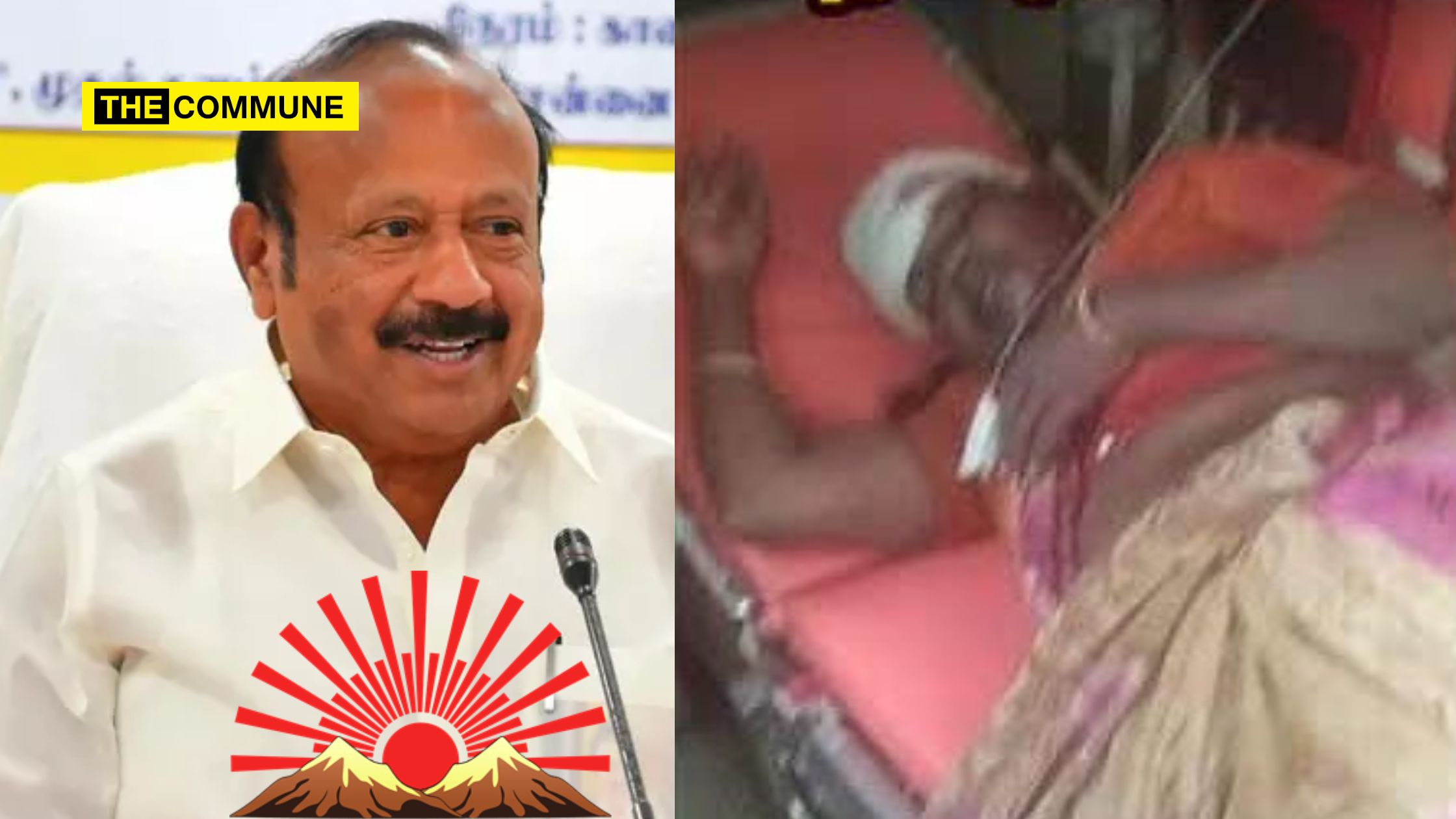
DMK Minister MRK Paneerselvam’s decision to campaign in support of Kadalur DMK candidate Vishnu Prasad around Vadalur led to the hoisting of DMK flags in various places, including Parvathipuram. This move triggered heated exchanges, particularly outside the residence of an elderly woman named Dhanalakshmi.

Dhanalakshmi, expressing her discontent with the DMK’s stance on the Vallalar International Centre issue, objected to the hoisting of the party’s flag near her house. The disagreement quickly escalated when DMK 15th ward councillor Raja Boopathy and his brothers, including Paramasivam, allegedly assaulted the elderly woman.

Reports indicate that Dhanalakshmi sustained severe injuries, including a head injury resulting in profuse bleeding. Prompt intervention from neighbors saw her admitted to the Cuddalore Government Hospital for medical treatment.

Dhanalakshmi and her supporters are now contemplating filing a police complaint against the perpetrators.

It is to be noted that earlier Parvathipuram residents protested DMK’s Vallalar International Centre construction project. At this time, 161 residents were arrested and later released

Subscribe to our channels on TelegramWhatsApp, and Instagram and get the best stories of the day delivered to you personally.

Assistant Expenditure Officer Alleges Threats By RO To Favour DMK Candidate A Raja, Appeals to Chief Electoral Officer

nilgiris-collector-aruna-dmk-a-raja-1.jpg

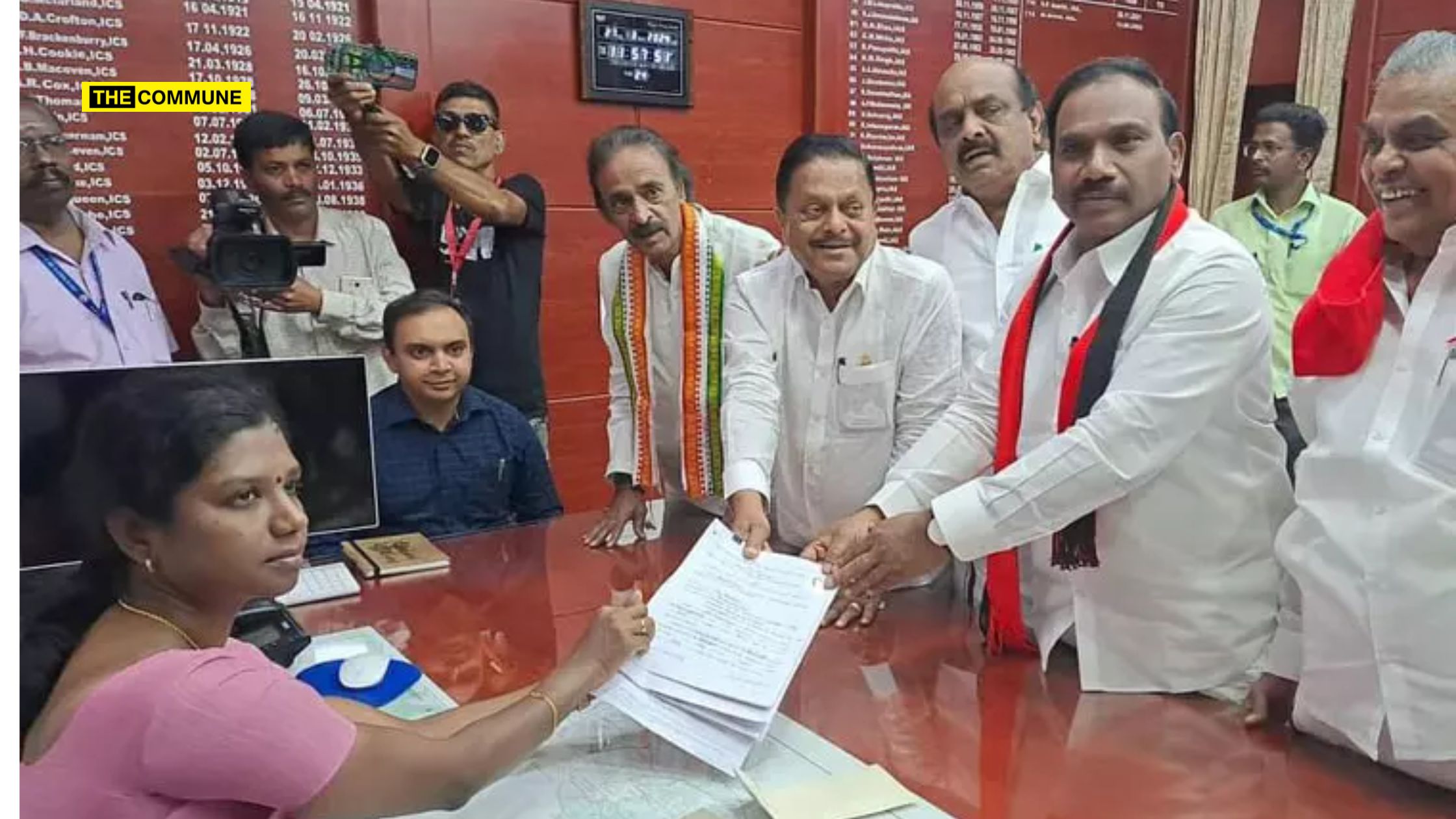
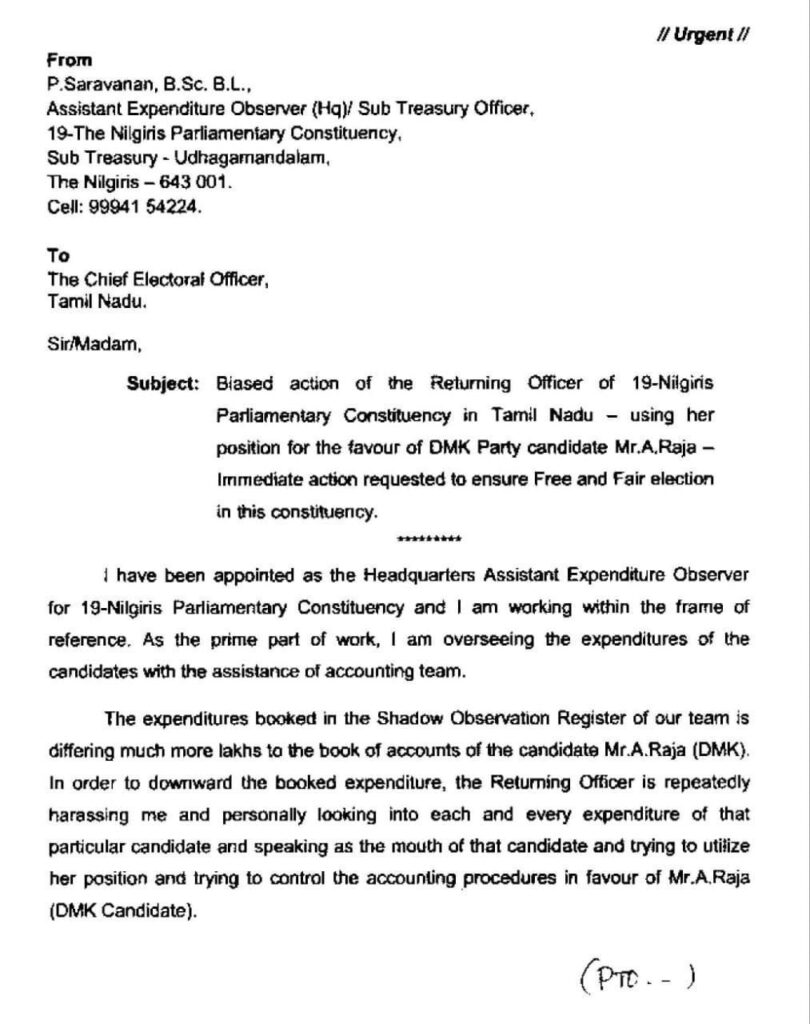
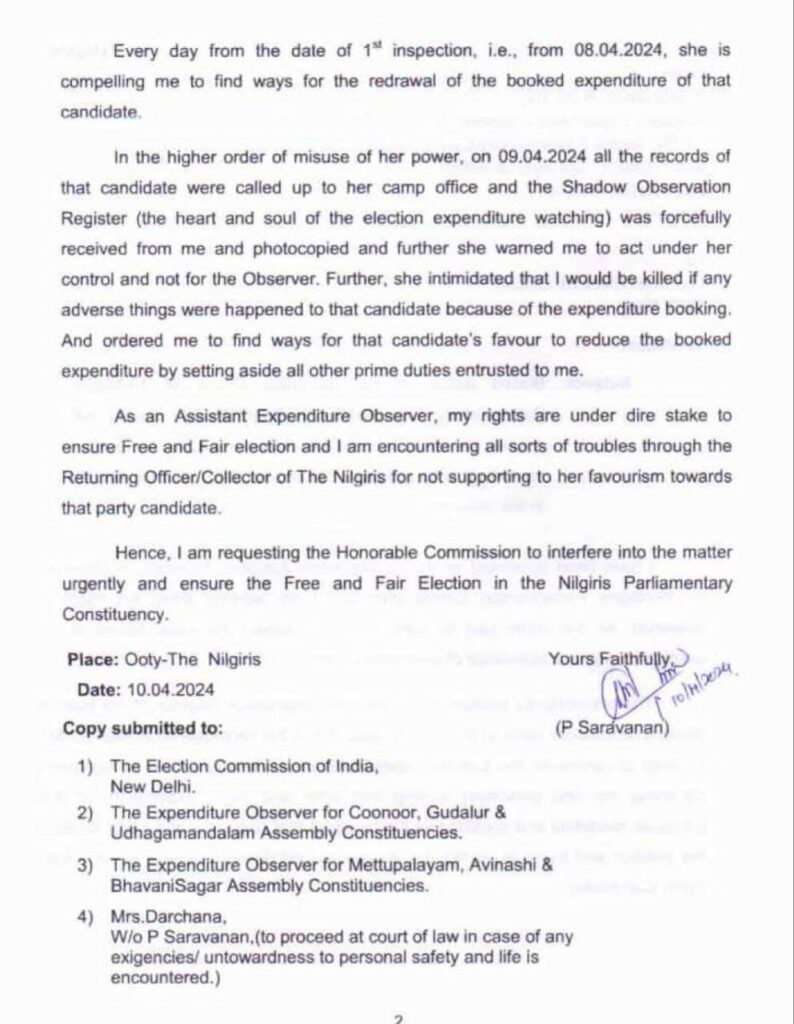
An Assistant Expenditure Observer in the Nilgiris Lok Sabha constituency has raised serious allegations against Returning Officer M Aruna, accusing her of bias and favoritism towards DMK Candidate A Raja. In a petition addressed to the Chief Electoral Officer, Saravanan, the assistant expenditure observer has sought the intervention of the Election Commission to ensure a fair election process in Nilgiris.

The petitioner claims that Aruna has been actively attempting to manipulate accounting procedures to benefit A Raja, and alleges facing difficulties for not aligning with the Returning Officer’s bias towards the DMK candidate.

According to the assistant expenditure observer, there is a significant disparity between the expenditures recorded in the Shadow Observation Register of their team and the candidate A Raja’s official book of accounts. He alleges that Aruna has been pressuring him to decrease the recorded expenditure of A Raja, indicating a clear attempt to influence the election in favor of the DMK candidate.

Speaking out against the alleged harassment, Saravanan stated, “The expenditure booked in the shadow observation register of our team differs significantly from the book of accounts of the candidate A Raja (DMK). To decrease the recorded expenditure, the Returning Officer is repeatedly harassing me and personally scrutinizing every expenditure of that particular candidate, speaking on behalf of the candidate and attempting to control the accounting procedure in favor of A Raja.”

The assistant expenditure observer further detailed instances of coercion and intimidation by Aruna, claiming that on 9 April 2024, all records of A Raja’s expenditures were forcefully taken to her camp office, and the Shadow Observer Register, crucial for monitoring election expenditures, was confiscated. Saravanan alleges that he was threatened with dire consequences if any adverse actions were taken against A Raja due to expenditure bookings.

“In the higher order of misuse of her power, on 9 April 2024, all the records of that candidate were called up to her camp office and the shadow observer register (the heart and soul of the election expenditure watching) was forcefully received from me and photocopies and further she warned me to act under her control and not for the observer. Further, she intimated that I would be killed if any adverse things happened to that candidate because of the expenditure booking. And ordered me to find ways for that candidate’s favour to reduce the booked expenditure by setting aside all other prime duties entrusted to me,” Saravanan said in the letter.

In his letter to the Chief Electoral Officer, Saravanan highlighted the misuse of power by the Returning Officer and urged for immediate action to uphold the integrity of the electoral process in Nilgiris.

Subscribe to our channels on TelegramWhatsApp, and Instagram and get the best stories of the day delivered to you personally.

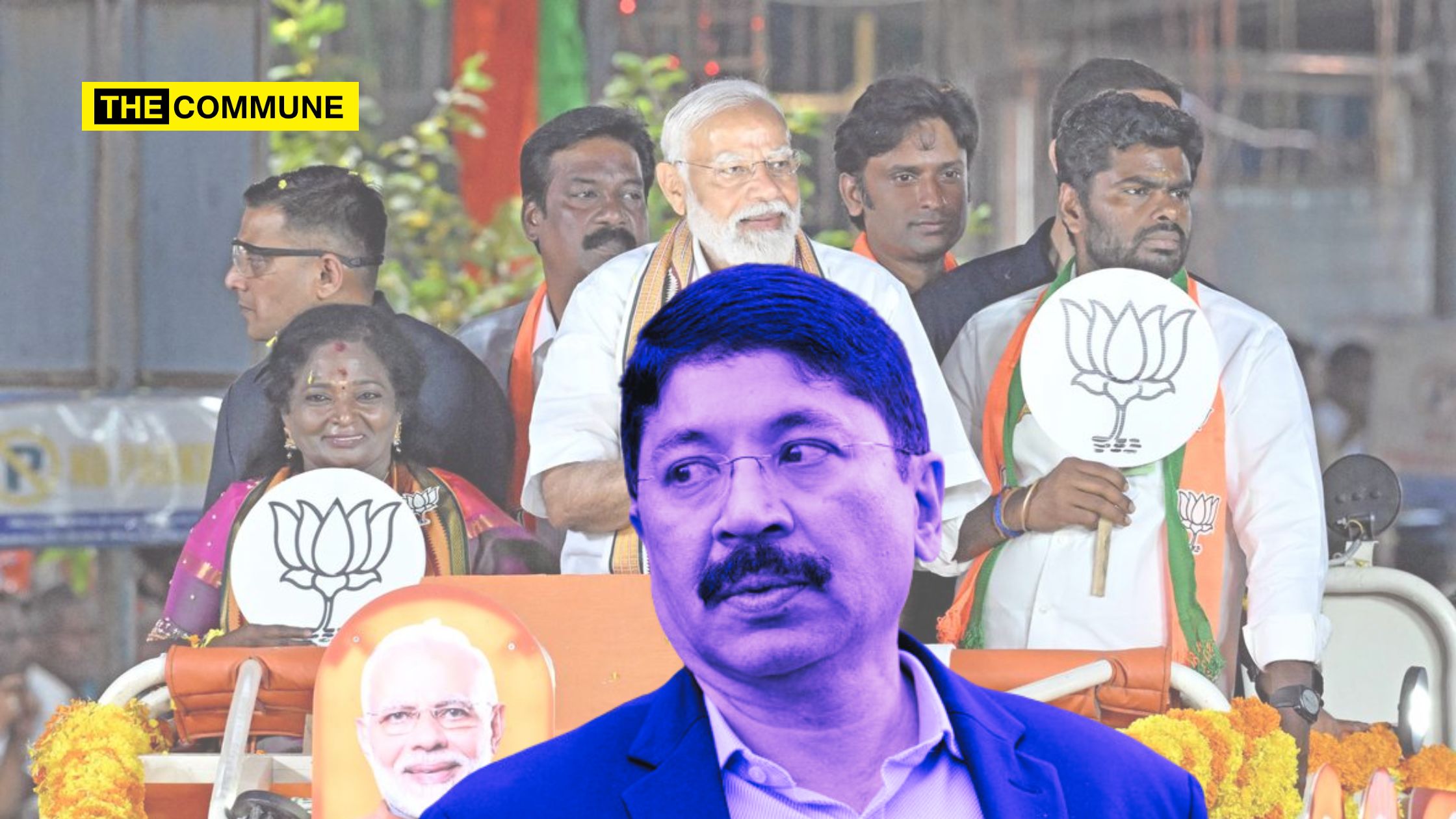
“PM Modi’s Roadshow Was A Circus Meant For West Mambalam People”: DMK MP Dayanidhi Maran Yet Again Targets Brahmins

dayanidhi maran modi roadshow circus west mambalam pondy bazaar chennai bjp dmk.jpg

Three-time MP and DMK’s candidate for the Central Chennai Lok Sabha constituency for the upcoming Lok Sabha polls, Dayanidhi Maran, called the Prime Minister’s roadshow in Chennai’s Pondy Bazaar area a “circus”.

Speaking to the Times Of India, when asked about the impact of Prime Minister Narendra Modi’s recent roadshow in Chennai, Maran dismissed the notion of a significant “Modi Factor” in the city. He said, “I think this new generation will not be aware of it. Earlier in our generation, we used to have the circus called the Gemini Circus or the Great Bombay Circus, it happens once in a while. All of us go to the circus and watch the show. Similarly, Modi gave a show only for the West Mambalam people, not for the entire Chennai.”

Dayanidhi Maran making such a statement seemingly indicates him targeting the Brahmin community once again.

When asked if the fight was between DMK and the BJP in Central Chennai, Maran arrogantly replied, “Definitely not. It is DMK versus ADMK. BJP is not anywhere on the scene. Probably they’ll be competing with NOTA. That’s how low they are. Because they can’t. See this is all the inflated narrative made by BJP to look strong. How can they grow from 3%? They’ve done nothing. Has the prime minister delivered anything for Tamil Nadu or any of Chennai or anything? There’s no projects.”

Maran claimed that the public response to his campaign was satisfying, attributing it to the fulfillment of promises made by Chief Minister MK Stalin over the past three years. He said the schemes like the ₹1000 empowerment programme for women ‘resonated well’ with the electorate. 

In reality, Dayanidhi Maran has been questioned by his constituents for his unfulfilled promises. Also, DMK candidates who have been campaigning all over the state have been boycotted and questioned over the same ₹1000 for women scheme as many women across the state have not received it – the state told them they were not eligible for the scheme. 

Central Chennai, Maran noted, mirrors the diversity of India, encompassing various religious, linguistic, and ethnic communities. He reiterated the DMK’s ‘commitment to secularism and inclusive governance’, emphasising their vision for a pluralistic India. 

Ironically, the DMK is known for its hate towards North Indians, calling them fools and toilet cleaners – this was especially said by Dayanidhi Maran in the past. Critics wonder if abusing migrant workers and people from other communities and geographies is the DMK model of inclusive governance. 

Dayanidhi Maran has earlier made very casteist jibes against Union Finance Minister Nirmala Sitharaman. He used words like “Unga thopanaar” to indicate Sitharaman’s father (in a language/dialect used by Brahmins in TN) when he was speaking in Parliament in February 2024 about the central government aid to TN for the floods.

Earlier in 2023, he addressed Sitharaman as “Nirmala mami” during a “day-long” fast against NEET and then pretended to have said it inadvertently. The word Mami is used as a slur and in derogatory fashion especially by Dravidian ideologues when addressing Tamil Brahmin women in Tamil Nadu. It is noteworthy that Dayanidhi Maran is himself married a Tamil Brahmin from The Hindu family and his mother, wife of Murasoli Maran, the father of Dayanidhi Maran and nephew of M Karunanidhi was also a Tamil Brahmin woman.

In context with the jibe at PM Modi’s roadshow, a few days ago Maran called Annamalai a joker and pretended not to be aware of him.

Subscribe to our channels on TelegramWhatsApp, and Instagram and get the best stories of the day delivered to you personally.

Is Congress Caste Census Project A Part Of Vatican’s Joshua Project?

joshua-project-congress-caste-census-vatican-church.jpg

The Congress has been batting for the caste census for quite some time now. Their leader Rahul Gandhi time and again has emphasized the party’s commitment to conducting a caste census if elected, aiming to abolish the 50% cap on reservations. In the recently released election manifesto of the Congress, the party called it necessary to understand the socio-economic conditions of the marginalized. 

But this constant push for the caste census by the Congress raises serious doubts. An organisation named Joshua Project caught our attention. 

What Is The Joshua Project?

It is supposedly a “research initiative” to identify how many people across the world are not followers of Christ (Christians). Is Rahul Gandhi’s proposed caste census aligned with the goals of the Joshua Project, an initiative linked to the Vatican aimed at converting non-Christian populations in India to Christianity? The Joshua Project seeks to compile data on various ethnic groups to facilitate conversion efforts. Concerns have been raised that data collected during the caste census could potentially be utilized by Christian missionaries operating under the Joshua Project to strategize conversion efforts. 

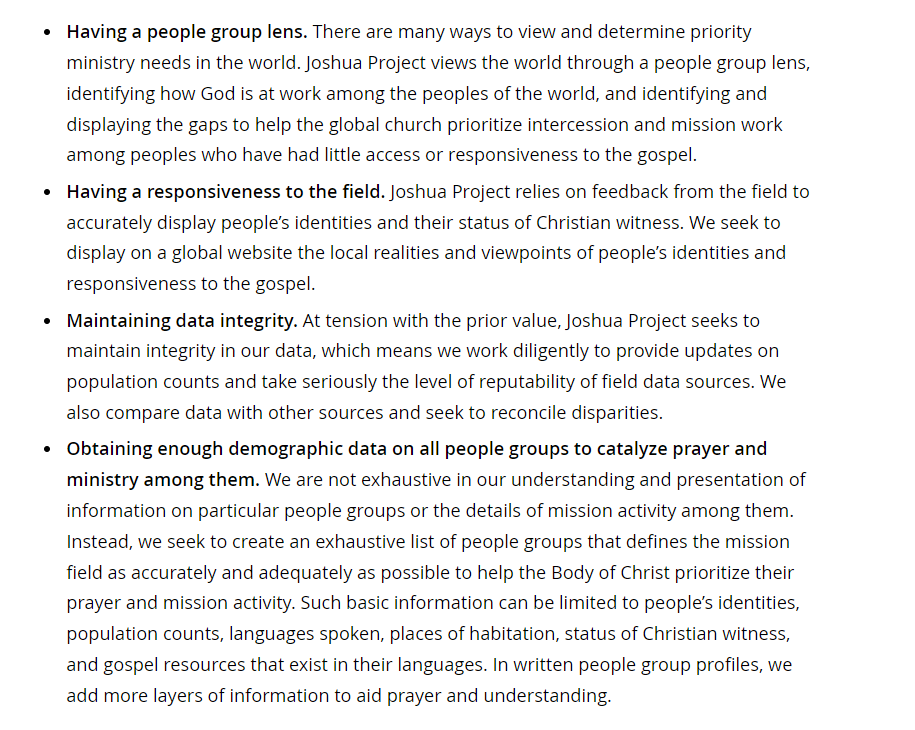
Their website states “Joshua Project is a research initiative seeking to highlight the people groups of the world with the fewest followers of Christ. Accurate, updated people group information is critical for understanding and completing the Great Commission. Revelation 5:9 and 7:9-10 show that there will be some from every tribe, tongue, nation and people before the Throne. Joshua Project seeks to answer the questions that result from the Great Commission’s call to make disciples among every nation or people group. Who are the people groups of the world? Which ones still need initial church-planting in their midst? How can we pray for them? What ministry resources are available to reach the least-reached?”

This organization, headquartered in the United States, focuses on Christian missions. Their website serves as a database containing information about ethnic groups worldwide who have not yet embraced Christianity.

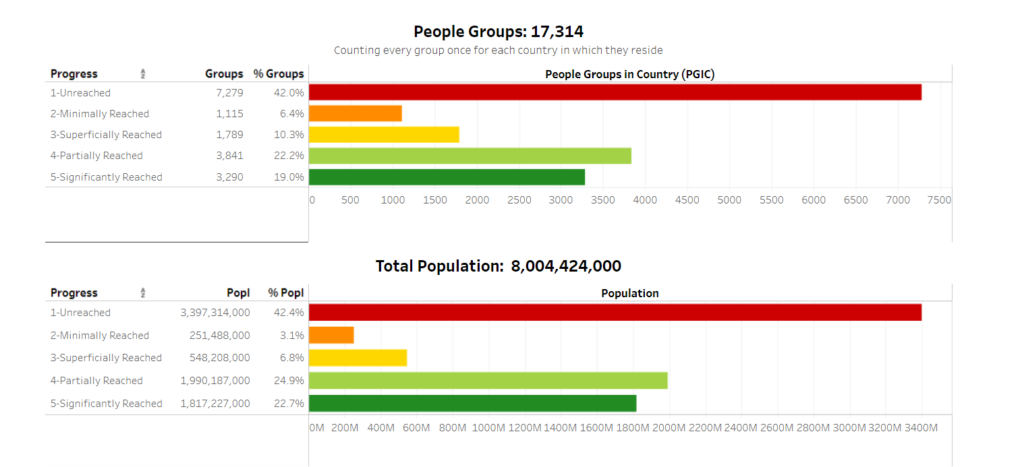
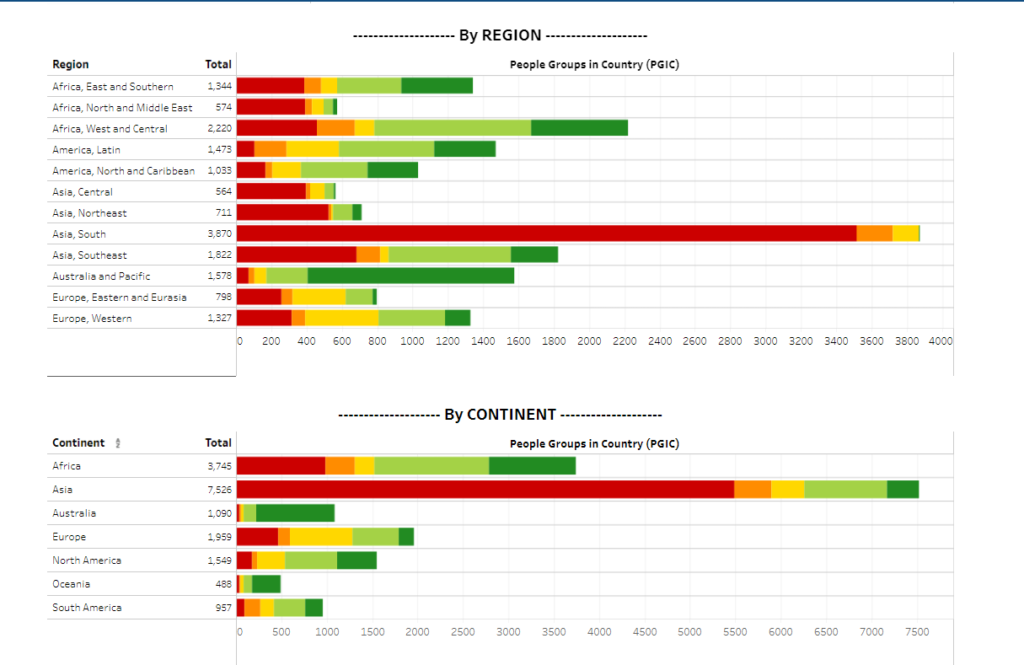
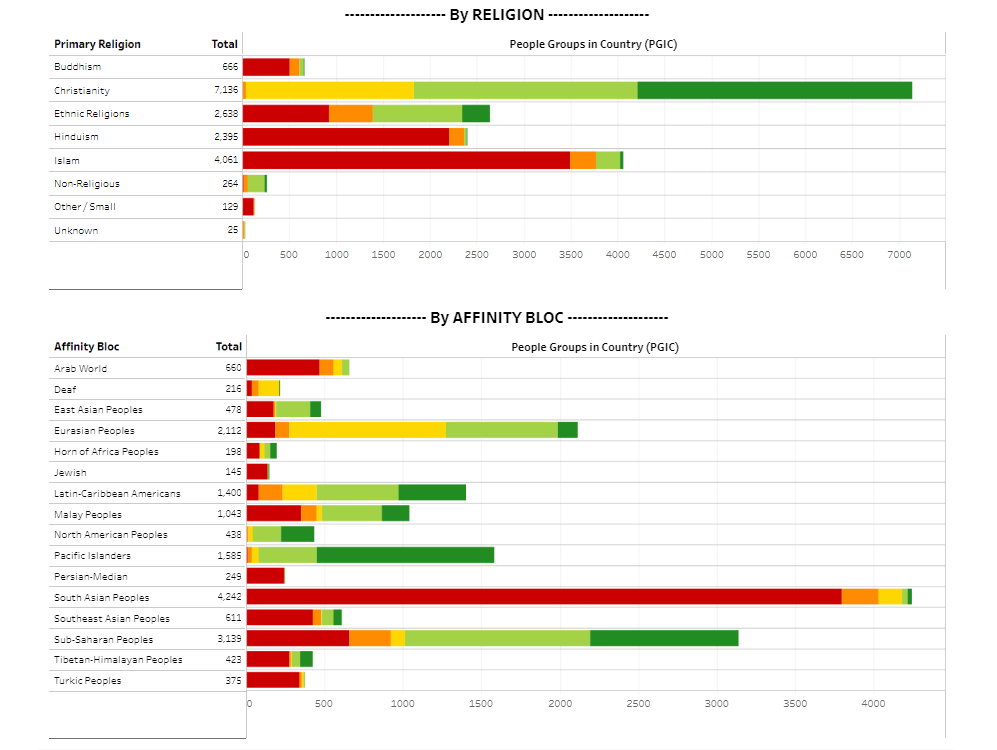
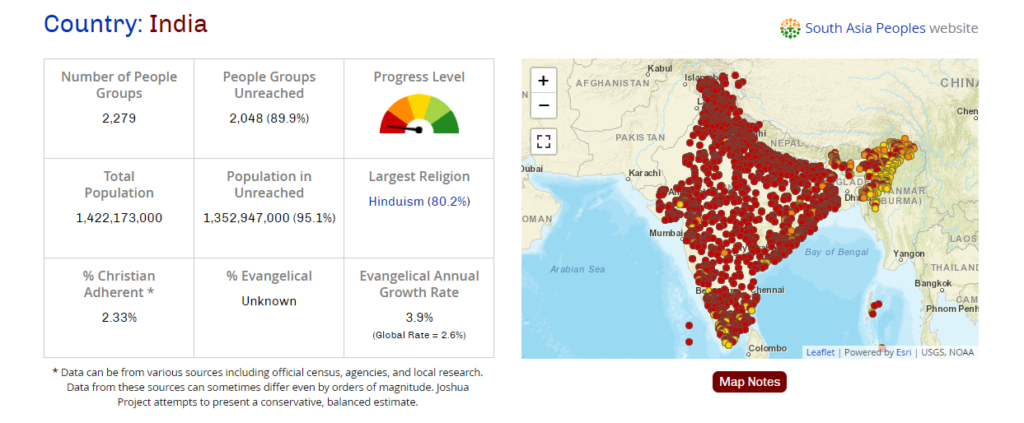
Here is what their global dashboard looks like – it gives an overview of the number of groups across the world, by region, continent, and religious affiliation. Looking at the population numbers on this website, it seems as if the data has been updated till 2023.

They meticulously document various details including caste, language, creed, population size, and more. Additionally, they track the progress of missionary groups, noting how many ethnic groups have been reached, how many remain unreached, and the population statistics of both reached and unreached groups. The level of information is so detailed that it can be narrowed down to a country, encompassing every sect, subsect, and ethnic group within each region, ranging from states and cities to towns and villages. The data is incredibly comprehensive, capturing even the minutest details.

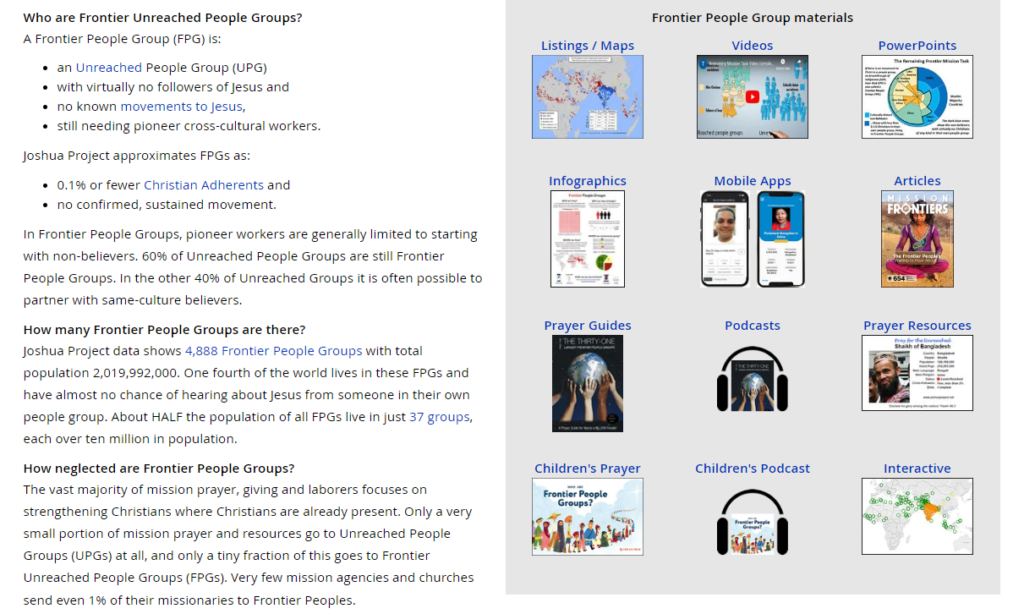
The website provides prayer resources, and vision resources akin to those found on typical missionary websites. The website also provides maps highlighting unreached people groups, often referred to as Frontier People Groups. These groups, as described on their website, typically consist of Muslim populations resistant to conversion. You can read more here.

They also have a dedicated website for reaching the “unreached” at http://alliancefortheunreached.org. The website provides details such as guides and fact sheets to share with these “unreached populations” (to those interested), providing resources to facilitate engagement and outreach efforts.

Where Does India Stand In This “Project”?

Regarding the specifics of India, you can find detailed information on the Joshua Project website here. It’s unclear if these figures are from 2023 or earlier, as there’s a note at the bottom indicating that the data is sourced from the latest Indian census. But going by the data on their global dashboard which coincided with 2023 data. The areas marked in red on the map indicate “low progress”.

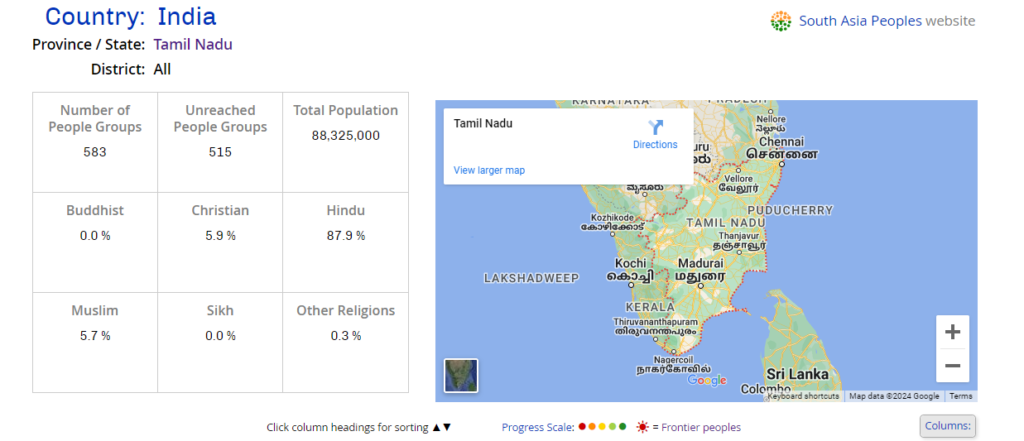
When we zoom in on India, the data on the Joshua Project website is categorized into various segments such as people groups, states, communities, and religions. Exploring further into a specific state like Tamil Nadu reveals a wealth of information. The sheer number of people groups listed is staggering, something a layman will not know or have access to such information. 

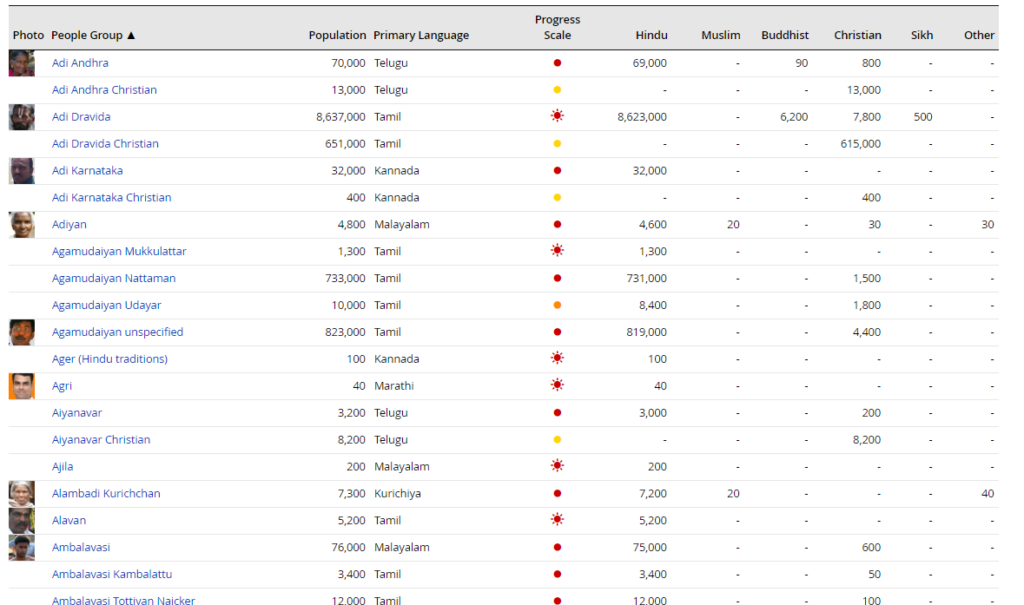
Within this section, there are listings for various people groups, and the sheer volume is astounding. Many of these groups were previously unknown to me, comprising around three-fourths of the total. It’s conceivable that this extensive dataset was compiled from census data, offering insights into the multitude of diverse groups within the region. Here is just one part of these people groups.

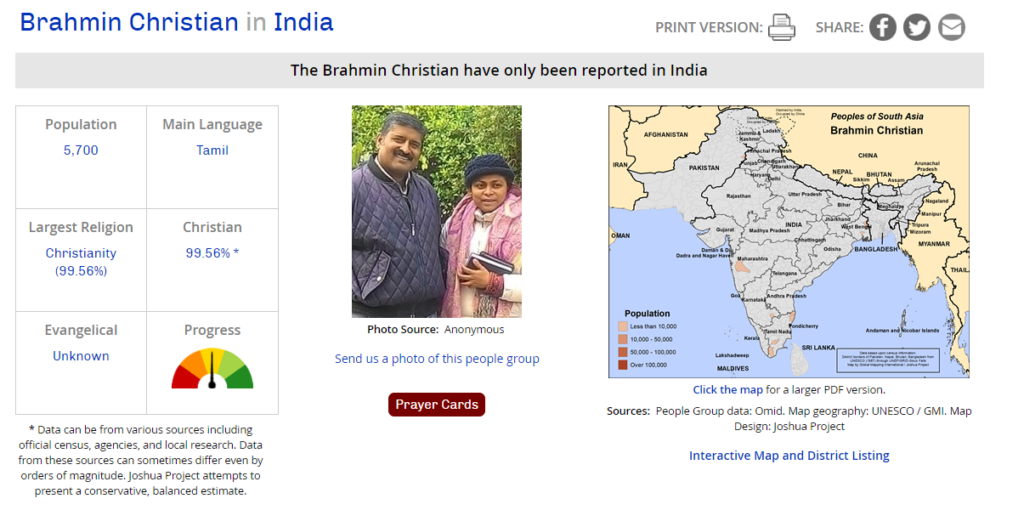
If we take an example of this group called “Brahmin Christians” – as weird as it sounds, these people were Hindus, Brahmins at that who had converted to Christianity. Here are the details of this group.

Similarly, there are multiple groups within a state and details of how this specific group is spread across the country with numbers in each state, what languages this group speaks, etc. There are “resources” on this page as well. 

What has been produced here is just a very small part of the details available on the website. If we dig deeper, finer details will emerge for every region. 

However, the way Rahul Gandhi and the Congress are pushing for the caste census makes one wonder if they are actually trying to help this “research initiative” in some way.

If the Congress/I.N.D.I Alliance comes to power, it seems likely that they will conduct the caste census using taxpayer funds effectively supporting the goals of the Joshua Project, particularly in a country like India, where conversion efforts have faced challenges in recent years, especially in the Modi tenure.

Subscribe to our channels on TelegramWhatsApp, and Instagram and get the best stories of the day delivered to you personally.