Home Blog Page 704

Why Karnataka Congress Govt’s Reservation For “Locals” Is Not Just Unconstitutional But A Dangerous Plan That Will Balkanize India 
On 15 July 2024, the Karnataka Cabinet approved a bill mandating that a significant portion of jobs in the private sector be reserved for local candidates. The Karnataka State Employment of Local Candidates in the Industries, Factories, and Other Establishments Bill, 2024, will be presented in the current legislative session. This legislation requires specific quotas for local candidates in various sectors.

The Bill defines a local candidate as, “who is born in the State of Karnataka and who is domiciled in the State for a period of 15 years and who is capable of speaking, reading and writing Kannada in a legible way and has passed a required test conducted by the nodal agency”.  

What Does The Bill Stipulate?

The Bill stipulates that 50% of management positions and 75% of non-management positions must be allocated to local candidates. Management positions include roles such as supervisory, managerial, technical, operational, and administrative positions, excluding directors. Non-management roles encompass clerical, unskilled, semi-skilled, skilled, IT/ITES, contract, and casual work.

The bill also mandates that industries collaborate with the government to train local candidates within three years if enough qualified local candidates are not available. Quota exemptions are allowed, but local candidate minimums must remain at 25% for management and 50% for non-management roles. Non-compliance could result in penalties ranging from ₹10,000 to ₹25,000. Additionally, a daily penalty of ₹100 will be imposed for each day the contravention continues. The bill applies to any entity employing more than 10 people, thereby encompassing a wide range of sectors including IT, services, manufacturing, retail, and other establishments.

Chief Minister Siddaramaiah emphasized that 100% of C and D-grade posts in private industries should be reserved for Kannadigas. These posts include roles such as clerks, lab technicians, and pharmacists, with monthly salaries ranging from ₹25,000 to ₹40,000.

The Bill addresses longstanding demands for job reservations for Kannadigas. Kannada organizations recently held rallies advocating for the implementation of the Sarojini Mahishi report, which recommended job quotas for locals in both government and private sectors. The report was originally submitted in 1984 and put forth 58 recommendations, one of which included a 100% reservation for local candidates in group C and D jobs within Union government departments and public sector undertakings operating in Karnataka.

A previous attempt by the Siddaramaiah-led Congress government to introduce a 100% reservation for locals in all private industries, excluding the IT-BT sector, was halted by the Law Department, citing unconstitutionality under Articles 14 and 16 of the Constitution.

When CM Siddaramaiah tweeted about his government’s move, there was a lot of backlash from people and concerns raised by the business community which ultimately made him to delete his tweet.

Karnataka Minister MB Patil has stated that they will address the confusion by discussing it with the CM to ensure it doesn’t have any negative impact.

What Are Industrialists Saying?

Several industry leaders in Karnataka expressed strong objections to the proposed bill mandating local reservations in private-sector jobs.

Founder of Biocon, Kiran Mazumdar-Shaw, emphasized that while the goal is to provide jobs for locals, the bill should not compromise Karnataka’s leading position in technology. She advocated for exemptions for highly skilled recruitment to avoid negatively impacting the tech industry.

Mohandas Pai, Chairman of Manipal Global Education Services, called the bill “fascist” and unconstitutional. He criticized it as discriminatory and regressive, highlighting concerns over government certification and language tests for private-sector employment. Pai suggested that a government officer’s involvement in private recruitment is akin to the oppressive measures in George Orwell’s “Animal Farm.”

RK Misra, Co-Chairman of ASSOCHAM Karnataka and Co-Founder of YULU labelled the bill as shortsighted. He warned that the requirement for a government officer in every private company to monitor the bill’s implementation would deter Indian IT and Global Capability Centres, potentially scaring them away from Karnataka.

It is noteworthy that in 2023, the Punjab and Haryana High Court invalidated the Haryana State Employment of Local Candidates Act, 2020, which had stipulated a 75% reservation for state residents in private sector jobs with monthly salaries under ₹30,000, calling it “unconstitutional“. The court ruled that the Act exceeded the State’s legislative authority and violated constitutional guarantees of equality under Article 14 and freedom under Article 19. The High Court in its order said, “The underlying object of the legislation, as has been succinctly put by counsel for the petitioners, is to create an artificial gap and a discrimination qua the citizens of India.”  The matter is in the Supreme Court and the apex court sought a response from the Centre in this regard.

Why This Is A Wrong Move

The Congress, often emphasizing the Constitution, is violating fundamental rights with this move.

Article 14 guarantees equality before the law for every Indian, but this action denies equal treatment to those from other states working in Karnataka.

Article 19 ensures the freedom to move, reside, and work anywhere in India, which this move also infringes upon.

Such a draconian measure not only violates the Constitution but also defies basic economic logic.

Restricting companies’ hiring rights will deter investors, strangle the private sector, and lead to a loss of jobs, businesses, and state revenue.

Ultimately, these laws will harm the state’s economic growth and development.

Most often locals will not be sufficiently talented/skilled for a specific job. In such cases, other state candidates will have to be hired. Although the bill states that local candidates must be trained if the specific skilled candidates are unavailable, this is something companies will not indulge in.

Training means an expenditure of resources – time, money, etc and this is something industries will not be happy to spend.

Such a move can also be seen as an infringement of the state into the rights of company decisions in terms of hiring.

The private sector will be strangled as it depends on the availability of skilled, qualified and efficient workforce.

Implementing such reservations could dilute the talent pool, leading to reduced performance among companies. This might compel businesses to relocate out of the state or even out of the country, thereby negatively impacting the state’s revenue.

In essence, this move can turn out to be counterproductive and detrimental to the economic growth and development of the state.

Reservations should ideally be targeted toward low-income households and maintained at moderate levels to balance inclusivity with economic efficiency.

Had the West decided to implement such reservation, we would have seen plenty of Indians return home.

Is This A Broader Agenda Of The Congress To Divide And Rule?

We have often heard Congress scion Rahul Gandhi call India as a “union of states” rather than a country in itself.

Even recently, during his trip to Manipur, Rahul Gandhi reiterated that “Manipur is one of the most beautiful states of the Indian Union.”

The Karnataka Congress government’s parochial move to reserve jobs for locals in the state could set a precedent for other states to follow suit. If this trend spreads, it may lead to a fragmentation of the national labour market. Such policies could hinder the vision of a unified, integrated, and mobile workforce across India, effectively undermining the concept of ‘One nation, One market’. This balkanisation of the labour market could, in turn, contribute to a broader balkanisation of India itself, creating barriers between states and potentially weakening national cohesion.

Subscribe to our channels on TelegramWhatsApp, and Instagram and get the best stories of the day delivered to you personally. 

Karnataka Doctor Faces Legal Action For Social Media Comment; No FoE For Hindus, Say Netizens

On 13 July 2024, YouTubers Abhi and Niyu posted on their official X handle asking their followers If you could delete one thing from the planet today – what would it be?” The responses ranged from targeting the YouTuber duo to diseases to war and whatnot. One netizen who goes by the name Dr. Upadhya wrote, Muslim community

A criminal case was registered in Udipi against the said Dr. Upadhya, whose full name is Dr Keertan Upadhya. Dr. Upadhya works as a laparoscopic surgeon at a private hospital in Brahmavar. The case was filed, followingallegations of posting derogatory and divisive remarks against Islam and Muslims on social media”. This became a big controversy after screenshots of his comments began circulating online, leading to widespread outrage. Several netizens tagged authorities including the Karnataka Director General of Police (DGP) and urged them to intervene.

As reported in Mangalorean, in response to the backlash, Sub-Inspector (Wireless) Ajmal Ibrahim EA, head of the Udupi District Police’s Social Media Monitoring Cell, filed a complaint against Dr. Upadhya. The complaint requested legal action against the surgeon for attempting tofoment religious hatred and disrupt communal harmonythrough his provocative comments.

The police registered a case against Dr. Upadhya under sections 196 and 353 of the Bharatiya Nyaya Sanhita (Indian Penal Code).

Dr. Upadhya later stated that his account had been hacked and subsequently deleted the controversial post. However, police sources confirmed that Dr. Upadhya did not file a formal complaint regarding the alleged hacking of his account.

Netizens wrote that Hindus had no freedom to write anything against the alleged minority community.

This is the state of Hindus who may have acontroversialopinion on the alleged minority community. However, when Islamists go on the streets shoutingSar Tan Se Juda“, there is no case filed for anattempt to foment communal hatred and fan religious tension.Just a day ago, the Ajmer court acquitted the Dargah cleric and others in thesar tan se judaslogan case citing a lack of evidence.

This seems to be yet another case of freedom of expression when it comes to Islamists whereas hate speech when it comes to Hindus. 

Subscribe to our channels on TelegramWhatsApp, and Instagram and get the best stories of the day delivered to you personally. 
Ajmer Court Acquits Dargah Cleric And Others In ‘Sar Tan Se Juda’ Slogan Case Citing Lack Of Evidence

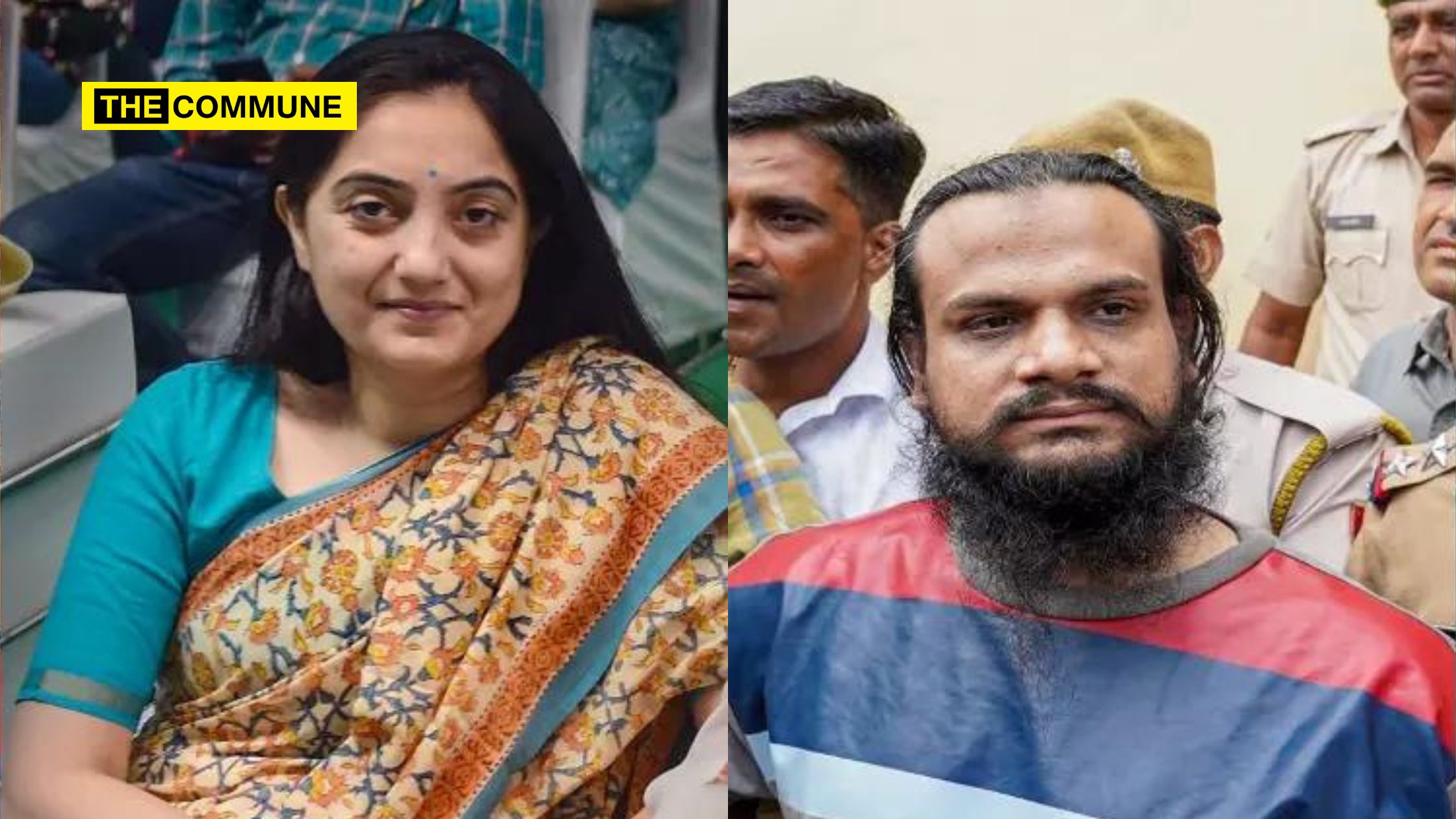
In a shocking turn of events, on 16 July 2024, Ajmer court in Rajasthan has acquitted Gohar Chisti, a dargah cleric and five others who were accused of chanting provocative slogans ‘Sar Tan Se Juda’ at the Moinuddin Chishti Dargah gate. This incident followed suspended BJP leader Nupur Sharma’s alleged derogatory remarks about Prophet Mohammed in 2022.

The slogans were reportedly raised during a public protest at the dargah gate in response to Sharma’s remarks, which had sparked widespread outrage. In the widely circulated video, Chishti was observed chanting the slogan ‘sar tan se juda’ in response to Nupur Sharma’s alleged controversy for making offensive comments about Prophet Muhammad during a TV debate. Sharma later reported receiving numerous death threats due to her remarks. Subsequently, a case was filed against Gauhar Chishti, who subsequently disappeared.

According to the report, Gohar Chisti and others raised the slogan “gustakhi-e-nabi ki ek hi saza, sar tan se juda sar tan se juda” (Beheading is the only punishment for those who insult Prophet Muhammad) on 17 June 2022, during the rally protesting Sharma’s alleged statement.

Chisti was arrested in July 2022 after an FIR was filed on 25th June, accusing him of delivering an inflammatory speech from the Nizam Gate. The case included charges under various sections of the IPC such as abetting offences by the public, unlawful assembly, disobedience to public servants’ orders, intentional insult, criminal intimidation, and others.

Chisti’s defense argued that their protest was peaceful and lawful, organized in response to what they viewed as a serious insult to their community’s religious sentiments. The state had contended that video clips of the alleged slogans circulated online, leading to violent incidents in Udaipur and Amravati, where individuals were reportedly beheaded due to religious animosity stirred by such slogans. Thus, they argued that more serious charges under IPC Section 302/115 should apply.

However, Additional District and Session Judge Ritu Meena found insufficient evidence to support the allegations against them. A detailed judgment on the case is expected later.

In summary, the court’s decision rested on the lack of sufficient evidence to convict Chisti and the others accused of chanting provocative slogans during the protest.

(With inputs from Live Law)

Subscribe to our channels on TelegramWhatsApp, and Instagram and get the best stories of the day delivered to you personally. 
Kumbakonam Police Registers Case Against VCK Functionary For Harboring Assault Suspects And Weapons At His Residence

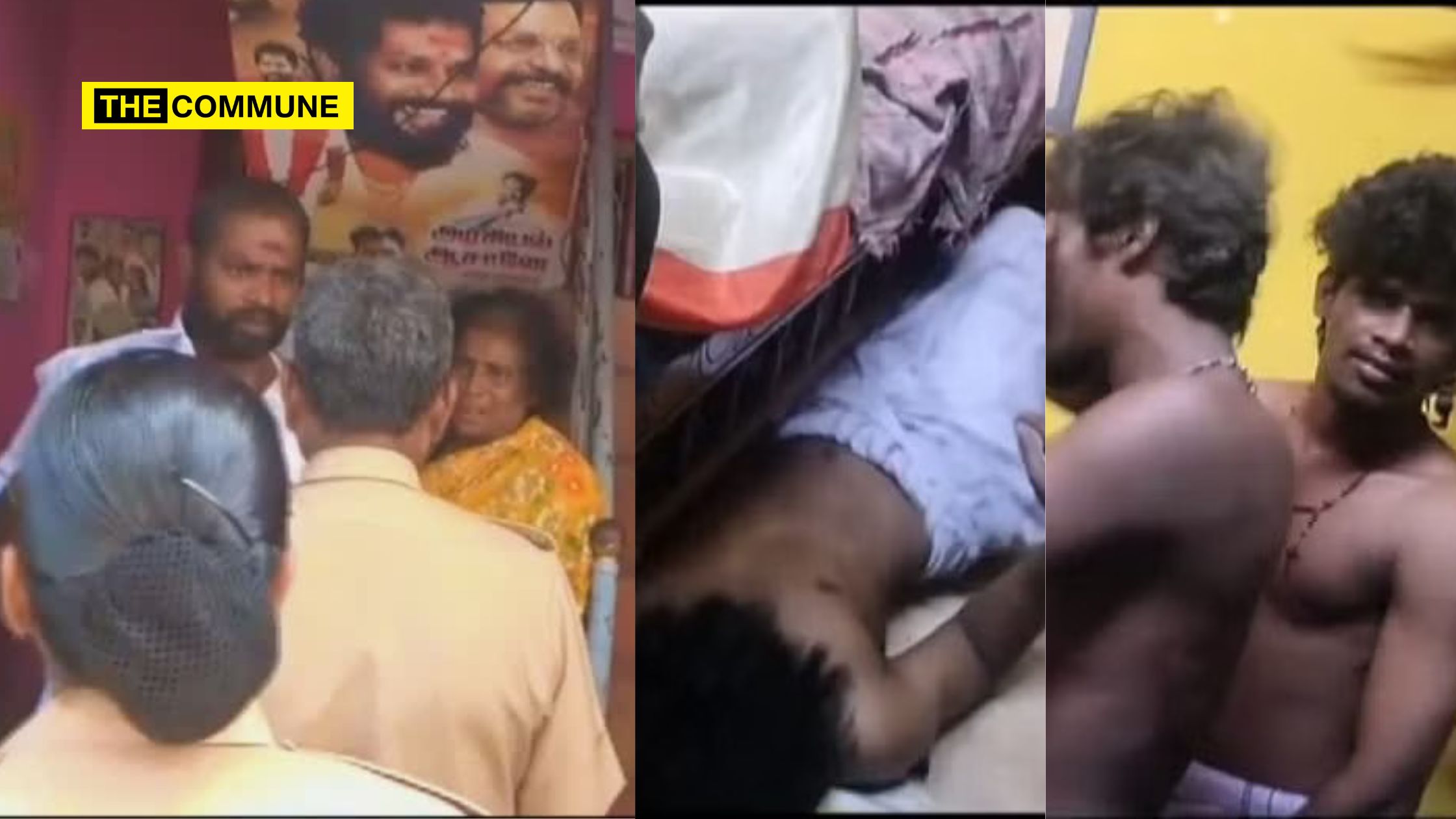
The Kumbakonam police have filed a case against Viduthalai Chiruthaigal Katch (VCK) functionary for harboring four rowdies who were being sought by the police in connection with an assault near the new bus stand.

Two weeks ago, Vishwa was riding his motorcycle near the new bus stand in Fathimapuram, within the jurisdiction of Kumbakonam West Police Station, suffered serious injuries in an assault by a group of four individuals. An investigation was promptly launched based on Vishwa’s complaint at Kumbakonam West Police Station. Authorities were actively pursuing four suspects in connection with the incident, Gail Antony, Arnold Antony, Arunkumar, and Paulsamy.

Meanwhile, confidential information indicated that Alex, the spouse of Kumbakonam Corporation 24th Ward Councilor Rubinsha and a VCK functionary, was harboring dangerous weapons in his residence. Subsequently, police sought a court warrant to conduct a search of Alex’s house.

Following court approval, more than 10 officers led by Police Inspector Jagatheesan from Kumbakonam West Police Station conducted a thorough search at Alex’s residence a few days ago. During the search, various weapons including knives, sickles, and iron rods were discovered under the bed in one of the bedrooms. These items were seized by the police, who continued their search. At that time, Gail Antony, Arnold Antony, Arun Kumar, and Paulsamy, wanted for attempted murder, were found hiding under the bed and were subsequently apprehended.

Subscribe to our channels on TelegramWhatsApp, and Instagram and get the best stories of the day delivered to you personally. 
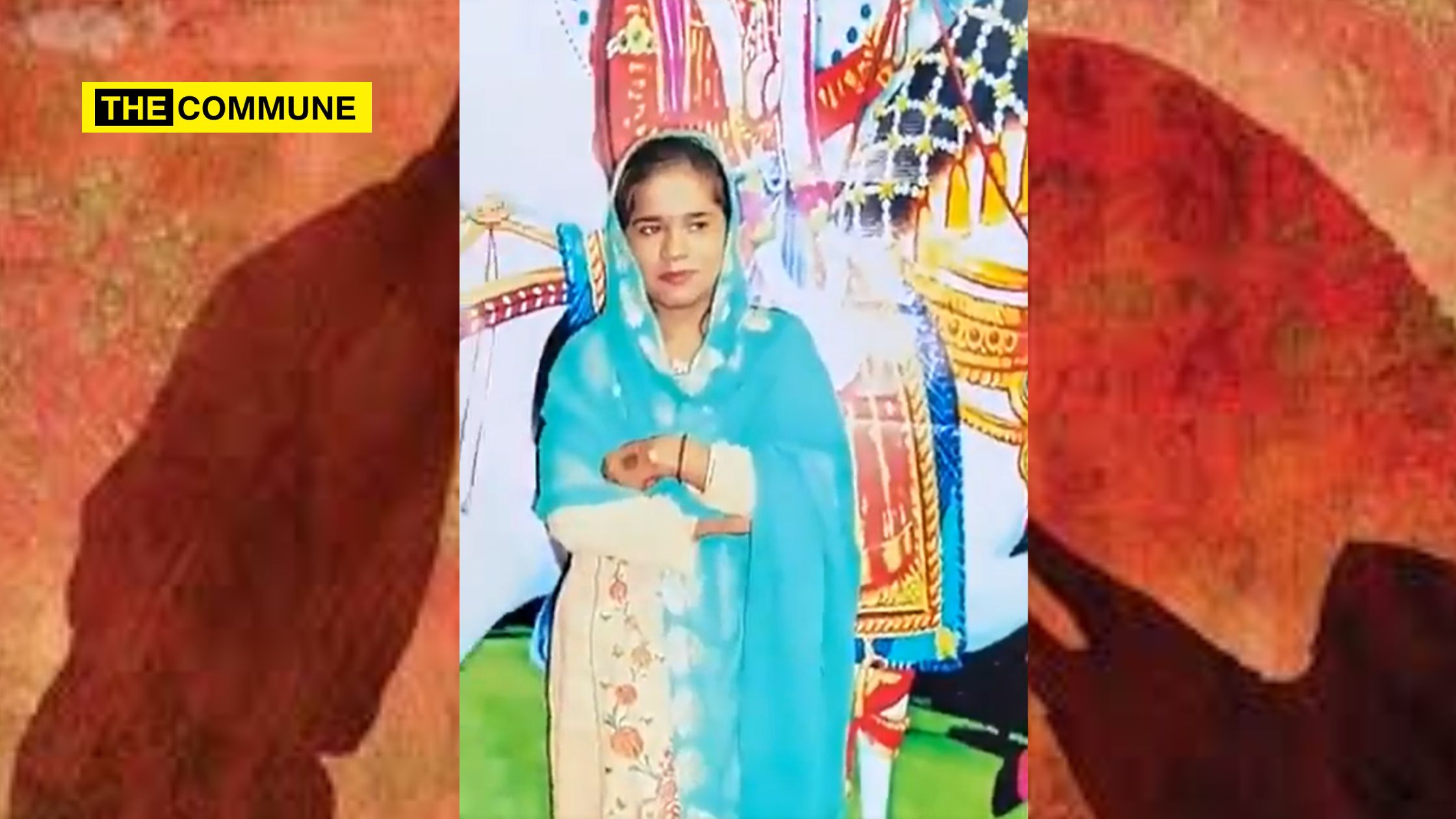
Pakistan: Young Hindu Girl Abducted, Forcibly Converted To Islam

A minor Hindu girl in Pakistan, who works as a maid, has narrated the distressing tale of how her employer persistently pressured her to convert to Islam by reciting the Kalma. This incident is part of a troubling pattern in the region.

The girl’s aunt, Sunita, 25, also a domestic worker, was forcibly converted to Islam and married off. According to reports, Sunita managed to contact her family, revealing she was taken against her will and coerced into converting.

Sunita, who was kidnapped from Zubaida Heights Apartments where she worked, was forced to convert to Islam the next day in Hyderabad. She contacted her elder sister from Hyderabad’s Chandni Chowk, explaining that an unknown Muslim woman, with the help of several men, had abducted her at gunpoint under the pretense of securing a job. They then transported her to Hyderabad and forced her to recite the Kalma loudly.

Further details from Sunita’s niece indicate that a Muslim woman on the sixth floor of Zubeida Heights, where Sunita worked, had persistently pressured her to recite the Kalma and planned to take her to Karachi without informing her parents.

Hindus in Pakistan have reduced to about 1% of the total population. Every single day, reports of abductions, forced conversions and forced marriages of young (mostly minor) Hindu girls keep surfacing from Pakistan. And yet, no action is taken by international community about the Hindu minorities in Pakistan.

Subscribe to our channels on TelegramWhatsApp, and Instagram and get the best stories of the day delivered to you personally. 
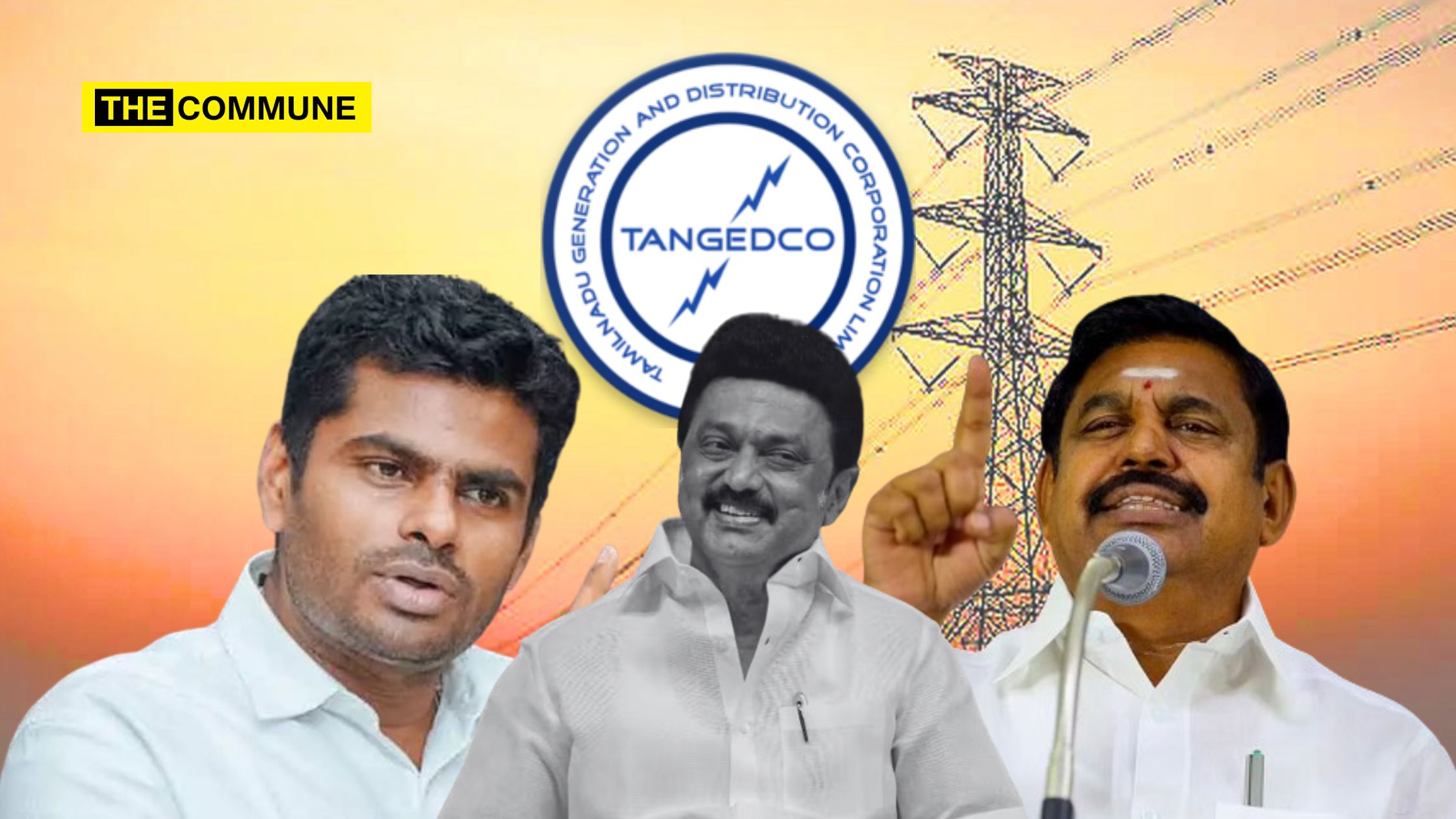
TANGEDCO Hikes Electricity Tariffs by 2.18%; EPS, Annamalai Slam Move, Urge DMK Govt To Roll Back Increase

The Tamil Nadu Generation and Distribution Corporation (TANGEDCO) has announced an increase in electricity tariffs to address financial losses, according to a press statement cited by ANI.

Effective 1 July 2024, the Tamil Nadu Electricity Regulatory Commission (TNERC) has approved a 2.18% hike in electricity tariffs for consumers based on the multi-year tariff order. This adjustment, aligned with the consumer price index, is scaled to 2.18% from a potential 4.7% increase to consider consumer welfare. Notably, this increase for households is entirely covered by the government’s electricity subsidy.

Last year, the TNERC also limited the tariff hike to 2.18%, although it could have been raised by up to 5%. TANGEDCO’s financial losses have escalated significantly, from ₹18,954 crore in FY12 to ₹94,312 crore over the past decade. Consequently, TANGEDCO has been compelled to secure loans from financial institutions and banks due to previous non-commitments, contrasting with the current government’s full absorption commitment from 2021-22.

The loan amount has tripled over the last decade, soaring from ₹43,493 crore in FY12 to ₹1,59,823 crore in FY22. This has led to a 259% increase in net interest on loans, rising from ₹4,588 crore in FY12 to ₹16,511 crore in FY21.

The press release also highlighted that the government has been implementing minor annual tariff hikes to minimize consumer impact. According to the Union Ministry of Power guidelines, annual electricity tariff revisions are mandatory to avail central government funds under the Strengthening of Distribution System (RDSS) scheme.

The tariff hike has drawn criticism from opposition party leaders. AIADMK General Secretary Edappadi Palaniswami and BJP State President Annamalai have condemned the DMK-led Tamil Nadu government for the increase in power tariffs.

LoP Edappadi Palanisami took to his official X handle and wrote, “My strong condemnation to the DMK government which has increased the electricity tariff again in Tamil Nadu! By waiting for the parliamentary elections and the Vikravandi by-elections to end, the DMK Chief Minister has gifted the people of Tamil Nadu with a shock. DMK Chief Minister. What pleasure does this Vidya government have in beating people’s stomachs? “I will do what I say – I will do what I don’t say,” said Mr.@mkstalin. They have not fulfilled any of their promises including the electricity bill once a month; You are only increasing the electricity tariffs without telling! It is unfair to put the burden of your administrative incompetence on the people! It has become a habit of the DMK government to torture the people. Without the basic capacity to provide uninterrupted power, I strongly condemn the DMK government for repeatedly increasing the electricity tariff. I urge the DMK Chief Minister to immediately roll back the increase in electricity tariff which is a huge burden on the people.”

Tamil Nadu Bharatiya Janata Party president Annamalai condemned the price hike and also urged the DMK government to withdraw the tariff hike, shift to monthly billing, and move to solar energy to reduce the burden on the public. He wrote on his official X handle, “Within three years of coming to power, the DMK government has increased property tax, electricity charges, drinking water charges, milk prices, and bond registration fees many times and burdened the public with the increase in charges. Shocked. The DMK government purchased electricity worth ₹65,000 crore in the last fiscal year 2023-2024 alone. In three years of coming to power, without taking any measures to increase power generation, the cost of this electricity has been borne by the public. While many states have taken steps to increase solar power generation across the country, the DMK has spent around ₹5,400 crore per month to purchase electricity. If we continue to increase the amount of electricity purchased without increasing the production of electricity, it will lead to repeated increases in electricity tariffs. DMK’s Dravidian model of government is a stupid model without even this basic administrative knowledge. When he was in the opposition, Chief Minister Mr. @mkstalin, who released a video talking about shocking electricity charges, is now giving shocks to the public. He came to power with an election promise that if he did come to power, monthly electricity bills would be calculated, and after three years have passed, he has not implemented it. Without the practice of paying monthly electricity bills, people are already paying 50% more electricity bills. They said that they would install smart meters in the houses and calculate the monthly electricity bill, but now they have shelved the plan to install smart meters. In this situation, for DMK’s administrative failure, how is it fair to impose a fare hike on the public? I urge on behalf of @BJP4Tamilnadu that the DMK, which is victimizing the public for their administrative incompetence, should immediately withdraw this electricity tariff hike and take measures to increase electricity generation including solar power generation and implement the monthly electricity tariff procedure immediately across Tamil Nadu.”

(with inputs from Live Mint)

Subscribe to our channels on TelegramWhatsApp, and Instagram and get the best stories of the day delivered to you personally. 

Love Jihad In Raebareli: Tauheed Poses as Janu Mishra To Deceive Minor Hindu Girl, Leading To Her Suicide

love jihad

A case of alleged “Love Jihad” has surfaced in Raebareli district, Uttar Pradesh. Tauheed is accused of luring a minor Hindu girl into a relationship under the false pretense of being a Hindu named Janu Mishra. Upon discovering his true identity, the girl reportedly committed suicide. Her father has since lodged an FIR at Kheero Police Station on July 15th, claiming that Tauheed, along with his brother and father, had been threatening his family.

According to a report by OpIndia, the accused have been identified as Tauheed, his brother Tasleem alias Chhotu, and their father Lallan, all residents of Jainapur Majre Kheero in Raebareli. The police registered FIR number 0283 on July 15, 2024, under IPC sections 306, 504, and 506. OpIndia has obtained a copy of the FIR.

The victim’s family alleges police inaction, prompting the father to approach the Superintendent of Police for intervention.

The victim’s father, Ramprakash Tiwari, from Jainapur Majre Kheero, filed the FIR, detailing that his daughter, an 11th-grade student at Saraswati Inter College, Kheero, had been approached by the accused about a year ago. The complaint states that the accused entrapped her using a false Hindu identity.

After discovering Tauheed’s true identity, the girl committed suicide on February 1st. Following this, the father was reportedly threatened by Tauheed and his family when he went to confront them. The victim’s father, now fearing for his life, has filed a complaint demanding police action.

The Commune has also accessed a video of the victim’s younger sister, who corroborates that the accused introduced himself as Janu Mishra. She recounts an incident where Tauheed expressed intentions to marry her sister and threatened their family. Despite assurances from the police, no action has been taken so far.

Subscribe to our channels on TelegramWhatsApp, and Instagram and get the best stories of the day delivered to you personally. 
Political Murders In Tamil Nadu: A Dark Chronicle

Six Murdered In One Day Raising Concerns About Deteriorating Law And Order

Just a few days ago, Tamil Nadu BSP president K Armstrong was hacked to death by assailants. The state’s law and order situation is under fire for enabling such an incident. Armstrong’s murder is being called a political murder by many.

Political murders are not something uncommon in the state of Tamil Nadu. Several such incidents have occurred in the past as well in both the DMK and ADMK regimes. Here is a look at some of the politically motivated murders from the past in the state.

K Armstrong

K Armstrong, the Tamil Nadu state unit president of the Bahujan Samaj Party (BSP), was brutally murdered on 5 July 2024 evening near Perambur in Chennai. He was attacked by a gang of six assailants while chatting with friends and supporters near his residence. The attackers, armed with machetes and sickles, threatened anyone who tried to intervene, causing Armstrong’s friends to flee. His family rushed to the scene upon hearing his cries, only to find him grievously wounded and lying in a pool of blood. He was quickly taken to a nearby private hospital where doctors pronounced him dead. Armstrong, a practicing advocate and councillor for Greater Chennai Corporation, championed the marginalized sections of society. Despite facing numerous criminal cases filed by the state police, he earned a strong reputation among Dalits for his contributions to their socioeconomic development. Armstrong’s popularity surged after he highlighted the welfare of Dalits in subaltern Chennai. He unsuccessfully contested against Chief Minister and DMK President MK Stalin in the 2011 Assembly polls. His advocacy for Dalit rights made him a target for non-Dravidian parties critical of his stance against atrocities committed against Dalits.

Jeyakumar Dhanasingh

The charred body of KPK Jeyakumar Dhanasingh, the District Congress president of Tirunelveli East, was discovered at his farm on 4 May 2024. His son, Karuthaiah Jafrin, reported him missing to the Uvari police two days earlier, expressing concern about his father’s absence since Thursday. Jeyakumar’s sudden and mysterious death has sparked widespread shock and outcry throughout Tamil Nadu, prompting leaders from various political parties to demand swift justice for what they described as Jeyakumar’s ‘murder’. Meanwhile, the police have launched an investigation to determine whether Jeyakumar’s death was a result of foul play or a tragic suicide.

KVK Samy

The initial shocking political murder in the state occurred in September 1956, when KVK Samy, a member of the DMK’s executive committee, was brutally killed in his hometown of Thoothukudi district. This incident was due to local political rivalry and happened a year before the DMK contested its first Assembly election. DMK founder CN Annadurai famously questioned whether they were living in the modern 1950s or a barbaric era following this first post-independence political murder in the state.

K Padmanabha

Although TN saw numerous low-profile political murders in the ’60s, ’70s, and ’80s, none shook the State as profoundly as the Padmanabha murder case in June 1990. Padmanabha, the leader of the EPRLF (Eelam People’s Revolutionary Liberation Front), and a dozen of his associates were brutally massacred in Kodambakkam by the LTTE, led by Vellupillai Prabhakaran.

Rajiv Gandhi

Shortly after TN had begun to recover from the shock of the first organized act of political violence beyond Sri Lankan borders, the Tamil Tigers once again shook Tamil Nadu, the peninsula, and the world in May 1990 by assassinating Rajiv Gandhi, who served as Prime Minister from 1984 to 1989. Rajiv’s assassination, the most high-profile political murder on Tamil soil to date, also laid bare the political and ideological fault lines within the State. This event, from near political banishment to renewed political relevance, significantly impacted the two major Dravidian parties in Tamil Nadu.

Leelavathi Kuppusamy

A political murder in April 1997 strained relations between the DMK and CPIM when communist councillor Leelavathi Kuppusamy was killed by men linked to local DMK figures due to political rivalry. One of the accused, Marudu, was the brother of DMK functionary SR Gopi, an ally of M Karunanidhi’s elder son, MK Alagiri. Leelavathi had defeated the wife of one of the accused in a recent municipal election. Tensions flared further when some murder convicts were prematurely released during the 2006-11 DMK regime’s celebrations of Anna’s birth centenary. This incident soured relations between the parties, despite their collaboration in the 2004 Parliamentary elections under the United Progressive Alliance banner, which they swept.

Palani Baba

In Coimbatore that year, a chilling murder took place involving Palani Baba, a well-known Muslim leader, and public speaker who sought to unite all Jamaths in the State. He was brutally killed with 17 cuts as he left a friend’s residence in Pollachi. Five individuals associated with Hindu Munnani were sentenced to life imprisonment for his murder. Baba had previously been associated with both MGR and Karunanidhi.

MK Balan

During the AIADMK regime from 2001 to 2006, former MLA MK Balan became a subject of political discussion after he went missing during a morning walk in December 2001. His son had to file a habeas corpus petition in the Madras High Court to confirm that his father had been killed in a failed extortion attempt, leading to life imprisonment for 16 individuals involved.

Tha. Kiruttinan

In May 2003, another morning walk ended tragically for a prominent politician during the AIADMK regime led by J Jayalalithaa. This time, former DMK Minister Tha Kiruttinan was brutally killed by a motorcycle gang. More than a dozen individuals, including MK Alagiri, were arrested in connection with the murder. The case gained notoriety and took a dramatic turn following a change in government in 2006, leading to its trial being transferred to Chittoor, Andhra Pradesh. In 2008, Alagiri and 12 others were acquitted by the Chittoor trial court.

Aladi Aruna

During the AIADMK regime in December 2004, the prospect of a morning walk became a source of dread for politicians after former DMK minister Aladi Aruna was gunned down. Aruna, who later served as Law Minister during the 2006-11 DMK regime, and his friend Ponraj were fatally shot and hacked by a three-member gang while on their walk, though his assistant Socrates escaped unharmed. Eminent educationalist SR Raja was acquitted in the case, where the Tirunelveli session court initially sentenced two individuals to death. Raja later appealed successfully to the Supreme Court for acquittal, despite initial setbacks in the High Court due to a state government appeal.

‘Poondi’ Kalaiselvan

In November 2007, the delta region of Tamil Nadu was rocked by the murder of DMK district secretary ‘Poondi’ Kalaiselvan in Tiruvarur. Kalaiselvan, a powerful DMK functionary known for his ‘Ilaignar Padai’ (Youth Brigade) and personal bodyguards, was allegedly killed by a network of business and political rivals, including ‘Kurangu’ Senthil, once associated with gangster Manalmedu Sankar. The use of country bombs and sickles, typical in the region, marked the killers’ methods. The murder caused significant social unrest, leading to train cancellations between Tiruchy and Mannargudi. Six DMK ministers visited riot-affected Tiruvarur, the hometown of Chief Minister M Karunanidhi, for Kalaiselvan’s funeral procession. The unrest was followed by the murder of former AIADMK Minister A Venkatachalam from Alangudi in October 2010.

KN Ramajayam

In 2012, during the AIADMK regime, KN Ramajayam, brother of KN Nehru, the current Minister of Municipal Administration, mysteriously disappeared while on a morning walk and was later found dead. Ramajayam, a prominent figure in the real estate sector, was honored by the ruling DMK for his exceptional event organizing skills with a 90-foot tall flag pole erected at a future zonal conference. Shockingly, this high-profile political murder remains an unresolved challenge for the state police to this day.

‘Pottu’ Suresh

On 31 January 2013, N Suresh Babu, known as ‘Pottu’ Suresh and a close associate of MK Alagiri, was fatally attacked on his way home after celebrating his boss Anjanenjan’s birthday. ‘Attack’ Pandi, another Alagiri confidant, was a prime accused in the case. During J Jayalalithaa’s reign, BJP State Secretary ‘Auditor’ Ramesh was allegedly killed by Panna Ismail, Police Fukrudeen, and Bilal Malik. Other notable victims include BJP leader Arvind Reddy in 2012 and Hindu Munnani leader Sasikumar in Coimbatore in 2018, highlighting a pattern driven by greed for political power and financial gain.

Auditor Ramesh

BJP State General Secretary ‘Auditor’ V. Ramesh was fatally attacked by an unidentified gang at his office in Maravaneri. He had dropped his family home and parked his car at his office on Third Cross. Neighbors discovered him in a pool of blood around 9:30 p.m. Police suspect the incident occurred then. BJP members protested demanding the arrest of the culprits, blocking roads, and pelting buses with stones. Tension gripped the area with heavy police presence. Ramesh, a chartered accountant, previously ran for Mayor of Salem City Municipal Corporation in 2011 and served as RSS State secretary from 1987 to 1992.

Suresh Kumar

In June 2014, Suresh Kumar, president of Hindu Munnani for Thiruvallur East district and originally from Kanyakumari, was tragically murdered. His killing was orchestrated by members of Al Ummah, an Islamic terrorist organization. In August 2014, police detained three individuals in connection with the crime following an investigation.

These are just some of the politically motivated murders that occurred in TN over the decades. There have been several murders of functionaries of various parties occurring infrequently.

(with inputs from DT Next)

Subscribe to our channels on TelegramWhatsApp, and Instagram and get the best stories of the day delivered to you personally. 
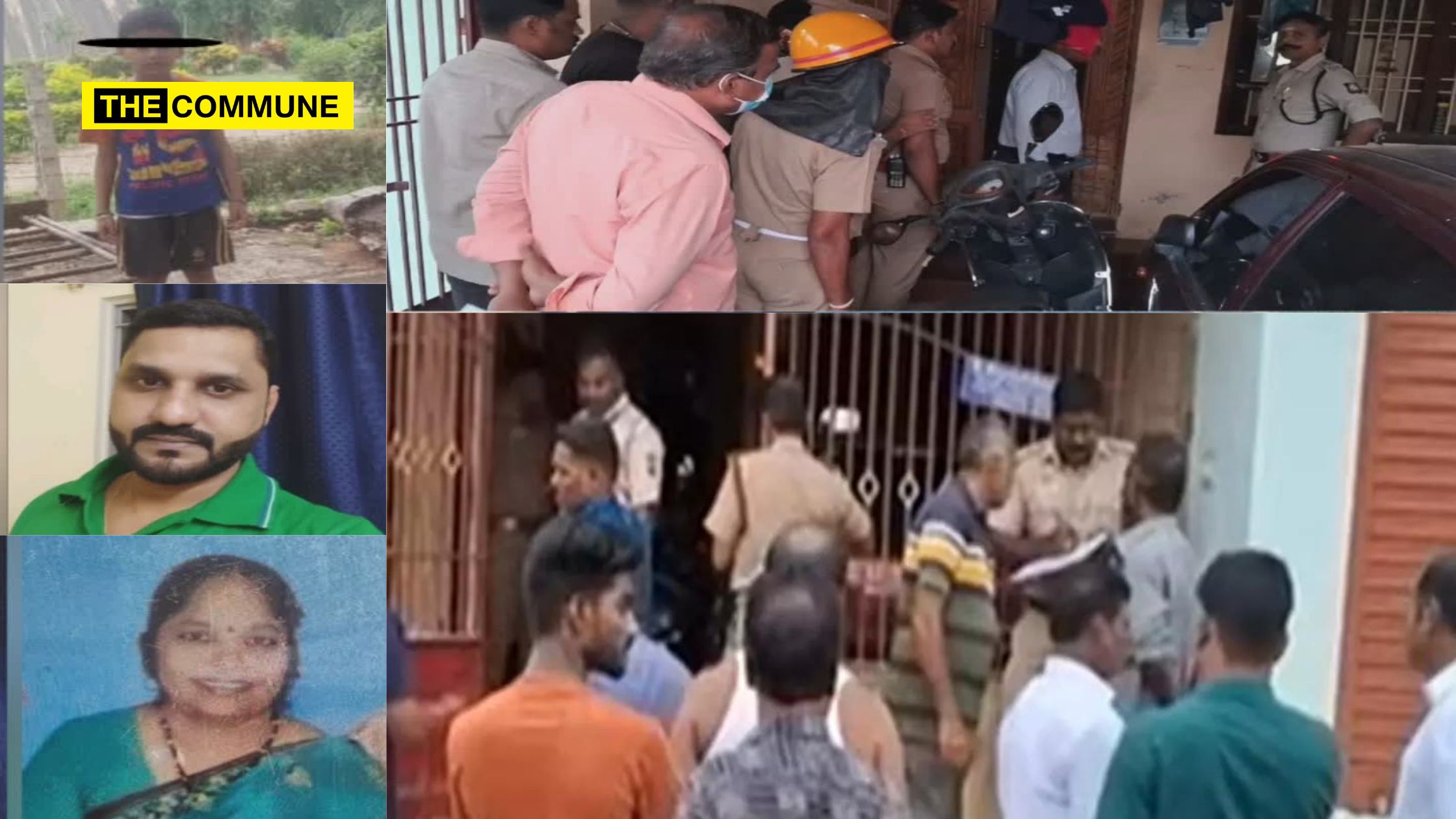
Three Family Members Murdered & Bodies Burnt In Cuddalore

In a suspected homicide case, three family members were discovered deceased in their home at Karamanikuppam near Nellikuppam in Cuddalore district on 15 July 2024. The victims were identified as Kamaleshwari (60), her son Sudhankumar (40), and her grandson Nishanth (10).

Kamaleshwari and Suresh Kumar (70) were a couple originally from Rajasthan, residing in Jyotinagar, Nellikuppam, for many years. Suresh Kumar, a retired pharmacist from EIT Sugar Factory in Nellikuppam, passed away six months ago due to old age.

Following Suresh Kumar’s death, Kamaleshwari lived with her son Sudhankumar and grandson Nishanth. Sukanthakumar, who had moved in with his mother after his divorce a few years back, works at an IT company in Hyderabad, commuting to the office for 15 days and working from home for the remaining 15 days.

According to reports, Sukanthakumar returned home from Hyderabad on the night of 12 July 2024. On the same day, Kamleswari had visited relatives for a condolence gathering and returned home around 8 pm. The domestic helper arrived at their residence on 13 July morning but left assuming no one was home because the iron gate was locked.

The tragic discovery was made on Monday morning (July 15) when the maid noticed smoke coming from a window and promptly alerted neighbors and the police. Upon arrival, the Nellikuppam police forcibly entered the house and discovered the bodies of the three victims badly burnt, with signs of cutting injuries.

The police promptly transported the bodies to Cuddalore Chief Government Hospital for autopsy. Sniffer dogs and forensic experts were deployed to gather evidence at the scene. Superintendent of Police Rajaram of Cuddalore District, who visited the site, stated, “Five special teams have been assembled, and the incident is under investigation. Initial findings indicate foul play.”

Radha, the maid at Kamleswari’s residence, recounted , “When I arrived on Saturday morning, the door was locked. I tried calling them but received no response. Since it was a holiday on Sunday, I was shocked to find this scene when I returned this morning.”

Superintendent of Police R. Rajaram visited the scene and initiated an investigation. Law enforcement suspects foul play and has mobilized five special teams to apprehend the perpetrators. A case has been formally filed in connection with the incident.

(With Inputs From The Hindu)

Subscribe to our channels on TelegramWhatsApp, and Instagram and get the best stories of the day delivered to you personally. 
Dravidian Model Of Fascism: TANGEDCO’s Official X Account Threatens To Cut Electricity Connection Of Netizen For Criticizing Non-Implementation Of Monthly Billing, Deletes Post After Backlash

Following the Tamil Nadu Electricity Regulatory Commission’s (TNERC) announcement of a 4.83% increase in electricity tariffs for all consumers, effective from 1 July this year, public outcry ensued, particularly among those already burdened by previous hikes.

The Tamil Nadu Generation and Distribution Corporation Limited (TANGEDCO) posted a explanation on its official X account to clarify the new tariff adjustments. This sparked widespread online criticism from netizens, who blamed the DMK government for failing to fulfill its promises to lower electricity tariffs, instead revising them upwards multiple times since taking office.

Frustrated netizens expressed their grievances in comments that, “In this DMK regime, you made power cut by calling it power maintenance. that’s okay. But the electricity supply is interrupted 5 times daily in Keelakarai why is there no break period for this?” Yet, the netizen received a standard response from TANGEDCO, “Your tweet is noted for rectification. Thank you for writing to us.” TANGEDCO gave a sham explanation that the power outage lasted only 15 minutes. However, the netizen elaborated that their complaint was not for attention-seeking purposes and emphasized that experiencing such power cuts, even in the mornings, was unusual. Subsequently, there was no further response from TANGEDCO. Another netizen frustrated by the standard reply from the TANGEDCO asked, “Where is the response to my complaints?” but the TANGEDCO preferred to be silent.

https://twitter.com/victorrajdaniel/status/1812908363690484221

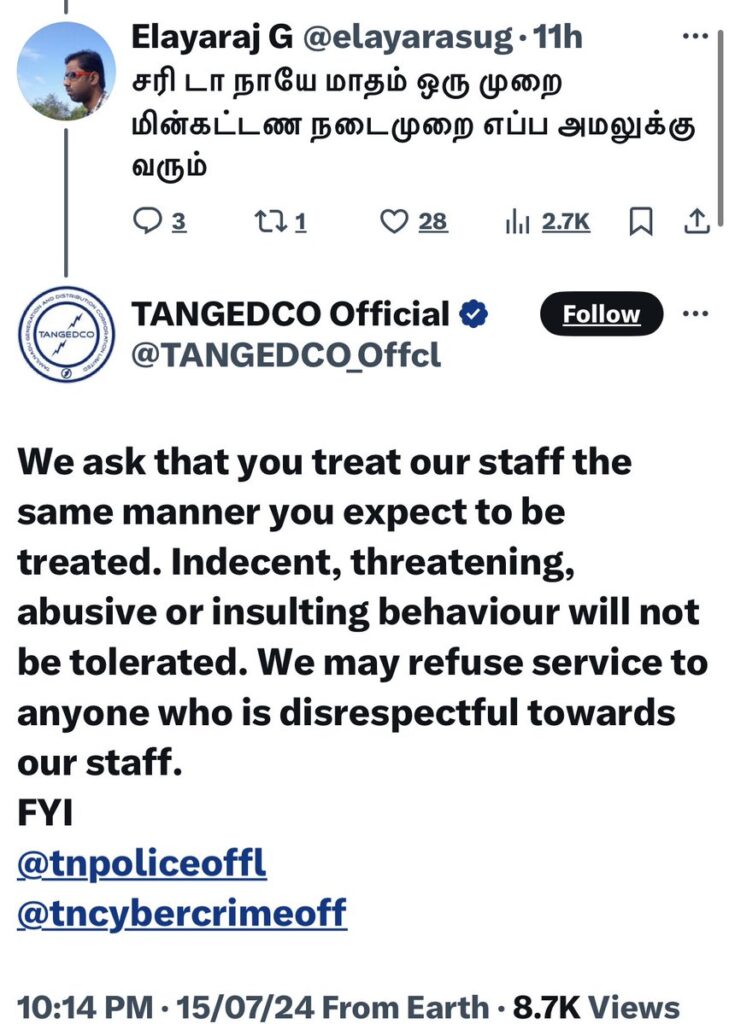
Another netizen inquired, “Okay, when will the monthly electricity bill come into effect?” TANGEDCO responded promptly, adopting a stern authoritarian tone stating, “We ask that you treat our staff the same manner you expect to be treated. Indecent, threatening, abusive or insulting behaviour will not be tolerated. We may refuse service to anyone who is disrespectful towards our staff. FYI @tnpoliceoffl @tncybercrimeoff.


Other netizens grew increasingly incensed and continued their critique, pressing further with inquiries., “You expect respect, when the common man gets angry at the injustice in your government, why do you @TANGEDCO_Offcl act like not giving respect? Will the practice of charging electricity once a month come or not?” Netizens quoted an old video of MK Stalin who had criticized the two-month billing system, expressing concern over its impact on ordinary people.

Another netizen ridiculed the TANGEDCO asking, “Worthy of great respect, of affection, of love @TANGEDCO_Offcl Sir, Eager to know the details when the monthly electricity tariff system will be introduced in Tamil Nadu. Thus Your dear Shangi.”

https://twitter.com/SaffronTweetz/status/1813042128211017769

Another netizen criticized TANGEDCO’s response to the previous netizen, likening it to behavior more typical of a political party’s IT wing than a responsible government agency. The netizen stated, “Dear @TANGEDCO_Offcl, Is TANGEDCO effectively addressing people’s grievances and problems by responding to thousands of disrespectful comments? Moreover, your response doesn’t reflect that of a government service agency but rather resembles the threatening tone of a political party’s IT wing. Your reply seems to encourage power board employees, who work tirelessly in all conditions, to respond in a disrespectful manner. Additionally, what is the purpose of tagging @tnpoliceoffl and @tncybercrimeoff? Please refrain from responding to disrespectful comments like a political party’s IT wing and instead report any false posts. This reflects the sentiments of the general public.

Another netizen reacted by that TANGEDCO engages in all sorts of politics but neglects to address genuine grievances, “All this, you speak well…. the problem mentioned below been raised more than 15 days… No response yet… Atleast could have said that we will investigate and take appropriate action.”

Following this public backlash, TANGEDCO deleted the tweet from its timeline.

What Is The Tarrif Revision?

According to the latest tariff determination order by TNERC, the electricity charges have been adjusted based on the Consumer Price Index (CPI). The tariff revisions for domestic consumers now range from an increase of 20 paise to 55 paise per unit across different usage slabs. For instance, the unit cost in the lowest slab (up to 400 units bi-monthly) rises from ₹4.60 to ₹4.80 per unit, while for 401-500 units, it increases from ₹6.15 to ₹6.45 per unit. Similarly, for 501-600 units, it rises from ₹8.15 to ₹8.55, and for 601-800 units, it increases from ₹9.20 to ₹9.65 per unit. The tariff for 801-1000 units rises from ₹10.20 to ₹10.70 per unit, and for consumption above 1,000 units, it increases from ₹11.25 to ₹11.80 per unit.

For a consumer using 500 units bi-monthly, the new charges would amount to ₹2,565, compared to the previous rate of ₹2,455. Regarding common facilities in multi-storey apartments under tariff category 1E (apartments with more than three floors without lifts), the unit rate has been increased to ₹8.55 from ₹8.15 per unit, and the fixed charges have been adjusted to ₹107 per kilowatt per month, up from ₹102.

Additionally, the tariff for other categories such as public lighting, water supply, sewage, places of worship, cottage and micro industries, private educational institutions and hostels, and industries and information technology services has also been revised upwards.

Subscribe to our channels on TelegramWhatsApp, and Instagram and get the best stories of the day delivered to you personally.