Home Blog Page 693

Jammu To Have Dedicated Railway Division: Union Minister Jitendra Singh

Jammu To Have Dedicated Railway Division: Union Minister Jitendra Singh.

Union Minister of State in PMO Dr Jitendra Singh said on Thursday that J&K’s Jammu city will have a dedicated railway division with the approval of the Railway Ministry. Jammu is the main centre for nearly 20 million pilgrims, who come each year to pay obeisance at Mata Vaishno Devi Shrine. Dr Jitendra Singh said in a series of posts on X, “Heartening news for #Jammu.Railways to set up exclusive Division Headquarter at Jammu.” “Prime Minister Narendra Modi is personally overseeing the progress of railway infrastructure in Jammu and Kashmir,” he added.

Dr Singh emphasised PM Modi’s dedication to strengthening Jammu’s railway facilities, which will become an important junction when the Kashmir Valley connects with the rest of India by rail for the first time. The decision follows a proposal by the Jammu Chamber of Commerce and Industry, led by its president, Arun Gupta. After discussions with Railway Minister Ashwini Vaishnaw, Dr Singh shared, “The matter was taken up with Railways Minister Ashwini Vaishnaw ji. I am glad to share the update that the Railway Ministry has accepted the proposal and initiated the process for the same.”

The delegation of Jammu Chamber of Commerce & Industry has said in its letter to the railway minister that giving full-fledged division status to Jammu will not only streamline the running of trains but will also create new avenues of employment opportunities for the locals. At present, Jammu is under the Firozpur division of Northern Railways. Jammu city has been the gateway of tourism, industry and other economic activities for the landlocked Kashmir valley. Traditionally, Jammu businesses benefitted from the over 150-year-old royal practice of shifting the seat of governance between the twin capitals of Srinagar and Jammu on a six-monthly basis.

Through this practice, thousands of Kashmiris connected with officialdom and work at different levels of offices would come to Jammu in connection with employment and official work. The practice of shifting offices between Srinagar and Jammu was called the ‘Darbar Move’. This practice was stopped by the Lt Governor administration. After coming to power, the National Conference government has promised to resume the ‘Darbar Move’.

–IANS

Subscribe to our channels on TelegramWhatsApp, and Instagram and get the best stories of the day delivered to you personally.

Church Priest Arrested For Pasting Bible Verses And Threatening Slogans On Temple Walls in Kachirayapalayam, Tamil Nadu

Shocking Incident In Kachirayapalayam, Tamil Nadu: Bible Verses And Slogans Found On Temple Walls.

Kachirayapalayam police have arrested a church priest for pasting handwritten Bible verses and provocative slogans, such as “Jesus coming soon,” on the walls surrounding several temples in the area. The scriptures also included a warning that the idols would be removed and replaced.

The incident occurred on the night of November 12th when an unknown individual pasted handwritten Bible verses on chart paper and affixed them to the walls of Shiva, Pillayar, and Perumal temples in Kachirayapalayam, a village near Karadisithur in Kallakurichi District.

The messages also included a warning about removing the idols and replaced, along with a statement titled “A Condemnation to the Commons,” signed by “Anniya/Stranger.”

Following a complaint, Inspector Yelumalai and his team launched an investigation, identifying the suspect as a 34-year-old church priest named Christ Raj, the son of Santhanam, from Kachirayapalayam.

According to the police, Christ Raj, who trained as a priest, established a church near his home and actively preached his faith. However, he was frustrated by the low turnout at his church, as most locals preferred to attend the nearby temples. In retaliation, Christ Raj allegedly vandalized temple idols last month and, on the night in question, wrote and posted religious verses on the temple walls. He was arrested in connection with the incident.

(With Inputs From Dinamalar)

Subscribe to our channels on TelegramWhatsApp, and Instagram and get the best stories of the day delivered to you personally.
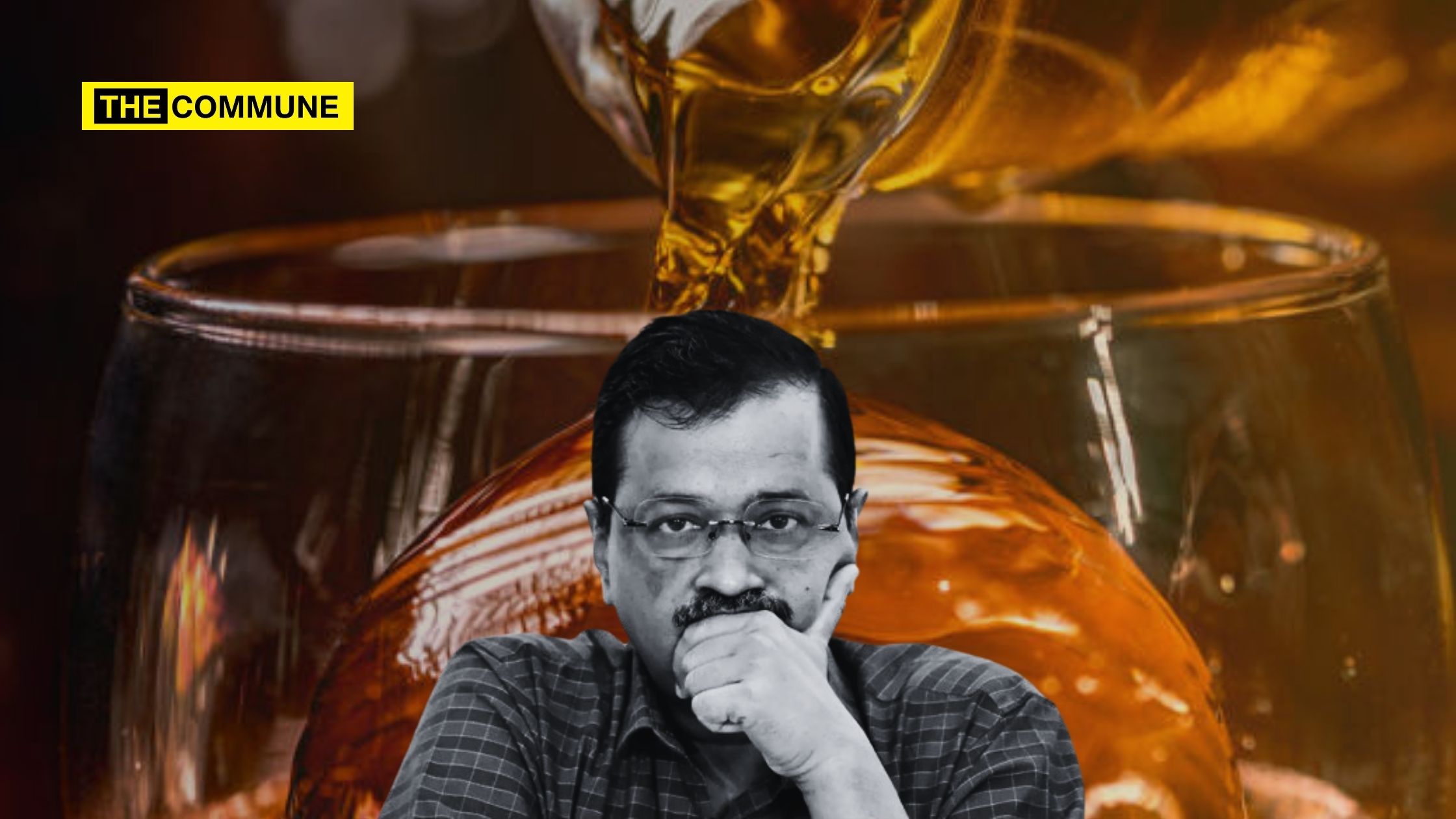
‘Neither Party Has Good Intentions’: HC Dismisses Defamation Case Against ADMK’s Sellur Raju, Criticizes DMK-AIADMK Blame Game

'Neither Party Has Good Intentions': HC Dismisses Defamation Case Against ADMK's Sellur Raju, Criticizes DMK-AIADMK Blame Game.

The Madras High Court has dismissed a defamation case filed against former Minister and AIADMK leader Sellur Raju for allegedly tarnishing the reputation of Tamil Nadu Chief Minister MK Stalin during a protest held on 29 May 2023 in Madurai.  

The case, registered in the Madurai District Principal Sessions Court, was brought after Sellur Raju’s remarks during the protest were deemed defamatory by the ruling DMK government. In response, Raju filed a petition in the Madras High Court seeking to quash the case.  

The petition was heard by Justice Velmurugan, where Raju’s counsel argued that the remarks were part of his democratic duty as an opposition MLA and merely an expression of his opinion. They asserted that his speech was not intended to harm the Chief Minister’s reputation.  

The government, however, maintained that Raju’s statements were deliberately made to tarnish the image of the Chief Minister and argued that the case should proceed.  

During the hearing, Justice Velmurugan expressed strong disapproval of the behavior of both DMK and AIADMK parties, remarking that neither had a genuine intention to contribute positively to the country. He criticized both parties for their habitual accusations against each other under the guise of strengthening democracy, stating, “If political parties continue such behavior, how will the next generation learn to foster a better political culture?” 

Ultimately, Justice Velmurugan ruled in favor of Sellur Raju, quashing the defamation case. The judge concluded that Raju’s speech did not amount to defamation and pointed out that such exchanges between political parties have become a routine tactic to maintain the status quo rather than strengthen democratic principles.  

(With inputs from PTTV)

Subscribe to our TelegramWhatsApp, and Instagram channels and get the best stories of the day delivered to you personally.

DMK Min Anbil Mahesh’s Son Admits ‘I Did Not Help Much’ After Receiving Student Innovation Award From His Father

Dravidian Model: DMK Champions Tamil, Education Minister's Son Studies French

A programme to award school students for their best inventions as part of an entrepreneurship initiative was held on 14 November 2024 at the Anna University campus, with School Education Minister Anbil Mahesh Poyyamozhi as the special guest to commemorate Children’s Day. However, the event drew sharp criticism after the minister presented a certificate to his own son, Kavin, raising allegations of nepotism and favoritism.  

Kavin, an 8th-grade student at an international curriculum school in Alwarpet, Chennai, was among the recipients. News spread that he was allegedly hand-picked to be part of the project team for his father’s sake. The minister’s public gesture of patting his son on the shoulder and expressing pride further fueled speculation about the fairness of the selection process.  

In an interview that has since gone viral, Kavin’s candid remarks raised even more questions. When asked about the project, he admitted, “It is not my idea; it is my group mates’ idea. I did not help much with the project.” Shockingly, he also revealed that he only learned about the project the day before the event, adding, “I don’t know how to react to winning the prize. I am a little happy to receive it from my father.”

The project, described as a biotech insurance startup aimed at streamlining loan disbursements and insurance, was supposedly a team effort. However, Kavin’s disinterest and lack of involvement highlighted concerns over why he was included in the first place. Critics wonder if the minister used his position to secure undue recognition for his son, undermining the integrity of the programme meant to celebrate genuine student innovation.  

Social media users have expressed outrage, with one comment summarizing public sentiment: “Holy moly. He was drafted in to receive the prize just because of his father? This undermines the hard work of other deserving students.”

In another interview, the boy is seen saying he does not study Tamil and that he was learning French which he found to be difficult.

While Minister Anbil Mahesh has not yet responded to the allegations, the incident has sparked calls for transparency and accountability in such programs. Many are demanding an investigation into the selection process to ensure that awards are granted based on merit and not political influence.

Subscribe to our TelegramWhatsApp, and Instagram channels and get the best stories of the day delivered to you personally.
ED Charges 12 Individuals & 8 Companies In Money Laundering Case Involving Former DMK Member & Intl Druglord Jaffer Sadiq And His Buddy Actor-Director Ameer Sulthan

ED Files Chargesheet Against Ex-DMK Functionary Jaffer Sadiq And His Bestie Dravidianist Director Ameer Sultan In Drugs-Cum-Money Laundering Case

The Enforcement Directorate (ED) has charged 12 individuals and eight companies in a money laundering investigation related to Jaffer Sadiq, an expelled DMK member and international drug kingpin. The charges were filed in a CBI court in Chennai.

Among those named are Sadiq’s brother, Mohammed Saleem; his wife, Ameena Banu; business associate Mydeen Gani; and his bestie Dravidianist actor-director Ameer Sulthan. The companies involved are linked to Sadiq and are accused of being used to launder funds generated from the illegal export of drugs, including pseudoephedrine, to Malaysia, Australia, and New Zealand.

In a statement on 13 November 2024, the ED announced that, “ED, Chennai has filed a Prosecution Complaint (PC) on 10/09/2024 under the provisions of the PMLA, 2002 before the Hon’ble XIII Additional CBI Court, Chennai in the case of Jaffer Sadiq and others. A total of 20 persons have been arraigned as accused in the said PC. The Hon’ble Court has taken cognizance of the PC on 18/10/2024.”

The ED’s investigation, initiated under the Prevention of Money Laundering Act (PMLA), was triggered by three key drug seizures: 50 kg of pseudoephedrine by the Narcotics Control Bureau (NCB) in Delhi on February 2024, 39 kg of ketamine by Mumbai Customs on October 2018, and another 50 kg of pseudoephedrine by Chennai Customs in August 2015. These drugs were exported under the guise of health-mix powder, desiccated coconut, food products, and even bangles.

Sadiq and his associates are accused of laundering proceeds from these illegal drug operations by investing in legitimate sectors such as real estate, film production, hospitality, and logistics. According to the ED, more than ₹30 crore in cash deposits were found across various entities controlled by Sadiq and his associates. The laundered money was funneled through a network of bank accounts controlled by Sadiq and his family, enabling the purchase of assets in their names and those of their associates, including “benamis.”

The ED has attached assets worth ₹55.3 crore, including properties linked to Sadiq, his wife, and other associates. Ameer Sulthan, the Dravidianist film director, is accused of benefiting from Sadiq’s illicit activities by investing the laundered funds into movies produced under his banner, JSM Pictures. Ameer was also a business partner of Sadiq in a firm, according to ED sources.

Who Is Jaffer Sadiq?

Sadiq, a producer of five Tamil films, was the leader of a cartel responsible for shipping Pseudoephedrine from India to Australia and New Zealand, as per the sources. Four other individuals from Tamil Nadu were apprehended in a Delhi warehouse.

Sadiq, who was affiliated with the Dravida Munnetra Kazhagam (DMK) and serving as the Deputy Organiser for the Chennai West NRI Wing, was permanently expelled from the party on 25 February 2024 following the revelation of his involvement with the drug cartel. The case unraveled when authorities from New Zealand and Australia alerted Indian agencies about substantial drug smuggling in their countries, disguised as food products. The NCB was probing the possibility of drug money being used to fund films.

In February, New Zealand customs and Australian police provided information about large amounts of pseudoephedrine, hidden in desiccated coconut powder, being shipped to both countries. Additional information from the US Drug Enforcement Administration pointed to Delhi as the source of the consignment.

An international drug trafficking network has been broken up by a combined operation from the NCB and the Special Cell of Delhi Police, resulting in the seizure of at least 50 kg of Pseudoephedrine in Delhi.

Following extensive questioning, officials disclosed that over the past three years, 45 shipments containing roughly 3,500 kg of pseudoephedrine, worth over ₹2,000 crore in the international market, had been dispatched.

On 9 March 2024, the Narcotics Control Bureau (NCB) announced the arrest of Jaffer Sadiq, the mastermind behind the India-Australia-New Zealand drug trafficking network. According to the NCB, Sadiq is reportedly the mastermind behind the drug trafficking ring spanning India, Australia, and New Zealand. Sadiq, who has five film productions to his credit, allegedly operated a cartel that transported pseudoephedrine from India to Australia and New Zealand. Four individuals from Tamil Nadu were apprehended in a Delhi warehouse two weeks prior.

Ameer Sultan – Jaffer Saadiq Links 

During launch function of his film “Iraivan Miga Periyavan” in February 2022, Ameer is seen saying Jaffer Sadiq is a distant relative of his. He also mentions that Sadiq had been requesting Ameer to direct a film under his banner for 5 years. Questions arise over Ameer’s naivety when it comes to understanding his own relative. 

Another video surfaced on social media platform X where Ameer is seen wishing all success to Jaffer Sadiq. He says, “I have been closely watching his meteoric rise in all businesses he has begun. I pray he achieves success with this film (production business) Iraivan Miga Periyavan too.”

It is noteworthy that he addresses Sadiq as “thambi” and Sadiq addresses Ameer as “Anna”.

Director Ameer and Jaffer Sadiq launched a coffee shop named 4AMCoffee and Kitchen under the Mahyan Pvt Ltd incorporation at ECR near Chennai. The managing director of this organisation, Abdul Basith, is also a director of Zuko Overseas Pvt Ltd along with Jaffer Sadiq. Interestingly, Ameer Sulthan aka director Ameer is also a director of Zuko Overseas Pvt Ltd. 

For the launch of the coffee shop, director Vetrimaran and actor Soori were present. Another coffee shop named Law Cafe was opened at Radhakrishnan Salai under the Mahyan Group of Companies banner run by Ameer and Sadiq.

Ameer, Vetrimaran, and Jaffer Sadiq have been photographed frequently establishing the closeness of directors in the Tamil film industry with so-called producers.

Some of the films that Jaffer Sadiq has produced include Ameer’s Iraivan Miga Periyavan, Mangai, and Indira. These films were produced under the JSM Pictures banner. Interestingly, Sadiq’s X handle’s cover pic has 4 posters – the three mentioned above and a film named Maayavalai which is produced by Ameer’s own production house and co-produced by Vetrimaran’s Grass Root Film along with Jaffer Sadiq.

It is noteworthy that DMK Minister Udhayanidhi Stalin’s wife Kiruthiga Udhayanidhi was the chief guest at the launch of a single from the film Mangai.

Saleem Bhai Biriyani chain which is apparently owned by Jaffer Sadiq himself and was inaugurated by Ameer. As he interacts with the press and news channels, Ameer discloses that Saleem Bhai Biriyani shop is one of Sadiq’s ventures. The both together have met MK Stalin and Kanimozhi as well. This establishes their thick friendship more than ever.

Subscribe to our TelegramWhatsApp, and Instagram channels and get the best stories of the day delivered to you personally.

Hindu Munnani Slams Officials For Inaction After Hijab-Clad Woman Filmed Chennai’s Kapaleeswarar Temple

Hindu Munnani Slams Officials For Inaction After Hijab-Clad Woman Filmed Chennai's Kapaleeswarar Temple.

Chennai’s iconic Kapaleeswarar Temple in Mylapore is at the center of a new controversy once again after a video surfaced showing an unidentified Muslim woman wearing a hijab filming around the temple’s prakaram (outer walkway) for several hours. The footage quickly went viral, sparking strong reactions from Hindu activists who have condemned the incident. They have raised concerns about the temple’s security and questioned the efficiency of the Tamil Nadu Hindu Religious and Charitable Endowments (HRCE) officials. Activists fear that such actions could pose a potential threat to the sanctity and safety of Hindu places of worship.

The Hindu Munnani has filed a formal complaint against the unidentified Muslim woman who was filmed taking photos and videos of the Kapaleeswarar Temple premises while wearing a hijab. However, they claim that no action has been taken so far. In response, the Hindu Munnani has issued a strong condemnation of the authorities’ inaction.

In a statement, the organization said, “On behalf of the Hindu Munnani, we lodged a complaint with the HRCE officials at Kapaleeswarar Temple and the Mylapore Police. Take action! Take action! The Government of Tamil Nadu take action on HRCE department. Don’t sleep charity department..”

A Muslim woman wearing hijab took photos and videos of the temple yesterday in Kapaleeswarar Temple, Mylapore, Chennai. How did they allow people of other religions to enter the temple and why did the security personnel fail to stop her? A few months ago, a Christian woman was seen sitting inside the temple reading the Bible.  They have even placed the image of Mary and the cross near the flagpole. Muslim men have been spotted around the temple with their religious symbols.” The statement further questioned.

“If the charity department says that they are not able to provide proper security to the temple after taking salary from the temple income, then the charity department should leave the temple. Charity Department which has not filed a single complaint with the police despite all the wrongdoings, how can you protect our temples? We point out that Hindus themselves will not hesitate to directly guard the temple if the authorities are negligent in guarding the temple.” It warned.

The Kapaleeswarar Temple in Mylapore has been embroiled in controversy on several occasions in the past. This latest incident is not the first of its kind. Previously, there have been multiple incidents that have raised concerns. For instance, a Muslim woman wearing a hijab was seen praying inside the temple premises. On another occasion, a Christian missionary woman was spotted reading ‘Paava Arikkai’ praying for the forgiveness of Hindus their mode of worship within the temple as “false” and “sinful,” while seeking forgiveness from her “One True Lord. Additionally, there have been reports of a Christian marriage being conducted within the temple grounds, further fueling the controversy.

Subscribe to our TelegramWhatsApp, and Instagram channels and instantly get the day’s best stories.


Fact-Finding Report Highlights Religious Discrimination And Forced Conversions At Jamia Millia Islamia University

Fact-Finding Report Highlights Religious Discrimination And Forced Conversions At Jamia Millia Islamia University.

A fact-finding committee led by Justice (Retd.) SN Dhingra and former Delhi Police Commissioner SN Srivastava released their report on 14 November 2024, detailing allegations of discrimination against non-Muslims and instances of forced conversions at Jamia Millia Islamia (JMI), a minority institution in Delhi. The investigation was initiated byCall for Justice,an NGO, after receiving multiple complaints of harassment and religious bias within the university.  

The report highlights forced conversions and systemic discrimination against non-Muslim students and faculty members in Jamia Millia Islamia. Witnesses testified that non-Muslim staff and students routinely faced harassment, unequal treatment, and derogatory remarks.  

Key Findings

Harassment of Non-Muslim Faculty

An assistant professor reported consistent mistreatment by Muslim colleagues. She cited instances of a Muslim clerk disparaging her Ph.D. thesis, claiming it was valueless because she was a non-Muslim.  

A non-Muslim faculty member from the SC community faced discrimination in the allocation of office facilities. He was denied basic amenities like a cabin and furniture, which were promptly provided to Muslim colleagues. When promoted to Assistant Controller of Examinations, Muslim staffers openly questioned how ahigh-classoffice could be given to aKafir.

Discrimination Against Non-Muslim Students

The report documents harassment of tribal students, many of whom left the university due to religious discrimination.  

A professor allegedly announced in class that students who did not follow Islam would not be allowed to complete their M.Ed. The professor reportedly cited examples of individuals who converted to Islam and subsequently secured favourable positions at the university.  

Forced Conversions 

Testimonies revealed that some Muslim staff and faculty at Jamia Millia Islamia exerted pressure on non-Muslim students and colleagues to convert to Islam.  

Background Of The Inquiry

The committee was formed following protests at Jantar Mantar on 4 August 2024, led by members of the Scheduled Caste and Balmiki Samaj, who voiced concerns about the harassment faced by Ram Niwas, a non-Muslim employee at JMI. Preliminary investigations prompted the NGO to constitute a fact-finding panel to delve deeper into these allegations.  

The report was presented to Minister of State for Home Affairs Nityanand Rai, the Ministry of Education, and the Lieutenant Governor of Delhi on 14 November 2024.  

(With inputs from Organiser)

Subscribe to our channels on TelegramWhatsApp, and Instagram and get the best stories of the day delivered to you personally.

Sahitya Akademi Invites Distortian Devdutt Pattanaik For Upcoming Seminar, Cancels After Intervention From Hindu Activists

Sahitya Akademi Invites Distortian Devdutt Pattanaik For Upcoming Seminar, Cancels After Intervention From Hindu Activists

The Sahitya Akademi’s decision to invite Devdutt Pattanaik to speak at its upcoming seminar onIndian Mythology: Memory, Retellings, and Translationshas sparked widespread outrage. Pattanaik, often described as a self-proclaimedmythologist,has been embroiled in numerous controversies for his questionable interpretations of Hindu scriptures, his abusive behaviour on social media, and his repeated anti-Hindu remarks.

Such a selection raises serious concerns about the credibility and inclusivity of a government-funded institution like the Sahitya Akademi.

However, after intervention from Hindu activists like columnist Shefali Vaidya, Sahitya Akademi dropped Devdutt Patnaik’s seminar.

Let’s take a quick look at Devdutt Pattanaik’s dubious history:

Misrepresentation Of Scriptures

Pattanaik is known for distorting Hindu scriptures. He has consistently drawn criticism for his flawed and provocative interpretations of Hindu scriptures. His translations often contain fundamental errors, distorting key Sanskrit terms. He injects sexual connotations into sacred texts, much to the dismay of scholars and practitioners of Sanatan Dharma.  

His admiration for Wendy Doniger, another controversial figure in the domain of Indian history and culture, aligns with his tendency to sensationalize and misrepresent traditional Hindu texts.

Abusive Conduct on Social Media

Pattanaik has a long record of using crass language and personal attacks against critics. He has resorted to misogynistic and abusive comments, once admitting to using rape as a tool of revenge in a widely condemned post issued in 2022. His behavior includes hurling insults at people’s families, including abusive references to their mothers.  

Anti-Hindu Rhetoric

In July 2020, Pattanaik endorsed Nepal’s then-PM’s claim that Bhagwan Ram originated from Nepal and insulted India by calling it aland of monkeys,mocking Bhagwan Hanuman.

He has repeatedly targeted Brahmins, fueling divisive narratives and refusing to engage with constructive criticism. He falsely claimed Dalits are barred from entering the Puri Jagannath Temple, a statement that stoked communal tensions and was widely debunked.  

Here are a few Hinduphobic posts he made.

Misinformation Campaigns

Pattanaik has spread falsehoods about the Citizenship Amendment Act (CAA), claiming that the Modi government was terrorizing Muslim women by asking for kagaz (documents). His assertions were proven baseless and were labeled as fear-mongering propaganda.

He has linked the origin of the wordIndiato casteism, Brahminism, and intolerance, presenting an oversimplified and distorted narrative.

A Pattern of Provocation

Devdutt Pattanaik’s controversial remarks are not isolated incidents but part of a larger pattern of provocative behavior aimed at discrediting Hinduism and its adherents. For instance:  

  • He claimed the idea of singularity in Indian culture wasMiddle Easternwhile misrepresenting Indian pluralism.  
  • He made bizarre connections between the Rigveda and Indumati, Lord Ram’s grandmother, in a way that conflates mythology and history without scholarly rigor.  
  • His admiration for contentious ideologues like Wendy Doniger further cements his anti-Hindu inclinations.  

Inviting Devdutt Pattanaik to a Sahitya Akademi seminar legitimizes his controversial views and abusive behavior, alienating those committed to preserving India’s cultural and religious authenticity. This decision undermines Akademi’s credibility as a guardian of Indian literature, disregards public sentiment, and overlooks genuine scholars who approach Indian mythology with respect and rigor.

Government-funded platforms must prioritize figures who foster inclusive and authentic discourse, rather than divisive individuals with questionable ethics. Institutions like Sahitya Akademi and the Ministry of Culture must be held accountable to ensure their events reflect India’s rich heritage and uphold their responsibility to public trust.

Subscribe to our channels on TelegramWhatsApp, and Instagram and get the best stories of the day delivered to you personally.
Air Quality In Kolkata Dips To ‘Very Unhealthy’ Category

Air Quality In Kolkata Dips To ‘Very Unhealthy’ Category

Air quality in Kolkata has started dipping with a drop in temperature as AQI levels ranged between 204 and 290 since Thursday. The AQI level range between 201 and 300 comes under the “purple” or “very unhealthy” category.

It involves health warnings of conditions where the entire population in a city is more likely to be affected.

The air quality level in Kolkata is just above the worst AQI level between 301 and 500, which comes under the “maroon” or “hazardous” category involving more serious health effects on the entire population.

Kolkata’s AQI quality remained good before the Diwali and Kali Puja because of the winds of Cyclone Dana. However, it started deteriorating sharply from the night before Diwali or Kali Puja because of the unbridled bursting of firecrackers.

Similar bursting of firecrackers during the Chhath Puja aggravated the deterioration further. According to green-technologist and environmental activist Somendra Mohan Ghosh the basic flaw lies in the fact that the Indian air quality standards are more lenient compared to the World Health Organization’s (WHO) guidelines.

“The permissible limits under the Indian National Ambient Air Quality Standards (NAAQS) for particulate matters like PM2.5 and PM10 as well as other items like nitrogen dioxide, ozone, carbon monoxide and sulphur dioxide is much more lenient than those permissible under WHO guidelines,” said Ghosh.

“Exposure to air pollution above WHO guidelines can lead to respiratory problems like asthma or COPD, cardiovascular diseases, lung cancer, neurological damage and premature mortality,” Ghosh pointed out.

According to him, there is an urgent necessity to revise NAAQS aligning with the WHO guidelines. “At that same time there should be stricter emission controls, promotion of clean energy resources and implementation of effective waste management. What is equally necessary is enhancing public awareness and education,” said Ghosh.

Meanwhile, Delhi-NCR’s air quality remained severely poor for the third consecutive day, with the national Capital’s Air Quality Index (AQI) reaching a severe level of 409 early on Friday morning and the readings being above the 300 mark in neighbouring cities in Haryana and Uttar Pradesh. According to the Central Pollution Control Board (CPCB), the region continues to suffer from hazardous pollution levels as winter approaches, with many of the cities in Delhi’s neighbourhood registering dangerously high AQI values.

–IANS

Subscribe to our channels on TelegramWhatsApp, and Instagram and get the best stories of the day delivered to you personally.
Birsa Munda, Whose ‘Ulgulan’ Declared The End Of British Rule In Today’s Jharkhand

Birsa Munda, Whose 'Ulgulan' Declared The End Of British Rule In Today's Jharkhand

Girded by forests and hills, Ulihatu village in Jharkhand’s Khunti district, 66 km from state capital Ranchi, is the birthplace of charismatic tribal hero Birsa Munda, who led a popular revolt in the early 20th century that declared the end of British rule over large parts of the region and the beginning of ‘Abua Raj’ (self-rule).

His birth anniversary is celebrated as Tribal Pride Day and his 150th birth anniversary this year marks the beginning of the Tribal Pride Year, which will conclude on November 15, 2025. Birsa Munda, born on November 15, 1875, led a movement known as ‘Ulgulan’ (The Great Rebellion) among the tribals of Jharkhand.

During this uprising in 1899, thousands of his followers proclaimed in their native language: “Diku Raj Tuntu Jana – Abua Raj Ete Jana”, meaning “The rule of outsiders is over, our own rule has begun.”

The British, threatened by this movement, resorted to brutal suppression. Revered today as Bhagwan (Lord) Birsa Munda, he was an exceptional leader who recognised the impact of British rule on tribal traditions.

According to Vivek Aryan, a researcher at the Tribal Research Institute in Ranchi, Birsa Munda realised the erosion of tribal rights as a school student. His activism led to his expulsion from school in 1890.

Determined, he began raising awareness among tribal communities, rallying them for their rights. By 1895, Birsa Munday had become a significant threat to the British, leading to his arrest on August 24, 1895, from Chalkad village. Historical records show that he was sentenced to two years of rigorous imprisonment on November 19, 1895, under Section 505 of the Indian Penal Code.

After his release on November 30, 1897, the Munda tribes once again rallied under his leadership, setting the stage for a large-scale rebellion.

On December 24, 1899, Birsa Munda declared the start of ‘Ulgulan,’ asserting the tribal rights over water, forests, and land. By January 1900, the fire of rebellion had spread across the region.

The movement culminated on January 9, 1900, when thousands of Mundas gathered at Dombari Buru hill, armed with bows and arrows, and other traditional weapons.

The British, tipped off by informants, surrounded the hill with soldiers armed with guns and cannons. A fierce battle ensued, where Birsa Munda and his followers valiantly fought against the colonial forces.

According to reports published in The Statesman on January 25, 1900, around 400 tribals were killed in the brutal confrontation.

Their blood stained the hill, and the nearby Tajna river turned red. Though the British emerged victorious, they failed to capture Birsa Munda. However, his freedom was short-lived.

On the night of February 3, 1900, he was arrested from the dense forests of Chaibasa while he was sleeping. He was secretly brought to Ranchi and tried in the court of Magistrate W.S. Kutus, with Barrister Jackon representing him in what was merely a mock trial.

Birsa Munda was imprisoned in Ranchi jail, where he was subjected to severe torture. On June 1, 1900, the British authorities claimed that Birsa Munda had contracted cholera. Tragically, he died on June 9, under mysterious circumstances in jail.

His body was discarded near what is now the Distillery Bridge in Ranchi. A memorial now stands there, honouring his great sacrifice. The Ranchi jail where Birsa Munda died has since been converted into the Birsa Munda Smriti Sangrahalaya (Memorial Museum).

Every year on November 15 on Birsa Munda’s birth anniversary, Janjatiya Gaurav Divas is celebrated to honour his contribution to India’s freedom struggle. Tribal movements against British rule, like the Ulgulan led by Birsa Munda, were not only pivotal in challenging British oppression but also inspired a national awakening.

–IANS

Subscribe to our channels on TelegramWhatsApp, and Instagram and get the best stories of the day delivered to you personally.