Home Blog Page 673

From Badmouthing Rajini, Trolling Sivakarthikeyan To Amplifying DMK Propaganda When AIADMK Was In Power: Meet RJ Balaji, A Virtue-Signalling Hypocrite Who Now Wants Political Netizens To Stick To Political Commentary

RJ Balaji

Balaji Patturaj, aka ‘RJ Balaji’, the radio jockey-turned-actor known for virtue-signalling both during his time as a commentator and now in his film career, has recently drawn attention for his remarks while promoting his upcoming movie. He criticized political netizens, advising them to focus on politics rather than targeting films and attempting to sabotage their ‘success’. According to Balaji, political commentators should refrain from wasting their energy on commenting on films and instead stick to political commentary. However, his comments have sparked a backlash from the online community, with many netizens predicting that his next film will meet the same fate as actor Suriya’s recent pan-Indian disaster Kanguva, which failed miserably at the box office.

It is ironic that RJ Balaji, who had made a career out of criticizing films on his radio show and parroting DMK’s talk points on NEET, GST, Demonetization, Jallikattu and Cauvery issue, is now jittered about his films facing the wrath of netizens who are calling him out for his double standards. In this regard, here are a few examples of RJ Balaji’s hypocrisy.

RJ Balaji Simping For The DMK

In a flop film titled ‘Kee’, he had peddled propaganda about GST saying “Shall I tell you a story Siddharth sir? You and me go to the hotel to eat. But they’ll put a bill as if 2 other persons joined us. If we look who it is, it would be GST! For whom? For what? Our stomach will burn!

In another interview, RJ Balaji mocked both GST and demonetisation, admitting that he didn’t fully understand them but still believed they were bad moves.

He said, “The big FM is also facing problems with GST, so I’m saying this. Apart from how this movie was affected, I don’t understand what GST is. I’m unable to understand it. Someone on Facebook yesterday posted that it’s like Kamal’s movie – you won’t understand it immediately, but you’ll celebrate it ten years later. If we celebrate it after ten years I’m okay with that, but like I said on November 8th, I was excited about demonetisation, thinking India would change dramatically because my knowledge of being patriotic is India should improve and in 2020 should become a superpower. I grew up watching Arjun and Sivaji’s movies with the same emotion, so I thought it was a great move. But after six months, I feel bad, I feel looted. So I don’t want GST also to make me feel the same way.”

RJ Balaji who had initially supported the demonetization switched his position as soon as Dravidianists started targeting him.

RJ Balaji had called the NEET exam a very tough exam that furthers inequality in a stage before DMK ministers. He stated, “Today we have NEET, which is very tough and filled with inequalities. Many leaders have fought heavily and abolished it, but tomorrow something called PEET will come, what will we do then? then another entrance test will come tomorrow.”

He had virtue-signalled in 2018 by refraining from doing commentary for the CSK Vs KKR IPL match to protest against the Centre over formation of Cauvery Water Management Board.

Selective Advocacy

How much a simp can RJ Balaji be? He will surprise us by going to great lengths to defend Ranjith’s caste-themed movies, even citing a rape case from Uttar Pradesh to make his point. However, it’s notable that he avoids mentioning similar cases of rape from the state of Tamil Nadu, which could have provided more relevant local context.

During a movie launch event, he stated, “When films of Pa. Ranjith and Asuran comes out, I can see some say, ‘Why are they talking about caste that doesn’t exist, or why make films on castes that have no relevance?’ But that’s not true. In fact, just a week or ten days ago, a girl was gang-raped in Uttar Pradesh, she was just 13 years old. When she went to the police station to file a complaint, the officer there raped her too and she was a Dalit girl. This has happened in India.”

In 2019, he made a film called Mookuthi Amman. The trailer initially suggested it to be a satirical take on religion while professing rationalism. The sneak peek of the film, which was released, had a scene mocking the missionaries for their ‘miracle-healing’ congregations.

The scene in question depicted a “jeba koottam” (prayer meeting) where Mano Bala, playing a pastor, humorously engages in “healing” through CDs. Balaji’s decision to cut the scene indicated his hesitancy to take risks in the face of potential backlash.

However like a true hypocritical Dravidianist, after the film’s release, he subtly removed the controversial scene that mocked Christian missionary proselytization, revealing that his rationalism and virtue-signalling is only reserved for Hindus.

Hypocrite Of The First Order? Mocking Of Stars From Humble Backgrounds While Simping For Suriya & Preaching Against Nepotism

In Naanum Rowdy Dhaan’s movie, RJ Balaji used comic dialogues to take jabs at flopped films, including Suriya’s Anjaan and actor Jiiva’s Mugamoodi. At one point, he humorously remarked, “I have five tickets for Anjaan—are you coming? And for Mugamoodi, I have three tickets—will you come for that at least?” When the other person asks who he is, he cheekily replies, “It’s Dhananjayan.” Balaji didn’t just mock the movies but also targeted the producers behind them. Now, however, he’s calling on political netizens to refrain from causing uproar over films.

Badmouthing Rajinikanth

There was a lot of buzz in the months before Rajinikanth announced his political entry in December 2017. RJ Balaji, who had hogged the limelight in the Jallikattu protest by making cringeworthy speeches in Marina Beach, commented about Rajinikanth’s age and declared that he won’t be able to do much in politics.

RJ Balaji said, “I’ve been waiting for 25 years for Rajinikanth to enter politics. I have lost my patience now. If I ask my 65-year-old father-in-law to do ten things, he can do only two. He had no strength in body or mind to do more than that. So, my father-in-law spends his time playing with his grandchildren. I am not talking about the embarrassment of Rajinikanth entering politics. But what kind of projects can Tamil Nadu expect from him? I guess we can’t expect much from him now. Laura was a great cricketer. But can he play like that now? So is Rajini’s politics.

Again, in 2022, at an event held at a private college in Chennai, RJ Balaji sparked controversy by criticizing Rajinikanth’s films for their ‘wrong’ portrayal of women.

Balaji pointed out that the 1992 film Mannan depicts Vijayashanthi, a successful businesswoman, as arrogant and negative, while Khushbu, who plays a homemaker, is shown positively. He also criticized Padayappa (1999) for portraying Soundarya, a gentle, housework-focused character, favourably while casting Ramya Krishnan’s Neelambari, an educated and independent woman, in a negative role. Balaji emphasized the need for films to evolve in how they represent strong, independent women.

Jealous Much? RJ Balaji Mocked Sivakarthikeyan

Similarly, actor Sivakarthikeyan became a target of mockery from RJ Balaji. Back then, Sivakarthikeyan was under intense pressure from the producers he worked with, who had placed several hurdles in releasing his subsequent film. At the audio launch of his film Remo and in a few other stages, he had become emotional. However, RJ Balaji chose to make fun of Sivakarthikeyan crying and later apparently apologized for his comments.

Mocking Actor Satheesh

RJ Balaji engaged in a public spat and unwarrantedly mocked actor Satheesh who also does comedy roles in movies.

One of the Twitterati had asked RJ Balaji about his favourite comedian to which he replied sarcastically “Satish ! Plz trust me .!” with a wink smiley.

Satish befittingly replied to the actor by pointing out his cringe-worthy woke speech he made on the last day of Jallikattu.

Retorting, he again made a condescending comment about Satheesh’s acting as a comedian, saying, “Nice punch! It would be good if you put half the comic effort in your movies.”

RJ Balaji came under much fire from netizens for his egoistic comments.

Once again, RJ Balaji got away with an apology.

From this, we can conclude that RJ Balaji, who mocks talents that rise from humble beginnings, cannot tolerate such success. He ridicules individuals like Sivakarthikeyan, a VJ, or Rajinikanth, a bus conductor. He mocks them for pride, only to offer a simple apology later and gain popularity through his mockery. Meanwhile, he supports untalented nepotists like actor Suriya yet hypocritically preaches nepotism. Such hypocrisy can be attributed to RJ Balaji, who chooses to drag others down to reach the top by pandering to the wealthy.

RJ Balaji Simping For Actor Suriya

During the audio launch of Kanguva, co-actor Bose Venkat, in an enthusiastic mood, suggested that Suriya should enter politics. He cited the example of actor Vijay, who started his political party, TVK. RJ Balaji, who was on stage then, supported Suriya. He claimed that the actor was already a politician by simping for his attention with his social service. However, in a later interview, RJ Balaji contradicted himself by criticizing his co-actor Bose Venkat for his remarks.

RJ Balaji stated, “A few moments ago, Bose Venkat Sir said, “Suriya Sir, come into politics.” I have my opinion on this and I’d like to share it here. I’ve been a fan of Suriya Sir since my college days. A politician isn’t just someone who stands in an election. A politician is also the person who, with a group of four, lifts a fallen tree. Everyone who does small acts is also a politician. In that sense, Suriya Sir has already become a politician many years ago, and that’s enough.”

In another interview, he clarified, “Suriya Sir’s fans were there, and I felt he was expressing some opinions. But I don’t think it was necessary, as everyone doesn’t have the same path. For example, like Vijay Sir does.”


It is noteworthy to mention that RJ Balaji will direct the wannabe pan-Indian actor Suriya’s next film, tentatively titled “Suriya 45,” produced by Dream Warrior Pictures.

RJ Balaji’s recent outburst against political netizens ironically exposes his contradictions. A man who built his career mocking films and politicians now laments the scrutiny his work faces. His history of virtue-signalling, from parroting Dravidianist talking points on GST, NEET, and demonetization to selectively targeting celebrities like Rajinikanth, Sivakarthikeyan, and Satheesh, highlights his double standards. Balaji’s selective outrage, willingness to pivot for personal gain, and eagerness to criticize others while shielding himself from the same reveal a pattern of opportunism rather than principle. As he steps into the role of directing Suriya’s next film, his calls for civility ring hollow, making it clear that his virtue-signalling is merely a tool for self-promotion, not genuine advocacy.

Subscribe to our TelegramWhatsApp, and Instagram channels and get the best stories of the day delivered to you personally.
Against India’s Growth Story: Congress Faces Backlash Over Allegations Against Adani Group

Against India's Growth Story: Congress Faces Backlash Over Allegations Against Adani Group

The Congress party came under sharp criticism from many quarters on Wednesday over its repeated accusations against the Adani Group, over indictment of India’s leading conglomerated in the United States. This backlash against Congress followed the Adani Group clarification, denying all the bribery allegations made by the US authorities against its founder Gautam Adani, his nephew Sagar Adani, and Adani Green Energy CEO Vneet Jaain.

Many BJP leaders hit back at the Congress party, accusing it of working against India’s growth story and also “spreading fake news” about Indian industrialists with a motive to “mislead the public.”

Speaking to IANS, BJP spokesperson Gourav Vallabh targeted Congress leader Rahul Gandhi, accusing him of being a “brand ambassador of anti-India forces.”

“Rahul Gandhi does not oppose Adani or Ambani; he opposes India’s development. He has become a spokesperson for anti-India entities, including those led by George Soros, who dictate his agenda. They aim to disrupt India’s capital markets and FDI flow,” Vallabh stated.

“Rahul Gandhi is playing into the hands of foreign powers who want to harm India’s growth story. Millions of middle-class Indians rely on investments in the capital market for their future dreams, and Rahul Gandhi wants to shatter these aspirations,” he further added. Shiv Sena (Shinde faction) spokesperson Manisha Kayande also criticised the Congress, alleging that it targets Indian industrialists to undermine the BJP-led government. “Rahul Gandhi and his associates focus on Adani and Ambani only to target the industrialists and bring bad name to the country. During the Maha Vikas Aghadi government, they gave contracts to these industrialists, and now they question us,” she said.

Kayande cited past incidents under the MVA government, such as the placement of explosives near the residence of industrialist Mukesh Ambani, as evidence of “mishandling.” She claimed such actions had driven industries away from Maharashtra to Gujarat. Rajasthan Minister Jogaram Patel also accused opposition parties of aligning with foreign powers to weaken India.

“Our nation is on the path to becoming the third-largest economy, but Congress and its allies are trying to derail this progress. They target Indian businessmen to serve their agenda of weakening India,” Patel told IANS.

“Time and again, they travel abroad and speak the language of our enemies, siding with foreign adversaries. They target businessmen like Adani and other industrialists, but their sole aim is to weaken India and bring down PM Modi,” he added. BJP spokesperson Pradeep Bhandari echoed similar sentiments, calling Congress “anti-progress and anti-India.”

In a video message on X, he accused the party of collaborating with international entities like George Soros to propagate false narratives. “The Congress party is against the Indian growth story. The Congress party against the Indian wealth creators. The Congress party knows that if India becomes the third largest economy, the party and its evil forces across the borders will have an issue,” he said. “This is why Soros and the Congress party always try to plant fake news and fake agenda against Indian wealth creators. The latest Adani episode, in which it is now clear that the bribery charges were not against the Adani group, is yet another example of whether it is Hindenburg, whether it is Rafael, and now the Adani. The Congress party’s intentions are evil,” he said.

Bhandari said that Congress only aims to “spread fake news, hurt the Indian growth story. This is why we say Congress is anti-progress, anti-people, anti-India.”

–IANS

Subscribe to our channels on TelegramWhatsApp, and Instagram and get the best stories of the day delivered to you personally.
Dravidian Model: DMK School Education Min Anbil Mahesh Releases Birthday Song For DMK Scion Udhayanidhi Stalin

Dravidian Model: DMK School Education Min Anbil Mahesh Releases Birthday Song For DMK Scion Udhayanidhi Stalin

Amid grand celebrations for Deputy Chief Minister Udhayanidhi Stalin’s 47th birthday, Tamil Nadu’s School Education Minister Anbil Mahesh Poyyamozhi declared that Udhayanidhi is destined to become the Chief Minister of the state in the future. Speaking at a DMK youth wing event to release the birthday song Thalaivaney, Ilam Thalaivane on Tuesday, Anbil Mahesh enthused,Indraya deputy chief minister, oru naal definitely chief minister(Today’s deputy chief minister, one day definitely chief minister).

The event, marked by enthusiastic applause from DMK cadres, celebrated Udhayanidhi’s leadership and his role as a youth icon. The song, composed by DMK youth wing deputy secretary Thoothukudi S Joel, extolled Udhayanidhi’s qualities as awell-manneredand committed leader who embodies the DMK’s ideology. Anbil Mahesh also alluded to Udhayanidhi’s firm stance during the Sanatana Dharma controversy, praising his refusal to apologize and his pride in beingKalaignar’s grandson.”

However, as the party leaders revel in political festivities, Tamil Nadu’s government schools, under Education Minister Anbil Mahesh, are grappling with a severe crisis. Thousands of primary and middle schools in the state lack headmasters, leaving students without proper academic guidance or leadership. The situation is compounded by inadequate teaching staff, crumbling infrastructure, and insufficient resources, putting the future of thousands of children at risk.

Currently, around 900 headmaster posts in government high schools across Tamil Nadu are vacant due to pending court cases. Additionally, reports indicate that 4,500 government schools, including 2,994 primary and middle schools, lack headmasters. This includes 950 vacant high school headmaster posts, along with vacancies in chief education officers (CEOs) and district education officers (DEOs). These vacancies have been an ongoing issue, with some positions remaining unfilled for over six months.

It feels as if Anbil Mahesh is prioritizing his role as a full-timeUdhayanidhi fan club presidentover his responsibilities as School Education Minister. While schools face acute shortages and infrastructure deficits, the minister’s focus on political celebrations has drawn sharp criticism.

Observers argue that the state’s education sector is in desperate need of attention. Without urgent reforms to address staff shortages and improve school infrastructure, the quality of education for countless students will continue to deteriorate. Additionally, the school infrastructure is facing glaring neglect by the government – with many schools complaining of broken ceilings – newly opened government schools at that, unclean classrooms and toilets, teachers asking students to massage legs, etc. Such is the troubling disconnect between the DMK government’s priorities and the pressing needs of its citizens.

(With inputs from India Today)

Subscribe to our channels on TelegramWhatsApp, and Instagram and get the best stories of the day delivered to you personally.
Reports Allege Ooty Municipality Commissioner Jahangir Basha Caught Taking ₹11.7 Lakh Bribe Promoted To Assistant Commissioner

Reports Allege Ooty Municipality Commissioner Jahangir Basha Caught Taking ₹11.7 Lakh Bribe Promoted To Assistant Commissioner

Jahangir Basha, the Udhagamandalam Municipality Commissioner, was caught red-handed by the DVAC on the night of 9 November 2024 while receiving a bribe. A sum of 11.7 lakh was seized from him, and an FIR was filed under Section 7 of the Prevention of Corruption Act the following day. However, to the shock of many, it is alleged that Basha was recently promoted to the position of Assistant Commissioner at the Tirunelveli Corporation.

According to The New Indian Express, Basha was traveling in a taxi to Coimbatore railway station when the DVAC team intercepted the vehicle and discovered the unaccounted cash. During questioning, Basha confessed that he had received the money as a bribe to approve illegal building constructions. A tip-off had led to the raid, and a DVAC official confirmed that Basha would often transport the bribe money to his hometown.

Jahangir Basha had assumed the role of Udhagamandalam Municipal Commissioner in August, after serving as the Municipal Commissioner in Theni. Despite not being arrested immediately, he was initially removed from his post and placed on a waiting list. Basha’s rapid promotion has drawn significant criticism, with many questioning the propriety of the decision given the corruption allegations against him.

Meanwhile, other recent transfers include Erode Municipal Assistant Commissioner Krishnamoorthy, who has been moved to Krishnagiri as the Municipal Commissioner, and Krishnagiri’s Stanley Babu, who has been appointed as the Ooty Municipal Commissioner. Karthikeyan, the Secretary of the Municipal Administration and Drinking Water Supply Department officially confirmed the transfers.

(With inputs from Dinamalar)

Subscribe to our channels on TelegramWhatsApp, and Instagram and get the best stories of the day delivered to you personally.
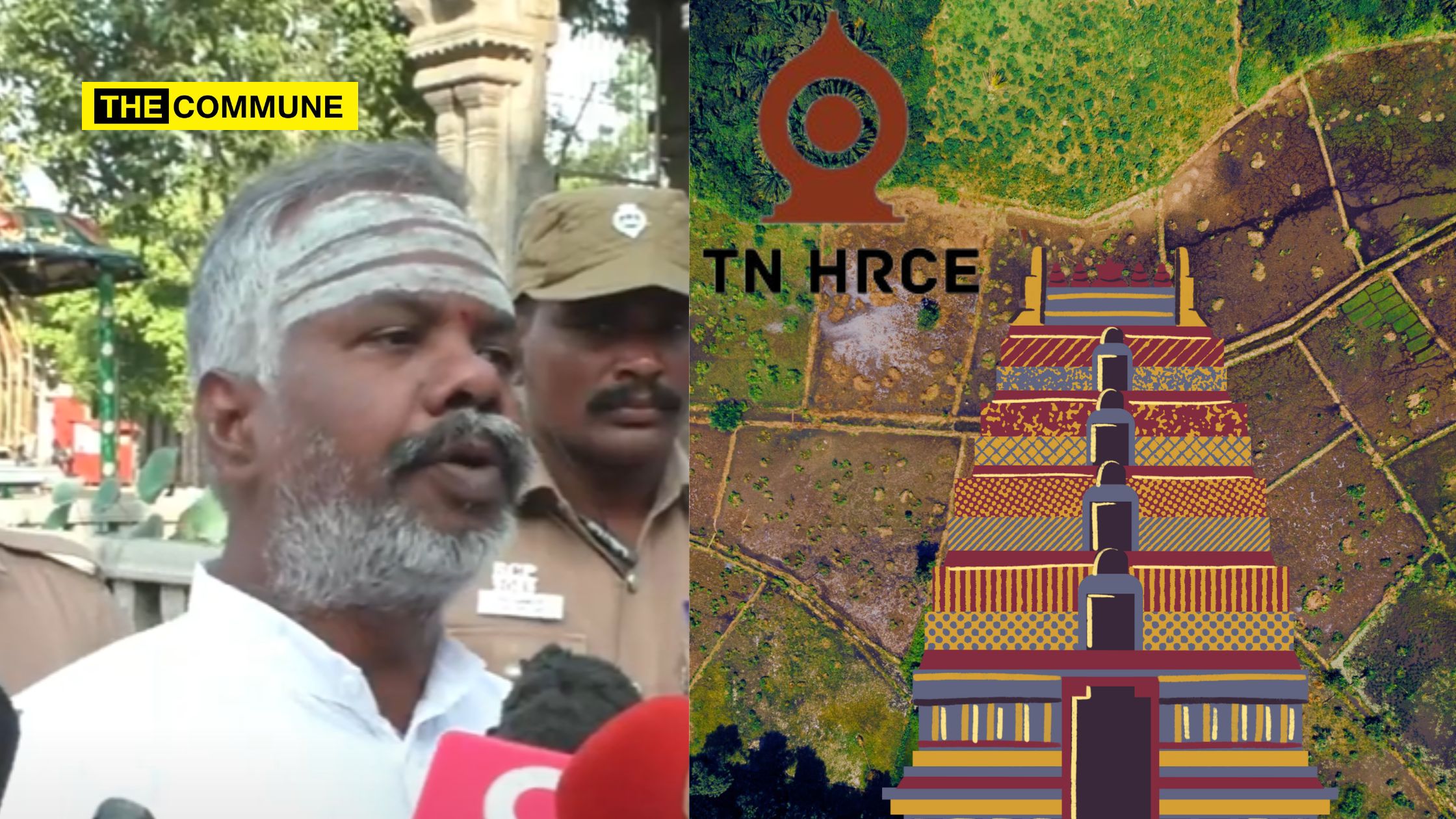
Hindu Religious Institutions Retain Right To Hindu-Only Employment, Madras High Court Declares

Madras HC increased security in court campus after country bombs were exchanged among suspects in the Armstrong murder case. Christian shrine

The Madras High Court has dismissed a writ petition challenging a recruitment notification that restricted employment at institutions run by Hindu temples to individuals professing the Hindu religion. Justice Vivek Kumar Singh ruled that the Hindu Religious and Charitable Endowments (HR&CE) Act mandates such appointments and deemed the regulation constitutionally valid under specific provisions.

The case arose from a 2021 petition filed by A. Suhail, a Muslim candidate, who applied for the position of Office Assistant at Arulmighu Kapaleeswarar Arts and Science College in Chennai. Suhail argued that the Hindu-only recruitment policy violated his constitutional right to equal opportunity in employment under Articles 16(1) and 16(2). However, the court rejected his plea, emphasizing that the institution, being self-financed and operating without government aid, does not qualify as aStateunder the Constitution to ensure non-discrimination in public employment.

Justice Singh clarified that the college, established using temple funds and sustaining its operations through student fees, falls under Article 16(5) of the Constitution. This provision permits religiously motivated appointments in denominational institutions. Additionally, Section 10 of the HR&CE Act explicitly requires officers and employees appointed for temple-affiliated purposes to be practising Hindus.

The court further declared that appointees who cease to profess Hinduism would be deemed to have resigned from their positions. Justice Singh also dismissed the petitioner’s argument that the college should be categorized solely as an educational institution rather than a religious establishment. He ruled that the college’s establishment with temple funds renders it subject to the HR&CE Act, which governs religiously affiliated institutions.

Subscribe to our channels on TelegramWhatsApp, and Instagram and get the best stories of the day delivered to you personally.

“Conversion For Reservation Fraud On Constitution”: Supreme Court Rejects Opportunistic Religious Conversions

Conversion For Reservation is Fraud On Constitution, Supreme Court Rejects Opportunistic Religious Conversions.

In a significant ruling, the Supreme Court has held that religious conversion solely to avail quota benefits, without genuine belief in the adopted faith, undermines the constitutional ethos and reservation policies. A bench comprising Justices Pankaj Mithal and R Mahadevan dismissed the appeal of C Selvarani, a born Christian, seeking a Scheduled Caste (SC) certificate for an Upper Division Clerk job in Puducherry. The court upheld the Madras High Court’s decision to deny her the certificate.

Writing for the bench, Justice Mahadevan emphasized, “India is a secular country, and every citizen has the right to practice and profess a religion of their choice as guaranteed under Article 25 of the Constitution. However, if the purpose of conversion is largely to derive the benefits of reservation but not with any actual belief in the other religion, the same cannot be permitted, as the extension of benefits of reservation to people with such ulterior motives will only defeat the social ethos of the policy of reservation.”

The appellant had claimed to profess Hinduism, belonging to the Valluvan caste recognized under the Constitution (Pondicherry) Scheduled Castes Order, 1964. Selvarani argued that she was born to a Hindu father and a Christian mother, both of whom followed Hindu practices. She submitted that her educational and other records affirmed her SC status, and her father and brother held SC certificates.

However, the Court noted that the evidence presented, including a report from the Village Administrative Officer, contradicted these claims. The report revealed that Selvarani’s parents were married under Christian rites, her father had converted to Christianity through baptism, and she herself was baptized at two months old. The Court further observed that Selvarani and her family continued to practice Christianity actively. “The appellant professes Christianity and actively practices the faith by attending church regularly. Despite the same, she claims to be a Hindu and seeks for Scheduled Caste community certificate for the purpose of employment. Such a dual claim made by her is untenable and she cannot continue to identify herself as a Hindu after baptism,” the bench held.

The Court rejected her argument that her baptism as an infant was involuntary, stating, “She did not make any attempt to cancel the registration of baptism nor file any declaratory suit in this regard.” It also noted the absence of any public declaration or formal reconversion process, such as a ceremony through the Arya Samaj, which could substantiate her claim to Hinduism. “The appellant and her family, if they really intended to get themselves converted, ought to have done some positive act to evince such conversion rather than a meek claim to be practicing Hinduism,” the Court remarked.

Highlighting the constitutional and legal framework, the Court reiterated that Scheduled Caste status is reserved for individuals professing Hinduism, Buddhism, or Sikhism under the SC Orders. Justice Mahadevan observed, “In any case, upon conversion to Christianity, one loses her caste and cannot be identified by it. As the factum of reconversion is disputed, there must be more than a mere claim. There is nothing on record to show that she or her family has reconverted to Hinduism, and on the contrary, there is a factual finding that the appellant still professes Christianity.”

The Supreme Court observed that the evidence clearly demonstrated the appellant’s active practice of Christianity, including regular church attendance. “Despite this, she identifies as Hindu to obtain an SC community certificate for employment purposes,” the bench stated, adding that such contradictory claims were not permissible. “After baptism, she cannot continue to identify as Hindu,” the court concluded.

As reported by PTI, the court ruled that granting Scheduled Caste status to the woman, who followed Christianity but claimed Hinduism solely to access employment reservations, “would go against the very object of reservation and would amount to fraud on the Constitution”.

The Court dismissed the appeal, concluding that granting Selvarani SC communal status would constitute a “fraud on the Constitution” and undermine the very objectives of the reservation policy.

(With inputs from Verdictum)

Subscribe to our channels on TelegramWhatsApp, and Instagram and get the best stories of the day delivered to you personally.
16th-Century Mosque Standing On Shri Hari Har Temple Ruins In Sambhal, Residents Testify About Mosque Officials Denying Access To Ancient Well For Hindu Rituals

16th-Century Mosque Standing On Shri Hari Har Temple Ruins In Sambhal, Residents Testify About Mosque Officials Denying Access To Ancient Well For Hindu Rituals
Image Source: Swati Goel Sharma

The Sambhal Jama Masjid, a 16th-century mosque protected as a ‘national monument’, became the centre of a legal and communal controversy following a petition filed on 19 November 2024. The petitioners, led by Hari Shankar Jain, stated that the mosque was constructed on the site of an ancient Hari Har Mandir, similar to those involving religious disputes in Varanasi, Mathura, and Dhar. The civil judge of the district court ordered a photographic and videographic survey of the mosque, which was peacefully conducted the same day under heavy police presence.

However, a second survey on 24 November 2024 escalated into violence. This survey, conducted in the presence of police and petitioners, was preceded by a local priest and chants of “Jai Shri Ram.”

A large crowd of Islamist protestors gathered, and the situation turned volatile with stone-pelting from the mob. Police reportedly used tear gas and lathi charges to disperse the crowd but were accused of opening fire, resulting in the deaths of five individuals, including two teenagers. Residents alleged that police also ransacked homes, which was denied by authorities. The mosque was built by Babur’s general Mir Hindu Beg around 1528.

However, when local Hindu minorities in the region were asked about the disputed property, they would only address it as the Shri Hari Har temple.

Temple Or Mosque?

Sambhal, a town in Uttar Pradesh, houses the disputed mosque structure. The structure is located in the Kot area of Sambhal and has become a focal point of tension, with both Hindu and Muslim communities claiming historical ties to the site.

Image Source: Swati Goel Sharma

The area is divided into two distinct parts, Kot Purvi (East) and Kot Gharbhi (West), home to Hindu and Muslim populations, respectively. The street outside the mosque, which leads to a local police station, is predominantly Hindu and is humorously referred to as “Post Office Road” by locals, who liken it to the India-Pakistan border due to the communal divide.

Image Source: Swati Goel Sharma

According to the 2011 census, Hindus comprise 22% of Sambhal’s population, with the Hindu community in Kot Purvi constituting no more than 10%.

Several residents, particularly from the Hindu community, have consistently referred to the mosque site in Sambhal as the location of the Hari Har Temple. Anil Tandon, a 66-year-old lifelong resident of Kot Purvi, recalls that his family always regarded the site as the Hari Har Temple. He says that as a child, he visited the site with relatives who were interested in seeing the temple inside the mosque. Back then, Hindus could still enter the mosque premises before the construction of large walls that now enclose it. Tandon remembers a locked room and a water “kund” inside.

Similarly, Arvind Arora, 75, whose family migrated from Lahore in 1947, also refers to the site as the Hari Har Mandir. Arora shared that his family had learned to call it the Hari Har Temple after their arrival in Sambhal following Partition. Many of the residents in the area, including displaced Punjabi families, share this sentiment. However, Arora notes that many families are leaving the area due to growing tensions and changing demographics.

Another local, Muni Devi, 90, recalls using a well outside the mosque’s gate for religious ceremonies like Kuan Pujan (a newborn ritual). She states that the mosque committee later covered the well with a wall, taking half of it inside the mosque premises. Residents claim that the well, now under police guard, has historical significance.

In addition to these personal accounts, several locals have pointed out the presence of an Archaeological Survey of India (ASI) plaque outside the Sambhal masjid in their youth, which they believe indicated the mosque was built over an existing Hindu temple. One resident, now 57, claims the mosque committee removed the ASI plaque, further deepening suspicions about the true nature of the site.

The controversy has gained further attention with a petition filed by Vishnu Jain and others contesting the mosque’s construction. The petition alleges that the mosque encroaches upon ASI-protected land. The petitioners argue that the mosque committee has taken control of the property, not only denying access to the public but also obstructing ASI officials from exercising their rights over the land. According to the petition, the mosque committee has even locked portions of the property without legal authority to do so.

The petition also references historical evidence, citing an ASI survey conducted in 1875-1876, which details how the mosque was constructed over an existing temple. According to the petitioners, this survey report strengthens the claim that the Shahi Jama Masjid was built on the ruins of the Hari Har Temple in Sambhal.

The violence in the area escalated over the weekend, particularly on Sunday, when a clash broke out in the Muslim-populated area behind the mosque. The lane was reportedly deserted the following day, with security personnel combing the area for stone-pelters based on footage. Residents were reluctant to speak to outsiders, and many houses in the vicinity were locked. The violence has raised concerns about the safety and stability of the area, with many fearing the potential for further unrest.

While there is strong support within the local Hindu community for reclaiming the site as the Hari Har Temple, some residents, like Kamal Gambhir, 50, whose family also migrated from Multan, argue against pursuing such a course due to the violence and social unrest it could provoke. Gambhir, acknowledging the site’s historical significance as a Hindu temple, cautions that reclaiming it would lead to curfews, business disruptions, and greater communal tensions.

The ongoing dispute over the Shahi Jama Masjid in Sambhal is a complex issue, rooted in both historical grievances and contemporary communal tensions.

This article is based on an X thread by Swati Goel Sharma.

Subscribe to our channels on TelegramWhatsApp, and Instagram and get the best stories of the day delivered to you personally.
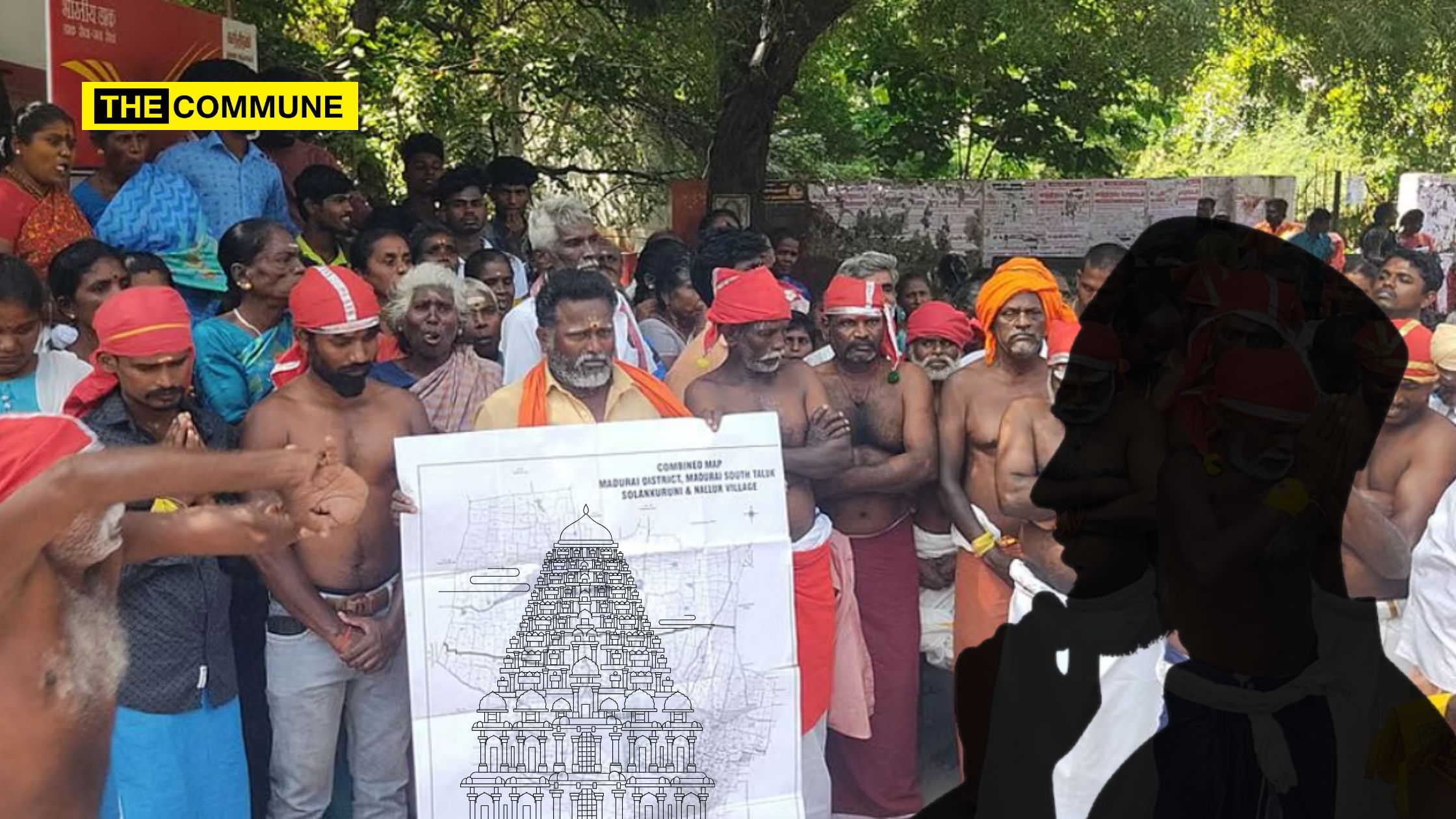
Dear Suriya and Jyothika, Do You Think We’re Fools?

After Kanguva Disaster, Jyothika Who Opposed Temple Donation Visits 2 Temples In 2 Days - How Many More?

The Dravidianist family of actor Suriya and his wife Jyothika, who previously virtue-signaled about the importance of directing public money toward schools and hospitals rather than temple donations, have recently experienced a dramatic shift in their public personas. After one of the most disappointing box-office failures in Kollywood history, the couple has suddenly embraced a deep spiritual awakening. They are now reportedly visiting famous temples both within Tamil Nadu and outside the state, demonstrating a newfound reverence for the faith and an intense commitment to worship.

This unexpected spiritual transformation comes in the wake of the flop of Suriya’s latest movie, Kanguva. Despite initial hopes and heavy promotion, the film failed to resonate with audiences. It struggled at the box office, with theatres eventually pulling it due to poor ticket sales. In contrast, Amaran, a smaller-budget rival film that was released around the same time, continued to enjoy strong audience turnout, drawing full houses even after two weeks of screening. While Kanguva floundered, with many viewers criticizing it online, reports surfaced claiming that the film was still doing well, fueled by attempts from the crew to counter the negative feedback with false claims of the film’s success.

On 20 November 2024, a video of Dravidianist actor Suriya and director Siva visiting the Sri Yoga Narasimha Swamy Temple in Sholingar, near Ranipet went viral, following the intense backlash from fans after the release of Suriya’s movie ‘Kanguva’, which received severe criticism and widespread trolling from all corners of the country.

On 26 November 2024, Suriya and Jyothika, the husband-and-wife duo, visited the esteemed Mookambika Temple in Kollur, Karnataka. There, they had a divine darshan and took part in the sacred Chandika Homam, seeking blessings at this revered spiritual site.

On 27 November 2024, actress Jyothika, wife of actor Suriya, visited the Sri Venkateswara Temple in Tirupati for a spiritual pilgrimage, seeking blessings at the renowned temple.

On 27 November 2024, actor Suriya visited the Sri Masaniamman Temple in Anaimalai, where he offered prayers and sought blessings for the success of his upcoming film, Suriya 45.

Ironically, just as the film’s box-office failure became apparent, the couple, known for their previous stance against temple donations, has now found solace in their faith, with Suriya and Jyothika taking rounds at temples—a stark contrast to their earlier statements. Their sudden spiritual awakening coinciding with the Kanguva‘s failure, leading many to comment that the couple demonstrates their true acting skills in real life, even more so than on screen.

Now, in what seems to be an apparent attempt to rebuild their image, they have turned to temple visits and ensured that the media is fully aware of their newfound devotion, with the Dravidianist media giving it their complete attention and coverage. Even though they are aware of how their actions and statements have hurt the sentiments of many, particularly Hindus in the state, they have yet to apologize. Their egos continue to prevent them from acknowledging the mistake they made earlier.

Had their recent film been successful, there likely wouldn’t have been any sudden display of spiritual devotion. Instead, they would have continued their support for the DMK and the Dravidianist ideology, carrying on as usual. The shift from their controversial statements to this newfound religious fervor is a simple staged act rather than genuine devotion. Critics suggest that the only way for the couple to redeem themselves is to publicly apologize for their past comments, undergo a sincere change of heart, and demonstrate true faith through their actions.

The ridicule and trolling directed at actor Suriya stem from his wife, Jyothika’s statement at a 2020 awards ceremony, where she emphasized the importance of donating to schools and hospitals instead of temples. She had compared the grandeur of the Brihadeeshwara temple to Udaipur’s palaces, but her experience with a poorly maintained hospital during her filming led her to advocate for prioritizing donations to educational and healthcare institutions.

Instead of criticizing the state for its handling of health services, she subtly used the platform to urge the public to direct their charitable contributions toward schools and hospitals, asserting that these sectors are more, deserving of support.

Even this time, when ‘Kanguva’ being heavily criticized for its weak plot and poor execution, Jyotika, actor Suriya’s wife, took to social media to defend the film, calling out the harsh backlash. She expressed her disappointment at the “unfair” criticism, emphasizing that she was speaking as a cinema lover, not just as Suriya’s wife. Jyotika acknowledged the film’s flaws, particularly the first half-hour and jarring sound, but argued that these are common in large-scale, experimental films. She praised the movie for its unique cinematic experience, highlighting its visuals, camera work, and emotional storyline.

Jyotika also criticized the disproportionate negativity the film received compared to other big-budget Tamil movies, which often feature problematic tropes but aren’t subjected to the same scrutiny. She suggested that the backlash might have been part of a targeted campaign against the film, urging the ‘Kanguva’ team to remain proud of their work.

However, her defense of the film drew more criticism, with many pointing out the contradiction in her past statements about directing donations away from temples to schools and hospitals. Critics also took issue with her urging people to support the film, despite it being widely panned, as a way to sustain the extravagant lifestyle of the film’s cast and crew.

A Virtue-Signalling Family

Suriya and his family, particularly his wife Jyothika and brother Karthi have many a time indulged in virtue-signaling to peddle DMK propaganda. He was one of the frontrunners in peddling anti-NEET rhetoric and making comments against the National Education Policy 2020. It has been reported that the actor and his wife Jyothika have moved to Mumbai primarily for their children’s education. The couple is said to have invested ₹70 crore in property in the city to provide the best possible education for their children. Their son is enrolled in an IB school in Mumbai, with their wealth being used to secure his future. Meanwhile, the same individuals who can afford such luxuries are quick to speak against policies like NEP 2020 and NEET, which aim to benefit the common citizen,

Surprisingly, after the DMK came to power, Suriya and his family vacated their old Chennai residence, which is now being guarded by armed policemen, courtesy of the DMK government in Tamil Nadu. Meanwhile, the family has since moved to Mumbai.

His brother Karthi had called for the boycott of the three farm laws that were implemented by the Modi Government ignorant of the fact that such laws were already in place in Tamil Nadu.

Furthermore, Suriya runs a “non-profit” organization called the Agaram Foundation and has resorted to virtue-signalling by being vocal for causes espoused by the ruling DMK. He is known for his anti-NEET stance when he claimed it filters away those aspiring to study medicine but Suriya’s hypocrisy shines through his teeth when one looks at the selection process for students seeking financial help for higher education through Agaram Foundation run by the actor. According to the Agaram Foundation’s website, they have a rigorous scoring system in place to identify ‘deserving’ students. This requirement contradicts the stated mission of promoting education and social equality.

Subscribe to our channels on TelegramWhatsApp, and Instagram and get the best stories of the day delivered to you personally. 
Islamists On Rampage Targeting Hindus Under Mohamed Yunus’ Illegitimate Puppet Govt

Hindu Americans Condemn Attacks On Minorities In Bangladesh, Call For Sanctions

Violent unrest broke out in Bangladesh following the arrest of ISKCON monk Chinmoy Krishna Das Brahmachari, a prominent Hindu leader, on sedition charges, amid claims that the interim Mohamed Yunus government has allowed Islamists to target the community without consequence. The monk’s detention on Monday, 25 November 2024, sparked nationwide protests, escalating tensions further when a public prosecutor was killed during clashes in Chittagong the following day.

The protests began after Chinmoy Das, also a Bangladesh Sammilito Sanatan Jagaran Jote member, was denied bail in court. Supporters surrounded the police van transporting him, leading to violent confrontations. Demonstrators allegedly hurled stones at security forces, prompting authorities to use stun grenades and baton charges to disperse the crowd. Das was eventually taken to prison under heavy police escort.

During the chaos, public prosecutor Saiful Islam Alif suffered severe head injuries and succumbed to them at Chittagong Medical College Hospital, further inflaming an already volatile situation.

India has expressed deep concern over the incident, calling on Bangladesh to ensure the safety of Hindus and other minorities. This arrest follows multiple attacks on Hindus and minorities by extremist elements in Bangladesh,India’s Ministry of External Affairs said in a statement. The ministry also highlighted documented cases of arson, vandalism, and desecration targeting the minority community.

Violence Against Hindus Since Political Coup

It is a known fact that minorities, particularly Hindus, have been targeted in Bangladesh since August 2024 – when the army ousted the Sheikh Hasina government. More than 2,000 attacks on the Hindu community have been reported (with many gone unnoticed), including the ransacking of government buildings, destruction of houses and shops, and other violent acts.

The regime under interim leader Muhammad Yunus is accused of enabling radicals, leading to escalated violence against Hindus and minority groups.

Attacks On Hindus Following Arrest

Hindus were protesting against the arrest of Chinmoy Das outside Chattogram court and Bangladesh police opened fire on them.

The army later resorted to lathi charge/baton-charge, and allegedly silent bombs were being deployed against Hindus. Hindu lawyers in the Chittagong Court were also being attacked.

https://twitter.com/TanmoyDash67198/status/1861351019697054163


Source: https://x.com/HinduVoice_in/status/1861339720027869667


While this was happening in Chattogram, Islamists attacked Hindus in Thakurgaon, Chittagong, and Chattogram. They set ablaze Hindu homes in the districts.

https://twitter.com/ShreeKrishna222/status/1861346942544159078

https://twitter.com/VHindus71/status/1861416305339048116

https://twitter.com/hindu8789/status/1861408657474494812


Hindu temples were also attacked – Loknath Dham in Chittagong was attacked by Islamists.

https://twitter.com/hindu8789/status/1861411918910758967

They demolished the Kali Temple of Hazarigoli in Chittagong.

In the Rangunia district, Islamists gave an open call to genocide ISKCON devotees.

And yet the Yunus-led interim government seems to be doing nothing but enabling the Islamists, the police and the Army against the Bangladeshi Hindu minorities.

Subscribe to our channels on TelegramWhatsApp, and Instagram and get the best stories of the day delivered to you personally.
“Leaders Without Ideology Will Only Create Fandom”: Vetrimaaran Takes Dig At Vijay?

"Leaders Without Ideology Will Only Create Fandom": Vetrimaaran Takes Dig At Vijay?

The trailer of Viduthalai Part 2, directed by Dravidianist Vetrimaaran and starring Vijay Sethupathi, has sparked significant attention, building upon the intense narrative in the movie’s first part. This political thriller cast led by Vijay Sethupathi and Soori, with music composed by the legendary ‘maestro’ Ilaiyaraaja. The film’s trailer was unveiled in Chennai on 26 November 2024, to much fanfare. However, the trailer was not without its controversy, as the Dravidianist director, in his usual subtle propaganda, took a jibe at actor-turned-politician Vijay, leader of the Tamilaga Vettri Kazhagam (TVK), who has openly criticized the DMK and labelled it as his political adversary.

In the trailer, Vetrimaaran subtly frames Tamil Nadu’s development through the perspective of communist comrades, making apparent references to former Chief Minister Karunanidhi his role in shaping the state, by buttressing the Dravidianists. Towards the end of the trailer, the director delivers a pointed message: “Leaders without ideology will only produce fans, and that will not pave the way for progress.” This statement by Vetrimaaran is being widely interpreted as a critique aimed at Vijay, whose political entry is closely tied to his film career, implying that mere popularity without a solid ideological foundation cannot lead to meaningful political change.

After the trailer’s release, it quickly went viral, sparking widespread debate across social media platforms.

Dravidianist Dir. Vetrimaaran’s Viduthalai – A Selective & Fictitious Portrayal Of A Real-Life Incident

Film director Vetrimaaran’s Viduthalai Part 1, starring Soori and Vijay Sethupathi, was released on 31 March 2023. The film centers around a police constable (Soori) who is tasked with tracking down a Naxal leader named Perumal Vaathyaar (Vijay Sethupathi), the head of an outfit called ‘Makkal Padai’ (People’s Army), which opposes the government system and the exploitation of natural resources by corporates.

Although the filmmakers included a disclaimer stating that all characters and incidents in the movie are fictional, the film is based on B. Jeyamohan’s short story Thunaivan, which draws inspiration from real-life events that occurred in the late 1980s and early 1990s.

One of the key events depicted is the 1987 bombing of the railway track between Ariyalur and Sillakudi at the Marudhaiyar bridge, which caused the Rockfort Express to derail, resulting in 26 deaths and around 140 injuries.

The perpetrators were linked to the Tamil Nadu Viduthalai Padai (Tamil Nadu Liberation Troop), led by a man named Thamizharasan, who had been arrested in 1985 but was released on parole. The TNVP had ties to several Tamil separatist and Naxal groups.

According to a report by India Today, posters found at the site and in Ariyalur criticized the government’s failure to officially recognize Tamil Eelam, as well as the imposition of Hindi, and demanded the release of arrested militants.

Key leaders of the TNVP included Thamizharasan, Kaliapperumal, and Sundaram. The FIR filed by the police listed Thamizharasan (alias Krishnamoorthy), Jegannathan (alias Vayithuvali), Dharmalingam (alias Balu), and seven others as the primary conspirators.

One of the key accused in the Marudhaiyar bridge bombing was TADA Periyasamy, a figure now active in Tamil Nadu politics as a BJP leader. Periyasamy was arrested on April 25, 1987, and initially sent to 15 days of judicial custody. He was charged under the National Security Act and sentenced to death, but was later acquitted by the Madras High Court after spending three years in prison.

Another bombing, similar to the Marudhaiyar incident, took place on October 24, 1992, when the railway track between Palanganatham and Kallagam was blown up. Periyasamy, along with Deivasigamani (alias Lenin), who took over leadership of the TNVP after Thamizharasan’s death, and others, was arrested. Periyasamy was charged under the now-repealed Terrorist and Disruptive Activities (Prevention) Act, earning him the nickname ‘TADA Periyasamy’. In total, he spent six years in prison due to his involvement in the Tamil separatist movement.

However, Vetrimaaran did not mention TADA Periyasamy in Viduthalai Part 1, while Vijay Sethupathi’s character was clearly based on Thamizharasan.

In response, TADA Periyasamy criticized Vetrimaaran for what he called a “selective and fictitious portrayal.” He condemned the film for attempting to obscure the true political ideas behind the struggles of the time and misrepresenting history.

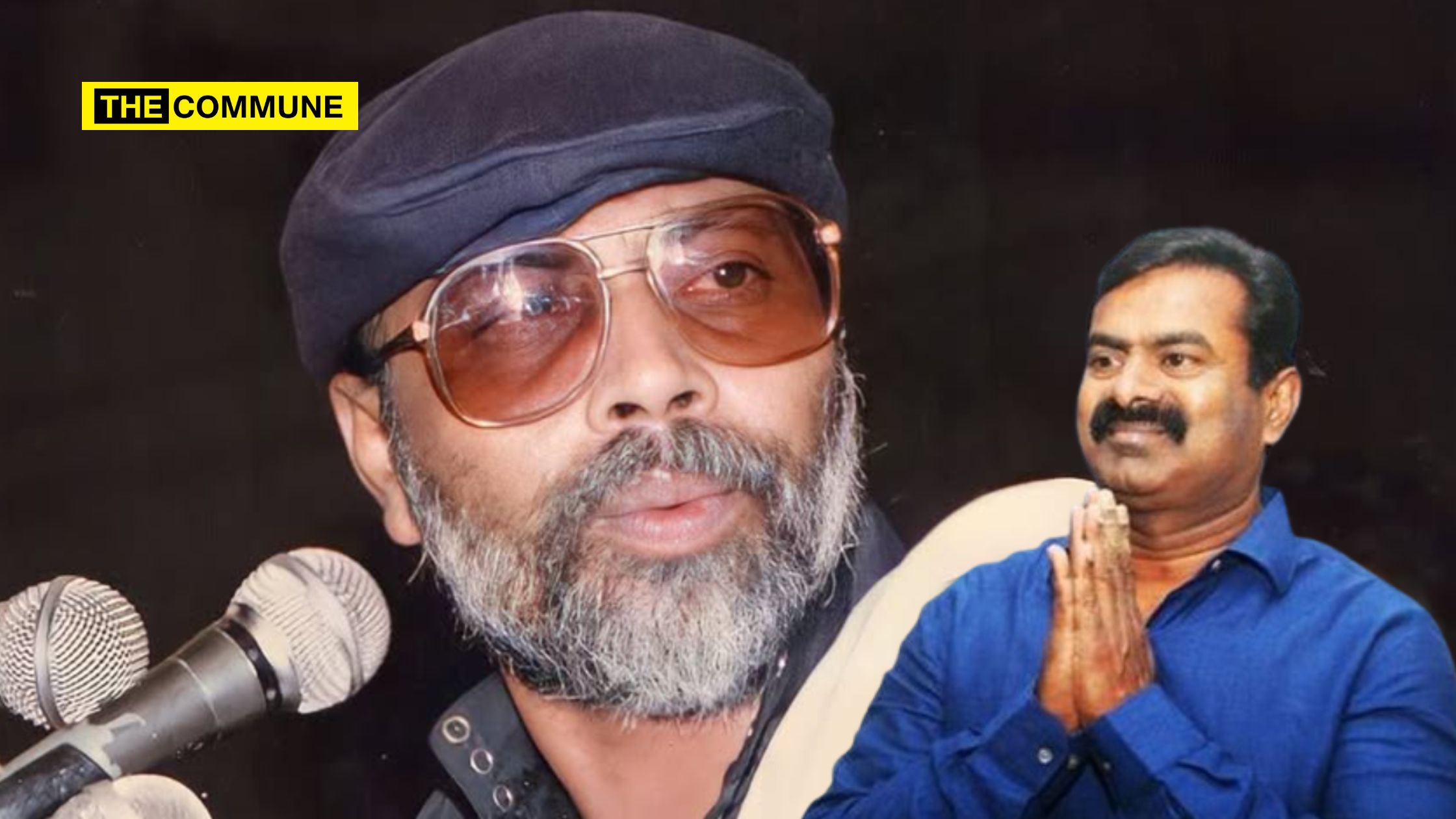
Vetrimaaran has also been promoting his films through political figures like Naam Tamilar Katchi leader Seeman and VCK’s Thirumavalavan. Periyasamy took issue with this, stating, “It is ridiculous to have people like Thirumavalavan and Seeman watch the film and portray them as rebels. At that time, both of them were not even in the political arena—they were just college students.”

He further argued that Vetrimaaran should have been more careful in his portrayal of the historical events and warned that the movie, as it currently stands, would likely create confusion and misunderstandings about the movement.

“I kindly request that a clear true history be recorded and filmed in the second part of Viduthalai”, TADA Periyasamy said.

Vetrimaaran: A Certified Dravidian Stockist Regurgitating Dravidian Stockist Nonsense

Film director Vetrimaaran, known for his acclaimed works like Visaranai, Aadukalam, Vada Chennai, and Asuran, has earned recognition for his cinematic prowess. However, beyond his filmmaking skills, Vetrimaaran has become a figure of controversy due to his political affiliations and the ideological messages embedded in his work. Many critics have begun to view him not just as a filmmaker, but as a promoter of Dravidianist rhetoric, aligning himself with the political agenda of the Dravida Munnetra Kazhagam (DMK), a party historically known for its anti-Hindu stance and commitment to secular, regionalist policies.

Family Ties With DMK

Vetrimaaran’s familial connections to the DMK are well-known. His maternal uncle, Ela. Pugazhendi, was a three-time DMK MLA from Cuddalore, and his family has deep roots in the party’s history, stretching back to Vetrimaaran’s grandfather, Ere. Elamvazhuthi, a former DMK MLA. The legacy of DMK allegiance in Vetrimaaran’s family has long shaped his worldview, influencing his approach to both filmmaking and political discourse. His family’s close association with the DMK, along with the ideological influence of figures like E.V. Ramasamy Naicker (Periyar) and Karunanidhi, has imbued Vetrimaaran with a strong Dravidianist outlook, which many see reflected in his films.

Propaganda Through Cinema

Critics argue that Vetrimaaran’s films are not just works of fiction, but vehicles for promoting Dravidian ideology. In works like Asuran and Vada Chennai, Vetrimaaran has woven themes of caste oppression, linguistic chauvinism, and regional identity into the fabric of his storytelling. While these films are praised for their gritty realism and powerful narratives, the author of this critique suggests that they are also laced with political undertones that support the Dravidianist cause.

For example, in Asuran, the protagonist Sivasaami, played by Dhanush, is subjected to caste-based violence and discrimination. The narrative strongly critiques the caste system and the inequities faced by the lower castes, but it also implicitly reflects the Dravidianist view of North-South dichotomy — where the “North” is portrayed as oppressive and the “South” as victimized. Similarly, the film hints at the influence of E.V. Ramasamy Naicker’s Dravida Kazhagam (DK), a political party founded on the idea of caste-based separation and anti-Hindu sentiments, furthering the argument that Vetrimaaran is using his platform to advocate for the ideologies that the DMK and its allies espouse.

In Vada Chennai, the director touches upon issues of urban development, caste tensions, and socio-political struggles, themes which align with the DMK’s rhetoric against central government policies and the corporate sector. The film was released at a time when the DMK was taking a strong stand against various development projects, and Vetrimaaran’s portrayal of these issues echoed the party’s stance against economic and infrastructural growth that they viewed as detrimental to the people of Tamil Nadu.

Political Affiliations And Public Statements

Beyond his films, Vetrimaaran has publicly supported the DMK and its leaders. He has aligned himself with figures like Seeman of the Naam Tamilar Katchi (NTK) and Thirumavalavan of the VCK, both of whom are known for their Dravidianist views. Vetrimaaran’s public statements have often mirrored the political rhetoric of the DMK, such as his involvement in campaigns against Hindi imposition and his criticisms of the Indian government’s policies on education and governance.

Vetrimaaran has also made controversial comments regarding the treatment of Tamils within India, drawing parallels between Tamil struggles and those of other regions, like Kashmir. These statements have been seen by critics as attempts to foster division and champion a separatist agenda, positioning Tamil identity against the Indian state. His comments about his experiences at airports in India, where he alleged discrimination because of his Tamil language skills, are cited as further evidence of his alignment with the DMK’s linguistic chauvinism, which seeks to assert Tamil as a distinct cultural and political entity, separate from the rest of India.

Hypocrisy In The Name Of Art

One of the most pointed criticisms against Vetrimaaran is his claim that art should reflect the “real” society and that filmmakers have a responsibility to “politicize” cinema. While he has called for a responsible portrayal of identities in art, some critics argue that his own films, particularly Vada Chennai, misrepresent certain communities for the sake of sensationalism and political messaging. For instance, in Vada Chennai, the Meenavar fishing community, which has a rich history in maritime trade and naval service, is depicted as involved in piracy and crime. Critics argue that this portrayal distorts the community’s true cultural and historical significance to suit the film’s narrative, which aligns with the Dravidianist view of victimhood.

Selective Representation Of History

Vetrimaaran’s films often present a one-sided view of Tamil history, focusing on caste oppression and regional grievances. However, critics argue that he selectively omits or downplays crucial historical events that would complicate the narrative. For instance, in Asuran, there is no mention of the Keezhvenmani massacre, where 44 Dalit farmworkers were burned alive in 1968 in Tamil Nadu — an event that was widely attributed to the apathy of the then DMK government. By not addressing such events, Vetrimaaran is accused of selectively shaping history to serve a particular political agenda, while overlooking the darker aspects of the very party he aligns himself with.

Moreover, Vetrimaaran’s reluctance to tackle the role of the DMK in various political and social injustices, such as caste-based violence or corruption within the state, has led some to label him a “coward” who is unwilling to confront uncomfortable truths about Tamil Nadu’s political past. The question remains: will Vetrimaaran ever make a film addressing these real-life issues, or is he more comfortable promoting the narrative that suits his political affiliations?

A Divider Of Unity

The Dravidianist ideology, which Vetrimaaran seems to champion, has long been a divisive force in Tamil Nadu politics. While it has been successful in mobilizing certain sections of society, it has also led to the fragmentation of Tamil identity, pitting caste, language, and regional loyalties against one another. Vetrimaaran’s work, both as a filmmaker and public figure, continues to fuel this division. By consistently aligning himself with the DMK’s anti-Hindu and pro-separatist stance, he is seen by critics as contributing to the fragmentation of Indian unity.

A Political Filmmaker?

While Vetrimaaran’s talent as a filmmaker is unquestioned, his increasing involvement in political rhetoric and the ideological underpinnings of his work have raised concerns about his role in shaping public discourse. His films are no longer seen as just works of art but as vehicles for advancing a particular political agenda — one that aligns with the Dravidianist movement and the DMK’s political objectives.

In the end, Vetrimaaran’s work exemplifies the complex intersection of art, politics, and identity in contemporary Tamil cinema. For some, he is a visionary storyteller; for others, a propagandist peddling divisive ideologies. Whether his films will continue to be celebrated as pieces of artistic expression or condemned as political tools remains to be seen.

Subscribe to our channels on TelegramWhatsApp, and Instagram and get the best stories of the day delivered to you personally.