The Pakistan Telecommunication Authority has requested X to withhold the OpIndia account worldwide, citing legal demands related to reported content.
Many other pro-Hindu and pro-BJP accounts have also received the same mail from X (Twitter) saying that the Pakistani government has sought to withhold some of their X posts.
Pakistanis and Kanglus are genuinely delusional. First, Kanglu Yunus lied about persecution of Hindus, “fact checked” OpIndia and then deleted his miserable tweet.
Now, Govt of Pakistan wants @OpIndia_com withheld worldwide.
The notice, addressed to OpIndia’s editorial team, asserts that the platform’s content violates Pakistani laws, though specific details remain undisclosed. This move comes as no surprise given Pakistan’s history of internet censorship, including the blocking of social media platforms during the February 2024 national elections, justified by the government as a measure to ensure national security.
OpIndia, which has carved a niche for itself by challenging mainstream narratives and frequently critiquing Islamist ideologies and Pakistan’s policies, has faced criticism in the past.
Recent articles published by OpIndia have further intensified this tension. For instance, a March 4, 2025, report titled “Persecution of Hindus in Pakistan: HRCP Report Exposes Violence and Injustice” detailed the Human Rights Commission of Pakistan’s findings on forced conversions, mob violence, and institutional discrimination against Hindus, particularly in Sindh province, painting a grim picture of religious minorities’ plight. Another article, dated September 28, 2022, “Pakistan Officials Come in Support of Banned Islamist Outfit PFI,” exposed Pakistan’s support for the outlawed Popular Front of India (PFI) and its ties to global terror outfits, accusing Pakistani officials of rallying international backing for the group.
Subscribe to our channels on Telegram and Instagram and get the best stories of the day delivered to you personally.
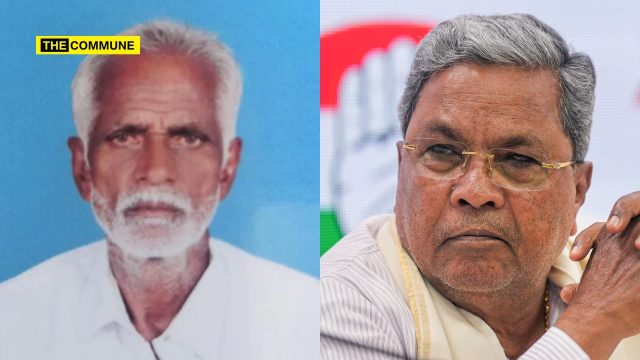
In a deeply distressing case from Karnataka, a government employee took his own life allegedly over non-payment of wages for more than two years. The deceased, identified as Chikoosa Nayaka, worked as a waterman at the Honganuru Gram Panchayat in Chamarajanagar district. He ended his life outside the panchayat office after repeated appeals for his salary went unheard.
According to reports, Nayaka left behind a suicide note detailing his struggles. He stated that his salary had been pending for 27 months, despite repeated pleas to officials. “I have been serving as a waterman since 2016. I repeatedly requested the Panchayat Development Officer (PDO) and the Gram Panchayat president to release my dues, but they ignored me. Even my appeal to the Zilla Panchayat CEO went nowhere,” the note reportedly said.
Nayaka mentioned that he had sought permission to resign due to ill health but was constantly denied. He accused PDO Rame Gowda and Mohan Kumar, the husband of the Gram Panchayat president, of subjecting him to continuous mental harassment. “Whenever I asked for leave, they told me to find a replacement before taking time off. They made me stay in the office from 8 AM to 6 PM. I am ending my life because of the harassment by the PDO and Mohan Kumar,” he wrote, urging authorities to take legal action against those responsible.
Following his death, a case was registered under the SC/ST (Prevention of Atrocities) Act against the PDO, the Gram Panchayat president, and her husband. The Zilla Panchayat CEO also suspended Rame Gowda for negligence and violation of service rules.
The incident sparked widespread outrage, with the Karnataka BJP accusing the Siddaramaiah-led Congress government of negligence and failure to ensure timely payment of wages to government employees. The party drew parallels to a similar tragedy involving Bhagyavati Vishweshwaraiah Aggimath, a librarian from Sedam taluk in Kalaburagi district, who also died by suicide over unpaid wages.
ಕಾಂಗ್ರೆಸ್ ಆಡಳಿತದಲ್ಲಿ ಸಂಬಳ ಸಿಗುವುದಿಲ್ಲ ಆದರೆ, ಸಾವು ಖಚಿತವಾಗಿ ಸಿಗುತ್ತದೆ.!
State BJP President Vijayendra Yediyurappa condemned the Congress government for its apathy. “Even after the suicide of a librarian, the government should have acted swiftly to fix the salary issues. Instead, this insensitive government continues to ignore the suffering of its employees. How many more lives must be lost before it ensures timely payment of salaries?” he wrote on X on October 17, urging the state to implement mechanisms that guarantee prompt wage disbursal.
Subscribe to our channels on Telegram and Instagram and get the best stories of the day delivered to you personally.
In this report, we look at statements made by DMK leaders against the policies initiated by the National Council of Educational Research and Training (NCERT). These emerge amidst Chief Minister M.K. Stalin’s recent assertion that teachings of Prophet Muhammad are included in the state syllabus, contrasting with the party’s historical resistance to NCERT content involving Hindu traditions.
#1 DMK MP Thamizhachi Thangapandian Slams Hindi Titles In NCERT Books
In April 2025, DMK MP Thamizhachi Thangapandian criticized NCERT’s decision to use Hindi titles for English-medium textbooks, labeling it an unconstitutional “cultural imposition” that undermines linguistic diversity. The criticism echoed concerns from other southern leaders about “Hindi imposition” and was part of a broader political pushback against the central government’s education policies, which the DMK argues marginalize regional languages like Tamil.
#2 Party-Wide Opposition To NCERT’s Hindi Move
In April 2025, the DMK officially opposed NCERT’s move to rename English-medium textbooks with Hindi titles, reiterating its long-standing stance against what it perceives as “Hindi imposition.” The party’s position was supported by allies in other southern states, with Kerala’s Education Minister terming the move “illogical.” This coordinated opposition highlighted the ongoing political tension between the central government and southern states over language policy in education.
#3 A Sarvanan Argues ‘Ganita’ Ignores Tamil Tradition
In April 2025, DMK leader A Sarvanan opposed NCERT’s renaming of mathematics textbooks to “Ganit Prakash,” arguing that the Sanskrit-derived term ‘Ganita’ does not represent Tamil linguistic traditions. He noted that ‘Kanakku’ is the common term for mathematics in Tamil. This objection was framed as a defense of Tamil heritage against the dominance of Sanskrit-based terminology in national educational materials, a key point in the Dravidian political narrative.
#4 Stalin Rejects NEP as ‘Nagpur Scheme’
In March 2025, Tamil Nadu Chief Minister M.K. Stalin declared he would not implement the National Education Policy (NEP) 2020 even if the central government offered ₹10,000 crore, accusing the policy of undermining state education systems. He labeled the NEP a “devastating Nagpur scheme,” linking it to the RSS headquarters and framing it as an ideological imposition that compromises Tamil Nadu’s autonomy and social justice principles.
#5 TKS Elangovan Slams ‘Bharat’ Move in NCERT Books
In October 2023, DMK leader T.K.S. Elangovan criticized NCERT’s recommendation to replace ‘India’ with ‘Bharat’ in textbooks, calling it a “cheap and illogical” political gimmick stemming from the BJP’s fear of the opposition’s INDIA alliance. He argued that such a change requires a constitutional amendment and reflects the ruling party’s political motivations rather than educational merit, vowing continued resistance.
#6 DMK Opposes NCERT Textbook Deletions
In August 2023, the DMK strongly opposed NCERT’s deletions from textbooks under the NEP’s rationalization exercise, criticizing the removal of portions related to Mughal history, Gandhi’s legacy, and communal harmony. This opposition was part of a broader resistance from southern states, which view the NEP as a centralizing force that compromises state autonomy and imposes a majoritarian narrative on the educational curriculum.
#7 Stalin Opposes CUET, Citing NCERT Bias
In April 2022, Chief Minister M.K. Stalin urged the Prime Minister to withdraw the Common University Entrance Test (CUET), arguing that its reliance on the NCERT syllabus disadvantages students from state boards like Tamil Nadu’s. He stated that the test favors those from CBSE schools and coaching centers, sidelining the diverse and robust state education systems and creating an unequal playing field for higher education admissions.
#8 Karunanidhi Condemns NCERT Cartoon on Anti-Hindi Agitation
In June 2012, DMK president M. Karunanidhi demanded the removal of an NCERT textbook cartoon that lampooned the 1965 anti-Hindi agitation, calling it hurtful to Tamil sentiments. The party argued that cartoons are transient political commentary and unsuitable for history textbooks, as they could distort historical understanding and insult the legacy of the Dravidian movement’s struggle for linguistic rights.
Subscribe to our channels on Telegram, WhatsApp, and Instagram and get the best stories of the day delivered to you personally.
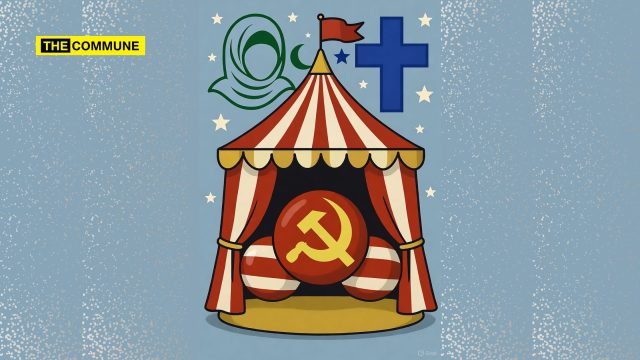
In Kerala, secularism often feels less like a constitutional principle and more like a travelling circus, each act choreographed to showcase that the “real threat” to harmony is somehow always the Hindu majority, even when the fight onstage has nothing to do with them. The latest hijab row at St. Rita Public School in Kochi exposed this farcical dynamic in full colour.
A Muslim student demanded her right to wear the hijab in a Christian-run institution. The school, backed by a High Court interim order and police protection, said no, the uniform applies to all. Within hours, Education Minister and CPI(M) leader V Sivankutty intervened, ordering the school to permit the hijab. It was the perfect opportunity for the Left to parade its “secular” credentials while subtly wooing Muslim votes under the guise of constitutional liberty.
But the Church wasn’t amused. The Syro-Malabar media commission blasted the minister’s interference as a gift to communal elements targeting Christian educational institutions. Even Deepika Daily, the Church’s own mouthpiece, published an editorial warning against surrendering to “religious fundamentalism” dressed up as rights discourse. By Wednesday, the same minister who had thundered about freedom of choice was suddenly pleading for calm and consensus, conveniently after realising he had stepped on ecclesiastical toes.
Strip away the speeches and what remains is this: a tug-of-war between Muslim assertion and Christian resistance, with the CPI(M) trying to score political points from both sides. The Hindu community, neither party to the dispute nor beneficiary of the outcome, will still, in the next breath, be scolded as the supposed enemy of secularism.
So, what actually unfolded in this three-ring circus?
Muslim groups demanded religious exceptions from a private institution’s rules.
The Christian management resisted firmly to preserve its institutional identity and authority.
The Communist government rushed in to scavenge whatever minority votes it could, only to retreat when it realized it was alienating another crucial electoral bloc.
This entire drama was a raw power play between three distinct groups, with the Hindu community merely as spectators. Yet, this is the bitter punchline of the Kerala paradox.
While it is a case of a Communist Minister going out of the way to appease his Muslim votebank, the secular media resorts to acrobatics to somehow pin the controversy on Hindutva and BJP.
For example, Deccan Herald in an article wrote that the “backing of the BJP and its coalition partners to the Christian management school could be seen as yet another attempt of the saffron party to get closer to the Christian community for electoral gains”.
After this unseemly squabble over religious expression and institutional control, a clash where secular principles were the first casualty, these very same actors will, without a hint of irony, reunite.
They will stand on a shared platform, point a collective finger at the Hindu majority, and deliver their favorite sermon on “Hindu intolerance” and “majoritarianism.” They will lecture the rest of India on communal harmony, all while their own political ecosystem thrives on precisely the kind of sectarian bargaining they publicly decry.
The final conclusion is inescapable. Kerala’s secularism is not a principle; it is a posture. It is a convenient weapon to be wielded against one community while the others engage in the very real, very messy politics of identity and power. The circus leaves town, but the clowns remain in government, already preparing for their next act.
Subscribe to our channels on Telegram, WhatsApp, and Instagram and get the best stories of the day delivered to you personally.
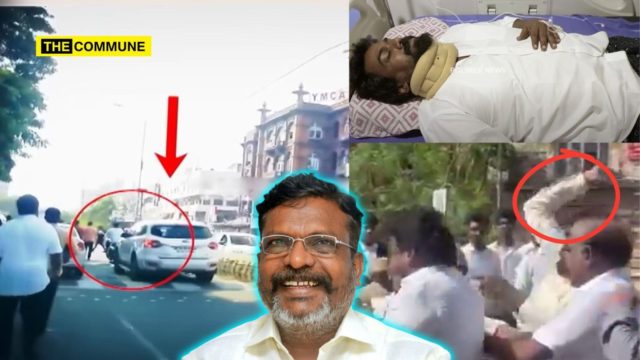
The Madras High Court on Friday delivered a stinging rebuke to the city police and VCK (Viduthalai Chiruthaigal Katchi) leader Thol. Thirumavalavan over last week’s incident where a lawyer was assaulted near the court premises. The judge sharply questioned the police’s “hostile” action of registering a case against both the victim and the assailants and condemned Thirumavalavan for his role, stating he “seemed to be acting in an inciting manner.”
The controversy stems from an incident where a car carrying VCK President Thirumavalavan allegedly hit a scooter ridden by lawyer Rajiv Gandhi near the Madras High Court. When Gandhi confronted the occupants about the collision, he was allegedly brutally assaulted by men accompanying the VCK leader. A video of the incident went viral, sparking widespread criticism.
Thirumavalavan’s Explanation and Controversial Remarks
In his defense, Thirumavalavan claimed that the scooter rider had intentionally stopped in front of the car to pick a fight. He denied that his party men assaulted the lawyer and alleged a conspiracy by the BJP and RSS behind the entire episode.
However, his subsequent remarks ignited further outrage, he even justified the thrashing by his cadre as he said the motorist glared at him and hence his cadre beat him. Thirumavalavan even said, “And even that, was the hitting done properly.” This statement was widely condemned for its dismissive and provocative tone.
Police Action and Legal Fallout
Following the incident, the Tamil Nadu and Puducherry Bar Council formed a committee to investigate the matter. Meanwhile, the police registered FIRs – against the VCK men under two sections, and surprisingly, against the lawyer, Rajiv Gandhi, under three sections.
This dual FIR prompted another lawyer, K. Balu, to file a petition in the High Court. Balu, who had also faced threats from a Cuddalore lawyer using obscene language in connection with this case, sought police protection and action against those threatening him.
Lopsided FIR and Legal Fallout
The Esplanade police registered cases after a 10-day delay based on complaints from both sides. However, the FIRs showed a stark contrast.
In the complaint filed by the assaulted lawyer, Rajiv Gandhi, which mentioned that Thirumavalavan “incited” the attack, a case was registered against the assailants under only two sections: using obscene language and attacking with intent to cause injury. Thirumavalavan’s name was omitted.
In the complaint filed by VCK advocate Parvendan, the police registered a case against Rajiv Gandhi under three more severe sections: obstructing a person with wrongful intent, threatening, and intentionally insulting with intent to disturb the peace.
Lawyer Rajiv Gandhi’s side has questioned the police’s basis for including the “threatening” section, as the VCK advocate’s complaint allegedly contained no mention of any threats.
High Court’s Scathing Observations and Questions
During the hearing of these petitions, Justice Satish Kumar did not mince words. The court raised several pointed questions to the police:
“On what basis is the case filed against both parties?” the judge asked, expressing astonishment at how a case was registered against the lawyer who was the victim of the attack. He further asked, “But on what basis was an FIR registered against both parties? … when only one party had joined in attacking a lawyer?”
The judge was deeply critical of the police’s inaction, questioning what the police personnel present at the scene were doing during the attack and opining that he “believed the police were silent on the matter.”
In a major condemnation of the VCK leader’s conduct, Justice Satish Kumar observed, “The leader who was present there, instead of controlling the situation, seems to have acted in a manner that provoked the problem.” The court recorded its “strong condemnation that his speech in a way that could encourage violence is condemnable.”
The judge noted the profundity of the incident, stating, “Such a terrible act had taken place in the High Court premises… This incident was recorded in all CCTVs. However, it is very sad that the police have only registered a case and have not taken any action so far. What were the police personnel present at the spot doing when the attack was taking place?”
He was unequivocal in his assessment of the police’s dual FIR, calling it “hostile that the police is pursuing this case against both the victim and the attacker,” and pointedly asked, “To satisfy whom has the police taken this action?”
The High Court has issued firm directives to the police – to seize the CCTV footage of the entire incident, to conduct a thorough investigation based on this evidence, and to submit a report on the action taken against the perpetrators of the attack.
The court’s strong remarks have put the police investigation and the conduct of the political leader under the spotlight. The matter has been adjourned for further hearing.
Subscribe to our channels on Telegram, WhatsApp, and Instagram and get the best stories of the day delivered to you personally.
In a move that has drawn sharp condemnation from the Madras High Court, the Tamil Nadu police under the Dravidian model government have registered a criminal case against a lawyer who was brutally assaulted by VCK leader Thol. Thirumavalavan’s supporters, while treating his attackers with surprising leniency.
The incident, which occurred on October 7 outside the Madras High Court, began when Thirumavalavan’s car collided with lawyer Rajiv Gandhi’s two-wheeler on NSC Bose Road. When Gandhi confronted the occupants about the collision, he was violently attacked by men accompanying the VCK leader, with the entire assault captured on video and later going viral.
Victim-Turned-Accused: The Lopsided FIR
In a controversial response, the Esplanade police registered two FIRs that show stark disparity in treatment. Against lawyer Rajiv Gandhi – the assault victim – police invoked three serious sections of the Bharatiya Nyaya Sanhita (BNS): wrongful restraint, criminal intimidation, and intimidation with intent to breach peace.
Meanwhile, against the men who were seen on video brutally attacking Gandhi, police registered a case under only two comparatively minor sections: causing hurt and using obscene language. Notably, Thirumavalavan’s name was completely omitted from the FIR despite the victim’s complaint specifically mentioning that the VCK leader “incited” the attack.
High Court’s Stinging Rebuke
The police action prompted a stinging rebuke from the Madras High Court, with Justice Satish Kumar delivering scathing observations during a hearing on Friday.
“On what basis is the case filed against both parties?” the judge questioned, expressing astonishment that the assault victim had been made an accused. He further asked, “when only one party had joined in attacking a lawyer?”
Justice Kumar was unequivocal in his assessment, calling the police action “hostile that the police is pursuing this case against both the victim and the attacker,” and pointedly demanding, “To satisfy whom has the police taken this action?”
The judge also condemned Thirumavalavan’s role, observing that “the leader who was present there, instead of controlling the situation, seems to have acted in a manner that provoked the problem.”
Political Fallout and Controversial Justification
The incident has sparked political repercussions, with CPM state secretary P Shanmugam expressing concern over caste-based divisions among lawyers in Tamil Nadu. He emphasized that “developments undermining the unity of the legal fraternity must be avoided at all costs.”
Meanwhile, Thirumavalavan’s response to the incident has drawn widespread condemnation. The VCK leader not only denied his party men assaulted the lawyer but allegedly justified the beating by saying the motorist “glared at him.” In a remark that sparked particular outrage, Thirumavalavan reportedly added, “And even that, was the hitting done properly.”
The High Court has now directed police to seize all CCTV footage of the incident and conduct a thorough investigation, adjourning the matter for two weeks. The case has put both the police investigation and the conduct of the political leader under intense judicial scrutiny, raising serious questions about the impartiality of law enforcement in the state.
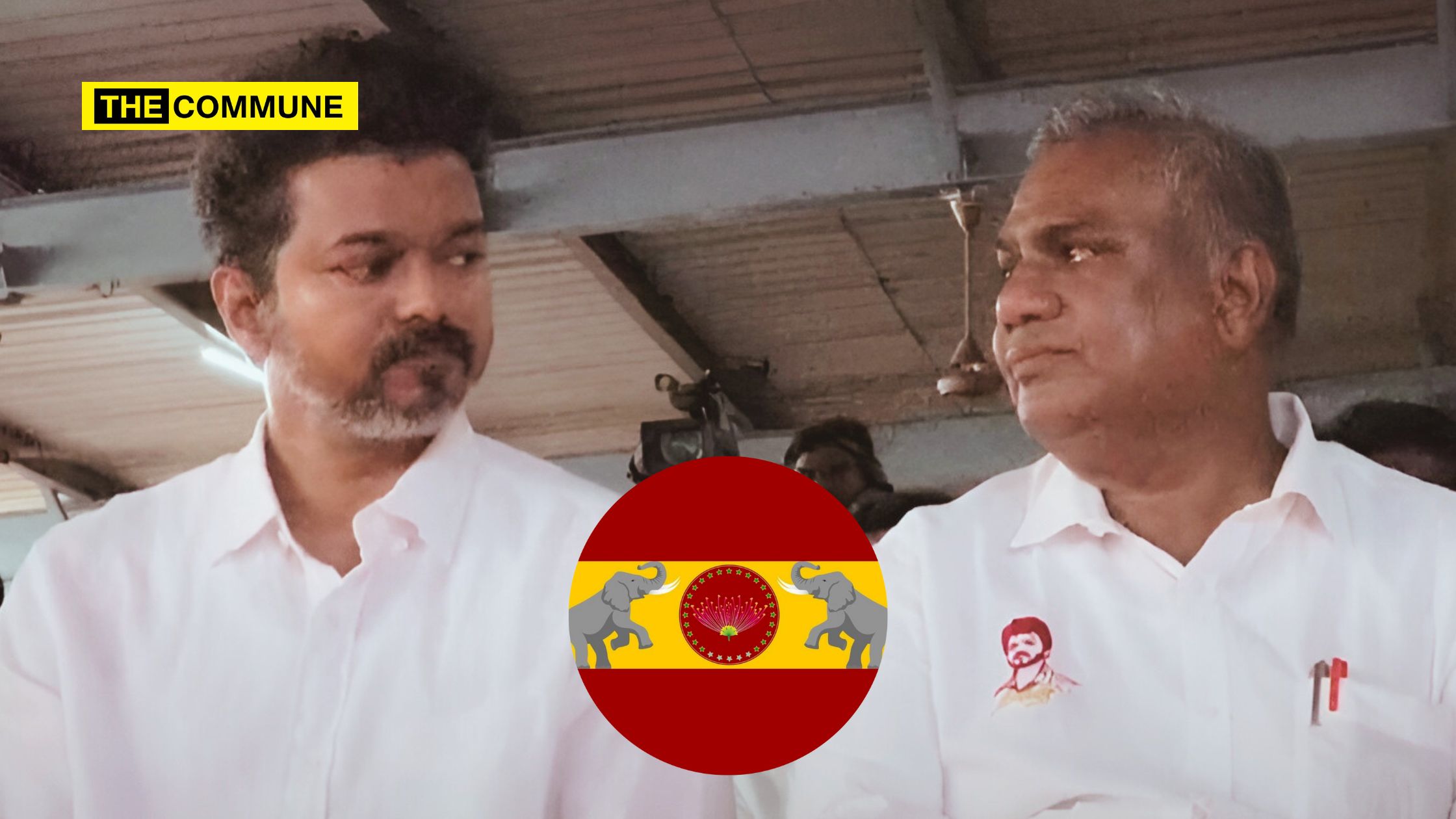
Tamilaga Vettri Kazhagam (TVK), led by actor-turned-politician Vijay, is allegedly facing an internal revolt as cadres and supporters mount pressure on the leadership to remove General Secretary Bussy Anand. Once considered the organisational pillar of TVK, Anand has become the target of widespread criticism following the Karur tragedy and the party’s mishandling of the crisis.
16 days after going underground, Bussy Anand made his first public appearance on 13 October 2025 after the Supreme Court ordered a CBI investigation, but his return was met with anger rather than support. Many party supporters accused him of going into hiding during the Karur crowd crush incident as if he had nothing to do with the party, which left cadres in disarray. During his bail hearing, he had shifted the entire blame on TVK functionaries. Several cadres took to social media demanding a restructuring of the organisation and greater accountability from the leadership.
The dissent gained momentum soon after the Supreme Court granted interim relief to TVK by transferring the Karur investigation to the CBI. On the same day, photos of Bussy Anand posing with district secretaries surfaced online, triggering a backlash from cadres who felt abandoned during the party’s most difficult phase.
TVK’s ‘virtual warriors’ have expressed frustration over the leadership’s inaccessibility. Many accused Anand of surrounding himself with loyalists and sidelining competent members. Supporters alleged that Anand focused on self-promotion, citing instances of elaborate convoys and extensive publicity around his visits, while neglecting grassroots engagement and party-building.
Multiple petitions addressed to TVK Chief Vijay have since emerged online, demanding immediate changes in the organisational structure. One open letter titled “From the heart of your fans, virtual warriors, and cadres” stated that the Karur tragedy had exposed deep flaws in TVK’s internal framework. It urged Vijay to strengthen the party’s second-line leadership, train district-level leaders, and decentralise power to make the movement resilient even in the absence of its top leader.
Another letter, titled “TVK Party to Retrospect and Strengthen”, specifically called for changes to the General Secretary’s role, citing Bussy Anand’s ineffectiveness. It suggested that even if a replacement was not imminent, his responsibilities should be redistributed among capable members to ensure smoother functioning.
The discontent intensified further when photos went viral showing Karur East District Secretary Mathiazhagan and party functionary Paunraj, both arrested in connection with the Karur tragedy and later released on bail, touching Bussy Anand’s feet at the party headquarters. The images sparked outrage among cadres, prompting the hashtag campaign #KickOutBussyAnand to trend across social media platforms.
As petitions and online campaigns multiply, TVK’s leadership has remained silent, further fuelling speculation of internal division. Party insiders say the growing chorus against Anand reflects a wider crisis of confidence within the organisation, with cadres seeking greater transparency, accountability, and accessibility from the top leadership.
In a serious indictment of Tamil Nadu’s power utility, the Comptroller and Auditor General (CAG) has raised an alarm over the suspected temporary misappropriation of public funds by Tangedco. According to the CAG’s report on state finances for 2023-24, the electricity distributor collected ₹1,985 crore as electricity tax from consumers but remitted only ₹1,457 crore to the government, retaining ₹507.43 crore.
The national auditor termed this a breach of the Tamil Nadu Tax on Consumption or Sale of Electricity Act, 2003, which mandates Tangedco to collect the tax along with energy charges and remit it to the Consolidated Fund of the State – the government’s main account for all revenues.
“The amount of tax collected but not remitted into the consolidated fund as of March 31, 2024, was ₹507.43 crore,” the report stated, adding that Tangedco had also retained ₹19.85 crore as collection charges. It explicitly warned that “such non-remittance to the government account and retaining the collected tax for such a long period is fraught with the risk of suspected temporary misappropriation.”
This practice allows the corporation to use taxpayer money as its working capital, effectively diverting funds meant for public expenditure.
The report also revealed that this is not an isolated incident but a recurring pattern. A similar shortfall identified in earlier audits, amounting to ₹4,264.61 crore for the period from 2019-23, was remitted to the Consolidated Fund only in the last financial year, after adjusting for collection charges of ₹142.16 crore.
The CAG’s findings point to systemic financial mismanagement, highlighting how a state-owned utility has repeatedly failed to comply with statutory requirements, thereby keeping thousands of crores of public money outside the government treasury for extended periods.
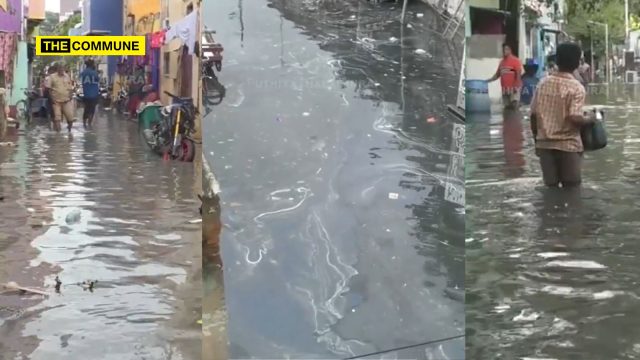
Residents of K.M. Garden in Chintadripet have been facing severe hardship as sewage has been overflowing on 15th Street for the past four days, affecting more than five thousand residents. The stagnant wastewater has led to foul odour, mosquito infestation, and heightened fears of infectious diseases spreading in the densely populated neighbourhood.
சென்னை பட்டாளம் கே.எம்.கார்டன் 15 தெருக்களில் கடந்த நான்கு நாட்களாக கழிவுநீர் சூழ்ந்துள்ளதாக பொதுமக்கள் வேதனை. இதனால் ஐந்தாயிரத்திற்கும் மேற்பட்ட குடியிருப்புவாசிகள் பாதிக்கப்பட்டிருப்பதாகவும், தொற்று நோய் ஏற்பட வாய்ப்பு இருப்பதாகவும் மக்கள் தகவல்#Chennai#Drainage#Waterpic.twitter.com/Nzr141hsm9
Local residents said repeated complaints to civic authorities have gone unanswered. The situation reflects a broader pattern of civic neglect in North Chennai, where overburdened sewage networks and inadequate maintenance often lead to contamination of streets and drinking water sources.
Earlier this week, similar reports emerged from Old Washermenpet, where residents said hand pumps were yielding sewage water instead of clean water.
North Chennai Metrowater hand pumps are getting raw sewage. In Old Washermenpet 👇🏽 pic.twitter.com/D69nbaLK0g
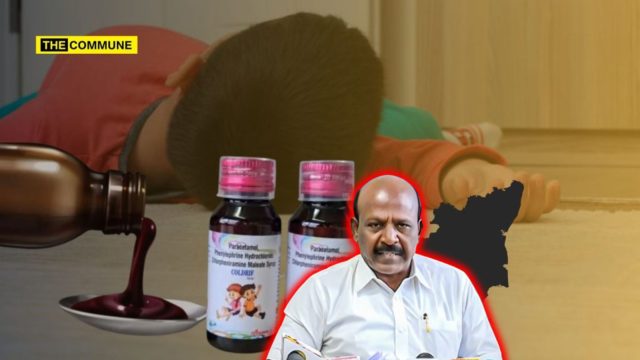
Tamil Nadu Health Minister Ma. Subramanian on Friday (17 October 2025) seemed to absolve his government of responsibility in the deaths of 25 children in Madhya Pradesh linked to Coldrif cough syrup manufactured in Tamil Nadu by Sresan Pharmaceuticals, claiming that the incident was caused by “negligence on the part of Madhya Pradesh drug quality control authorities.”
Responding to a special motion raised by Opposition Leader Edappadi K. Palaniswami in the Tamil Nadu Assembly, Subramanian said that the state acted “within hours” of receiving information from Madhya Pradesh about the contaminated “Coldrif” syrup. He maintained that Tamil Nadu’s role was limited to regulation and that the company involved, Sresan Pharmaceuticals, had already been sealed and its operations halted.
Minister’s Explanation in the Assembly
The minister stated that the Tamil Nadu Drugs Control Department received an official communication from its Madhya Pradesh counterpart at 3 PM on 1 October 2025, reporting the death of a child in Chhindhwara district after consuming Coldrif syrup. The letter also contained details of the chemical substances suspected to have caused the fatality.
According to Subramanian, the Deputy Director of Drug Control immediately directed a senior inspector to conduct a spot inspection of the manufacturer. “By 4 PM the same day, inspections were initiated,” he said, asserting that the state government “was not a buyer of medicines” from the company. He also claimed that within 30 minutes of receiving the information, the sale of the cough syrup was banned across Tamil Nadu, and orders were issued preventing private retailers from stocking or distributing it.
Violations Found; 126 Drugs Suspended
Ma Subramanian stated that inspections carried out on October 1 and 2 reportedly revealed multiple violations in the company’s operations. Laboratory analysis of five medicines, including Coldrif, showed the presence of 48.6% diethylene glycol, a toxic chemical known to be life-threatening. Subramanian confirmed that the company’s entire range of 126 products was suspended, and a “stop production order” was issued on 3 October 2025.
He stated that Coldrif syrup had also been distributed in Puducherry and Odisha, and that Tamil Nadu authorities immediately alerted those states to prevent further tragedies. “The company was sealed, and a notice was issued to explain why its licence should not be revoked. Criminal action has been initiated against its owner, Ranganathan, who has been arrested,” he told the House.
Blames MP Officials, Says TN Acted Responsibly
While asserting that the Tamil Nadu government took “swift and comprehensive action,” Subramanian argued that the actual responsibility for the deaths lay with Madhya Pradesh’s regulatory mechanism. “The deaths occurred because of negligence by the drug quality control officials in that state,” he said, adding that Tamil Nadu had fulfilled its duty by taking immediate preventive steps.
Subramanian claimed that Chief Minister M.K. Stalin had instructed officials to pursue criminal proceedings against the company but also cautioned that political motives should not be allowed to affect India’s image in the global pharmaceutical market. “Our pharmaceutical industry exports drugs worth ₹12,000 to ₹15,000 crore annually. Inspections are being conducted continuously across all 397 manufacturing units,” he said.
Following the investigation, the Sresan Pharmaceuticals factory was permanently closed, and its licence suspended. “The plant is now completely shut down,” the minister confirmed, noting that the company had been barred from producing or distributing any medicine pending legal proceedings.
Subramanian concluded his statement by urging the public to avoid consuming any medicine without a doctor’s prescription and reiterated that Tamil Nadu’s regulatory system had acted responsibly once the alert came from Madhya Pradesh.
The opposition, however, accused the DMK government of deflecting blame and failing to proactively monitor pharmaceutical manufacturers operating within the state.