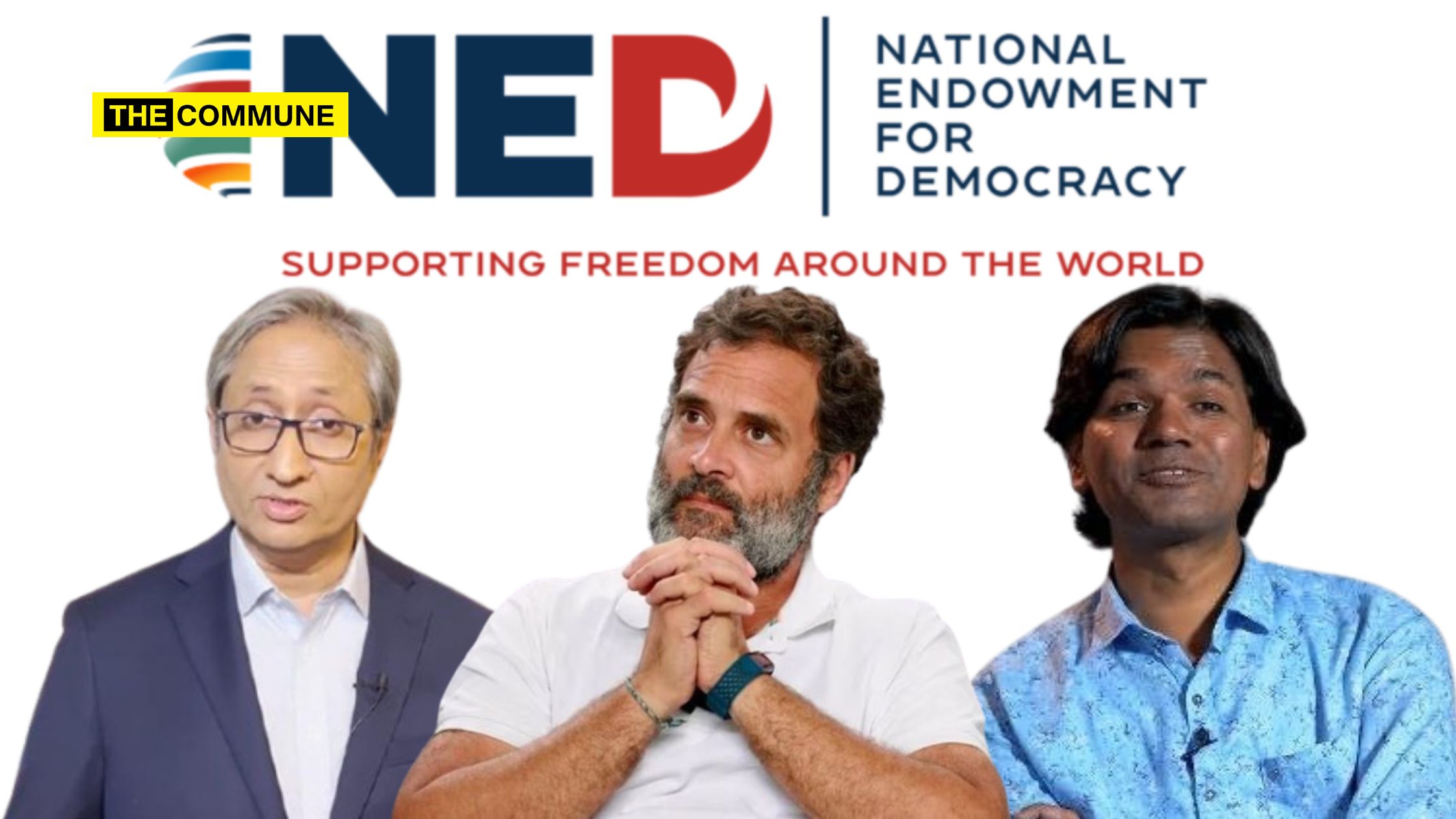
In a significant move, the Trump administration has halted funding to the National Endowment for Democracy (NED), a U.S.-based organization established in 1983 under former President Ronald Reagan. The NED, which claims to promote democracy worldwide, has long been accused of engaging in regime change operations and interfering in the internal affairs of foreign nations. It is alleged that the organization has been usedas a tool for advancing U.S. geopolitical interests under the guise of democracy promotion.
NED’s Controversial History
Founded during the Cold War to counter communist influence, the NED has been linked to political upheavals in several countries, including Ukraine and Bangladesh. Governments in Russia and China have banned the organization, citing its role in destabilizing regimes. In India, the NED has been under scrutiny for its alleged involvement in funding media training programs, NGOs, and journalists critical of the government.
The organization’s board of directors includes prominent figures like Victoria Nuland, a former U.S. Deputy Secretary of State known for her involvement in regime change operations. Nuland’s association with the NED has raised suspicions about the organization’s true motives, particularly in regions like South Asia and Eastern Europe.
Allegations Of Media Manipulation In India
The NED has been accused of indirectly funding left-leaning media outlets and journalists in India. One of its beneficiaries is Reporters Without Borders, an organization that releases annual press freedom rankings. Critics argue that these rankings often portray India in a negative light, with questionable comparisons such as ranking Afghanistan above India in terms of press freedom.
The NED has also been linked to prominent left-leaning Indian journalists and media organizations. Ravish Kumar, a former NDTV anchor known for his anti-national views as well as critical views of the BJP-led central government, was awarded the Independence Prize by an NED-funded organization. Similarly, The Print, a digital news platform founded by Shekhar Gupta, received an award from the International Press Institute, which is supported by the NED and George Soros’ Open Society Foundation.
Fact-checker Mohammad Zubair, co-founder of Alt News, was also recognized by the NED-funded Index on Censorship. Zubair, who has been vocal about press freedom in India, has often been at odds with the government, leading to allegations that the NED is promoting anti-establishment narratives in the country.
Political Connections And Deep State Allegations
The NED’s influence is said to extend beyond media to political figures. In 2023, Congress scion Rahul Gandhi delivered a lecture at Stanford University at the invitation of Larry Diamond, a senior consultant at the NED and a vocal critic of the Modi government. Diamond, who has described India as “no longer a democracy,” has long been associated with the NED and its affiliated organizations.
Gandhi’s decision to speak at Stanford on Diamond’s invitation has fueled speculation about his ties to the so-called “deep state.” Critics have accused Gandhi of aligning with foreign entities to undermine the Indian government, though no concrete evidence has been presented to support these claims.
The Trump administration’s decision to cut funding to the NED has sent shockwaves through the organization and its beneficiaries. With its financial lifeline severed, the NED’s ability to continue its operations is in doubt. Observers predict a similar fate for other U.S.-backed initiatives, particularly those perceived as tools for foreign interference.
After USAID now Trump stops funding for National Endowment for Democracy
👉 Regime change veteran Victoria Nuland serves in NED’s Board of Directors
👉 NED has indirectly promoted Ravish Kumar, Shekhar Gupta’s The Print and Mohammed Zubair in India
👉 Rahul Gandhi linked with… pic.twitter.com/BE0XY9fGX3
In October 2024, actor-turned-politician Vijay’s party, Tamilaga Vettri Kazhagam, held a massive rally at V. Salai near Vikravandi in Vizhupuram district, Tamil Nadu. Addressing the huge crowd of his supporters, actor Vijay, in his speech, not only elaborated on his party’s ideologies but also fixed who his political enemies were. Although he didn’t name any party exclusively, his speech revealed that his primary political opponent was the DMK. He positioned both the BJP and the DMK as “fascists“.
He said, “There is a crowd here that for some time has been singing the same paeans. Anybody who comes into politics is given ‘one particular colour’. They keep fearmongering people and cheat them. But ‘these people’ (indirect reference to DMK) will put underground dealing with ‘them’ (indirect reference to BJP). During elections, they will give statements and give sounds. For them, it’s always ‘fascism’, ‘fascism’, ‘fascism’. Among the people who are united here, they fearmonger by splitting people as majority-minority and keep putting a full-time scene with it. I’m asking you – If ‘they’re fascism’, are you ‘payasam’?You’re no better than them. You call this anti-people government a ‘Dravida Model’ government and cheating people.“
After Dravidianist rag Vikatan’s website was allegedly blocked by the BJP government over its derogatory cartoon on PM Modi, the TVK leader said,“If the opinions expressed by the media are wrong or if it targets govt, then the issue should be sorted out through the courts and not by curtailing freedom of expression.“Vijay also called it a ‘fascist‘ approach.“Whether it was Union govt or state govt which adopts such fascist approach, TVK will always oppose it,” he said, as reported in Times of India.
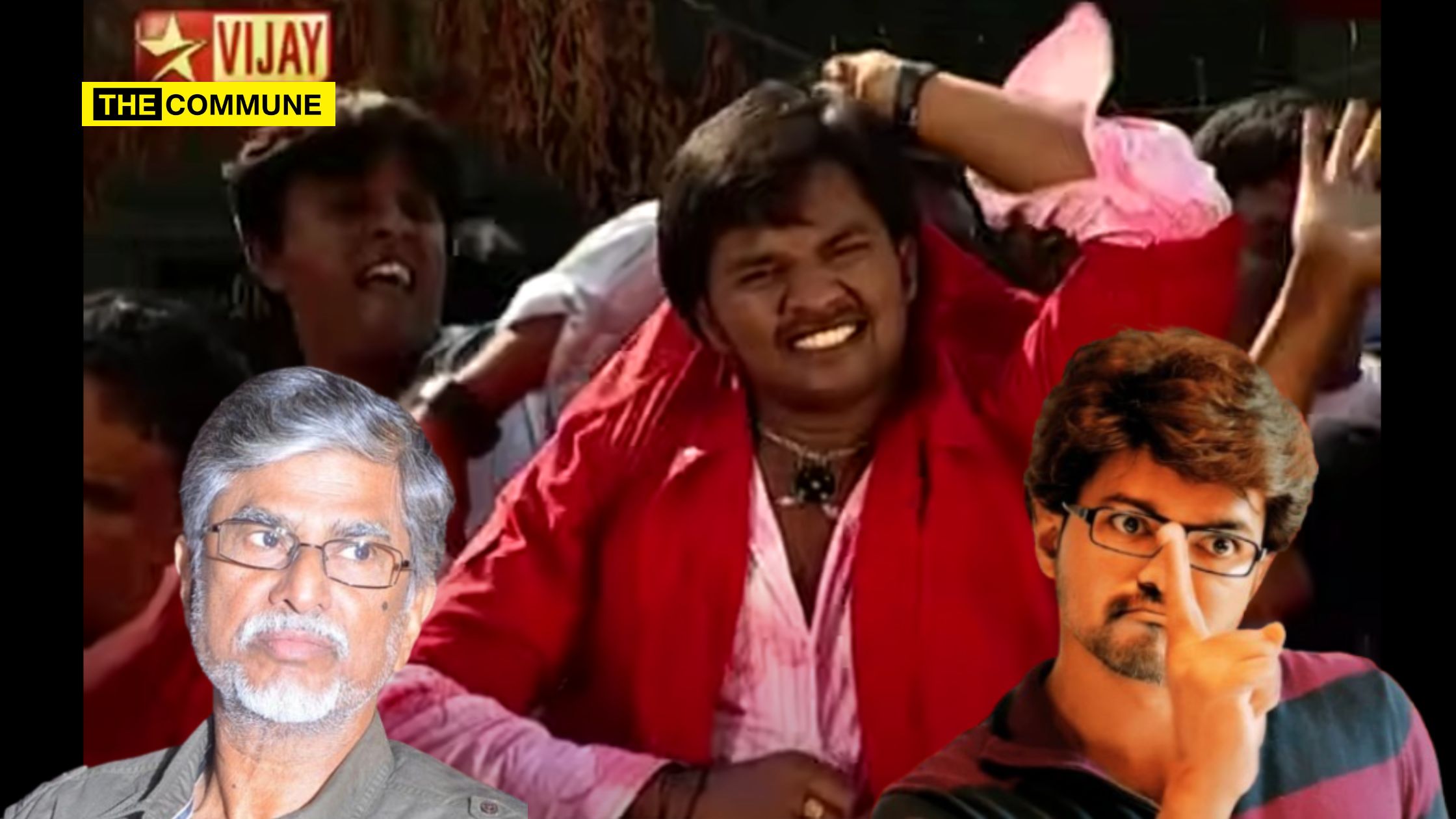
For all of Vijay’s rhetoric about curtailing freedom of expression and his vocal opposition to fascism, it’s worth revisiting his own actions that contradict these claims. A prime example is his heavy-handed response to Vijay TV’s popular comedy show Lollu Sabha, which aired a satirical take on his then-blockbuster film, Pokkiri. Instead of embracing the humor or respecting the show’s creative freedom, Vijay along with his father SA Chandrasekhar, reportedly pressured the channel to pull the episode, showcasing a distinctly authoritarian approach.
Vijay TV was made to give a public apology statement for broadcasting the satire on Vijay’s film Pokkiri titled Bakery. The apology statement read,“Subject: We are sorry for the Lollu Sabha programme.
The Lollu Sabha shows are depictions of parodies of films. It is not our intention to attack any individual or to set up scenes to tarnish their name. We are very sorry to know that the scenes of the Pokkiri movie in last week’s “Lollu Sabha” program on Friday hurt you, your family, your fans, and the public whom you value more than your life. We would like to take this opportunity to point out that we hold you in high esteem and respect and will ensure that such incidents do not happen again.We look forward to your continued support and the support of your fans.”
இதுக்கு பேர் பாசிசமா இல்லை பாயாசமா ப்ரோ.. 2007 ல நீங்க வெறும் நடிகர் மட்டும் தான். அதுலயே மீடியாவை இப்படி மிரட்டி மன்னிப்பு கேக்க வச்சிருக்கீங்க.. கருத்து சுதந்திரம் இல்லையா @actorvijay@TVKVijayHQ 🤡🤡🤡 pic.twitter.com/9LVGdzhgRq
Here are some video interview clippings of the members of the cast who acted in the satire. After the release of the satire, Vijay’s father SA Chandrasekhar threatened Vijay TV, called them over to his home and they let go of the matter only after the special function to praise Vijay.
One member, said,“We made a satire on Pokkiri and called it Bakery. Vijay’s father SAC called and threatened Vijay TV. RamBala stated he did not direct the programme and put the blame on his two assistants stating that they wanted to do something different and managed to escape the ire. Later, Vijay TV conducted a big programme when it was changing the branding to Star Tamil and decided to please Vijay by stating that they wished to retain the “Vijay” name to get on his good side.”
In another interview with the cast and crew of Lollu Sabha to BehindWoods, a team member said,“We made a satire on Thevar Magan film.” Pointing to the two other people sitting there, he said, “He portrayed Kamal Haasan and this one portrayed Shivaji Ganesan. In that episode, it became an issue. They made a ruckus and broke the sets and once again we had to issue an apology. Then we made a satire on Puratchi Ilayathalapathy’s film Pokkiri. We called it Bakery. I never thought it would become such a big problem. It was telecast on the channel and after that, we were sitting and discussing, I got a call from Vijay TV’s Mahendran asking “Where are you people” he scolded us for not being at the office when a problem was raging in the background. I was told that the actors were being hunted by him (Vijay) and his dad. We might get a call after this interview. After this, we even broadcast a scrolling message apologizing for the video on TV andwe never repeated that episode. It is not available on YouTube – both this film and Thevar Magan.”
Vijay and his father were so petty that they made the actor who played him (Jeeva) in the satire. Vijay performs in a scene where he humiliates Lollu Sabha Jeeva in the film Kuruvi (2008). Vivek’s introduction of Jeeva carries an underlying reference to his past in Lollu Sabha. In the scene, Vijay takes on the role of bullying Jeeva, ultimately inciting the public to attack him by the end. Did Vijay do this to satiate his ego?
Remember how he was so petty to the point that he had to do this scene to get back at Lollu Sabha Jeeva ? Vijay is a weak beta male indeed pic.twitter.com/wJySf05IYO
Humor and satire are essential to any free society, serving as tools for reflection, critique, and even celebration of cultural moments. When people like Vijay struggle to tolerate lighthearted jokes or parodies, it raises serious concerns about their ability to handle the inevitable criticism that comes with political life. The fact that Vijay and his father resorted to threatening small-time actors and influencing media outlets—despite holding no political or administrative power at the time—offers a troubling preview of how they might wield real authority.
If such intimidation was used over something as trivial as a Lollu Sabha comedy sketch, what does that say about their approach to dissent on a larger scale? Their inability to tolerate even mild humor, coupled with their willingness to silence critics, signals a dangerous mindset—one that aligns disturbingly with authoritarian tendencies. Vijay, who once threatened comedians over harmless jokes, now speaks about freedom of expression in politics. Given this history, what credibility does he have to champion such values? Maybe he must begin by apologising to the Lollu Sabha team for suppressing their freedom of expression.
Subscribe to our channels on Telegram, WhatsApp, and Instagram and get the best stories of the day delivered to you personally.
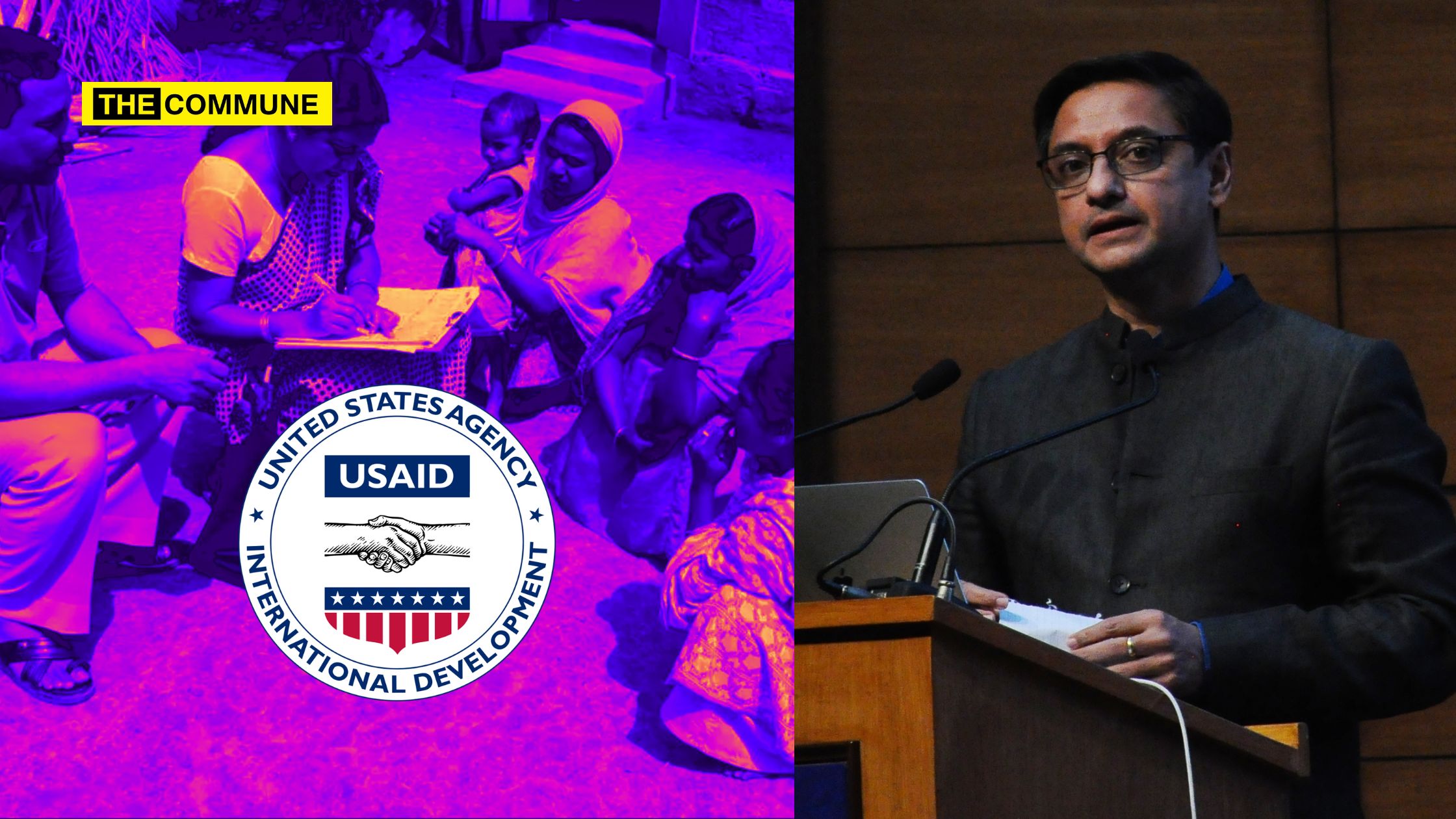
Sanjeev Sanyal, member of the Economic Advisory Council to the Prime Minister (EAC-PM) on Monday said those concerned about USAID’s interference in Indian elections should be equally concerned about USAID’s tentacles in India’s medical system and social policies.
In a post on X social media platform, Sanyal said that USAID “effectively ran India’s National Family Health Survey (NFHS) from the 1990s till it was stopped two years ago”. “This is the most important medical dataset in India and drives a lot of health policy. Not only were we allowing a foreign agency to harvest our medical data but, by allowing them to design surveys and direct analysis, we were letting them influence our national health responses,” he emphasised.
Equally worryingly, much of the NFHS questionnaire was deliberately skewed to support certain social narratives, according to the ace economist. “The questionnaire for men, for instance, is only 29 pages but that for women is 94 pages. A lot of the additional questions are deliberately worded to elicit a narrative of intra-family violence against Indian women.
Must say, very slyly done,” he further stated. According to Sanyal, late Bibek Debroy and he strongly pushed back against this (including publicly in newspaper columns). “Fortunately, GoI took up the matter and the latest NFHS is being done by the Health Ministry on its own,” he maintained.
A statement from the United States Department of Government Efficiency (DOGE), an agency led by billionaire Elon Musk, recently declared that it had cancelled a series of international funding projects. Among these was the $21 million allocated for voter turnout in India.
“Would love to find out who received the $21mn spent to improve ‘voter turnout in India’ and the $29mn to ‘strengthening political landscape in Bangladesh’; not to mention the $29mn spend to improve ‘fiscal federalism’ in Nepal. USAID is the biggest scam in human history,” Sanyal had earlier posted on X.
Subscribe to our channels on Telegram, WhatsApp, and Instagram and get the best stories of the day delivered to you personally.
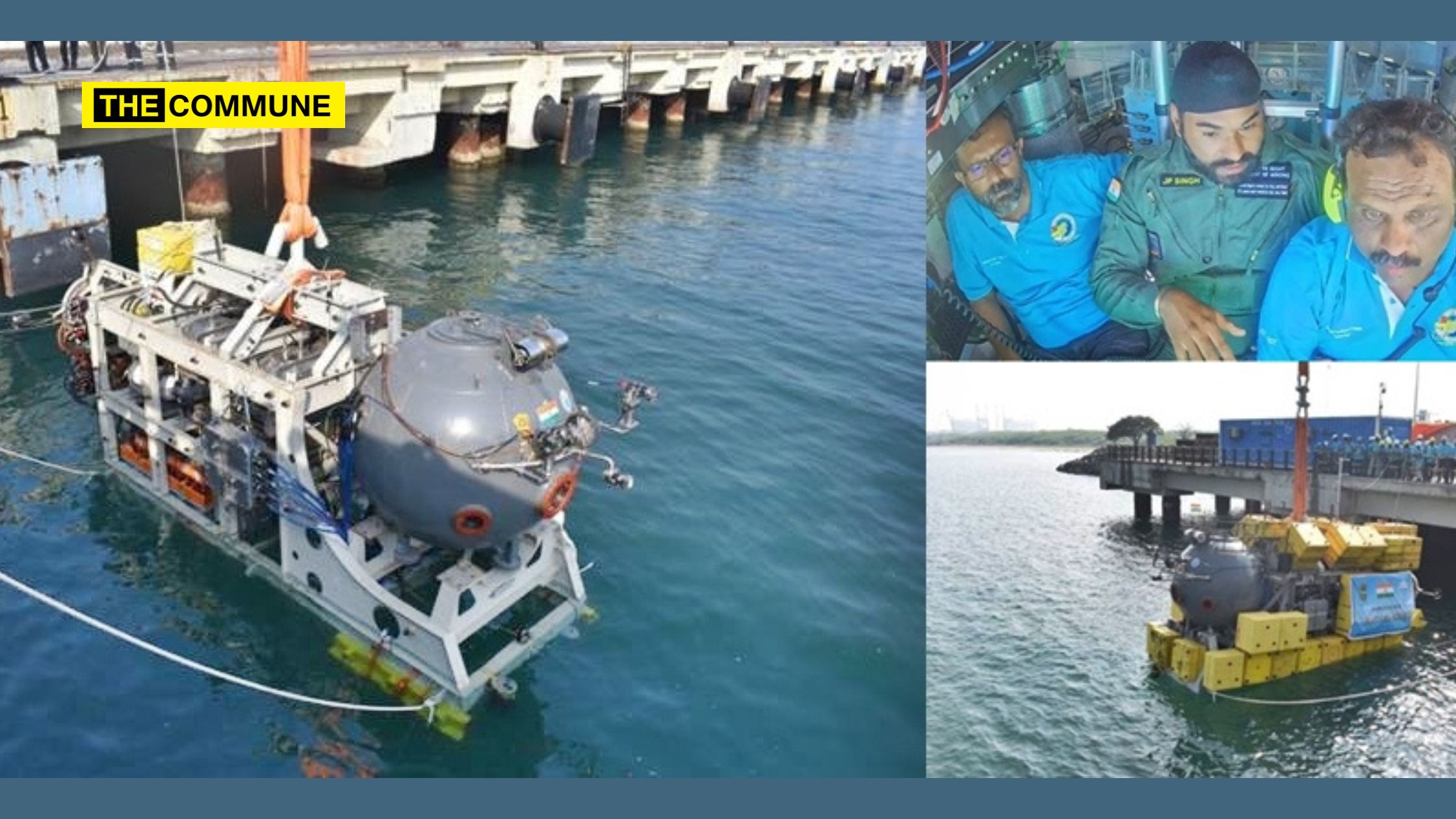
India’s Fourth-Generation Deep-Ocean Submersible ‘Matsya-6000’ has successfully completed wet testing at the harbour, paving the way for conducting shallow-water demonstrations at depths reaching up to 500 meters by the end of 2025, according to an official statement issued on Monday.
To ensure a seamless integration of all systems within its exo-structure, the Matsya first underwent a comprehensive series of integrated dry tests over a 500-metre operational range. Following the successful completion of these tests, it was transported to the L&T Shipbuilding facility located at Kattupalli Port, near Chennai from January 27 to February 12, 2025, for conducting wet tests and demonstrating the submersible functionality, the statement said.
The tests aimed to meticulously assess Matsya’s performance across several critical parameters. Evaluations focused on the robustness of power and control networks, floatation and stability of the vehicle, human support and safety systems, and manoeuvrability within limited degrees of freedom, specifically forward and reverse motion.
Additionally, navigation and communication capabilities were scrutinised. The scientific payloads, which included multiple sophisticated oceanographic sensors, were thoroughly tested and demonstrated to confirm their intended functionality. This demonstration phase featured eight dives in total, comprising five unmanned dives and five manned dives. Each manned dive was rigorously qualified, ensuring the reliability of the life support system.
Due to the restricted water depth in the harbour, underwater voice communication was less effective, highlighting the necessity for further testing at greater depths to enhance confidence in shallow-water operations.
In certain areas, additional efforts are needed to achieve optimal performance and completeness, the statement said. Under the government’s Deep Ocean Mission initiatives, the Ministry of Earth Sciences has entrusted the National Institute of Ocean Technology with the ambitious task of designing and developing the Matsya-6000, as part of the Samudrayan Project.
This cutting-edge submersible is engineered to accommodate three humans within its compact 2.1-meter diameter spherical hull, marking a significant milestone in India’s ocean exploration capabilities.
Following the completion of the design phase, various subsystems vital to Matsya-6000’s functionality were identified and developed. The submersible features a comprehensive array of components: a main ballast system for diving, thrusters for movement in all three directions, a battery bank for power supply, and syntactic foam for buoyancy. It also includes a sophisticated power distribution network, cutting-edge control hardware and software, along with advanced underwater navigation devices.
Communication systems include an acoustic modem, underwater telephone, and VHF for surface communication, supplemented by underwater acoustic positioning and GPS for precise surface location tracking. Inside the spherical hull, careful attention has been given to the integration of human life-support systems, displays of various environmental/critical parameters, navigation joysticks for manoeuvrability, as well as various oceanographic sensors, underwater lighting and cameras outside the hull.
All these subsystems have been indigenously designed and are currently undergoing thorough integration and qualification testing, the statement added.
–IANS
Subscribe to our channels on Telegram, WhatsApp, and Instagram and get the best stories of the day delivered to you personally.
in never-seen-before rage, Tamil Nadu BJP chief Annamalai raised concerns over the DMK and other Dravidianist parties’ opposition to the opportunity for school students to learn three languages for free in government schools. He emphasized the benefits of such an approach, arguing that it would help shape a better future for the next generation by embracing change in line with global and national progress.
In a video message addressing the longstanding DMK stance against the three-language policy, Annamalai criticized the Congress party for making a historical blunder by imposing a single language in Tamil Nadu since 1965, forcing the people of the state to revolt.
On 31 May 2019, the Kasturirangan Committee, in its report on the New Education Policy, recommended that all Indians should learn three languages: their mother tongue, English, and a third language should be mandatory a Hindi. After reviewing the report, Prime Minister Modi approved this as part of the new education policy, making key adjustments in 2 June 2019 to ensure that Hindi would not be mandatory. Instead, he allowed students to choose any third language, be it Hindi, Malayalam, Telugu, Kannada, or another of their choice, marking a transformative change in language policy.
Annamalai personally saw this shift as significant, particularly because a Prime Minister from Gujarat was prioritizing Tamil, his mother tongue. He noted that Modi’s changes not only benefited Tamil Nadu but also demonstrated respect for Tamil culture and language. This, he explained, is why he and many others joined the BJP, as it is a party that understands and supports the interests of individual states while maintaining national unity.
However, Annamalai criticized the DMK-led government in Tamil Nadu for regressing by pushing outdated policies from 1965 and opposing the three-language policy. While the DMK accuses the policy of promoting Hindi, Annamalai pointed out that no one is forcing Hindi on the people of Tamil Nadu. He emphasized that the world is evolving, and children in Tamil Nadu are already learning three languages in schools, whether they are enrolled in state board, CBSE, ICSE, or IB systems.
He further highlighted the disparity in education between government and private schools. Children in affluent private schools have the opportunity to learn foreign languages like French, while those in government schools face inadequate resources, broken classrooms, and poor conditions citing DMK Education Minister Anbil Mahesh’s son as example. This disparity creates two classes of students—privileged children studying in well-resourced private schools and underprivileged children in struggling government schools.
The current education system in Tamil Nadu, particularly in terms of language teaching, is deeply flawed. Annamalai referenced ASER report 2024 that showed a significant portion of third-grade students in Tamil Nadu could not even read basic Tamil texts, revealing the failure of the bilingual system. Annamalai also criticized the DMK’s claims of promoting Tamil, pointing out the hypocrisy of DMK leaders who send their children to private schools where they learn multiple languages, including foreign ones, while the majority of Tamil Nadu’s children are denied the chance to succeed within a broken system.
Annamalai also highlighted the stance of DMK founder CN Annadurai on the three-language policy, noting that he had advocated for its acceptance when it was embraced by other states. He pointed out the hypocrisy of Naam Tamilar Chief Seeman, who, in his 2016 election manifesto, promised that Tamil and English would be mandatory as the medium of instruction, while offering a choice-based language option that could include Hindi. Annamalai questioned what the difference was between the National Education Policy (NEP) and Seeman’s election manifesto, calling attention to the contradiction in his stance.
He sharply questioned, “For how long will you keep propagating falsehood making people to immolate themselves, making them to stick posters, work in fields for you? How long will you make them stand in que to grab the money you throw at them? So we challenge you all of you stand on one side including the parties which ruled and is ruling Tamil Nadu even the new parties, all of you stand on one side and BJP will stand at another side. BJP will stand in one side with the people of Tamil Nadu. We want three language policy, we even want four and five language policy but why only two language for the 52 lakh students studying in government schools? but for the 56 lakhs private school students and for the 30 lakh student in that who study in CBSE, ICSE and IB schools are already studying three languages? what kind of justice is this?”
Under Modi’s leadership, the BJP is committed to providing every child with the tools to succeed, no matter their background. The party advocates for an inclusive education system, one where outdated language impositions do not hold back children’s potential. Annamalai stressed that the BJP’s vision allows every child to aspire to greatness, whether in leadership, business, or civil service.
In contrast, Annamalai argued that the DMK’s policies are stifling Tamil Nadu’s youth by dividing society along the lines of education and language. The state needs an education system that empowers all children, regardless of their background, to achieve success.
The BJP, Annamalai concluded, stands firm against these unjust policies and advocates for a system that offers equal opportunities to all. He urged voters to seize the opportunity in the upcoming election to break free from the stagnation caused by these outdated policies and work towards a brighter, more inclusive future for the state, where every child can realize their full potential.
தனியார் பள்ளிகளில் படிக்கும் திமுகவினரின் குழந்தைகள் மட்டும் மூன்று மொழிகள் கற்கலாம். அரசுப் பள்ளிகளில் படிக்கும் ஏழை எளிய மக்களின் குழந்தைகள் படிக்க வாய்ப்பு மறுப்பதா?
அரசுப் பள்ளிகளில் இலவசமாக மூன்று மொழிகள் கற்கும் வாய்ப்பை ஏன் தடுக்கிறீர்கள்?
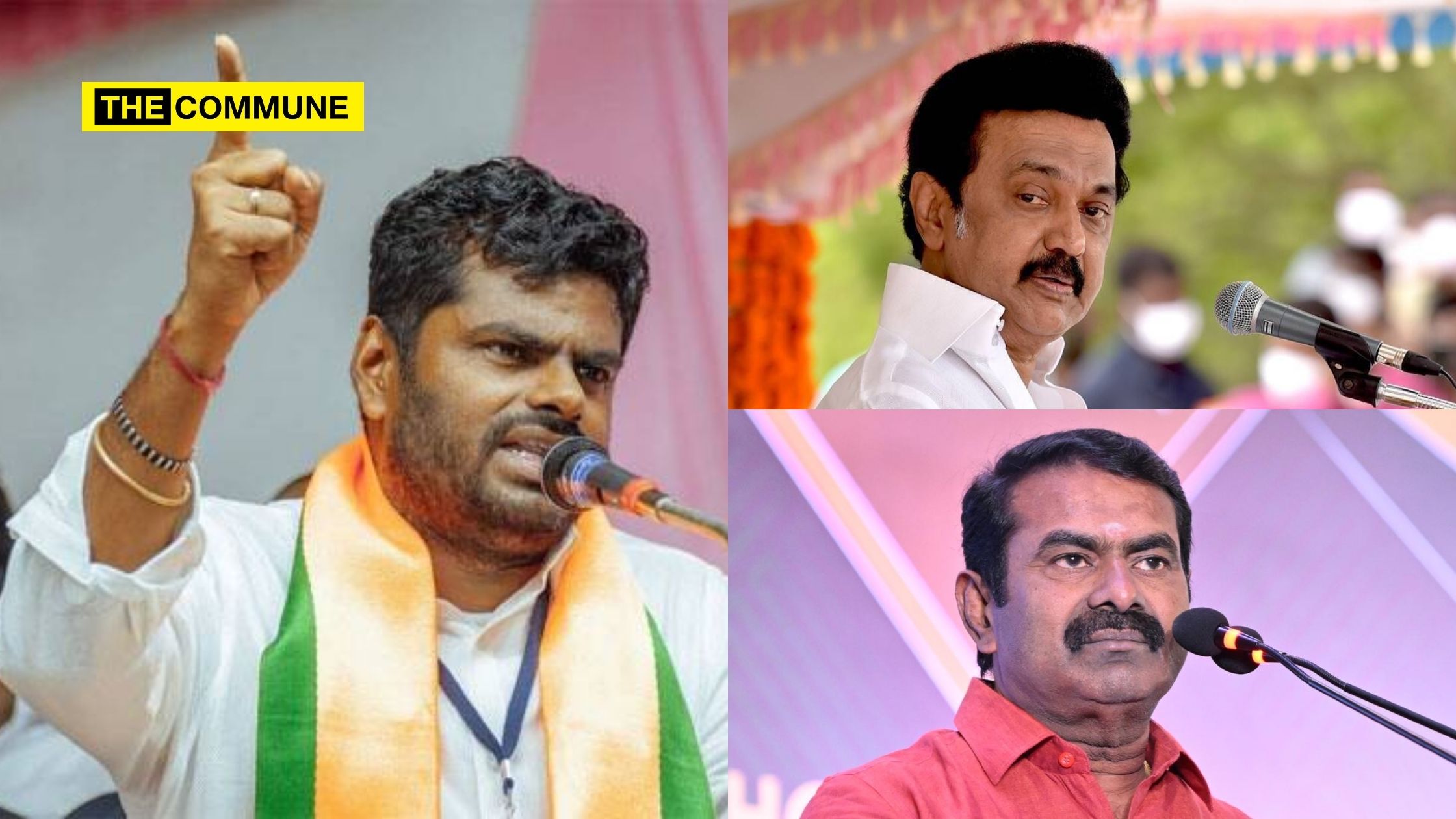
Kannan, a state general committee member of Tamil Nadu BJP, was arrested by the ruling DMK government for allegedly criticizing the government and making remarks on Chief Minister MK Stalin.
The arrest follows the BJP’s efforts to counter the DMK’s propaganda against the recently passed Union Budget 2025. On the evening of 13th February, the BJP hosted a meeting to discuss the budget’s benefits at MKB Nagar in Perambur Assembly Constituency. The event was attended by figures such as Karate Thiagarajan and lawyer Paul Kanagaraj, with District President Balaji chairing the session. During the meeting, Kannan, a lawyer, is said to have sharply criticized the Tamil Nadu government and Chief Minister Stalin.
Following the incident, the MKB Nagar police registered a case, and a special team led by Pulianthope Deputy Commissioner Muthukumar tracked Kannan, arrested him and later remanded in custody after being produced in court.
This incident follows a pattern of multiple arrests by the DMK government targeting BJP functionaries who criticize its leadership. Below is the list of past actions of the DMK government, which involved stifling the expression of dissenting opinions, andled to a crackdown on freedom of speech.
The Commune and its directors faced legal action for reporting on the confrontation between Podu Deekshitars of the Chidambaram Nataraja Temple and HR&CE officials.
BJP IT Wing and Social Media State Secretary Trichy Pugal Machendranwas arrested for an alleged provocative Facebook post celebrating the death of the terrorist Palani Baba on his death anniversary. The post referred to Palani Baba as a “poisonous influence.”
TN BJP Functionary Pravin Rajwas arrested in the wee hours of 1 October 2023 for his posts targeting the ruling party and the Congress.
The Tamil Nadu police even went up to Noida to try to arrest journalist Abhijit Majumder for his article on Udhayanidhi Stalin’seradicate Sanathana Dharma remarks.
A critic of the DMK, Badri Seshadri, was arrested for his comments in an interview on a YouTube channel regarding the Manipur issue, during which he made remarks about the Chief Justice of India.
Tamil Nadu BJP State Secretary SG Suryah was taken into custody under non-bailable sections for his comments regarding Madurai CPI-M MP Su Venkatesan concerning a sanitation worker’s tragic death during drain cleaning in Pennadam town, Cuddalore district.
An AIADMK IT wing memberwas apprehended under non-bailable sections for sharing a video meme that humorously referenced MK Stalin’s video statement on Senthilbalaji’s arrest. The meme did not contain derogatory content.
A Pro-BJP Twitter user was arrested for sharing an old article and allegedly misattributing DMK to an illegal liquor-producing gang in Tiruppur, following the recent hooch tragedy in Marakkanam.
A Pro-BJP Twitter user was arrested for sharing an old article and allegedly misattributing DMK to an illegal liquor-producing gang in Tiruppur, following the recent hooch tragedy in Marakkanam.
Vice President of Tamil Nadu BJP’s Industrial Cell, Selva Kumar, was arrested for criticizing DMK Minister Senthilbalaji.
The admin of Voice of Savukku Shankar X handlewas arrested for a video meme targeting CM MK Stalin and DMK Minister PTR Palanivel Thiagarajan regarding the “eligible household” clause in the monthly assistance scheme for women.
The DMK government traveled to Gujarat to arrest BJP cadre John Ravi, who had made satirical social media posts about CM MK Stalin and his late father, Karunanidhi.
N Muthuramalingam, the State Propaganda Secretary of South India Forward Bloc, was arrested for expressing his views on Facebook regarding the release of terrorists convicted in the 1998 Coimbatore serial blasts case. Muthuramalingam had criticized Dravidian parties for considering the release of 36 prisoners, including those convicted for life in the Coimbatore terror attack, leading to his arrest.
In March 2024, Minjur Saleem, a pro-BJP activistfound himselfdetained and later arrested for his dissenting views regarding the DMK Party’s governance, which he expressed on the social media platform X (formerly Twitter).
BJP supporter Johny Raja was arrested in Chennai by Vellore police following social media posts allegedly targeting the ruling DMK party
The Telangana government on Monday permitted Muslim employees to leave offices early during the fasting month of Ramzan. Chief Secretary Santhi Kumari had issued an order allowing Muslim employees to leave offices an hour during the holy month, which is to begin on March 1 or March 2 depending on the sighting of the moon.
“Government hereby permit all Muslim government employees/teachers/contract/out-sourcing/boards/corporations and public sector employees working in the state to leave their offices/schools at 4 p.m. during the holy month of “RAMZAN” i.e., from March 2 to 31 (both days inclusive) to offer necessary prayers, except when their presence is required due to exigencies of services during the above period,” said the Government Order.
Meanwhile, the Minorities Welfare Department is making elaborate arrangements at the historic Makkah Masjid and Shahi Masjid (Royal Mosque) for the holy month of Ramzan. Like in the past, all facilities are being provided for worshippers at the mosques. Special arrangements are being made for Taraweeh, the special prayers held every night during the month.
The department said that 2,250 kg of fine quality Khajoor (dates) will be provided to Makkah Masjid, Charminar, Royal Mosque, Nampally, and Secretariat Mosque as per the requirement given by the District Minority Welfare Officer, Hyderabad. Special Secretary to Government, Minorities Welfare Department, Tafseer Iqubal, and Director, Minorities Welfare, Yasmeen Basha reviewed the arrangements.
Permission has been granted by the Minorities Welfare Department for organising the Jalsa Youm-ul-Quran every Friday at Makkah Masjid. In another development, the Telangana Waqf Board has issued funds to pay arrears of the monthly honorarium for imams and muezzins. It has released Rs 15.37 crore to pay arrears for two months to 10,700 imam and muezzins across the state. The amount has been released keeping in view the holy month of Ramzan.
Imams and muezzins get a Rs 5,000 honorarium every month. They had not received the honorarium for the last four months. Following demands from various quarters, the Telangana Waqf Board has finally released the funds.
Subscribe to our channels on Telegram, WhatsApp, and Instagram and get the best stories of the day delivered to you personally.
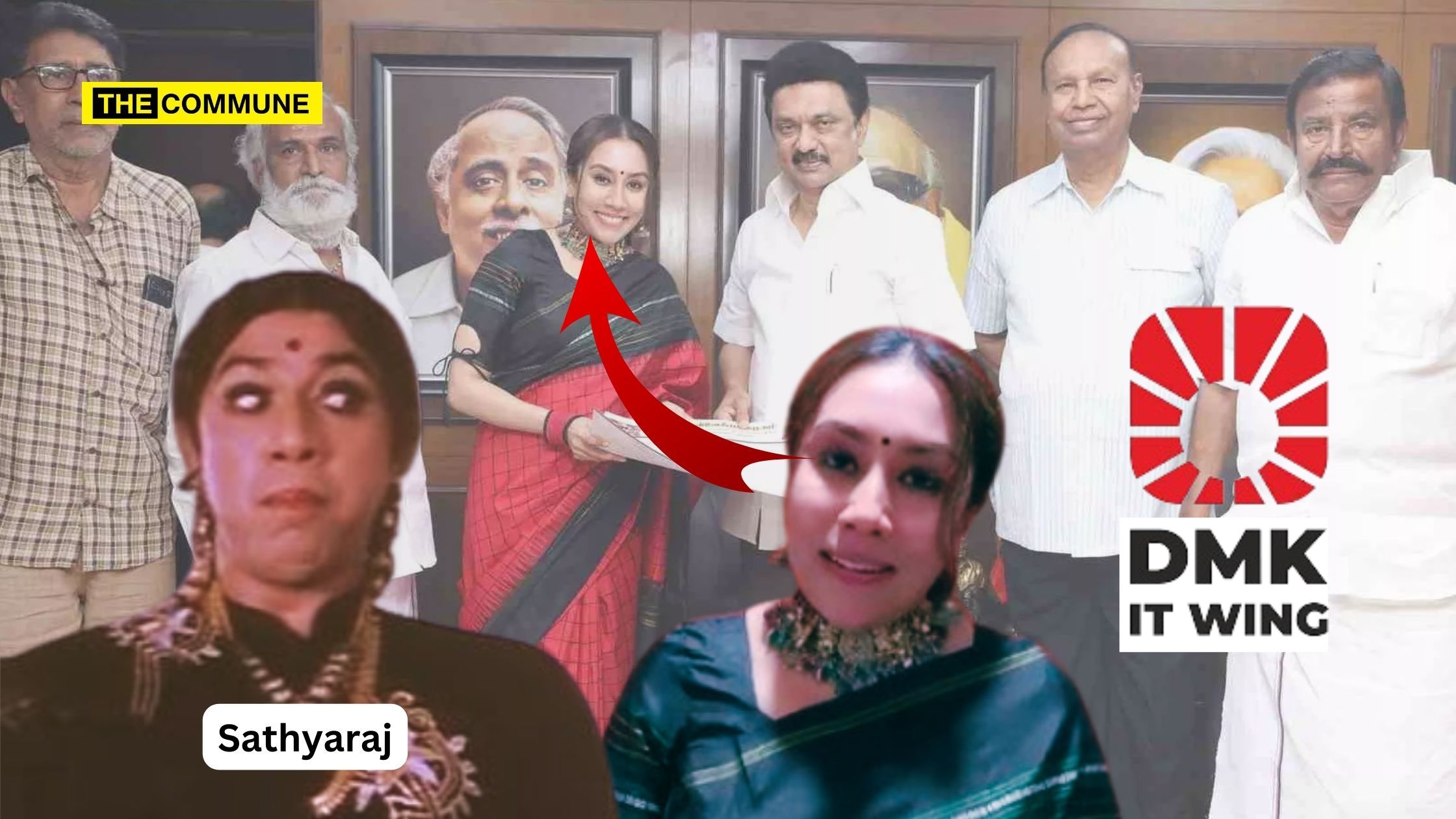
Less than a month after Divya Sathyaraj, daughter of Kollywood actor Sathyaraj and Dravidianist supporter, was officially inducted into the Dravida Munnetra Kazhagam (DMK) party, she has been appointed as the deputy secretary of the party’s IT wing.
Her appointment, announced on 16 February 2025 at the party’s headquarters, has sparked widespread criticism in social media with many accusing the party of continuing its practice of dynasty politics and favoritism with key positions in the DMK’s organizational structure are increasingly being filled by the next generation of leaders and their supporters, leaving true cadres with little opportunity for such promotions.
DMK General Secretary Duraimurugan officially confirmed Divya’s appointment. Along with her, the DMK has also appointed former Minister TPM Mohideen Khan as the new president of its State Minority Welfare wing. Additionally, the party has named BM Mubarak, a seasoned DMK leader and former Nilgiris district secretary, as a member of its high-level working committee. Mubarak, who was relieved of his district secretary duties earlier this month, has now been given an important role within the party.
The party also appointed Suriya Krishnamoorthy as the Deputy Press Secretary, filling the position left vacant after the passing of Kovai Selvaraj.
Divya’s appointment as the deputy secretary of DMK’s IT wing has prompted online ridicule, with several posts criticizing the decision. Many pointed out that 12 leaders who switched from the AIADMK have been appointed as ministers, while Chandrakumar who jumped from the DMDK became an MLA, and Rajiv Gandhi from the Naam Tamilar party was made the students’ wing secretary. Meanwhile, Sathyaraj’s daughter, the newest addition to the party, appointed as the deputy secretary of the party’s IT wing, while long-time party workers remain stuck as servants for their lives. Some of these posts are shared below.
அதிமுகல இருந்து திமுகவுக்கு போன 12 பேர் அமைச்சராகிட்டாங்க தேமுதிகல இருந்து போன சந்திரகுமார் MLA ஆகிட்டாரு நாம் தமிழர்ல இருந்து போன ராஜிவ்காந்தி மாணவரனி செயலாளர் ஆகிட்டாரு நேத்து கட்சில சேர்ந்த சத்யராஜ் பொண்ணுக்கு ஒரு பதவி கிடைச்சிடுச்சி உபி கடைசி வரைக்கும் தொண்டனாத் இருக்கானுங்க.
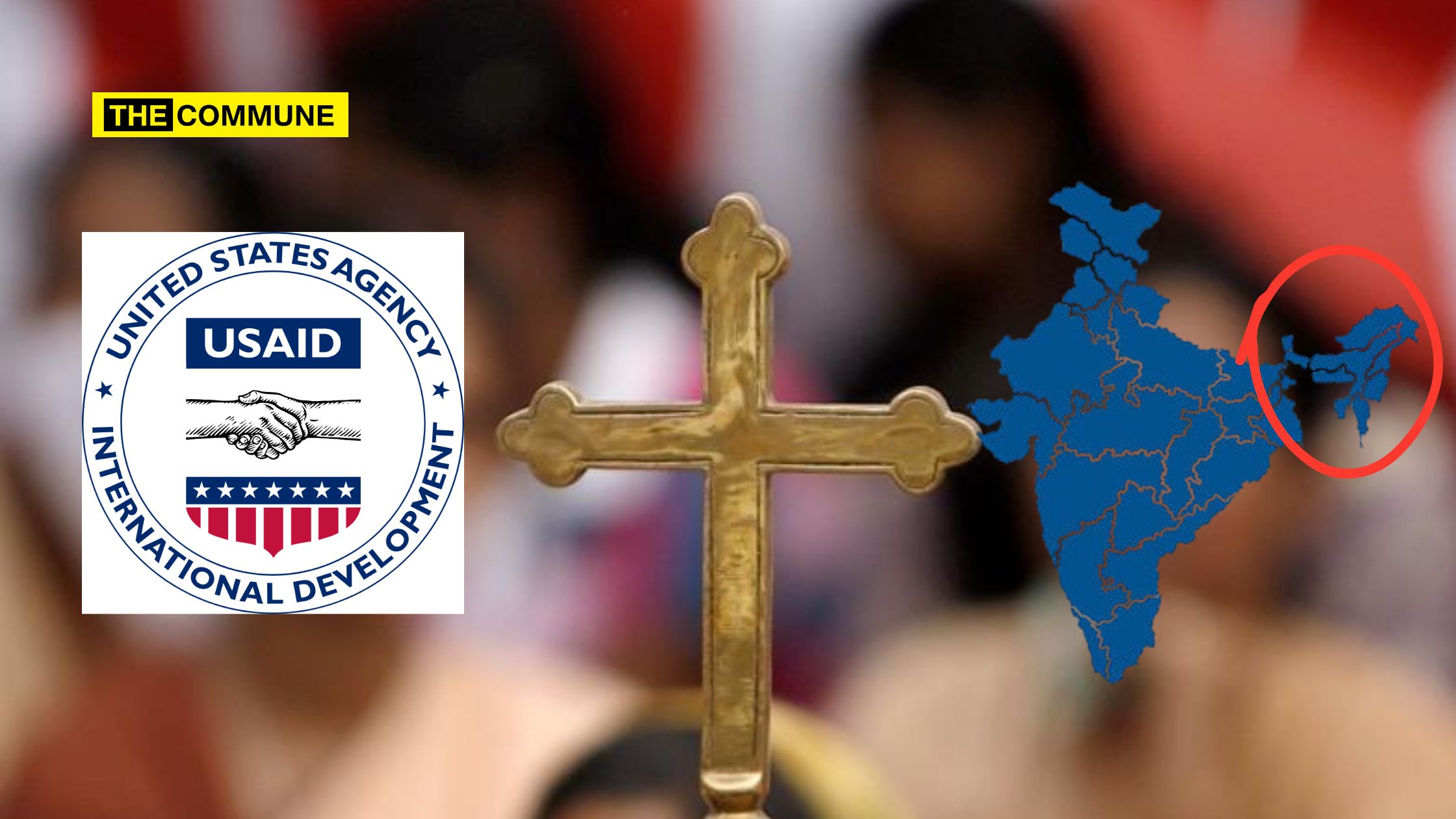
The United States Agency for International Development (USAID) has long been a tool for advancing American interests globally. However, recent investigations reveal a disturbing nexus between USAID-funded Christian missionary activities in India, particularly in Manipur, and its alleged connections to Al-Qaeda in Africa. This article delves into the intricate web of funding, organizations, and individuals involved in this complex network, exposing details that have never been seen before.
The Burning House: Manipur And The Golden Triangle
Northeast India, especially Manipur, has historically been a hotspot for Christian missionary activities. Situated in the infamous Golden Triangle of drug trade, Manipur has attracted numerous international Christian missionary organizations. These groups, under the guise of humanitarian work, have been accused of engaging in religious proselytization, often targeting vulnerable tribal communities.
The question arises: Who is funding these activities? The answer lies in a complex network of organizations with deep ties to USAID and other U.S. government agencies.
David Curry And The Anti-India Agenda Connection
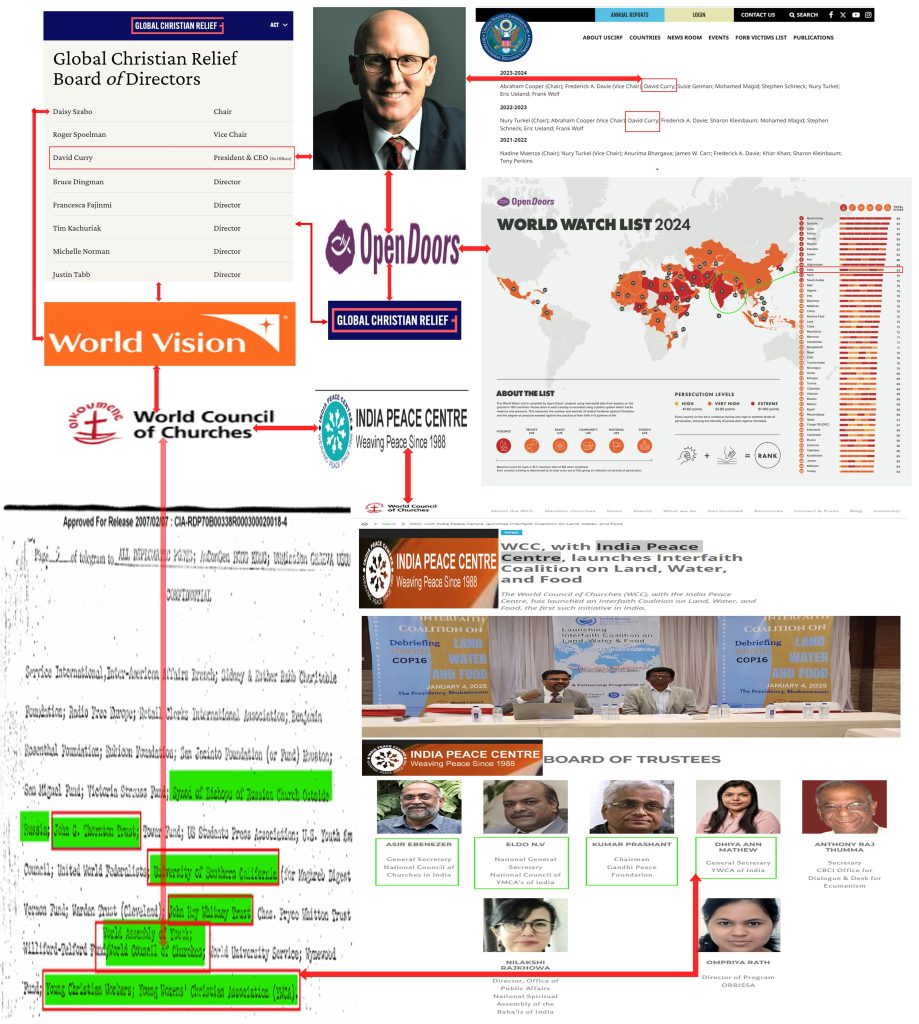
David Curry, former Commissioner of the U.S. Commission on International Religious Freedom (USIRF), stands out as a key figure in this nexus. Known for his anti-India stance, Curry founded Open Doors International, which later merged with Global Christian Relief in 2024. Open Doors publishes the “World Watch List,” which consistently ranks India among the top 15 countries for Christian persecution.
Global Christian Relief is funded by World Vision, a USAID-backed organization that has been accused of funding Al-Qaeda-linked groups in Africa. In India, World Vision collaborates with the India Peace Centre, which is supported by the World Council of Churches (WCC). Declassified CIA reports reveal that the WCC has acted as a CIA front since the 1950s.
The Circle Formed By India Peace Centre And Its Trustees
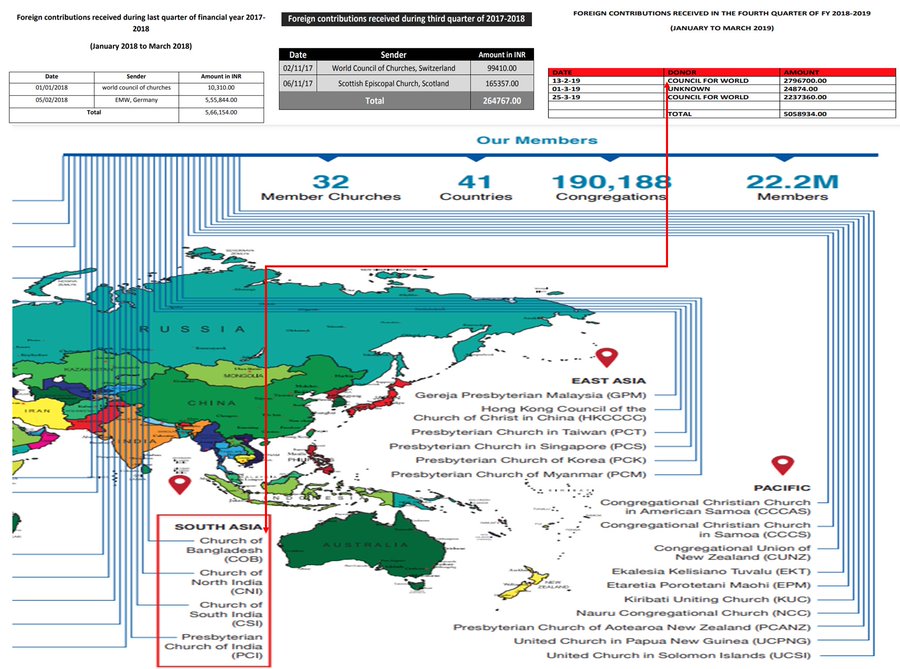
The India Peace Centre, a key player in this network, is funded by the World Council of Churches and the Council for World Mission. Its trustees include prominent figures like Asir Ebenezer (National Council of Churches in India) and Dhiya Ann Mathew (YWCA of India), both of whom have historical ties to CIA-funded organizations.
Funding The Nexus With “Religious” Dollars
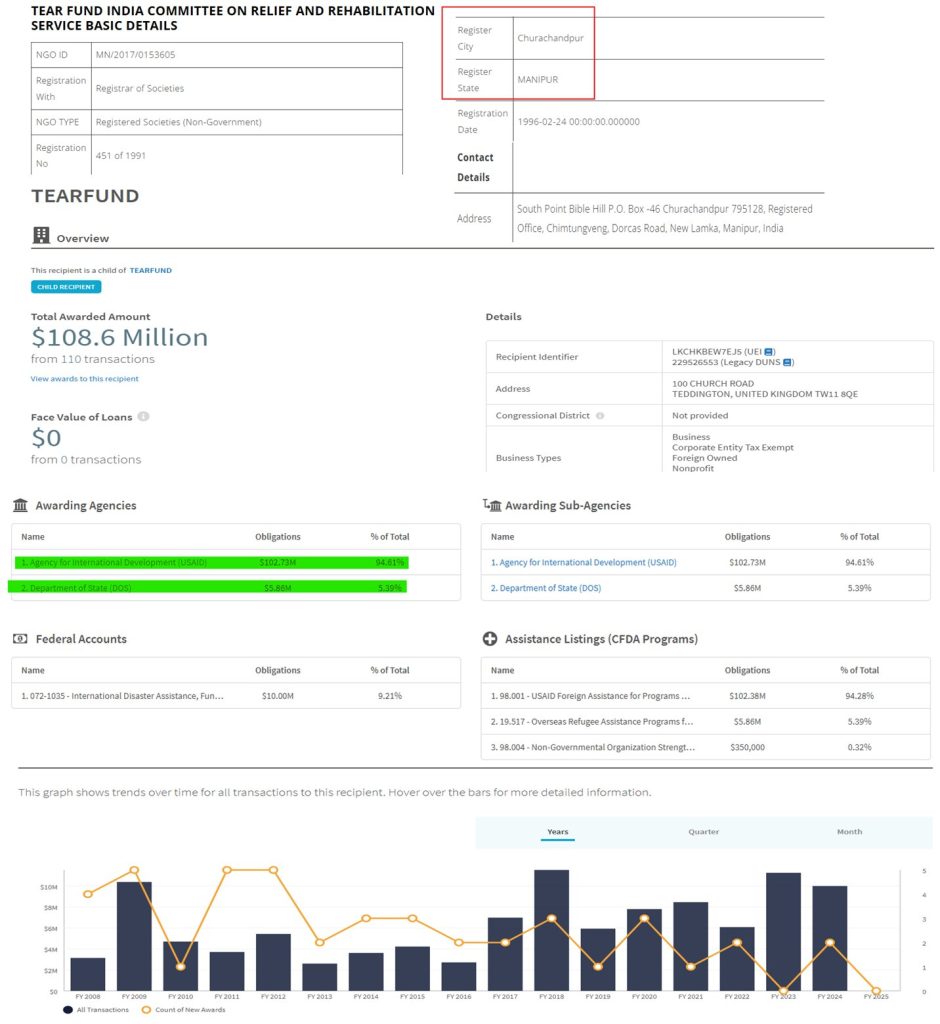
The India Peace Centre receives substantial funding from USAID-backed organizations like Tear Fund, which has channeled over $108 million into India, primarily for Christian missionary activities. Tear Fund’s operations in Manipur have raised eyebrows, especially given the state’s recent ethnic violence.
Pieter Friedrich And Khalistani Links
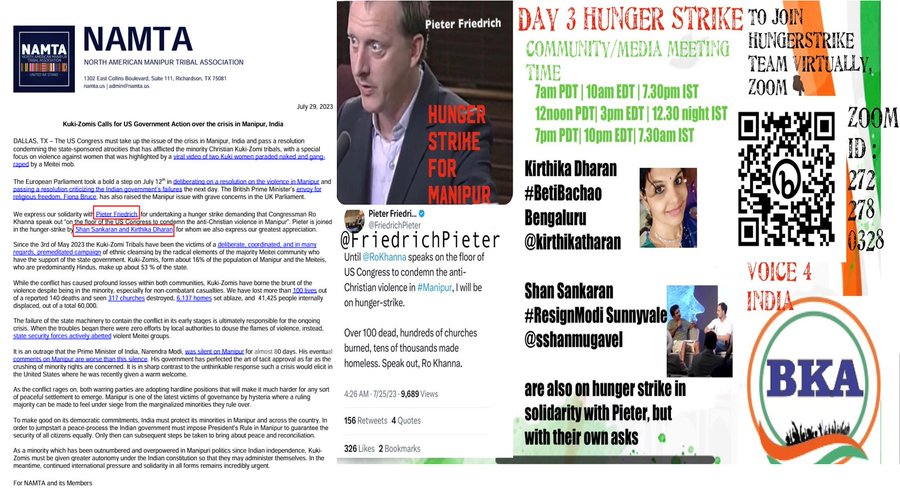
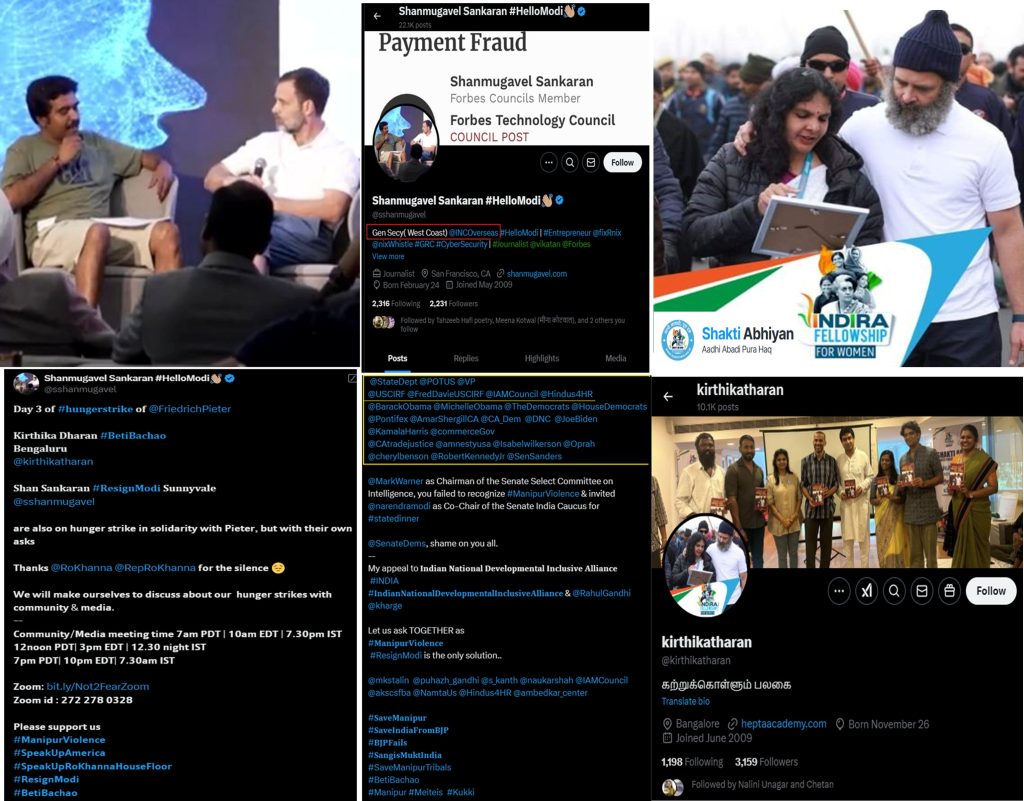
Pieter Friedrich, a controversial figure, has been at the forefront of protests against the Indian government, particularly regarding the Manipur crisis. Friedrich is closely associated with Bhajan Singh Bhinder, a Khalistani terrorist who founded the Organization for Minorities of India (OFMI), an ISI-funded group. Friedrich’s hunger strike in 2023, supported by Indian Overseas Congress members, highlights the political dimensions of this nexus.
You can read about Bhajan Singh Bhinder and Pieter Dietrich nexus in the below thread.
Bhinder-Pieter opened multiple fronts- from transport companies to publishing houses & ‘co-authored’ many books. Most of these companies were fronts for various activities, opened in the name of Pieter & later taken over by Bhinder around 2011.
The Political Stooge: Rahul Gandhi And The Congress Connection
During Rahul Gandhi’s visit to the U.S., he was interviewed by Shan Sankaran, a key figure in the Indian Overseas Congress. Sankaran’s ties to USAID and Kashmiri separatists further complicate the narrative. Kirthika Dharan, another Congress affiliate, has been actively involved in Rahul Gandhi’s campaigns, raising questions about the party’s role in this network.
You can read about Sam Pitroda – USAID – Kashmiri Terrorists in US – Khalistani terrorists in US nexus in the below thread:
The Deep state world of Satyanarayan Gangaram Pitroda aka Sam Pitroda🧵
Did you know that from ISI Pakistan to CIA to US government all have colluded to undermine India for decades? We all read on social media about it. But in this thread, we will explore how sinister and deep… pic.twitter.com/lR04sBQuYk
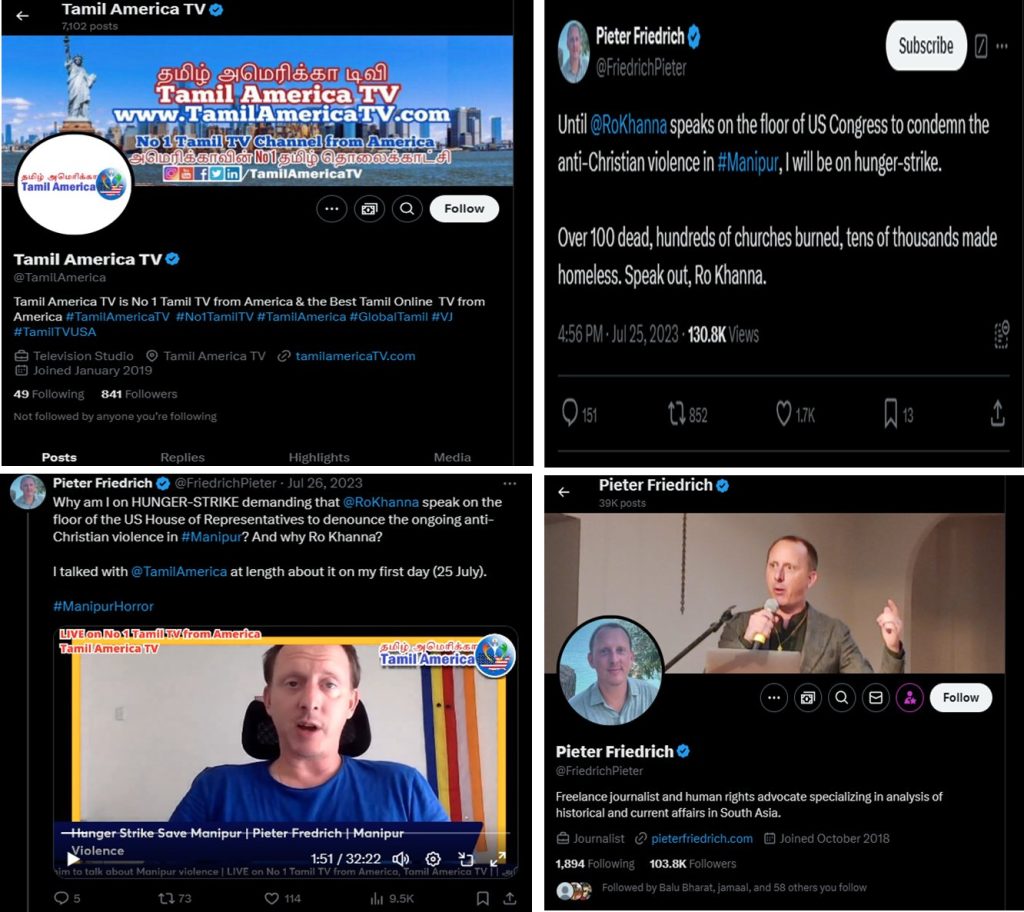
An interesting twist is that in addition to the Sikh media channels associated with Bhajan Singh Bhinder, Pieter Dietrich is also hosted by Tamil America TV.
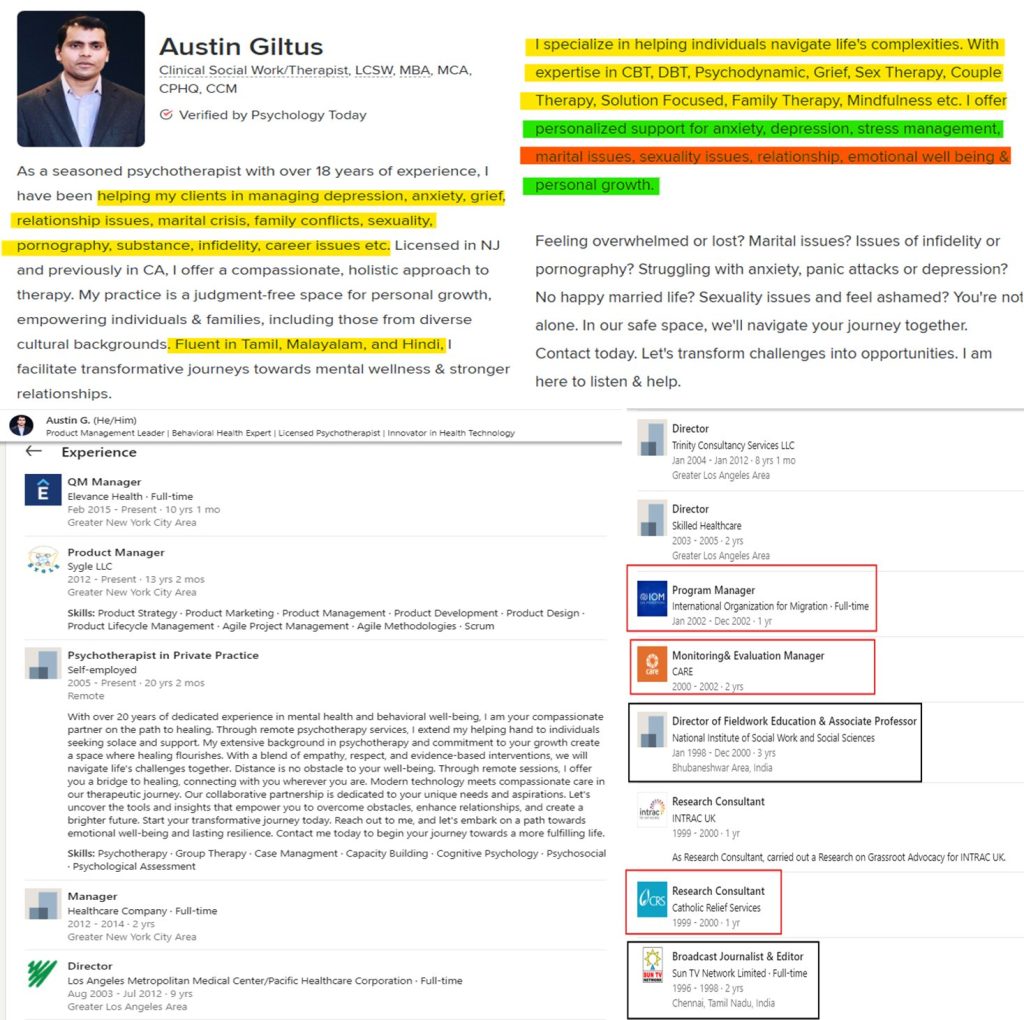
The Sex Therapist: Austin Giltus And Tamil America TV
Austin Giltus, founder of Tamil America TV, has a controversial background. Starting his career with Sun TV, a DMK-affiliated channel, Giltus later worked with USAID-funded organizations like Catholic Relief Services and CARE. His involvement in Tamil America TV, which hosts Khalistani and anti-India voices, raises questions about his true agenda.
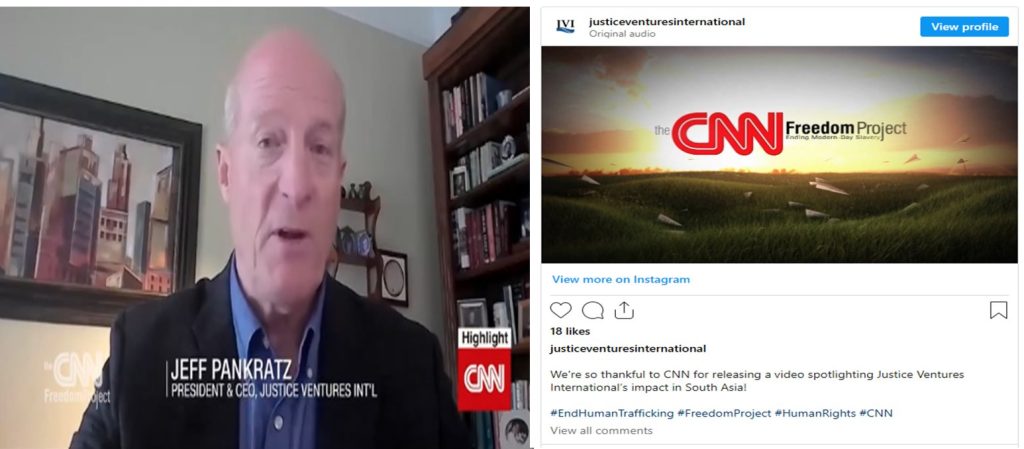
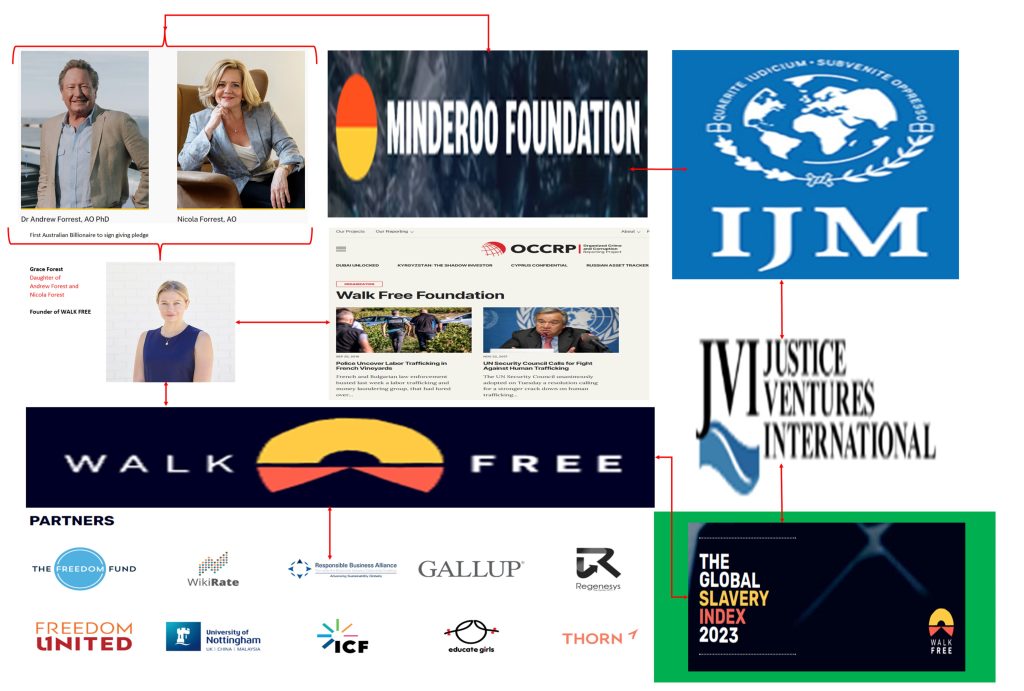
Walk Free, founded by Australian billionaire Andrew Forest, is behind the Global Slavery Index used by Justice Ventures International to target India. Walk Free collaborates with OCCRP, a Soros-funded media organization, further exposing the anti-India propaganda machine.
The Money
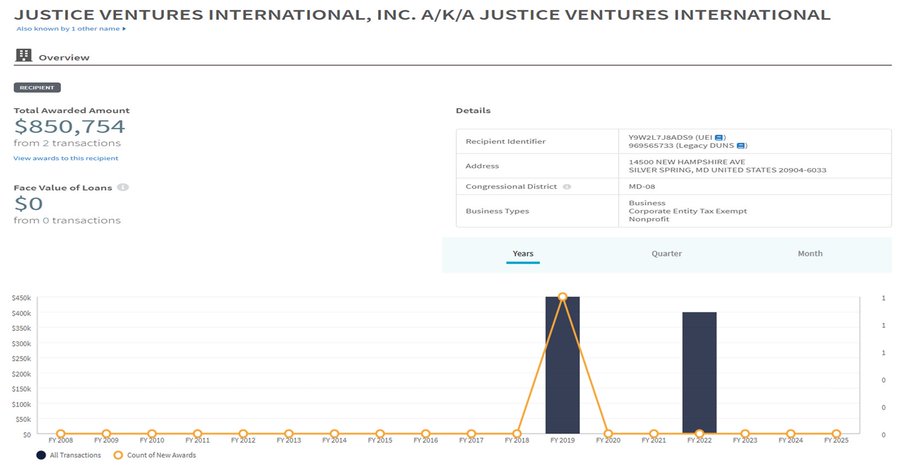
Justice Ventures International has received 850,754 USD from the US State Department. Justice Venture International was founded by
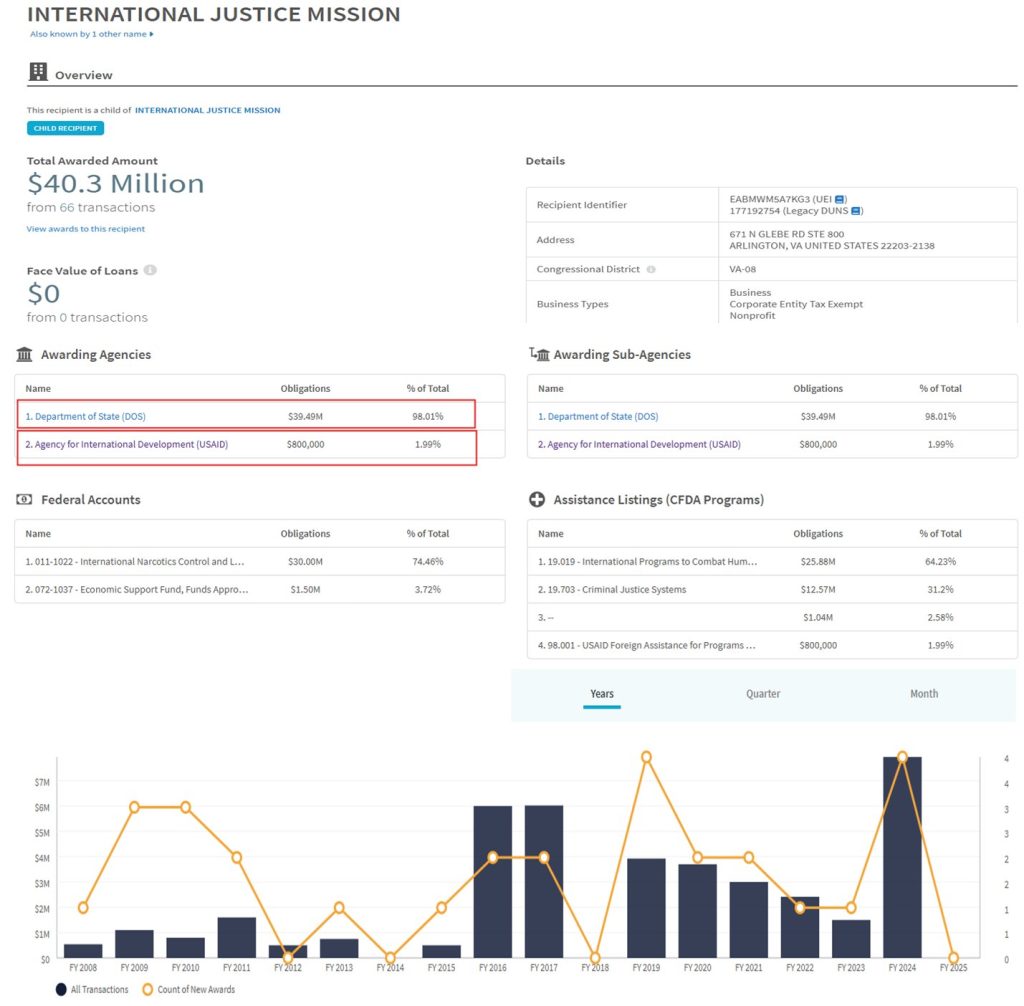
International Justice Mission
Freedom Fund
The Trail
International Justice Mission has received 40 million USD from the US State Department and USAID. Freedom Fund has received 20.3 million dollars from the US State Department!
You can see how Soros and Omidyar Network are neck deep into the funding of the Freedom fund and this entire circus of the deep state proxies led to three anti-India fronts.
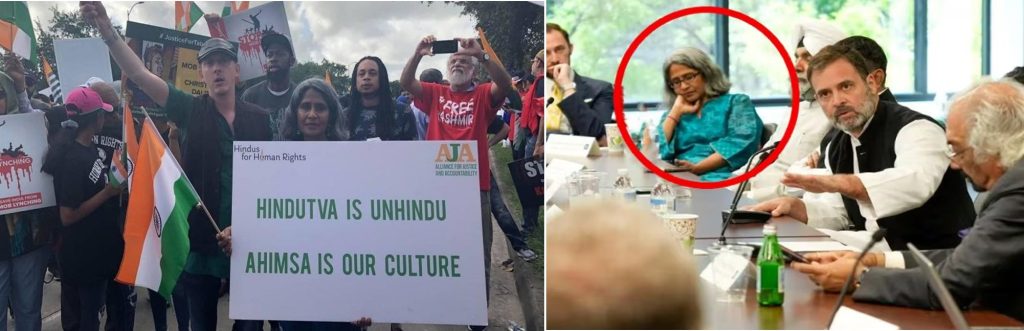
Hindus For Human Rights
Indo-American Muslim Council
The Sikh Coalition
All of them partner with each other and with OFMI (Organization For Minorities in India).
You can read in detail about this entire nexus in this thread:
4. The Woman who changed the US Politics
Rajasvini Bhansali is not an ordinary woman. Before joining Pam Omidyar's humanity united She was working with Solidaire Network and before that as Executive Director of THOUSAND CURRENTS.
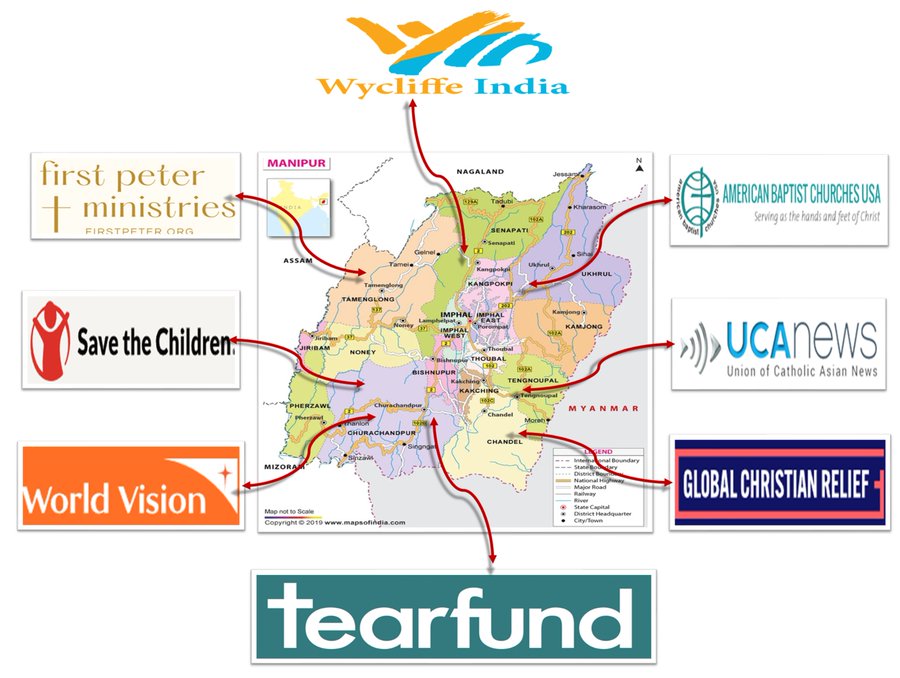
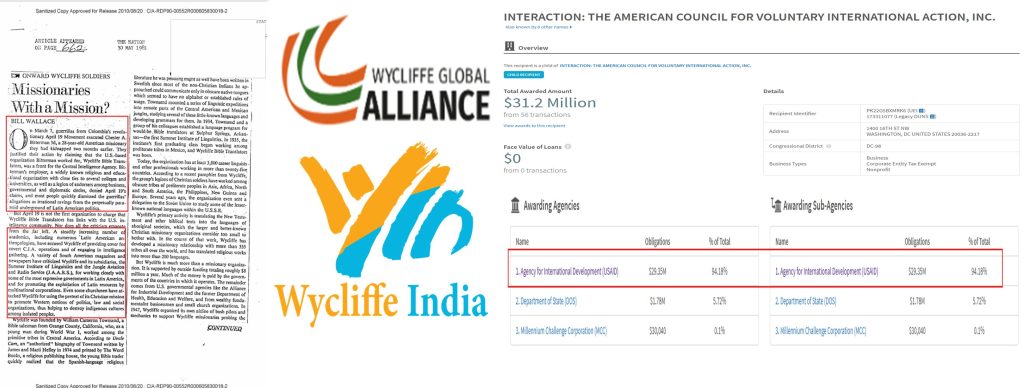
The Wycliffe Global Alliance, accused of being a CIA front, is active in India’s tribal regions. Its mission to translate the Bible into local languages has been criticized as a cover for proselytization. In Manipur, Wycliffe’s activities have fueled tensions between tribal communities.
The Tears Of Blood: Tear Fund And Manipur Violence
Tear Fund, a major recipient of USAID funding, operates extensively in Manipur. In 2023, the organization received over $102 million from USAID, coinciding with the outbreak of violence in the state. Critics argue that Tear Fund’s activities have exacerbated ethnic and religious divisions in the region.
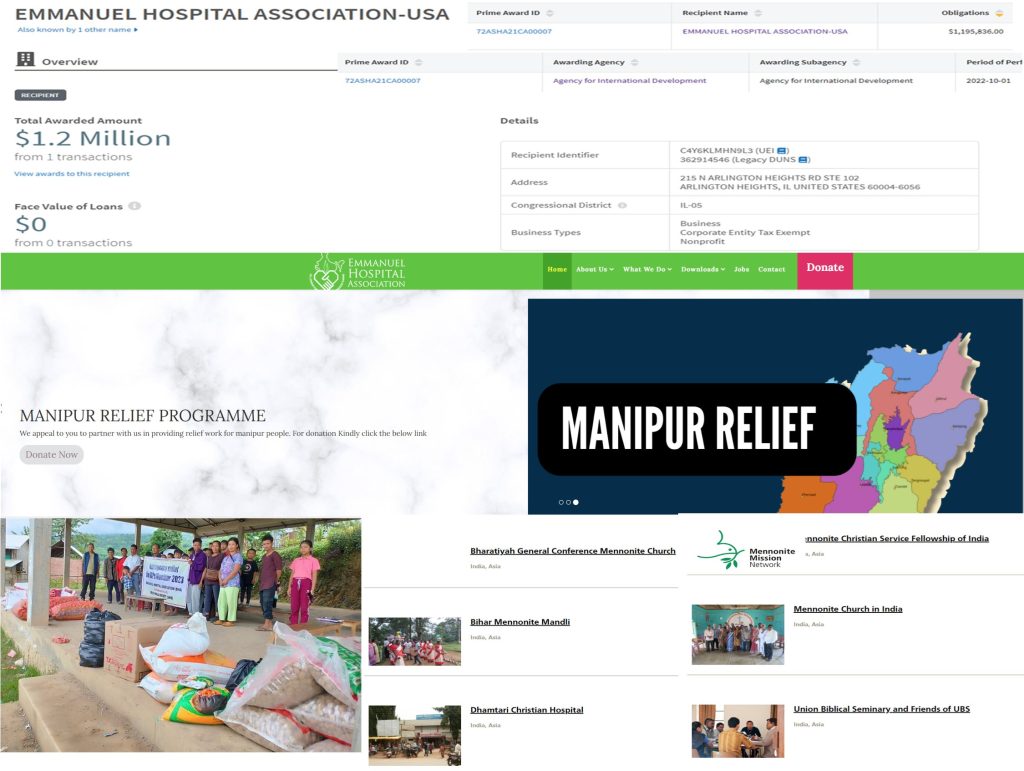
Interestingly, Emmanuel Hospital Association USA has received 1.2 million USD from USAID! It has worked extensively in Manipur under the umbrella of the relief and Rehabilitation program alongside Mennonite Church chapters of India.
The main objective of the Emmanuel Hospital Association is to open missionary hospitals and clinics in the tribal and remote areas of India in the name of The Church.
But what comes after this is something sinister, we have seen when conversions start happening through medical miracles in the name of Jesus Christ.
The Holy Trail of Blood: Justice Ventures International
Justice Ventures International (JVI), funded by the U.S. State Department and USAID, has been accused of orchestrating anti-India propaganda. JVI’s report on “Modern Slavery in India,” released by CNN, was based on the Global Slavery Index, which is funded by the Walk Free Foundation. Walk Free’s founder, Andrew Forest, has ties to the OCCRP, a Soros-funded media organization known for its anti-India stance.
The Terrorist Vision: World Vision and Al-Qaeda
World Vision, a USAID-funded organization, has been implicated in funding the Islamic Relief Agency (ISRA), a North African branch of Al-Qaeda. Despite being flagged by the U.S. government, World Vision continued to receive funding, raising questions about its operations in India, where it runs orphan child projects accused of facilitating religious conversions.
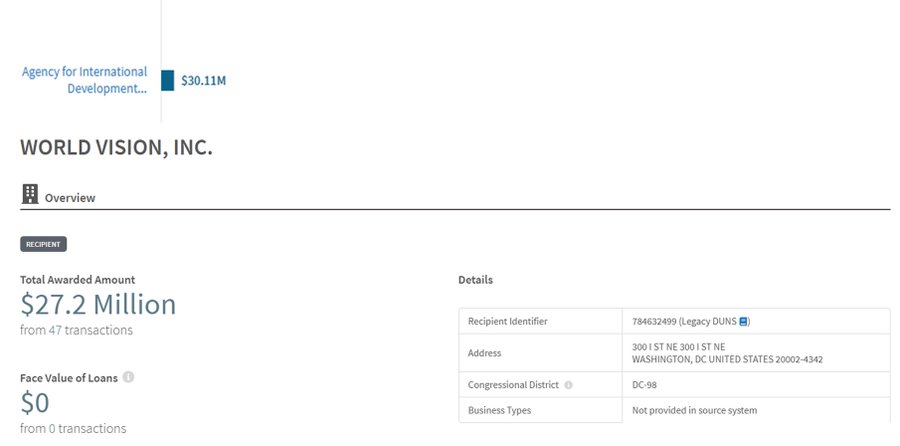
Since 2008, World Vision has received USD 30 Million in contracts and grants. Out of that USD 27 Million was in grants. Its child sponsorship program works for orphan children eventually converting them to Christianity.
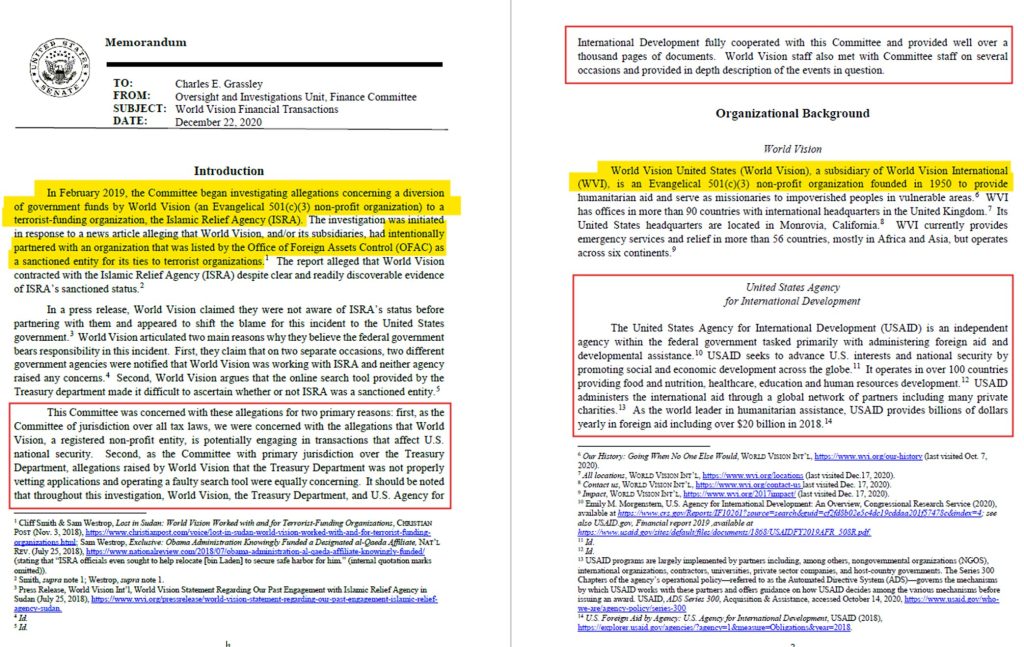
In December 2020, the US government’s oversight and investigation unit, the Finance Committee cited that using USAID grants World Vision was funding the Islamic Relief Agency (ISRA) which is the North African branch of Al-Qaeda based in Sudan.
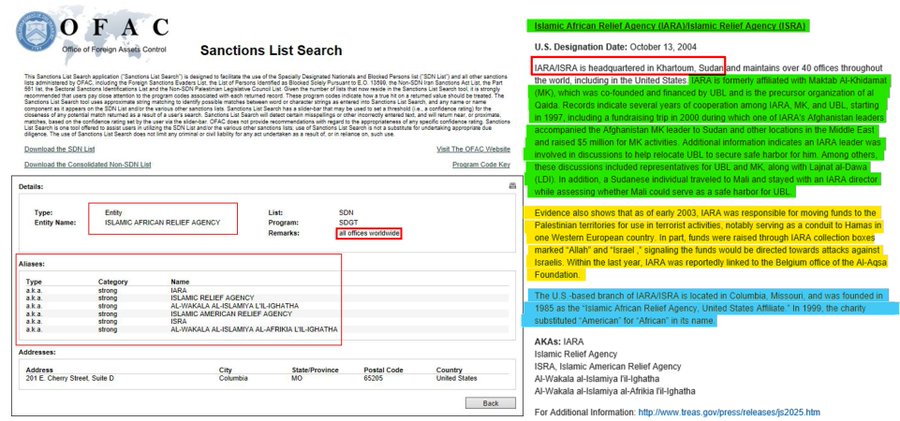
ISRA leadership had been involved in helping Al-Qaeda leader Osama Bin Laden to move to safe locations. ISRA has also funded Hamas. ISRA is a designated terrorist organization. It operated in 40 countries including the USbut post USBlacklisting it closed its US office. It had been working with Osama Bin Laden funded and founded Maqtub Al-Khidmat also.
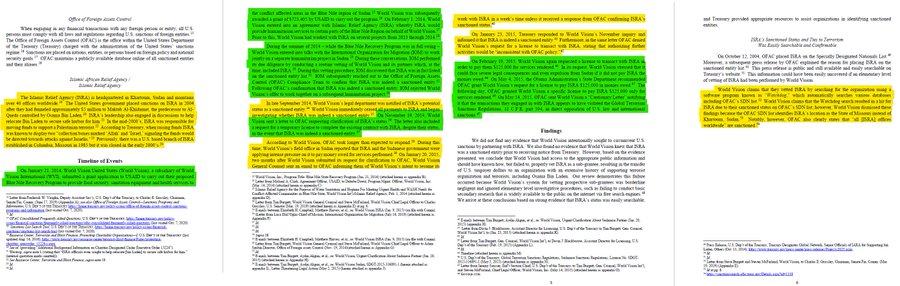
Despite OFAC (Office Of Foreign Asset Control) flagging ISRA as an Al-Qaeda associate, World Vision sought approval from the US State Department to release funds to ISRA for its existing commitments due to legal pressures from the Sudanese government. The then-US President Barack Obama approved the release of funds. Now imagine the same World Vision running a Christian missionary conversion agenda in India under its Orphan Child Projects.
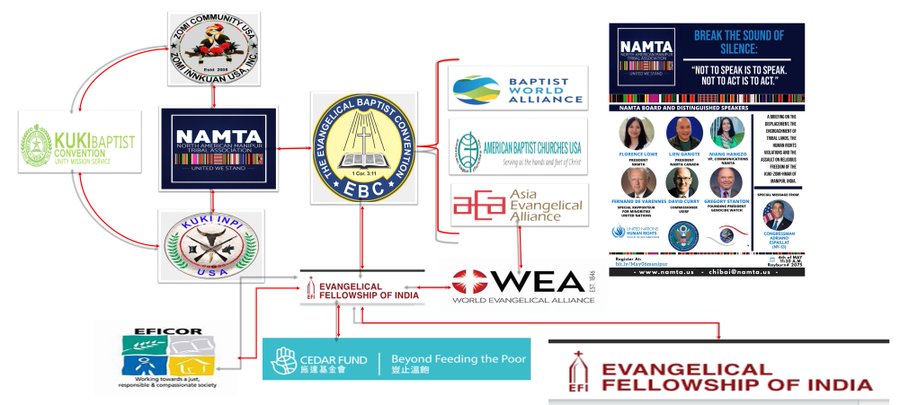
Agenda Loudspeaker: NAMTA And Evangelical Networks
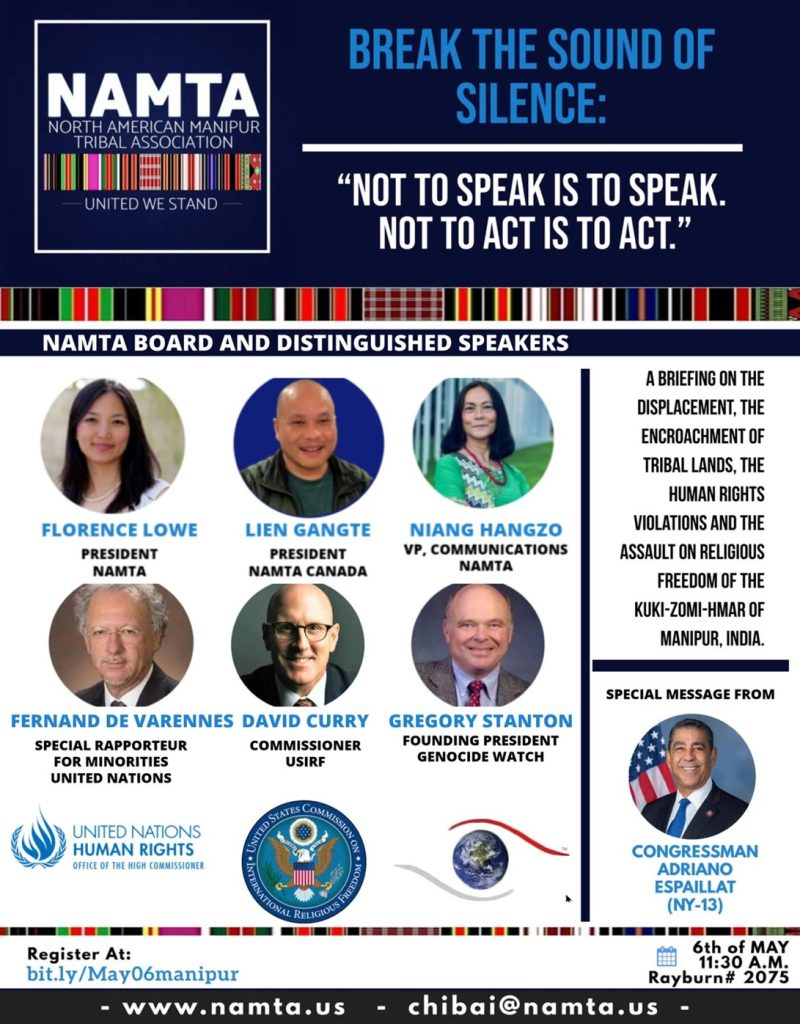
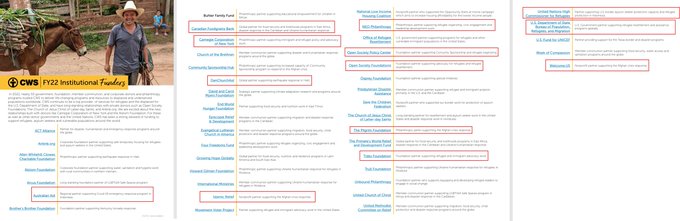
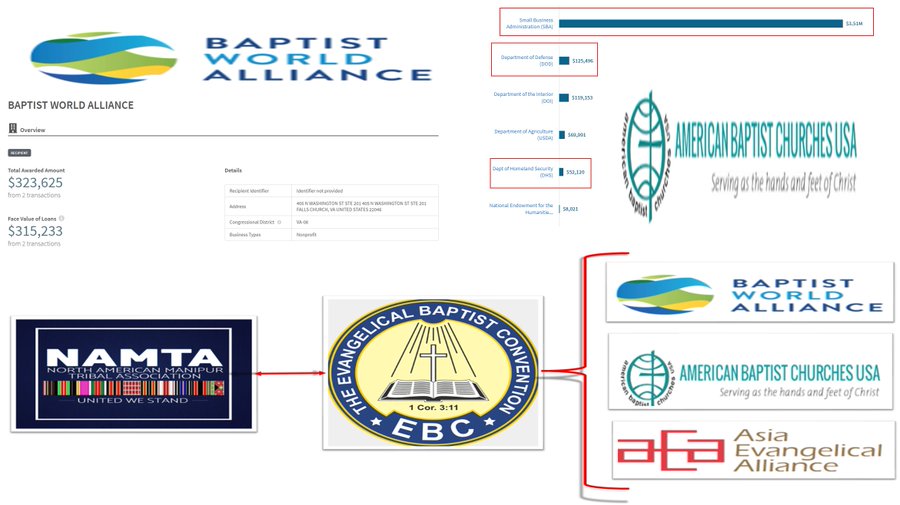
NAMTA, an Evangelical Baptist Convention, is closely linked to the India Peace Centre and Tear Fund. Its founder, Florence Lowe, has been instrumental in promoting Christian missionary activities in Manipur. NAMTA’s partners include the Baptist World Alliance and the American Baptist Churches, both of which receive substantial funding from U.S. government agencies.
Caritas And Rohingya Crisis
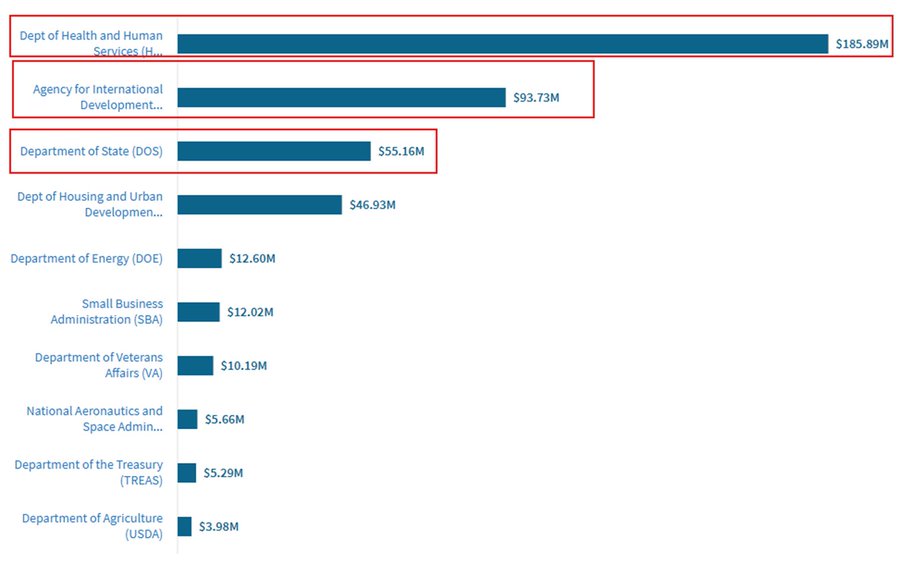
Caritas India, another USAID-funded organization, works with Rohingya refugees and Kuki-Zomi tribes in Manipur. Despite not being recognized by the UNHCR, Caritas has received over $93 million from USAID, raising concerns about its role in the region.
Zomi Innkuan USA And Refugee Networks
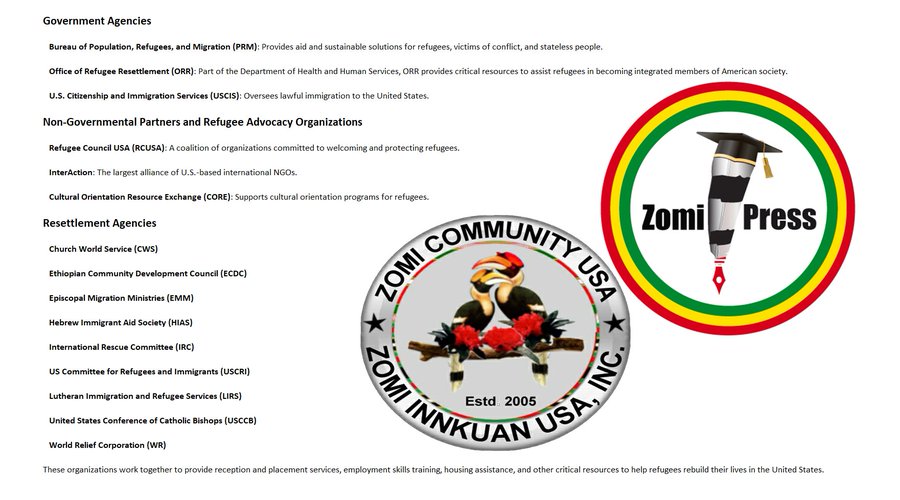
Zomi Innkuan USA, a partner of NAMTA, receives funding from U.S. government agencies like the Bureau of Population, Refugees, and Migration (PRM). Its ties to resettlement agencies like Church World Service and the International Rescue Committee (IRC), both heavily funded by USAID, highlight the extent of this network.
These organizations work together to provide reception and placement services, employment skills training, housing assistance, and other critical resources to help refugees rebuild their lives in the United States.
The Big Money Cartel
Another supporter of Kuki Community USA – Church World Services has been funded with 9.77 million USD by USAID.
It is also funded by:
Tides Foundation
Open Society Foundation
Islamic Relief
UNHCR
US Department of State
Baptist Churches In Manipur
The Manipur Baptist Convention (MBC) is a key player in the region’s Christian missionary activities. Funded by the Baptist World Alliance and American Baptist Churches, the MBC has been accused of promoting religious conversions in tribal areas.
The Mission And The Missionaries
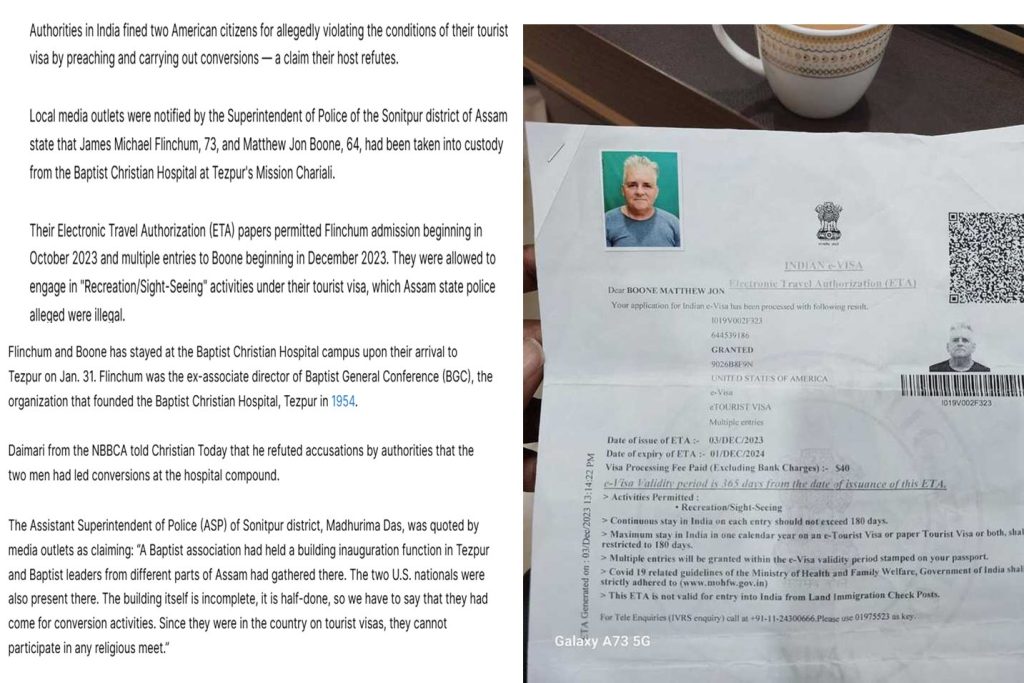
At the start of the year 2024, Assam police arrested two US nationals for illegal Christian missionary activities:
James Michael Flinchum
Mathew Jone Boone
During the police investigation, James Michael Flinchum disclosed that he has worked as Associate Director of the Baptist General Conference which is a part of Baptist World Churches. Do you understand the zeal and the nexus of the Christian conversion mafia? Both of these arrested Americans were giving bible sermons at Baptist Christian Hospital in Tezpur, Assam!!
The Hidden Missionaries: Sean Tornquist And First Peter Ministries
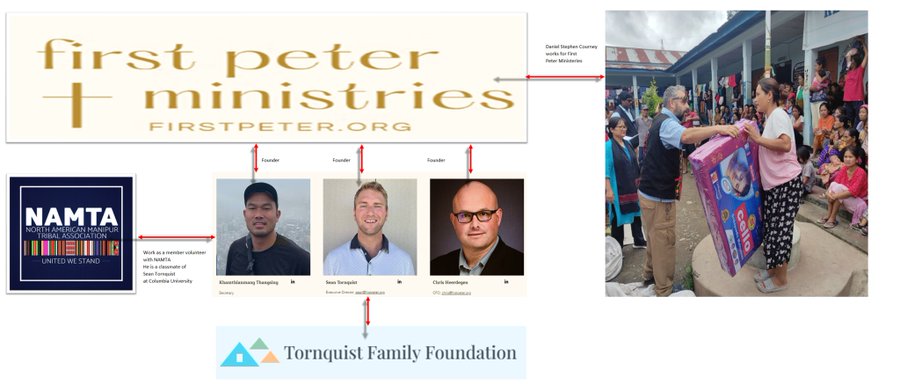
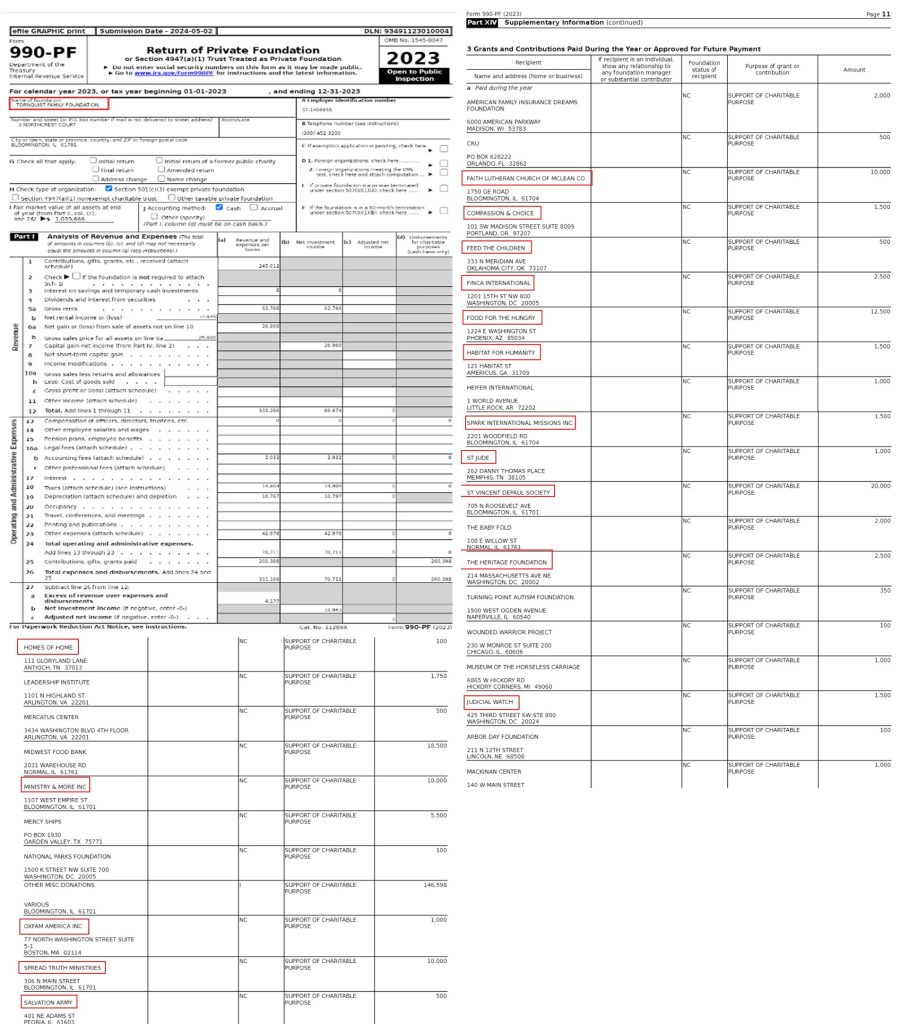
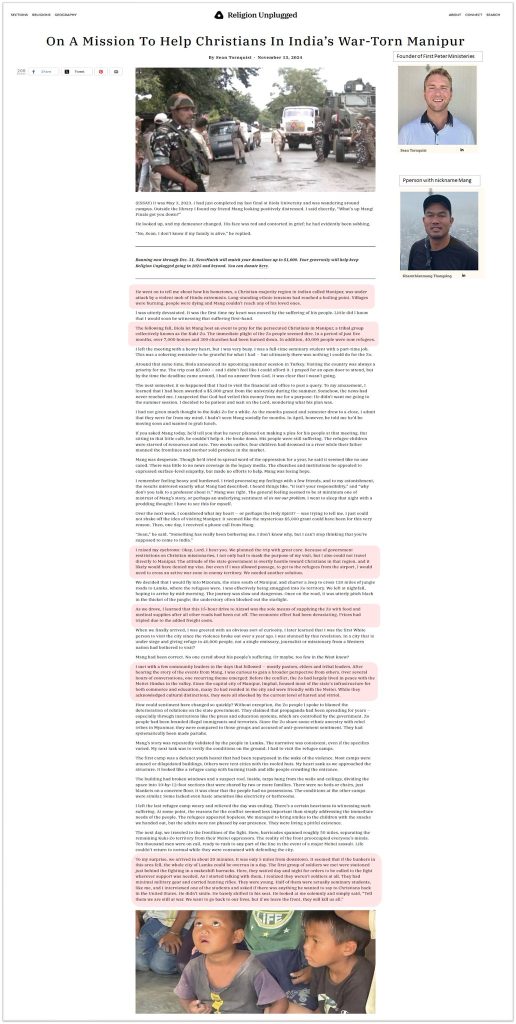
Sean Tornquist, founder of First Peter Ministries in Manipur, has been accused of supplying weapons and drones to Kuki Christians under the guise of relief work. Tornquist’s family foundation is funded by the Heritage Foundation and Judicial Watch, both of which have deep ties to the U.S. deep state.
You also have the likes of Daniel Stephen Courney who are engaged in conversion in Manipur and also the claims of him having given arms and ammunition to Kuki militants.
In November 2024, Sean Tornquist wrote in his online blog at http://seantorquist.com about how he travelled to Manipur, India at the behest of his Kuki friend and Columbia University classmate and NAMTA Volunteer, to give details of his journey when violence broke out in Manipur. Basically, it was a slap on Indian agencies’ faces because he wrote in detail how he evaded all of them to reach Manipur. This was before Home Minister Amit Shah made it mandatory in late 2024 to seek the Protected Area Permit (PAP) for all foreigners travelling to the Northeast of India.
The USAID nexus in India, particularly in Manipur, reveals a complex web of funding, organizations, and individuals working to advance religious and political agendas. From Christian missionary activities to alleged links with Al-Qaeda, this network underscores the need for greater scrutiny of foreign-funded organizations operating in India.
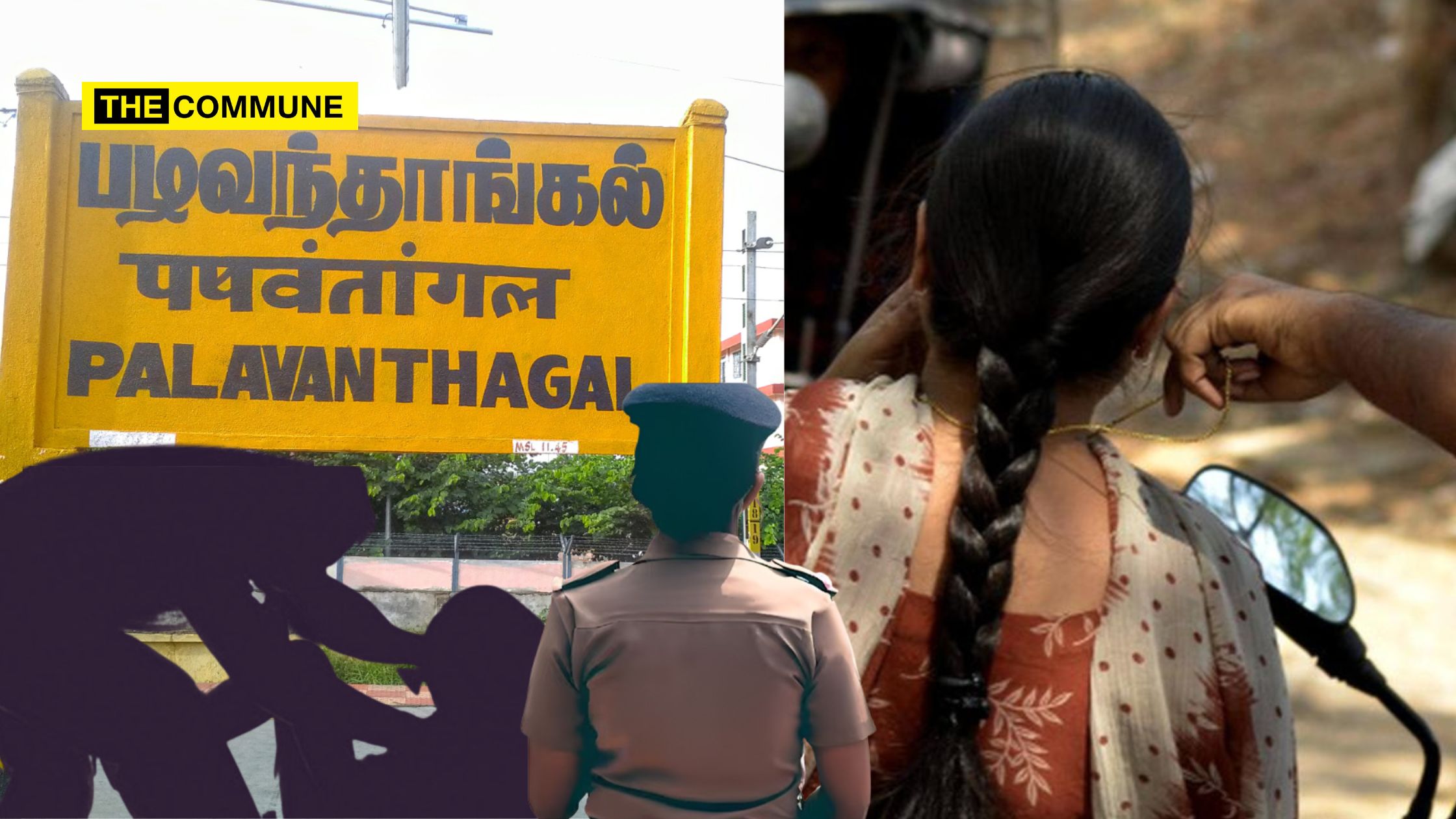
On 15 February 2025, a man was arrested and placed in judicial custody for attempting to sexually assaulting a woman police constable at Palavanthangal Railway Station.
According to reports, the incident took place when the constable exited the train and was heading towards the station’s exit. The accused Sathya Balu was intoxicated and allegedly tried to overpower her in a secluded area, attempting to assault her. The woman managed to raise an alarm, which drew the attention of nearby passengers. The man attempted to flee but was apprehended by the public and handed over to the railway police. A case has been filed, and an investigation is underway.
On the same night, another incident occurred. A 40-year-old man was arrested for snatched a gold chain from a woman constable at the same station. The suspect was apprehended soon after the incident and handed over to the authorities.
Reports indicate that Bharani, 25, a member of the intelligence section at the Chennai city police commissionerate, had finished her duty on 15th February night. After boarding a train at Egmore, she arrived at Pazhavanthangal station and was on her way home. As she got off the train and walked towards her destination, a man following her attacked from behind and attempted to steal her gold chain, which weighed one-and-a-half sovereigns. Bharani quickly grabbed hold of the chain and shouted for help. Although the thief managed to take part of the chain, he fled the scene.
Hearing her cries, other passengers gave chase and successfully caught the man, turning him over to the railway police. Following an investigation, the accused was identified as Sathyan, 40, from Sithalapakkam.
இது இன்றைய விடியல்!
சென்னை, பழவந்தாங்கல் ரயில் நிலையத்தில் பணி முடிந்து வீடு திரும்பிய பெண் காவலரிடம் செயின் பறிப்பு.
தமிழகத்தில் பெண் காவலருக்கே இந்நிலை; இந்த லட்சணத்தில் 'அப்பா' என கூப்ட சொல்லி அட்ராசிட்டி வேற! pic.twitter.com/rPeFilB8rY
Both incidents at the same local railway station, targeting womens, have shaken the community and sparked political outrage. The attacks have drawn sharp criticism of the government’s handling of law and order, with many expressing concern that even female police officers are no longer safe while walking the streets at night.