Home Blog Page 645

How Tamil Nadu Became India’s Chess Powerhouse

Tamil Nadu, India’s chess capital, has produced legends like Anand, Gukesh, and 29 GMs, powered by strong mentors, schools, and initiatives.

Tamil Nadu has always been a chess-conscious state. Not many know that the great son of Bharata Mata, Maharishi V V S Aiyer, was a big chess player. He was so prominent that the chess problems he solved were published in chess magazines in England and Holland. It is said that the earliest chess club in Chennai was the Mylapore Solar Chess Club, established around 1920 by K S Subramanya Aiyer. Manuel Aaron became the first Indian FIDE International Master (1961).

He did his best in various capacities for the Tamil Nadu Chess Association and the Indian Chess Federation; he was also a journalist. Not many know that one of the first corporates to support chess in India was also from Tamil Nadu. It was the great philanthropic industrialist from Pollachi, Dr N. Mahalingam of the Sakthi Group. A chance meeting with Aaron in 1966 pushed Dr. N. Mahalingam into the chess scene. He later became the president of the Tamil Nadu Chess Association and partnered with Aaron to promote chess.

Tamil Nadu – The Chess Master Factory

The second FIDE IM, V. Ravikumar (1978), was also from Tamil Nadu. The third IM, Raja Ravi Sekhar (1981), was also from Tamil Nadu. India had to wait for its first Grandmaster until 1988, when Viswanathan Anand stormed into the scene. The Russian Culture Center in Kasuri Rangan Salai was home to the Tal Chess Club, the sanctuary of the chess-crazed Tamil Nadu. There is this very famous story about when Vishy Anand was introduced to the Russian President, Vladimir Putin, in May 2012. This was before his World Championship match against Boris Gelfand of Israel at the Tretyakov Gallery in Moscow in 2012. Anand is said to have told President Putin that he learnt his ropes at the Tal Chess Club at the Russian Culture Center in Chennai. The president is supposed to have quipped, “So we brought this upon ourselves.”

1988, the year Vishwanathan Anand became a FIDE Grandmaster, proved to be a watershed moment. His success further galvanised the Tamil Nadu Chess scene, with many, like GM R. B. Ramesh, crediting their taking up competitive chess after Anand. Today, Tamil Nadu boasts 29 out of the 83 FIDE Grandmasters. We are also home to eight Women Grandmasters. If we take a leaf from the Canadian writer Malcolm Gladwell, Vishwanathan Anand was The Tipping Point of not just the Tamil Nadu chess scene but for the whole of India.

Post Tal Chess Club

Tal Chess Club folded with the breakup of the USSR. GM R. B. Ramesh and many other able hands have since filled the vacuum. Ramesh needs a special mention, as he retired as a player very early when he was only 32. Another story is that he became a coach when he was 22, taking charge of the Indian Junior Chess Team that attended the Asian Junior Chess Championships (1998) in Iran. He struck gold right from his first assignment as a coach, returning with winners in both the boy’s and girls’ categories – Tejas Bakre and Vijayalakshmi Subburaman, respectively. 1999 saw Ramesh coaching Aarthie Ramaswamy to a World U-18 Championship. It is another story that Aarthie and Ramesh are married now, and together, they successfully run Chess Gurukul, the academy in Chennai that nurtures and mentors most of the top chess talents from India.

Vishy Anand – The Father Of Indian Chess Boom

Vishy Anand’s role as a mentor and a pillar of support for chess in India cannot be downplayed. Every Indian chess player looks forward to the fabled visit to Vishy Anand’s trophy room when they become a GM, where Anand spends time with the new GM discussing his/ her game. Many have rightly called Anand, the father of the Indian chess boom. His Westbridge Anand Chess Academy (WACA) has been at the forefront of making many champions, including the reigning World Chess Champion, D. Gukesh. Gukesh had this to say after his win, “Vishy Sir was never officially a part of the team but we all know he was supporting me. He attended one of the days during the training camp and also helped remotely for a few sessions”.

The other Chennai institution that deserves credit for promoting chess in a big way is Velammal Vidhyalaya. This school nurtures many precious chess talents from India, including Grandmasters, D. Gukesh, R. Praggnanandhaa, S. P. Sethuraman, Leon Mendonca, K. Priyadharshan, B. Adhiban, Vishnu Prasanna and R. Vaishali and Women Grandmaster, V. Varshini and Women International Master, R. Rakshitta. This school has been the powerhouse of Indian chess since 2005. They have won the World School Chess Championships five times, with D. Gukesh and R. Praggnanandhaa being part of the winning team in 2021.

Former TN CM J Jayalalithaa’s Contribution

Amma J Jayalalitha is another person who did her bit to promote chess in Tamil Nadu. Some of us remember Amma using Assembly Rule 110 to announce a series of welfare schemes and policies during her term as the Chief Minister. One of her famous announcements was the school reforms in August 2011. Part of that was a plan called the “7 to 17 program” to take chess to all the government schools in Tamil Nadu among children aged 7 to 17. She also brought the World Chess Championships 2013 to Chennai, where Magnus Carlsen defeated Vishwanathan Anand to win the title.

Amma’s fondness and support for sports in Tamil Nadu is well known. Therefore, her championing of the cause of chess shouldn’t come as a surprise. Then came the 44th Chess Olympiad, which happened in Mahabalipuram, Tamil Nadu, in 2022, opened by the Indian Prime Minister Narendra Modi. India 2, coached by GM R. B. Ramesh, included D. Gukesh, Nihal Sarin, R. Praggnanandhaa, B. Adhiban, and Raunak Sadhwani won the bronze medal in the team championship. D. Gukesh made his mark here winning the gold medal for Board 1. The Indian women, Koneru Humpy, Harika Dronavalli, R. Vaishali, Tania Sachdev and Bhakti Kulkarni also won the bronze.

Tamil Nadu has always been the chess capital of India. With D. Gukesh winning the World Chess Championships 2024 and great mentors and ambassadors of the game like Vishwanathan Anand, R. B. Ramesh, Aarthie Ramaswamy, etc. propelling the game, we are going to see many champions from the state in the coming years. The following Thirukkural fits the chess scene in Tamil Nadu perfectly.

நிலவரை நீள்புகழ் ஆற்றின் புலவரைப்
போற்றாது புத்தேள் உலகு. (Fame, 234)

“Behold the man that hath won a lasting, worldwide fame: the Gods on high prefer him even before saints.” – The Kural Or The Maxims Of Tiruvalluvar – V V S Aiyar.

Raja Baradwaj is a marketing communications professional who works with a leading technology multinational company. He is an avid reader, history buff, cricket player, writer, and Sanskrit and Dharma Sastra student.

Subscribe to our TelegramWhatsApp, and Instagram channels and get the best stories of the day delivered personally.

Rao Saheb M. C. Madurai Pillai: A Forgotten Hero Of Social Reform And Sanatana Dharma

Rao Saheb M. C. Madurai Pillai: A Forgotten Hero Of Social Reform And Sanatana Dharma

A select few and their cabal traditionally controlled the narrative of India’s history. All these years, they decided who should be spoken about and who would be pushed to obscurity, as well as the quantity and quality of what would be spoken. Great people who wouldn’t fit their definition went into the footnote, or if they were lucky, as an obscure statue in a nondescript corner. One of these forgotten heroes is Sri. M. C. Madurai Pillai (not to be mistaken with another great son of Bharata Mata, Sri. P. M. Madurai Pillai).

We know little about Sri. M. C. Madurai Pillai’s childhood. He was born into a Dalit Paraiyar-Valluvar family. He worked in the Kolar Gold Fields (KGF) in Karnataka. In those days, many workers there belonged to the Scheduled Caste community from Tamil Nadu, especially from the northern districts. Even Swami Sahajananda’s family from Arani moved to Kolar and found work in the KGF.

A Public Face In Madras And Kolar

Sri M. C. Madurai Pillai grew with the KGF and became a key leader and businessman. By his twenties, he was one of the KGF’s leading contractors. Kolar and Madras were home to him, and he shuttled between these two places. Soon, he was among the few successful businessmen in Madras and Kolar. His philanthropic bent of mind pushed him into public service at an early age.

He served as a member of the Madras Municipality (much before the Madras Corporation days) and the Saidapet Taluka Board and later became a Chengalpet Zilla Council Board member. The government feted him with the Rao Saheb award and title. He was also appointed an Honorary Magistrate of Madras City.

He understood the value of education in elevating lives, which led the government to appoint him to the province’s Education Council. In 1919, he was instrumental in starting Sri Namperumal Primary School in both Robertsonpet and Andersonpet in Kolar. These two schools were later elevated as Middle Schools. Later, he became a Member of the Madras Presidency Legislative Council in 1925.

A Devout Vaishnava

He was a devout Vaishnava and a staunch Sanatani. Once, while on a visit to Sri Ranganatha temple in Srirangam, he chanced a Kata Kalaksheba (discourse) on Srimad Bhagavata Purana by Sri Ubhaya Vedhaantha Pravarthaga Srimath Arulmaari Thiruvengada Varayogi Swamigal. Mesmerised, he wanted to become a disciple of the Swami and take the Pancha Samskara ritual to formally enter the Sri Vaishnavism portals. The Swami’s disciples enquired about his antecedents, and knowing he was from the Pariyar community, they refused him access to the Swami. Unperturbed, he started a fast until the Swami gave him Pancha Samskara.

The Swamiji, pleased with Sri Madurai Pillai’s focus and dedication, initiated him into Sri Vaishnavism, giving him the Pancha Samskara and the name “Madurakavi Ramanujadasar.” The Guru also visited his Shishya’s abode in Kolar, which started a new chapter in the district’s history, reeling under Christian missionaries’ influence. Sri. Madurai Pillai established “Sri Udayavar Sabhai” in Andersonpet in Kolar, making it the fulcrum of Sanatana Dharma in the region. Many people from across all communities were initiated with Pancha Samskara. Sri Madurai Pillai also built a splendid Nam Perumal Ranganatha Swamy Temple in Kolar.

Worked For Marginalised And Oppressed

He acted as the voice of the marginalised and oppressed. He established Adi Dravida Mahajana Sabha to work for the oppressed community. It is said that Sri Madurai Pillai coined the word Adi Dravida to refer to the marginalised community. He published a magazine, Dravidian. Sri. Veeraiyan, designated Vaduganambi Dasar during his Pancha Samskara, was Dravidian’s Editor. He was a great scholar of the Sri Vaishnava philosophy and was called “Sri Hari Katha Prasanga Vedantha Rathnakara”. Sri. Madurai Pillai was also passionate about worker health and welfare. He did many Silicosis awareness campaigns and medical camps. Silicosis is a deadly respiratory disease that affects the lungs, which was prevalent among the miners.

In 1921, the Buckingham and Carnatic Mills workers went on strike. This strike soon became a class issue between two sets of workers, resulting in the infamous “Pulianthope riots,” which resulted in significant loss of lives and property for both sides. Sri. Pillai worked for the relief and rehabilitation of both sides without any fear or favour. His neutral stand and his great work are unparalleled. He was a pillar of support for “Thatha” Rettaimalai Srinivasan, who went as a delegate to the first roundtable conference in London. He telegrammed Babasaheb Ambedkar, wishing him success at the roundtable.

The Legacy Of Sri. M. C. Madurai Pillai

Sri. M. C. Madurai Pillai passed away on December 14, 1934. He had done more for the community, culture, and Sanatana Dharma than anyone would have done in a century. His descendants, now the hereditary Dharmakarta (trustees) of the Nam Perumal Ranganatha Swamy Temple Trust in Kolar, are carrying forward his great work.

Let us remember and pay our respects to Sri. M. C. Madurai Pillai, another great son of Bharata Mata and a savant of Sanatana Dharma, today.
பிறப்பொக்கும் எல்லா உயிர்க்கும் சிறப்பொவ்வா
செய்தொழில் வேற்றுமை யான்.
(Greatness, Kural 972)

The manner of birth is the same for all men, but their reputations vary because they differ in their lives – The Kural or The Maxims of Thiruvalluvar by VVS Aiyar.

Raja Baradwaj is a marketing communications professional who is currently working with a leading technology multi-national company. He is an avid reader, a history buff, cricket player, writer, Sanskrit & Dharma Sastra student.

Subscribe to our channels on TelegramWhatsApp, and Instagram and get the best stories of the day delivered to you personally.

“Is Deceiving People The Dravidian Model?” Asks PMK Leader Anbumani Ramadoss, Criticizing Aavin’s Green Magic Plus Launch Over Alleged Deceptive Pricing And Reduced Quantity

PMK Leader Anbumani Ramadoss, Criticizing Aavin's 'Green Magic Plus' Launch Over Alleged Deceptive Pricing And Reduced Quantity

Under the DMK government, the state-owned cooperative Aavin has again been scrutinised after launching a new milk variant, “Green Magic Plus.” The product’s announcement lacked transparency regarding its quality and pricing, only mentioning the addition of Vitamins A and D, which has drawn widespread criticism.

Pattali Makkal Katchi (PMK) president Anbumani Ramadoss strongly criticized the DMK government, claiming that alarming details emerged when Aavin officials were questioned about the new product. According to Ramadoss, aside from a smaller pack size and a higher price, Green Magic Plus offers no significant difference from the existing Green Magic milk.

Dr. Anbumani Ramadoss pointed out that the original Green Magic milk priced at ₹22 for 500 ml, containing 4.5% fat and 9% non-fat solids. However, the newly introduced Green Magic Plus, priced at ₹50 for 900 ml, contains the same nutritional content but is sold at ₹55 per liter, which is ₹11 more than the original product.

Ramadoss described the price hike as “daylight robbery,” accusing Aavin of misleading consumers by simply adding the word “Plus” and increasing the price. He pointed out that Aavin has reduced the original Green Magic milk distribution by 80% in Tamil Nadu, pushing consumers towards the higher-priced Green Magic Plus.

Furthermore, Ramadoss expressed concern over Aavin’s marketing strategy, which raises prices while reducing the quantity, calling it a clear case of fraud. He demanded that the government and Aavin explain the changes and why no public opinion was sought before launching the new product. In his statement, Ramadoss urged the government to abandon plans to discontinue the original Green Magic milk and continue selling it at its current price, stressing that innovations should not come at the expense of deceiving the public.

Criticizing the DMK through his official X account, PMK chief Anbumani Ramadoss said, “Aavin has announced the launch of a new green packet milk called “Green Magic” in the districts of Kanchipuram, Tiruvallur, Coimbatore, and Salem in Tamil Nadu starting from the 18th. However, the press release issued by Aavin does not contain any details about the quality or price of the milk; instead, it only states that vitamins A and D have been added. When Aavin officials were questioned about the features of the new milk, shocking facts were revealed. Apart from the reduction in quantity and increase in price, there is nothing new in the new milk.”

Currently, Aavin Green Magic Milk is sold at ₹22 per 500 ml. It contains 4.5% fat and 9% non-fat solids. The newly introduced milk also contains the same nutrients in the same amount and is said to have added vitamins A and D. The benefits and costs to Aavin are not significant. However, while Green Magic is sold at ₹44 per liter, it has been announced that Green Magic Plus 900 ml will be sold at a price of ₹50. While Green Magic milk 500 ml is sold at ₹22, Green Magic Plus 450 ml will be sold at ₹25. If we look at it that way, the price of Green Magic Plus milk is ₹55 per liter. This is ₹11 more per liter than the price of Green Magic milk. Charging ₹11 more just to add the word Plus to Aavin Green Magic milk is daylight robbery.” He added.

“If Aavin Green Magic Plus milk had been introduced as an additional type, it could have been ignored, with only those who wanted to buy it actually purchasing it. However, the distribution of Aavin Green Magic milk has been reduced by 80% across Tamil Nadu. While Green Magic Plus milk has been introduced in the districts of Kanchipuram, Tiruvallur, Coimbatore, and Salem in the first phase, Aavin plans to expand it across the state at a lower price and discontinue Green Magic milk, which is currently sold at ₹44 per liter. This move will force consumers to buy Aavin green milk under a different name at a higher price. Raising the price of a packet by ₹3 and reducing the quantity of milk by 50 ml to cover up the increase in milk prices is a blatant fraud.” He further added.

Aavin, a public sector company, cannot be allowed to indulge in such frauds. It is welcome that the government and public sector companies introduce innovations to benefit the people. However, such innovations should not be introduced to deceive the people. The government and Aavin should explain whether deceiving the people by changing the name is the Dravidian model?” He slammed.

“Last October, it was reported that Aavin Green Magic Plus milk had been introduced in the Trichy region. I issued a statement on October 18th opposing that, and Aavin, in response, said, ‘Only a study is being conducted to introduce a new type of milk in the market that is enriched with Vitamin A and D, and slightly increased in other fat content, which everyone wants. The public will be asked for their opinions.’ On the contrary, no public opinion was asked; fat content was also not increased. How is it fair to reduce the quantity and increase the price? Aavin did not release any information about the quality of the milk and the price in the press release about the introduction of the new milk in order to hide this fraud. What should we call this behavior? The government should abandon the plan to introduce the high-priced Aavin Green Magic Plus milk. Aavin Green Magic milk, which is sold at a price of ₹44 per liter, should not be discontinued and should continue to be sold as it is now.” He urged.

Subscribe to our channels on Telegram, WhatsApp, and Instagram and get the best stories of the day delivered to you personally.

Controversy Erupts As ‘Neelam Cultural Centre’ Celebrates Dravidianist Director Pa. Ranjith’s Birthday In Tamil Nadu Government School

Controversy Erupts As 'Neelam Cultural Centre' Celebrates Dravidianist Director Pa. Ranjith's Birthday In Tamil Nadu Government School

Controversy erupted over the celebration of “triple flop” Dravidianist director Pa. Ranjith’s birthday at a Tamil Nadu government school in Pudukkottai district.

The incident occurred on 6 December 2024, two days ahead of Pa. Ranjith’s birthday. The event, organized by the ‘Neelam Cultural Centre,’ an organization headed by the director, was held at Jagathambal Government Higher Secondary School, disrupting the students’ regular studies for the day.

Adding to the controversy, the event was presided over by Pudukkottai district DMK Mayor Thilagavathi Senthil. The incident has drawn widespread criticism from educators and the public, who have questioned how the school management allowed such a program, especially in light of previous directives from the DMK Education Minister Anbil Mahesh that schools should be used strictly for educational purposes.

Activist and advocate Rajendran has filed a formal complaint with the Education Secretary, demanding an inquiry into how permission was granted for the event and calling for strict action against the school in-charge and the organisers of the meeting.

The incident has sparked significant outrage and criticism, primarily because the event’s organizers, the ‘Neelam Cultural Centre,’ previously provided a platform to Gana singer Isaivani, who faced backlash for her controversial song “I Am Sorry Iyyappa,” which disrespected the Hindu deity Lord Ayyappan. Despite widespread condemnation from various religious communities, the Neelam Cultural Centre did not express remorse or issue an apology for hurting the sentiments of devotees. Instead, they doubled down by openly supporting Isaivani. Adding to the controversy, despite multiple cases filed against Isaivani, the DMK government has not taken any action to arrest her, further aggravating public anger.

Pa. Ranjith, the head of the Neelam Cultural Centre, has faced widespread criticism for his consistent portrayal of anti-Hindu sentiments and his efforts to promote the Dravidianist ideology of his political patrons for personal and professional gain. Through his films, he promotes his personal “woke” ideological views, often setting poor examples for the younger generation. His portrayals frequently present misguided perspectives on love and relationships, particularly influencing how males perceive and approach females, sparked resentment among various sections of the public.

In his movie “Attakathi”, he even included dialogues that framed pre-marital sex as an “achievement.” For instance, when a character advises the protagonist about his love life, he says, “You should first go and have sex; then she will not go away.”

In his recent film Thangalaan, there was the usual Dravidianist stereotyping of Brahmins as vile and cunning and de-Hindufying village deities.

In Kaala, he subtly weaves anti-Hindu sentiments, portraying Hinduism and its symbols as inherently oppressive. The movie’s villains are given distinctly Hindu names, reinforcing negative stereotypes associated with the religion. Ranjith contrasts Hindu traditions with Buddhist and Communist ideals, favoring the latter as symbols of compassion and justice. Hindu icons like Ram and Krishna are used to depict antagonists, while Marxist symbols and EVR are praised. The film tries to pit Buddhists against Hindus by showing bowing to elders, as hierarchical, while Buddhist traditions are celebrated. Ranjith’s portrayal of characters and symbols paints the Hindus in a negative light while valorizing Communist and Buddhist beliefs.

Ranjith, although he proved worthy of a filmmaker in ‘Madras,’ a political film that traversed the landscape of Dravidian politics, his other film, ‘Sarpatta Parambarai’, peddled Dravidian propaganda. One should also note that Ranjith had also supported Udhayanidhi Stalin for his ‘eradicate Sanathana Dharma’ remarks.

Educationists and activists have expressed outrage, questioning how a government school could promote an individual known for propaganda, religious hatred, and distorting narratives and facts, thereby setting a poor example for students.

Subscribe to our TelegramWhatsApp, and Instagram channels and get the best stories of the day delivered to you personally.


“10 Months Later, Now They Object”: BJP TN Chief Annamalai Criticizes DMK Govt’s Stance On Tungsten Mining Project

BJP TN Chief Annamalai Accuses DMK Of Hiding Archaeological Sites In Tungsten Mining Dispute.

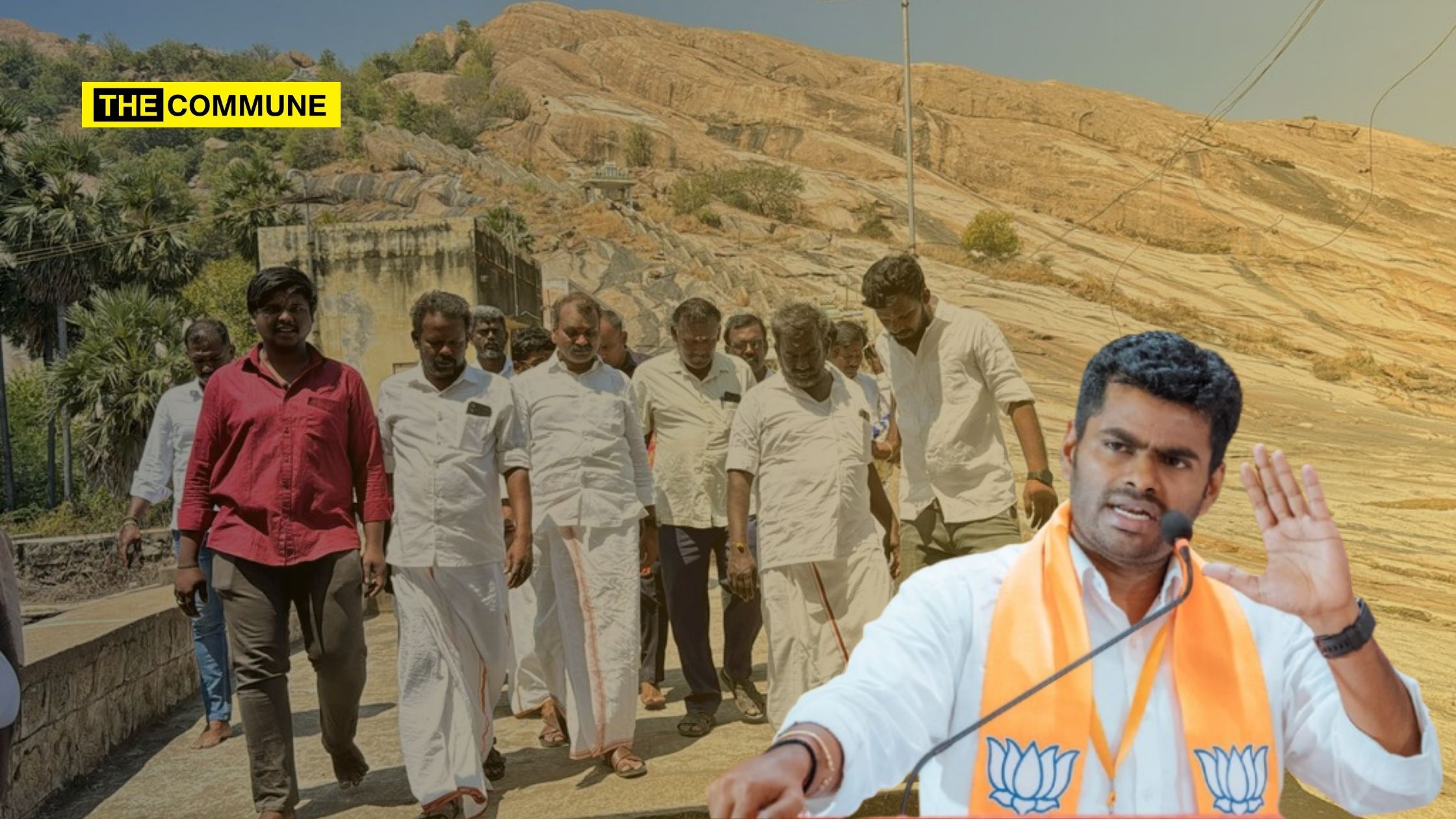
In spite of the DMK government’s delayed objections to the contentious Tungsten mining project in Madurai, BJP Tamil Nadu President K Annamalai has expressed confidence in resolving the issue following a meeting with Union Ministers L Murugan and G Kishan Reddy. Annamalai criticized the DMK for not raising objections earlier despite the project’s approval and growing local protests over potential environmental and displacement issues. The project, which involves mining in the Arittapatti and Nayakarpatti blocks, has seen Tamil Nadu Chief Minister MK Stalin and Congress leaders calling for its cancellation.

Speaking to reporters in Delhi, Annamalai said, “The DMK is the one creating the problem. The BJP is giving a solution to the problem. For example, Tungsten mining. If you look at this issue, the Arittapatti block, Nayakarpatti block – the Ministry of Mines has written on 25 September 2023 to the government about the auctioning of the Nayakarpatti Tungsten block. The TN government kept saying they never told. But on 8 February 2024, the TN government gave detailed input to the centre on the Tungsten block mining. I am not revealing the name of the officer who wrote this otherwise the TN government will pounce on him. Based on the input given, the centre brought about this mining in the second and fourth tranche, and the preferred bidder was selected on 7 November 2024. After all this happened, 10 months after it was put forth, the TN government says we have nothing to do with this. Despite having such a long time period – 1 year and 2 months, they never objected even a bit. They never said no anywhere. Yesterday Union Minister of State L Murugan and I met the Union Minister for Coal and Mines G Kishan Reddy. We will soon hear a good decision. It is our continuous criticism that DMK having these many MPs for strength are using them only for politics and not for any constructive work.”

He further said, “As far as India is concerned, as far as our country’s minerals are concerned, there are 3 categories – major, minor and critical. If you consider the Tungsten block in Nayakarpatti, it is a critical mineral. Not even one rupee from the sale will go to the central government. The central government is a facilitator. The Geological Survey of India (GSI) goes to each state and analyses what minerals are present in each state. They apprise the state and central government of the findings. Then if the central government wants to auction it, they will ask the state government. That is how our central government asked the state government in September 2023. Before that, in 2021, the GSI had already informed the state government about the tungsten. This is something that both governments should do together. Unlike what is claimed by some politicians in TN, not one rupee goes to the central government from this. It all goes to the state government. You can take the case of Odisha – their budget money comes from minerals only. The central government only facilitates this. When they asked first, the state government did not object. Then, when the tender conditions were put forth, the state government did not object nor did they object when the tender was put in place. 10 months later, after the tender was won by the Hindustan Zinc company, the people of the region started protesting, and only after that did the state government register an objection. The state government could have informed the centre of the Jain burial sites in September 2023 or about the Alagar Malai or about the megalithic burial site. They did not raise objection anywhere. Even the related officer did not raise any objection with regard to the site but did tell about the area size, and the biodiversity hotspot and also said no problem at the 18 sqkm. This was their input.”

The Tungsten mining project in Madurai has sparked strong opposition from local residents, who are raising concerns about its potential environmental impact and the risk of displacement. Communities have organized protests, fearing threats to agriculture, water resources, and their livelihoods.

The issue was recently brought to the forefront in the Tamil Nadu Assembly, where a heated debate took place over the Centre’s approval for the Vedanta group to mine tungsten in the region. The Assembly ultimately passed a resolution opposing the project, with Water Resources Minister Durai Murugan introducing the motion in response to protests from Arittapatti residents.

Tamil Nadu Chief Minister MK Stalin has also weighed in, writing to Prime Minister Narendra Modi to urge the cancellation of the mining approval. Additionally, Congress MP from Sivaganga, Karti P Chidambaram, expressed his concerns in a letter to Union Minister for Coal and Mines, G Kishan Reddy, emphasizing the detrimental effects of allowing Vedanta to proceed with the mining project.

Subscribe to our channels on Telegram, WhatsApp, and Instagram and get the best stories of the day delivered to you personally.
“The Final Word Belongs To The Supreme Court”: Former CJI DY Chandrachud Responds To Ayodhya Verdict Criticism By Ex Justice Rohinton Nariman

Former CJI DY Chandrachud Responds To Ayodhya Verdict Criticism By Ex Justice Rohinton Nariman hinduphobe

Former Chief Justice of India DY Chandrachud recently addressed critiques of the Supreme Court’s 2019 Ayodhya verdict, including remarks by Justice Rohinton Nariman, who termed the decision amockery of justice” and that secularism was not given its due at all. Speaking at the Times Network India Economic Conclave, Chandrachud emphasized that judgments, once delivered, become public property and are open to discussion and critique.

Justice Nariman, a former Supreme Court judge, had criticized the verdict for not giving due consideration to secularism. He argued that while the judgment acknowledged the illegality of the mosque’s demolition, it awarded the disputed land in a way he found inconsistent. Nariman also noted that while the court mentioned the structure under the mosque was not Islamic, it stopped short of definitively identifying it as a Ram temple.

Responding to these remarks, Chandrachud acknowledged Nariman’s freedom to critique the decision.Justice Nariman, whom I respect deeply and count as a good friend, is a free citizen of a free nation. In contrast, I am a disciplined soldier of the institution I have served, he said. Chandrachud reiterated that it is not the role of a judge to defend or critique a judgment once it has been delivered, adding, The judgment is now the public property of the nation, and it is for others to critique.”

He addressed the concerns about secularism raised by Nariman, framing them as a testament to the vibrancy of secular principles in India. One of the critical principles of secularism is the freedom of conscience, and Justice Nariman exercised that freedom through his critique. The fact that people in our society can express such opinions is a reminder that secularism is alive and well in India,Chandrachud said.

The former CJI emphasized that the Ayodhya verdict was a collective decision made by the five-judge bench, with each judge standing by the reasoning presented in the detailed judgment. He also noted the importance of diverse perspectives. Addressing concerns over secularism being sidelined, particularly coming from a judge belonging to a minority community, Chandrachud said, “Well that’s a perception and there would be other perceptions across the spectrum and that’s why you have a situation where courts decide on issues of the moment the issues, they decide on issues which confront the nation. Citizens are entitled to comment, to critique, to discuss, that’s part of the dialogical process in a democracy. That’s one perspective with Justice Nariman has and I’m sure everyone respects a perspective. but surely that perspective does not reflect a monopoly of Truth. the final word is the word of the Supreme Court.”

(With inputs from LawTrend)

Subscribe to our channels on Telegram, WhatsApp, and Instagram and get the best stories of the day delivered to you personally.
BJP TN Chief Annamalai Slams DMK Min T.M. Anbarasan Over Pallavaram Sewage-Contaminated Water Tragedy That Claimed Three Lives

Annamalai criticized Minister Anbarasan for administrative negligence that led to the death of three individuals in Pallavaram.

Tamil Nadu BJP President K Annamalai strongly criticized DMK’s MSME and Slum Clearance Board Minister T M Anbarasan for administrative negligence that led to the death of three individuals after consuming sewage-contaminated drinking water in Pallavaram, Chennai, on 5 December 2024.

Annamalai’s criticism intensified after receiving water sample test results, which contradicted Minister Anbarasan’s claims. The Minister had blamed the public for the incident, citing a lack of cleanliness, a statement that sparked widespread condemnation.

On 13 December 2024, through his official account on X, Annamalai stated, “On 5 December, a tragic incident took place in Pallavaram, Chennai, where three people died and more than twenty were treated in hospitals due to sewage being mixed with drinking water. Minister T.M. Anbarasan, by blaming the public, claimed that sewage was not mixed with drinking water and that the damage was caused by the public’s negligence. The drinking water supplied in that area on that day was sent for testing, and the results have been received. One of the quality controls of the Chennai Metropolitan Drinking Water Board is that drinking water should not contain coliform and E. coli bacteria. However, the test results revealed the presence of these two bacteria in the drinking water supplied in the Pallavaram area.”

“In the flood-affected areas, Minister Mr. T.M. Anbarasan, who is responsible for supplying drinking water to the public, attempted to conceal his administrative failures and mistakes. At the peak of his arrogance, he blamed the public without even conducting basic tests. What will he say to the families of the three lives lost due to sewage contamination in the drinking water?” He questioned.

On 5 December 2024, residents of Pillaiyar Kovil Street, Mariamman Kovil Street, and Nagaratnam Street in Tambaram Corporation have been struck by a severe health crisis, with many experiencing vomiting, fainting, and diarrhea. Over 30 individuals have been hospitalized at Chromepet Government Hospital, Rajiv Gandhi Government Hospital, and private medical facilities. Tragically, a 54-year-old man named Thiruvedi succumbed to the illness before receiving treatment, while another victim, Mohanraj, passed away after being discharged from the hospital.

Residents allege that the issue arose from sewage mixing with the water supplied by the corporation. Complaints about poor water quality had been made for days prior to the incident, but no action was taken. Locals have reported multiple cases in their households, with entire families affected. The crisis has created widespread panic in Pallavaram. Minister T. M Anbarasan, Pallavaram MLA Karunanidhi, and Municipal Commissioner Balachander visited the Chromepet Government Hospital to console the victims. However, Minister Anbarasan suggested that the cause of the illness might be contaminated food, not water. He argued that if sewage had mixed with drinking water, a far larger number of people—potentially 300–400—would have been affected.

Despite these claims, affected residents remain unconvinced, pointing to visible contamination in the water. They allege that the corporation failed to respond to earlier complaints and only took action after fatalities occurred. Chlorination efforts were reportedly initiated post-incident, raising questions about the government’s preparedness and response.

The Tamil Nadu government has launched an investigation into the matter. Officials are examining whether the outbreak was caused by water contamination, food poisoning, or both. Meanwhile, locals continue to demand accountability and immediate measures to prevent further tragedies.

Subscribe to our channels on Telegram, WhatsApp, and Instagram and get the best stories of the day delivered to you personally.
DMK MP Kanimozhi, NCP (SP) MP Supriya Sule Praise Railway Ministry For Improving Cleanliness

DMK MP Kanimozhi, NCP (SP) MP Supriya Sule Praise Railway Ministry For Improving Cleanliness

Opposition MPs Supriya Sule and Kanimozhi praised the government for improving the cleanliness of the Indian railway network as the Lok Sabha passed the Railways (Amendment) Bill, 2024.

The Lok Sabha passed the Railways (Amendment) Bill, 2024, by voice vote on 11 November 2024. The bill aims to enhance the functioning and independence of the Railway Board and includes provisions for appointing an independent regulator to oversee fare determination and promote the competitiveness of Indian Railways.

Union Railways Minister Ashwini Vaishnaw emphasized the government’s commitment to expanding railway infrastructure.India is a nation of 1.40 billion people with a rapidly growing economy. There has been a lack of investment in railways for 50-60 years. Since 2014, under Prime Minister Modi’s leadership, the railways budget has increased from ₹25,000-30,000 crore to ₹2.52 lakh crore,Vaishnaw said. He highlighted the addition of 31,000 km of railway tracks over the last decade, including 5,300 km in the past year alone—exceeding Switzerland’s entire railway network.

Praise For Cleanliness

During the debate, Opposition leaders praised the Indian Railways for significant improvements in cleanliness and maintenance. Nationalist Congress Party (Sharad Pawar faction) MP Supriya Sule lauded the Ministry’s efforts in Maharashtra. The Railways Ministry is doing good work in the state. I would like to compliment the team for improving cleanliness at many stations,she said.

However, Sule also raised concerns about reduced train stoppages at stations in her Baramati constituency, such as Daund, Nira, and Jejuri. Earlier, 80 trains stopped at Daund, but now only 40 do. The Ministry says this is to increase efficiency, but the economic impact on the area is significant. I urge the Ministry to find alternative solutions, she added.

Dravida Munnetra Kazhagam MP Kanimozhi also commended the Railways for cleaner trains and stations. I’d like to compliment the minister also saying we have to agree that it’s much more cleaner, the stations are much more cleaner and the trains are much more cleaner. But I also like to bring to his notice that coach conditions in the Southern Railways, especially leaves much to be desired,she said.

In response, the Railways Ministry expressed gratitude for the Opposition’s acknowledgments.The kind words from MPs like Supriya Sule and Kanimozhi inspire us to strive for excellence,the Ministry stated.

The Railways (Amendment) Bill, 2024, is part of a broader plan to modernize the country’s railway system. It seeks to ensure better operational efficiency and attract private investment through an independent regulatory framework.

(With inputs from India Today)


The Print’s Lies: Whitewashes Historical Violence Against Hindus In Sambhal, UP

The Print's Lies: Whitewashes Historical Violence Against Hindus In Sambhal, UP

The Print’s recent long-form piece on communal violence in Sambhal is a masterclass in biased journalism, riddled with omissions, half-truths, and a clear agenda to distort historical facts. While ostensibly presenting an in-depth report on the region’s communal tensions, The Print achieves little more than peddling a narrative that paints one community as a perpetual victim while conveniently burying or downplaying documented atrocities against others. Here’s why this report is not just flawed but dangerous.

Downplaying The 1978 Pogrom Against Hindus

The Print’s treatment of the 1978 pogrom is its most glaring flaw. Historical records and parliamentary debates clearly document the horrific scale of violence against the Hindu community during this period. Hindu shopkeepers and residents were targeted, temples were desecrated, and curfews crippled the town. Yet, The Print glosses over these atrocities, treating them as mere footnotes while focusing disproportionately on speculative or anecdotal grievances from the other side. Hindus have been a minority in the region for a very long time. To accuse Hindus of orchestrating such communal acts when their numbers are far less than the majority community in that area is hypocrisy.

Multiple accounts confirm the Hindu community’s claim that they were worshipping at the disputed site before being forced to stop by a brutal campaign of intimidation and violence. By barely mentioning this critical fact, the report attempts to rewrite history, erasing the suffering and resilience of an entire community.

The Print goes to extraordinary lengths to portray Muslims as the sole victims in Sambhal’s communal history. While the report cites anecdotal memories of fear and victimhood among Muslim residents, it systematically ignores the overwhelming documented data that shows Hindus bore the brunt of violence over decades. Local administration records from 1939 to 1978 reveal that the Hindu community suffered hundreds of deaths and desecrations of their places of worship.

Yet, The Print relegates these facts to the background, choosing instead to focus on vague allegations and unsubstantiated claims.

Here is an account of what happened in Sambhal in 1978 from the horse’s mouth – the Hindu victims’ families’ mouth.

Sambhal has a long and violent history of anti-Hindu aggression, exemplified by a brutal pogrom in 1978 that claimed the lives of 23 Hindus, 14 of whom were burned alive in a mill. The 24 November 2024 incident was not unprecedented; the difference this time was that the aggression targeted security forces rather than the minority Hindu community.

The 1978 massacre, which occurred near Sambhal’s disputed mosque, was triggered by rumors of a Hindu killing an imam and a sadhu performing puja there. Journalist Swati Goel Sharma documented the incident, speaking to the family of Banwari Lal Goel, the mill owner and a respected figure in Sambhal who served as the local president of the Vishwa Hindu Parishad (VHP). Banwari Lal was known for his fairness, often mediating disputes for Muslim families.

On 29 March 1978, when violence erupted following provocations by Muslim League leader Manzar Shafi’s followers, Banwari Lal and his workers sought refuge in his mill compound, a large ahaata spread over four beegha in Nakhasa Bazaar. Tragically, the rioters targeted the mill two hours after the violence began, using a tractor to repeatedly ram the front wall until it collapsed, and then throwing burning tires inside while blocking any escape.

Official records state that of the 25 people killed in Sambhal that day, 23 were Hindus, with 14 perishing in the mill. Banwari Lal’s sons, Navneet and Vineet later found only ashes and part of their father’s glasses in the smoldering ruins. A sole survivor, Hardwari Lal, who hid inside a drum, provided crucial testimony that confirmed the horrific details and identified the victims. The massacre devastated the Goel family, leaving them in penury. Banwari Lal’s sons rebuilt their lives from scratch and eventually relocated to Delhi in 1993, turning to peppermint production after selling most of the mill compound in Sambhal. A portion of the property, however, remains under their ownership and has hosted major Hindu religious events, including the Ram-Bharat Milaap episode of the annual Ramlila. Vineet Goel recounts that some local Muslims quietly revealed the names of the perpetrators after the massacre, and the family discovered that the attackers included Banwari Lal’s business associates. This betrayal led the Goels to sever all business ties with the other community. Like many Hindus in Sambhal, Vineet blames the then-District Magistrate Farhat Ali for siding with the rioters and failing to protect the Hindu community. Historical records of the massacre are sparse, with no global media coverage or recent news on a trial. A book titled Mob Violence in India by SLM Prachand, briefly mention the episode, but the family recalls no court trial ever taking place.

A paragraph in the book reads “Narwasa Baazar here most shops were owned by Hindus. There was also a police post here. Not even the sign posts of the shops remain. After the wholesale shop of Goel Brothers was the compound of the Khandsari factory owned by Mr. Banwari Lal Garg, styled as M/s. Murari Lal Banwari Lal and sons, Khandsari. On 29th, the gates of this factory had been broken down by a tractor. Later 11 bodies of Hindus were recovered from the premises. Six bodies were found steeped in petrol, tied up in tires and bags. Five bodies were found near a safe that was still burning. We saw the signs of dry blood all over.”

Another paragraph reads, “But the most inhuman. ghastly drama was enacted by Muslims in Narwasa Bazar, in the premises of a Khandsari firm. The building was set on fire where nearly a hundred persons took refuge to save themselves. Not contented with this, the Muslim gangasters repeatedly rammed a tractor against the wall of the building and finally made their way after the wall collapsed. A mob of goondas entered the premises, burnt down all they could find, assaulted every one whom they could. There was some resistance to begin with but the roiter’s onslaught was too heavy for the people in the building premises. Those who could force their way out of the building saved their lives, but the remaining met a tragic end at the hands of frenzied mob. Eleven persons were tied up and burnt alive.” 

This lack of justice underscores the enduring trauma and loss the Goel family and the Hindu community of Sambhal have endured.

The Print mentions that “even though several textual records, including parliamentary records and books like SLM Premchand’s 1979 publication Mob Violence in India say that it was a Hindu who killed the maulana. The maulana’s family moved to Ahiraula in UP’s Azamgarh shortly after — which several older Muslim residents remember. “

Despite there being records and books documenting the truth, The Print refuses to acknowledge it and paints its version of the truth. They took only what was suitable for their propaganda and discarded the above truths mentioned in the same book they refer to in their “research piece.”

The Print’s selective framing of Hindus as perpetrators not only distorts reality but also fuels further divisions by perpetuating a one-sided victimhood narrative that erases the genuine pain and loss experienced by Hindus in Sambhal.

The piece treats the fears of Sambhal’s Hindu community with dismissive indifference in The Print’s report. Hindu shopkeepers and residents have repeatedly expressed their anxieties about living under constant threat, yet these legitimate concerns are portrayed as peripheral or exaggerated. Token references to these fears are swiftly overshadowed by the narrative of Muslim victimhood. This dismissal is not just insulting but indicative of The Print’s unwillingness to engage with uncomfortable truths that do not align with its agenda.

“Sensitive Zones”

The Print perpetuates the trope of Sambhal as asensitive zone,a term often used to absolve accountability for violence against Hindus. By normalizing this label, the report subtly justifies the targeting of the Hindu community as an inevitable consequence of living in acommunal tinderbox.Instead of questioning why such a designation exists or examining the systemic failures that allowed violence to persist, The Print leans into the stereotype, further entrenching the narrative of inevitability.

By failing to acknowledge the Hindu community’s longstanding grievances and real victimhood, The Print’s report aligns itself with a broader agenda to erase uncomfortable truths about communal violence in India. This erasure is not accidental; it is a deliberate attempt to craft a narrative that suits a particular ideological lens, one that sees Hindus only as oppressors and never as victims.

The Print’s Sambhal report is not journalism; it is propaganda masquerading as investigative reporting. By selectively highlighting certain narratives while burying others, it does a disservice not only to the truth but also to the cause of communal harmony. True journalism should illuminate all facets of a story, not pick and choose facts to fit a predetermined agenda.

In a time when communal tensions remain a sensitive issue, such biased reporting only serves to deepen divisions and fuel mistrust. The Print’s credibility as a platform for fair and honest journalism remains in question.

Subscribe to our channels on Telegram, WhatsApp, and Instagram and get the best stories of the day delivered to you personally.
Former Anna University VC Prof. E Balagurusamy Advocates Urges TN Govt To Implement Three-Language Policy

Former Anna University VC Prof. E Balagurusamy Advocates Urges TN Govt To Implement Three-Language Policy

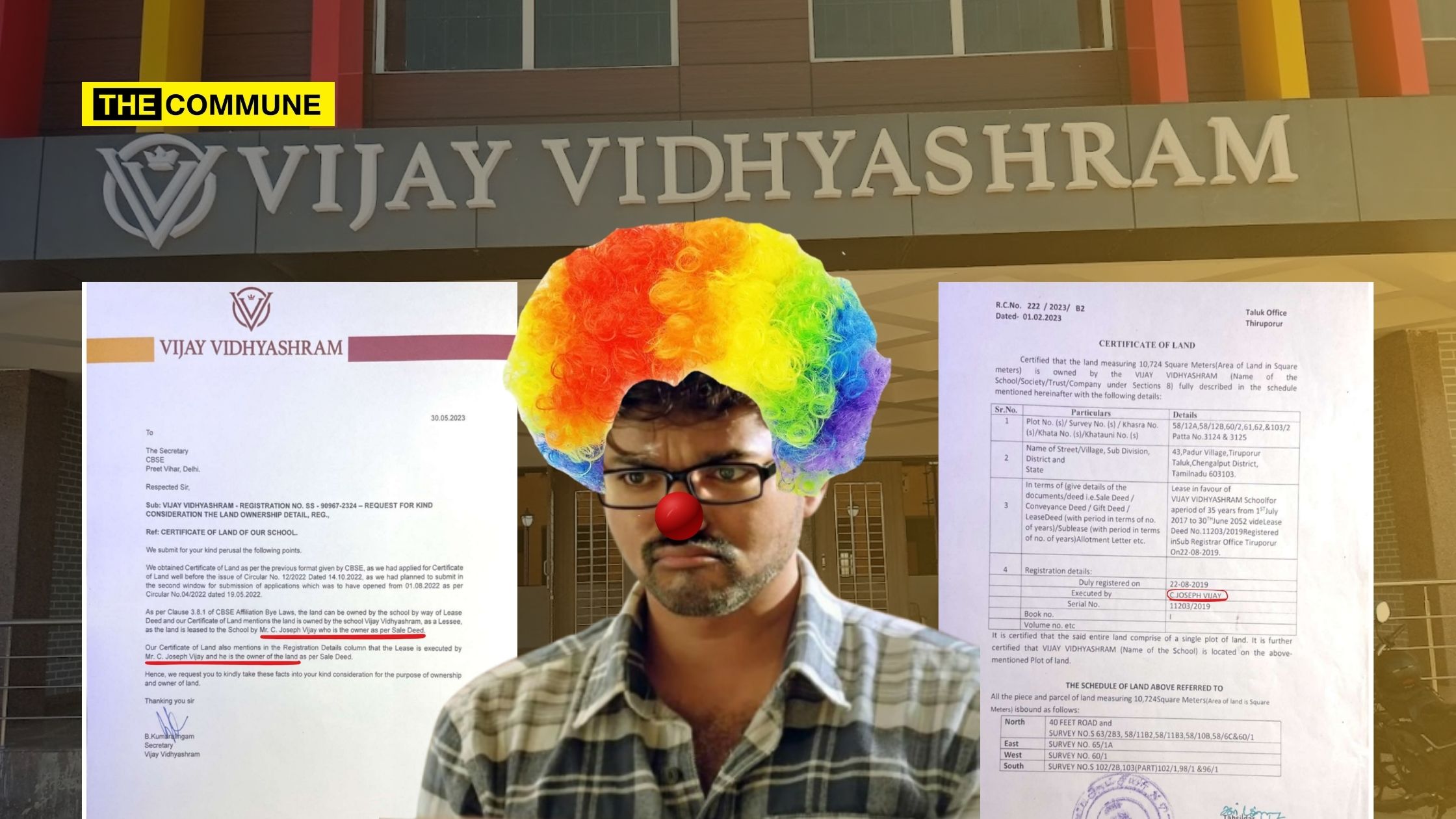
Former Anna University Vice-Chancellor E Balagurusamy has urged the Tamil Nadu government to implement a three-language policy.

In a statement, Prof. Balagurusamy criticized the state government’s continued support for the two-language policy, stating that it deprives underprivileged, rural, and government school students of the chance to learn an additional language. Meanwhile, students in affluent urban areas attending private schools often gain this advantage.

He highlighted that the three-language policy upholds the nation’s cultural and linguistic diversity. While the National Education Policy (NEP) does not mandate a specific language, he emphasized that learning Hindi, India’s most widely spoken language, could foster patriotism, promote national unity, and strengthen harmony.

Prof. Balagurusamy also pointed out the hypocrisy of leaders opposing the three-language policy, noting that their children often study Hindi without hesitation, leaving underprivileged children disadvantaged. He added that learning an additional language like Hindi could enhance job prospects in sectors such as employment, trade, and central government roles. He urged Tamil Nadu to reconsider its stance and align with other states’ progressive practices to benefit its youth.

Since 2020, former Anna University Vice-Chancellor E. Balagurusamy has advocated for adopting a three-language policy in Tamil Nadu. He has consistently urged political leaders, particularly the Dravidian party’s chief minister, to reconsider their opposition, often framed around the argument that introducing Hindi might lead to linguistic domination. Contrary to this narrative, Balagurusamy argues that the lack of opportunities to learn a third language, especially Hindi, has disadvantaged many students in the state.

When the AIADMK-led state government reaffirmed its commitment to the two-language policy in 2020, Balagurusamy criticized it. He pointed out that while the National Education Policy (NEP) does not mandate learning any specific language, acquiring a widely spoken language like Hindi could provide significant advantages. He explained that it fosters patriotism, national unity, and integration, enhances personal development, and facilitates opportunities for employment, trade, and mobility across states. Furthermore, knowledge of Hindi could benefit those aspiring to join central government services or multinational companies with a presence across India.

In directly appealing to the Chief Minister, Balagurusamy expressed dismay over the labelling of the three-language formula as “saddening and painful.” He questioned whether this sentiment truly reflected the feelings of Tamil Nadu’s people or merely the political opposition to the idea. According to him, the real tragedy lies in Tamil Nadu being the only state denying its students the chance to learn an additional Indian language for over five decades. Drawing from personal experience, he noted that the two-language policy had severely limited opportunities for students like him in the past.

Balagurusamy highlighted the disparity between rich and poor students in the state, emphasizing that the two-language formula disproportionately affects rural and government school students who lack access to additional language education. In contrast, students from affluent families attending private or CBSE schools can freely learn multiple languages, including Hindi. He pointed out the hypocrisy of political leaders opposing the three-language formula while their own children and grandchildren study Hindi or attend institutions where Hindi is a compulsory subject.

Citing Tamil Nadu’s late Chief Minister C.N. Annadurai, who championed the two-language policy in 1968, Balagurusamy argued that the socio-political landscape has changed drastically over the past five decades. He suggested that Annadurai, known for his progressive thinking, would likely have revised his stance in today’s context, just as he did with the idea of “Dravida Nadu” in favor of a united India.

Balagurusamy underscored the importance of preserving India’s multilingual heritage and the pluralistic culture it represents. He urged Tamil Nadu to view linguistic diversity as an asset rather than a political challenge, emphasizing that the three-language policy could enrich students’ horizons and integrate them into the national mainstream. This, he asserted, is essential for fostering social, cultural, and economic progress in a rapidly evolving world.

Subscribe to our channels on Telegram, WhatsApp, and Instagram and get the best stories of the day delivered to you personally.