Home Blog Page 597

Karaikal District Deputy Collector Johnson Arrested In Sri Parvatheeswarar Swamy Temple Land Forgery Scandal

Karaikal District Deputy Collector Johnson Arrested In Sri Parvatheeswarar Swamy Temple Land Forgery Scandal

The ongoing investigation into the Sri Parvatheeswarar Swamy Devasthanam land forgery case has taken a dramatic turn with the arrest of the District Deputy Collector Johnson, who originally filed the complaint, raising serious concerns about his signature was used to sell temple land.

The renowned Sri Parvatheeswarar Swamy temple is situated in the Kovilpathu revenue village of Karaikal district, Puducherry. A fraudulent order purporting to allocate temple land to the tourism department as part of a smart city initiative and the ONGC has circulated widely on social media.

Deputy Collector (Revenue) Johnson reported that his forged signature and seal were used in documents that misled buyers into acquiring temple property. Additionally, a complaint was lodged on behalf of the Hindu Munnani with District Collector Manikandan and the Puducherry Governor, alleging governmental and political interference in the land scam and demanding the arrest of the actual perpetrators.

In response, special police forces apprehended two brokers, K. Sivaraman and P. Thirumalai Rajan, who deceived victims into paying ₹3 lakh for falsely advertised land sales. The primary suspect, JCP Anand, who allegedly masterminded the fraudulent sales using counterfeit documents, is currently evading arrest, prompting authorities to issue a lookout notice for him. Based on leads provided by Anand, the police have filed cases against B. Anand, land surveyor Renukadevi, and others involved in the scam.

G. Renuka, 41, a Deputy Surveyor with the Karaikal Municipality, has been accused of fabricating official documents, including patta certificates and government orders, to facilitate the illicit sale of temple land near the JIPMER Campus in connection with the Smart City Project. During her interrogation, Renuka claimed that the scheme was orchestrated under Deputy Collector Johnson’s direction. Authorities also seized various documents and mobile devices from him.

Renuka admitted to leveraging her official position to access and forge land records. The police discovered forged patta documents and related materials at her home, along with equipment used for the forgeries. As a result, special police forces arrested Deputy Collector Johnson at his office, and investigators, led by the Senior Superintendent of Police, conducted a lengthy inquiry in a secure location at the women’s police station. They also confiscated Johnson’s mobile devices for cyber analysis.

Senior Superintendent of Police Manish characterized the incident as a “premeditated criminal conspiracy,” indicating that additional suspects may still be involved. A Special Investigation Team (SIT) has been established to track down the remaining individuals implicated in the case and to advance the investigation.

(With Inputs From Kumudam)

Subscribe to our TelegramWhatsApp, and Instagram channels and get the best stories of the day delivered to you personally. 

 

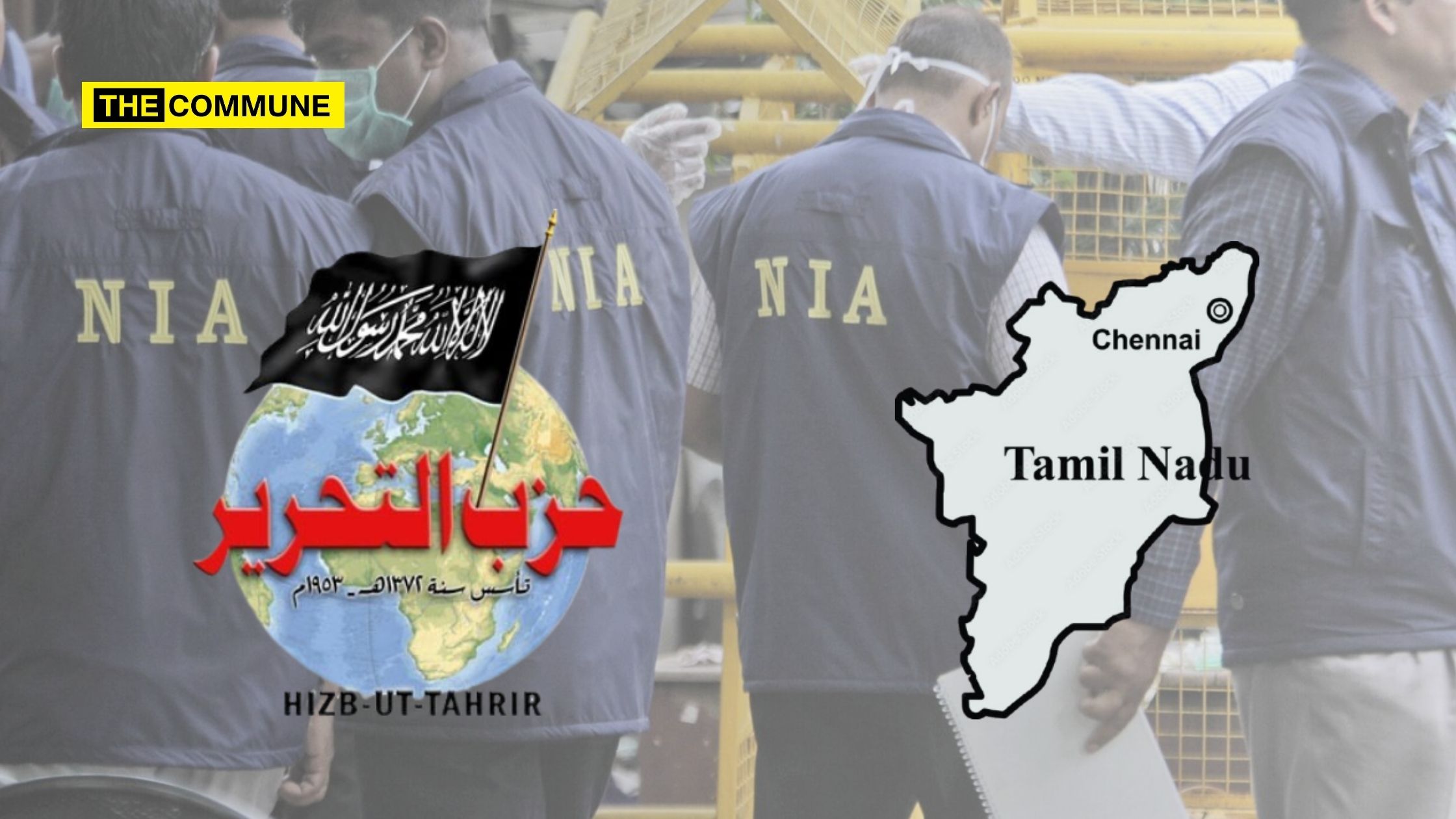
“Promoting Secessionism, Seeking Military Assistance From Pak, Overthrow Indian Govt Through Jihad”: NIA Seizes Incriminating Materials From House Of Hizb-Ut-Tahrir Terror Suspect In Chennai As MHA Declares It As A Terrorist Outfit

hizb-ut-tahrir nia

On 10 October 2024, the Indian government, under Prime Minister Modi, officially designated the Hizb-ut-Tahrir (HuT) organization as a terrorist group. Union Home Minister Amit Shah stated, “In line with PM Modi’s zero-tolerance approach to terrorism, the MHA has declared Hizb-Ut-Tahrir as a Terrorist Organization.”

The government highlighted that HuT is involved in numerous terror-related activities, including radicalizing impressionable youths to join extremist groups and fund terror operations, thereby posing a significant threat to India’s national security and sovereignty. Shah emphasized the government’s dedication to combating terrorism decisively.

In its official announcement, the Ministry of Home Affairs explained that HuT seeks to establish a global Islamic state and Caliphate, intending to overthrow democratically elected governments through jihad and terror, which undermines India’s democratic framework and internal security. The MHA also noted that HuT is active in radicalizing vulnerable youth to join groups like ISIS and uses social media and encrypted apps to promote terrorism among young individuals.

This ban comes days after arrest of seven individuals from Tamil Nadu and a move that was considering a ban on HuT earlier in 2023 following a bust of its terror module by the Madhya Pradesh Anti-Terrorism Squad and its classification by the NIA under the Unlawful Activities (Prevention) Act, 1967.

NIA’s Investigation into Tamil Nadu Hizb-ut-Tahrir

The National Investigation Agency (NIA) in Chennai has arrested recently Faizul Rahman, a key suspect and State Amir of Hizb-ut-Tahrir (HuT) for Tamil Nadu and Puducherry, marking the seventh arrest in an ongoing investigation into a conspiracy promoting secessionism and anti-India ideology. This case is centered around a plot led by Hameed Hussain and others, aiming to establish a Khilafat by violently overthrowing the Indian government and seeking military support from Pakistan for the liberation of Kashmir.

Rahman is accused of collaborating with other detainees to propagate secessionist views and solicit external military assistance. The NIA’s investigation revealed that he and his associates used social media to spread their extremist propaganda, labeling voting as ‘un-Islamic/haram’ in accordance with Hizb-ut-Tahrir’s beliefs.

Prior arrests included six individuals detained by the Chennai Cyber Crime Police under the Unlawful Activities (Prevention) Act (UAPA) for recruiting for HuT in Royapettah. This group included Dr. Hameed Hussain and several family members. Investigations showed they were utilizing YouTube campaigns to further their recruitment efforts.

Following these developments, the NIA took over the case in July 2024 and conducted raids across multiple locations, seizing various electronic devices and documents linked to Hizb-ut-Tahrir and its ideologies. The ongoing inquiry focuses on the financial activities of the arrested individuals, aiming to trace funds and identify additional potential conspirators.

The National Investigation Agency has carried out searches at the Chennai home of Faizul Rahman, a major suspect in the case. These thorough searches led to the recovery of various incriminating items, including electronic devices and documents.

According to the NIA, the arrested accused from Chennai had been actively involved with other accused in promoting secessionism and seeking military assistance from Pakistan to liberate Kashmir. It also added that a conspiracy was hatched to overthrow the Government of India through violent jihad.

The NIA noted that the conspiracy involved secret meetings to spread the divisive ideology of HuT and carry out several campaigns throughout Tamil Nadu to promote their secessionist agenda.

Subscribe to our channels on TelegramWhatsApp, and Instagram and get the best stories of the day delivered to you personally. 
 

Fake Claims Of Communists Against Samsung’s Facilities Busted

CITU Samsung Protests: A Trojan Horse For China's Manufacturing Dominance?

The recent protests at Samsung’s Sriperumbudur facility near Chennai, spearheaded by the Centre of Indian Trade Unions (CITU), have sparked controversy. While the CITU claims to be fighting for workers’ rights, critics argue that the protests are more about advancing the union’s agenda than genuinely addressing worker concerns at the Samsung factory.

The labor unrest, which has garnered support from political allies of the ruling DMK, including the VCK and Communist parties, has raised questions about the strike’s real motivations. The CITU is pushing for a union with Muthukumar, a CITU district head for Kanchipuram, as its leader even though Samsung does not employ him. This demand and the creation of unions in 25 other companies highlight the trade union’s aggressive efforts to expand its influence.

Documents reveal that the CITU applied in July 2024 to register a union at the Sriperumbudur facility. However, Samsung raised concerns about using its name in the proposed union’s title. The matter escalated when the CITU took the case to the Madras High Court. Despite the court’s intervention and the government’s promise to abide by the ruling, the CITU resisted Samsung’s objections.

Critics of the CITU argue that such unions have a history of damaging businesses in India. They cite examples like Pricol in Coimbatore, where a similar union-led protest turned violent, leading to the tragic death of a company executive in 2009 and the eventual relocation of half of the company’s operations. In Kerala, Chief Minister Pinarayi Vijayan himself admitted that CITU’s aggressive tactics have deterred industries from investing in the state, urging the union to adopt more modern approaches.

Samsung is determined to avoid the fate of companies like KITEX, Porkkali Steels, and Binny Mills, which have suffered under union pressure in Kerala and Tamil Nadu. The company’s refusal to allow the formation of a union is seen as a defense against the kind of disruption that nearly crippled Foxconn in 2010 due to similar protests. Samsung, like many other companies, is exercising its right to protect its business interests in the face of what it views as politically motivated interference.

Allegations

The allegations of poor working conditions at Samsung, including inadequate sanitation and commuting facilities, have also come under scrutiny but they all fell flat. Detractors argue that these claims are exaggerated, pointing out the hypocrisy of communist publications like TheeKathir, which pay meager wages despite advocating for labor rights.

Core Agenda of the Agitation

The protesters’ primary focus is their demand for the official recognition of the newly established Samsung India Workers’ Union (SIWU), affiliated with the Centre of Indian Trade Unions (CITU), a left-oriented labor organization linked to the Communist Party of India (Marxist).

Samsung has opposed this demand, asserting that it does not support unions participating in collective bargaining alongside external leaders. Additionally, the state labor department has not acted on the workers’ request to register their union.

Political Implication and Investor Climate

The Sriperumbudur facility, operational since 2007, has never faced such protests before. Samsung’s current stance appears to be influenced by recent developments in its global operations, they follow a “No Union Policy”. N. Muthukumar, the Kancheepuram district secretary of CITU and leader of the proposed SIWU, oversees several other CITU unions within the Sriperumbudur industrial region leads this protest to have a union in the facility.

Historically, both CITU and the CPI(M) have backed the MK Stalin-led government, but this strike has strained that alliance. CITU has called for a one day token strike on 21 October across the northern industrial area, which comes at a precarious time for the state government. Just last month, CM Stalin was in the United States promoting Tamil Nadu as an investment destination while announcing various investment agreements when news of the unrest surfaced.

Importance of Samsung India

For Samsung, the Sriperumbudur plant is vital, generating approximately one-third of its annual revenue in India. The facility manufactures appliances like refrigerators, washing machines, and televisions, making this strike one of the largest labor disruptions the company has faced in the country.

While contract workers, who comprise a significant part of the 5,000-strong workforce, are not participating in the strike, overall production has noticeably decreased, with reports indicating a reduction of at least 50%. Samsung has maintained that the strike is not related to wages or working conditions, which they assert have already been addressed, but rather a bid by CITU to assert control over the workforce.

Samsung India’s Recent Commitments

  • On 8 October 2024, Samsung India signed a Memorandum of Agreement (MoA) with a group of workers, addressing various demands and aiming to resolve the ongoing strike that began on 9 September 2024.
  • The company has pledged to enhance the work environment for its employees and will establish a committee to engage with workers on measures to improve wage competitiveness continuously.
  • Additionally, they will introduce a special incentive of ₹5,000 per month from October 2024 to March 2025, with details to be finalized through discussions with the workers’ committee.
  • Samsung also plans to expand its air-conditioned bus service from five routes to all 108 routes by next year and increase the frequency of family invitation events from four to six times annually, offering gifts worth ₹ 2,000 to participating families.
  • In the event of an employee’s death, the company will provide immediate assistance of ₹ 1 lakh to their family.
  • Furthermore, Samsung intends to establish a new medical room in the compressor building, diversify the cafeteria menu, raise meal allowances, upgrade break rooms and restrooms, replace outdated lockers, install canopies between buildings, and increase vacation days for workers.
  • They will also give a ₹2,000 gift card to employees upon the birth of a child.
  • The company announced the introduction of three days of marriage leave and will extend paternity leave from three to five days for the first and second child, with further vacation policy changes to be discussed with the workers’ committee.

Critics contend that the communists are simply flexing their power like thugs against a multinational corporation that has genuinely cared for its employees, even providing support during the difficult COVID period. The company has offered 15 months’ salary, a 15% salary increase, medical insurance of ₹5 lakh, as well as free meals and transportation.

If this approach persists, Tamil Nadu may face significant shift away of companies, leading to a lack of businesses and investments, ultimately resulting in widespread unemployment.

Subscribe to our TelegramWhatsApp, and Instagram channels and get the best stories of the day delivered instantly.

Congress Blames EVMs For Haryana Setback, Calls For Return To Paper Ballots

Congress Blames EVMs For Haryana Setback, Calls For Return To Paper Ballots

Hours after Congress leader Adhir Ranjan Chowdhury attributed the party’s loss in Haryana elections to ‘internal disputes’ within the Grand Old Party, his senior colleague Rashid Alvi responded that the poll debacle was not just a result of internal sabotage but also due to the unreliability of Electronic Voting Machines (EVMs).

Alvi also advocated reverting to the old system of paper ballots. “Until elections are conducted using ballot papers, free and fair polls are impossible in this country,” said Alvi.

“I acknowledge that during elections, there is often internal sabotage. Those who don’t get tickets tend to oppose the party. This doesn’t happen only in the Congress; it occurs in all political parties. But what happened in Haryana is not just a result of internal sabotage or Independent candidates. I’ve been saying for a long time that EVMs are unreliable,” the Congress leader said.

He further continued, “This happens in all parties, whether it’s the Congress, the BJP, or others. No party is religiously working selflessly without expectations. Political parties have their own agendas. We have witnessed major internal conflicts, just like the great Mahabharata, and power struggles have been a significant cause of it.”

“In Haryana, some Congress members likely engaged in internal sabotage, and I do not doubt that. But the massive victory of the Bharatiya Janata Party (BJP), which hasn’t been seen in years, what extraordinary feat did they accomplish to secure such a huge win? Surely, EVMs played a role in it,” alleged the Congress leader.

Dwelling on the Maharashtra Cabinet’s recent move to increase the salaries of madrasa teachers, Alvi applauded the initiative. He said, “All teachers, whether they teach in schools, madrasas, or colleges, should be paid at least enough to support their families. I would suggest that Yogi Adityanath learn from this.”

Commenting on NCP chief Ajit Pawar leaving the Maharashtra Cabinet meeting after just ten minutes, the Congress leader said, “He must have many unfulfilled desires, which is why he is always frustrated, whether he is with the BJP as an alliance partner or with his uncle Sharad Pawar.” –IANS

Subscribe to our TelegramWhatsApp, and Instagram channels and get the best stories of the day delivered to you personally. 
Karnataka Congress Govt DIPR Uses Navratri Festival Social Media Post To Target Opposition Parties, BJP Slams

Karnataka Congress Uses Navratri Festival To Target Opposition Parties, BJP Slams

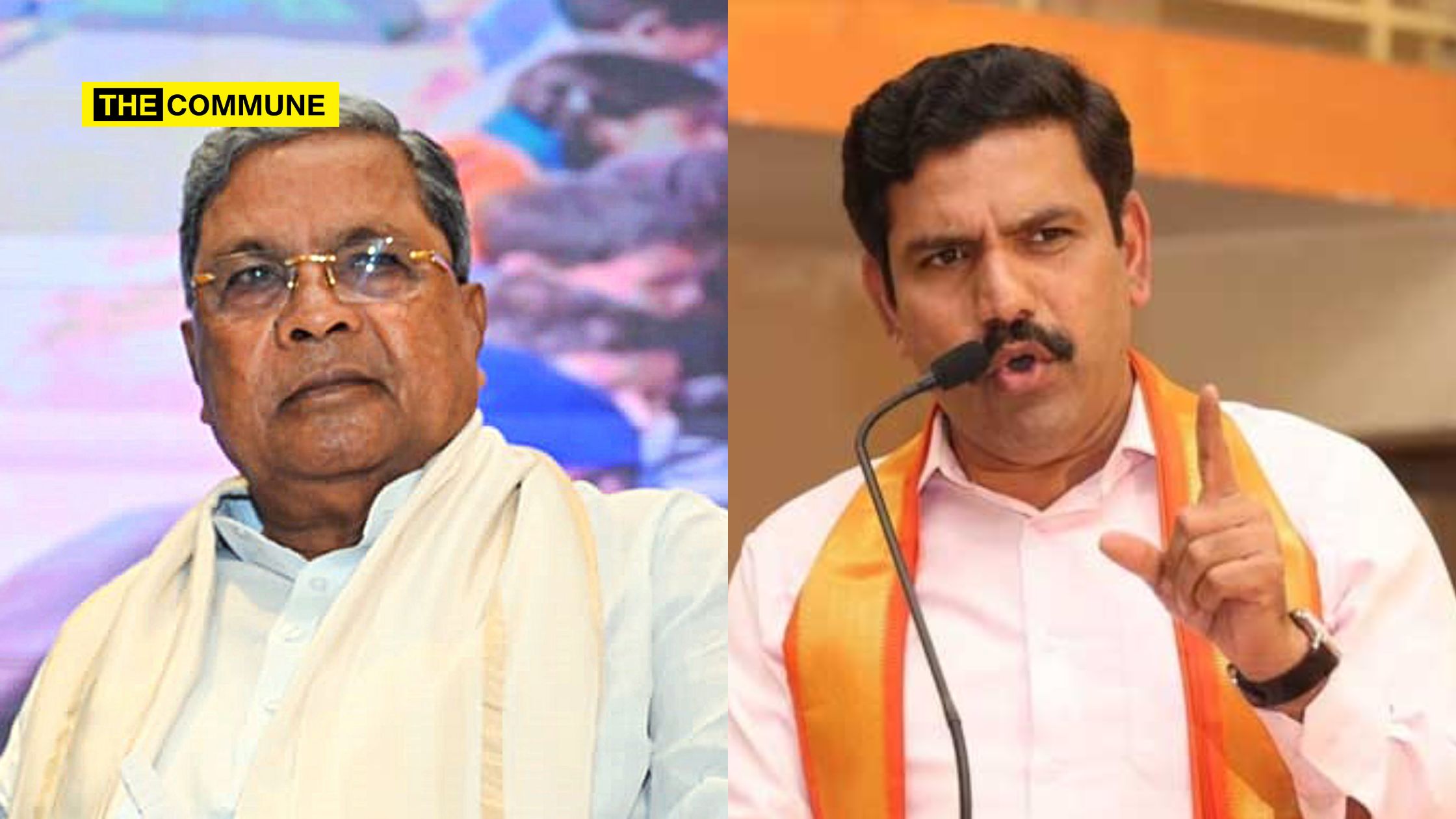
The Karnataka BJP slammed the Congress government in the state on Friday, saying it “misused” the Navratri festival for political gains.

State Department of Information and Broadcasting released a poster with the caption “Victory of truth against evil forces and prayer to protect the government from the forces which are trying to destabilise it.”

In a post on social media platform X, State BJP President B. Y. Vijayendra wrote, “Navaratri, dedicated to worshipping the nine incarnations of Goddess Durga, has been misused by corrupt Chief Minister and Mysuru Urban Development Authority (MUDA) scam prime accused, Siddaramaiah, for his political gains, which is unforgivable.”

“CM Siddaramaiah, by issuing such advertisements, the sins and corrupt acts you have committed will not be forgiven. Lord Rama represents truth, but CM Siddaramaiah embodies cosmic falsehood. Lord Rama distanced himself from Sita to search for truth. If you (Siddaramaiah) wish to walk that path, you should resign from the Chief Minister’s post and allow an investigation for truth-seeking,” Vijayendra said.

The poster said, “Let the goddess Chamundeshwari contain forces that are trying to destabilise the Karnataka government through deceit and wrong path.” It said communal violence, social stigmas, evil deeds, subversiveness, provocation, unrest, propaganda, lies and slander should be eliminated on Navratri.

“Communal clashes will have to be contained through peace and brotherhood, social stigmas through scientific knowledge, and breach of peace through destroying those who disturb the peace and evil deeds by stringent punishment. Subversiveness by courage, unrest through the law-and-order system; provocation through destroying those who provoke; false propaganda by taking out from its roots and slander by initiating action against them,” it said.

The poster contained the photos of goddess Chamundeshwari, CM Siddaramaiah and Deputy Chief Minister D. K. Shivakumar.

–IANS

Subscribe to our TelegramWhatsApp, and Instagram channels and get the best stories of the day delivered to you personally. 
Brass Buddha, Patan Patola And More: PM Modi’s Gifts For Laos PM, Prez And Their Spouses

Brass Buddha, Patan Patola And More: PM Modi’s Gifts For Laos PM, Prez And Their Spouses

Prime Minister Narendra Modi on Friday presented several gifts, including beautiful Buddha sculptures, handicrafts, and other exquisite items, to his Laos counterpart, the country’s President, and their spouses.

The gifts followed a bilateral meeting between the two Prime Ministers, underlining the two nations’ resolve to strengthen Indo-Laos civilisational and contemporary ties.

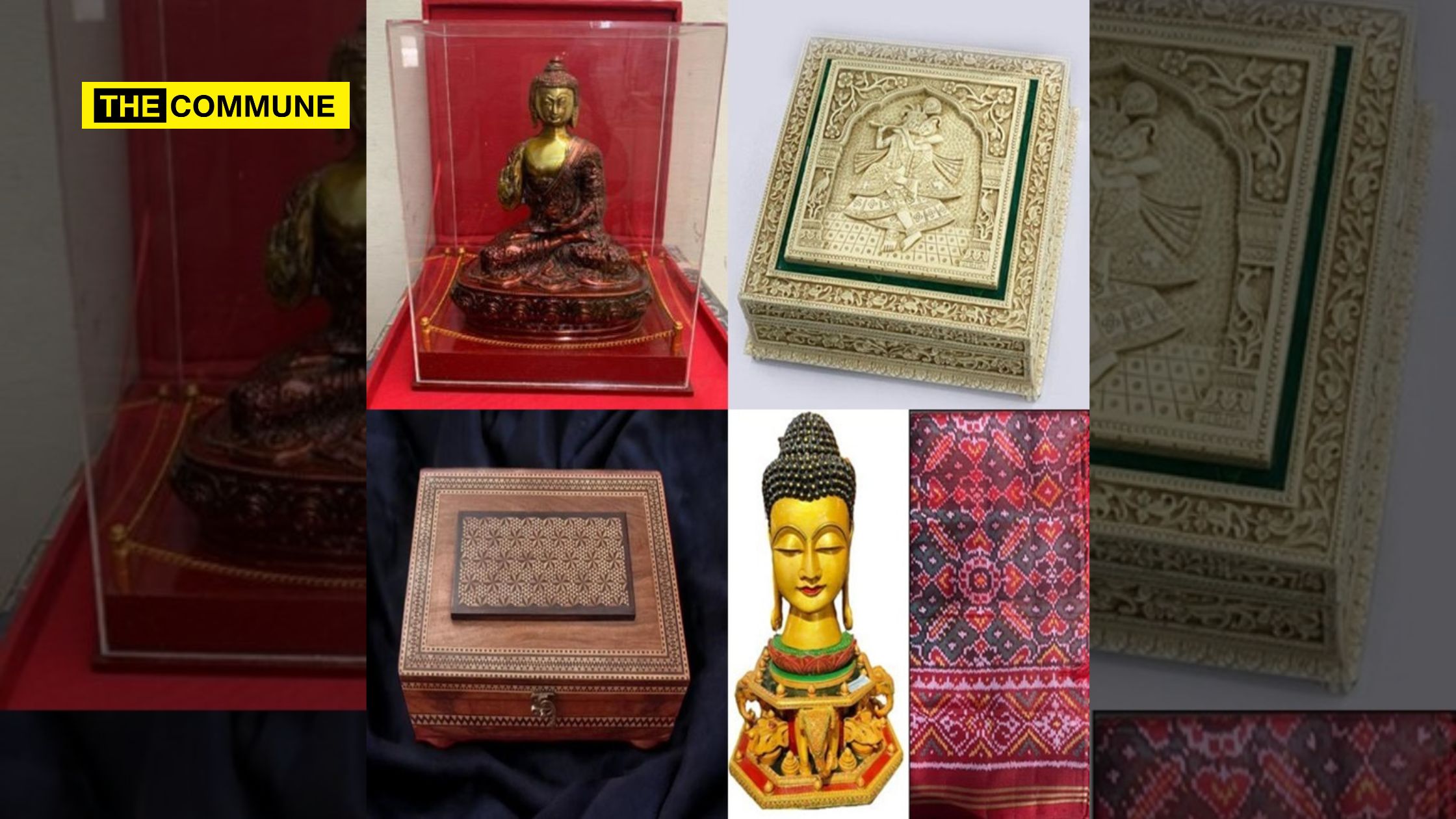
PM Modi gifted Laos President Thongloun Sisoulith a vintage brass Buddha with mina work. Crafted by skilled artisans, the Buddha statue embodies the essence of South Indian craftsmanship and Buddhist philosophy.

The statue is depicted in a seated posture, with one hand raised in a gesture of blessing, commonly referred to as the abhaya mudra, symbolising protection, peace, and fearlessness.

The other hand rests on the lap, denoting deep meditation or serenity. The vintage brass Buddha, with its delicate mina work, is not just a representation of spiritual ideals but also a testament to the rich heritage of South Indian metalwork.

It serves as both a devotional object and an art piece, bridging religious symbolism with fine craftsmanship. PM Modi’s gift to the President’s spouse Naly Sisoulith was a Patan Patola scarf in a sadeli box.

The double Ikat Patan Patola textile, woven by the Salvi family in the Patan area of northern Gujarat is so well crafted that it becomes a feast of colours, with the front and the back being indistinguishable.

The Patan Patola is packed in a ‘Sadeli’ box, which in itself is a decorative piece. The art of Sadeli inlay has a rich history dating back several centuries. It is believed to have originated in Gujarat’s Surat.

A highly skilled woodcraft, Sadeli involves precisely cut geometric patterns on wooden articles. Patola is a term derived from the Tamil word “Pattu” meaning silk fabric and can be traced back to ancient times.

The complex motifs placed in this exquisite fabric are inspired by the ‘Rani ki Vav’, a stepwell in Patan, built in the 11th century AD, which is an architectural marvel known for its precision, details and beautiful sculptural panels.

PM Modi’s gift to Laos counterpart Sonexay Siphandone and his spouse included a Kadamwood colour embossed Buddha Head and an exquisite malachite and camel bone box with Radha-Krishna theme, respectively.

The Kadamwood colour-embossed Buddha’s head is a striking piece of art that beautifully marries traditional craftsmanship with symbolic significance. This exquisite sculpture captures the essence of serenity and enlightenment, making it a perfect addition to any spiritual or decorative space. Crafted from high-quality Kadamwood, known for its durability and rich texture, this Buddha head features intricate colour embossing that brings the figure to life. The craftsmanship is exceptional, with detailed engravings that showcase a harmonious blend of artistry and spirituality. This piece is further enhanced by engravings of lotus flowers and elephants, both of which hold deep symbolic meaning in many cultures.

The lotus flower symbolises purity, spiritual awakening, and enlightenment. It is often associated with the journey of the soul, rising from muddy waters to blossom into a beautiful flower. The malachite and camel bone box with the Radha-Krishna theme is a stunning piece. Radha and Krishna hold a special place in Hindu mythology, symbolising love, devotion, and the eternal bond between the divine and the devotee.

This box not only serves as a decorative piece but also as a reminder of the spiritual connection and the beauty of divine love. The exquisite piece with the abiding theme is more than just an ornamental object; it is a celebration of art, culture, and spirituality. Its unique design and high-quality craftsmanship make it a timeless piece that will be treasured for generations. –IANS

Subscribe to our TelegramWhatsApp, and Instagram channels and get the best stories of the day delivered to you personally. 

Actor Vijay Wishes For Ayudha Pooja, Saraswathi Poojai And Vijayadasami After Facing Backlash For Not Wishing For Vinayagar Chathurthi

Actor Vijay Wishes For Ayudha Pooja, Saraswathi Poojai And Vijayadasami After Backlash For Not Wishing For Vinayagar Chathurthi

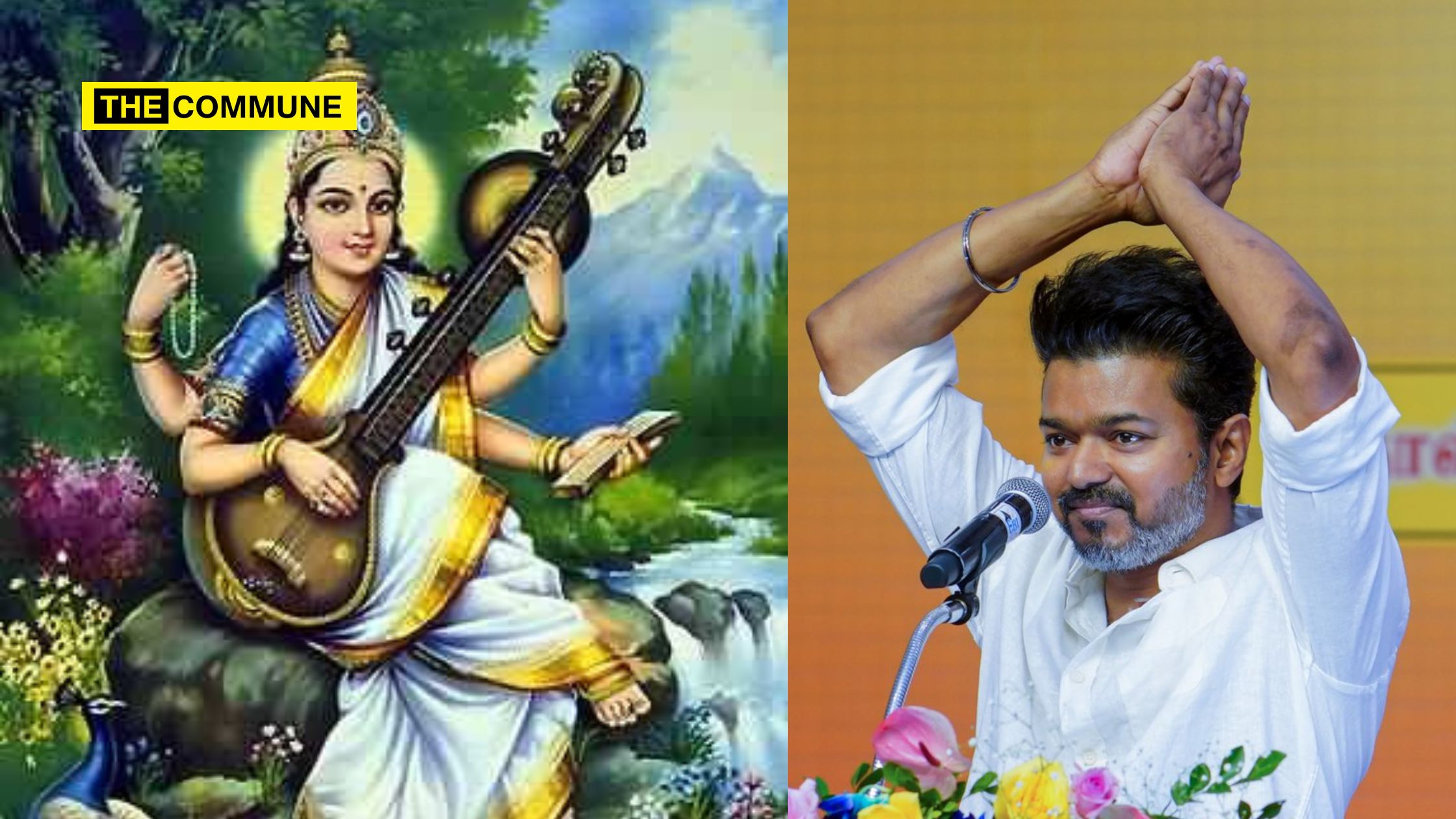
In a surprising shift in stance, Kollywood actor-turned-politician and leader of the Tamizhaga Vettri Kazhagam (TVK), Vijay, has finally extended his wishes for the Hindu festivals celebrated across the nation, including Ayudha Pooja, Saraswati Pooja, and Vijayadasami. This marks a significant change for Vijay, who had previously avoided acknowledging specifically Hindu festivals and faced backlash from various quarters.

His recent gestures to extend wishes for Hindu festivals on these auspicious occasions signal a positive step toward treating equally all faiths and moving beyond Dravidian narratives.

Previously, TVK chief Vijay faced significant backlash for skipping wishes for Hindu festivals and Tamil New Year in Tamil Nadu while extending greetings for Onam, a Hindu festival celebrated in Kerala. This inconsistency did not go unnoticed, and he was criticized for hypocrisy, drawing parallels to the DMK’s approach.

Here is a list of political stunts he has engaged in since launching his new party, primarily consisting of online gestures that send indirect messages.

Not Wishing For Vinayakar Chaturthi

Vijay did not acknowledge or wish the people of the state for Vinayakar Chaturthi, a festival celebrated by 87.58% of the Hindu population. Kollywood actor and TVK chief Vijay appeared to be deliberately avoiding respecting the cultural values and beliefs of Hindus and Tamils. His selective social media posts on his official X account support this accusation. 

Not Wishing For Tamil New Year (Puthandu)

Instead of wishing for Tamil New Year which is a significant festival for Hindus in Tamil Nadu, Vijay chose to wish his fans and followers for Ambedkar Jayanti, which coincidentally falls on the same day. This is the same strategy employed by the DMK on the auspicious occasion of Hindu celebrations and festivals such as Vinayakar Chaturthi, Saraswathi Pooja, and other festive occasions. 

No Wishes For Krishna Jayanti

Vijay cautiously neglected even the Hindu festival of Krishna Jayanthi on 26 August 2024.

Wishing For Onam

Surprisingly, as if making a statement to reach out to his Malayali fans and followers, Vijay wished for the Onam festival.  It’s noteworthy that DMK (MK Stalin) also had wished for Onam last year. On 15 September 2024, TVK chief Vijay shared Onam wishes on his official X account, stating, “Happy #Onam from the bottom of my heart to all Malayalam relatives! A hearty Onam to my very own Malayali friends.”

Wishing For Christian, Muslim Festivals & Other Special Days

He has acknowledged and wished for Muslim festivals like Ramzan and Eid, Christian festivals like Easter, as well as neutral days such as May 1 (Labour Day), Ambedkar Jayanti, Independence Day, and Mother’s Day.

This divide-and-rule approach was evident in Vijay’s earlier political statements, where he aligned himself with the DMK on issues like NEET and CAA. However, his strategy backfired on Vinayagar Chaturthi when netizens harshly criticized him. They noted that while Vijay releases his movies on the festival to profit, he neglects to extend wishes for the occasion, labeling him a mere proxy for the DMK. Critics highlighted that he would wish for Onam but not for Tamil New Year.

Now, Vijay has taken a new step on the occasion of Pooja days, when Hindus traditionally seek new beginnings by worshiping their tools and equipment and Goddess Saraswati, the giver of boons.

Subscribe to our TelegramWhatsApp, and Instagram channels and get the best stories of the day delivered to you personally. 
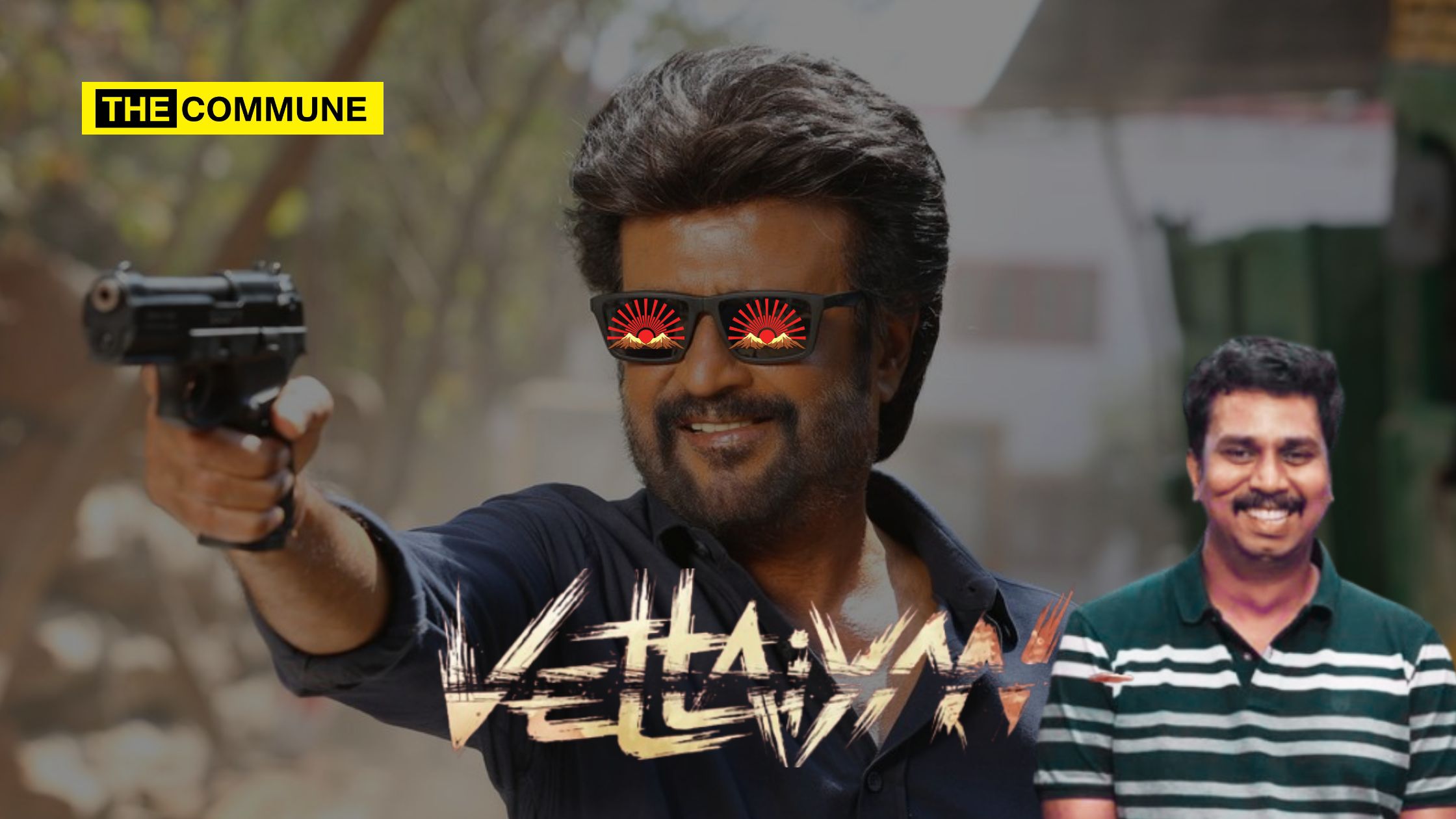
From Glorifying Macaulay To Anti-NEET Agenda And Sowing Mistrust About UPI: Rajini Once Again Proves That He Is A Dravidianist Propaganda Tool In Vettaiyan Made By ‘Lie Bhim’ Director

Rajini-Gnanavel's Mega Dravidianist Propaganda "Vettaiyan" Ends Up As A Mega Flop Show At Box Office

It was difficult for me to decide whether to write this review, especially as a lifelong fan of Superstar Rajinikanth. In the past, I hesitated to criticize movies like Kaala and Kabali. Still, after the third instance of Rajinikanth being part of a Dravidianist propaganda film, it’s more than a fan can tolerate.

What’s most frustrating is that Rajinikanth, despite occasionally referencing Sanatana Dharma, has become an actor who has starred in the most Dravidianist propaganda-heavy films in mainstream Tamil cinema. It is painful to watch the actor fall from a devout Sanatani to a champion of a hatemongering ideology.

If you’re a diehard Dravidianist or a thickheaded Rajinikanth fan, you may want to stop reading now.

There’s a reason why director TJ Gnanavel is called ‘Lie Bhim’ director. He is a bigot who was caught red-handed peddling false propaganda in his movie ‘Jai Bhim’ that create rift between different communities.

In the film, which focuses on the custodial death of a tribal man, the sub-inspector responsible for the death is depicted as a member of the Vanniyar community, with their sacred symbol ‘Agni’ prominently featured. However, while the film retained the real name of Justice K Chandru for Suriya’s character, it altered the facts regarding the sub-inspector’s background. In reality, the officer involved was a Dalit Christian, not a Hindu Vanniyar as portrayed in the movie.

After this misrepresentation was exposed, members of the Vanniyar community condemned the filmmakers for inciting unnecessary provocation. In another scene, Suriya’s character subtly suggests that Brahmins are untrustworthy, adding to the film’s controversies over its portrayal of certain communities.

It is with this director that Rajini chose to align himself with to mint money.

The movie starts with a surprising tribute to Thomas Babington Macaulay, the British politician who served the death blow to Indian knowledge systems. He has been praised for bringing “social justice and equality in education,” as conveyed by none other than Amitabh Bachchan. I thought to myself, “Maybe I could overlook this and enjoy the film especially with the typical strong intro scene accompanied by Anirudh’s powerful background music”. But this was just the beginning of the propaganda.

The movie’s opening scenes depict issues like drug abuse in government schools and students causing law-and-order problems. I initially thought the film was challenging the Dravidian government but soon realized it was just another token gesture. Then enters the “godly teacher” who bravely complains to the police about the drug mafia. Surprisingly, the cop teams up with a tech-savvy thief and makes him a cyber expert, which was a bit laughable.

And guess what? The film presents illogical and irresponsible scenes, such as a petty thief making millions by exploiting fake QR codes at major shopping malls and outlets. This unrealistic scenario raises concerns about fostering unnecessary fear and mistrust around UPI/QR code payments.

The song Manasilayo showcases dancers in Kerala-style Onam attire, but with the added twist of headscarves. Is this just a subtle attempt at appeasement? What’s next? Burqa-clad dancers?

As the plot unfolds, we see a boy from the slums framed for a crime, and despite having “solid evidence,” the police somehow let him escape without any real security measures in place. This unbelievable storyline only gets more frustrating as it progresses, with Rajinikanth delivering lines aimed squarely at promoting Dravidianist propaganda.

The movie takes potshots at the NEET exam and portrays it as a tool that favors the rich, without any real data to back this up. It’s obvious that the film is pushing a specific narrative, but it doesn’t even try to make sense when reality shows that many students from low-income backgrounds have succeeded in clearing NEET. The accusations against entrance exams, particularly NEET, lack any supporting data or substance, as the movie falsely claims they are conducted only in English. In reality, NEET is also offered in Tamil and other regional languages.

I couldn’t help but feel betrayed. What made Rajinikanth, once a symbol of strength and righteousness, sign up for this? Was it the money, or has he simply abandoned any ideological consistency? Produced by Red Giant, this film feels like a deliberate attempt to deceive his fans.

Furthermore, the movie unfairly portrays Hindus in a negative light, while members of minority communities are depicted as honest, virtuous, and morally upright. Hindu characters, on the other hand, are cast as murderers, corrupt police officers, and greedy corporate owners, reinforcing biased stereotypes.

Supporting actors like Rohini, playing an EOW officer, are given token roles, presumably as a nod to their loyalty to Dravidian-Communist ideology. However, I couldn’t help but notice the absence of other Dravidian actors like Prakash Raj or Sathyaraj, who could have added even more to this film’s propaganda narrative.

I used to take my entire family to Rajini’s movies, but I’ve stopped doing so over the past few years. I don’t want my kids to witness how their father’s hero has become nothing more than a tool for Dravidian propaganda.

If there’s one thing the non-Dravidianists can learn from Kollywood, it’s how effectively Dravidian directors use cinema to shape narratives.

This is not the first time Rajinikanth has played to the Dravidianist Gallery.

In 2018, Rajinikanth starred in Kaala, directed by Pa. Ranjith, a filmmaker known for his anti-Hindu stance. Rajinikanth’s character, dressed in black, is portrayed as the hero of a chawl fighting against villains wearing saffron shawls and tilaks. The film includes scenes that depict Hindu festivals negatively, with deities like Lord Vinayaka and Lord Ram shown unfavourably. The main antagonist, Hari (a name associated with Lord Vishnu), is portrayed as a practising Hindu who frequently references Krishna and Rama to justify his evil actions. At one point, Kaala even challenges Hari by saying, “If stealing my land is your God’s Dharma, then I won’t spare your God either.” The film also indirectly references BJP leader H Raja, reinforcing negative stereotypes about the Modi government.

Rajinikanth then worked with Sun Pictures for Petta, directed by Karthik Subbaraj, who has sympathized with the LTTE and figures like ‘Thirumurugan’ Gandhi. In Petta, there are subtle attacks on Hindutva, with characters sporting tilaks often shown as religious bigots, while Rajinikanth’s character helps a Muslim couple, Anwar and Anu, get married.

In his last flop show, Lal Salaam, directed by his daughter, Rajinikanth plays Moideen Bhai, a “good Muslim” character. In contrast, the villain (played by Adithya Menon) is depicted with a prominent red tilak. In one scene, Moideen Bhai criticizes the saffron-clad Senthil, saying, “What have you guys done? You’ve mixed politics with religion! You’ve injected venom in the kids playing!”

Conclusion

It is time for Rajinikanth to face the music for pushing Dravidianist propaganda. His choice of films is a betrayal of his fans, a disservice to the Tamil film industry, and a dangerous example for other actors. His recent films have consistently promoted a biased narrative that demonizes Hinduism and glorifies Dravidianism, perpetuating harmful stereotypes and sowing seeds of division.

Rajinikanth must be held accountable for his actions and realize that he cannot continue to profit from films that promote hatred and discrimination against practising Hindus.

NKR Iyer is a former Rajini fan.

Subscribe to our channels on TelegramWhatsApp, and Instagram and get the best stories of the day delivered to you personally.
Private Equity Investments In India Surge 39% To Reach $10.9 Billion

Thematic Funds In India See 488% Growth In Net Collections As Manufacturing, Energy Lead

A report on Thursday showed that private equity investments in India reached $10.9 billion during the first nine months of 2024, a 38.9 percent increase from the previous year.

India continues to be one of the top markets in Asia Pacific for financial sponsor activity, accounting for at least 28 per cent of the region’s total equity invested during this period, up from a 16 per cent market share in the same period last year, according to the report by LSEG, a global financial markets infrastructure and data provider.

The country offers diverse opportunities across various sectors, from healthcare and technology to consumer services, with growing consumption, digital transformation, and infrastructure development serving as key drivers fuelling investor interest,” said Elaine Tan, Senior Manager, LSEG Deals Intelligence.

The convergence of these factors, along with a resilient IPO market despite global downturns and a dynamic startup ecosystem, positions India as a key player in the global private equity landscape for the remainder of the year. Additionally, the anticipated global trend of monetary easing could further boost private equity activity as financial sponsors find cheaper funding and deploy dry powder more effectively, said Tan.

Meanwhile, the India equity capital markets raised a record $49.2 billion in the first nine months of this year (January-September period)—a massive 115 percent growth compared to a year ago. According to the report by LSEG, the number of equity capital market offerings also saw a 61 percent increase year-on-year.

Initial public offerings (IPOs) from Indian issuers raised $9.2 billion, up 96 percent compared to the same period last year, making it the highest first nine-month total since 2021. The number of IPOs jumped an impressive 63 percent YoY. The flurry of activity is expected to continue, with a robust pipeline of IPOs lining up, with Swiggy, Hyundai Motors, and LG Electronics set to list their Indian units.

–IANS

Subscribe to our TelegramWhatsApp, and Instagram channels and get the best stories of the day delivered instantly.

Bengal Health Department orders probe into supply of ‘unfit’ medical kits to RG Kar

"Porn Racket, Sex With Dead Bodies, Missing Bodies And More": CBI Probe Reveals Shocking Details At RG Kar Medical College

The West Bengal Health Department has ordered a probe on the basis of complaints regarding the supply of “unfit” medical kits to the state-run RG Kar Medical College & Hospital in Kolkata where a junior woman doctor was raped and murdered in August this year.

The junior doctors of RG Kar have claimed that recently, a consignment of sealed surgical gloves reached the trauma centre of the state-run medical college and hospital, where dried blood stains were noticed on several gloves within the sealed packets.

The junior doctors have claimed that if these surgical gloves with blood strains had been used, the patients would have been subjected to infection.

The protesting junior doctors have also alleged that fungus has been detected in addition to such an “unfit” consignment of surgical gloves.

The West Bengal Health Department has ordered a detailed probe into the matter.

State Health Secretary Narayan Swarup Nigam has claimed that the Central Medical Store, from where surgical gloves have been supplied, have been directed to investigate the matter.

Meanwhile, the junior doctors continuing with their protest about the rape and murder have claimed that their protests are also against such irregularities in different state-run hospitals which can be hazardous for the patients.

“If surgical gloves with blood stains are used while treating patients, chances of the patients being affected by viruses are always high. Such complaints of about the supply of unfit medical kits at the state-run medical colleges and hospitals are nothing new,” said a protesting junior doctor.

In fact, besides conducting a probe into the rape and murder case, the Central Bureau of Investigation (CBI) is also carrying out a parallel probe on the financial irregularities at R.G. Kar.

In the second case, one of the main charges against the former and controversial principal of R.G. Kar Sandip Ghosh is manipulating the tendering system, thus enabling his confident suppliers to supply medical equipment against commissions.

–IANS

Subscribe to our channels on TelegramWhatsApp, and Instagram and get the best stories of the day delivered to you personally.