Home Blog Page 584

Trinamool Leader’s Statement On Protesting Doctors Creates Uproar

Trinamool Leader's Statement On Protesting Doctors Creates Uproar

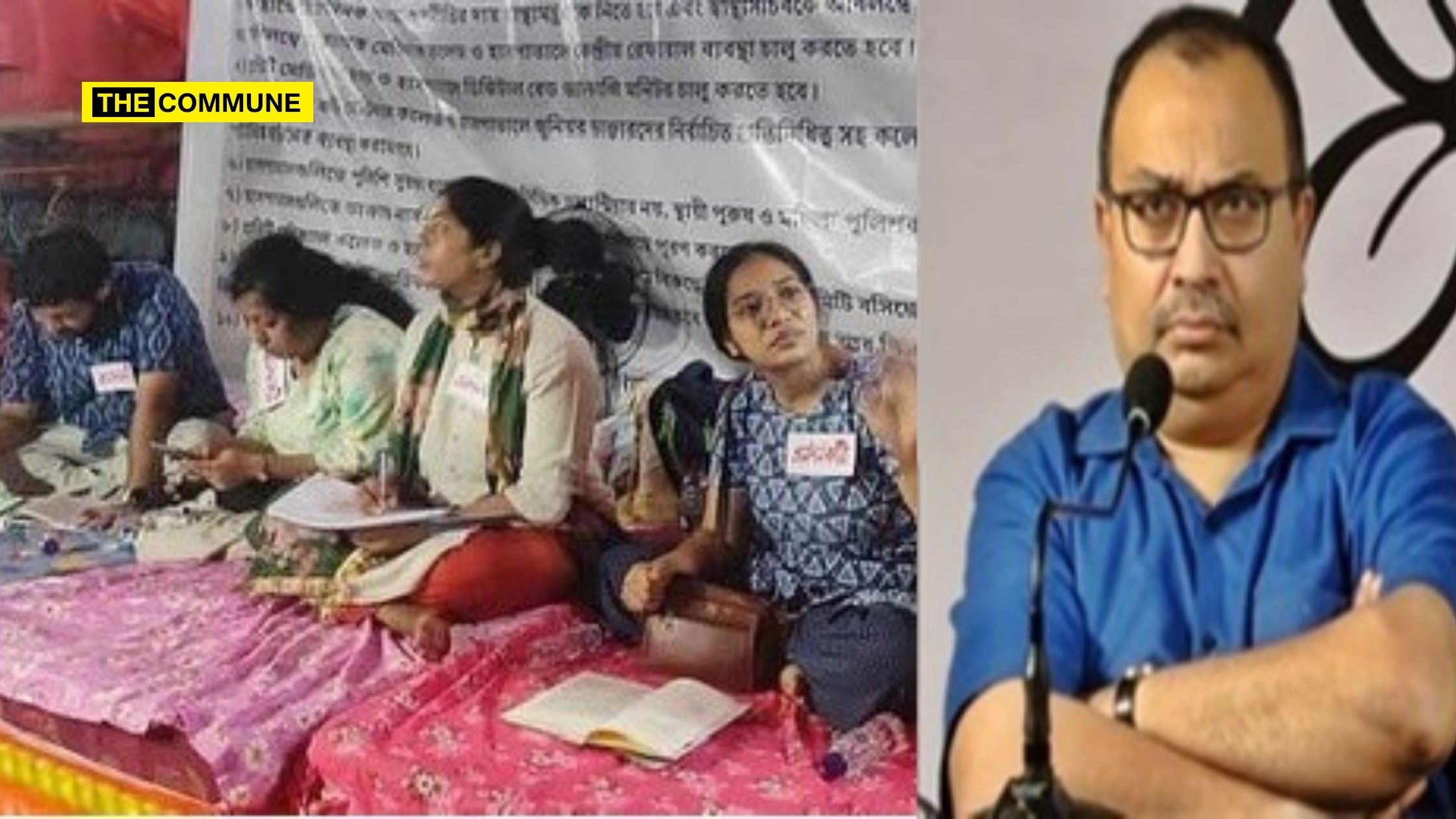
A controversial comment by the Trinamool Congress leader Kunal Ghosh about the junior doctors protesting against the ghastly rape and murder of their colleague at R G Kar Medical College and Hospital in Kolkata has created an uproar among the members of the medical fraternity in West Bengal.

Ghosh had advised his party workers to prepare a list of junior doctors posted in various districts. “Many junior doctors attached to state-run medical colleges in the districts are not attending their scheduled duty hours. They attend the duties there for some hours and then come to Kolkata to do parallel private practices. Prepare the list of these doctors so that it can be sent to the state government for proper administrative action against them as per law,” Ghosh said.

The Trinamool leader had also claimed that the list of such junior doctors, who are doing parallel private practices, will be sent to the state government so that disciplinary action as per existing legal provisions can be taken against them However, West Bengal Junior Doctors’ Front (WBJDF), the umbrella body of the junior doctors spearheading the movement on this rape and murder issue, has described Ghosh’s comments as a ploy to divert public attention from the ongoing protest movements with the spontaneous public support.

“We have been insisting on infrastructure development at state-run medical colleges and hospitals in Kolkata for some time. One such demand is the immediate introduction of the biometric attendance marking system at all state-run medical colleges and hospitals. That will reveal who is attending regularly and who is not.

Let the administration take action against the defaulters then,” argued a WBJDF representative. Another protesting junior doctor said that such comments by Ghosh in the current situation were an attempt to instigate the public against the protesters and is actually another form of “threat- culture” that has prevailed in the medical colleges and hospitals in the state for so long. “Such attempts to divert attention from our movement in support of our justified demands will never work out,” he added.

According to Manas Gumta, former general secretary of the Association of Health Service Doctors, Ghosh is unnecessarily poking his nose in a thoroughly administrative affair despite not being a part of the administration. “He is mistaken if he thinks that we will be scared,” said Gumta

–IANS

Subscribe to our TelegramWhatsApp, and Instagram channels and get the best stories of the day delivered to you personally.

Nandhan: A Hard-Hitting Film That Exposes The Reality Of “Dravidian Model” Of Social Justice

Nandhan: A Hard-Hitting Film That Exposes The Reality Of "Dravidian Model" Of Social Justice

Dravidianists – be it those in the echelons of power, in cinema or in the media – often paint Tamil Nadu as a progressive state, lauding its removal of caste-based surnames as a sign of modernity and egalitarian society. But what value does this “removal of caste surnames” have when caste remains entrenched in people’s minds?

The film Nandan starkly exposes this contradiction, but it hasn’t received the same support or visibility as propaganda films by directors like Pa. Ranjith or TJ Gnanavel. This is because Nandan challenges dominant Dravidianist political narratives, refusing to toe the line that aligns with their ideology.

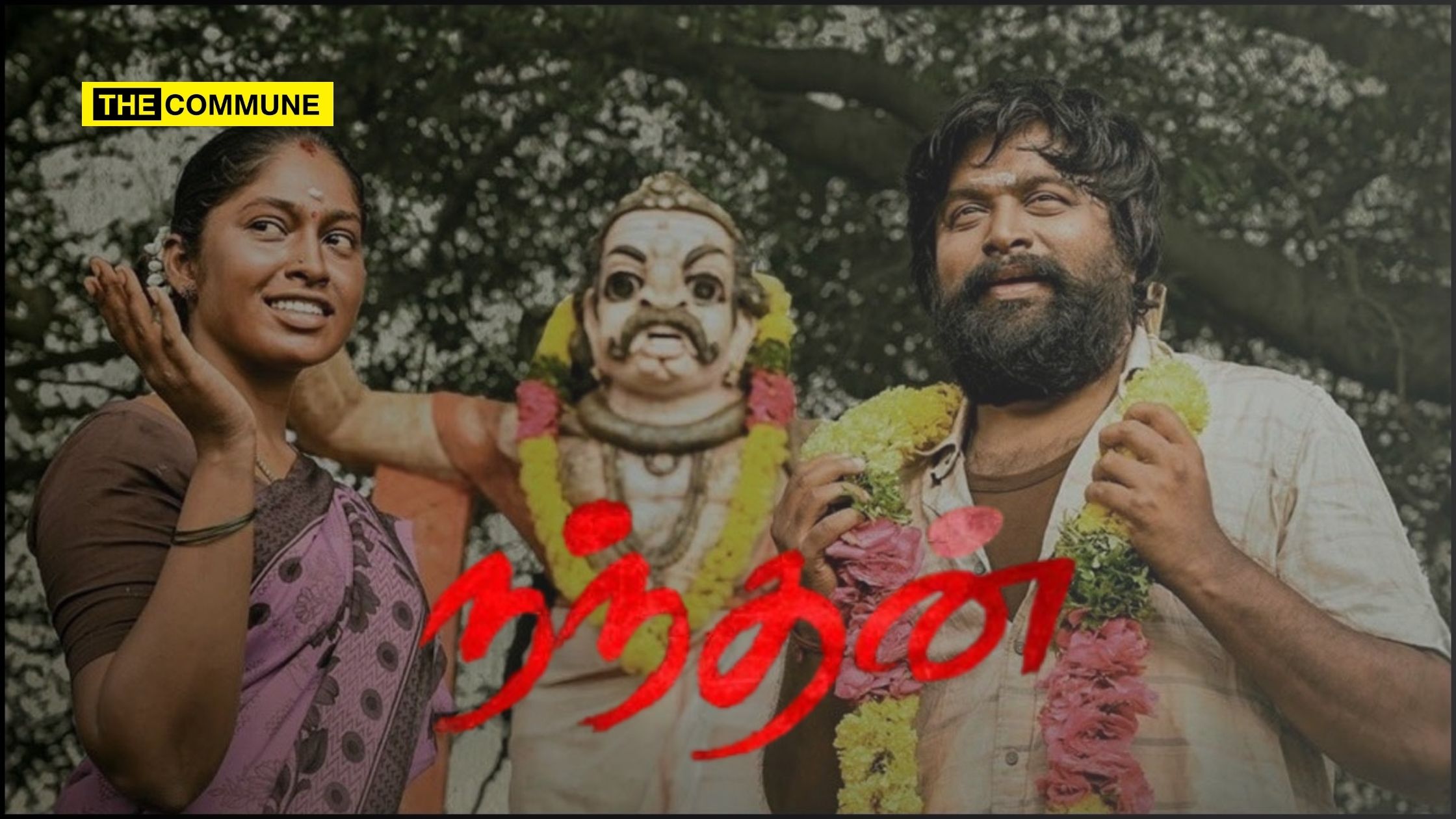
At the heart of the film is Koozhpaanai, a hardworking man from a marginalized community who serves Koppulingam, a powerful Panchayat leader. Koppulingam, having won two unopposed Panchayat elections, is devastated when his seat is reserved for a Scheduled Caste candidate. Unable to run himself, he installs Koozhpaanai as a puppet candidate, expecting to retain control behind the scenes.
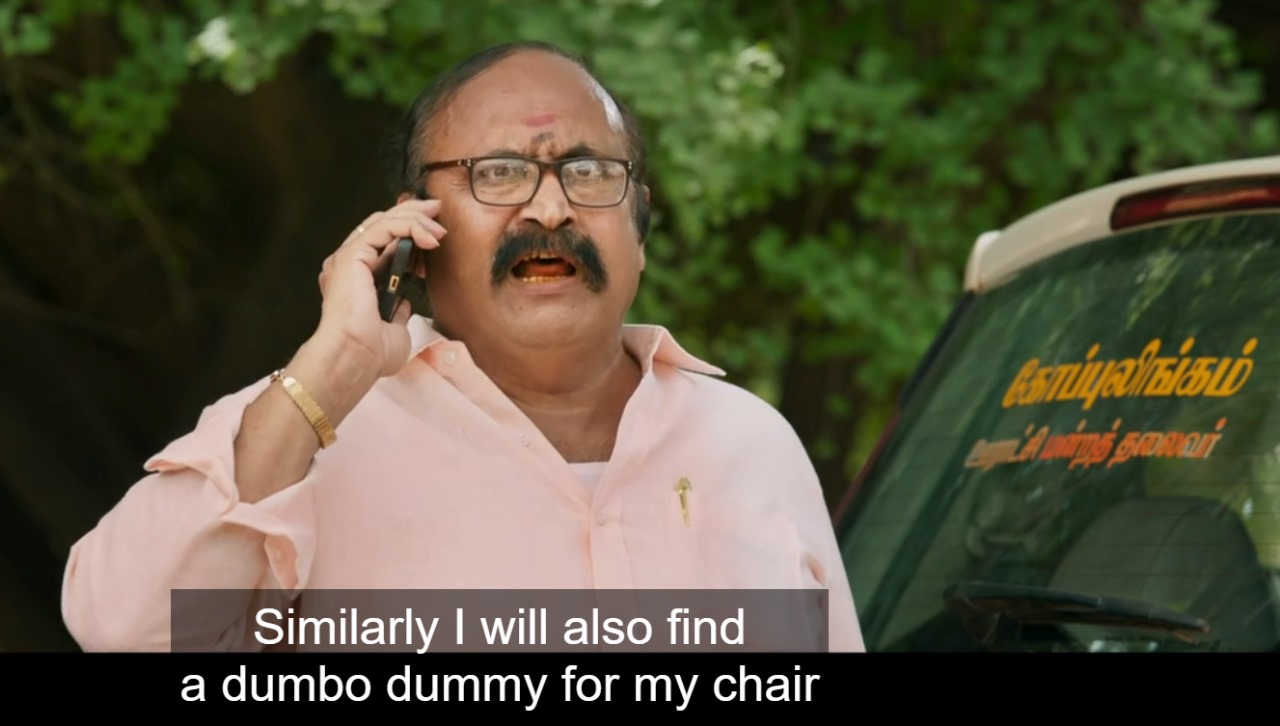
In the previous election, Koozhpaanai prayed to his guardian deity Nondisamy to ensure that his master Koppulingam wins without competition. This is the norm in the village – the villagers internally decide who’s their President, and only they are nominated – to win unopposed.
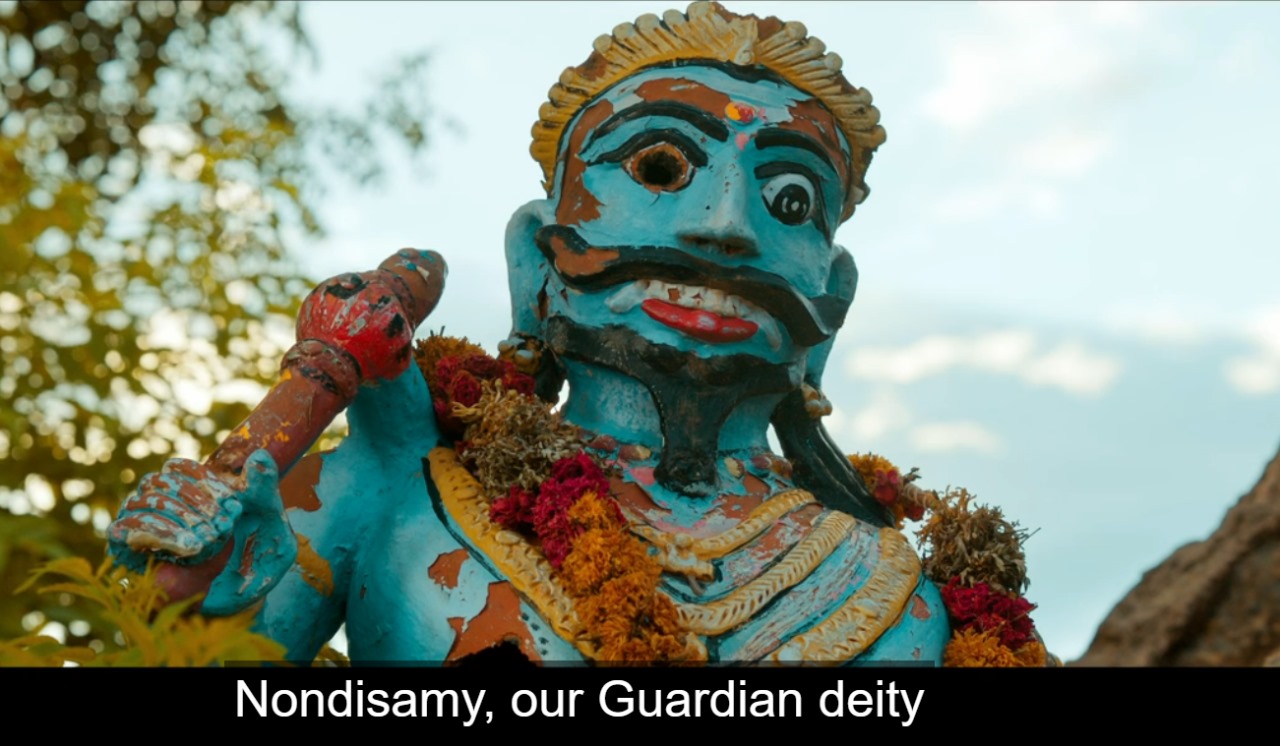
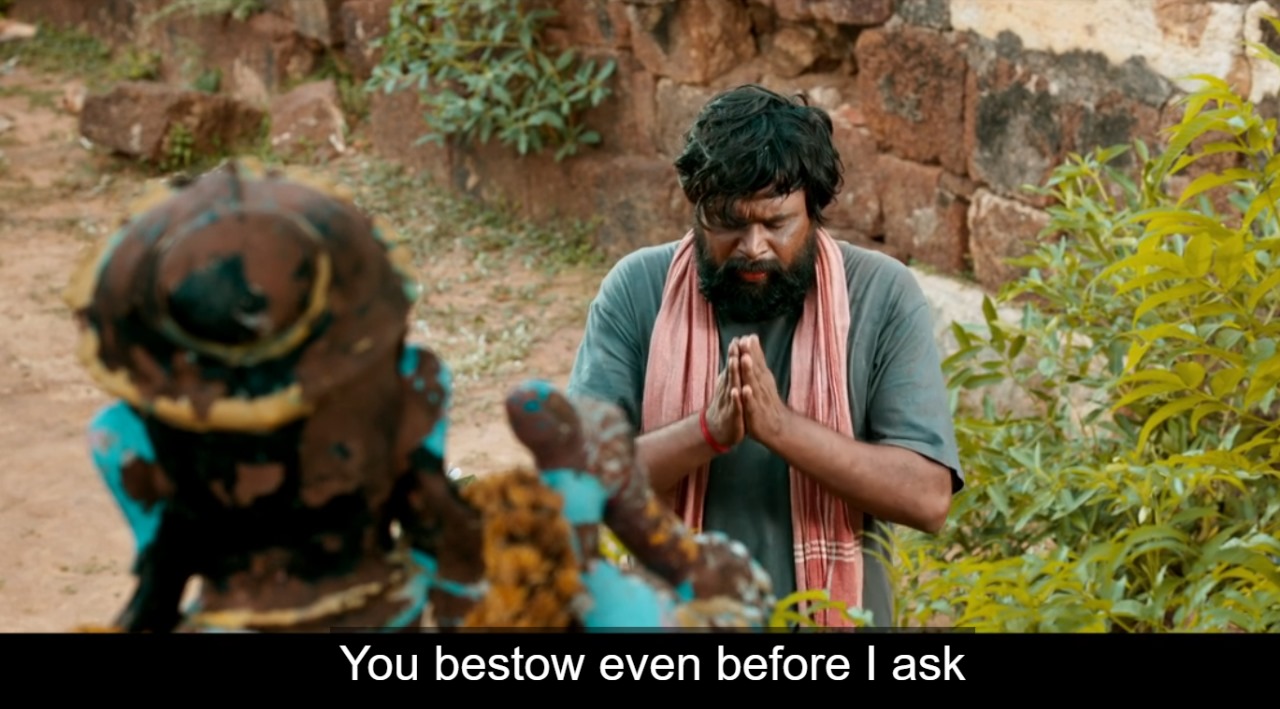
This is a poignant shot – not only are the downtrodden people ill-treated in this village, even their deities are ignored, dwelling within dilapidated conditions. Even the Gods are not spared of discrimination.

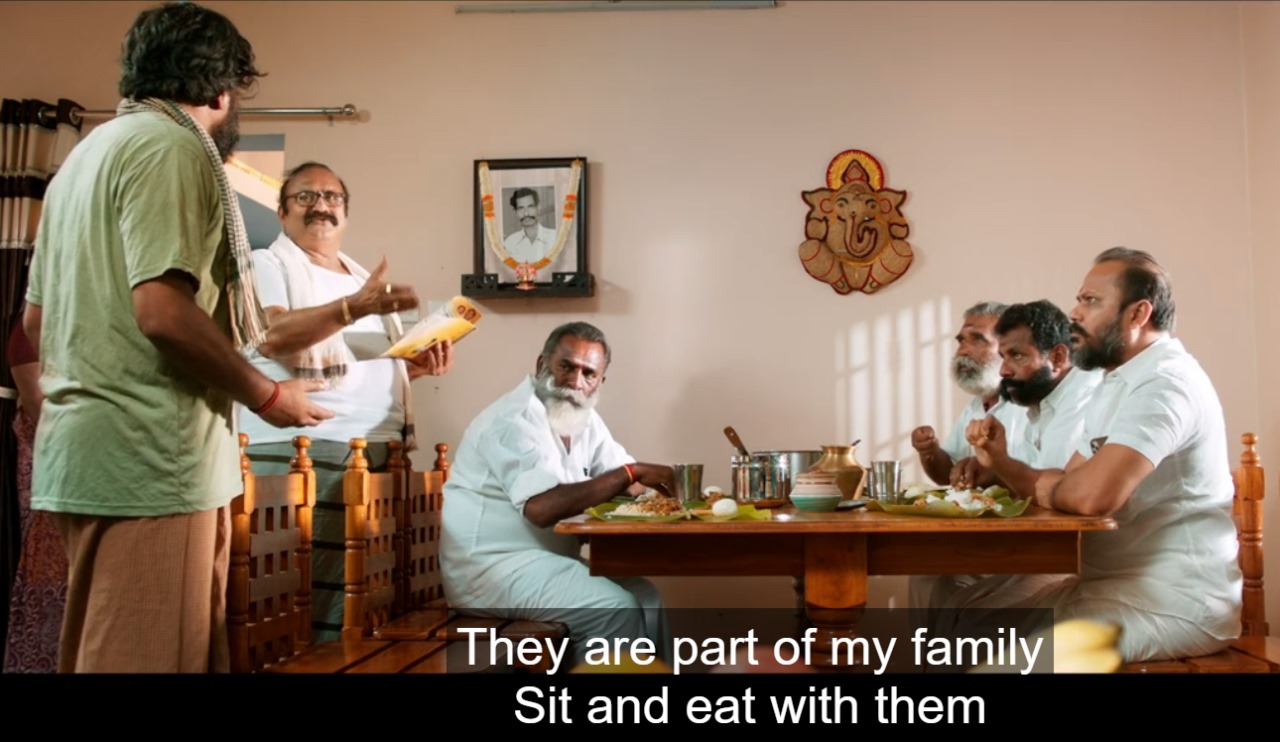
But Koppulingam and his bedridden father do not treat Koozhpaanai with even basic respect. He is allowed to enter only the back room to tend to the bedridden old man, but never the main house. The one time he is called in, it is for Koppulingam to prove a point to Koppu’s relatives. Koozhpanai dines with them, too naive to even understand that he’s being dehumanizingly used as an insult to Koppulingam’s relatives.
Koppu and his relatives fight amidst them to field a reserved candidate for the new Panchayat elections. Koppu fields the loyal Koozhpaanai. The two downtrodden people are unaware why they are being used as pawns in the landlord’s fight. This shot shows how they are almost treated as roosters in a c0ckfight to boost their egos.
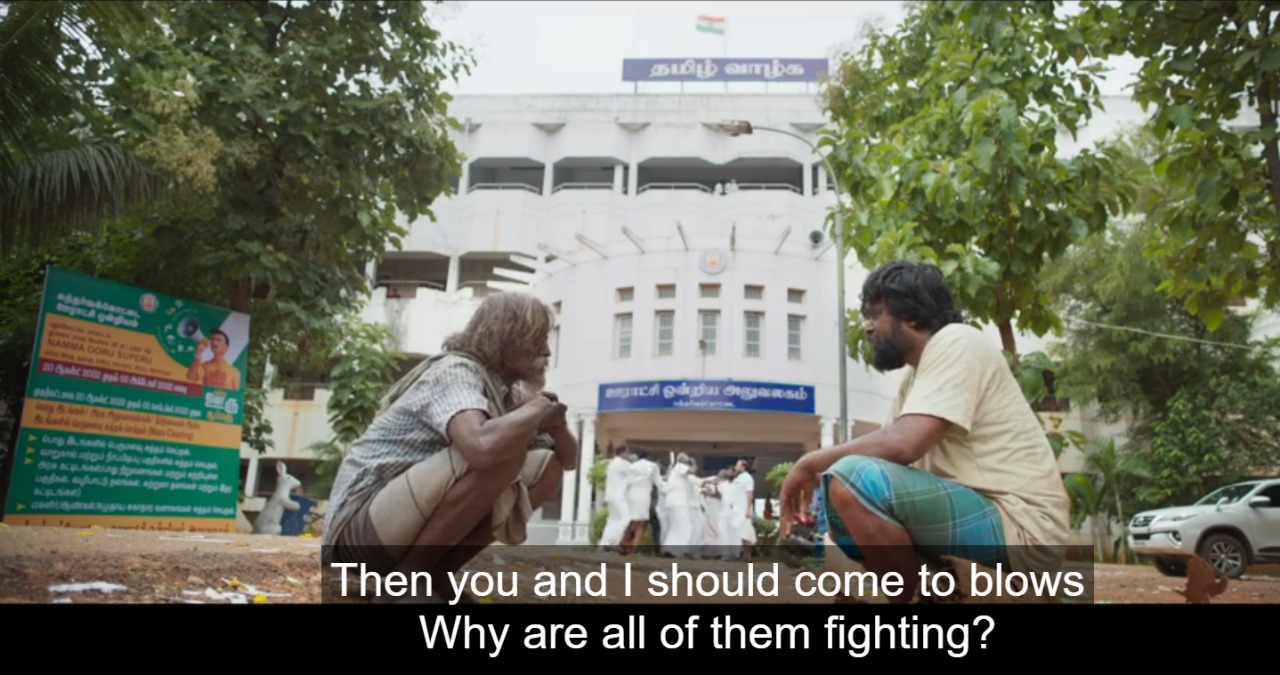
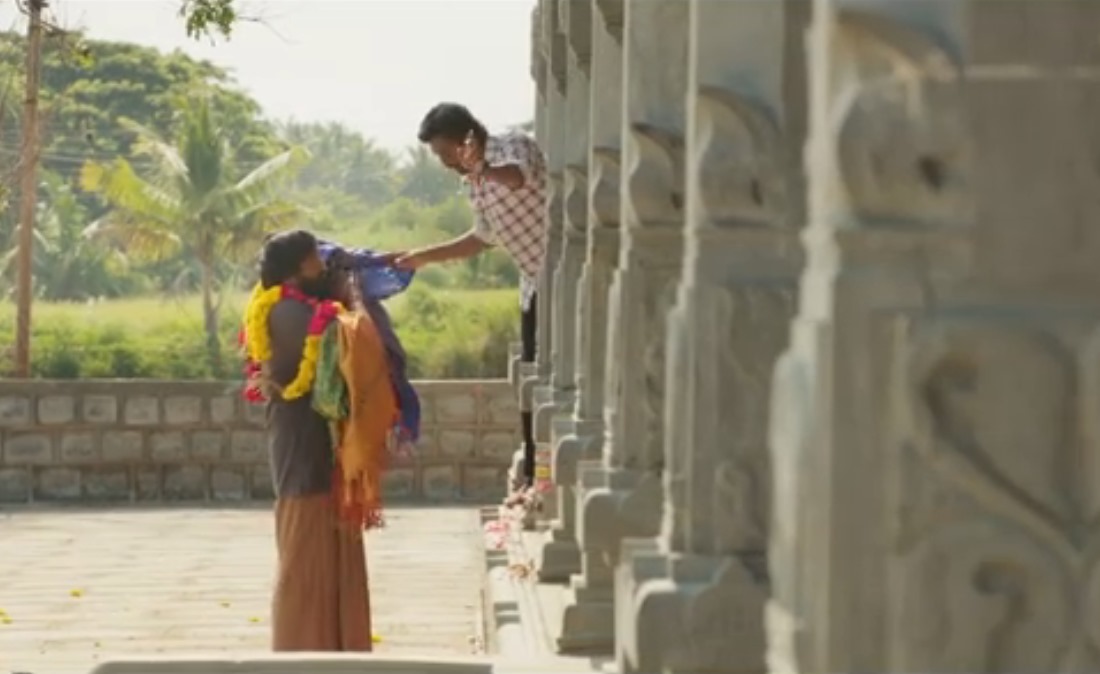
Eventually Koozhpaanai wins – but this is only namesake. A gimmick for the world – just like dropping surnames, with no real impact on the ground. Koppulingam is felicitated in the temple asusual, as if he is the President, whereas Koozhpaanai stands outside, a helpless placeholder for the laurels after their utility is done.
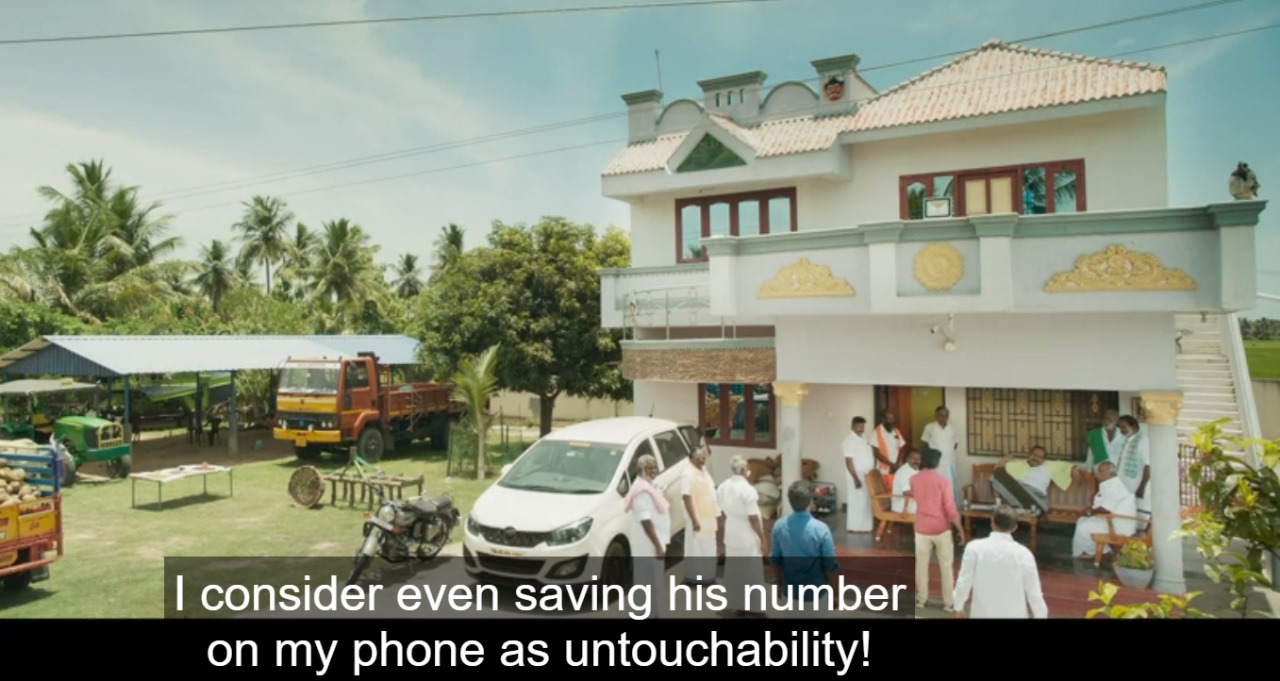
A villager considers saving the President Koozhpaanai’s number in his phone itself as insulting – a modern form of untouchability. Koozhpanai is sent away with bogus reasons, and is not allowed to sit in the President’s chair which is “reserved” for Koppulingam.
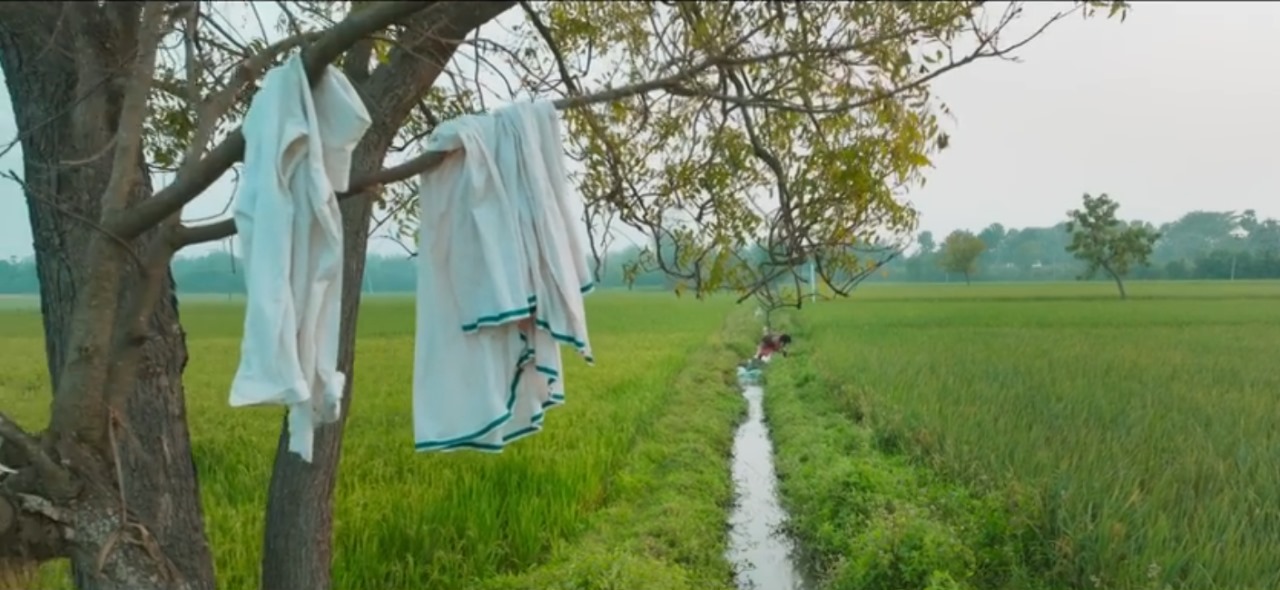
The President still toils in the field, doing his master’s bidding, while his White Veshti – a symbol of his Presidentship – uselessly hangs in a tree. It is a poignant shot – that signifies democratic positions are merely ornamental and are useless in front of social power.
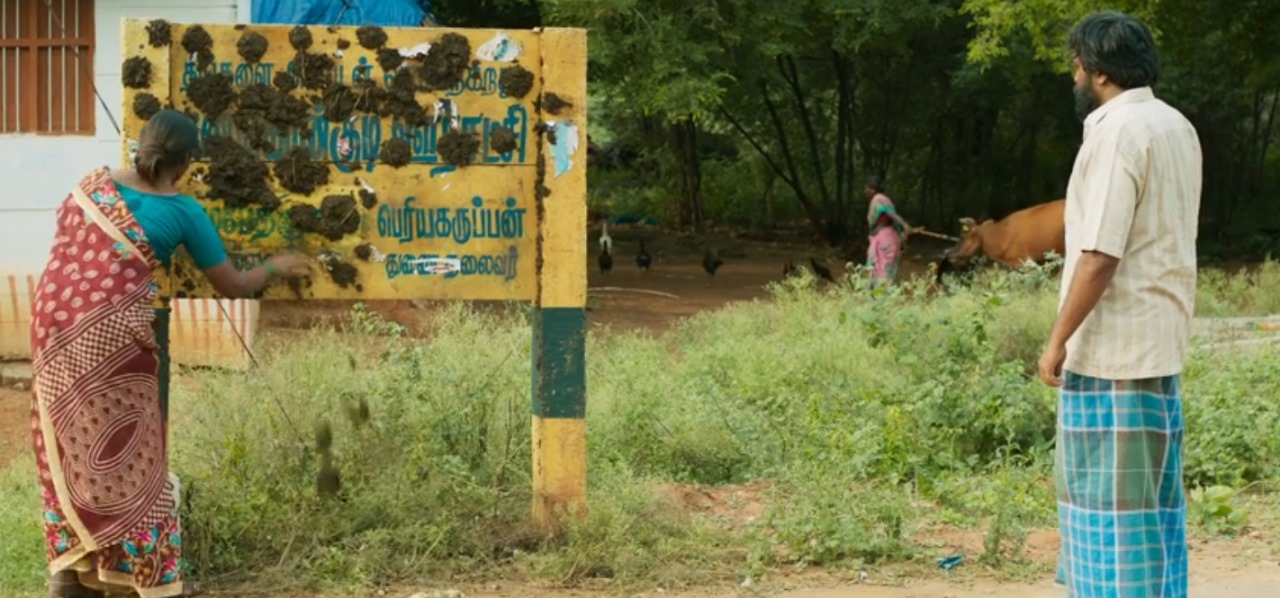
When Koozhpaanai’s name is finally added to the village notice board as President, he and his wife are horrified to find it smeared with cow dung—a bitter representation of how little respect he commands, even in his own office. This is the moment we learn his real name: Ambedkumar, a name that invokes the legacy of Ambedkar, yet carries no weight in the reality of village life.
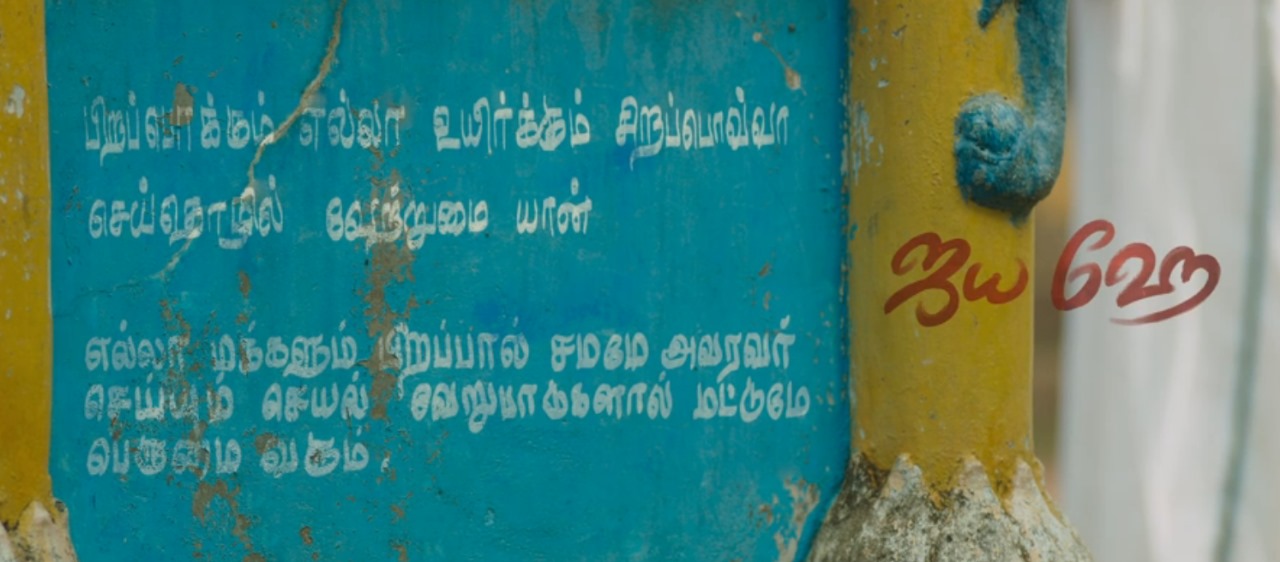
For Independence Day, Ambedkumar rehearses his speech, dreaming of hoisting the flag as Panchayat President. But it’s Koppulingam who seizes the “right” to raise the flag, humiliating Ambedkumar in front of the village children, government officials, and his own son. This scene takes place behind the back of the statue of Thiruvalluvar, whose famous couplet “Pirapokum Ella Uyirkum”— often misused and overquoted by ‘progressive’ and ‘Dravidianist’ politicians. Thirukural here is as decorative and useless as Ambedkumar’s President post – because both are merely namesake, and not implemented or enforced in reality. Even though Dravidianists portray themselves as ‘progressive egalitarians’ to the outside world, their real casteist mindset is entrenched.
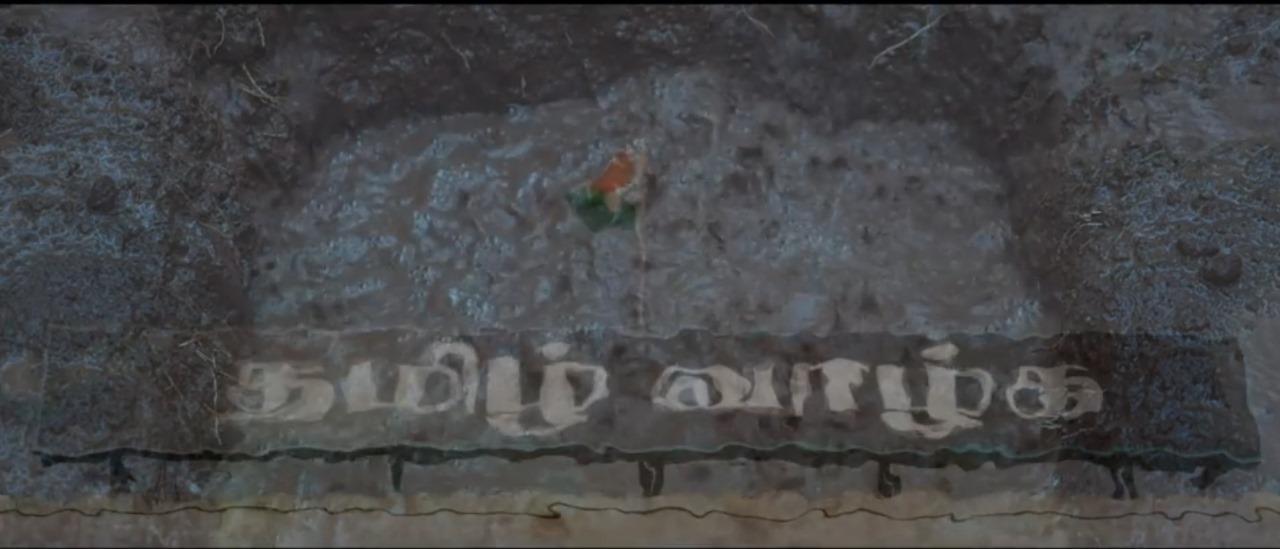
Another powerful scene critiques the state’s caste politics: Ambedkumar’s grandmother is refused cremation in the common ground due to caste restrictions, even in the midst of severe rain. Forced to bury her, Ambedkumar’s act symbolizes the burial of social justice itself. With social justice buried to the ground, appears the next image – “Thamizh Vaazhga” written over Govt Building. Of what use are all the praises to Tamil – when the downtrodden don’t even have rights to respectfully cremate their dead? Do Tamils consider themselves equal? Using Tamil pride to win elections, but doing next to nothing to change ground reality of Tamils – this is the sad state of Tamil Nadu politics where even basic human rights are denied to the real marginalized.
Ambedkumar’s presidency is further undermined when he’s violently beaten simply for sitting in a chair in the government office while Koppulingam stands. The film paints a grim picture of a village governed by caste, not law, where even a Panchayat President can be humiliated with impunity. When a sandal is thrown at Ambedkumar within the government office, no one intervenes—a stark commentary on the failure of law enforcement and governance.

Real-life testimonials from Panchayat Presidents of reserved constituencies drive home the film’s message: these leaders are mere figureheads, devoid of power or respect, trapped in a system that perpetuates their subjugation. The final image of the film tells it all – when powerful landlords are in, not just the downtrodden, but even their leader Ambedkar’s photo isn’t allowed inside offices. Only when real power flows down to the downtrodden, is he let in. No amount of gimmicks can change reality.

The film’s rejection by the Dravidianists stems from its unapologetic portrayal of caste dynamics. Ambedkumar, a devout man who worships Nondisamy and seeks blessings from Lord Muruga, stands in contrast to the atheistic, progressive ideals typically championed in Tamil Nadu’s political cinema. In the ‘puratchi’ movies milieu, such a hero is unacceptable and becomes untouchable. By not validating this film or giving it the attention it deserves, is a another form of untouchability by the Dravidianist castes.

Image Credits: Amazon Prime No copyright infringement intended as images are used for fair use only – criticism or review.

(This article based on the X thread by Tamil Labs 2.0)

Tamil Labs provide high quality Tamil Content written interestingly in English.

Subscribe to our TelegramWhatsApp, and Instagram channels and get the best stories of the day delivered to you personally.

Taylor Swift Suffers Wardrobe Malfunction, Dancers Swing Into Action To Her Rescue

Taylor Swift Suffers Wardrobe Malfunction

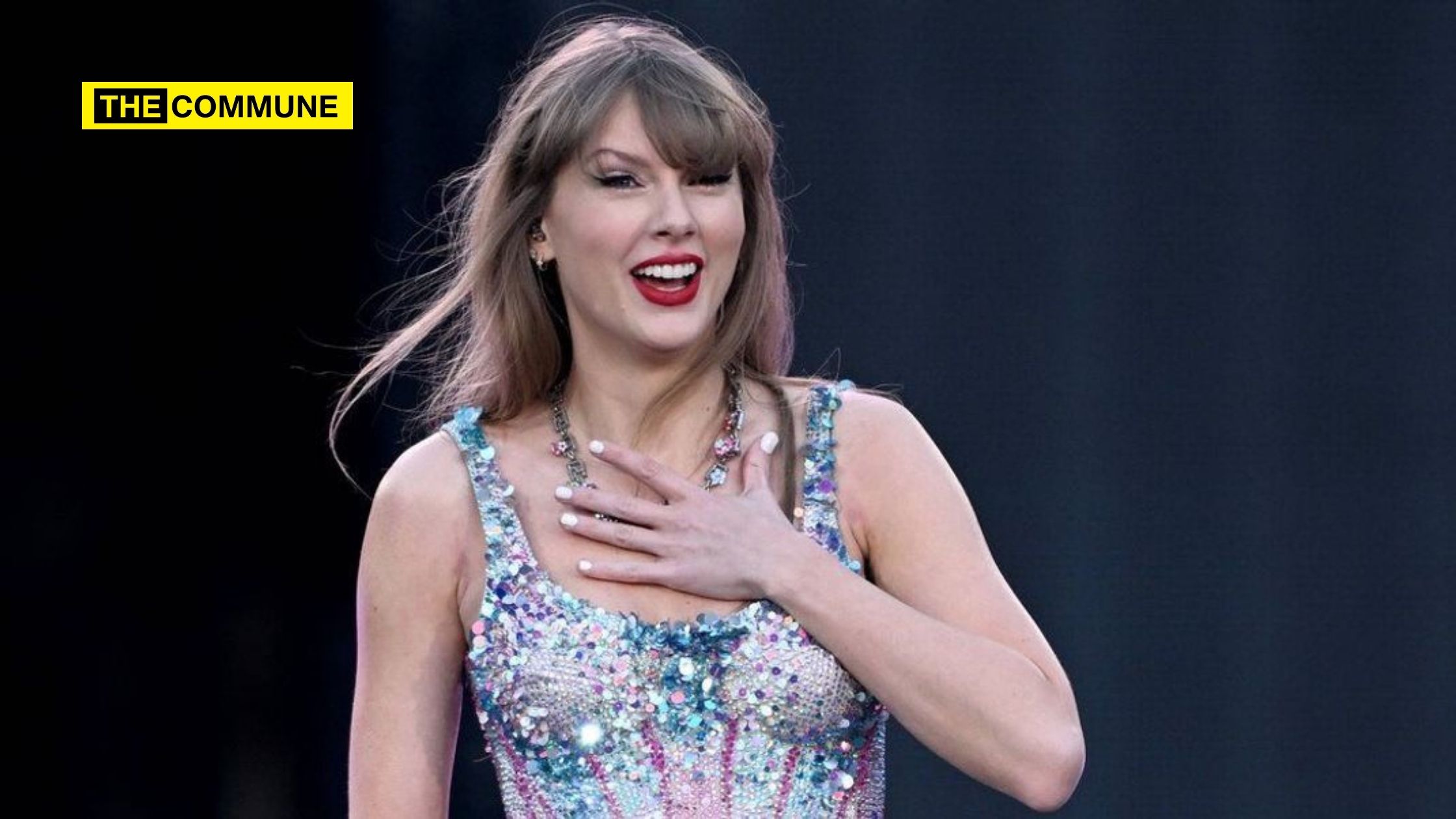
Pop icon Taylor Swift recently suffered a wardrobe malfunction while performing on stage. However, her dancers acted quickly, and came to her rescue.

During her Eras Tour stop in Miami, Swift, 34, experienced a wardrobe malfunction as she was performing her track ‘But Daddy I Love Him’, with her white gown suddenly popping open in the back, reports ‘People’ magazine.

As per the Miami Herald’s report of the concert, the singer-songwriter was just beginning the song, which is from her latest album, ‘The Tortured Poets Department’, when her custom Vivienne Westwood gown came unzipped.

As per ‘People’, in a video shared on social media by a fan, two of Swift’s dancers can be seen springing into action and helping her zip up the dress so she could continue her performance.

‘Teen Vogue’ previously reported that Swift’s Vivienne Westwood look, which she wears during the ‘The Tortured Poets Department’ segment of her concerts, features a sleeveless ball gown silhouette with a corseted bodice and a peekaboo skirt.

A part of the lyrics from ‘Fortnight’ is written repeatedly across the dress in black cursive handwriting, and Swift wears a black bodysuit underneath to help her make a quick change into her circus-inspired outfit for her track ‘I Can Do It with a Broken Heart’.

The singer debuted another new costume which immediately had fans theorising that ‘Reputation’ (Taylor’s Version) could be on the way. The 14-time Grammy winner emerged in a new Roberto Cavalli catsuit during the Reputation-era portion of her show.

The one-legged suit featured intertwining snakes — this time in gold rather than red, per concert photos. Bodysuits were a favourite look for Swift throughout her Reputation Stadium Tour.

Additionally, on the back of the new catsuit, one snake made the shape of the number two.

–IANS

Subscribe to our channels on TelegramWhatsApp, and Instagram and get the best stories of the day delivered to you personally.
Bangladeshi National Living As Monk In India Arrested In Bihar

Bangladeshi National Living As Monk In India Arrested In Bihar
Feature Image Credits: ETV Bharat

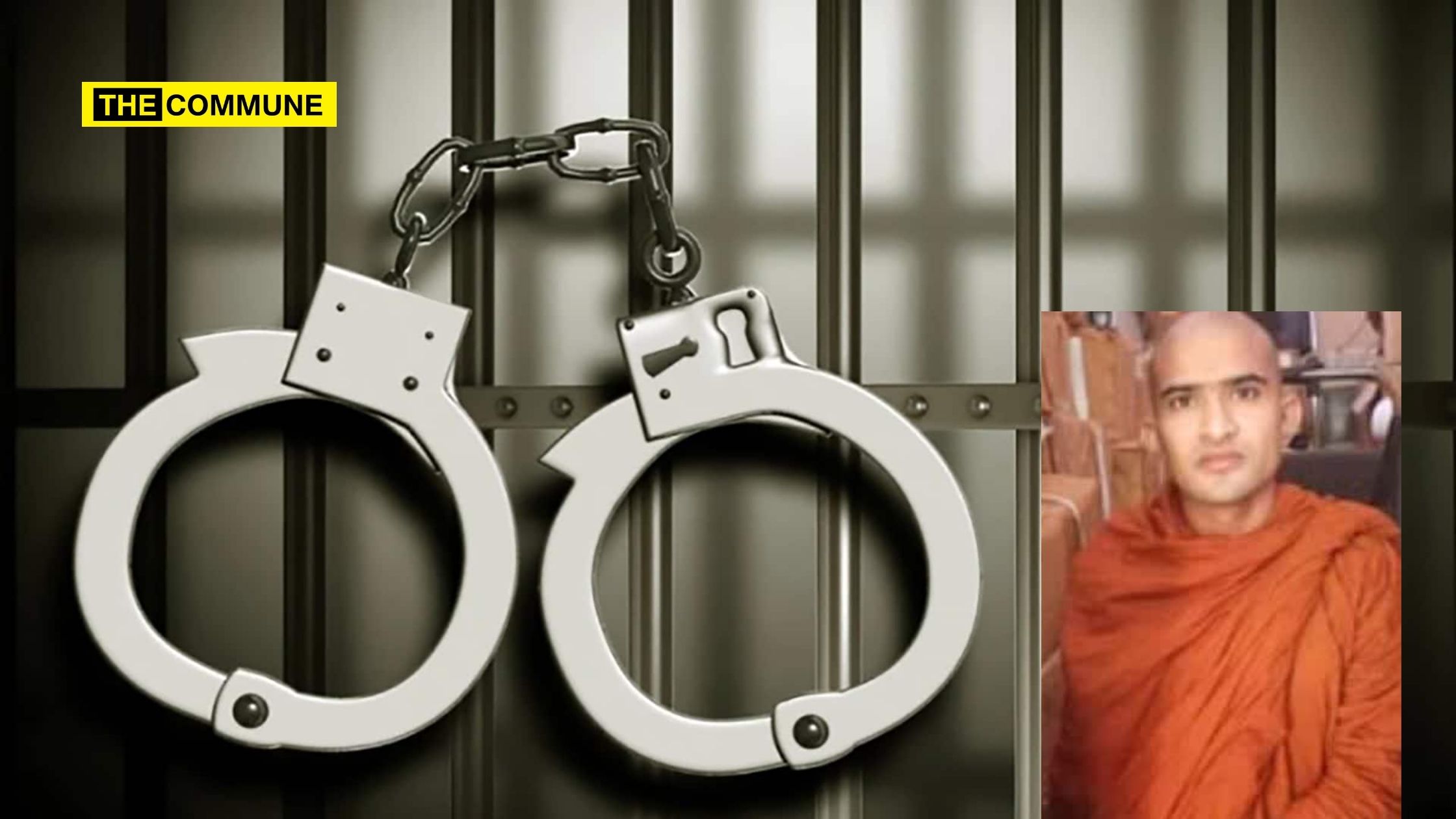
A Bangladeshi citizen, identified as Babu Joe Barua alias Rajiv Dutta, was arrested at the Gaya Airport in Bihar, an official said. Barua has been living in India illegally for the past eight years, posing as a Buddhist monk and residing in a monastery in Gaya. He was detained by airport security while attempting to board a flight to Thailand on Friday.

Upon investigation, authorities found that he was living without a valid passport or visa and had been using fake documents. A lookout circular had also been issued against him earlier.

He was handed over to the Magadh Medical Police Station Gaya for further action. “A Bangladeshi national was living in Bihar’s Gaya district for eight years without a visa or passport.

He was trying to escape to Thailand from Gaya International Airport. The documents recovered from him are fake. He has been arrested from Gaya Airport,” said Ashish Bharti, Senior Superintendent of Police (SSP) of Gaya.

The Bangladeshi citizen was attempting to travel to Thailand on an Indian passport (X 7037848) aboard flight TG 327. His suspicious behaviour during an inspection by the Aviation Security Group led to further interrogation, during which he revealed that he had been living in Gaya as a Buddhist monk for the past eight years and is, in fact, a Bangladeshi citizen.

Upon his arrest, authorities found multiple passports with different names, as well as a variety of documents, including an Aadhaar card and a PAN card.

Additionally, foreign currencies, including 1560 Thai Baht, 5 Euros, 411 US dollars, and Rs 3,800 in Indian currency, were recovered from him. The investigation has uncovered that he had been using passports under false identities. The accused has been charged under sections 318(4), 336(3), and 340(2) of the Bhartiya Nyay Sahita (BNS) and the Indian Passport Act 12 at the Magadh Medical Police Station, where further investigation is ongoing.

–IANS

Subscribe to our channels on TelegramWhatsApp, and Instagram and get the best stories of the day delivered to you personally.

“We’re Losing Votes”: DMK Minister Expresses Concerns Over Losing Votebank Amidst Standoff With CPI-M In Madurai

DMK Minister Moorthy Responds To CPI-M MP Venkatesan's ₹25,000 Flood Relief Request

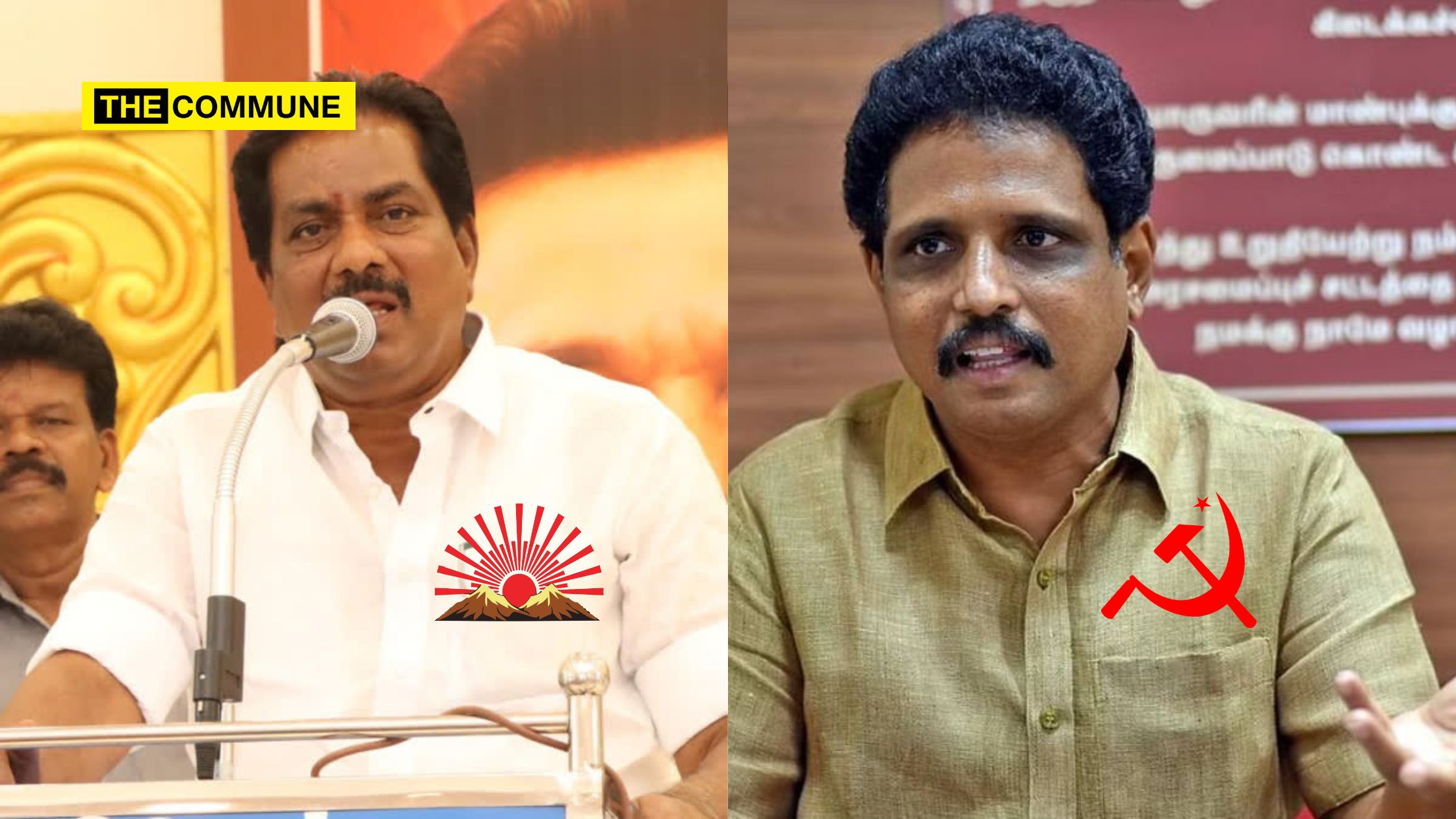
The conflict between the alliance parties, the Marxist Communist Party and the DMK, has escalated in the Madurai area, with leaders openly accusing each other. Notably, Su. Venkatesan, the Madurai MP from the CPI(M), and P. Moorthy, the DMK Minister for Commercial Tax and Registration, have been at the center of this verbal battle. The CPI(M) accused the DMK of failing to provide quality ration products to the public, prompting the DMK, under Moorthy’s leadership, to post posters around the Vandiyur area criticizing the MP. The posters read “Kanda Vara Sollunga”, (If you see him, ask him to come) implying that Venkatesan had not come to the constituency during the recent rains.

At a recent event in the Madurai District, during the introductory meeting for Madurai North District functionaries and constituency in-charges, DMK Minister Moorthy strongly criticized the communists. He claimed that the allegations against his party were false and urged people not to trust them. Moorthy expressed concern that the DMK was losing support and emphasized that functionaries should identify the voters who are drifting away and work to regain their trust.

Minister Moorthy began his speech by warning the new functionaries that the East constituency has about sixty thousand votes, emphasizing that their duty is to maintain and reclaim those votes for the party in the next election. He pointed out a shocking reality indirectly while the DMK claimed dominance and a significant sweep, they had actually fallen short in the last election, trailing by forty-four thousand votes in Melur.

Minister Moorthy expressed his disappointment over the votes shifting toward the BJP, stating, “The votes that we got in the local body election, we did not get those votes in the parliamentary election in some corporations and in some villages. We did not know what the reason was or who did not vote. It is very strange and weird. So you should not take it lightly. Assess the reasons, particularly during the local body election in our wards in Madurai East constituency. The opposition party had only received 2000 to 3000 votes, but now if they have got 22000 votes means there is no doubt that they are totally our votes. So, what is the reason for the votes changing? Without any notice, these votes have gone. Similarly, votes in three other constituencies have changed.”

Later, Moorthy took a jab at their alliance party, particularly targeting MP Su Venkatesan’s recent allegations, stating, “Write it down approximately, our chief minister and deputy chief minister are going to provide around 13,000 pattas to the 8 municipalities, in which no one can claim rights. Leave the work of calling the ineligible and diverting them that we will provide pattas, as our chief minister is responsible under the law for the eligible… On behalf of the district functionaries, I would like to say that our chief minister and deputy chief minister have already begun the work of providing pattas. Those who spread false propaganda that they will provide something for their namesake, pride, fame, should stop this. The chief minister who runs a perfect Dravidian governance knows when and where to provide the benefits to the voters as promised.”

Background

Recently, a conference was held by the Marxist Communist Party in Vandiyur, part of Minister Moorthy’s East Assembly constituency in Madurai. Local residents have been vocal about the poor road conditions and the subpar quality of products in ration shops. DMK members reportedly informed Minister Moorthy that the Marxist Party’s banners were aimed at criticizing the DMK regime, even sharing a photograph of the display.

Shortly after, the Communist Party put out a call for the entire Vandiyur community to rally together. Notices criticizing MP Su Venkatesan were posted throughout the region, questioning his lack of gratitude toward the voters of Vandiyur who helped him win his two terms. The posters read “If you see him, tell him to come” (Kanda Vara Sollunga) and asked what he had done for the community since his election, stirring frustration among the Marxist members. This campaign received significant attention on social media and in the press, further inflaming tensions.

At a recent union conference for the East and West Marxist Communist Party, MP S. Venkatesan addressed the criticisms directed at DMK members. He remarked, “If there are better fighters out there, we welcome the challenge.“Speaking at a meeting in Oomachikulam, he commented on the demands raised at the Vandiyur conference, including the urgent need for road repairs and improvements in ration shop offerings. He criticized those responsible for the poor quality of goods, asserting that the Marxist Communists would continue their fight for the community. Venkatesan urged the public to come and see for themselves, inviting anyone who could do better to step forward.

The DMK responded sharply, stating, “Don’t be ashamed to put up posters claiming to represent the villagers and making us look bad.” Speculation has arisen regarding Minister Moorthy’s involvement in the poster campaign and whether MLA Ko. Thalapathy was behind it. This issue has sparked widespread discussion in Madurai’s political circles and online.

Subscribe to our channels on TelegramWhatsApp, and Instagram and get the best stories of the day delivered to you personally.

DMK MP A Raja Makes Incendiary Speech Against Brahmins And Kanchi Sankara Mutt While Taking Jibes At High Court Judge

DMK MP A Raja Makes Incendiary Speech Against Brahmins And Kanchi Sankara Mutt While Taking Jibes At High Court Judge

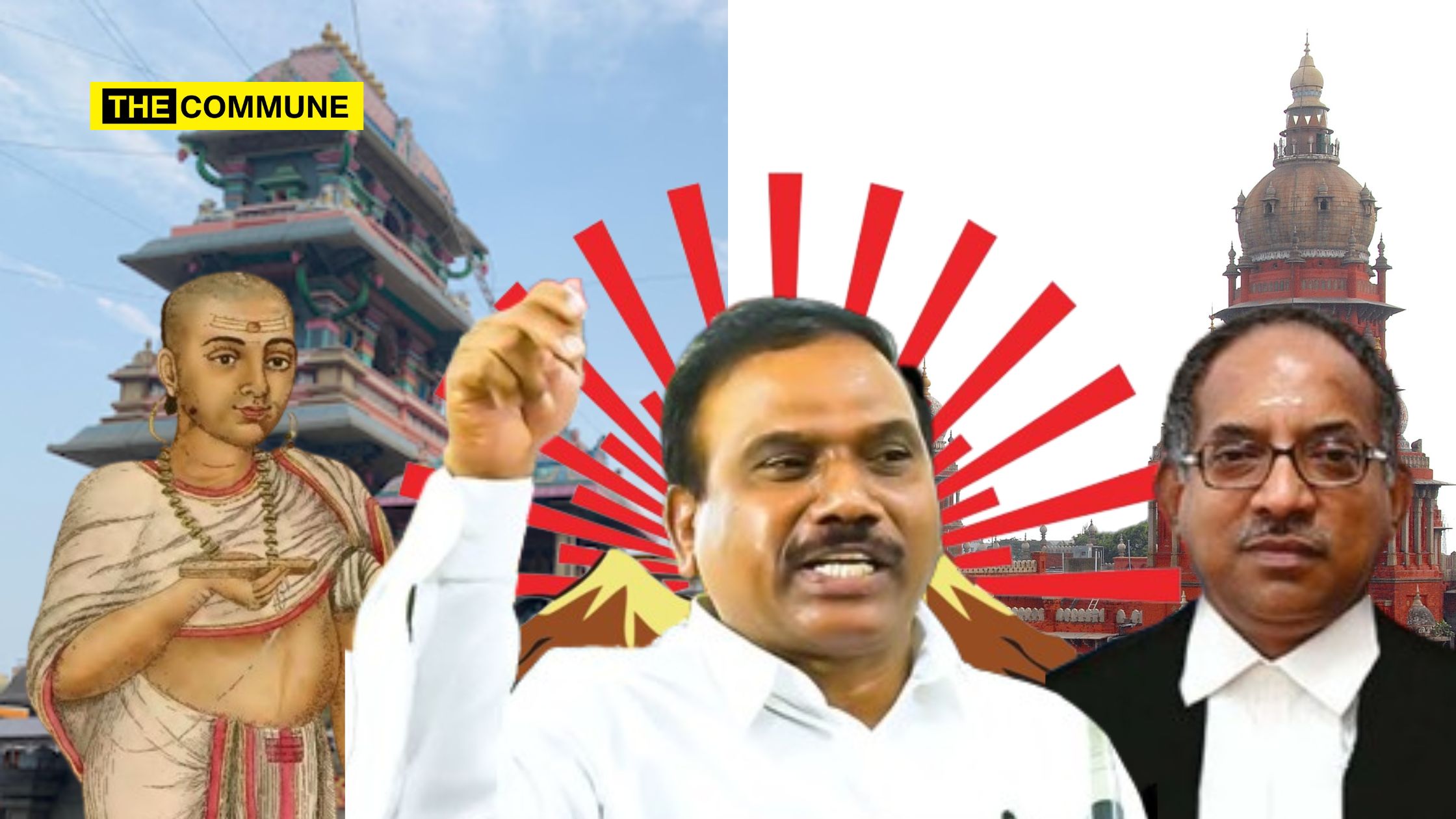
Once again, DMK deputy general secretary and Nilgiris MP A. Raja has sparked controversy for targeting and ridiculing Brahmins and the High Court regarding its recent judgment that dismissed a chargesheet against Hindu activist and film stunt master Kanal Kannan. Raja didn’t stop there; he also used a tone that appeared to incite violence against the Kanchi Sankara Mutt came as a real shocker.

DMK MP A. Raja made these controversial statements, while speaking at a book release event titled “Dalit Fictions in Tamil Literature” at Presidency College in Chennai on 18 October 2024,

During his speech, A. Raja, addressing the impressionable college students, spread numerous propaganda to bolster his arguments. For instance, he claimed that ‘Aryanism’ arrived in the Tamil region partly because of Azhwar and Nayanmars.

After the advent of Bhakti literature, these Azhawars and Nayanmars might have given Tamil, but there’s research that they laid the foundation for Aryanism in this (Tamil) society“, the DMK MP said.

The Dravidian Movement separated the Bhakti from literature and the literature that came after that is Dravidian literature.

Quoting Ambedkar, he said that Brahminism is a set of principles that oppose the ideas of equality, liberty, and fraternity.

“If there is someone in an Adi Dravida community who considers another community as lower than his community, he is is an ‘Iyer’ there. There is Brahminism there. The literature which incited these feelings is Dravidian literature.”, the DMK MP said.

A. Raja criticized a recent judgment from the Madras High Court, stating, “There’s one judge now. I don’t understand why Appavu, Arulmozhi, knows… ‘There is no god, there is no god, one who preaches god is a fool, one who worships god is a scoundrel and a barbarian.'” Kader Mohideen comes to {Periyar) Thidal, but why doesn’t he understand? Peter Alphonse also comes, but why doesn’t he understand? If someone who propagates God is considered a scoundrel, why doesn’t Kader Moideen doesn’t get hurt? Why doesn’t Peter Alphonse get angry when it is said that someone who worships God is a barbarian? Why is it only Avaal (Brahmin) who gets angry? Then they know which God is the one that Periyar spoke of, so that they can get angry. For this a judgement is written saying ‘if you write like this on Periyar statue before a temple wont they get angry? Hence I’m dismissing the case against them’.”

Then, speaking in a tone that inciting violence and hatred against the Kanchi Shankara Mutt, A. Raja remarked, “I’m asking if one of the students here stands and says that what the justice said was right, but you have referred to me as a Sudhra. The law also states this. You have referred to me as a Panchaman. I know the meaning of it. To say this, there is a Mutt in Kanchipuram and I’m getting angry at the Mutt. What will happen? Will you now give judgment on that?” He then claimed that the four Vedas continue to govern, as if they were courts.

Subscribe to our channels on TelegramWhatsApp, and Instagram and get the best stories of the day delivered to you personally.

Dravidian Model: Cry Foul About Imaginary Hindi Imposition, Embrace Urdu Imposition

Dravidian Model: Cry Foul About Imaginary Hindi Imposition, Embrace Urdu Imposition

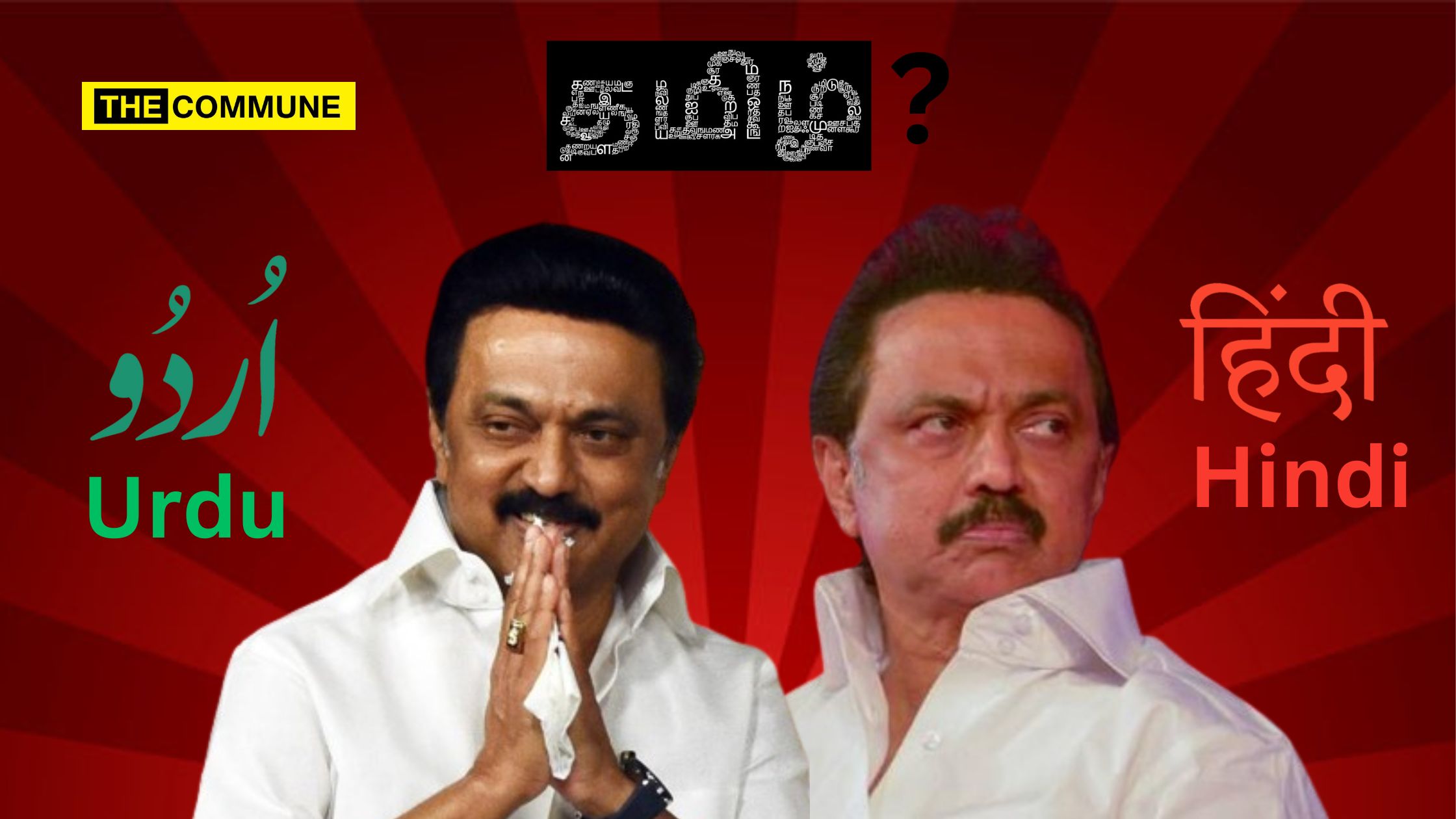
The entire Dravidian ecosystem seems to have come together once again to reignite the long-debated issue of “Hindi imposition” by alleging that Tamil Nadu’s Governor, RN Ravi, had omitted the phrase “Dravida Nal Thirunadu” from the official state song, ‘Tamizh Thaai Vazhthu.’ This sparked a heated exchange between Chief Minister MK Stalin and Governor Ravi. They leveraged this oversight to fuel a controversy surrounding allegations of Hindi imposition in the Tamil-speaking state and wrote a letter to the prime minister.

Background

The controversy erupted during the Hindi Month valedictory function at Doordarshan Kendra in Chennai, where the singers mistakenly omitted the line “Thekkanamum adhil sirantha Dravida nal thiru naadum,” which translates to “the great Dravidian nation in the Deccan,” from the state anthem.

Chief Minister MK Stalin swiftly condemned this omission and wrote to Prime Minister Narendra Modi. He argued that celebrating Hindi Month in non-Hindi speaking states is perceived as diminishing other languages and suggested that such events should be discontinued. Instead, he advocated for the promotion of local language months in their respective states.

Cheif Minister MK Stalin via his official X account stated, “I strongly condemn the celebration of Hindi Month valedictory function along with the Golden Jubilee celebrations of Chennai Doordarshan. Hon’ble @PMOIndia, The Constitution of India does not grant national language status to any language. In a multilingual nation, celebrating Hindi Month in non-Hindi speaking states is seen as an attempt to belittle other languages.”

He recommended that, “Therefore, I suggest that holding such Hindi-oriented events in non-Hindi speaking states could be avoided, and instead, the celebration of the local language month in the respective states should be encouraged.”

However, Stalin’s criticisms extended beyond the celebration of Hindi month valedictory; he also accused Governor RN Ravi of removing the term “Dravidian” from the anthem under the pretext of celebrating Hindi.

Describing the governor as having a “Dravidian allergy,” Stalin called for his recall, claiming he had “deliberately insulted” the people of Tamil Nadu.

Chief Minister MK Stalin stated in another post, “Is he Governor? or Aryan? Removing the word Dravidian and reciting Tamil Thai anthem is against the law of Tamil Nadu! A person who acts according to his will and not act according to the law is not fit to hold that office. In the guise of celebrating Hindi, the governor is insulting the unity of the country and the people of different races living in this land!”

“Will the governor, who suffers from Dravidian allergy, leave out Dravidian in the national anthem? The Union Government should immediately recall the Governor who is deliberately insulting Tamil Nadu and the sentiments of the people of Tamil Nadu!” He further added.

Governor Ravi’s Reaction To CM Stalin’s Remarks

This accusation did not sit well with Governor Ravi, who retorted that Stalin’s comments were “unfortunately cheap” and argued that such accusations “lower the dignity” of the constitutional office of the Chief Minister. He stated that there are forces, both domestically and internationally, that seek to obstruct the country’s progress.

Governor RN Ravi stated, Hon’ble Chief Minister Thiru. @mkstalin has issued a regrettable tweet this evening in which he made a racist remark against me and levelled false allegation of showing disrespect to Tamizh Thaai Vaazhthu. He knows it well that I recite full Tamizh Thaai Vaazhthu at every function and do so with reverence, pride and precision. He also knows that under leadership Hon’ble Prime Minister Thiru. @narendramodi the Central govt has proudly created several institutions for spread of Tamil language and heritage within India including Tamil Nadu and several countries of the world. #PMModi took Tamil even to the United Nations.”

Emphasizing his own efforts Ravi stated, “As a proud Indian I myself have taken numerous substantive initiatives to spread Tamil, the oldest and richest living language, in other states of the country, the latest being to set up, with cooperation of the Assam govt, a Tamil diploma course in Gauhati University for spread of Tamil in the North East.”

In a final blow to the DMK’s agenda, Ravi stated, “Making racist remark and alleging incorrect imputations against governor by the chief minister is unfortunately cheap and lowers the dignity of the high constitutional office of the chief minister. Since he rushed to public with his racist remarks and false imputations I am constrained to respond.” – Governor Ravi.”

Hypocrisy Of Dravidian Model Governance

Do you think the DMK government genuinely cares about the Tamil language, or is it merely a political maneuver?

Let’s uncover the truth behind the Dravidian model. When the DMK suddenly cries out against Hindi imposition, we should note that the central government promotes the language internationally through World Hindi Diwas on 10 January and nationally on 14 September, regardless of which party is in power. Does the state government have a Tamil Day to promote its language?

Did the DMK voice concerns when it was part of the UPA from 2004 to 2014? During that time, the same Hindi imposition occurred under DMK’s rule alongside Congress. What was Stalin doing then?

When Chief Minister MK Stalin suddenly bats, “The Constitution of India does not grant national language status to any language. In a multilingual nation, celebrating Hindi Month in non-Hindi speaking states is seen as an attempt to belittle other languages,” he overlooks that the same Constitution, under Article 351, directs the central government to promote Hindi. Does he not understand his constitutional responsibilities?

The height of hypocrisy is evident when Tamil Nadu CM Stalin writes to the Prime Minister requesting not to impose Hindi, while his education minister promotes his proficiency in Urdu, a language closely related to Hindi, in state-run government schools.

Yes, on 10 October 2024, DMK Minister Anbil Mahesh Poiyamozhi conducted a surprise inspection at the government-aided Mazharul Uloom Urdu Higher Secondary School in the Ambur constituency. He participated in an Urdu language class to observe the teaching and learning process. To the delight of the Urdu students, he wrote his name, “Anbil,” in Urdu and asked them to read it aloud. The Urdu teacher then wrote the minister’s full name in Urdu, expressing gratitude and congratulations to him.

Not just that, the Dravidian model, which emphasizes “Tamil,” insists that everyone to prove their proficiency in the language, yet it shows a leniency toward Urdu-speaking Muslims who are exempt from taking the Tamil exam in the state. This raises concerns about their heightened ignorance.

Furthermore, if Hindi and Sanskrit are considered enemies of Tamil, then promoting them can be seen as an imposition. In that case, what does that make Urdu, which has vocabulary rooted in languages like Sanskrit and Prakrit and shares origins with Hindi? Urdu is often referred to as a ‘sister’ language due to its similar grammatical structures. Now, the question on everyone’s mind is, how will the Dravidian leaders justify this contradiction?

Does the DMK thinks that only Muslims in the state should have the right to use and practice Hindi, given its close ties to Urdu, while others are excluded?

Subscribe to our channels on TelegramWhatsApp, and Instagram and get the best stories of the day delivered to you personally.

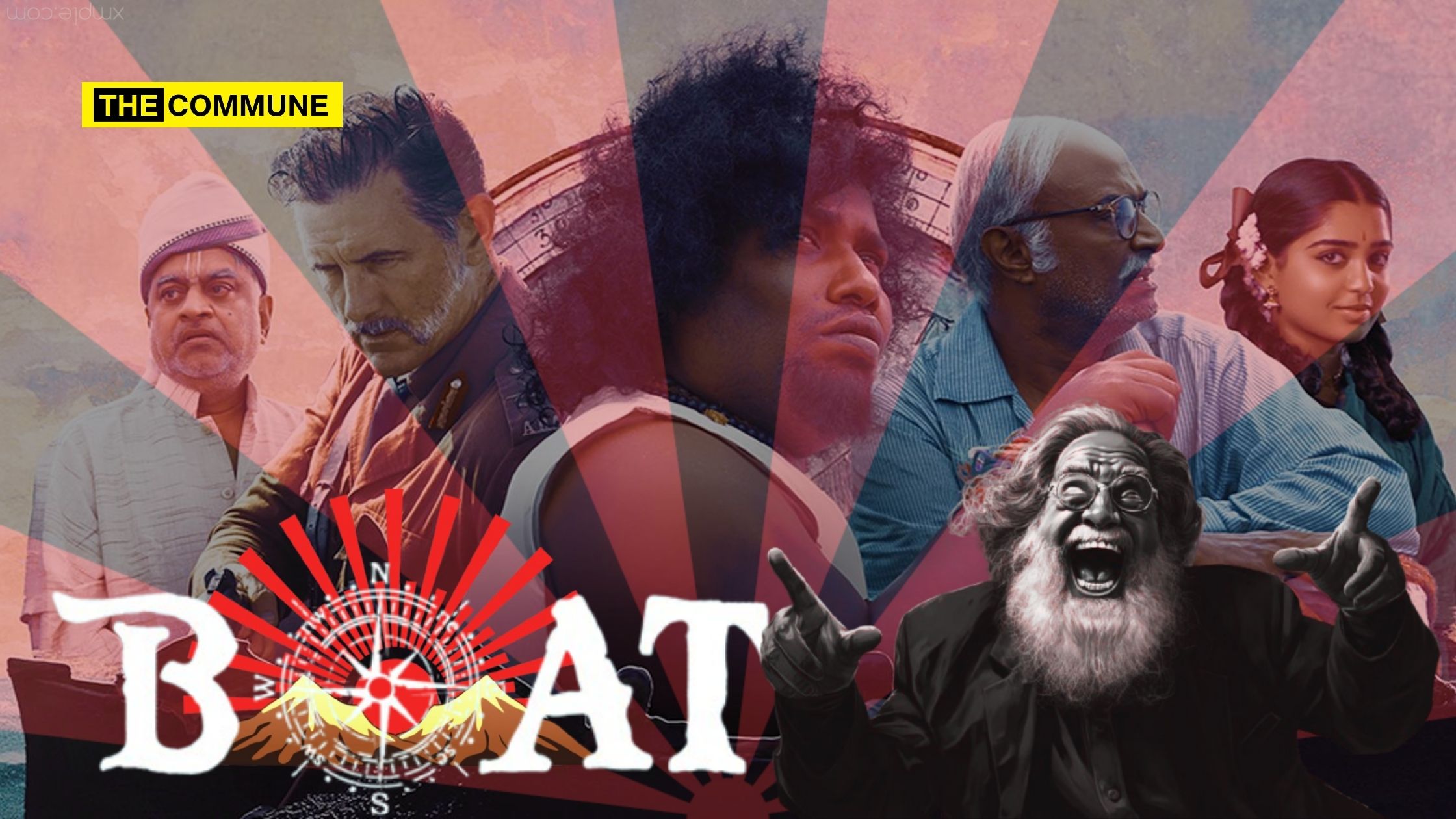
Boat: Yet Another Dravidian Propaganda Film With Brahmins Made The Punching Bag

Boat: Yet Another Dravidian Propaganda Film With Brahmins Made The Punching Bag

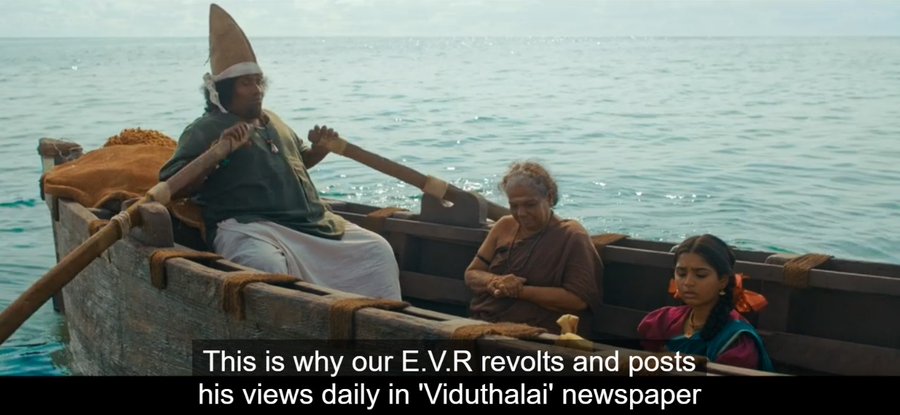
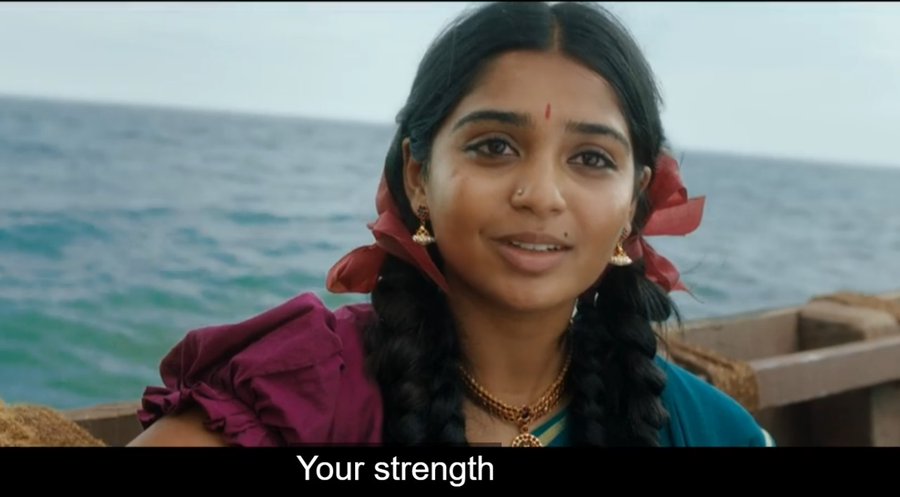
Boat – a 1940s Dravidian propaganda stage play, masquerading as a Tamil feature filmHere is a thread that reviews this film with a clear agenda.

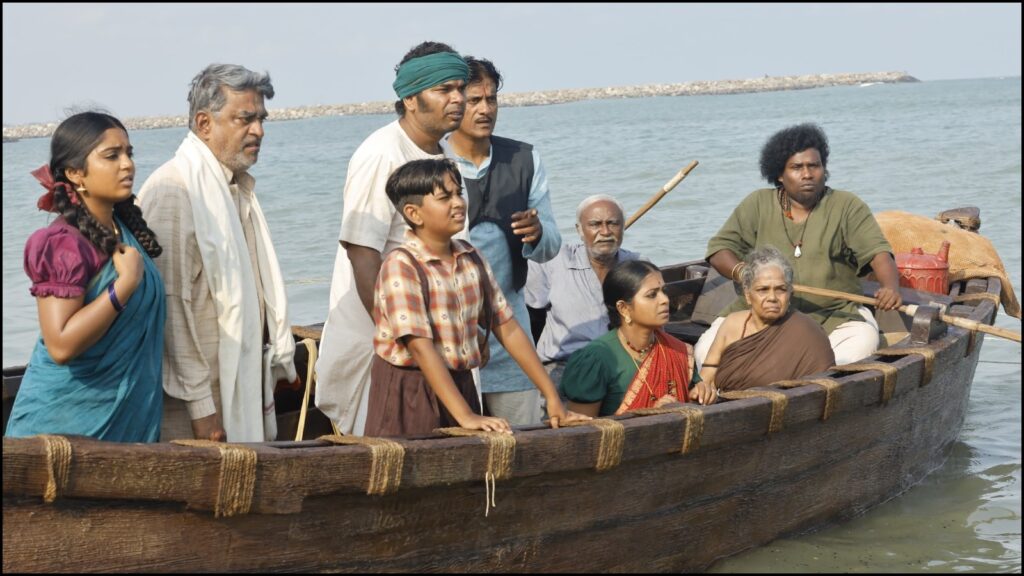
On 11 October 1943, Japanese warplanes bombed the Madras presidency in a nighttime raid. Fearing another attack, 9 random people get on a boat to secure themselves in mid-ocean, with one uninvited British guest who joins them later, with a gun. ‘Did they all survive?’ is the plot.

The 9 characters stuck on a boat are carefully chosen to represent a Mini-India.

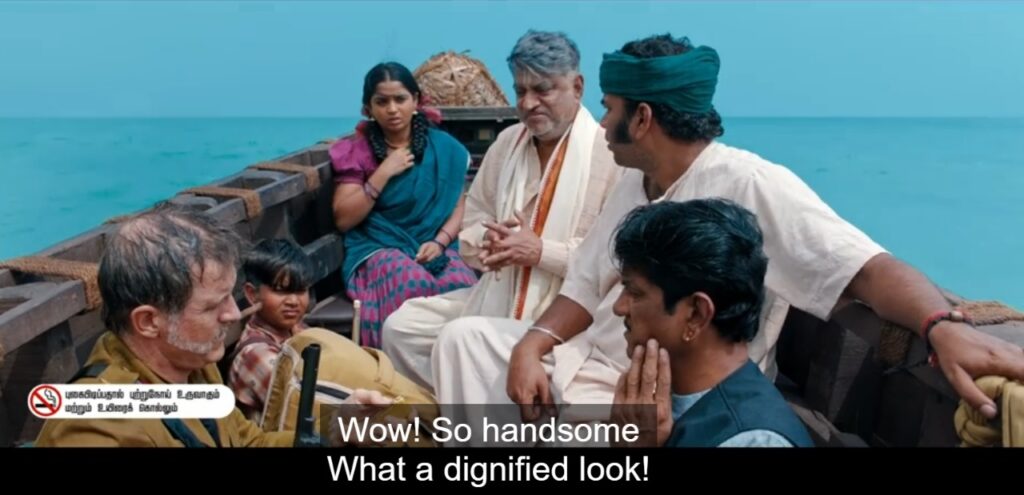
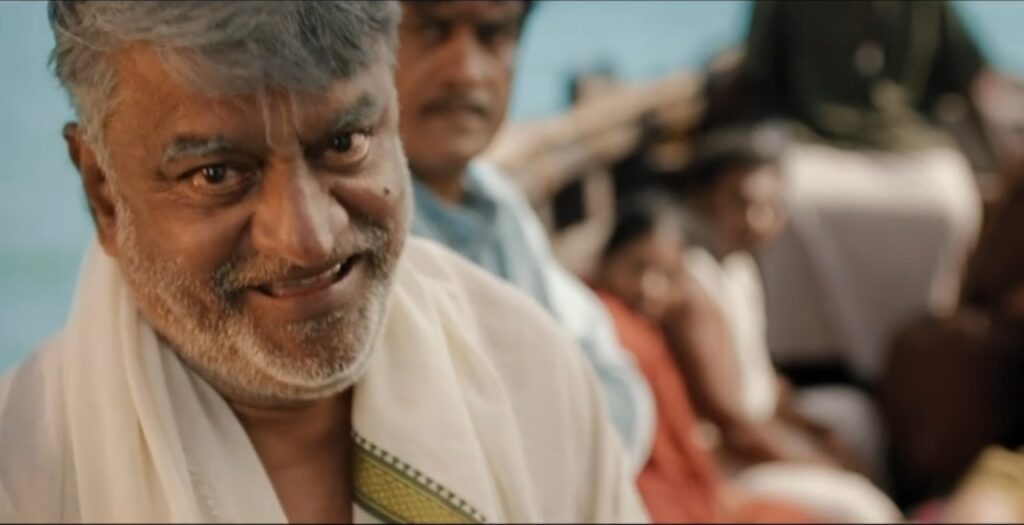
The fisherman & his grandma help onboard a pregnant Telugu woman and her sick son, a Sait, a regular Muslim, a regular Hindu, and the usual villains of Tamil cinema – a casteist Tamil Brahmin uncle and his daughter.

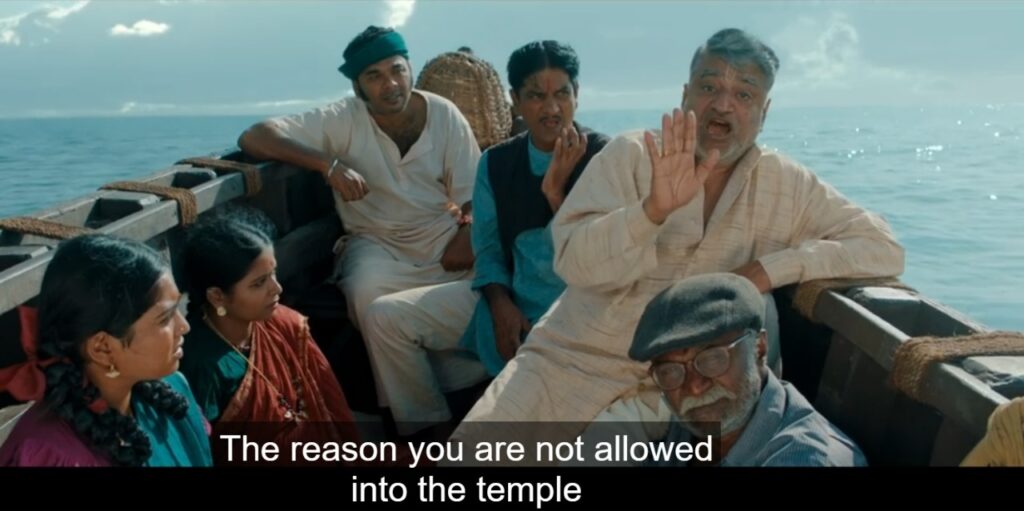
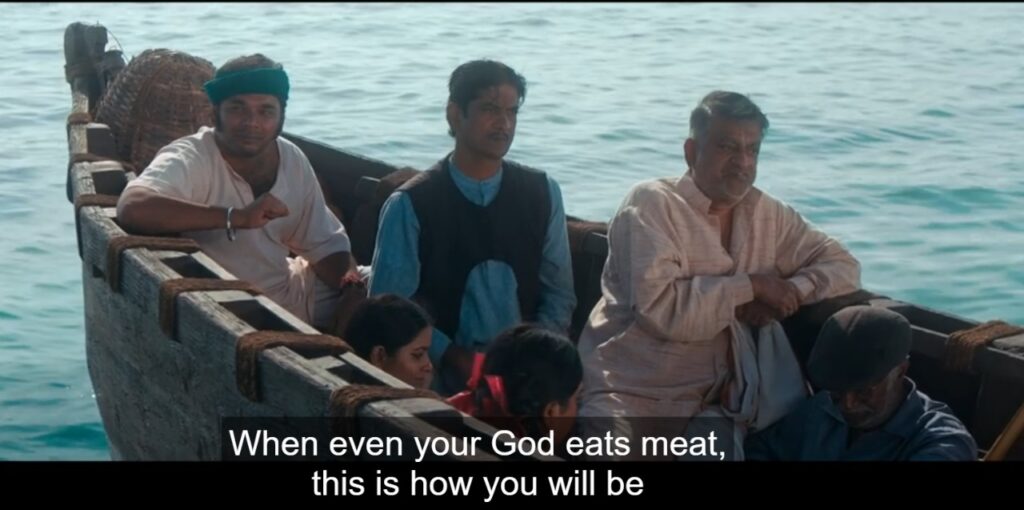
They have chosen an innocent, hardworking, good fisherman – who confronts a blatant casteist uncle who justifies the non-entry of the downtrodden into the temples.

This character is basically a punching bag – his bigotry is contrasted with goodness from other sensible characters. If evil casteist Tamil Brahmins are the bigoted villains, then according to Tamil cinema, who is the brave savior of Tamils? EVR, of course.

Curd rice-eating casteist uncle is the supervillain who is defeated by a superhero – atheist EVR who reformed us – this is textbook Dravidianist propaganda.

There’s a clear motive in the characterization – they wantonly depict this despicable Tamil Brahmin character as someone who praises a Britisher and takes his side.

This is Goebell-level reinforcement of the Dravidianist agenda – to villainize and gaslight a community in all ways possible.

In reality – Tamil Brahmins were at the forefront of the Indian independence movement, even as EVR called 15 August 1947 a black day.

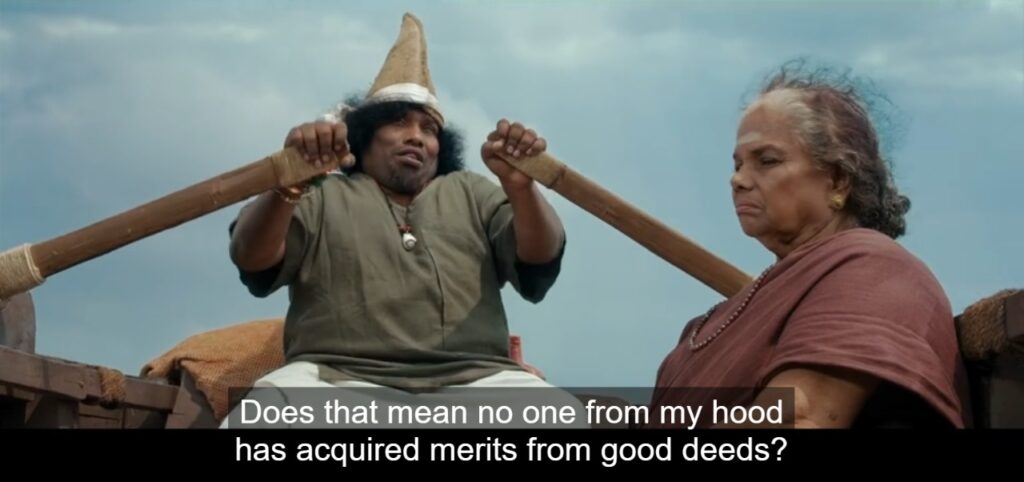
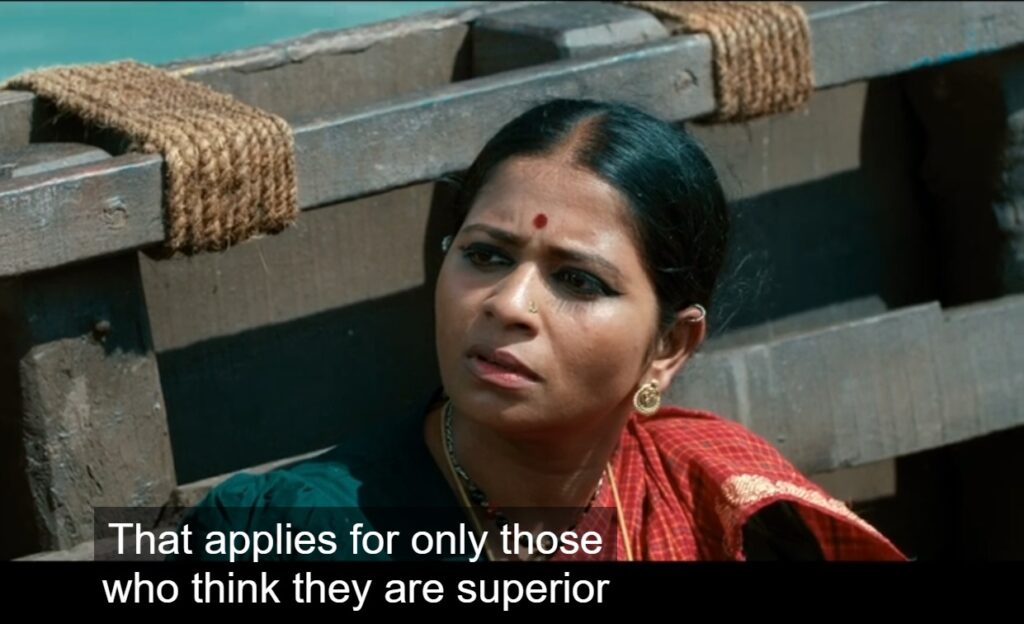
Karma theory – a belief by Hindus, Jains, and Buddhists alike – is derided as something that applies only to those who think they are superior.

In reality, Karma theory is a native belief in causality that is a rough explanation for human suffering. Abrahamic faiths offer no better explanation for why suffering and blessings are so unevenly distributed – if the One God was so fair.

Seeing the film’s opening image and who is being thanked might help put the pieces together – why is the Indic native belief system in Karma derided in this film?

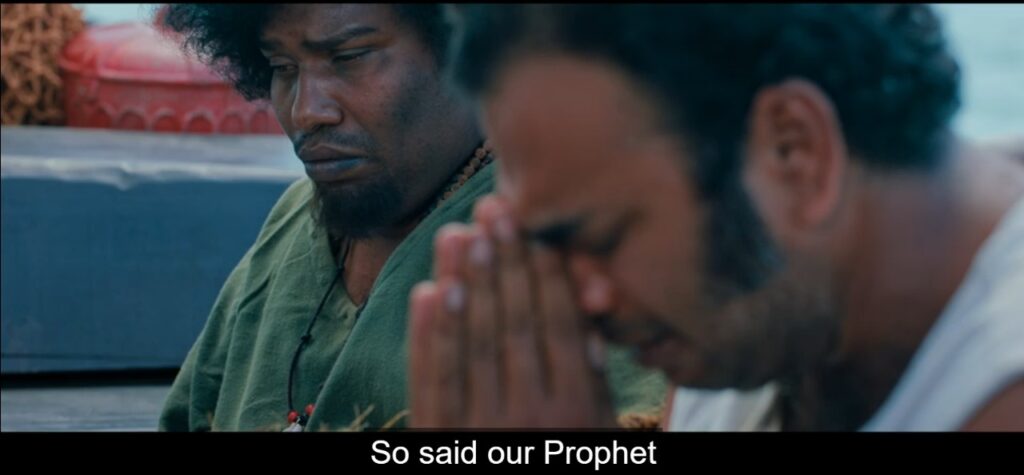
No other character/community is villainized the way the Tamil Brahmin character is. The Muslim is a peaceful person who offers namaz even in a boat and couldn’t even tolerate that he killed a rat by mistake, in anger.

“One who can control his anger is the great man,” says his Prophet. Oh, is it?

Tipu is listed as a freedom fighter alongside real freedom fighters like Poolithevan, Velu Nachiyaar, Azhagumuthukone, and Marudhu brothers.

Propaganda 101 – When you are lying, ensure the lie is surrounded with truthful facts so that it doesn’t stand out.

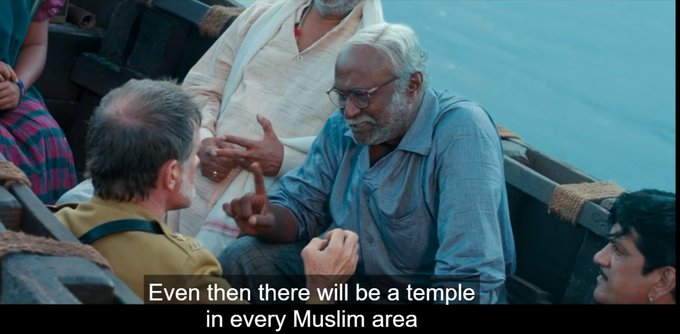
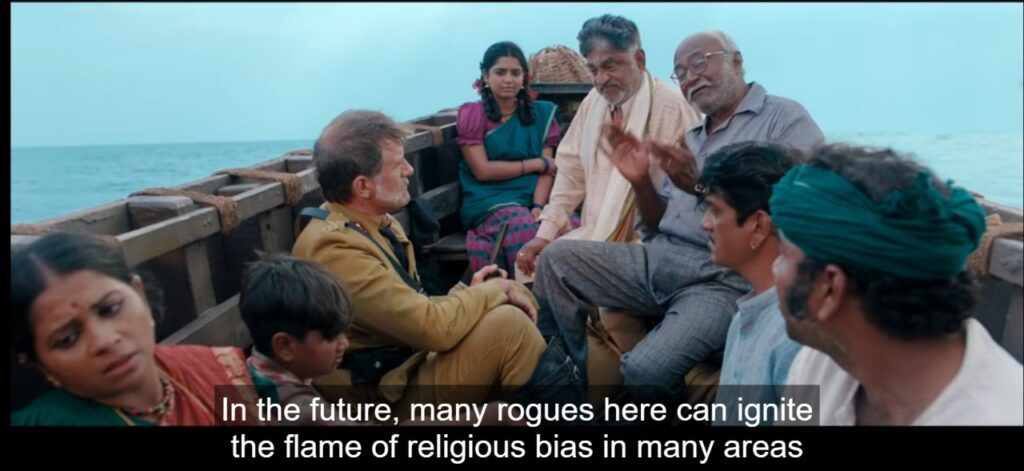
When the Britisher says your country will split into two, the Hindu character says that even if our country splits into 10, in every Muslim area, there will be a Hindu temple, and vice versa. How many temples remain in Pakistan and Bangladesh? How many Hindus live safely in these countries?

And he makes predictions about the future – spitting upon rogues who use religion for politics, from 1945. The film is against dividing people on a religious basis but goes soft on Jinnah. The irony. Why did Partition happen, and on what basis?

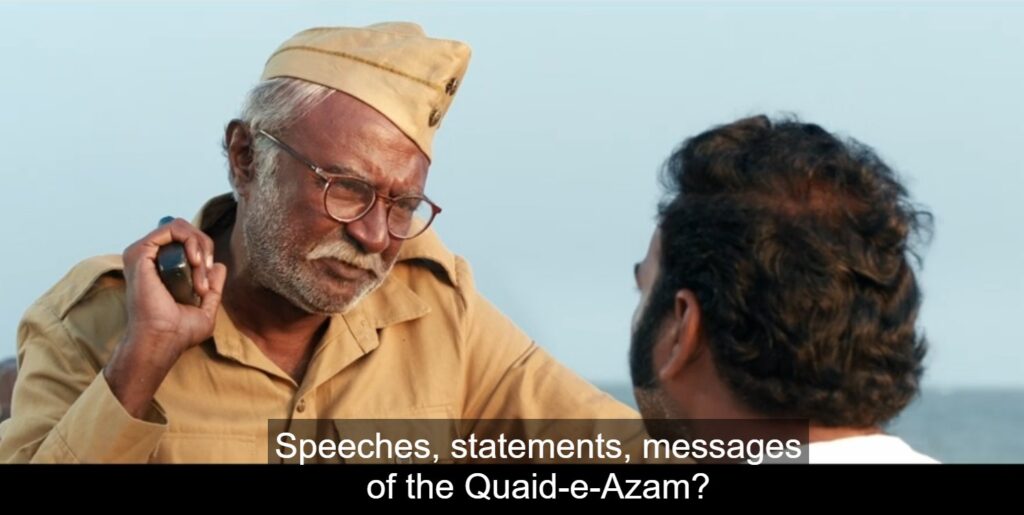
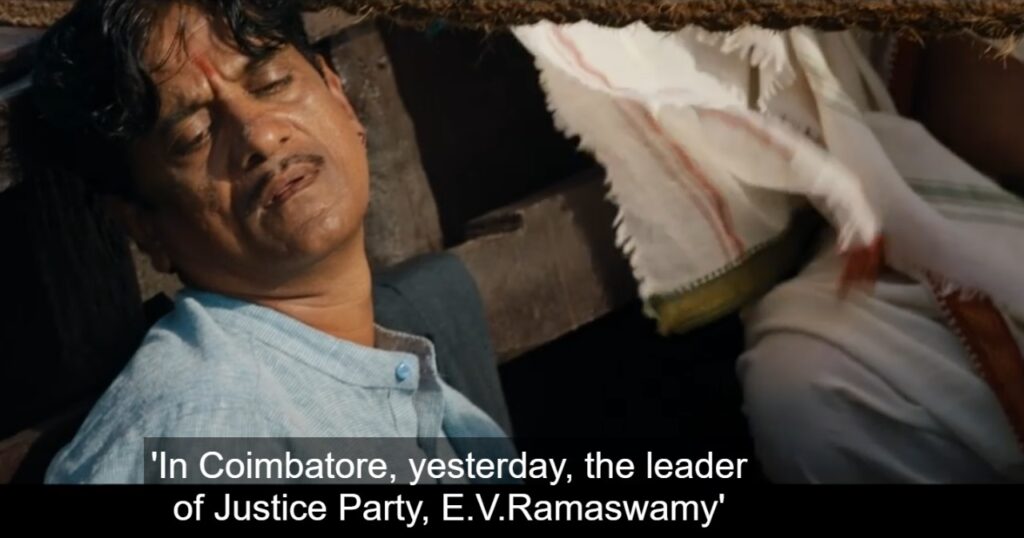
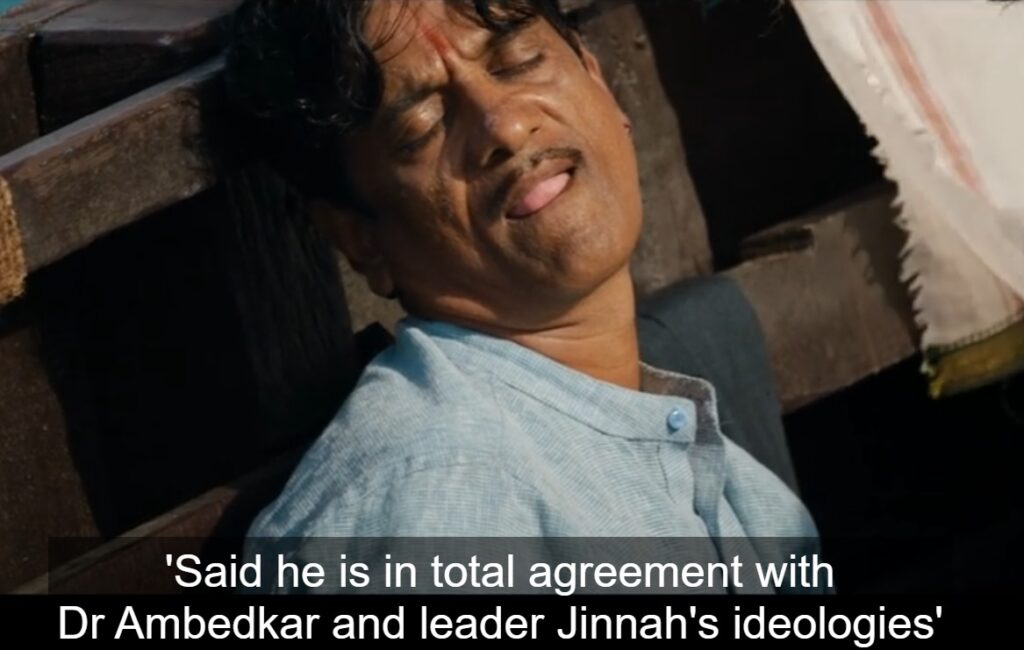
The film highlights using a radio news announcement that EVR stands in alignment with Ambedkar and Jinnah’s ideologies. This sums up the Dravidian vote bank, and who this film targeted this message for. It is not about activism or progress, but about consolidation.

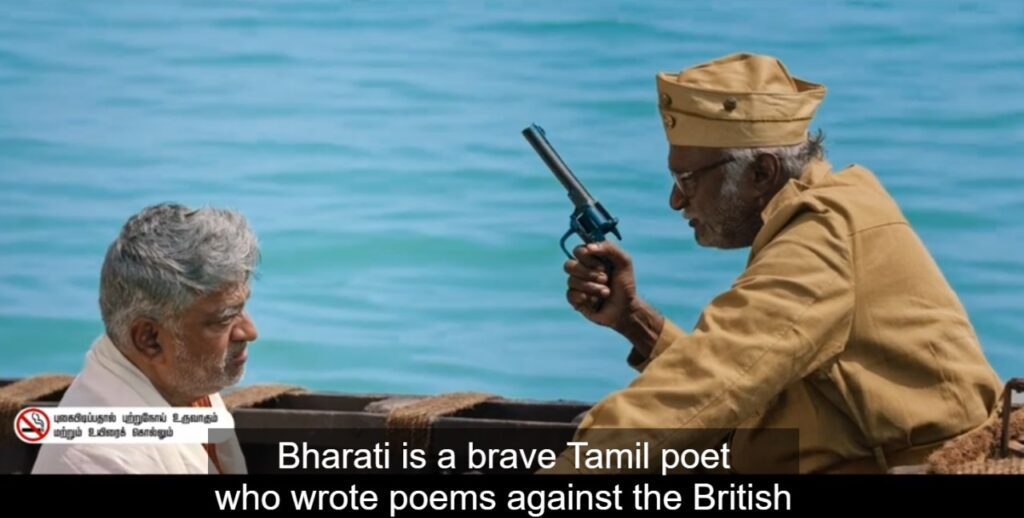
The film seeks to consolidate its Dravidianist in-group against the Aryan outgroups. It kept a fully muted/censored scene with this dialogue where the casteist uncle says at gunpoint: “That freedom fighting guy is not from my comm. Bharathi is Iyer, We are Iyengar, we are not the same.” Would any sensible Dravidianist associate themselves with such a despicable Aryan group? – is the subconscious messaging. But wait – not all Aryans are to be hated.

The fisherman and the casteist uncle’s daughter develop mild feelings for each other. This girl does not see inequality and falls head over heels with the fisherman’s strength and his way of life. She even sings a Carnatic song with North Madras phrases to prove this. Aryan males are the enemies of D, but not the females. Could not have summarized the ideology better.

Bonus: A deleted Scene from the film shows how we will realize the worth of Britishers and what they did for us, only after they leave.

Truly, EVR’s “grandsons” in thought, word and deed💯

Image Credits: Amazon Prime No copyright infringement intended as images are used for fair use only – criticism or review.

Video Credits: Filmibuff

(This article based on the X thread by Tamil Labs 2.0)

Tamil Labs provide high quality Tamil Content written interestingly in English.

Subscribe to our TelegramWhatsApp, and Instagram channels and get the best stories of the day delivered to you personally.
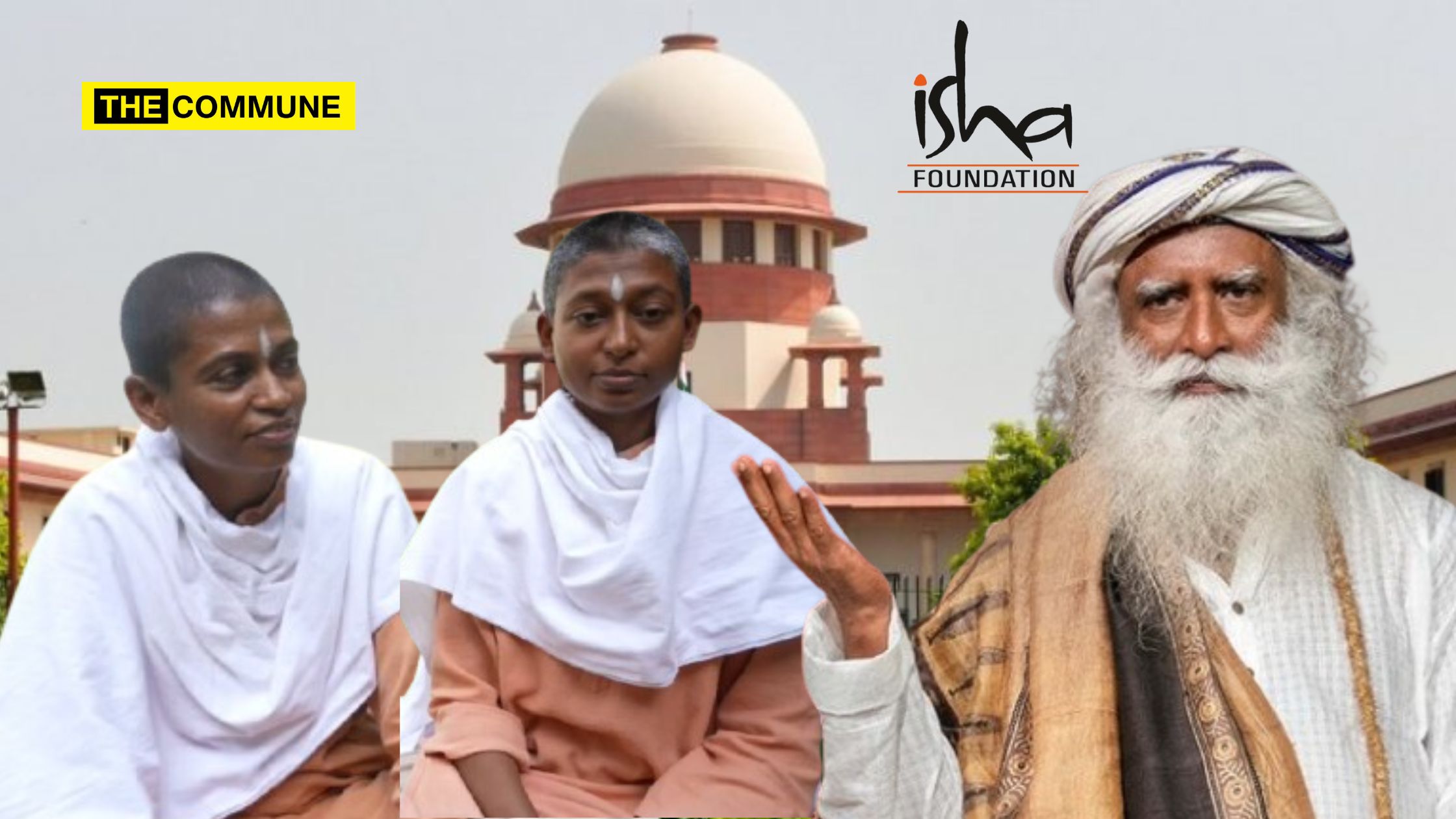
“Satyameva Jayate”: Isha Foundation’s Sanyasis Maa Mathi And Maa Maayu Give Statement After Vindication By Supreme Court, Refute Media Allegations

Isha Foundation's Sanyasis Maa Mathi And Maa Maayu Give Statement After Vindication By Supreme Court

After enduring a barrage of false accusations from Dravidian media, the women who were previously reported missing, Maa Mathi and Maa Maayu, have issued a statement firmly refuting the allegations. They expressed gratitude to the Supreme Court for affirming their right to live on their own terms and shared their experiences of being part of the ancient traditions of brahmacharya and Sanatana Dharma.

In a video shared by the Isha Foundation on 19 October 2024, one of the sanyasis, Ma Maayu stated, “Just now Dusshera got over. They say the Dusshera is a celebration of the victory of good over evil; this is something I feel: the victory of truth, ‘Satyameva Jayate.’ Truth is not something that I see as speaking facts or distorting the facts. For us, truth is on a much deeper level, as in truth is what is throbbing within me and what is throbbing within every human being.”

She then thanked the Supreme Court for upholding her rights, stating, “My truth is that the way I see myself is the way I see other human beings I come across. My truth is that I cannot identify myself with just one or two as just my blood and flesh; my truth is that everybody I see is my flesh and blood. This is the victory of that, and this is the victory of the fact that a human being cannot be contained by the structure of the larger society. So, this is the victory of that ‘Satyameva Jayate.’ I would like to thank the Supreme Court of India for reinforcing the trust in the Constitution.”

Then, addressing the lies of the Dravidian media‘s allegations, she said, “Few allegations from various sides were that we have been influenced. I like to say that I’m a person who is influenced by what is within me. Right from the beginning of my journey in Isha, I just come and participate in the programs; then I go back. I did not interact with anybody. It was not until after 7 years after I did the first program, that I knew something called monkhood existed which I could also take. I was such an introvert and a tacit person. Only after I came to know about it, I did realize that this is the way I’m already living, and this is the natural course for me. The only influence in me is what is happening within me.”

Maa Mathi criticized the scrutiny they faced from the media trails, stating, “So, in the past 8 years since 2016, there was media’s scrutiny and invasion, which has been really distressing. On and off, they were asking; we were really out at our own will, and today in the media, it is just blown up; our personal details are all over. It doesn’t matter whether it is a man or a woman; I request people to give the right to privacy and freedom in which I live my life. I wish that my privacy is respected, and that people understand in what need we are coming, rather than invading our privacy and way of life. It’s not like we have come here all of a sudden and became monks.”

She asserted that the Isha Foundation provided them the space to settle and reflect on their life choices, including whether they wanted to pursue marriage. Only after assessing all the paths, were they allowed to make their decisions.

Subscribe to our channels on TelegramWhatsApp, and Instagram and get the best stories of the day delivered to you personally.
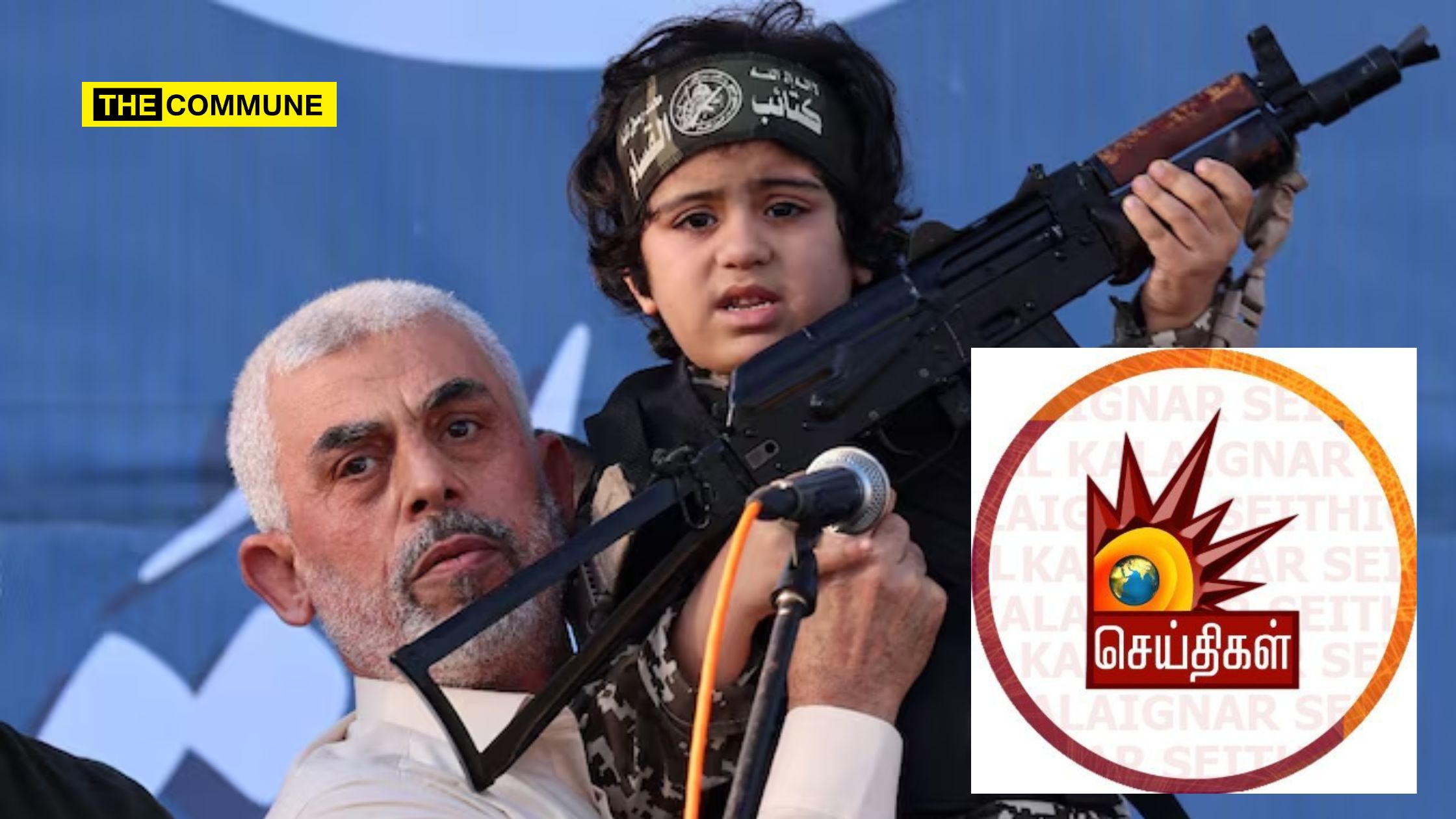
DMK Mouthpiece Kalaignar News Hails Hamas Terrorist Yahya Sinwar Death As “Heroic”

DMK Mouthpiece Kalaignar News Hails Hamas Terrorist Yahya Sinwar Death As "Heroic"

The news of the death of Hamas leader Yahya Sinwar seems to have evoked a variety of reactions across the world. Not far from home, in Tamil Nadu, the Dravidianist mouthpiece Kalaignar News owned by the first family of the state, has hailed his death as “heroic”.

What Did Kalaignar News Post?

In a post on their social media handle (X), they wrote,

“Heroic Death of Hamas Leader! A video of Hamas leader Yahya Sinwar recording his protest by throwing a stick at a drone Israel sent into his home to ensure his death has gone viral on the internet.

#Hamas #yahyasinwar #Israel #KalaignarSeithigal”


Hailing Terrorists – Recent Events

It is noteworthy that the neutralization of Hezbollah Chief Hassan Nasrallah by Israel on 28 September 2024, saw a controversial banner honouring Nasrallah as a “great hero” and depicting his death as “heroic” in Chennai. This banner was displayed outside a mosque in the Mirshahipet area, raising concerns about local support for terrorism. The banner contained quotes praising Nasrallah and referred to his death as martyrdom.

Who Was Yahya Sinwar & How Did He Die?

Yahya Sinwar, the leader of Hamas in Gaza, was confirmed dead on Friday, 18 October 2024, after being killed in a confrontation with a group of Israeli trainee soldiers in Tal as-Sultan, Rafah, on Wednesday, 16 October 2024. Sinwar had been leading Hamas since the deaths of the group’s political leaders, Ismail Haniyeh in Tehran and senior commander Mohammed Deif in Gaza, earlier this year. He spent 22 years in Israeli prison before being released in a 2011 prisoner exchange. Reports of his death began circulating on Thursday, 17 October 2024, marking a significant moment for the organization.

Hamas leader Yahya Sinwar was killed by a gunshot wound to the head, according to an autopsy overseen by Dr. Chen Kugel, director of Israel’s National Forensic Institute. Reports indicate that Sinwar, 61, sustained severe injuries before his death, including a smashed forearm due to shrapnel from a possible missile or tank shell. In a desperate attempt to stop the bleeding, Sinwar used an electrical cord, which proved ineffective. His identity was confirmed through DNA testing, as part of a process initiated after a finger was severed and sent for analysis.

The autopsy was conducted 24 to 36 hours after his death, and the body was subsequently handed over to the Israeli military. Sinwar was a primary target of Israel and was implicated in orchestrating the October 7 attack that resulted in over 1,200 Israeli fatalities. A drone video captured his last moments, showing him in distress before a tank shell struck the building.

Subscribe to our TelegramWhatsApp, and Instagram channels and get the best stories of the day delivered to you personally.