Home Blog Page 57

Anuja, 2015: The Real Case Behind The Kerala Story 2’s Opening Scene – Head Tonsured, Hanging, And A Partner With Criminal Background

The leftist cabal is hell bent on proving that the film The Kerala Story 2: Goes Beyond is nothing but fiction aimed at ‘demonising’ a specific minority community and that such things never happen, of all places, in Kerala.

The second instalment of The Kerala Story franchise opens with a scene of a young woman who had committed suicide by hanging and what was prominent in that scene was the girl’s head was tonsured.

Think this is fiction? Down to such specific details? Think again.

Let us rewind to 2015.

In Kochi, a 23-year-old postgraduate student named Anuja, a resident of Kalamassery and daughter of Ashok Kumar and Shailaja, was found dead in a rented apartment at Padamugal near Edappally.

Anuja was a postgraduate student at Maharaja’s College, Ernakulam, and had been living in the house with her live-in partner Khaleel P.A., also known as Saleem Ali. Khaleel, a 34-year-old man from Chavakkad, was already married and had two children, a fact that Anuja’s family later said had been concealed from them.

What investigators and locals claimed to have found inside the room immediately raised disturbing questions.

Sources stated that Anuja was discovered hanging inside the house with her head tonsured, with hair reportedly scattered across the floor beneath the body. Those who saw the scene alleged that bruise marks were visible on her face and other parts of the body, and that there were signs in the room suggesting that a violent struggle may have taken place before her death.

Members of an action council formed after her death alleged that Anuja’s head had been tonsured, with hair found scattered across the floor beneath the body. They also claimed that a razor believed to have been used to shave her head was recovered from the apartment. As reported in The New Indian Express, according to those present, drag marks were visible across the floor, and Anuja’s body was reportedly found hanging in a position where her feet were almost touching the ground, raising further suspicion about whether the death was staged.

Image Source: X

Her mother, Shailaja, publicly rejected the claim that her daughter had taken her own life. Speaking to the media, she described Anuja as a determined young woman who had repeatedly expressed that suicide was not an option for her and had been deeply focused on building a future through the civil services.

The family alleged that Anuja had been killed by her live-in partner, whom they identified as Valiyakath Khalim, whose original name they said was Salim Ali.

As reported in Haindava Keralam, suspicion quickly fell on Khaleel, a native of Guruvayur, who was taken into custody for questioning. Police sources indicated that Khaleel had a long criminal record and had been named in several serious criminal cases.

According to police sources, Khaleel was one of the key accused in the murder of BJP leader Manikandhan, and had also been named in connection with the murder of Subin, a CPM leader, and Shihab, a Congress leader. Investigators stated that he had been an accused in at least five murder cases and had previously served time in prison for involvement in criminal activities.

The relationship between Anuja and Khaleel had reportedly begun several years earlier. According to a petition submitted by her father to senior police officials, Anuja had first met Khaleel while studying BA Economics at Sacred Heart College in Thevara, after being introduced through a senior student named Mohammed Vassif.

The association later evolved into what was described as a business partnership, with the two travelling repeatedly to Attappadi, where they were said to have planned a goat-farming project on around 30 acres of land.

According to the family, Khaleel had professed love to Anuja and promised to marry her, eventually convincing her to enter into a relationship. Police sources later indicated that Khaleel had allegedly concealed the fact that he was already married and had three children, and that he had never legally married Anuja. Despite initial opposition from Anuja’s parents, the relationship continued. Family members later stated that Anuja had remained firm in her decision to be with Khaleel, which eventually led the family to reluctantly accept the situation. The couple subsequently began living together in a rented house in Kalamassery, where they reportedly stayed for more than two months before the incident occurred.

Investigators also stated that Khaleel frequently travelled to Ernakulam under the pretext of agricultural work in Attappadi, claiming to be involved in farming activities there.

Anuja’s father also stated that the family only learned Khaleel’s real identity after her death, alleging that he had introduced himself under a different name.

According to the family’s petition as reported in Times of India, Anuja had visited her parents on May 12, informing them that Khaleel had gone away on a business trip. On May 14, she reportedly received a phone call from him, after which she travelled the next day by auto-rickshaw to the Padamugal apartment. She called home to say she had reached safely and then her phone went silent.

Later that evening, around 9:30 pm, the family received a call from Kalamassery police station asking them to come immediately.

When they arrived at the apartment, they were told their daughter had been found dead.

Dissatisfied with the initial investigation, Anuja’s parents submitted petitions to the Kerala Home Minister and the Director General of Police, demanding a high-level probe. They alleged that there had been attempts to portray the case as a suicide despite what they described as clear indications of foul play.

Following these representations, the Kerala Home Department ordered that the investigation be transferred from the local police to the Crime Branch.

Officials said the Crime Branch would examine all aspects of the case, including the financial dealings between Anuja and Khaleel, their reported plans to purchase land in Attappadi, and the circumstances surrounding her death in the Padamugal apartment, as reported in Times of India.

As reported in The New Indian Express, the Crime Branch investigating the death of Maharaja’s College student Anuja in May 2015 stated that the case appeared to be a suicide by partial hanging. Forensic findings reportedly found no evidence of foul play. Crime Branch Assistant Commissioner V. Sunil Kumar noted that further analysis of the victim’s phone records and chemical examination of viscera and blood was still required before confirming the conclusion. Forensic expert Dr. P. Rema of Thiruvananthapuram Medical College stated that the body had only one ante-mortem injury on the neck, while poison was not visible in stomach contents. Another expert, Dr. B. Umadathan, said the position of the body and chair nearby supported partial hanging.

The case, which triggered widespread protests and demands for justice at the time, remains one of several controversial incidents cited in debates surrounding love jihad, coercive relationships, religious conversion allegations, and unexplained deaths involving young women.

Subscribe to our channels on TelegramWhatsApp, and Instagram and get the best stories of the day delivered to you personally.
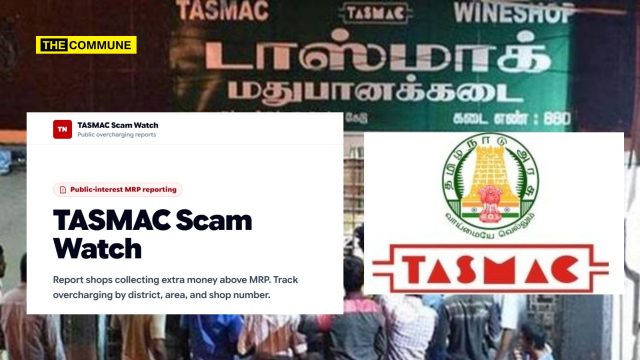
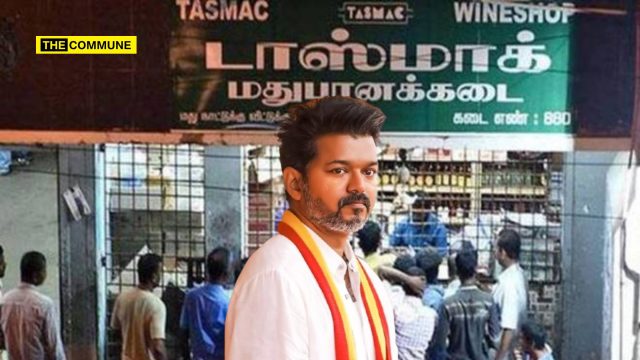
Vijay Attacks Stalin Over Karunanidhi Statue, But Had Once Urged That A Statue Be Erected

Vijay Attacks Stalin Over Karunanidhi Statue, But Had Once Urged That A Statue Be Erected

Actor-turned-politician Vijay has recently taken aim at the ruling DMK over the issue of statues funded with public money. But a closer look at his own past statements reveals a striking contradiction.

At a political meeting of his party, Tamilaga Vettri Kazhagam, in Thanjavur, Vijay criticised the decision to erect a bronze statue of M Karunanidhi, accusing the ruling establishment of using public funds to glorify its own family.

Addressing the crowd, Vijay referred to the controversy around the statue proposal and invoked a remark attributed to the Supreme Court of India questioning the use of public money for personal glorification. He argued that governments frequently cite financial constraints when people demand solutions to basic livelihood issues, yet funds appear readily available when it comes to erecting statues of political leaders.

Using a Tamil proverb, he compared the act to making sweets at one’s own house using ghee borrowed from a neighbour implying that public resources were being used to promote the legacy of a political family.

He said, “You tried to install a bronze statue of your father, the Supreme Court asked, ‘In whose glory are you spending the people’s money?’ Don’t make sweets for your own home using the neighbourhood’s ghee. When people need basic livelihood support, you say ‘financial burden’ but for statues, where does the money come from, sir?”

A Very Different Vijay in 2010

However, Vijay’s current criticism sits uneasily alongside remarks he made more than a decade ago.

In 2010, at the “Paasathalaivanukku Paaraattu Vizha”, a Tamil film industry felicitation event organised to honour Karunanidhi, Vijay had openly expressed admiration for the DMK patriarch and even called for a statue to be erected in his honour.

Speaking at the event, Vijay praised Karunanidhi’s welfare initiatives and housing schemes for the poor. He noted that land was being provided and houses were being built for economically weaker sections and workers, describing it as an extraordinary achievement.

Vijay also said he had heard that the locality where these houses were being built would be named “Kalaignar Nagar.” But he argued that naming the area alone was not enough and suggested that a statue of Karunanidhi should also be installed there.

He went further, expressing a personal wish that the statue be unveiled during Karunanidhi’s centenary celebrations and said he hoped to stand alongside the veteran leader and admire the statue together.

He said, “Giving land and building homes for the poor is no ordinary deed – Kalaignar is doing this. Naming the locality ‘Kalaignar Nagar’ alone is not enough. I wish that a statue of Kalaignar be erected at that place. I hope that at his 100th birthday, we hold a similar function, and I admire that statue together with him.”

The Contradiction

The contrast between the two statements is difficult to miss.

In 2010, Vijay publicly advocated the installation of a statue for Karunanidhi and spoke of celebrating it during the leader’s hundredth birthday.

In 2026, the same Vijay criticises the erection of statues honouring the same political figure and frames it as an inappropriate use of public funds.

The juxtaposition of his own words from 2010 and his recent remarks in Thanjavur has sparked questions about consistency.

If erecting statues of political leaders with public funds is unacceptable today, why did Vijay once openly urge that a statue be installed for Karunanidhi and hope to admire it with him at a future celebration?

Subscribe to our channels on TelegramWhatsApp, and Instagram and get the best stories of the day delivered to you personally.
Nanguneri Double Murder: Probe Points To Caste Revenge Over ‘Manalmedu’ Shankar Posters

Nanguneri Horror: Two Killed, Five Injured After Armed Gang Goes On Violent Rampage In Perumbathu Village

An investigation into the recent double murder in Nanguneri in Tirunelveli district has indicated that the attack, initially believed to have been carried out by a group of intoxicated youths without provocation, was allegedly orchestrated by members of a dominant intermediate caste targeting youths from another community.

Police investigators reportedly found that tensions had escalated after a group of youths from the Paraiyar community residing in Indra Colony in Perumpaththu put up posters glorifying ‘Manalmedu’ Shankar, a lorry driver from the Delta region who was killed in a police encounter in February 2007.

As reported in The Hindu, according to police accounts cited in the investigation, Shankar had been facing several criminal cases, including charges related to murder, abduction and drug smuggling. Police records from the time of the encounter stated that Shankar had attacked police personnel and attempted to escape custody while being escorted from court to Madurai Central Prison, following which he was shot dead in what authorities described as an act of self-defence.

Investigators reportedly stated that the posters commemorating Shankar’s death anniversary, which were placed around Nanguneri and along nearby highways, had angered members of an intermediate caste living in several hamlets in the region. Police said this anger allegedly culminated in an attack on a group of people who were standing in front of a roadside teashop at Indra Colony near Perumpaththu on the night of March 2, 2026.

According to police reports, the attack resulted in the double murder of two persons and the hacking of seven others. Authorities said that seven suspects had been arrested in connection with the case.

Investigators reportedly identified Subbaiah alias Subhash (19) and Kalyani (19) among those arrested, noting that the two had earlier been cited as accused in a separate attack case and had also been named in a sexual harassment case.

Police officials stated that heavy security deployment had been carried out in and around Perumpaththu following the incident to prevent further unrest. Despite the security presence, officials said that tension and an uneasy silence continued to prevail in Nanguneri after the killings, which were described as having a caste dimension.

Authorities said that the body of John, a youth from the Paraiyar community who was killed in the attack, had been kept at the Tirunelveli Medical College Hospital mortuary after his family refused to receive it.

As reported in The Hindu, Viduthalai Chiruthaigal Katchi (VCK) leader Thol. Thirumavalavan spoke to the family through a video call on March 3, during which the family reportedly stated that they would receive the body only after authorities took appropriate action against those responsible for the attack.

Meanwhile, Tamil Nadu Assembly Speaker M. Appavu visited the injured victims undergoing treatment at Tirunelveli Medical College Hospital along with District Collector R. Sukumar. During the visit, officials said that the Speaker assured the affected families that all necessary medical treatment would be provided to ensure the injured recovered quickly.

Officials said the Speaker also urged the families to cooperate with the police investigation, noting that those allegedly involved in the attack had already been arrested and that the investigation was continuing.

Subscribe to our channels on TelegramWhatsApp, and Instagram and get the best stories of the day delivered to you personally.
Madurai Bench Of Madras High Court Flags Non-Compliance In Thirupparankundram Deepam Row; Orders Flower Offering At Deepathoon On Thirupparankundram Hill

TN Government’s Own 1981 Archaeology Book Identified Deepathoon As A Lamp-Lighting Site, Yet HR&CE Dept Prevents Hindus From Lighting Karthigai Deepam At Deepathoon

The Madurai Bench of the Madras High Court has directed that flowers be offered at the Deepathoon located at the summit of Thirupparankundram Hill, while hearing a contempt of court petition related to the ongoing Thirupparankundram dispute.

During the hearing, the Madurai City Police Commissioner, the Executive Officer of the Thirupparankundram Temple, and members of the Temple Trustee Committee appeared before the court in person.

The Trustee Committee informed the court that it required two weeks’ time to implement the earlier court order concerning the matter.

Responding to this request, the judge questioned whether the Trustee Committee should be added as a party to the contempt proceedings, noting that it had become evident that the committee bore responsibility for the delay in implementing the court’s directive.

The court also observed that the Executive Officer of the Thirupparankundram Temple appeared to be acting in favour of the Rajappattar Dargah administration in the dispute.

During the proceedings, the judge directed that flowers be offered at the Deepathoon at the summit of Thirupparankundram Hill, and granted time for authorities to take a decision on the matter and inform the court.

The case has been adjourned to 18 March 2026 for further hearing.

Subscribe to our channels on TelegramWhatsApp, and Instagram and get the best stories of the day delivered to you personally.
DMK Govt Orders Ban On ‘Political And Religious’ Events In Private Schools In TN

mk stalin press freedom arrest police foreign trip the wire

The DMK government in Tamil Nadu has issued an order banning the conduct of political and religious events in private schools across the state. The move comes after the government amended the Private Schools Regulation Rules, with the revised provisions published through an official government notification.

According to the order, private schools will no longer be permitted to host programmes related to political or religious activities within their campuses. The government has also prohibited events that may incite division or communal tensions among students.

In addition, the new rules state that schools must refrain from organising programmes that are unrelated to the core educational objectives of the institution.

Officials said the amendments are intended to ensure that school premises remain focused on academic and student development activities rather than being used for unrelated gatherings or events.

Subscribe to our channels on TelegramWhatsApp, and Instagram and get the best stories of the day delivered to you personally.
Holika Dahan Celebration In London’s Harrow Reportedly Disrupted By Muslim Youths From Nearby Mosque; 14-Year-Old Arrested

Holika Dahan Celebration In London's Harrow Reportedly Disrupted By Muslim Youths From Nearby Mosque; 14-Year-Old Arrested

A Holika Dahan celebration attended by hundreds of Hindu families in Harrow, the borough with the highest concentration of British Hindus in the United Kingdom, was disrupted on the evening of Tuesday, 3 March 2026, when a group of Muslim youths allegedly from a nearby mosque approached the event, threw bins, pushed over sound equipment, intimidated attendees including women and children, and escalated into a physical brawl.

Witness accounts, video footage, and social media reports consistently identify the group as Muslim youth who had gathered at a mosque close to the venue before approaching the Hindu festival. As reported in The Free Press Journal, a 14-year-old boy was arrested on suspicion of affray at around 9:00 PM and remains in police custody. Several other individuals fled when police arrived, meaning the vast majority of those involved in the attack escaped without consequence.

Notably, the Metropolitan Police have declined to confirm the identities, backgrounds, or motive of those involved – a studied silence that the Hindu community has every reason to contrast with how similar incidents are handled when other communities are targeted.

A Festival With Full Civic Backing, Attacked Anyway

The event was no informal gathering. The Holika Dahan celebration had been formally permitted by the local council and was attended by two serving mayors, councillors, council portfolio holders, and a London Fire Brigade commander reflecting unambiguous cross-party civic endorsement of the Hindu community’s right to celebrate their sacred festival in public.

That a celebration of this civic standing, a ceremony marking the victory of good over evil, attended by elected representatives of the British state, could be invaded by a mob that threw bins, toppled sound equipment, and physically confronted families, tells the Hindu community something they are increasingly being forced to acknowledge: civic permission does not equal civic protection.

What Happened on the Ground

According to witness accounts collected by local news portal Harrow Online, a group of individuals, identified by multiple witnesses as Muslim youths from a nearby mosque, approached the event before the confrontation escalated. Bins were thrown. Attendees were harassed. Sound equipment was pushed over. Participants felt physically intimidated. The situation then erupted into a physical brawl, captured on video footage that was widely shared online.

Police confirmed they were called to the former Harrow Civic Centre car park on Station Road at approximately 8:50 PM. Officers arrived within minutes and made one arrest shortly afterwards.

The Question the Police Are Not Answering

The Metropolitan Police’s statement is carefully worded to say as little as possible. No motive. No background. No identity of the group beyond one arrested juvenile. “Several individuals fled.” The investigation is “ongoing.”

For a community that watched Leicester 2022 unfold, where Hindu homes and temples were attacked while police and media tied themselves in knots avoiding plain description of who the attackers were, the Harrow response fits a depressingly familiar template. When Hindu festivals are attacked by Muslim groups, institutional language becomes deliberately passive and deliberately vague. When the reverse is alleged, no such courtesy is extended.

This is not the first time such an incident is occurring against Hindus in Harrow. In May 2025, three British Hindu men were violently assaulted in a London park, in an incident now investigated as racially motivated. The victims, of Sri Lankan and Indian descent, were allegedly asked about their ethnicity before being punched and kicked, leaving two unconscious. Initially described by police as a “fight,” the case was reclassified following public outcry. A suspect was described as wearing a Moroccan football shirt. No arrests were made, highlighting community concerns over anti-Hindu violence and police response to such hate crimes.

Subscribe to our channels on TelegramWhatsApp, and Instagram and get the best stories of the day delivered to you personally.
Dravidian Model Tamil Nadu: Separatist Org To Hold “Tamil Nationalism” Event With Topics Aimed At De-Hinduization

Dravidian Model Tamil Nadu: Separatist Org To Hold "Tamil Nationalism" Event With Topics Aimed At De-Hinduization

The May 17 Movement, a Tamil Nadu-based organisation that openly advocates for a separate Tamil state, is set to hold its third annual “Tamizh Desiya Peruvizha” (Tamil National Grand Festival) on 7-8 March 2026 at VKM Mahal, Saidapet, Chennai – in the heart of the state capital, with no interference from the Dravidian-model DMK government that ostensibly governs in New Delhi’s framework.

Who Is Behind This Event

The May 17 Movement was founded in 2009 by Thirumurugan Gandhi, named after the date of the final phase of the Sri Lankan civil war in which LTTE cadres were eliminated. The organisation explicitly advocates the “Liberation of Tamil Eelam”, a separate state carved out of Sri Lanka, and has demanded a UN-monitored referendum for Eelam’s independence. It operates on what its founder describes as “Ambedkarite, Periyarist and Marxist principles”.

In 2024, Thirumurugan Gandhi publicly demanded Tamil Nadu formulate its own separate foreign policy, claiming India’s existing foreign policy “is crafted for the benefit of Gujarati Banias and Brahmins”. He has faced sedition charges, Goondas Act detention, and multiple arrests, yet continues to operate freely in the DMK-governed state.

The Conference: Scholarship as a Vehicle for De-Hinduisation

What makes the 2026 edition particularly significant is the detailed session agenda which, read carefully, is not merely academic inquiry into Tamil civilisation but a structured intellectual framework to delegitimise Hindu religious identity among Tamil people.

The third conference’s theme is “Bhakti Movements and Hindu Religious Encroachment” (Bakti Iyakkangalum Indumatha Aakkiramippum). The sessions scheduled for March 7 include:​

  1. “Vedas, Puranas, Caste, Sanatana – Hindu Religious Dominant Doctrines: Traps that Suppressed Tamils” – Speaker: Prof. A. Karunanandhan, former Head of History, Vivekananda College, Chennai​
  2. “Schisms and Contradictions Within Saiva Faith” – framed as a study of internal divisions within Shaivism​
  3. “Thirumal Worship in Sangam Era and Later Vaishnavism” – positioning Vaishnavism as a post-Sangam imposition on original Tamil religion​
  4. “Tamil Deities Demonised by Hinduism” (Hindu Matha Kadavulaakkapatta Tamil Theyvankal) – Speaker: Poet Pa. Meenakshi Sundaram explicitly framing Hindu canonisation of Tamil folk deities as an act of cultural “demonisation”​

The March 7 morning session on “Tamils and Religions” includes presentations on:

  • “Jainism in Tamil Historical Record” and the role of Jain influence in Tamil society​
  • “Ancient Tamil Society and Buddhism” – specifically examining how Buddhist missionary activity reshaped Tamil belief​
  • “Ajivikas as Witnessed by Tamils” – elevating the extinct heterodox Ajivika sect as a “native” Tamil tradition​

The March 8 session focuses on “Tamil Worship and Diversity” (Panmaitthuvam Potriya Thamizhar Vazhipaadu) and features a session titled “Dargahs in Tamil Nadu – History of Worship and the Footprint of Islam in Tamil Society”, delivered by S. Anwar, described as a writer, historian, and documentary filmmaker.​

The Overarching Ideological Framework

Read in sequence, the conference agenda follows a deliberate arc: Hinduism is framed as a foreign imposition that suppressed, encroached upon, and demonised authentic Tamil religious identity. Buddhist, Jain, Ajivika, Islamic, and Christian traditions are presented as legitimate participants in Tamil civilisation.

The clear implication being driven home across two days is that Hinduism alone is the aggressor in Tamil religious history, while every other faith is a cohabitant deserving of equal or greater legitimacy.

This is not new territory for the May 17 Movement. Its earlier conferences followed the same template. The 2025 conference explicitly presented “Aryan Vaidika opposition history” from Thiruvalluvar to Vallalar, and from the Sangam era to Periyar – framing the entire arc of Tamil intellectual history as an anti-Hindu resistance movement.

The Irony of State Non-Interference

Tamil Nadu’s DMK government, which gleefully invokes “Dravidian Model” governance in national discourse, has allowed a separatist organisation with active separatist advocacy and a founder who demanded a separate state foreign policy to hold a two-day intellectual festival in the state capital, with prominent retired government officials, university professors, and former IAS-linked academics as speakers.

The same government that deploys police against Hindu seers, interferes in temple festivals under HR&CE diktat, and siphons temple funds, has no objection to a conference whose central agenda is positioning Hinduism as a historically oppressive force in Tamil society.

It is also the Deputy CM of the same Dravidian Model state government who called for the eradication of Sanatana Dharma.

The speakers list is itself a statement: retired government archaeologists, former university department heads, and former directors of state research bodies who are of the Dravidianist separatist ideology are scheduled to lend institutional credibility to what is, at its core, a politically motivated civilisational argument.

What This Means

The “Tamizh Desiya Peruvizha 2026” is not an academic festival. It is the third annual instalment of a structured, multi-year intellectual project by a separatist-aligned organisation to systematically dismantle the Hindu religious identity of Tamil people, presenting it as foreign, oppressive, and illegitimate, while elevating every other faith tradition as authentically Tamil.

That this is happening in Chennai, in 2026, with retired state officials as participants and zero governmental scrutiny, tells you everything about the ideological direction in which the Dravidian-model state is travelling.

Subscribe to our channels on TelegramWhatsApp, and Instagram and get the best stories of the day delivered to you personally.
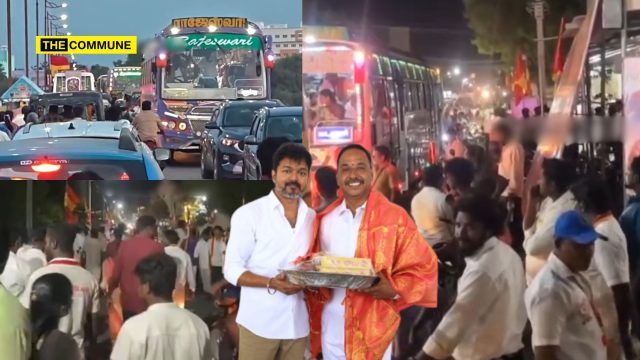
“What Will This Party Do For Us? They Didn’t Visit The 41 Who Died In Karur”, Father Speaks After Son Injured Following Vijay Convoy

“What Will This Party Do For Us? They Didn’t Visit The 41 Who Died In Karur”, Father Speaks After Son Injured Following Vijay Convoy

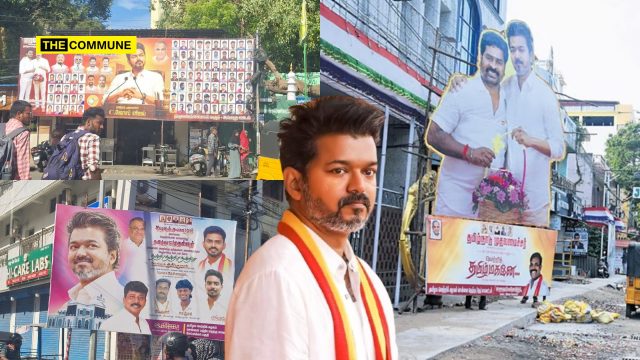
The father of a college student injured in a road accident during the campaign visit of Tamilaga Vettri Kazhagam (TVK) leader and actor Vijay at Sengipatti in Thanjavur district has spoken out in distress, describing how he learned of the incident only hours after his son had left home claiming he was going to college.

The campaign meeting, held on 4 March 2026, drew large crowds, with several supporters reportedly following Vijay’s convoy on two-wheelers as he travelled from Tiruchirappalli airport to the event venue.

According to police and local reports, the accident occurred around 11:30 AM along the Manaieripatti road. Two youths, Vignesh and his friend Arun, who were travelling together on a Honda Activa scooter collided with a road median while riding behind the convoy.

Vignesh sustained serious head injuries, while Arun suffered fractures to his back and leg. They were initially taken to Thanjavur Medical College Hospital and later shifted to a private hospital for further treatment.

Speaking to reporters outside the hospital, Pandian, Vignesh’s father, said he had no idea his son had gone to attend the event.

“The kids had gone to college. They took a rented two-wheeler and went. I had only given him a battery scooter. If he takes a bigger bike, I usually scold him. That’s why he changed the vehicle,” he said.

“He left in the morning saying he was going to college.”

When asked if he knew his son had come to the event, Pandian replied, “No, I didn’t know. Another boy called him and brought him here. Two of them came together.”

He said the family only learned of the accident hours later.

“I only came to know after 11:30 a.m. that my son had met with an accident.”

Pandian, who said he runs a small milk business, explained that he believed his son had attended college that morning.

“I thought he had gone to college. I was even thinking of going to the college to ask why they had let students leave around 10 AM without any reason,” he said.

“If there was a meeting, shouldn’t the parents have been informed? I believed he was at college. I don’t even know whether he had finished his class or if he was still there.”

According to him, the boys had indeed attended college earlier in the day.

“The boys had gone to college. After 11:30, when news came that an accident like this had happened, that’s when we came here. When asked, they say they came back from college. How exactly they got here, we don’t know. But they were in college until 10 o’clock. Only after 10 did they leave.”

When asked about the students involved, he said there were two boys – twins.

“Two boys – twins. Their names are Vignesh and Kumaresh,” he said, adding that both were third-year students in the same course in National College in Trichy.

Doctors, he said, have asked the family to wait for at least two days before giving any clear update on their condition.

“They asked to pay the money. They said to wait and see. It will take two days. They said they cannot say anything in between.”

Pandian also revealed the financial strain the family now faces as the treatment continues.

“They have asked for ₹2 lakhs,” he said when asked about the hospital expenses.

Despite the financial burden, he said he would do whatever it takes to save his children.

“I will sell whatever I have and save my children. Even if I lose everything for this, it doesn’t matter – I must save my children and ensure they study. They have to turn over a new leaf.”

He explained that the family was already under financial stress due to previous medical expenses.

“We eat, we manage, we somehow get by. I just got my wife operated on. I managed ₹12 lakhs at Kaveri hospital somehow. Before that was even over, this next one keeps continuing – what to do.”

“We are managing both the education expenses and this. At that point, all we can do is place the burden on God and move forward.”

When asked whether anyone from the political party had contacted the family or offered assistance, Pandian said no one had approached them.

“They haven’t come. I have been telling them from the beginning not to attend their events. What is this party going to do for us? We eat by our own labour. They will just keep watching, that’s all.”

Referring to earlier incidents at political gatherings, he added with visible anguish: “The ones who did not bother to visit the 41 victims who died in Karur, you think he will come to see them?”

Meanwhile, reports indicate that several supporters were injured in separate accidents on the same day while attempting to follow Vijay’s convoy near Muniyampatti, as motorcycles tried to overtake each other on the road.

Social media posts circulated after the incident claimed that a police vehicle reversing near the spot had caused the crash, but the Tamil Nadu government’s fact-checking unit rejected the claim, stating that the accident was not caused by a police vehicle and warning against the spread of misinformation.

Subscribe to our channels on TelegramWhatsApp, and Instagram and get the best stories of the day delivered to you personally.
TVK Under Vijay: A ‘Theeyasakthi’ On Wheels – Chaos, Deaths, And No Accountability

"Vijay Fled From Scene Of Occurrence, Party Has No Remorse", Madurai Bench Of Madras High Court Slams TVK For dmk Karur Stampede karur stampede dmk

Less than six months after 41 people died and nearly 100 were injured in the Karur stampede, the single deadliest incident at any political rally in Tamil Nadu’s history, TVK chief Vijay’s Sengipatti conference in Thanjavur on 4 March 2026 once again unfolded in scenes of dangerous disorder. Nothing has been learned. Nothing has changed. And that, by itself, is a damning indictment of a man who wants to govern over 80 million people.

Karur: 41 Dead, One Leader Who Fled

The facts of 27 September 2025 must not be allowed to fade. The TVK rally at Velusamypuram near Karur was permitted for 10,000 people. Between 27,000 and 35,000 had gathered since dawn. Vijay arrived six hours late, leaving women, children, and the elderly to bake in the sun with no water, no shade, and no exit route. When the crowd surged toward his convoy, 41 people including a two-year-old child, at least nine other children, and 18 women were crushed to death. Around 100 others were hospitalised.

What did Vijay do? He fled.

The Madras High Court was unsparing in its verdict: “This Court strongly condemns the conduct of Mr. Vijay, the organisers of the event and the members of the political party for fleeing from the scene of occurrence immediately after mishaps.” The court noted that TVK’s leadership “absconded from the venue, abandoning their own cadres, followers, and fans,” and that the party had not released any expression of responsibility – a posture the court said reflected a “disregard for human life and public accountability”. A Special Investigation Team was subsequently ordered by the court.

A filmy-style social media video uploaded three days later, not an in-person accountability moment, not a visit to the injured – this was Vijay’s response. The Supreme Court is now monitoring a CBI-linked probe panel into the Karur deaths.

Deaths At TVK Rallies – “Tragedies Waiting to Happen”

Karur was not TVK’s first brush with death. In August 2025, a 19-year-old BA Visual Communication student from Virudhunagar died of electrocution while climbing a structure to hoist a TVK party flag ahead of a public meeting in Madurai. He was not the last.

As recently as 24 February 2026, at the time of the Vellore event, a fan was filmed hanging from a crane in Vellore during Vijay’s visit to meet party workers in the Pallikondan and Arasarampatti areas, where only 4,900 people had been permitted. Despite Vijay having issued repeated public warnings urging fans not to perform risky stunts, the frenzy continued without consequence.

Also in February 2026, another death was reported at Vijay’s TVK Salem rally, alongside chaos. At Vijay’s earlier Tiruchirappalli campaign stop, police had imposed strict safety conditions for crowd management – most of which were violated, triggering a six-hour traffic jam.

Thanjavur, March 2026: History Repeating

Five months after Karur, same story, different venue. Vijay’s convoy travelling from Tiruchirappalli airport to Sengipatti was chased at high speed by hundreds of two-wheelers. Three students on motorcycles collided with each other; one was admitted in critical condition. In separate incidents on the same route, at least two more supporters sustained head injuries and fractures and were hospitalised. Total injured: at least five.

Supporters dangerously followed Vijay’s convoy on two-wheelers, leading to multiple accidents. Around 11:30 AM, two youths, Vignesh and Arun, riding a Honda Activa, crashed into a road median, leaving Vignesh with serious head injuries and Arun with fractures.

At the venue itself, crowds broke through barricades at the entrance and surged toward the grounds. Visuals circulated on television and social media showed people pushing and jostling each other in a crowd surge alarmingly similar to the minutes before Karur’s collapse.

The Crane Climber, the Toll Booth, the Selfie and the Theeyasakthi Problem

The Vellore crane-hanging incident of 24 February 2026 was not isolated. Reports have also documented TVK supporters mobbing Vijay’s vehicle at a toll booth near Pudukkudi, with fans dangerously climbing moving vehicles and structures as his convoy passed. The pattern: two-wheelers racing at speed without helmets, fans dismantling barricades, stunts performed in full view of party leadership has become a fixture of every TVK public event. The party’s own social media has at times circulated these images as evidence of popularity rather than condemning them as lawbreaking.

In one instance from the Thanjavur event, a fan was seen climbing onto Vijay’s moving campaign vehicle and positioning himself to take a selfie. The man clung to the SUV while the convoy continued moving through a crowded road.

Vijay, who was visible inside the vehicle, appeared to notice the supporter but responded by smiling and waving rather than signalling security personnel to intervene or stop the vehicle. The gesture was interpreted by many observers as tacit encouragement of dangerous fan behaviour.

​Vijay calls everyone else a “Theeyasakthi” (evil force/power), but it is him who is gleefully enabling and seemingly enjoying such chaotic recklessness exhibited by his fans.

The Accountability Gap

After every incident, the script is the same: Vijay issues a verbal request for calm, the party blames police, media releases a social media video, and the next event is planned with identical non-existent crowd controls. The Madras High Court noted TVK showed “no remorse”. The CBI is investigating. Courts have ordered SITs. Yet on March 4, 2026, barricades were torn down again, fans raced convoys again, and young men ended up in ICU again.

A man who cannot, or rather will not, control a political rally, who flees when it turns fatal, who watches with apparent satisfaction as fans hang from cranes and race his convoy, is not a leader. He is a liability seeking office. Tamil Nadu has buried more than 50 of his supporters. It cannot afford to give him the keys to the state.

Subscribe to our channels on TelegramWhatsApp, and Instagram and get the best stories of the day delivered to you personally.

Temple Funds Misused? HR&CE’s Bhakti Book Project Ad Published In DMK Mouthpiece Murasoli

Temple Funds Misused? HR&CE's Bhakti Book Project Ad Seen In DMK Mouthpiece Murasoli

A full-page advertisement issued by Tamil Nadu’s Hindu Religious and Charitable Endowments (HR&CE) Department in the DMK mouthpiece Murasoli has triggered controversy after allegations were raised that temple funds were being misused for political promotion and unnecessary publication projects.

The advertisement, released by HR&CE Minister PK Sekarbabu, announced the publication of the fourth batch of rare Bhakti literature consisting of 500 devotional books, stating that Tamil Nadu Chief Minister MK Stalin would formally release them. The advertisement described the publication as being released “on behalf of the HR&CE Department.”

Allegations Over Use of Temple Funds

It is alleged that the claim in the advertisement is misleading and that the publication project is being financed through the Common Good Fund, a pool created from temple revenues and intended under law to support impoverished and dilapidated temples across Tamil Nadu.

Reportedly more than ₹100 crore from this fund has been diverted over the past several years for activities unrelated to temple restoration or direct religious services. It is alleged that the HR&CE Commissioner, an IAS officer responsible for administering the fund, sanctioned money for book publications that were not essential to temple administration.

It is argued that many of the texts being published are already available in digital form on public websites, suggesting that the department could have simply digitised and uploaded them for free rather than commissioning expensive print editions.

Questions Over Procurement and Distribution

The main point of criticism is the role of a publishing agency identified as Arasu Arts, which allegedly has repeatedly received orders for printing these books. It is alleged that the books are later supplied to major temples under HR&CE control and that temples with heavy footfall are instructed to sell them to devotees.

This system forces temples to purchase stock from the department before retailing the books, raising concerns about procurement transparency and the purpose of the publication exercise.

Political Imagery in Advertisement

Another point of controversy is the visual design of the advertisement itself. Alongside images of Chief Minister Stalin and his son Udhayanidhi Stalin, the poster includes portraits of prominent Dravidian movement leaders such as EV Ramasamy, CN Annadurai, and M Karunanidhi.

The inclusion of these figures in a government-funded advertisement promoting Hindu devotional literature raises ideological questions, if one considers the amount of criticism of Hindu scriptures and religious traditions expressed by leaders of the Dravidian movement.

Subscribe to our channels on TelegramWhatsApp, and Instagram and get the best stories of the day delivered to you personally.