Home Blog Page 519

Planning A Pilgrimage To Sabarimala? Here’s What Every Ayyappa Devotee Should Know About The Vavar Myth
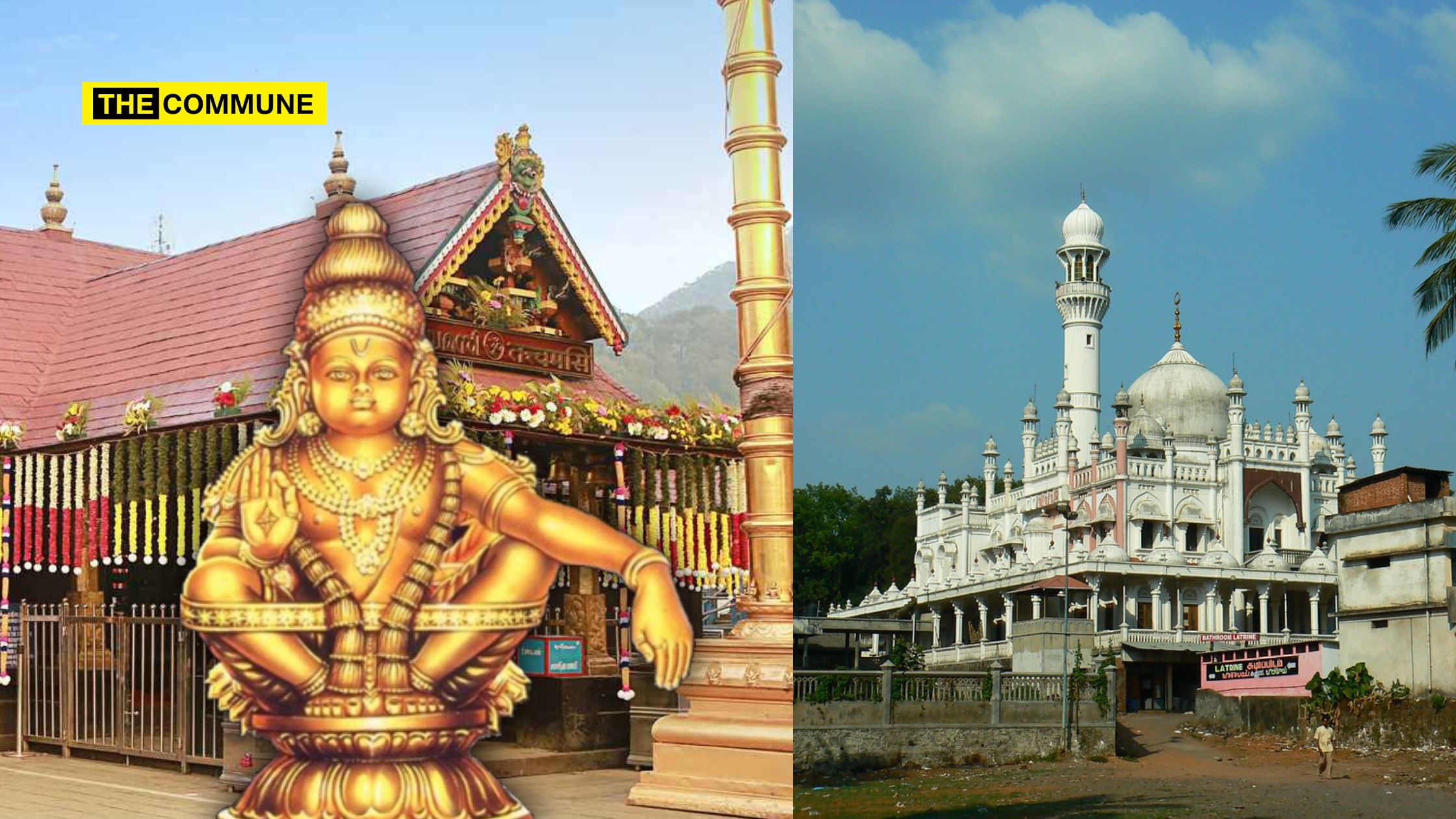
Planning A Pilgrimage To Sabarimala? Here's What Every Ayyappa Devotee Should Know About The Vavar Myth

Aunique aspectof the Sabarimala pilgrimage is the tradition of stopping at the Vavar mosque in Erumeli, an apparent nod to a supposed friendship between Ayyappa and Vavar, a Muslim figure portrayed as a warrior, pirate, or even a mystical incarnation. However, a closer look at the historical and cultural basis of the lore of Vavar reveals a different story, one that lacks historical evidence and that many now argue may be a recent interpolation rather than an ancient, integrative tradition.

Who Was Vavar? What Are The Roots Of The Myth?

The story of Vavar Swamy as a close associate of Ayyappa has multiple, often contradictory, versions. Some tales describe Vavar as a foreign invader defeated by Ayyappa, while others cast him as a merchant or a warrior who migrated from distant lands. Some legends assert that he was a divine figure – Vapuran alias Vapar – an incarnation of Lord Shiva turned Muslim warrior who eventually aided Ayyappa in battles. These conflicting stories point to the fact that Vavar’s identity is largely based on oral lore, and this lore appears to lack foundational historical references, particularly before the 19th century.

In fact, despite Vavar’s association with Ayyappa in recent narratives, there is no mention of Vavar in older Hindu texts or Tamil literature. Ayyappa’s origins as Dharmashasta, a deity mentioned in various Puranas and ancient Tamil inscriptions from as early as the 3rd century CE, predate Islam by several hundred years. Similarly, iconographic evidence, such as murtis (sculptures) of Ayyappa/Shasta, were created centuries before Islam’s birth.

https://twitter.com/BharadwajAgain/status/1576814794031919104

https://twitter.com/BharadwajAgain/status/1576819408982269952


This timeline disparity casts doubt on the historical possibility of an Islamic figure closely linked with Ayyappa’s worship, as Islam emerged over 1,300 years ago—well after the period in which Ayyappa devotion was already flourishing in South India.

How Dramatization Aided InEstablishingThis So-CalledTradition”?

The myth surrounding Vavar and the practice of visiting the Vavar mosque during the Sabarimala pilgrimage can be traced back to a dramatization in the early 1940s. Nawab Rajamanickam Pillai, a renowned dramatist, was requested to adapt the story of Lord Ayyappa into a play while visiting Alappuzha. Initially hesitant, he was so moved by the tale that he created the play Swamy Ayyappan and personally undertook the Sabarimala pilgrimage.
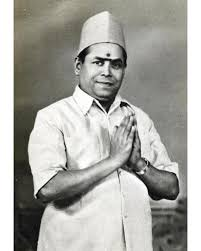
However, in crafting his script, Pillai incorporated elements from both mythological and historical accounts, blending stories of the deity Ayyappa with the king Ayyappa. One significant addition was the character of Vavar, a pirate leader who, after a confrontation with Ayyappa, became his devotee.
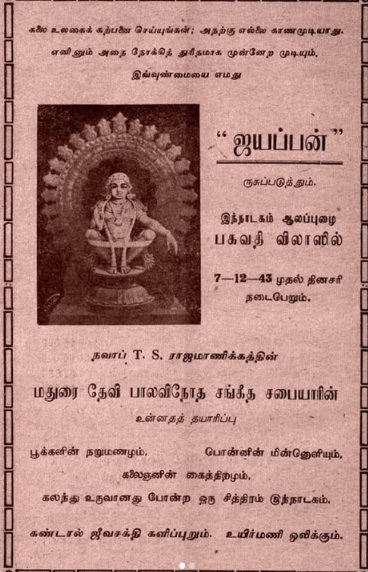
This dramatic portrayal of Vavar’s transformation was intended to serve as an emotional high point in the play, but it inadvertently became a defining narrative for many devotees.

The power of the play left a lasting impression, leading audiences to believe that visiting the Vavar mosque at Erumeli was an integral part of the Sabarimala pilgrimage. This practice, however, has been dismissed by various authorities, including Nambiar Guruswamy M. N. Nambiar and other ancient gurus such as Punalur Subramania Iyer and C. V. Srinivasa Iyer, who emphasized that this tradition was not part of the original puja vidhanam. Historical texts like Sri Maha Shasthu Pooja Kalpam (1938) also clarify that Vavar is not a Muslim figure but a Shiva Bhuta, a guardian deity, and companion of Lord Ayyappa.

As discussions intensify over the identity of the guardian deity at Sabarimala—whether it is Vavar or Vapuran—a key historical reference has surfaced: Sri Maha Shasthu Pooja Kalpam. This authoritative text, written in Kollam Year 1114 (1938 AD) by Yogi Baladandayudhapani Swamikal, has been examined by Brahma Shri Vittala Ahithanal and published by Jayachandra Book Depot, Chalai, Thiruvananthapuram. At 86 years old today, this text holds significant relevance for devotees.

The Sri Maha Shasthu Pooja Kalpam makes the following unambiguous statement:

“Some mistakenly believe Vapuran to be a Muslim figure. This misconception likely arises because of the Vavar mosque in Erumeli. However, Vapuran is, in fact, a Shiva Bhuta, a guardian deity, and a parivara devata (companion deity) of Lord Ayyappa.”

The book further provides Vapuran’s root mantra: “Om Angarakshakaya Maha Shastru Parivaraya Vapuraya Swaha”

The text also elaborates on Vapuran’s form as a recognized deity, integral to the worship traditions associated with Lord Ayyappa. Vapuran is described as the protector of Vapurakkunnu, emphasizing his established role in Sabarimala’s spiritual heritage.

This rare book, predating Sabarimala’s widespread prominence, offers clarity: it is not “Vavar” or “Vaparan,” but Vapuran, the guardian deity residing at Vapurakkunnu.

The dramatist’s inclusion of unverified folk tales into his play created a narrative that many blindly followed, diverging from authentic Sabarimala rituals. Additionally, Islamic traditions themselves invalidate the practice of offering prayers at mosques with graves, further questioning the validity of the rituals performed at the Vavar mosque.

Vavar Mosque

The mosque believed to date back about 500 years, initially began as a simple thatched hut, though no records confirm its exact origins. Over time, several renovations have occurred, culminating in the substantial concrete structure completed in 2001.

What Does The Inscription Inside Vavar Mosque Say?

The inscription on the plaque at the mosque states the Ayat-ul-Kursi(Verse of the Throne

“Allah! There is no God but He,

the Living, the Self-subsisting, the Eternal.

No slumber can seize Him, nor sleep.

All things in heaven and earth are His.

Who could intercede in His presence without His permission?

He knows what appears in front of and behind His creatures.

Nor can they encompass any knowledge of Him except what he wills.

His throne extends over the heavens and the earth,

and He feels no fatigue in guarding and preserving them, for He is the Highest and Most Exalted.

Allah, the Most High, speaks the truth.”

The presence of the inscriptionThere is no god but Allahat the Vavar mosque raises questions about the nature of Ayyappa devotees’ offerings at this site. This inscription underlines a seeming incongruity: Hindu devotees, revering Lord Ayyappa, traditionally stop to pray and give offerings at a mosque that proclaims an Islamic creed—a belief system not acknowledging Ayyappa or Vavar as divine but God/Allah as theMost High“.

Offerings are often collected by the Devaswom Board, which manages temple finances across Kerala, but a significant portion of donations made by Ayyappa pilgrims ultimately supports a religious site with no established connection to Lord Ayyapa’s history.

For today’s devotees, this historical understanding presents an opportunity to reconnect with the original spiritual journey to Sabarimala. The path to Lord Ayyappa’s darshan need not include practices added centuries after His manifestation by uninformed people. True devotion is best expressed through adherence to the authentic traditions that have survived since ancient times, untouched by recent political and social constructs.

The growing awareness of these historical facts suggests that pilgrims might reconsider including the Vavar mosque visit in their sacred journey. After all, the Sabarimala pilgrimage’s essential spirituality lies in its ancient, verified traditions—not in its modern additions.

Subscribe to our TelegramWhatsApp, and Instagram channels and get the best stories of the day delivered to you personally.

Tamil Christian Songs Singer ‘Gana’ Isaivani Part Of ‘The Casteless Collective’ Supported By Pa Ranjith Sings Song Insulting Sabarimala Ayyappan, Complaint Filed

Tamil Christian Songs Singer 'Gana' Isaivani Part Of 'The Casteless Collective' Supported By Pa Ranjith Sings Song Insulting Sabarimala Ayyappan, Complaint Filed

A complaint has been filed in Coimbatore against singer ‘Gaana’ Isaivani and director Pa Ranjith for performing a song deemed disrespectful to Hindu God Ayyappan during an event hosted by the Neelam Cultural Center.

At an event hosted by Pa. Ranjith’s Neelam Cultural Centre in 2020, Isai Vani sang a song targeting Lord Ayyappa and questioning the faith of Ayyappan devotees, with the line, “I am sorry Ayyappa” instigating women to enter the temple of the celibate Hindu god.

The lyrics of song goes like this:

I’m sorry Ayyappa

What’s wrong if I enter pa?

This is not the age old times to restrain us by terrorising

I am the granddaughter of the beard man (referring to EV Ramasamy Naicker hailed as ‘Periyar’ by his followers)

Times have changed now

If you keep us away saying ‘theetu’ (untouchable)

I’ll progress like a ‘mass’

Whether it is jeans pant or saree, I’ll decide

Whether nurse or doctor, I’ll tell for myself after I grow up

Whether I’m single or committed, it’s my decision

I’ve the courage to hit back

Whether Sports or Dappankutthu, I’ll handle it if you let me free

If you extend a dupatta, shall I spit on your rituals?

I’m sorry Ayyappa

What’s wrong if I enter pa?

What’s this new confusion?

What if we enter breaking the barriers?

If you don’t give the rights, we’ll snatch it

If we don’t snatch it, we’ll lose it

The sky is near

If we study, everything is in our pocket

What’s the secret in birth?

If they don’t open the doors, we should break it open

Should she stand feeling shy? Should she keep bindi?

Should I get trapped at the hands of a monkey after studying hard?

My life is for me, why are you sad?

Why should I give my freedom to someone else?

I should choose my life partner myself

There’s self-respect, why should I be worried?

I’m sorry Ayyappa

What’s wrong if I enter pa?

This is not the age old times to restrain us by terrorising

As the song circulated online, outrage grew among netizens calling for action against the singer and Pa Ranjith for disrespecting Hindu god Ayyappan and Ayyappa devotees.

Critics highlighted the disparity in how the authorities handled similar incidents, referencing actress Kasthuri Shankar’s arrest for her remarks in Hyderabad. They demanded to know if Isai Vani would face similar consequences for insulting not only Hindu gods but also the devotees observing a 48-day fast known as Vratha.

In response to the situation, a formal complaint has been lodged at the Mettupalayam police station against Isai Vani and director Pa Ranjith. The complaint, filed by Ayyappa devotees, accuses them of belittling the Hindu god and undermining traditional worship practices, as well as targeting the Neelam Cultural Center for organizing the event.

It is noteworthy that the same Isaivani has also sung in praise of Jesus Christ several times.

Here is another song titled “Yesuvai Ni Vittu Pogadhe” which literally translates to “do not leave Jesus” was also sung by her. The songs literally preach the listener to not go in the “wrong path” insinuating other religions as “Satan’s path”.

Isaivani was also contestant in Bigg Boss Tamil Season 5. She was also featured on the British Broadcasting Corporation’s (BBC) ‘100 Women 2020’.

Pa. Ranjith is a rabid anti-Hindu Dravidianist filmmaker who had shot to fame using Rajinikanth by directing films like Kabali and Kaala. In Kaala, he subtly weaves anti-Hindu sentiments, portraying Hinduism and its symbols as inherently oppressive. The movie’s villains are given distinctly Hindu names, reinforcing negative stereotypes associated with the religion. In his recent flop film Thangalaan, he pedled the usual Dravidianist stereotyping of Brahmins as vile and cunning, de-Hindufying village deities, references to the Varna system, Vishnu, Buddha, Saint Ramanuja, Christianity, and Islamist tyrant Tipu Sultan.  In the film Attakathi, he even had dialogues that positioned pre-marital sex as a sort of achievement.

Subscribe to our channels on TelegramWhatsApp, and Instagram and get the best stories of the day delivered to you personally.
Karnataka Bypolls: NDA Leading In All 3 Assembly Segments

Karnataka Bypolls: NDA Leading In All 3 Assembly Segments

The National Democratic Alliance (NDA) is leading in all three Assembly segments as vote counting progresses in Karnataka. Congress, which initially led with a thin margin, is suffering a setback in its traditional bastion, Sandur.

According to official statistics released by the Election Commission of India (ECI), Annapurana Tukaram, the Congress candidate who was leading in the Sandur Assembly segment by 205 votes at the end of the fifth round is trailing by 867 votes at the end of counting of the seventh round. She polled 33,352 votes.

Her rival BJP candidate Bangaru Hanumanthu has recovered from the initial setback with 34,219 votes. There are 19 rounds of counting for this Assembly segment. 466 persons have preferred the NOTA option.

In the high-profile Channapatna constituency, NDA candidate Nikhil Kumaraswamy is leading with 1,306 votes at the end of the fifth round. Nikhil polled 25,469 votes while the Congress candidate C. P. Yogeshwara got 24,343 votes.

There are 20 rounds of counting for this segment which witnessed a remarkable 88.80 per cent voting in the by-elections. 89 voters have opted for NOTA here.

In Shiggaon Assembly constituency, BJP candidate Bharath Bommai has increased the lead from 440 votes in round three to 1,835 votes in the fifth round. He polled 27,432 votes and Congress candidate Yasir Ahmed Khan Pathan got 25,597 votes. The counting of 14 rounds is remaining. 262 NOTA votes have been counted so far.

Political parties in Karnataka are eagerly waiting for the results of the bypolls to three Assembly constituencies. The results are expected by noon. The three went to polls following the resignations by legislators who successfully contested the Lok Sabha elections.

Of the three seats, the Channapatna seat is considered the most high-profile, as it has witnessed a showdown between the families of former Prime Minister H. D. Deve Gowda and Deputy Chief Minister and Karnataka Congress President D. K. Shivakumar.

The by-elections were held for the high-profile Channapatna Assembly seat represented by Union Minister for Heavy Industries and Steel H. D. Kumaraswamy, Shiggaon seat held by former CM and BJP MP Basavaraj Bommai. Sandur seat, where BJP has never won, was represented by Congress MP E. Tukaram.

–IANS

Subscribe to our channels on TelegramWhatsApp, and Instagram and get the best stories of the day delivered to you personally.

Dravidian Model Of Education Exposed: Salem Teacher Caught Using Students for Leg Massages

aser 2024 report dravidian model education

In another shocking incident from the Athur-Thalaivasal region of Salem district, a viral video has caused widespread outrage. The footage shows students being instructed to massage and squeeze the legs of their teacher, Jayaprakash, during afternoons to help him sleep.

Jayaprakash, a mathematics teacher at the local government high school, has been accused of summoning students to perform this task during periods when there were no classes. The video shows two students sitting on the floor beside him, massaging his legs, while he rests. In addition to this, other videos have surfaced showing Jayaprakash sleeping in the classroom without delivering lessons, further fueling the controversy on social media.

Furthermore, it is alleged that despite the matter being reported to the school headmaster, no action was taken. There are also claims that the math teacher, Jayaprakash, has been arriving at school intoxicated on certain occasions.

This is not an isolated incident. Government schools and private schools in Tamil Nadu are plagued by a range of serious issues, including sexual harassment, forced imposition of religious beliefs, screening of controversial movies, caste-based violence, and students falling into drug abuse, among others.

Sexual Harassment

  • On 3 September 2024, Dr. S. Samson Daniel (31), a government doctor, was arrested under the POCSO Act on sexually assaulting minor girls at a hostel affiliated with a government-aided school in Trichy. His mother, S. Grace Sagayarani (54), who is the headmistress of the school, was also taken into custody for helping to cover up the offenses.
  • On August 2024, a 13-year-old girl was allegedly sexually assaulted by a Naam Tamizhar Katchi (NTK) functionary named Sivaraman during a fake National Cadet Corps (NCC) camp at a private school near Bargur in  Krishnagiri district.

Substance Abuse

A Chennai school in Kalyanapuram, Vyasarpadi, has become a hotspot for underage substance abuse, with students as young as pre-teens consuming beer and tobacco. A report on 23 August 2024, revealed a Class IX girl drinking beer in the classroom on her birthday, with her Class VII brother purchasing it, while three Class X boys were caught smoking Beedis. These incidents highlight a disturbing trend of substance abuse among students at the school.

Administrative Failures

  • On 9 November 2024, a government-aided girls’ school in VK Puram, near Ambasamudram, screened Tamil films such as Vijay’s ‘GOAT’ to senior students and Rajinikanth’s ‘Vettaiyan’ to younger students, with charges of ₹25 and ₹10 per student, respectively.
  • The government secondary school in Theethipalayam, Coimbatore, faced a severe classroom shortage, leading to a decline in student admissions and forcing existing students to attend classes under trees and in the parking area. Despite ongoing construction, about 100 students in classes 8 and 9 are left without proper facilities.
  • On 27 August 2024, three students were injured when a section of the ceiling plaster fell on them during class at a government-run school in Krishnagiri. The accident raised significant concerns about the safety and structural integrity of the building, which had only been opened two months ago with MPLADS fund. In another similar incident July 2024, a ceiling of a newly constructed Panchayat Union Middle School near Kanchipuram collapsed, wher the building, completed three months prior.
  • On August 2024, another ceiling of a classroom at a government school in Thiruporur collapsed, injuring five female students and sparking protests from parents who questioned the quality of the construction.
  • On 12 June 2024, The administration of St. Paul’s Girls’ Higher Secondary School in Mayiladuthurai forced students to clean their classrooms to “instill” discipline, a practice exposed when a ninth-grade student refused and was slapped by a teacher.
  • The Government Higher Secondary School in Mogappair, Chennai, become a site of student distress due to poor conditions, including unhygienic facilities and unsafe infrastructure. Girl students raised alarming concerns that they were subjected to verbal harassment and forced cleaning duties, with teachers complicit in the mistreatment.
  • .In 2023, a disturbing video went viral showing mentally challenged students at a Tamil Nadu government-aided school, run by the Church of South India (CSI), being forced to clean toilets. The students, attending the CSI School for the Mentally Challenged in Sivakasi, were reportedly made to perform this task as part of their school routine. The incident, involving over 100 students, sparked outrage after the video was shared on social media.

Proselytization Attempts in School

  • The headmistress of Government High School in Diwanshah Pudur allowed Friday Namaz to be held on school premises, disrupting the secular environment. The prayers have been conducted regularly such practices may cause religious discord and mental distress as the school serves a diverse student body
  • In August 2023, protests erupted in Acchankuttam village, Tenkasi, over concerns that a government-aided Christian school was engaging in proselytization. The Tahsildar filed a complaint, leading to police action against 12 individuals accused of inciting communal unrest by mobilizing Hindu parents to withdraw their children from the school. The case stems from fears of religious conversion within the school.
  • In 2022, Beatrice Thangam, a tailoring teacher at a government school in Kanyakumari district, Tamil Nadu, was accused of making objectionable remarks about Hindus and attempting to preach Christianity to her students. A Class 6 student revealed in a video that Thangam referred to Hindus as “sathaan” (devil), forced students to read the Bible, and even made them kneel and recite Christian prayers. The teacher allegedly pressured Hindu students to stitch Christian crosses and dismissed the Bhagavad Gita as “bad.”
  • In 2022, a 17 year old girl studying at Sacred Heart Higher Secondary School in Thirukattupalli near Thanjavur, committed suicide by drinking poison after she was allegedly tortured to convert to Christianity by the school for her to continue her studies.

Caste Pride & Violence

  • A 10th-grade student at a government-aided school in Sripuram, Tirunelveli, was dismissed for carrying weapons, including a sickle and knives, after a student clash. The weapons were discovered during a routine bag check on 18 September 2024. .
  • On 30 July 2024, two students at the Government Higher Secondary School in Valliyoor, Tirunelveli, were injured in a caste-related clash triggered by derogatory remarks about a specific caste written on a toilet wall.
  • In December 2023, students from Periyar Government Higher Secondary School in Cheranmahadevi attacked students from a nearby polytechnic college over caste issues, leaving one student stabbed.
  • On August 2023, three students from a dominant caste assaulted a Scheduled Caste teenager and his sister in Nanguneri. The violence resulted in injuries and hospitalisations, shocking the community. 
  • On 1 July 2024, another instance of caste-based pride sparked a clash among 12th-grade students at Rosalind Chelliah Government Higher Secondary School in Maruthakulam village, Nanguneri, Tirunelveli.

Instead of addressing the pressing issues and improving the state’s abysmal school education standards, the Dravidian-model government has chosen to arrest motivational speakers who discuss the Thirukkural, focus on ways to influence students into joining the DMK through its youth wing, ban NEET, and engage in various political stunts.

Subscribe to our channels on TelegramWhatsApp, and Instagram and get the best stories of the day delivered to you personally.

PM Modi’s Diplomatic Gift Exchange: A Reflection of India’s Cultural Richness Across Globe

PM Modi's Diplomatic Gift Exchange: A Reflection of India's Cultural Richness Across Globe

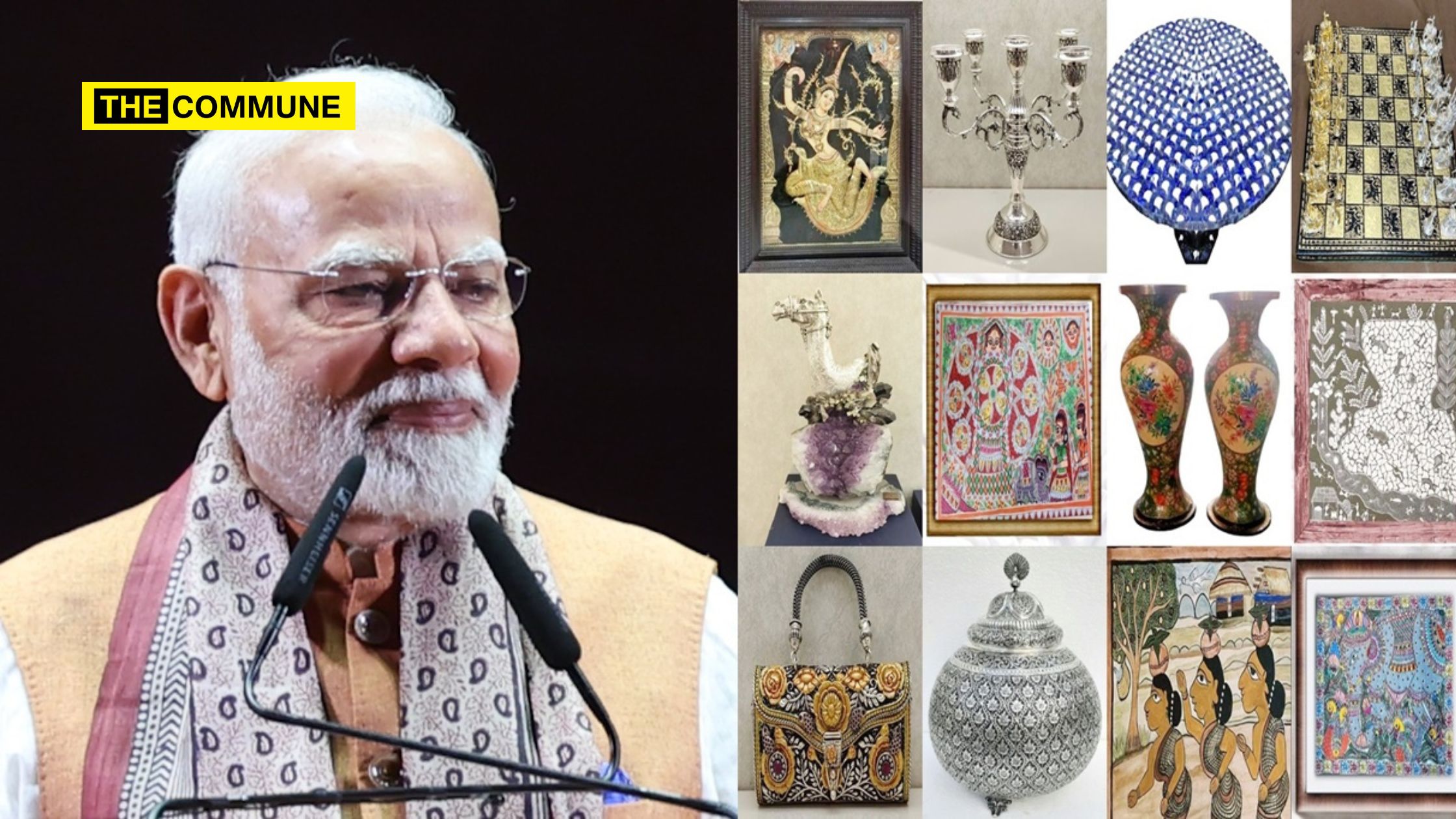
Over the past decade, Prime Minister Narendra Modi has perfected the art of blending diplomacy with culture. During his just-concluded visit to Nigeria, Brazil, and Guyana, he carried with him several unique gifts that reflected India’s rich cultural heritage.

According to sources, as he strengthened India’s diplomatic ties with countries from Africa to Latin America, Prime Minister Modi carried with him several specially-curated handcrafted artefacts and products as gift for the foreign leaders. It included eight items from Maharashtra, five from Jammu and Kashmir, three each from Andhra Pradesh and Rajasthan, two from Jharkhand and one each from Karnataka, Tamil Nadu, Uttar Pradesh, Bihar, Odisha and Ladakh.

The gifts from Maharashtra included Silofer Panchamrit Kalash (pot) – a stunning example of traditional craftsmanship from Kolhapur – given to Nigerian President Bola Ahmed Adekunle Tinubu; Warli paintings – a tribal art form originating from the Warli tribe primarily located in the Dahanu, Talasari and Palghar regions of Maharashtra – for Brazilian President Luiz Inacio Lula da Silva and also as one of gifts in the customised gift hamper given to leaders of Caribbean countries; natural rough amethyst with silver camel head on top from Pune given to Australian Prime Minister Anthony Albanese; hand-carved silver chess set with traditional design given to Portugal PM Luis Montenegro; an exquisite silver candle stand given to Italian Prime Minister Georgia Meloni and a hand-engraved silver fruit bowl featuring intricate depictions of a peacock and a tree, given to CARICOM Secretary General Carla Natalie Barnett.

Jammu and Kashmir’s vibrant culture was represented through gifts of a pair of papier-mache gold work vases given to UK Prime Minister Keir Starmer; Pashmina shawl in papier mache box for the First Lady of Guyana and Kashmiri saffron in the customised gift hamper given to Caribbean Community (CARICOM) leaders who attended the 2nd India-CARICOM Summit in Georgetown.

The gifts from Rajasthan include a silver photo frame with floral work showcasing the state’s rich heritage of detailed metalwork and traditional motifs given to Argentina’s President Javier Milei; marble inlay work, also known as ‘Pietra Dura’ with base marble sourced from Makrana, given to Prime Minister of Norway Jonas Gahr Store and gold work wooden Raj Sawari figurine, a beautiful representation of traditional Indian craftsmanship, combining intricate gold work with finely carved wood, given to Prime Minister of Guyana, Brigadier (Retd.) Mark Anthony Phillips.

Andhra gifs included silver clutch purse studded with semi-precious stones handcrafted with intricate floral motif designs, given to spouse of Brazilian President of Brazil and Araku coffee, which is grown by indigenous communities in the Araku Valley in Andhra Pradesh, in customised gift hamper given to leaders of CARICOM countries.

Sohrai painting from Hazaribagh – known for depiction of animals, birds, and nature and being a reflection of the agrarian lifestyle and the reverence for wildlife in tribal culture, were given to Vice President of Nigeria; and Khovar painting – a traditional art form that originates from the tribal regions of Jharkhand, given to President of Indonesia Prabowo Subianto, representing the rich cultural diversity of Jharkhand.

Other gifts include finely fretted and engraved silver and rosewood ceremonial photo frame from Uttar Pradesh given to the President of Chile Gabriel Boric; wooden toy train, a signature product from Channapatnaa – a small town in Karnataka, given to younger son of President of Guyana; Tanjore painting from Tamil Nadu, given to French President Emmanuel Macron; a Madhubani painting, also known as Mithila painting, a traditional art form originating from the Mithila region of Bihar, given to President of Guyana Irfaan Ali; a rare and exquisitely crafted filigree boat made of pure silver – a fine example of the centuries old silver filigree art practised in Odisha’s Cuttack, given to Vice President of Guyana; and Ladakhi kettle adorned with semi-precious stones, given to Speaker of National Assembly of Guyana.

Last year, as India concluded the landmark G20 Summit in New Delhi, the visiting leaders received several artefacts – some the product of centuries of tradition and cherished across the world for their unparalleled workmanship and quality – that spoke volumes about India’s rich cultural traditions.

The gift hamper given at that time comprised Sundarban honey, Orange Pekoe tea from Darjeeling and Nilgiri tea, coffee from Araku Valley, saffron from Kashmir valley, different designs of stoles from different states to the G20 first ladies.

– IANS

Subscribe to our channels on TelegramWhatsApp, and Instagram and get the best stories of the day delivered to you personally.

“People Say Rajini Is Sanghi” Dravidianist Puthiya Thalaimurai Reporter Tells Seeman, “If Opposing DMK Makes Us Sanghi, We Proudly Accept It,” Says NTK Chief Seeman After Meeting Actor Rajinikanth

Naam Tamilar Party leader Seeman recently found himself in the spotlight following his meeting with actor Rajinikanth at the latter’s residence. The meeting, coupled with his controversial remarks, has sparked significant debate in political circles. After the meeting, Seeman addressed the use of the term “Sanghi,” which is typically used in a derogatory manner to mock followers of the BJP and devout Hindus. Seeman, however, defended the term, stating that “Sanghi” simply means “friend,” a comment that has ignited widespread controversy.

This is not the first time Seeman has made such a statement. In the past, he has asserted that “Sanghi” is not a negative term, further fueling discussions and criticisms within political circles.

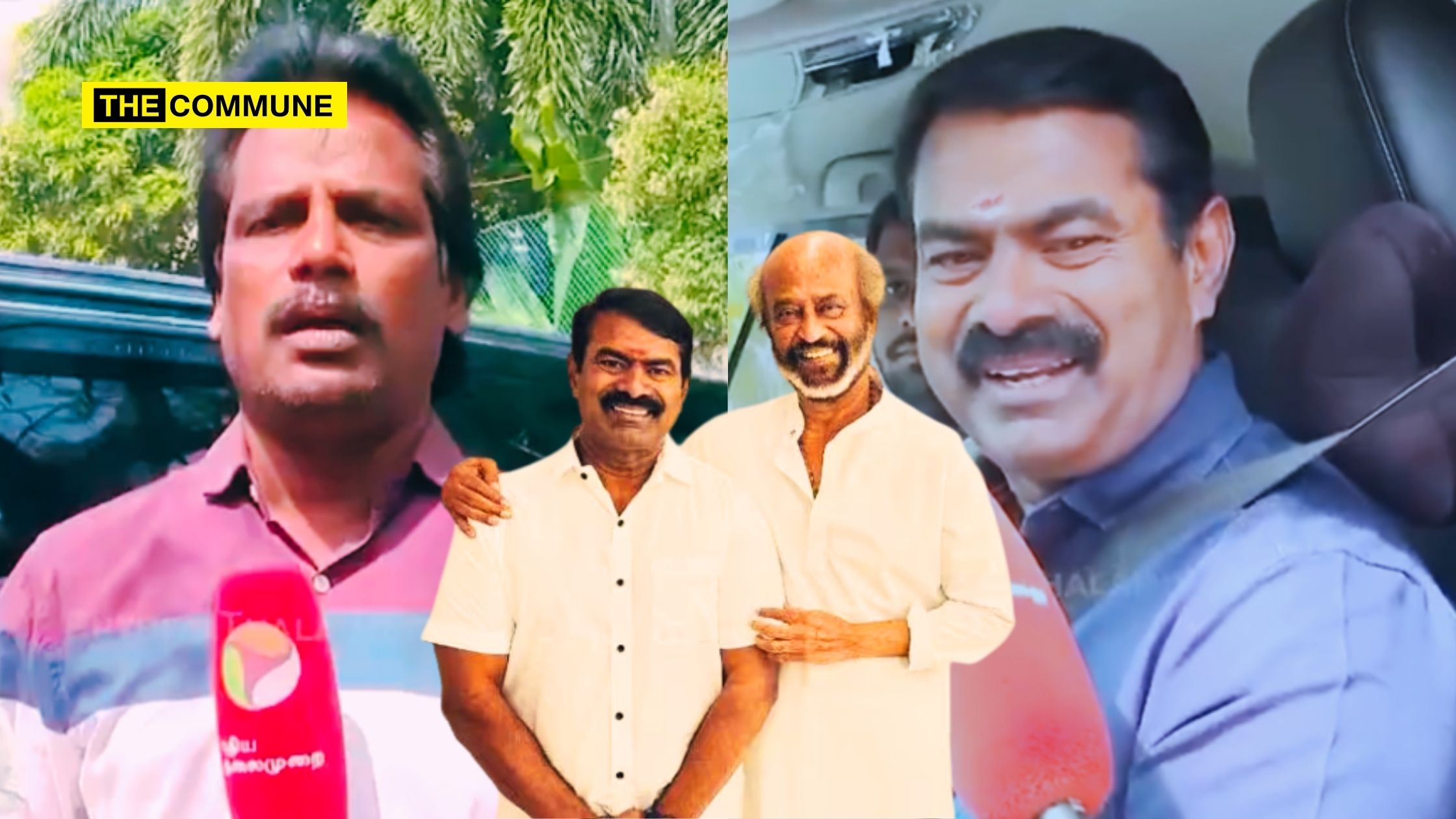
On 21 November 2024, Naam Tamilar Party leader Seeman met actor Rajinikanth at his residence. Speaking to the media afterward, Seeman explained that their meeting had been planned for some time, but it had not materialized until yesterday. He described the meeting as a respectful and casual discussion.

Seeman further clarified that the purpose of their conversation was to provoke thought and raise important questions. He acknowledged Rajinikanth’s long-standing success in the film industry and his close connections with many political figures, perhaps even more than Seeman himself. “Politics is a harsh and unforgiving field,” Seeman said, “where one must endure criticism and insults. In today’s climate, it is especially challenging for honest individuals to thrive in politics.”

In response to criticism of actor Rajinikanth being labeled as ‘Sanghi’ and he was considered a B-tean for the BJP, Seeman addressed the use of the term “Sanghi,” saying, “Do you even know what ‘Sanghi’ means? It simply refers to a colleague or a friend, but they use it from Sangh Parivar. And you know who the real ‘Sanghis’ are, right? Those who label us as ‘Sanghis’. Suddenly, they go and meet the Prime Minister son in the morning, and father in the evening and they don’t even explain why they met or what was discussed. At least I’m saying I met Rajinikanth and spoke, but you don’t even acknowledge that. Then they’re asking me ‘Is it some illicit relationship?’ No, there is a good relationship. It’s like when a parent-in-law meets the family after giving their daughter in marriage you go meet and come, but after coming out you label us as ‘Sanghis.’ What a cruel thing? If opposing the DMK makes us a ‘Sanghi,’ then I guess we should proudly accept that label ‘Sanghi’ which also means ‘Friend’!”

Earlier, during the controversy when the DMK IT wing claimed Rajinikanth was a “Sanghi,” and Rajinikanth’s daughter, Aishwarya, publicly stated that her father was not a “Sanghi,” Seeman responded by saying that Aishwarya need not worry about others labeling her father as such. He also reiterated that the term “Sanghi” was not a derogatory word.

Subscribe to our channels on TelegramWhatsApp, and Instagram and get the best stories of the day delivered to you personally.


‘Church Properties Meant For Uplifting Underprivileged’: Madras HC Reiterates Call For Regulatory Framework Like HR&CE For Church Assets

'Church Properties Meant For Uplifting Underprivileged': Madras HC Reiterates Call For Regulatory Framework Like HR&CE For Church Assets.

The Madras High Court has once again asked the state and central governments’ views on forming a separate regulatory body for church assets, akin to the HR&CE department and Waqf Board. This follows a division bench’s call for a similar law less than a month ago.

Justices P Velmurugan and K K Ramakrishnan, while hearing a case involving a Christian society in Thoothukudi, noted that such legislation is necessary to safeguard church properties and prevent their sale or lease without prior court approval.

The bench pointed out that church assets worth over 1 lakh crore have been unlawfully alienated, with many Christian properties across the country involved in fraudulent claims and transactions. The judges observed that administrators of Christian communities have been misappropriating these properties for personal gain, violating the original charitable intent behind their acquisition.

“These properties were originally purchased by Christian missionaries with the sole purpose of uplifting the underprivileged and aiding those in need,” the bench remarked. “However, the absence of appropriate legislation to manage church assets has allowed for these illegal transactions to occur.”

The judges emphasized that a proper legal framework is urgently needed to regulate the administration of church properties and prevent fraudulent activities, such as unlawful claims by different factions within the same community. They highlighted that such actions contradict the core values of the church and its mission of serving society.

In light of these concerns, the bench recommended that the central government introduce a law similar to the Hindu Religious Endowments Act and the Waqf Act to regulate the administration of Christian institution properties and curb illegal activities.

This follows a similar recommendation by another single judge of the High Court last month, who pointed out the absence of a statutory framework to regulate Christian endowments, unlike those for Hindu and Muslim charitable trusts. The judge had called for the establishment of a statutory board to oversee Christian institutions and ensure greater accountability, directing the central and state governments to file reports on the matter.

(With inputs from TOI)

Subscribe to our TelegramWhatsApp, and Instagram channels and get the best stories of the day delivered to you personally.


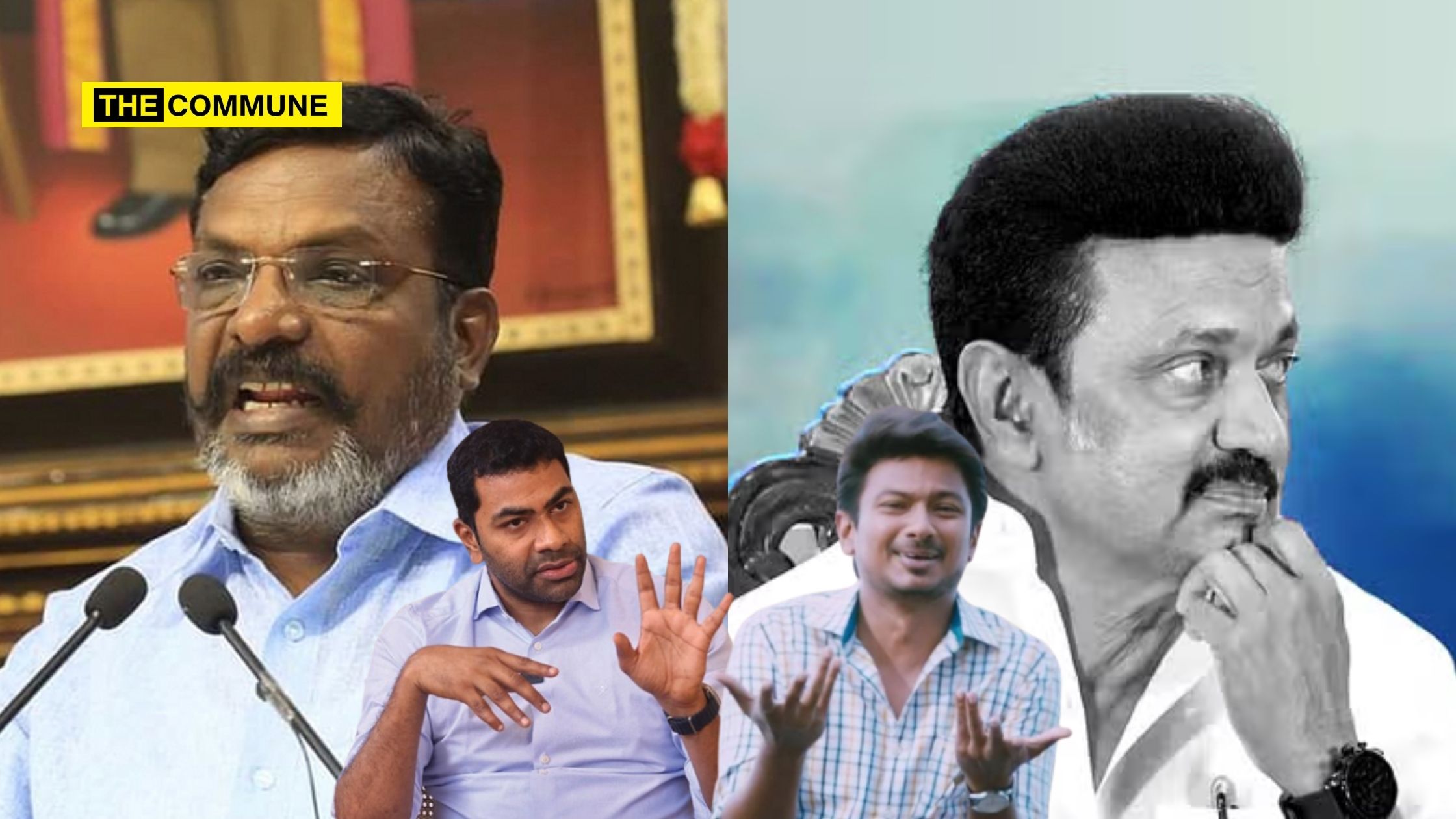
‘One Alone Not Born To Rule’, VCK’s Aadhav Arjuna Slams DMK For Failing To Share Power, Advocates For Dalit Empowerment

'One Alone Not Born To Rule', VCK's Aadhav Arjuna Slams DMK For Failing To Share Power, Advocates For Dalit Empowerment

Creating a further drift in the DMK alliance, VCK Deputy General Secretary Aadhav Arjuna called for the empowerment of Dalit communities and the dismantling of entrenched power structures. Speaking at a housewarming event in Madurai, Arjuna stressed the importance of shifting political leadership to ensure Dalit people have the authority to shape their own destinies.

We are working to create a political movement that can challenge and dismantle oppressive mindsets,” Arjuna stated. “The fight against honor killings must begin in schools, and we need to make public the data on over 10 lakh acres of Panchami lands that should be allocated to affected communities.

Arjuna also criticized the overemphasis on caste identity, responding to social media discussions about his own caste. “I don’t even know what my caste is,” he said, emphasizing that his alliance with VCK leader Thol Thirumavalavan is based on shared values and principles, not caste. “Dalit politics is not about caste; it’s about humanity,” he added.

Criticizing the DMK indirectly, he said, “We have been waiting for the problems to come, only with problems solutions will arrive. It’s enough being quiet and patient. We’ve been waiting quietly for over a thousand years. They claim this is an ideological alliance, a power alliance and so if that’s the case, then give us the power. Shouldn’t the power given to Dalit people, then this ideological alliance is not a power-sharing alliance. Here, one alone not born to rule.”

Arjuna continued to advocate for the realization of Thirumavalavan’s vision, expressing his confidence in its success. “Thirumavalavan’s dreams will be realized soon,”

Arjuna concluded by invoking the teachings of Dr. B.R. Ambedkar, emphasizing the power of knowledge over violence and urged to  creating a movement based on education and patience, and when the time comes, will act decisively and challenge the hegemony and build a just society.

Subscribe to our channels on TelegramWhatsApp, and Instagram and get the best stories of the day delivered to you personally.
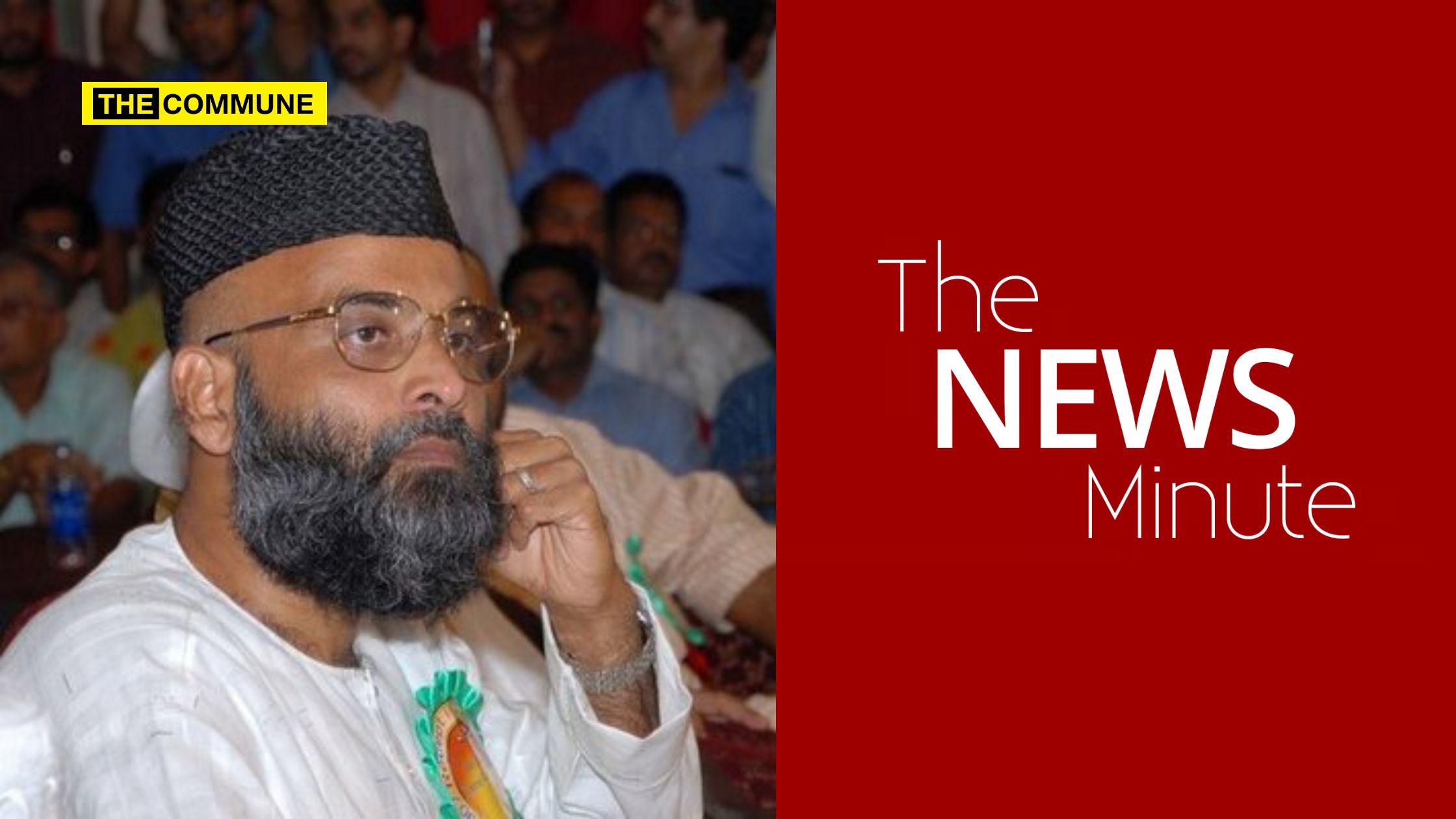
The News Minute Publishes Article That Dangerously Glorifies Terrorist Abdul Nasir Maudany

The News Minute Publishes Article That Dangerously Glorifies Terrorist Abdul Nasir Maudany

In an egregious display of journalistic irresponsibility, The News Minute (TNM) has published a highly problematic piece glorifying Abdul Nasir Maudany, a man charged in two heinous bomb blast cases, including the 1998 Coimbatore blasts that claimed 58 lives and injured over 200. Instead of providing a balanced account of a deeply controversial figure, TNM’s article reads like a fawning hagiography, dangerously whitewashing terrorist Maudany’s divisive legacy and downplaying his alleged involvement in acts of terror.

This is not just a failure of journalism—it is an affront to the victims of terrorism and a betrayal of the public trust. By selectively presenting a narrative of Maudany’sforgivenessandadvocacy for the oppressed,TNM undermines the gravity of his alleged crimes and paints a dangerously misleading portrait of a terrorist. 

Forgiveness Framed As Virtue, Ignoring The Larger Picture

TNM glorifies Maudany’s supposed magnanimity, highlighting his forgiveness of RSS workers accused of a 1992 bomb attack that cost him his leg: “Despite this, he publicly forgave the culprits and even appeared in court at the beginning of the trial, requesting a pardon for the accused.”

While this may appear noble, it is an oversimplification of a much more complex and troubling legacy. TNM conveniently ignores Maudany’s long history of inflammatory speeches, which stoked communal tensions and contributed to an atmosphere of division and hostility in Kerala. Forgiveness does not absolve him of his role in deepening societal fractures or the allegations that link him to acts of terror.

Dangerous Romanticization Of A Polarizing Politician

TNM attempts to reframe Maudany as an advocate for social justice: “On April 14, 1993, Ambedkar’s birthday, Maudany founded the PDP, calling for unity among Dalits, Muslims, and other backward communities.”

This description blatantly ignores the People’s Democratic Party’s (PDP) reliance on communal identity politics. Far from being a unifier, Maudany’s political rhetoric often deepened divides along religious lines, fostering mistrust and resentment. TNM’s portrayal sanitizes this reality, reducing his divisive politics to an idealized mission for justice.

Exploiting Tragedy To Build A Narrative

The article highlights Maudany’s reaction to the tragic death of Sirajunnisa, an 11-year-old girl, as a turning point in his life: Sirajunnisa’s murder profoundly affected Maudany, becoming a personal mission for him. He used the incident as a poignant example of the oppression faced by his community.”

What TNM fails to mention is how Maudany’s rhetoric frequently exploited such tragedies to fuel communal grievances and rally political support. While he claimed to fight for justice, his actions often exacerbated tensions rather than healing them.

A Token Apology For Inflammatory Rhetoric

TNM attempts to downplay Maudany’s history of incendiary remarks by citing his later apology: “He later apologised for these comments, acknowledging the damage they may have caused.”

This superficial acknowledgment cannot undo the harm caused by his earlier words. Statements like Muslim boys are born seeing blood did not just inflame passions; they left lasting scars on Kerala’s social fabric. An apology years later does little to mitigate the consequences of such divisive rhetoric.

Selective Storytelling And Omission Of Victim Voices

The article quotes glowing testimonials about Maudany’s character: “Swami Saraswatheekananda and Maudany were great friends. … He spoke very strongly for his community and I don’t find anything wrong about that.”

However, there is a glaring absence of perspectives from the victims and survivors of the Coimbatore and Bengaluru blasts. TNM’s deliberate focus on Maudany’s personal anecdotes and friendships erases the pain of those who suffered in the attacks he stands accused of orchestrating or abetting.

Misrepresenting Legal Proceedings

TNM leans heavily on the fact that Maudany has not been convicted, portraying him as a victim of judicial delays. While prolonged trials are indeed a failure of India’s legal system, they do not exonerate him. Maudany’s status as an undertrial does not absolve him of the grave charges he faces, nor does it warrant the kind of uncritical sympathy TNM extends.

Irresponsible Journalism As Propaganda

By selectively highlighting Maudany’sforgivenessandadvocacy,TNM crafts a narrative that dangerously flirts with absolution. This is not journalism—it is propaganda disguised as storytelling. The piece not only distorts the facts but also normalizes extremist behavior by portraying Maudany as a misunderstood anti-hero.

The Betrayal Of Victims And Public Trust

Terrorism is not an abstract issue; it is a grave and immediate threat that destroys lives and destabilizes societies. In choosing to humanize a terror-accused figure while ignoring the voices of his victims, TNM has abdicated its responsibility to report with fairness and rigor. This is a betrayal not only of journalism’s core principles but also of the countless victims of communal violence.

Stop The Whitewashing

The News Minute must be held accountable for this reckless glorification of a deeply controversial figure. Journalism has the power to inform, educate, and uphold justice—but when it is wielded irresponsibly, it can cause irreparable harm. TNM’s attempt to rewrite Maudany’s legacy is not just poor journalism—it is an insult to the victims and a dangerous distortion of history.

Maudany is no saint, and it is high time media outlets stopped portraying him as one.

Subscribe to our channels on TelegramWhatsApp, and Instagram and get the best stories of the day delivered to you personally.
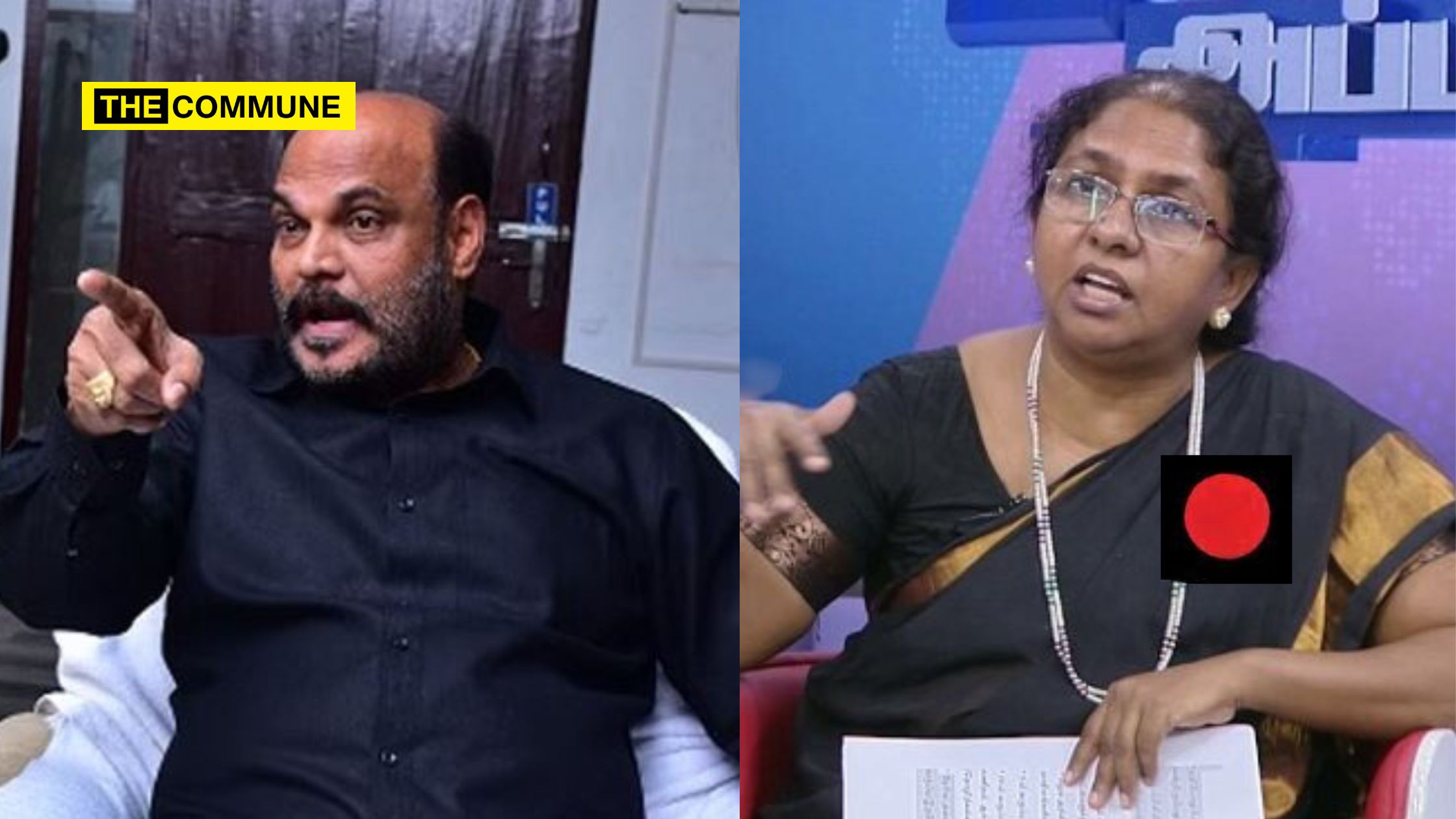
TMMK Chief John Pandian Condemns Dravidar Kazhagam Activist Oviya’s Derogatory Remarks Against Devendrakula Vellalar Community, Demands Apology And Arrest

TMMK Chief John Pandian Condemns Dravidar Kazhagam Activist Oviya's Derogatory Remarks Against Devendrakula Vellalar Community, Demands Apology And Arrest

John Pandian of the Tamizhaga Makkal Munnetra Kazhagam (TMMK) has strongly condemned Dravidar Kazhagam activist and speaker Oviya after an old video resurfaced following the recent controversial arrest of actress Kasthuri Shankar.

The video, which went viral and sparked widespread outrage, shows Oviya making derogatory remarks about the Devendrakula Vellalar community in 2019. In the video, she says, “Krishnasamy can keep whatever name he wants, but Devendrakula Vellalar also means the son of Paapan’s (Brahmin) mistress (Vapaati).”

On 20 November 2024, TMMK chief John Pandian issued a statement through his official account condemning Oviya’s remarks and demanding both an apology and her arrest for the offensive statement.

John Pandian stated, “Comrade Oviya should apologize for speaking disparagingly about the Devendrakula Vellalar people on a public platform. I strongly condemn Mrs. Oviya Vallinayakam for speaking disparagingly about the Devendra Kula Vellalar community, the historical majority community that taught the world the civilization of rice. The majority community in Tamil Nadu is the Devendrakula Vellalar community. I request the Tamil Nadu Police Department to arrest Comrade Oviya, who spoke disparagingly about the Devendrakula Vellalars who discovered rice civilization and practiced agriculture for the survival of humanity. She has spoken about the Devendrakula Vellalars in a way that incites violence. Comrade Oviya does not need to teach history lessons to the Devendrakula Vellalars. I believe that Comrade Oviya has deliberately this comment on a public platform with the intention of defaming Devendra Kula Vellalars after a long struggle and as a result of the continuous black shirt struggle of the Tamizhaga Makkal Munnetra Kazhagam for the past one year, as they have raised their heads high as Devendra Kula Vellalars. I strongly condemn her again. She should stop such talks. Those who cannot understand the needs and demands of the majority of the people and speak for petty identity politics are inciting riots in society. Therefore, I request the Tamil Nadu Police to arrest her.”

Subscribe to our channels on TelegramWhatsApp, and Instagram and get the best stories of the day delivered to you personally.