Home Blog Page 515

MK Stalin Wants Centre To Cancel Tungsten Mining Rights Given To Hindustan Zinc
MK Stalin Blocks Yet Another Industrial Project For Tamil Nadu, Wants Centre To Cancel Tungsten Mining Rights Given To Hindustan Zinc

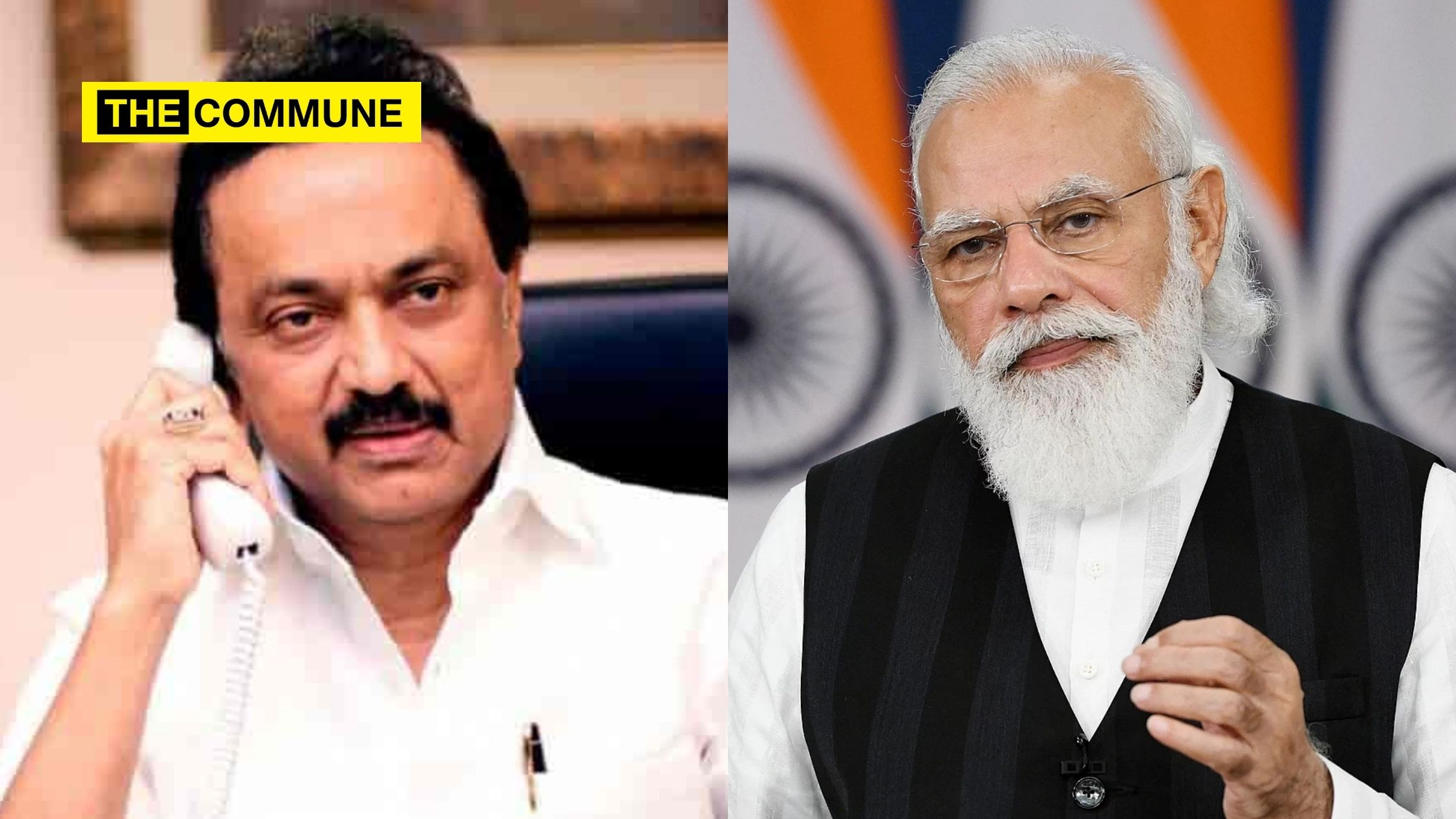
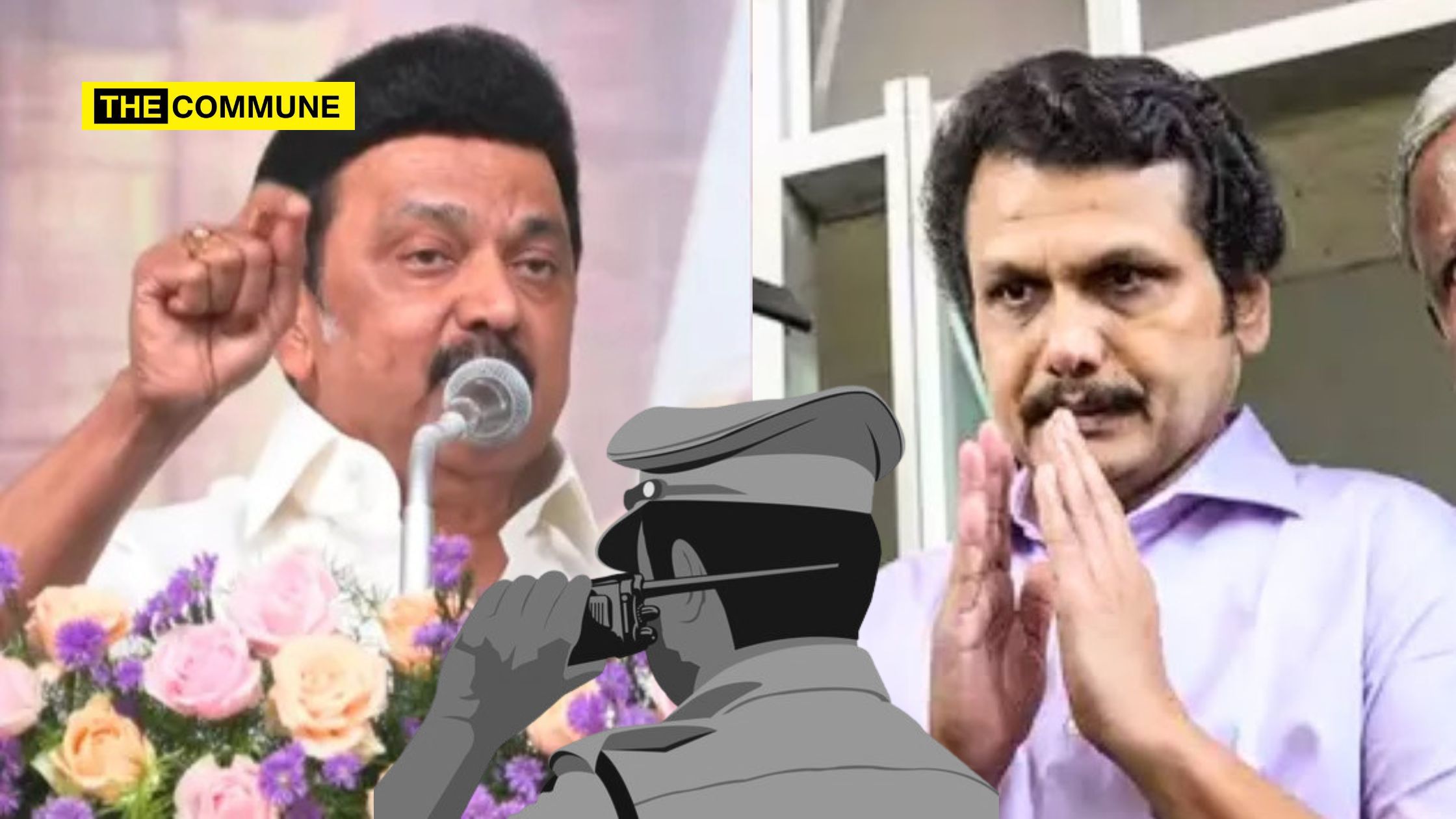
Tamil Nadu Chief Minister MK Stalin has firmly opposed the union government’s decision to allow tungsten mining in the Arittapatti region and surrounding areas in Madurai district, emphasizing that the state government will not permit any mining activities in these areas. In a letter to Prime Minister Narendra Modi, Stalin urged the central government to revoke the mining rights awarded to Hindustan Zinc Limited for the Nayakkarpatti Tungsten block, which includes the Arittapatti area.

The Chief Minister highlighted the region’s cultural and ecological significance, noting that Arittapatti is a designated biodiversity heritage site known for its archaeological treasures, including cave temples, sculptures, Jain symbols, Tamil Brahmi scripts, and ancient stone beds. Stalin expressed concern that mining activities would irreparably damage these valuable heritage sites.

Stalin also pointed out that the proposed mining project could devastate the local communities. He stressed that the villagers, who depend on the region for their livelihoods, are deeply concerned about the impact of mining on their way of life. “The people of these villages fear they may lose their livelihoods permanently,” Stalin wrote, reiterating that the Tamil Nadu government would never allow such mining operations.

The controversy stems from the Union Ministry of Mines declaring Hindustan Zinc Limited as the preferred bidder for the tungsten block on 7 November 2024. The block spans several villages, including the ecologically sensitive Arittapatti, raising alarm among local residents and environmentalists.

In his letter, Stalin also referenced a previous communication sent by the Tamil Nadu government in October 2023, in which the state raised concerns over the auctioning of critical and strategic mineral mining rights. Despite these concerns, the Union Minister for Parliamentary Affairs, Coal, and Mines rejected the state’s objections, insisting that the auction process for such minerals must continue in the larger national interest.

Stalin has now called for the Prime Minister’s immediate intervention to cancel the mining rights and halt any future bids for mining without the state’s consent.

Projects Blocked By The DMK In The Past

This is not the first time the DMK has been standing in the way of projects that will provide jobs and development for the state of Tamil Nadu. Let us take a look at the other projects blocked by the DMK in the past – either through the form of protests or otherwise.

Sterlite

The Sterlite protests in Tuticorin (Thoothukudi) in 2018 centered around the demand for the closure of the Sterlite Copper plant, which was accused of causing environmental harm and health risks. The protests, which escalated into violent unrest, led to the shutdown of the plant and resulted in significant economic losses, including thousands of jobs. The protests were fueled by several NGOs and activists, including The Other Media (TOM), which orchestrated campaigns against the plant, alleging environmental violations. TOM, an NGO with foreign funding, came under scrutiny in 2023 for allegedly misusing foreign funds to agitate against Sterlite, with connections to groups like the World Association for Christian Communication and CORDAID of the Netherlands.

While the protests had a strong grassroots component, the role of political forces, particularly the Dravida Munnetra Kazhagam (DMK), was significant in amplifying the unrest. At the time, the DMK was in opposition, and it is believed that the party used proxies to fan the protests, aligning with local anti-Sterlite sentiments. The DMK’s support for the protests was evident through its associations with fringe elements like Mohan C. Lazarus, who instigated the Christian community to protest against the plant, claiming it was toxic and harmful without scientific evidence. Lazarus, who had links with the DMK, mobilized large crowds for protests, especially around March 2018.

Political parties like the DMK, Communist parties, and separatist groups such as the May 17 Movement also lent their support to the cause, further intensifying the protests. The media played a pivotal role in amplifying the activists’ narratives, with outlets like The News Minute and The Wire publishing sympathetic coverage of figures like Nityanand Jayaraman without revealing his affiliations with TOM, thus shaping public opinion and inflaming social tensions.

Defence Corridor

The DMK has faced criticism for not prioritizing industrial development in Tamil Nadu during its tenure at the Centre (2004-2014), particularly regarding the lack of efforts to establish significant projects like a defense industrial corridor. The National Democratic Alliance (NDA) later initiated the defense corridor project, which was seen as a missed opportunity under DMK’s leadership. The DMK has not actively opposed the defense corridor but has been criticized for its earlier inaction and perceived failure to secure similar impactful investments for the region during its time in power.

Salem Expressway

The DMK (when in the opposition) had orchestrated a protest drama and spread baseless rumours about the project, which had caused a stir in the media. However, after assuming power, the DMK government has taken a completely different stance on the matter.
In September 2022, the DMK government reversed its position on the project, stating that it was not opposed to the project itself, but rather to how it was being implemented. The party’s minister for Public Works, Highways, and Minor Ports, EV Velu, stated that the DMK was well aware of the need for the project and had urged the previous government to settle the issues of farmers before proceeding with the project.

Methane & Neutrino Projects

The DMK has strongly opposed the Methane extraction project in the Cauvery delta and the proposed Neutrino project in Theni district due to their potential environmental impact. The party argued that these projects would harm agriculture, wildlife, and biodiversity, particularly in sensitive areas like the Cauvery delta and the Western Ghats. Protests against the Methane extraction gained momentum, especially after the DMK’s initial support for the project in 2011, which it later retracted, citing unfulfilled assurances about its environmental safety. The Neutrino project, planned for the Bodi West Hills, faced opposition from the DMK and local groups over concerns about its adverse effects on the Periyar Tiger Reserve and Mathikettan Shola National Park. The DMK led protests, ensuring the state government filed an affidavit to prevent the project, citing irreversible damage to ecosystems and wildlife corridors.

Hydrocarbon Project

In 2018/19, the DMK (as the opposition) strongly opposed the Centre’s hydrocarbon exploration project in Tamil Nadu’s Cauvery Delta, citing its threat to agriculture and the ecosystem. Party cadres staged protests, including a major demonstration in Tiruvarur, demanding the project be dropped. DMK leaders, including district secretaries, joined environmentalists, farmers, and activists in a large-scale human chain protest across Nagapattinam, Tiruvarur, Thanjavur, and Pudukottai districts. Participants criticized the Central and State governments for ignoring farmers’ concerns and warned of adverse impacts on fertile lands and water resources. Protesters carried banners and raised slogans, urging the immediate cancellation of hydrocarbon exploration licenses.

Sagarmala Project

Back in 2020, the DMK, which was in opposition, criticized the ‘Sagarmala’ programme, claiming it was designed to hand over control of India’s coastal areas to the corporate sector. They alleged that the programme would negatively impact fisherfolk. In April 2024, TN CM Stalin criticized the BJP government’s claim of ₹10.76 lakh crore allocated for the state’s development, specifically disputing the inclusion of ₹2 lakh crore for the Sagarmala project, which focuses on industrializing coastal areas.

(With inputs from The New Indian Express)

Subscribe to our channels on TelegramWhatsApp, and Instagram and get the best stories of the day delivered to you personally.
Manufactured Mayhem: How A Fabricated Story Of 5 Lakh ‘Missing’ Votes By The Wire Spread Like Wildfire

Manufactured Mayhem: How A Fabricated Story Of 5 Lakh 'Missing' Votes By The Wire Spread Like Wildfire

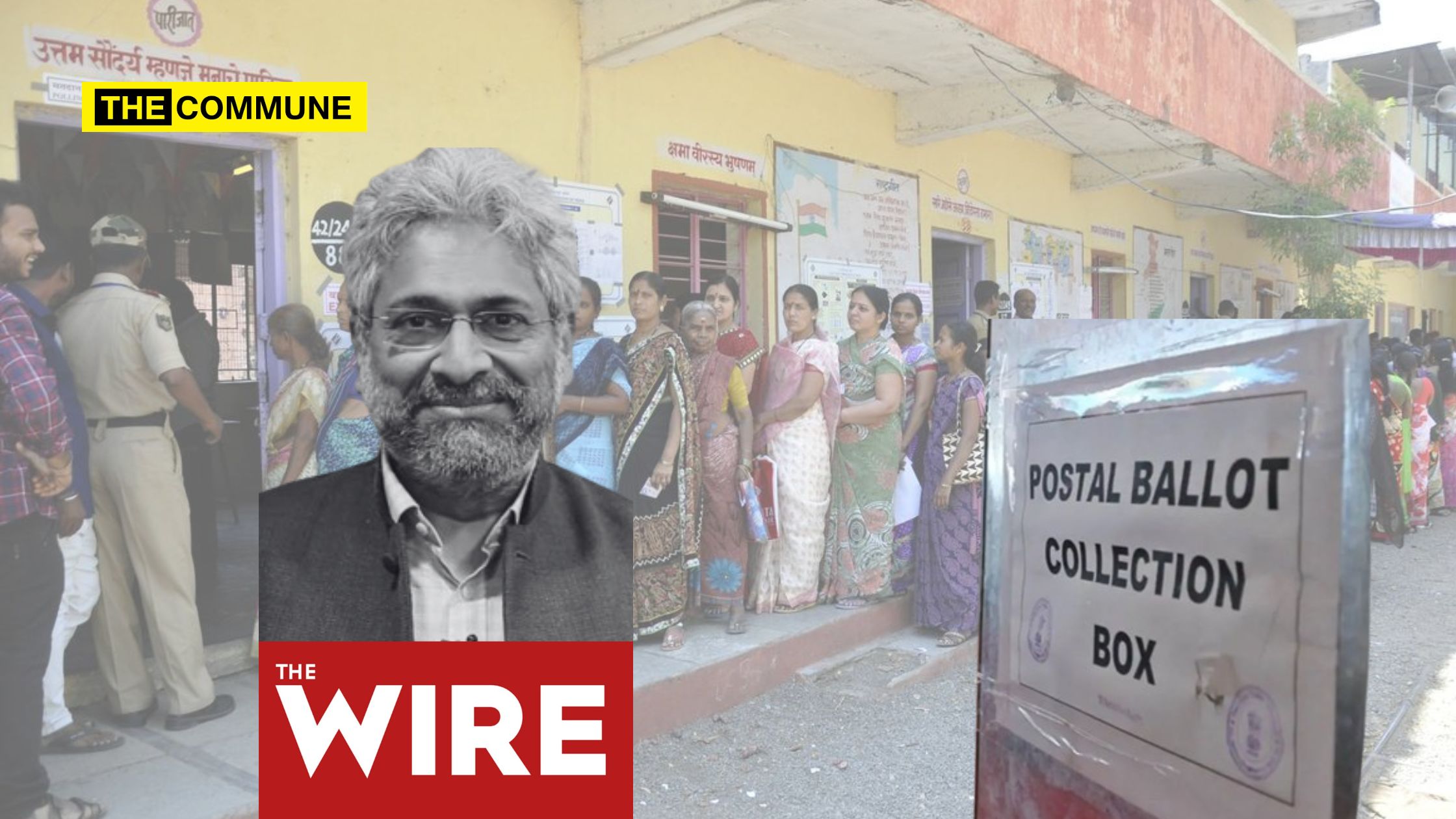
A report by The Wire alleging discrepancies in the Maharashtra 2024 Assembly election results was swiftly debunked by the Election Commission (EC). The Wire article, which claimed over 5 lakh unaccounted votes, led to accusations of electoral manipulation favouring the ruling BJP. Despite the EC clarification that the discrepancy in votes was due to the exclusion of postal ballots, the story that was published on 25 November 2024 gained traction, amplified by opposition leaders and left-leaning media.

 The ECI quickly dismissed these unfounded allegations as baseless but the attempt by The Wire has spread like wildfire and has been picked up by similar-minded leftist media to fan the flames even further across the country.

The Wire Allegations On Unaccounted Votes

In its article, The Wire pointed to an apparent inconsistency in the numbers released by the Election Commission. The report claimed that the total number of votes cast during the election was 6,40,88,195, while the final tally on the day of results stood at 6,45,92,508. This led to the assertion that an excess of 5,04,313 votes had beencounted,but notpolled.”

To bolster its claims, the report highlighted alleged mismatches in 280 constituencies, where it stated that the votes counted exceeded those cast. Conversely, in eight constituencies, the article alleged that fewer votes were counted than polled. Specific examples, such as the constituencies of Ashti and Osmanabad, were cited to illustrate these purported irregularities.

The implications of these claims were serious. The article suggested that the discrepancies could indicate tampering or manipulation in favor of the ruling party, especially since the BJP emerged victorious in a highly contested election.

The Election Commission’s Swift Response

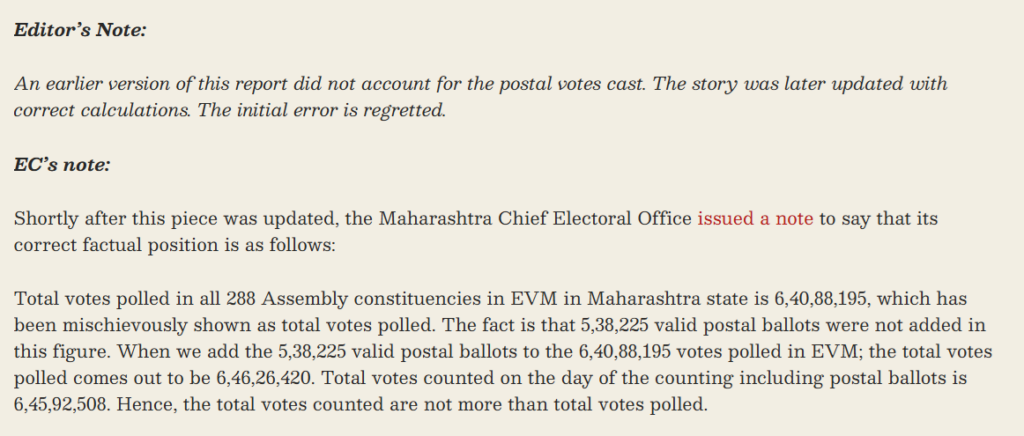
The Election Commission of India acted promptly to refute The Wire’s claims, issuing a detailed clarification that dismantled the allegations. At the core of the rebuttal was the assertion that The Wire had failed to account for postal ballots in its calculations.

According to the ECI, the numbers published by The Wire only included votes recorded in Electronic Voting Machines (EVMs) and omitted the 53,822 valid postal ballots cast during the elections. When these postal ballots were included, the so-called discrepancy of 5,04,313 votes disappeared entirely.

The Commission also clarified that its voter turnout app and official reports distinctly separate data for votes cast through EVMs and postal ballots. This separation, it argued, might have led to the misinterpretation of the data by The Wire.

In addition to the postal ballot issue, the ECI addressed the procedural nuances of vote counting. It explained that some votes were rendered invalid due to technical problems, such as mock poll data errors or EVM malfunctions. These invalid votes were duly accounted for per the Commission’s guidelines, which dictate that such votes are not re-verified if the margin of victory exceeds the number of invalid ballots.

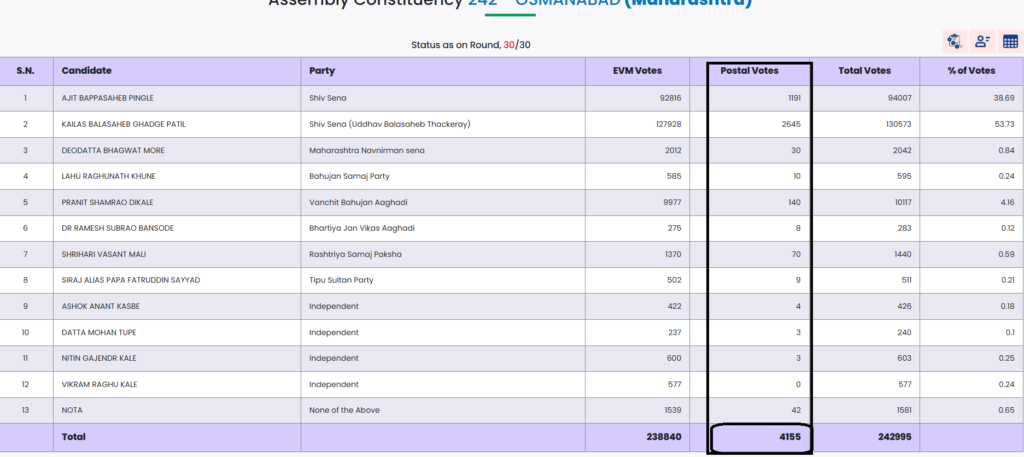
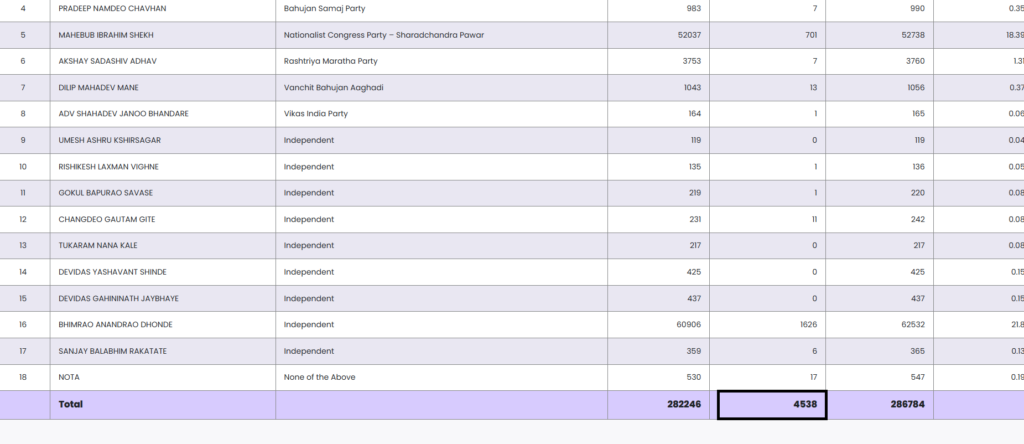
To address specific allegations, the Chief Electoral Officer of Maharashtra provided constituency-level data for areas like Ashti and Osmanabad.

Osmanabad
Ashti

This data demonstrated how clerical errors or an incomplete understanding of the counting process could lead to apparent mismatches.

Leftist Media’s Role In Fanning The Flames

The controversy gained momentum as opposition leaders and left-leaning media figures amplified The Wire’s claims without verifying their accuracy. Prominent politicians like Nana Patole of the Congress Party and Jitendra Awhad of Shiv Sena (UBT) used the report to question the BJP’s victory, calling for greater scrutiny of the electoral process. Down south, Malayalam news agencies also carried the same fake news peddled by The Wire.

YouTube channels of alleged journalists like that of Abhisar Sharma who was embroiled in the NewsClick scandal also lapped up the fake news and generated millions of views for his channel. In this clipping, he says, A difference of 5 lakh votes has emerged in the Maharashtra elections, why is no comment being made on this? What is this whole matter, friends? I am going to explain to you through statistics on your screen, according to the Election Commission of India, the final voting percentage was 66.5% which represents a total of 64, 088, 195 votes. Out of these, women’s votes are 30,649, 318; male votes are 33,437,057 votes. That is, if it is said in simple words friends, the total votes cast were 64, 088,195 votes and do you know how many votes were counted through EVM? The total vote count, on your screen, is 64, 592, 508 and you know the difference between the number of votes cast and the number of votes counted, the difference is 5,04313. Look at this figure, the difference is 504313 votes. This question will definitely be asked, where did the extra votes come from? Why is the Election Commission not answering these questions? The leaders of the Maha Vikas Aghadi are not believing in this mandate at all.”

This isn’t the first time The Wire has courted controversy with its reporting. In 2019, the portal alleged a discrepancy of 1.9 crore votes during the Lok Sabha elections, a claim that the Election Commission similarly debunked. More recently, The Wire faced backlash over its fabricated stories about Meta and the BJP IT Cell, culminating in public apologies and retractions.

These repeated instances of misinformation have raised concerns about The Wire’s credibility and that of the broader media ecosystem. Critics argue that such reporting undermines trust in democratic institutions and fuels unnecessary polarization.

While The Wire has not deleted the article from its website, it has silently added a corrigendum of sorts but not issued a public retraction or apology.

This change in stance has not been taken up by the leftist news media across the country. Meanwhile, the damage caused by the article—shared widely on social media and cited by opposition leaders—remains.

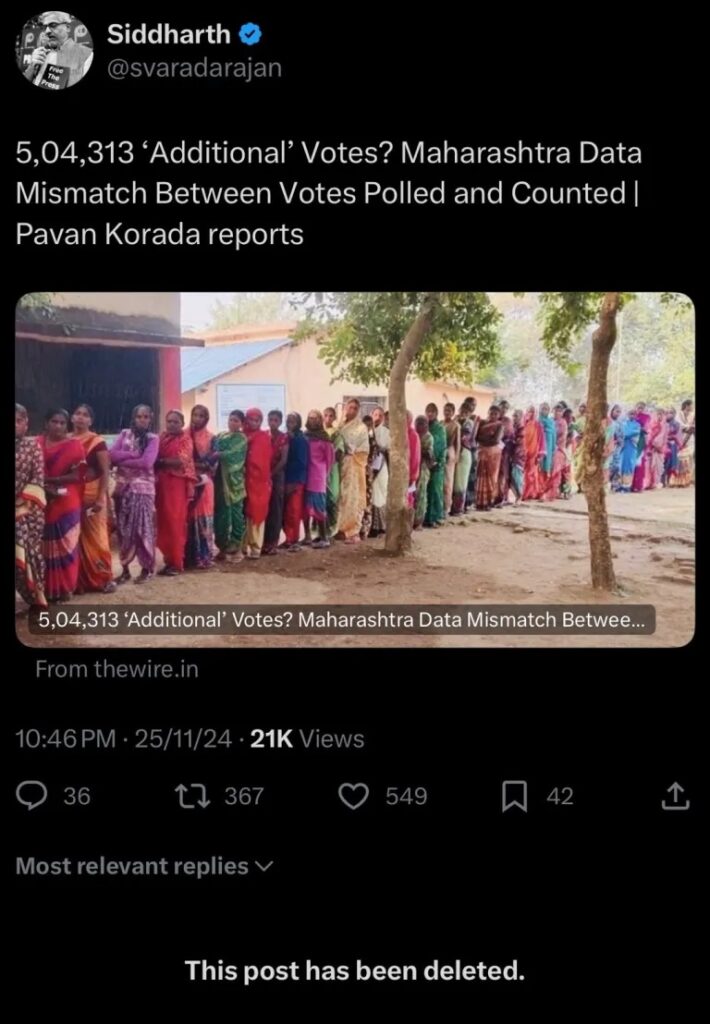
Additionally, S Varadarajan, who fuelled the lies, silently deleted the post from his X handle.

Image Source: OpIndia

The real danger lies not just in The Wire’s initial fabrication but in the cascading effect of misinformation. Despite the Election Commission’s clear rebuttal, the story had already spread across multiple platforms. Opposition leaders continued to amplify the narrative, and social media channels had already disseminated the false claims widely. The Wire’s actions are not journalism – they are a calculated assault on democratic transparency, ably funded by divisive forces.

Subscribe to our channels on TelegramWhatsApp, and Instagram and get the best stories of the day delivered to you personally.
DMK Leader Kanimozhi Extends Support To Zubair Whose Tweet Led To Social Unrest While DMK Govt Arrests People For Social Media Posts

DMK Leader Kanimozhi Extends Support To Zubair Whose Tweet Led To Social Unrest While DMK Govt Arrests People For Social Media Posts

Following the Uttar Pradesh police filing an FIR against Mohammed Zubair, the co-founder of Alt News and self-proclaimed fact-checker, under Section 152 of the Bharatiya Nyaya Sanhita (BNS), for acts that endanger India’s sovereignty, unity, and integrity. The leaders of the opposition especially I.N.D.I bloc came to condemn the action.

The FIR was filed after Zubair’s tweet on X (formerly Twitter) allegedly led to a mob gathering at the Dasna Devi Temple in Ghaziabad. Supporters of Yati Narsinghanand, the temple’s priest, filed the FIR, accusing Zubair of incitement. Zubair, who was previously charged with provoking incidents such as the one involving former BJP leader Nupur Sharma, sought protection from arrest by appealing to the High Court.

On 25 November, the Court directed the investigating officer to provide an affidavit outlining the specific charges against Zubair. In a submission today, the officer confirmed that two additional charges had been added: Section 66 of the Information Technology Act and Section 152 of the BNS. The Court accepted these amendments and set the next hearing for December.

Earlier in October, an FIR was registered against Zubair after an attack on the Shiv Shakti Dham at Dasna Devi Temple. The FIR complaint alleged that Zubair, along with Muslim leaders Arshad Madani and Asaduddin Owaisi, incited violence by encouraging local Muslims to mobilize outsiders to target the temple. BJP leader Dr Udita Tyagi filed the complaint on 7 October 2024 at the Web City police station in Ghaziabad.

Dr Tyagi claimed the October 5 attack on the temple was part of a deliberate conspiracy. She further alleged that Zubair, Owaisi, Madani, and other Muslim leaders had been consistently inciting violence against Yati Narsinghanand Saraswati. In her plea, she urged the authorities to identify those stoking communal unrest and to ensure Narsinghanand’s release and protection by providing adequate security.

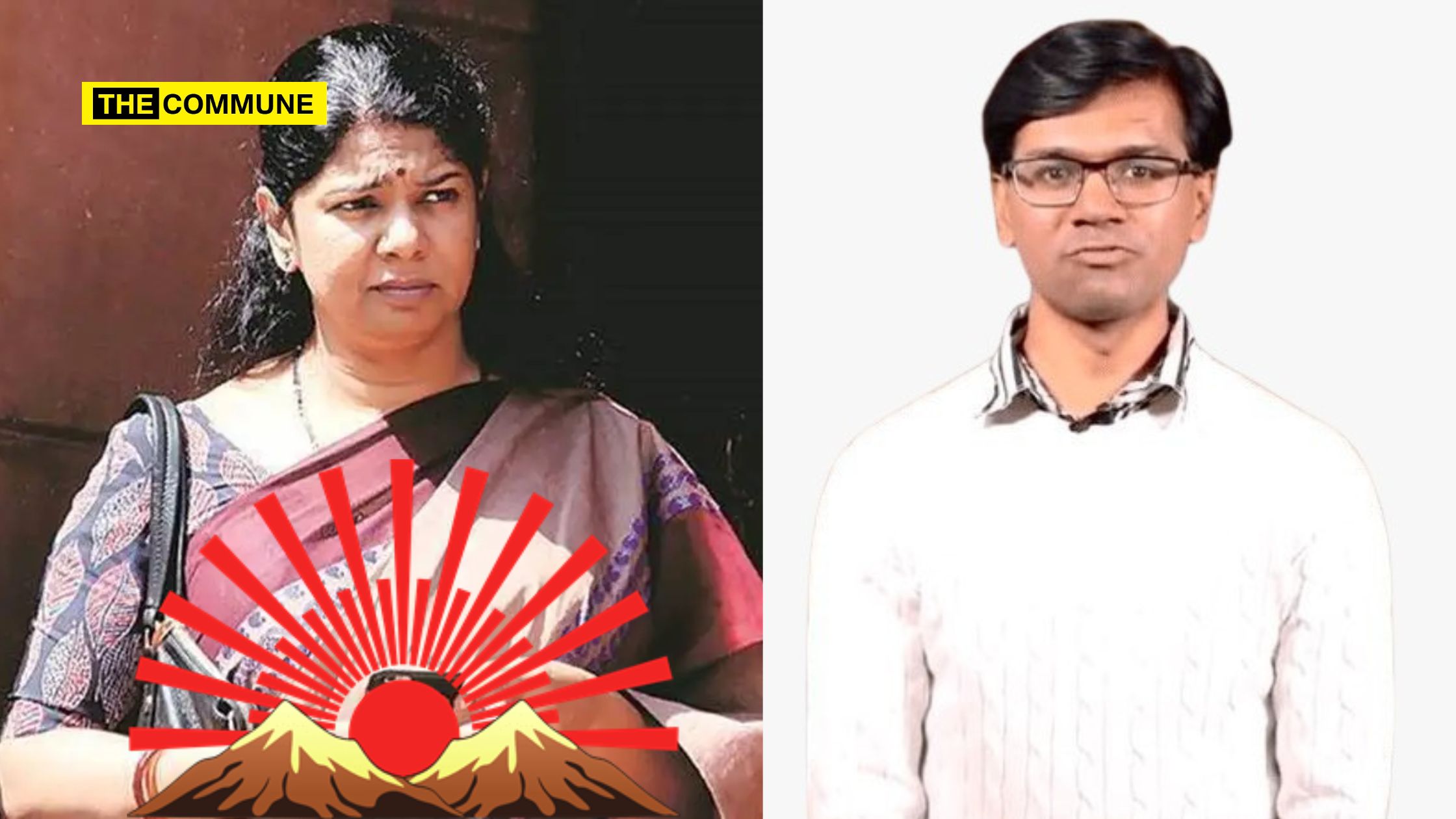
Against this backdrop, the DMK Lok Sabha MP K. Kanimozhi condemned the move, describing it as an effort to silence those who bravely oppose divisive forces.

On 28 November 2024, via her X official account, Kanimozhi stated, “The UP police filed an affidavit to the Allahabad High Court, accusing fact-checking website ‘Alt News’ co-founder Mohammed Zubair of “endangering the sovereignty and unity of India.” This is an attempt to silence those who fight fearlessly against the divisive powers. The section BNS 152 invoked in this case is an example of how the law is misused systematically to suppress independent media and generally against people who dare to disagree. I strongly condemn this and urge all who believe in free speech to raise their voices against the intimidation towards independent journalism.

On the one side the DMK and its allies in TN are condemning the arrest of fake news spreader and alleged fact checker Zubair and on the other side, the DMK goes on about with its spree of arrests. Below is the list of past actions of the DMK government, which involved stifling the expression of dissenting opinions, and led to a crackdown on freedom of speech.

  • The Commune and its directors faced legal action for reporting on the confrontation between Podu Deekshitars of the Chidambaram Nataraja Temple and HR&CE officials.
  • BJP IT Wing and Social Media State Secretary Trichy Pugal Machendran was arrested for an alleged provocative Facebook post celebrating the death of the terrorist Palani Baba on his death anniversary. The post referred to Palani Baba as a “poisonous influence.”
  • TN BJP Functionary Pravin Raj was arrested in the wee hours of 1 October 2023 for his posts targeting the ruling party and the Congress.
  • The Tamil Nadu police even went up to Noida to try to arrest journalist Abhijit Majumder for his article on Udhayanidhi Stalin’s eradicate Sanathana Dharma remarks. 
  • A critic of the DMK, Badri Seshadri, was arrested for his comments in an interview on a YouTube channel regarding the Manipur issue, during which he made remarks about the Chief Justice of India.
  • Tamil Nadu BJP State Secretary SG Suryah was taken into custody under non-bailable sections for his comments regarding Madurai CPI-M MP Su Venkatesan concerning a sanitation worker’s tragic death during drain cleaning in Pennadam town, Cuddalore district.
  • An AIADMK IT wing member was apprehended under non-bailable sections for sharing a video meme that humorously referenced MK Stalin’s video statement on Senthilbalaji’s arrest. The meme did not contain derogatory content.
  • A Pro-BJP Twitter user was arrested for sharing an old article and allegedly misattributing DMK to an illegal liquor-producing gang in Tiruppur, following the recent hooch tragedy in Marakkanam.
  • Vice President of Tamil Nadu BJP’s Industrial Cell, Selva Kumar, was arrested for criticizing DMK Minister Senthilbalaji.
  • The admin of Voice of Savukku Shankar X handle was arrested for a video meme targeting CM MK Stalin and DMK Minister PTR Palanivel Thiagarajan regarding the “eligible household” clause in the monthly assistance scheme for women.
  • The DMK government traveled to Gujarat to arrest BJP cadre John Ravi, who had made satirical social media posts about CM MK Stalin and his late father, Karunanidhi.
  • N Muthuramalingam, the State Propaganda Secretary of South India Forward Bloc, was arrested for expressing his views on Facebook regarding the release of terrorists convicted in the 1998 Coimbatore serial blasts case. Muthuramalingam had criticized Dravidian parties for considering the release of 36 prisoners, including those convicted for life in the Coimbatore terror attack, leading to his arrest.
  • In March 2024, Minjur Saleem, a pro-BJP activist found himself detained and later arrested for his dissenting views regarding the DMK Party’s governance, which he expressed on the social media platform X (formerly Twitter).
  • In September 2024, Tamil director Mohan G was arrested for allegedly making false claims about contraceptives in Palani temple prasadam, linking it to adulteration controversies.
  • In November 2024, a BJP supporter Johny Raja was arrested by Vellore Police for posting against the DMK.
  • In November 2024, actress and political commentator Kasthuri was arrested over alleged remarks against Telugu community.
  • In November 2024, IMK chief Arjun Sampath’s son Omkar Balaji was arrested for alleged remarks against Nakheeran Gopal.

Subscribe to our channels on TelegramWhatsApp, and Instagram and get the best stories of the day delivered to you personally.
Cop Who Investigated Corruption Case Against DMK Min Senthil Balaji Transferred To Nagapattinam As DSP

Cop Who Investigated Corruption Case Against DMK Min Senthil Balaji Transferred To Nagapattinam As DSP

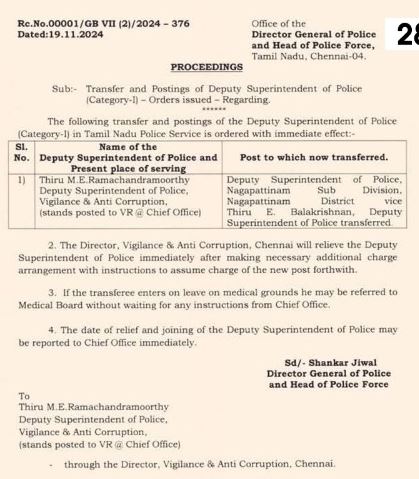
In a developing situation in Tamil Nadu, ME Ramachandramurthy, a Presidential Medal recipient for distinguished service, who had investigated a corruption case against Minister Senthil Balaji and filed a charge sheet against him in March of this year, has been transferred to Nagapattinam as Deputy Superintendent of Police (DSP). This transfer order has drawn severe criticism, particularly because it follows shortly after Balaji’s return from Bali two months ago.

On 19 November 2024, Director General of Police (DGP) Shankar Jiwal issued an order to transfer Ramachandramurthy to DSP for the Nagapattinam subdivision, effective immediately. At the time, Ramachandramurthy was serving as the DSP for Vigilance and Anti-Corruption.

This transfer is not an isolated incident; such actions have occurred in the past. In 2021, for instance, several officers were reassigned or placed on reserve without further postings. Among them was ME Ramachandramurthy, who had investigated a case against Minister Senthil Balaji and filed a charge sheet against him in March of that year, just before the assembly elections. An order from the state police’s leadership in 2021 placed 10 officers in reserve status without assigning them new roles. These officers included T Pandi, V Visweswarayya, T Savarinathan, C Suresh, J Vijai Anand, K Palaniswamy, ME Ramachandramurthy, S Selvakumar, P Nalladurai, and P Sundaram.

This pattern has sparked criticism against DMK, with many questioning whether officers who diligently perform their duties should face punitive transfers instead of being rewarded for their work.

Subscribe to our TelegramWhatsApp, and Instagram channels and get the best stories of the day delivered to you personally. 
Captain SP Kutty: The Soldier Who Fought For Dharma, Nation, And Cultural Revival

Captain SP Kutty

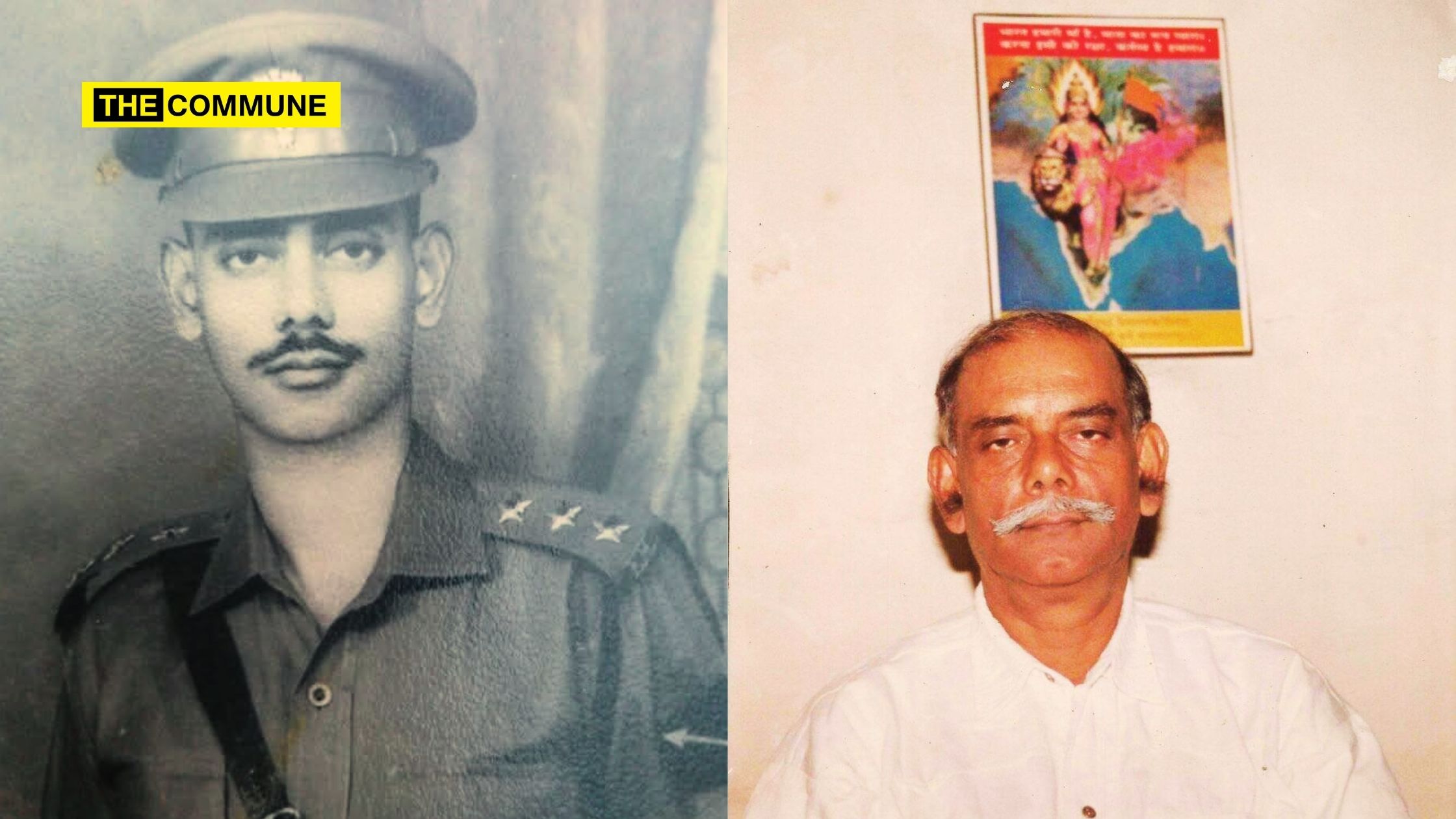
Captain SP Kutty, born D Raman, was a man whose life embodied courage, resilience, and unwavering dedication to his faith and nation. From his early days as an Indian Army officer to his later years as a guiding force in Tamil Nadu’s Hindu renaissance, he lived with a singular mission: to serve India and uphold the values of Dharma. Personal sacrifices, relentless advocacy for Hindu cultural preservation, and a profound belief in the power of knowledge to uplift communities shaped his journey. He passed away on 26 November 2024.

Kutty, a humble yet fierce leader, inspired thousands through his oratory, writings, and grassroots activism. Whether it was through organizing shakhas for the Rashtriya Swayamsevak Sangh (RSS), delivering fiery speeches at local temples, or translating the Bhagavad Gita into Tamil, he worked tirelessly to strengthen the spiritual and cultural foundation of his community. His life was a testament to the idea that true leadership is rooted not in titles, but in selfless service and unwavering commitment to truth.

Early Life And Military Service

In 1964, fresh out of engineering school, Kutty rejected familial pressure to convert to Christianity, choosing instead to serve India by joining the Indian Army. During the 1965 war, he was stationed in Punjab, where he contributed as an engineer in defense of the nation. While he was away, however, his family back in Tamil Nadu faced relentless proselytizing efforts, with many converting to Christianity. This personal experience ignited a lifelong commitment to preserving Hindu culture and traditions.

Awakening To The Bhagavad Gita

Kutty’s spiritual journey began when a relative dismissed the Bhagavad Gita as a divisive text. This spurred him to explore the Gita, initially encountering obstacles due to caste discrimination. Undeterred, he studied the text under Swami Mathurananda Maharaj and other mentors, ultimately mastering its teachings. His dedication transformed him into a leading proponent of Hindu intellectualism, determined to make the Gita accessible to all, regardless of caste.

Social And Cultural Leadership

Kutty’s contributions extended beyond personal enlightenment. Along with his wife Rohinibai, he established numerous shakhas (branches) of the Rashtriya Swayamsevak Sangh (RSS) in Tamil Nadu and organized religious classes for women and children. Together, they created a vibrant grassroots movement, culminating in the Hindu Dharma Vidhya Peetham, which provided a platform for Hindus to reconnect with their spiritual heritage.

Literary Contributions And Activism

An accomplished author, Kutty wrote extensively, including the influential serialized novel When Shall We See Our Sindhu Again?, inspired by the trauma of partition and the resilience of the Hindu community. His works, including commentaries on the Bhagavad Gita and analyses of the Kashmir conflict, cemented his reputation as a Dharmic warrior. He tirelessly countered missionary propaganda, distributing literature that empowered Hindus to defend their faith.

Trials And Triumphs

Kutty’s activism often put him in the crosshairs of opposition. He survived multiple assassination attempts, particularly during the 1982 Mandaikadu riots, where his unwavering courage inspired the Hindu community to stand firm. Despite constant threats, he remained dedicated to his cause, advocating for both spiritual strength and intellectual rigor within the Hindu community.

Legacy Of Service

Captain S.P. Kutty lived by the principles of the Bhagavad Gita, embodying the essence of a Karma Yogi. He was a relentless advocate for equality, challenging caste-based discrimination even within the organizations he supported. His home, aptly named “Charaiveti” (Keep Moving), symbolized his lifelong journey of service. His death marked the end of an era, but his legacy continues to inspire generations committed to the preservation of India’s cultural and spiritual heritage.

In the words of his admirers, Captain Kutty was not just a soldier of the battlefield but a soldier of Dharma—a beacon of light in the struggle for cultural and national identity.

What made Kutty remarkable was not just his commitment to his beliefs, but the warmth and humility with which he lived them. He was a soldier not only in the army but also in the larger battle for cultural revival, a man who faced both personal trials and societal challenges with the same steady determination. Whether standing firm against conversion efforts that divided his own family, or teaching the Bhagavad Gita to those denied its wisdom due to caste, Kutty’s life was a testament to the power of one individual’s resolve to make a difference.

(With inputs from Swarajya and Organiser)

Subscribe to our channels on TelegramWhatsApp, and Instagram and get the best stories of the day delivered to you personally. 
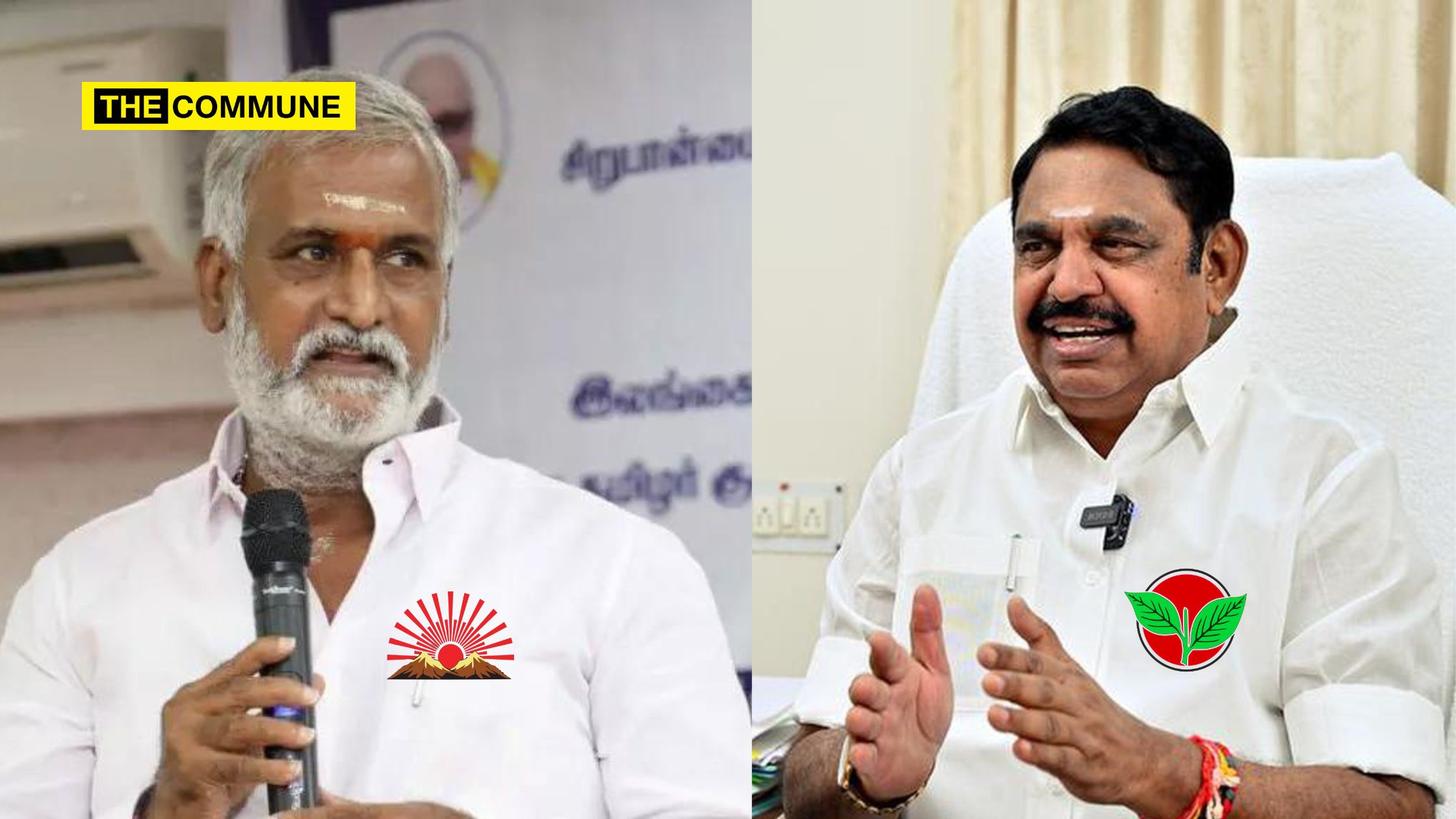
“He Has No Work, So He Is Issuing Such Statements,” After MK Stalin Insulted PMK Leader Dr Ramadoss, DMK Minister Sekar Babu Makes Similar Remark About ADMK Leader EPS

After MK Stalin Insulted PMK Leader Dr Ramadoss, DMK Minister Sekar Babu Makes Similar Remark About ADMK Leader EPS temple funds

After Chief Minister MK Stalin remarked about PMK founder Dr Ramadoss—calling him someone with “no other work” and accusing him of issuing daily statements— PMK cadres across the state condemned his remarks, with widespread protests for the past two days.

Now, the DMK Minister for HR & CE PK Sekar Babu made a similar statement about the opposition leader and AIADMK general secretary Edappadi K Palaniswami, saying, “He has no work, so he is issuing such statements”.

During a media interaction on 28 November 2024 in Chennai, reporters questioned the AIADMK’s Edappadi K. Palaniswami (EPS) criticism directed at DMK’s focus on celebrations while rain alerts were issued. In response, DMK’s HR&CE Minister P.K. Sekar Babu addressed the issue, saying, “You would have seen today’s event, our party’s Youth Wing Secretary and my dear brother Udhayanidhi Stalin, in his birthday message, requested that there should be no banners or extravagance. Help the poor and those below the poverty line, funding education, aiding differently abled people, orphanages, and transgenders. In line with this, today we conducted free weddings, spending one lakh per couple and a total of 21 lakhs on these marriages, including food. How can this be seen as luxury?”

He continued, “If the onlookers’ eyes have a problem, what can we do? Everything looks yellow for the eyes with jaundice. To say it in our leader’s style, ‘He has no work, so he is issuing such statements.'”

The controversy began after Ramadoss called for an investigation into allegations of bribery involving the Adani Group, which was mentioned in a US court case related to the Tamil Nadu Electricity Board. In response to this, Stalin commented, “Ramadoss has no other work, has nothing better to do. He makes daily statements, and there’s no need to respond to them.”

Subscribe to our channels on TelegramWhatsApp, and Instagram and get the best stories of the day delivered to you personally. 
DMK’s Reversal: From Opposing During ADMK Regime To Reopening Rayagiri TASMAC Liquor Shop Now

DMK's Reversal: From Opposing During ADMK Regime To Reopening Rayagiri TASMAC Liquor Shop Now

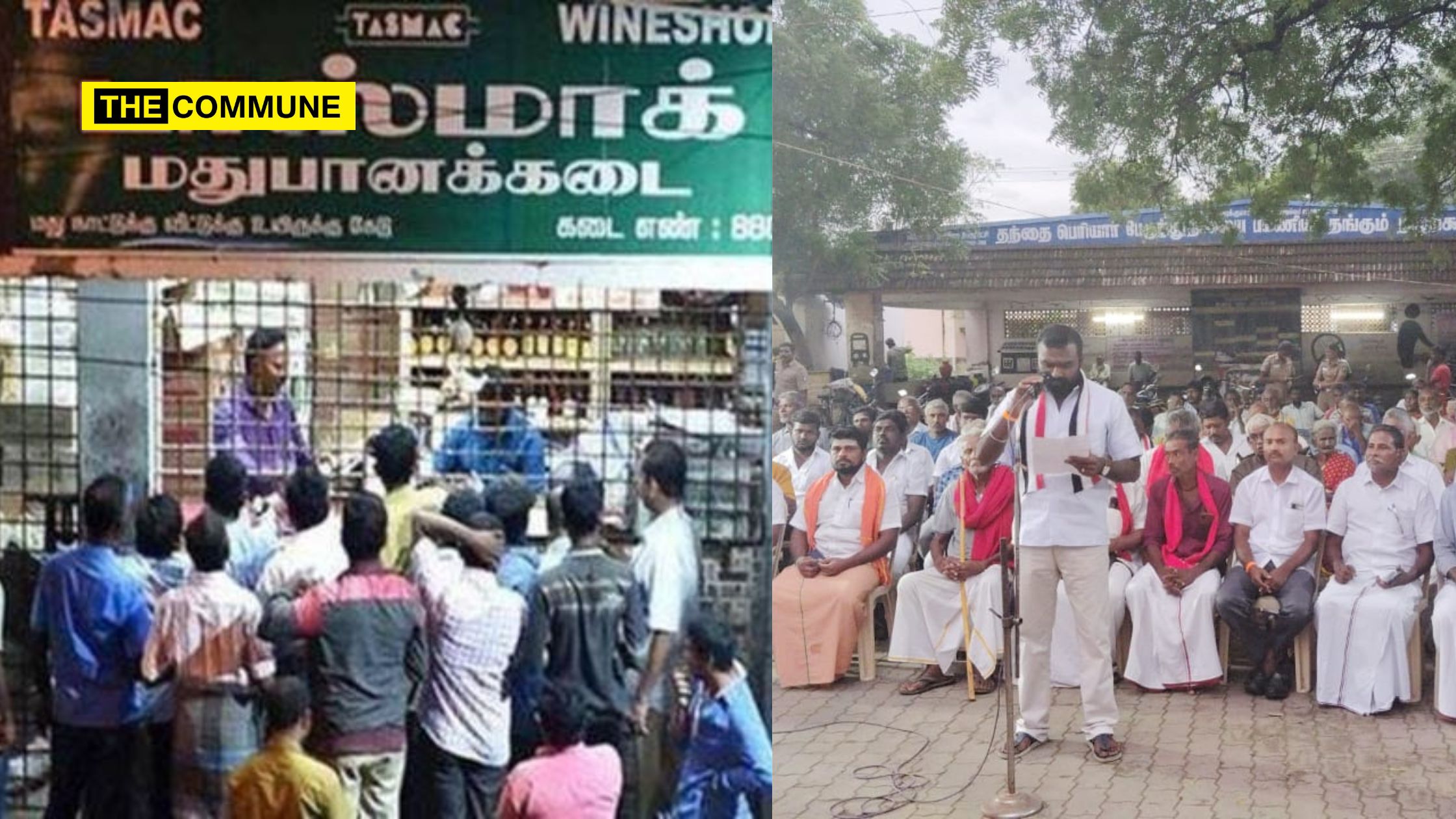
Life often comes full circle. Seven years ago, the AIADMK government ran a TASMAC liquor shop in Rayagiri, only to close it after intense protests from the DMK. Now, under the DMK-led government, that very same liquor shop has been reopened, prompting protests from the AIADMK.

The state government led by the DMK has been urged to close the TASMAC liquor outlet that was reopened in Rayagiri on 20 November 2024, after being shut for seven years. The reopening has sparked concerns as the outlet had previously caused law and order problems in the area and harmed residents, particularly the youth.

The shop was originally closed during the AIADMK government’s tenure following protests led by DMK-affiliated parties. Now, with the DMK in power, the shop’s reopening has led to renewed protests.

On 23 November 2024, CPI leaders, led by district secretary T. Esakki Durai, staged a protest demanding the shop’s closure. A day earlier, AIADMK leaders, including town secretary Deva Pandi, also organized a demonstration in opposition. Additionally, MDMK deputy general secretary T.M. Rajendran petitioned Revenue Minister KKSSR Rajendran, who also oversees Tenkasi district, urging the shop’s closure.

According to Surai, the shop had previously led to law and order issues and caste tensions in Rayagiri. He emphasized that after the shop was shut down following protests, the town—primarily dependent on agriculture—had seen improved social harmony. “Now, without any prior notice, the government has reopened the shop, and it has caused distress among the residents, who are concerned about the potential consequences,” he added.

Durai also reminded the public that during his election campaign, Chief Minister M.K. Stalin had promised to reduce the number of TASMAC outlets across the state. “It is disappointing to see a shop that was closed after significant protests being reopened,” he said.

In response to the protests, political representatives also petitioned District Collector A.K. Kamal Kishore. Kishore explained that the decision to reopen the shop was based on reports of illegal liquor sales in the Rayagiri area, which had the potential to lead to serious issues. He clarified that the shop had been relocated to a new location, away from the previous site near a church, where residents had strongly opposed its presence.

(With inputs from TNIE)

Subscribe to our channels on TelegramWhatsApp, and Instagram and get the best stories of the day delivered to you personally. 
Karnataka Horror: Newborn Baby Flushed Down In Hospital’s Toilet

Teenage Pregnancy In Tamil Nadu Surges By 36% In 5 Years, Study Reveals

In a gruesome incident in Harohalli in Karnataka’s Ramnagar district, a newborn baby was flushed down in a hospital’s toilet. According to police, the body of the baby was found inside the toilet located on the ground floor of the hospital. When clogging in the toilet was noticed, the sweepers and plumbers were asked to fix it.

The incident came to light when the health facility’s staff were fixing clogging in the commode. The cleaning staff identified something blocking the flow of water. Initially, they suspected it to be a cloth or waste material. However, they were shocked to find the body of the newborn there, according to police.

The body was extricated with equipment that is used to pull out the materials clogging the toilets. It is suspected that the baby was one or two days old.

The police suspected that the incident occurred on Wednesday night. The incident shocked the doctors, staff of the hospital and local people. The police have sent the body for postmortem. Police suspected that the accused might have tried to hide the birth of the baby. The incident has triggered outrage among the public.

The police have launched an investigation into the case and started questioning. They were verifying the hospital’s CCTV footage for clues about the movement of the accused persons.

The police stated that they had not received a complaint regarding the missing newborn baby and suspected that the mother was involved in the crime or the baby was brought here from some other place. Details were awaited. Earlier, a month-old baby girl was found dead in an overhead tank at her grandparents’ home in Bengaluru on November 6.

The police suspected the involvement of the mother in the girl’s death. The Surya City police had registered a case of murder and found that the mother accidentally killed the baby girl and dumped her body in the water tank.

–IANS

Subscribe to our channels on TelegramWhatsApp, and Instagram and get the best stories of the day delivered to you personally.
MIT Sloan MBA, Ph.D Holder DMK Min PTR Palanivel Thiagarajan Sings Paens For Loyola Grad DMK Scion Udhayanidhi Stalin For His Birthday

MIT Sloan MBA, Ph.D Holder DMK Min PTR Palanivel Thiagarajan Sings Paens For Loyola Grad DMK Scion Udhayanidhi Stalin For His Birthday

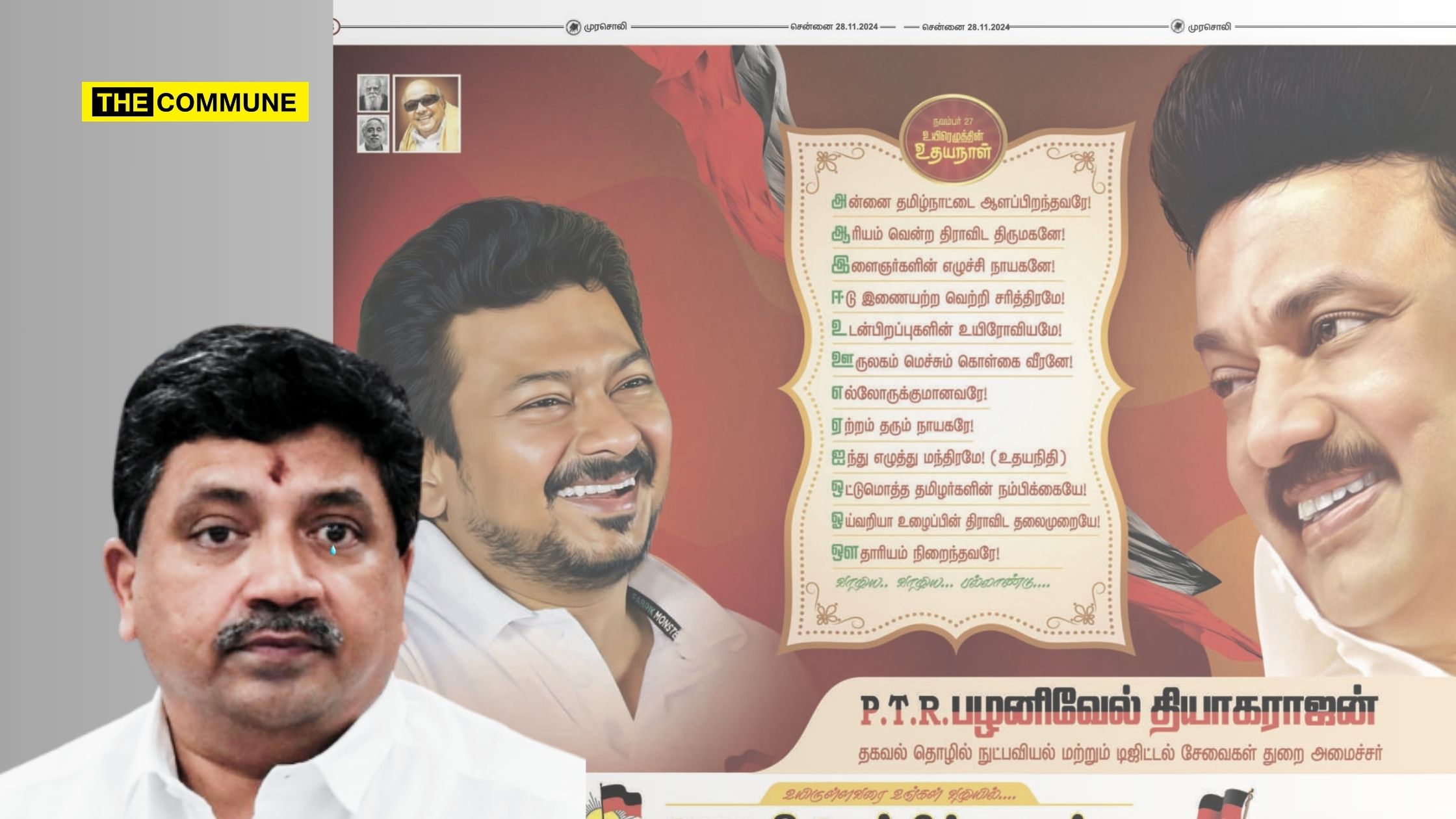
DMK Minister PTR Palanivel Thiagarajan (often referred as PTR), who often boasts about his privileged background, academic credentials and professional accomplishments, has surprised many by taking a distinctly sycophantic tone on the occasion of DMK scion Udhayanidhi Stalin’s birthday. PTR, an MIT Sloan MBA graduate and Ph.D. holder with a career spanning global financial markets, marked the day by releasing a two-page advertisement in the DMK’s mouthpiece Murasoli. This move, is seen as unusual for a leader of his stature, who in fact disses BJP cadres’ admiration for Prime Minister Narendra Modi as sycophancy.

The Advertisement That Outshone All Others

While it seemed to be a contest of sorts among the DMK cadre and minister as to who would outshine the others, some ministers chose modest one-page advertisements to celebrate the Chief Minister’s son, one released a song for the scion’s birthday, PTR went a step further, doubling down with a two-page spread.

It is noteworthy that DMK ministers who were elected as MPs hailed Udhayanidhi during their oath-taking ceremony in parliament earlier this year.

Coming back to the elaborate gesture by PTR, it featured effusive praises for Udhayanidhi, who, in stark contrast to PTR’s Ivy League pedigree, is a graduate of Loyola College with a career in Tamil cinema churning out back-to-back flop film before entering politics.

PTR’s lavish tribute stands out even in a party known for its public displays of loyalty. The advertisement which explains/gives a statement for each vowel in the Tamil language reads,

November 27 is the day of the dawn of the vowel (uyir ezhuthu)

The one who was born to rule Mother Tamil Nadu!

The illustrious Dravidian son who won against Aryanism

The icon of youth uprising/rebellion!

An unparalleled success story!

The life painting of siblings!

A hero of policy that the town admires!

He is one for everyone!

He is an uplifting hero!

Five-letter mantra! (Udhayanidhi)

Hope for all Tamils!

The Dravidian generation of restless hard work!

You are full of authority!

May you live for many years….

The advertisement is signed as follows:

P.T.R. Palanivel Thiagarajan

Minister of Information Technology and Digital Services

In your path as long as I am alive

PTR’s Illustrious Background

PTR who keeps boasting about his academic and professional credentials are hard to match. He graduated in chemical engineering from NIT Trichy, earned a master’s degree and Ph.D. in human factors engineering from the University at Buffalo, and later completed an MBA in financial management at the prestigious MIT Sloan School of Management. His professional career spanned top-tier financial institutions, including Lehman Brothers and Standard Chartered, where he apparently held senior leadership roles. He even holds a patent for structured loan commitment transactions.

Despite this, PTR’s political trajectory within the DMK appears increasingly dominated by adherence to the party’s culture of elevating its leadership through public demonstrations of loyalty.

Political Allegiance Over Accomplishment?

PTR who was initially the Finance Minister after the DMK came to power was later made the IT Minister following the leak of his purported audio accusing Chief Minister MK Stalin’s family of making more money in one year than they’ve made during their life time.

Udhayanidhi Stalin, the son of Tamil Nadu Chief Minister M.K. Stalin and a prominent DMK figure, is widely seen as the next in line for the party’s leadership. With a comparatively modest academic and professional background, Udhayanidhi has relied on his film career, and family legacy to make his mark in politics. The contrast between his résumé and PTR’s highly credentialed profile underscores the dominance of DMK’s first family.

Critics argue that PTR’s grand advertisement reflects anelement of hereditary slavery,as some observers have put it. His willingness to publicly sing paeans to a younger colleague, regardless of the latter’s credentials or achievements, raises questions about the subjugation of meritocracy within the party’s internal hierarchy.

A while ago, an interview clipping of PTR Thiagarajan went viral. In the undated interview, PTR is seen saying, “If you run the party for unfit, useless successors, then some talented party will enter the scene and wash you away.”

It is not clear who PTR is speaking about but there is an inkling.

Additionally, PTR did not attend Udhayanidhi’s swearing-in ceremony as Deputy CM of TN and presented very vague reasons for his absence. Whether PTR wrote such a long poem for Udhayanidhi to wash off this embarrassing memory is a thing to ponder.

A Broader Political Culture

The episode is emblematic of a larger trend in Indian politics, where loyalty to dynastic leaders often eclipses individual qualifications or achievements. For a leader of PTR’s caliber to dedicate such an elaborate tribute to Udhayanidhi highlights the power dynamics within the DMK, where the elevation of the family’s younger generation is paramount.

PTR’s family history adds another layer of irony to the episode. He is the grandson of P.T. Rajan, who briefly served as the Chief Minister of Madras Presidency, and the son of P.T.R. Palanivel Rajan, who served as the Speaker of the Tamil Nadu Assembly from 1996 to 2001. His personal accomplishments, combined with his family’s storied political legacy, make his participation in such overt displays of loyalty seem incongruous to many.

The two-page tribute has reignited discussions about the balance between merit and allegiance in Tamil Nadu’s political landscape. 

Subscribe to our channels on TelegramWhatsApp, and Instagram and get the best stories of the day delivered to you personally.
Lashkar-E-Taiba Terrorist Salman R Khan Deported From Rwanda To India

Lashkar-E-Taiba Terrorist Salman R Khan Deported From Rwanda To India

A wanted terrorist, with links to the Lashkar-e-Taiba (LeT) and a terror case filed against him in Bengaluru, has been deported to India from Rwanda, an official statement said on Thursday.

He is identified as Salman Rehman Khan, wanted by the National Investigation Agency (NIA) and Central Bureau of Investigation (CBI) against whom Interpol had issued a Red Corner Notice. The NIA, CBI, and Interpol National Central Bureau, Kigali (Rwanda’s capital), coordinated Khan’s return in central East Africa.

The NIA had lodged a case against him last year pertaining to criminal conspiracy, for being a member of the dreaded terror organisation (LeT) and supporting it, slapping him with offences related to the Arms Act and Explosive Substances Act.

An FIR was also lodged against Khan in Hebbal Police Station in Bengaluru city for offences of supplying arms, ammunition and explosives to carry out terror activities in the Karnataka capital.

Following a request from the CBI, the NIA had got the Interpol RCN issued against Khan on August 2, which was circulated to all law enforcement agencies worldwide to track him down. He was finally geo-located in Rwanda and in collaboration with the Interpol Kigali authorities, he was brought back to India to face the law by an NIA team this morning.

Last fortnight, the CBI in coordination with Interpol had geo-tracked a criminal wanted by the Mumbai Police, Barkat Ali Khan, and brought him back from Saudi Arabia (on November 14). He was on the run, facing charges of rioting and supplying explosives and had an Interpol RCN issued against him in December 2022.

Prior to this, on November 11, the CBI facilitated the deportation of one Raihan Arabikkalalarikkal, from Saudi Arabia — facing an RCN since December 2023, for a rape case against a minor and a case lodged against him with Mannarkkad Police Station in Pattambi (Kerala). Since 2021, the Indian agencies in coordination with their global counterparts have seen the repatriation of around 100 wanted absconding criminals, including 26 brought back in 2024 alone.

–IANS

Subscribe to our channels on TelegramWhatsApp, and Instagram and get the best stories of the day delivered to you personally.