Home Blog Page 485

How Kerala Govt Has Been Using Tamil Nadu And Karnataka As A Dumping Ground For Its Toxic Wastes
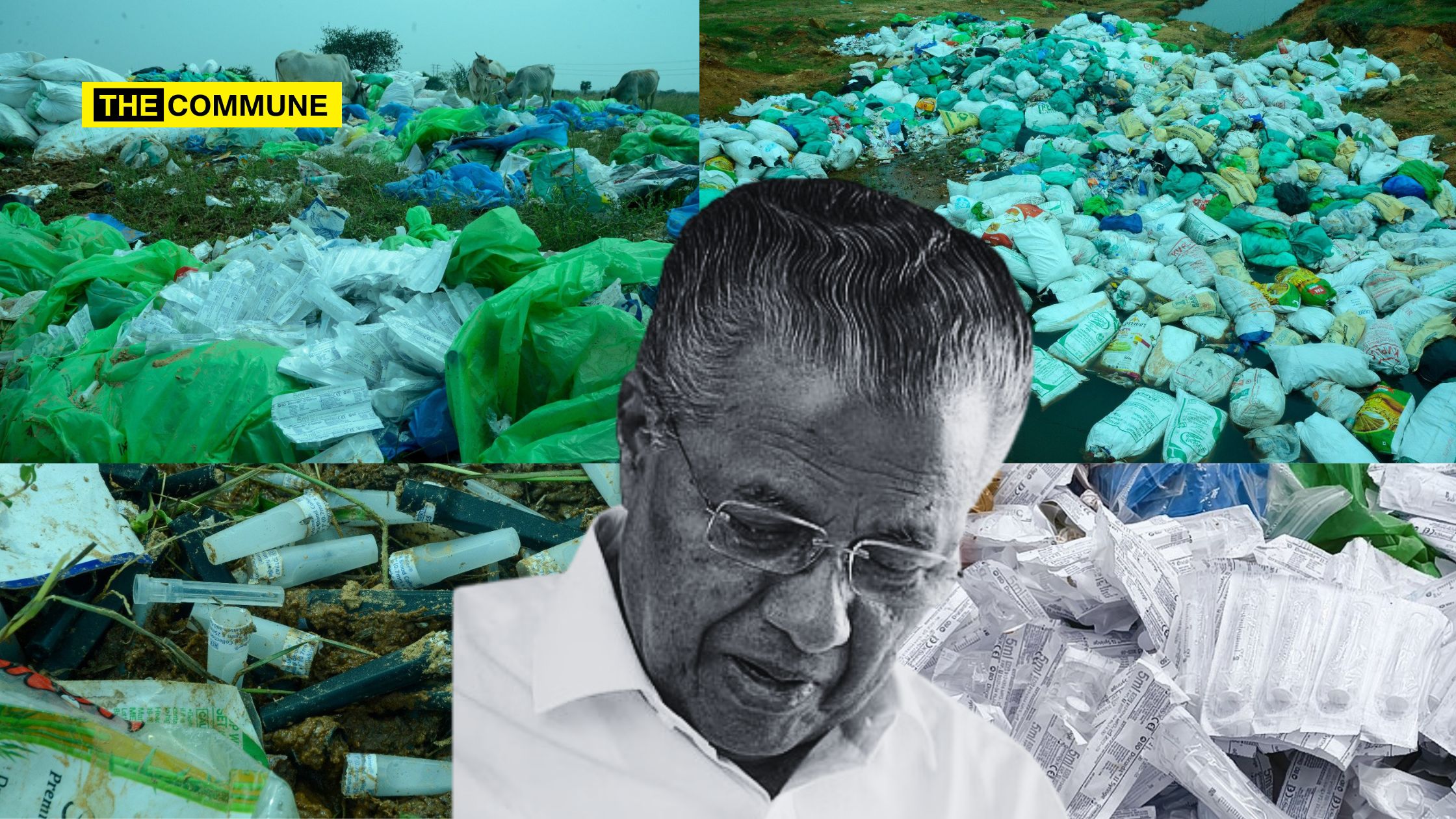
Biomedical Waste & Confidential Patient Records From Kerala Illegally Dumped In Tamil Nadu Villages.

Kerala is in the news, this time for dumping medical waste in Tamil Nadu villages. Large volumes of biomedical, food, and plastic waste from Kerala’s Thiruvananthapuram Regional Cancer Centre (RCC) and Credence Private Hospital have been dumped across multiple villages in Kodaganallur and Palavoor in Tamil Nadu. The waste includes hazardous materials like used syringes, PPE kits, and medical records containing sensitive personal information, raising serious health and environmental concerns.

The dumping, which has been ongoing for months, usually occurs at night, making it difficult to identify the perpetrators. Suspected trucks, allegedly carrying loads for a nearby paper mill, are thought to be involved.

Despite repeated complaints from landowners, authorities have failed to take action, leaving the issue unresolved.

Sensitive medical records, including patient details and treatment plans, were found among the waste, pointing to improper disposal practices and potential data breaches. The dumping has also contaminated local water sources, affecting livestock and causing health problems for residents.

The matter has been brought to the attention of the Suthamalli police and Tamil Nadu’s Chief Minister’s Special Cell, but no case has been filed yet. CCTV cameras at strategic locations could potentially identify the trucks involved, but no action has been taken. The District Collector has instructed local officials and the Tamil Nadu Pollution Control Board (TNPCB) to investigate and take legal action, with an FIR expected soon. Residents and activists are calling for the waste to be returned to Kerala and for stronger measures to prevent further illegal waste transportation.

But this is not the first time Kerala has dumped its waste in Tamil Nadu. While recent media reports have highlighted this issue, several incidents have gone unreported, further raising concerns over illegal waste disposal across the state borders. These recurrent incidents not only jeopardize the environment but also strain local governance and law enforcement systems.

Meat Waste Dumping

One such incident occurred in 2022, when meat waste from a slaughterhouse in Kerala was found discarded in an open area in Thanakkarkulam panchayat, located in Tamil Nadu’s Tirunelveli district. The truck, which was transporting over 100 jute bags of waste, was fined Rs 10,000 by local authorities after residents raised alarm about the foul smell emanating from the truck. The truck driver claimed that the owner of a slaughterhouse near Ernakulam had paid him Rs 40,000 to dump the waste in Tamil Nadu, with an additional Rs 20,000 paid for bribing officials at checkposts. Despite the severity of the situation, no arrests were made, and the authorities only imposed a fine without pursuing further legal action.

This incident followed a similar one in which a truck was intercepted by municipal officials in Kuzhithurai, Kanniyakumari district. However, the authorities failed to send the truck back to Kerala, allowing it to continue its journey to Tirunelveli. Once there, the waste was unloaded at the site, and the police refrained from registering a case, claiming that the issue should have been handled by the Kanniyakumari police.

In another instance from 2018, a truck carrying meat waste was caught dumping it illegally along the Karnataka border. Local residents near Baleguli in Irde village alerted authorities when they noticed the truck, and it was subsequently stopped. This prompted protests from locals who warned the drivers not to repeat the illegal dumping. Despite several complaints from locals, no action had been taken by the relevant authorities until the incident was exposed by the public.

This persistent issue has not been limited to just one or two cases. Activists have raised alarms about the regular illegal disposal of various types of waste, including bio-medical, plastic, and electronic waste, into water bodies along the Tamil Nadu-Kerala border. In 2015, local residents in Kanyakumari district held a protest demanding immediate action from the district administration, as waste from slaughterhouses and meat shops in Kerala was being dumped in nearby water bodies, posing a significant public health risk.

In 2023, unidentified individuals dumped nearly 10 tonnes of plastic, medical, and domestic waste from Kerala near Nanguneri town panchayat in Tamil Nadu on 7 October 2023 night. The waste, including plastic goods, medicines, and household items, was found in several locations, blocking roads and farmland. Villagers had to burn some of it to clear the road. Authorities suspected the waste originated from Thiruvananthapuram, as identified in medical bills and household articles. Police launched an investigation, analyzing CCTV footage to trace the culprits. A case regarding Kerala’s waste dumping is also pending in the Madras High Court.

On 12 October 2023, Nanguneri police in Tirunelveli registered a case against two individuals for transporting various types of waste from Thiruvananthapuram, Kerala. The truck was seized. On the night of 11 October 2023, a truck transporting poultry waste from Kerala was fined Rs 25,000 by the town panchayat in Kulasekaram, Kanniyakumari district.

Over the years, Kerala has faced increasing scrutiny for dumping biomedical, electronic, and other types of waste in Tamil Nadu, particularly in Tirunelveli and Tenkasi districts. This illegal practice, often conducted in the dead of night, has been reported multiple times, with various waste types, including used syringes, surgical waste, plastic goods, and electronic appliances, found discarded in public spaces, farmland, and water bodies in Tamil Nadu.

In recent incidents, around 10 tonnes of waste from Kerala, including plastic and medical waste, were dumped near Nanguneri town in Tirunelveli. This included materials from hospitals, such as expired drugs and used syringes, which were found in lorries from Kerala. Villagers had to burn part of the waste to clear roads, while authorities removed the rest using earthmovers. Investigations into these incidents revealed that the waste was transported through the Kanniyakumari district, with police and local authorities passing the blame between each other. Despite fines imposed on transporters, no concrete action has been taken against those burning the waste or the individuals involved in the illegal dumping.

A similar case occurred in Naranapuram village in Tenkasi, where biomedical and electronic waste from Kerala was dumped for the second time in two weeks. This time, authorities were slow to respond, and locals had to intervene. The waste included used televisions, home appliances, and poultry waste. The Tenkasi police, despite raising the issue with their counterparts in Kanniyakumari, have yet to take substantial action to prevent such incidents.

Authorities have imposed fines on some violators in the past, such as in 2018 when 29 trucks carrying medical and biomedical waste from Kerala were caught at Puliyarai check-post, but waste disposal practices continue unchecked. Local activists and villagers are demanding stronger enforcement of waste management laws and more accountability from authorities on both sides of the border.

Electronic Waste Dumping

In 2023, in Tenkasi district, residents of Karumbanur, Kalathimadam, and Anaiyappapuram were seen to face serious health issues due to the illegal burning of electronic waste (e-waste) from Kerala and Tamil Nadu. The e-waste, which includes motherboards, used cellphones, batteries, wires, capacitors, and vehicle parts, was being burned to extract valuable metals like copper. This process, occurring mainly at Karumbanur, caused breathing difficulties and sleepless nights for local residents, especially affecting children and the elderly.

Despite multiple complaints to local authorities, including the police and the Tamil Nadu Pollution Control Board (TNPCB), no concrete action was taken. The police, citing a lack of proper complaints with technical details, did not take any measures against the perpetrators. On a recent inspection following a complaint from a local farmer, the police found the burning of e-waste but were unable to apprehend the culprits.

In May 2023, a truck carrying electronic and plastic waste from Kerala was discovered near Kalathimadam village on Alangulam-Ambasamudram Road. The driver claimed to have transported the waste from Kerala to Alangulam via the Kanniyakumari district check post without proper documentation.

Tenkasi Police (Alangulam) took prompt action the following day, with support from the health department. They discovered that the truck also contained medical waste. The truck was seized, and two individuals were arrested.

In August 2023, Alangulam police registered a case against four individuals and arrested two for transporting medical, plastic, and bakery waste, including hospital beds, from Kerala and burning it near Sivalarkulam village. The suspects, identified as Karthik Murugan, Ganesan, Senthil Murugan, and Rajalingam, were charged under various sections of the IPC and the Epidemic Diseases Act. Health inspector A Rajanainar, upon receiving a tip-off, investigated the site and found a truck loaded with medical waste, bakery items, and plastic. The suspects threatened the inspectors, but they were apprehended with the help of the public. The truck, linked to APV Traders in Kottayam, Kerala, was seized. In a related incident, Alangulam police previously arrested a truck driver from Thiruvananthapuram for transporting medical and electronic waste from Kerala to Tamil Nadu and arrested a local resident for attempting to dump the waste.

In November 2023, NTK functionaries in Kanyakumari district seized another vehicle carrying waste from Kerala.

In November 2023, a petition was filed after a truck carrying medical waste was released by a lower court, affecting the investigation. The High Court canceled the lower court’s order, supporting the government’s stance. Tamil Nadu informed that legal advice was sought to take action against those involved under the Gangster Detention Act. The court acknowledged the government’s efforts and suggested a legal amendment to tackle medical waste dumping more effectively.

In December 2023, Puliyarai police in Tenkasi district intercepted a vehicle transporting meat waste from Kerala to Tamil Nadu at a check post and promptly sent it back.

Illegal Waste Dumping In Karnataka

If you thought, it was only Tamil Nadu that was bearing the brunt of Kerala’s illegal dumping, there’s news. Around 2018, Kerala started illegally dumping medical and other wastes in border towns of Karnataka too. Here are a few recorded instances of illegal dumping by Kerala.

In 2018, five individuals, including three from Kerala, were arrested for illegally dumping meat waste in Vittal, Karnataka. They reportedly charged slaughterhouses in Kerala to dispose of waste in Karnataka, bypassing Kerala’s strict regulations and fines. The public caught the violators red-handed with a truckload of waste, prompting police action. A goods tempo and a car used for transport were seized. The accused face charges under IPC Sections 269, 270, 277, and 278 for endangering public health and the environment. Sources indicated that lorry owners were paid up to ₹400 per sack, with medium lorries transporting 200-300 sacks per trip.

In 2020, two individuals were arrested for attempting to dump 15 sacks of plastic waste in Kodagu’s reserve forest area. Past reports indicated medical waste was dumped in Kodagu forests by vehicles from Kerala.

Six trucks carrying biomedical and plastic waste were intercepted at the Bandipur Moolehole checkpost. The waste included toxic materials and animal carcasses.

Nanjangud police caught two individuals from Malappuram dumping biomedical waste on the outskirts of the town. Vacant lands in Nanjangud’s industrial area were used as dumping sites by trucks from Kerala.

On 30 January 2023, two individuals were arrested for attempting to dump 15 sacks of plastic waste in a reserve forest near the Makutta checkpost on the Kerala-Karnataka border. The waste, transported in a truck from Kerala, was intercepted by alert forest rangers. The driver and cleaner, both natives of Andhra Pradesh, were booked under the Wildlife Protection Act and remanded to judicial custody.

Over the years, trucks from Kerala have been illegally transporting and dumping solid waste, including biomedical, animal, and plastic waste, in Karnataka, causing environmental and health concerns. The Karnataka State Pollution Control Board (KSPCB) raised the issue with its Kerala counterpart, but violations persist. Notable incidents include the seizure of six trucks near the Mulehole check post in Gundlupet, Chamarajanagar, based on a tip-off, leading to FIRs against seven individuals.

Activists and officials warn that unchecked waste dumping threatens wildlife in Bandipur-Nagarahole and BRT tiger reserves and pollutes border areas. Despite earlier efforts to alert local authorities and forest directors, the trucks continued to cross from Kerala’s Wayanad region without proper checks.

In May 2024, CCTV cameras installed by Manjanady gram panchayat captured a Kerala-registered car (KL 14 AB 3823) dumping garbage on vacant land near Batyadka, Karnataka, on the day of installation. The area, located near the Kerala-Karnataka border, has raised suspicions that the waste is transported from Kerala. Local residents had previously complained about foul smells from garbage dumped near their homes, prompting the installation of cameras. The footage shows the offenders stopping their cars, dumping the waste, and speeding off. In response, the Panchayat Development Officer filed a complaint with Konaje police to address the illegal dumping and its environmental impact.

Kerala’s biomedical waste management crisis has reached a critical point of irresponsibility. With just one operational biomedical waste treatment plant in Palakkad and chronic delays in establishing another in Brahmapuram, the state has repeatedly demonstrated a callous disregard for proper waste management. These are not mere administrative challenges, but deliberate negligence that comes at a devastating cost to neighboring Tamil Nadu’s environment and public health.

Bureaucratic inefficiencies or infrastructural limitations cannot excuse the recurring pattern of illegal waste dumping. Each truckload of medical waste, each discarded syringe, and each contaminated water source represents a direct assault on the ecological and health safety of border communities. Will Kerala continue to hide behind bureaucratic ineptitude while systematically exporting its waste management failures to neighbouring states?

Subscribe to our channels on Telegram, WhatsApp, and Instagram and get the best stories of the day delivered to you personally.
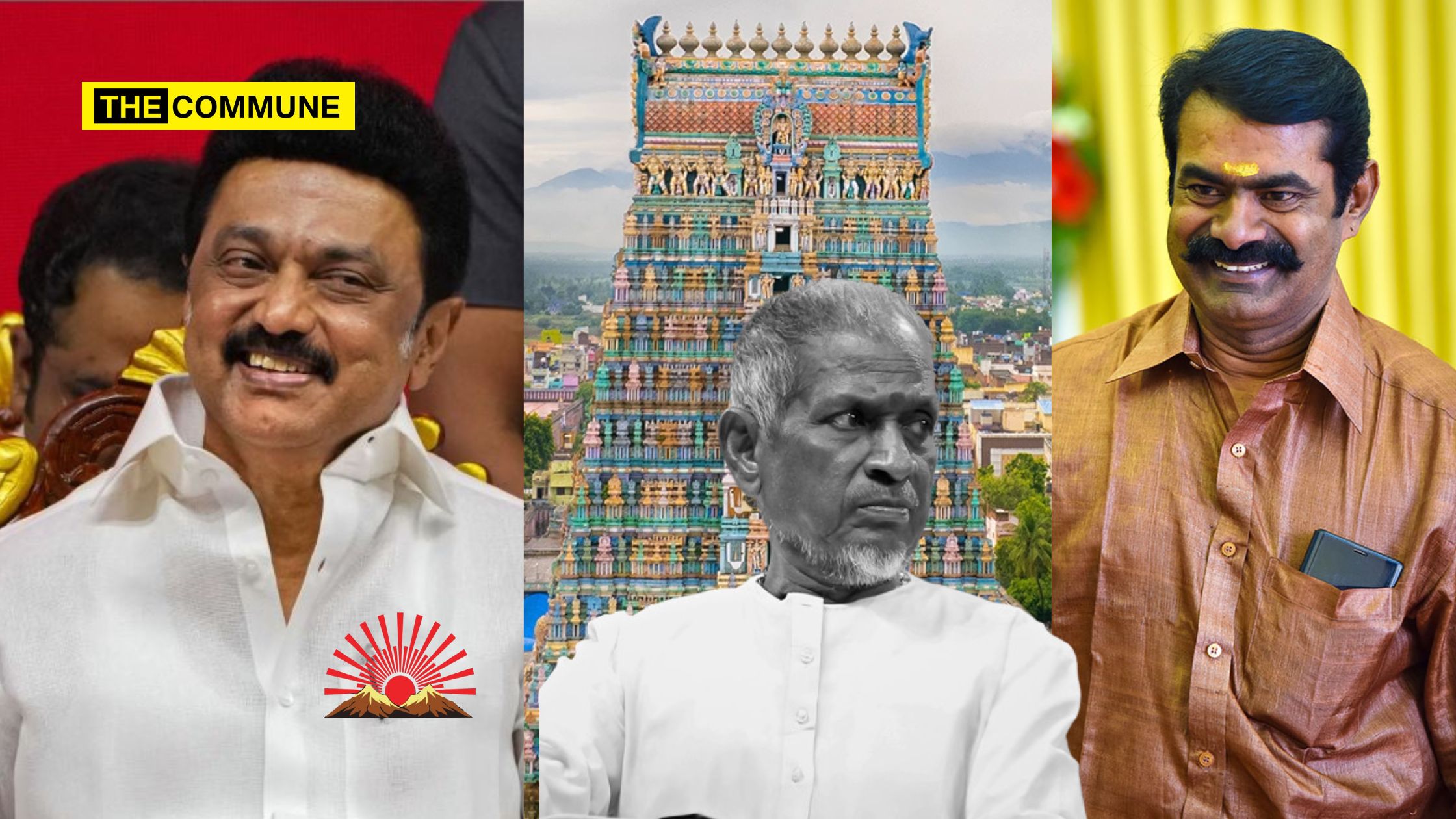
NTK Chief Seeman Buttresses Dravidian Propaganda On Ilaiyaraaja

NTK Chief Seeman Buttresses Dravidian Propaganda On Ilaiyaraaja.

Naam Tamilar Katchi (NTK) chief Seeman, who had previously clashed with actor-turned-politician Vijay over comments made during Vijay’s debut speech for his party Tamilaga Vettri Kazhagam (TVK), where Vijay seemingly merged Dravidianism with Tamil nationalism—a point Seeman disagreed with—has now fully aligned himself with the DMK and its Dravidian ideology over the fabricated reports of music maestro Ilaiyaraaja not allowed inside the garba gruha of the Srivilliputtur Andal temple.

Despite Ilaiyaraja clarifying that he was neither disrespected nor obstructed from entering the temple, Seeman took a Dravidianist approach, turning the issue into a public debate.

Ön 17 December 2024, NTK chief Seeman via his X official account stated, “The Srivilliputtur Jeeyar, who insulted the Lord of Music, Andal’s son, Mr. Ilaiyaraja, should publicly apologize! It is strongly condemned that Mr. Ilaiyaraja, who went to worship at the Andal temple in Srivilliputtur, was expelled from the hall in front of the sanctum and insulted. The act of the Srivilliputtur Jeeyar disrespecting Mr. Ilaiyaraja, who went to honor our Tamil community ancestor, the Andal Perumati, is a heinous act that humiliates the self-respect of the entire Tamil people.”

“Ethnic Tamils will never accept or allow this. No one has the right to stop the worship of Ilaiyaraja, the son of Andal, who is revered by Tamils for his unparalleled music. Andal, believed to have lived in the seventh century, is an ancestor of the Tamils. The Thiruppa she sang and the Nachiyar Thirumozhi are in Tamil. No one has the right to prevent Tamils from reciting in Tamil at his place of worship or from worshipping as Tamils,” he added, instigating anger and drawing others into the row.

“Just as former President Ram Nath Kovind was not allowed near the sanctum sanctorum of the Puri Jagannath Temple in Odisha, the fact that the great musician Mr. Ilaiyaraja was not allowed inside the sanctum sanctorum of the Srivilliputtur Temple is an unacceptable and cruel tradition. Apart from the connection between Mr. Ilaiyaraja and the great Tamil king Konerimai Kondan Kulasekara Pandiyan, who built the Andal temple, what is the connection between the Jeeyars who claim that Mr. Ilaiyaraja should not enter the sanctum sanctorum and the Andal temple? Even in this century of scientific development, the doctrine of Varna, which promotes discrimination based on birth, is a vile ideology that goes against humanity. The ancestors of the Tamil people have fought against this on this land. Our ancestors, Vallalar, Vaikunthar, and Sivavakkiyar, who led religious revolutions, opposed Varna and advocated for equality along with spirituality. Such injustices occurring in such a land are a great shame for the entire community,” he further asserted.

“Under the rule of the DMK, which claims to promote equality, social justice, and equal rights, inequality and ongoing atrocities are taking place in the temples controlled by the Hindu Religious and Charitable Endowments Department. It is shameful that Chief Minister Stalin, who boasts about Periyar leading the Temple entry protest in Vaikom a hundred years ago, cannot even enter the hall near the sanctum sanctorum of Mr. Ilaiyaraja during his own rule. The DMK, which shamelessly supported the Srivilliputtur Jeeyar, who committed atrocities against Mr. Vairamuthu for writing an article about Andal, whose side will it take today? Will it stand with Mr. Ilaiyaraja? Or will it stand with the Srivilliputtur Jeeyar?” he added, taking a jibe at the DMK.

If the DMK leader, who seeks redress by worshipping the feet of the jeeyars, does not feel any moral outrage against the disrespect meted out to Mr. Ilaiyaraja, is there any other disgrace like it? It is a great shame for the Tamil Nadu government’s Hindu Religious and Charitable Endowments Department to say that Mr. Ilaiyaraja was expelled from the Andal Temple according to tradition and custom. Who created such tradition and custom? What is the difference between the BJP saying it is an Agama rule and the DMK saying it is a tradition and custom? Agama rule, tradition, and custom are all a conspiracy to expel Tamils. The Andal Temple belongs to all Tamils, and those who are asking Mr. Ilaiyaraja to leave have nothing to do with the Andal Temple. The Lord himself would not want to prevent Mr. Ilaiyaraja, who lives as music, from entering the sanctum sanctorum,” he further said.

Therefore, the entire Tamil people are of the opinion that Srivilliputtur Jeeyar, who made the great Tamil artistic icon and lord of music Mr. Ilaiyaraja, who won the love and respect of the Tamil people, leave the hall near the sanctum, should openly apologize. Therefore, Srivilliputtur Jeeyar and others who insulted Mr. Ilaiyaraja should express their regret.”

What Actually Happened?

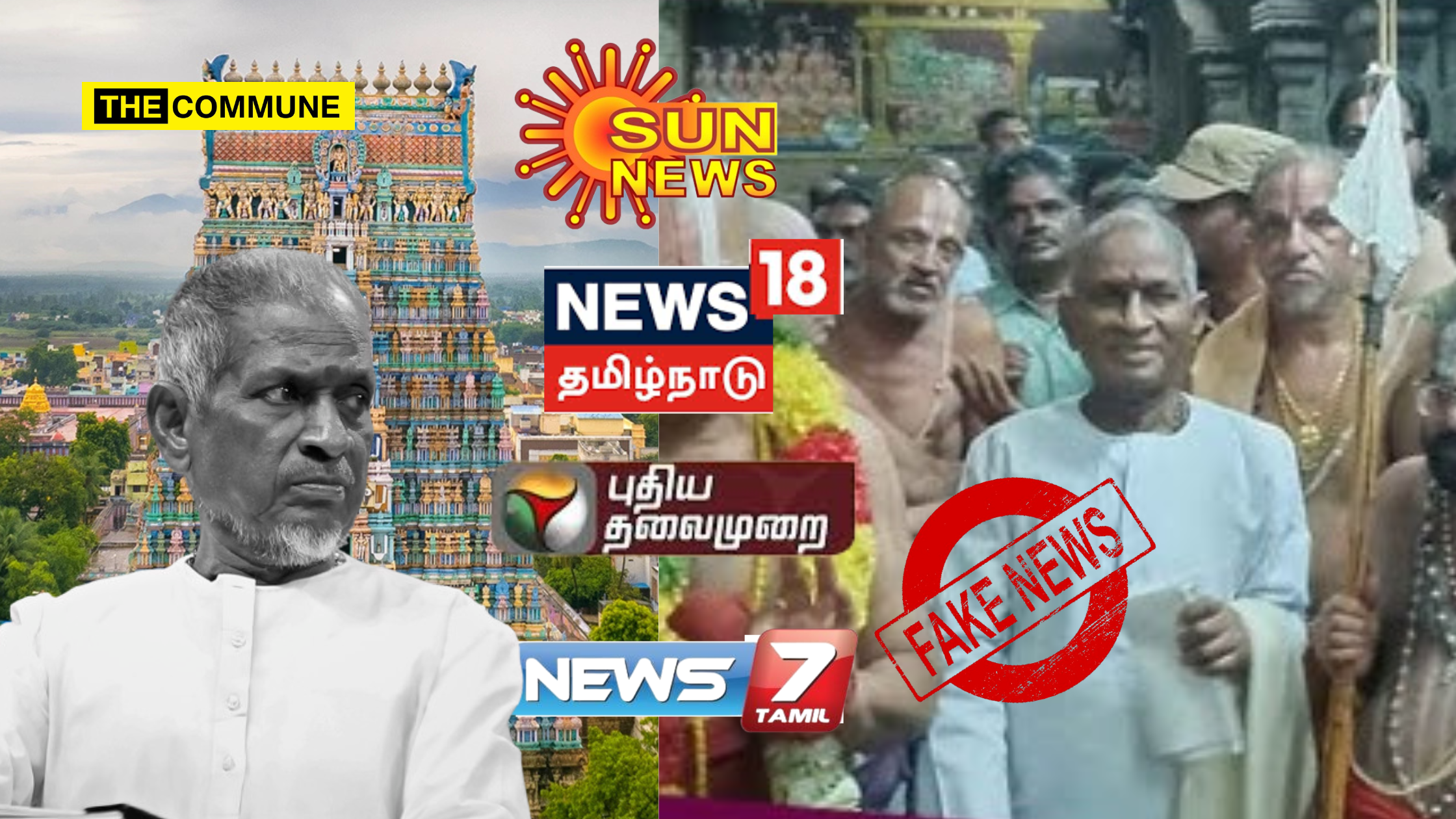
Contrary to NTK chief Seeman, who completely buttressed the DMK’s narrative and urged the Srivilliputtur Jeeyar to apologize, on 16 December itself, the renowned musician and Rajya Sabha member Ilaiyaraaja dismissed the allegations that he was removed from the Srivilliputhur Andal Temple. He called the claims false and a violation of his self-respect. His statement came in response to rumors that he had been removed from the temple’s Artha Mandapam.

Addressing the allegations over his recent temple visit, Ilaiyaraaja remarked, “Certain individuals are circulating false rumours about me. I do not compromise on self-respect at any time or place, and I never will. They have spread fabricated stories as though they occurred. Fans and the public should not believe these rumors.”

Right from the beginning of the day, the Dravidian media and Dravidianists on social media were relentlessly amplifying news involving music Maestro Ilaiyaraaja, sparking widespread discussion. Critics alleged that this is a typical strategy employed by the DMK to deflect significant criticism to other important issues and hoodwink the public. It turned out that the rumours were fabricated and allegedly intended to divert public attention away from issues that reflect poorly on the ruling DMK’s administration.

Let’s examine how the Dravidianist media peddled lies in the name of reporting “news.”

Sun News

The worst propaganda was peddled by the ‘Sun News’, owned by the DMK first family, which took its storytelling to another level by shamelessly promoting a narrative to paint Hindus, especially Brahmins and the seers, in a negative light. This extreme step represented the height of propaganda, aligning with the Dravidian ideology to ridicule Hindu customs and paint caste discrimination. They repeatedly claimed that Ilaiyaraaja was asked to leave the temple garba gruha (sanctum sanctorum) when he hadn’t even entered it.

Puthiya Thalaimurai News

Puthiya Thalaimurai also followed the lead of the “parent” Dravidianist media and claimed that Ilaiyaraja was “denied” entry into the garbagruha. Despite the video showing that the maestro had not even stepped in, they had already started building the narrative that when he “entered”, he was asked to leave!

News 18 Tamil Nadu

News 18 Tamil Nadu went one step further and claimed that he was not only denied entry into the garbagruha but also the Artha Mandapam!

News7

News7 kept it very simple and straightforward and peddled the same anti-Hindu and anti-Brahmin propaganda that he was denied entry – it did not mention where exactly. So, if people who were not aware of the news could possibly assume that he was denied entry into the temple itself!

The harsh reality of the pressure, even on opposing ideological politicians, to join the Dravidianists’ relentless spread of falsehoods about Ilaiyaraaja’s visit to the Srivilliputhur Andal Temple highlights a deliberate attempt to distract from real issues and shift attention away from the shortcomings of the ruling DMK. This has become the unfortunate fate of Tamil Nadu’s political landscape. Since the issue, the Dravidianist media outlets like Sun News, Puthiya Thalaimurai, News 18 Tamil Nadu, and News7 have not only misrepresented the truth but have also furthered an agenda of division, painting Hindu customs and Brahmins in a negative light.

This manipulation is a glaring example of how the media can be weaponized to serve political interests rather than report truthfully. Ilaiyaraaja’s dignified response in defending his honour and self-respect is a sharp rebuttal to the baseless accusations spread by these outlets, exposing their intentions to mislead the public.

Subscribe to our channels on TelegramWhatsApp, and Instagram and get the best stories of the day delivered to you personally.

TNPSC Cancels Asst Public Prosecutor Exam Scheduled For This Year, Reschedules To Feb 2025

TNPSC Cancels Asst Public Prosecutor Exam Scheduled For This Year, Reschedules To Feb 2025

The Tamil Nadu Public Service Commission (TNPSC) has announced the cancellation of the Assistant Public Prosecutor (APP) Grade-II exam, which was originally scheduled for 14 December 2024.

According to a statement from the In-charge Controller of Examination, John Lewis, the cancellation was due to technical issues at certain exam centers that prevented some candidates from completing the exam. A re-examination will now be held next year on 22 February 2025, using the OMR method. Admit cards for the re-exam will be available on the TNPSC website for candidates who were originally registered for the exam.

The Tamil Nadu Public Service Commission (TNPSC) issued a notification on 13.09.2024 for direct appointments to the post of Assistant Public Prosecutor, Level-II, in the Criminal Prosecution Department. A computer-based examination for this selection was held on 14.12.2024 in the afternoon for 4,186 candidates across 15 district centers. However, due to technical issues at some exam centers, some candidates were unable to complete the examination. Following this, a request was received from the affected candidates for a re-examination.

After reviewing the request, the Selection Board has agreed to it and decided to cancel the computer-based examination held on 14.12.2024 for the aforementioned post. A re-examination will be conducted on 22.02.2025 in OMR mode. Admit cards for the re-examination will be issued only to those candidates who were initially admitted to the examination. These will be made available on the Selection Board’s website at a later date.

This has caused significant distress among the aspirants, who had already been waiting for the exams and are now facing a further delay of another year, with the exam format reverting to the older method of marking answers on OMR sheets. Many candidates are questioning why the Selection Board is attempting to conduct online exams if it is not adequately equipped, leading to unnecessary delays and frustration for the aspirants.

This controversy is not new for the TNPSC, as the board has faced several allegations and criticisms in the past, both regarding the timely release of results and the smooth conduct of examinations.

For example, last year on 25 February 2023, there was commotion in several districts due to a delay in the conducting of Group II and Group II-A exam.  The delay had occurred due to the incorrect distribution of question papers and answer sheets by the examiners. According to reports, after the examiners realized that the question paper and answer sheets were incorrectly distributed, the candidates were instructed to write the exam on an already written answer sheet, which was written by the person who received it during the previous incorrect distribution.

Furthermore, when the candidatess inquired about the incorrect register number on the OMR sheets, the invigilators misled them by claiming that those were dummy numbers.

TNPSC officials took back the question papers and answer sheets from the examinees and sent them out of the hall after realizing that the question papers and OMR sheets had been distributed incorrectly. Some of the examinees who had phones outside the exam hall used them to look up answers to questions they remembered from the incorrectly distributed paper.

After outrage from candidates hitting the headlines, TNPSC admitted to the confusion and said that it had instructed the respective districts to give the candidates extra time due to the delay in starting the exam. However, not all candidates in all centre’s were given the extra time, say many candidates.

Subscribe to our channels on TelegramWhatsApp, and Instagram and get the best stories of the day delivered to you personally.

SA Basha: A Good Riddance For Tamil Nadu

Al Umma Exploited Youngsters, Rousing Fanaticism And Planted Bombs: What Justice Gokulakrishnan Committee Revealed About Coimbatore Blasts Masterminded By SA Basha Whom Seeman And Thirumavalavan Glorified

Islamist terrorist and founder of Al Ummah, SA Basha, a name synonymous with terrorism and fear in Tamil Nadu during the 1980s and 1990s, is finally dead. But for many like me, the scars he left behind remain vivid. Like many families in Tamil Nadu, my family too bears the brunt of his reign of terror. I write this not just to recount history but to pay tribute to every RSS and BJP karyakarta of those decades who, against insurmountable odds, stood firm for the cause of Hindutva.

A Personal Tragedy That Shaped My Resolve

My late grandfather, Thirukkovilur Sundaram, was a lean man weighing barely 50 kilograms, but his courage was immense. As Vice President of the BJP in Tamil Nadu, he stood tall against the tide of extremism. On June 11, 1983, after a public meeting in RS Puram, Coimbatore, his car was ambushed by Basha himself.

One by one, my grandfather and other BJP leaders, including Jana Krishnamurthy, TR Gopalan, and Narayan Rao, were pulled out and brutally attacked with machetes.

“Where’s Sundaram?”, Basha asked. He then pulled out my grandfather cut his body, hand, legs and thigh and ran away. He survived but spent six agonizing months in the hospital. He never fully recovered and lived with the aftermath of the attack until his passing in 2006.

The irony? Basha, who carried out this gruesome act in plain sight, was acquitted. He went on to orchestrate other heinous attacks, including the 1998 Coimbatore bomb blasts and would later enjoy a lavish life in prison, thanks to Dravidianist politicians.

But it wasn’t just my grandfather who was a victim of Basha’s terror.

The Reign Of Terror

Following the murderous attack on former BJP National President Jana Krishnamurthi and my grandfather, Syed Ahmad Basha tried to assassinate Ramagopalan at the Madurai Railway Station in 1987. He was attacked with a billhook that cut off a portion of his skull. He survived following a long intensive treatment and had stayed in coma for more than a month.

The severely injured portion of his head was covered with a plate attached to a mesh. This arrangement had been done on his head because that portion of the head was covered with bare skin. If one were to press hard with a finger, it would get punctured.

This was the price he had to pay for trying to stop the en masse conversion of Meenakshipuram villagers to Islam in 1981.

Since then, the saffron cap that he adorned became a symbol of valour, survival and sacrifice that Ramagopalan made in his life.

Here’s a timeline of the other Islamist attacks perpetrated by Basha and his blood baying terror group that gripped Tamil Nadu at that time.

1983: The Ambush at R.S. Puram

The attack on BJP leaders in Coimbatore marked the beginning of a dark chapter. Jana Krishnamurthy miraculously survived, but the scars—both physical and emotional—remained.

1993: Chennai RSS Office Bombing

On August 8, a bomb exploded at the RSS office in Chetpet, Chennai, killing 11 people. Basha and 15 others were arrested under TADA. The national media largely ignored this atrocity, and a few even rationalized it as a response to the Babri Masjid demolition. The 16 Al-Umma men who had been detained under TADA were released on bail in January 1997 when the DMK Government prosecutor did not oppose their bail.

1997: Prelude to Coimbatore Blasts

Clashes erupted in Coimbatore in November 1997 after Muslim fanatics killed a police constable. Despite intelligence warnings and evidence of Al-Ummah’s activities, the DMK government restrained the police from taking stringent action. Explosives were seized in various raids, but no decisive action was taken.

1998: The Coimbatore Blasts

This devastating series of 12 bomb attacks unfolded across 11 different locations within a 12-kilometer radius. Investigations revealed that these bombings were part of a larger conspiracy with the sinister aim of targeting L.K. Advani, the leader of the Bharatiya Janata Party, during his election meeting scheduled for 4 p.m. on that ill-fated day. Fortunately, Advani’s flight was delayed, and he narrowly escaped the horrors of that day.

2003: Death Threat To PM Modi

SA Basha, openly threatened to kill the then Gujarat Chief Minister Narendra Modi if he visited Coimbatore in July 2003. This threat was made by Basha and eight others while speaking to journalists in the Coimbatore court premises after their conviction and life imprisonment in a case related to the murder of a Hindu Munnani leader.

The Cries Of Coimbatore Blast Victims

The series of devastating blasts that shattered the tranquility of Coimbatore on that fateful day cast a long and dark shadow. This tragic event inflicted a profound trauma that the entire city has been grappling with ever since. It’s worth noting that these horrific blasts occurred during the tenure of the DMK government.

While the memories of the blasts may have faded in the minds of some politicians, the wounds are far from healed for the survivors and their families.

Rangaraj, a survivor of the 1998 Coimbatore blasts, continues to endure unrelenting pain from shrapnel lodged in his body, compounded by the financial strain of ongoing medical care. Caught in the devastating explosions, he sustained severe injuries, requiring six grueling surgeries over 25 years. Despite his suffering, he shields his family from his struggles, sparing them further anguish. Financial hardship prevents him from accessing essential scans and treatment, leaving him to battle constant discomfort. Reflecting on the tragedy, he recalls the eerie absence of locals in the Muslim-dominated area during the blasts, hinting they might have been forewarned.

Like Rangaraj, there are many who continue to bear the brunt of that dreadful day.

One victim’s tragedy was especially heartbreaking. On that ill-fated day, he left home to distribute invitations for his daughter’s wedding, only to return with severe burn injuries. His aging mother and sister, who depended on him in many ways, were left devastated by the incident.

I remember one grieving father share his anguish with me questioning, “What is the purpose of the government if it cannot deliver justice? We’ve witnessed the suffering of the victims, but I’ve never seen such brutality in my life. We Hindus are the majority—have we ever committed such acts? And yet, no one cares for the victims; everyone just moves on, afraid that more violence could follow.”

The Role Of Dravidian Politics In Normalizing A Terrorist

The DMK assumed power in Tamil Nadu in May 1996. Soon after, incidents indicating the rise of Islamic militancy began to surface. In 1996, a prison warder, G. Bhoopalan, was killed in Coimbatore Central Prison by Muslim militants using a petrol bomb. This marked the beginning of a series of attacks linked to fundamentalist groups.

During the AIADMK regime in 1993, after the RSS office bombing in Chennai, which killed 14 people, Al-Umma faced a significant crackdown. However, under the DMK’s rule, this stance softened. In January 1997, 16 individuals associated with Al-Umma and detained under TADA for their involvement in the RSS office bombing were released on bail. The DMK government prosecutor did not oppose their release.

In March 1997, Tamil Nadu police commandos seized bomb-making materials, including gelatin sticks and detonators, from a house in Chennai. Two men linked to Al-Umma, one of whom was the brother of its leader SA Basha, were arrested. Despite such warnings, there was no substantial crackdown on Al-Umma.

A series of bomb blasts shook Tamil Nadu in late 1997. On December 6, the anniversary of the Babri Masjid demolition, explosions occurred on three express trains, killing nine people. These attacks were attributed to the Islamic Defence Force of Kerala. On January 10, 1998, a blast occurred under the Anna flyover in Chennai, claimed by the Islamic Defence Force. Despite these attacks, the DMK government refrained from banning Al-Umma or taking decisive action.

The situation worsened in November 1997, when communal clashes erupted in Coimbatore. On November 29, Al-Umma cadres stabbed a police constable, Selvaraj, to death in retaliation for the detention of an Al-Umma member earlier that day. Selvaraj’s murder incited further violence, resulting in the deaths of 18 Muslims. Police strikes followed, as officers accused the DMK government of obstructing their attempts to take action against Al-Umma. This marked a significant turning point, with the DMK’s inaction creating conditions for the eventual Coimbatore blasts.

The Coimbatore blasts exposed the DMK government’s failure to act despite intelligence warnings. A subsequent investigation revealed that Al-Umma had stockpiled explosives in Coimbatore, which could have been intercepted earlier. The Gokulakrishnan Commission, set up to investigate the blasts, criticized the police for their failure to search the Babulal Complex, where explosives were stored.

It was only after the blasts that the DMK government banned Al-Umma and arrested its leader, SA Basha, along with other members. However, this delayed action drew widespread criticism, including from pro-left publications like Frontline, which stated that the DMK had failed to distinguish between innocent Muslims and extremist leaders.

Despite the crackdown on Al-Umma post-blasts, the DMK’s association with extremist-linked groups persisted. Reports from 2006 highlighted how the DMK government provided special privileges to Abdul Nasser Mahdani, a key accused in the Coimbatore blasts, during his imprisonment. The government-funded Ayurvedic massages and sought to lift restrictions on his movement within the prison. The Indian Express, on 24 July 2006, reported in an article titled: “DMK turns the jail into a spa for Coimbatore terror accused.”

Additionally, in May 2006, the DMK dropped cases against 12 Muslim fundamentalists connected to Al-Umma and other militant organizations. This decision was widely criticized as appeasement aimed at securing electoral support from radical groups like the Tamil Nadu Muslim Munnetra Kazhagam (TNMMK), an ally of both the DMK and Congress.

The DMK’s leniency towards groups like Al-Umma and TNMMK appears to have been driven by political considerations. In the 2004 Lok Sabha and 2006 Assembly elections, the DMK formed alliances with these groups to consolidate minority votes. Critics argued that this approach compromised national security and emboldened extremist organizations.

Publications like India Today and Outlook highlighted the DMK’s failure to act against militancy, citing electoral compulsions. Reports indicated that explosives recovered post-blasts amounted to nearly 1,000 kg, underscoring the scale of the threat ignored by the DMK government.

The Congress, too, played its part by forming alliances with groups linked to extremism, prioritizing political gains over national security.

While the DMK Government eventually banned Al-Umma and took action post-blasts, the Congress Party persisted in defending the terrorists and, remarkably, accused the RSS of orchestrating the blasts.

Congress President Sitaram Kesri shockingly accused the RSS. Despite legal action from the RSS, Kesri persisted in the allegation.  Despite the perpetrators’ links to Al-Umma and TNMMK, the Congress formed alliances with TNMMK in 2004 and 2006, overlooking its role in the tragic incident. Subsequently, TNMMK established the Manithaneya Makkal Katchi (MMK) in February 2009.

The Indian Express reported on 25 July 2006: “While the DMK government in Tamil Nadu is facilitating Ayurvedic massages for Abdul Nasser Mahdani, an accused in the 1998 Coimbatore blast, the Left and the Congress in Kerala have been figuratively prostrating at his feet.”

Subsequently, the DMK-Congress Government released Coimbatore blast convicts prematurely in 2009.

Even today, after numerous years, the Congress has not offered an apology for its unfounded and audacious accusation that the RSS was responsible for the 1998 Coimbatore blasts.

My blood boils today whenever Dravidian politicians demanded the release of Terrorist Baasha on humanitarian grounds who cut my grandpa into pieces.

In an attempt to woo minority voters in the Erode East by-election, DMK Minority Affairs Minister Gingee Masthan promises to take action to free the Coimbatore bomb blast convicts.

Viduthalai Chiruthaigal Katchi (VCK) leader Vanni Arasu, who is a close confidante of the party’s head and MP Thol. Thirumavalavan, met SA Basha, the Al Ummah terrorist convicted for the 1999 Coimbatore Bomb Blast.

Prior to this, Jawahirullah, an MLA who heads another Muslim fundamentalist party Manithaneya Makkal Katchi (MMK) visited SA Basha.

On the other hand, DMK-affiliated Dravidianist media like Sun News have been humanizing terrorists ignoring the plight of the blast victim. They conducted an interview featuring three terrorists implicated in the 1998 Coimbatore blast case. In the interview, these terror perpetrators openly expressed admiration for Tamil Nadu Chief Minister MK Stalin and the DMK government.

In the video, one Mohammed Ibrahim expresses happiness that he has come out of prison after 25 years of distress and will now be able to live with his family.

Another terrorist Shahul Hameed said “After the DMK government came, our release was brought to the attention of the Tamil Nadu Chief Minister. He only took cognizance of our requests and helped in our release. He repeatedly assured to release us and was of support throughout. Only after the regime change and the DMK government came to power, we got hope of our release.”

In 2009, nine convicts were released, drawing criticism from various quarters, including Cho Ramasamy, who equated it to the government patronizing a terrorist organization. The Supreme Court rejected bail for the remaining 16 convicts in October 2023, deeming it a grave crime of high order. However, the DMK government, after receiving a report from the Justice Aadhinadhan Committee (more like an eyewash commission) in 2021 has been making efforts to release the prisoners.

Every BJP and Sangh karyakarta of the 1980s and 1990s in Tamil Nadu deserves our deepest respect. Their courage laid the foundation for the party’s growth in a state hostile to Hindutva ideals. My grandfather’s story is but one of many. Their sacrifices remind us why vote-bank politics must end for India to move forward.

Today, as the BJP gains ground in Tamil Nadu, let us not forget the blood and tears that paved the way. My pranaams to all those who stood up to terror and injustice, ensuring that the Hindutva flame continues to burn bright in Tamil Nadu’s political landscape.

Dr. SG Suryah is the State Secretary of BJP Tamil Nadu.

Subscribe to our channels on TelegramWhatsApp, and Instagram and get the best stories of the day delivered to you personally.

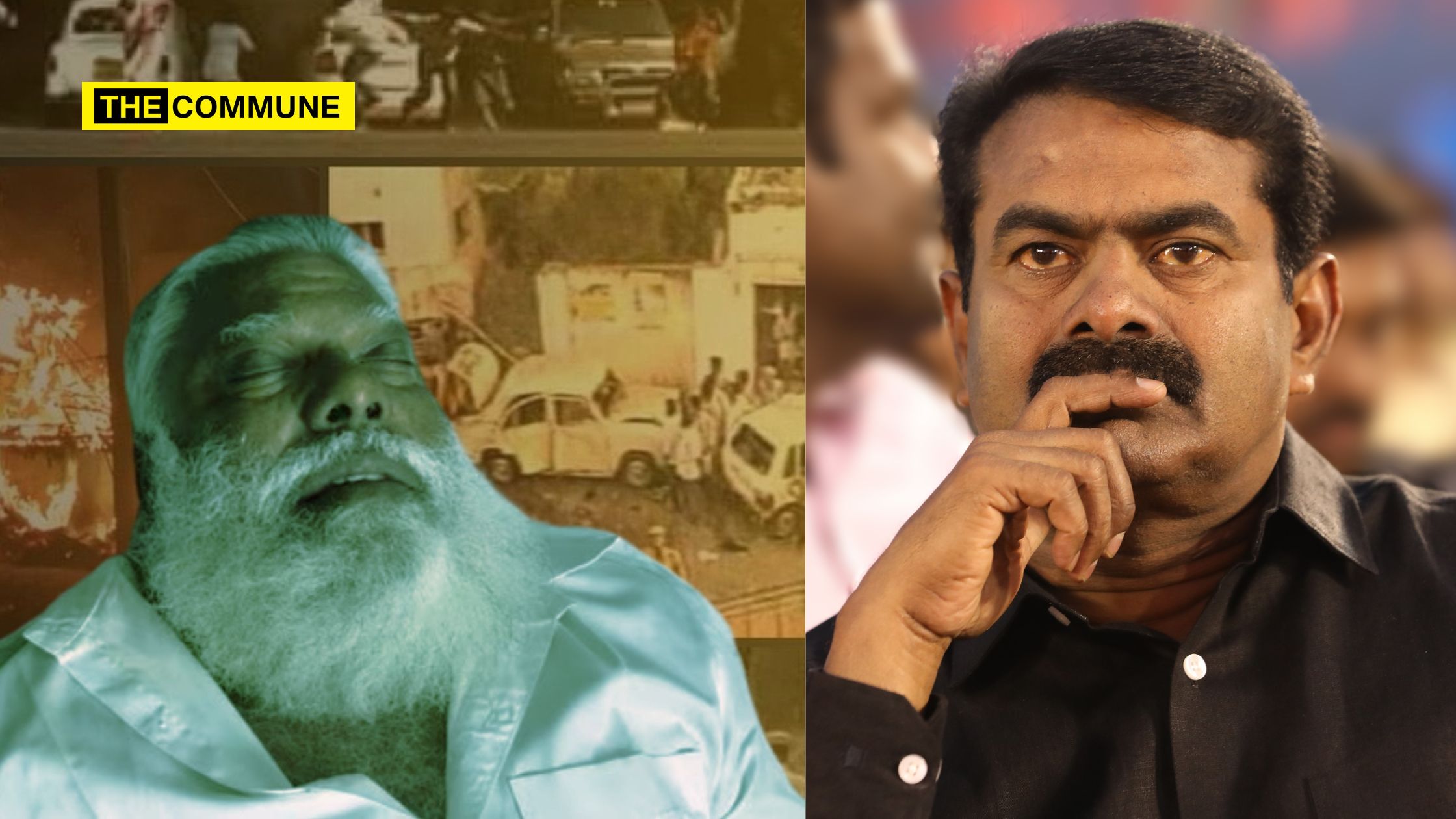
NTK Head Seeman Sings Paeans And Calls Terrorist SA Basha His Father

NTK Head Seeman Sings Paeans And Calls Terrorist SA Basha His Father

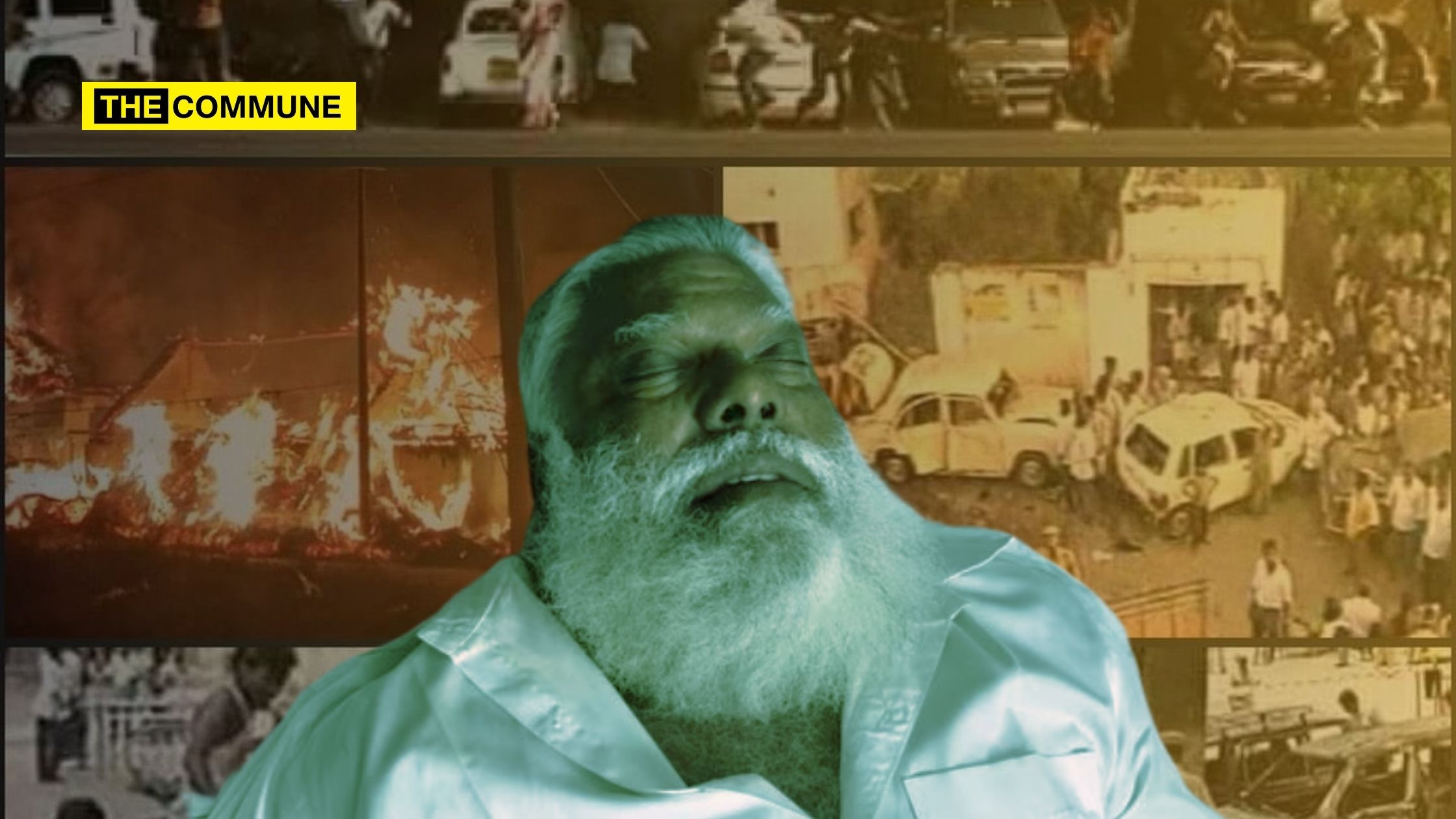
Even as the dust is yet to settle on Trichy SP Varun Kumar’s remarks labeling Naam Tamilar Katchi (NTK) as a separatist party, NTK party chief Seeman has, in line with the officer’s comments, praised SA Basha, the mastermind behind the 1998 Coimbatore serial bomb blasts. Basha, who passed away on 16 December 2024, due to age-related health issues, was the founder of the extremist group Al-Umma and was responsible for orchestrating the blasts that killed 58 people and injured 231 others.

On 17 December 2024, NTK party chief Seeman took to his official X account to describe the leader of the extremist group Al-Ummah SA Basha, as a “father figure”, expressing deep hurt over the news. In a mere attempt in minority appeasement, stating, “The death of father Basha is a great tragedy! Has the DMK government thought that the death of Muslim prisoners is their freedom? @CMOTamilnadu @mkstalin. I was deeply shocked and deeply saddened to learn of the death of father, Basha, who had been imprisoned for more than a quarter of a century in prison. I express my condolences to the family, relatives, and Muslim relatives who are grieving the loss of father and share in his grief.”

The powerless situation of not being able to rescue my father despite knowing that injustice was being done gives me great mental pain and guilt. The fact that father Basha, who was striving to obtain the great right of freedom, was completely separated from us and achieved freedom is a great tragedy that cannot be described in words. Being with him in Coimbatore jail and talking to him when he was released from prison are etched in my heart.”

He who makes a promise and then looks for excuses not to fulfill it is a cruel person,” says the venerable great prophet, Mohammed. The DMK, which promised to release the Muslim prisoners, formed the Adinathan Committee upon coming to power and withdrew, considering its duty to be over, is a terrible act of deceit that deceived the Muslim relatives who had trusted it. While prisoners Abuthakeer and Abdul Hakeem died during the DMK regime without enjoying their freedom, it is a great tragedy that father Basha has also died now following them. It is a great tragedy that his longing and desire, which he wanted to be freed at least in his last days and live in peace with his family, went unfulfilled until the end.”

“Isn’t it treasonous that the DMK, which came to power by winning the votes of all Muslim people, is delaying their long-standing demand for the release of Muslim prisoners without making any progress, and is obstructing the efforts of the prisoners who want to be released by conducting legal battles in the Supreme Court? Has the DMK government decided to release Muslim prisoners only through death? How much longer will you, gentlemen, get away with citing the Governor as an excuse? Can you shirk your responsibility and duty and play cheap politics on the release of Muslim prisoners? Shame!”

It is an unacceptable tyranny to play political games and seek political gain by flouting the promise made to release the Islamic prisoners. Let the death of father Basha be the last. No prisoner should ever die without being released. Let the Islamic prisoners who have spent their entire lives behind bars spend their remaining time with their families and relatives. Our final tribute to father basha will be continuing the work to ensure the speedy release of Islamic prisoners. My tearful salutation to father Basha!”

Who Is SA Basha?

S.A. Basha, the mastermind behind the 1998 Coimbatore serial bomb blasts, who founded the extremist organization Al-Umma, was responsible for planning the devastating blasts that killed 58 people and injured 231 others.

The Coimbatore serial bomb blasts of 1998 (DMK was in power in then) were a grievous incident in which 58 people were killed and over 200 individuals sustained serious injuries. This devastating series of 12 bomb attacks unfolded across 11 different locations within a 12-kilometer radius. Many of the survivors continue to grapple with the long-lasting effects of the shrapnel and other injuries caused by the devastating explosions.

The chief orchestrator behind these tragic events was identified as S. A. Basha, the founder of Al Ummah, an Islamic fundamentalist group. Investigations revealed that these bombings were part of a larger conspiracy with the sinister aim of targeting L.K. Advani, the leader of the Bharatiya Janata Party, during his election meeting scheduled for 4 p.m. on that ill-fated day. Fortunately, Advani’s flight was delayed, and he narrowly escaped the horrors of that day.

It is noteworthy to mention that one of the suspects, Mohammed Dhalka, who was detained in connection to the 2022 Coimbatore car blast terror incident is the nephew of SA Basha. Nawab Khan, Basha’s brother, was also sentenced to one-life term and 27 years of rigorous imprisonment in the 1998 bomb blast case.

The president of the banned fundamentalist outfit Al-Umma, SA Basha, openly threatened to kill the then Gujarat Chief Minister Narendra Modi if he visited Coimbatore in July 2003. This threat was made by Basha and eight others while speaking to journalists in the Coimbatore court premises after their conviction and life imprisonment in a case related to the murder of a Hindu Munnani leader. It is noteworthy that Al-Umma and its leader were allowed to operate openly by the DMK Government until the Coimbatore blasts on 14 February 1998.

Magazines like Outlook and Frontline also acknowledged the role of the Tamil Nadu Muslim Munnetra Kazhagam (TNMMK) in these blasts. In March 1998, Frontline reported, “Within hours of the blasts, the Tamil Nadu Government banned Al-Umma and the Jihad Committee. Al-Umma founder-president S.A. Basha and 12 other members of the organization were arrested in Chennai; explosive materials and weapons were seized from his house in Triplicane, Chennai.”

Subscribe to our channels on TelegramWhatsApp, and Instagram and get the best stories of the day delivered to you personally.

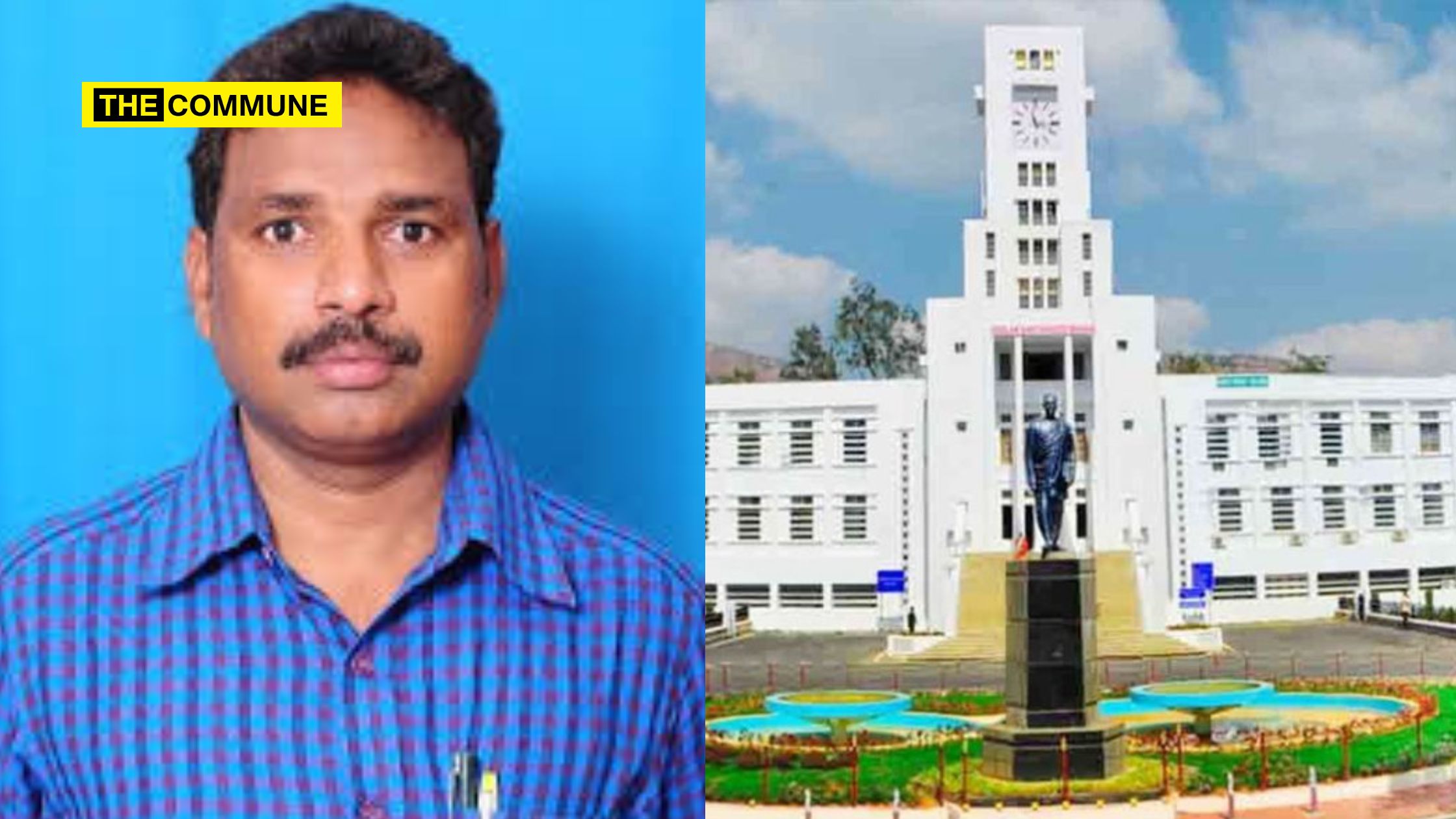
NGO Watchdog Files Complaint Against Sri Venkateswara University Prof For Allegedly Misusing SC Certificate To Secure Govt Job Despite Being Christian

NGO Watchdog Files Complaint Against Sri Venkateswara University Prof For Allegedly Misusing SC Certificate To Secure Govt Job Despite Being Christian

The Legal Rights Protection Forum has filed a formal complaint with the Governor of Andhra Pradesh, alleging that Dr. Ch. Chengaiah, a professor at Sri Venkateswara University (SVU), Tirupati, misused a Scheduled Caste (SC) certificate. The complaint demands Dr. Chengaiah’s immediate termination from university services, citing constitutional violations and misuse of his position.

The complaint outlines that Dr Chengaiah, previously Head of the Department of Electrical & Electronics Engineering (EEE) and Dean (SCDC) at SVU, was removed from his administrative role following an investigation by a High-Power Committee. The committee, chaired by the university’s Vice-Chancellor and Registrar, found him guilty of misconduct, including harassment of women and alleged promotion of Christianity among students. These findings were based on a Fact-Finding Committee report submitted to the university.

During the inquiry, Dr Chengaiah reportedly admitted to being a Christian and acknowledged encouraging Christian teaching in the classroom. The complaint highlights that according to Paragraph 3 of the Constitution (Scheduled Castes) Order, 1950, individuals practicing religions other than Hinduism are not eligible for Scheduled Caste status.

The Supreme Court of India recently reinforced this principle in its judgment in the C. Selvarani vs. The Special Secretary-cum-District Collector & Others (SLP No. 6728 of 2023) case, ruling that individuals converting to other religions cannot claim SC status for reservations.

The Legal Rights Protection Forum has alleged that Dr Chengaiah unlawfully obtained an SC certificate to secure a government position at Sri Venkateswara University under the SC quota, describing this as fraudulent and detrimental to the rights of genuine SC community members.

The complaint urges the Governor to intervene and take immediate action, including dismissing the professor from the university.

Subscribe to our channels on Telegram, WhatsApp, and Instagram and get the best stories of the day delivered to you personally.

Biomedical Waste & Confidential Patient Records From Kerala Illegally Dumped In Tamil Nadu Villages

Biomedical Waste & Confidential Patient Records From Kerala Illegally Dumped In Tamil Nadu Villages.

Large volumes of biomedical, food, and plastic waste, reportedly from Kerala’s Thiruvananthapuram Regional Cancer Centre (RCC) and Credence Private Hospital, have been found dumped across multiple Kodaganallur and Palavoor villages. The waste includes hazardous biomedical materials, such as used syringes and PPE kits, discarded on patta lands and waterbodies, causing significant health and environmental concerns.

As reported by TNIE, the dumping, which has been ongoing for several months, allegedly occurs during the night, making it difficult to apprehend those responsible. Trucks believed to be transporting loads for a nearby paper mill are suspected of bringing in the waste. Despite complaints by affected landowners, authorities have taken little action, and the issue remains unresolved.

Medical records containing sensitive personal information of cancer patients treated at the RCC were also found among the waste. Documents included patient names, addresses, treatment details, diagnoses, and dietary plans. Several of these records appeared to be recent, with dates from November 2024. The discovery of such documents not only highlights improper waste disposal practices but also raises concerns about a serious data breach.

The illegal dumping has had a direct impact on the local environment and livelihoods. Contaminated water sources near the dumping sites have led to health issues among livestock, including cattle and goats. Local farmers and residents are increasingly concerned about the long-term effects of biomedical waste exposure on their health and the surrounding ecosystem.

The issue has been brought to the attention of various authorities, including the Suthamalli police and the Tamil Nadu Chief Minister’s Special Cell. Complaints were filed over a month ago, but no case has been registered to date. Residents have alleged negligence on the part of both the police and revenue officials, as neither group has visited the affected sites despite repeated requests.

CCTV cameras near strategic locations, such as a Tasmac outlet, a paper mill, and a quarry, could potentially identify the trucks involved, but no effort has been made to trace the vehicles. Waste has reportedly been dumped across five locations spanning 40 acres of land.

The District Collector has directed local officials and the Tamil Nadu Pollution Control Board (TNPCB) to investigate the matter and take legal action. The Tirunelveli Superintendent of Police has stated that an FIR is expected to be registered soon to address the complaints.

The incident has raised several pressing questions about waste management practices and accountability. Concerns include the effectiveness of border check posts, the role of authorities in preventing such illegal activities, and the absence of coordination between Tamil Nadu and Kerala to address the issue. The lack of response from opposition parties has also drawn criticism.

Local residents and activists are demanding that the illegally dumped waste be sent back to Kerala and that stringent measures be implemented to prevent further transportation of hazardous materials into Tamil Nadu. The discovery of both hazardous waste and confidential medical records has highlighted severe lapses in governance, data security, and public health safeguards.

Subscribe to our channels on Telegram, WhatsApp, and Instagram and get the best stories of the day delivered to you personally.
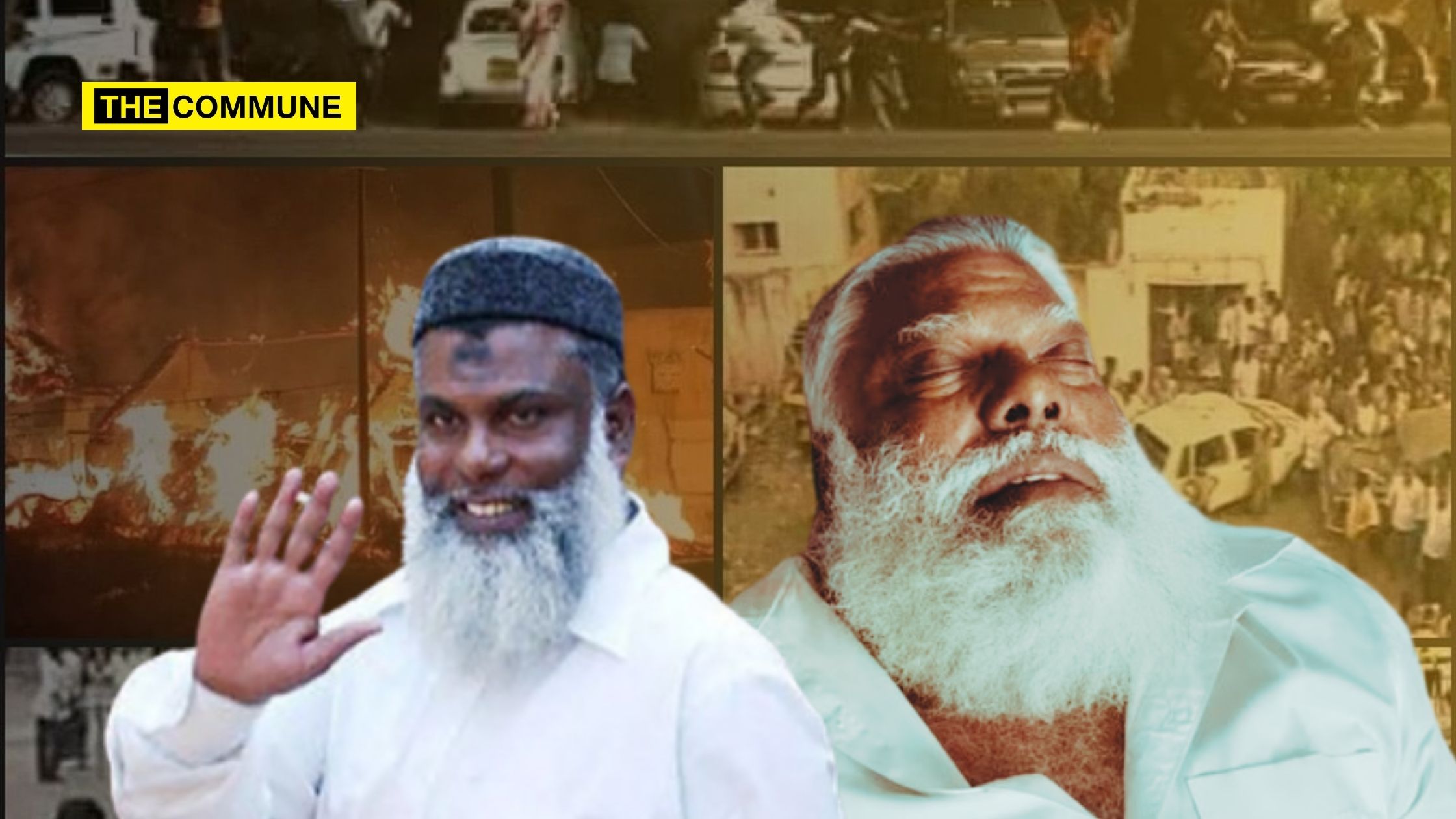
Al Ummah Terrorist SA Basha Who Masterminded 1998 Coimbatore Blasts Dead

Al Ummah Terrorist SA Basha Who Masterminded 1998 Coimbatore Blasts Dead

SA Basha, the mastermind behind the 1998 Coimbatore serial bomb blasts, passed away on December 16, 2024, at 6:20 PM due to age-related ailments. Basha, who founded the extremist organization Al-Ummah, was responsible for planning the devastating blasts that killed 58 people and injured 231 others.

The Coimbatore serial bomb blasts of 1998 (DMK was in power in then) were a grievous incident in which 58 people were killed and over 200 individuals sustained serious injuries. This devastating series of 12 bomb attacks unfolded across 11 different locations within a 12-kilometer radius. Many of the survivors continue to grapple with the long-lasting effects of the shrapnel and other injuries caused by the devastating explosions.

The chief orchestrator behind these tragic events was identified as S. A. Basha, the founder of Al Ummah, an Islamic fundamentalist group. Investigations revealed that these bombings were part of a larger conspiracy with the sinister aim of targeting L.K. Advani, the leader of the Bharatiya Janata Party, during his election meeting scheduled for 4 p.m. on that ill-fated day. Fortunately, Advani’s flight was delayed, and he narrowly escaped the horrors of that day.

It is noteworthy to mention that one of the suspects, Mohammed Dhalka, who was detained in connection to the 2022 Coimbatore car blast terror incident is the nephew of SA Basha. Nawab Khan, Basha’s brother, was also sentenced to one-life term and 27 years of rigorous imprisonment in the 1998 bomb blast case.

The president of the banned fundamentalist outfit Al-Umma, SA Basha, openly threatened to kill the then Gujarat Chief Minister Narendra Modi if he visited Coimbatore in July 2003. This threat was made by Basha and eight others while speaking to journalists in the Coimbatore court premises after their conviction and life imprisonment in a case related to the murder of a Hindu Munnani leader. It is noteworthy that Al-Umma and its leader were allowed to operate openly by the DMK Government until the Coimbatore blasts on 14 February 1998.

Magazines like Outlook and Frontline also acknowledged the role of the Tamil Nadu Muslim Munnetra Kazhagam (TNMMK) in these blasts. In March 1998, Frontline reported, “Within hours of the blasts, the Tamil Nadu Government banned Al-Umma and the Jihad Committee. Al-Umma founder-president S.A. Basha and 12 other members of the organization were arrested in Chennai; explosive materials and weapons were seized from his house in Triplicane, Chennai.”

Subscribe to our channels on TelegramWhatsApp, and Instagram and get the best stories of the day delivered to you personally.
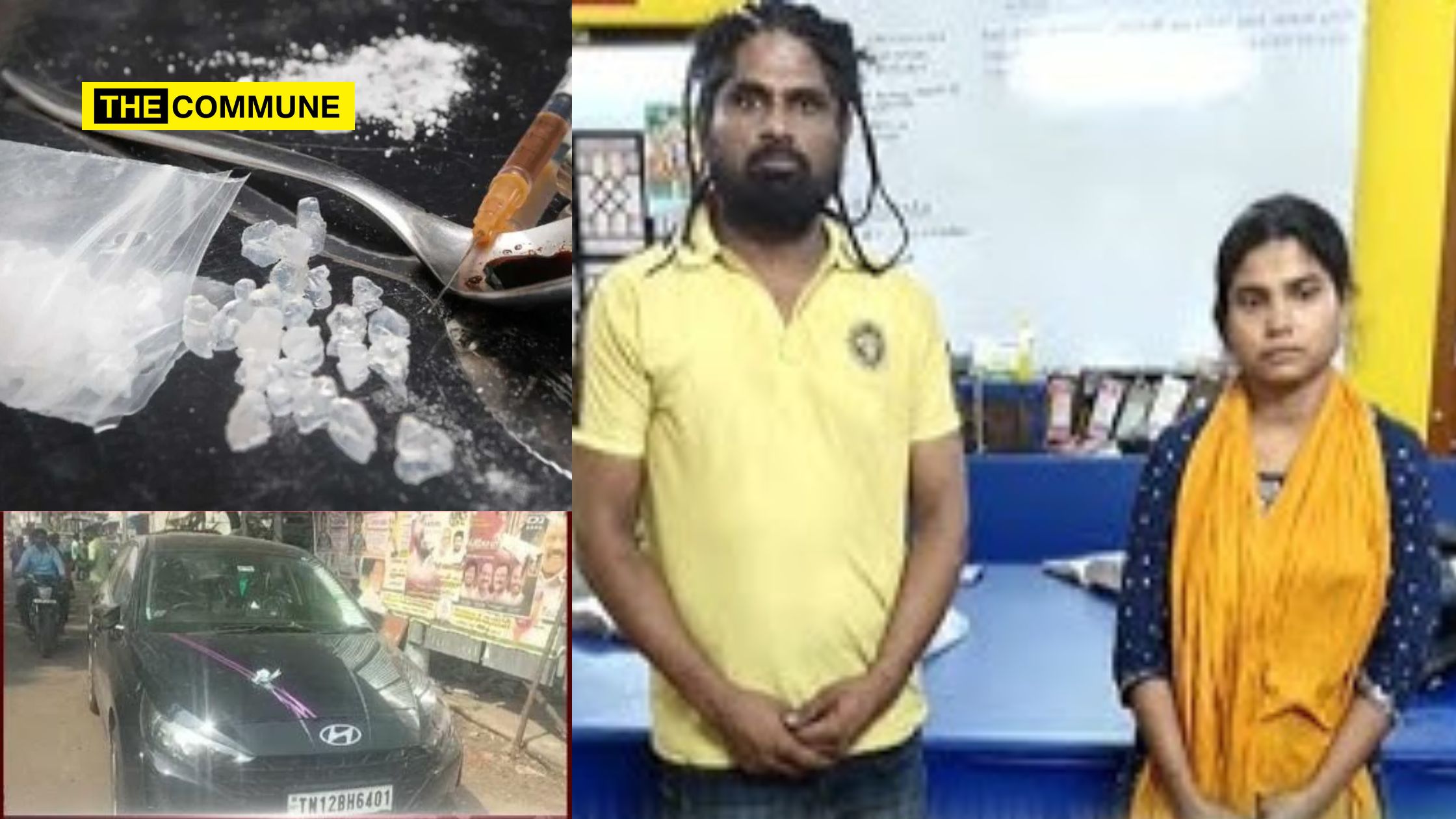
Chennai Police Bust Drug Trafficking Ring In Egmore; Methamphetamine And Ganja Seized, Two Arrested

Chennai Police Bust Drug Trafficking Ring In Egmore; Methamphetamine And Ganja Seized, Two Arrested

Acting on a tip-off about drug trafficking in Egmore, Chennai, the police conducted a raid on a luxury car. Upon noticing the authorities, two individuals attempted to flee. The police subsequently recovered 705 grams of methamphetamine valued at ₹70 lakh and ganja worth ₹6 lakh from the vehicle.

Two suspects, Fatima Begum, a woman from Assam, and Balasubramanian, a supplier of vegetables to luxury hotels, were apprehended in connection with the case. The luxury car was also seized, and further investigations are underway.

https://twitter.com/NewsTamilTV24x7/status/1868550543431323957

(With Inputs From Thanthi)

Subscribe to our TelegramWhatsApp, and Instagram channels and get the best stories of the day.

“Don’t Believe Fabricated Stories And Rumours”: Ilaiayaraaja Busts Nefarious Anti-Hindu Propaganda By Dravidianist Media

Ilaiayaraaja Busts Nefarious Anti-Hindu Propaganda By Dravidianist Media on his temple visit.

Renowned musician and Rajya Sabha MP Ilaiyaraaja has dismissed allegations that he was removed from the Srivilliputhur Andal Temple, calling the claims false and attacking his self-respect. The statement came after claims surfaced that he had been removed from the temple’s Artha Mandapam.

Addressing the allegations over his recent temple visit, Ilaiyaraaja remarked, “Certain individuals are circulating false rumours about me. I do not compromise on self-respect at any time or place, and I never will. They have spread fabricated stories as though they occurred. Fans and the public should not believe these rumors.”

Right from the beginning of the day, the Dravidian media and Dravidianists on social media were relentlessly amplifying news involving music Maestro Ilaiyaraaja, sparking widespread discussion. Critics alleged that this is a typical strategy employed by the DMK to deflect significant criticism to other important issues and hoodwink the public. It turned out that the rumours were fabricated and allegedly intended to divert public attention away from issues that reflect poorly on the ruling DMK’s administration.

Let’s examine how the Dravidianist media peddled lies in the name of reporting “news.”

Sun News

The worst propaganda was peddled by the ‘Sun News’, owned by the DMK first family, which took its storytelling to another level by shamelessly promoting a narrative to paint Hindus, especially Brahmins and the seers, in a negative light. This extreme step represented the height of propaganda, aligning with the Dravidian ideology to ridicule Hindu customs and paint caste discrimination. They repeatedly claimed that Ilaiyaraaja was asked to leave the temple garba gruha (sanctum sanctorum) when he hadn’t even entered it.

https://twitter.com/sunnewstamil/status/1868485177141571786

Puthiya Thalaimurai News

Puthiya Thalaimurai also followed the lead of the “parent” Dravidianist media and claimed that Ilaiyaraja was “denied” entry into the garbagruha. Despite the video showing that the maestro had not even stepped in, they had already started building the narrative that when he “entered”, he was asked to leave!

News 18 Tamil Nadu

News 18 Tamil Nadu went one step further and claimed that he was not only denied entry into the garbagruha but also the Artha Mandapam!

News7

News7 kept it very simple and straightforward and peddled the same anti-Hindu and anti-Brahmin propaganda that he was denied entry – it did not mention where exactly. So, if people who were not aware of the news could possibly assume that he was denied entry into the temple itself!

The Dravidianist media’s relentless propagation of falsehoods surrounding Ilaiyaraaja’s visit to the Srivilliputhur Andal Temple reflects a deliberate attempt to distract from real issues and to deflect attention away from the shortcomings of the ruling DMK. By twisting facts and fabricating narratives, media outlets like Sun News, Puthiya Thalaimurai, News 18 Tamil Nadu, and News7 have not only misrepresented the truth but have also furthered an agenda of division, painting Hindu customs and Brahmins in a negative light.

This manipulation is a glaring example of how the media can be weaponized to serve political interests rather than report truthfully. Ilaiyaraaja’s dignified response in defending his honour and self-respect is a sharp rebuttal to the baseless accusations spread by these outlets, exposing their intentions to mislead the public.

Subscribe to our TelegramWhatsApp, and Instagram channels and get the best stories of the day delivered to you personally.