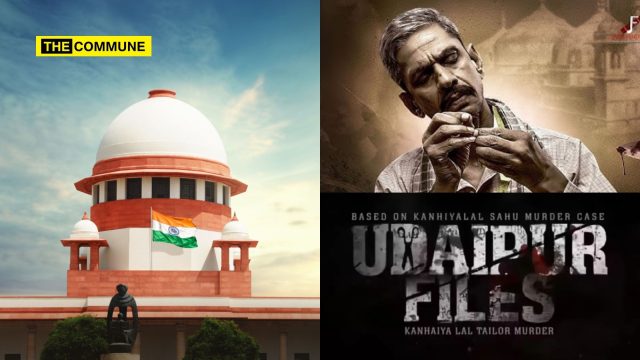
The Supreme Court on Wednesday asked the Centre to “immediately” decide the revision pleas filed against the CBFC certification granted to the film ‘Udaipur Files’.
A Bench of Justices Surya Kant and Joymala Bagchi was dealing with a plea filed by film producer Amit Johnny, who has challenged the Delhi High Court’s order that had temporarily stayed the release of the movie based on the Kanhaiya Lal murder case.
In a brief hearing, the Justice Kant-led Bench asked the panel constituted by the Centre under Section 6 of the Cinematograph Act to decide the revision pleas “immediately without loss of time”. Section 6 vests the Centre with adequate powers to declare a film to be uncertified or pass orders providing for interim measures, including suspension of the film from public exhibition.
Posting the matter for further hearing on July 21, the apex court remarked, “We can wait for some time. We are told that a committee has been formed, and the Union (government) is looking into it. We can have the benefit of the Union of India’s view. Suppose the Union says there is nothing wrong with the movie, then we will see that. If they recommend some cuts, then also we can peruse the same. If the Centre was not taking up the matter, then it was different.”
The film revolves around the brutal murder of Kanhaiya Lal, a tailor in Rajasthan’s Udaipur, in June 2022 by Mohammad Riyaz Attari and Ghaus Mohammad by slitting his throat. One of the accused in the Kanhaiya Lal murder case, Javed, had filed a writ petition before the Supreme Court and has sought a stay on the release of ‘Udaipur Files’, arguing that the release of the film could prejudice the ongoing trial proceedings pending before the Special NIA court.
A day before its scheduled release, the Delhi High Court, in its order passed on July 10, had temporarily halted the release of the controversial movie till the Centre decides the revision plea of the petitioners challenging the grant of the CBFC certification.
A Bench of Chief Justice D.K. Upadhyaya and Justice Anish Dayal was dealing with a batch of pleas, including a plea filed by Maulana Arshad Madani, the President of the Islamic clerics’ body Jamiat Ulema-i-Hind, seeking a direction to quash the Central Board of Film Certification (CBFC) certification granted to the film.
As per the petition filed by Maulana Arshad Madani, the CBFC certification was granted in violation of Section 5B of the Cinematograph Act, 1952 and the Guidelines for Certification of Films for Public Exhibition, since the release of the film ‘Udaipur Files’ has the potential to inflame communal tensions and disrupt public order, severely undermining the fabric of religious harmony in the country.
The Chief Justice Upadhyaya-led Bench allowed the petitioners as well as the general public to file within two days revision plea before the Union government under Section 6 of the Cinematograph Act. The Delhi High Court had asked the Centre to decide the revision pleas within a week after giving an opportunity of hearing to the producer. Further, it had ordered that the prayer for interim relief, if made, will also be considered and decided.
–IANS
Subscribe to our channels on Telegram, WhatsApp, and Instagram and get the best stories of the day delivered to you personally.
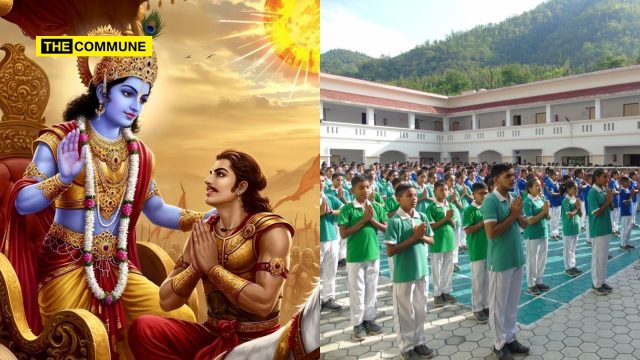
Uttarakhand Chief Minister Pushkar Singh Dhami on Wednesday welcomed the decision to recite Gita shlokas during prayer meetings, in government schools across the state and said that the highly revered Hindu scripture will serve as the ‘guiding light’ for the new generation.
CM Dhami, speaking to reporters on Wednesday said, “Bhagwad Gita shlokas will inculcate the Vedic concept of duty and rightful action in children and will show them the right path. The scriptures will help build good character and also make them understand the power and strength of spirituality.” “It will shape them as upright individuals. Where they go, they will excel in that area,” he added.
Dhami’s remarks come on the back of Uttarakhand government passing a directive to all government schools, directing them to recite Bhagwad Gita shlokas during morning prayers.
According to the order, one shloka from Bhagwad Gita will be recited every week and the students will also be enlightened about its importance and on how it will help nurture human values, leadership skills, decision-making abilities and scientific thinking in them.
It further says that Gita shlokas should not be treated as just any ‘reading material’ but it should reflect in the students’ attitude and behaviour. According to government officials, the initiative aligns with the objective of National Education Policy (NEP) 2020 which calls for creating a blend of traditional knowledge with modern education.
Notably, the Uttarakhand government has also asked the National Council of Educational Research and Training (NCERT) to include the teaching of Hindu scriptures Bhagwad Gita and Ramayan into the school curriculum.
Though, no timeline has been set for the textbooks, integrating traditional systems with modern education, the shlokas from Bhagwad Gita will be recited in daily prayer meetings of schools in the state. As per estimates, there are more than 17,000 government-run schools in the Devbhoomi.
–IANS
Subscribe to our channels on Telegram, WhatsApp, and Instagram and get the best stories of the day delivered to you personally.
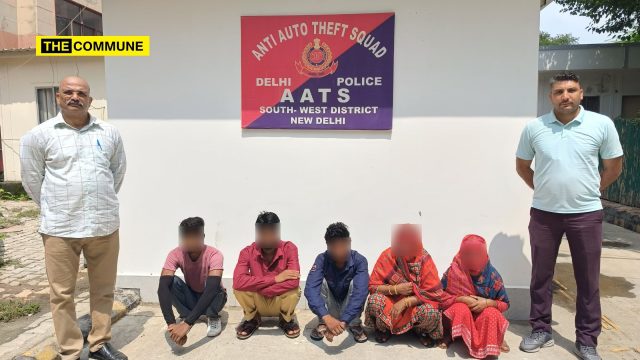
In two separate operations carried out by Delhi Police, seven Bangladeshi nationals residing illegally in the national capital have been apprehended and handed over to immigration authorities for deportation.
The coordinated efforts by Dwarka and South West District police reflect an intensified crackdown on illegal immigration as part of ongoing surveillance and enforcement drives. In the first case, the Bindapur Police Station team from Dwarka District traced two Bangladeshi nationals who had been living illegally in the area.
Acting under the direction of the Deputy Commissioner of Police, Dwarka District, a special drive was launched to identify and take strict action against undocumented foreign nationals.
The Crack team of the Bindapur police station traced two illegally staying Bangladeshi migrants. They were deported as per procedure, the official press release stated.
The individuals were identified as Shahadatt, 30, son of Abdul Khalik from Morrelganj, Khulna, and Mohammad Anwar, 35, son of Mohammed Badol from Savar, Hemayatpur, Dhaka.
Both confessed to having entered India illegally and were produced before the Foreigners Regional Registration Office (FRRO) at R.K. Puram. After completion of the necessary formalities, they were sent to a detention centre in Vijay Vihar, Rohini, pending deportation.
In a separate operation, the Operations Cell of South West District Police detained five more Bangladeshi nationals, including two women and a 13-year-old boy. According to the press release issued by South West District Police, “The team of Operations Cell, South West District has done commendable work by tracing/apprehending five Bangladeshi migrants… Fresh deportation process was initiated with the help of FRRO, Delhi, after completing all codal formalities.”
The detainees, who were found roaming in the Palam Village area, failed to produce valid Indian documents and admitted to having illegally entered India in 2017. They were previously working at brick kilns in Kosli, Rewari, Haryana, but had recently moved to Delhi in search of new employment opportunities.
Photocopies of Bangladeshi identity documents, such as national ID cards and birth certificates, were recovered from their possession. The arrested individuals were identified as Akash (26), Chamili Khatun (26), Mohd. Nahim (27), Halima Begum (40), and Mohd. Usman (13), all hailing from various regions in the Kurigram and Dhaka districts of Bangladesh. Legal procedures were swiftly completed, and the FRRO has initiated formal deportation for all five. Senior officers, including DCP Dwarka Ankit Singh and DCP South West Amit Goel, have lauded their teams for prompt action and diligent fieldwork.
–IANS
Subscribe to our channels on Telegram, WhatsApp, and Instagram and get the best stories of the day delivered to you personally.
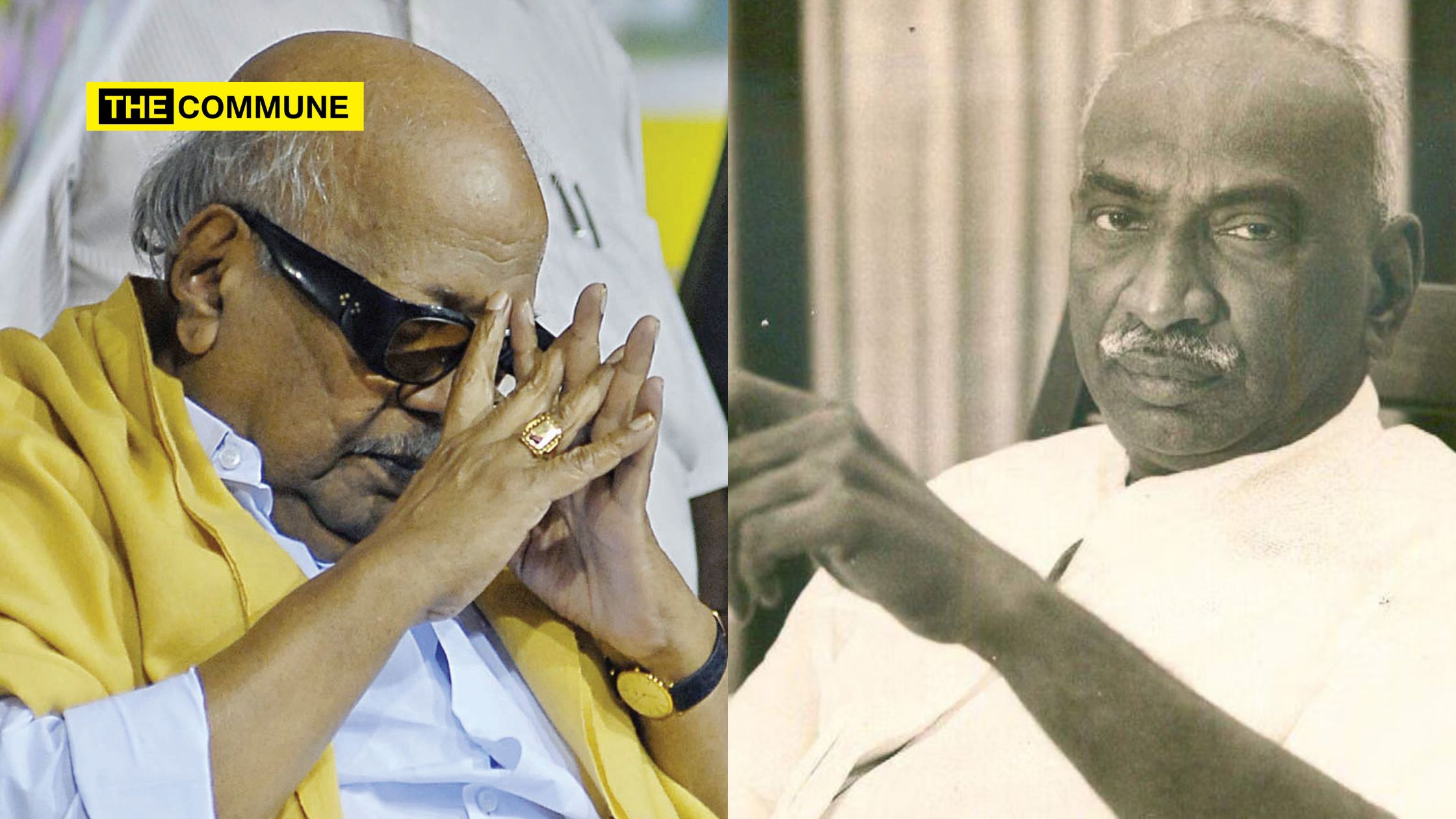
K. Kamaraj, fondly referred to as Kamarajar out of respect, remains one of the most influential political figures to emerge from Tamil Nadu, with a legacy that not only reshaped the state but also played a decisive role in shaping national politics. His leadership, often referred to as a golden era, left such an indelible mark that even today, Tamil Nadu politicians frequently promise to revive a governance model “on par with Kamaraj’s rule.” Yet, despite his towering contributions, the DMK has repeatedly mocked, minimized, or appropriated his legacy when it suited their political agenda attempting to overshadow his significance and remove him from historical memory.
Kamaraj’s contributions were so monumental that even EV Ramasamy Naicker (EVR), a known critic of the Congress, once admitted that what Kamaraj achieved for Tamil Nadu had never been done by any ruler before him, not the ancient dynasties of the Cheras, Cholas, or Pandyas, nor colonial rulers like the British or Marathas.
Legacy Of Kamarajar
During Kamaraj’s tenure as Chief Minister, often referred to as the golden era, significant strides were made in education and infrastructure development. Under his leadership, the local education rate soared from a meager 7% during the colonial era to a commendable 37% after his reforms. These reforms not only increased the number of schools but also focused on enhancing educational standards. Measures such as extending the number of working days to 200, reducing unnecessary holidays, and devising syllabi to accommodate various abilities were implemented.
Additionally, Kamaraj, alongside Bishnuram Medhi, the Governor, played pivotal roles in establishing prestigious institutions like IIT Madras in 1959. In the realm of irrigation, major schemes were undertaken, resulting in the construction of 13 dams and canals across various regions including Bhavani, Vaigai, and Amaravathi. These projects significantly expanded cultivable land, with notable successes such as the Lower Bhavani Dam in Erode district, which brought over 200,000 acres under cultivation.
Furthermore, Kamaraj’s era witnessed the inception of several industrial ventures with substantial investments. Projects like Neyveli Lignite Corporation, BHEL at Trichy, and Manali Refinery marked milestones in industrial development. Moreover, industries such as paper, sugar, chemicals, and cement flourished during this period. His retirement marked a remarkable nine years of service as the chief minister, setting an unmatched record in the history of Madras State. While subsequent chief ministers may have served longer in cumulative terms, none have achieved the level of uninterrupted tenure that Kamaraj held during his time in office.
Political Acumen And Rise To Power
Kamaraj’s journey from a modest educational background to national leadership is also a testament to his political insight and determination. Though he had only studied up to sixth standard, he was drawn to the freedom movement early on, participating in both the Non-Cooperation and Quit India Movements. He spent over eight years in jail for his role in the struggle against British colonialism.
A pivotal figure in his political evolution was S. Satyamurti, who recognized Kamaraj’s exceptional organizational abilities and mentored him. Their relationship is often likened to that of Arjuna and Dronacharya from the Mahabharata. Kamaraj’s rise as a non-Brahmin leader during the 1930s and 1940s was especially significant given the socio-political dynamics of the time.
One of his most notable political accomplishments was his ability to challenge and eventually surpass C. Rajagopalachari (Rajaji), a towering national leader. Despite being rivals, Kamaraj showed no insecurity and even appointed Rajaji’s protégé, C. Subramaniam, to his cabinet an example of his inclusive and pragmatic leadership style. Kamaraj’s connection to the people ran deep. He is believed to have personally visited each of Tamil Nadu’s 12,000 villages at least twice, often on foot, demonstrating a level of commitment that few leaders have matched.
On the national stage, Kamaraj played a crucial role in reshaping the Congress party following the 1962 Sino-Indian War. His “Kamaraj Plan” called on senior leaders to resign from government positions and dedicate themselves to rebuilding the party. He led by example, stepping down as Chief Minister. This bold move led to several key resignations, including those of Krishna Menon and Lal Bahadur Shastri.
Following Nehru’s declining health and eventual death in 1964, Kamaraj emerged as a kingmaker. He facilitated Shastri’s return to the cabinet and helped position him as Nehru’s successor. After Shastri’s untimely demise, Kamaraj played a pivotal role in making Indira Gandhi the Prime Minister, preferring her over Morarji Desai, whom many viewed as rigid and politically inflexible. However, this decision later proved problematic when Indira asserted her independence, leading to the 1969 split in the Congress party. Kamaraj led the breakaway faction, Congress (O), which continued to command loyalty in Tamil Nadu, where he remained the face of the party.
One major miscalculation on Kamaraj’s part was underestimating the DMK. He viewed Rajaji as his primary political rival until the early 1960s and failed to grasp the rising momentum behind the DMK’s identity-based politics. Their call for a separate Dravida Nadu, while radical, resonated with certain sections of the population. Kamaraj believed such ideas would not gain traction but his failure to effectively counter the DMK’s growing influence contributed to the Congress’s defeat in the 1967 state elections.
Kamaraj’s appeal never stemmed from charisma or oratory flair. His power lay in his simplicity and sincerity. He remained unmarried, lived modestly, and when he died, he left behind only a handful of personal belongings—some clothing, a few books, and very little money. His voters in Virudhunagar, however, eventually turned against him in his final election, believing he wouldn’t become Chief Minister again and questioning why they should elect someone unlikely to return to power.
Enduring Influence
Though half a century has passed since his death, Kamaraj’s name is still invoked by political parties, especially during election campaigns, with promises to emulate his governance. Yet, beyond rhetoric, his legacy has largely been ignored—even by the Congress party he once led, which struggles today to inspire the kind of mass support Kamaraj once effortlessly commanded.
Jealousy Of Karunanidhi
The DMK, in particular, has had a complicated relationship with Kamaraj’s legacy. During his lifetime, the party often belittled him through satire and caricature, working actively to diminish his standing and erase his role in shaping Tamil Nadu’s political identity. It is ironic that today, some within the DMK attempt to co-opt his memory, selectively highlighting moments that suit their narrative, while ignoring the years they spent undermining him.
Occasions Where Karunanidhi Derogated Kamaraj
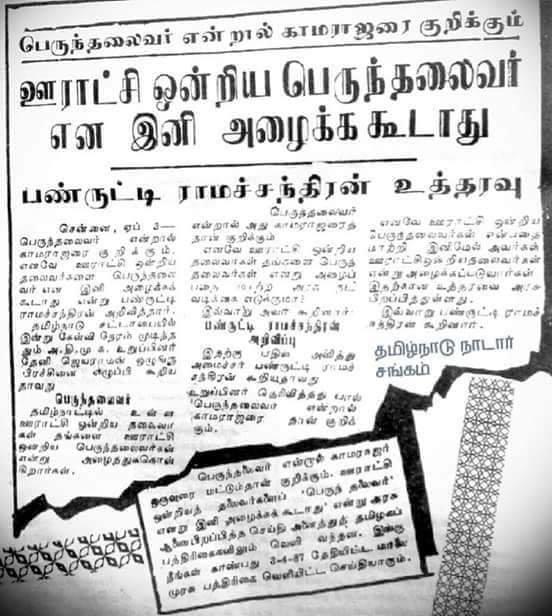
On one occasion, when Karunanidhi conversed with a leader and inquired about the leader’s whereabouts, the leader responded by mentioning that he had visited ‘Perunthalaivar‘ (Tall Leader) Kamaraj. This remark sowed seeds of jealousy in Karunanidhi to designate all panchayat council chiefs as Perunthalaivar.
In yet another incident where Karunanidhi disparaged Kamaraj was a visit to Russia. Karunanidhi stated “Earlier we used to send buffalo skins to Russia, now we have sent buffalo itself to Russia.” Additionally, in another incident where Karunanidhi referred to Kamaraj as the “Son of a woman who sells dried fish in Virudhunagar.”
Similarly during his tenure as Chief Minister, the late DMK leader Karunanidhi mandated that all panchayat council chiefs be addressed as “Perunthalaivar.” However, this directive was rescinded on 3 April 1987 after MG Ramachandran (MGR) assumed power. Nevertheless, in certain areas, the practice persists.
Kamaraj, in his capacity as the chairman of the Indian National Congress, embarked on a visit to the Soviet Union. Initially, there seemed to be some uncertainty on the part of the Soviet government regarding how to regard Kamaraj. However, they eventually concluded that despite his official position, he held significant importance in India at that time. During his trip, Kamaraj visited Dushanbe, Volgograd, and Leningrad. His meetings with Aleksei Kosygin, the Soviet premier, and Leonid Brezhnev, the General Secretary of the Communist Party of the Soviet Union, were well-documented events. During his speech, Karunanidhi made derogatory and racially charged remarks about Kamaraj, referring to him as a buffalo due to the color of his skin.
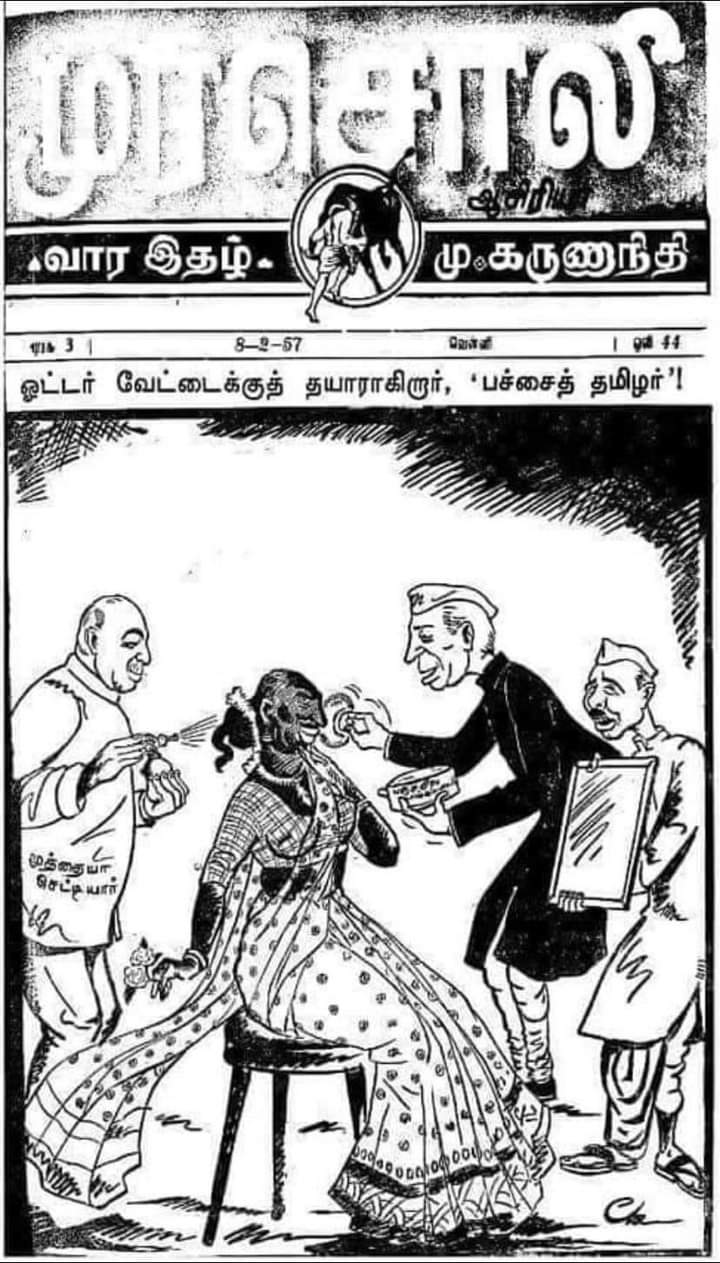
On 8 February 1957, in Murasoli magazine, Karunanidhi, serving as the chief editor at the time, published a controversial cartoon that depicted a derogatory portrayal. The cartoon featured a black woman undergoing makeup to resemble Kamaraj, with another figure representing Prime Minister Nehru as the makeup artist. The caption accompanying the cartoon read, “The true Tamilian is getting ready for vote hunting.” This portrayal aimed to ridicule Kamaraj for his deliberate decision not to marry. Karunanidhi ridiculed him by likening him to a woman dressed in a saree and wearing a nose pin. This has been widely condemned as one of the most disgraceful instances of mockery in political history, stemming from jealousy over Kamaraj’s effective governance.
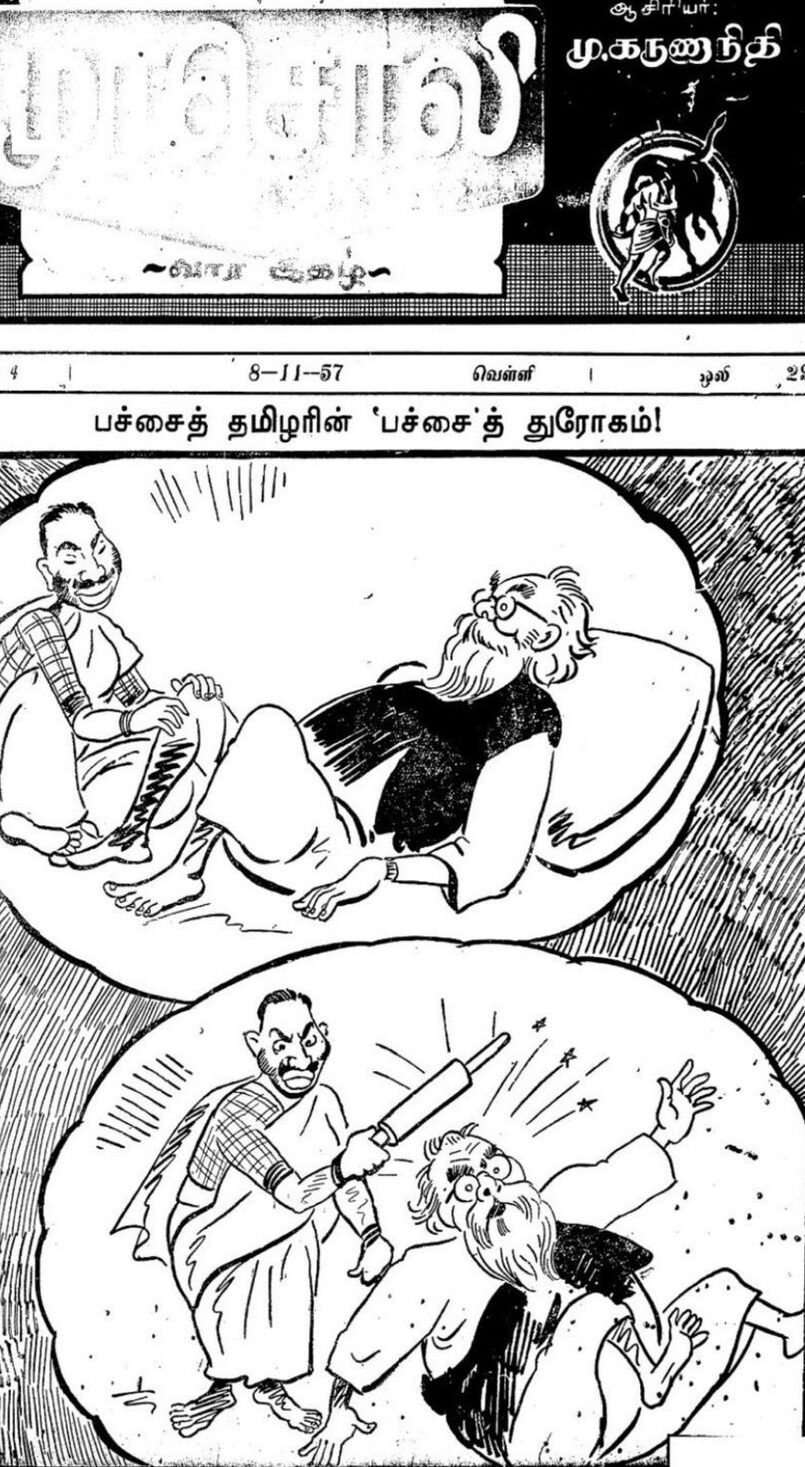
In the same Murasoli magazine dated 8 November 1957, Karunanidhi portrayed Kamaraj wearing a saree in a cartoon. In this one cartoon depicted Kamaraj seeking favors by massaging the legs of EV Ramasamy. In a subsequent cartoon, Karunanidhi depicted Kamaraj forcefully driving away EV Ramasamy, with a caption titled “True Tamilans, True treachery.” Once again, he created a cartoon mocking Kamaraj by portraying him as a woman.
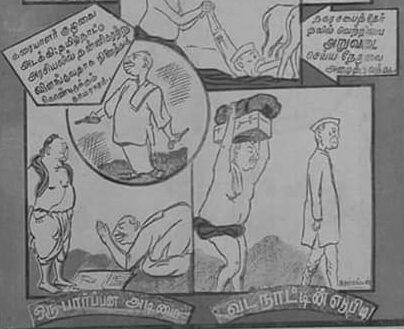
In the 1956 Pongal Malar edition of Murasoli, Karunanidhi featured a cartoon series titled ‘Kamarajar Puranam’ where he portrayed Kamaraj as prostrating before a Brahmin. This one was titled “A Brahmin Slave.”
Additionally, another cartoon depicted Kamaraj as a porter carrying the agendas of Prime Minister Nehru titled “Mere worker for North Indians“, which not only insulted both leaders but also demeaned the profession of the downtrodden who earn their livelihood through hard labor. Karunanidhi promoted a misleading narrative among the impoverished population of Tamil Nadu, portraying himself as a constructive force. However, in truth, Kamaraj held significant political sway as a kingmaker. His renowned “K plan” garnered praise, with even Prime Minister Nehru seeking counsel from Kamaraj. Following Nehru’s passing, Kamaraj played a pivotal role in determining who would assume the prime ministerial position in Delhi.
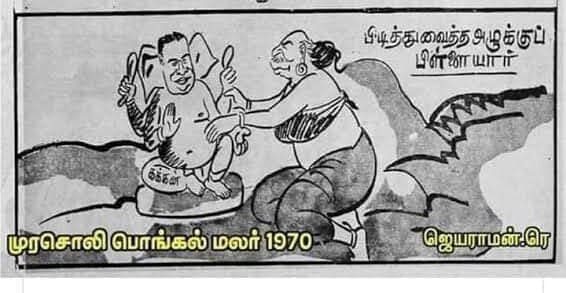
In 1970, amidst the Murasoli controversy surrounding the Pongal Malar, Karunanidhi published a cartoon that not only disrespected Kamaraj but also offended Hindu sentiments. In the cartoon, Kamaraj was depicted as a semi-clothed woman resembling a Hindu goddess, and Kakkan, another esteemed leader of the Congress known for his neutrality, was portrayed as a male Hindu deity. This portrayal was titled “A handmade dirty Pillayar,” adding insult to injury for many Hindus. Kakkan, hailing from a Scheduled Caste background, rose to the position of Home Minister. Despite his stature, even in his passing, he relied on a government hospital for his medical care. Surprisingly, he lacked financial resources at the time of his demise. The DMK, which boasts of advocating for social justice, ironically subjected such a man to derogatory caricatures, despite his significant contribution to the state.
The DMK, particularly under the leadership of Karunanidhi, has been cunningly focused on establishing their dynasty’s perpetual rule, ensuring that no other entity or ideology can rival theirs. This ambition has been meticulously sustained over five decades, exemplified by Karunanidhi’s refusal to permit a memorial for Kamaraj on Marina Beach, despite widespread pressure from various leaders. This illustrates Karunanidhi’s jealousy, as he seeks to monopolize praise and spotlight in Tamil Nadu, deterring any potential contenders from gaining recognition.
So even @the_hindu quoting party colleagues of #Kamaraj says #Karunanidhi turned down request for a memorial on Marina Wondering what Vikatan based their article on. MuKa may have praised Kamaraj but refused Memorial on Marina was my point
A figure such as Kamaraj will be eternally honored and revered by people across generations, despite attempts by politicians like Karunanidhi to overshadow his legacy by naming infrastructure projects after their own family members, such actions cannot conceal the genuine patriotism embodied by individuals like Kamaraj. When Kamaraj initiated the opening of irrigation canals to supply water to farmers for agricultural purposes, Karunanidhi, on the other hand, facilitated the proliferation of liquor shops, exacerbating the misery of the poor by providing unrestricted access to alcohol.
Subscribe to our channels on Telegram, WhatsApp, and Instagram and get the best stories of the day delivered to you personally.
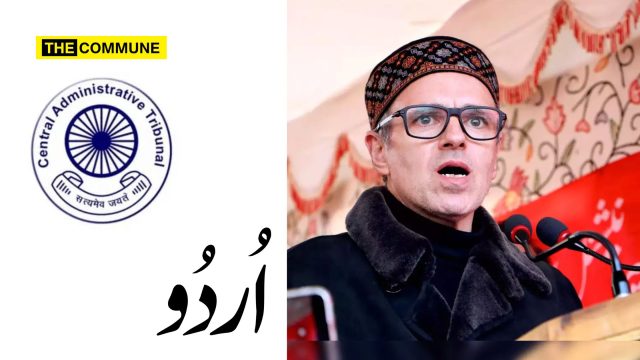
In a significant development, the Central Administrative Tribunal (CAT) has stayed the enforcement of provisions under the Jammu and Kashmir Revenue (Subordinate) Service Recruitment Rules, 2009, when Omar Abdullah was the Chief Minister of the state, that mandated knowledge of Urdu as a compulsory qualification for the post of Naib Tehsildar.
The order was issued by a CAT Bench comprising Rajinder Dogra and Ram Mohan Johri while hearing a petition filed by Rajesh Singh and others. The Tribunal directed the Jammu and Kashmir Services Selection Board (SSB) to accept applications from candidates who possess a Graduation degree along with knowledge of any one of the five official languages recognized under the Jammu and Kashmir Official Languages Act, 2020 — namely Hindi, Kashmiri, English, Dogri, and Urdu.
Senior Advocate Abhinav Sharma, assisted by Advocate Abhirash Sharma, appeared for the petitioners. Additional Advocate Generals Rajesh Thappa and Sudesh Magotra, along with Deputy Advocate General Hunar Gupta, represented the Union Territory administration.
The Tribunal, while passing the interim order, observed that the exclusive requirement of Urdu knowledge in the 2009 recruitment rules appeared prima facie discriminatory in light of the updated linguistic framework provided by the Jammu and Kashmir Official Languages Act, 2020.
“This court hereby stays the operation of the relevant provisions of the Jammu and Kashmir Revenue (Subordinate) Service Recruitment Rules of 2009, insofar as they mandate Graduation with knowledge of Urdu as the minimum qualification for the post of Naib Tehsildar”, the Bench stated in its order.
The Tribunal has also issued notices to the respondents, directing them to file their replies within four weeks. The matter has been listed for the next hearing on August 13, 2025.
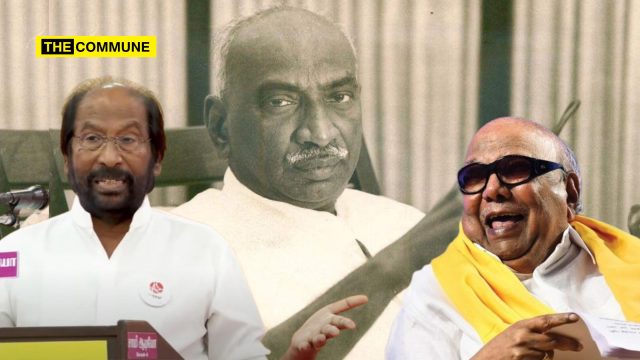
DMK Deputy General Secretary and Rajya Sabha MP Tiruchi N. Siva has stirred controversy with remarks made during a party meeting in Perambur, Chennai. In his speech, Siva claimed that late former Chief Minister K. Kamaraj (referred to as Kamarajar), before his death, held the hand of then Chief Minister M. Karunanidhi and urged him to “save the country and democracy.”
Siva didn’t stop there, he further alleged that Kamaraj, often praised for his simple lifestyle, would not sleep without air conditioning. He stated that Karunanidhi himself told him this, and that it inspired the DMK government to install air conditioning in all guest house in Tamil Nadu.
Speaking at the DMK meeting, Tiruchi Siva said, “Similarly, when I was around 23 or 24, Kalaignar (Karunanidhi) would take me in his car and recount some events. Some people would question why he was telling these things to a young kid. But he knew I would speak about them in public meetings and convey them effectively to the people. He would tell me many such stories. One day, he told me this, ‘Kamarajar has organized condemnation meetings all over Tamil Nadu against electricity shortage. Kamarajar would get an allergy if he didn’t have air conditioning. So, he (Karunanidhi) ordered that all the visitors’ bungalows where he stayed be equipped with air conditioning. Even though he (Kamaraj) was speaking against him, considering his health, I made sure all those bungalows had air conditioning.”
Later he peddled another story saying, “During the Emergency, they were desperate to arrest him but couldn’t do it in Tamil Nadu. Just then, he was about to leave for an event in Tirupati. A message went from the Chief Minister’s office, saying, ‘Please don’t go to Tirupati.’ He retorted, ‘I’m not a DMK member; I’m a Congress member, Who is he to tell me that tell me I can’t go?’ Then, he told, ‘I’m not a DMK leader, I’m the Chief Minister of Tamil Nadu. My order is that you shouldn’t go there.’ Immediately, he shot back, ‘What? You’re ordering me? I’m the one who gave up that chair! Is this guy so big that he can order me around? I’m going!’ So, thalaivar called Rajaram Naidu and said, ‘Please make him understand. I’m not a big shot who can order him around. There’s nothing above him. The Central Government is desperate to arrest him. As long as he’s within Tamil Nadu’s borders, I will protect him. If he crosses this border and goes to Tirupati, which is in Andhra, I won’t be able to save him if they arrest him. That’s why I asked him not to go.’ It was only then that he (Kamaraj) said, ‘I spoke without understanding him. He has such a big heart. ‘ Finally, holding his hand, before his death, he said, ‘You are the one who must save this country and democracy.'”
Tiruchi Siva’s claims particularly those suggesting that K. Kamaraj required air conditioning to sleep and that his final words were directed at Karunanidhi have drawn widespread criticism. Many have pointed out that historical accounts indicate Kamaraj’s actual last words were to his aide, “Vairava, turn off that lamp,” before retiring to bed, never to wake again.
Such remarks attempt to rewrite history to elevate M. Karunanidhi’s legacy, in contrast to the widely respected image of Kamaraj as a symbol of simplicity and selflessness. Kamaraj, who served as Chief Minister of the then Madras State, was known for his austere lifestyle a value deeply rooted in his upbringing.
One notable example of Kamaraj’s commitment to public service without personal privilege was his treatment of his mother, Sivakami Ammal. Despite holding the highest office in the state, Kamaraj did not allow any special treatment for his family. When local authorities tried to install a private water connection at his mother’s home in Virudhunagar, he ordered its immediate removal. His mother continued drawing water from a public well like any other villager.
Sivakami Ammal herself remained in their humble ancestral home, uninterested in relocating to Chennai or living in luxury. Her self-reliance was evident even earlier in life; after the death of her husband, she reportedly sold all her jewelry except her earrings and used the interest from the deposited proceeds to support the family a testament to her financial discipline and resilience. These formative experiences instilled in Kamaraj the values of integrity, frugality, and public service, which he upheld throughout his life.
Kamaraj never married, lived modestly, and left behind only a few personal belongings some clothes, books, and a small amount of money. His lifestyle was not only a personal choice but a public statement of his principles.
Ironically, despite his stature, Kamaraj was often ridiculed by the DMK during Karunanidhi’s leadership. Far from revering him, Karunanidhi and his party frequently caricatured and criticized Kamaraj, playing a role in his political downfall. This makes Siva’s recent glorification of Kamaraj’s alleged final moments with Karunanidhi all the more jarring and, according to critics, historically disingenuous.
The remarks have sparked sharp condemnation, notably from political leader Trichy Velusamy, and have triggered intense backlash on social media. Many see Siva’s comments as a deliberate distortion of the life and values of one of Tamil Nadu’s most respected leaders.
Subscribe to our channels on Telegram, WhatsApp, and Instagram and get the best stories of the day delivered to you personally.
The Madras High Court has strongly condemned the conduct of police officers in a sexual harassment case, expressing concern over the presence of male officers during the viewing of private videos in front of the victim. The court observed that the method of investigation caused further mental trauma to the woman and stressed that such cases should be handled only by female officers.
The case, initially filed by the victim, a lawyer, seeking the removal of private videos that had been shared on various websites, came up for hearing again before Justice Anand Venkatesh. The central government submitted a report stating that action had been taken to block the websites in compliance with an earlier court directive.
However, the victim’s counsel pointed out that the videos had resurfaced on 39 websites despite the earlier order. The court took serious note of this and directed the central government to take steps to prevent the further circulation of the content. Justice Venkatesh also instructed the government to submit a detailed petition explaining where victims can file complaints to remove such content and what actions would follow.
During the hearing, the judge noted that the victim’s name had been included in the first information report (FIR) and that seven police officers had watched the video in the victim’s presence to identify the accused. The court condemned this practice and said it had inflicted additional psychological harm on the victim.
Justice Venkatesh advised that only female police personnel should handle investigations in such sensitive cases. Taking the seriousness of the matter into account, the judge requested the assistance of the state’s chief criminal prosecutor and directed the police to immediately remove the victim’s name from all official documents, including the FIR.
The next hearing in the case has been scheduled for 22 July 2025.
Senior member of the Save Nimisha Priya International Action Council and long-time Yemen-based social worker Samuel Jerome Baskaran, who has been spearheading efforts to save Kerala nurse Nimisha Priya from execution, has strongly refuted reports in Malayalam media claiming a breakthrough deal had been struck with the victim’s family. Jerome confirmed that while Priya’s execution has been postponed, it was done without the consent of Talal Abdo Mahdi’s family, the Yemeni man she was convicted of murdering.
Jerome, who also works as an airline consultant, described ongoing reports crediting Kanthapuram A.P. Aboobacker Musliyar with securing a pardon as “fake news” and said such misinformation risks derailing sensitive negotiations still underway.
Since this morning, Malayalam media has been spreading fake news, claiming that Kanthapuram A.P. Aboobacker Musliar spoke with the Yemeni victim’s family and secured a pardon for Nimisha Priya.
“No consent has been obtained from the family,” Jerome said in a video interview with Manorama News. “We managed to secure the postponement without any discussion with the family. People claiming otherwise are either misinformed or deliberately misleading the public.”
How The Execution Was Postponed
Speaking to The Indian Express, Jerome detailed the steps that led to the deferral of the execution. The breakthrough came after Sheikh Abdul Malik Al Nehaya, the ruler of Yemen’s Al Wasab region, met Yemeni President Rashad al-Alimi on Friday, 11 July 2025. The President subsequently agreed to delay the execution, and the formal order was passed to the prosecutor on Monday, 14 July 2025.
According to Jerome, this intervention was initiated after he had personally met the Director General of Prosecution and jail officials where Priya is imprisoned. A letter from Priya’s mother, Prema Kumari, pleading for clemency was also submitted as part of the humanitarian appeal.
On 14 July 2025, Yemen’s public prosecutor issued an official directive to the central correctional facility, instructing them to postpone the “retaliation sentence” (execution) in accordance with the Attorney General’s recommendation.
The Indian government, which had earlier described the case as “very complex,” is understood to have quietly assisted in securing the postponement. Indian officials, including embassy personnel based in Saudi Arabia, were involved in facilitating this process in coordination with local Yemeni authorities.
Jerome noted that Yemeni authorities had requested strict confidentiality around the decision until 15 July 2025 to avoid public unrest. “Many people were heading to the prison to witness the execution. Revealing the deferment prematurely could have triggered law and order issues,” sources close to the negotiations told The Indian Express.
Despite the reprieve, Jerome emphasized that the ultimate step – a pardon from the victim’s family – is still pending. Under Yemeni law, particularly Sharia provisions, the family of the murdered person retains the right to accept diya (blood money) in exchange for clemency.
“The key to Nimisha’s life rests with the family of Talal,” said Jerome. “They have to forgive her, and our job is to convince them to do so.”
He dismissed ongoing public claims that anyone has already succeeded in negotiating with the family, adding that only one family member, Talal’s brother, has been approached so far.
Jerome also criticized the sudden media appearances by individuals claiming involvement in the negotiations. “These are PR stunts. There is no substance to these claims, and they risk disrupting the careful and sensitive process we are navigating.”
He acknowledged the coordinated efforts of Indian political leaders, including Kerala MLA Chandy Oommen, Kerala Governor, Prime Minister Narendra Modi, the Ministry of External Affairs, and the Indian diplomatic team in the region. He also thanked Sheikh Abdul Malik Al Nehaya for acting as the local liaison who helped secure access to senior Yemeni authorities.
Jerome, who was instrumental in organizing evacuations of Indian nationals from Yemen in 2015, had returned to India recently but flew back to Yemen after the execution date was confirmed last week to resume emergency negotiations.
Meanwhile, Priya’s family and supporters are working to raise the required amount for blood money and continue their appeals for clemency.
Jerome urged the public and media to avoid spreading unverified claims. “I have stayed quiet not because there was nothing to report, but because this work requires patience, trust, and discretion,” he said. “When something real happens, we will inform the media, not before.”
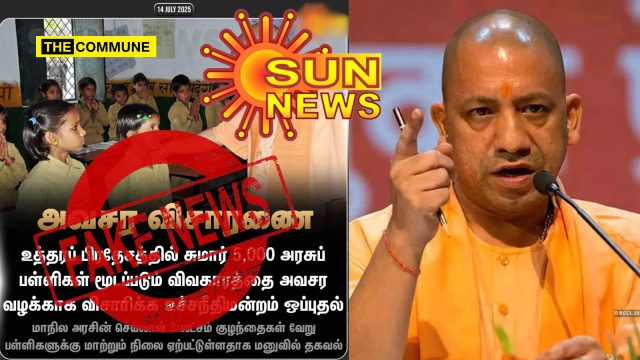
It appears that journalists working for Sun News, a channel owned by DMK’s first family find it hard to call it a day without pushing out negative narratives about Uttar Pradesh. On 15 July 2025, the channel once again courted controversy by publishing a misleading news card targeting the Yogi Adityanath-led BJP government.
The social media post read, “SupremeCourtagreestourgentlyhearthecaseregardingtheclosureofapproximately5,000governmentschoolsinUttarPradesh,” and a attached news card read, “Urgent Hearing. The Supreme Court has agreed to urgently hear the case regarding the closure of approximately 5,000 government schools in Uttar Pradesh. The petition states that the state government’s action will force 3 lakh children to transfer to other schools.”
However, this portrayal was factually incorrect and sensationalised. The Supreme Court, on 14 July 2025, only agreed to hear a plea challenging the UP government’s policy of merging around 100 under-enrolled primary schools, not the closure of 5,000 schools, as Sun News falsely suggested.
The plea was filed by advocate Pradeep Yadav on behalf of petitioner Taiyyab Khan Salmani and was accepted for listing by a bench comprising Justices Surya Kant and Joymalya Bagchi. The move stems from the state’s decision to consolidate schools with fewer than 50 students a policy that had already received the green light from the Allahabad High Court’s Lucknow bench.
In fact, on 7 July 2025, Justice Pankaj Bhatia dismissed a petition filed by a guardian representing 51 students from Sitapur district. The petition claimed the merger violated Article 21A of the Constitution, which ensures free and compulsory education and mandates that a primary school be available within one kilometre for every population cluster of 300.
Opponents of the policy argue that the merger may increase the distance children need to travel, especially affecting students in remote rural areas. However, the state government has defended its policy as a rational effort to improve education quality.
The State’s Justification
Representing the government, Additional Advocate General Anuj Kudesia and Chief Standing Counsel Shailendra Kumar Singh clarified that many government schools across UP suffer from extremely low enrolment. Out of the state’s 1.4 lakh government primary and upper primary schools, approximately 29,000 have fewer than 50 students, even as nearly 89,000 teachers are deployed in them.
The government asserts that merging these institutions is aimed at enhancing the learning environment by ensuring optimal teacher deployment, better infrastructure, and more peer interaction. The focus, they insist, is not on shutting down schools but on consolidating resources to ensure quality education, particularly in underserved regions.
Government officials have further stated that affected students will be transferred to nearby schools within walkable distances, and transportation assistance will be provided if needed.
Misinformation or Propaganda?
In light of these facts, Sun News’ claim about the ‘closure of 5,000 government schools’ in Uttar Pradesh appears to be a deliberate misrepresentation. This blatant attempt to push a politically motivated narrative particularly when the DMK faces criticism amounts to irresponsible journalism. Such reporting not only misleads the public but also erodes the very principles of ethical journalism.
Subscribe to our channels on Telegram, WhatsApp, and Instagram and get the best stories of the day delivered to you personally.
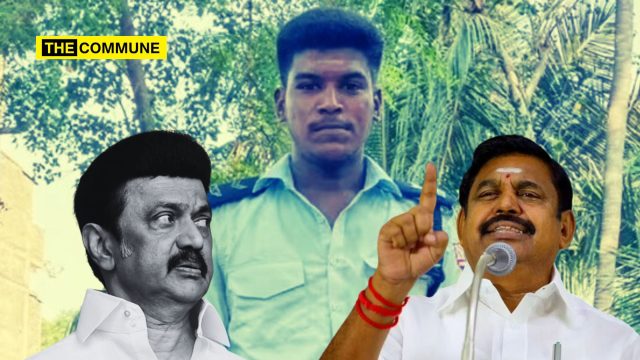
The AIADMK released a video and issued a strong statement accusing the ruling DMK government of attempting to suppress the custodial death case of 25-year-old Ajithkumar, a temple security guard in Thirubhuvanam, Sivaganga district, who died while in police custody over allegations of stealing jewellery. The video appears to show police officials attempting to coerce the victim’s family into accepting monetary compensation to “settle” the case and accept the body.
Ajithkumar died after custodial torture by police personnel during interrogation at a local police station. Following widespread protests and public outrage, five police officers involved in the interrogation were suspended and arrested, and the case was subsequently handed over to the Special Investigation Department and now to the CBI.
It was alleged that DMK functionaries including Vengaimaran, husband of the local Panchayat President; DMK leader Mahendran; Thirubhuvanam DMK City Secretary Kaleeswaran; and Manamadurai DSP approached the grieving family and offered ₹50 lakh in compensation to withdraw their protest and collect Ajith Kumar’s body from the hospital.
The family refused the offer and reiterated their demand for justice, vowing not to accept the body until strict legal action is taken against all responsible officers. “Even in court, they tried to bargain with us,” the family was quoted as saying.
The released video also shows Ajithkumar’s relatives being made to sit in a wedding hall, allegedly in an effort to pressure them into accepting the offer quietly. A commotion reportedly broke out when the police attempted to stop villagers from recording the events, and the footage is now circulating widely on social media. AIADMK on its X handle wrote, “Policemen who held a kangaroo court in the Thirubhuvanam Ajith Kumar police murder case. When Ajith Kumar’s family refused to take his body, the police tried to stop them by making his relatives sit in the hall and saying, “We will give you money.. don’t fight.” A ruckus problem arose when the police tried to stop them and when the villagers filmed it, the video has come out in the open now. Why should they be made to sit in the hall? Who are the Stalin-model DMK government’s police protecting with such efforts? Do you need any more proof than this that the puppet chief minister has no control over the police? This case has been transferred to the CBI only due to the continuous opposition of the AIADMK alliance. Otherwise, it is clear that this government would have tried to dilute the case.”
திருப்புவனம் அஜித்குமார் காவல் கொலை வழக்கில் கட்டப்பஞ்சாயத்து செய்த போலீசார்.
அஜித்குமார் உடலை வாங்க மறுத்து வந்த சமயத்தில், காவல்துறை அவரது உறவினர்களை மண்டபத்தில் வைத்து "பணம் தருகிறோம்.. போராட வேண்டாம்" என கட்டப்பஞ்சாயத்து செய்ததை அதனை ஊர்மக்கள் படம்பிடித்த போது காவல்துறையினர்… pic.twitter.com/kXG6fBl5gh
— AIADMK IT WING – SayYesToWomenSafety&AIADMK (@AIADMKITWINGOFL) July 15, 2025
Subscribe to our channels on Telegram, WhatsApp, and Instagram and get the best stories of the day delivered to you personally.