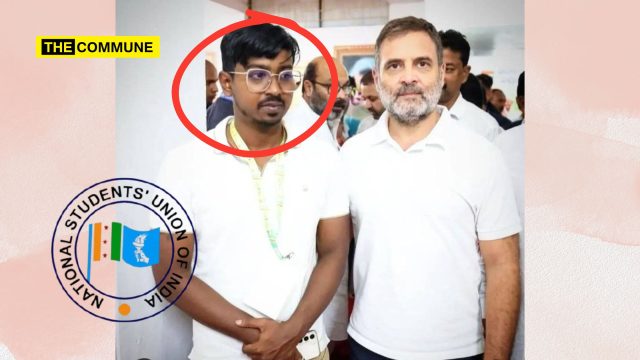
The National Students’ Union of India (NSUI), the student wing of the Congress party, is under mounting public and political scrutiny following two disturbing incidents in Odisha: the arrest of its state president in a rape case and its alleged involvement in the social harassment of a student who later died by suicide.
Udit Pradhan, the Odisha state president of NSUI, was arrested by Bhubaneswar police in connection with the alleged rape of a 19-year-old engineering student. According to the police complaint, the student said she was drugged and sexually assaulted by Pradhan in a hotel room in March after he invited her for dinner. She filed the complaint recently, prompting the arrest. Bhubaneswar DCP Jagmohan Meena confirmed that Pradhan would be produced in court on 21 July 2025.
The NSUI Connection In Similar Case
Meanwhile, NSUI has also come under fire in a separate and tragic case involving the death of a 22-year-old B.Ed student from Fakir Mohan Autonomous College in Balasore. The student had accused her Head of Department, Professor Samir Kumar Sahu, of repeated sexual harassment in a formal complaint filed with the college’s Internal Complaints Committee (ICC) on 1 July 2025. Despite assurances of action within seven days, no steps were taken.
On 12 July 2025, during a student protest outside the college, the victim reportedly set herself on fire near the principal’s office. She succumbed to her injuries—sustaining over 90% burns—after battling for her life for three days at AIIMS Bhubaneswar. AIIMS confirmed her death at 11:46 PM on 14 July 2025.
Following her death, the police arrested both Professor Sahu and college principal Dilip Ghosh. The student’s father alleged that the ICC and principal had pressured the family to withdraw the complaint and threatened them with legal action. The student’s brother vowed to continue pursuing justice.
However, multiple students from the college and social media testimonies have presented a contradictory version. According to several eyewitnesses and peers close to the victim, the student was affiliated with the ABVP (Akhil Bharatiya Vidyarthi Parishad), the student wing of the RSS. After filing her complaint, she was allegedly mocked and harassed by members of the NSUI and Biju Chhatra Dal (BJCD), the student wings of the Congress and BJD respectively.
Reports claim that these student activists questioned her character, labeled her “attention-seeking,” and spread rumors to socially isolate her. Photographs have also surfaced showing the accused professor dining with NSUI leaders, prompting further outrage. These developments have raised serious questions about the internal dynamics within the campus and the extent of political interference in student safety cases.
NSUI leaders went all out to bully the victim, mocking her, questioning her character, calling her unstable and attention-seeking.
She wasn’t unstable, she was unheard and humiliated by NSUI.
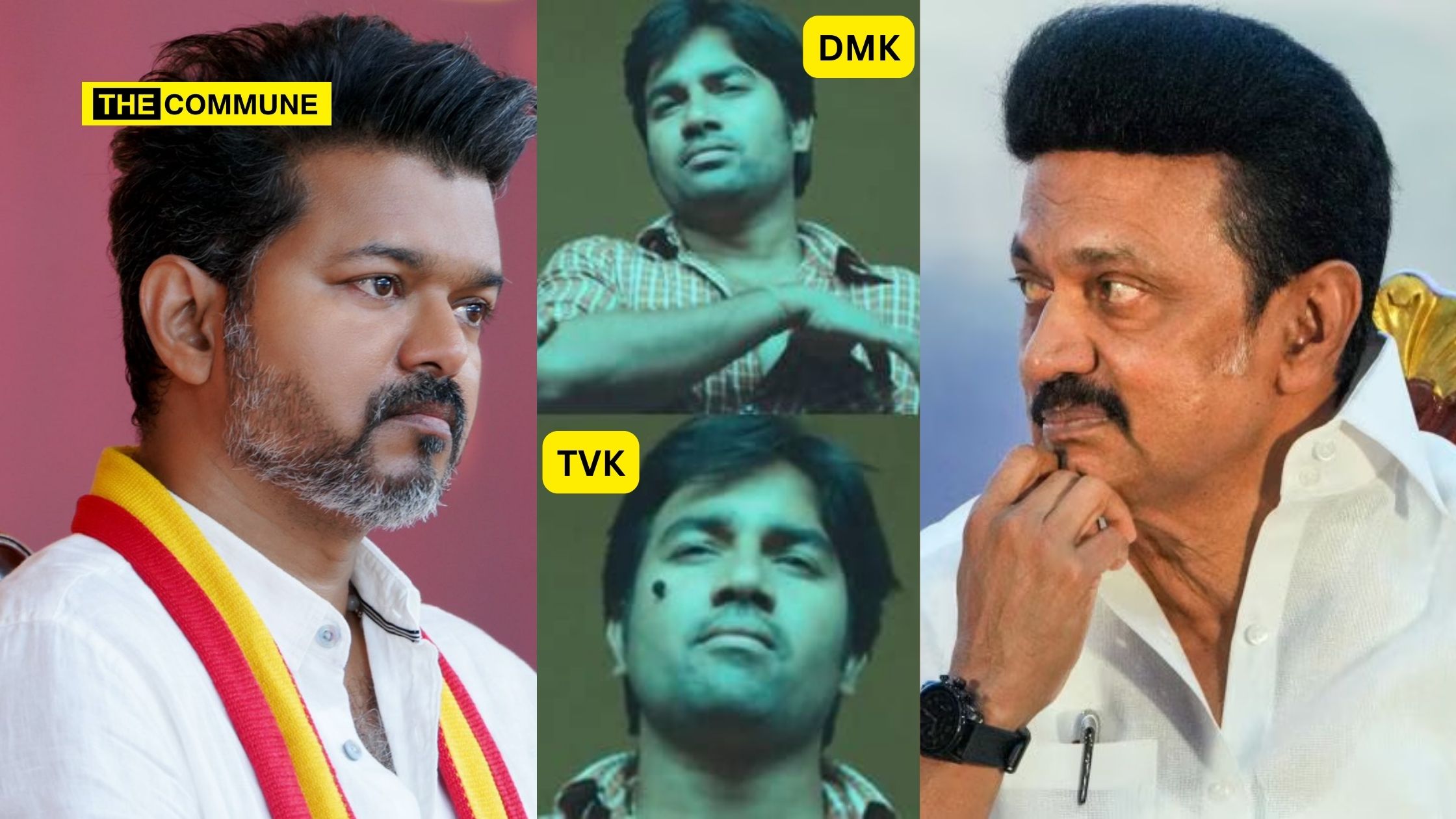
What do you get when you take DMK’s worn-out playbook, slap on a fresh coat of celebrity paint? You get yet another Dravidianist knockoff — loud on theatrics, hollow on substance. Different face, same rotten core.
Part-time, work-from-home politician Vijay has now officially declared himself as the Chief Ministerial candidate for the 2026 Tamil Nadu Assembly elections, representing his newly floated Tamilaga Vettri Kazhagam (TVK). In an executive committee meeting, the party passed a special resolution confirming this decision. Vijay also categorically ruled out forming any alliance with either the DMK or the BJP.
This move has raised eyebrows, as it mirrors the earlier political strategy of actor-turned-politician Kamal Haasan, who fiercely opposed the DMK at first only to later align with them in exchange for a single Rajya Sabha seat, effectively mortgaging his own party, Makkal Needhi Maiam.
The irony hasn’t been lost on political observers. There’s already speculation, will TVK, and Vijay himself, go as far as to mimic the DMK’s style completely? Will he read out rehearsed scripts from bits of paper, just like DMK leaders, he did the same and moreover he parroted the DMK’s rhetoric claiming that “no one can win in Tamil Nadu by opposing Periyar (E.V. Ramasamy Naicker).” In fact, even the Dravidar Kazhagam isn’t as theatrically devoted to EVR’s legacy as Vijay appears to be becoming.
Speaking from the TVK headquarters in Panaiyur, Vijay said, “We will never have a direct or indirect alliance with ideological opponents and divisive forces. At the Union level, the BJP seeks to cold-heartedly exploit cheap political gains by religiously dividing people and sowing discord among them. These malicious tactics of theirs might work elsewhere, but they will never succeed in Tamil Nadu. This land of Tamil Nadu is deeply rooted in social justice, harmony, brotherhood, and equality.Therefore, if the BJP attempts to do politics by insulting Periyar, slandering Arignar Anna, or using other revered leaders of Tamil Nadu, they will never succeed. We are neither the DMK nor the ADMK, who are willing to cozy up and form alliances with the BJP for selfish political gains. We are the Tamilaga Vettri Kazhagam (TVK). Tamilaga Vettri Kazhagam is very firm on its stance that it will never have a direct or indirect alliance with ideological opponents and divisive forces. We would also like to state unequivocally through our executive committee that any alliance formed under the leadership of the Tamilaga Vettri Kazhagam will always be against both the DMK and the BJP, and there is no room for compromise on this.”
Copy-Paste Politics: Vijay’s TVK Becomes DMK 2.0
Can’t Speak Without A Script
Actor-turned-politician Vijay has come under sharp public scrutiny for blatant imitation of DMK chief M.K. Stalin’s speaking style. His recent habit of reading pre-written scripts (Bit paper) often stumbling through basic Tamil pronunciations like saying “nam” instead of “naam” has sparked ridicule. Critics point out that while both Vijay and Stalin claim to be defenders of Tamil identity, their delivery often betrays a lack of linguistic authenticity.
This has only reinforced the growing perception that Vijay and his Tamilaga Vettri Kazhagam (TVK) are merely a B-Team of the DMK, echoing its ideology and tactics while pretending to offer a fresh alternative.
Vijay: Yet Another EVR Simp
Part-time-politician Vijay has repeatedly shown his allegiance to E.V. Ramasamy Naicker (EVR), the founder of the Dravidian movement known for his vehement anti-Brahmin, anti-Hindu, and anti-Sanskrit rhetoric. Every time he gets a platform, Vijay seizes the opportunity to glorify EVR a figure often compared by critics to authoritarian ideologues like Hitler, given his calls for the eradication of the Brahmin community and his frequent abuse of Hindu deities and traditions.
Take, for instance, the first anniversary celebration of Vijay’s Tamilaga Vettri Kazhagam (TVK) in Mahabalipuram. In a bizarre and telling gesture, Vijay presented political strategist Prashant Kishor, a Bihari and notably a Brahmin with a bust of EVR, the same man who built his legacy on anti-Brahmin, anti-Hindi, and anti-Hindu rhetoric. That act didn’t just raise eyebrows it cemented Vijay’s unwavering commitment to Periyarist ideology.
On EVR’s 146th birth anniversary, Vijay was seen barefoot at Periyar Thidal, laying flowers and garlanding EVR’s statue, a gesture more devout than even members of the Dravidar Kazhagam (DK), EVR’s own ideological heirs. This is the same Vijay who, like Chief Minister M.K. Stalin, never extends greetings on Hindu festivals but enthusiastically commemorates anything remotely connected to the other religion and events.
Outrage Over “Naicker” But Only When It’s Convenient
More recently, Vijay lashed out at the Union Public Service Commission (UPSC) for including the full name “E.V. Ramasamy Naicker” in a civil services exam, calling it “deeply offensive.” He claimed it was an insult to Periyar. Yet, the irony couldn’t be more glaring, Viduthalai, the official publication of the DK itself, continues to use the full name “Ramasamy Naicker” and did so as recently as 17 May in an editorial titled “Engum Ramasamy Naicker” (Ramasamy Naicker Everywhere).
So, who exactly is being offensive? Vijay’s performative outrage suggests he wants to outdo even the DK in his loyalty to EVR while also revealing his double standards.
Outrage When EVR Is Targeted, Silence When Kamaraj Is Slandered
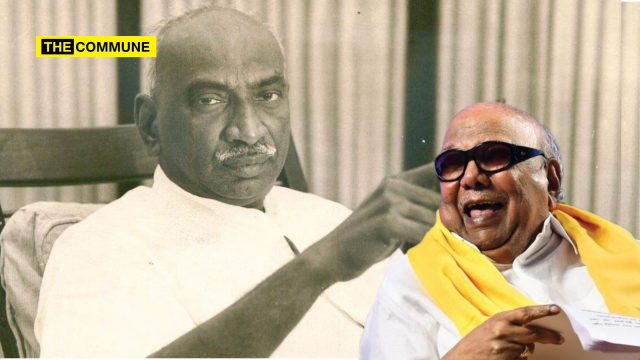
DMK MP and Deputy General Secretary Tiruchi N. Siva had derogated Kamarajar as someone who couldn’t sleep without AC in an attempt to glorify Karunanidhi
At a DMK gathering in Perambur, Tiruchi Siva alleged that Kamaraj needed air conditioning to sleep and claimed that, on his deathbed, Kamaraj held M. Karunanidhi’s hand and urged him to “save the country and democracy.” These remarks sparked widespread condemnation, with many accusing Siva of twisting historical facts to glorify Karunanidhi while diminishing Kamaraj’s well-known simplicity and integrity.
Despite the public outrage — and the fact that Kamaraj is hailed as one of TVK’s core ideological icons — neither Vijay nor his party has uttered a word in condemnation.
Selective Outrage So that DMK Gets a Free Pass
Vijay’s hypocrisy is further exposed when comparing his outrage over the UPSC to his silence on the Tamil Nadu Public Service Commission (TNPSC). The same TNPSC, in its Group 1 exam papers for top state services like Deputy Collector and DSP, openly used caste identifiers for historical figures: “Subbarayalu Reddiar,” “V.O. Chidambaram Pillai,” “Vanchinathan Aiyar,” “Dr. Muthulakshmi Reddy,” and “Arcot Ramasamy Mudaliar” all mentioned with caste titles intact. Yet, only EVR’s caste surname, “Naicker,” was conveniently removed.
Where was Vijay’s roar then? Nowhere. Because criticizing TNPSC would be equivalent to criticizing the DMK and how could he risk that, given the deep ideological overlap between TVK and the ruling party?
In summary, Vijay’s obsession with EVR and his relentless efforts to prove himself as a true heir to the Dravidian legacy may impress a small section of hardcore ideologues. But his glaring hypocrisy outraged by UPSC for using “Naicker” while silent on TNPSC for doing far more lays bare a truth his followers may find hard to swallow Vijay isn’t just echoing Periyarism; he’s doing so with selective outrage, opportunism, and blind loyalty to the DMK’s ideological line.
Borrowing The “Appa” Branding from Stalin
In what looks like an image-building attempt ripped straight from the DMK’s PR manual, TVK recently attempted to brand Vijay as “Appa” just as the DMK tries to position Stalin as the fatherly figure of the state, akin to how the late Jayalalithaa was called “Amma.”
A cringeworthy moment unfolded during a TVK event in Mahabalipuram on 4 June 2025, where Vijay was greeting top-performing students. A small child took to the stage and announced, “In 2026, Vijay Appa will be the Chief Minister. In 2031, Vijay Appa will still be the Chief Minister.”
Observers quickly dismissed it as a scripted stunt, mocking it as yet another borrowed branding trick from the DMK’s playbook. Critics argue that instead of building a unique vision or identity, TVK is simply rehashing the DMK’s old PR formulas.
TVK’s Ideology: Ctrl + C, Ctrl + V From The DMK Handbook
From the outset, Vijay has made it clear that his party’s ideological foundation is essentially a carbon copy of the DMK. From his very first press conference, Vijay described TVK’s ideology as centered around secular social justice and positioned the party as left-leaning with a Dravidian outlook. The fountain head of Hindu-hate and Dravidianist demagogue EV Ramasamy Naicker (hailed as ‘Periyar’ by his followers) is the ideological head of both DMK and TVK.
Vijay too has emphasized that TVK would uphold values such as the two-language policy, social justice, secularism (read pseudo-secularism), socialism, the same that DMK keeps mouthing.
Vijay’s political rhetoric appears to be a direct copy-paste from DMK’s ideological blueprint, raising questions about whether TVK truly brings anything new to Tamil Nadu’s political landscape or if it’s merely a repackaged glossier version of the existing DMK.
A Mirror Image Of DMK’s Minority Appeasement
Much like the DMK, Vijay seems to engage in minority appeasement, closely following the ruling party’s well-established tactics. From the moment he launched his party, TVK, his actions have subtly but unmistakably mirrored the DMK’s approach.
The Tilak Gimmick And Its Sudden Disappearance
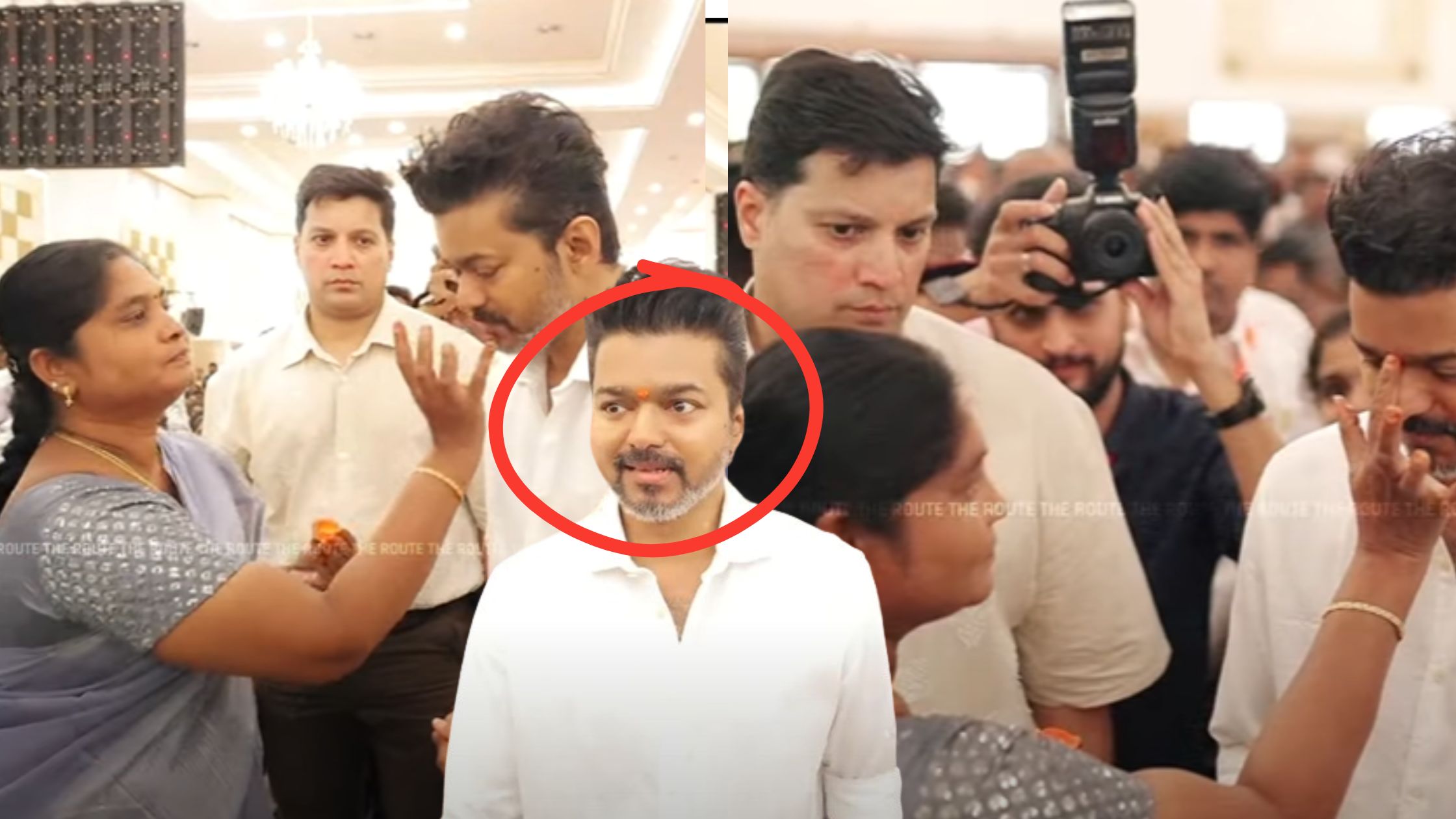
Before his first official press conference, Vijay orchestrated a carefully crafted public appearance a ‘meet and greet’ event where a woman applied a tilak on his forehead. This move was seemingly designed to project an image of religious inclusivity, subtly hinting that he embraced all faiths. Initially, his party letterhead even featured an image of him with the tilak. However, as time passed, all such Hindu symbolism vanished. His official portrait on the TVK letterhead was later replaced with a plain, tilak-free version of Vijay. This follows the DMK’s long-standing strategy of erasing Hindu identity from Tamil saints and historical figures, portraying them in neutral white robes while openly celebrating other religious symbols, such as the cross for Christianity or the kulla (skullcap) for Islam. This selective approach fosters minority appeasement while alienating the Hindu majority.
Muslim Appeasement: A Page From The DMK Playbook
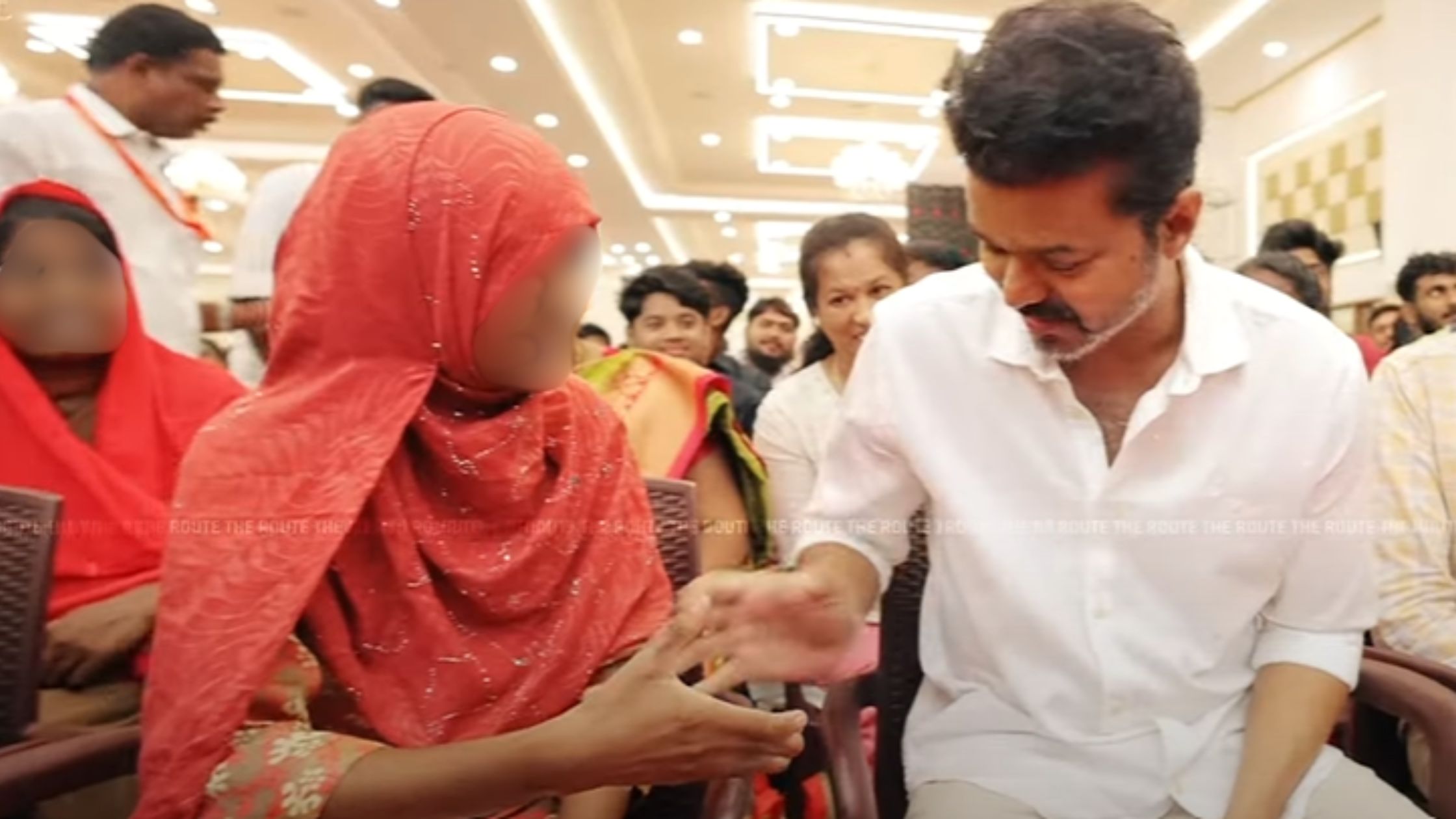
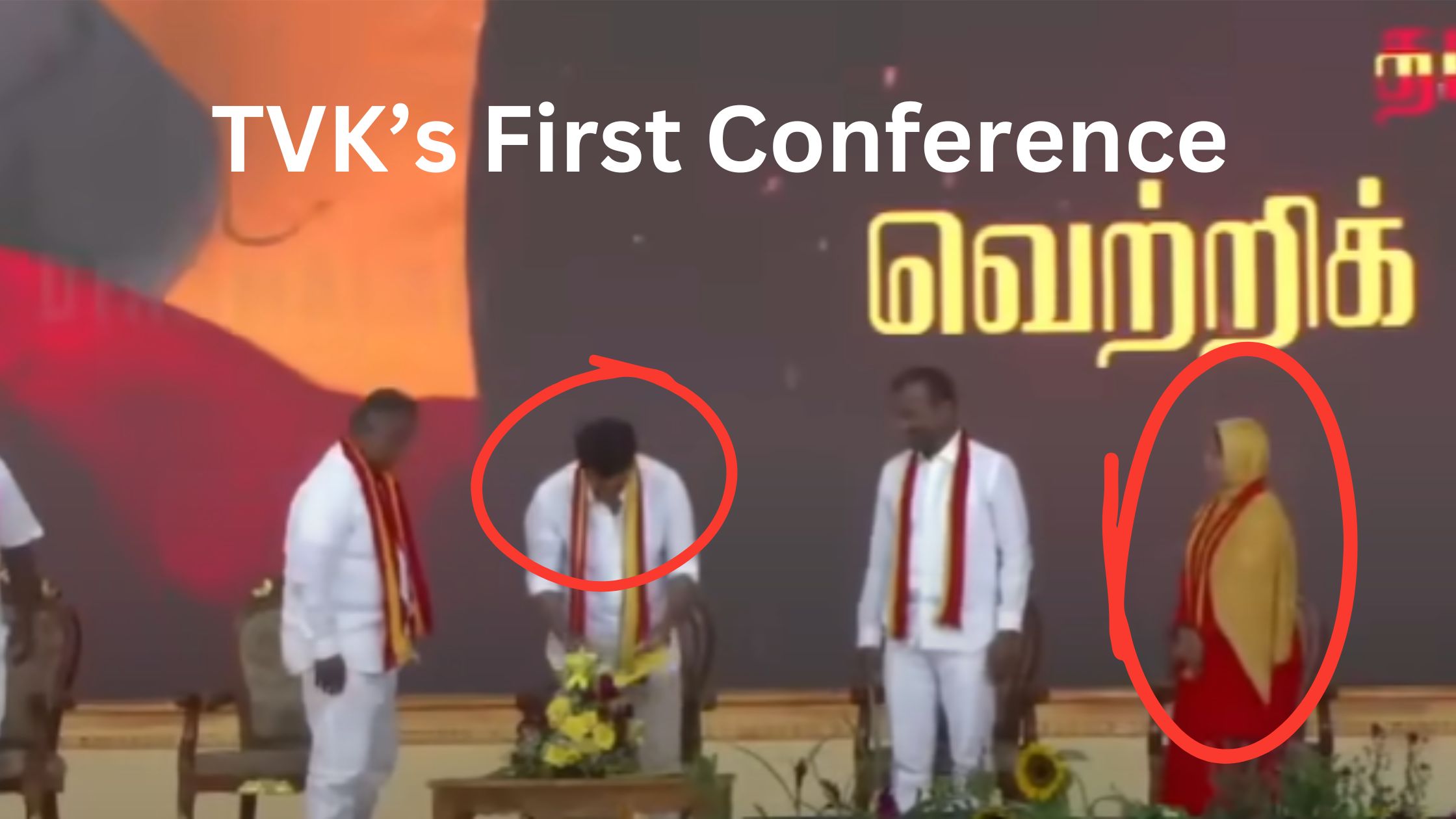
Another notable pattern in Vijay’s political journey is his strategic milking on Muslim representation. Whether on stage at political events or during award functions, he consistently ensures the presence of burqa-clad Muslim women near him, reinforcing a visual appeal to the Muslim community. This tactic aligns with the DMK’s longstanding approach of courting the Muslim vote bank through targeted outreach.
Vijay further demonstrated this alignment when he actively participated in an Iftar event during Ramadan, donning a kulla (skullcap), a white shirt, and a veshti an unmistakable visual gesture of solidarity with the Muslim community. This move is a direct reflection of the DMK’s history of religious posturing to secure minority votes.
ஒட்டுமொத்த இந்திய ஒன்றியத்தில் மாநிலங்களின் காவலராக உயர்ந்து நிற்கும் நம் மாண்புமிகு முதலமைச்சர் அவர்களின் பிறந்த நாளுக்கு இன்னும் ஓரிரு தினங்களே உள்ள நிலையில், அதனை மக்கள் மகிழ்கின்ற வண்ணம் கொண்டாடி வருகிறோம்.
Christian appeasement comes naturally to the DMK, with leaders like Deputy Chief Minister Udhayanidhi Stalin openly identifying as Christian. Of course, he balances it with his signature doublespeak, claiming, “I’m a Hindu for those who see me as Hindu, a Muslim for those who see me as Muslim, and a Christian for those who see me as Christian.”
DMK Speaker Appavu even made controversial remarks crediting Tamil Nadu’s progress to Christians, claiming that without them, the state would have turned into Bihar. Vijay, a Christian himself, has followed this pattern seamlessly.
His religious identity became more politically evident in 2017 when he actively branded himself as “Joseph Vijay,” a move widely seen as an effort to consolidate Christian support. Taking it a step further, he appointed key Christian figures to crucial roles within his party, such as John Arokiasamy and Aadhav Arjuna (the son-in-law of controversial lottery businessman Martin).
The Vote Bank Strategy A Calculated Move
Census data in Tamil Nadu clearly indicates the size and influence of minority communities. Political parties that cater to these groups can often secure their unwavering support 15-20%, leading to a bloc vote with minimal fragmentation. The DMK has mastered this strategy over decades, and now Vijay appears to be following suit, carving out his own share of the minority vote while remaining firmly within the broader DMK ideological framework. The DMK, in turn, seems to tolerate Vijay’s rise, recognizing that even if he gains influence, he will never function as an anti-DMK force. Instead, he remains a mere shadow of the ruling party, reinforcing its political dominance rather than challenging it.
Vijay’s TVK Substituting DMK To Become TN’s New Anti-Development Force
If the question is whether Vijay is merely whether as the DMK in opposition mode, the answer is a clear yes. Vijay’s TVK, with its anti-progressive stance, is clearly adopting policies that mirror those of the DMK’s opposition era. His rhetoric, aimed at influencing the youth and parents, closely follows the same strategy employed by Dravidian ideologies for years. For instance, he opposes development projects like the proposed Parandur airport, champions an anti-NEET mindset, advocates for a two-language policy with a particular focus on opposing Hindi, and pushes for policies that disadvantage poor and marginalized students, particularly those in government schools. Additionally, his opposition to the National Education Policy, which seeks to establish a pan-India education standard, and his stance on the Citizenship Amendment Act echo similar opposition tactics used by the DMK in the past. The DMK, while in opposition, exploited these issues to rally the public by claiming the ability to secure people’s rights from the central government presenting a false dichotomy but after coming to power showed bare hands claiming that only the central government holds the power. Now, Vijay, the part-time, work-from-home politician, seems to be using the same strategy to manipulate public sentiment ultimately fooling the people with a similar political game.
In this backdrop, below are some of his political stunts that highlight his dual role both as an opposition figure to the DMK and as a shadow of it, mirroring their strategies with the approach of “one punch in the coconut tree, one punch in the palm tree,” skillfully balancing his criticisms of both the central and state governments without upsetting either’s sentiments
Both Oppose Infrastructure Projects
Vijay, during his visit to Parandur, alleged that the proposed airport would destroy 90% of farmland and 13 water bodies, calling the project “anti-people.“He also questioned why the DMK, which had opposed projects like the Salem eight-lane expressway and Kattupalli port, was supporting the Parandur airport. However, a closer look at the Airports Authority of India (AAI) pre-feasibility report and the Tamil Nadu government’s decision-making process reveals that Vijay’s statements are either misleading or based on incomplete information.
The Airports Authority of India (AAI) conducted a detailed study to identify the most suitable site for Chennai’s second airport, considering locations like Padalam, Thiruporur, Pannur, and Parandur. Parandur emerged as the best option due to factors such as airspace restrictions at other sites, availability of 5,369 acres of land, better connectivity through the Chennai-Bengaluru Expressway, and fewer displacements compared to Pannur. Additionally, Parandur offers significant potential for future development, unlike the more densely developed Pannur site. Vijay’s claims about the project destroying 90% of farmland and 13 water bodies lack substantiation and overlook the thorough environmental and social impact analysis in the AAI report. Critics suggest that Vijay’s opposition to the project is driven by political motives, with his visit to the protest site viewed as a publicity stunt. Aviation experts argue that Parandur is the most feasible site for the airport, and relocating the project would cause delays and increased costs.
A similar approach was taken by the DMK in 2019 when it criticized the AIADMK government while in the opposition, but once it came to power, the party acknowledged the airport as a crucial need for the state’s economy.
Both Oppose NEET
During the executive committee meeting in Panaiyur on 3 November 2024, which was presided over by Vijay, a resolution was passed calling for the abolition of the National Eligibility cum Entrance Test (NEET). This comes despite data indicating that more underprivileged students, including those from tribal communities, have been able to secure medical seats through the exam in recent years.
Even the DMK, which had previously claimed to have the ‘Secret Weapon’ to make the central government to abolish NEET, switched its stance when Chief Minister MK Stalin admitted in a recent assembly speech that the central government holds the power to revoke NEET, contradicting earlier claims. TVK’s Vijay holds a similar stance on abolishing the exam, and it remains to be seen whether he will reverse his position like the DMK in the next NEET exam season.
Both Call For Abolition Of Governor Post
TVK’s resolutions on 3 November 2024 reiterated their stance on abolishing the Governor’s post. However, in the wake of the sexual harassment case at Anna University, which allegedly involved a DMK functionary, and widespread speculation that the DMK might protect the accused, TVK party chief Vijay sought the Governor’s intervention. It seems that Vijay has now come to recognize the importance of having a neutral figure above the government, capable of questioning the state’s actions when constitutional mechanisms fail. Previously, however, without fully understanding the role and significance of the office, he had called for the abolition of the Governor’s post, which was both impractical and unconstitutional. This stance has been a hallmark of the DMK since its inception, with the party’s founder C.N. Annadurai famously describing the position of Governor as “redundant as a goat’s beard.” This sentiment continues to this day, as evidenced in the 2024 Lok Sabha election manifesto, where the DMK again called for the abolition of the Governor’s post.
Similarly, in January 2024, Udhayanidhi Stalin, the current Deputy Chief Minister and scion of the DMK, led the party’s Youth Wing in passing a resolution calling for the abolition of the Governor’s post in Tamil Nadu. The resolution argued that the governor was attempting to run a parallel administration, undermining the authority of the state’s elected representatives. The resolution, passed at the 2nd DMK Youth Wing Meet, asserted that abolishing the position of Governor was essential to safeguard democracy.
Both Oppose Three-Language Policy
Vijay has strongly opposed the three-language policy, despite his own son, Jason Sanjay, studying at the American International School in Chennai, where languages like French, Spanish, and Korean are offered alongside English. In some IB schools, students also have the option to choose Hindi. The rationale behind the three-language policy is to provide marginalized students even many of whom currently lack access to government schools a chance to learn a third language. This would enable them to pursue careers as translators, communicators, and open doors to international job opportunities.
However, Vijay, along with other Dravidian leaders and the DMK, oppose marginalized students to venture beyond Tamil Nadu. They seem to believe these students should remain confined to the state, study locally, and take on menial jobs, ultimately serving as a political vote base through emotional appeals. The hypocrisy lies in the fact that this “two-language policy” exception doesn’t apply to Matriculation, CBSE, or international boards, which offer a wider array of language options. Yet, Vijay appears intent on following this same narrow-minded stance.
Even more surprisingly, just like DMK leaders and their allies who own CBSE schools that promote multilingual education, Vijay’s own CBSE school, Vijay Vidyashram, proudly boasts and celebrate Hindi the very language they publicly oppose.
Both Depict Wrong Map of India
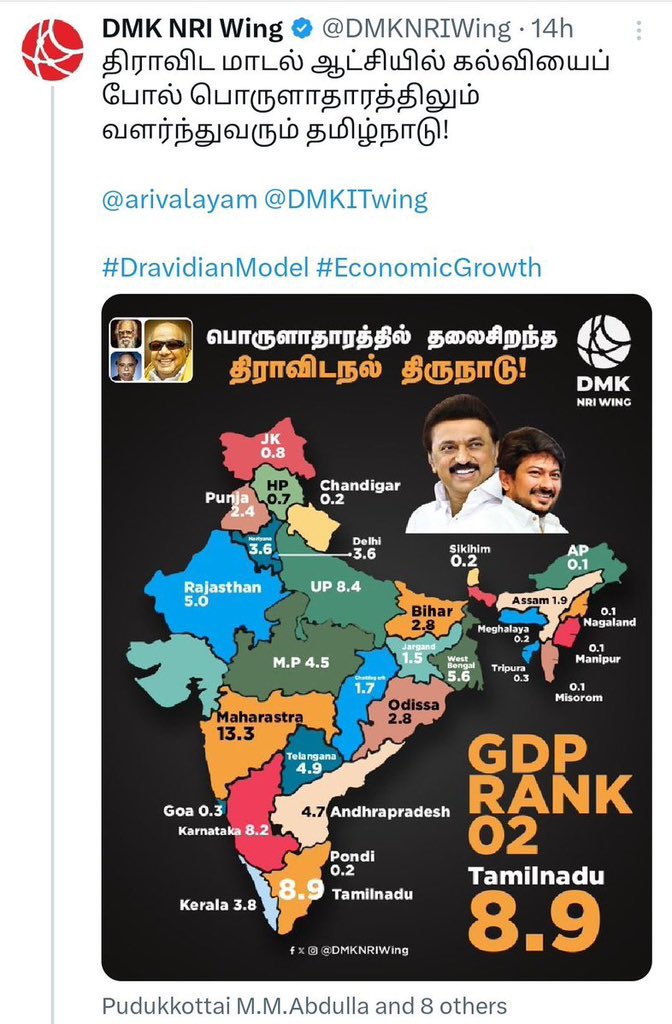
On 23 October 2024, the DMK’s NRI wing sparked controversy by sharing a post on the social media platform X that featured an inaccurate map of India, wrongly depicting parts of Jammu and Kashmir as belonging to Pakistan and China. After facing severe backlash, the post was later altered.
Following the DMK’s book keeping principle, at a book launch event titled “Ambedkar: A Leader for All,” held in Chennai on 6 December 2024, to commemorate Dr. B.R. Ambedkar’s death anniversary, another similar controversy arose. Actor-turned-politician and Tamilaga Vettri Kazhagam (TVK) chief Vijay attended the event, where an incorrect map of India this time omitting Aksai Chin was deliberately displayed.
சென்னையில் தவெக தலைவர் விஜய் பங்கேற்ற எல்லோருக்குமான தலைவர் புத்தக வெளியீட்டு விழாவில் இந்தியாவின் தவறான வரைபடம் காட்டப்பட்டதால் சர்ச்சை
அக்சாய் சின் பிரதேசம் விடுபட்ட இந்திய வரைபடம் காணோளியில் இடம்பெற்றதால் பரபரப்பு
TVK chief Vijay has adopted a stance similar to that of the DMK, opposing any initiatives proposed by the central government. DMK chief and Chief Minister MK Stalin argued that the legislation posed a threat to “alter India’s polity forever.” Similarly, during the TVK party resolution, Vijay strongly opposed the “one nation, one election” proposal, criticizing it as an anti-democratic move by the BJP-led Union government.
In addition, TVK has mirrored the DMK’s tendency to pander to Islamist interests. The party has called for the withdrawal of the Waqf (Amendment) Bill amid reports of vast areas of land and entire villages being claimed by the Waqf Board.
Finally, in a recent development regarding the delimitation issue, DMK leader M.K. Stalin brought it into the spotlight on 25 February 2025, describing it as a “sword dangling over the southern states” following a state cabinet meeting. Shortly after, TVK chief Vijay stepped in to reinforce the DMK’s stance, penning a lengthy five-page letter opposing the imaginary upcoming delimitation process on 5 March 2025. However, a closer look reveals that his arguments are merely a recycled version of the DMK’s well-worn narratives.
Deliberately Neglecting Hindu Interest
Despite actor-turned-part-time politician, Vijay has shifted his stance from deliberately avoiding wishes for Hindu festivals while extending greetings for festivals of other religions. This pattern aligns with the DMK’s approach and was widely criticized. It was only after facing backlash that Vijay eventually acknowledged Saraswati Pooja. Notably, during his party’s first conference, he stated that while he follows E.V.R. Periyar’s principles, he does not adhere to atheism an important aspect of his political trajectory.
Previously, TVK chief Vijay faced significant backlash for skipping wishes for Hindu festivals and Tamil New Year in Tamil Nadu while extending greetings for Onam, a Hindu festival celebrated in Kerala. This inconsistency did not go unnoticed, and he was criticized for hypocrisy, drawing parallels to the DMK’s approach.
Here is a list of political stunts he has engaged in since launching his new party, primarily consisting of online gestures that send indirect messages.
Not Wishing For Vinayakar Chaturthi
Vijay did not acknowledge or wish the people of the state for Vinayakar Chaturthi, a festival celebrated by 87.58% of the Hindu population. Kollywood actor and TVK chief Vijay appeared to be deliberately avoiding respecting the cultural values and beliefs of Hindus and Tamils. His selective social media posts on his official X account support this accusation.
Not Wishing For Tamil New Year (Puthandu)
Instead of wishing for Tamil New Year which is a significant festival for Hindus in Tamil Nadu, Vijay chose to wish his fans and followers for Ambedkar Jayanti, which coincidentally falls on the same day. This is the same strategy employed by the DMK on the auspicious occasion of Hindu celebrations and festivals such as Vinayakar Chaturthi, Saraswathi Pooja, and other festive occasions.
Vijay cautiously neglected even the Hindu festival of Krishna Jayanthi on 26 August 2024.
Wishing For Onam
Surprisingly, as if making a statement to reach out to his Malayali fans and followers, Vijay wished for the Onam festival. It’s noteworthy that DMK (MK Stalin) also had wished for Onam last year. On 15 September 2024, TVK chief Vijay shared Onam wishes on his official X account, stating, “Happy #Onam from the bottom of my heart to all Malayalam relatives! A hearty Onam to my very own Malayali friends.”
மலையாள சொந்தங்கள் அனைவருக்கும் என் இதயம் கனிந்த #ஓணம் நல்வாழ்த்துகள்!
എന്റെ സ്വന്തം മലയാളി സുഹൃത്തുക്കൾക്ക് ഹൃദയം നിറഞ്ഞ ഓണാശംസകൾ.#HappyOnam!
Wishing For Christian, Muslim Festivals & Other Special Days
He has acknowledged and wished for Muslim festivals like Ramzan and Eid, Christian festivals like Easter, as well as neutral days such as May 1 (Labour Day), Ambedkar Jayanti, Independence Day, and Mother’s Day.
உழைப்பின் மேன்மையையும் உழைப்பாளர்களின் சிறப்பினையும் உலகிற்குப் பறைசாற்றும் இந்த மே தினத்தில், தொழிலாளர் சகோதர சகோதரிகள் அனைவருக்கும் எனது உளமார்ந்த “மே தின” நல்வாழ்த்துகளைத் தெரிவித்துக்கொள்கிறேன்.#MayDay2024#LabourDaypic.twitter.com/HZ9Zp0nKMn
புனித ரமலான் மாதத்தில் இறைவனை வேண்டி நோன்பிருந்து, அன்பு, கருணை, ஈகை, சகோதரத்துவம் உள்ளிட்ட உயரிய பண்புகளை உலகுக்கு எடுத்துக்கூறும் இஸ்லாமிய உறவுகள் அனைவருக்கும் என் நெஞ்சம் நிறைந்த ரமலான் திருநாள் வாழ்த்துகளைத் தெரிவித்துக்கொள்கிறேன்.
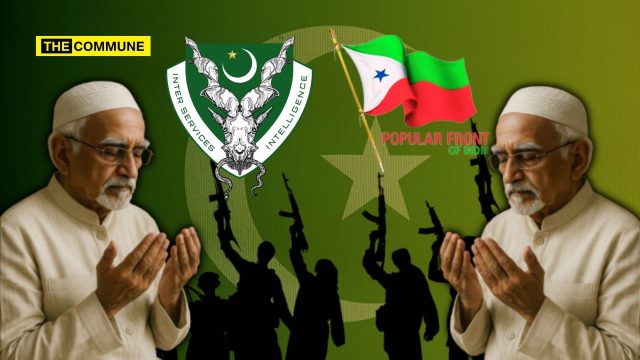
The name of former Vice President Mohammad Hamid Ansari resurfaced in public discourse following the killing of notorious sharpshooter Shahrukh Pathan by the Meerut Special Task Force (STF) just recently. Pathan was reportedly associated with criminal networks linked to both gangster Sanjeev Maheshwari Jeeva and mafia don Mukhtar Ansari, who happens to be Hamid Ansari’s second cousin. This familial link has reignited scrutiny over the former vice president’s legacy and long-standing controversies surrounding his tenure and post-retirement statements.
From IFS To Vice President
Hamid Ansari began his career in the Indian Foreign Service in 1961, serving in key diplomatic roles across countries including Iraq, Saudi Arabia, Iran, and Australia. He held ambassadorial positions in the UAE, Afghanistan, Iran, and Saudi Arabia, and was also India’s Permanent Representative to the United Nations in New York. He served two terms as Vice President of India, from 2007 to 2017.
Despite his distinguished résumé, Ansari has repeatedly drawn criticism for alleged compromises to national security and for his post-retirement affiliations and public comments perceived as controversial or partisan.
#1: Allegations From Former Intelligence Officers
In 2019, former RAW (Research and Analysis Wing) officials accused Hamid Ansari of endangering intelligence operations while serving as India’s ambassador to Iran (1990–1992). They claim Ansari failed to protect Indian intelligence assets and may have even exposed undercover operatives to Iranian agencies.
🚨I think it is time to make a film Titled
‘The Ansari Files’
🚨Hamid Ansari helped Pakistani spies !
🚨 He endangered lives of RAW unit members in Iran !
🚨 He supported anti-India & anti-Hindu organisations like PFI !
One officer alleged that Ansari downplayed the abduction of an Indian diplomat, Sandeep Kapoor, by Iranian intelligence agency SAVAK, failing to report SAVAK’s involvement in his official communication to the Ministry of External Affairs. Another incident involved RAW operative D. B. Mathur, who was reportedly kidnapped after Ansari allegedly leaked intelligence details to the Iranian Foreign Ministry.
I was in Tehran, Iran n Hameed Ansari was ambassador in Tehran. Ansari had played a crucial role in exposing RAW set-up in Tehran endangering lives of RAW unit members. But this very man was made vice President for two consecutive terms.
Ratan. Sehgal was Addl. Secretary in IB n he was later found to be working for CIA and held passing on documents to a CIA lady agent in Delhi. He should have been arrested, jailed n dismissed. But was asked to resign n allowed to go. Now he is settled in US.
The RAW officers later submitted a letter to Prime Minister Narendra Modi demanding an investigation into Ansari’s role during his Tehran tenure. They claimed Ansari also collaborated with intelligence officials like Ratan Sehgal to dismantle RAW units in Gulf countries prior to the 1993 Mumbai bomb blasts.
In his book Mission R&AW, former intelligence officer R.K. Yadav reveals how Hamid Ansari, during his tenure as India’s ambassador to Iran, was uncooperative and even obstructive to Indian intelligence efforts. When a R&AW operative was abducted by Iranian agencies, Ansari reportedly showed no urgency, and it took pressure from Atal Bihari Vajpayee to push Prime Minister Narasimha Rao into securing the agent’s release. Yadav also notes that Ansari advised another official, Muhammad Umar, to stay silent after Iranian intelligence tried to recruit him. Umar refused, was abducted and tortured, yet Ansari allegedly told him not to escalate the matter. This period, critical in the formation of global jihadist networks, saw significant intelligence setbacks in Tehran—setbacks Yadav believes gave the Iran-ISI axis leverage and indirectly fueled jihad in Kashmir.
#2: Allegations Of Hosting Pakistani Spy
In 2022, Pakistani journalist Nusrat Mirza claimed he visited India on several occasions between 2005 and 2011 to collect intelligence for Pakistan’s ISI, allegedly attending a seminar on terrorism at the invitation of Hamid Ansari. Ansari categorically denied the claims, asserting that invitations to foreign delegates during his tenure were issued based on recommendations from the government, particularly through the Ministry of External Affairs.
While Ansari insisted he neither invited nor interacted with Mirza, the controversy cast a shadow over his tenure, prompting strong reactions from BJP leaders and sections of the media.
#3: Association With IAMC And Criticism Of India
On 26 January 2022, Hamid Ansari participated in a virtual panel organized by the Indian American Muslim Council (IAMC), a group known for its critical stance on India’s human rights record. His comments at the event, where he accused the Indian government of promoting “cultural nationalism” and fostering religious division, drew sharp criticism.
The Ministry of External Affairs condemned the IAMC for its affiliations, noting its connections with radical groups and its lobbying efforts to label India as a “Country of Particular Concern” (CPC) under USCIRF recommendations. IAMC has been accused of supporting organizations with links to extremist networks, including the Pakistan-based LeT and Jamaat-e-Islami. Minority Affairs Minister Mukhtar Abbas Naqvi accused the IAMC of collaborating with ISI and SIMI and engaging in anti-India propaganda.
Ansari’s participation in the event was seen by many as aligning with an organization actively lobbying against India’s interests on international platforms.
#4: Wants Sharia Courts
Following his retirement, Ansari made several statements that sparked nationwide backlash. He spoke in favor of establishing Sharia courts across districts in India and claimed to feel “insecure” as a citizen a remark that was widely criticized as divisive.
#5: Simping For Jinah
He also drew attention for attending events hosted by the now-banned Popular Front of India (PFI), a group accused by Indian agencies of fostering radical Islamist ideology and involvement in “love jihad” cases in Kerala. Additionally, Ansari expressed support for students demanding the restoration of Muhammad Ali Jinnah’s portrait at Aligarh Muslim University.
#6 Criticizing India For Iran
In 2005, after India voted against Iran’s nuclear program at the International Atomic Energy Agency, Hamid Ansari openly criticized the decision. He remarked that the Indian government had acted based on its own “judgment”—a phrase he used to imply bias—and argued that the position taken lacked a factual basis.
#7 IAMC’s Lobbying Efforts And Anti-India Advocacy
Hamid Ansari came under heavy scrutiny for his participation in a virtual panel organized by the Indian American Muslim Council (IAMC) on January 26, 2022. IAMC is a U.S.-based lobbying group known for its anti-India stance, persistent campaigns to label India as a violator of minority rights, and alleged ties to radical Islamist networks including SIMI, Jamaat-e-Islami, and Pakistan-backed propaganda fronts. During the event, Ansari accused the Indian government of promoting cultural nationalism and religious division, comments that drew sharp criticism for being made on India’s Republic Day and on a foreign platform. His association with IAMC was seen by many as legitimizing a group that actively lobbies against India’s interests on global platforms, leading to widespread backlash and raising serious questions about his judgment and national allegiance in his post-retirement public engagements.
A Legacy Under Question
While Hamid Ansari’s career includes significant diplomatic accomplishments, his legacy has come under intense criticism due to alleged lapses in safeguarding national interests and his post-retirement political stances. The renewed focus on his record—triggered by criminal ties in his extended family and resurfacing of old allegations—has placed him at the center of a broader debate on national loyalty, secularism, and the politicization of identity in India.
Subscribe to our channels on Telegram, WhatsApp, and Instagram and get the best stories of the day delivered to you personally.
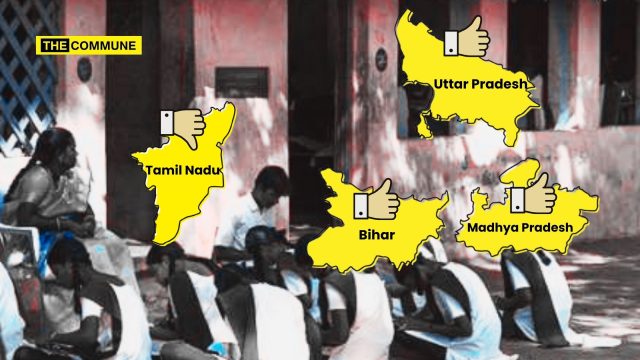
Once seen as a southern benchmark in public education, Tamil Nadu’s learning outcomes have witnessed a steep and worrying decline, according to the PARAKH Rashtriya Sarvekshan 2024.
The survey, conducted in December 2024 by the National Assessment Centre, PARAKH (Performance Assessment, Review and Analysis of Knowledge for Holistic Development), is a nationwide initiative under the National Education Policy (NEP) 2020. Its objective is to assess students in Grades 3, 6, and 9 on competencies in language, mathematics, science, and social sciences across 781 districts in 36 States and UTs.
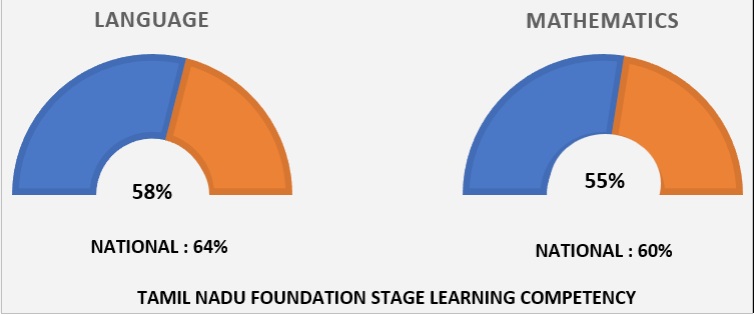
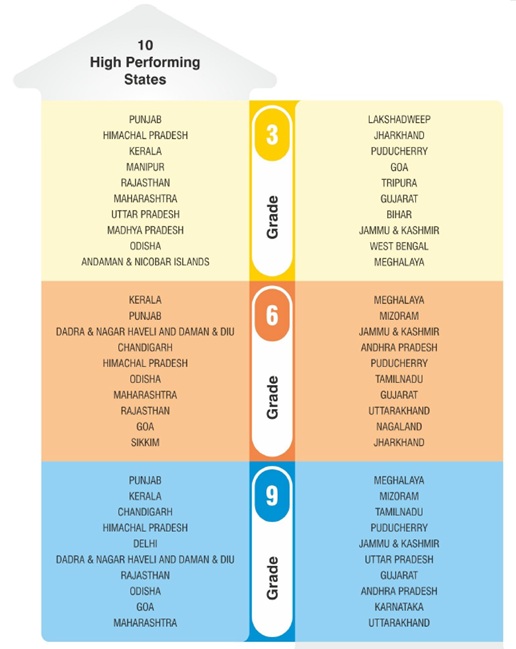
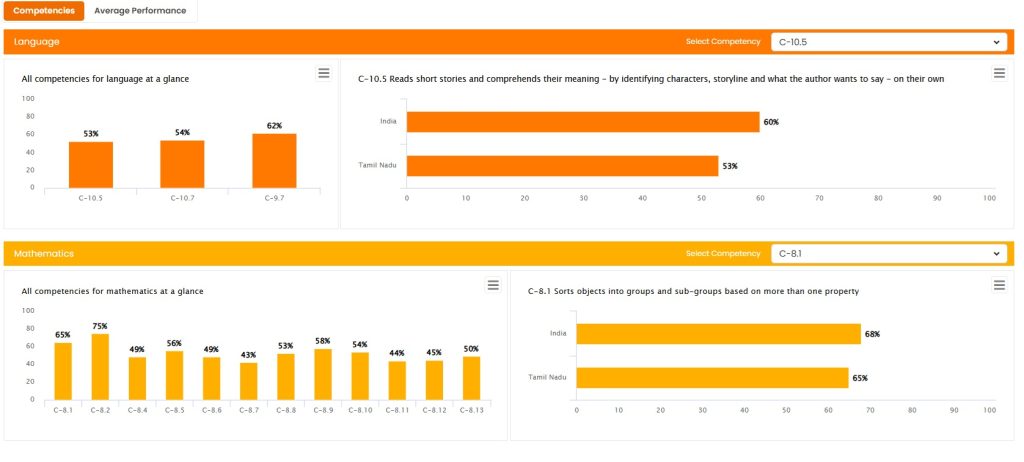
A total of 2.1 million students from over 74,000 schools participated in the survey, with 2.7 lakh teachers and school leaders also responding to detailed questionnaires. Tamil Nadu saw 1,13,553 students take part in the assessment. However, the state failed to make it into the top 10 for any grade level assessed, trailing below the national average in every major competency evaluated.
The national-level assessment has revealed that Tamil Nadu now trails behind even states traditionally perceived as lagging like Uttar Pradesh (UP), Bihar, and Madhya Pradesh (MP) in several core learning and institutional indicators.
The decline is evident across grades, subjects, social groups, and teaching standards.
Tamil Nadu’s Learning Outcomes In Decline
Let’s take a look at the learning outcomes for Tamil Nadu.
Below National Average In All Subjects
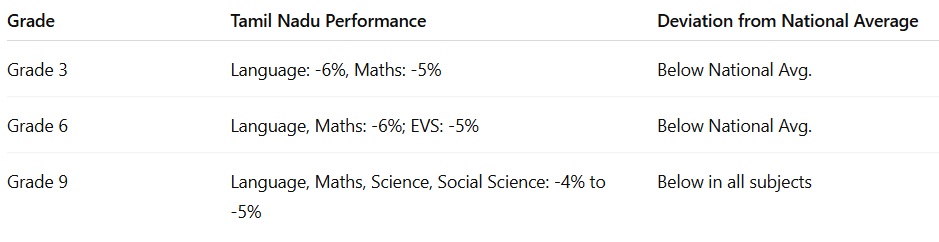
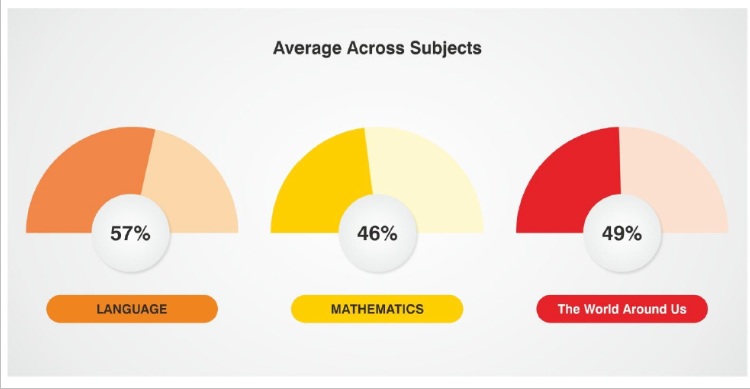
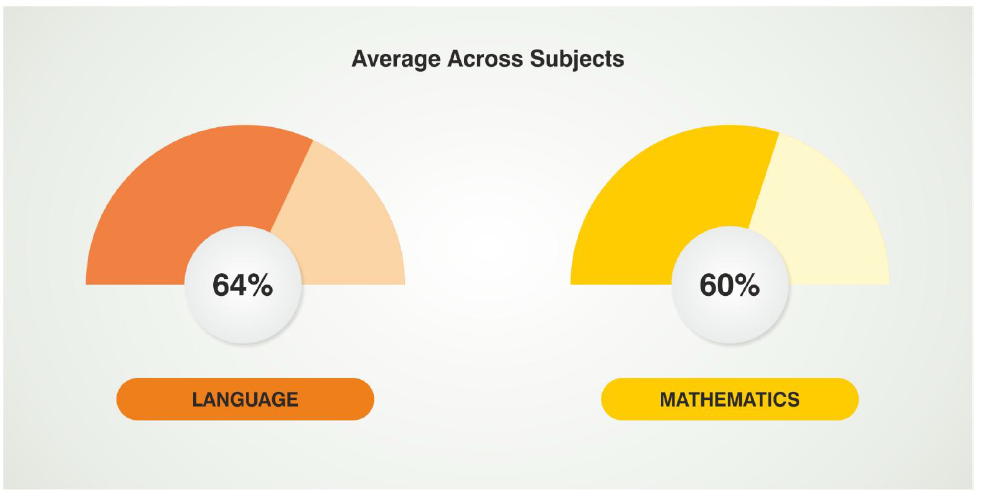
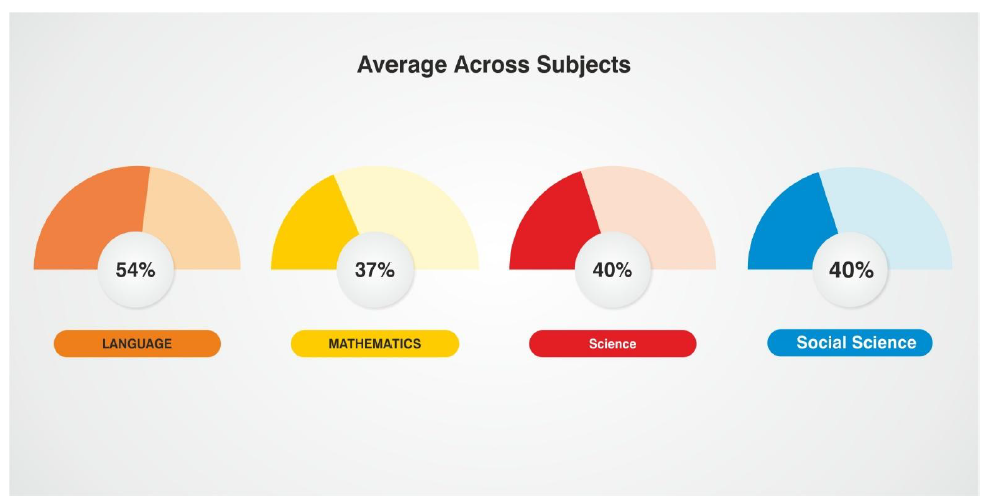
Across all three assessed grades, Grade 3 (Foundational), Grade 6 (Preparatory), and Grade 9 (Middle), Tamil Nadu’s average performance was consistently below the national average in every core subject: Language, Mathematics, Science, and Social Science.
In contrast, the “Hindi” belt or BIMARU states such as UP, Bihar, MP, performed better.
Uttar Pradesh exceeded national averages in foundational numeracy and literacy (Grade 3).
Madhya Pradesh scored above or equal to the national average in Mathematics in Grades 6 and 9.
Bihar showed growth in Language and Science scores, narrowing the gap significantly with southern counterparts.
District-Level Underperformance
None of Tamil Nadu’s districts featured among the top 50 districts nationally in any grade. However, multiple TN districts were among the bottom 50:
Let us now take a look at the foundational weaknesses and gaps.
Foundational Competency Deficits
Less than 50% of Tamil Nadu’s Grade 3 students could perform basic reading or numeracy tasks, indicating deep-rooted foundational gaps.
In contrast, UP and MP students demonstrated better foundational competency with more than 60% proficiency in several indicators.
Declining Performance by Grade 9
Tamil Nadu’s students showed steep learning attrition by Grade 9:
Math competency scores dropped to ~33–37%
Science understanding was limited to 36–38%
Social Science and Civics averaged below 40%, pointing to weak conceptual comprehension
These metrics indicate a failure to transition from rote learning to conceptual application.
Teacher Preparedness and Pedagogy
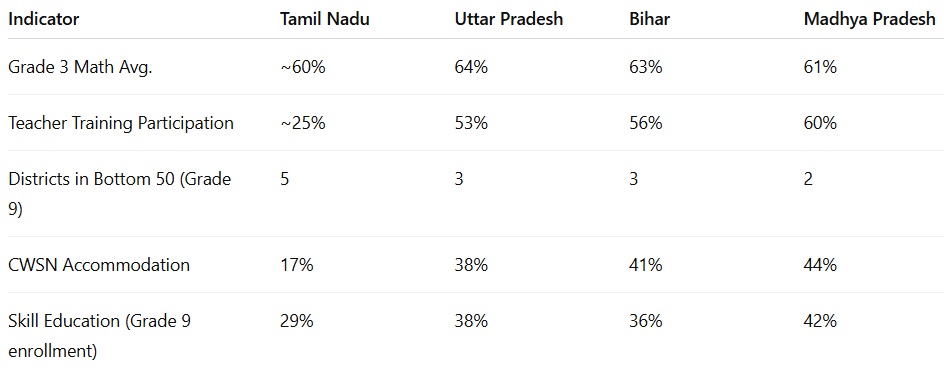
Only 25% of teachers in Tamil Nadu underwent professional development in the last year among the lowest in India.
Less than 50% of teachers used toy-based learning or project-based assessment, lagging behind even northern states that have adopted NEP 2020-aligned practices.
ICT-based training participation was also below par compared to Madhya Pradesh and Bihar, which invested in EdTech post-COVID.
Inclusion, Well-Being, and Infrastructure Concerns
Let’s take a look at some of the other problematic areas.
CWSN Neglect
Only 28% of schools in Tamil Nadu had appropriate learning materials for Children With Special Needs. Assistive technologies were available in just 17% of schools.
Mental Health and SEL Deficits
17–25% of TN students reported feeling unsafe or anxious in school.
Low availability of counsellors, anti-bullying policies, and SEL practices worsens the learning environment.
Manodarpan, the national SEL initiative, remains poorly implemented in TN.
Digital and Skill Education Gap
Only 38% of students had access to a tablet/laptop at home.
Only 29% of Grade 9 students had enrolled in skill-based education, despite the state’s push for industry-linked education.
Let’s now take a look at how TN compares to a few peers such as UP, Bihar, and MP.
Tamil Nadu’s ideological resistance to NEP 2020 has arguably cost it crucial learning reforms. States like UP, MP, and Bihar, which have aligned their pedagogy, teacher training, and assessment with NEP’s competency-based framework, are now reaping benefits, as reflected in the PARAKH survey.
Even Kerala, while critical of some NEP aspects, adopted assessment reforms and SEL integration faster than Tamil Nadu.
Consistent Underperformance Pattern
Tamil Nadu’s underperformance follows a pattern observed in the previous National Achievement Survey (NAS). In response, the DMK-led government launched initiatives such as the #EnnumEzhuthum scheme to address foundational literacy and numeracy gaps. However, the recent PARAKH results suggest that these interventions have yet to produce meaningful outcomes.
Critics have pointed to the Dravidian Model’s politicisation of NEP 2020, arguing that opposition to the central education policy has come at the cost of addressing core learning outcomes. Commentators have also drawn parallels to the #NaanMudhalvan scheme, launched to boost skill development and placements for youth, which has similarly been criticised for lacklustre training and poor placement results.
Some Recommendations for Tamil Nadu
Statewide Foundational Literacy Mission: Target Grades 1–5 with accelerated learning modules and diagnostic tools.
Mandate Annual Teacher Training: Focus on digital tools, NEP-compliant pedagogy, and inclusive classroom management.
District-Level Action Plans: Decentralize data-driven planning with accountability to improve district outcomes.
Invest in SEL and Mental Health: Recruit trained counsellors, implement Manodarpan fully, and integrate SEL in pedagogy.
Rebuild Public Trust in Education: Launch a “Back to Basics” campaign to refocus on core competencies and teacher-led reform.
Adopt Competency-Based Assessments: Move away from rote learning models toward outcome-based frameworks as per NEP.
The findings from PARAKH 2024 deliver a wake-up call for Tamil Nadu. While its education model has historically emphasized access and inclusion, access without learning is no longer tenable. Without urgent systemic reforms and a reorientation toward competency-based, inclusive, and data-driven education, Tamil Nadu risks falling behind not just in national rankings but in securing the future of its students.
Subscribe to our channels on Telegram, WhatsApp, and Instagram and get the best stories of the day delivered to you personally.
Amid recent backlash of DMK Deputy General Secretary and Rajya Sabha MP Tiruchi Siva over comments about the late Chief Minister K. Kamaraj, an old video from 7 February 1986, featuring former Tamil Nadu Chief Minister M. Karunanidhi has resurfaced on social media. In the unverified video, Karunanidhi speaks the same about Kamaraj and shares an anecdote highlighting their political rivalry and personal courtesy.
In the footage, Karunanidhi himself recounts how he took steps to support Kamaraj during his travels, even when Kamaraj was openly critical of the DMK government.
Karunanidhi explains in the video that after taking over the leadership of the DMK following the era of Anna, he was informed by Rajaram Naidu that Kamaraj, while campaigning in remote and hot regions, was struggling with the heat. Despite their political differences, Karunanidhi said he personally arranged for air conditioners to be installed at Kamaraj’s lodging locations to ensure his comfort and health. Karunanidhi adds that although Kamaraj was actively opposing the DMK at the time, it was the DMK that took care of him. He concluded by saying that loyal and appreciative Congress leaders, including Thevar, would recognize this gesture.
He says, “They have said that Chief Minister Karunanidhi performed the final rites for Perunthalaivar Kamaraj, just as how Kamaraj’s own brother would have done. I would also like to add something else. During the period when Perunthalaivar Kamaraj was alive, and after Anna, when I took charge of the Dravida Munnetra Kazhagam (DMK) government, Perunthalaivar Kamaraj was touring various places, criticizing the DMK rule. At that time, due to Kamaraj’s inability to withstand the heat and the discomfort caused by the scorching sun, he had to travel to outer villages for campaigning. However, the places where he stayed did not have air-conditioning facilities. Therefore, Rajaram Naidu informed me that arrangements needed to be made for this. Even though Kamaraj was traveling to criticize the DMK, it was I, Karunanidhi, who ordered air conditioners to be installed in every lodge where he stayed, keeping his health in mind. Thevar and all good, grateful Congress members will certainly acknowledge this.”
The NCERT has undergone a complete transformation, stripping away the long-standing Western-centric, Marxist lens and infusing the curriculum with a more rooted Indian perspective. The new approach highlights India’s own civilizational ethos, includes relatable real-life examples, and connects students across all regions and cultures of Bharat. Gone are the outdated Marxist frameworks that often painted India as a mere subject of Western analysis. Instead, the curriculum now reflects indigenous values and historical depth. This sweeping reform feels nothing short of a cultural goldmine rich in tone, grounded in heritage, and far more relevant to students today.
Here are a few standout examples from the revised NCERT Class 6 Social Science book textbooks :
Establishing The Civilizational Identity Of India
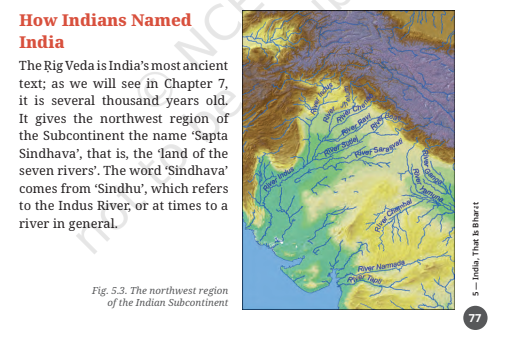
This chapter offers students a rooted and authentic introduction to how ancient Indians named their land. It begins with the Rig Veda, the oldest known Indian text, which refers to the northwestern region of the subcontinent as Sapta Sindhava — meaning the “Land of the Seven Rivers.” The term ‘Sindhu’, from which ‘Sindhava’ is derived, referred to the Indus River or rivers in general.
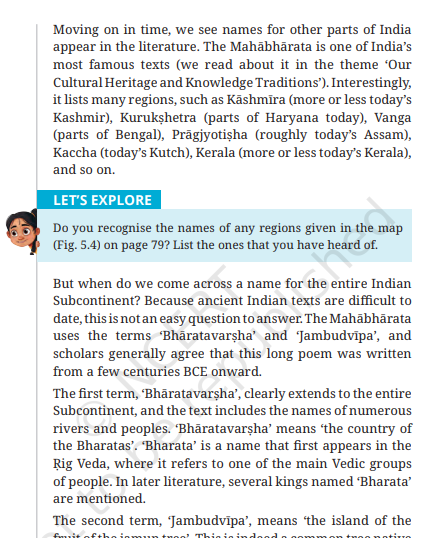
The chapter further explores how the Mahābhārata, one of India’s greatest epics, mentions several ancient regions that correspond to present-day locations — such as Kāshmira (Kashmir), Kuru (Haryana), Vanga (Bengal), Prāgjyotiṣha (Assam), Kaccha (Kutch), and Kerala, showing how deep-rooted and ancient India’s regional identities are.
Importantly, the chapter references names for the entire subcontinent such as ‘Bhāratavarṣa’ and ‘Jambudvīpa’, both found in texts like the Mahābhārata and Vishnu Purāna. Bhāratavarṣa is explained as “the country of the Bharatas,” with Bharata being a prominent Vedic tribe and later a royal lineage. The term Jambudvīpa referred to a larger geographical concept within ancient Indian cosmology.
Ancient Scientific Wisdom:
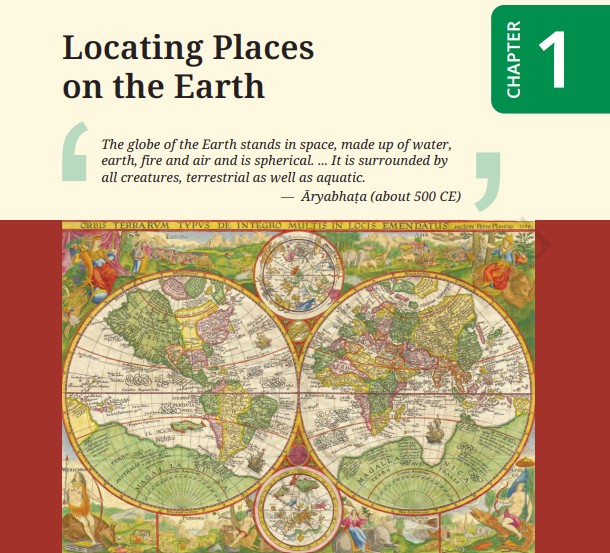
Chapter 1, titled Locating Places on Earth, opens with a striking quote from Aryabhata (circa 500 CE), who described the Earth as spherical and situated in space. It’s inspiring to see such early scientific thought take center stage in the curriculum.
It quotes, “The globe of the Earth stands in space, made up of water, earth, fire and air and is spherical…. It is surrounded by all creatures, terrestrial as well as aquatic. – Aryabhața (about 500 CE).”
Environmental Awareness In Ancient Texts:
Chapter 3 begins with a verse from the Atharva Veda, which clearly articulates ancient Indian concern for nature and climate. It’s a compelling reminder that environmental consciousness isn’t a recent or Western concept it has deep roots in Indian civilization.
The quote reads, “Free from the burden of human beings, may the Earth with many heights, slopes and great plains, bearing plants endowed with varied powers, spread out for us and show us her riches!… The Earth is my mother and I am her child. Atharva Veda, Bhūmi Sūkta (‘Hymn to the Earth’)”
India’s Prime Meridian – Madhya Rekha:
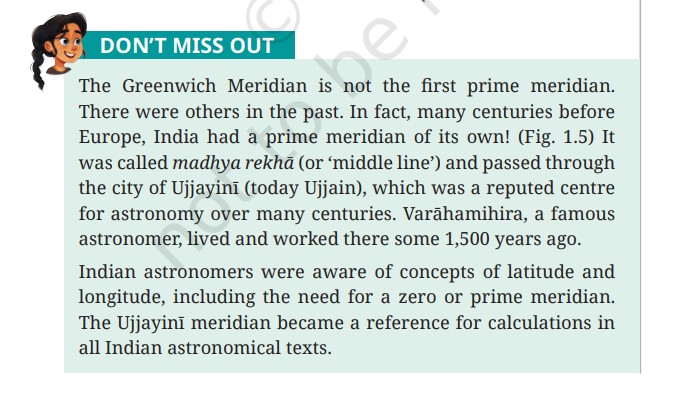
A fascinating insight from the “Don’t Miss Out” section reveals that India had its own central meridian, known as Madhya Rekha, which passed through Ujjain. This city was a historic hub for astronomy, home to scholars like Varāhamihira 1,500 years ago. Such details are rarely highlighted in mainstream education, making their inclusion here a powerful move to reconnect students with India’s scientific legacy.
“What North? What South? It’s all Bharat”:
The curriculum promotes a unified cultural identity that transcends regional divisions, reinforcing the idea of one civilizational Bharat. This slaps the divisive propagandist.
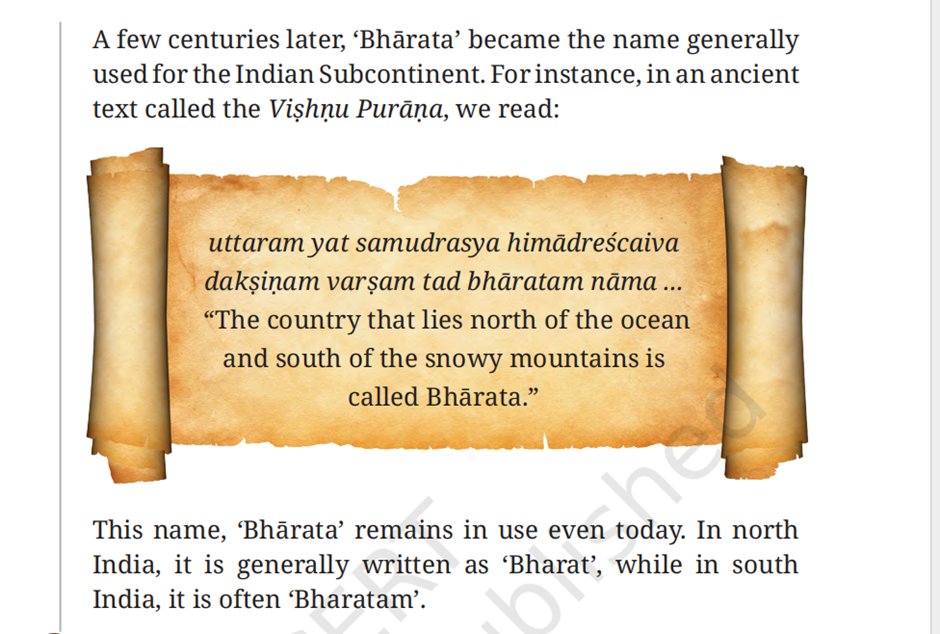
The book reads, A few centuries later, ‘Bhārata’ became the name generally used for the Indian Subcontinent. For instance, in an ancient text called the Vishnu Purāņa, we read: uttaram yat samudrasya himādreścaiva dakşiņam varşam tad bhāratam nāma … “The country that lies north of the ocean and south of the snowy mountains is called Bhārata.” This name, ‘Bhārata’ remains in use even today. In north India, it is generally written as ‘Bharat’, while in south India, it is often ‘Bharatam’.”
Understanding The Name “India”:
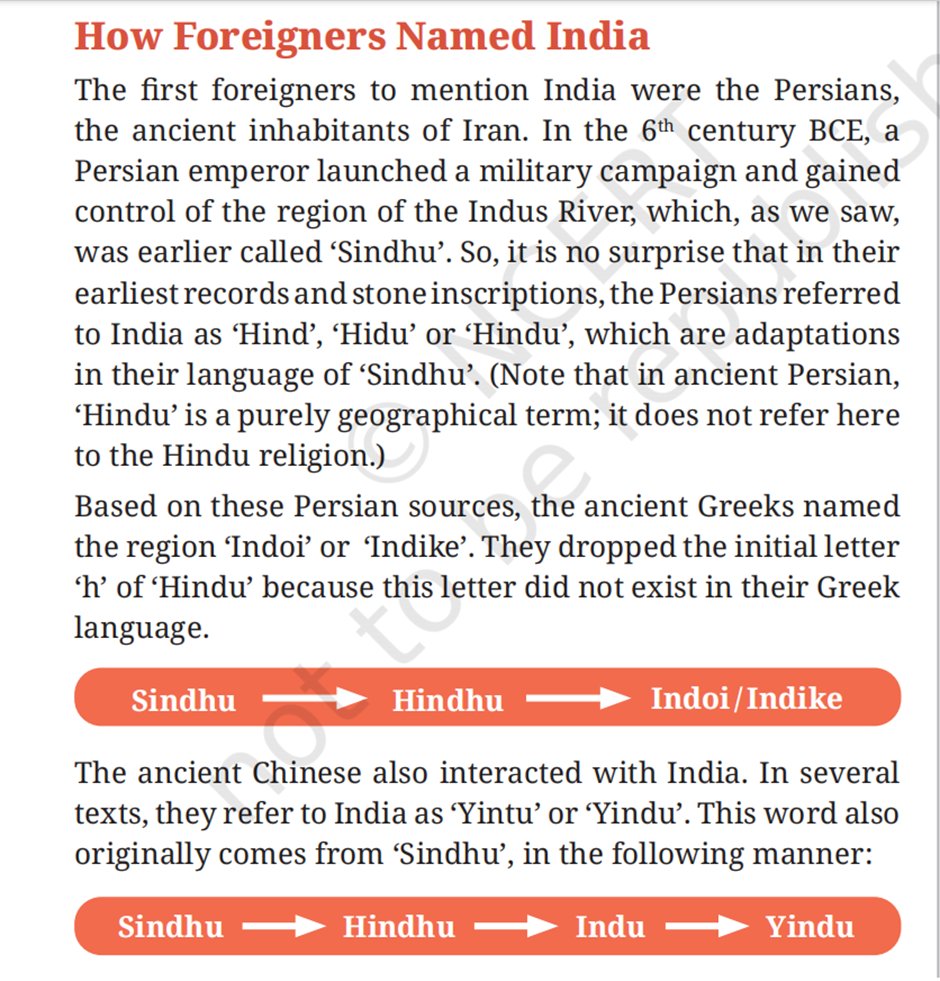
The term ‘India’ has Persian and Greek roots, originating from the Sanskrit word Sindhu (Indus River). The Persians pronounced it as ‘Hindu,’ and eventually the Greeks adapted it to ‘Indos.’ Meanwhile, traditional names like Bharat, Aryavarta, and Sapta Sindhu reflect indigenous continuity.
Highlighting Indigenous Scholars:
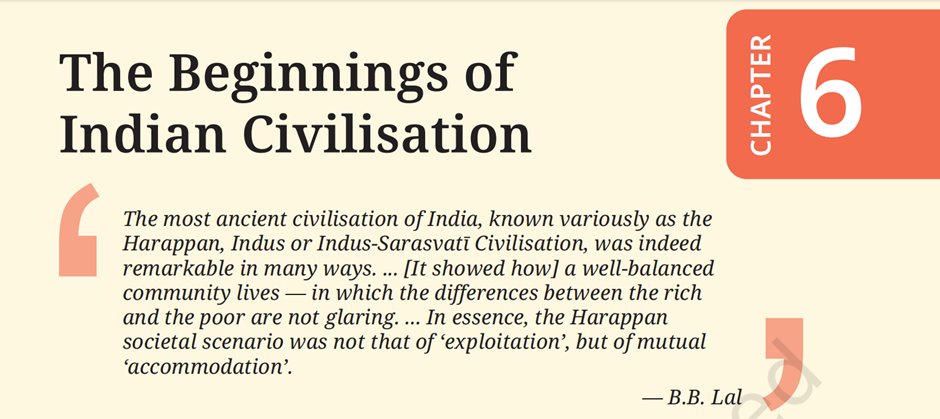
The work of archaeologist B.B. Lal and research into the Indus-Sarasvati civilization showcase how scholarship rooted in Indian soil brings a deeper, more authentic narrative. This marks a shift from earlier histories written through colonial or detached academic lenses, moving towards what many see as true civilizational justice.
The book reads, “The most ancient civilisation of India, known variously as the Harappan, Indus or Indus-Sarasvati Civilisation, was indeed remarkable in many ways. … [It showed how] a well-balanced community lives – in which the differences between the rich and the poor are not glaring…. In essence, the Harappan societal scenario was not that of ‘exploitation’, but of mutual ‘accommodation’. – B.B. Lal”
Tamil Nadu’s Civilizational Connection:
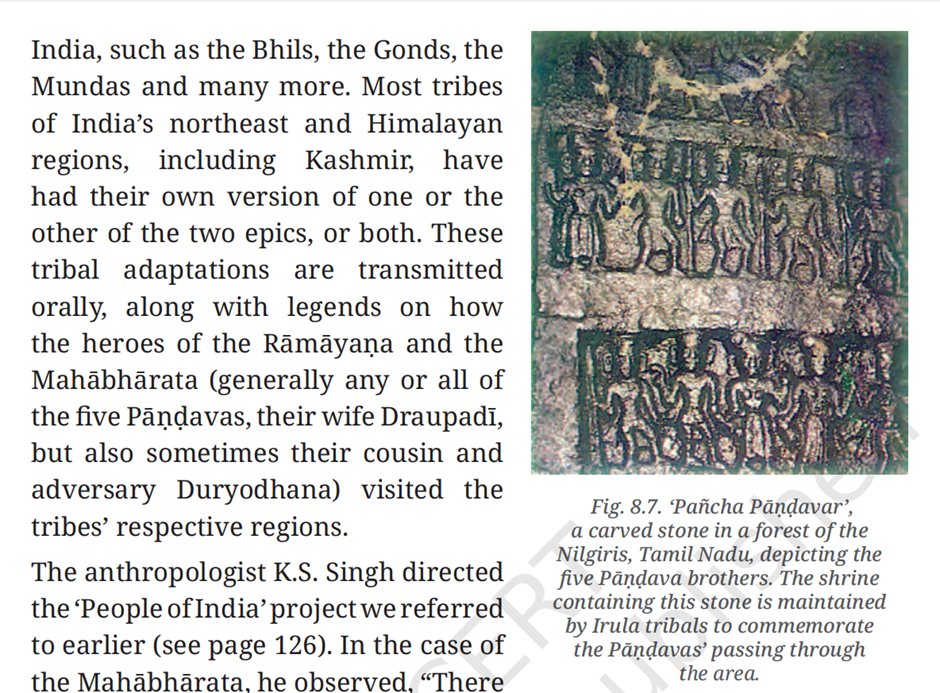
One example speaks volumes: Irula tribals in Tamil Nadu have preserved the story of the Pandavas through stone carvings. This contradicts narratives that claim Tamil Nadu is culturally disconnected from the rest of India. The real question arises who is truly disconnected from India’s heritage? The tribals who preserve it, or the Dravidianists who deny it?
Quoting Thiruvalluvar On Family Ethics:
Referencing the Tamil sage Thiruvalluvar, renowned for the Tirukkural, adds depth and inclusivity. His writings on family values, governance, and ethics are timeless and deeply relevant.
The book quotes, “Love and dharma are the flower and fruit of family life. -Tiruvalluvar”
Democracy and Epics:
The Mahabharata is cited in the chapter on grassroots democracy an excellent way to illustrate political thought emerging from ancient Indian texts. Beyond highlighting Bharat’s civilizational identity, the new NCERT textbooks also embrace global voices—such as that of Rigoberta Menchú Tum, a K’iche’ Maya activist from Guatemala, Nobel Peace Prize laureate, and advocate for human rights and gender equality. Her inclusion reflects a spirit of global solidarity, inclusivity, and the shared values of justice and equality across cultures.
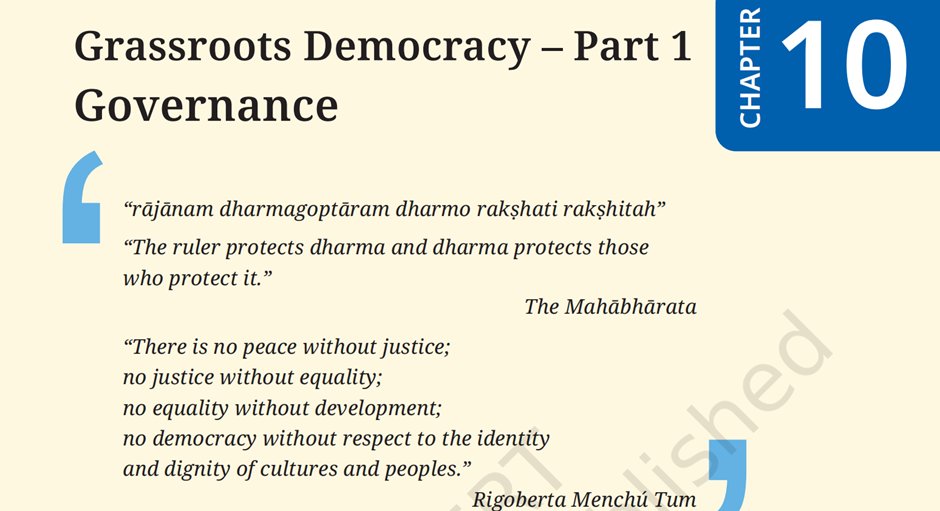
In the “Grassroots Democracy – Part 1 Governance CHAPTER 10” it quotes, “rājānam dharmagoptāram dharmo rakshati rakshitah” “The ruler protects dharma and dharma protects those who protect it.” The Mahābhārata.
“There is no peace without justice; no justice without equality; no equality without development; no democracy without respect to the identity and dignity of cultures and peoples.” Rigoberta Menchú Tum”
Representation Rooted In Reality:
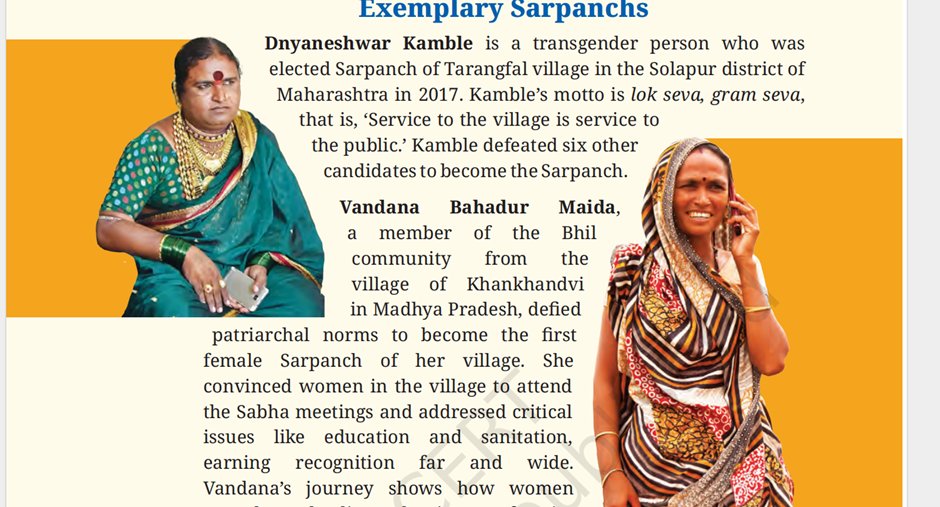
Instead of glorifying distant figures with questionable legacies, the textbooks now feature real-life Indian icons. For example, Dnyaneshwar Kamble, a transgender person serving as a elected sarpanch in Maharashtra, and Vandana Bahadur Maida, a tribal woman who became a sarpanch in Madhya Pradesh, represent genuine inclusion.
Learning About Governance & Development:
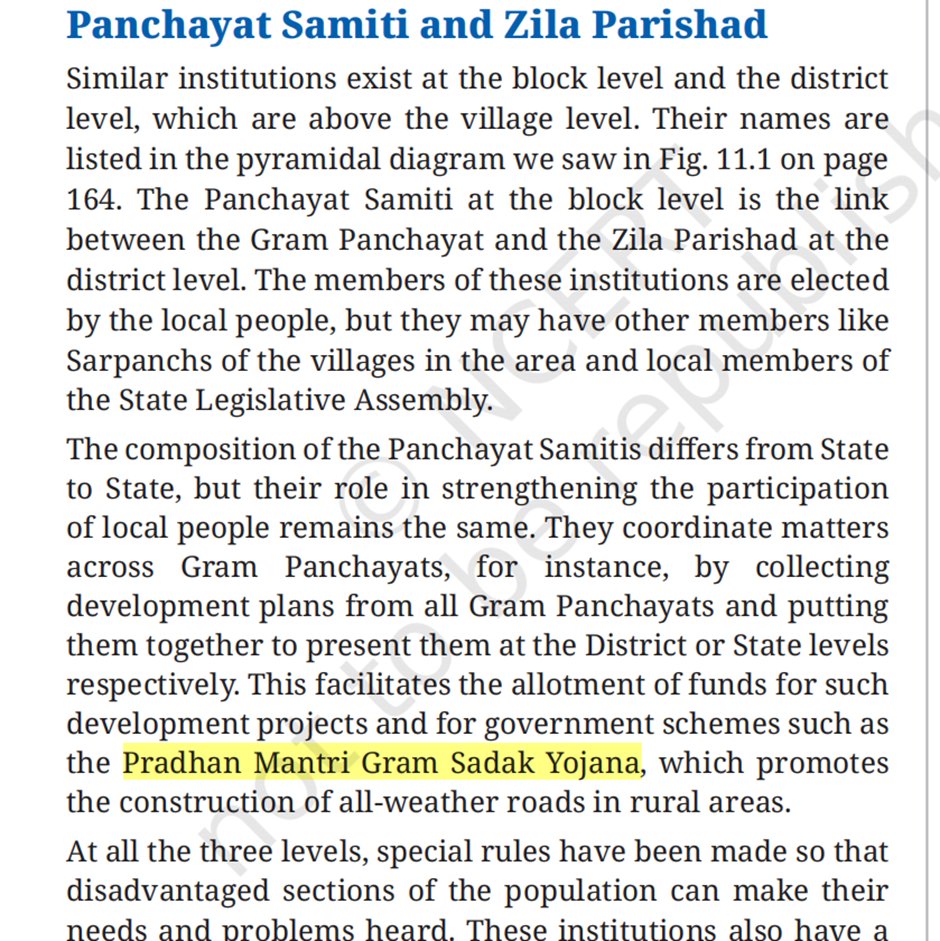
The role of central government schemes like the Pradhan Mantri Gram Sadak Yojana is explained clearly. It’s shown not just as road building, but as vital infrastructure connecting remote villages to schools, hospitals, and markets.
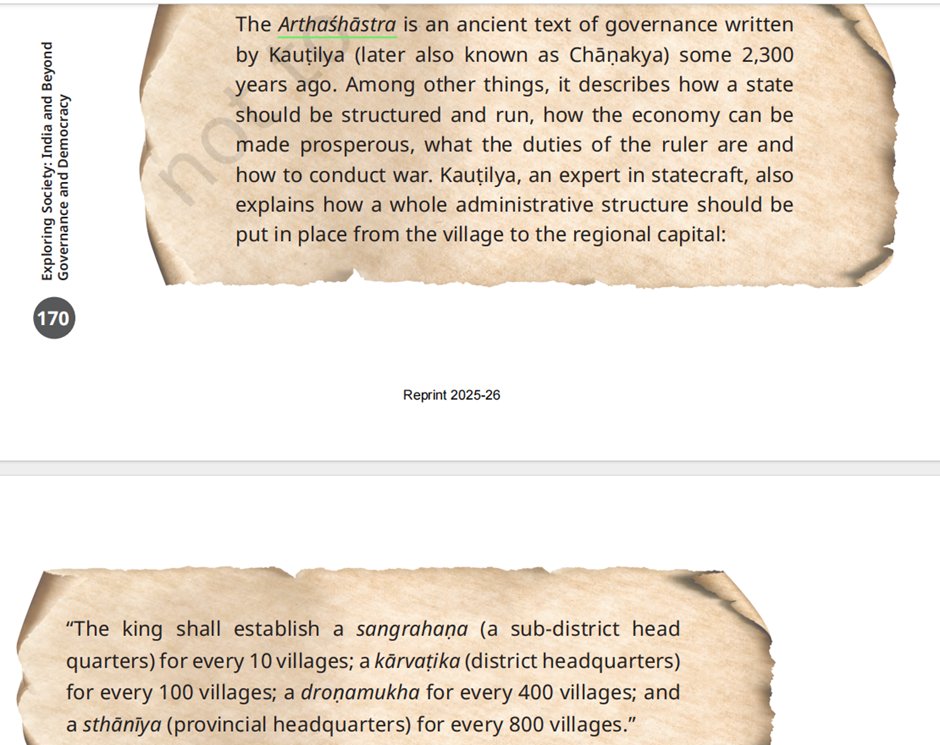
Spotlight On Chanakya’s Arthashastra:
The ancient treatise by Chanakya is now rightly highlighted, showcasing India’s deep history of political science, economics, and administrative systems—long before colonial governance models emerged.
Cultural Authenticity In Representation:
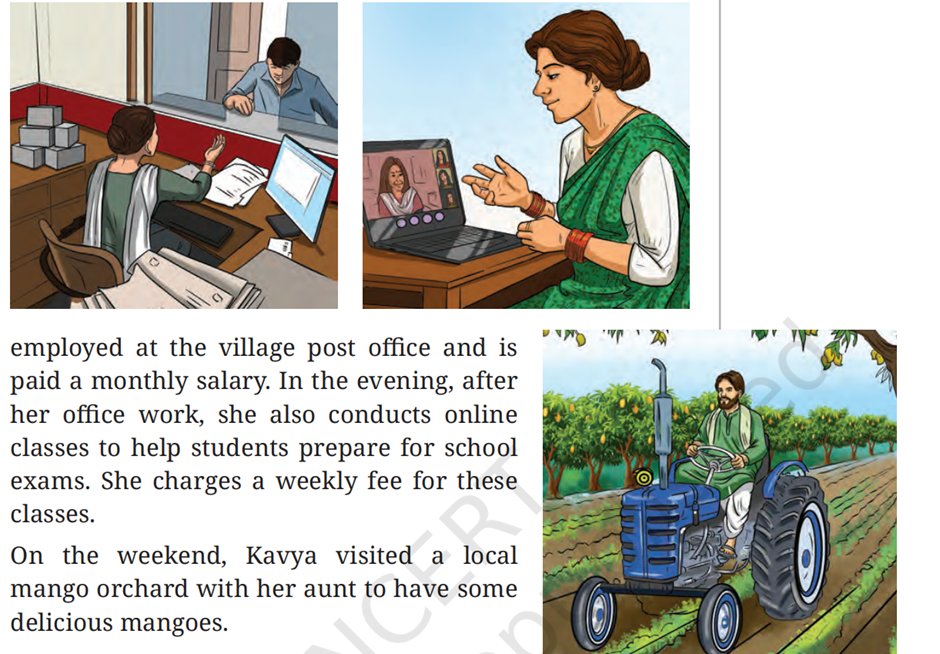
Visual depictions challenge stereotypes: women in sarees working professionally, showing that traditional attire doesn’t imply backwardness. It’s a subtle yet powerful correction to outdated portrayals.
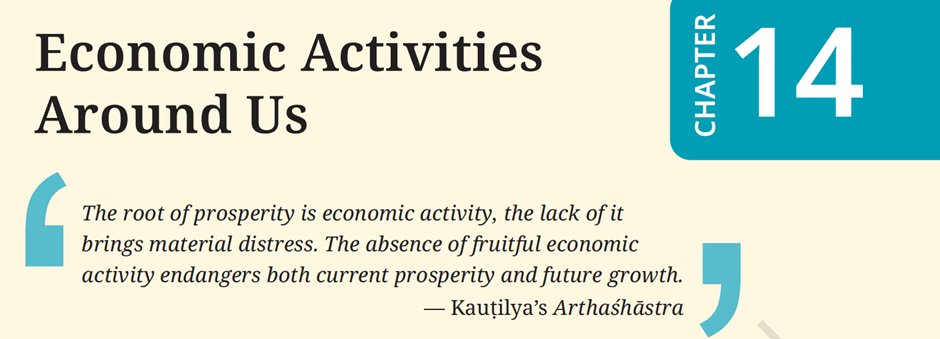
A Shift In Economic Perspective:
The economics chapter no longer demonizes wealth creation through a Marxist lens. Instead, it quotes Kautilya’s Arthashastra: “The root of prosperity is economic activity.” It encourages students to see economic growth as vital to dignity and opportunity, not as inherently exploitative.
Celebrating Regional Contributions:
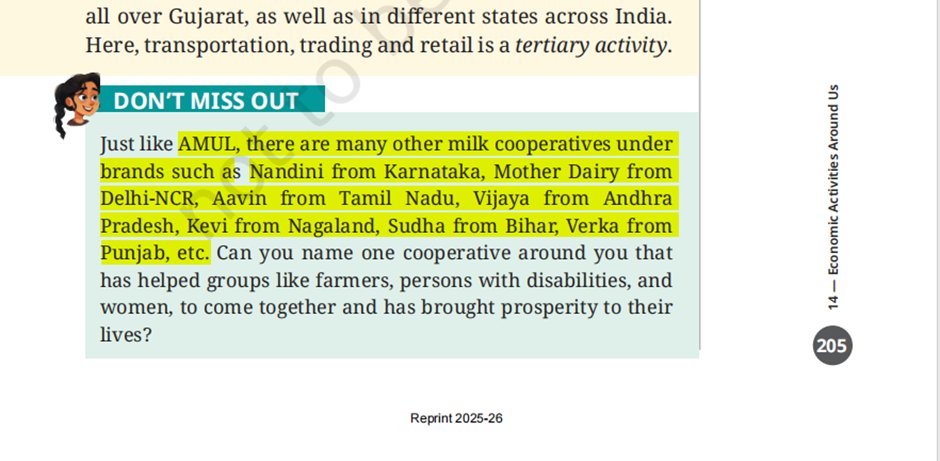
In a nod to inclusivity, brands like Nandini (Karnataka), Aavin and Kevi (Tamil Nadu), and a detailed lesson on Amul are featured along with the role of Sardar Vallabhbhai Patel and Gujarat’s contribution. It’s a well-rounded narrative that honors India’s diversity.
No Woke BS
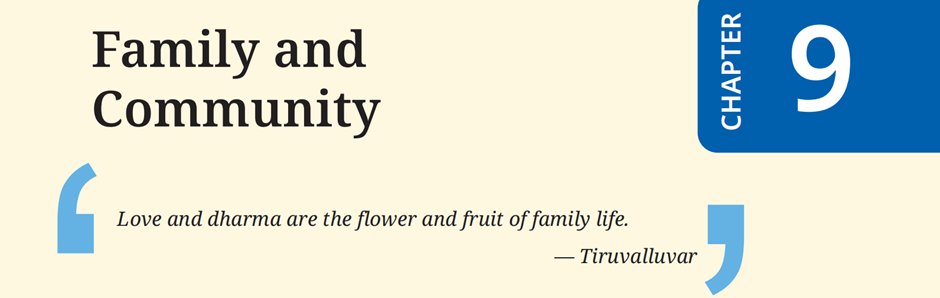
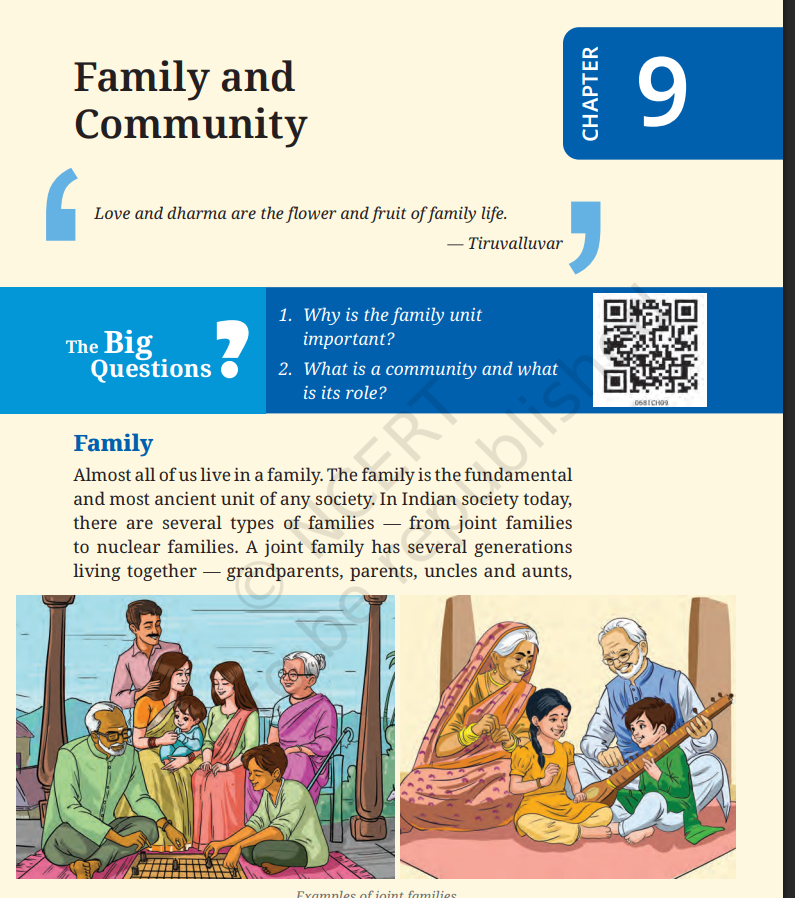
The chapter titled “Family and Community” (Chapter 9) opens with a quote by Tiruvalluvar, setting the tone with a civilizational lens:
“Love and dharma are the flower and fruit of family life.”
This in itself is a bold departure from Westernized frameworks that often sideline dharma and traditional values.
The text emphasizes the family as the most ancient and fundamental unit of Indian society, not just a social construct but a civilizational pillar.
It distinguishes between joint families and nuclear families, with a clear inclination towards valuing the joint family system, which reflects India’s deep-rooted intergenerational bonds and responsibilities. A traditional joint family is shown sitting together — grandparents, parents, and children.
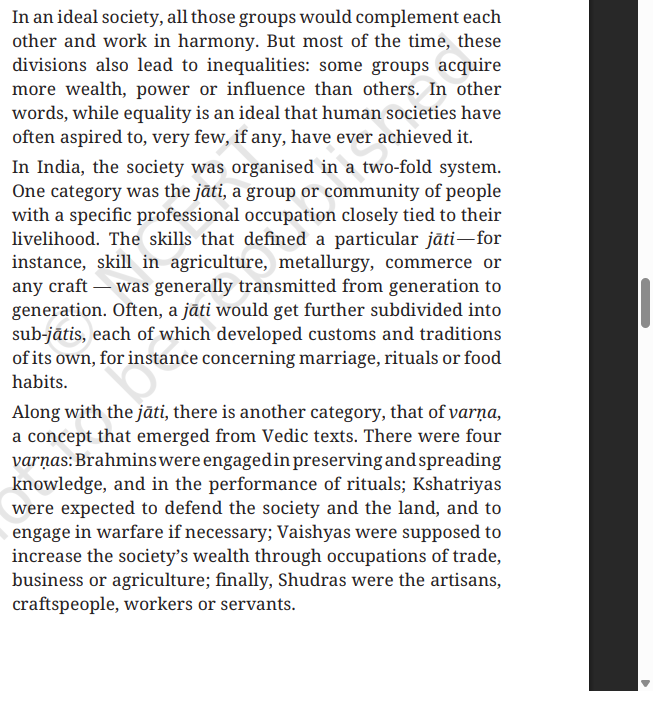
Left’s Oppressor Vs Oppressed Caste Propaganda Dismantled
The textbook offers a balanced, decolonized view of the Jāti and Varṇa systems, portraying them not as tools of oppression but as frameworks for social harmony and functional specialization. It explains how Jāti evolved around hereditary occupations—such as agriculture, metallurgy, or crafts—where skills were passed down through generations, forming tight-knit, culturally rich communities. The Varṇa system, rooted in Vedic texts, categorized society based on duty and role, not hierarchy—Brahmins for knowledge, Kshatriyas for protection, Vaishyas for trade, and Shudras for service. Unlike the usual Marxist lens of oppressor vs. oppressed, this chapter highlights how these groups complemented each other in a cooperative civilizational order, offering students a truthful and dignified understanding of India’s social structure.
Calling Out Islamist Rulers For Who They Really Were
The revised NCERT Class 8 Social Science textbook offers a more candid account of the Delhi Sultanate and Mughal rule, highlighting numerous examples of religious intolerance and violence—a significant shift from previous editions. It portrays Babur as a fierce and merciless invader who massacred entire populations, erected “towers of skulls,” and enslaved women and children, despite also being described as intellectually curious. Akbar’s reign is characterized as a mixture of cruelty and religious accommodation, referencing his brutal massacre of 30,000 civilians during the siege of Chittorgarh and the destruction of temples, even while later promoting a more inclusive approach. Aurangzeb, meanwhile, is shown as motivated by both political and personal religious reasons, issuing edicts to demolish temples, including those at Banaras, Mathura, and Somnath, along with Jain and Sikh places of worship.
The book also details how Alauddin Khilji’s general, Malik Kafur, targeted major Hindu centers such as Srirangam, Chidambaram, Madurai, and potentially Rameswaram. It acknowledges that temple destruction during the Sultanate era stemmed from both loot and iconoclastic zeal. The imposition of jiziya on non-Muslims is also portrayed more critically—described as a means of public degradation and a push toward conversion to Islam. This starkly contrasts with older NCERT narratives, which largely omitted or downplayed these violent episodes, focusing instead on administrative achievements and general political transitions.
A Cultural Cartography Of Bharat
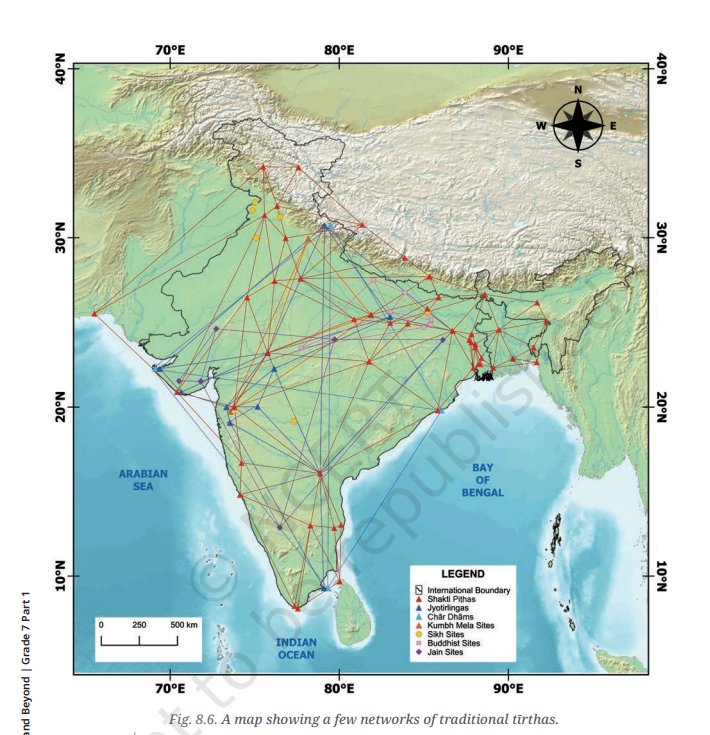
Finally, a particularly noteworthy addition appears in the Class 7 Geography textbook, where India’s deep-rooted religious and spiritual heritage is meaningfully represented. The textbook features a map highlighting sacred sites such as the Shakti Peethas, Jyotirlingas, Char Dhams, Kumbh Mela locations, as well as important Sikh, Buddhist, and Jain pilgrimage centers. This is a significant shift from the earlier trend where Marxist historians, influenced by colonial frameworks, often downplayed or reinterpreted India’s native traditions, sometimes even hijacking Indian cultural traits to credit external Abrahamic influences. In contrast, this map offers students a clear and respectful representation of India’s own civilizational and spiritual geography.
In summary, the revised NCERT textbooks offer a much-needed reset anchored in India’s own history, knowledge systems, and lived experiences. By replacing outdated colonial and Marxist narratives with content that’s culturally authentic and intellectually enriching, this shift truly represents a refreshing and long-overdue change.
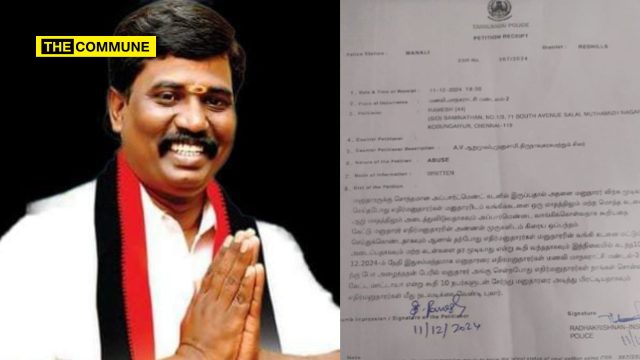
A.V. Arumugam, a DMK councilor and zonal committee president from Manali, Chennai, has been charged under four sections, including those related to abduction and financial fraud.
According to the complaint, Arumugam had entered into a land purchase agreement valued at ₹16 crore, but allegedly paid only ₹50 lakh.
When the seller, identified as Ramesh, demanded the remaining amount, he was reportedly abducted and assaulted.
Based on this allegation, police have initiated legal proceedings against Arumugam.
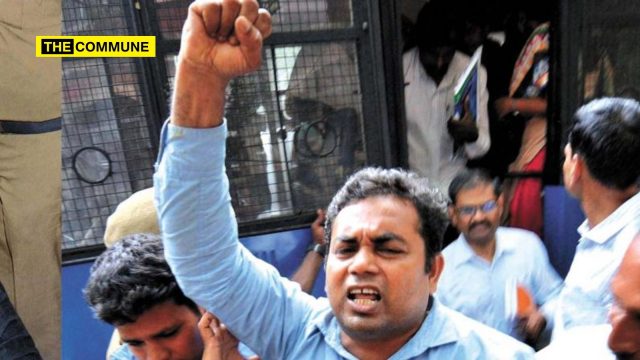
On 18 July 2025, the Sivaganga District Court sentenced Roopesh alias Praveen, a senior Maoist man from Kerala, to life imprisonment for his involvement in a 2015 case related to the fraudulent procurement of a SIM card.
According to the prosecution, Roopesh has over 15 criminal cases pending against him in Tamil Nadu, including several in Sivaganga district. He was apprehended by Coimbatore police in 2015, during which multiple SIM cards were recovered from his possession. Investigations uncovered that one of the SIM cards was illegally obtained from a mobile store in Kanniyakumari, using the ration card of a farmer from Idayan Valasai, near Ilaiyangudi in Sivaganga. The SIM was reportedly used to facilitate Maoist operations, prompting authorities to register a case in Sivaganga.
Roopesh, currently incarcerated at Viyyur Central Prison in Kerala, was brought to the Sivaganga court amid tight security for the trial. After reviewing the evidence, Principal District Judge Arivoli found him guilty, sentencing him to life imprisonment and imposing a fine of ₹31,000. Following the verdict, Roopesh was escorted back to Viyyur Central Prison.
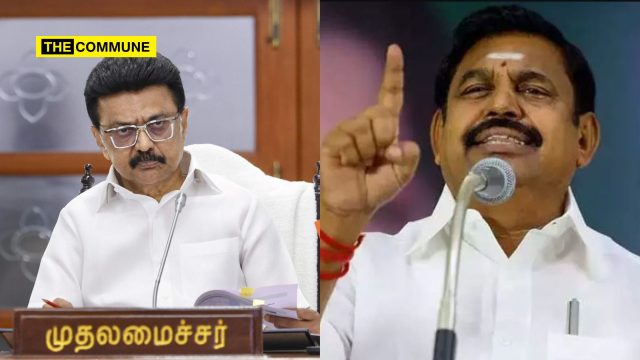
AIADMK General Secretary and Leader of the Opposition, Edappadi K. Palaniswami (EPS), launched a scathing attack on Chief Minister M.K. Stalin during his public outreach campaign “Makkalai Kaappom, Thamizhagathai Meetpom” in Tiruvarur district, which is the hometown of Karunanidhi, MK Stalin’s father. Addressing a gathering near the old bus stand in Tiruvarur, EPS accused the DMK government of spending four years focused on image-building through photo-ops rather than delivering tangible benefits to the people.
Mocking Stalin’s frequent self-praise as the ‘super CM’, Palaniswami asked, “Stalin constantly says, ‘I am the super Chief Minister in India, a role model CM for India.’ In what? For looting, what else makes you a super Chief Minister?”
He challenged the Chief Minister to openly list the welfare schemes implemented during his tenure, stating, “Just think, has any project been brought to the Nannilam assembly constituency in Tiruvarur district? After I finish speaking, I’ll list all the projects that we brought. If the DMK Chief Minister Stalin comes to this area, tell the people what you have done for them. If you have the guts, courage, and strength, tell us what you’ve done in your rule! Why were you elected? To serve the people, to benefit the people! But you’ve done nothing. Four years have just rolled by. He’ll come neatly dressed, a photoshoot will be done for TV, and that picture will be shown, and the story for that day ends there. He’s spent four years like this. He’s spent four years just on photoshoots!”
Then EPS also ridiculed Stalin’s rebranding tactics under various schemes such as ‘Ungal Thoguthiyil Stalin’ and ‘Mudhalvarin Mugavari’, claiming they were simply old projects with new labels meant to mislead the public. He asserted that Stalin’s only significant move was appointing his son Udhayanidhi Stalin as Deputy Chief Minister, calling it a decision made to “embellish his family’s position” rather than benefit the people.
EPS said, “He gives names – he’s a master of naming things. For example, ‘Ungal Thoguthiyil Stalin,’ and ‘Mudhalvarin Mugavari Scheme.’ All these ‘Ungal Thoguthiyil Stalin’ schemes are just the same things rebranded, confusing the people. That’s the achievement of this government. He has achieved a great feat, he has made Udhayanidhi Stalin the Deputy Chief Minister. He’s decorating his family by making Udhayanidhi Stalin the Deputy Chief Minister. This is Stalin’s achievement; there are no other achievements.”
Highlighting AIADMK’s track record, EPS stated, “As far as the All India Anna Dravida Munnetra Kazhagam (AIADMK) is concerned, our party is the people’s party. The AIADMK government was your government. That’s why the AIADMK government, by accepting the voice of the people and implementing schemes according to their wishes, earned the goodwill of the people. Today, wherever you go in Tamil Nadu, people will say, ‘The AIADMK government did this, they achieved that.’ But ask them what the DMK government has done? They’ll say, ‘They looted!’ The AIADMK government worked for the welfare of the people, while the DMK government is a government that has looted the people. That’s what they’ll say.”
Palaniswami concluded by affirming AIADMK’s identity as a people-centric party, contrasting it with what he called the DMK’s self-serving governance.
Subscribe to our channels on Telegram, WhatsApp, and Instagram and get the best stories of the day delivered to you personally.
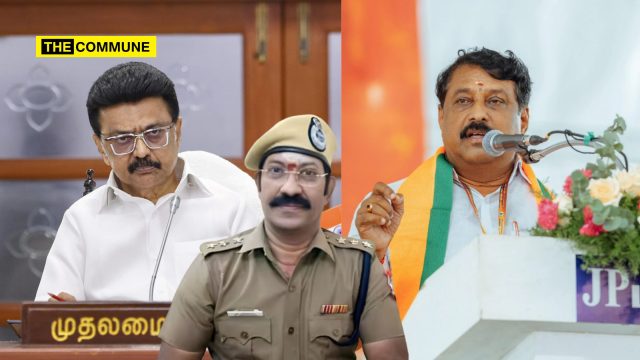
Tamil Nadu BJP President Nainar Nagendran has strongly criticized the DMK government for allegedly ignoring allegations of harassment against DSP M. Sundaresan of the Mayiladuthurai Prohibition Enforcement Unit. Sundaresan reportedly faced intimidation, humiliation, and multiple transfers after submitting a whistleblower report to the State Human Rights Commission (SHRC). Nagendran described this neglect as “condemnable,” questioning whether the DMK realizes such administrative chaos will further worsen the already fragile law-and-order situation in the state.
In a social media post, Nagendran stated, that under the DMK regime, Tamil Nadu Police is in disarray and being mocked. DSP Sundaresan, known for his integrity, was suspended, denied a vehicle, and subjected to unwarranted targeting all for fulfilling his duties, he stated.
He further alleged that Sundaresan refused to provide his vehicle to a DMK minister in violation of protocol a refusal that resulted in the vehicle’s confiscation. Despite initiating 1,200 cases including raids on illicit ganja operations and arresting 700 individuals in the past nine months, Sundaresan continues to face punitive measures.
Nagendran also accused several senior officers including SP Stalin IPS, Inspector Balachandran, IG Senthilvelan, and DGP Davidson Aseervatham of misconduct, including demands for bribes and filing false charges against innocent citizens. He condemned the government’s inaction on Sundaresan’s grave allegations, calling the administration tyrannical and dismissive of both public and police grievances.
He demanded a immediate reinstatement of Sundaresan’s vehicle and position, a transparent probe into the officers named in the allegations and urged Chief Minister MK to Stalin ensure accountability within the police force. Nagendran also warned that if justice is not delivered, the BJP will resort to public protests and campaigns in support of Sundaresan and affected honest officers.
Full statement of Tamil Nadu BJP President Nainar Nagendran as follows:
“Tamil Nadu Police is in Shambles and a laughingstock under DMK Rule! The interim suspension of Sundaresan, who was serving as Deputy Superintendent of Police in the Mayiladuthurai District Prohibition Enforcement Wing, is highly condemnable. A few days ago, a video of him walking on the road without a government vehicle, a result of his honest work, had gone viral and caused a stir in Tamil Nadu. What further proof do we need that the DMK’s chaotic rule is nearing its end? Why did the DMK government transfer Sundaresan to Mayiladuthurai, despite strong opposition from Mani Kumar, the State Human Rights Commissioner and retired judge? This transfer happened even after Sundaresan, while working at the State Human Rights Commission, submitted a detailed report on police deaths in Tamil Nadu and the involvement of several high-ranking police officers in them. Is it because honest officers have no place in the DMK government? Listening to Sundaresan state that he has registered 1200 cases and arrested 700 individuals in categories like illegal liquor sales and ganja smuggling in the past nine months since his transfer to Mayiladuthurai, it’s clear that his integrity remained unchanged despite the change in location. If that’s the case, why should his government vehicle be confiscated? Is the DMK government indirectly suggesting that Sundaresan, traveling without proper security, can be targeted by his adversaries in any way they please? Even after Sundaresan made a series of allegations against Mayiladuthurai SP Stalin, Mayiladuthurai Special Inspector Balachandran, IG Senthil Velan, and DGP Davidson Asirvatham, the fact that no investigation has been conducted against these specific government officials confirms that what’s happening in Tamil Nadu is an autocratic rule by officials. Therefore, under DMK rule, public complaints have no value, nor do the grievances of police officers.
Specifically, when Sundaresan states that Mayiladuthurai Special Inspector Balachandran accepts bribes from sand mafias and illegal liquor sellers and files many false cases against innocent people, the public is gripped by fear, wondering if the very police personnel who are supposed to curb crimes are turning into hardened criminals. The DMK’s usual tactic of diversionary politics is to release a list of disciplinary actions taken against Sundaresan instead of providing proper answers to the allegations made against high-ranking police officers. We know that turning victims into culprits is an art mastered by the DMK. But it’s shocking to see that even powerful police officers face the same fate. How will police personnel working under such mental stress treat the public with compassion? Where will they vent their anger against the government? An administration that doesn’t consider who is truly affected by this is unfit to govern.
Rather than participating in the drama of going to the people to solve their problems, Chief Minister Stalin’s foremost duty is to streamline the police administration, which operates under his direct control. At the same time, the Chief Minister should order a proper investigation into the officials mentioned by Sundaresan. This investigation should be conducted without any compromise, and its results should be submitted before the public. Furthermore, the Chief Minister should withdraw the interim suspension order against Sundaresan, who brought to light the true administrative nature of the DMK government, and make arrangements for him to continue his work peacefully without any hindrance.
Otherwise, protests and demonstrations will be launched on behalf of the Tamil Nadu BJP. I want to inform the Chief Minister that we will not hesitate to take to the streets and fight not only for the public but also for the affected police personnel.”
காவல்துறை அதிகாரிகள் துன்புறுத்தப்படுகிறார்கள் என்று எழும் குற்றச்சாட்டுகளுக்கு செவி சாய்க்காமல் இருப்பதோடு, அவ்வாறு குற்றம் சாட்டியவர்களையே @arivalayam அரசு பணிநீக்கம் செய்வது கடும் கண்டனத்திற்குரியது. இந்த அராஜகப் போக்கால் காவல்துறையினர் பாதிக்கப்படுவதோடு, ஏற்கனவே… pic.twitter.com/PXqgPf4nBo
Sundaresan, a 1996-batch IPS officer now posted to Mayiladuthurai’s prohibition wing, alleged he was targeted after submitting an SHRC complaint regarding custodial torture in a Kancheepuram homicide case.
He claimed his vehicle was seized after he refused to allocate it to DMK Minister Meyyanathan Siva, citing breach of protocol.
Left without transportation, Sundaresan had to walk to work—an indignity he publicized.
He detailed confrontations with SP Stalin IPS, AR SI Senthilkumar, and Inspector Balachandran, saying the latter routinely extorted bribes from sand mafia and illicit liquor dealers.
A particularly chilling claim involved SP Stalin threatening him physically over accusations of continued defiance.
Despite these setbacks, Sundaresan’s crackdown on illegal liquor trade has led to the closure of 23 unauthorized bars and the arrest of over 700 offenders amplifying concerns that his transfers and punitive actions are politically motivated.
The BJP has accused the DMK of orchestrating a campaign against a dedicated officer who has exposed wrongdoing within the police. They are demanding justice for Sundaresan and warning that failure to act will lead to public unrest.
Subscribe to our channels on Telegram, WhatsApp, and Instagram and get the best stories of the day delivered to you personally.