DMK stooge, Dravidianist supporter, so-called actor Suriya is turning a year older today. So, it is essential to bring to light the various achievements of this unofficial DMK mascot today. Right from being a flop star, DMK buttresser, propagandist who would open his mouth only to please his masters in the ruling government, Suriya has achieved a lot. Let’s check them out one by one.
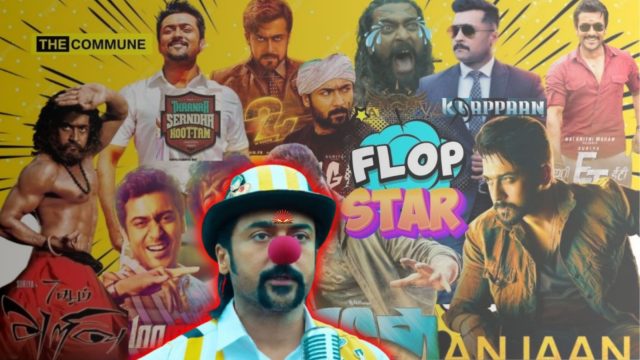
Flop Star Suriya
Suriya, once a bankable star, became a flop star the moment he donned the Dravidianist robes. Truth be told, Suriya’s filmography is a masterclass in mediocrity. Right from forgettable disasters like Anjaan, Massu Engira Masilamani, Etharkkum Thunindhavan, to his most recent box-office duds, he has perfected the art of overacting and underwhelming scripts. Yet, his PR machinery ensures he’s hailed as a “versatile actor” – versatile in disappointing audiences, perhaps. Let’s take a look at the various flops he has delivered over the years.
Retro
Touted as a grand comeback, Suriya’s Retro turned into a critical and commercial flop, drawing widespread disappointment from audiences and reviewers alike. Despite high expectations driven by director Karthik Subbaraj, composer Santhosh Narayanan, and the viral buzz around the song “Kanimma,” the film suffered from incoherent storytelling, sluggish pacing, and overstuffed plotlines. Viewers criticized its erratic transitions, from Thoothukudi to Africa and the Andamans, and a lack of a clear villain. Tamil reviewer “Blue Sattai” Maran mocked the film’s narrative chaos and overacting, particularly targeting Suriya’s loud performance. Social media reactions were scathing, with many likening Retro to a bloated version of Kanguva and questioning Suriya’s judgment in film choices. The three-hour runtime, jumbled themes, and confused tone left even loyal fans disillusioned. What was meant to be a cinematic triumph has instead become the actor’s third consecutive box-office misfire in 2024-2025.
Kanguva
Despite immense pre-release hype and a ₹400 crore budget, Suriya’s multilingual epic Kanguva turned out to be a monumental flop. Audiences emerged from theatres angry, exhausted, and disillusioned. Many slammed the film for its incoherent story, deafening sound design, and Suriya’s non-stop high decibel shouting through the film. One viewer compared the experience to being in a “mental hospital,” while another said the only redeeming moment was 30 seconds of silence in the climax. Frustrated fans criticized the 3-hour runtime, poor 3D visuals, and complete lack of substance. Even Suriya loyalists admitted disappointment, calling it a career-damaging misstep. Viewers unanimously agreed: Kanguva was more torture than entertainment.
His previous outings like Edharkkum Thunindhavan, Mass, Kaapaan, etc turned out to be disaster at the box office.
Hate-Peddler Suriya
His film Jai Bhim was criticised for its portrayal of the Vanniyar community, leading the Saidapet Court to direct the Chennai Police to file an FIR against Suriya, his wife Jyothika, and director T.J. Gnanavel. The Rudra Vanniyar Sena petitioned the court, alleging that the film falsely depicted the main antagonist, SI Anthony Sami, as a Vanniyar, using their sacred ‘Agni’ symbol, when in reality, the officer was a Christian. Despite the backlash, the filmmakers replaced the symbol with an image of Goddess Lakshmi, which was also criticized as a manipulative move. The community and social media users accused Suriya of deliberately maligning the Vanniyars for political mileage, particularly by aligning with the ruling DMK.
In Soorarai Pottru, the character based on Air Deccan’s G.R. Gopinath, a Brahmin and capitalist, was misleadingly portrayed as an EV Ramasamy/Periyar follower and “socialist capitalist,” distorting the real-life persona.
In Jai Bhim, a controversial scene shows a Brahmin lawyer named Sankaran (played by MS Bhaskar) praising Suriya’s character Chandru, only for Chandru to respond with veiled distrust, implying Brahmins are manipulative. This was seen as a pattern in Suriya’s films of subtly vilifying Brahmins to align with Dravidianist political narratives.
Hypocrite Suriya
In this section, we will take a look at the various hypocrisies exhibited by Suriya (along with his wife).
Preach About Donating Money To Hospitals, Schools; Go On Expensive Seychelles Vacay
Suriya and his wife Jyotika were seen vacationing in Seychelles in June 2025. Jyotika, who once questioned temple donations in favor of funding schools and hospitals, flaunted an extravagant trip costing lakhs.
Suriya-Jyothika’s ₹70 Cr Luxury Move to Mumbai
Suriya and his wife Jyothika purchased a ₹70 crore luxury apartment in a gated community in Mumbai in 2023. This move starkly contradicted Jyothika’s 2020 awards ceremony speech, where she urged the public to donate to hospitals and schools instead of temples, citing poor infrastructure in public institutions. Suriya, who also heads the Agaram Foundation and often champions DMK-backed causes like anti-NEET rhetoric, has been accused of virtue-signalling. While the purchase of a high-end residence is a private decision, it exposed the gap between the couple’s public preaching and private choices, reinforcing perceptions of hypocrisy.
Suriya’s Caste Identity vs On-Screen Anti-Caste Messaging
Despite his public posturing against caste through films like Soorarai Pottru, actor Suriya Sivakumar is listed in official company records as “Rakkia Gounder Sivakumar Suriya,” clearly retaining his caste title “Gounder.” He serves as director of both 2D Entertainment Pvt Ltd and Rakkia Cinemas Pvt Ltd. Interestingly, his brother and fellow actor Karthi Sivakumar, also a director, does not use a caste title in official records. This contrast between Suriya’s documented identity and his on-screen ‘anti-caste’ narrative raised questions about the sincerity of his social messaging and ideological consistency.
Suriya’s Great Hindi Flip-Flop: From Anti-Hindi Crusader to Mumbai Cheerleader
Suriya, a vocal critic of Hindi imposition in Tamil Nadu, has now embraced Mumbai life, praised the city and exploring Hindi film opportunities, revealing a glaring contradiction in his public persona. Once adamant about Tamil exclusivity, Suriya had condemned the inclusion of Hindi in schools and portrayed anti-Hindi sentiment in his film Jai Bhim. But after relocating to Mumbai with his wife Jyotika and children, the actor now calls the city “full of opportunities” and is actively engaging in Hindi media promotions.
In a Curly Tales interview, he comfortably conversed in Hindi, relished panipuri, praised Hindi films like 12th Fail, and even gleefully responded in Hindi when asked about imli. Meanwhile, in Tamil Nadu, he had earlier warned that learning a third language was burdensome and would be “imposed” upon the public. This blatant hypocrisy – preaching Tamil purity at home while leveraging Hindi for personal and professional gain elsewhere – has not gone unnoticed.
Suriya’s move to Mumbai, interest in Bollywood, and public use of Hindi directly contradict his long-standing anti-Hindi rhetoric. What he condemned for Tamil students, he now celebrates for his own children.
Suriya and Jyothika’s Temple Run – Hypocrisy Much
Following the box-office disaster of Kanguva, actor Suriya and wife Jyothika, longtime critics of temple donations, took a visible turn toward spirituality, visiting several major temples across South India. This sudden wave of devotion, coinciding with their film’s failure, has drawn criticism as a staged PR act rather than genuine faith. The couple, previously hailed by Dravidianist media for advocating healthcare and education over religious giving, now appear to be repositioning themselves in response to public backlash. Their change in tone seemed to be driven by damage control, especially after Kanguva’s poor reception and Jyothika’s widely criticized defence of the film online.
Suriya’s Love-Hate Relationship With Hindi – Hate In South, Love In North
Suriya who is well-known for opposing Hindi in Tamil Nadu and portraying anti-Hindi sentiment in films like Jai Bhim, recently embraced the very language he once criticized. While he previously claimed it was difficult to teach Hindi even to his own kids and warned of “imposition,” his recent move to Mumbai tells another story. During promotions for Kanguva, he comfortably spoke in Hindi, praised Mumbai’s culture, and even enjoyed panipuri while speaking in Hindi in a YouTube show. He enthusiastically responded “Bahut bahut accha”. Suriya’s shift exposes his hypocrisy: opposing Hindi at home while embracing it elsewhere for career gains.
Jai Bhim Glory, Parvathi’s Neglect
While Jai Bhim earned actor Suriya and his team international acclaim, awards, and crores in revenue, the real-life inspiration behind the film, Parvathi Rajakannu, continues to live in abject poverty. Despite portraying her struggle on screen and winning accolades like the Huading Award and significant cash prizes, neither Suriya, director T.J. Gnanavel, nor the production house sought Parvathi’s consent or ensured meaningful financial support. A token ₹10 lakh fixed deposit was promised, but in contrast to the film’s ₹50+ crore revenue from Amazon, Kalaignar TV, and film festivals, it is paltry. Parvathi, whose husband was a victim of custodial death, still lives in a hut, with no trace of the justice or dignity the film claimed to champion.
Hindi Hate For TN, Hindi Love For Profits
Suriya, who had been opposing the National Education Policy (NEP) in 2019, had criticized the three-language policy as an imposition of Hindi on Tamil Nadu’s students, calling it anti-poor and harmful to rural education. He even questioned how government schools could manage to teach a third language when he found it difficult with his own children. However, in a recent promotional tweet for his film Kanguva, Suriya wrote in six languages, including Hindi, prompting widespread backlash. Interestingly, he also publicised the Hindi version of Jai Bhim. It was also pointed that in Jai Bhim, a north Indian character is slapped for speaking Hindi, and this was seen as exploiting linguistic faultlines. Suriya’s selective activism is tailored to convenience and box-office returns.
Suriya Silent As Tamil Nadu NEET Toppers Shone
Four students from Tamil Nadu made it to the top 10 ranks of NEET 2023, including a Scheduled Caste student, Kaustav Bauri, securing an impressive third rank. Their success has sparked statewide celebration and bolstered support for the NEET system, often criticized by the ruling DMK and its supporters. However, Suriya, one of the loudest voices against NEET, conspicuously remained silent, triggering backlash online. He was called out for his failure to congratulate the achievers, especially after years of vocal opposition, where he termed NEET an anti-poor and anti-Tamil exam. In 2021, he urged public resistance via the AK Rajan Committee and branded NEET as discriminatory. Now, as Tamil Nadu students disprove those claims with their excellence, Suriya’s silence stands out sharply, undercutting the credibility of his previous activism.
Husband-Wife Duo Attend Ambani Wedding
After their public virtue-signalling on issues like Hindi imposition and prioritizing hospitals over temples, the husband-wife duo were seen attending Anant Ambani’s lavish wedding. Suriya had earlier opposed the National Education Policy for promoting Hindi, but promoted his film Kanguva in six languages, including Hindi, and even moved to Mumbai in 2023, while promoting Jai Bhim in Hindi too.
Double Standards For Agaram
Suriya, who vocally opposes NEET claiming it unfairly filters out medical aspirants from underprivileged backgrounds, runs the Agaram Foundation, a “non-profit” organization that ironically applies its own stringent selection criteria to determine which students deserve financial aid. Despite promoting the cause of educational equality, Agaram uses a rigorous scoring system to shortlist applicants, directly contradicting its stated mission.
No Hindi For TN Kids, Hindi/IB For His Kids
In what comes across as the nadir for hypocrisy, Suriya shuns Hindi education and the NEP implementation for Tamil Nadu school students. He even moved to Mumbai for better education for his children who study under the IB curriculum.
Propagandist Now Silent
Suriya was extremely vocal on social issues during the AIADMK government’s tenure up until 2021. But the moment the DMK came to power, he became deafeningly silent. Here are some instances of his total hush.
Anna University Sexual Assault Case
Suriya, known for his vocal stance on social justice issues, especially through his film Jai Bhim,came under fire for his silence on the recent Anna University sexual assault case. While he previously issued strong statements on incidents like the custodial deaths of Jayaraj and Bennix during the AIADMK regime, his lack of response to a heinous gangrape at Anna University campus sparked accusations of selective outrage. It is argued that Suriya, who often champions causes aligned with Dravidianist narratives, deliberately chose silence on this issue since the accused had alleged links to the ruling DMK.
Ajithkumar Custodial Death Case
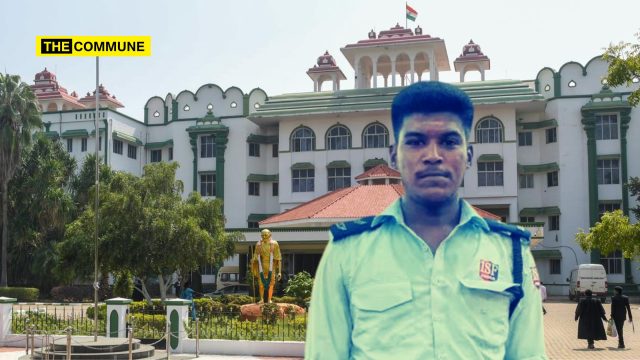
Suriya was once vocal about police brutality during the AIADMK era, was widely praised for highlighting custodial deaths in Jai Bhim. Cut to 2025, the DMK stooge has chosen silence over outrage in the case of Ajithkumar, a 27-year-old temple security guard who died in police custody in Sivaganga under the DMK government. Despite previously condemning similar incidents, Suriya has offered no comment on this case or the growing number of custodial deaths, 25 since 2021, under CM Stalin’s watch. While Suriya had loudly criticized injustices under the previous regime, his current silence is being interpreted as ideological loyalty to the ruling DMK.
Suriya did not open his mouth even during the 2023 custodial death of a 26-year-old Scheduled Caste (Pallar community) youth.
Suriya’s Silence on Tamil Nadu’s Escalating Drug Crisis
Despite the alarming rise in drug-related crimes and youth intoxication in Tamil Nadu, Suriya, who often positions himself as a socially conscious star, has maintained a troubling silence. From seizures worth ₹111 crore in Pudukottai to heroin and cocaine smuggling at Chennai airport, the state is increasingly being likened to Colombia for its drug menace. Incidents of violence, public intoxication, and community unrest involving youth under the influence have become disturbingly frequent. Yet, Suriya, who once vocally opposed policies like NEET and produced films on social justice themes, has not uttered a word on this grave issue. This silence is stark, especially as drug networks target working youth, including IT professionals. Suriya’s activism was loud under previous regimes but conspicuously muted under the DMK government.
Suriya’s Silence During Chennai Rains
In the wake of Cyclone Michaung’s devastation across Chennai and surrounding districts in 2023, Suriya came under fire for his conspicuous silence. Despite his public image as a ‘socially aware’ celebrity and past vocal criticism during the AIADMK regime, Suriya, along with his brother Karthi, refrained from commenting on the severe flooding and mismanagement under the current DMK government. Though the brothers donated ₹10 lakh to relief efforts, many see this as insufficient given their previous political outspokenness. While ordinary citizens suffered from power outages, waterlogging, and poor disaster response, Suriya, a DMK mouthpiece, remained mute.
Suriya’s Deafening Silence on Vengaivayal Atrocity
Suriya remained silent on the horrific Vengaivayal incident in Pudukottai, where human faeces were found dumped in a water tank used by Dalits. While Suriya previously made headlines for producing Jai Bhim, a film highlighting police atrocities against Dalits, he offered no statement or solidarity for the Vengaivayal victims. His earlier activism under the AIADMK regime – on NEET, the Subhashree banner death, and police brutality – contrasts sharply with his current inaction under the DMK government, of which he is seen as a loyal supporter.
Suriya Praised Jallikattu Verdict, Omitted ADMK’s Role
Suriya, who is known for his silence during DMK rule, praised the Supreme Court’s 2023 verdict upholding Jallikattu and Kambala, congratulating the DMK and Congress-led Karnataka governments. However, he was criticized for omitting the crucial role of the AIADMK government, which passed the ordinance legalizing Jallikattu, and the BJP-led central government, which approved it. Suriya’s tweet came shortly after AIADMK leader Edappadi K. Palaniswami indirectly called out actors who selectively speak based on the ruling party. Suriya’s irony was also pointed in praising the Congress, despite the party’s previous efforts to ban Jallikattu, including a 2016 manifesto call for prohibition and support from Manmohan Singh and Jairam Ramesh. Many accused Suriya of playing DMK’s mouthpiece while ignoring the party’s historical role in curbing the traditional Tamil sport.
DMK Stooge Suriya
As a reader, you might wonder why this separate section is needed to prove how loyal Suriya is to the ruling DMK. Here are some instances where Suriya buttressed the DMK that even Dobby’s loyalty will look small.
Deflected Blame During Kallakurichi Hooch Tragedy On To Victims
DMK cheerleader Suriya drew criticism for his delayed and diluted response to the Kallakurichi hooch tragedy that claimed over 50 lives. Following public outrage and comparisons with actor Vijay’s hospital visit, Suriya released a letter that avoided directly blaming the DMK government. Instead, he used the term “poisonous liquor” – a Dravidianist media euphemism, rather than “hooch” or “illicit liquor.” His letter subtly praised the DMK’s educational schemes, offered token criticism of the “administration,” and equated the failures of both DMK and ADMK, deflecting accountability. While acknowledging repeated incidents and failures, he urged the rehabilitation of addicts and vaguely expressed belief in CM Stalin’s decision-making. Suriya was slammed for gaslighting victims, soft-peddling DMK’s role, and using monkey-balancing to protect his ideological allies. His letter stood in sharp contrast to his past vocal activism under previous regimes.
Virtue Signalling Family
Be it Suriya or Jothika or Suriya’s family, they have been consistent at only one thing – virtue signaling to the citizens of Tamil Nadu. Suriya’s family, notably his wife Jyothika and brother Karthi, have repeatedly indulged in virtue signalling aligned with DMK narratives.
Free Police Protection for Absent Suriya
Suriya’s Chennai residence has been under government-funded police protection since 2021, following controversies surrounding his film Jai Bhim that year. Despite relocating to a ₹70-crore apartment in Mumbai, armed police continue to guard his unoccupied property in Chennai, at no cost to him. An RTI filed by activist Krishnamurthy revealed that the arrangement, initiated by the Police Commissioner citing security threats, was upheld based on a ministerial recommendation. This has drawn sharp public criticism, especially given Suriya’s past vocal stances against the previous AIADMK regime and his silence under the current DMK government.
Suriya & Family Receive VVIP Treatment During Keeladi Museum Visit, Make Students Stand In Hot Sun
Suriya and his family received VVIP treatment during a visit to the Keezhadi Museum in Madurai, drawing public ire as schoolchildren were reportedly made to wait outside in the scorching sun. Suriya, his wife Jyothika, children, and father were accompanied by CPI(M) MP Su. Venkatesan during the 2 April 2023 visit. Despite the museum’s public opening time of 10 AM, entry was restricted for over an hour to accommodate the celebrity family’s exclusive tour. Photos of waiting schoolchildren went viral, triggering criticism online about elitism and double standards.
Mask Has Slipped Long Back, Suriya
Suriya Sivakumar stands exposed as a textbook case of ideological opportunism and selective activism. From playing the messiah of the oppressed in films to parroting Dravidianist propaganda in real life, his actions reveal a disturbing chasm between on-screen advocacy and off-screen integrity. Whether it’s his anti-Hindi grandstanding followed by a move to Mumbai, or his silence during real social crises under the DMK regime, Suriya’s pattern is clear – outspoken only when politically convenient.
Ultimately, Suriya is no longer just a fading actor or a selective activist – he is a full-time DMK mascot draped in hypocrisy.
Subscribe to our channels on Telegram, WhatsApp, and Instagram and get the best stories of the day delivered to you personally.