Home Blog Page 449

Chennai’s Safety For Women Declines: City Drops To Second Behind Bangalore In National Safety Rankings As Crimes Surge

Chennai’s Safety For Women Declines: City Drops To Second Behind Bangalore In National Safety Rankings As Crimes Surge women's safety

According to the Avatar Group’s 2024 report on India’s best cities for working women, Bangalore has been ranked as the safest city for working women, surpassing Chennai. The city is praised for its inclusive, safe, and adaptable environment for female professionals. Chennai, which topped the list last year, now holds second place, followed by Mumbai in third and Delhi in eighth.

The report highlights that southern cities tend to score higher in terms of gender inclusivity. The survey, conducted by the workplace culture consulting firm Avatar Group, assessed 25 cities, 16 of which were from South India.

Bangalore stands out in several key areas, including skill development, employment opportunities, basic facilities, and women’s welfare. Both Bangalore and Mumbai have strong job markets and abundant skill development opportunities, while cities like Chennai and Hyderabad slightly trail behind in these aspects.

Tamil Nadu’s Performance and City Rankings

While Tamil Nadu boasts a strong presence in the top 25 cities list, with eight cities from the state—Chennai, Coimbatore, Tiruchirappalli, Vellore, Madurai, Salem, Erode, and Tirupur—being featured, the state ranks fourth overall in the country. Kerala leads the rankings with the highest average City Inclusion Score (20.89), followed closely by Telangana (20.57), Maharashtra (19.93), Tamil Nadu (19.38), and Karnataka (17.50).

Women’s Ratings on Key Metrics: Skilling and Employment

In the women’s skilling and employment category, Gurugram ranked highest (7.68/10), followed by Mumbai (7.60) and Bengaluru (7.54). Chennai (7.09) and Hyderabad (6.95) scored slightly lower.

Infrastructure

Hyderabad (8.01) took the top spot for its well-connected public transport system, with Mumbai (7.64) and Bengaluru (7.52) following closely behind.

Efficiency of Government Bodies

Thiruvananthapuram (8.15) and Pune (7.06) led the governance efficiency category, while Gurugram (6.48) showed room for improvement.

Quality of Life

Coimbatore (7.54), Pune (7.50), and Chennai (7.05) were rated as having the best quality of life for women. In contrast, Gurugram (6.34) scored lower, likely due to environmental factors.

Safety

Thiruvananthapuram (7.43), Mumbai (7.19), and Hyderabad (6.95) ranked highest for safety. However, Bengaluru (6.17), Kochi (6.02), and Gurugram (5.60) received comparatively lower safety scores.

Despite progress in women’s development across the country, safety remains a critical concern. Even in high-tech cities, safety continues to be a significant issue, as women from various sectors increasingly take on leadership roles.

Rise In Crimes Against Women In Chennai

Reports reveal a troubling rise in crimes against women in Chennai. December 2024 alone witnessed 24 reported incidents of violence and harassment in public and private spaces, including a shocking on-campus sexual harassment case at Anna University.

According to News 24×7 Tamil, crimes against women have become disturbingly frequent in Chennai, raising urgent questions about safety and governance. Below is a timeline of notable cases reported during December 2024:

  • On 4 December 2024, Gurumurthy, a 54-year-old lawyer, was arrested for allegedly sexually harassing a 25-year-old woman on a bus in the Puzhal area. Following the woman’s complaint, he was remanded in judicial custody.
  • On 6 December 2024, the Egmore All Women’s Police Station has registered a case against a group of college students who allegedly sexually assaulted a 21-year-old mentally ill college student. Based on a complaint filed by the victim’s father, nine college students were arrested, including the victim’s friend, a women, who had introduced the mentally unstable student to male acquaintances and a school-going boy.
  • On 6 December 2024, the Ezhu Kinaru police have arrested two individuals, Barathwaj and Mohammed Abbas, for entering a women’s beauty parlour, which is locally run by the victim’s mother. The duo allegedly assaulted a 18-year-old women and issued death threats before fleeing the scene.
  • On 9 December 2024, the Chennai city police apprehended a 22-year-old college student Venga Raghunath Reddy for distributing child sexual abuse (CSA) material on social media platforms. During his arrest, authorities discovered hundreds of CSA materials on his mobile phone. The accused has been charged under sections of the POCSO Act and remanded in judicial custody. Additionally, the Goondas Act has been invoked against him.
  • On 10 December 2024, a college student, Vignesh, was arrested near Arumbakkam, Chennai, for attacking and threatening to kill his ex-girlfriend after their breakup due to personal differences.
  • On 11 December 2024, a woman in Thoraipakkam faced sexual harassment from a group of transgenders in public.
  • On 12 December 2024, a history-sheeter, Saran Kumar from Otteri, was arrested for assaulting a woman.
  • On 14 December 2024, an individual named Sri Ram was arrested by the Valasaravakkam police for attacking a fellow college student with a stone and attempting to force her into a romantic relationship.
  • On 15 December 2024, Rajamangalam police have arrested two youths, Manukrishna, a software company employee, and G. Vishnu, a photographer from Triplicane, in connection with the alleged sexual harassment of a female food delivery executive.
  • On 16 December 2024, a lorry driver arrested for attempting to sexually harass a women in Thoraipakkam
  • On 19 December 2024, a man from Aminijikarai was arrested for threatening his ex-girlfriend, demanding money, and threatening to release inappropriate footage of her.
  • On 20 December 2024, a man was arrested in Royapuram for attacking his wife and father-in-law demanding dowry.
  • On 22 December 2024, a man was arrested in Purasaiwakkam for abusing a 38-year-old women.
  • On 22 December 2024, a man was arrested in West Mambalam for sexually harassing a woman and attempting to steal her jewelry.
  • On 27 December 2024, Mentally challenged woman sexually harassed in Chennai after being told she was being exorcised.
  • On 28 December 2024, a lone women in home was abused and harassed.

(With inputs from Times Now)

Subscribe to our channels on Telegram, WhatsApp, and Instagram and get the best stories of the day delivered to you personally.

Beef Stall Near Veeramathi Amman Temple Ignites Protests In Coimbatore; BJP TN Functionary Subramani Arrested

Beef Stall Near Veeramathi Amman Temple Ignites Protests In Coimbatore; BJP TN Functionary Subramani Arrested

Tensions escalated in Udaiyampalayam, a village on the outskirts of Coimbatore, over a beef biryani stall set up near the Veeramathi Amman Temple. Villagers protested, citing its proximity to the temple and a nearby school as violating local norms. The village, home to temples including Mariamman, Veeramathi Amman, and Karupparayan, had previously regulated such stalls in public areas near temples or schools.

The pushcart eatery, operated by Ravi and his wife Abitha, faced objections from BJP executive Subramani, who demanded its removal. An argument ensued, with Ravi initially agreeing to relocate the stall but Abitha refusing, as reported by Dinamalar. Subramani recorded the exchange and posted the video on social media, claiming that the village supported the decision to prohibit beef sales and was known to CPM councillor V. Ramamoorthy.

As reported by The New Indian Express, Abitha later filed a complaint with the Coimbatore Police Commissioner, alleging that Subramani had threatened them on 25 December 2024, and again on 5 January 2025. She questioned why beef was being singled out while other non-vegetarian foods like fish and chicken were sold in the same area. Following her complaint, the police registered a case against Subramani under Sections 351(2), 126(2), 192, and 196.

The case triggered unrest among villagers, with over 1,000 locals staging a protest near the temple. They condemned the police action against Subramani and reiterated their demand to remove the beef stall. Protesters argued that the stall’s location near the temple and school was inappropriate and offensive to public sentiment.

In response to the escalating tensions, the village committee, reportedly on orders from the headman, evicted seven roadside eateries, including Abitha and Ravi’s pushcart. This decision was criticized by CPM and CPI leaders, who petitioned the police commissioner to protect food rights and ensure the couple’s safety.

Ramamoorthy acknowledged that the couple had initially informed him of their plans to open the stall but said the location they ultimately chose—closer to the temple—had caused opposition from right-wing groups. He said there were no legal restrictions against selling beef but attributed the backlash to the stall’s proximity to the temple.

Meanwhile, Tamil Nadu BJP president K. Annamalai called for a thorough investigation, stating only part of the video had been released.

Subscribe to our channels on Telegram, WhatsApp, and Instagram and get the best stories of the day delivered to you personally.
AP Govt Orders Demolition Of Pastor Satish Kumar’s Calvary Temple Church In Guntur Over Unauthorized Operations

AP Govt Orders Demolition Of Pastor Satish Kumar's Calvary Temple Church In Guntur Over Unauthorized Operations

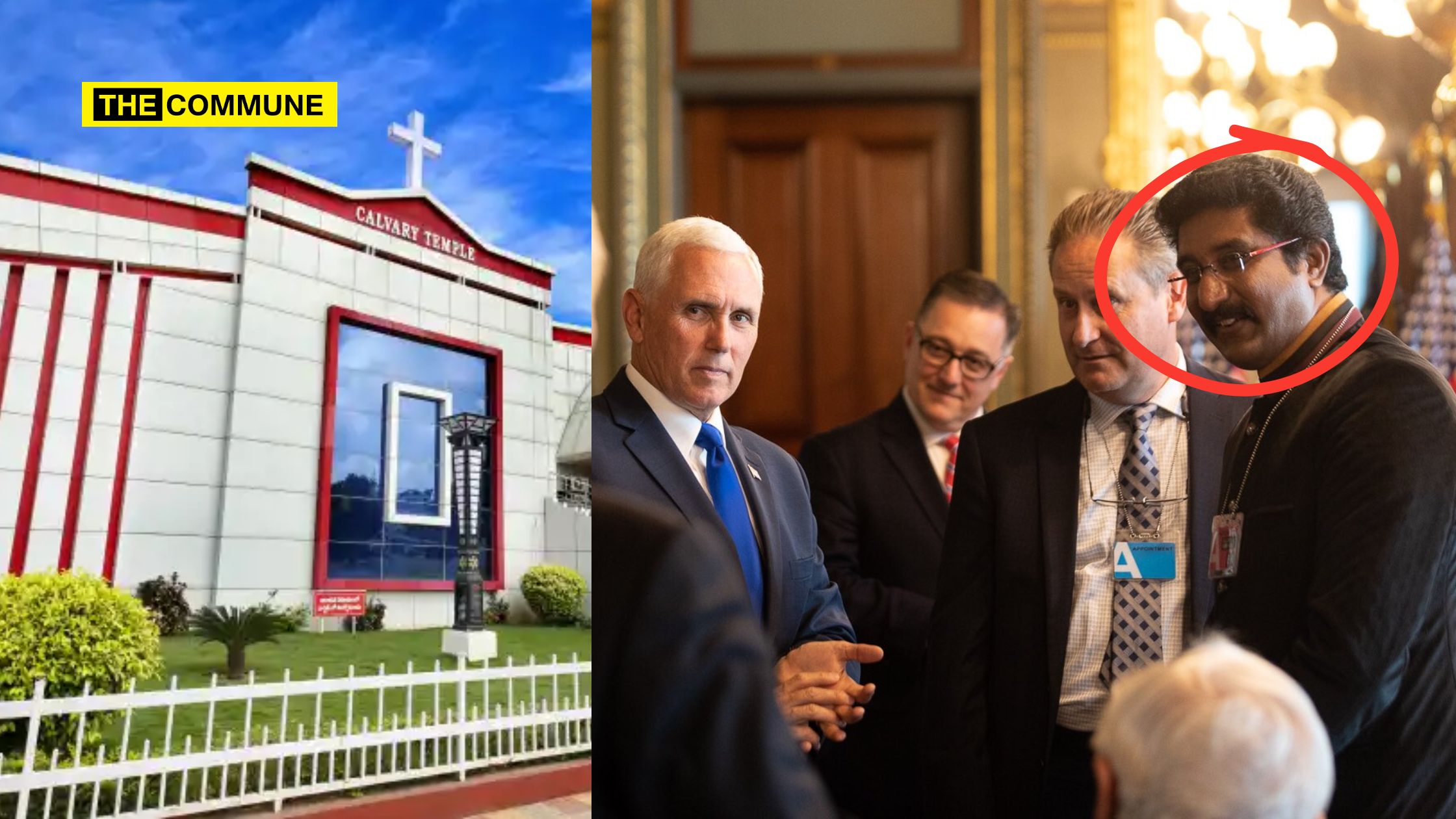
The Minority Welfare Department of Andhra Pradesh has issued demolition orders for the Calvary Temple Church located in Namburu village, Pedakakani Mandal, Guntur District, following serious allegations and an investigation confirming its illegal operations. The demolition will be carried out as per legal procedures for structures operating without the necessary permissions.

The controversy began in November 2024 when a resident of Vasantharayapuram, Guntur, lodged a formal complaint with the Prime Minister’s Office. The complaint outlined five major allegations against the church, including its operation without requisite approvals from key government departments such as Panchayat Raj, Revenue, Police, and the Noise Pollution Control Board.

The complainant further accused the church, led by Pastor Rev. Dr. Satish Kumar of Hyderabad, of collecting substantial sums of money through tithes without paying taxes. The church was also alleged to have engaged in converting Hindus to Christianity by distributing groceries to the poor and spreading false teachings.

An investigation into these allegations corroborated the claims, leading to the issuance of the demolition orders. Officials confirmed that appropriate measures would be taken to remove the illegal structure.

Pastor P. Satish Kumar, the founder of Calvary Temple, Hyderabad, leads one of Asia’s largest churches, boasting a membership of over 400,000 and weekly attendance exceeding 20,000.

In addition to the church, his organization runs Calvary Bible College, Calvary Hospital, and Calvary Schools. Pastor Kumar wields considerable influence in Andhra Pradesh and beyond, with a significant presence in national and international Christian communities.

He is a frequent visitor to countries such as South Korea, South Africa, and the United States, where he engages in preaching activities. In 2018, he met with then-U.S. Vice President Mike Pence, who commented, “Inspiring to meet with Dr. Satish Kumar – pastor of Calvary Temple Church in Hyderabad, India. We discussed the importance of protecting religious freedom with faith leaders including Dr. David Jeremiah, Dr. John Ankerberg, Steve Green, Mart Green, and Dr. Jerry Johnson.”

About Calvary Temple India

Founded in 2005 by Dr. Satish Kumar, Calvary Temple India has grown into a major organization, often portraying its founder as a respected pastor, author, and international speaker known for visionary leadership and “integrity.” However, a closer examination of his activities reveals concerns regarding the nature of his missionary work. Pastor Satish Kumar’s emphasis on “biblical standards” seems strategically designed to expand his influence, with a strong focus on aggressive conversions within India. While he projects an image of humility and approachability, his actions suggest a more calculated effort to exert control under the guise of humanitarian work.

The rapid growth of Calvary Temple, which boasts a membership of over 400,000, has drawn significant attention. Questions have been raised about the resources fueling this expansion and the methods used to secure funding, often targeting economically vulnerable communities. The church proudly claims that its primary structure was built in an impressive 52 days, highlighting its efficiency but also raising concerns about its operational priorities.

In addition to its main church, Calvary Temple oversees several initiatives, including Calvary Bible College, Calvary Hospital, and programs offering free meals. While these activities are framed as philanthropic efforts, critics argue they are part of a broader strategy to establish a dominant religious network rather than purely altruistic endeavors. The organization’s rapid rise and focus on expansion underscore a mission that appears to go beyond faith, aiming instead to consolidate influence and power.

Calvary Temple has faced repeated accusations of legal violations, including unauthorized land encroachments and constructing new churches through questionable agreements. On October 28, 2024, the Legal Rights Protection Forum revealed on the social media platform X that revenue officials had confiscated a digital church branch operated by Pastor Kumar in Kakinada, following an order from the district collector.

This latest action against the Calvary Temple Church in Guntur is seen as part of a broader crackdown on unauthorized religious structures in Andhra Pradesh.

(With inputs from Organiser)

Subscribe to our channels on Telegram, WhatsApp, and Instagram and get the best stories of the day delivered to you personally.
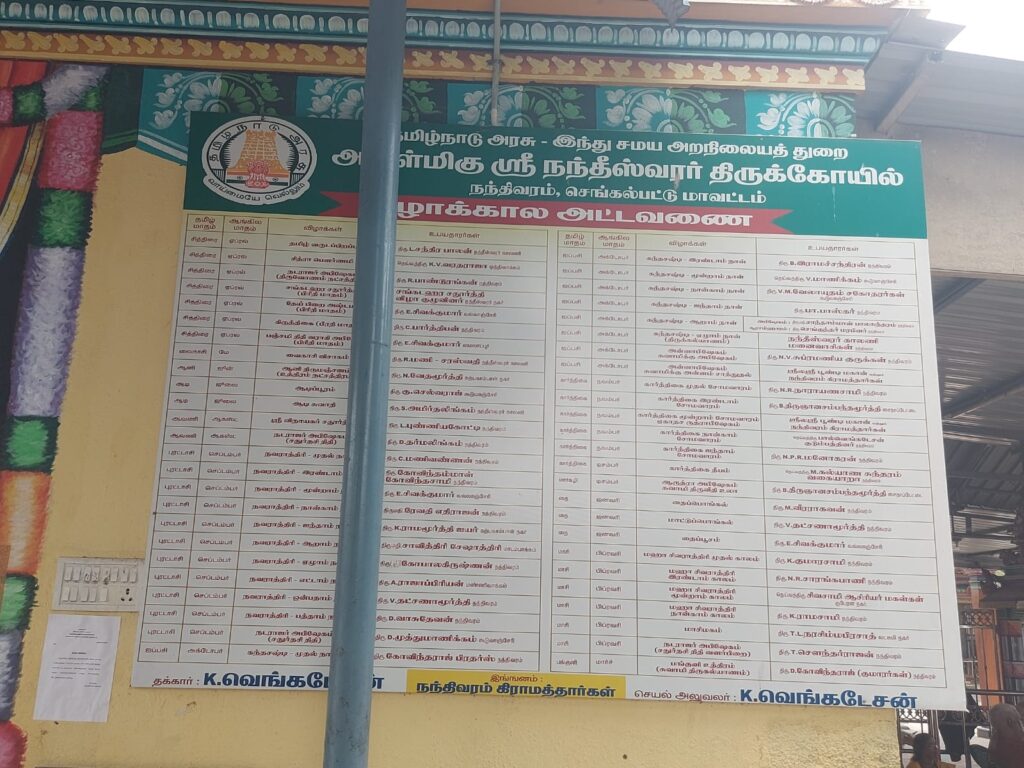
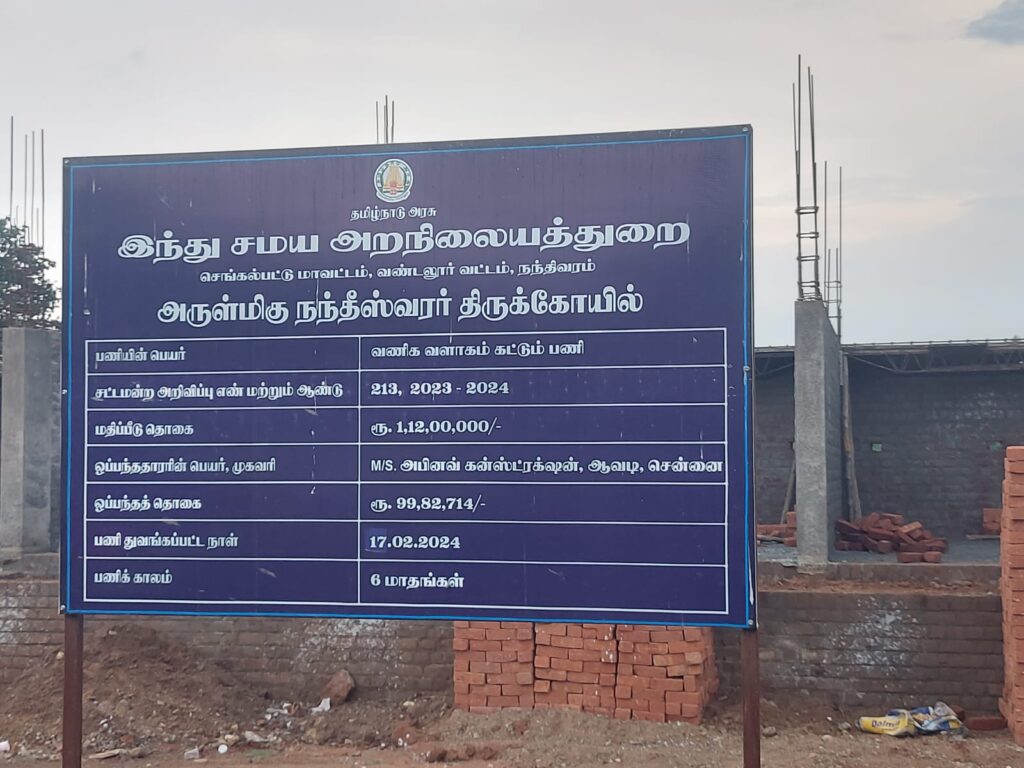
Madras High Court Quashes Tender For Commercial Complex Construction Using Temple Funds Of Sri Nandeeswarar Temple, Chengalpet

Madras High Court Quashes Tender For Commercial Complex Construction Using Temple Funds Of Sri Nandeeswarar Temple, Chengalpet

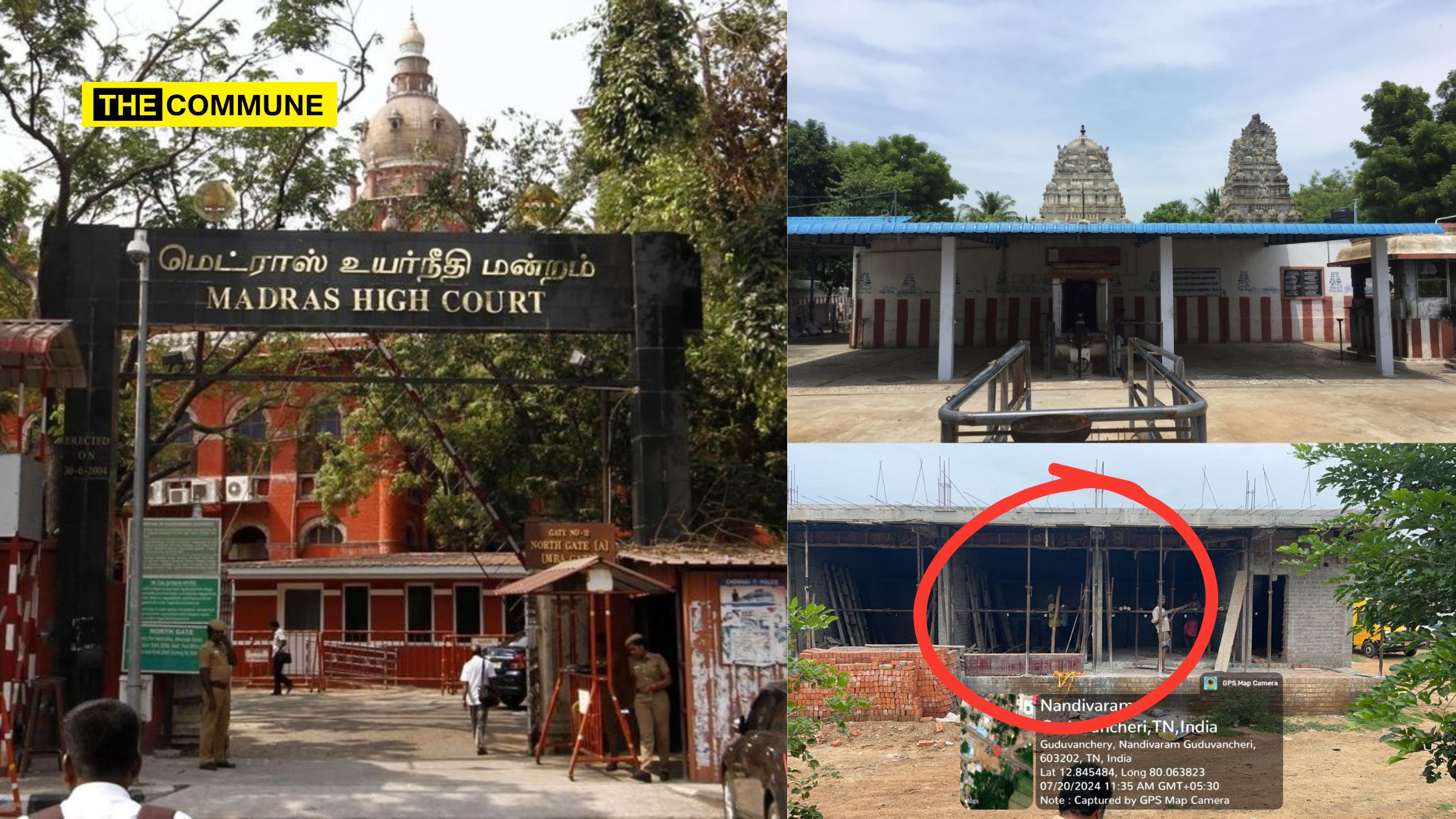
In a landmark judgment, the First Division Bench of the Madras High Court, led by the Chief Justice, delivered a significant verdict on 9 January 2025, quashing the tender proceedings for the construction of a commercial complex using the funds and properties of Sri Nandeeswarar Temple in Nandivaram village, Chengalpet District. The court ruled that a temple’s surplus funds can only be utilized for purposes explicitly permitted under the Tamil Nadu Hindu Religious and Charitable Endowments (HR&CE) Act, 1959, and not for commercial ventures.

The Public Interest Litigation (PIL), filed by temple devotee P. Baskar, challenged the tender and the proposed construction, arguing it violated the Tamil Nadu Hindu Religious and Charitable Endowments (HR&CE) Act, 1959. Advocate B. Jagannath, representing the petitioner, contended that the Act explicitly restricts the use of temple surplus funds to specific purposes such as promoting Hindu religious practices, constructing annadhanam sheds, and conducting free marriages for poor Hindus, as outlined in Sections 36(1), 36(A), 36(B), and 66(1).

The Bench also heard a contempt petition (Cont. P. 3306 of 2024) against officials of the HR&CE Department for allegedly violating an interim stay order issued earlier, restraining them from proceeding with the construction. The court extended the stay until further orders, and the matters were heard together.

The respondents, including the Commissioner of HR&CE, the District Collector of Chengalpet, and other officials, were represented by Government Pleader Edwin Prabhakar and Special Government Pleader Arun Natarajan. During the final hearing, the Special Government Pleader (SGP) for HR&CE, Arun Natarajan, submitted that steps were underway to appoint a trust board with five trustees for the temple, with three nominations pending government approval. An assurance was also given that no stalls selling alcohol, meat, or tobacco products would be part of the shopping complex, which would be limited to items related to temple activities.

However, Advocate Jagannath vehemently opposed the construction, emphasizing that the legal issue was not about trustee appointments but whether the Act permitted the construction of commercial complexes using temple funds. He argued that the Act’s silence on this aspect rendered such constructions ultra vires to its aims and objectives.

The court agreed with the petitioner’s arguments and noted that no feasibility study or report had been presented to justify the economic viability of the project.

Illegal commercial complex

The bench highlighted that the surplus funds could have been deposited in fixed deposits, yielding a 7.5% return, which would have been a more prudent financial decision. The court also noted the absence of a feasibility study or report by the HR&CE department regarding the return on investment from the proposed commercial complex.

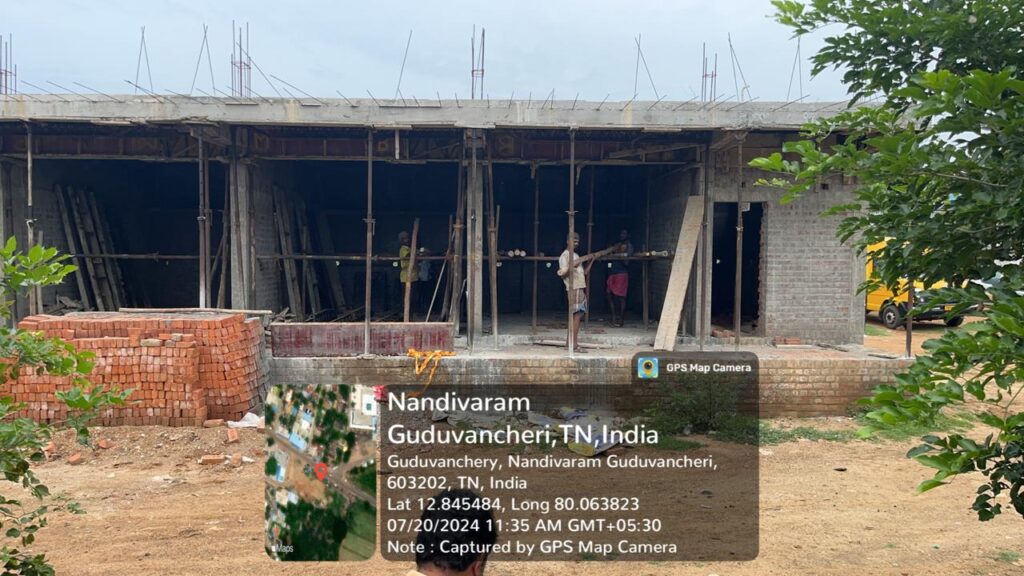
In its ruling, the court quashed the impugned tender notification and clarified that the superstructure, if already constructed, should be utilized for purposes permitted under the Act, such as free marriages for poor Hindus or the construction of Anna Dhanam sheds. The writ petition and connected contempt petitions were closed, marking a significant victory for temple devotees and a blow to the HR&CE department’s alleged misuse of temple funds.

This judgment sets a crucial precedent, particularly in cases like the proposed commercial complex construction in Thiruvannamalai, where temple funds are being utilized for similar purposes. It reinforces the need for strict adherence to the HR&CE Act and ensures that temple funds are used solely for the welfare and propagation of Hindu religious practices, as mandated by law.

The ruling has been hailed as a major step in protecting temple assets and preventing the depletion of thousands of crores of temple funds through unauthorized constructions and contracts.

Subscribe to our channels on Telegram, WhatsApp, and Instagram and get the best stories of the day delivered to you personally.
EVR’s Gems On Malayalis Especially Brahmins And Nairs

EVR's Gems On Malayalis Especially Brahmins And Nairs

EV Ramasamy Naicker (EVR), hailed as ‘Periyar’ by his Dravidianist followers, is celebrated by his followers for his alleged efforts to challenge caste hierarchies, promote rationalism, and advocate for social justice. However, his views and statements have been a subject of controversy, including his critical and often derogatory remarks about various communities, including Malayalis (people from Kerala).

EVR’s Views On Malayalis

EVR’s dislike for Malayalis is evident in several of his speeches and writings. He often used strong, provocative language to criticize Malayalis, particularly targeting their cultural practices, social structures, and perceived dominance in certain spheres.

In a 1926 public meeting in Madras, EVR warned the crowd that, after Independence, Tamil Brahmins would push for legislation requiring non-Brahmin women to become mistresses or concubines of Tamil Brahmin men. This idea about the exploitation of women, specifically Malayalee women, can be traced to KV Reddi (also known as Rao Bahadur Sir Kurma Venkatareddy Naidu), a leader of the Justice Party and the Chief Minister of Madras Presidency. Reddi, during a discussion on the inheritance act, reportedly informed the Madras Assembly that in Kerala, a law existed stating that non-Brahmin girls, upon reaching puberty, must be deflowered by a Brahmin. He said, During a discussion of inheritance act .. in Kerala there exists a law that non-brahmin girls upon puberty have to deflowered by a Brahmin.”

Reddi’s speech included a dramatic and highly controversial tale:

“In Kerala, if a Brahmin hears about the beauty of a Nair’s wife, he will summon the husband and say, ‘Madhavan, I hear your wife is very beautiful, is it true?‘ To which the husband replies, ‘Yes, sir, all your grace.‘ The Brahmin then says, ‘Send her to me for one week.‘”

Reddi, a leader of the Justice Party and a key figure in the Dravidian movement, appears to have shared deeply problematic views. His approach in the legislative debate was provocative, asking:

“Mr. C.P. Ramaswamy Iyer, there is an atrocity in Malayalam land where a girl, upon reaching puberty, must be deflowered by a Brahmin. Are you afraid of losing that privilege?”

Here’s What EVR Said On The Royal Women Of Kerala

An undated speech where within just five minutes into it, EVR dives into deeply contentious territory, making shocking claims such as Shudra women are prostitutes for Tamil Brahmin men. The statement met with cheers from the Dravidian crowd, highlights the provocative and divisive nature of his rhetoric. EVR’s approach often leans heavily on sexualized narratives to drive his points home. He says, You may think that what I am saying is funny (that Shudra women are Tamil-brahmin men keeps). Would our womenfolk really have been like this (as mistresses of Tamil Brahmins)? I also hope that was not the caseokay fine let us assume that was not the case. But look at Malayalam (Kerala) right across the border. There, wives of Kings, wives, .. queens, and princesses They even today give money and go to Tamil Brahmin men.. (for sexual purposes). For this purpose alone they have given salaries and kept Tamil Brahmin employees. Two queens in Kerala – one elder queen and one younger. When I was there in Malayalam (Kerala) for one, the going rate was Rs 100 and  for the other, it was Rs 80 – to be the “husband” of these queens.

If you are not born of these Paapaans (Tamil Brahmins) — then you will not get a share of the ruling class. You can’t be king. I am saying what is happening even today. Over there — all the Zameendar’s wives are also Paapaan mistresses. Slightly inferior —- (caste men  – audio not clear here) these women will go to, that too they won’t go after getting married.

Come-means Come,  Go-means Go — (basically easy sex – no strings..)

It is happening  in the house of Zameendars, Mirasudars, big and reputable Nair families. Even today, it is happening. Kerala is not far from us – after all, they are separated from here.

Subscribe to our channels on Telegram, WhatsApp, and Instagram and get the best stories of the day delivered to you personally.
Four Arrested Including Two Students In Caste-Based Assault Outside Mukkudal School In Tirunelveli

Four Arrested Including Two Students In Caste-Based Assault Outside Mukkudal School In Tirunelveli

In yet another incident fueled by caste pride in Tirunelveli, the Mukkudal police have filed a case against two Class 12 students and two youths from the MBC community for allegedly assaulting two SC students outside a government higher secondary school on 7 January 2024. One of the accused, a youth aged above 18, has been arrested, while investigations into the other three individuals are still underway.

According to sources, the attack resulted from an earlier dispute between the SC and MBC students. The MBC students, accompanied by two young men from their community, reportedly ambushed the SC students as they left school, causing injuries. Following a complaint filed by the victims’ parents, the police invoked the Scheduled Castes and Scheduled Tribes (Prevention of Atrocities) Act against the accused.

The district has witnessed a rise in caste-based clashes among government school students in 2024. In some cases, students involved in such altercations have been sent to government homes after being presented before the juvenile justice board. Reports suggest that some students have even brought weapons to school, threatening their peers and teachers.

In response to these tensions, District Collector Dr K.P. Karthikeyan recommended transferring teachers accused of caste-related behaviour to help promote communal harmony. However, this move was met with resistance from teacher associations, who sought the intervention of the Assembly Speaker, M. Appavu. In addition, the state government launched the ‘Anbaadum Mundril’ initiative, which aims to foster unity among students through awareness programs in both government and aided schools.

The rise in caste-based assaults among school students is deeply concerning. Below are some recent incidents that highlight this troubling trend.

  • On 30 July 2024, two students at the Government Higher Secondary School in Valliyoor, Tirunelveli, were injured in a caste-related altercation. The conflict was sparked by derogatory remarks about a specific caste that were found written on a toilet wall at the school.
  • Further, on 1 July 2024, another instance of caste-based pride sparked a clash among 12th-grade students at Rosalind Chelliah Government Higher Secondary School in Maruthakulam village, Nanguneri, Tirunelveli.
  • Previously, at the end of the academic year in 2023, Periyar Government Higher Secondary School students in Cheranmahadevi, Tirunelveli District, attacked students from a nearby private polytechnic college over caste issues. This conflict at Kalakadu school saw one student being stabbed and requiring medical attention.
  • Additionally, the death of a prominent student at Pallakal Pudukkudi Government School near Pappakkudi left a profound impact. The ongoing caste-based violence at Gangai Kondan Government Higher Secondary School highlights the deep-rooted influence of caste prejudices among students.
  • This incident followed a tragic attack in August 2023, where three students from a dominant caste assaulted a Scheduled Caste teenager and his sister in Nanguneri. The recent violence has resulted in injuries and hospitalisations, further shocking the community.

(With Inputs From TNIE)

Subscribe to our channels on TelegramWhatsApp, and Instagram and get the best stories of the day delivered to you personally.

Rajinikanth Fan Dies By Suicide After Financial Strain From Charitable Acts To Honor His Idol

Rajinikanth Fan Dies By Suicide After Financial Strain From Charitable Acts To Honor His Idol

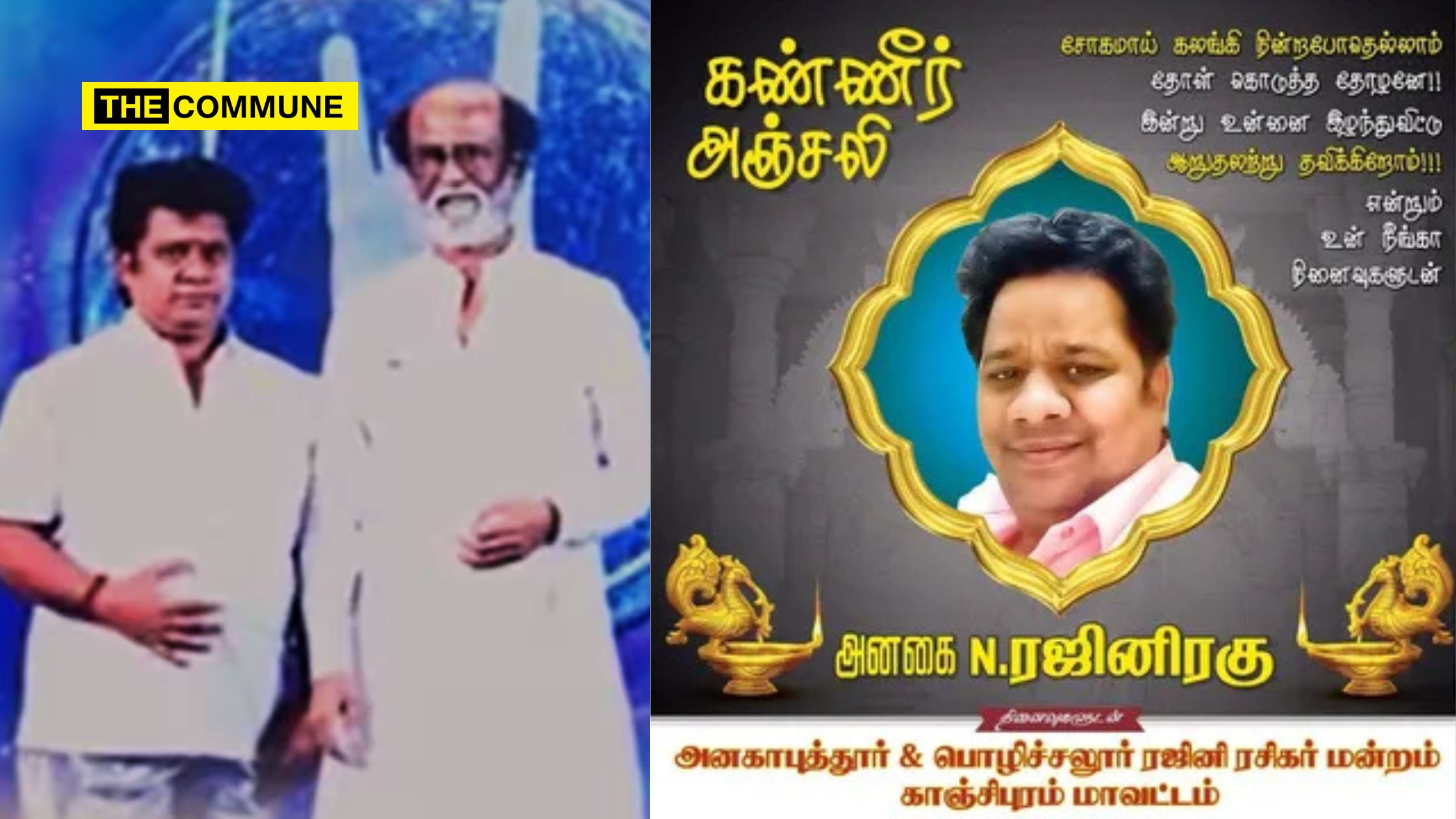
In a tragic incident near Pallavaram, a devoted fan of actor Rajinikanth, Rajini Raghu, reportedly committed suicide due to the overwhelming financial burden he faced from his charitable activities.

Raghu, 54, an auto driver from Anakaputhur Mettu Street, Chennai, has been the president of the Anakai Rajinikanth Fans’ Association for the past 48 years. Known for his dedication to Rajinikanth, he often organized welfare initiatives around the actor’s birthday and film releases, including providing food, school supplies, and bicycles for the differently abled. According to his family, Raghu borrowed over ₹10 lakh from various sources, including friends, relatives, and banks, to fund these events.

Despite his generosity, Raghu’s financial situation became increasingly strained. Raghu’s wife, Chithra, had left for work as usual on the day of the incident. It is reported that a bank employee came to the house to collect money for a loan and engaged in a confrontation with Raghu, which escalated into verbal abuse. This interaction, according to relatives, contributed to his mental distress.

Tragically, later that day, on 7 January 2024, Raghu was found dead at home. The Shankar Nagar police responded to the scene and sent the body to Chromepet Government Hospital for an autopsy. A case has been registered, and an investigation is underway.

(With inputs from ETV Bharat)

Subscribe to our channels on TelegramWhatsApp, and Instagram and get the best stories of the day delivered to you personally.

Sterlite Closure’s Heavy Toll: Namakkal Truckers Protest ₹10 Crore Daily Loss, Demand Plant Reopening

Sterlite Closure’s Heavy Toll: Namakkal Truckers Protest ₹10 Crore Daily Loss, Demand Plant Reopening

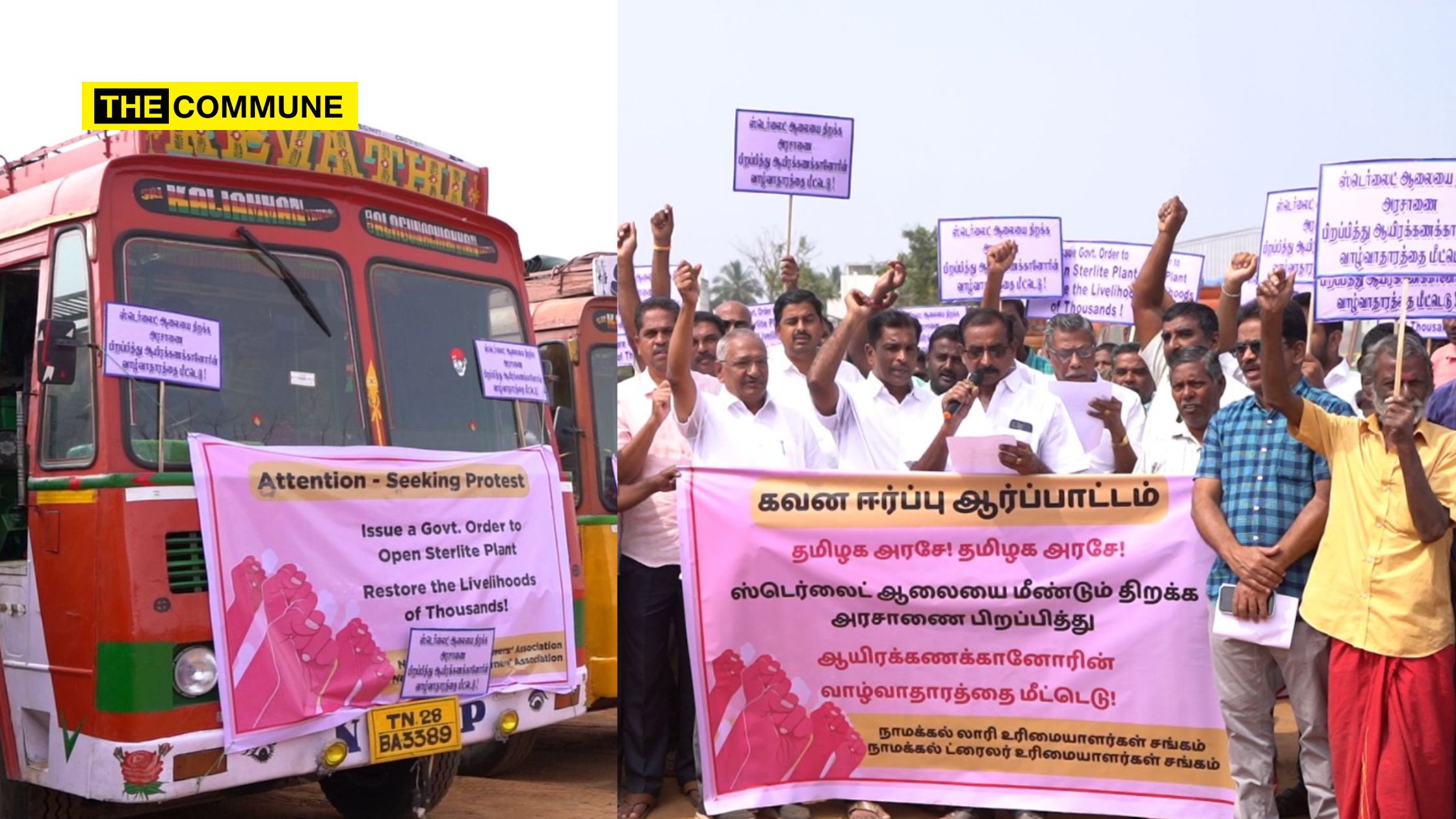
On 6 January 2024, the Namakkal Lorry Owners’ Association and Namakkal Trailer Owners’ Association organized a protest to draw attention to the severe economic repercussions faced by the freight and logistics sector following the closure of the Sterlite Copper plant in Thoothukudi. The truck community in Namakkal had played a key role in supplying trucks and trailers to the plant during its years of operation.

The copper smelting plant was shut down in 2018 after sustained protests from local residents, who raised concerns about pollution and its adverse health effects on the surrounding areas.

The closure of the plant has had a cascading effect, not just on the transport sector, but also on the wider local economy. Around 6,500 trucks were directly linked to the operations of Sterlite Copper, with approximately 430 trucks needed daily to transport over 9,000 tonnes of material produced by the plant. According to K Arul, President of the Namakkal Trailer Lorry Owners Association, the shutdown has led to widespread job losses and economic hardship for thousands of families.

Around 500 people, including truck owners, drivers, helpers, and more than 150 lorries, participated in the protest. They voiced concerns over the growing difficulties faced by workers, business owners, and their families, who are struggling with reduced opportunities and unmanageable operating costs.

During the plant’s peak, over 1,000 trucks operated daily, providing a vital source of income for many in the region. However, following the closure, more than 600 lorry owners have been forced to transition into driving, further exacerbating the unemployment crisis. The daily economic loss of over ₹10 crore has left many individuals and families burdened by mounting debt and financial instability.

The protest highlighted that the reduction in transportation services is affecting inter-state trade and industries that depend on reliable supply chains.

In light of these issues, Arul called for a special Government Order to ensure that the plant could resume operations under strict environmental supervision. He suggested that this could include implementing advanced emission control technologies similar to those used in the trucking industry, aimed at minimizing environmental damage while allowing the plant to operate effectively.

(With inputs from Business Line)

Subscribe to our channels on TelegramWhatsApp, and Instagram and get the best stories of the day delivered to you personally.
Hindu Munnani Thwarts Christian Missionaries’ Conversion Attempt In Virudhunagar Villages

Hindu Munnani Thwarts Christian Missionaries' Conversion Attempt In Virudhunagar Villages

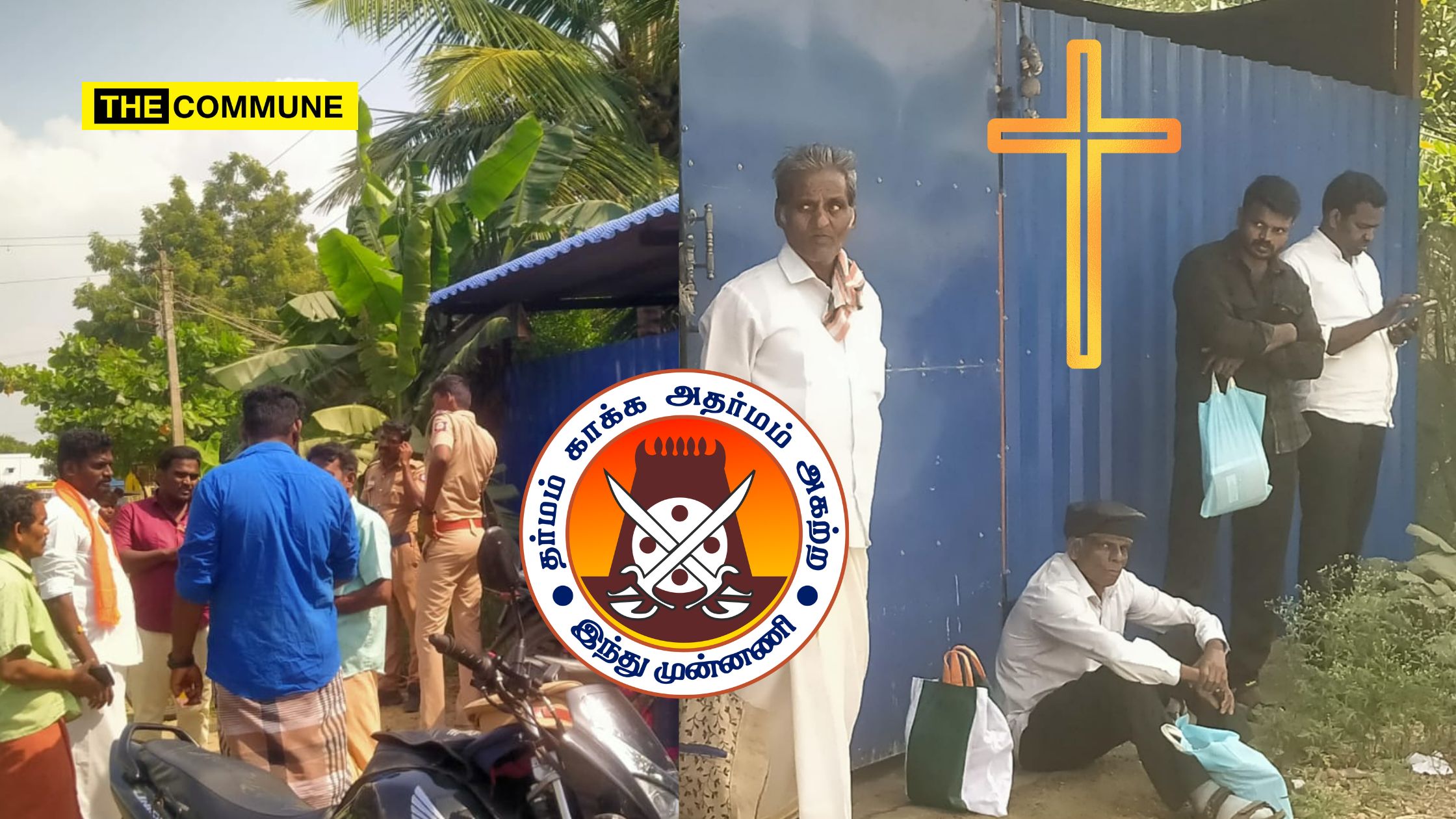
The Hindu Munnani successfully thwarted an attempt by Christian missionaries to carry out mass conversions through a door-to-door campaign in the villages of Tiruchuli Union, including Kulasekaranallur, Konapanendal, Manjampatti, and Madathupatti in Virudhunagar district.

A group of missionaries arrived in a van from Tirunelveli and began their conversion campaign, causing disturbances among the local villagers. The missionaries claimed they were spreading the word of the Lord, but their actions intruded on the privacy of the residents and created unrest. Annoyed villagers, upon realizing the nature of the campaign, alerted Thangaraj, the leader of the Hindu Munnani Tiruchuli Union.

In response, Hindu Munnani members, along with local residents, arrived at the scene and, in coordination with the Tiruchuli police, successfully thwarted the missionaries’ efforts, ensuring the group was handed over to the Sub-Inspector for further action.

Subscribe to our channels on TelegramWhatsApp, and Instagram and get the best stories of the day delivered to you personally.
Dravidian Model Of Education: Muthaliyarpatti Govt School Students Forced to Study Under Trees, No Basic Facilities

Dravidian Model Of Education: Muthaliyarpatti Govt School Students Forced to Study Under Trees, No Basic Facilities

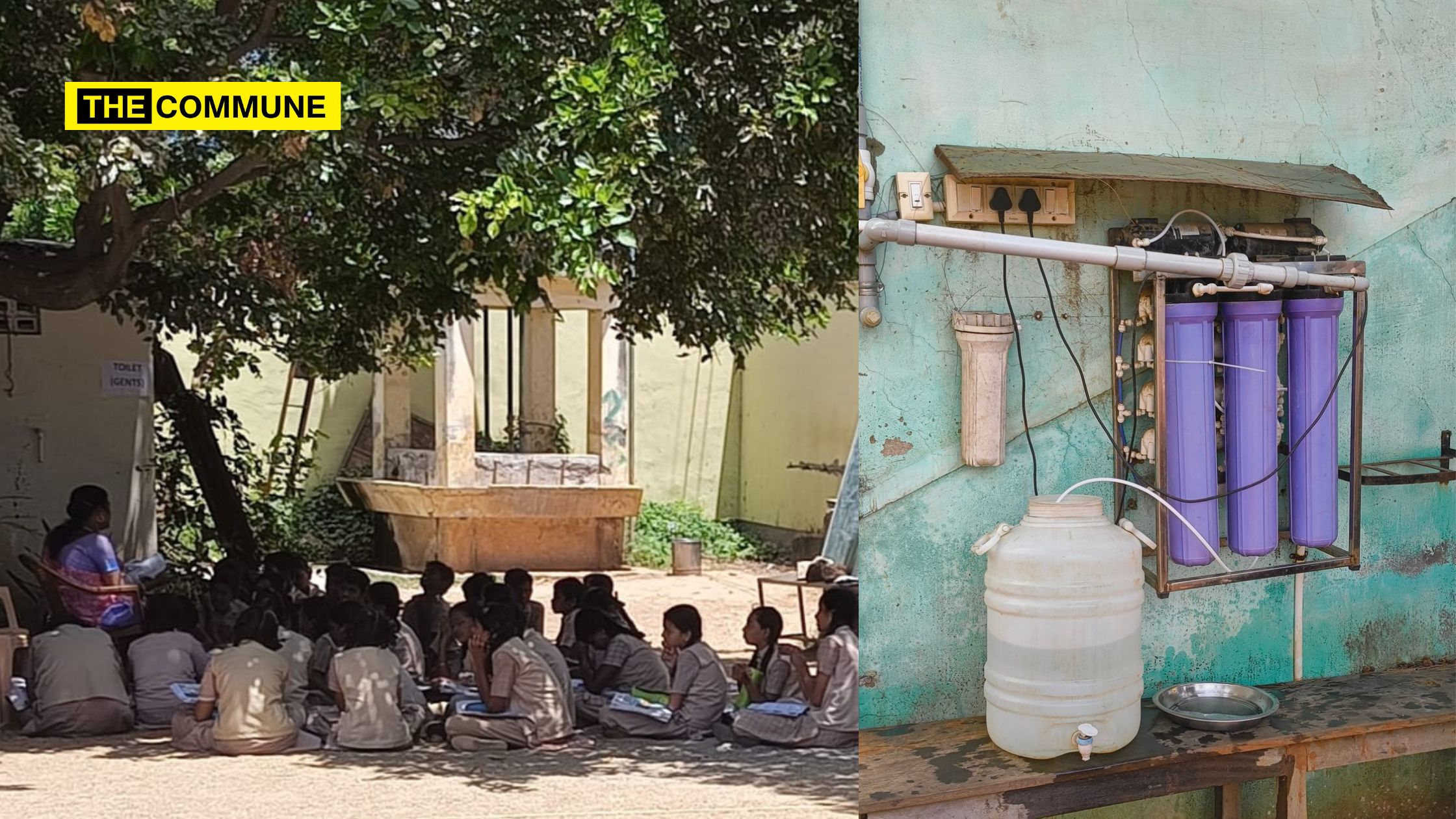
In yet another example of the challenges students face due to the failure of the ruling DMK, government school students are forced to attend classes in dire conditions. At Muthaliyarpatti Government Higher Secondary School, located near Kadayam, many students have no choice but to study under trees or in makeshift structures due to a lack of proper infrastructure. This situation has led to health problems among students, with many suffering from allergies and skin rashes.

Reports indicate that the school is missing key facilities, such as toilets, a playground, functional laboratories, and an adequate drinking water system. One of the students stated, “Due to the shortage of classrooms, lessons are often conducted under trees, in the shed, or even on a pathway in front of the headmistress’s office. Many of the existing classrooms have no fans, and the children are forced to play in a narrow path beside the school, as there’s no proper playground.”

Other children revealed that the school had only one water purifier to serve over 600 students, leading to long queues. Often, the water ran out before everyone got a chance to drink, and during power outages, the children were left thirsty. “Sometimes, we even drink from a leaking pipeline near the railway track, which is part of the Combined Water Supply Scheme,” one student added.

The school’s toilet facilities were also found to be equally inadequate, with a single poorly maintained toilet. Many students were forced to relieve themselves in the open, leading to concerns over urinary tract infections. “The conditions are bad, and we often suffer because of them,” students noted.

M Faridha Banu, chairperson of the School Management Committee, explained that the lack of classrooms has prevented the introduction of new groups in higher classes. She added that because the school has no kitchen, students must walk to a nearby primary school for their meals. “The school only has one sweeper, earning around ₹3,000 per month, and even that payment is made every six months. In such circumstances, it’s unreasonable to expect clean toilets and premises,” she remarked.

Social activist Mohammed Abdul Khader, who has been petitioning officials to address these issues, said that the Tenkasi Revenue Divisional Officer and Tahsildar visited the school in November 2024 and promised to secure land for additional classrooms. However, no progress has been made since then. “The state government must act quickly to prevent students from transferring to private schools,” he urged, adding that some classrooms were constructed on a 5.5-cent plot donated by philanthropist Haji S Mohideen Pitchai.

When contacted, Chief Educational Officer Rejina stated that the school education department was working to acquire a nearby government land parcel to build more classrooms. “Once the payment for the land is processed, it will be handed over to us. We understand that Alangulam MLA Manoj Pandian is planning to provide funding for the purchase,” she confirmed.

(With inputs from TNIE)

Subscribe to our channels on Telegram, WhatsApp, and Instagram and get the best stories of the day delivered to you personally.