Home Blog Page 426

“If He Seeks Vote, Even The Brahmins In His Street Won’t Vote For You,” NTK Chief Seeman Roasts DMK And S Ve Shekher In One Go

Seeman slammed DMK for appeasing S Ve Shekher to secure Brahmin votes, while ignoring the contributions of Tamil Brahmin scholars.

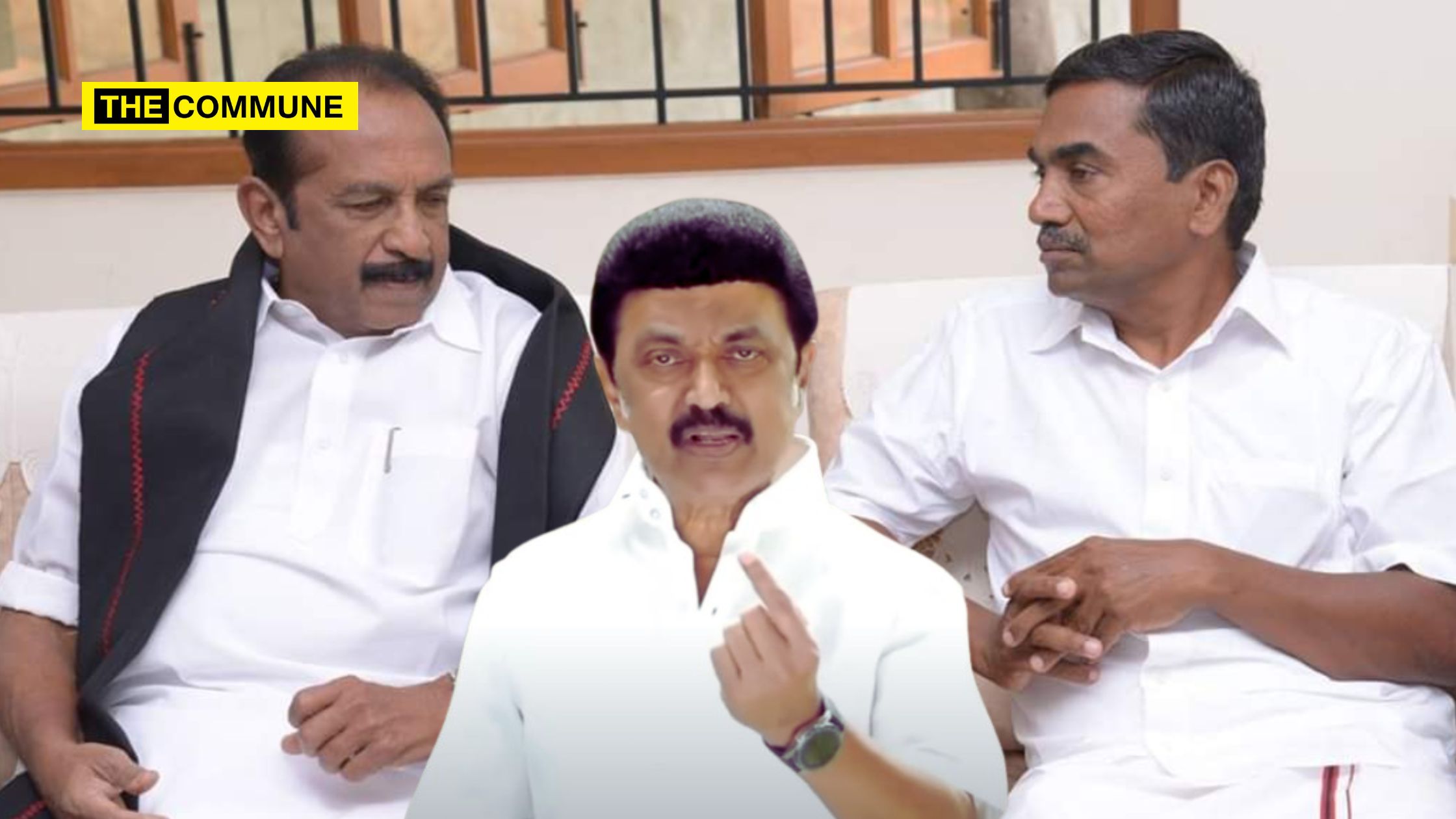
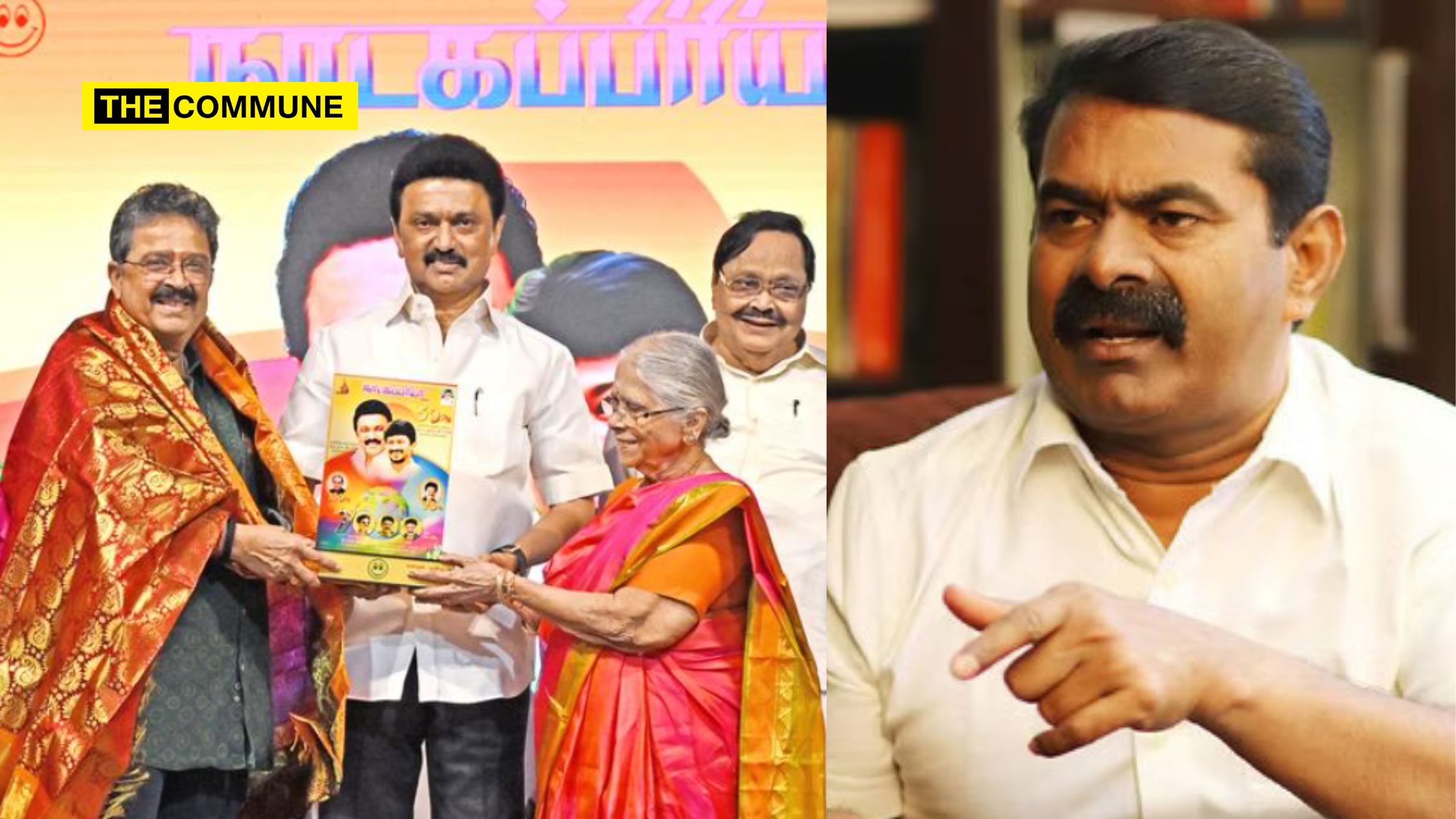
Amid Chief Minister MK Stalin’s recent announcement on 20 January 2025, to name a street in Mylapore after actor S Ve Shekher’s father, SV Venkataraman, Naam Tamilar Katchi (NTK) leader Seeman has criticized the DMK’s strategy of relying on S Ve Shekher to secure Brahmin community votes. He mocked the move, questioning why, with so many Tamil scholars from the Brahmin community who have contributed greatly to preserving Tamil literature, there is a need to honor S Ve Shekher’s father. Seeman further ridiculed the decision, sarcastically remarking, “If he asks for votes, even the Brahmins in his street won’t vote for you.

NTK leader Seeman’s criticism comes from Chief Minister MK Stalin’s remarks at an event celebrating the 7,000th performance by S Ve Shekher’s theatre group, ‘Natakapriya.’ At the event, Stalin announced that a proposal to name a street in Mylapore after Shekher’s father, SV Venkataraman, would be introduced at an upcoming Greater Chennai Corporation council meeting. Stalin praised Shekher’s dedication to theatre and his long-standing ties with former Chief Minister M Karunanidhi.

Stalin also remarked that after watching some scenes from Shekher’s drama, it felt like “Shekher alone is enough to secure the DMK’s victory in the 2026 Assembly elections.” He promised to honor Shekher’s request, while also hinting at a request of his own. However, the Chief Minister did not specify what that request was. Later, Shekher told reporters that he would campaign for the DMK in the 2026 elections if Stalin established a Brahmin Welfare Board to support underprivileged Brahmins.

The NTK leader took aim at Stalin’s announcement, suggesting that the move was more about political gain than a genuine concern for the Tamil community. Seeman criticized the DMK for using Shekher as a tool to secure Brahmin votes, while many Tamil Brahmin scholars who have contributed to Tamil literature have been overlooked.

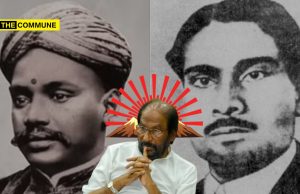
Speaking at a press meeting in Coimbatore, Seeman sharply criticized the decision, saying, “What are you talking about? After being slammed, they are now circling behind S Ve Shekher. Why name a street after S Ve Shekher’s father? Why not honor (someone like) our Tamil grandfather U. V. Swaminatha Iyer, who preserved and documented Tamil literature? Or Pure Tamil Movemnet (leader) Maraimalai Adigal’s guru, the great Parithimar Kalaignar, who changed his name from Suryanarayana Sastri—why not name it after him? Why can’t you name it after our great-grandfather Bharathiyar, who revolutionized Tamil literature. Why S Ve Shekher’s dad? What did you say— ‘I have fulfilled your request, now you must fulfill mine’? Is this all just about seeking votes in the election? If he asks for votes, even the Brahmins in his street won’t vote for you.”

Seeman further mocked, “What kind of intelligence do you have? First, change the officials with good ones and provide a better survey.”

Subscribe to our channels on TelegramWhatsApp, and Instagram and get the best stories of the day delivered to you personally.

Why The Thirupparankundram Hill Is So Sacred For Hindus

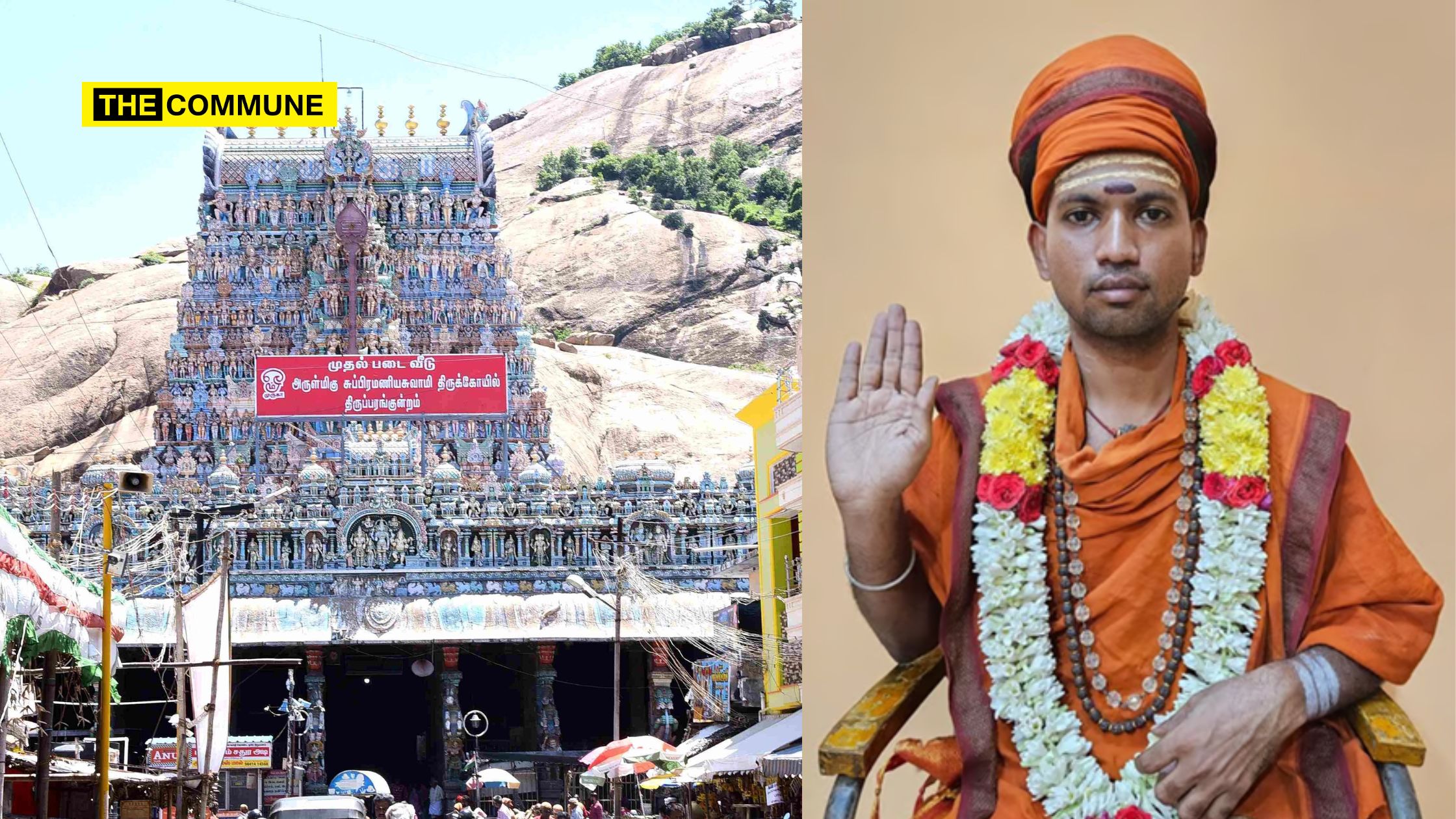
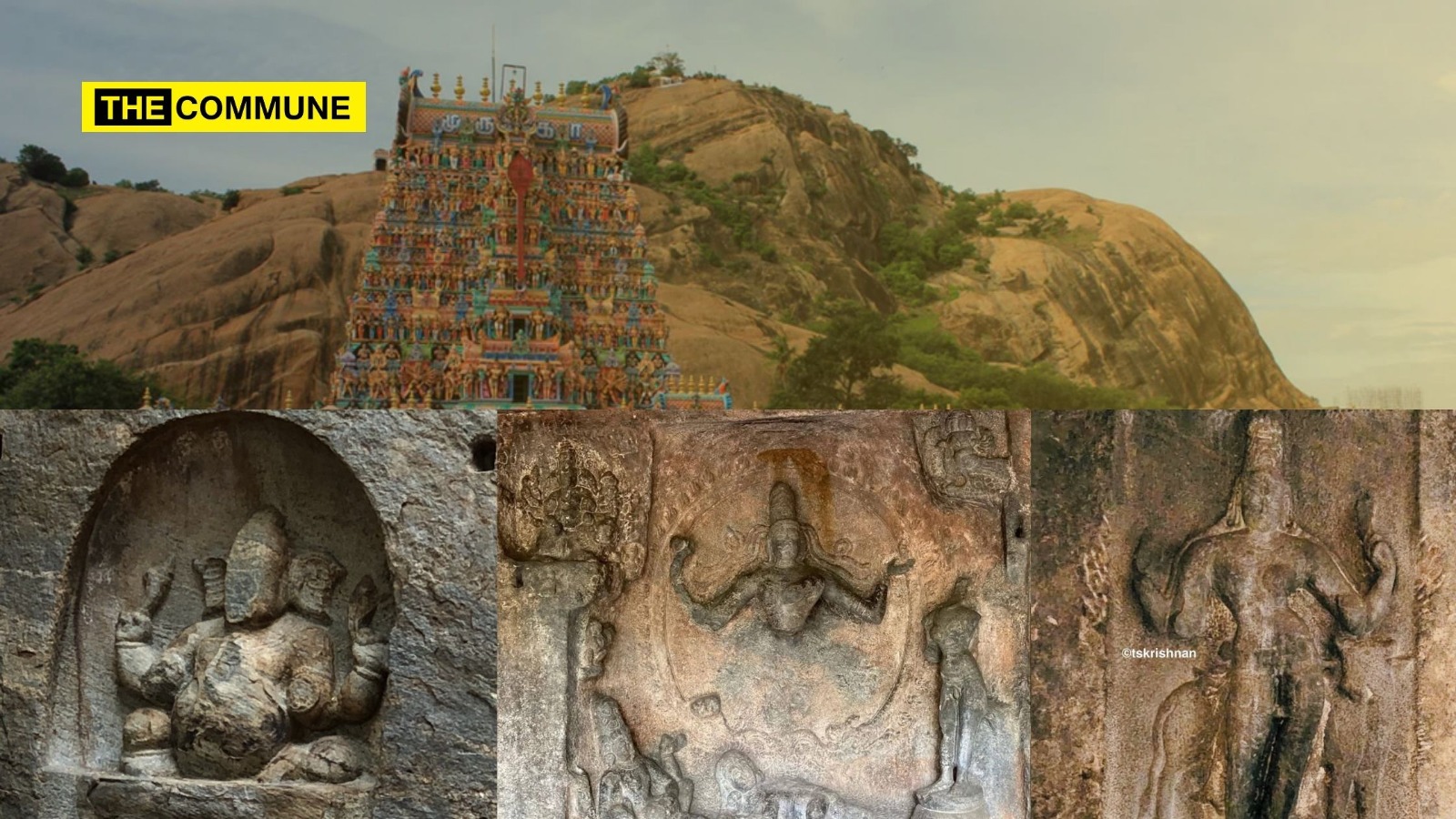
Thirupparankundram Hill, the first of Murugan’s six sacred abodes, was full of Murugan devotees, Iyappa Bhakts, and tourists until a few weeks back. Now, it is on the news for the wrong reasons. It is buzzing with political activity, with a beeline of leaders visiting the holy place. What has changed? We need to go back in time to look at the temple’s history and why the hill is considered a sacred place for Hindus.

Parankundram, always mentioned with the respectful prefix of ‘Thiru’, is one of the very ancient places in Tamil Nadu. The history of the temple and the hill goes back to the Sangam age. Sangam text Paripadal, which praises Murugan in eight verses, also glorifies the Thirupparankundram as equivalent to the Himalayas as Devas come and worship here. Paripadal also gives details about the Murugan temple with a Mandap, which had murals from our Puranas. Another Sangam text, Agananuru, says that Chera King Anthuvan came and worshipped Murugan at Thirupparankundram.

Sangam period poet Nakkeerar was from Thirupparankundram, and he sang Thirumurugatrupadai from here, praising Murugan and mentioning his major temples in Tamilagam. It is said that after singing Thirumurugatrupadai, Nakkeerar prayed to Lord Murugan and told him about his wish to visit Kashi, but he could not go there due to his old age. Accepting his prayers, Lord Viswanatha and Visalakshi appeared on the hill. Even the river Ganga appeared in the form of a small pond on the hill. This is where the Kasi Viswanatha temple was constructed on top of the hill, next to the pond where Gangai was supposed to have appeared. This also has one of the oldest inscriptions mentioning the Sakthi worship during ancient times.

During the early centuries of the millennium, Jain monks came to Madurai and took shelter in the hillocks around Madurai. Thirupparankundram was no exception, and few caves have the beds of Jain monks. They also have ancient inscriptions in Tamil Brahmi, which have information about the donors of such beds. In front of the hill are a couple of panels with Jain Tirtankaras like Mahavira & Parsvanatha and inscriptions in Vattezuthu (old Tamil script) about who made these panels. There is also a temple of Palani Andavar on the same hill from which the steps to go up to the Kasi Viswanathar temple start.

This is the only one way to go to the top of the hill earlier and it was named ‘Sri Murugan Malai Pathai’. An inscription about the name was installed by the then-member of assembly, Thiru. Chinnakarupa Thevar during 1957-67 times. A few years back, another set of steps was constructed behind the hill to reach the Kasi Viswanatha temple.

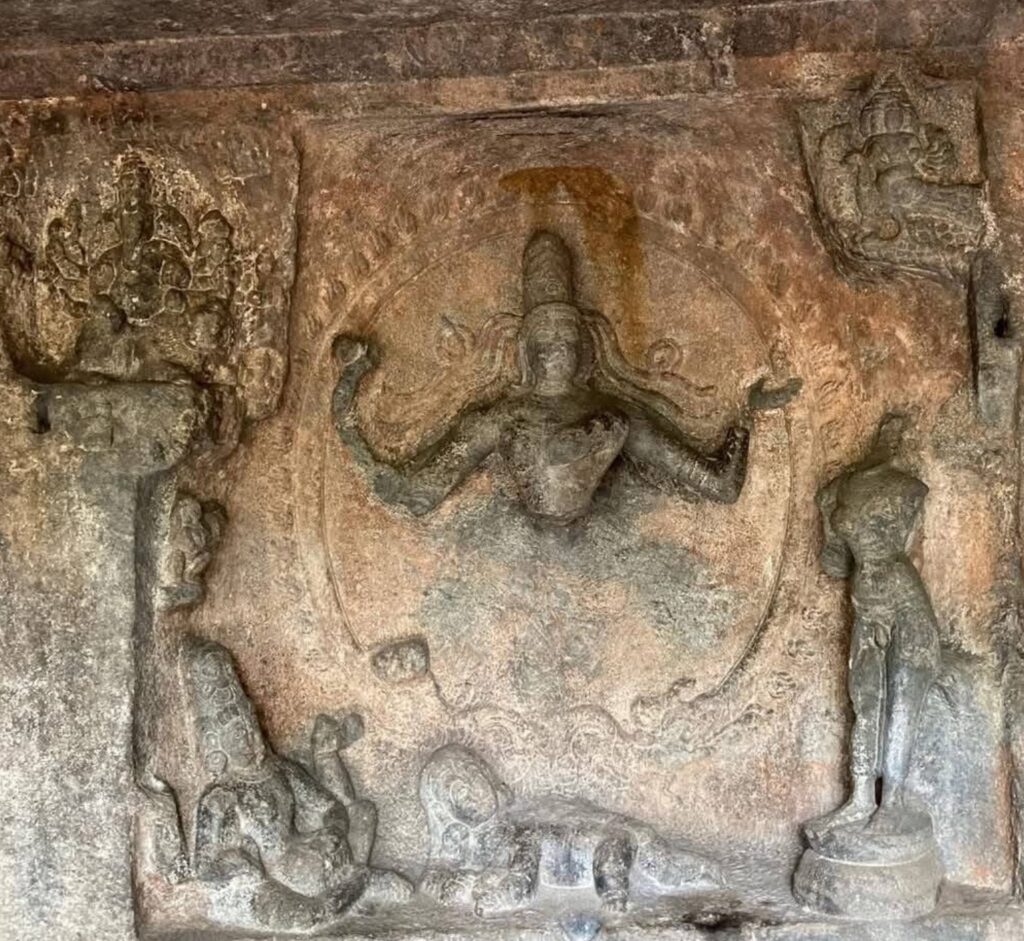
The temple, with such a legacy, faded into obscurity for about three centuries during the rule of Kalabhras. After the interregnum, Pandyas recaptured Madurai and started building/rebuilding several temples. They constructed two temples on Thirupparankundram hill, one each on the north & southern side. The northern side temple was built with the Shanmatha concept with shrines for Shiva, Vishnu, Sakthi, Ganapthi & Murugan. The temple also has shrines for Jyeshta Devi and Saptamathrikas. It was Pandyan Parantaka Nedunjadaiyan who was instrumental in building the temple. His ‘Mahasamantha’, commander Sattan Ganapathi, built the shrine of ‘Sambhu’ as per an inscription. His wife Nakkan Kotri built the shrines of Durga & Jyeshta as per another inscription. As the temple & the hill are closely associated with Murugan worship, this one became popular. Later kings, including Nayaks, built many mandapams in front, resulting in the bigger temple we see today.

The temple on the southern side was a Shiva temple where Ardhanareeswara was worshipped in the sanctum. The temple also has the Vigrahas of Nataraja and Murugan. Unfortunately, during invasions, the temple was destroyed, and the Vigrahas were broken. Due to this, worship was stopped, and the temple stands as an archeological monument today.

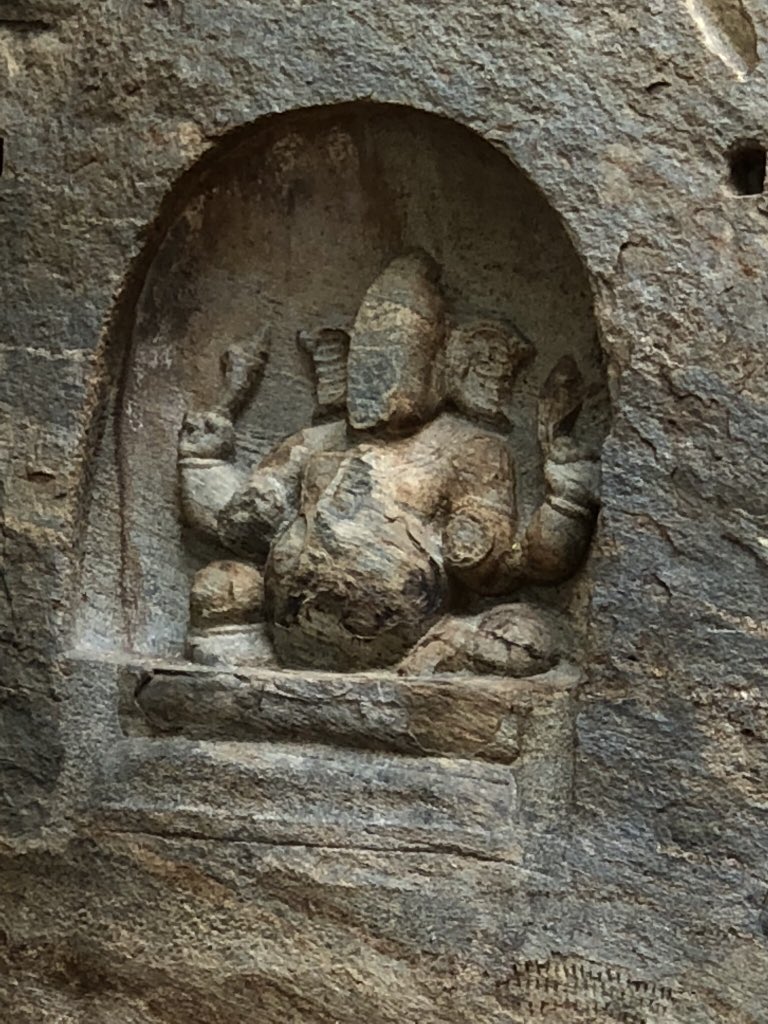
Let us take a look at the sculptural wonders of the temple.

Behind the hill, facing south, there is a cave temple known as ‘Thenparankundram’ constructed by Pandyas around 6th century.
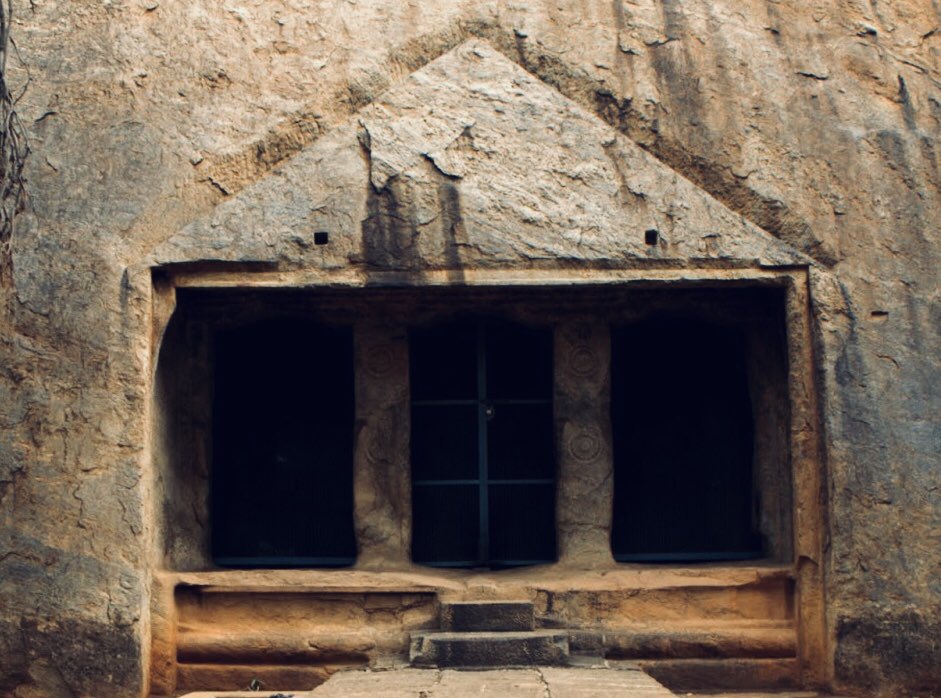
The shrines inside include Arthanareeswarar on whose name it is called as ‘Umai Andavar’ temple. It also has an inscription of Maravarman Sundara Pandiyan who rules Madurai during 13th century.
The temple has borne the brunt of invaders and most of the sculptures destroyed.

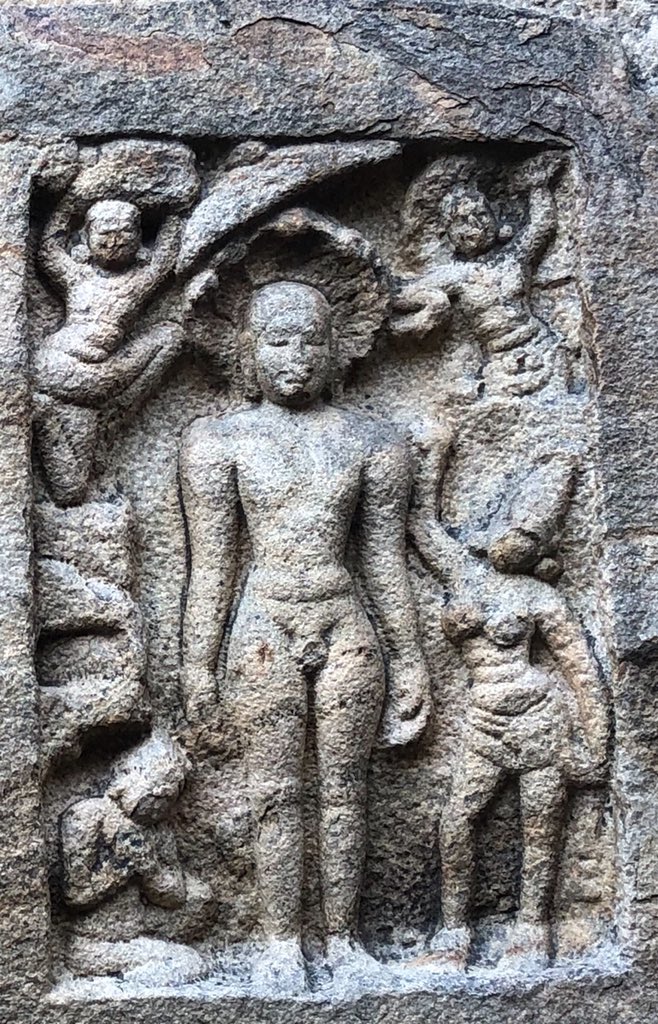
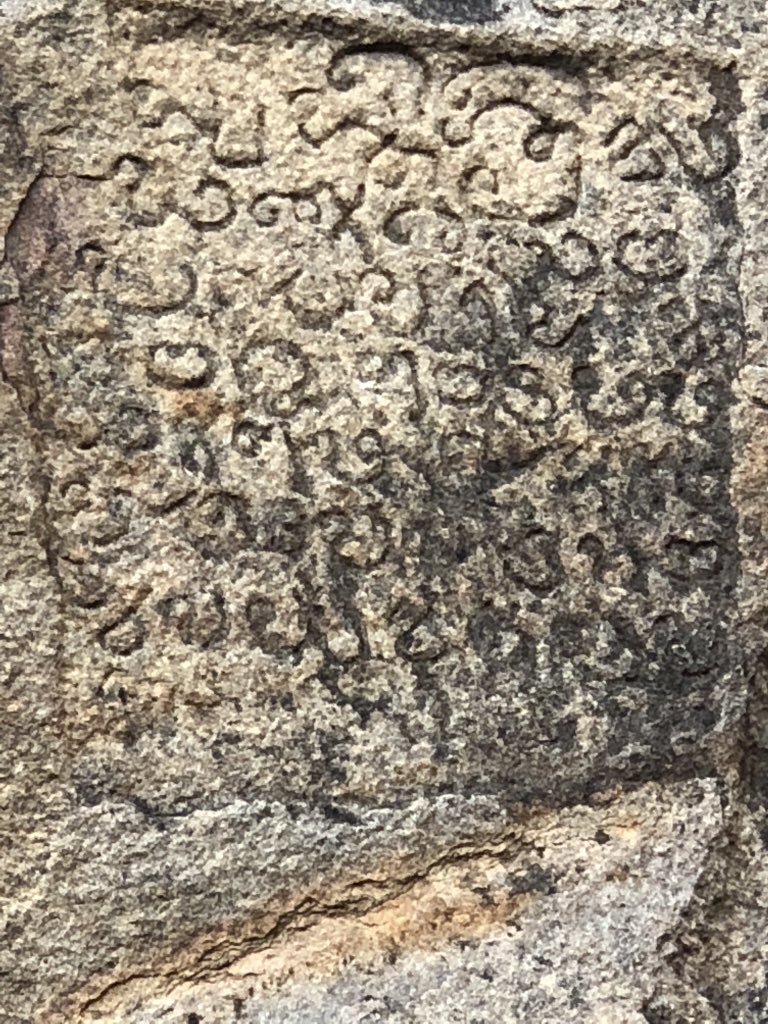
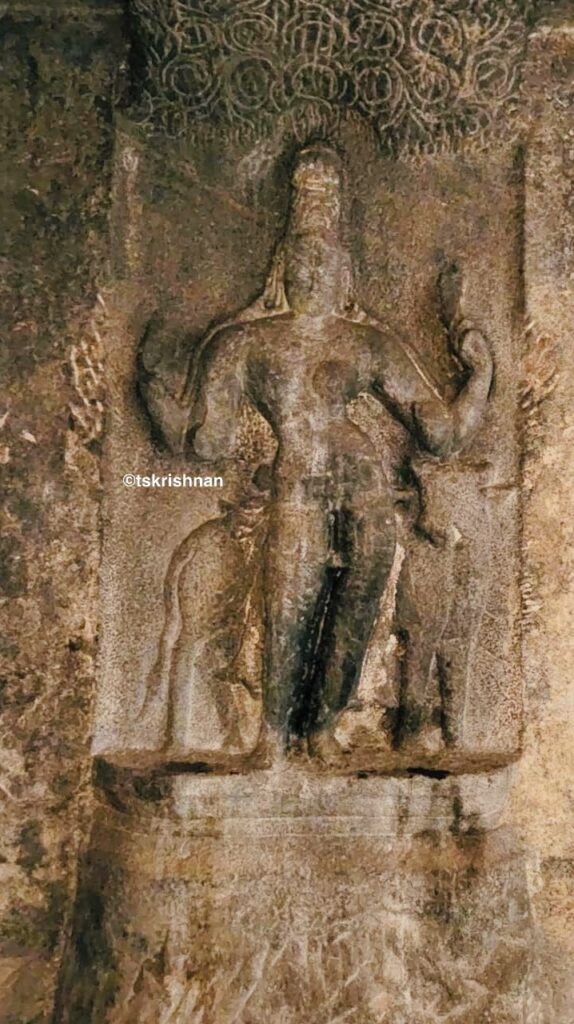
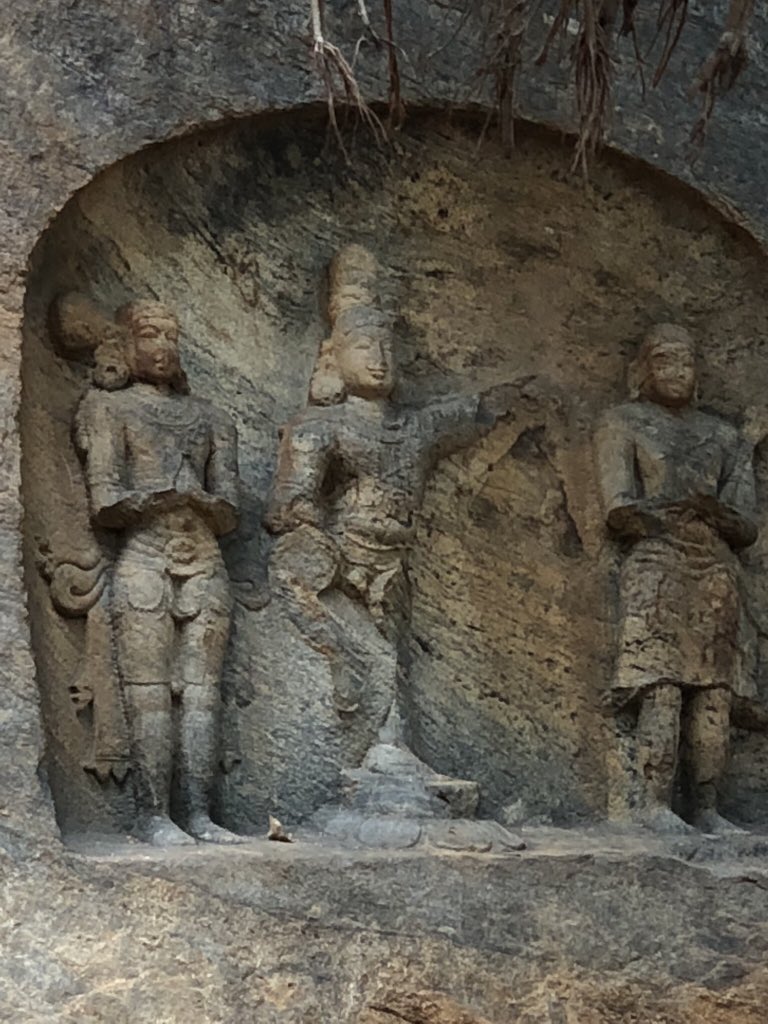
The western side of the hillock has a few ‘Samanar Muzhais’ places where Jain monks resided. Here is Mahavira and The Vattazhuthu inscription next to the bas-relief says this work is by ‘Anantha Veeryan’.
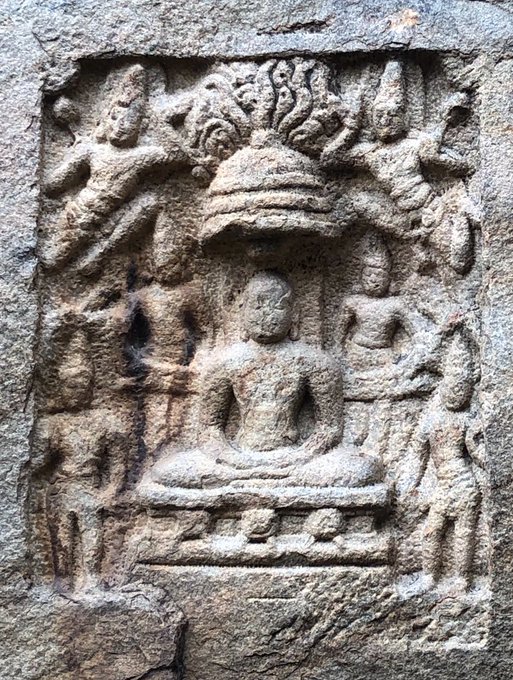
On the side, there is another bas-relief of Parshvanatha, the 23th Thirthankara The inscription on its side says, the work was done by ‘Vanan Baladevan’. These bas-reliefs are supposedly of 8th century.
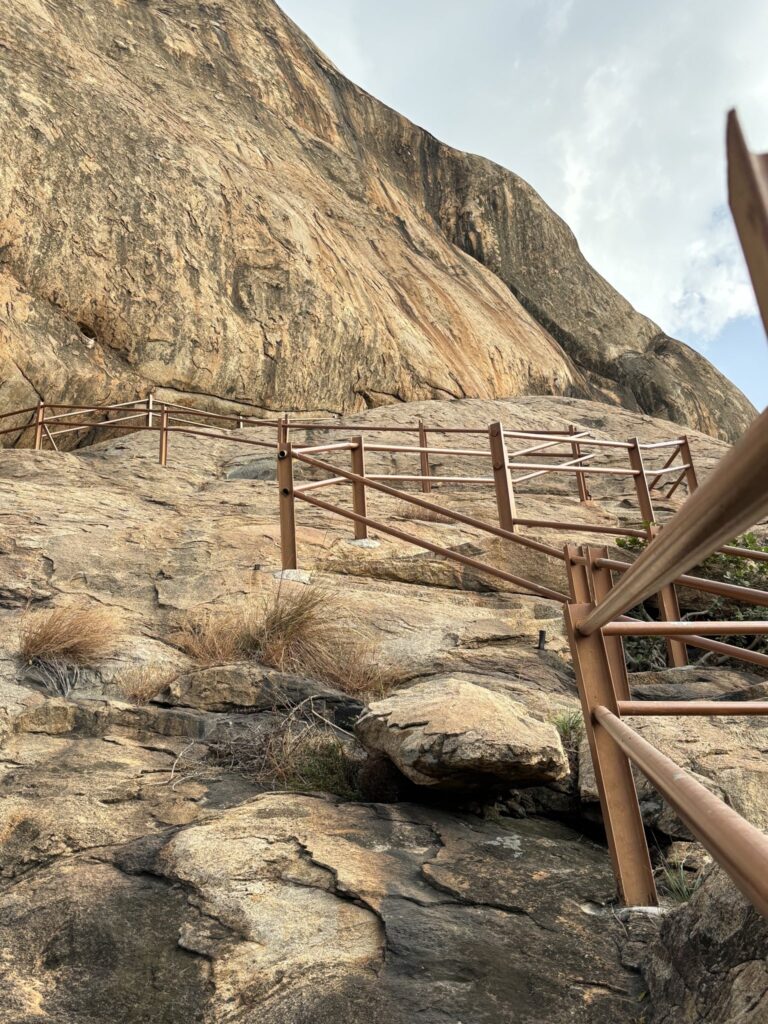
On the top of the hill, there are two thousand years old Jain beds which has ancient Tamil Brahmi inscriptions. Although ASI has put the guardrails, it is not easy to climb, wonder how the Jain monks climbed the hillock 2000 years ago.
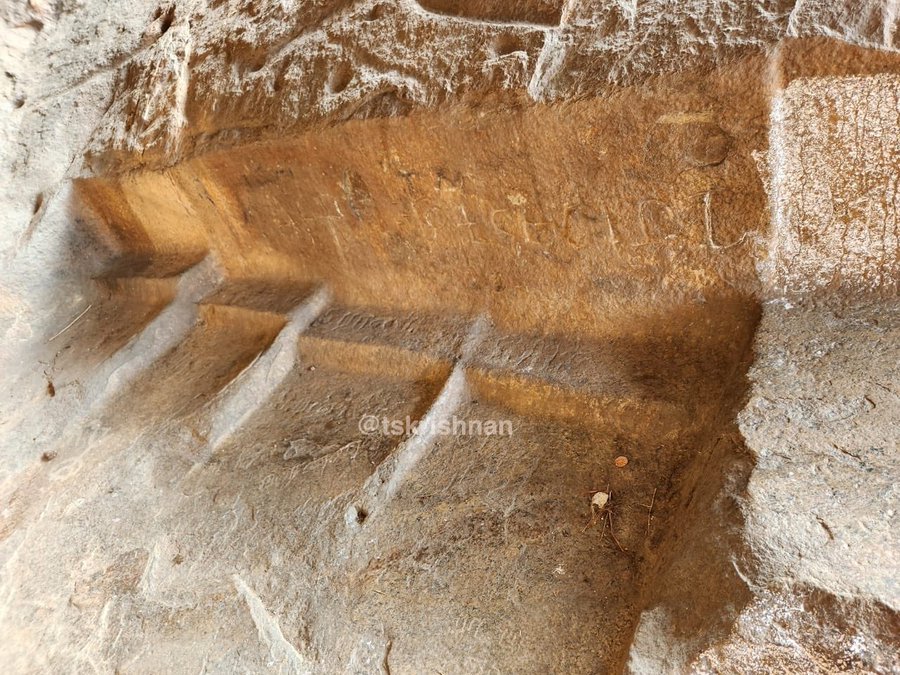
Let’s take a look at the inscriptions in the caves.

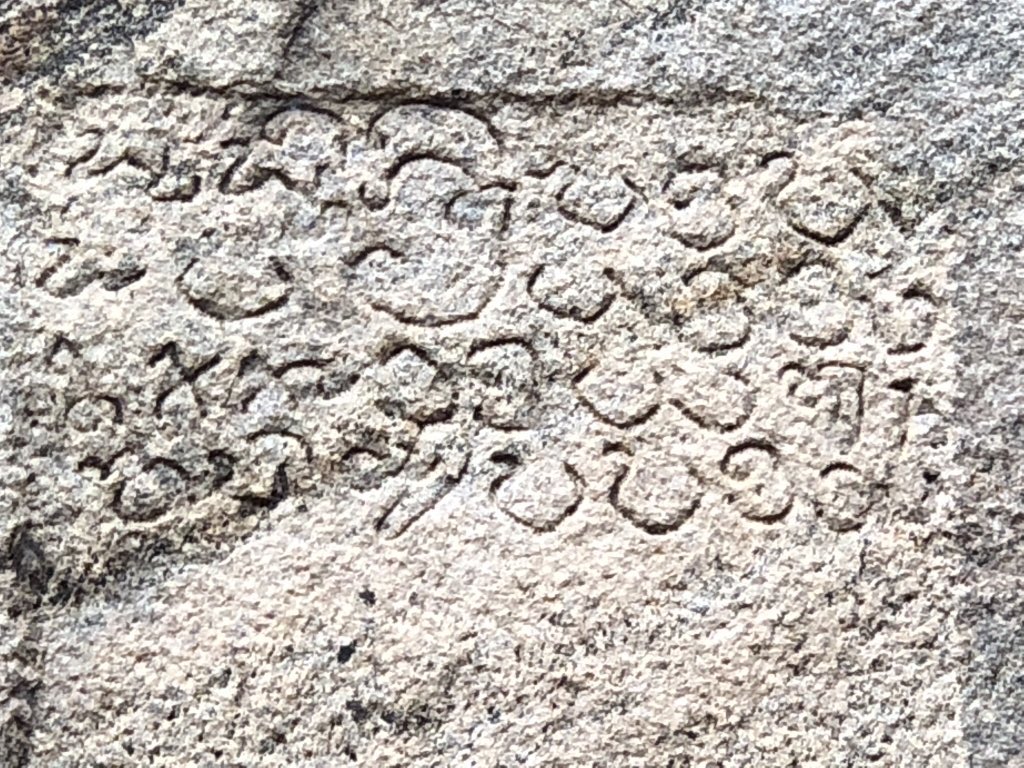
This has one of the longest inscriptions in Tamil Brahmi. The inscription mentions about who had made the bed here. Erukattur Ela kudumpikan polalayan Seytha aysayan nedusathan Meaning, (the bed donor is) Polalayan of Erukattur family from Eelam, (bed made by) Aysayan Nedusathan. Quite interesting that a family from Sri Lanka donated this which belong to 1st century BCE – 1st century CE
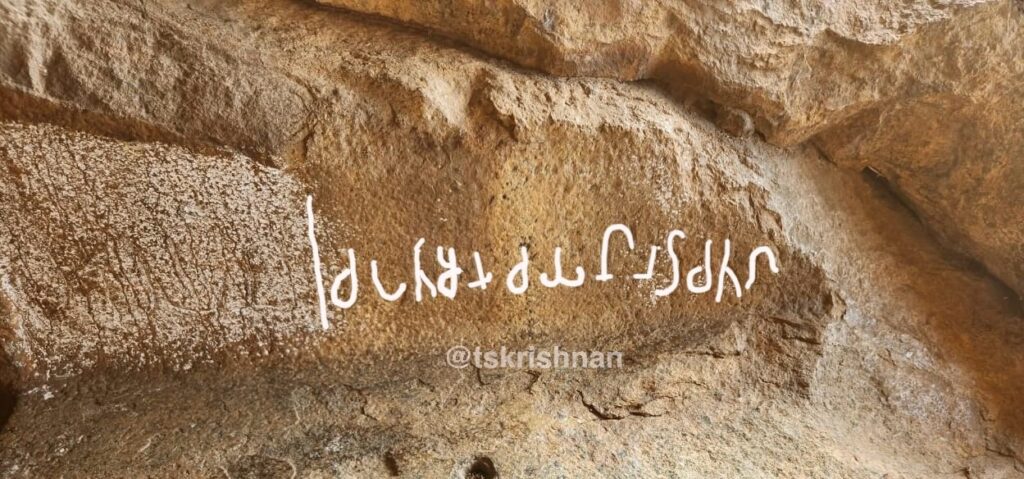
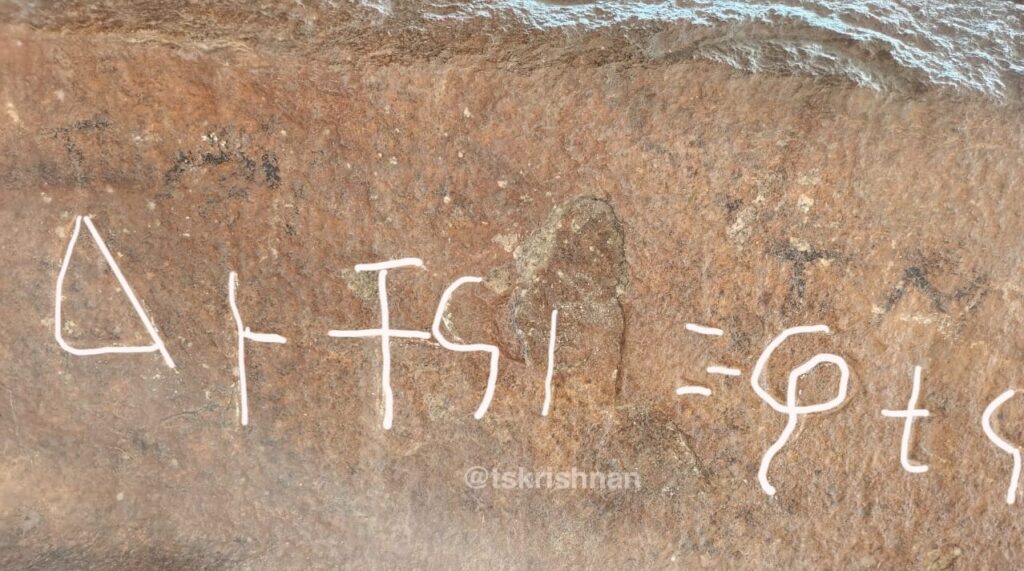
On the other side, there is a Kasi Viswanathar temple along with a small pond which is believed to be very sacred.
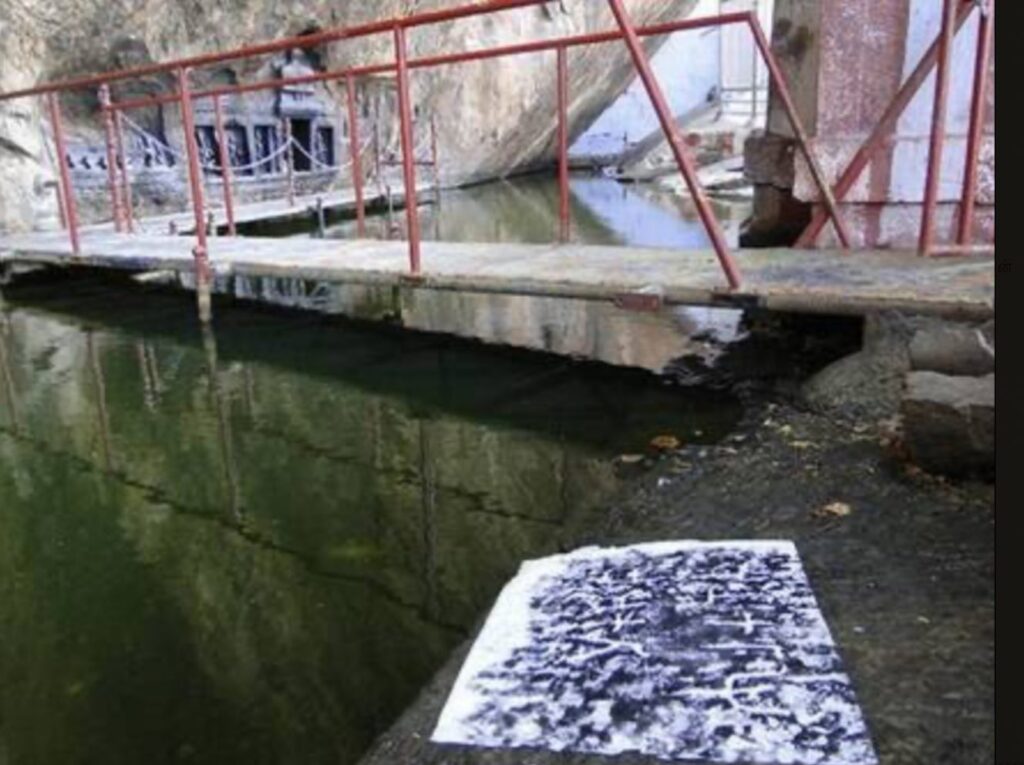
This also has one of the oldest inscriptions mentioning about the Sakthi worship during ancient times.
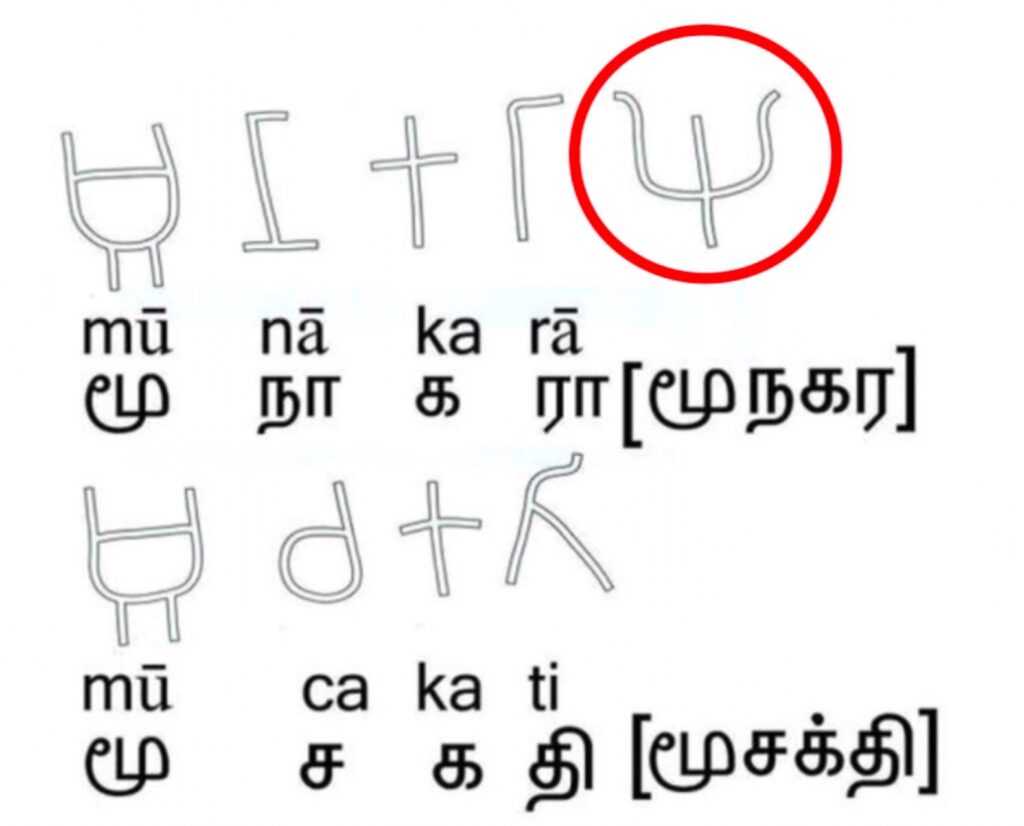
This is more than reason enough for one to understand the religious importance of the hill and the temples around it and why it needs to be protected from appropriation and occupation.

The Sikkandar Dargah

During the fourteenth century, a Dargah appeared on top of the hill of Sikkandar Shah. There are many versions of how this came on top of the hill. Notwithstanding that, worship started on the Dargah a few centuries back, and every year, the ‘Santhanakoodu’ festival happens at the Dargah. During the early 20th century, there was a dispute regarding the ownership of the hill, and the HR&CE department went to court claiming ownership. The case went up to the Privy Council in London, which decided that the temple owned the entire hill. The worship at the Dargah has continued without any issue since then. A few weeks back, someone tried to sacrifice a goat at the Dargah, which police officials prevented. Since then, the issue flared up.

Hindus consider this as a holy hill due to several reasons. The hill is in the form of Shivalinga and is considered the manifestation of Lord Shiva. Girivalam, the circumambulation of the hill, was undertaken by devotees throughout the year. Especially during the Skanda Shashti festival, devotees undertake a day fast; all six days, they do Girivalam in the mornings and evenings. The Murugan temple is not in front of the hill but in the hill itself, as it is a cave temple. Hence, the sacrifice of animals on the hill is not in line with the Agamic principles.

The hill also has two major sacred ponds, the Lakshmi Theertham, and Saravana Poigai, besides the pond on top of the hill, which is said to be equivalent to Gangai. Once a year, Murugan’s spear (Vel) is taken atop the hill, and Abhishekams are performed in the pond. The hill also has Kasi Viswanathar temple and Palani Andavar temple. Hence, the hill is a very sacred place for the Hindus. Any practice that violates their beliefs is not allowed on the hill.

TS Krishnan is a Tamil scholar and author.

Subscribe to our channels on TelegramWhatsApp, and Instagram and get the best stories of the day delivered to you personally.

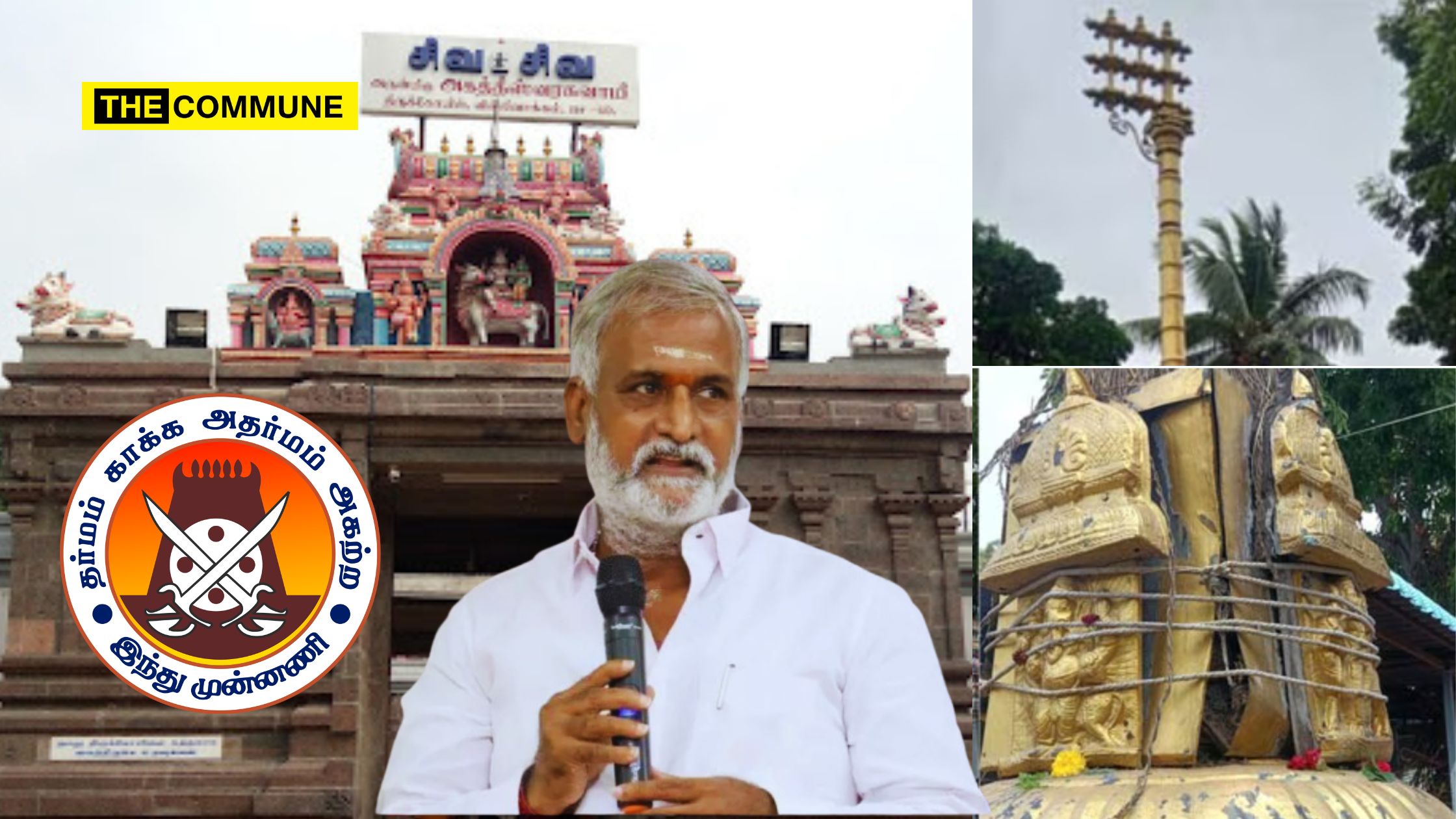
Hindu Munnani Slams DMK Minister Sekar Babu For Neglecting Agastheeswarar Temple’s Damaged Flagpole For Past Six Months

The Hindu Munnani slammed DMK's Sekar Babu, for inaction on the damaged sacred flagpole at the Agastheeswarar Temple in Villivakkam.

The Hindu Munnani has strongly criticized DMK’s Minister for Hindu Religious and Charitable Endowments, Sekar Babu, for failing to take action regarding the damaged sacred flagpole at the Agastheeswarar Temple in Villivakkam. The flagpole, which is an important part of the temple, has been broken, and the temple administration has been using ropes to keep it upright.

The Agastheeswarar Temple, over a thousand years old, is rich in history and legend, with many believing it was constructed by the Cholas, possibly under the reign of Kulothunga Chola. Originally named Vilvavanam, meaning “forest of Vilvam trees,” the area later became known as Villivakkam. The sacred Vilvam tree, believed to possess both medicinal and spiritual significance, is integral to the temple. Tradition holds that Sage Agasthya himself planted the tree here, and it remains sacred, with its leaves used in daily puja rituals by the priests.

The temple venerates Lord Shiva as Agastheeswarar Swamy and the Divine Mother Shakti as Swarnambikai. According to legend, during the divine wedding of Lord Shiva and Goddess Parvati at Mount Kailas, Sage Agasthya was in the south performing Shiva Puja at this temple. As he worshiped here, he became honored as Agastheeswarar. Goddess Parvati, adorned with golden ornaments during the celestial marriage, is honored here as Swarnambikai.

However, the failure to repair the temple’s damaged flagpole in the past six months has left devotees disappointed. The Agastheeswarar Temple in Villivakkam, which is managed by the Hindu Religious and Charitable Endowments Department, is currently undergoing the construction of a new five-tiered Rajagopuram at a cost of 2.15 crore.

The flagpole, which was damaged during the last Aadi month festival, has been tied with rope at the base but has not been properly repaired. Devotees have expressed dissatisfaction that the flagpole has been neglected while the construction of the costly new gopuram continues.

Villivakkam residents have raised concerns, noting that the flagpole is a significant symbol not only for the Agastheeswarar Temple but for all temples. Devotees typically offer prayers under the flagpole before proceeding to the Artha Mandapam and Maha Mandapam to reach the sanctum. The delay in repairing the flagpole, which has now remained damaged for six months, is causing frustration among the community.

In response, the temple administration acknowledged the damage and explained that steps have been taken to repair it. A letter seeking approval for the repairs was sent to the Commissioner of HR&CE a month ago, after consulting experts and relevant officials. The repair work will commence once the necessary permissions are granted.

The Hindu Munnani has sharply criticized the officials of the Hindu Religious and Charitable Endowments (HR&CE) Department and DMK Minister Sekar Babu, via their official X account that, “In Villivakkam, the famous Agatheeswarar temple flagpole, which is under the control of the Hindu Religious and Charitable Endowments Department, was damaged six months ago. As a result, the lower part of the flagpole has been tied with rope. The flagpole is very important in Hindu temples. Even if the officials of the Hindu Religious and Charitable Endowments Department, who have become a gang of robbers, do not understand this, it is very painful that Minister Sekar Babu, who brags about protecting the temple property and spirituality, does not understand this either. Like the saying, ‘Does a crow know about the disease of an ox?’, “Does the anti-Hindu Dravidian government’s Hindu Religious and Charitable Endowments department understand the sanctity of the temple??” Minister Sekar Babu should show at least a little interest in protecting the temple, as he is involved in various types of extortion in name of fee from devotees and gold smelting during festivals. Otherwise, the people will not forgive him in the coming elections, and Mahesan will not forgive him in the final days.”

(With inputs from Dinamalar)

Subscribe to our channels on TelegramWhatsApp, and Instagram and get the best stories of the day delivered to you personally.

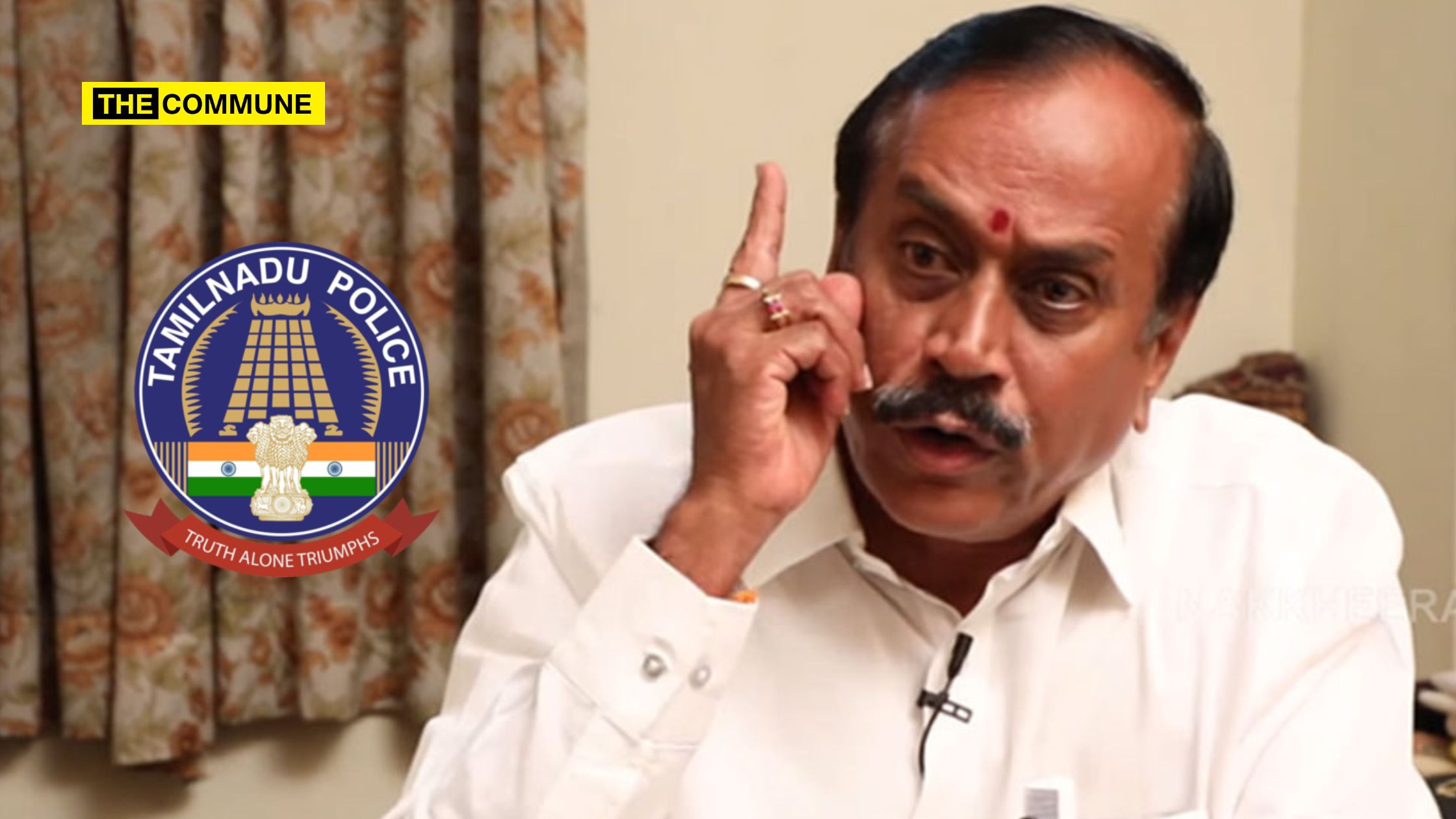
“Entire Liver Of TN Police Dept Rotten”, BJP Leader H Raja Slams DMK Govt

Raja said, “The entire liver of the TN police department has rotted” attributing this decline to the DMK rule.

BJP senior leader H Raja has criticized the Tamil Nadu police department and the DMK-led state government, saying “declaring that “the entire liver of the Tamil Nadu police department has rotted”. Speaking at the Dindigul West District President election meeting held at the BJP office in Palani, Raja made several pointed remarks on various issues, lapses explicitly in governance and law enforcement.

Addressing the gathering, Raja commented, The entire liver of the Tamil Nadu police department has rottedattributing this decline to the governance under the DMK rule. He alleged that the police had shown bias in some instances, such as Gnanasekar, who was accused of sexual harassment at Anna University and reportedly received preferential treatment while in custody.

Raja also highlighted issues concerning Thirupparankundram Hill, claiming that non-vegetarian food was consumed on the sacred steps of the hill with the government’s tacit approval. Referring to a 1931 Privy Council notification, he asserted that the entire hill belonged to Lord Murugan and criticized the construction of structures and the hoisting of the crescent flag on the temple’s sacred tree, actions he deemed inappropriate.

Turning his attention to land disputes, Raja accused the Waqf Board of obstructing the registration of properties in Tiruchendurai near Trichy and Balasamudram near Palani by requiring no-objection certificates. He said these issues would be resolved through the Waqf Board Amendment Act introduced by the Central Government.

Raja also addressed the disruptions faced by devotees at the Palani temple during the Thaipusam festival, criticizing the setting up of stalls in front of the Bogar shrine. Additionally, he condemned the Dindigul district food security department’s requirement for permissions to distribute annadanam to devotees, calling it unreasonable.

The senior BJP leader’s remarks come amid increasing political tensions in the state, with his statements likely to ignite further debate on governance and religious rights.

(With inputs from Dinamalar)

Subscribe to our channels on Telegram, WhatsApp, and Instagram and get the best stories of the day delivered to you personally.

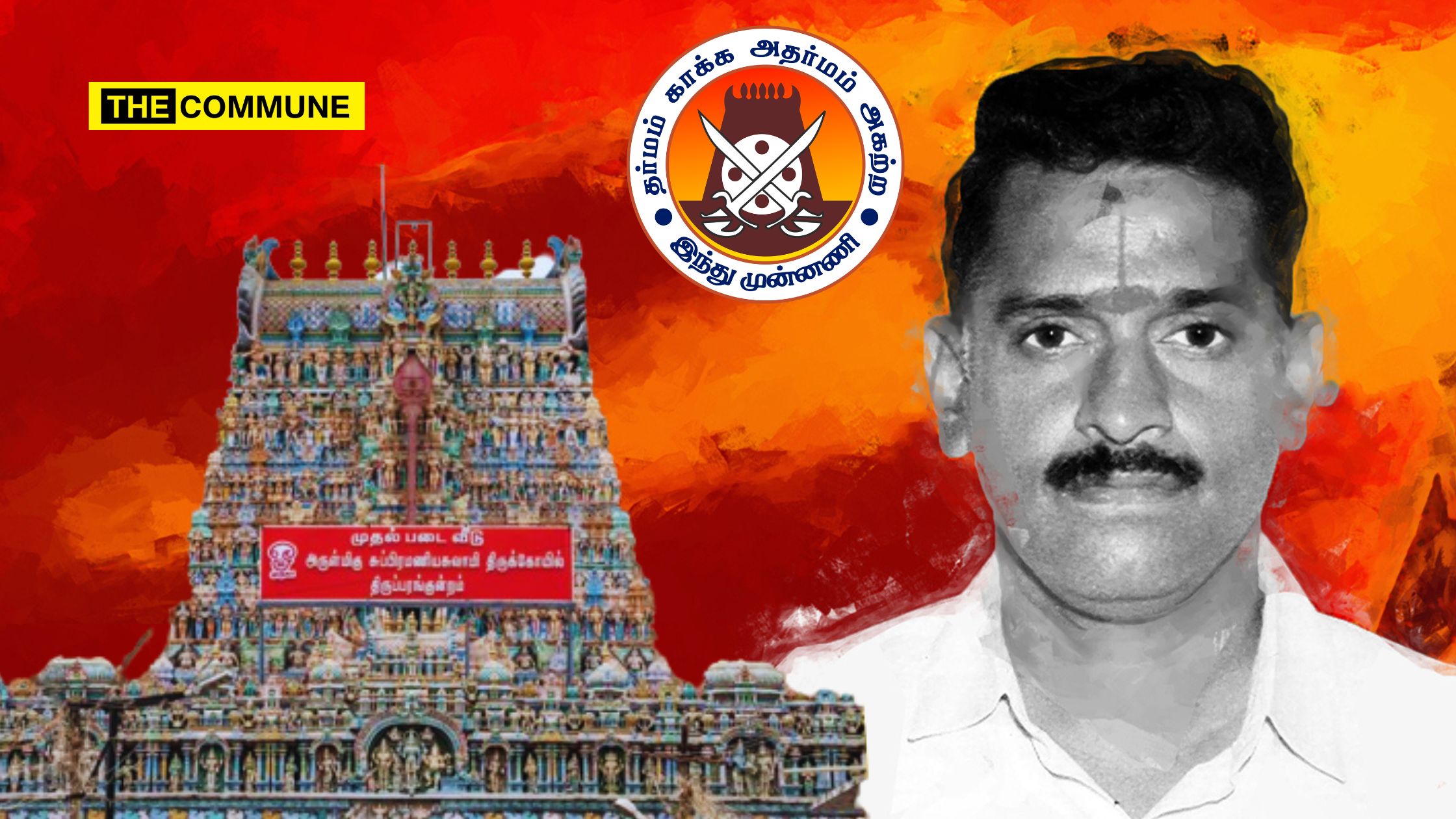
The Martyr of Thiruparankundram: How Hindu Munnani Rajagopalan Was Murdered By Islamists For Fighting For Hindu Rights

Rajagopalan, a fearless advocate for Hindu rights, defended Thiruparankundram, facing Islamist extremism until his tragic 1994 assassination.

It is impossible to look at the ongoing strife between Hindu devotees and Islamists at Thiruparankundram without evoking the indomitable spirit of Rajagopalan, the fearless advocate of Hindu rights whose unwavering resolve against religious extremism became both his legacy and the reason for his brutal assassination.

Amid rising tensions between Hindus and Islamist fundamentalist orgainzations over the sacred Thiruparankundram Murugan Hill, the situation has been further exacerbated by an Islamist group that has claimed the hills as “Sikandar Hills” and announced plans to celebrate a sacrificial feast at the temple’s dargah, involving the killing of goats and roosters.

This controversy brings to mind a similar incident from history, when in 1994, violence erupted at the Thiruparankundram hills. Hindu activists, who were defending the rights of Hindus in the area, were murdered by Islamist groups in a bloody conflict, marking a dark chapter in the region’s history.

Advocate Of Hindu Rights

Rajagopalan, a prominent lawyer and leader of the Hindu Munnani, rose to prominence after the passing of Thanulinga Nadar. A committed social activist, Rajagopalan was known for his strict principles, simplicity, and commitment to the cause of Hindus. He led a humble life, often working alongside volunteers to address issues in his community. Rajagopalan was instrumental in organizing protests and standing up to religious extremism, advocating for Hindu rights without fear or hesitation.

One of the most notable events in his life occurred when he became involved in a confrontation with Islamist fundamentalists during the Ganesha procession on the lower banks of Madurai. When Islamist groups halted the procession, Rajagopalan led a successful march to ensure the procession’s continuation. However, during the altercation, he was struck on the head with a glass powder-filled clay ball, causing serious injury. Despite this, he continued his activism undeterred.

In 1991, Rajagopalan contested the Assembly elections from Thiruvallikeni and campaigned vigorously for Hindu issues. He later faced violent opposition, including stone-pelting protests from rival groups. He was also involved in an intense battle to erect a Karthikai lamp on the Thiruparankundram hill, which the government blocked due to the presence of a dargah. Despite the obstacles, Rajagopalan remained resolute in his fight for Hindu rights, earning the admiration of many.

Brutally Hacked To Death By Islamists

On 10 October 1994, Islamic fundamentalists, angered by Rajagopalan’s activism, assassinated him outside his home in Madurai. While he was sitting and reading the newspaper, a group of extremists launched a brutal attack on him. Despite attempts to divert the case into a political issue, the Hindu Munnani pressed for justice, leading to the case being acknowledged as a jihadi attack. The perpetrators were prosecuted under the TADA Act.

In 2011, six Islamists —Shahul Hameed, Raja Hussain, Subair, Zakir Hussain, Abdul Aziz, and Seeni Nainar Mohammed—were convicted and sentenced to life imprisonment for their involvement in the murder. The investigation, initially handled by the Tamil Nadu Police, was later transferred to the CBI, which revealed the conspiracy behind Rajagopalan’s murder. The accused were found to have murdered Rajagopalan due to his perceived opposition to the interests of Islam and Muslims, having been influenced and radicalized by jihadist preachers.

The case was a significant and controversial one, as it highlighted the increasing communal tensions in Tamil Nadu. The trial faced numerous obstacles, with petitions from the accused and interference from various courts, but the CBI succeeded in prosecuting the offenders. The trial court’s decision in 2011 held the accused guilty, sending a clear message about the need to uphold the rule of law in such sensitive matters.

Rajagopalan’s death was a tragic loss, but his legacy lives on. His courage and dedication to the Hindu cause continue to inspire many Hindus and beyond. Despite the challenges, the Hindu community has grown stronger, and Rajagopalan’s sacrifice remains a symbol of resilience against Islamist extremism which has come to haunt Thiruparankundram once again.

Subscribe to our channels on TelegramWhatsApp, and Instagram and get the best stories of the day delivered to you personally.

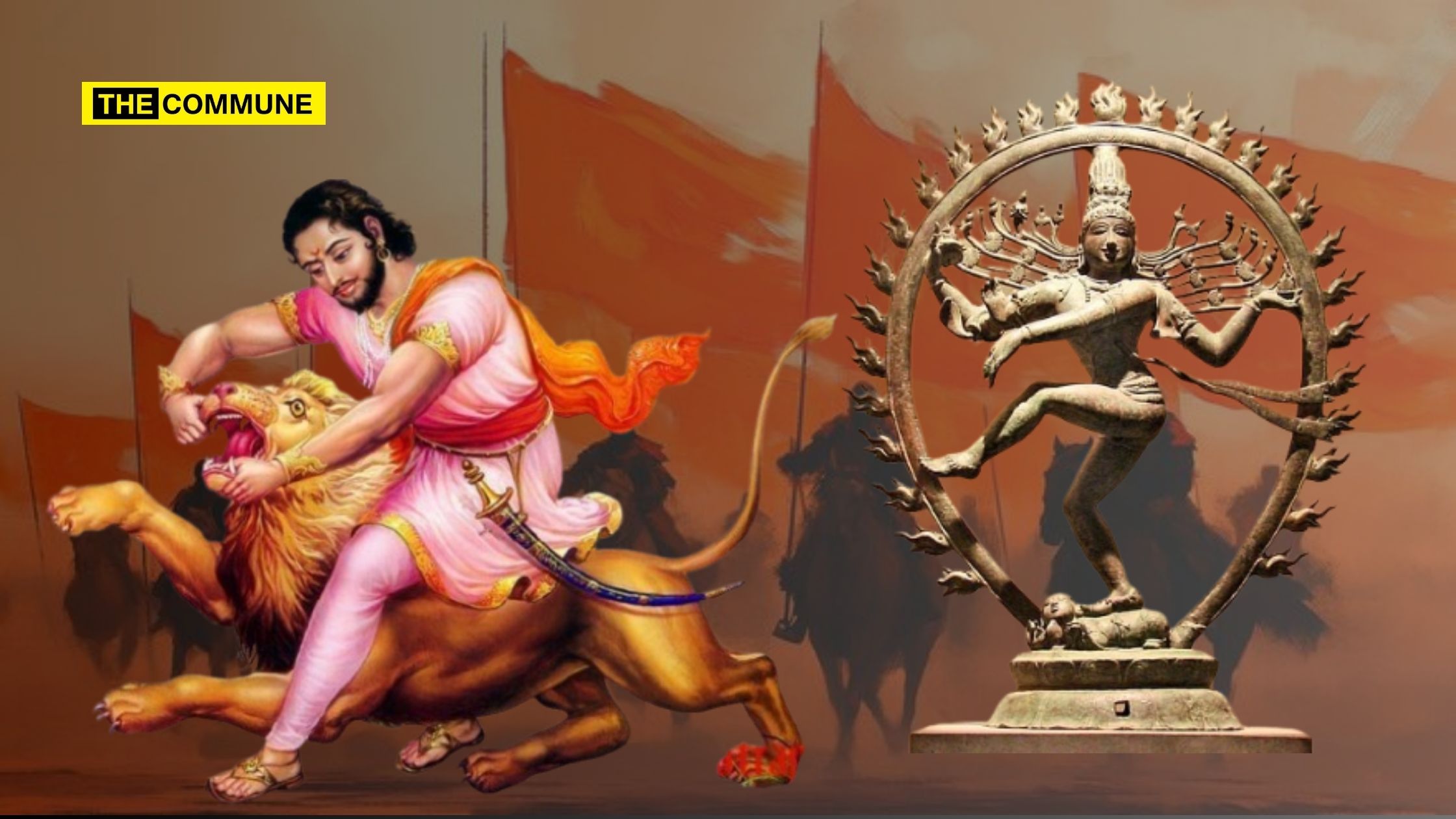
The Untold Story Of How Chhatrapati Sambhaji Maharaj Brought Nataraja Home To Chidambaram

Chhatrapati Sambhaji Maharaj played a crucial role in restoring the Nataraja idol to the Chidambaram temple after 37 years.

The recent trailer of the film Chhava, depicting the life of Chhatrapati Shivaji Maharaj‘s son Chhatrapati Sambhaji Maharaj, brought renewed attention to the Maratha warrior’s significant connections to Tamil Nadu, particularly his role in restoring the iconic Nataraja idol to the Chidambaram temple after 37 years of displacement. 

Sambhaji Maharaj, like his illustrious father, had significant connections to Tamil Nadu. His contributions to Tamilagam, particularly Tamil Shaivism, are noteworthy.

As per a copper plate inscription at Thiruvarar, Nataraja of Chidambaram left his abode on 24 December 1648 during the turbulent period of the Bijapur Sultanate’s ransacking of the temple.

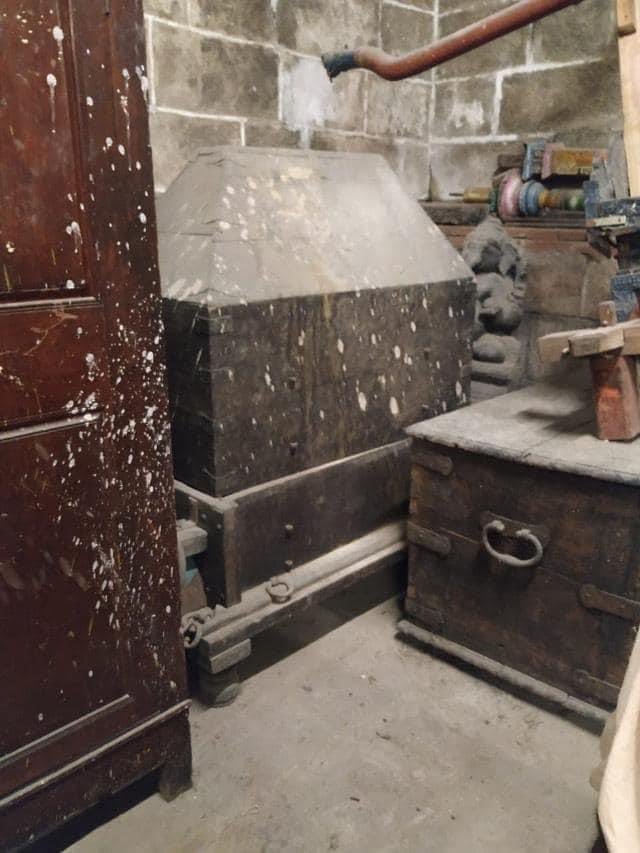
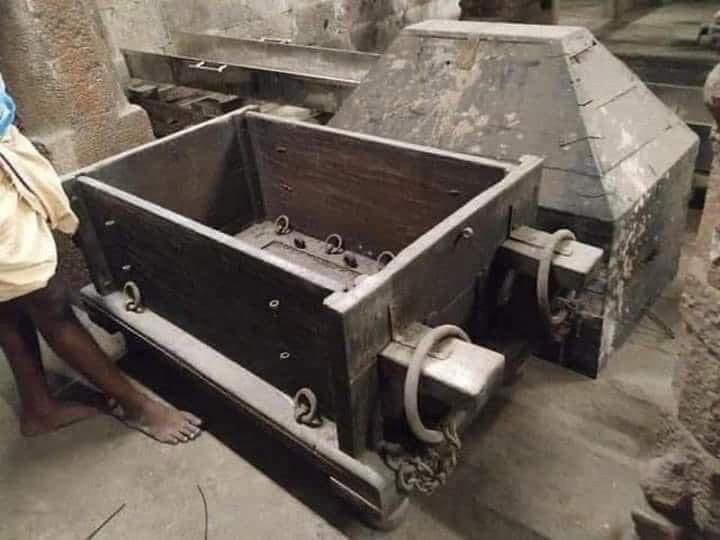
The Nataraja and Sivagami Vigrahas were transported in a wooden box to Madurai, then to Kudumiyanmalai, and eventually hidden under a tree for safekeeping.

Temple rituals and poojas were halted during this time. After 37 years, during Sambhaji Maharaj’s reign from Senji, the Dikshitars, with the help of Sambhaji’s Guru, Muthaiya Dikshitar, retrieved the Nataraja Vigraha and reinstalled it in the Ponnambalam. Sambhaji oversaw the temple’s renovation and consecration ceremonies, with the assistance of his official, Gopala Dadasi. The preserved wooden box used to transport the Vigrahas bears a copper plate inscribed with a beautiful Tamil verse recounting these events.

விடையில்வந்த செம்பொன்அம் பலத்தான் அந்த

    வெள்ளியம் பலத்திலே விரும்பிச் சென்ற

நடையில்வந்த வருடமோ சர்வ தாரி

    நாயபமார் கழியிருபத் தைந்து நாளாம்

கடையில்வந்த வருடங்கார்த் திகையீ ரேழு

  கதிர்வாரம் திரும்பவந்து கலந்த நாளாம்

இடையில்வந்த வருடமெண்ணிப் பார்க்கில் முப்பத்

   தேழுபத்து மாதநாள் இருப தாமே !

Nataraja left Chidambaram during Sarvadhari year Margazhi month and returned after thirty-seven years during the month of Karthigai, says the verse. Tamilagam should forever remember Sambhaji for this dharmic contribution.

This article is based on an X thread by TS Krishnan.

Subscribe to our channels on Telegram, WhatsApp, and Instagram and get the best stories of the day delivered to you personally.
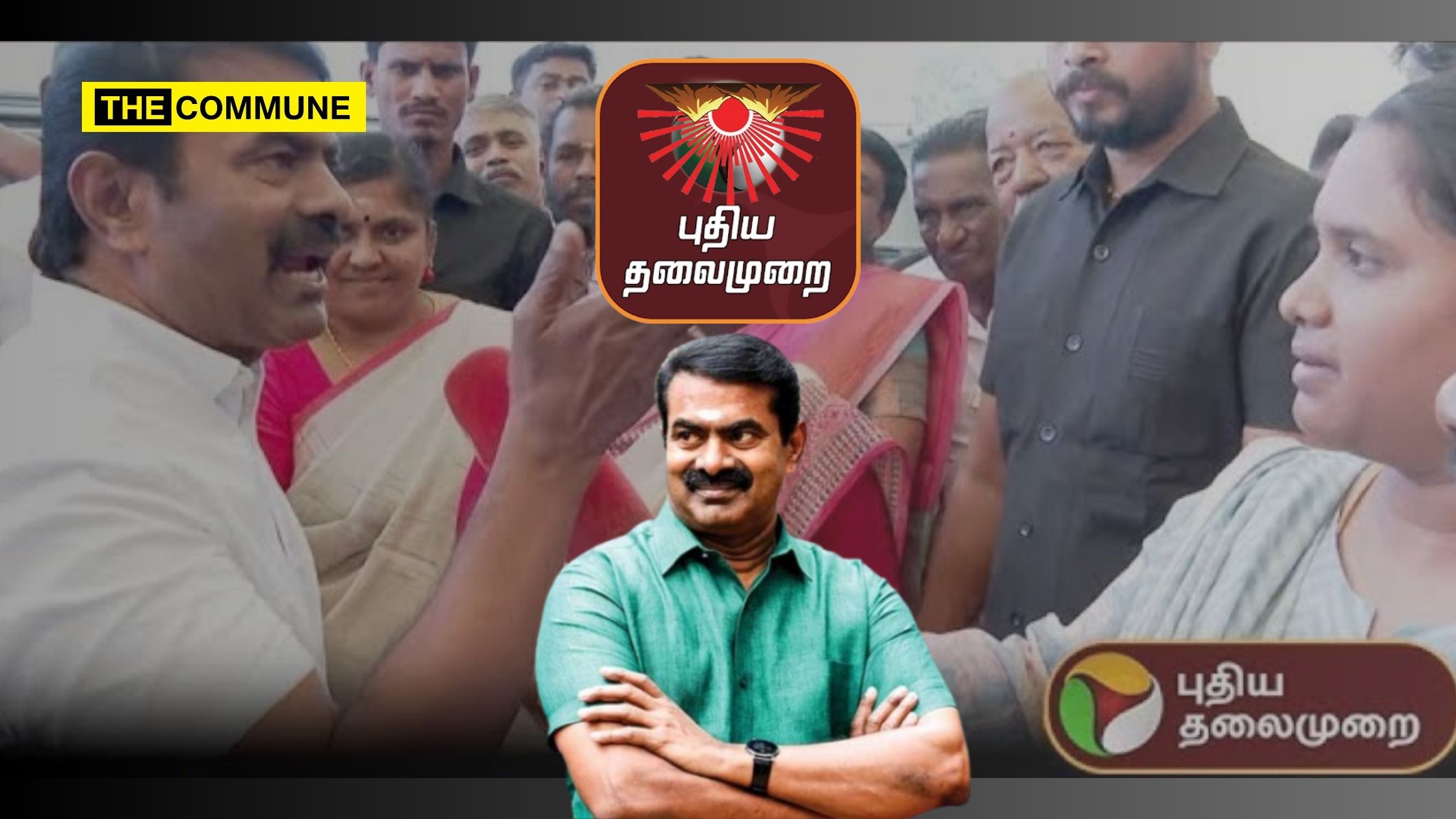
Puthiya Thalaimurai And Other Dravidianist Media Peddle Misleading Half-Truth About NTK Seeman’s Speech

NTK head Seeman has once again become a target for Dravidianist media outlets like Puthiya Thalaimurai for his speech against EVR.

Naam Tamilar Katchi (NTK) head Seeman, who has of late been taking the Dravidianists to the gutters, has once again become a target for Dravidianist media outlets like Puthiya Thalaimurai.

Seeman who arrived in Coimbatore Airport to campaign for his party’s candidate for the Erode East byelections, addressed reporters where he once again slammed Dravidian ideology fountainhead EV Ramasamy Naicker (EVR, hailed as ‘Periyar’ by his followers).

He also gave a separate interview to Puthiya Thalaimurai where the reporter asked a range of questions from attacking EVR to the recent controversy about Seeman’s alleged meeting with LTTE head Prabhakaran.

When the reporter questioned him about former NTK party cadres joining DMK in the presence of MK Stalin along with a big idol of EVR, Seeman said “These people have been expelled from the party long back. The Dravidianists have a compulsion to have Periyar as a facade and hide behind it. You keep Periyar to yourself. You bring that statue to campaign in Erode East bypoll. You talk about Periyar’s principles and ask votes. You pray to him and do sacrificial rituals. I don’t need Periyar.

Seeman also attacked those who placed EVR and Dr. Ambedkar on the same pedestal saying “Only a fool would do that. Will anyone who has read Ambedkar ever compare him with Periyar? There’s a difference between the Shudran defined by Ambedkar and Periyar. Is it written anywhere that only Tamils are Shudras? Why did he (EVR) mention Tamils separately? What’s you intention there? When he gets on stage and he says ‘Respected dignitaries on the dais, elders, mothers and Th*v*d*y* payalungale (bastards)’, what is the meaning of that? People then should’ve stoned or slippered him.

He also slammed DMK for its duplicity over attacking Brahmins while hiring Robin Sharma as a political strategist for elections.

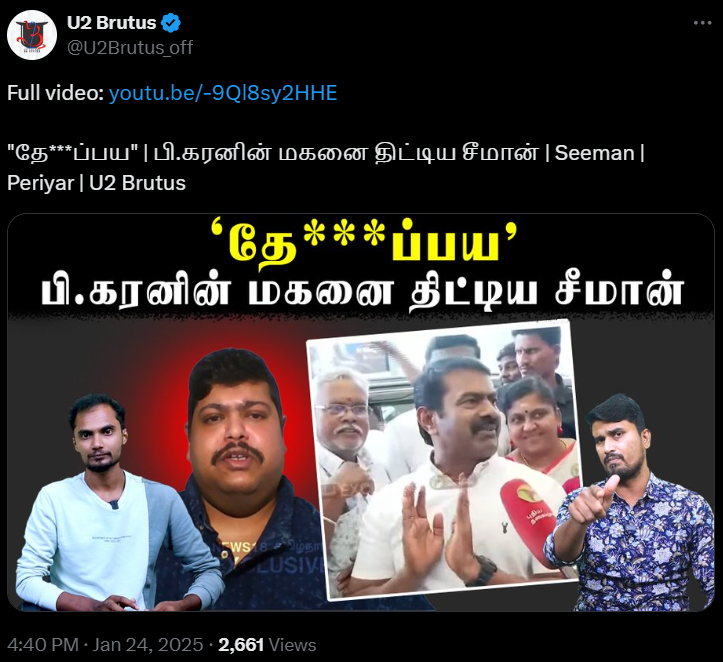
When the reporter asked Seeman about LTTE Prabhakaran’s brother’s son remarks about him, Seeman said “He’s one pikkali paya. You’re talking about him!” and stormed away.

Pikkali Paya in colloquial Tamil means idiot or fool. However, Puthiya Thalaimurai chose to peddle half-truths against Seeman by beeping that word with a thumbnail and caption that said “Seeman who spoke to the level of adding a beep sound.

Other Dravidianist media are parroting this line to peddle propaganda against NTK head Seeman. Some even went on to peddle false propaganda that Seeman used the word Th*v*d*y* Paya (bastard in Tamil), which is not the case. Seeman had only quoted what EVR had said in a public meeting while using that word.

Subscribe to our channels on Telegram, WhatsApp, and Instagram and get the best stories of the day delivered to you personally.
Former Coimbatore Corporation Councilor MDMK’s Krishnasamy Criticizes TN CM MK Stalin’s Alcohol Prohibition Ads While Govt Mints Money Through Liquor Sales

Coimbatore: Krishnasamy said CM Stalin shouldn't warn youth against alcohol addiction while his govt keeps increasing TASMAC shops.

Marumalarchi Dravida Munnetra Kazhagam (MDMK) member and former Coimbatore Corporation Councillor, Krishnasamy M, has written to Chief Minister MK Stalin urging him to halt the airing of advertisements on TV where Stalin himself advises youths to avoid addiction. Krishnasamy’s letter, sent from Coimbatore, criticizes the government’s actions since coming into power, particularly the increase in liquor shop licenses, which contradicts the message being conveyed in the advertisements.

It is worth noting that MDMK is an ally of DMK, and Krishnasamy, a social activist, has been consistently working to expose rampant corruption in the Coimbatore region. His message to the CM has gained significant attention and gone viral.

Coimbatore district has over 300 ‘TASMAC‘ liquor shops, which operate daily from noon to 10 pm, with bars located nearby. Recently, new licenses for FL2 and FL3 bars were issued under the name of ‘Manamagizh Mandrangal’—clubs that operate from 11 AM to 11 PM, offering not only liquor but also live performances. These establishments have begun to attract large numbers of young men and women.

In contrast, a video of Chief Minister Stalin promoting awareness about drug addiction is being aired on TV, which Krishnasamy argued creates dissatisfaction among the public. In his letter, he expressed his concern, pointing out the contradiction in the government’s stance. He urged the Chief Minister to stop airing the alcohol prohibition campaign on TV, stating that the government’s opening of more liquor outlets makes the public skeptical of the anti-addiction messages.

In his letter, Krishnasamy wrote, “I am writing this letter as a Dravidian movement activist. Since you came to power, a large number of FL2 and FL3 bars have been opened across the state. Following this, the public is mocking you for campaigning against alcohol consumption on TV. Therefore, I urge you to stop airing such campaigns on TV.”

(With inputs from Dinamalar)

Subscribe to our channels on Telegram, WhatsApp, and Instagram and get the best stories of the day delivered to you personally.
‘This Is A Hindu Issue, Not Just Lord Murugan’s’, Kovai Kamatchipuri Adheenam Urges Devotees To Fight For Thirupparankundram Hill’s Sanctity

This Is A Hindu Issue, Not Just Lord Murugan’s, Kovai Kamatchipuri Adheenam Urges Devotees To Fight For Thirupparankundram Hill’s Sanctity

Kovai Kamatchipuri Adheenam Panchalingeswarar has strongly condemned the recent issues surrounding Thirupparankundram, emphasizing that it is not a problem for Lord Murugan but for the Hindu community as a whole.

Speaking on the matter, he highlighted the significance of Lord Muruga, calling Him the deity of Kali Yuga and recalling His revered title of Swaminatha Swami, given for teaching even His father. Lord Muruga, he noted, is unique to Tamil culture, with His temple present wherever there is a hill. Thirupparankundram, the foremost of His six sacred abodes, holds a special place in the hearts of devotees. Hindu scriptures affirm that Lord Muruga incarnates whenever evil forces arise to eradicate them, and the current activities at Thirupparankundram, he said, are deeply distressing.

Adheenam Panchalingeswarar emphasized that all gods teach only love and kindness and that eating prasadam and annadanam inside the temple premises is alright. He strongly criticized the desecration of the sacred mountain, stating that consuming biryani at such a holy site is unacceptable. He also added that it is not enough to go on Padayatra with a lot of vibhuti on the forehead and encouraged devotees to face challenges to their faith with the same resolve they demonstrate during religious pilgrimages. He urged the community to recognize this as a collective issue for Hindus, rather than merely a challenge for Lord Muruga.

He called for active participation in the Hindu Munnani protest to denounce this sacrilegious act, urging Muruga devotees from across Tamil Nadu to unite.It is disheartening that we must protest at the sacred hill to safeguard it, he remarked.

Finally, he expressed hope that such incidents would not recur in Tamil Nadu, calling for prayers to the Mother Goddess to protect the sanctity of the state’s sacred sites.

Background

The sacred Hindu site of Thirupparankundram Hills is facing growing tension, with controversial actions by a Muslim politician fueling divisive rhetoric. Indian Union Muslim League member and Ramanathapuram MP Navas Kani, who also serves as the chairman of the Tamil Nadu Waqf Board, has claimed that the dargah at the hilltop is Waqf property. This statement has sent shockwaves through the region and intensified existing tensions.

This development is part of a series of incidents that have strained relations between Hindus and Muslims, who had previously lived in harmony. Some Islamists groups have been attempting to assert their rights to conduct animal sacrifices at the hilltop, furthering their claims that the entire Thirupparankundram Hills should be recognized as Sikkandar Hills.

The situation escalated on 27 December 2024, when Madurai police intervened to detain a group of Muslims family attempting to bring goats and roosters to the hilltop dargah for ritual sacrifice. Syed Abu Dahir, a 53-year-old from Malaiyadipatti in Rajapalayam, arrived with his family and animals for the ceremony but was stopped by authorities at the base of the hill. Police informed them that bringing livestock up the hill was prohibited, which led to a protest by over 20 local Muslims at the foot of the hill in solidarity with the family.

The following week, on 5 January 2025, another large group of Muslim protesters gathered at Thirupparankundram Hills, demanding permission to offer prayers at the mosque located at the top. When the police denied their request, tensions escalated, leading to a brief scuffle and the detention of the protesters.

On 17 January 2025, during the Santhanakoodu Festival at a nearby dargah, social media posts began circulating about an upcoming “Equality Feast” (Samabanthi Bhojan) on 18 January at the hilltop dargah, where goats and roosters were allegedly to be sacrificed. Fearing communal unrest, police set up barricades and conducted searches to prevent the transportation of livestock to the hill. When the dargah Jamath was informed that animal sacrifices were not allowed, protests broke out. Members of the Jamath, along with other Muslim protesters, clashed with the police, causing further disruptions.

The situation was exacerbated by the involvement of the Social Democratic Party of India (SDPI), an ally of AIADMK and a group linked to the banned terror outfit PFI. These elements are believed to be behind the attempts to conduct animal sacrifices at the sacred Thirupparankundram Hill.

Furthering tensions, on 21 January 2025, DMK Manapparai MLA Abdul Samad was accused of conducting an illegal survey around the temple with intentions to gain control of the hill. On the same day, IUML member and Ramanathapuram MP Navas Kani was seen giving an interview near the Thirupparankundram Hills. When asked whether the dargah at the hilltop was under the Waqf Board, Kani confirmed, “Yes, it is under the control of the Tamil Nadu Waqf Board,” further heightening tensions in the area.

(With inputs from Dinamalar)

Subscribe to our channels on Telegram, WhatsApp, and Instagram and get the best stories of the day delivered to you personally.
Devotees Fume Over Disrespectful Viral Wedding Photoshoot Video At Kallazhagar Temple Featuring Alcohol-Themed Movie Dialogue

Devotees Fume Over Disrespectful Viral Wedding Photoshoot Video At Kallazhagar Temple Featuring Alcohol-Themed Movie Dialogue

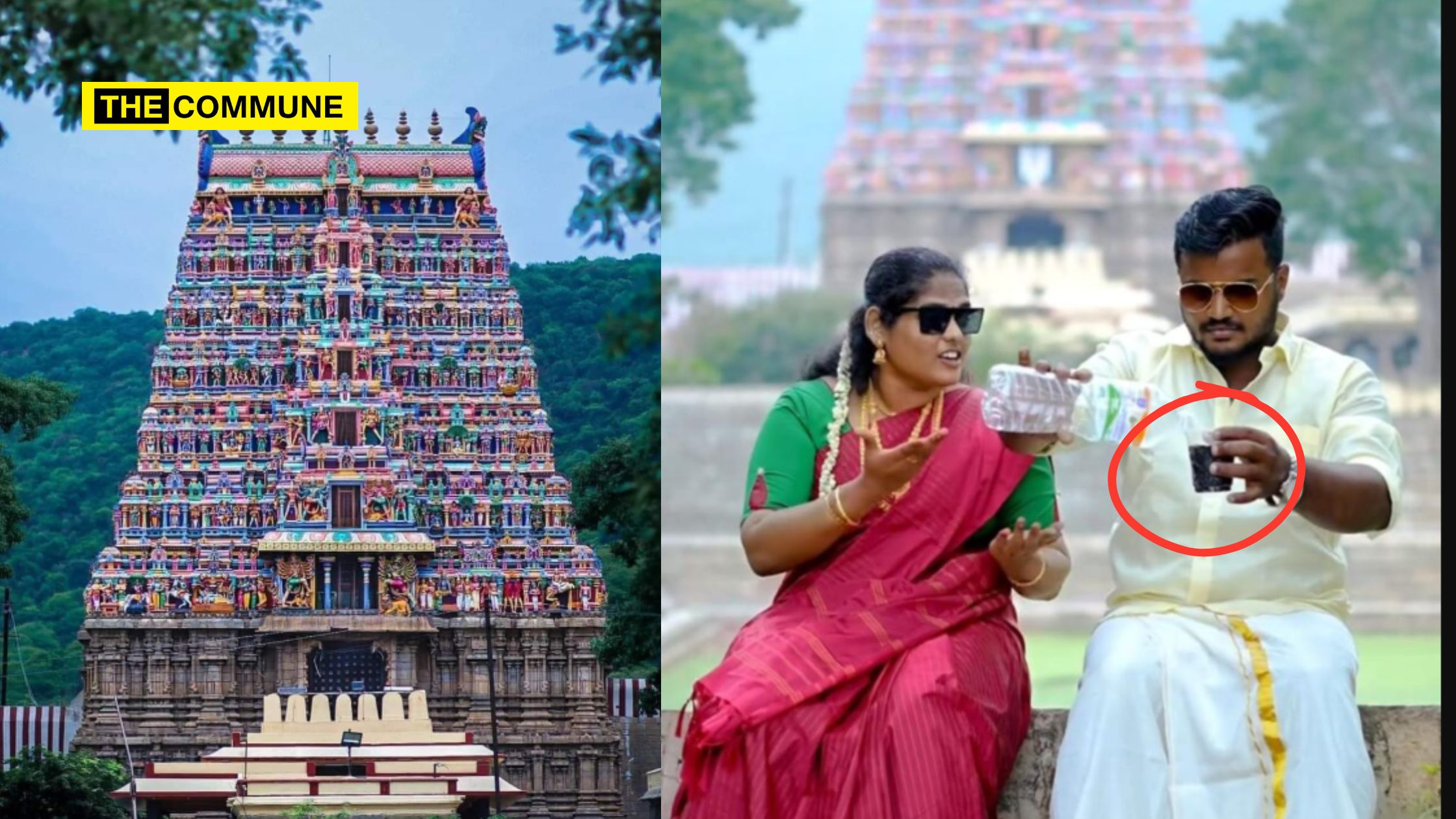
Devotees in Madurai are outraged by recent incidents of individuals using spiritual sites for social media content, particularly social media reels, disrespecting the sanctity of sacred places. The latest controversy stems from a wedding photoshoot video, which showed a newlywed couple sitting in front of the Kallazhagar Sundaraja Perumal Temple, also known as Alagar Kovil, and engaging in inappropriate behavior such as pretending to consume alcohol. The video has sparked widespread criticism and condemnation for its disrespect towards the temple and its devotees.

This trend of creating social media content at religious sites is becoming increasingly common, and the Kallazhagar Temple has not been spared. Some photo studios, under the guise of offering photoshoots, are making reels that tarnish the sacredness of these spiritual locations. In particular, a video featuring a couple holding alcohol in one hand and water in the other, filmed near the Rajagopuram of the Kallazhagar Perumal Temple, has gone viral. This has left many devotees upset and angry, with many questioning why such inappropriate content was filmed at a holy site.

The public is deeply upset, especially since scenes of alcohol consumption are seen as highly disrespectful to those who hold the temple in reverence. Devotees are calling on temple authorities to take swift action to prevent such incidents in the future. The general expectation is that the temple administration will intervene and ensure that the sanctity of the temple is upheld, stopping such disruptive photo shoots and reels from being made at this spiritual site.

Similarly, in February 2024, a viral dance video featuring two performers at the Mylapore Kapaleeshwarar Temple in Chennai ignited a wave of controversy, drawing significant backlash from spiritual followers and Hindu organizations. The video, which showcased choreographer and dancer Vignesh K Balan along with another dancer performing to the song “Mylapore Mayile” from the movie Aai, quickly spread across social media, attracting criticism. Many expressed outrage over the inappropriate setting for such a performance, and strong disapproval was also directed at the DMK Minister for Hindu Religious and Charitable Endowments, PK Sekar Babu, for his handling of the incident.

In response to the widespread condemnation and calls for action, the video was eventually taken down, and the dancers issued an apology for their actions.

Subscribe to our channels on Telegram, WhatsApp, and Instagram and get the best stories of the day delivered to you personally.