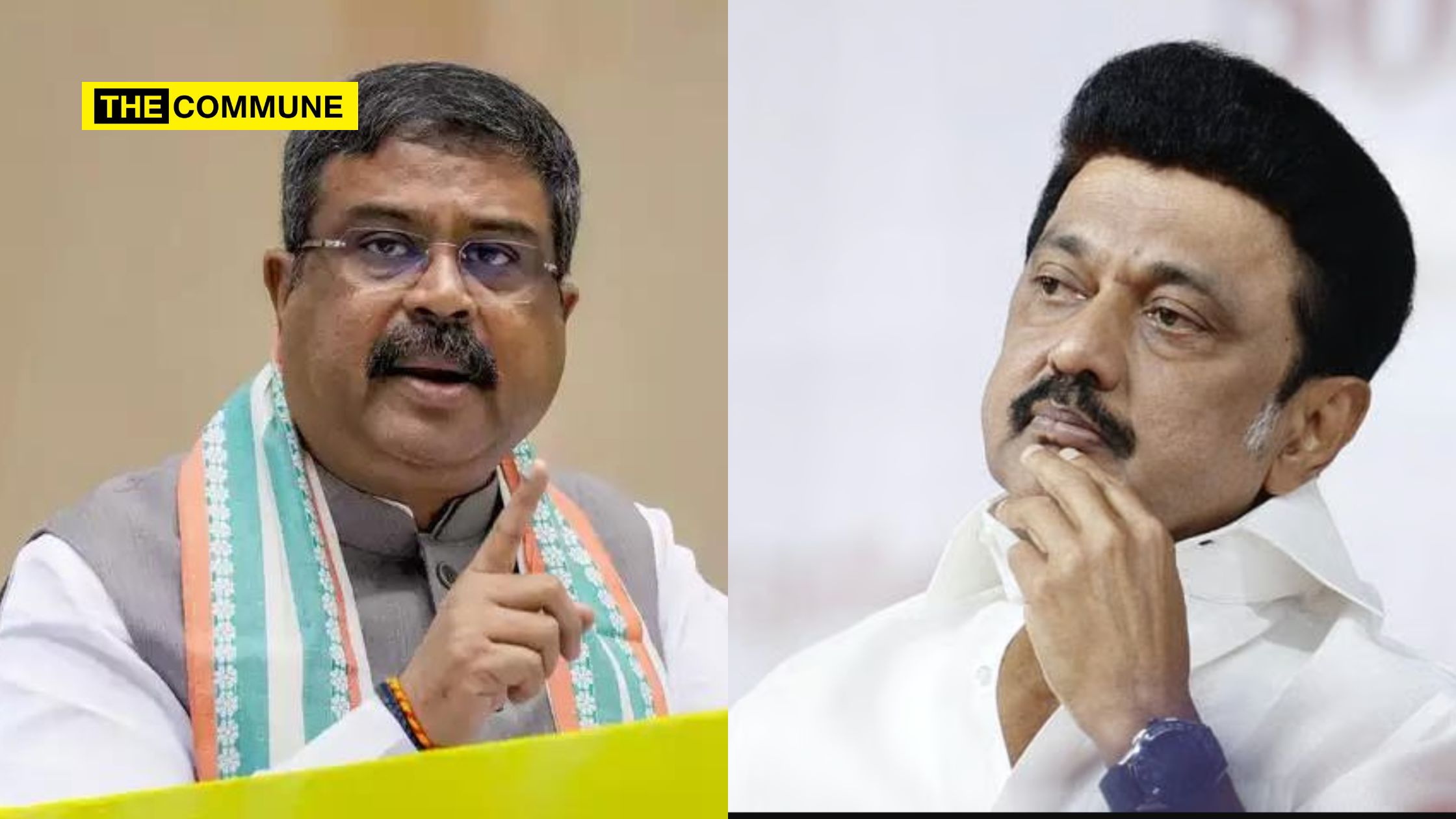
Union Education Minister Dharmendra Pradhan has hit back at Tamil Nadu Chief Minister MK Stalin amidst the controversy over the three-language formula in the National Education Policy (NEP), accusing Stalin of creating a “false narrative” of Hindi imposition for political gain. Pradhan argued that Tamil Nadu had initially agreed to implement the NEP but reversed its stance for political reasons.
On 21 February 2025, in an interview with NDTV Pradhan stated that Stalin and the DMK were depriving students of educational progress for their own political agendas.
The three-language policy, a key component of the NEP 2020, mandates that students learn at least three languages. The government has argued that previous education policies failed to adequately promote Indian languages, which led to an over-reliance on foreign languages, and that the NEP aims to elevate languages like Tamil to their rightful place in education.
Stalin had previously written to Prime Minister Narendra Modi, claiming that Pradhan had threatened to withhold funds for the Samagra Shiksha Abhiyan, a centrally sponsored initiative, unless Tamil Nadu adopted the NEP.
Pradhan responded, emphasizing that the three-language formula has been part of India’s educational framework since the mid-1960s, with nearly all states following it. While acknowledging Tamil Nadu’s preference for a two-language formula, Pradhan insisted that the NEP, introduced by Prime Minister Narendra Modi’s government, focuses on the importance of the three-language policy. He refuted claims of Hindi imposition, explaining that the NEP does not mandate the imposition of any language in any specific state.
Pradhan further questioned how students in Tamil Nadu’s border regions, who might need to learn languages like Kannada, Telugu, or Marathi for job prospects, would benefit under the current system. He stressed that in today’s globalized world, learning multiple languages is crucial, and pointed out that many Tamil people are moving across India, making a broader linguistic education valuable. He also noted that Prime Minister Modi has consistently recognized Tamil as an ancient and significant language.
Regarding Stalin’s claims that over ₹2,000 crore in funding for the Samagra Shiksha Abhiyan had been withheld due to the NEP, Pradhan called such language “derogatory” and politically motivated. He criticized Stalin and the DMK for stoking fear about Hindi imposition, asserting that such rhetoric is meant to create a political narrative rather than address the true issues at hand.
Pradhan also pointed out that the PM-Poshan (mid-day meal) scheme and other important educational initiatives had not been stopped in Tamil Nadu, accusing the state government of denying students an additional Rs 2,000 crore under the PM SHRI scheme due to their stance on the NEP.
Pradhan explained that the NEP recommends teaching in the mother tongue until the eighth grade, and that Tamil could continue to be the primary medium of instruction, especially under the PM SHRI program, which includes high-tech features like digital blackboards and Atal Tinkering Labs. He questioned why the Tamil Nadu government was opposed to these modern educational initiatives, which could help students succeed in a technology-driven world.
The minister reiterated that Hindi is not being forced in any state and emphasized the flexibility of the three-language formula across India. He cited Odisha as an example, where students in border regions are taught different languages based on local needs, such as Telugu in areas near Andhra Pradesh, Hindi in the north, and Bengali in the east.
Pradhan also criticized the Tamil Nadu government’s opposition to the NEP, claiming that they had initially agreed to implement it but had backed out due to political motivations. He suggested that the reversal was an attempt to create an anti-Delhi sentiment, which ultimately harms the students and society of Tamil Nadu.
Accusing the DMK of playing a double game, Pradhan stated, “I don’t want to disclose certain classified information, but at one point, they (Tamil Nadu government) were ready to implement NEP. They had agreed. An MoU (Memorandum of Understanding) had been drafted. But they backed out, why? Because they see politics in that, they think they can create an anti-Delhi narrative. It may suit them, but it is hampering the students and society of Tamil Nadu. This fear psychosis of Hindi imposition is uncalled for, unfortunate and politically motivated.”
Pradhan also highlighted that several non-BJP-led states have implemented the policy under similar conditions. He remarked, “Why is a particular government taking such a stand? Because they want to live in a primitive time.”
Huge revelation by Minister of Education Shri @dpradhanbjp avl – @mkstalin govt agreed to implement #NEP and MOU were exchanged between central govt and TN govt. But later Stalin backed out as they feel anti-Delhi politics will help DMK to win elections. Tamilnadu people must… pic.twitter.com/0jq0uelgCb
Concluding, Pradhan emphasized that the Modi government views these issues from a national perspective, not a political one, and remains committed to promoting the Tamil language and culture beyond party interests.
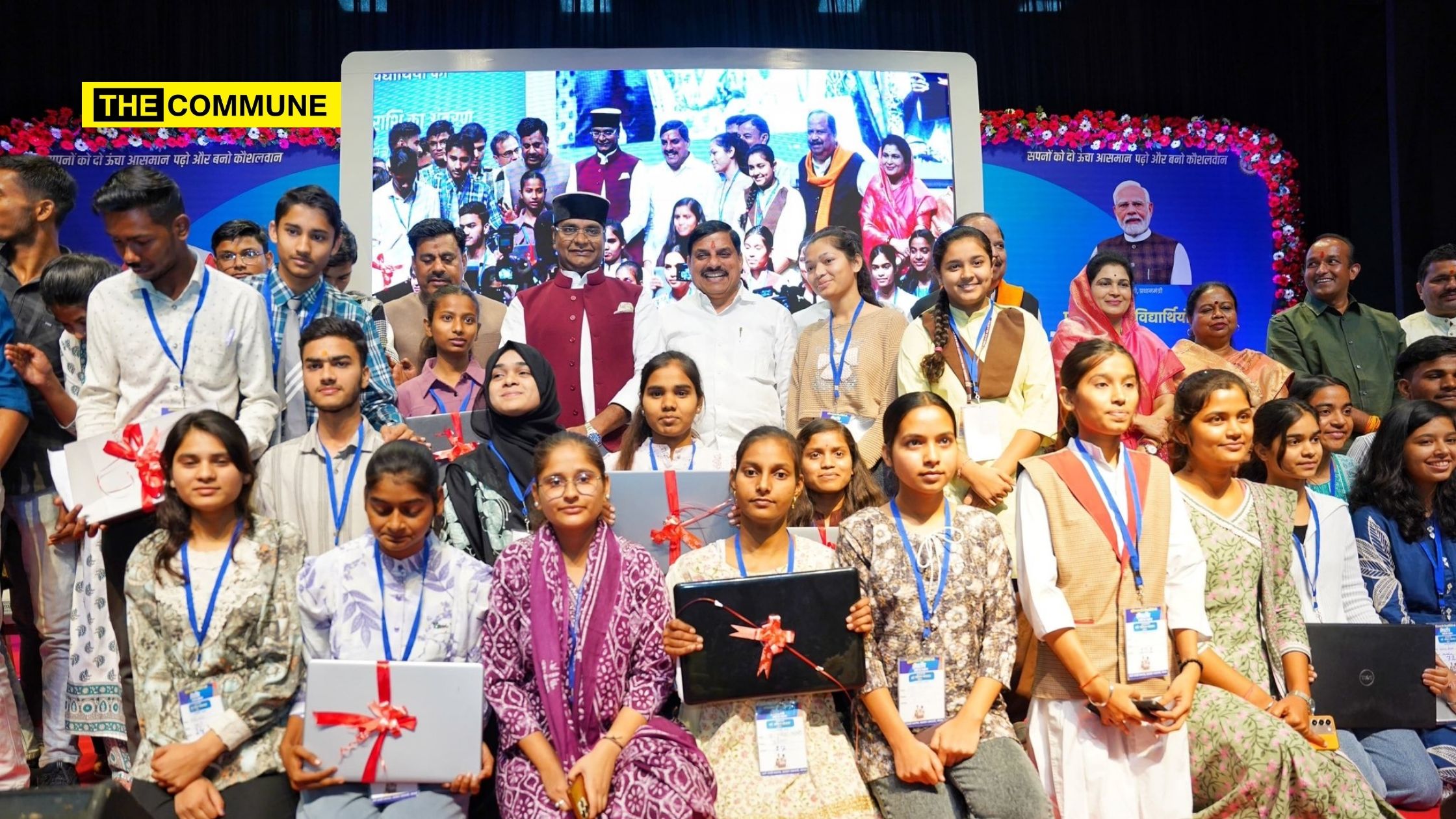
Madhya Pradesh Chief Minister Mohan Yadav on Friday gave laptops to the meritorious students of the government schools in the state who secured 75 per cent or above marks in Class 12 exams in the academic year 2023-24. Chief Minister Yadav handed over laptops to a few students during an event in Bhopal.
“The state government is determined to ensure that every dream of progress of talented sons and daughters of Madhya Pradesh comes true,” the CM said.
“A total of Rs 224 crore will be transferred into the bank accounts of 89,710 talented students who have passed the Class 12 examination of Madhya Pradesh Board of Secondary Education in the year 2023-24 with 75 per cent or more marks,” he said.
The Chief Minister has also stated that the state government will provide all facilities to encourage students to perform better in their academic careers and to make them skillful. The state government is determined to ensure that the dreams of progress of every talented son and daughter of Madhya Pradesh come true, the Chief Minister said.
Earlier, Chief Minister Yadav said the government has pledged to create job opportunities for youths and make Madhya Pradesh a progressive state.
“The talented students who pass the 12th examination and secure a place in the merit list of government schools will be given an amount of Rs 25,000 for a laptop on February 21, 2025. Best wishes to all the talented kids!” the CM posted on social media platform X. However, Central Board of Secondary Education (CBSE) students will not get the amount.
In July 2023, the scheme was introduced by then Madhya Pradesh Chief Minister Shivraj Singh Chouhan, who now heads the Union Agriculture and Rural Development Ministry.
–IANS
Subscribe to our channels on Telegram, WhatsApp, and Instagram and get the best stories of the day delivered to you personally.
For the past three days, the DMK and its ally parties, along with Dravidianist media, have been relentlessly pushing the narrative that the Central Government is imposing “Hindi” on the state. However, the Tamil Nadu BJP chief attempted to clarify that the Central Government’s intention was to introduce a third language, not to force Hindi. Despite this, the same narrative was being repeated and amplified by various stakeholders of the Dravidianist ecosystem. Annamalai, in turn, began exposing the hypocrisy of the DMK and its allies, pointing out that many of their schools already teach Hindi, even as they opposed the idea of a third language. This revelation shifted the conversation, and people at the grassroots level began to realize that the 3 language policy was being implemented in private schools run by Dravidianist politics while kids from government school students have been deprived of the opportunity.
Once this hypocrisy was exposed, the DMK fell silent, with their leaders being questioned about their contradictions during press conferences.
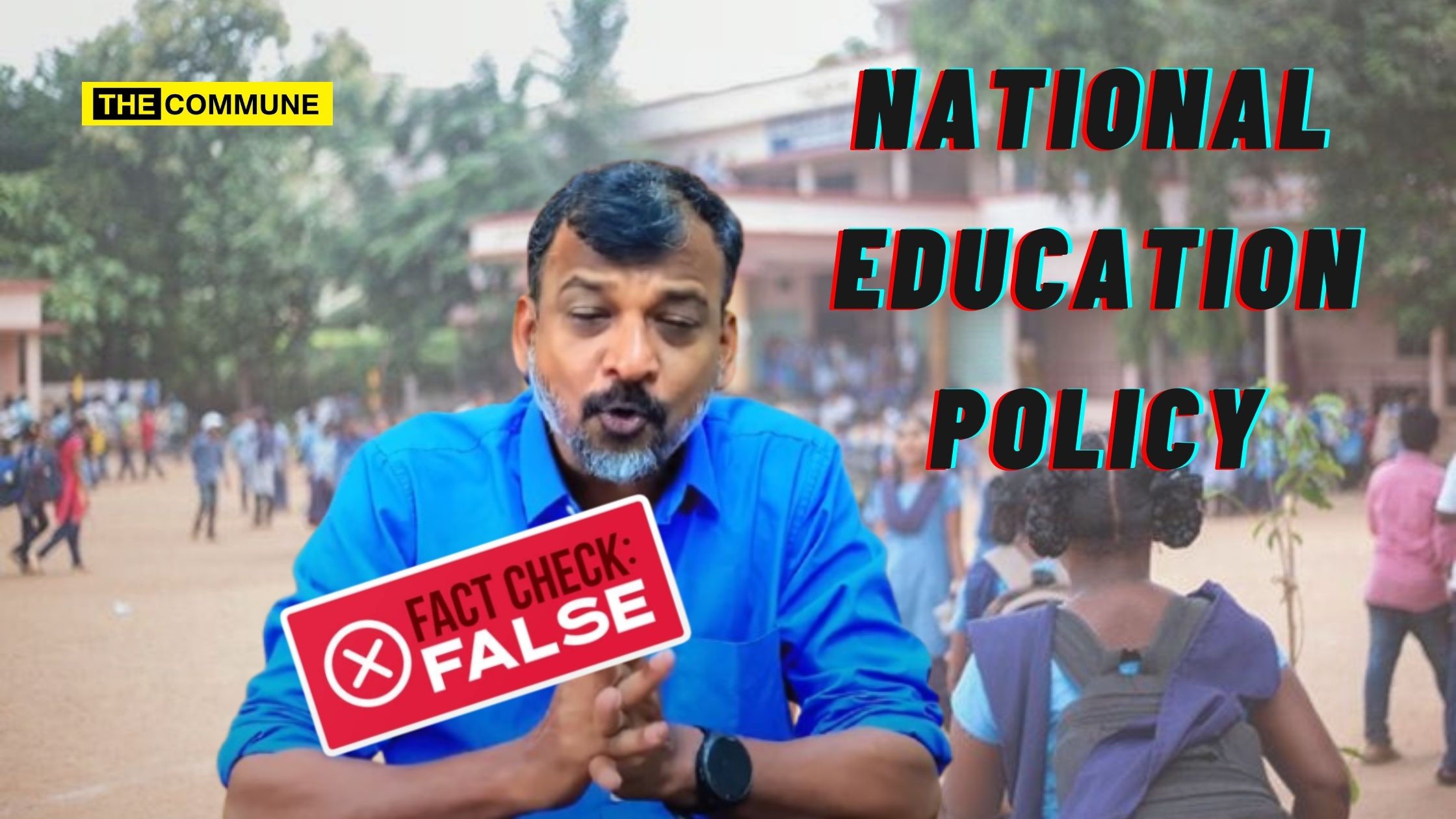
It is in this context that former IAS officer Israel Jebasingh, who also runs an IAS academy, has put a video which seems like an attempt to buttress the ruling DMK with fabricated points and half-truths to defend their stance. Instead of directly quoting or discussing the NEP 2020, he avoided the actual policy altogether, knowing he would be exposed. Instead, he resorted to spinning baseless stories in a desperate attempt to reinforce the DMK’s narrative in a brief 20-minute video.
In his entire video, Israel Jebasingh just sees only the “morning breakfast scheme,” as a positive aspect in the entire NEP 2020, which too he attributes to the DMK government. However, this narrative has already been debunked, as the DMK simply implemented what the NEP suggests.
Misinformation Peddled By Israel Jebasingh About Language Policy In Other Countries
Regarding the three-language policy, Israel Jebasingh, a former IAS officer, simply opposes it. He argues that countries like China, the USA, Germany, and Israel do not have such a policy, and therefore, India does not need one either was his first argument.
And about Germany or Israel following only 2 language policy, Mr. Israel Jebasingh is wrong. He has confidently peddled half-truths thinking that his viewers and students would take it as gospel truth. However, here are some facts about the language policy in some of the countries he mentions.
In Germany, German is the primary language of instruction in most schools. English or French is typically introduced as a compulsory subject in primary or early secondary education. In Gymnasium (academic secondary schools), students are generally required to learn a second foreign language, which can be French, Spanish, Latin, or another language. This is usually mandatory until at least Grade 10. So, Germany in effect follows a 3 language policy.
Same is the case with France where students have the opportunity to learn three languages – French and two other foreign languages.
Israel’s language policy emphasizes multilingual education, with Hebrew as the primary language in Jewish schools and Arabic in Arab and Druze schools, while some bilingual schools teach both. English is mandatory from Grade 3 or 4, becoming a core subject in middle and high school, with standardized exams like the Bagrut. Many schools also offer a second foreign language in high school, such as French, Russian, Spanish, German, or Yiddish, while some Jewish schools make Arabic compulsory to promote cross-cultural communication. This structured approach ensures linguistic diversity, global competitiveness, and national integration, similar to India’s proposed Three-Language Policy under NEP 2020.
Comparing Apples And Oranges
His argument reaches a new level of absurdity when he claims that the preface of the NEP document states its goal is to transform India into a $10 trillion economy. To support this, Jebasingh cleverly points to the USA and China, highlighting that they have only two official languages and still became economic powerhouses.
His argument reaches new heights of absurdity when he quotes the preamble of the NEP document, claiming its goal is to make India a $10 trillion economy. Jebasingh then shamelessly concludes that since the US and China only have two official languages, and yet they are economic powers, India should follow the same model.
If that is the case, China or for that matter USA does not have a multi-party democracy offering more political stability for development. Is it okay for Jebasingh if India replicates this model under the Modi government to achieve faster development like China or USA?
This kind of reasoning about economics is not only shocking, but it’s even more surprising coming from a former IAS officer. He seems to be treating the NEP document as nothing more than another language policy, speaking as if Tamil Nadu has already achieved everything there is to accomplish. How can that be true? He is either overlooking the real objectives of the policy or looking at the issue through a narrow, language-specific lens. The real objective of the NEP is not just introducing a third language; it also focuses on vocational education, skill development, self-sufficiency and an education system that is in tune with India’s needs for the future.
Yet, Jebasingh’s rhetoric appears to distort these true objectives, pushing a narrative that favors the DMK. This kind of thinking perpetuates a parochial mindset, which the NEP is specifically designed to eliminate. The goal of the policy is to empower future generations to make decisions based on what is best for India, rather than waiting for external forces, like China or the USA, to dictate changes. Unfortunately, individuals like Jebasingh, who cling to outdated views, spread misleading ideas that undermine this progress.
DMK Propagandist Mode
In the entire video, Israel Jebasingh was simply making misleading claims. For instance, he questioned his audience, asking, “Did Tamil Nadu lose anything by not implementing Hindi?” His answer will be perplexing. Jebasingh narrated that Tony Blair Foundation, a UK-based institution, recommended Africa follow Tamil Nadu’s model to eradicate poverty. This claim is not just illogical but outright laughable. What does Hindi or Tamil Nadu’s language policy have to do with Africa’s poverty alleviation strategies?
Upon reviewing available information, there is no evidence to support the claim that the Tony Blair Foundation has recommended African nations adopt Tamil Nadu’s model for poverty eradication. The Tony Blair Institute for Global Change has analyzed Tamil Nadu’s inclusive growth, particularly the role of political leadership and governance in the state’s development. This analysis does not constitute a recommendation for African countries to emulate Tamil Nadu’s approach.
However, this analysis does not constitute a recommendation for African countries to emulate Tamil Nadu’s approach. Therefore, the assertion that the Tony Blair Foundation has advised African nations to follow Tamil Nadu’s model lacks factual basis.
By making such claims, he deliberately shifts the focus away from the actual debate—whether Tamil Nadu benefits or loses by rejecting Hindi—and instead injects baseless narratives to reinforce Dravidianist propaganda. If Tamil Nadu’s supposed “anti-Hindi success story” were truly a model for the world, why do many of the state’s top politicians and their families enroll their children in CBSE schools that teach Hindi? This contradiction, much like Jebasingh’s statement, exposes the sheer hypocrisy behind such arguments.
To further support his argument, he cited the Human Development Index (HDI) and claimed Tamil Nadu and Kerala were top-ranking states, which is false.
According to 2022 data, Kerala has an HDI of 0.758 and ranks high, while Tamil Nadu is at 0.670, placing 14th, behind Maharashtra. Uttar Pradesh ranks 35th with an HDI of 0.596. If Jebasingh wanted to make a fair comparison, he should have compared Maharashtra to Tamil Nadu, as they have similar populations. Instead, he chose to compare Kerala, with a population of 34.6 million, to Tamil Nadu (72.1 million) and Uttar Pradesh (241 million). It’s clear he understands this, but his bias is evident as he pushes an agenda in favor of the DMK.
Former IAS Cadre Turns DMK Cadre
At one point, Jebasingh even shifted gears and openly aligned himself with the DMK, claiming the only purpose of the new education policy was to promote Hindi. He mentioned seeing an RTI online (posted by the DMK IT wing), which claimed there were no Tamil teachers in Kendriya Vidyalayas. This was nothing more than parroting the statements made by DMK MLAs in the media. In reality, there are advertisements for Tamil teacher recruitment in Kendriya Vidyalaya even as recent as February 2024, and many teachers have been working in these schools, which Jebasingh conveniently ignored to push his false narrative. Many students in Tamil Nadu who have studied in Kendriya Vidyalaya have vouched that students have the option to choose a third language – Tamil or German. So, this is yet another false propaganda of the DMK parroted by Jebasingh.
Israel Jebasingh also thinks that bringing Telugu, Malayalam, Kannada teachers to Tamil Nadu to teach the respective language is totally unnecessary. The fact that such statements are coming from a former IAS officer who should be promoting national integration is shocking.
He then goes on to say that one can learn functional sentences in any language they want in a span of 10-15 days. But not many will have access to linguistic experts or technology to learn languages in a jiffy. Why should a poor child of a government school be deprived of the opportunity to read and write Hindi or any other Indian language for free? How will someone who doesn’t know how to read and write Hindi figure out what’s the route written in a bus in Pune? It is a given that a Tamil candidate’s resume will standout even if he knows any other Indian language apart from Tamil and English.
Israel Jebasingh claims that Dr. APJ Abdul Kalam never studied Hindi but went on to become President of India. But what he didn’t say was APJ Abdul Kalam was fluent in several languages, including Tamil, English, Hindi, Urdu and French.
He then goes on to cite the Constitution of India saying that Hindi is not a national language but another official language like English. But the same Constitution under Article 351 says that it shall be the duty of the Union to promote the spread of the Hindi language so that it may serve as a medium of expression between different people of composite culture.
Rather than informing his audience about the true aims of the new education policy, Jebasingh spent his time spreading lies, weaving together illogical stories, and misleading his audience about the three-language policy.
The DMK and its Dravidianist supporters, like Israel Jebasingh, often bring up the 1963 anti-Hindi agitation, presenting it as a haunting chapter of history. They warn that if such a movement were to rise again, it would be a looming threat. However, what they fail to grasp is the context of that time. The 1963 movement was set against the backdrop of India’s recent independence, a time when the public’s anger towards British rule was still fresh and protest was their part of socio-political mileau. The DMK capitalized on this sentiment to oppose the Congress government, and the movement gained momentum rapidly.
He then resorts to fearmongering and incitement, claiming that if the Centre enforces the Three-Language Policy, it will trigger a protest a thousand times more intense than the Jallikattu agitation.
Inciting Separatism?
Jebasingh goes on to mention that after independence, Pakistan followed a 3 Language policy – mother tongue, which is Bengali in East Pakistan, Urdu for official communication between West & East Pakistan and English for global exposure. This he says paved the way for the creation of Bangladesh.
Is Jebasingh saying that implementing NEP would pave the way for a creation of separate Tamil Nadu?
Where Do Israel Jebasingh’s Kids Study?
To sit comfortably in air-conditioned rooms and claim that “people will not allow trilingualism” is not just chauvinistic but also highly arrogant. Jebasingh whose academy charges a minimum of ₹1.5 lakh per student can afford to put his kids in world-class CBSE or international schools where 3 language policy is implemented. Poor parents who have no choice but to put their kids in government schools do not have that privilege. They too deserve to receive an education on par with Jebasingh’s kids.
It is to be noted that all the south Indian states of Kerala, Andhra Pradesh, Telangana and Karnataka along with states like West Bengal, Odisha, Maharashtra, that takes pride in their language as much as Tamil Nadu does, follow the three language policy. Even in Tamil Nadu, most of the private CBSE and matriculation schools offer three languages till 8th grade. However, the political parties in Tamil Nadu – the DMK, AIADMK, VCK and others whip up unwarranted claims of Hindi/Sanskrit imposition.
While the NEP 2020 offers all children in public and private schools the opportunity to learn three languages of their choice, what the political parties and the Tamil Nadu government are doing is disadvantage government school children while the private school children continue to benefit from learning three languages. In essence they ‘impose’ the 2 language policy on underprivileged government school children saying “We will let you study only 2 languages in government schools. If you want to study a third language, you should join a private school”
Vallavaraayan is a political writer.
Subscribe to our channels on Telegram, WhatsApp, and Instagram and get the best stories of the day delivered to you personally.
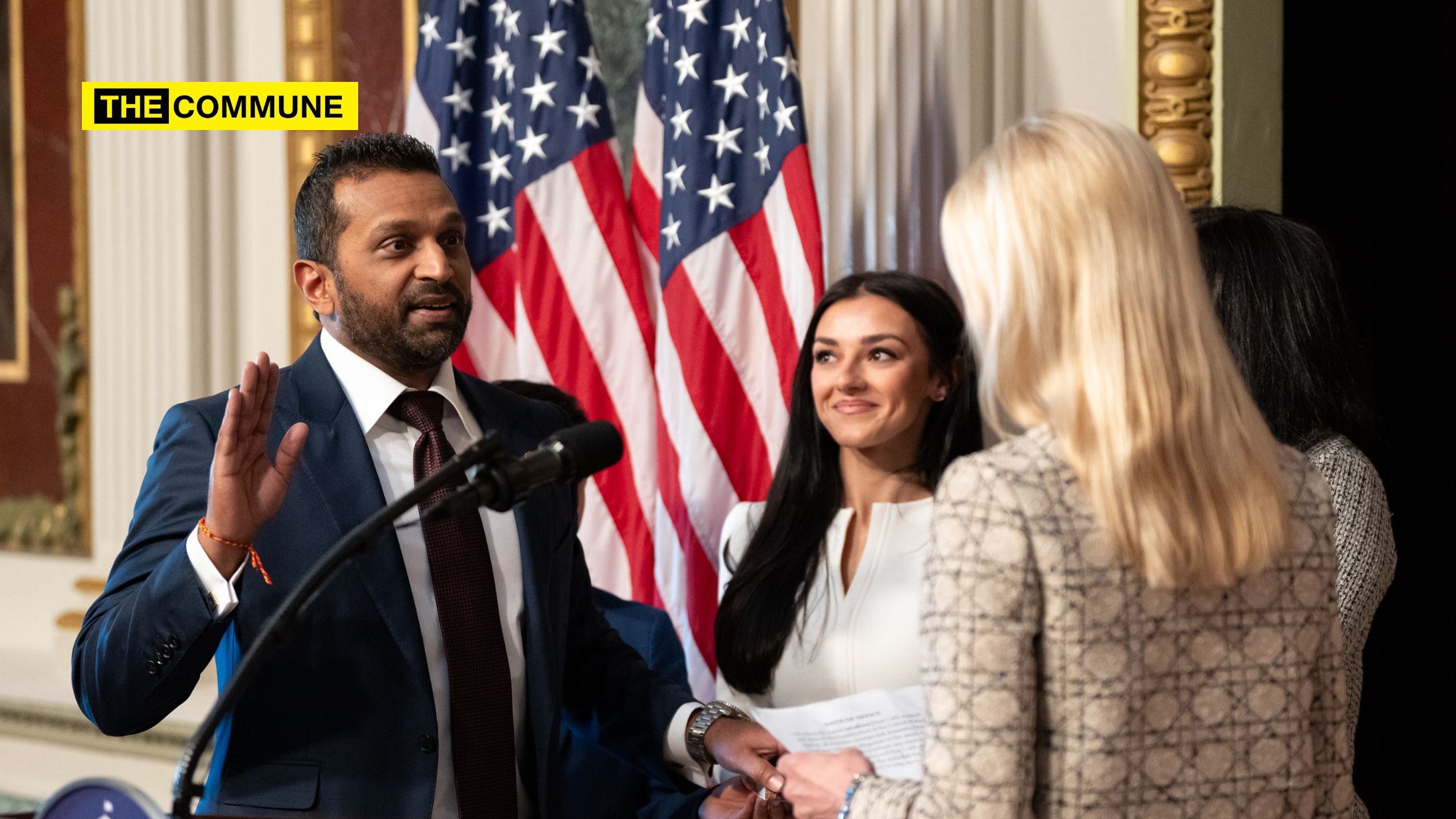
In a historic move, Kash Patel was sworn in as the ninth director of the Federal Bureau of Investigation (FBI) by placing his hand on the Bhagavad Gita, a gesture that sparked widespread appreciation from Hindus around the world on 22 February 2025. Attorney General Pam Bondi administered the oath to Patel, instructing, “Place your hand on the Gita and raise your right hand.” Patel’s girlfriend, Alexis Wilkins, held the Bhagavad Gita as he took the oath in the Indian Treaty Room at the Eisenhower Executive Office Building on 21 February 2025, with his family members in attendance.
Patel, at 44, becomes the first Hindu-Indian and Asian descent person to head the FBI. Social media erupted with praise as users celebrated Patel’s decision to take the oath on the Bhagavad Gita, a revered Hindu scripture that has long been a guiding text on righteous leadership, justice, and moral fortitude — qualities seen as essential in restoring trust in the FBI.
A user took to X and wrote, “What a time to be alive. Krishna is now in charge.”
Another posted, “Kash Patel sworn in as FBI Director on the Bhagavad Gita — A new era of leadership.”
“In a historic moment for both American governance and Hindu representation, Kash Patel takes the oath of office as FBI Director, placing his hand on the Bhagavad Gita — a symbol of duty, integrity, and unwavering resolve,” read another post.
Another user noted, “Kash Patel was sworn in as Director of the FBI on February 21, 2025. During the ceremony, he placed his hand on the Bhagavad Gita, a 700-verse Hindu scripture. This choice reflected his Indian heritage and personal beliefs.”
Hindus across the globe expressed pride, with one user posting, “We Hindus love our religion. FBI Director Kash, pray for your success.”
Another wrote, “Sanatan values shine at the heart of America’s intelligence! This is more than an oath — it’s a statement!”
Kash Patel is not the first Indian-American to take an oath of office on the Gita. Congressman Suhas Subramanyam also did so, while Tulsi Gabbard, the first Hindu-American elected to the US House of Representatives, set the precedent. Drawing parallels with Gabbard, a user remarked, “The new FBI Director, Kash Patel, took his oath on the Bhagavad Gita, following the example of Tulsi Gabbard.”
Another user highlighted the cultural significance, saying, “Kash Patel, the new FBI Director, took oath on the Bhagavad Gita, a sacred Hindu scripture, following in the footsteps of Tulsi Gabbard, showcasing the significance of Indian culture and spirituality in American politics!”
Some drew comparisons to India, with one user writing, “Kash Patel took oath on the Bhagavad Gita — what’s stopping India from doing the same? India is a Hindu nation. The Bhagavad Gita is sacred to Hindus. This change needs to be initiated by the President of India.”
Social media continued to buzz with excitement, with posts such as, “He has not forgotten his roots & sanskar!!” and “Bhagavad Gita binds the hearts of Hindus together. This is proven once again as Kash Patel is sworn in as the 9th Director of the FBI, taking oath on the sacred Hindu text of Bhagavad Gita.” One emotional post read, “My heart was full seeing Gita,” while another noted, “Very few powerful world leaders remember their roots! Kash Patel is one of them. He took the oath on Bhagavad Gita, honouring his Indian roots, parents, and heritage. So proud of him. He joins the club of Rishi Sunak! Once again, Congrats Kash!”
Another post celebrated the significance of the moment, stating, “His oath on the Bhagavad Gita reflected his Indian heritage, symbolising truth, duty, and justice — values deeply embedded in both Hindu philosophy and law enforcement.”
“This appointment marks a historic moment for Indian-Americans in US law enforcement and governance,” another user added. As Patel took charge of the FBI, voices of support poured in, stating, “Sanatan Hi Satya Hain,” “People Respect and Have Faith in Sanatan Dharma,” and “Hindus and Hindutva rising globally.” A user remarked, “Mr Kash Patel took oath as the Director of the Federal Bureau of Investigation (FBI) on the Hindu holy book Bhagavad Gita. Congratulations, Mr Patel. Nothing gives more pride than respecting and celebrating one’s own roots.”“A beautiful reminder that leadership is rooted in values, no matter the book,” another posted. Addressing the gathering after the swearing-in, Patel said that the American dream is alive as a “first-generation Indian kid” is about to take charge of the FBI. “I am living the American dream,” Patel remarked, standing before his sister Nisha Patel, girlfriend Alexis Wilkins, and other relatives. Born to Hindu parents from Gujarat, Patel’s family had immigrated to the United States from Canada after fleeing Uganda to escape ethnic repression. His journey from a first-generation immigrant to the head of America’s premier investigative agency marks a momentous chapter in both American and Indian-American history.
-IANS
Subscribe to our channels on Telegram, WhatsApp, and Instagram and get the best stories of the day delivered to you personally.
Dissent is brewing within the Tamil Nadu Congress over the leadership style of state party President K. Selvaperunthagai after he invited applications for the post of new district chiefs. A section of party leaders has met Girish Chodankar, the AICC secretary incharge of Tamil Nadu, to express their dissatisfaction with Selvaperunthagai’s leadership.
Selvaperunthagai, a grassroots leader known for his outspoken criticism of political opponents, is facing opposition from a faction of party members loyal to a Congress Member of Parliament from southern Tamil Nadu. It is to be noted that the Tamil Nadu Congress is a part of the INDIA bloc led by the DMK. While the Congress and the DMK share a strong alliance, some Congress leaders are displeased with the DMK for taking over the Erode East legislative Assembly seat, which was previously represented by deceased Congress leaders EVKS Elangovan and his son, Thirumagan Everaa.
Senior Congress leaders who met the AICC secretary on 21 February 2025, in New Delhi reportedly blamed Selvaperunthagai’s inefficiency for the DMK not allocating the sitting seat to the Congress in Erode East. The Congress party had 18 legislators in the Tamil Nadu Assembly, but after it was not allowed to contest from Erode East, its strength has been reduced to 17. However, it is worth noting that the party had only eight MLAs in the 2016 Assembly to the present 17. With the DMK having announced 200 out of 237 seats for the INDIA bloc in the upcoming 2026 Assembly elections, the Congress high command is expected to give Selvaperunthagai a free hand in party affairs.
The TNCC president, who is into his first anniversary in office, is a prominent Dalit leader with substantial grassroots support. Highly placed sources in the Tamil Nadu Congress indicate that Selvaperunthagai enjoys the backing of senior party leaders, including AICC General Secretary (Organisation) K.C. Venugopal.
According to party insiders, around ten District Congress Committee (DCC) presidents are likely to be removed and replaced with fresh faces. A Congress leader aligned with Selvaperunthagai told IANS that these changes are being made due to underperformance, and with Assembly elections only a year away, the party is set to take tough decisions based on feedback from the TNCC president. The Congress party has historically played a secondary role in Tamil Nadu’s political landscape, dominated by the Dravidian parties—DMK and AIADMK. The party high command is now looking to usher in a new era for the Tamil Nadu Congress by implementing grassroots reforms and making leadership changes in key districts.
-IANS
Subscribe to our channels on Telegram, WhatsApp, and Instagram and get the best stories of the day delivered to you personally.
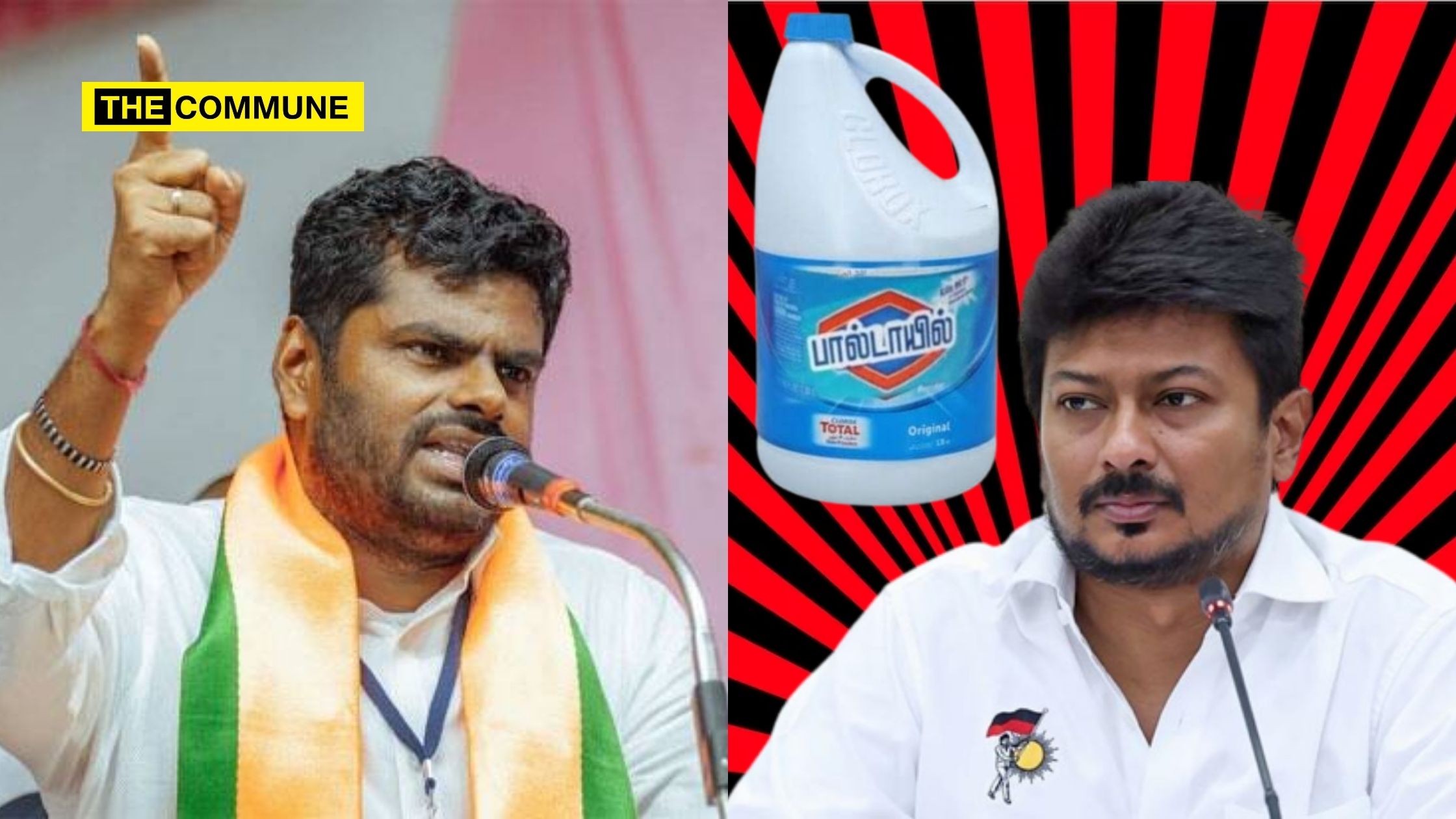
The nickname #பால்டாயில்_பாபு (Paaldayil Babu), coined by Tamil Nadu BJP chief K. Annamalai for DMK scion and Deputy Chief Minister Udhayanidhi Stalin, has taken social media by storm.
The nickname gained significant traction after Annamalai launched a scathing attack on Udhayanidhi Stalin. He warned that if the DMK leader continued to insult Prime Minister Modi, he would personally put up “Paaldayil Babu” posters outside Udhayanidhi’s residence. Annamalai didn’t mince words, challenging Udhayanidhi directly: “If you have the guts, say ‘Get Out Modi.’ Just because your father is the Chief Minister and your grandfather was a five-time CM doesn’t mean you can say whatever you want. Try saying it, da!” He escalated the situation further, threatening, “If you utter those words, I’ll come to your house and plaster ‘Paaldayil Babu’ posters right outside. I’ll speak to you in the language you understand!”
Annamalai’s fiery challenge ignited an intense social media battle between the BJP and the DMK. In response to Annamalai’s attack, the DMK IT wing shared a video on February 20 showcasing the sloganeering of “Get Out Modi” during a DMK meeting. This led to a fierce backlash from netizens, with the hashtag #பால்டாயில்_பாபு (Paaldayil Babu) trending across social media.
Why Udhayanidhi Stalin Is Called “Paaldayil Babu”?
Udhayanidhi Stalin’s nickname “Paaldayil Babu,” set by Tamil Nadu BJP chief Annamalai stems from two different stories. One theory behind the name involves the term “Paaldayil,” which is an insecticide, allegedly linked to rumors surrounding Udhayanidhi’s personal life. These rumors reportedly began when he was involved with actress whose name rings with a numner. It is said that during the shooting of the film Idhu Kathirvelan Kadhal in 2014, Udhayanidhi and the female actor became romantically involved. The pair reportedly visited the Palani temple together, fueling speculation about their relationship.
Despite Udhayanidhi being married at the time, rumors of his affair with the lady film star spread. His grandfather, former Tamil Nadu Chief Minister Karunanidhi, is said to have warned him, but the relationship reportedly continued. In the film Nannbenda, Udhayanidhi cast one specific heroine as the female lead, further intensifying the rumors.
However, when she allegedly rejected his feelings, Udhayanidhi was reported to have attempted suicide, an incident that was widely gossiped back then. His supporters blamed the heroine, leading to a significant backlash against the actress. That is why the “Paaldayil” part came to the fore.
In 2021, actor-politician Radha Ravi reignited the controversy ahead of the Tamil Nadu Assembly elections by questioning Udhayanidhi Stalin’s relationship with the heroine. He made a derogatory remark about her, which led to Udhayanidhi’s political party temporarily distancing itself from Radha Ravi. Despite the controversy, Radha Ravi stated that he did not care about Udhayanidhi and the heroine’s relationship.
The second part of the nickname, “Babu,” is allegedly a reference to a long-standing rumor involving Udhayanidhi Stalin’s father, DMK leader M.K. Stalin. The rumor centers around a supposed relationship between M.K. Stalin and a former newsreader. According to the widely circulated gossip in Tamil Nadu, M.K. Stalin allegedly abducted Fathima Babu during the late 1980s when his father, M. Karunanidhi, was the Chief Minister. This story had been circulating for over three decades, but it gained more attention in 2019.
To put an end to the rumors, the newsreader clarified that she was not abducted in the 1980s. She explained that her absence during that period was due to her involvement in a television serial.
A recent report by The Indian Express claiming that a $21 million USAID grant was intended for Bangladesh, not India, has come under intense scrutiny. The article, which contradicts official U.S. government records, appears to be part of a larger pattern of misinformation and raises serious questions about the newspaper’s motives and its ties to foreign-funded organizations.
The Controversy
On 16 February 2025, the U.S. Department of Government Efficiency (DOGE) published a list of cancelled USAID funding initiatives, including a $21 million allocation for “voter turnout in India.” This disclosure sparked a political firestorm in India, with concerns about foreign interference in the country’s electoral processes.
However, The Indian Express published a report claiming that the $21 million was actually meant for Bangladesh under USAID’s “Nagorik Program.” The article, authored by Jay Mazoomdar, argued that the funding was misrepresented as being for India when it was, in fact, used for civic engagement programmes in Bangladesh.
This narrative was quickly amplified by alleged ‘fact-checker’ Mohammed Zubair and pro-Congress journalist Rajdeep Sardesai, both of whom have a history of pushing partisan agendas.
What DOGE’s Records Actually Show
DOGE’s official post explicitly lists the $21 million as part of a $486 million package to the Consortium for Elections and Political Process Strengthening (CEPPS), specifically earmarked for “voter turnout in India.” The funding appears alongside other allocations, such as $22 million for Moldova and $29 million for Bangladesh, leaving no room for ambiguity.
President Donald Trump also referenced the $21 million for India and $29 million for Bangladesh as separate entities during a speech, further confirming the distinction.
The Indian Express’ Omissions
The Indian Express report conveniently sidestepped critical context, including:
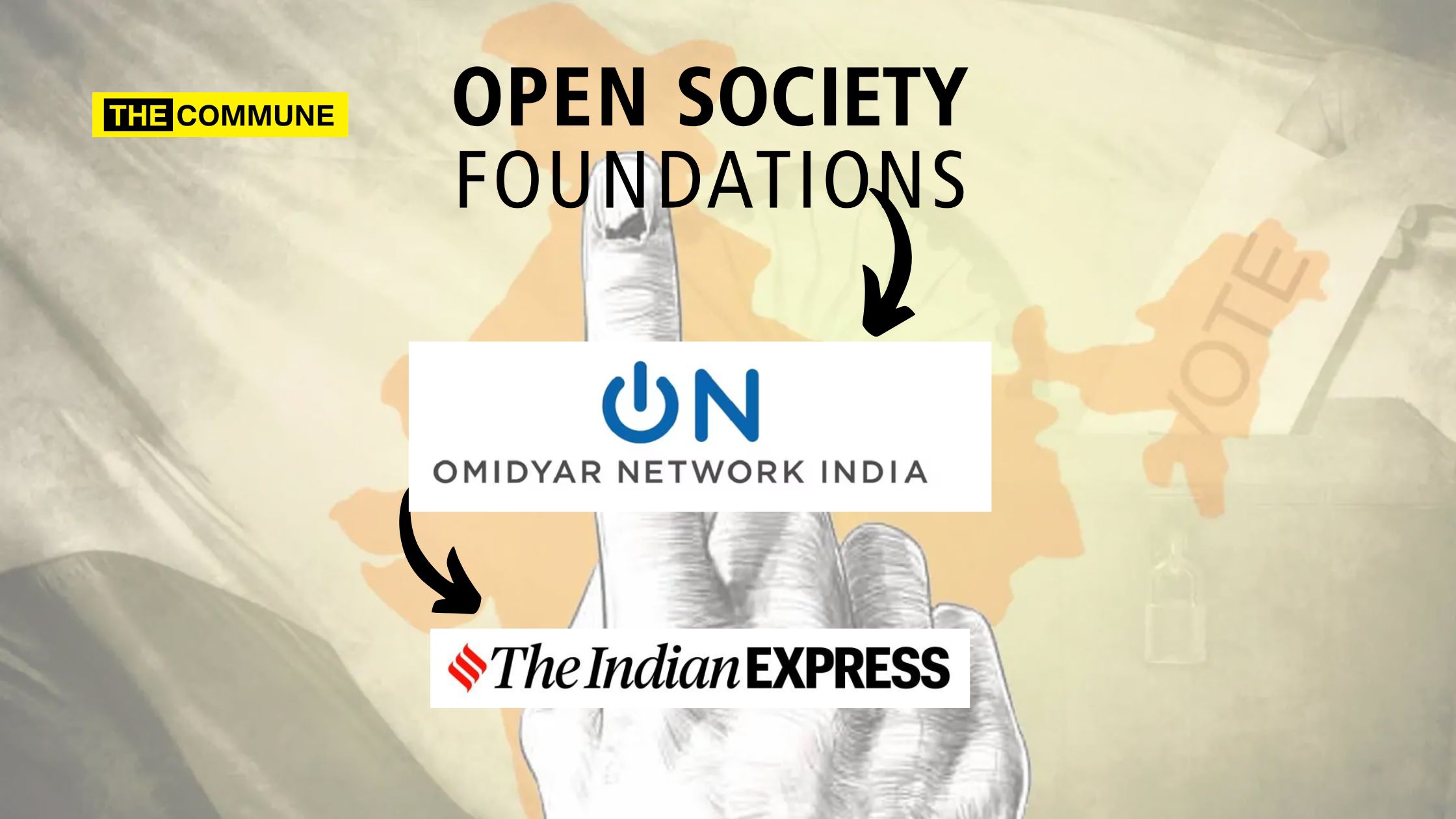
The 2012 MoU Between ECI and IFES: Under then-Chief Election Commissioner S.Y. Quraishi, the Election Commission of India signed a Memorandum of Understanding with the International Foundation for Electoral Systems (IFES), a CEPPS member organization linked to George Soros’s Open Society Foundation. This agreement facilitated USAID’s involvement in India’s electoral processes.
Historical Funding to India: Past funding records, once available on CEPPS’s now-defunct website, show financial flows directed at electoral programmes in India as late as 2014.
By ignoring these facts, The Indian Express created a misleading narrative that downplays concerns about foreign interference in India’s elections.
Conflict Of Interest
The credibility of The Indian Express report is further undermined by its failure to disclose significant conflicts of interest:
Omidyar Network’s Sponsorship: The Indian Express has received funding from the Omidyar Network, which is part of USAID’s Finance and Investment Network and has also been funded by George Soros’s Open Society Foundation. Omidyar sponsored events for The Indian Express as recently as January 2025, despite claiming to have ceased operations in India in December 2024.
Author’s Ties to Foreign-Funded Organizations: Jay Mazoomdar, the author of the report, is a member of the International Consortium of Investigative Journalists (ICIJ), which partners with the Organized Crime and Corruption Reporting Project (OCCRP)—an organization funded by USAID and George Soros.
CONFLICT OF INTEREST ALERT 🚨‼️
Omidyar Network sponsors The Indian Express programs. They funded an event in Chennai on August 12, 2024, and another in Delhi as recently as January 2025, despite Omidyar India’s website stating that it ceased operations in India effective… pic.twitter.com/gIeRnWtrCx
Managing Editor’s Affiliation: The Managing Editor of The Indian Express is part of a consortium sponsored by the National Endowment for Democracy (NED), USAID, and the U.S. State Department.
So, @sardesairajdeep is quoting the article by @mazoomdaar about the USAID payout to "increase voter turnout" being fake news. Jay Mazoomdaar is part of ICIJ – International Consortium of Investigative Journalists, a partner to OCCRP, a former direct beneficiary of the USAID… https://t.co/L2bQqv6LpCpic.twitter.com/0JSnsU6b8f
These connections raise serious concerns about the newspaper’s independence and its willingness to push narratives that align with the interests of its foreign funders.
Why This Matters
The Indian Express’ report appears to be part of a broader effort to dismiss concerns about foreign influence in India’s electoral processes. By misrepresenting DOGE’s official records and omitting critical context, the newspaper has undermined public trust and fueled misinformation.
The timing of the report is also suspect, coming as DOGE’s scrutiny of USAID funding threatens to expose more details about past and ongoing programmes in India. The abrupt shutdown of CEPPS’s website only adds to suspicions that key information is being withheld from public scrutiny.
Subscribe to our channels on Telegram, WhatsApp, and Instagram and get the best stories of the day delivered to you personally.
Naam Tamilar Katchi (NTK) Chief Coordinator Seeman has once again courted controversy. Earlier in January 2025, Seeman paid tribute to Palani Baba, also known as Ahmed Ali, the president of the All India Jihad Committee, for his death anniversary on 28 January 2025. Palani Baba, considered an Islamic extremist, has been linked to terrorist activities.
தமிழர்களே! இனப்பற்று கொள்ளாதீர்கள்; இனவெறி கொள்ளுங்கள்! இல்லையேல், ஆளப்படுவீர்களே ஒழிய, ஒருபோதும் ஆளமாட்டீர்கள்!
புனிதப் போராளி அண்ணன் பழனி பாபா அவர்களின் பெரும்புகழ்ப் போற்றுவோம்!
Now, he is organising a massive public meeting to sing praises of the terrorist Palani Baba. Calling his followers, he shared a video on his X handle captioned, “Hello to all our loved ones who live with us in our lives and feelings! A holy warrior worthy of our admiration and worship Brother Palani Baba A grand public gathering of great praise Day: Meenam 10 | 22-02-2025 04 PM Location: Near Neykarapatti Art Gallery, Palani Let’s all honorable Tamils gather together without forgetting! We are Tamils!”
In the video he says, “Greetings to all our dearly loved ones. We are conducting a grand public meeting to praise
holy warrior brother Al-Hajj Palani Baba who deserves our praise and respect on 22 March 2025, Saturday at 5PM, near Neikarapatti auditorium in Palani. Proud Tamilians should come and participate in this event. Naam Tamilar.”
தமிழர்களே! இனப்பற்று கொள்ளாதீர்கள்; இனவெறி கொள்ளுங்கள்! இல்லையேல், ஆளப்படுவீர்களே ஒழிய, ஒருபோதும் ஆளமாட்டீர்கள்!
புனிதப் போராளி அண்ணன் பழனி பாபா அவர்களின் பெரும்புகழ்ப் போற்றுவோம்!
Palani Baba, whose real name was Ahmed Ali, was a notorious figure in Tamil Nadu’s history of Islamic terrorism. Born in Pudhu Ayakkudi, a village near Palani in Dindigul district, Ahmed Ali was raised by his maternal uncle after the death of his parents. He became involved in nefarious activities during his college years, causing embarrassment to his family. Ali went on to establish the All India Jihad Committee (AIJC) in 1986, an Islamist fundamentalist organization, and was known for his connections to groups like the All India Milli Council, which was reportedly linked to Saudi-Wahhabi ideologies.
In the late 1980s and early 1990s, Tamil Nadu witnessed the rise of Islamic fundamentalist groups, and Ahmed Ali capitalized on this wave. During MGR’s rule, he became known for his controversial activities, which drew the attention of the DMK under Karunanidhi. The DMK reportedly supported him to oppose MGR, even though Ali’s rhetoric and actions were divisive, including his claims of ties with the LTTE. By 1990, Ali had garnered significant support from the DMK. It is to be noted that Ahmed Ali addressed MGR in singular in whichever public meeting he spoke. Dressed like Yasar Arafat, Ahmed Ali made vitriolic speeches against Hindus and was instrumental in fomenting violence against the Hindus especially in the Coimbatore region.
Ahmed Ali was involved in various killings of Hindus in Coimbatore. In 1990, Israeli intelligence arrested a Palestinian student who was studying in south India. During interrogation it was revealed that there was a possible presence of internationally linked Islamic terror cells in Coimbatore. However, the Israeli warnings were rejected by local police and intelligence. Ali’s involvement in violent acts against Hindus escalated during the early 1990s, and his influence grew further with the formation of Al Ummah, a jihadist group connected to organizations like Lashkar-e-Taiba (LeT) and Pakistan’s ISI. The group was implicated in several bombings, most notably the 1998 Coimbatore bombings, which targeted prominent political figures, including LK Advani and Murli Manohar Joshi.
Despite his ties to DMK and other political entities like the PMK, Ali’s violent actions eventually led to a fallout with his former supporters. He was assassinated on 28 January 1997, outside his home by a group of six people, allegedly in retaliation for his anti-Hindu rhetoric and the killing of two Hindu activists earlier that year. Though his death was surrounded by controversy, including some unsubstantiated claims about personal disputes, his legacy remains one of spreading Islamic extremism in Tamil Nadu during a turbulent time.
Today, Ahmed Ali (Palani Baba) is remembered and even honored by several separatist and minority-appeasing groups, including Naam Tamilar Katchi (NTK), Viduthalai Chiruthaigal Katchi (VCK), and, at times, the DMK, despite his violent and extremist legacy.
Subscribe to our channels on Telegram, WhatsApp, and Instagram and get the best stories of the day delivered to you personally.
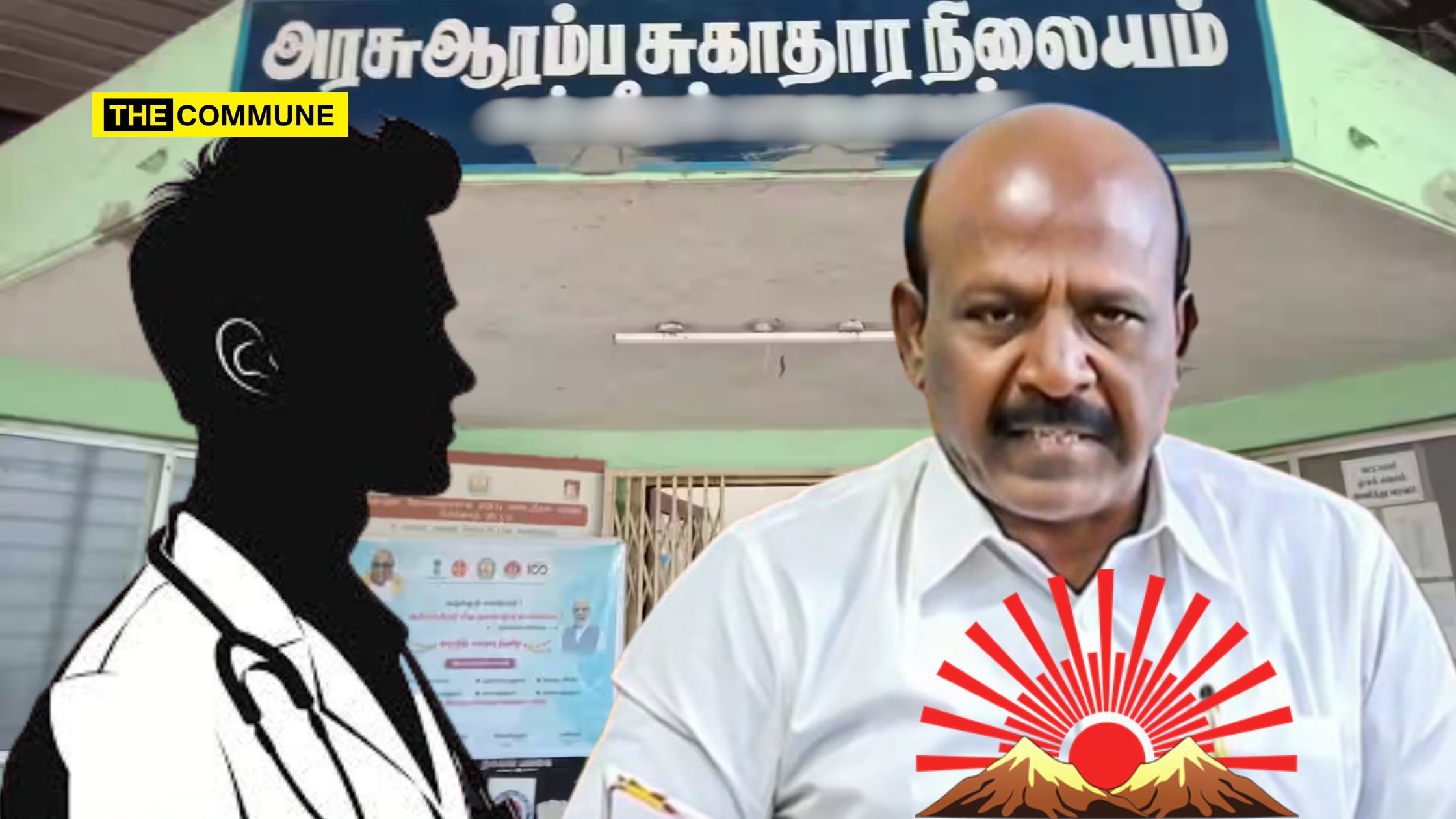
Healthcare services at multiple Primary Health Centres (PHCs) across Tamil Nadu were disrupted on 20 February 2025 as 893 doctors were simultaneously called to Chennai to receive transfer orders from Health Minister Ma Subramanian. The mass absence of doctors reportedly led to patients being turned away, causing inconvenience, particularly to pregnant women and other vulnerable groups.
In some PHCs, including Maruthamputhur, pregnant women who had come for iron sucrose administration were sent home by on-duty staff due to the unavailability of doctors. Officials stated that advance notice about the absence of medical officers should have been given to patients.
The directive to bring all transferred doctors to Chennai was issued on Tuesday (19 February 2025) by Director of Public Health (DPH) Dr. T S Selvavinayagam. The ‘most urgent’ order instructed district health officers (DHOs) to ensure the presence of medical officers at the event, emphasizing that alternative arrangements should be made to prevent disruption at PHCs.
However, doctors from districts including Tirunelveli, Tenkasi, Salem, and Sivaganga reported that their forced travel resulted in severe strain on healthcare services in their regions.
The move also coincided with a NITI Aayog inspection scheduled in Sivaganga, where 30 doctors were absent due to their compulsory travel to Chennai. The decision to summon doctors, despite an existing shortage in many districts, raised concerns about its impact on patient care.
Health Secretary Dr. P Senthil Kumar stated that DHOs had been directed to ensure continuity of care at PHCs and that such gatherings in Chennai were not uncommon. Meanwhile, in Chennai, after issuing transfer orders to some medical officers, Minister Subramanian reportedly left to attend Deputy Chief Minister Udhayanidhi Stalin’s event.
A Dalit woman, named Radha from Annaram, Bhadradri District of Telangana has allegedly been ostracized by a local Church for practicing Hinduism, according to the Legal Rights Protection Forum (LRPF). The rights group reported that Radha, a Scheduled Caste (SC) woman, has been forced into social isolation due to her participation in Dharmic activities.
LRPF stated that the Church has allegedly instructed villagers not to sell her daily essentials, effectively cutting off her access to basic needs. The forum condemned the act as a blatant case of religious discrimination and a violation of fundamental rights.
Annaram, Bhadradri (D), Telangana:
Radha, a SC woman, has been ostracized from the village by Church due to her Hindu faith & involvement in Dharmic activities.
Villagers are instructed not to sell daily essentials to her.
Following the complaint, an FIR has been registered under the Protection of Civil Rights Act, which prohibits caste-based discrimination and social boycotts. LRPF has called for stringent legal action against those responsible and urged authorities to ensure Radha’s safety.
Subscribe to our channels on Telegram, WhatsApp, and Instagram and get the best stories of the day delivered to you personally.