Home Blog Page 378

DMK School Education Minister Attends Event In CBSE School That Follows 3 Language Policy Which His Party Opposes, His Son Studies French Instead Of Tamil

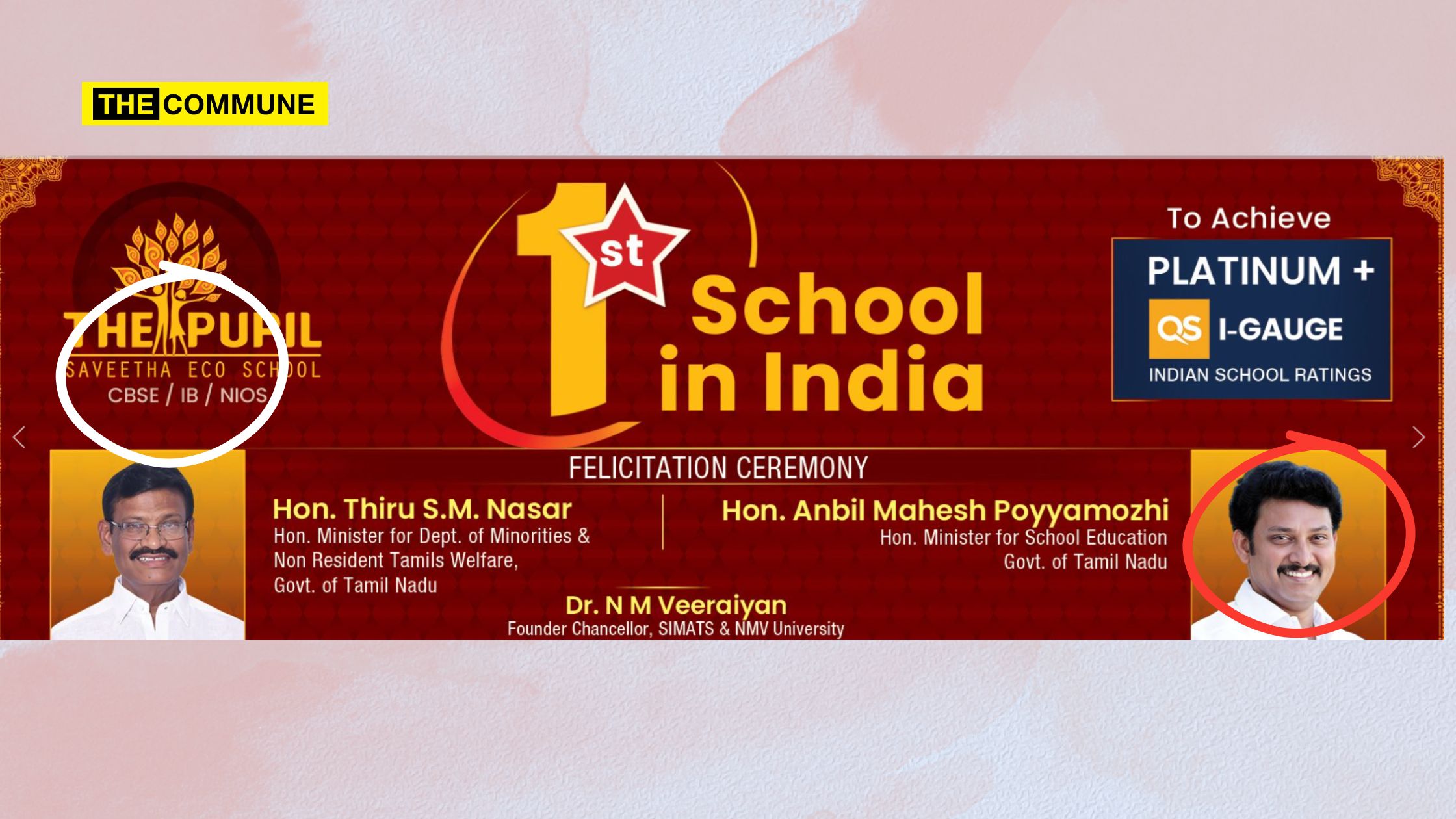
Tamil Nadu BJP president Annamalai called out the hypocrisy of DMK School Education Minister Anbil Mahesh as he participated in an event at The Pupil Saveetha Eco School, a private CBSE institution that recently received a Platinum+ rating from the QS I-GAUGE system. The event was also attended by Avadi MLA and Minister of Minorities Welfare, S. M. Nasar.

Criticizing the DMK ministers’ presence at the event, Annamalai stated, “Yesterday, the Tamil Nadu School Education Minister attended a function at a private CBSE school that follows a multilingual curriculum. However, the same minister denies government school students the opportunity to learn multiple languages. We have been deceived by such double standards for so many years.”

He urged people to support educational equality by signing a petition on puthiyakalvi.in, as the BJP continues its statewide mass signature campaign advocating for the New Education Policy (NEP). The campaign aims to bridge the disparity between students in government schools—who are restricted to a two-language system—and those in private matriculation and CBSE schools, which offer multilingual education.

DMK School Education Minister’s Son Studies French Instead Of Tamil As Second Language

Tamil Nadu’s School Education Minister, Anbil Mahesh Poyyamozhi, finds himself at the center of controversy after it was revealed that his son, Kavin, has opted for French instead of Tamil as his second language at school. This revelation has sparked debate, especially given the DMK government’s strong stance on protecting Tamil and its opposition to the three-language policy.

Kavin, an 8th-grade student at a private ICSE school in Alwarpet, Chennai, recently received a certificate of appreciation at an event organized by Anna University’s Educational Entrepreneurship Development Centre. The event, which recognized innovation among government and private school students, saw Minister Mahesh proudly presenting certificates—including one to his own son.

While speaking about the recognition, Minister Mahesh expressed pride in his son’s achievements, stating, “Beyond academic studies, I am proud as a father when my son talks about something like inventions.” However, what raised eyebrows was Kavin’s own candid admission about his lack of involvement in the project.

In a viral interview, Kavin openly spoke about his language choice at school. The boy is seen saying he does not study Tamil and that he was learning French which he found to be difficult.

Kavin’s choice of French over Tamil as a second language further fueled public scrutiny. The DMK government has long positioned itself as a guardian of Tamil culture and language, actively opposing the three-language policy while restricting government school students to learning only Tamil and English. However, the fact that the Education Minister’s own son studies in a private school with a multilingual curriculum and does not take Tamil raises concerns over double standards.

This revelation has intensified the ongoing debate over educational disparity in Tamil Nadu, where government school students are denied the same language learning opportunities as those in private institutions. The minister’s personal choices regarding his son’s education appear to contradict the DMK’s public rhetoric on Tamil language preservation, leaving many questioning the party’s true commitment to its policies.

Subscribe to our channels on TelegramWhatsApp, and Instagram and get the best stories of the day delivered to you personally.

Times Of India Twists Yogi Adityanath’s Statement For Headlines

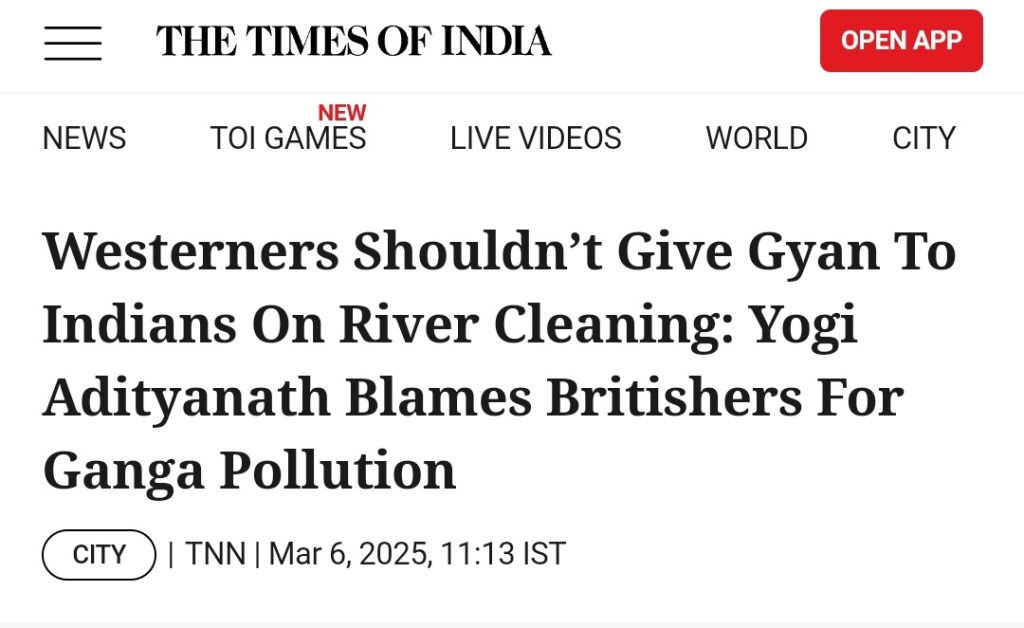
The Times of India (TOI) has once again demonstrated its penchant for sensationalism by grossly misrepresenting Uttar Pradesh Chief Minister Yogi Adityanath’s statements on the pollution of the Ganga. In its headline, TOI falsely claims that Yogiblames Britishers for Ganga pollutionand suggests that he declaredWesterners shouldn’t give gyan to Indians on river cleaning.However, a careful examination of the CM’s actual speech reveals that this is nothing more than a deliberate distortion of facts.

What Yogi Adityanath Actually Said

Yogi Adityanath’s speech in the Uttar Pradesh Legislative Council provided a factual historical account of how Kanpur became a critical point of pollution for the Ganga. He said, Mother Ganga travels 1,000km in UP from Bijnor to Ballia. In this 1000km journey, the most critical point of the river was Kanpur. And this critical point was not for Uttar Pradesh. It was Kanpur that was the critical point in the entire 2500 km stretch from Gangotri to Gangasagar. For 125 years, 4 crore litres of sewage was drained into the Ganga at Sisamau. We are grateful to Prime Minister Narendra Modi for ensuring the river’s cleanliness through the Namami Gange scheme. He had deployed the funds in 2015 itself but the then Samajwadi Party which was ruling did not take any steps to implement it. Those people who talk about pollution, are the same people who could not do anything during their time. And when we got the chance, the double-engine Sarkar converted the sewer point at Sisamau to a selfie point. Today, the sewer is not emptied into the river at Kanpur. How did the sewer point come into existence in the first placeit was there from the British era. The western thinkers who preach to us today do not see their deeds and they said that the river that was called polluted is still as sacred and pure for the followers of Sanatana Dharma.”

At no point did Yogi Adityanathblamethe British in an accusatory sense—he merely acknowledged the historical reality that industrial sewage dumping into the Ganga at Kanpur began during colonial rule. Likewise, his comment about Westernthinkerswas not a sweeping dismissal but a call for introspection. He simply pointed out the irony of those who ignore their own environmental failures while lecturing India on river conservation.

Despite these clear facts, TOI chose to manipulate Yogi’s words into a misleading narrative. Their headline suggests that the Chief Minister was attempting to absolve contemporary polluters and solely pin the blame on the British. In reality, he was explaining the origins of the problem while highlighting his administration’s efforts to rectify it.

Furthermore, TOI framed his remark on Westerners as a blanket rejection of foreign expertise on environmental issues. In truth, Yogi merely pointed out that the Ganga remains sacred to millions, and those who now offer unsolicited advice should first acknowledge their own past actions.

Not The First Time

This is not the first time TOI or other mainstream media outlets have twisted the statements of leaders who do not fit their ideological mould.

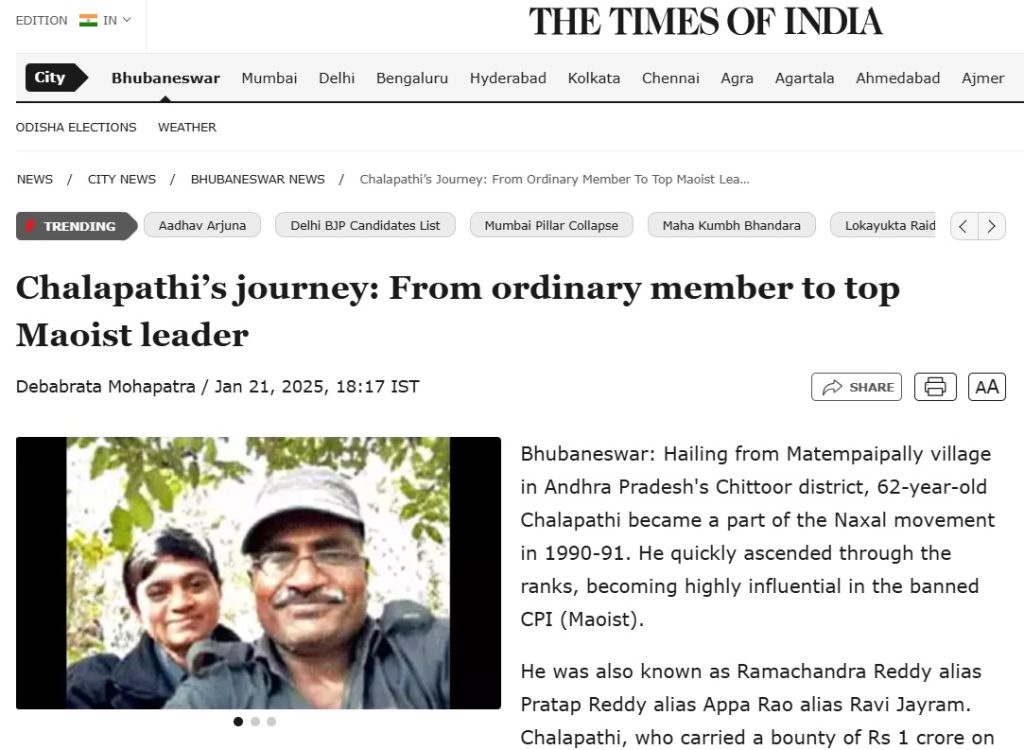
In January 2025, Times of India published an obituary for senior Maoist leader Chalapathi that massively downplayed his violent legacy and instead glorified him as a “military strategist” and an “intellectual.” The article highlighted his reading habits and multilingual abilities while failing to acknowledge the countless lives lost due to his orchestrated attacks.

It presented his role in the Maoist movement in a sanitized manner, omitting the suffering of victims and the security forces’ efforts to combat insurgency. Instead of condemning his violent actions, the piece seemed to mourn his death, continuing the media’s pattern of romanticizing terrorists and extremists.

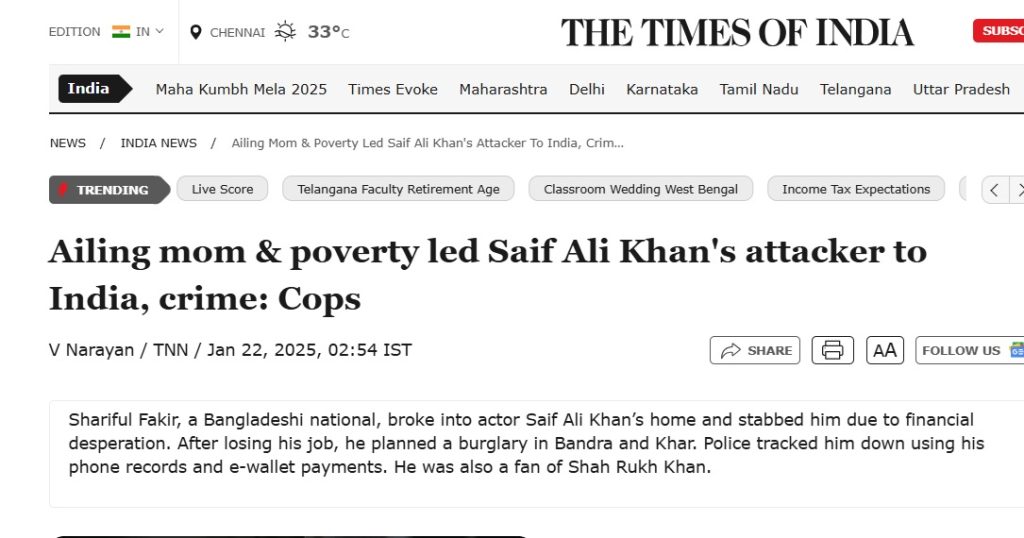
Once again in January 2025, Times of India twisted the story of Bangladeshi national Shariful Fakir, who allegedly stabbed actor Saif Ali Khan, by portraying him as a victim of poverty and systemic injustice rather than a criminal. Instead of focusing on his illegal entry, violent crime, and the dangers of unchecked immigration, TOI highlighted his struggles, ailing mother, and admiration for Shah Rukh Khan.

The article downplayed the security risks posed by illegal immigration and framed Fakir’s actions as a result of desperation, effectively excusing his crime. This continues TOI’s trend of humanizing criminals while ignoring the broader law-and-order implications.

In September 2023, Times of India’s chief cartoonist, Sandeep Adhwaryu, published a cartoon in response to the Ujjain rape case, portraying Hindus as indifferent to the victim’s suffering. The cartoon sparked outrage, as many saw it as Hinduphobic propaganda that ignored the fact that a Hindu priest and a local man, Rahul Sharma, helped the girl.

A complaint was filed against TOI and the cartoonist, demanding legal action. Following backlash, Adhwaryu removed the TOI logo from the cartoon, claimed it was done in a personal capacity, and issued an apology—not for the cartoon itself, but for misusing TOI’s logo.

Instead of engaging in fair reporting, TOI seems more interested in pushing sensationalist angles that suit its editorial bias. The article conveniently omits the Chief Minister’s acknowledgment of the river’s self-purifying nature and his emphasis on the economic benefits of Maha Kumbh, which TOI buried under its misleading headline.

By twisting Yogi Adityanath’s words, TOI has once again prioritized clickbait over truth. In an era where misinformation is rampant, responsible journalism is not just a duty—it is a necessity.

Subscribe to our channels on Telegram, WhatsApp, and Instagram and get the best stories of the day delivered to you personally.

Manipur: 196 Weapons Returned, Security Forces To Launch Operation To Recover Remaining Looted Arms

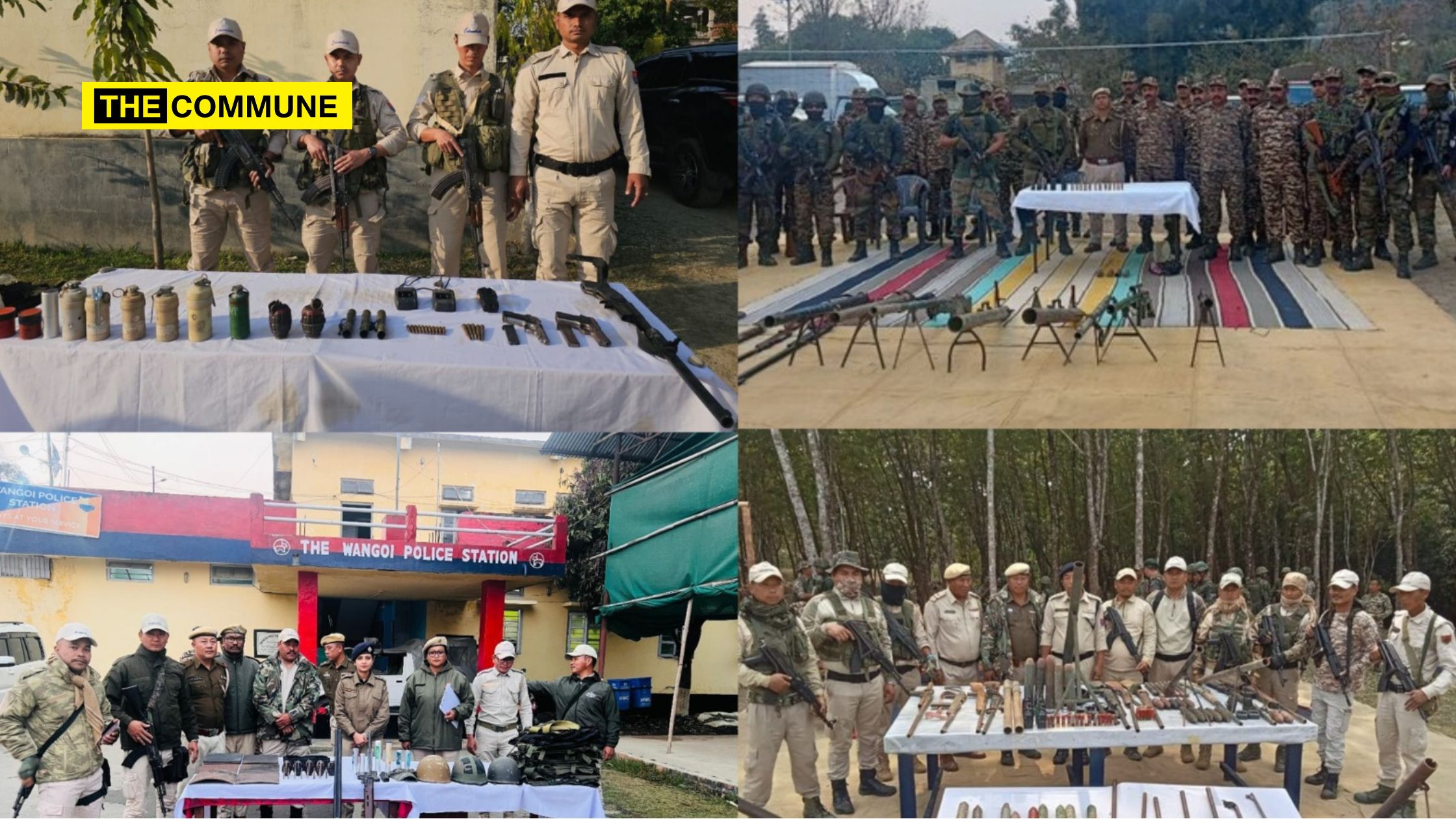
Responding to Manipur Governor Ajay Kumar Bhalla’s appeal, 196 looted and illegally held arms, including many sophisticated weapons, have returned to the police on Thursday, the last date of surrendering the arms, officials said.

A top police official late on Thursday night said that 196 arms and a large cache of ammunition deposited on the last day of return/surrender of arms and ammunition in eight districts of Manipur — Churachandpur, Bishnupur, Thoubal, Imphal East, Imphal West, Kakching, Jiribam and Pherzawl.

The official said that from now onwards, the Central and state security forces, including the Army and Assam Rifles would jointly launch a massive operation to recover the remaining looted and illegally held arms both in the valley and the hilly districts. “Our other prime task is to ensure the free movement of both people and vehicles on all roads in Manipur from March 8 as directed by Union Home Minister Amit Shah,” the official told IANS.

Senior police officials said that till Thursday (March 6) more than 967 looted and illegally held weapons, including many sophisticated arms and a huge cache of ammunition, were returned to security forces since Governor Bhalla made the appeal for the first time on February 20.

To restore peace and normalcy, the Union Home Minister in a high-level meeting in New Delhi on March 1 reviewed the overall security situation in Manipur.

Manipur Governor, Chief Secretary, Security Advisor to the state government, Director General of Manipur Police, Home Commissioner, top Army, Assam Rifles, Central Armed Police Forces and intelligence officials were present in the March 1 meeting.

During the meeting, Amit Shah had said that the Centre, under the leadership of Prime Minister Narendra Modi, remains fully committed to restoring lasting peace in Manipur and is providing all necessary assistance in this regard.

The Union Home Minister directed that free movement be ensured for people on all roads in Manipur from March 8 and asked for strict action against anyone attempting to create obstructions. Amit Shah had also instructed that the fencing work on both sides of the designated entry points along Manipur’s border with Myanmar should be completed at the earliest.

He said that to make Manipur drug-free, the entire network involved in the drug trade should be dismantled. The March 1 meeting in Delhi was the first such top-level review meeting held after the imposition of President’s Rule in the northeastern state, which has been witnessing ethnic violence between the Meitei and Kuki-Zo communities since May 3, 2023.

The President’s Rule was promulgated in the restive Manipur on February 13, four days after Chief Minister N. Biren Singh resigned. According to various reports during the ethnic riots between Meitei and Kuki-Zo communities since May 3, 2023, more than 6,000 different types of sophisticated arms and lakhs of pieces of different types of ammunition were looted from the police stations and outposts by the mobs and militants.

The security forces, so far, have also recovered a substantial number of the looted arms during the continuous operations. Governor Bhalla, in his fresh appeal, on February 28 said: “The request (on February 20) has yielded a positive response. Upon the expiry of the seven-day deadline for voluntary surrender of such arms, there has been a demand from both valley and hill areas to extend the period for surrender. I have considered the request and decided to extend the deadline up to 4 p.m. on March 6 for voluntary surrender of such arms. During this period, no punitive action would be taken against the individuals who voluntarily surrender weapons. However, any person found in possession of illegal or looted arms after the given deadline will face legal action as per law.”

–IANS

Subscribe to our channels on TelegramWhatsApp, and Instagram and get the best stories of the day delivered to you personally.

“Kanimozhi’s Son Studies Multiple Languages In Singapore, But She Advocates Two-Language Policy For TN Kids”, BJP TN Chief Annamalai Questions DMK MP Kanimozhi’s Double Standards

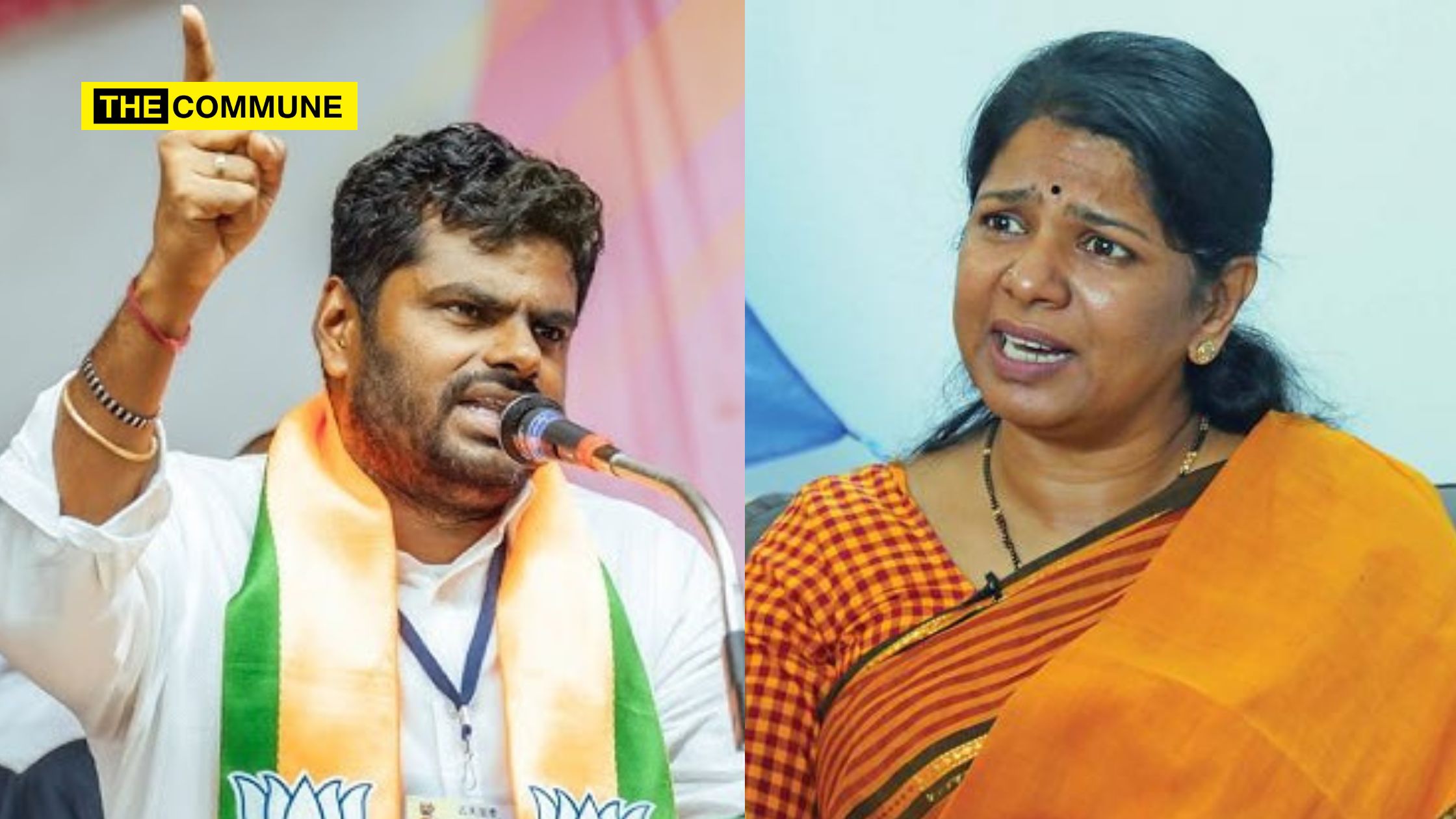
Tamil Nadu BJP president Annamalai has criticized DMK Deputy General Secretary and Thoothukudi MP Kanimozhi, accusing her of having “selective amnesia.” He stated that she conveniently forgets the events that took place between 2006 and 2014 when the DMK was part of the Congress-led coalition government. During that period, the central government allocated ₹675 crore for the promotion of Sanskrit while only ₹75 crore was allotted for Tamil, a major lapse under the DMK’s governance. However, Kanimozhi has failed to respond to his questions on this issue.

Speaking to reporters in Chennai during the BJP’s statewide signature campaign in support of the three-language policy, Annamalai noted that the initiative had received a strong response. Within 24 hours, one lakh people had signed in favor of the new education policy, believing it would ensure a better future for children. He also strongly condemned the manner in which former Governor Tamilisai Soundararajan was treated by the Chennai police, stating that it is the duty of political parties to interact with people on the streets. He criticized the DMK government, alleging that its actions reflect fear and cowardice, as they first arrested Tamilisai and later released her, knowing their order was unjust.

Further, Annamalai accused VCK leader Thirumavalavan of hypocrisy, stating that while he runs a CBSE school that follows the three-language policy, he lacks the courage to openly support it. He claimed that the BJP is exposing fake politicians daily and declared that every day marks a new victory for the party.

Referring to DMK MP Kanimozhi once again, Annamalai reiterated that when the DMK was in power at the center, they did little for Tamil development. He also criticized former Union Minister P. Chidambaram, who, during his tenure, made 170 recommendations in Parliament for Hindi promotion but now speaks against Hindi at public events in Tamil Nadu. Annamalai remarked that the people of the state are now forced to witness such political contradictions.

Annamalai stated, “For sister Kanimozhi, there is a nice word in English called ‘selective amnesia.’ Selective amnesia means forgetting things often. Suriya has acted in a movie, tend to forget things frequently. As far as sister Kanimozhi is concerned, she seems to have forgotten everything between 2006 and 2014. Those eight years have become a case of selective amnesia in sister Kanimozhi’s brain. Today, I am asking the same sister Kanimozhi—’You allocated ₹675 crore for Sanskrit but only ₹75 crore for Tamil. Why?’ But she never responds to this. It was a blunder that happened under your regime.”

He further criticized, “Sister Kanimozhi’s son is a citizen of Singapore. He is studying in a world-class country. Will you insist the son of sister Kanimozhi, studying in Singapore, should learn only Tamil? While sister Kanimozhi’s son, as a Singaporean citizen, has the opportunity to study multiple languages, but she takes the mic and tells the children of Tamil Nadu that they should learn only two languages. If she believes that, why didn’t she enroll her son in a government school in Tamil Nadu and make him study under the two-language policy? Today, she speaks a lot about language, right? She calls herself the granddaughter of Periyar and the daughter of Kalaignar Karunanidhi. So why there is a different justice with her children as a Singapore citizen while the children of poor parents in Tamil Nadu’s government schools have another kind of justice? We will certainly question that!”

He questioned why the Tamil Nadu government is creating societal divisions and engaging in unnecessary debates about constituency reorganization. He asserted that the government has no real answers to these concerns and accused the ruling party of blocking language policies for political gain rather than genuine public interest.

Mocking the DMK’s usual tactics, he sarcastically suggested that they might attempt to divert attention by making a party member’s child release a video about the benefits of bilingualism. Concluding his statement, Annamalai called this an act of shame.

In a 2021 interview with India Today, she stated, “My husband is a Singapore citizen, and my son is also a Singapore citizen. I have no intention of changing his citizenship.”

The fact that DMK leaders and their family members have comfortably settled in foreign countries while denying even the underprivileged citizens of Tamil Nadu the chance to learn another language for better opportunities has sparked debate across the state.

Subscribe to our channels on TelegramWhatsApp, and Instagram and get the best stories of the day delivered to you personally.

Bihar Man Educates Seven Daughters, All Serving The Nation Today

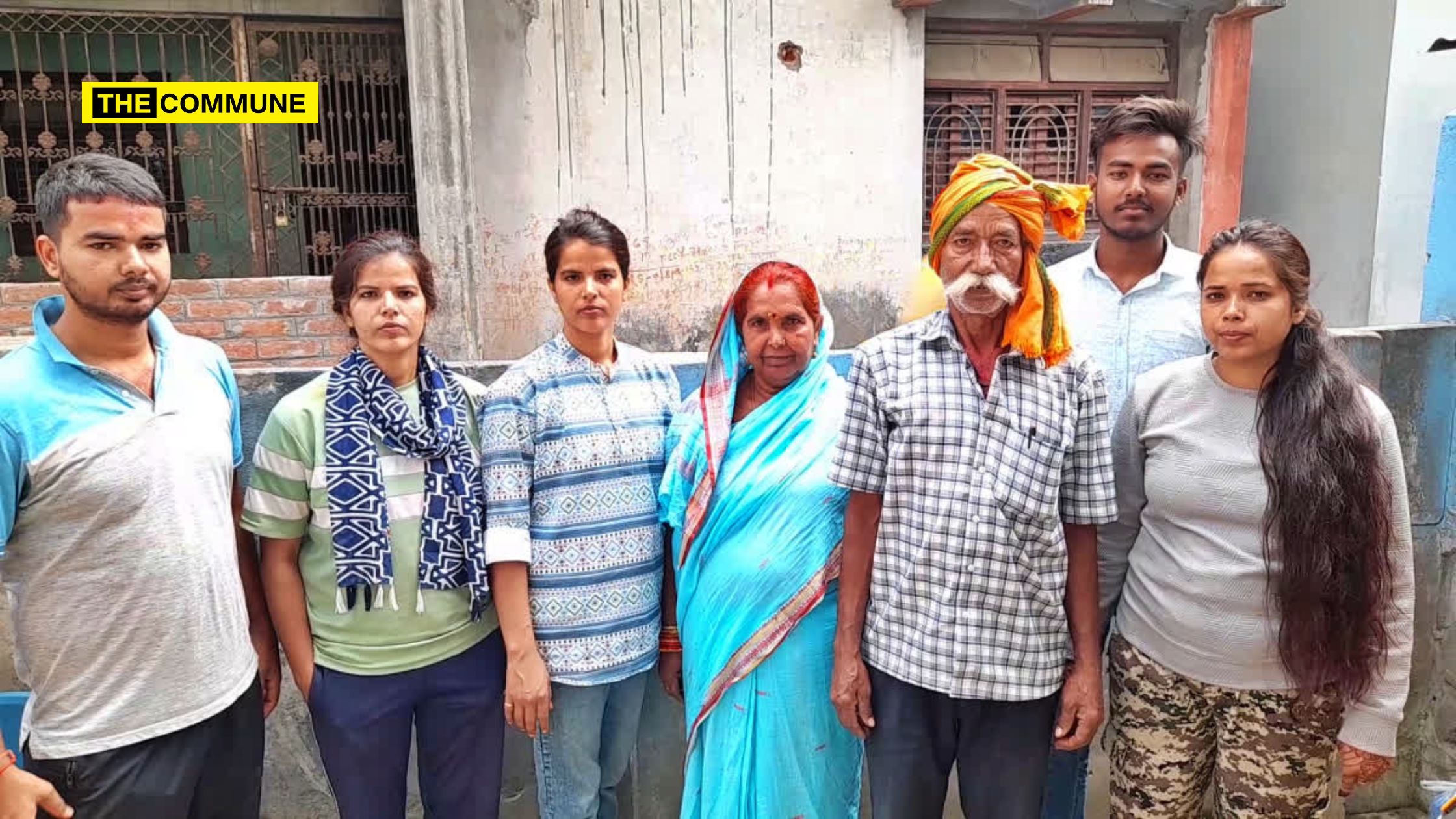
At a time when daughters are still considered a burden in many parts of the country, Rajkumar Singh alias Kamal Singh of Bihar has set a shining example of resilience and determination. Despite poverty and societal pressure, he ensured that all his seven daughters received a proper education and today, all of them serve in police and paramilitary forces, protecting the nation.

His unwavering commitment gives true meaning to the Narendra Modi government’s ‘Beti Bachao, Beti Padhao’ slogan. Kamal Singh, a resident of Ekma Bazaar in Bihar’s Saran district, faced constant taunts from relatives and villagers for having daughters. His brothers ridiculed him, saying that his daughters wouldn’t secure government jobs or get married.

Undeterred, he dedicated himself to their education and training, making them study till 11 p.m. and wake up at 4 a.m. for running practice. To support his family, Kamal Singh set up a flour mill and also bought a cow to supplement his income. “I have suffered a lot to educate them. Today, all seven daughters are serving the country. May God give everyone daughters like mine,” says Kamal Singh proudly.

The nameplate outside the house of Kamal Singh reads “Singh Sister Palace,” and each sister holds a prestigious job: The eldest Rani Kumari Singh is serving in Bihar Police, Renu Kumari Singh in Sashastra Seema Bal (SSB), Soni Kumari Singh in Central Reserve Police Force (CRPF), Kumari Preeti Singh in Bihar Police Crime Branch, Kumari Pinki Singh in Excise Police, Kumari Rinki Singh in Bihar Police and Nanhi Singh in Government Railway Police (GRP).

Kamal Singh said, “Their hard work paid off, and today, the family owns two multi-storey buildings in Ekma Bazaar. The four-storey house was built by the daughters and gifted to me as a form of pension.”

“When we get married and leave, you can live your life with its earnings,” they told him. Their only brother, Rajiv Singh Rajput, is job-hunting after completing his B.Tech in Delhi. He recalls being teased that his sisters would take away all property, but today, he proudly says: “Our sisters stand by us no matter what. They never let me feel alone.” Despite his daughters’ insistence, he still runs his flour mill, refusing to shut it down. “This mill is the reason I could educate you all. Don’t talk about closing it,” he tells them.

His wife, Shraddha Devi, remains grateful: “We struggled to feed them initially, but by God’s grace, all my daughters have made us proud.” The Singh sisters’ success story is an inspiration to families across India. It challenges societal norms and proves that daughters are not a burden, but a blessing.

–IANS

Subscribe to our channels on TelegramWhatsApp, and Instagram and get the best stories of the day delivered to you personally.

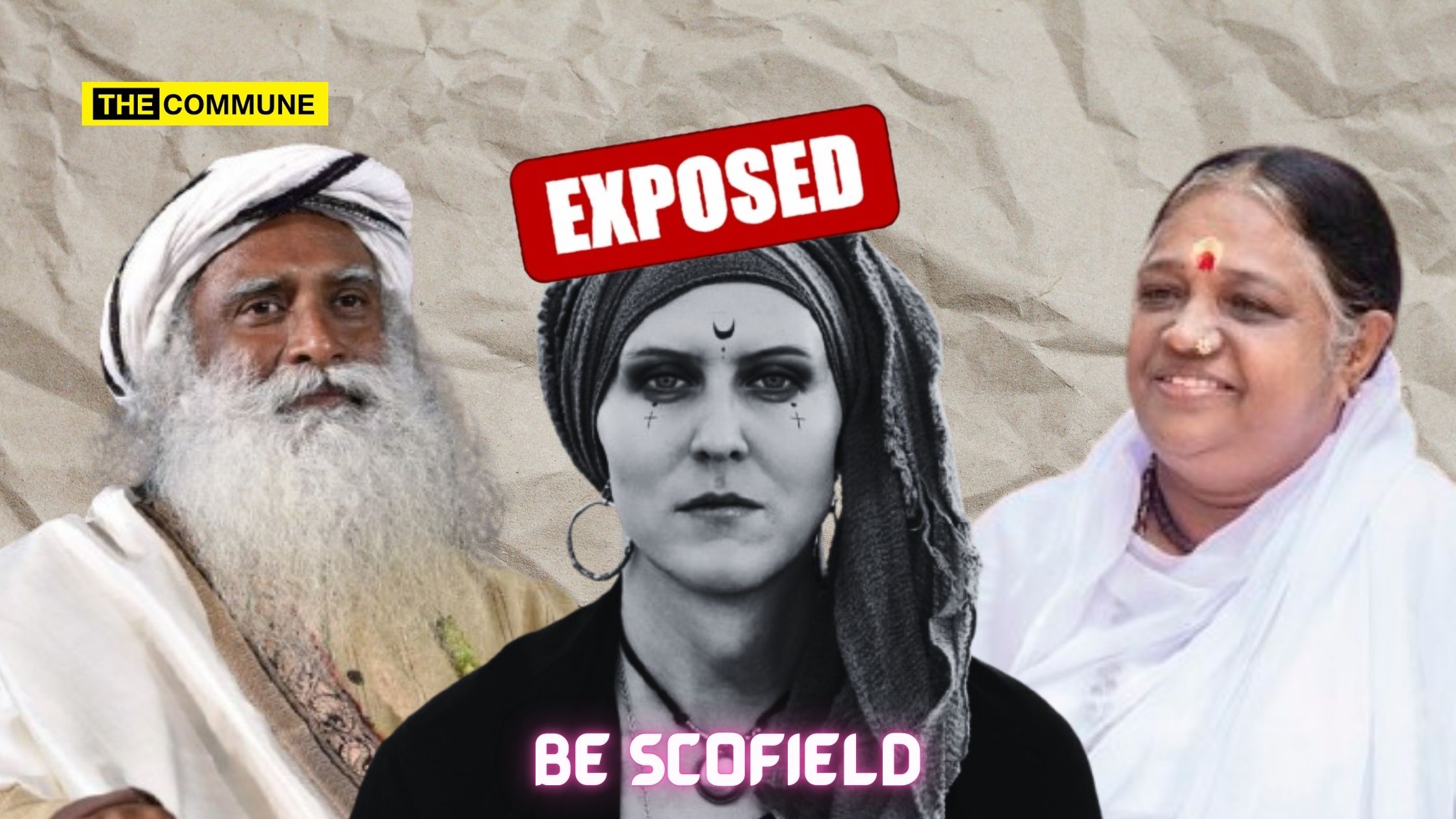
The Distorted Narratives Of The Guru Magazine: Exposing The Modus Operandi Of Be Scofield’s Campaign Against Indian Spiritual Gurus

The leftist cabal in India have been sharing a propaganda story on Sadhguru Jaggi Vasudev and his Isha Foundation written by a self-proclaimed journalist called Be Scofield. On closer look, one can see that in recent years, a series of articles published by GuruMag, a website run by Be Scofield, have aggressively targeted prominent Indian spiritual leaders, including Sadhguru and Mata Amritanandamayi. These articles often rely on anonymous sources and unverified claims, presenting a skewed and sensationalist narrative. A closer examination reveals a pattern of deceptive practices aimed at maligning the image of these leaders without credible evidence. This article seeks to expose the agenda behind these attacks and clarify the facts.

Be Scofield’s Business, History Of Targeting Indian Gurus

Be Scofield, the individual behind the The Guru Magazine (www.gurumag.com) website has a history of publishing sensationalist articles targeting Indian spiritual leaders. Her Instagram profile (@bescofield123) openly promotes these controversial stories, often lacking credible sources or legal validation.

Scofield, heavily supported by vested interests, is dubbed theanti-cult hero of the digital ageand has been involved in media projects like HBO’s Love Has Won and Netflix’s Unwell. Her work has been cited by outlets like The New York Times, The Washington Post, and CNN. However, without any real understanding of spirituality, she continues to abuse and malign the belief systems and sentiments of millions of Indians under the guise of investigative journalism.

Modus Operandi Of Be Scofield

Be Scofield employs deceptive tactics by using multiple names and email addresses while publishing her articles across several self-owned websites to fabricate an illusion of credibility. She frequently writes about herself in the third person, creating the impression that independent sources are endorsing her work. Additionally, Scofield has been known to violate copyright laws, intimidate her critics, and spread unverified, harmful rumors rather than conducting genuine investigative journalism.

Towards the end of 2018, Scofield set out to accuse a man she had never met of serious crimes allegedly committed in 2005 and 2006. Before even initiating her investigation, she had already communicated her intention to the local prosecutor. In early 2019, she proceeded to publish the inflammatory piece, “Aaravindha Himadra and the Mysterious Orcas Island Death of Carla Jean Shaffer,” on her personal website. She then amplified its reach through other platforms she controlled and social media.

Following six months of extensive research and analysis, Sirius Investigations arrived at the same conclusion reached earlier by law enforcement agencies, the coroner, and the prosecuting attorney—there was absolutely no evidence that a crime had been committed.

Through a thorough review of police records, medical reports, and interviews with residents familiar with the incident, investigators found no link between Himadra and Shaffer’s death. Scofield’s claims were not only baseless but also deliberately defamatory.

Her attempt to connect Himadra to Shaffer’s passing was a deliberate effort to manufacture a sensationalized narrative. In reality, there was no motive, opportunity, or evidence tying him to the event. The incidents she referenced occurred when Himadra and his wife were away on a two-month teaching tour in Europe.

Scofield used the tragic passing of a vulnerable woman to concoct a defamatory story designed to boost her own notoriety. By falsely accusing Himadra, she fueled misdirected anger and unrest within the otherwise peaceful community of Orcas Island.

Her unfounded attack on Himadra follows a pattern of similar accusations against other spiritual leaders. Her approach involves targeting a figure, collecting any gossip—no matter how unreliable—that supports her premeditated narrative, dismissing facts that contradict her claims, and then fabricating sensationalist allegations that she spreads widely online.

Himadra’s Story Replicated In Jaggi Vasudev’s Story

Among the most disturbing claims made by GuruMag is the allegation surrounding the demise of Sadhguru’s wife, Vijji, in 1997. The article insinuates foul play even though the matter was thoroughly investigated by the Indian Judiciary, which found no evidence of wrongdoing.
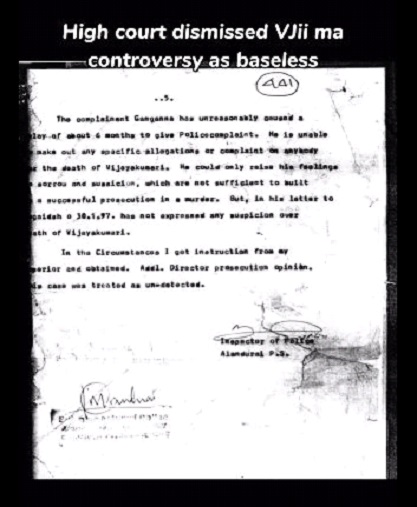
The courts stated there was nothing suspicious or criminal about Vijji’s demise, closing the case without any charges against Sadhguru. These judicial findings make it clear that the conspiracy theories propagated by Scofield are baseless and defamatory. Continuously reviving this closed case not only disrespects the Indian judiciary but also attempts to mislead the public. The investigation into Viji Maa’s Mahasamadhi revealed nothing suspicious and the case was finally thrown out of court in 1999.

Even accomplished yogis who spend their lives in spiritual sadhana struggle to attain this Mahasamadhi. To leave one’s life out of the body without injuring the body takes something else. This is the ultimate goal of every spiritual seeker and those who achieve it are held in reverence because it takes an extraordinary level of discipline and devotion.

Furthermore, repeatedly bringing up an unproven and legally settled matter is deeply disrespectful to Vijji Maa’s legacy, reducing her life and spiritual contributions to mere speculation and gossip.

Contrary to the allegations of financial misconduct mentioned in Gurumag, the Isha Foundation has consistently maintained a record of financial transparency. Its finances are regularly audited and made available for public review. The foundation’s large-scale initiatives, such as Cauvery Calling and Rally for Rivers, have been widely recognized for their positive impact.

Unverified Allegations Against Mata Amritanandamayi

Mata Amritanandamayi, a respected spiritual leader, has also been a target of GuruMag’s hit pieces. Similar to the articles on Sadhguru, the accusations against her rely on anonymous sources and lack verifiable evidence. The recurring theme of slandering Indian spiritual leaders based on hearsay suggests a deliberate agenda rather than a quest for truth.

Be Scofield has gone so far as to twist Mata Amritanandamayi’s compassionate gestures—her famous hugs and blessings—into false narratives, portraying them as sexual. Such blatant misrepresentation attempts to tarnish a well-respected spiritual tradition that has brought comfort and healing to millions worldwide. These fabrications not only undermine her mission but also insult the sentiments of her devotees who have experienced genuine solace and transformation through her guidance.
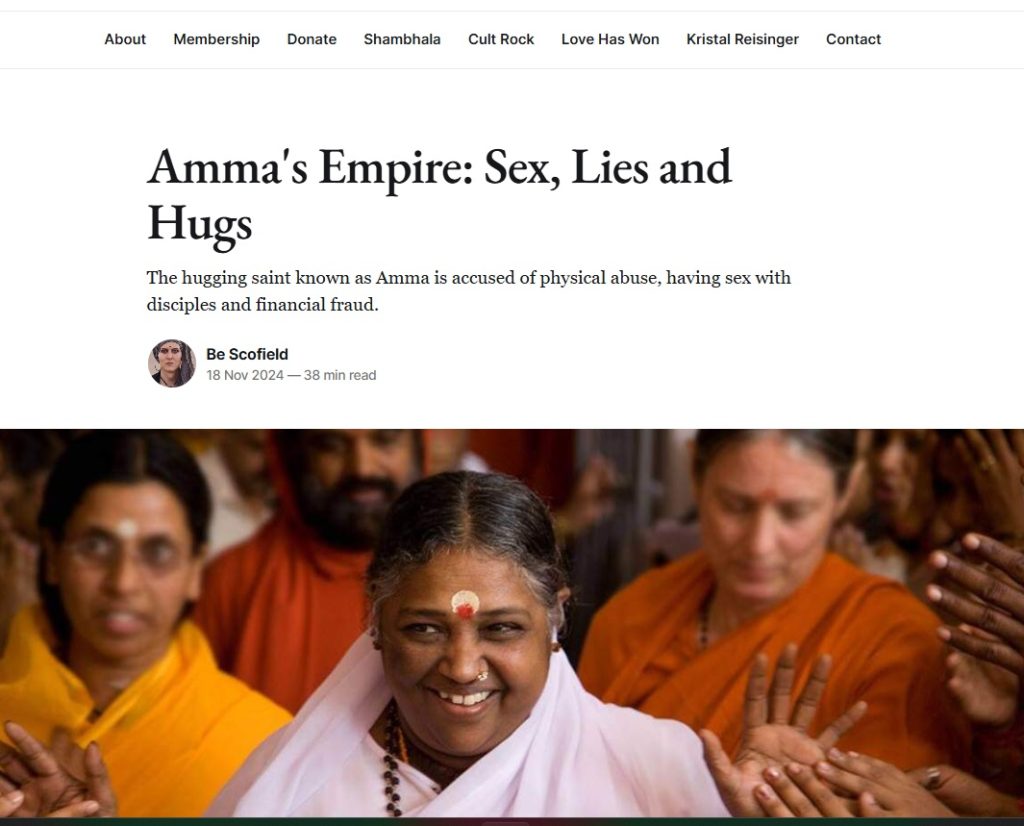
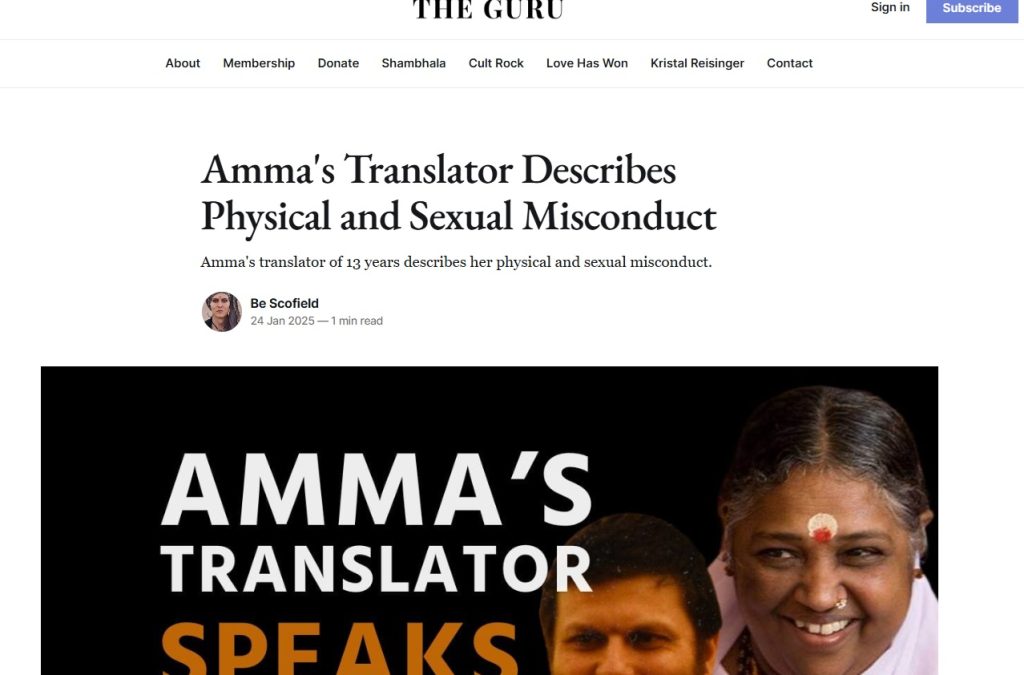
A hallmark of GuruMag’s articles is the extensive use of anonymous sources. Journalism demands verifiable facts, not unsubstantiated claims from unnamed individuals. The absence of concrete evidence in these articles raises legitimate questions about the integrity of the reporting.

Sensationalist headlines and cherry-picked stories are used to attract attention, often without providing the full context or allowing the accused a fair opportunity to respond. This strategy not only undermines the credibility of the publication but also poses a serious threat to honest journalism.

Why Target Indian Spirituality?

The consistent focus on Indian spiritual leaders by Be Scofield, without applying the same scrutiny to other religious figures globally, suggests a targeted agenda. Such selective reporting raises concerns about cultural bias and a potential agenda to undermine the credibility of Indian spirituality.
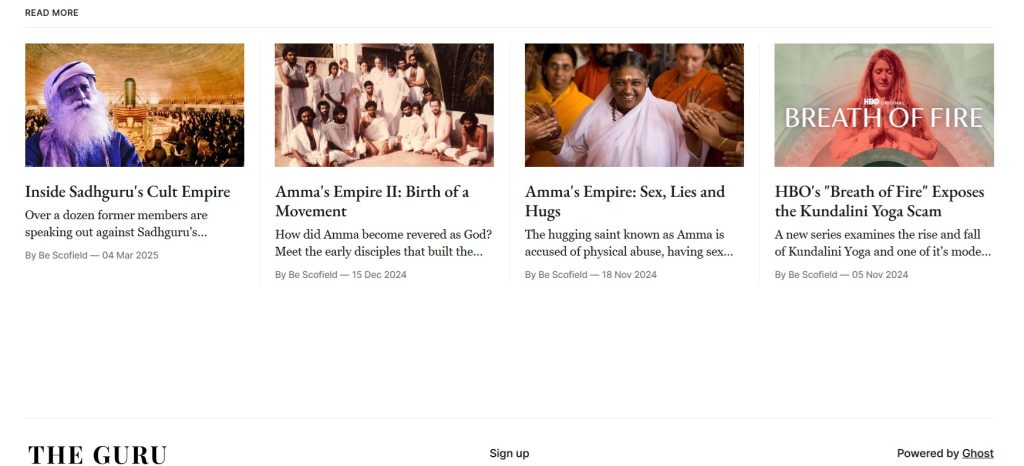
 

The articles published by GuruMag represent a textbook example of smear campaigns—heavy on accusations but light on evidence. In the absence of credible proof, these stories should be seen for what they are: an attempt to undermine the credibility of globally respected spiritual leaders based on innuendo and conjecture.

As responsible readers, we must rely on verified facts and respect the conclusions of the judicial system. Sadhguru and Mata Amritanandamayi’s contributions to society are substantial and well-documented, and they should not be overshadowed by baseless allegations.

In an era of misinformation, let us uphold the values of truth and fairness, ensuring that unfounded accusations do not cloud the contributions of those who work for the greater good.

(Meena Vishwanath is an Assistant Director at SMaRT media coalition)

Subscribe to our channels on TelegramWhatsApp, and Instagram and get the best stories of the day delivered to you personally.

Trump Administration Reopens Texas Detention Centre For Migrant Families

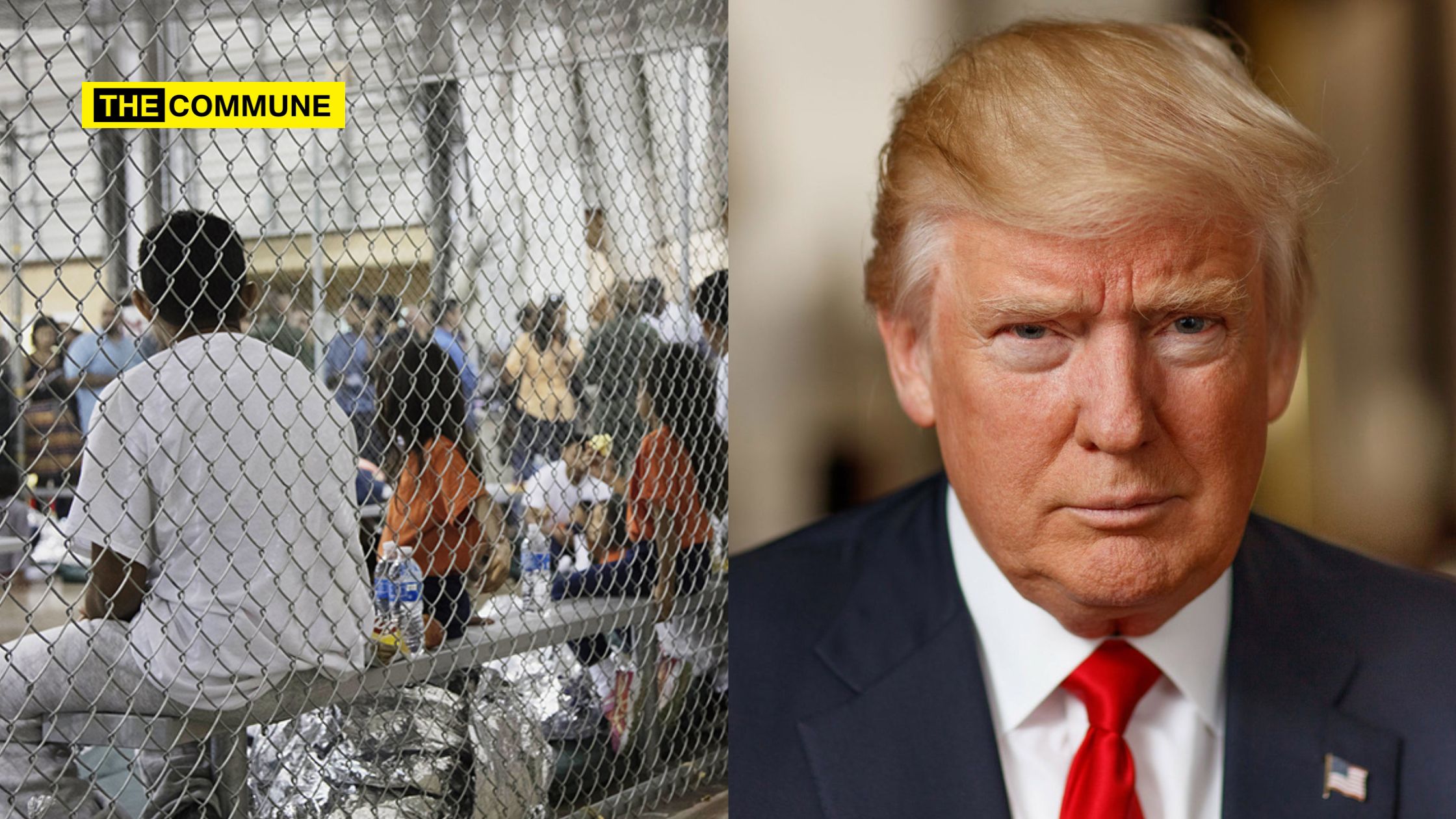
The Trump administration has decided to reopen the South Texas Family Residential Centre in Dilley, Texas, once again detaining migrant families facing deportation, according to CoreCivic, the private prison contractor operating the facility.

CoreCivic announced on Wednesday that it reached an agreement with US Immigration and Customs Enforcement (ICE) to reactivate the centre, which can house up to 2,400 parents and children, according to the Washington Post. “ICE’s plans to resume operations at this facility, known for neglect and abuse of families and children, are the start of another dark chapter in this nation’s treatment of immigrants,” said Eunice Cho, senior attorney at the National Prison Project of the American Civil Liberties Union (ACLU).

The contract will run until March 2030. The move marks a shift from President Joe Biden’s 2021 policy of ending family detention. Immigration advocates strongly oppose the practice, calling it inhumane. Current ‘border czar’ Tom Homan confirmed to the New York Times on Wednesday that the Trump administration is considering restarting family detention.

“We need family residential centres,” he said, noting that the administration was also weighing reopening facilities in Dilley and Karnes City, Texas. “It’s an option. We got a lot of options on the table.”

Reopening the Dilley facility aligns with Trump’s broader immigration agenda. He has pledged to carry out “the largest deportation operation in American history,” and urged Congress to allocate resources for expanded detention. Despite these ambitions, ICE has limited detention capacity, making large-scale deportations difficult without additional funding. CoreCivic has amended its agreement with ICE and signed a new lease with the facility’s owner, Target Hospitality Corporation. The company is also adding nearly 800 new detention beds across multiple states, signalling further expansion in the private detention industry.

The facility’s reopening will have economic implications for Dilley, a small city of fewer than 5,000 residents, where the centre previously provided hundreds of jobs. Supporters argue that family detention deters illegal border crossings. However, critics highlight its high costs and ineffectiveness, noting that a 2015 court ruling limits how long children can be held in unlicensed facilities, leading to many families being released rather than deported. Trump officials maintain that the goal is to deport families together rather than release them into the US.

–IANS

Subscribe to our channels on TelegramWhatsApp, and Instagram and get the best stories of the day delivered to you personally.
US Supreme Court Rejects 26/11 Accused Tahawwur Rana’s Plea Against Extradition To India

The US Supreme Court has rejected a plea by 26/11 Mumbai terror attack accused Tahawwur Rana, seeking a stay on his extradition to India to face trial Rana, a Canadian national of Pakistani origin, had filed an “Emergency Application For Stay” with the Associate Justice of the Supreme Court of the US and Circuit Justice for the Ninth Circuit.

He argued in his plea that his extradition to India violated the US law and the United Nations Convention Against Torture “because there are substantial grounds for believing that, if extradited to India, petitioner will be in danger of being subjected to torture.” “The likelihood of torture in this case is even higher though as petitioner faces acute risk as a Muslim of Pakistani origin charged in the Mumbai attacks,” the application said.

The application also said that his “severe medical conditions” render extradition to Indian detention facilities a “de facto” death sentence in this case. The plea cited medical records from July 2024 showing that he has multiple “acute and life-threatening diagnoses”, including multiple documented heart attacks, Parkinson’s disease with cognitive decline, a mass suggestive of bladder cancer, stage 3 chronic kidney disease, a history of chronic asthma, and multiple Covid-19 infections.

Rana’s extradition was cleared by US President Donald Trump last month. In a joint press conference with Prime Minister Narendra Modi, Trump announced that Rana’s extradition had been approved. “We are giving a very violent man back to India immediately. There is more to follow because we have quite a few requests. We work with India on crime, and we want to make things better for India,” Trump stated.

He is wanted in India for his involvement in the 2008 Mumbai terror attacks carried out by Pakistan-based Lashkar-e-Taiba (LeT) terrorists. Eight locations in Mumbai were targeted by terrorists on November 26, 2008, which claimed the lives of over 174 people.

Rana, 64, faces charges in India for providing logistical support to LeT. He was found guilty in the US for assisting the group, and India has long sought his extradition. He is known to be associated with Pakistani-American terrorist David Coleman Headley, one of the main conspirators of the 26/11 attacks.

–IANS

Subscribe to our channels on TelegramWhatsApp, and Instagram and get the best stories of the day delivered to you personally.
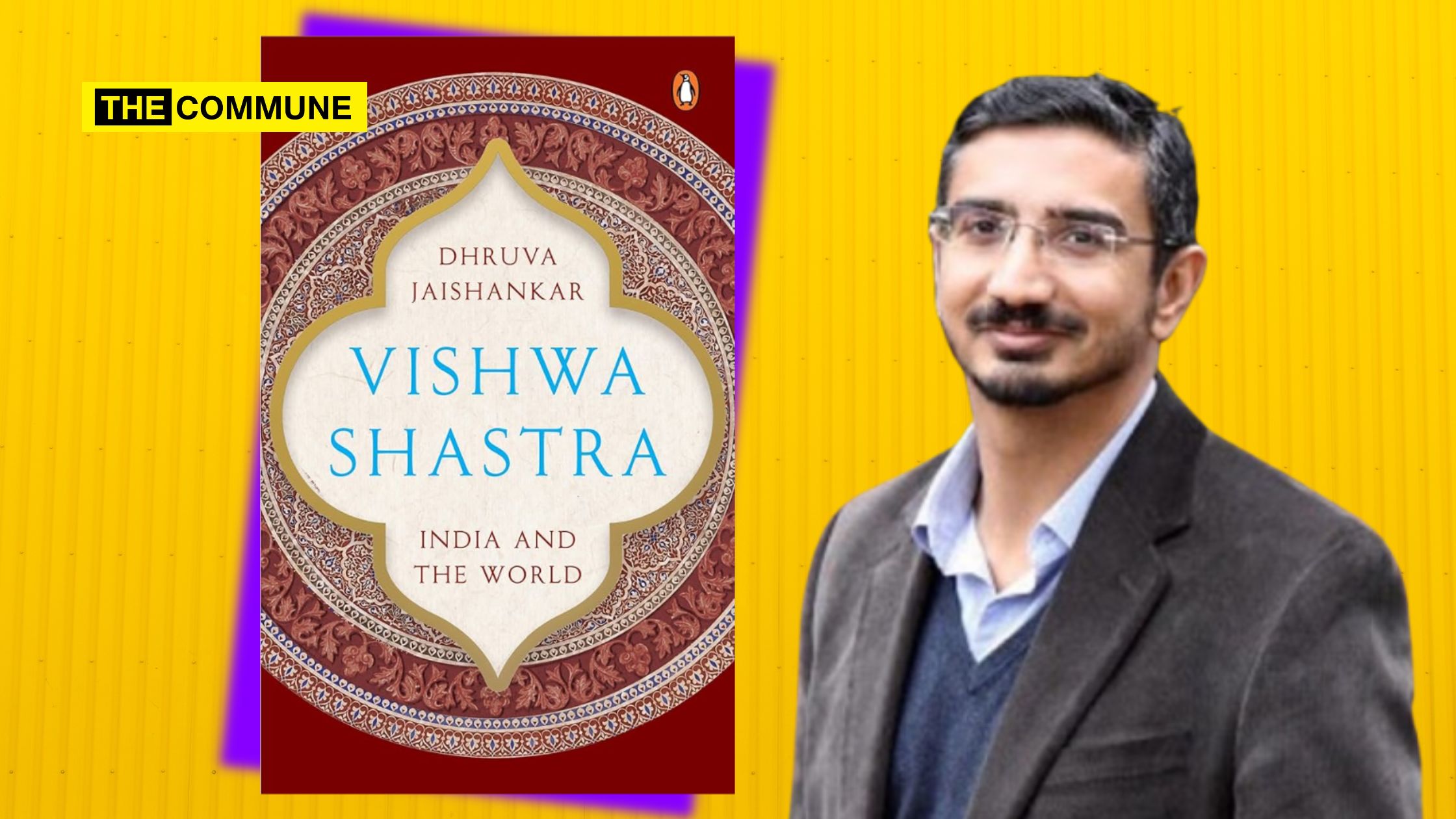
A Strategic Blueprint For India’s Global Future: A Review Of Dhruva Jaishankar’s Vishwa Shastra

In his seminal work, “India: A Wounded Civilization,” the esteemed author V.S. Naipaul remarked, “Indian journalism developed no reporting tradition; it often reported on India as on a foreign country.” This statement reflects his criticism of the absence of an authentic Indian perspective in the media. Across various domains of social sciences, the Western narrative has predominantly shaped the discourse, and India has yet to fully transcend this dependency. Furthermore, the normative frameworks that influence geopolitics are seldom centred on India. Dhruva Jaishankar’s book, “Vishwa Shastra,” represents a genuine effort to address this gap. As he articulates, “Outsiders have often sought to interpret India, but with rare exceptions, such works often impose their own lenses.”  His book seeks to modernize India’s strategic lexicon by providing a fundamental overview of India and its global context. It presents a formal and systematic analysis that examines geopolitical developments, particularly focusing on India’s rise and the historical progression of its political identity. 

Historical Foundations: India’s Strategic Legacy

Vishwa Shastra, or a treatise on the world is divided into two sections: Itihasa (history) & Rashtriya neeti (strategy). It starts with an examination of India’s international relations prior to its independence, a topic that is frequently neglected. The impact of this pre-independence history continues to shape various elements of India’s strategic discussions in contemporary times. The author references Vedic texts, Puranas, Jain and Buddhist literature, as well as works such as Arthashastra and Manusmriti, to demonstrate the sophisticated statecraft that existed in ancient India.

The text discusses India’s considerable interactions with the eastern and southern regions. In addition to the powerful Chola dynasty, various Indian rulers also explored Sri Lanka, as demonstrated by the Indian cultural influences present in Southeast Asia. The author subsequently analyses the emergence of Islam during the medieval period and its overall impact on India. Contrary to common perceptions, the Mughals, the Ottoman Caliphs, and the Safavids in Persia experienced their own rivalries. The author characterizes these entities as “gunpowder empires” due to their military prowess. The book further explores themes related to the confederacies and generals of medieval regions such as Awadh, Punjab, Bengal, Malwa, and the Marathas. It examines the arrival of European powers, the establishment of British rule in India, and the enduring effects of these developments on the subcontinent. Dhruva criticizes the ambiguous and problematic nature of British agreements, asserting that they have played a significant role in the boundary issues that India continues to confront today.

India’s Strategic Choices In The Post-Independence Era

Post-independence, India opted for a non-aligned stance, distancing itself from major power blocs. This strategic choice allowed the nation to reap benefits from both the US-led and Soviet-led factions, while also positioning India as a natural leader among post-colonial nations. The author notes that prominent figures such as Patel, Ambedkar, and JB Kripalani expressed concerns regarding non-alignment. In a speech delivered in 1951, Ambedkar articulated his worries about the country’s foreign policy, stating, “the cause for my anxiety is the foreign policy of the country. We have alienated ourselves.” These concerns were rooted in empirical evidence; for instance, in 1947, India declined American aid for dam construction, as Nehru preferred to limit machinery usage to create more employment opportunities. Additionally, India rejected a friendship treaty with the United States. It was only after Stalin’s death in 1953 that India began to strengthen its ties with the USSR. Dhruva provides an in-depth analysis of the defeat suffered by India at the hands of China in 1962, attributing this setback to Nehru’s idealistic views of China. The author asserts, “One of India’s fundamental errors was its misreading of China’s domestic politics, its ideological imperatives, and the international environment.”

Regional Assertiveness And Foreign Policy Shifts (1971–1991)

The book delves into India’s interventions in its neighboring countries and its strategic alignments as it transitioned into the third phase of its foreign policy from 1971 to 1991, characterized by a more assertive regional stance. Notably, India played a crucial role in the liberation of Bangladesh and became involved in the Sri Lankan civil war, which ultimately proved to be a miscalculation. Another instance of regional assertiveness was Operation Cactus in 1988, during which Indian troops were deployed to the Maldives to protect the president. In response to the growing US-Pakistan-China nexus, India strengthened its relationship with the USSR by signing a friendship treaty. The book thoroughly examines the factors that led to India’s economic liberalization in 1991, highlighting the Gulf War, the disintegration of the USSR, and India’s efforts to move beyond the limitations of outdated non-alignment policies as key influences.

Rashtriya Neeti: A Strategy For The Future

The second section of the book, titled “Rashtriya Neeti” (statecraft), outlines a strategy aimed at enhancing India’s global standing. Dhruva asserts that globalization alone cannot resolve all the challenges confronting India. He astutely points out India’s power paradox, wherein the nation possesses both a developing economy and the attributes of a major power. Drawing lessons from various successful nations, the book warns against a complete inward focus, advocating instead for proactive engagement in international affairs. The author highlights 14 key points that could serve as force multipliers for India, including military readiness, the implementation of an industrial policy, prioritizing regional relationships, enhancing assistance and connectivity, securing the Indian Ocean, fostering connections with Southeast Asia, collaborating with the Quad and other partners, managing competition with China, addressing issues with Pakistan, engaging with Afghanistan, reshaping dynamics in the Middle East, revitalizing multilateral institutions, forming new coalitions, and amplifying the voice of the Global South. The author notes that many of these initiatives are already in progress. He pragmatically notes that unless China fundamentally alters its approach to international relations, New Delhi must remain prepared for a significantly more competitive relationship with China.

A Comprehensive And Insightful Read

Vishwa Shastra is a remarkable work that elucidates, analyses, and summarizes the events that have influenced both Indian and global dynamics. The author demonstrates a profound comprehension of Indian history and the significant legacy it contributes to the world. This book serves as an essential resource for anyone interested in international relations, including students, academics, civil service aspirants, and general readers eager to understand India’s position in the evolving global landscape. Dhruva presents incisive arguments supported by reliable sources, providing a comprehensive overview of Indian foreign policy. Examine it for its factual and objective examination, free from any ideological bias, encouraging readers to reflect without preconceived notions. Dhruva’s book is an engaging read that captivates attention.

Kanishk Shekhar is a columnist and also teaches students preparing for Civil Services Exam

Subscribe to our channels on TelegramWhatsApp, and Instagram and get the best stories of the day delivered to you personally.
Part-Time Politician Vijay’s 5-Page Letter On Delimitation Shows That He’s A Filtered Dravidianist Dimwit Buffoon Who Apes The DMK

Tamil Nadu Victory Party’s Vijay has penned a lengthy five-page letter opposing the upcoming delimitation process. However, upon closer examination, it becomes evident that his arguments are nothing more than a rehash of DMK’s tired narratives. Worse, his reasoning is riddled with contradictions, selective amnesia regarding constitutional principles, and a lack of foresight. Here’s a systematic rebuttal to each of his points:

1. The 84th Amendment & Population-Based Representation

Vijay argues that delimitation based on population will be unfair to Tamil Nadu and other southern states, as it will reduce their representation in Parliament. However, Article 81 of the Indian Constitution is clear: Lok Sabha seats must be distributed based on population to ensure equal representation. The core principle of democracy is ‘one person, one vote, one value.’

The 84th Amendment (2001) froze the total number of Lok Sabha and State Assembly seats based on the 1971 Census until the first Census after 2026. The last Census that happened was in 2011 which is now outdated. The 2020 Census of India was postponed indefinitely due to the COVID-19 pandemic and has not been conducted yet. So, it is high time for a Census now and it is only logical that the delimitation is done based on 2026 Census and not the outdated 1971 Census.

His grievance that Tamil Nadu will be “punished” for controlling its population is misplaced. The idea behind delimitation is not to “reward” or “punish” states but to ensure fair representation based on demographic realities. If anything, states with larger populations are currently underrepresented, violating the very democratic principle Vijay claims to uphold.

Amit Shah has assured that southern states, including Tamil Nadu, would not experience a reduction in their parliamentary representation. He also emphasized that any increase in parliamentary seats would be allocated fairly, ensuring that no state’s representation is diminished.

He reiterated that the delimitation process would be conducted on a pro-rata basis, maintaining equitable representation for all states. A pro-rata increase ensures that no state loses seats outright but instead gains seats in proportion to its current share of India’s total population. This is different from a pure population-based redistribution, which could reduce the representation of states with lower population growth.

If India’s total population has doubled since 1971, a proportional seat increase might raise the total from 545 to 800 seats. Tamil Nadu’s share would also increase proportionally to reflect its current population relative to the national total.

2. False Alarm Over Southern States Losing Influence

Vijay mimics the DMK’s fear-mongering by portraying delimitation as an assault on the South. But he conveniently overlooks the fact that parliamentary representation must evolve with actual population shifts over time. This includes the significant population growth in southern states since the 1971 Census, which remains the outdated basis for the current allocation of 545 seats in Parliament. Southern states are not being targeted—democracy is merely being implemented as per constitutional mandates. Additionally, Parliament has always balanced regional interests through the Rajya Sabha, where representation is not solely population-based.

His claim that the South will lose political influence ignores the reality that governance is devoid of any basis as Tamil Nadu will not lose seats. The only thing unclear is how much the seats will increase for each state. For political influence, the quality of political leadership in ensuring economic growth, policy effectiveness, and governance quality matter more than numerical representation. If Tamil Nadu has excelled in these areas, it will continue to wield influence, just as states like Maharashtra and Gujarat have done despite not having the highest number of MPs.

3. Increasing Lok Sabha Seats is Logical and Necessary

Vijay dismisses the idea of expanding Lok Sabha seats by arguing that Parliamentarians already struggle to ask questions during Question Hour. This is an absurd non-sequitur. The issue of time allocation in Parliament is an operational concern, not a reason to deny rightful representation to millions of citizens.

Vijay’s argument that adding more MPs is pointless because not all MPs get to ask questions during Question Hour is like saying, “What’s the use of more students in a school if not everyone gets to answer a question in class?” Just like students don’t just attend school to speak but to learn, collaborate, and participate in various activities, MPs don’t exist only to ask questions—they debate laws, oversee governance, and represent people’s issues in multiple ways. The ballot system for Question Hour ensures fairness, not suppression, just like a teacher calling on different students daily. More MPs mean better representation for a growing population, preventing a few states from dominating decisions. Freezing seats at 1971 levels is as absurd as keeping a classroom size the same, even when more kids are enrolling. Vijay’s logic is lazy, misleading, and purely DMK-style fearmongering—designed to stoke emotions rather than address facts.

A growing population necessitates more representatives to ensure effective governance. The United States, which he conveniently cites later, has adjusted its congressional representation multiple times in history before capping it. India, with a population four times that of the U.S., cannot remain frozen in time with an outdated allocation based on 1971 Census.

4. Hypocrisy On Parliamentary Functioning & Electoral Processes

Vijay claims that Parliament is failing its role and suggests reforms like Prime Minister’s Question Time (a British practice). But if we are to follow the British model, should we also allocate reserved seats in Parliament for religious leaders, as the UK does for Church of England bishops in the House of Lords? If England, a self-declared Christian nation, reserves seats for the Church of England in its Parliament, should Hindu-majority India also allocate seats to sadhus and mutt heads in the legislature? If Vijay wants to selectively import British parliamentary traditions, is he willing to embrace this as well?

Similarly, his demand that Election Commissioners be appointed by consensus is a DMK-style talking point, completely unrelated to delimitation. The Election Commission already functions independently, and delimitation is carried out by a separate Delimitation Commission headed by a retired Supreme Court judge. His attempt to cast aspersions on these institutions reeks of opportunistic fear-mongering.

5. False Equivalence with the U.S. House of Representatives

Vijay cites the U.S. model, where the number of seats in the House of Representatives is fixed at 435. What he conveniently ignores is that the U.S. follows a system of proportional reallocation, where seats are redistributed among states based on population shifts every 10 years. The fixed number of 435 doesn’t mean states retain the same representation indefinitely—it means states with declining populations lose seats while growing states gain them.

If Vijay truly wants India to follow the U.S. model, he should advocate for an automatic reallocation of seats every decade, which would be even more disadvantageous to Tamil Nadu.

6. The Federalism Myth: Misrepresenting Rajya Sabha Representation

One of Vijay’s most laughable assertions is that Rajya Sabha representation should be made equal for all states, similar to the U.S. Senate. This betrays his ignorance of India’s federal structure. Unlike the U.S., India is a quasi-federal nation with a unitary bias. Our Constitution clearly does not provide for equal state representation in Rajya Sabha because states are administrative units, not sovereign entities.

His idea would mean that states like Goa and Sikkim would have the same representation as Uttar Pradesh and Maharashtra, which would be an absurd distortion of federal balance. If anything, this demand contradicts his earlier complaint about reducing Tamil Nadu’s influence!

7. Financial Autonomy & Political Opportunism

Vijay parrots another DMK line about how Tamil Nadu should have greater financial independence. But the current system already considers economic disparities between states. Tamil Nadu is one of the biggest beneficiaries of central funds, receiving significant allocations for infrastructure, health, and education. His demand for even more financial autonomy is nothing but subnationalist posturing, rather than a genuine policy concern.

8. The Real Agenda: Regional Victimhood Politics

Ultimately, Vijay’s opposition to delimitation is nothing but an exercise in manufacturing a sub-nationalist narrative with separatist undercurrent. By deliberately misinterpreting constitutional provisions and parroting DMK narratives, he is proving to be a pale imitation of the party he claims to oppose. His claims are neither rooted in legal reasoning nor in a genuine concern for democracy. Instead, they are an attempt to stoke unnecessary fears and push a Tamil Nadu vs. North India narrative for political gains.

Constitution Over Political Expediency

Delimitation is a constitutional necessity, not a conspiracy against Tamil Nadu or the South. The Indian Constitution is designed to adapt to demographic realities while maintaining regional balance. Vijay’s letter is nothing but a misleading, uninformed, and politically motivated attempt to stir up regional animosity.

Rather than playing victim, leaders like him should focus on ensuring Tamil Nadu’s continued economic and social progress within a fair, democratic framework. But given his eagerness to ape the DMK, it’s clear that intellectual consistency and constitutional integrity are the last things on his mind.

Subscribe to our channels on TelegramWhatsApp, and Instagram and get the best stories of the day delivered to you personally.