Home Blog Page 348

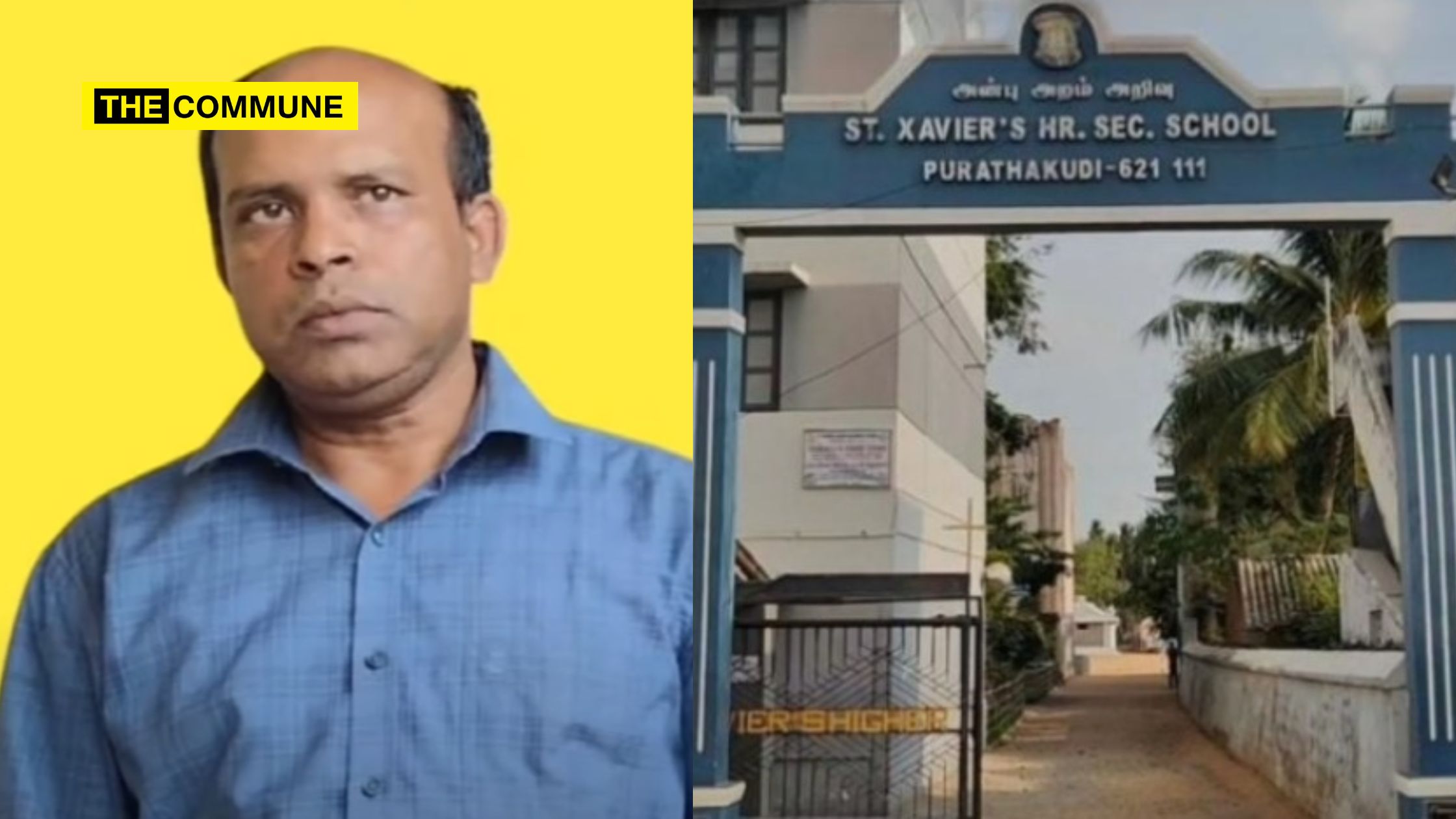
POCSO Case Filed Against Pastor & Warden At Trichy’s Govt-Aided St. Xavier’s School Hostel

Two individuals, including a pastor, have been arrested in a POCSO case related to the sexual harassment of hostel students.

St. Xavier’s Government-Aided Higher Secondary School, located in Purathakudi near Samayapuram in Trichy district, has over 700 students. The school also houses St. Xavier’s Britto Hostel, where more than 100 students reside. The hostel warden, Kulanthai Nathan, is from Ayyavadi near Kumbakonam in Thanjavur district. Sundarrajan, a resident of Murugankottai in Udayarpalayam, Ariyalur district, is a postgraduate student is training to become a priest. It is alleged that he stayed in the warden’s room and harassed students at the hostel.

Despite multiple complaints, no action was taken, leading the students to inform their parents. The matter was later reported to Trichy District Child Protection Officer Rahul Gandhi, who conducted an inquiry. The investigation confirmed that students had been subjected to sexual harassment.

Following this, a POCSO case was registered against hostel warden Kulanthai Nathan and his associate Sundarrajan at the Lalgudi All Women’s Police Station based on a complaint filed by Rahul Gandhi. Further legal proceedings will depend on the outcome of the police investigation.

(With inputs from Update 360)

Subscribe to our channels on TelegramWhatsApp, and Instagram and get the best stories of the day delivered to you personally.

Vedic Scholar Dushyanth Sridhar Seeks ₹1 Crore In Defamation Suit Against Temple Activist Rangarajan Narasimhan

rangarajan narasimhan dushyanth sridhar

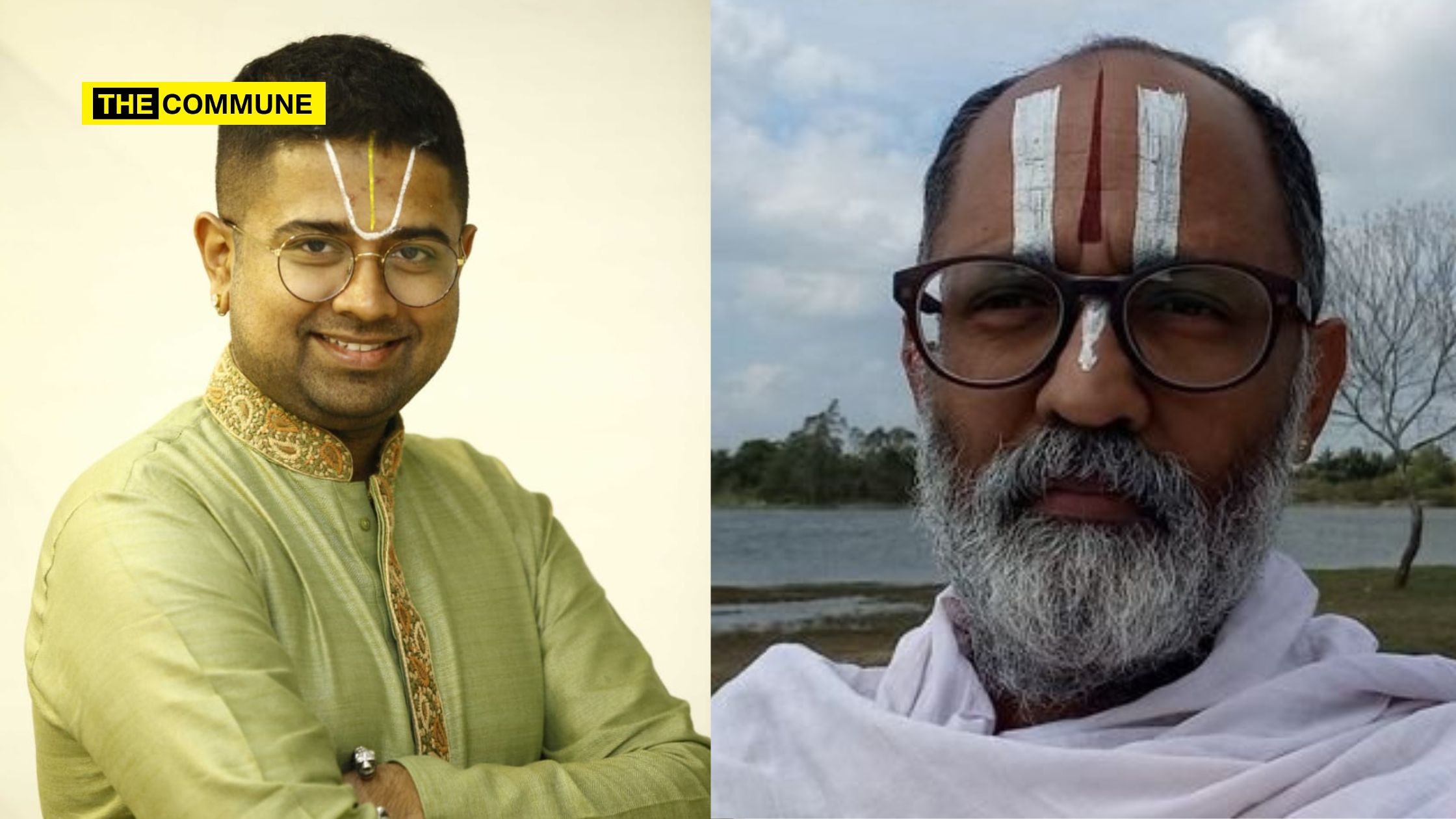
Vedic speaker and orator Dushyanth Sridhar has approached the Madras High Court, seeking permission to file a defamation suit against temple activist Rangarajan Narasimhan. He is demanding ₹1 crore in damages, alleging that the activist made derogatory remarks about him on social media.

On Thursday (3 April 2025), Justice K. Kumaresh Babu granted time until 29 April 2025 for Narasimhan to submit his written objections. Appearing in person, the activist argued that the suit should have been filed in Tiruchi, where he resides, rather than in Chennai.

Dushyanth Sridhar, a Bengaluru resident, justified his decision to approach the Madras High Court by stating that his primary audience and followers are based in Chennai. His legal counsel informed the court that he is a chemical engineer with both bachelor’s and master’s degrees from the prestigious Birla Institute of Technology and Science (BITS), Pilani. Transitioning to religious discourse, he claims he has since delivered approximately 3,500 lectures globally on scriptures such as the Ramayana, Mahabharata, Bhagavata Mahapurana, and Divya Prabandham.

Dushyanth Sridhar alleges that since 2023, Rangarajan Narasimhan has been making personal attacks against him online, which he claims go beyond fair criticism. He has requested the court to direct the activist to remove the defamatory posts, refrain from making further such statements, and compensate him for the alleged harm to his reputation.

According to the plaint, Chennai serves as Sridhar’s primary base for discourses, given his large following in the city and his preference for delivering speeches in Tamil. It further states that the defendant has a history of making inflammatory remarks against well-known figures to gain attention.

The case will be heard further after the activist files his response by 29 April 2025.

(With inputs from The Hindu)

Subscribe to our channels on Telegram, WhatsApp, and Instagram and get the best stories of the day delivered to you personally.

Tenkasi Kashi Vishwanathar Temple Consecration Halted By Madurai High Court Bench Over Alleged Misuse Of Funds

The Madurai Bench of the High Court has issued an interim ban on the consecration ceremony (Kumbabhishekam) of the Sri Ulagamman Udanurai Arulmigu Sri Kashi Vishwanathar Swamy Temple in Tenkasi. The decision comes in response to a public interest litigation (PIL) filed by a petitioner alleging mismanagement and structural instability in the temple following renovation efforts.

The petitioner, Nambirajan from Tenkasi, contended that extensive excavation work had been carried out within the temple premises, leading to the removal of 100 tractor-loads of soil under the directive of the temple’s executive officer, Murugan. This, he claimed, had compromised the structural integrity of the temple. Additionally, he alleged that government funds allocated for the temple’s renovation had not been utilized properly, and that an inspection by the Tenkasi District Assistant Commissioner confirmed that the renovation work remained incomplete.

The High Court, in response, has halted the Kumbabhishekam until the temple’s restoration is fully completed. The case has been adjourned, with the court directing an inspection by a team from IIT Madras and the Customary Commission to assess the temple’s stability and submit a report.

Meanwhile, controversy has erupted on social media over a notice issued by the temple’s renovation committee detailing the proposed expenses for the Kumbabhishekam. The document lists an estimated total cost of ₹1.67 crore, with a Shivacharya’s salary reportedly starting at ₹45 lakhs, sparking public outcry and raising concerns about financial transparency.

The case will continue to be heard, with further developments awaited on the future of the temple’s consecration ceremony.

(With inputs from WebDunia)

Subscribe to our channels on Telegram, WhatsApp, and Instagram and get the best stories of the day delivered to you personally.
Robert de Nobili: The Jesuit Who Posed As A Brahmin To Convert Hindus In India

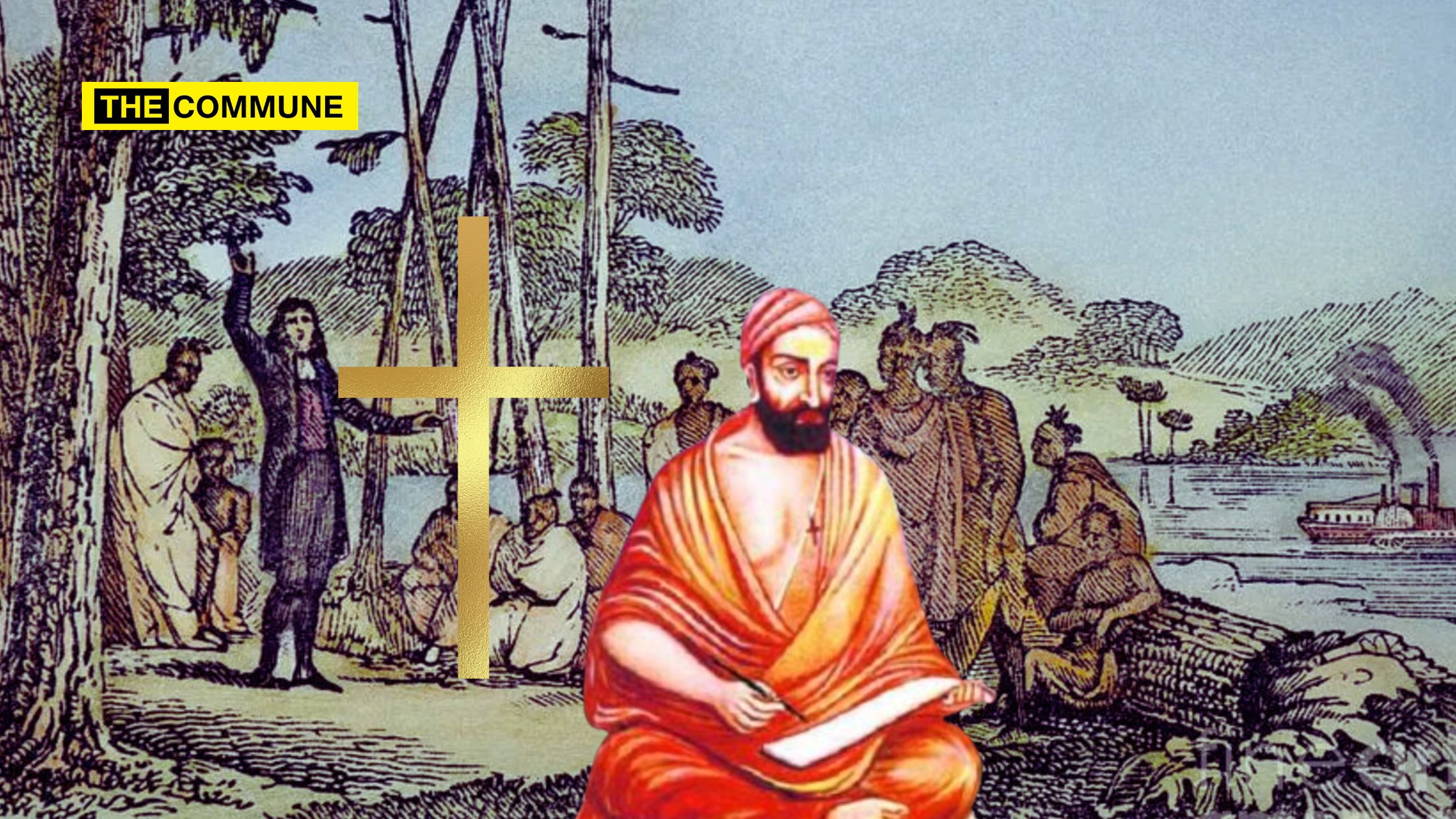
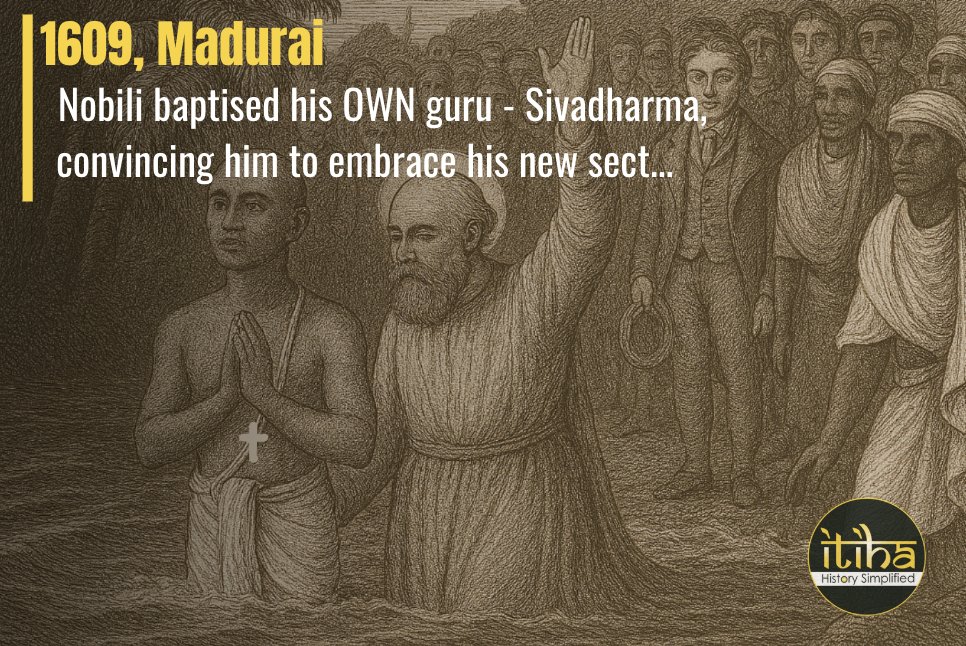
Did you know that an early Jesuit missionary in India, with the sole aim of converting devout Hindus, resorted to an elaborate mix of deception and clever tactics to spread Christianity? The story of Robert de Nobili, the Jesuit missionary known as the “Roman Brahmin,” is indeed an eye-opener. In the early 17th century, he adopted the guise of a Brahmin in South India, learning Sanskrit and Tamil, dressing in traditional Brahmin attire, and even presenting Christianity as a “fifth Veda” to appeal to upper-caste Hindus.

Nobili’s mission was a response to the failed conversion attempts by earlier European missionaries in the 15th centaury who struggled to convince Indians to embrace Christianity. During this period, Indians viewed Westerners as “uncivilized” due to their dietary habits, excessive drinking, and lack of hygiene. This made it almost impossible for missionaries to make any headway. Nobili, however, was determined to change this, believing the only way to succeed was to “Hinduize” Christianity.

He began by reinventing himself as a Brahmin. He abandoned his missionary robes and instead wore saffron robes, applied a tilak on his forehead, and wore the sacred thread. He even shaved his head, leaving a ponytail, and adopted a vegetarian diet, eating once a day like other Brahmins. Nobili moved into the Brahmin quarters of Madurai, where he hired a Brahmin scholar to master Sanskrit, Tamil, and Telugu. He became the first European to study Hindu texts and was impressed by the intellectual depth of Hindu philosophy.

Once he understood Indian traditions, Nobili rebranded Christianity through a Hindu lens. He equated Christian concepts with familiar Hindu terms: God became “Brahman,” salvation was seen as “Moksha,” and Christian grace was presented as “Prasadam.” He even called parts of the Bible the “Yesur Veda” (the Veda of Jesus), and the church became a “Kovil” (temple), while pastors were referred to as “Gurus.”

But Nobili’s manipulation didn’t end there. He fabricated a narrative in which Christianity was presented as a lost Indian tradition. He claimed that Christianity was just another path among the many spiritual traditions in Hinduism, making converts unaware that they were actually embracing a different religion. He went as far as to claim that he had found the “fifth Veda,” which was actually Christian theology cleverly disguised in Sanskrit.

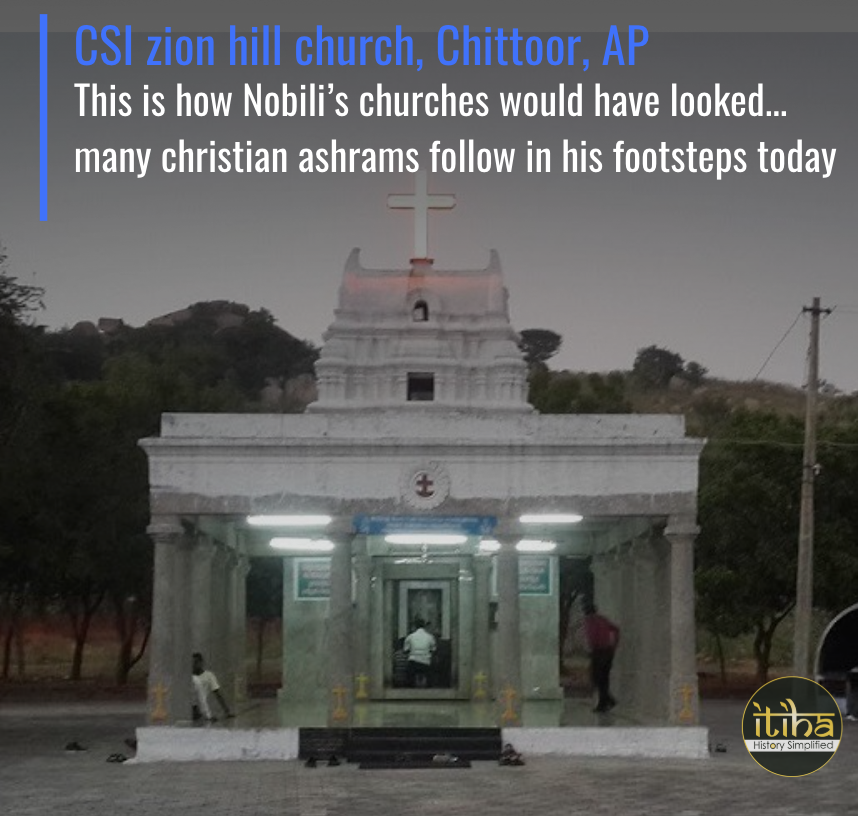
To further his deception, the churches he built resembled Hindu temples, avoiding any European symbols. Converts were allowed to continue practicing Hindu customs such as wearing the sacred thread, performing rituals, and celebrating festivals, as long as they refrained from idol worship. He even Christianized the sacred thread ceremony (Upanayanam), interpreting the three threads as symbols of the Holy Trinity, with a Christian cross incorporated into the ritual.

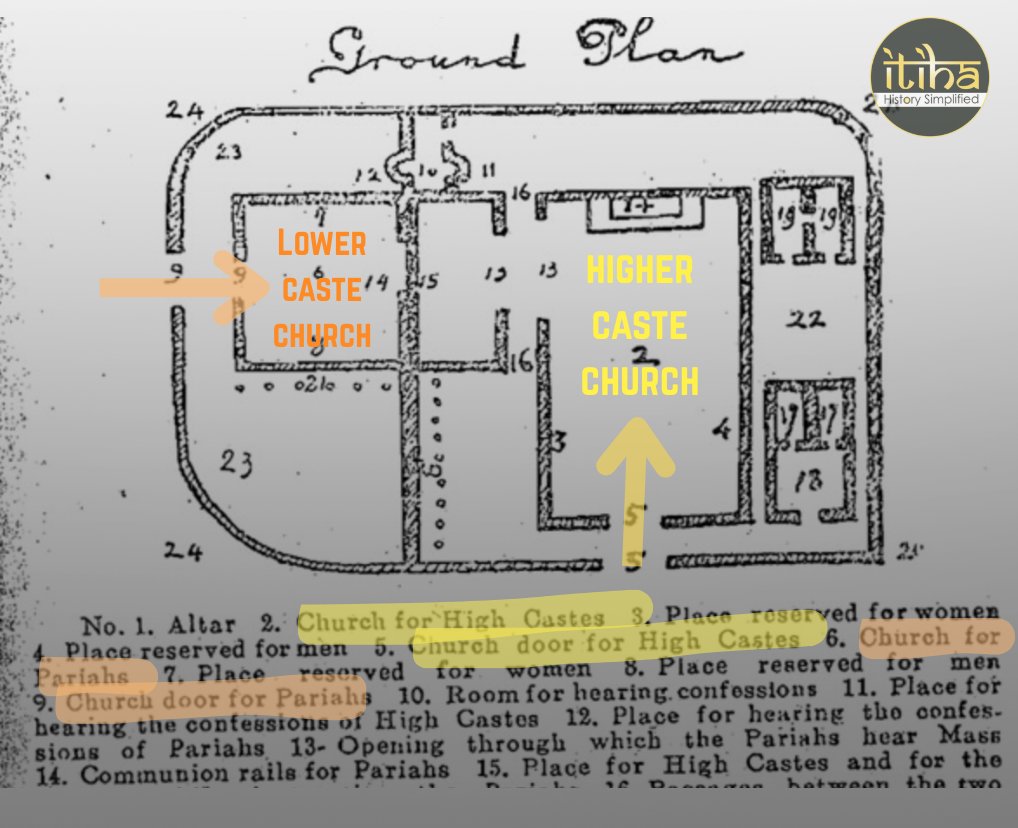
Despite this, Nobili’s version of Christianity still involved significant segregation. Upper-caste converts were kept separate from lower-caste ones, with different churches, burial grounds, and even separate entrances. Lower castes were excluded from church management, and discrimination continued within the church community. Interestingly, unlike other missionaries who focused on converting lower castes, Nobili specifically targeted Brahmins and upper-caste Hindus, believing that their conversion would eventually lead to lower-caste conversions through a “trickle-down effect.”

Nobili faced suspicion from the local Brahmin community, who suspected him of being a foreigner due to his appearance. Once, an assembly of 800 Brahmins confronted him, and he defended himself by claiming he wasn’t just any foreigner but a “Twice-born Sannyasi” from Rome, born into nobility. To further validate his claims, he obtained a certificate from Rome, which he displayed on his door, declaring himself a “Romaca Brahmana” (Roman Brahmin). At times, he even claimed to be a descendant of Lord Brahma. Some of the missionaries he inspired later even resorted to using skin-darkening lotions to avoid the obvious signs of their foreign origins.

Despite facing opposition both from the local Hindu community and the Church, Nobili continued his mission. The Church initially disapproved of his methods, as they believed he was adulterating Christian teachings. However, Nobili defended his approach by arguing that early Christianity had adapted Greco-Roman culture and rites, and he was simply doing the same in India. Eventually, Pope Gregory XV ruled in his favor, allowing him to continue his work with some restrictions.

Nobili’s controversial legacy lives on. Despite being rejected by many during his lifetime, today he is honored across India, with several schools, a college, and even a statue dedicated to him. He is remembered as a figure who bridged two cultures—though his tactics remain highly debated. Ironically, a missionary once dismissed as a fraud is now celebrated as a significant figure in the history of Christian missions in India.

(This article is based on an X Thread By Itiha)

Subscribe to our channels on TelegramWhatsApp, and Instagram and get the best stories of the day delivered to you personally.

A Look At Why Kerala Church Is Supporting The Waqf Amendment Bill

The Waqf (Amendment) Bill, 2025 was introduced in the Lok Sabha on 2 April 2025, by the Central Government, with a vote scheduled to take place soon. While various Muslim organizations and leaders have strongly opposed the bill, the Kerala Catholic Bishops’ Council (KCBC) has expressed its support and urged MPs to vote in favor of the legislation.

In a press release dated 29 March 2025, KCBC called for amendments to what it described as the “unconstitutional and unjust provisions” of the existing Waqf Act.

This report covers 24 significant incidents between 2009 and 2025, categorized into four sections as below where the Kerala Church has come out against the Waqf and its atrocities and supported the Amendment Bill while also raising concerns on Love Jihad.

  • Waqf claims on Christian/Church land
  • Support from church councils and Christian groups for the Waqf Bill
  • Church statements and views on love jihad
  • Christian women as victims of love jihad
  • Church statements and views on PFI

Waqf Claim On Land Owned By Christians/Church

#1 Munambam

Over 600 families in Munambam, Kerala, are facing displacement due to the Waqf Board’s claim on their land, despite ownership records dating back to 1989. The Kerala Catholic Bishops’ Council (KCBC) and the Syro-Malabar Public Affairs Commission (SMPAC) have urged the Union government to address the issue through amendments to the Waqf Act. The dispute stems from a 1902 lease of 404 acres by the King of Travancore to a private individual, later gifted to Farook College in 1950. However, the word “Waqf” was mistakenly included in the documents. In 2019, the Waqf Board asserted ownership, despite the 2013 Waqf Act mandating claims within three years. Residents, including people of various religious backgrounds, now face eviction without due legal process. KCBC and SMPAC have petitioned Parliament, demanding a fair resolution and protection of citizens’ property rights.

#2 Cherai

In February 2023, the Kerala High Court’s Division Bench upheld an interim order preventing the issuance of revenue records and documents to alleged encroachers of 404.76 acres of Waqf land in Cherai. The case originated from an appeal by the Kerala Waqf Conservation Vedi, challenging an October 2022, order by the Kochi Tax Tehsildar allowing tax collection from those occupying the land. Initially, a single bench had ordered a status quo but later ruled there were no obstacles to issuing revenue records and collecting tax. The petitioners argued that the land, registered as Waqf property in 1950, was illegally transferred against its intended purpose and that a court had previously ordered its recovery. The Division Bench’s decision effectively halts any further transfer of documents related to the disputed land, reinforcing the stance that Waqf land cannot be transferred.

Church Support For Waqf Amendment Bill

#3 Church of Bharat Supports Waqf Act Amendment

On 1 April 2025, the Church of Bharat welcomed the removal of certain provisions from the existing Waqf Act and expressed support for the amendment bill. It described the previous provisions as inhuman and contrary to the nation’s secular principles. The council urged the government to expedite the passage of the bill to resolve longstanding disputes, particularly in Munambam.

#4 CBCI Flags Kerala Land Disputes, Supports Waqf Act Changes

On 31 March 2025, the Catholic Bishops Conference of India (CBCI) endorsed the proposed amendments to the Waqf Act, stating that some of the existing provisions contradicted the Constitution and secular values. CBCI urged political parties to take an unbiased stance and highlighted the Kerala Waqf Board’s use of current laws to declare over 600 ancestral properties in Munambam as Waqf land. It stressed the need to amend contradictory laws while ensuring the protection of minority rights.

#5 KCBC Calls on Kerala MPs to Back Waqf Bill

On 29 March 2025, the Kerala Catholic Bishops’ Council (KCBC) appealed to Kerala MPs to support the Waqf (Amendment) Bill 2024, citing the grievances of over 600 Christian families in Munambam. These families have been affected by the wrongful claim of 404 acres of ancestral land as Waqf property. KCBC called for repealing unjust provisions that enable such encroachments. Fr. Thomas Tharayil, Deputy Secretary General of KCBC, stated that if circumstances allow, they may also arrange meetings with MPs to discuss the issue directly.

#6 KCBC Leaders Advocate for Waqf Act Amendment

In a press release, KCBC President Cardinal Cleemis Catholica Bava, Vice-President Bishop Pauly Kannukkattan, and General Secretary Bishop Alex Vadakkumattam urged Kerala MPs to support amendments to the “objectionable” parts of the Waqf Act. They emphasized the need to rectify legal provisions that have led to property disputes and urged lawmakers to take a stand in favor of protecting citizens’ rights.

What Is The Church Saying With Respect To Love Jihad?

#1 Church Coins The Term Love Jihad

The term “Love Jihad” was first used in 2009 by the Kerala Catholic Bishops Council (KCBC), claiming that Christian women were being lured into marriages by Muslim men and converted to Islam. This allegation, though never proven, gained traction and led to communal tensions. Between 2006 and 2012, official figures recorded 7,713 conversions to Islam in Kerala, including 2,667 young women (2,195 Hindus and 492 Christians). However, Chief Minister Oommen Chandy stated there was no evidence of forced conversions.

Despite police investigations in Kerala and Karnataka allegedly finding no proof of an organized “Love Jihad” network, the narrative persisted, influencing political discourse and interfaith relations. Hindu and Christian groups demanded inquiries, while Muslim organizations condemned it as Islamophobic propaganda. The Kerala High Court initially ordered an investigation but withdrew it after finding no substantial evidence.

The controversy resurfaced when a bishop from the Syro-Malabar Church warned of “Love Jihad” and “Narcotic Jihad,” sparking public debate. Critics argue that such claims fuel communal tensions and interfere with interfaith relationships. Meanwhile, Christian groups have also been accused of leading conversion efforts in Kerala. The debate continues, impacting legal, political, and social dynamics in the state.

#2 Christian Persecution

The “Love Jihad” debate in Kerala resurfaced after CM Oommen Chandy revealed that 2,667 young women converted to Islam between 2009-12. Hindu and Christian groups alleged forced conversions by Muslim youths feigning love, demanding investigations. However, police and courts found no evidence of an organized conspiracy. Muslim leaders dismissed the claims as propaganda. The controversy intensified with the arrest of Deepa Cherian, a Christian convert to Islam, for allegedly aiding a terror suspect. Critics argue that conversions to Christianity are overlooked, while Muslim conversions spark outrage. The issue remains divisive, with concerns over communal tensions and religious freedom in Kerala.

#3 Syro-Malabar Church Alleges ‘Love Jihad’ Links To IS

The Syro-Malabar Church of Kerala raised concerns over the rise in alleged ‘love jihad’ cases, linking them to an Islamic State (IS) agenda. The church claimed 12 Christian women were converted to Islam and taken to Syria, with some possibly killed. Father Antony Thalachelloor and George Kurian, Vice-Chairman of the National Commission for Minorities, called for investigations, accusing radical Islamists of targeting Christian women. The Kerala government and police denied the existence of ‘love jihad,’ citing a lack of evidence. Minister K.T. Jaleel dismissed the claims as baseless and exaggerated. While the church urged awareness campaigns, critics argue the allegations fuel communal tensions.

#4 Kerala Priest Accuses Govt of Ignoring ‘Love Jihad’ Cases

On 26 January 2020, Fr. Varghese Vallikkatt, a senior Catholic priest in Kerala, accused the government of ignoring ‘Love Jihad’ cases, alleging that young women from South India were being used as sex slaves in war-torn nations like Syria and Afghanistan. In a video statement, he claimed the government’s inaction amounted to a “silent sanction” and criticized authorities for not maintaining data on missing women. The Kerala Catholic Bishops Council (KCBC) supported these claims, blaming the police for inadequate investigations. However, Kerala’s Finance Minister dismissed the allegations, stating there was no factual basis for such claims.

#5 Love Jihad Justified for Jihadi Appeasement?

On 18 March 2021, a video on Love Jihad was shared on Facebook by the Christian Association and Alliance for Social Action (CASA), a Kerala-based Christian body. The video was one of many in 2021 aimed at “exposing Love Jihad.”

#6 From ‘Love Jihad’ To ‘Narcotic Jihad’

In 2021, Bishop Joseph Kallarangatt of Pala stated that Muslims were using “love jihad” and “narcotic jihad” to convert Christians, alleging they drugged non-Muslims. The Syro-Malabar Church warned against socializing with Muslims, aligning with right-wing rhetoric. While Muslim groups called for legal action, the Kerala government downplayed the issue.

#17 Church Handbook On ‘Love Jihad’ 

On 16 September 2021, the Thamarassery Diocese in Kerala released a handbook warning Christian students against an alleged “Love Jihad” conspiracy. The book outlined a nine-stage process, warning girls against physical contact with Muslim men and claiming Islamic clerics use “black magic” to trap them. It cited 160 alleged cases of ‘Love Jihad’ and 100 instances of “sex terrorism.”

The publication triggered controversy, with Muslim organizations demanding its confiscation for promoting communal hatred. The diocese later apologized, claiming the book’s intent was to protect Christian youth. Meanwhile, Jesuit priest Cedric Prakash dismissed the claims as a “Sangh Parivar conspiracy.” The Syro-Malabar Church has previously issued similar warnings, alleging targeted conversions. The Kerala Catholic Bishops Council (KCBC) accused authorities of ignoring the issue.

#8 Thalassery Archdiocese Warned of ‘Love Trap’ Targeting Christian Girls

On 5 September 2022, a pastoral letter from the Thalassery Archdiocese, read in all parishes, warned that terrorist organizations are targeting Christian girls through love traps. Bishop Mar Joseph Pamplany urged parents to use catechism classes to educate children about extremist threats. He called for prayers for families affected by such incidents.

Similar concerns were previously raised by Pala Diocese Bishop Mar Joseph Kallarangatt, who linked ‘Love Jihad’ to narcotic-based radicalization. The Syro-Malabar Church supported these claims, citing complaints from various dioceses. However, Kerala’s state government and left-wing groups denied the existence of such a threat.

#9 Archbishop Warned Of Rising ‘Love Traps’ For Christian Girls

On April 8, 2023, Metropolitan Archbishop Mar Joseph Pamplany of the Thalassery Archdiocese raised concerns about the increasing number of “love traps” targeting Christian girls. In his Easter pastoral letter, he urged awareness and preventive measures. He also advocated for gender equality in inheritance, criticized the dowry system, and called for respect for women in society and the Church.

Pamplany reiterated previous warnings from Pala Bishop Mar Joseph Kallarangatt about ‘Love Jihad’ and ‘Narcotic Jihad’ in Kerala. He cited cases of Christian girls being exploited and radicalized. The Shraddha Walkar murder case was mentioned as a grim reminder of such dangers.

#10 Idukki Diocese Screens ‘The Kerala Story’ For Students

On 7 April 2024, the Idukki Diocese of the Syro-Malabar Catholic Church screened the film ‘The Kerala Story’ for students in Grades 10 to 12 as part of catechism classes. Fr. Jins Karakkat, chairman of the Idukki Diocese Media Commission, stated that the screening aimed to educate youngsters about the risks in love affairs and marriage. Students were asked to review the film and discuss it in groups. The screening faced backlash from CPM and Congress, with DYFI screening a counter-video and Youth Congress protesting against Doordarshan’s telecast of the movie.

# 11 Syro-Malabar Church Backs BJP Leader PC George On ‘Love Jihad’

On 12 March 2025, the Syro-Malabar Church expressed support for BJP leader PC George, who claimed that 400 Christian girls in Meenachil taluk were lost to ‘love jihad.’ The Church’s Public Affairs Commission defended George’s remarks on drug trafficking, love traps, and terrorist activities, calling them factual and urging a high-level probe. Opposition parties, including Youth Congress and IUML Youth League, demanded action against George, who is out on bail for hate speech. The Church condemned religious interpretations of his statements. UDF MLA AKM Ashraf raised the issue in the Kerala Assembly, questioning the government’s inaction.

Christian Women – Victims Of Love Jihad – Instances

Let us look at the various love jihad victims in the Christian fold. This is the reason why the Kerala Church is worried for its folk.

#1 15-Year-Old Christian Girl Rescued After Abduction in Kozhikode

On 26 December 2023, a 15-year-old Christian girl was kidnapped during Pathira Mass at St. Joseph’s Church, Kozhikode, by Sharaf, a suspected ‘love jihadist.’ The girl, a class 10 student, was later rescued in Paleri with the help of police, CASA workers, and parishioners. KASA condemned the incident, urging Christian leaders to openly address ‘love jihad.’ The group criticized secularism and called for greater awareness in parishes. CASA workers, familiar with such cases, actively assisted the police, leading to the arrest of two suspects. KASA demanded strict punishment under POCSO laws and stronger community vigilance.

#2 Communal Tensions In Kerala Over Interfaith Marriage

On 12 April 2022, Jyotsna Mary Joseph, a Christian nurse, married Shejin, a Muslim DYFI leader from Kannoth, without her family’s consent, sparking allegations of ‘love jihad’. Christian groups protested, and CPI(M) leader George M. Thomas initially supported the claims but later retracted after party intervention. CPI(M) distanced itself from ‘love jihad’ rhetoric, stating interfaith marriages are personal choices. BJP’s V. Muraleedharan accused the Left of hypocrisy, demanding CM Pinarayi Vijayan’s clarification. The incident led to political and communal tensions, with social media campaigns and protests from both sides.

#3 Christian Woman Alleges Forced Detention For Religious Conversion

On January 16, 2022, a 20-year-old Christian woman from Kochi accused her husband, Aslam (33), and his family of detaining her in an Islamic theological center in Ponnani for 40 days to forcefully convert her to Islam. The couple had a love marriage in 2019, agreeing to respect each other’s faiths. After escaping, she filed a police complaint for dowry harassment, wrongful confinement, and abuse. The court denied Aslam’s bail, citing mental, physical, and emotional torture. The judge noted severe psychological distress, including allegations that Aslam shared intimate moments with friends and pressured her to convert.

# 4 Syro-Malabar Church Alleges ‘Love Jihad’ Targeting Christian Women

On 17 January 2020, Kerala’s Syro-Malabar Church alleged that 12 Christian women were converted to Islam and recruited by IS in 2016. The church claimed Christian women were being targeted through ‘love jihad’ and urged awareness campaigns. George Kurian, Vice-Chairman of the National Commission for Minorities, sought an NIA probe, alleging conversions linked to terrorism. Kerala Minister K.T. Jaleel dismissed the claims as baseless, stating no police evidence supported ‘love jihad’. The Popular Front of India (PFI) demanded the church withdraw its statement, arguing it fueled communal tensions amid nationwide protests against the Citizenship Amendment Act (CAA).

#5 Arrest of Former Christian Housewife Sparks ‘Love Jihad’ Debate

On 19 July 2012, Deepa Cherian, a former Christian housewife, was arrested in Kochi for allegedly supplying SIM cards to terror suspect T. Nazir through her lover V. Noushad, a jailed drug smuggler. Cherian had converted to Islam after leaving her family in Dubai. The case reignited ‘love jihad’ concerns, with Hindu and Christian groups demanding investigations into alleged forced conversions. However, Kerala CM Oommen Chandy and police found no evidence of ‘love jihad’. Muslim groups condemned the allegations as an attempt to vilify Muslims, while Christian leaders called for vigilance against conversion-linked terror activities.

Let us now take a look at statements made by the Church on unlawful organisation PFI associated with terror.

#1 Hate Speech At PFI Rally In Kerala Condemned By Church

On 22 May 2022, the Kerala Police registered a case after a viral video showed a minor boy raising hate slogans at a PFI rally in Alappuzha. The boy, sitting on a man’s shoulders, shouted slogans threatening Hindus and Christians, calling for ‘final rites’ preparations. The Kerala Catholic Bishops Council condemned the government’s inaction. The NCPCR demanded action, citing Juvenile Justice Act violations. Cases were filed against PFI leaders under IPC Sections 153A, 295A, 505, and 506. The PFI distanced itself from the slogans. The rally occurred amid rising communal tensions following past political killings in the region.

Subscribe to our channels on Telegram, WhatsApp, and Instagram and get the best stories of the day delivered to you personally.

“Frankenstein Monster Of Congress”: BJP MP Tejasvi Surya Nukes DMK MP Dayanidhi Maran’s Alarmist Claims On Waqf Amendment Bill

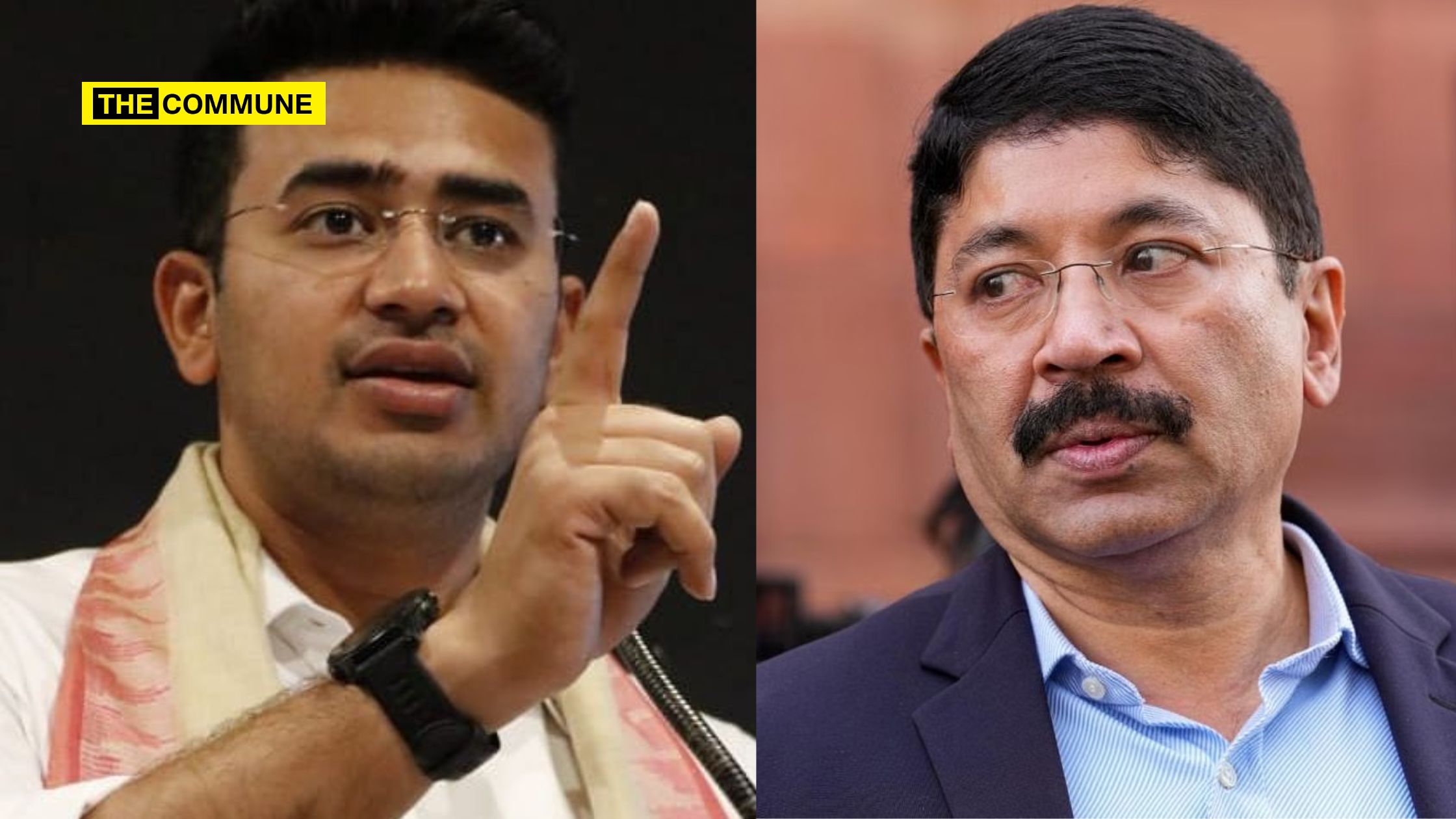
The Lok Sabha witnessed a heated exchange on 2 April 2025 as BJP MP Tejasvi Surya delivered a blistering counter to DMK MP Dayanidhi Maran’s allegations against the Waqf Amendment Bill, systematically dismantling claims of anti-minority bias with legal precision and historical evidence.

Maran, speaking against the bill, had accused the government of targeting Muslim properties while ignoring corporate debts and practicing divisive politics. He cited the BJP’s reduced seat count in Uttar Pradesh (from 71 in 2014 to 36 in 2024) as proof that itspolitics of hatehad failed. He further claimed the government was systematically sidelining minorities, warning, First Muslims, then Christians, then Dalits—soon there will be no one left.”

Exposing theConstitutional Fraud’

Surya began by arguing that the Waqf laws enacted by the Congress over the decades had established an entity more powerful than the government itself. He called it,seven decades of constitutional fraud perpetuated by the Congress and its allies through previous Waqf laws. He cited Section 40 of the 2013 Waqf Amendment, which granted Waqf Boards unchecked power to declare any property as Waqf land based solely on belief”without documentation or due process. He described this as a direct assault on property rights, as affected individuals were left with no legal recourse except appealing to a Waqf tribunal, which he called akangaroo court.”

“Where in the world does a body get to act as prosecutor, judge, and executioner? Surya demanded.

“This Frankenstein monster was created by the Congress, enabling land grabs with no right to appeal. He cited cases from Karnataka where farmers lost ancestral lands overnight, linking some suicides to these seizures.

Addressing the Land Encroachment Issue

Refuting Maran’s rhetoric about Hindu land being taken away, Surya pointed to the vast land holdings under Waqf control. He highlighted the case of Karnataka, where he alleged that 15,000 acres of land in a single district had been taken over by the Waqf Board, often at the cost of farmers who had tilled the land for generations. He further argued that such unilateral powers had led to multiple farmer suicides due to sudden land encroachments.

The Discriminatory Nature of Waqf Laws

The BJP MP also dismantled the opposition’s secularism argument, highlighting Congress’ double standards—freezing Hindu claims via the 1991 Places of Worship Act while empowering Waqf Boards to appropriate land under the 1995 and 2013 amendments. Why should Hindus, Jains, or Christians have no say in Waqf governance when their lands are at risk? he challenged.

Calling Out Vote-Bank Politics

In response to Maran’s allegations that the government was targeting minorities, Surya turned the tables by accusing the opposition of indulging in vote-bank politics. He noted that while the 1991 Places of Worship Act prevented Hindus from reclaiming historical sites, the 1995 Waqf Act gave Waqf Boards unchecked powers to claim lands. He exposed what he called the Congress party’s double standards, stating that their version of secularism favored appeasement over true equality.

Quoting Atal Bihari Vajpayee’s poetry, Surya concluded with a civilizational rebuttal: Hindus don’t covet others’ lands. Our ethos wins hearts, not territory. The speech left the opposition scrambling, with AIMIM’s Asaduddin Owaisi repeatedly interrupting before being silenced by the Speaker.

Subscribe to our channels on Telegram, WhatsApp, and Instagram and get the best stories of the day delivered to you personally.
Supreme Court Judges Agree To Make Their Asset Declarations Public

supreme court assets constitution

In a move aimed at enhancing transparency and strengthening public trust in the judiciary, all Supreme Court judges have agreed to publicly disclose their asset declarations.

During a full-court meeting on 1 April 2025, the judges decided to submit their asset declarations to the Chief Justice of India, and these will be made available on the Supreme Court’s official website. This decision comes in the wake of controversy surrounding the alleged discovery of cash at the official residence of Justice Yashwant Varma during his tenure at the Delhi High Court.

The specific procedures for publishing the asset declarations are still being finalized. Currently, all Supreme Court judges have submitted their asset declarations, although these have not yet been made public.

(With inputs from Live Law)

Subscribe to our channels on TelegramWhatsApp, and Instagram and get the best stories of the day delivered to you personally.

TN BJP Keeps Its Promise As Puliyangudi Lemon Secures GI Tag

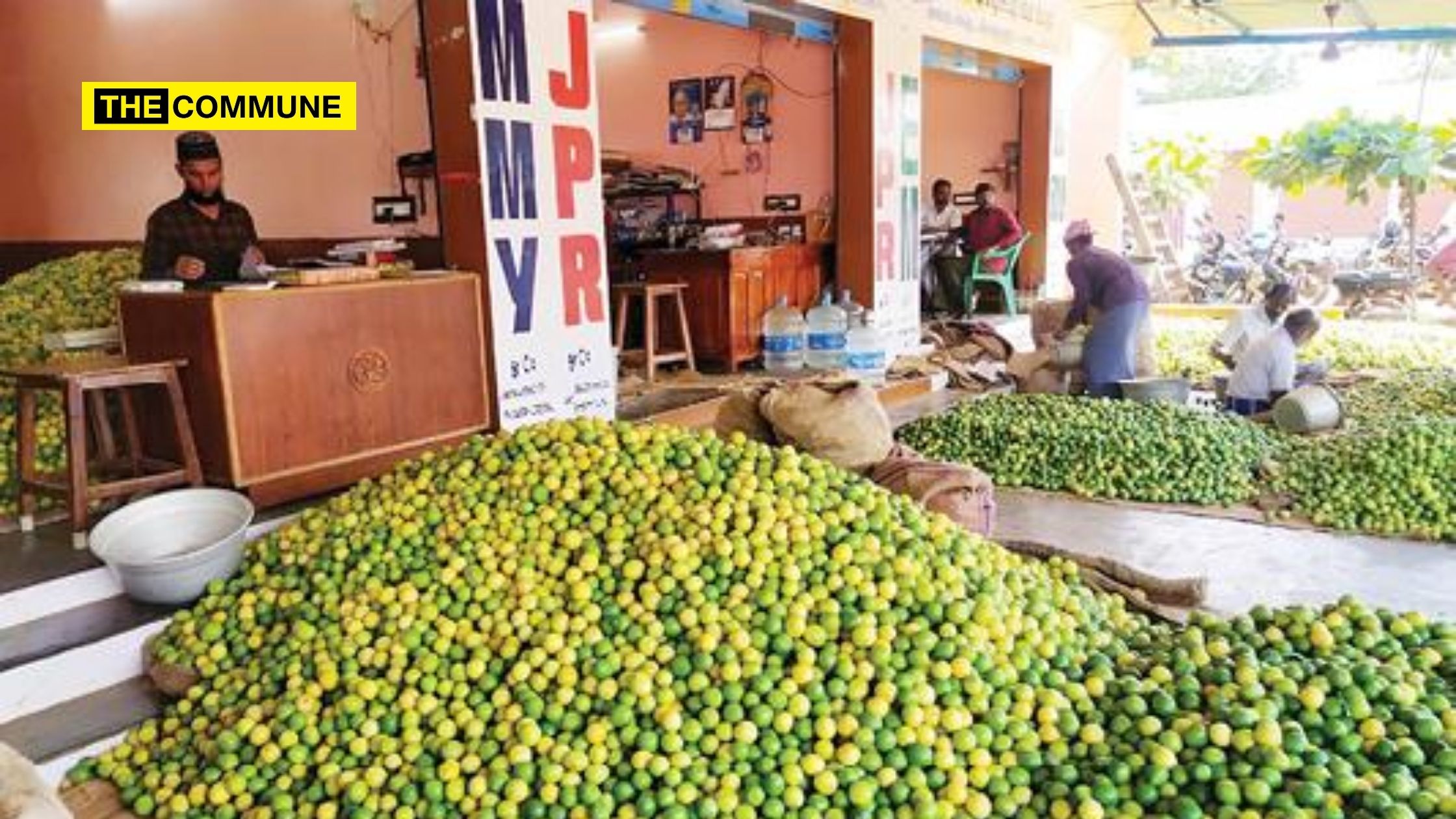
In a significant boost for the agricultural community of Puliyangudi in Tenkasi, the region’s famed acid lime, known as the Puliyangudi Lemon, got the Geographical Indication (GI) tag soon. Tamil Nadu BJP president Shri K. Annamalai during a recent public meeting in Tenkasi, announced that Puliyangudi Lemon will get the GI tag in the first week of April. This marks a moment of pride for the farmers of this semi-arid belt often referred to as the “Lemon City of India.”

A Promise Fulfilled

During a public gathering in Tenkasi last month, TN BJP president Shri K. Annamalai, assured the people of Puliyangudi that the long-pending application for the GI tag for their unique lemon variety would be processed and announced by the first week of April. True to his word, the announcement came on April 3, 2025, sparking celebrations among the farmers.

In a X post, Shri K. Annamalai expressed his delight, stating, “We are delighted to note that the announcement of the GI Tag for Puliyangudi Lemon has been made today.” He extended his gratitude to the Honorable Minister of Commerce and Industry, Piyush Goyal, for considering the request and granting the GI tag, a move that is expected to bring significant economic benefits to the region.

The Journey Of Puliyangudi Lemon

Puliyangudi is a small town on the foothills of the western Ghats between Tenkasi and Rajapalayam. This town is known for its lemon cultivation. This area contains rich red and loamy soil that is helping lemon cultivation along with its semi-dry climate, proved ideal for growing lemons.

According to a report by The Hindu on March 28, 2025, lemons are not water-intensive, making them a sustainable crop for this drought-prone region. This unique characteristic prompted the state Agricultural Marketing Board and the Melapuliyangudi Farmers’ Association to apply for a GI tag in April 2022. TN BJP president Shri K. Annamalai heard this and the process has now culminated in success.

The Significance Of GI Tag

A Geographical Indication tag is a prestigious recognition that identifies a product as originating from a specific geographical area, where its quality, reputation, or other characteristics are essentially attributable to that region.

For Puliyangudi Lemon, the GI tag is more than just a label. It is a lifeline for the local economy. The recognition is expected to enhance the market value of the lemon, open up new avenues for export, and provide farmers with better pricing power.

The Tamil Nadu BJP, led by Annamalai, has positioned itself as a champion of the farmers’ cause, with the party’s commitment to securing the GI tag being widely appreciated.

Subscribe to our channels on TelegramWhatsApp, and Instagram and get the best stories of the day delivered to you personally.
Waqf Board Alleges Hindu-Majority MP Village Land Is ‘Graveyard’, Demands Residents Vacate Properties

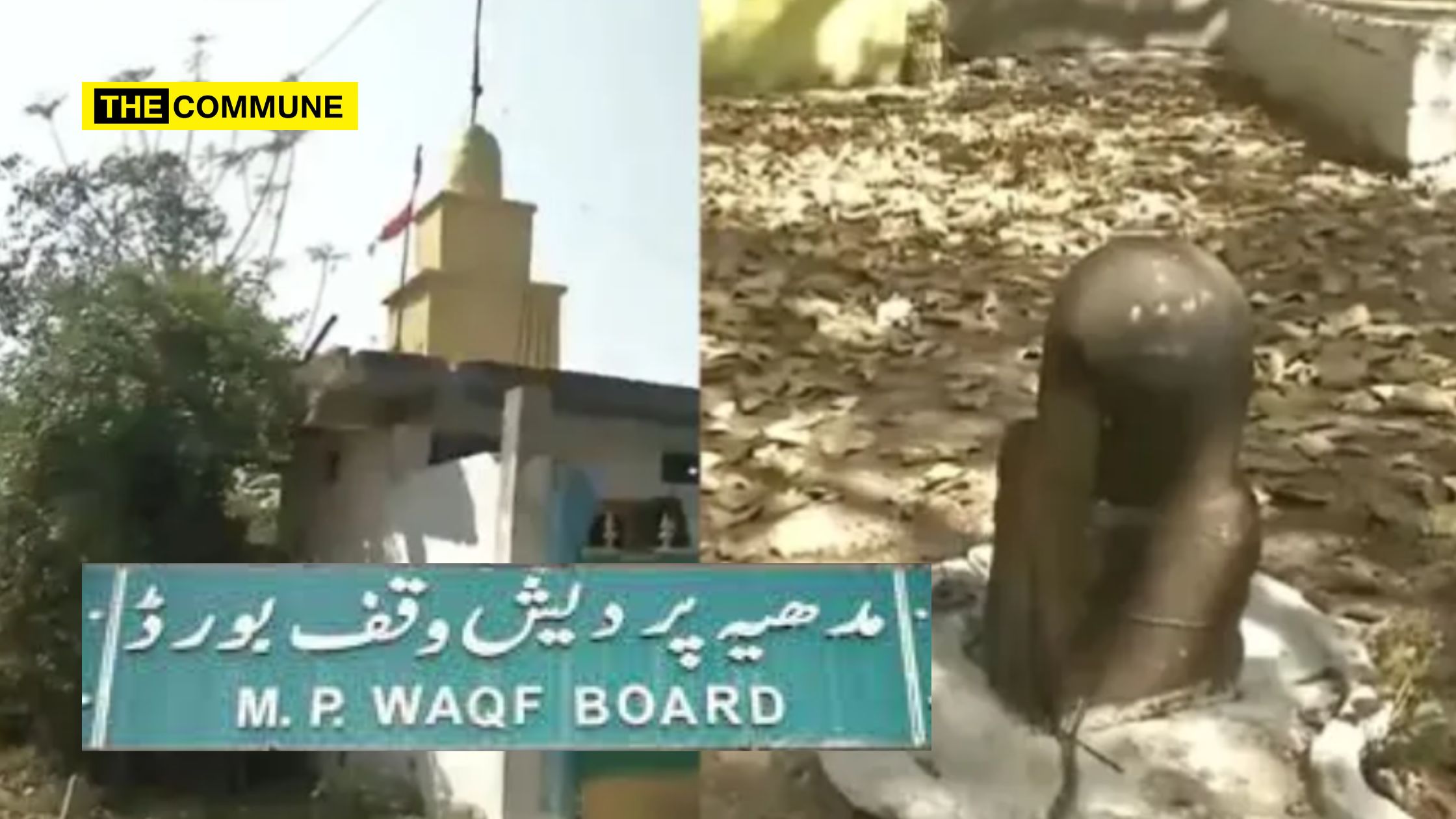
The Waqf Board’s recent claim over residential properties, agricultural lands, and even a Shivling in Makhni village, a Hindu-majority area in Raisen district, has left the local community shocked and outraged. The notice issued to villagers demands they vacate their land, asserting that the board has ownership over these properties.

According to reports, the Waqf Board has claimed that the land in Makhni village is part of a graveyard. However, no concrete evidence has been provided to substantiate this claim. Despite the absence of proof, the notice includes villagers’ homes, farmland, platforms, and even the village Shivling, with a demand for the residents to vacate immediately. This has sparked significant anger and concern among the locals.

In addition to the villagers’ properties, the board has also claimed state-owned land in the area. Official government records show that the land belongs to the government, but the Waqf Board insists that it is a waqf property. The board contends that a man named Qadir Khan once owned the village and supposedly donated the land to the Waqf, a claim which the local community vehemently denies, stating that no such individual ever lived in Makhni.

Many families in Makhni have resided there for generations, and they have made it clear that they will not surrender their land. They are determined to resist the Waqf Board’s claims and take action to protect their rights. The claim over the Shivling, in particular, has caused widespread resentment, with locals accusing the board of overstepping its authority and wrongfully encroaching on their property.

This controversy comes at a time when the Government of India is considering a Waqf Amendment Bill to address the Waqf Board’s power and property disputes. The Joint Parliamentary Committee (JPC) on the bill was presented in the Rajya Sabha in February 2025. The board’s unchecked actions, including claims over Hindu temples, privately owned land, and government property, have fueled public outrage and raised concerns nationwide.

(With inputs from OpIndia)

Subscribe to our channels on TelegramWhatsApp, and Instagram and get the best stories of the day delivered to you personally.
36 Instances Of Support From Muslim Leaders For Modi Govt’s Waqf Amendment Bill

Modi govt introduces Waqf Amendment Bill

The ‘Waqf Board Amendment Bill’ was passed by the Government of India in the Lok Sabha on 2 April 2025.

While some political and religious groups oppose the legislation, 36 times we saw prominent Muslim leaders, scholars, and politicians have come forward in support of the reforms, arguing that the bill will bring transparency, curb corruption, and ensure Waqf properties benefit the poor.

From Bihar Governor Arif Mohammad Khan criticizing the Waqf Board’s inefficiency to Sufi leaders like Syed Nasruddin Chishti demanding a separate Dargah Board, the voices backing the amendment highlight a growing consensus for systemic change. BJP’s minority leaders, Islamic scholars, and even Ulema have dismissed fears of government overreach, instead emphasizing that the bill will end land mafia dominance and redirect Waqf resources toward education, healthcare, and community welfare.

This report compiles statements from influential figures—ranging from state ministers and Waqf Board chairpersons to imams and social activists—who argue that the amendment is a necessary step toward justice and accountability in the management of India’s vast Waqf properties.

#1 Arif Mohammad Khan, Governor Of Bihar

On 2 April 2025, Bihar Governor Arif Mohammad Khan commented on the Waqf Amendment Bill 2024, recalling his tenure as a minister in Uttar Pradesh when the Waqf department was under his purview. He stated, “There is nothing but 90% litigation there… Is any work being done for the society in all the Waqfs in Mathura? There are many litigations on one piece of land which should be resolved. The poor are not getting any benefit from this Today the Waqf is occupied by big people.”

#2 Syed Fareed Ahmed Nizami (Member, Sajjadanashin Council)

Syed Fareed Ahmed Nizami, a member of the Sajjadanashin Council, also spoke on the issue, emphasizing that the Waqf Board has complicated land matters. He noted, “Once land goes to the Waqf, it cannot be taken back. The government wants to remove such complexities through the amendment so that poor Muslims can get justice.” His remarks were broadcast on All India Radio.

#3 Maulana Mufti Shahabuddin Razvi (National President of All India Muslim Jamaat)

Maulana Mufti Shahabuddin Razvi, National President of All India Muslim Jamaat, addressed concerns about the bill, criticizing the All India Muslim Personal Law Board (AIMPLB) for instilling fear among Muslims. He asserted, “AIMPLB is scaring Muslims. There is no threat to Muslims from the bill.”

#4 Dr Darakhshan Andrabi (BJP leader& Chairperson of J&K Waqf Board)

On 2 April 2025, BJP leader and Chairperson of the Jammu and Kashmir Waqf Board, Dr. Darakhshan Andrabi, spoke about the Waqf Amendment Bill introduced in the Lok Sabha. She stated, “It does not seem that the bill introduced in Parliament is against Muslims… If the Waqf has so much land, then why are so many Muslims poor?… It seems that this bill is being introduced for the welfare of Muslims.”

#5 Farooqh Waani (Editor, Brighter Kashmir, Srinagar)

Farooq Wani, editor of Brighter Kashmir in Srinagar, also supported the amendments, arguing that granting rights to the Waqf Board would benefit common Muslims. He said, “The amendments that are going to be made are correct. The amendments will bring accountability and transparency.”

#6 Danish Azad Ansari (Minister in UP Government)

Danish Azad Ansari, a minister in the Uttar Pradesh government, dismissed opposition to the bill, asserting, “No common Muslim is opposing this.”

#7 Haji Syed Salman Chishti (Head of Chishti Foundation – Ajmer Sharif)

On 2 April 2025, Haji Syed Salman Chishti, Head of the Chishti Foundation-Ajmer Sharif, expressed his views on the Waqf Amendment Bill. He stated, “If the Waqf boards are reformed so that the Muslim community can benefit in terms of skills, education, and employment, it will be a much-needed change.”

#8 Syed Nasruddin Chishti (Successor to the spiritual head of Ajmer Dargah)

On 2 April 2025, Syed Nasruddin Chishti, successor to the spiritual head of Ajmer Dargah, reassured the public about the Waqf Amendment Bill, stating, “No one needs to be afraid of the Waqf Bill. Efforts are being made to provoke, and this is wrong.”

#9 Wasim R Khan (President of Mumbai BJP Minority Morcha)

Wasim R Khan, President of Mumbai BJP Minority Morcha, expressed his support for the bill and praised Prime Minister Narendra Modi for introducing it. He remarked, “I thank Prime Minister Narendra Modi for bringing this bill as it will help poor Muslims. Those who considered Waqf properties as their ‘baap ki jaagir’ would get under control. This bill should have been brought much before.”

#10 Shadab Shams (Chairman of Uttarakhand Waqf Board)

Shadab Shams, Chairman of the Uttarakhand Waqf Board, also backed the legislation, stating simply, “We support the Waqf Bill.”

#11 Gulam Ali Khatana (Rajya Sabha MP)

Rajya Sabha MP Ghulam Ali Khatana emphasized that the bill would empower poor Muslims in India. He criticized opposition parties, accusing them of spreading false narratives and fear for political gain.

#12 Kausar Jahan (Chairperson, Delhi Haj Committee)

On 2 April 2025, Kausar Jahan welcomed the Waqf Amendment Bill, calling it an essential step toward transparency, accountability, and fairness. She stated, “It is the need of the hour. There are people who do not want the betterment of the community. The current status of the Waqf Board or Waqf properties needs to be changed. The real beneficiaries and deprived Muslims are not getting any benefit.”

#13 Pyare Khan (Chairman, Maharashtra Minority Commission)

Pyare Khan expressed his strong support for the bill, emphasizing that it would uplift poor and deprived Muslims. He remarked, “This is a very good thing for poor, deprived Muslims. Till now, previous governments used to think only about millionaire Muslims. No one used to talk about deprived Muslims.”

#14 Muslim Women (Delhi)

Muslim women in Delhi voiced their support for the Waqf Amendment Bill introduced in the Lok Sabha, signaling approval for the proposed reforms.

#15 Muslims (Mumbai)

Muslims in Mumbai also welcomed the introduction of the Waqf Amendment Bill in Parliament on 2 April 2025. To celebrate their support for the bill, they distributed sweets.

#16 People of the Muslim Community (Bhopal)

On 2 April 2025, people from the Muslim community in Bhopal, Madhya Pradesh, organized rallies in support of the Waqf Amendment Bill. A large number of Muslim women participated, holding posters that read “Thank you Modi ji” and carrying flowers as a gesture of appreciation for the bill.

#17 Maulana Mufti Shahabuddin Razvi (Islamic Scholar)

On 9 August 2024, Maulana Mufti Shahabuddin Razvi emphasized the need for transparency in the management of Waqf properties. He stated, “The central government will stop the arbitrary use of Waqf Board property and will curb the business of selling or leasing Waqf property in connivance with land mafias. Transparency should be adopted in the formation of the Waqf Board, and its members should be honest and have a clean image. Currently, chairpersons, officers, and members of Waqf Boards across the country are ruining Waqf property through their ties with land mafias.”

#18 Anjum Ara (JDU Spokesperson)

On 8 August 2024, JDU spokesperson Anjum Ara expressed disappointment over the opposition to the Waqf Amendment Bill. She remarked, “Opposing this bill is unfortunate. Our ancestors donated their property to the Waqf Board so that the poor and deprived people in society could be developed and uplifted. This amendment bill serves that purpose.”

#19 Shahnawaz Hussain (BJP Leader)

On 8 August 2024, BJP leader Shahnawaz Hussain spoke about the Waqf Amendment Bill, stating, “Many amendments have been made in the Waqf Act earlier as well. The rights of Waqf were outside the purview of the law. It is now being brought under legal oversight, and the intention of the Modi government is to put an end to the looting happening in the name of Waqf.”

#20 Kashish Warsi (President of the Indian Sufi Foundation)

On 8 August 2024, Kashish Warsi, President of the Indian Sufi Foundation, emphasized that the bill is not against Muslims. He said, “This will benefit poor and needy Muslims, and the amendment bill will stop those who have occupied Waqf Board lands from exploiting them for personal gain.”

#21 Danish Iqbal (Board Member of Culture Ministry)

On 8 August 2024, Danish Iqbal, Board Member of the Ministry of Culture, criticized the previous amendments made by the UPA government, calling them a product of appeasement policies. He stated, “Corruption in the Waqf Board should be curbed. The amendment made today aligns with the recommendations of the Sachar Committee. The Waqf Board was established to serve the poor, widows, and orphans, and this amendment ensures that purpose is upheld.”

#22 Sanwar Patel (Member, Madhya Pradesh Waqf Board)

On 8 August 2024, Sanwar Patel, a member of the Madhya Pradesh Waqf Board, welcomed the Waqf Board amendment, stating, “The Waqf Board Bill is in the interest of the nation, the people, and the institution of Waqf. In Madhya Pradesh, 99% of Waqf Board land is occupied by goons, miscreants, and anti-social elements. This amendment is necessary to restore its rightful purpose.”

#23 Atif Rasheed, Former Vice-Chairman, National Commission for Minorities

On 6 August 2024, Atif Rasheed, former vice-chairman of the National Commission for Minorities, stated that the Waqf Act was originally enacted in 1954 and underwent significant changes in 1995. He emphasized that any amendments being made now should not be viewed negatively. He urged people to trust the government, which he described as committed to “Sabka Saath, Sabka Vikas.” He also questioned why anyone should have a problem with judicial investigations, noting that the Act had already been amended in 2013.

#24 Syed Farid Ahmed Nizami, Sajjadanashin of Dargah Hazrat Nizamuddin Aulia

On 6 August 2024, Syed Farid Ahmed Nizami, Sajjadanashin of Dargah Hazrat Nizamuddin Aulia, stated that he and others have long been demanding amendments to the Waqf Act. He said that once the draft is presented, they will provide their comments. He also raised concerns that the current Waqf Act does not protect Sufi culture and suggested the creation of a separate Dargah Board or the exclusion of Dargahs from the Act. He stressed that the Waqf Act is meant for the benefit of the community and criticized those opposing it without first reading its provisions.

#25 Fareed Ahmed Nizami, Delhi State President, AISSC

On 6 August 2024, Fareed Ahmed Nizami, Delhi state president of AISSC, stated that there is a lack of transparency in the existing Waqf Act. While speaking on the new Waqf Bill, he mentioned that there is little coordination between the Waqf Board and other stakeholders. He also pointed out that the Waqf Board imposes a 7% tax on every demand without providing any cooperation, making its functioning increasingly arbitrary.

#26 Ghulam Najmi Farooqi, National Secretary, AISSC

On 6 August 2024, Ghulam Najmi Farooqi, National Secretary of the All India Sufi Sajjadanashin Council (AISSC), stated during a program at the India Islamic Cultural Center that the biggest issue dargahs face due to the Waqf Act is the interference of the Waqf Board. He explained that when a dargah is classified under waqf, the board often creates obstacles in its repair and maintenance, making it difficult to preserve these religious sites.


View this post on Instagram


A post shared by The New Indian (@thenewindian_in)

#27 Syed Nasruddin Chishti, President, AISSC

On 6 August 2024, Syed Nasruddin Chishti, President of the All India Sufi Sajjadanashin Council (AISSC), expressed support for the Central Government’s decision to amend the Waqf Act and called for the establishment of a separate Dargah Board. Speaking at a function at the India Islamic Cultural Centre, he criticized the current functioning of Waqf Boards, alleging that they operate in a dictatorial manner with a complete lack of transparency.

#28 Mukhtar Abbas Naqvi, BJP Leader

On 5 August 2024, BJP leader Mukhtar Abbas Naqvi emphasized the need for the Waqf system to move beyond a “don’t touch me” mindset. He argued that imposing a communal approach on inclusive reforms is not beneficial for either the country or the community. He stressed that finding a logical solution to this long-standing issue would be beneficial for both the Waqf system and the present time. While he acknowledged that he was unaware of the exact details of the government’s proposal, he maintained that reforms in the Waqf system were necessary.

#29 Danish Azad Ansari, UP Minister

On 5 August 2024, Uttar Pradesh Minister Danish Azad Ansari emphasized that Waqf Board properties should be used for the upliftment of the Muslim community. He noted that complaints of encroachment and land misuse were common, which is why the Modi and Yogi governments were committed to protecting the interests of Muslims. He suggested that Waqf properties should be utilized for building hospitals, schools, and colleges to benefit the community.

#30 Wajahat Qasmi, Islamic Scholar

On 5 August 2024, Islamic scholar Wajahat Qasmi called for Waqf Board properties to be declared national property, indicating concerns over their management and potential misuse.

#31 Maulana Yasoob Abbas, General Secretary, All India Shia Personal Law Board

On 4 August 2024, Maulana Yasoob Abbas, General Secretary of the All India Shia Personal Law Board, criticized the Waqf Board for widespread corruption. He alleged that mafias had taken over Waqf Board lands, erasing Waqf numbers and creating fake documents to sell the properties illegally, leading to significant financial losses for the board.

#32 Imam Umer Ahmed Ilyasi, Chief Imam, All India Imam Organization

On 4 August 2024, Imam Umer Ahmed Ilyasi, Chief Imam of the All India Imam Organization, stated that amendments to the Waqf Act are a natural process that has occurred in the past. However, he urged that any changes should not compromise the dignity of Waqf. He called for open discussions rather than politicization of the issue, questioning why opposition leaders like Asaduddin Owaisi did not object to past amendments but were resisting this one.

#33 Rahman Khan, Former Union Minister of Minority Affairs (UPA Government)

On 4 August 2024, Rahman Khan, former Union Minister of Minority Affairs under the UPA government, expressed concerns over the proposed Waqf amendments. He argued that the government was creating an impression that Waqf properties would be seized without investigation. He dismissed claims that the Waqf Board had unchecked authority to declare any property as Waqf land, calling such claims exaggerated. He urged the government to ensure proper discussion before making any amendments.

#34 Mohsin Raza, BJP Leader

On 4 August 2024, BJP leader Mohsin Raza welcomed the proposed Waqf Bill, emphasizing that many Waqf properties across the country had been misused. He accused Waqf Boards of exceeding their authority and harassing people. He stated that properties that had been illegally registered with the board should be reclaimed and that this was a matter of public interest that needed to be addressed.

#35 Maulana Mufti Shahabuddin Razvi, National President, All India Muslim Jamaat

On 4 August 2024, Maulana Mufti Shahabuddin Razvi, National President of the All India Muslim Jamaat, supported the government’s plan to introduce a bill to regulate Waqf properties. He stated that the Barelvi Ulema welcomed this move, as it aimed to curb the arbitrary use of Waqf Board properties.

#36 Shehzad Poonawalla, BJP Leader

On 4 August 2024, BJP leader Shehzad Poonawalla highlighted the long-standing demand within the Muslim community for greater transparency and accountability in the Waqf Board system. He pointed out that Waqf is the third-largest landowner in the country, with properties worth lakhs of crores, yet it generates less than ₹200 crore in revenue. He accused a handful of influential families of using Waqf as a tool to create a new feudal system and monopolize its lands.

Subscribe to our channels on Telegram, WhatsApp, and Instagram and get the best stories of the day delivered to you personally.