Home Blog Page 319

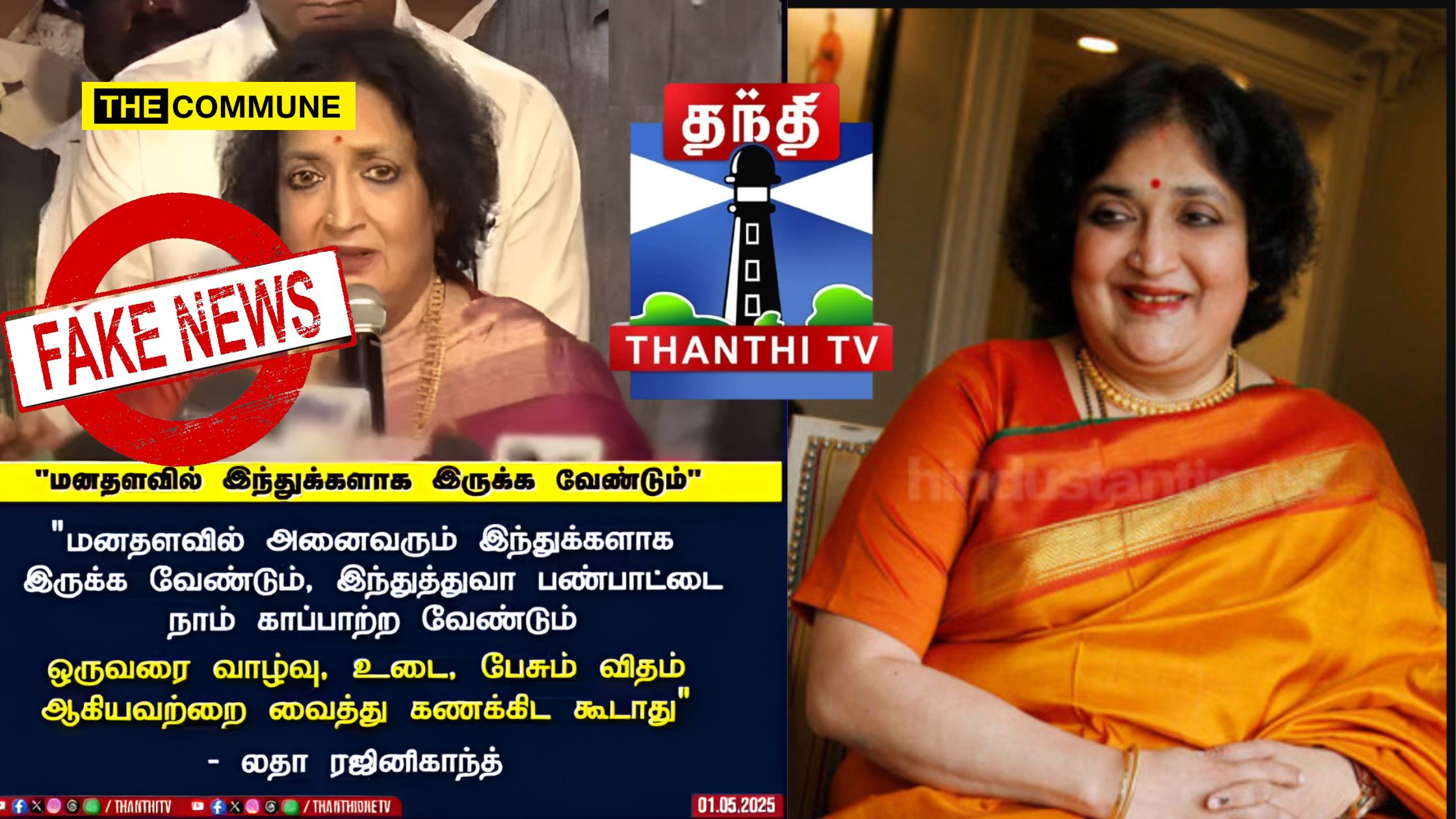
Thanthi TV Misquotes Latha Rajinikanth: Twists ‘Indian At Heart’ Into ‘Hindu At Heart’, Deletes Post Later

A recent news card by Thanthi TV sparked controversy after it allegedly misquoted Latha Rajinikanth, portraying her as a supporter of Hindutva by claiming she said, “Everyone should be Hindu at heart.” In reality, her comments emphasized the importance of maintaining Indian cultural identity, not promoting a specific religion. The news channel later deleted the news card following public backlash and accusations of distorting her words.

Latha Rajinikanth’s actual remarks came in response to her husband Rajinikanth’s concern over the cultural disconnect among today’s youth. Speaking to the media, she clarified, “(Being Indian) It is not determined by the clothes, the way one speaks or the style of one’s life, but by being Indian in spirit. Wherever one goes, that Indianness should be in our spirit, in our life and in the security system around us.”

She continued, “Even people abroad hold onto their national identities. Similarly, we too must preserve the richness of Indianness. You can embrace the global community while being 100% Indian at heart.”

These comments were made at the launch event of Bharat Seva and Sankalpam, a cultural and service initiative by Daya Foundation, which Latha Rajinikanth founded. The project, in collaboration with Bhakti Seva Samayam Agribit, aims to foster unity through Sanatana Dharma. The event in Chennai was attended by actor Rajinikanth’s brother Satyanarayana Rao and Hindu Makkal Katchi leader Arjun Sampath, among others.

Rajinikanth, in a video message for the inauguration, remarked that while Indian youth are increasingly influenced by Western trends, Westerners are turning to India for peace through practices like yoga and meditation. He expressed support for Latha’s efforts to reconnect the younger generation with India’s cultural heritage and values.

The misrepresentation by Thanthi TV and the subsequent retraction have reignited discussions about media responsibility and the politicization of personal views, especially those involving public figures.

(With inputs from One India Tamil)

Subscribe to our channels on Telegram, WhatsApp, and Instagram and get the best stories of the day delivered to you personally.

Is India Today Doing A ‘Barkha Dutt’ In 2025? Claims LeT Terrorist Hafiz Saeeds Security Beefed Up After Its Report

barkha dutt india today hafeez saeed

There are moments in journalism when the line between reporting and recklessness is not just crossed — it’s obliterated.

In 1999, during the Kargil War, ‘journalist’ Barkha Dutt’s live coverage from the war zone shocked everyone, particularly India’s military leadership. Her reporting from sensitive locations — even mentioning “56 Brigade HQ” on-air — raised alarm bells across the armed forces. Then Army Chief General VP Malik later wrote in his memoir that such coverage had revealed classified information and compromised operational secrecy. Officers like Lt Gen Mohinder Puri and Brigadier Umesh Singh Bawa echoed similar concerns in their own accounts. For many in the military, Dutt’s sensationalist war reporting wasn’t just unethical — it was dangerously irresponsible.

In 2008, during the 26/11 Mumbai terror attacks, Dutt’s name resurfaced in another controversy. This time, she broadcast details such as the floor on which hostages were located — information that could have been used in real-time by handlers monitoring Indian TV. Though she later admitted to journalistic lapses, the damage had been done. Even the Supreme Court criticized the media’s coverage of 26/11 for compromising operational safety.

Fast forward to 2025 — and it appears India Today is following the same disastrous playbook.

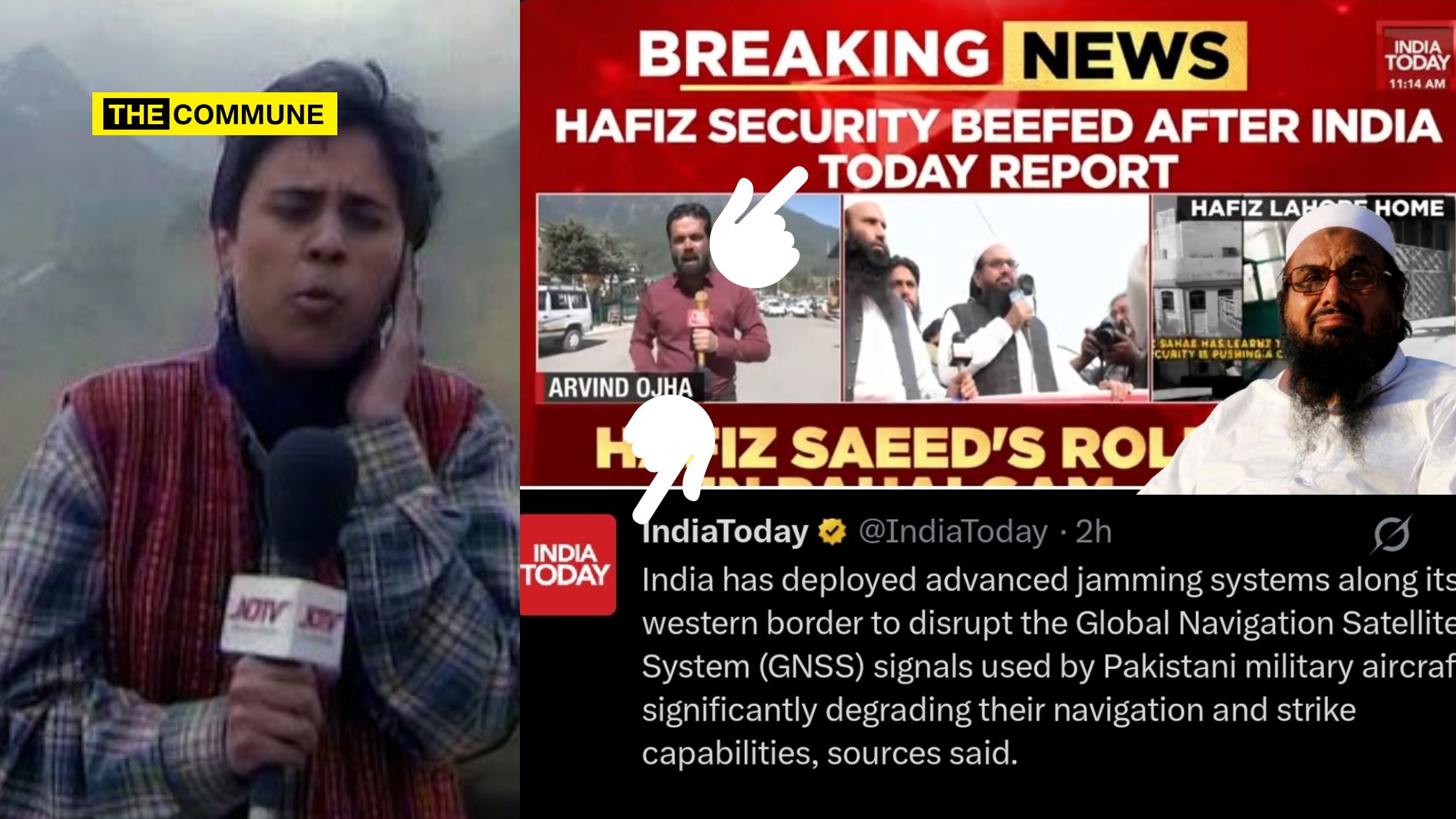
In a recent “exclusive,” India Today boasted that it had discovered the current location of wanted terrorist Hafiz Saeed in Lahore, citing unnamed “sources.” The story didn’t stop there. The channel followed up by reporting that Saeed’s security had been “beefed up” after their own broadcast — as though jeopardizing an intelligence operation was a badge of honor. The irony was inescapable: in its rush to break a story, India Today may have broken the element of surprise for Indian security agencies possibly planning to target Saeed.
But the recklessness didn’t end there.

In another headline-grabbing report, India Today claimed — again citing “sources” — that India had deployed GPS jamming systems along the Pakistan border. The supposed goal was to disrupt Global Navigation Satellite System (GNSS) signals used by Pakistani military aircraft. If true, this is not just another defense scoop — it’s a serious operational detail that should never have reached the public domain. Revealing it plays directly into the hands of the enemy by exposing tactical capabilities and limitations.

This kind of “scoop journalism” doesn’t serve national interest. It endangers it.

One is left wondering: has nothing been learned since the Kargil War? Are TRPs and clickbait headlines now more important than strategic discretion and national security? India Today’s willingness to jeopardize sensitive operations for a moment in the spotlight is eerily reminiscent of NDTV’s worst moment. We may well be witnessing the birth of a new NDTV — one that’s even bolder, brasher, and more reckless.

If India’s security agencies were indeed closing in on high-value targets like Hafiz Saeed, that operation might now be in jeopardy — not because of poor planning, but because a news outlet couldn’t keep its mouth shut. Worse, celebrating the fact that Saeed’s security increased because of their own reporting shows a disturbing lack of self-awareness.

Before India’s armed forces can eliminate those responsible for terrorism, perhaps they need to first plug the leaks — and hold media outlets accountable for sabotaging operations under the guise of journalism.

If Barkha Dutt’s Kargil blunder was the wake-up call, India Today’s 2025 repeat might be the final alarm. The nation cannot afford to hit snooze again.

(With inputs from News Bharati)

Subscribe to our channels on Telegram, WhatsApp, and Instagram and get the best stories of the day delivered to you personally.
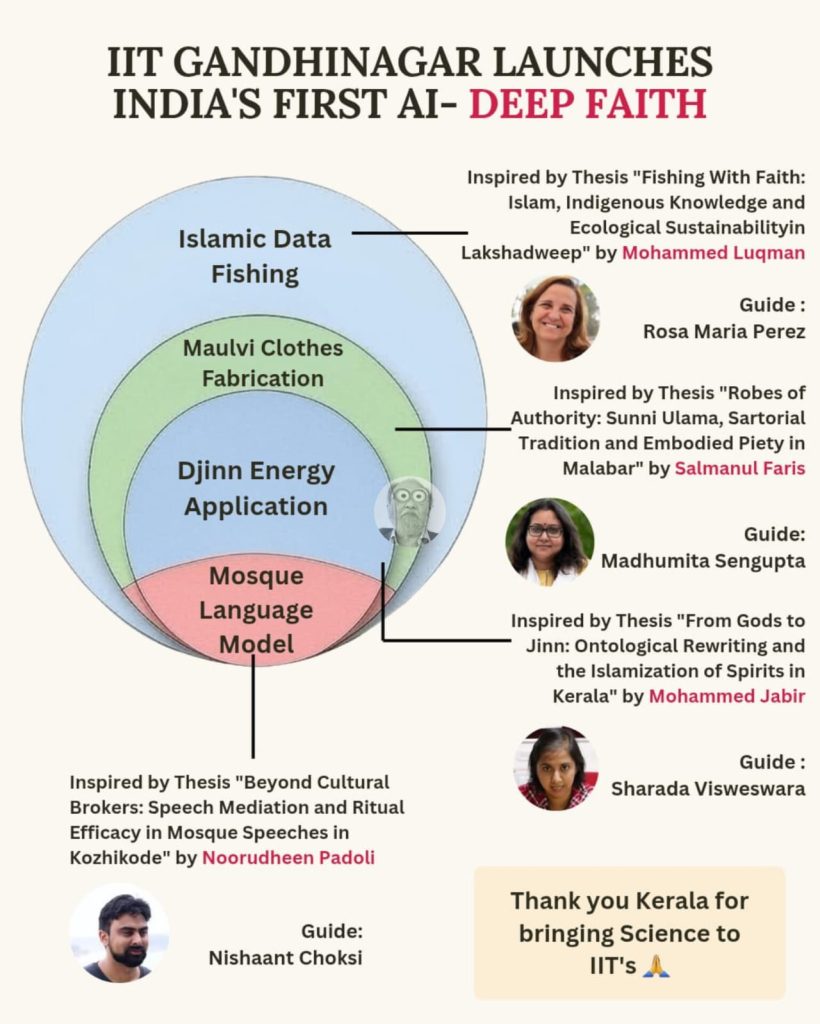
How IIT Gandhinagar’s Humanities Dept Is Pushing Islamist Agenda And Religious Dogma As ‘Research’ At Taxpayer’s Expense

In what can only be described as a disturbing snapshot of India’s elite technical institutions being hijacked by ideological forces, a recent controversy at IIT Gandhinagar (IITGN) has exposed the extent to which the Humanities departments have become breeding grounds for secrecy, intimidation, and even potential exploitation.

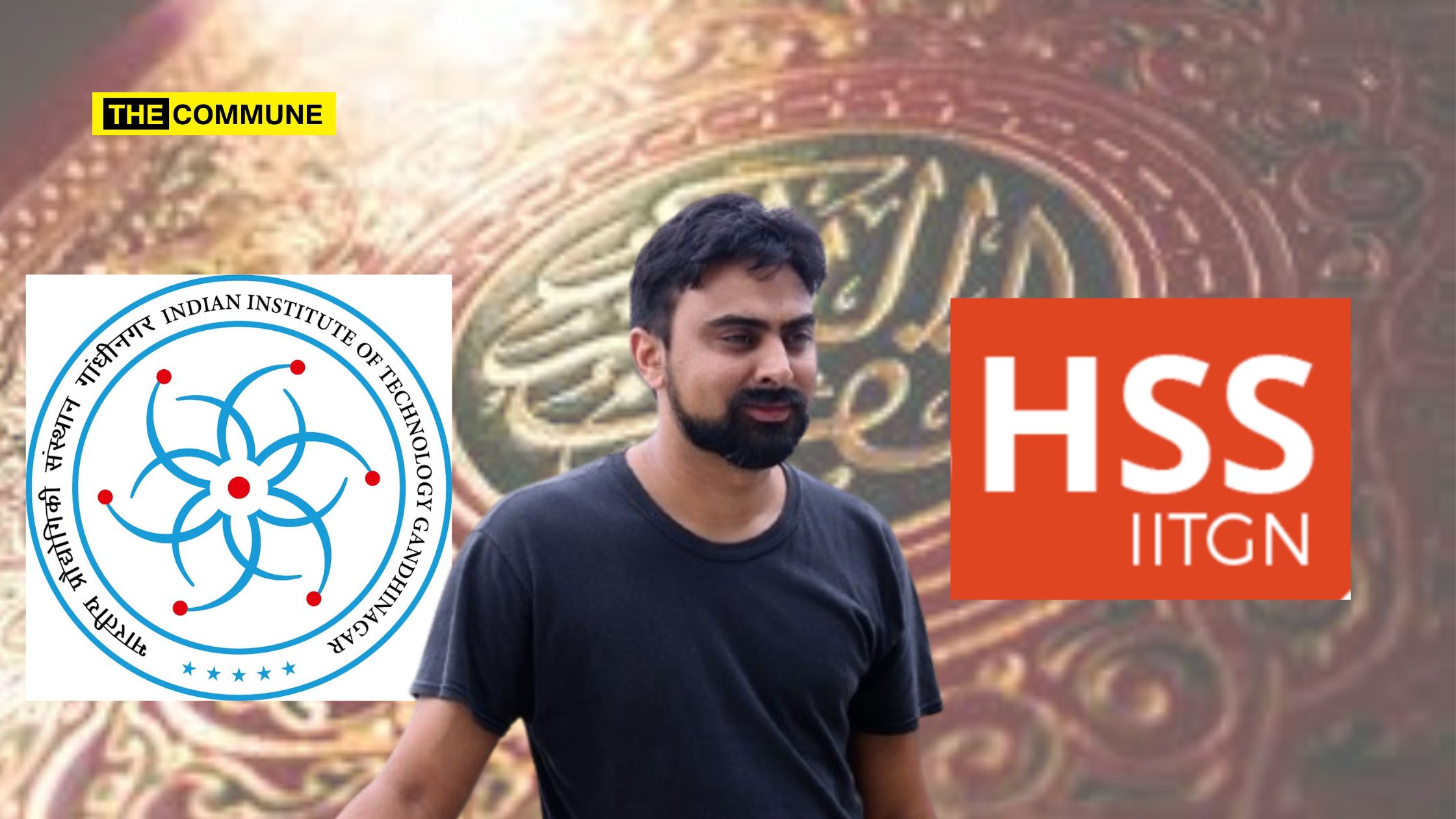
At the center of this storm is Nishaant Choksi, an Associate Professor at IITGN, whose email threatening disciplinary action against students has now gone public. His reaction followed the exposure of several thesis topics in the Humanities and Social Sciences (HSS) department, many of which are steeped in Islamic theological themes — presented not critically or historically, but with ideological approval masked as academic inquiry.

Among the research topics that have drawn concern:

  • “Fishing With Faith: Islam, Indigenous Knowledge, and Ecological Sustainability in Lakshadweep,
  • “Robes of Authority: Sunni Ulama, Sartorial Tradition and Embodied Piety in Malabar,
  • “From Gods to Jinn: Ontological Rewriting and the Islamization of Spirits in Kerala,
  • “Beyond Cultural Brokers: Speech Mediation and Ritual Efficacy in Mosque Speeches in Kozhikode.

Many of these theses appear less like neutral studies and more like glorified endorsements of religious dogma, funded by taxpayer money under the guise of social science. That this is happening in a premier science and technology institution is a scandal in itself.

This is what the research theses abstracts look like:


Title: Robes of Authority: Sunni Ulama, Sartorial Tradition, and Embodied Piety in Malabar
Supervisors: Madhumita Sengupta & Rosa Maria Perez
Summary: This thesis examines how Sunni Islamic scholars (ulama) in Malabar, Kerala, assert religious authority not only through knowledge and teachings but also through their clothing and behavior. It explores how their attire and bodily presentation serve as symbols of moral and religious authority, deeply tied to regional Islamic traditions and cultural continuity.

Title: Fishing With Faith: Islam, Indigenous Knowledge and Ecological Sustainability in Lakshadweep
Supervisor: Rosa Maria Perez
Summary: This work explores how Islamic faith practices integrate with traditional ecological knowledge in Lakshadweep. It suggests that religious beliefs influence sustainable fishing practices among the island’s Muslim communities, merging spiritual life with environmental conservation.

Title: From Gods to Jinn: Ontological Rewriting and the Islamization of Spirits in Kerala
Supervisor: Sharada Visweswara
Summary: This thesis investigates how indigenous spiritual beliefs in Kerala are reinterpreted and transformed under Islamic influence. It focuses on how traditional spirit entities are being recast as Islamic jinns, altering local ontologies and spiritual landscapes.

Title: Beyond Cultural Brokers: Speech Mediation and Ritual Efficacy in Mosque Speeches in Kozhikode
Supervisor: Nishaant Choksi
Summary: This research examines how speech acts in mosques in Kozhikode function beyond just translation or communication. It argues that imams and speakers play key roles in shaping ritual experiences and religious meanings, emphasizing their performative and mediating functions in the community.

Collectively, these theses reveal an academic trend that embeds Islamic theology and ethnography within state-funded institutional research under the guise of cultural studies.

But what is more disturbing than the ideological bent is the environment of fear and control being imposed by faculty. In his email, Choksi refers to anhonor codeand decries the sharing of internal academic information as aserious breach.One wonders: what is being hidden that the public — or even other departments — should not see?

The problem is not just ideological. Humanities departments in IITs have, for years now, operated with little scrutiny. There is growing anecdotal evidence of harassment, especially of Hindu and female students, in environments where professors are granted unchecked authority under vague principles of academic freedom.

Let’s also be clear: these are not fringe electives. These are Masters-level dissertations with official guides and academic backing. Students are not simply exploring topics — they are being inducted into an ideological pipeline. And when concerns are raised, instead of transparency, the response is threats, committees, andhonor codesthat resemble the coercive codes of closed cults more than scholarly institutions.

The truth is stark: IITs were never meant to become echo chambers for unscientific ideologies dressed up in postmodern academic lingo. Their purpose is to advance technology and science, not to become satellite departments for ideological indoctrination.

This entire episode demonstrates why Humanities departments — as they currently function — must be removed from IITs. Or at the very least, subject to the same transparency and accountability that technical departments are. If a department cannot withstand public scrutiny, then it does not belong in a public institution.

For now, the Ministry of Education and the IIT Council must step in. This is about preserving the sanctity of institutions funded by the Indian public, meant to serve the Indian public, not manipulate them.

Subscribe to our channels on Telegram, WhatsApp, and Instagram and get the best stories of the day delivered to you personally.
Madras High Court Cancels Appointment Of Tiruvannamalai Temple Trustee

The Madras High Court has annulled the appointment of Jeevanandam as the thakkar (custodian/trustee) of the Arunachaleswarar Temple in Tiruvannamalai.

Jeevanandam was appointed by the Hindu Religious and Charitable Endowments (HR&CE) Department to oversee the temple’s administration. However, his appointment was challenged in a petition filed by T.S. Shankar, a lawyer from Tiruvannamalai, who argued that the decision went against established norms and public sentiment.

In his petition, Shankar contended that Jeevanandam’s selection was made despite objections from devotees and local residents. He further pointed out that, under the HR&CE Act, a committee of trustees must first be constituted for temple management, from which a chairman should then be selected. This procedure, he argued, was bypassed.

Additionally, the petition alleged that five individuals with political affiliations were appointed to the trustee committee, rendering the composition of the committee legally questionable. Shankar also noted that Jeevanandam is a tenant on temple trust property, raising concerns about potential conflicts of interest and personal gain.

The case was heard by Justice Bharat Chakravarthy, who upheld the petitioner’s arguments and ruled that the HR&CE Department’s order appointing Jeevanandam was invalid. The court consequently ordered the cancellation of his appointment as thakkar of the Arunachaleswarar Temple.

(With inputs from Dinamalar)

Subscribe to our channels on Telegram, WhatsApp, and Instagram and get the best stories of the day delivered to you personally.
Caste Census No U-Turn: BJP’s 2010 Letter Shows It Always Backed The Move

As the Modi government on Wednesday announced its decision to include caste enumeration in the upcoming national Census, an old letter from 2010 has resurfaced, showing that the BJP had already backed the idea of a caste census over a decade ago, when it was in opposition.

The letter, dated August 6, 2010, was written by the then Leader of Opposition in the Lok Sabha, Sushma Swaraj, to the then Finance Minister Pranab Mukherjee. In it, Swaraj clearly conveyed the BJP’s support for canvassing caste during the Census or National Population Register (NPR) exercise, as long as it did not affect the integrity of the headcount.

“The BJP had already clarified its stand in Lok Sabha,” Swaraj wrote. “The party reiterates that ‘caste’ can be canvassed in the ongoing Census/NPR exercise. We agree that the caste should be canvassed in such manner and at such stage so that it does not affect the integrity of the headcount.”

The letter undercuts repeated claims by the Congress party that it is the sole advocate of caste enumeration and puts the spotlight on the Congress-led UPA government’s failure to deliver results from its own Socio Economic and Caste Census (SECC) conducted in 2011. While the data was collected during UPA-2’s tenure, it was never officially released in full, prompting criticism from across the political spectrum.

The fresh announcement by the Modi government removes a major talking point from the Congress, particularly from Rahul Gandhi, who had repeatedly accused the BJP of being afraid to reveal the true social composition of the country. Gandhi had often cited the SECC to press for a caste census, claiming that it was the key to ensuring “social justice” in governance.

Historically, India has only officially published caste data for Scheduled Castes and Scheduled Tribes since the first post-Independence census in 1951. Other caste data, particularly for OBCs and EBCs, has remained either unpublished or politically contentious.

The debate intensified after the Bihar government released the findings of its own caste survey in October 2023. The data revealed that Other Backward Classes (OBCs) and Extremely Backward Classes (EBCs) make up over 63% of the state’s population, with EBCs being the largest group at 36%.

The BJP’s longstanding but often overlooked support for caste enumeration now places it in a stronger position to claim continuity and legitimacy on this front, as it prepares to implement a nationwide caste census—a demand that has grown steadily louder from both regional and national parties.

Subscribe to our channels on Telegram, WhatsApp, and Instagram and get the best stories of the day delivered to you personally.
Centre Announces Caste Census, DMK Labels It Its Victory; But Records Show No Formal Request To Centre

Tamil Nadu Chief Minister M.K. Stalin hailed the Centre’s decision to conduct a caste census alongside the regular census as a significant victory for the DMK and the INDIA bloc in their ongoing struggle for social justice. He framed the announcement as a direct outcome of their persistent efforts. However, this claim appears to be contradicted by an official response in the Rajya Sabha, where the Ministry of Social Justice and Empowerment stated that the Tamil Nadu government had not made any formal request or representation to the Centre regarding the conduct of a caste survey.

On 30 April 2025, CM Stalin, through his official account on X, expressed skepticism about the Union Government’s timing, suggesting it was politically motivated. “After the failure of all its attempts to deny and delay the much-needed caste enumeration, the Union BJP Government has finally announced that it will be conducted along with the forthcoming Census. But key questions remain unanswered —when will the Census begin? When will it conclude? The timing is no coincidence. With #SocialJustice dominating the #BiharElections narrative, this sudden move reeks of political expediency.” he posted.

Stalin criticized the Prime Minister’s previous stance, recalling how he had once condemned opposition parties for “dividing people on caste” but had now conceded to the very demand he had opposed. “The same Prime Minister who once accused opposition parties of dividing people on caste has now yielded to the very demand, he maligned repeatedly. Caste Census is essential—not optional—for objective policymaking, targeted welfare, and the pursuit of real social justice. You cannot remedy injustice without first recognising its scale. For the Tamil Nadu Government and DMK, this is a hard-earned victory. We were the first to adopt a resolution in the Legislative Assembly demanding #CasteCensus. We championed this cause in every forum. We reiterated this demand in every meeting with the Prime Minister and through multiple letters, consistently urging the Union Government to take responsibility. While others called for state-level caste surveys, we stood firm: Census is a Union subject. Only the Union Government can and should deliver a legally binding caste enumeration under the Census Act. Our stand is now vindicated. Another triumph for DMK and #INDIA Bloc in our arduous social justice journey, driven by the ideals of the #DravidianModel,” he wrote.

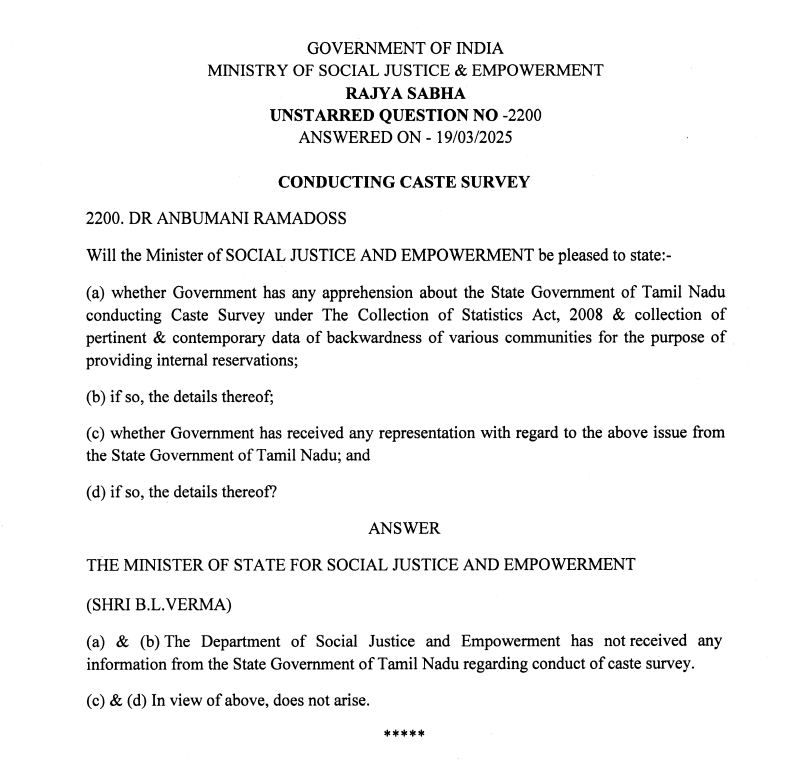
However, this narrative is challenged by an official reply in Parliament. On 19 March 2025, in response to an unstarred question (No. 2200) raised by PMK leader Dr. Anbumani Ramadoss, the Ministry of Social Justice and Empowerment clarified that it had not received any communication from the Tamil Nadu government regarding the conduct of a caste survey under the Collection of Statistics Act, 2008.

Minister of State for Social Justice and Empowerment, Shri B.L. Verma, responded:
(a) & (b) The Department has not received any information from the Tamil Nadu government about plans to conduct a caste survey.
(c) & (d) Therefore, the question of representations does not arise.

Earlier, on 26 June 2024, the Tamil Nadu Legislative Assembly passed a resolution urging the Central Government to conduct a caste census alongside the general census. Although Tamil Nadu had the legal authority to carry out a caste survey independently—just as states like Karnataka and Bihar have done—the DMK-led government argued that census activities fall under the Union List, and therefore only the Centre should conduct such an enumeration. Despite having the means, the state chose not to proceed on its own and instead limited its action to passing a resolution.

Now, with the Centre announcing its intention to conduct a caste census, the DMK is portraying the move as a victory, despite having taken no substantial steps beyond symbolic resolutions. This contrast—between public declarations and actual engagement—has reignited debate over Tamil Nadu’s genuine efforts and commitment to pushing for a caste census at the national level.

Subscribe to our channels on Telegram, WhatsApp, and Instagram and get the best stories of the day delivered to you personally.
DMK Ally Communist Leader Arunan Derogates Kanchi Shankaracharya

arunan

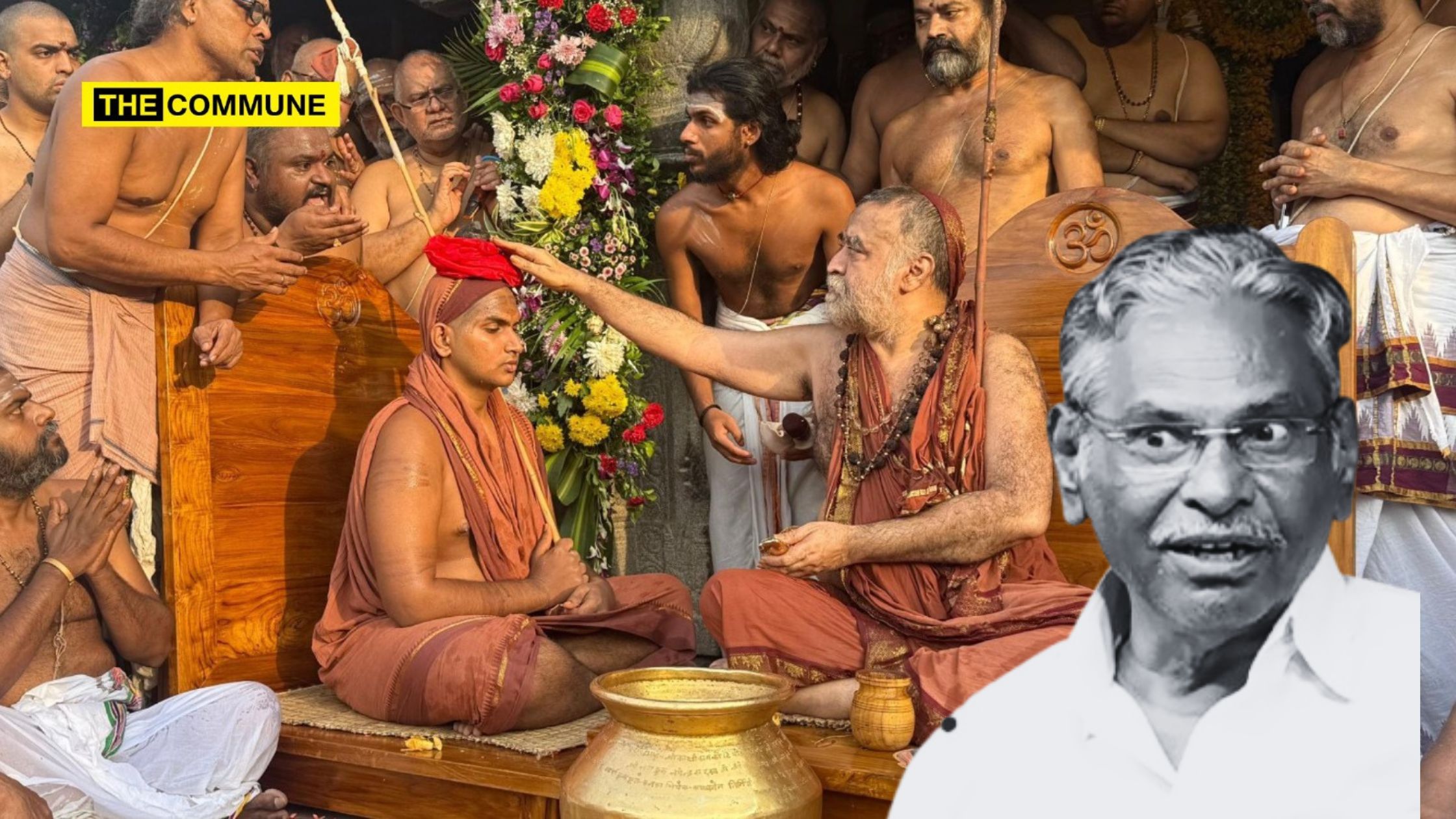
In a landmark religious ceremony held on the auspicious occasion of Akshaya Tritiya, Rig Vedic scholar Duddu Satya Venkata Surya Subramanya Ganesha Sharma Dravid from Annavaram, Andhra Pradesh, was formally anointed as the 71st Shankaracharya of the Sri Kanchi Kamakoti Peetham on 30 April 2025. Upon initiation into sanyasa, he was conferred the monastic title Satya Chandrashekarendra Saraswathi Shankaracharya.

The ceremony was held in Kanchipuram at the Sri Kamakshi Amman Temple and associated shrines of the Kanchi Mutt, attended by spiritual leaders, scholars, and devotees from across the country. The event coincided with the 2534th birth anniversary celebrations of Adi Shankaracharya, the revered philosopher-saint credited with establishing the Peetham in 482 BCE.

However, Dravidianists and DMK allies could not keep their mouth shut on this momentous occasion and had to just run their mouths. Some uninformed Dravidianists questioned why a junior pontiff was anointed when the senior seer was very much alive – they seemed to follow Vatican traditions to sound so unaware of their Hindu leaders and the rituals involved.

Among those who derogated the Shankaracharya were DMK Ally, Communist leader Arunan. In a post on his X handle, he wrote, “Advaitis, who say that the world is illusion, worship a human being like a god!”

People like Arunan do not understand Hinduism, its rituals, or the concept of Advaita.

A guru is considered God to all Hindus, we even have the saying – Mata Pita Guru Deivam – where the Guru comes before God Himself.

Additionally, if one were to look from an Advaitic perspective, Arunan has hit a self-goal. In Advaita, the philosophy believes in non-duality and the oneness of reality – that there is God within everyone, every being on this planet. Going by this, the junior seer is only worshipping the God within His Guru and His Guru as God Himself – perfectly adhering to Advaita philosophy.

Subscribe to our channels on TelegramWhatsApp, and Instagram and get the best stories of the day delivered to you personally.

13 Unsung Heroes Recognized With Padma Awards 2025 For Their Extraordinary Contributions

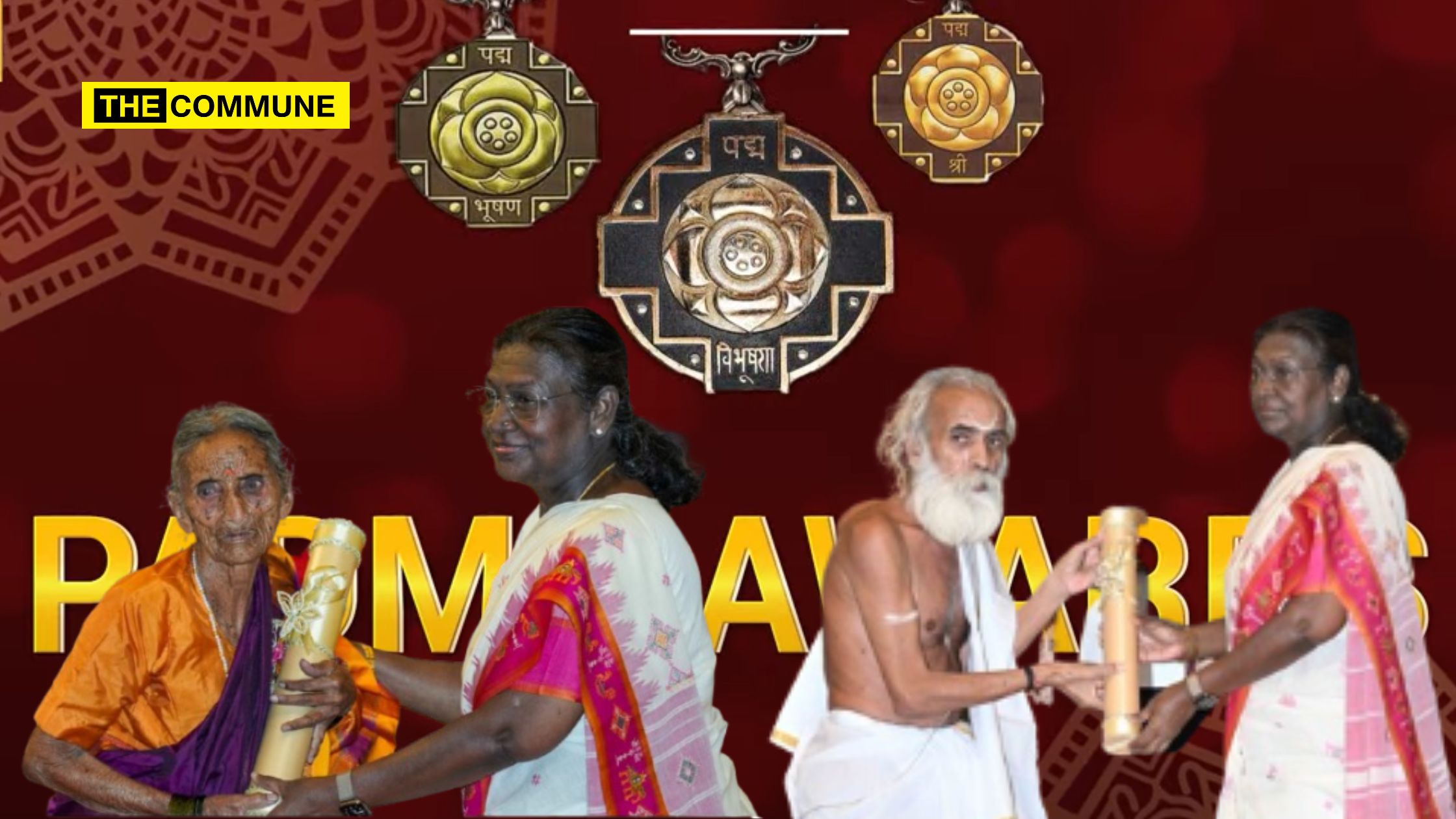
On 28 April 2025, President Droupadi Murmu conferred 71 Padma awards (4 Padma Vibhushan, 10 Padma Bhushan and 57 Padma Shri) at the Civil Investiture Ceremony-I in the Republic Pavilion of Rashtrapati Bhavan. The awards, spanning disciplines such as art, social work, public affairs, science and engineering, trade and industry, medicine, literature and education, sports, and civil service, recognized both well-known stalwarts and unsung heroes. Thirteen remarkable individuals—23 women among them, 10 in the Foreigners/NRI/PIO/OCI categories, and 13 posthumous awardees—were honored for their extraordinary contributions to society:

#1 Ganeshwar Shastri Dravid — Padma Shri (Literature & Education)

The 71-year-old Varanasi-based Vedic scholar and astrologer has devoted his life to preserving India’s Vedic heritage, promoting Vedic learning nationwide through lectures, publications, and mentorship. Born near Kumbakonam, Tamil Nadu, he teaches at Sangveda Vidyalaya and contributes to the Girvanavagvardhini Sabha. He calculated the exact 84-second muhurtam for the Pran Pratishtha of Ram Lalla in Ayodhya and a 35-second window for the Ram Mandir Bhoomi Pujan, and later fixed auspicious timings for Kashi Vishwanath Temple’s rejuvenation. Ganeshwar Shastri Dravid, from a family of Krishna Yajurveda scholars, continues to travel across India, offering lectures and rituals that preserve the nation’s spiritual heritage.

#2 Bhimavva Doddabalappa Shillekyathara — Padma Shri (Art)

Bhimavva Doddabalappa Shillekyathara, a 96-year-old puppeteer from Koppal, Karnataka, has been honored with the Padma Shri for her exceptional contributions to Togalu Gombeyaata, a traditional leather shadow-puppetry art form. For over seven decades, she has preserved and promoted this vibrant storytelling tradition, which often narrates epic tales like the Ramayana and Mahabharata. Shillekyathara, from a family of Togalu Gombeyaata custodians, has also trained younger generations to continue the legacy. Her lifelong dedication has kept this endangered art form alive.

#3 Stephen Knapp — Padma Shri (Literature & Education)

An American author and researcher, Knapp’s over 55 books—such as The Secret Teachings of the Vedas and The Heart of Hinduism—and hundreds of articles have introduced readers worldwide to India’s ancient knowledge systems, including the Bhagavad Gita, Upanishads, and Srimad Bhagavatam. Through lectures and writings, he has dispelled misconceptions about Indian spirituality and served as a cultural ambassador. Awarded the Padma Shri for his efforts to promote India’s spiritual heritage, Knapp said the honor feels like “Mother India recognizing” his lifelong devotion, and he thanked his spiritual masters for inspiring his work.

#4 Vinod Dham — Padma Bhushan (Science & Engineering)

Vinod Dham, known as the “Father of the Pentium Chip,” has been honored with the Padma Bhushan in 2025 for his transformative contributions to modern computing. Born in Pune in 1950, Dham played a pivotal role in developing the Pentium processor at Intel, revolutionizing personal computing. His strategic acumen also helped NexGen, which was later acquired by AMD, and he contributed to Intel’s first Flash Memory technology. Beyond his work in tech, Dham has supported Indian start-ups and is currently advising the Indian government on semiconductor manufacturing efforts, further championing India’s chip-making ambitions.

#5 Maruti Bhujangrao Chitampalli (“Aranya Rishi”) — Padma Shri (Art)

Maruti Bhujangrao Chitampalli, honored with the Padma Shri, is a renowned forest officer, author, and wildlife conservationist, widely known as “Aranya Rishi” (The Forest Sage). A career in Maharashtra’s forest department, especially in Vidarbha’s forests, inspired his literary works and conservation efforts. His books, including bestsellers like Pakshi Jaay Digantara, and dictionaries on birds, animals, and trees, enriched Marathi vocabulary and nature writing. Retiring as deputy chief conservator of forests in 1990, he continued educating others about nature. Chitampalli’s contributions to wildlife sanctuaries and literature make him a celebrated figure in conservation and Marathi literature.

#6 Subhash Khetulal Sharma — Padma Shri (Agriculture)

Subhash Khetulal Sharma, a 73-year-old farmer from Yavatmal, Maharashtra, has transformed his 16-acre farm into a model of natural farming, emphasizing soil health, water conservation, and biodiversity. After abandoning chemical farming in 1994, Sharma’s productivity increased significantly by 2000, with his farm producing 400 tonnes annually. He practices a self-sustaining ecosystem, incorporating animal husbandry, rainwater harvesting, and multi-crop cultivation. Sharma’s efforts conserve one crore liters of rainwater annually and recharge groundwater. Recognized with the Padma Shri, he advocates for ecological balance and calls for government policies supporting sustainable agriculture for a better future.

#7 Libia Lobo Sardesai — Padma Shri (Social Work)

At age 100, veteran freedom fighter Libia Lobo Sardesai received the Padma Shri for her daring six-year clandestine radio campaign (1955–61) that galvanized Goa’s liberation. Born in 1924 under Portuguese rule, Sardesai joined the nationalist movement in Bombay and, with her future husband Vaman Sardesai, set up an underground station—Goenche Sodvonecho Awaz/Voz de Liberdade—in the Western Ghats. They broadcast daily updates, urged satyagrahis, and survived harsh wilderness conditions. On 19 December 1961, aboard an Indian Air Force plane, Sardesai announced Goa’s freedom in Konkani and Portuguese, marking the end of 450 years of colonial rule.

#8 Dr. Jose Chacko Periappuram — Padma Bhushan (Medicine)

Dr. Jose Chacko Periappuram, a pioneering cardiac surgeon from Kerala, was awarded the Padma Bhushan for revolutionizing cardiac care. Returning to India in the mid-1990s, he introduced open-heart surgery and performed Kerala’s first heart transplant in 2003. With over three decades of experience, he overcame challenges like low organ donation rates and emotional difficulties in organ harvesting. Dr. Periappuram also founded the Heart Care Foundation, helping thousands access affordable heart surgeries. He advocates for lifestyle changes to prevent heart disease and plans a “Heart Village” for patient support. His work continues to impact Kerala’s healthcare system significantly.

#9 Sadhvi Ritambhara — Padma Bhushan (Social Work)

Sadhvi Ritambhara, a Hindu saint and social worker from Ludhiana, Punjab, received the Padma Bhushan for her impactful social service and pivotal role in the Ram Mandir movement. Head of Vatsalya Gram, she pioneered a family model for orphans and destitute women and children, providing them shelter and education. A disciple of Swami Parmanand since 1982, Ritambhara—known as Didi Maa—helped guide and pacify Kar Sevaks alongside Uma Bharti during the 1992 Ayodhya movement. Her efforts blend spiritual advocacy with grassroots welfare, reflecting her belief that no one should feel orphaned on sacred Indian soil.

#10 Syed Ainul Hasan — Padma Shri (Literature & Education)

Syed Ainul Hasan, Vice-Chancellor of Maulana Azad National Urdu University (MANUU), has been awarded the Padma Shri for his contributions to education and Persian studies. A former professor at JNU’s School of Language, Literature & Culture Studies, he has played a significant role in strengthening Indo-Iranian and Indo-Afghan cultural ties. He was instrumental in establishing the Afghan Resource Centre at JNU and has designed academic courses for several Indian universities. With a long-standing career in teaching and research, he was previously honored with the President of India’s Certificate of Honour in 2017 for his contributions to Persian language and culture.

#11 Jumde Yomgam Gamlin — Padma Shri (Social Work)

Jumde Yomgam Gamlin, a 59-year-old social worker from West Siang, Arunachal Pradesh, has been awarded the Padma Shri for her three decades of dedicated service in drug de-addiction and social reform. Founder of the NGO Mother’s Vision, she runs a 30-bed spirituality-based de-addiction and rehabilitation centre. Her efforts have led to the eradication of marijuana and opium cultivation in parts of Upper Siang, with strong community involvement. Gamlin has helped over 700 individuals recover from addiction and empowered more than 2,000 women through vocational training and financial assistance, blending recovery with livelihood and health awareness initiatives.

#12 Mahavir Nayak — Padma Shri (Art & Culture)

Mahavir Nayak, a renowned Nagpuri singer from Ranchi, has been awarded the Padma Shri for his over 50-year contribution to preserving Jharkhand’s folk music, especially through ragas like Bhinsariya, Faguwa, Pawas, and Mardani Jhumar. Born in 1942 in Uruguttu, near Ranchi, Nayak is known as the “Raja of Bhinsariya Raga.” He actively participated in the Jharkhand statehood movement alongside other folk legends and introduced progressive styles to Nagpuri music. A former HEC employee, he performed across India and abroad, including Taiwan. His daughter now carries forward his musical legacy. Nayak is widely respected for his distinct and rooted singing style.

#13 Anant Nag — Padma Bhushan (Art & Culture)

Veteran Kannada actor Anant Nag, awarded the Padma Bhushan, reflected on his decades-long journey in cinema, attributing the honour to the people of Karnataka and a grassroots campaign by fans and colleagues. In an interview with The Hindu, he recalled his early days in theatre, collaborations with Shyam Benegal, and challenges in promoting naturalistic acting in commercial cinema. Though he transitioned to mainstream films for financial reasons, Nag remained committed to subtle performances. He praised new-age directors like Hemanth Rao and Rishab Shetty for giving him impactful roles and expresses a desire for stronger screenwriting in the Kannada industry.

These 13 unsung heroes embody the Padma Awards’ spirit—honoring excellence, dedication, and service in fields that sustain India’s culture, knowledge, and social fabric.

Subscribe to our channels on Telegram, WhatsApp, and Instagram and get the best stories of the day delivered to you personally.
“Anusha Is Not Tamil Name, Keep Tamil Names For Your Children”, Says ‘Stalin’

mk stalin press freedom arrest police foreign trip the wire

Tamil Nadu Chief Minister M.K. Stalin has emphasized the importance of preserving the Tamil language by encouraging the use of Tamil names.

While attending the wedding of the daughter of Mylapore MLA and DMK District Secretary Velu, held at Kalaignar Arangam in the DMK headquarters Anna Arivalayam, Stalin offered his blessings to the newlyweds. Speaking on the occasion, he said, “I would like to request not only the bride and groom but also Velu, because he has named his daughter Anusha, which is not a Tamil name, but it is not a problem, but the bride and groom who here today, please give beautiful Tamil names to the children you will have.”

Later, responding to a suggestion from an online user to create a website featuring Tamil names through the Tamil Development Department, Chief Minister M.K. Stalin announced via his official X account that the Tamil Virtual Academy would soon launch a dedicated platform showcasing a curated list of meaningful and graceful Tamil baby names. The move has been widely appreciated by Tamil language enthusiasts and cultural advocates across the state.

He wrote, “Brother @srinileaks request will be fulfilled. A website containing beautiful Tamil names for children and their meanings will be launched by the Tamil Virtual Academy !”

Netizens pointed out the irony in Stalin asking others to name their children in Tamil while he himself bears the name of a Russian dictator. His wife’s name is Durga which is Sanskrit. His son’s name Udhayanidhi can also be considered Sanskrit. Udhayanidhi’s daiughter name is Tanmaya which is also a Sanaskrit name.

Subscribe to our channels on Telegram, WhatsApp, and Instagram and get the best stories of the day delivered to you personally.
7 Times Islamic Terrorists Targeted Non-Muslims While Sparing Muslims

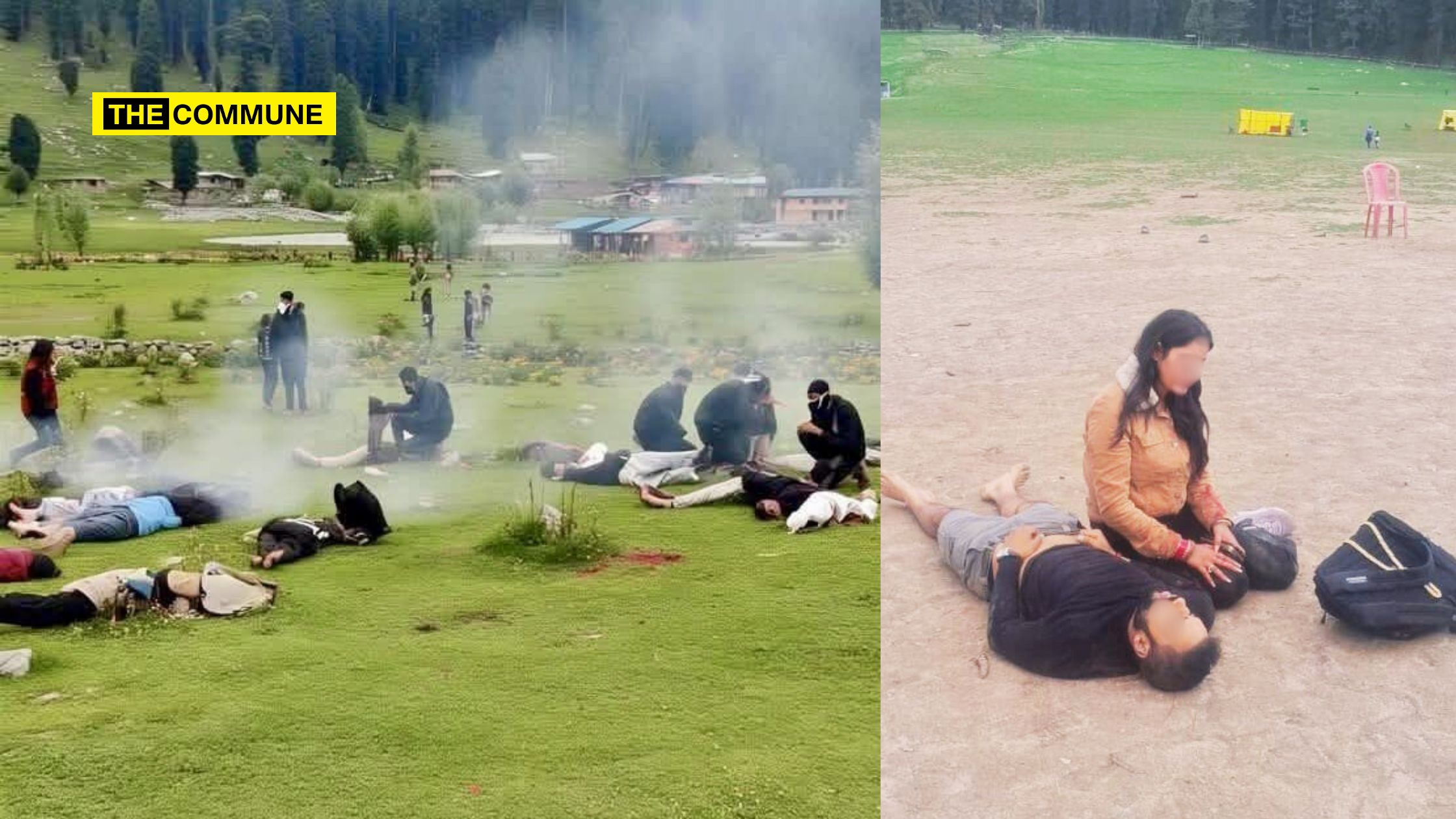
On 22 April 2025, a brutal terrorist attack unfolded in the Baisaran Valley near Pahalgam, Jammu and Kashmir. Five armed militants ambushed a group of tourists, opening fire after reportedly asking them their names and religions. Twenty-six people were killed and more than 20 injured. Among the dead were 25 tourists, primarily Hindus, and one Christian. Notably, Muslims in the group were spared by the attackers.

This report compiles seven such incidents between 2008 and 2025, where Islamist terrorists deliberately targeted people of other faiths while sparing Muslims, underscoring a disturbing pattern of religiously motivated violence.

#1 Pahalgam Terror Attack

On 22 April 2025, a deadly terrorist attack shook the Baisaran Valley near Pahalgam in Jammu and Kashmir, claiming the lives of 26 tourists and injuring several others. Carried out by militants from The Resistance Front (TRF), an offshoot of the Lashkar-e-Taiba (LeT), the attackers reportedly asked the victims their names and religions, stripped the male members to check their private parts, before opening fire. Among the dead were 24 Hindus and one Christian, highlighting the religious targeting behind the massacre.

#2 Dhaka Attackers Spared Quran Reciters, Killed Others

On 1 July 2016, Islamic State terrorists attacked Holey Artisan Bakery in Dhaka, Bangladesh, taking diners hostage. The militants spared those who could recite verses from the Quran, offering them food, while others—mostly foreigners—were tortured and brutally killed. Witnesses said the terrorists identified Muslims and spared them, singling out non-Muslims for execution. At least 20 hostages and two policemen were killed. Bangladeshi nationals were treated more leniently. Rescued hostages revealed chilling details of the night-long ordeal, including text exchanges with loved ones. The siege ended after a military operation stormed the café the following morning.

#3 Quran-Reciters Spared In Deadly Mali Hotel Siege

On 20 November 2015, Islamist militants linked to Al-Mourabitoun stormed the Radisson Blu Hotel in Bamako, Mali, taking 170 hostages and killing 27 people. Witnesses said hostages who could recite Quran verses were released, indicating Muslims were spared. The attackers, shouting “Allahu Akbar,” opened fire and took over the hotel. Al-Mourabitoun, aligned with al-Qaeda, claimed responsibility, demanding prisoner releases and an end to military operations in northern Mali. Malian, French, and U.S. forces launched a rescue, freeing survivors including foreigners. Despite a 2015 peace deal, Mali remains vulnerable to extremist violence in areas outside government control.

#4 Garissa University Attack: Christians Targeted In Deadly Assault

On 2 April 2015, Al-Shabab militants stormed Garissa University College in Kenya, killing 148 people—mostly Christian students—and injuring over 79. The attackers separated Muslims from non-Muslims, sparing the former. This brutal act was part of a wider pattern of Al-Shabab violence in Kenya, including previous killings in Mandera and quarry attacks targeting Christians. Despite police presence, the group executed the Garissa assault with chilling precision. The attack shocked the nation, prompting heightened security and national mourning. Somali President Hassan Sheikh Mohamud condemned the targeting of Christians, stating it contradicts Islamic teachings and aims to divide communities.

#5 Westgate Mall Attack: 68 Killed In Nairobi Siege

On 21 September 2013, al-Shabaab militants attacked Nairobi’s Westgate Mall, killing 68 and injuring over 175. Armed with guns and grenades, the attackers targeted shoppers, reportedly allowing Muslims to leave beforehand. The siege lasted four days, with Kenyan forces eventually regaining control. Several attackers were foreign nationals, and suspicions arose over the involvement of American citizens. Among the dead were citizens from the UK, France, Canada, and Ghana. President Uhuru Kenyatta vowed justice. The attack was seen as retaliation for Kenya’s military involvement in Somalia. It remains one of Kenya’s deadliest terrorist attacks.

#6 Turkish Couple Spared In 26/11 Mumbai Terror Attack For Being Muslim

During the 2008 Mumbai attacks, Turkish couple Meltem Muezzinoglu and her husband Seyfi were taken hostage at the Oberoi Hotel. They were held overnight with three foreign women while gunmen from Lashkar-e-Taiba stood guard. The terrorists asked all hostages to state their religion. When the Muezzinoglus identified as Muslims, they were told they would not be harmed. The next day, the three non-Muslim women were removed and later reported shot. The couple was eventually rescued by Indian forces. Their friend Ali Arpaciouglu, who escaped earlier, stayed in contact with them throughout the ordeal via texts and one call.

#7 Thai Muslims’ Direct Talks With Hamas Helped Secure Hostage Release

On 27 November 2023, Thai Muslim groups claimed credit for securing the early release of Thai hostages held by Hamas during the Gaza conflict. The Thai-Iran Alumni Association, led by Lerpong Syed, engaged in direct talks with Hamas in Tehran, urging the release of Thai nationals. They emphasized that Thais were not involved in the conflict, leading Hamas to promise unconditional release during a truce. While the Thai government acknowledged multiple diplomatic efforts, including those by Qatar and Iran, the Muslim group said its initiative was crucial in freeing 17 Thai hostages by the third day of the ceasefire.

Subscribe to our channels on Telegram, WhatsApp, and Instagram and get the best stories of the day delivered to you personally.