Tensions have intensified in Kerala over the observance of ‘Partition Horrors Remembrance Day,’ with the CPI(M)-led state government clarifying that participation in the event is not mandatory for universities or affiliated colleges.
Higher Education Minister R. Bindu announced on 13 August that official communications had been issued through the Directorates of Collegiate and Technical Education, advising institutions that they are not obliged to comply with Governor Rajendra Vishwanath Arlekar’s directive to hold events on 14 August, the eve of Independence Day.
Speaking to the media, Dr. Bindu stated the state does not endorse such observances on academic campuses. “The Kerala government believes that such events should not take place in educational institutions, as they risk becoming platforms for communal discord, contradicting the inclusive spirit of our educational policy,” she said.
She further emphasized that Kerala traditionally marks Independence Day by highlighting unity and the sacrifices of freedom fighters, in line with the values enshrined in the Constitution. Introducing a commemoration focused on the tragedies of Partition, she warned, could promote sectarian tension rather than national unity.
Opposition leader V.D. Satheesan also denounced the Governor’s move, describing it as a grave misstep and part of a broader effort by the Sangh Parivar to sow division. He alleged that the initiative reflects the RSS’s ideological goals, accusing the BJP of deploying a new tactic—invoking the trauma of Partition—to fuel communal divisions. “When attempts to polarize Christian and Muslim communities failed, they resorted to this new narrative,” Satheesan claimed.
Meanwhile, the Students’ Federation of India (SFI) held statewide protests against the directive. Demonstrators at Kerala University burned effigies of both the Governor and the Vice-Chancellor, drawing strong condemnation from BJP-aligned Syndicate members.
In a disturbing incident from Thiruvarur district, eight students were rushed to the Kumbakonam Government Hospital on 13 August 2025 morning after consuming food from the Chief Minister’s breakfast scheme, where a dead lizard was allegedly discovered in the meal.
The students, enrolled at Punairuppu Government Primary School, had been served rava khichdi as part of the morning meal initiative. While eating, a lizard was reportedly spotted in the food, prompting immediate concern. The affected students were quickly admitted for medical observation and treatment.
This isn’t the first time serious lapses in food safety have been reported under the school meal programmes in Tamil Nadu.
Back in June 2025, a similar incident occurred at the Panchayat Union Primary School in Anaivari village, near Thiruvennainallur in Villupuram district, where more than 50 students fell ill after consuming a breakfast that allegedly contained a lizard. Many students began vomiting and fainting soon after eating and were taken to the Kalpattu Government Primary Health Centre. In response, two temporary kitchen staff were dismissed, and an inquiry was initiated by the School Education Department, overseen by the Assistant SSA Project Director.
Earlier, on 12 June 2025, yet another food safety breach was reported from Kallakurichi district, where students at a government school were served spoiled mid-day meals contaminated with worms and bugs. According to reports, the rice used had been stored improperly for over a month during the summer holidays, leading to contamination. A viral video showed distressed students pleading with the Education Minister for access to clean and safe food, highlighting the gravity of the issue.
These recurring cases have sparked growing concern about the quality control and safety measures in place for meals provided under state-run welfare schemes. Parents, activists, and educationists are calling for stricter monitoring, accountability, and immediate corrective action to ensure children’s health is not compromised.
Subscribe to our channels on Telegram, WhatsApp, and Instagram and get the best stories of the day delivered to you personally.
Congress scion Rahul Gandhi thought he managed to pull off a massive blow to the BJP with his so-called “atom bomb” – allegations of “vote chori”. However, a closer look at the Nehru-Gandhi family will tell you that vote chori runs deep in their veins and he is in fact trying to protect his family’s interests by deflecting the blame on to the central government, thereby confirming that Rahul Gandhi is a hypocrite.
The political history of the Gandhi–Nehru family, critics claim, is deeply intertwined with repeated acts of vote chori – electoral manipulation and subversion of democratic processes – stretching back to the pre-independence era. The following list compiles major incidents as described in historical accounts and allegations:
#1 1939 – Subhas Chandra Bose Forced Out Despite Winning Congress Presidency
In 1939, Netaji Subhas Chandra Bose contested for the Congress presidency for a second consecutive term. Mahatma Gandhi opposed his candidature, fearing Bose’s rise would diminish Jawaharlal Nehru’s stature, and fielded Pattabhi Sitaramayya against him.
Despite Gandhi’s open appeal that Sitaramayya’s defeat would be his “personal defeat,” Bose won. Following the victory, the Gandhi–Nehru faction allegedly obstructed Bose’s functioning by boycotting Working Committee meetings and creating administrative hurdles. Bose resigned, formed the Forward Bloc, and eventually left the country to lead the Indian National Army. This was labelled the first instance of ‘vote chori’ – winning a democratic mandate but being denied the ability to function.
#2 1946 – Saradar Patel Denied Premiership Despite Majority Support
In September 1946, with independence and partition imminent, provincial Congress committees were to nominate the next Congress president – who would become interim Prime Minister. All but one proposed Sardar Patel. The lone exception lacked any name and was returned with instructions to propose Nehru’s name – but the deadline had passed.
Allegedly, Gandhi intervened, persuading Patel to withdraw via a letter drafted by Acharya Kripalani. Patel signed, and Nehru assumed leadership. Critics call this the second ‘vote chori’, where Patel’s clear majority was bypassed to install Nehru.
#3 1949 – Purushottam Das Tandon Forced to Resign as Congress President
In 1949, Patel backed Purushottam Das Tandon for Congress president against Nehru’s candidate Acharya Kripalani. Tandon won. Allegedly, the Gandhi–Nehru faction repeated the Bose episode, boycotting Working Committee meetings to paralyse the party. After Patel’s death, Tandon resigned under pressure.
#4 Early 1950s – Nehru Overrides Decision to Appoint S. Nijalingappa as Congress President
During Nehru’s premiership, party consensus favoured S. Nijalingappa as the next Congress president. In the Working Committee meeting, Nehru allegedly backed a surprise proposal moved by U.N. Dhebar to appoint Indira Gandhi instead. Govind Ballabh Pant reportedly objected, but Nehru insisted, saying she was unwell and to undo that she needed to be given president post.
#5 1952 – Alleged Manipulation of Rampur Election Result
In the first general election, Maulana Abul Kalam Azad contested from Rampur against a Hindu Mahasabha candidate, who reportedly won by 20,000 votes. Jawaharlal Nehru allegedly pressured UP Chief Minister Govind Ballabh Pant to reverse the result. According to Basant Das Tandon’s own account, ballot papers were physically shifted from the opponent’s box to Azad’s, declaring him victorious. Critics cite this as proof that vote manipulation was practised at the very birth of India’s electoral democracy.
#6 Nehru–Communist Collusion Toppled Ambedkar in 1952
In the 1952 North Mumbai elections, Jawaharlal Nehru’s Congress fielded Narayan Kajrolkar against Dr. B.R. Ambedkar, while Communist leader S.A. Dange campaigned alongside Congress, branding Ambedkar a “traitor” and circulating defamatory pamphlets. Nehru personally campaigned twice in Mumbai. Allegations of large-scale malpractice arose, including 78,000 cancelled votes, which Ambedkar and socialist leader Jayaprakash Narayan questioned. Ambedkar accused Dange of conspiring with Congress to defeat him. Despite filing legal challenges, he lost again in the 1954 Bhandara by-election.
#7 1975 Verdict: Indira Gandhi’s Win Voided for Electoral Malpractice
On 12 June 1975, the Allahabad High Court annulled Prime Minister Indira Gandhi’s 1971 Rae Bareli victory for electoral malpractice. Justice Jagmohan Lal Sinha found her guilty of illegally using government machinery, officially arranged loudspeakers, stages, security, and appointing aide Yashpal Kapur before his resignation from government service. Other charges, like bribery or misuse of the Air Force, were dismissed. The court barred her from elected office for six years, sparking nationwide political upheaval. A Supreme Court partial stay let her remain PM, but the verdict triggered the Emergency, cementing this case as one of India’s most consequential election scandals.
#8 Sonia Gandhi’s Voter Registration Before Acquiring Indian Citizenship
Sonia Gandhi married Rajiv Gandhi in 1968. By 1980, her name appeared on the voters’ list, despite retaining Italian citizenship until April 1983. Under Indian law, only citizens can be voters. Her name was reportedly removed after protests, but reinstated in January 1983, still before she became a citizen. This is alleged as another violation of voter eligibility norms.
#9 Sonia Gandhi as Director of Maruti Company Before Citizenship
Before 1980, Sonia Gandhi was reportedly a director in Sanjay Gandhi’s Maruti company. Indian company law required directors to be Indian citizens, yet she allegedly held the position before acquiring citizenship in April 1983. Critics call this another instance of bypassing legal requirements.
#10 1987 J&K Elections: Rigging That Fueled Terrorism
The 1987 Jammu & Kashmir Assembly polls, contested between the Congress–National Conference alliance and the Muslim United Front (MUF), were marred by widespread rigging. In seats like Amira Kadal, where MUF’s Syed Salahuddin led by a large margin, counting was abruptly halted and results reversed. Reports detailed booth capturing, ballot boxes pre-stamped for NC, opposition agents expelled from counting centres, and arrests of MUF leaders and workers. Complaints of manipulated counts and voter suppression poured in from across the Valley. The alliance swept 66 of 76 seats, but the blatant electoral fraud deepened public resentment, fueling terrorism by 1989.
#11 1999 – Sonia Gandhi’s Claim to Form Government Without Majority
After the Vajpayee government fell by one vote, Sonia Gandhi approached President K.R. Narayanan claiming to have a majority. Critics allege she did not have the requisite numbers and attempted to form a government without actual legislative backing.
#12 2004 – Sonia Gandhi’s Attempt to Become PM Amid Citizenship Controversy
In 2004, Sonia Gandhi was invited to form the government but did not assume the prime ministership. Allegations persist from critics that questions about her citizenship and political legitimacy played a role.
#13 Rahul Gandhi’s Alleged British Citizenship Declaration
Rahul Gandhi reportedly served as a director in a UK-registered company, declaring British citizenship in official filings. Indian law automatically terminates Indian citizenship upon acquiring foreign nationality. The matter remains in court, but critics link it to the family’s alleged history of citizenship-related violations.
#14 2018 – 10,000 Fake Voter ID Cards Seized in Bengaluru
Just days before the Karnataka Assembly elections in May 2018, the Election Commission seized 9,746 voter ID cards from a Bengaluru apartment in Jalahalli, along with laptops, printers, and thousands of voter application acknowledgment slips. The flat was allegedly linked to Congress’s Rajarajeshwari Nagar candidate and sitting MLA Munirathna, who was later named as an accused in the FIR.
The BJP and JD(S) accused the Congress of attempting to subvert free and fair elections. The Congress countered by claiming the property belonged to a BJP leader. The Election Commission ordered a full probe, and the case became one of the most high-profile voter fraud controversies in recent state election history.
Pattern and Alleged Motive
Critics argue these episodes, from Bose’s ouster in 1939 to modern-day voter roll controversies, reveal a consistent pattern: undermining democratic processes to protect or expand the family’s political control. The accusations suggest that electoral rules, party norms, and even constitutional provisions were bent or bypassed when necessary to secure power and it continues even today. Just yesterday, BJP leader Anurag Thakur listed out all the fake voters, newly registered “aged” voters in various I.N.D.I. alliance members’ constituencies.
Subscribe to our channels on Telegram, WhatsApp, and Instagram and get the best stories of the day delivered to you personally.
The Supreme Court on Wednesday reserved its order on pleas seeking a stay on the August 11 directions of a two-judge bench mandating the removal of stray dogs in Delhi-NCR to shelter homes.
The matter, earlier being heard by a bench of Justice JB Pardiwala and Justice R Mahadevan in a suo motu case, was shifted to a three-judge bench comprising Justice Vikram Nath, Justice Sandeep Mehta, and Justice NV Anjaria after some lawyers mentioned before the Chief Justice of India that the directions conflicted with previous orders of other benches.
Solicitor General Flags “Silent Suffering Majority”
At the outset, Solicitor General Tushar Mehta, appearing for the Government of NCT of Delhi, said there was “a loud vocal minority and a silent suffering majority.” He remarked, “I have seen people posting videos of eating meat and then claiming to be animal lovers.”
Citing public safety concerns, Mehta said several children have died due to rabies from dog bites. “Sterilisation does not stop rabies. Even if the dogs are immunised, that won’t stop them from mutilating children,” he said, quoting Economic Times figures of 37 lakh dog bites annually – about 10,000 per day. He added, citing WHO data, that about 20,000 rabies deaths occur every year.
“Only four or five species of snakes are poisonous. But we don’t keep them at homes. Nobody is saying kill dogs. They need to be separated. Kids are not able to play outside or go to school,” he argued.
Kapil Sibal Seeks Stay Of August 11 Directions
Senior Advocate Kapil Sibal, representing the NGO Project Kindness, countered that the Animal Birth Control (ABC) Rules and relevant parliamentary legislation must be complied with.
“This is the first time I hear the Solicitor General say don’t look at the legislation which occupies the field… Where are the shelters? Where are the pounds? They will be culled,” Sibal said, seeking a stay on four of the August 11 directions that mandated picking up stray dogs.
He warned that overcrowded shelters could lead to dogs attacking each other and spreading disease, “That will also affect humans.” He further sought the release of dogs already picked up.
Justice Nath queried whether authorities had already started picking up dogs before the order was uploaded. Sibal replied in the affirmative.
Other Senior Advocates Flag Conflicts with Past Orders
Senior Advocate Dr Abhishek Manu Singhvi said the August 11 order ignored at least six earlier Supreme Court orders that barred mass removal of dogs and required strict enforcement of the ABC Rules.
Senior Advocate Siddharth Dave submitted that the order was passed based only on submissions of the Solicitor General and amicus curiae without hearing animal rights activists.
Senior Advocate Aman Lekhi argued that the directions relied on anecdotal reports and unauthenticated videos. Senior Advocate Colin Gonsalves said sterilisation and proper feeding would bring down the dog population.
Senior Advocate Krishnan Venugopal pointed out that there are about 1 million dogs in Delhi-NCR but shelters can accommodate only around 1,000. Justice Mehta remarked that these figures too were “anecdotal” and asked, “Where is the evidence?”
Senior Advocate Siddharth Luthra said the Delhi Government had filed an affidavit expressing readiness to comply with ABC Rules.
Bench Questions MCD and Local Authorities
Turning to Additional Solicitor General Archana Pathak Dave for the MCD’s stand, Justice Nath said, “What is your stand? This is happening because of the inaction of the Municipal Corporation. The Government does nothing. The local authorities do nothing.”
“Local authorities are not doing what they should be doing. They should be here taking responsibility. Everyone who has come here to file intervention should take responsibility,” Justice Nath added before concluding the hearing.
Background of the August 11 Directions
On 28 July 2025, a bench of Justices Pardiwala and Mahadevan took suo motu cognisance of a Times of India news report titled “City hounded by strays and kids pay price.” On August 11, it ordered immediate shifting of all stray dogs in Delhi to shelters, directing authorities to create infrastructure for 5,000 dogs within 6–8 weeks, maintain daily capture records, create a dog-bite helpline, ensure no captured dog is released, and track vaccine stocks.
The order warned that “No sentiments should be involved in the entire exercise” and that “Infants and young children, not at any cost, should not fall prey to rabies.”
The three-judge bench will now decide whether to stay these directions.
The Legal Rights Protection Forum (LRPF) has lodged a petition with the National Human Rights Commission (NHRC) seeking an urgent inquiry into the alleged involvement of schoolchildren in a politically and religiously charged protest held in Khammam, Telangana, on 7 August 2025.
According to LRPF General Secretary A.S. Santhosh, the rally, organised by the Palestine Solidarity Committee with participation from Communist parties, Muslim organisations, and local leaders of the Congress and BRS, saw minors from nearly 25 educational institutions take part. The petition claims that around 100 buses were used to transport students to the venue, where they were made to enact plays depicting victims in Gaza and exposed to graphic props such as dolls wrapped to resemble dead or injured children.
Citing reports from VSK Telangana and The Siasat Daily, LRPF alleged that the rally carried slogans on the Gaza conflict, criticised the Indian government, and employed religious symbolism. The group argued that forcing children into such events caused emotional distress, violated constitutional protections under Article 39(f), and breached multiple child protection laws, including the Right to Education Act, 2009, and the Juvenile Justice Act, 2015.
The petition also referred to NHRC and National Commission for Protection of Child Rights (NCPCR) precedents where children’s participation in protests was deemed exploitative. It warned that such activities risk “brainwashing” minors with politically and religiously charged narratives.
Wrote to NHRC over shocking use of minors in politically & religiously charged pro-Palestine rally in Khammam.
Kids were coerced, bussed from 25+ schools, made to act with 'dead child' props & religious dramatizations. Gross violation of Child Rights, JJ Act, RTE & Constitution. pic.twitter.com/dY2kshLrXT
— Legal Rights Protection Forum (@lawinforce) August 13, 2025
LRPF identified political and organisational figures allegedly involved in facilitating student participation, including leaders from CPI, CPI(ML), CPM, Jamaat-e-Islami Hind, as well as local educational management representatives.
The forum requested that NHRC direct the Khammam District Collector to conduct a fact-finding inquiry, identify schools and organisers responsible, and recommend strict action. It also called for the Telangana School Education Department to consider suspending recognition of the implicated institutions, provide counselling for affected students, and initiate legal proceedings under the Juvenile Justice Act and the Bharatiya Nyaya Sanhita, 2023.
The petition noted that the rally took place despite the Bombay High Court’s July 25 observation advising Communist parties to focus on domestic issues rather than foreign conflicts.
Subscribe to our channels on Telegram, WhatsApp, and Instagram and get the best stories of the day delivered to you personally.
NGO watchdog, Legal Rights Protection Forum (LRPF), has lodged a formal complaint with the Director General and Additional Director General of the National Cadet Corps (NCC), alleging that minors wearing NCC uniforms participated in a politically and religiously charged rally in Khammam, Telangana, on 7 August 2025.
According to the complaint, the rally was reportedly organised by the Palestine Solidarity Committee with the involvement of Communist parties (CPI, CPI(ML), CPM), Muslim minority organisations including Jamaat-e-Islami Hind, and local political leaders from the Congress and BRS. The LRPF stated that students from nearly 10 large schools and 15 smaller institutions took part, with several minors allegedly made to wear full NCC uniforms while participating.
Misuse of NCC Uniform in Politically Charged Pro-Palestine Rally at Khammam:
Wrote to the Director General, NCC for disciplinary proceedings under the NCC Rules, and take steps to ensure such incidents are not repeated, thereby safeguarding both the dignity of the NCC uniform https://t.co/DtvsJzgoO8pic.twitter.com/SxMH6x6TQp
— Legal Rights Protection Forum (@lawinforce) August 13, 2025
The procession was said to feature slogans related to the Gaza conflict, criticism of the Government of India, and religious symbolism. The LRPF claimed that the event included graphic dramatizations, such as objects resembling dead bodies wrapped in white cloth with red colouring to simulate blood, which it said created fear among children and posed a risk of psychological trauma.
Citing Rule 45(5) of the National Cadet Corps Rules, 1948, the LRPF pointed out that NCC cadets are permitted to wear the uniform only during official functions, military parades, or prescribed ceremonies. It argued that participation in a political or religious gathering in uniform constituted misuse, punishable under NCC Rules 38–39, and potentially under Section 11 of the National Cadet Corps Act, 1948.
The LRPF also said the incident violated provisions of child protection laws, including Article 39(f) of the Constitution, Section 17 of the Right to Education Act, 2009, Section 75 of the Juvenile Justice (Care and Protection of Children) Act, 2015, and guidelines from the National Commission for Protection of Child Rights (NCPCR) prohibiting minors’ involvement in political protests.
The organisation requested the NCC Headquarters to initiate an inquiry, identify the cadets and schools involved, and take disciplinary action to prevent similar incidents.
Subscribe to our channels on Telegram, WhatsApp, and Instagram and get the best stories of the day delivered to you personally.
Warning: Rajini fans are advised to not proceed with reading this review as truth bombs will surely hurt.
Coolie, directed by Lokesh Kanagaraj (Loki) and starring Rajinikanth, had all the ingredients for a blockbuster: mass appeal, high-octane action, and a gritty premise bringing together a powerhouse cast including Nagarjuna, Soubin Shahir, Upendra, Shruti Haasan, Sathyaraj, and Aamir Khan.
However, the film ultimately disappoints, delivering a clumsy, uneven experience that tests the audience’s patience more than entertains.
Lokesh Kanagaraj has often been hailed as a master of the “mass film,” yet Coolie only strengthens the argument that he’s overrated. Like Master, Leo, and Vikram, this outing also suffers from the same fatal flaw: no good story, no engaging screenplay, and an overreliance on fan service.
Story and Screenplay
The narrative revolves around a former coolie union leader who stands up against a corrupt syndicate exploiting workers at a port. While the premise has potential, the execution is weak. The screenplay is clumsy and inconsistent, with the story oscillating between friendship-revenge drama, mass hero moments, and forced flashbacks. Weak characterization leaves most of the cast underutilized, including Rajinikanth himself, who, despite being central, has limited scope in the early portions.
First Half
The film starts with promise but quickly loses steam. Nagarjuna adds style and charisma, especially in sequences like the “I Am the Danger” song, but his character is poorly fleshed out. Soubin Shahir holds his own and emerges as one of the film’s few saving graces. Shruti Haasan and Rachita Ram perform well but are constrained by the weak storyline. The first half has moments of entertainment, including the interval block, which briefly showcases Lokesh’s signature style, but overall, the pacing is sluggish, and the story feels thin.
Second Half
The second half is the true test of endurance. The pacing is slow, with dragged-out flashbacks, repetitive action sequences, and irritating character arcs. Action scenes are overlong and occasionally cartoonish. Even high-profile cameos, such as Aamir Khan’s, feel entirely unnecessary. Attempts at infusing “Rajinism” into the film are overdone and fail to energize the story. How long will directors keep milking Rajini’s stardom and nostalgia to churn out one failure after another?
What (Barely) Works?
Nagarjuna’s Charisma – The film’s brightest spark. His swagger in “I Am The Danger” and flashback sequences are the only moments with real energy.
Anirudh’s Soundtrack – The background score is pulsating, though it can’t salvage the weak storytelling. This is the only saving grace, films are surviving because Anirudh’s thumping songs and BGM elevate the hero during slow-motion scenes. Nothing else.
A Few Well-Choreographed Fights – Some action sequences (especially a women-led brawl) are well-shot, but they’re buried under repetition.
Despite the high-profile cast, the production feels cheap. Most scenes are confined to Vizag or a port set, with minimal grandeur. Even the much-hyped Monica song fails to impress. The film’s attempt to create a pan-India appeal, with flashy visuals, mass sequences, and post-credit scenes, falls flat as audiences walk out mid-show.
Overall Verdict
Till 14 August 2025, Leo was the weakest film in Loki’s filmography. Coolie has now replaced Leo. Coolie is Lokesh Kanagaraj’s weakest outing so far, a formulaic, overstuffed film that fails to balance mass appeal with coherent storytelling. This film will probably be at the top of the list of mega flops following the release of Indian 2 and Thug Life, big hype, star power, but zero satisfaction.
Bottom Line
Coolie is a time-waster, a patience tester, and a big-budget flop hiding behind star names. Nothing can save this one, making it a disappointing experience for cinephiles expecting a pan-India action spectacle.
Having one token star from every state and one Hindi big name like Aamir Khan won’t magically give you a pan-India blockbuster. Please don’t think audiences are “Kena Coo Coo Coo*ie”.
If you want to be the next KGF, Pushpa, RRR or Baahubali, you need actual substance. Even if the story is thin, the way you tell it matters even more. Sadly, Tamil cinema is in a deep crisis of good storytellers. Lokesh Kanagaraj showed promise with Maanagaram and Kaithi, but most of his later films have been overhyped fan-service spectacles — nothing more. Thankfully, Anirudh’s music salvaged those otherwise underwhelming projects.
And to Rajini fans: stop going over the moon for every subpar film just because it stars him. As fans, you should demand better scripts — or urge him to retire gracefully — instead of forcing cinephiles to endure cheap rehashes clinging to his glory days.
Subscribe to our channels on Telegram, WhatsApp, and Instagram and get the best stories of the day delivered to you personally.
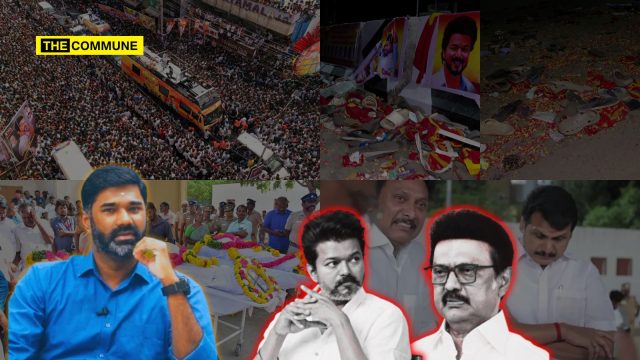
In a dramatic turn in the ongoing defamation case against Rahul Gandhi, the Congress leader has publicly disowned a legal application filed in his name before a Pune court, which claimed he faced a threat to his life.
The application, submitted on 13 August by Advocate Milind D. Pawar, cited grave apprehensions regarding Rahul Gandhi’s safety due to the lineage and ideological affiliations of the complainant, Satyaki Savarkar, a descendant of Vinayak Damodar Savarkar and Nathuram Godse. However, hours after the plea made headlines, Pawar issued a press release admitting that the application was filed without Gandhi’s instructions or consent.
Pawar further confirmed that Gandhi had taken strong exception to the filing and expressed clear disagreement with its content: “The Pursis dated 13.08.2025 was filed by me in the Court without Instructions from the client. The contents of the Pursis were drafted by me without consulting my client Shri. Rahul Gandhi. My client has taken strong exception to filing of this Pursis dated 13.08.2025 and has expressed his disagreement with the contents of the Pursis. I shall file a formal application tomorrow for withdrawal of the said Pursis before the Hon’ble Court.” A formal application for withdrawal of the plea is expected to be submitted to the court on 14 August.
The original application had sought “preventive protection” for Rahul Gandhi, citing threats from political opponents and referencing controversial remarks made by BJP leaders. It also highlighted the complainant’s familial ties to individuals involved in Mahatma Gandhi’s assassination, arguing that such lineage posed a risk to Rahul Gandhi’s safety and the fairness of the legal proceedings.
The defamation case itself stems from Rahul Gandhi’s 2023 speech in London, where he allegedly referenced an incident from Savarkar’s writings involving violence against a Muslim man. Satyaki Savarkar has denied the existence of such an account and filed a complaint seeking Gandhi’s conviction under Section 500 of the IPC.
Congress spokesperson Supriya Shrinate clarified that the party had no role in the filing of the threat application and reiterated Gandhi’s disagreement with its content. The episode has sparked political debate, with critics accusing the Congress of attempting to delay the trial, while supporters argue that the withdrawal reflects Gandhi’s commitment to due process and judicial integrity. The case will next be heard on 10 September.
-IANS
Subscribe to our channels on Telegram, WhatsApp, and Instagram and get the best stories of the day delivered to you personally.
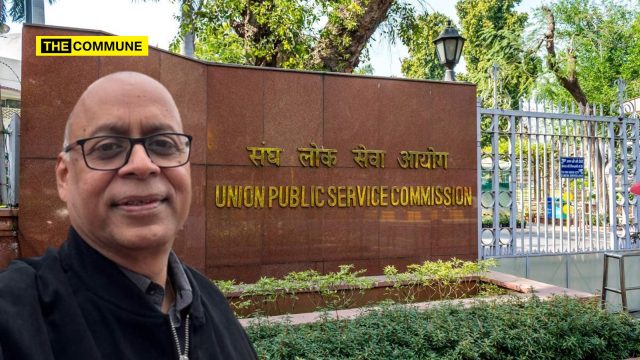
Three people, including a senior citizen and an eight-year-old girl, lost their lives during Independence Day celebrations in Pakistan’s Karachi due to “reckless” aerial firing, while more than 60 others sustained gunshot injuries, according to local media reports.
The incidents occurred in different parts of the city. In Azizabad Block-8, an eight-year-old girl was struck by a stray bullet and died before she could be taken to the hospital, reports Dunya News. In Korangi, a man identified as Stephen was killed by a stray bullet while on his way somewhere. Another death linked to jubilation firing was reported from a separate area.
According to rescue sources, as the clock struck midnight, the city erupted with gunfire and fireworks, resulting in dozens of injuries. At least 64 people suffered gunshot wounds and were admitted to various private and government hospitals, with several in critical condition, Geo News reported, citing rescue officials. The reports suggest that the authorities strongly condemned the practice of celebratory firing, calling it dangerous and irresponsible, and appealed to citizens to observe Independence Day in safer ways.
Police launched operations across the city, arresting 20 suspects and seizing weapons and ammunition. Authorities have allegedly confirmed that incidents of gunfire in the air were noted in various areas of Pakistan, including Liaquatabad, Baldia, Korangi, Keamari, Lyari, Akhtar Colony, Mehmoodabad, Jackson, Orangi Town, and Paposh Nagar.
Further cases were documented in North Nazimabad, Surjani Town, Sharifabad, Zaman Town, and Landhi. Five individuals were fatally shot while attempting to thwart robbery attempts during different shooting incidents reported throughout the city. In other instances, civilians lost their lives due to stray bullets or gunfire from above. Investigations are underway, and the police have assured that strict action will be taken against those involved in the incidents.
Law enforcement teams continue to conduct raids to maintain law and order in the city, according to the media reports.
-IANS
Subscribe to our channels on Telegram, WhatsApp, and Instagram and get the best stories of the day delivered to you personally.
In a major crackdown under Operation Naya Savera, Saran police in Bihar rescued 10 minor girls from four orchestra parties in the district on 13 August 2025. The rescue took place around 10 am following a coordinated raid led by Senior Superintendent of Police (SSP) Kumar Ashish.
The victims include six girls from West Bengal, one from Odisha, one from Jharkhand, and two from Bihar, were rescued during the raid. Police are working to contact their families for a safe handover. Seven accused have been arrested for allegedly exploiting the minor girls. They are identified as Neeraj Yadav (father Lalbabu Rai), Gopal Badi, Masrakh PS, Saran, Talib Khan (father Narhum Alam Mian), Khaira, Khaira PS, Saran, Shubham Kumar (father Shivnarayan Prasad), Gopal Badi, Masrakh PS, Saran, Junab Hussain (father Abdul Hussain), Sahva Nawada, Isuapar PS, Saran, Ankit Kumar (father Kanhaiya Bhagat), Mirzapur, Madhaura PS, Saran, Mohammad Bittu Hashmi (father Mohammad Minsharif Hashmi), Isuapar PS, Saran, and Chandan Kumar Tiwari (father Gautam Tiwari), Sunauli, Masrakh PS, Saran.
The interrogation is currently underway to find some clues about the other accused. The arrested men will be produced in the district court for the legal proceedings. The raid followed instructions from the National Human Rights Commission (NHRC), with three squads from the Mahila Thana and one team from Isuapur police station conducting simultaneous raids targeting Rahul Orchestra, Sangeeta Orchestra, Muskaan Orchestra, and Vipin Orchestra operational in Mashrakh and Isuapur blocks of the district.
According to SSP Ashish, the minors were being tortured and forced to dance. Police have registered an FIR (Number 74/25 in the women’s police station and are continuing raids to nab the remaining accused. “The Naya Savera operation was started in August, and it will continue till 14 August. We appeal to the public to share information about such activities so we can take swift action,” the SSP said. The district police are also tracking the interstate human trafficking gang operating in the area.
-IANS
Subscribe to our channels on Telegram, WhatsApp, and Instagram and get the best stories of the day delivered to you personally.