Home Blog Page 303

Egyptian Plane With Boron, US Plane Checking Radioactivity: Did India Really Hit Pakistan’s Nuclear Centres?
india pakistan nuclear egypt nur khan airbase boron cargo plane china

After days of missile strikes and drone assaults across the India-Pakistan border, India launched a powerful and unprecedented aerial retaliation—one that may have taken the escalating conflict to the doorstep of Pakistan’s nuclear command.

Military Briefing

According to top Indian military officials, it was Pakistan’s sustained missile barrage and attempted drone strikes on Indian cities that triggered the Indian response. In a press briefing on 11 May 2025, Air Marshal AK Bharti revealed that India had conducted “precise, measured and calibrated” air strikes targeting key Pakistani military infrastructure, including air bases, command centers, and air defense systems across the western front.

Among the targets reportedly hit were 11 Pakistani military bases—Nur Khan, Rafiqui, Sargodha, Bholari, Murid, Chunian, Pasrur, Sukkur, Sialkot, Skardu, and Jacobabad—within a three-hour window on the night of May 9 and the morning of May 10. Notably, Chaklala Air Base, located within Islamabad and adjacent to the Nur Khan Airbase, was also struck—an operation Indian officials have described as the “turning point.”

Government sources called the strikes “hell fire,” citing significant damage to Pakistan’s air power. According to estimates shared by Air Marshal Bharti, nearly 20% of Pakistan’s Air Force infrastructure was degraded.

Ammunition depots were also targeted, and key Pakistani assets such as F-16s and JF-17 fighter jets were destroyed. Among the casualties was Squadron Leader Usman Yousuf of the Pakistan Air Force.

Nur Khan Airbase

But it’s the hit on Nur Khan Airbase in Rawalpindi that had stirred international concern. Located just kilometers from the Strategic Plans Division—the nerve center managing Pakistan’s nuclear arsenal—Nur Khan functions as a refueling and logistics hub. The proximity of Indian strikes to Pakistan’s nuclear command structure has triggered urgent diplomatic action, including U.S. intervention.

According to international news reports, the Trump administration received “alarming intelligence” suggesting possible escalation toward a nuclear confrontation. While initially dismissing the conflict as “none of our business,” U.S. Vice President JD Vance, Secretary of State Marco Rubio, and other top officials quickly reversed course. Diplomatic cables state that Rubio spoke with Pakistan Army Chief Asim Munir before urging India’s Foreign Minister S. Jaishankar to consider ceasefire terms.

India insisted on direct DGMO-level talks only. The conversation reportedly took place on May 10 after Pakistan’s DGMO requested time following the strikes.

Presence Of Egyptian Cargo Plane?

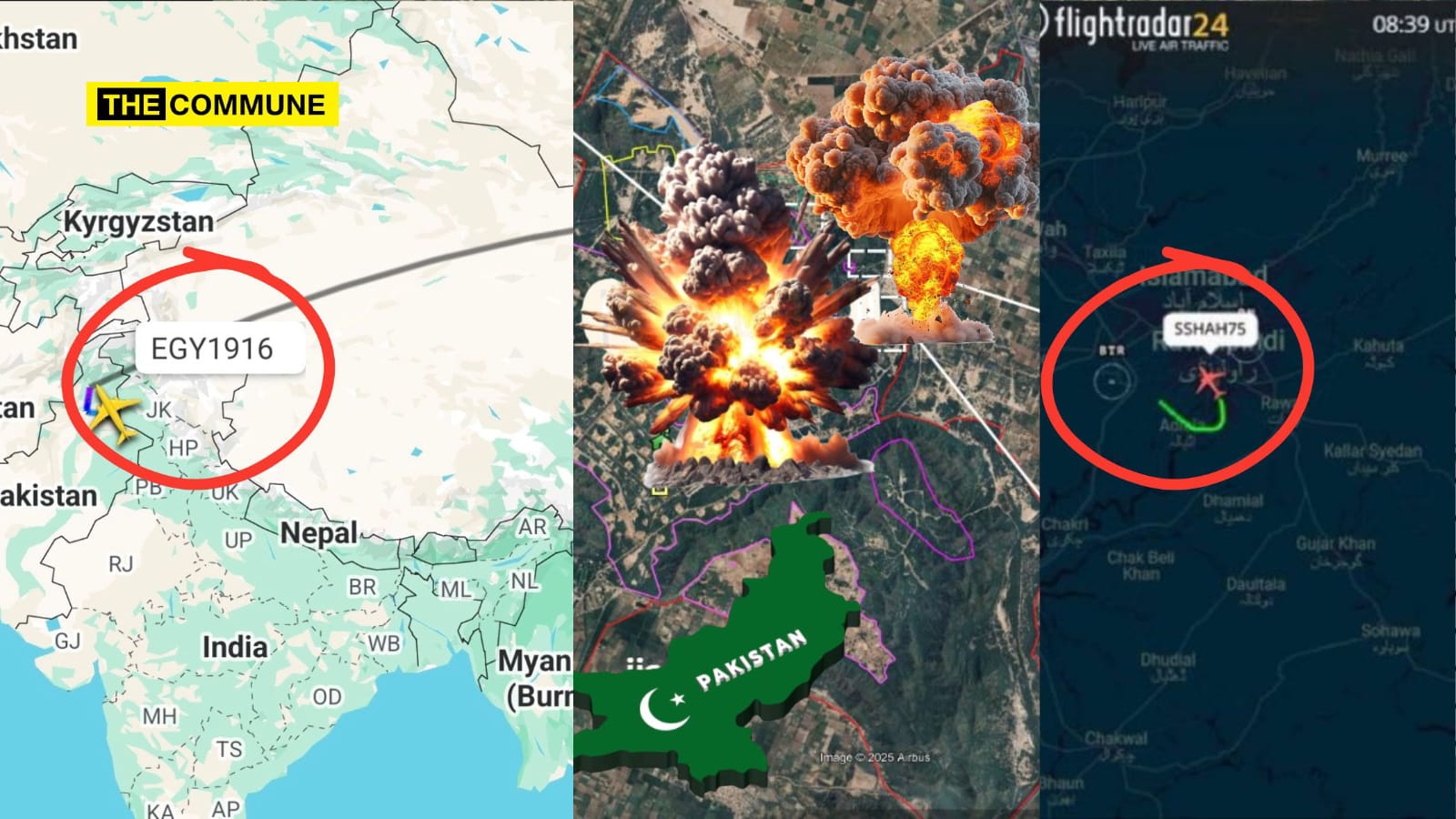
Earlier in the day, a specialized U.S. Nuclear Emergency Support aircraft touched down in Pakistan, reportedly to conduct a reconnaissance mission over the Sargodha region—an area heavily bombarded by Indian airstrikes in recent days.

Adding to the intrigue, an Egyptian Air Force IL-76 military cargo plane is said to have landed in Pakistan in the early hours following the strikes.

Official sources have offered no clarification, but defense watchers noted the possible significance: Egypt’s Nile Delta is rich in Boron-10—a substance with known radiation absorption properties used in nuclear containment.

Interestingly, External Affairs Minister S Jaishankar also received a call from his Egyptian counterpart around the same time.

The confluence of these events has fueled speculation: Did India’s strikes come dangerously close to Pakistan’s nuclear infrastructure—and if so, was that intentional?

While no official from either side has confirmed damage to nuclear assets, the fact that both the U.S. and Egypt have taken rapid, high-level actions suggests the world is treating the situation with grave seriousness.

(With inputs from NDTV)

Subscribe to our channels on Telegram, WhatsApp, and Instagram and get the best stories of the day delivered to you personally.
Al Jazeera Peddles Fake Claim Of “Captured Indian Pilot”, Gets Fact-Checked By Pak Army Itself

al jazeera pakistan pilot capture fake news

Pakistan’s military on 11 May 2025 firmly rejected widely circulated claims—originating from an Al Jazeera report and amplified by social media—that an Indian female Air Force pilot had been captured during recent cross-border hostilities.

In a rare joint press conference held in the late hours of the day, senior officials from Pakistan’s army, navy, and air force addressed the media on the ongoing Operation Bunyan-um-Marsoos, Islamabad’s response to Indian airstrikes earlier in the week.

Lt Gen Ahmed Sharif Chaudhry, the official spokesperson of the Pakistan Army, categorically denied the existence of any captured Indian personnel. “I can confirm to you that we don’t have any pilot in custody. This is all social media chatter—part of multiple sources of fake news and propaganda,” he said, responding to a reporter’s question on the matter.

Earlier, an Al Jazeera report citing unnamed Pakistani military sources had claimed that two Indian fighter jets—specifically Rafale aircraft—had been downed and that a female Indian pilot had been captured. The report even named Squadron Leader Shivani Singh, a claim that was later picked up and circulated widely by pro-Pakistan social media handles.

However, both the Indian and Pakistani governments have since discredited the claim. India’s Press Information Bureau (PIB) issued a fact-check on Saturday, calling the allegations “completely false.” “Indian female Air Force pilot has NOT been captured,” the PIB Fact Check unit posted on social media, attributing the disinformation to pro-Pakistan sources.

The Pakistani military’s on-record denial now marks the first official disavowal from Islamabad itself, essentially undermining the credibility of Al Jazeera’s original report and similar claims propagated online.

Subscribe to our channels on Telegram, WhatsApp, and Instagram and get the best stories of the day delivered to you personally.
Pro-Congress Self-Styled ‘Expert’ On Everything Under The Sun Sumanth Raman Echoes Pakistani Propaganda, Questions And Trivializes India’s Military Action

congress simp sumanth raman peddles pakistani propaganda

In a time of national security triumph, Sumanth Raman—a perennial simp to the Congress narrative and someone who fashions himself as an expert on everything—has once again chosen to echo the talking points that could’ve come straight from Islamabad’s propaganda playbook. His latest commentary, questioning India’s military objectives and portraying the outcome of the current conflict with Pakistan as a strategic vacuum, is not just misinformed—it is deliberately defeatist.

On his X handle, he wrote, The terrorists who carried out the Pahalgam massacre are still at large. Despite being hit, Pakistan was still able to mount some retaliation. Pakistan was not isolated diplomatically. They still got the IMF aid package. I’m trying to think of what we got out of all this, that we have paid for with more lives than the 26 we lost at Pahalgam and billions of dollars worth of defence equipment spent and the damage to some of our towns. Next time there is a terror attack how will it be any different even if we retaliate against Pakistan directly? I support the ceasefire but I’m confused about what the strategic objective of the larger military action beyond the strike on the terrorist hideouts was and what has been achieved. My impression is that our armed forces performed well but our diplomats and political leadership could have done much better. And the ceasefire was agreed to without any conditions imposed on Pakistan. The only positive I see is that Pakistan knows that the next time it stages a terror attack in India, there will be direct retaliation on Pakistani territory. For a rogue State like Pakistan is that enough of a deterrent? #IndiaPakistanConflict #Ceasefire”

Let’s set the record straight.

India responded to the Pahalgam massacre with strength and precision. It didn’t just bomb empty buildings. The Indian Air Force struck active terror camps with real-time intelligence, dismantled key infrastructure deep inside Pakistani territory, and most significantly, delivered a bold strike on the Noor Khan Air Base near Rawalpindi—an unmistakable message to Pakistan’s nuclear command. This was not symbolic. It was strategic.

Despite Pakistan launching over 300 drones—many shielded behind civilian air corridors—India’s air defense systems repelled every single one, preventing further loss of civilian life and protecting vital infrastructure. That is not failure. That is capability.

What did Pakistan achieve? A few retaliatory air raids that were swiftly neutralized, some wreckage of dubious value, and a desperate effort to project parity. Their attempt to bait India into a misstep by using U.S.-supplied F-16s failed. Their propaganda videos were exposed. And even in the diplomatic sphere, while Pakistan may have received IMF disbursement—already pre-negotiated—they failed to isolate India or garner any meaningful international support.

The strategic signal was clear: any act of terror on Indian soil will be met not with restraint, but with deliberate, calibrated force—inside Pakistani territory. That’s not just deterrence. It’s doctrine.

And what did the ceasefire achieve? It halted a spiral toward wider war while leaving India with an upper hand militarily and morally. Yet, in Sumanth Raman’s world, it’s a loss unless it ends with a flag on Lahore. He conveniently ignores that national security strategy must balance force with stability, and that India’s restraint after escalation projects strength—not weakness.

The real question here is: why does a prominent Indian voice like Raman’s always seem to find fault with India and sympathy for a rogue state that harbors terrorists? Why does every Indian victory get spun into a narrative of inadequacy?

India acted. India struck. India held the line. And next time Pakistan plots terror, it knows the cost will be real and immediate.

Subscribe to our channels on Telegram, WhatsApp, and Instagram and get the best stories of the day delivered to you personally.
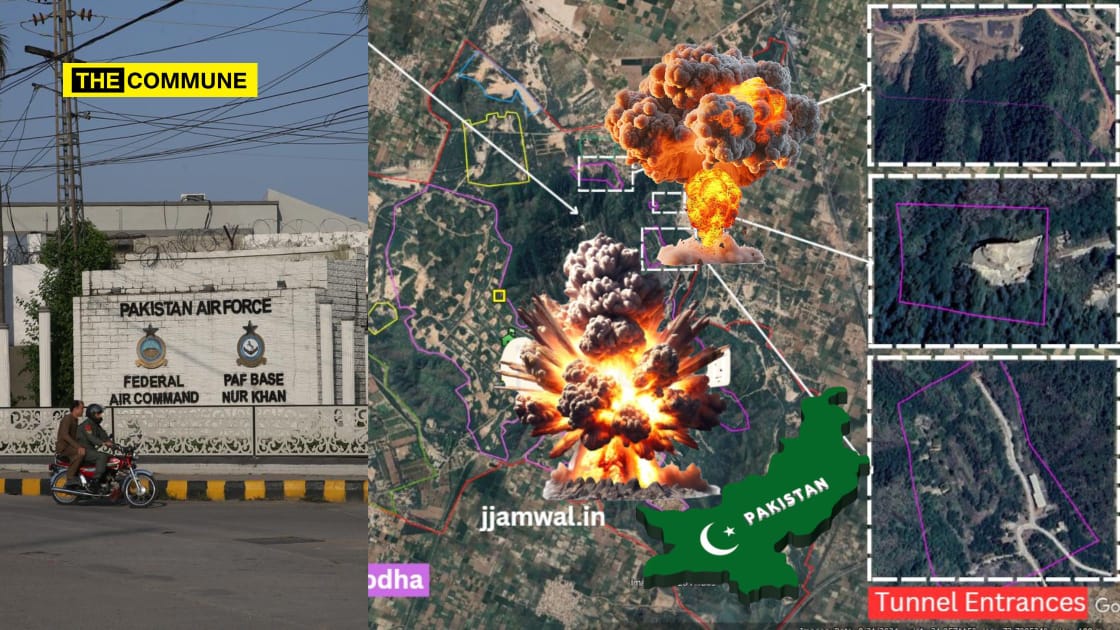
India Almost Hit Pakistan’s Nuclear Command Centre With Precision Strike On Noor Khan And Sargodha Airbase: Reports

As tensions between India and Pakistan reached a boiling point, India’s missile strike on Rawalpindi’s Noor Khan airbase sent shockwaves through Islamabad, striking at the heart of Pakistan’s military and nuclear command structure. The strategically critical airbase, located dangerously close to Pakistan’s nuclear weapons control headquarters, served as a stark warning—India possessed the capability to decapitate Pakistan’s nuclear command authority if necessary.

The strike came amid escalating hostilities following a deadly terrorist attack in Kashmir on April 22, which killed 26 people, mostly Hindu tourists. India retaliated with precision strikes targeting terror camps, but the attack on Noor Khan marked a dramatic escalation. The airbase, a key transport and refueling hub for Pakistan’s air force, also lies near the headquarters of the Strategic Plans Division, the body overseeing Pakistan’s estimated 170 nuclear warheads.

New York Times reported, “One former American official long familiar with Pakistan’s nuclear program noted on Saturday that Pakistan’s deepest fear is of its nuclear command authority being decapitated. The missile strike on Nur Khan could have been interpreted, the former official said, as a warning that India could do just that.”

The move triggered panic in Islamabad, with reports suggesting Prime Minister Shehbaz Sharif hastily convened a meeting of Pakistan’s National Command Authority—the group responsible for nuclear decisions. While Pakistan’s defense minister later denied the meeting took place, the mere possibility underscored the gravity of India’s warning.

It is noteworthy that India struck nearly 11 air bases of Pakistan.

Fearing a rapid escalation toward nuclear conflict, the US is said to have intervened, with Vice President JD Vance and Secretary of State Marco Rubio engaging in urgent diplomacy. Their efforts, along with pressure from Saudi Arabia and the UAE, eventually led to a ceasefire announced by President Trump. However, the damage was done—India had demonstrated its ability to strike deep into Pakistan’s military nerve center, exposing Islamabad’s worst nightmare: the vulnerability of its nuclear command structure.

The message was clear. India’s surgical strike on Noor Khan was not just retaliation—it was a calculated signal that Pakistan’s nuclear deterrent could be neutralized if the conflict spiraled further.

India had also struck the Sargodha air base which according to reports holds underground nuclear storage under the Kirana hills. The hills have deep underground sites with atleast 6 visible entrances as evident from Google maps. This base was hit with multiple loitering penetrating munitions which must have made Pakistan shiver.

So, it is pretty clear that India holds knowledge of where Pakistan holds its nuclear weapons and has hit them where it hurts which is why Pakistan came begging for a ceasefire and its so-called Prime Minister desperately claimed victory when they clearly have stood naked before India.

Subscribe to our channels on Telegram, WhatsApp, and Instagram and get the best stories of the day delivered to you personally.

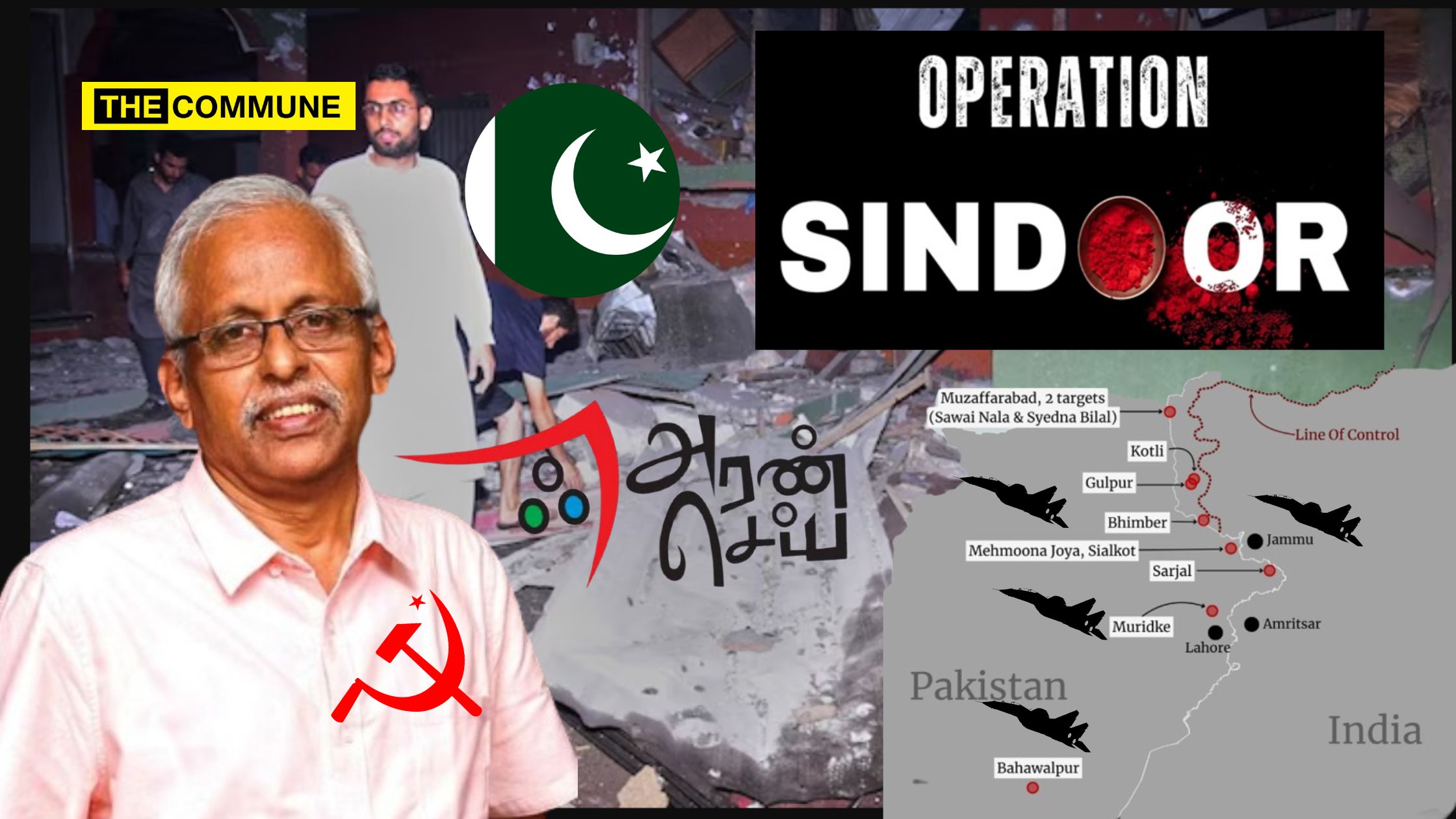
Communist Maruthaiyan Peddles Pakistani & Chinese Propaganda About “Downed Rafale Jets”

maruthaiyan chinese propaganda pakistan

What’s currently laughable across the internet is how far-leftists especially the communists and Dravidianist YouTubers seem to exist in an alternate reality. They gather every debunked, discredited claim and peddle busted narratives as if they’ve unearthed some hidden truth. Despite these fake stories being publicly exposed and the perpetrators thoroughly embarrassed, these creators continue to dig up long-buried propaganda and then act as if they’ve struck gold. It’s not just absurd; it’s shameful.

In a recent interview on the Dravidianist propaganda YouTube channel ‘Aransei’, known for its ideological bias, communist sympathizer Maruthaiyan was invited to comment on Operation Sindoor. Instead of offering informed insight, Maruthaiyan went on a full-blown propaganda spree repeating baseless claims pushed by foreign anti-India media. Most notably, he declared that Indian Rafale jets were shot down by Pakistan’s military ironically, a claim even Pakistan’s Defence Minister Khawaja Muhammad Asif couldn’t confirm. Asif had merely told CNN that his sources were Indian social media. Yet, Maruthaiyan went even further, spinning a web of unsupported claims as if he had access to intelligence the Pakistani government itself lacked.

From the very start of the interview, Maruthaiyan mocked the Indian armed forces and questioned the government’s announcement about neutralizing terror camps. Yet, in a hypocritical twist, he wholeheartedly embraced the narrative peddled by foreign propaganda outlets. He said, “When a war is going on, we can never find out immediately which side is telling the truth. Both sides will say that we won, we won, we are the ones who are winning. Now, they (Indian) are saying that we have killed 100 terrorists, isn’t it? Yes, when they have declared that we are going to fight a war and going to attack the terrorists, then the terrorists seem to have been sitting there, don’t they?”

He laughed mockingly and then launched into another attack on the Indian government, “If you kill the tribals, then the dead are Maoists, extremists and terrorists. Now, here you can say the same and account them as terrorists, that’s it. They claim that there were children among those killed. Let that be on one side. On the other side, Pakistan is saying that they shot down five fighter jets—three Rafales and two MiGs.

After asserting these wild claims, Maruthaiyan then cited Global Times—the Chinese Communist Party’s propaganda mouthpiece as his primary source, stating, “This was first reported by Global Times, a Chinese newspaper. It came out on their website, and the Indian ambassador to China immediately responded, calling it baseless. But what’s more interesting in the social media yesterday was, The Hindu has published it. As soon as they published, people started calling N Ram should be arrested under the UAPA. He is a traitor. The Hindu rushed to post that this was an unverified post and retracted it after apologizing. But what’s the truth? A French intelligence officer allegedly told a CNN reporter that it was a Rafale jet that was shot down. Not only that—many other sources like the BBC also published this. Most importantly, The Telegraph from London made a detailed report with data. Then, Associated Press photojournalist Dawn Yards was in Kashmir on Wednesday morning. Outside Srinagar, some people said, ‘We saw a huge fireball erupting from the sky and falling down.’”

Commie Maruthaiyan further claimed that photojournalist Dawn Yards/ Dar Yasin attempted to capture images of the alleged incident but was stopped by authorities. He went on to say that, despite the restrictions, Yards managed to take some shots. He also claimed that a local villager tried to photograph the scene but was killed in an explosion. Maruthaiyan added that a similar loud blast occurred in Punjab, though no credible reports or confirmations were provided. Notably, there has been no mention by Associated Press or any legitimate news outlet—including photojournalists like Dar Yasin or Dawn Yards—regarding such incidents. Still, Maruthaiyan confidently asserted, “Now it is confirmed that the Rafale jets were shot down like a ₹1,500 crore Diwali rocket.”

What was even more surprising was that, throughout the entire video, the only thing that seemed remotely Indian was the title. Maruthaiyan spent the whole time discussing what Pakistan thinks, what its people believe, how China views the situation, and how international media has reported on it—while portraying India as if it’s just sitting idly by, doing nothing.

Subscribe to our channels on TelegramWhatsApp, and Instagram and get the best stories of the day delivered to you personally.

“Humans Are There In Pakistan Too”: CPI-M Tamil Nadu Posts In Support Of Pakistan Which Is Attacking India’s Civilian Population With Drones And Missiles

After the Maharashtra unit of the Communist Party of India (Marxist) (CPI-M) posted a vague message urging to “De-Escalate” military actions against Pakistani terrorists, the Tamil Nadu unit has stirred fresh controversy by criticizing the Indian government’s targeted retaliation against terror camps in Pakistan. Notably, these Indian strikes avoided Pakistani military assets and civilian areas—unlike Pakistan’s response, which has involved indiscriminate shelling of civilian homes across Kashmir, Punjab, and other border regions.

What caught everyone’s attention was CPIM Tamil Nadu’s post, which read, “There are people in Pakistan too; no country should be destroyed. Bihar boy who slammed up ‘Godi Media’ journalist. #India-Pakistan #Hindu #Islam #Fraternity.” The post appeared to pander to minority Muslim sentiments, featuring a video of a young boy from Bihar questioning the media about why Indians should support their own country. The conversation in the video as follows:

The reporter asks, “Pakistan zindabad?
The boy says, “Zindabad.”
The reporter questions back, “Aren’t you ashamed?”
The boy replies, “Why should I be ashamed?”
The reporter asks, “Pakistan shouldn’t be destroyed?
The boy says, “What, it shouldn’t be.”
The reporter questions, “Long live India or no?”
The boy says, “Yes.”
The reporter repeats, “Long live Pakistan or no?”
The boy responds, “Yes, long live everyone in their own space. You too long live in your space.
The reporter questions, “What is your name?”
He replies, “Kaif,” and is asked, “What is your full name?
The boy says, “Muhammed Kaif.
The reporter questions, “Where are you from?
He says, “I’m from Bihar.
The reporter again asks, “Aren’t you even a little ashamed that despite living in India, you are supporting Pakistan? Why shouldn’t Pakistan be destroyed?”
The boy asks, “Oh, you’re making the news, aren’t you ashamed about it? Yes? Aren’t you ashamed making news and spreading everywhere about Hindu and Muslims? Why should we support India? First answer this. Then I’ll say something you were asking. There are people over there too, here too. Muslims and Hindus there too and here too. Everyone is human, then why kill everyone? Tell me? Tell me why it should be destroyed? Everyone has a life to live, everyone has the right. Then why destroy them?”
The reporter again asked, “Do you support Pakistan?
He replied, “If you go there, someone will kill you. Then the job done?”
The reporter again asked, “Do you support Pakistan?”
He replied, “Yes, I support.”
The reporter asked, “Aren’t you Indian?”
The boy said, “I am Indian. You’re saying destroy that country, but everywhere people live.”
Then the reporter asked, “I want to ask you one small thing. Who taught you this?”
He said, “I have a brain,” and ran away.

The post came across as moral preaching about fraternity an ideal India already upholds while CPIM appeared to indirectly side with Pakistan and, by extension, showed sympathy toward elements aligned with terrorism.

The deeper irony, however, lies in the fact that the video CPIM Tamil Nadu shared originated from a social media handle known for openly promoting religious bias over national unity. This raises an uncomfortable question—did the CPIM knowingly endorse this source, or were they unaware of the ideological leanings of the account they amplified?

The original post that CPIM Tamil Nadu appeared to draw inspiration from was shared by a platform called IlmFeed on 9 May 2025. The message was highly controversial, as it cut along religious lines and implicitly encouraged Indian Muslims to prioritize religious identity over national loyalty. IlmFeed stated openly that it promotes Islamic unity over nationalism, declaring that Indian and Pakistani Muslims are “brothers in faith.” While it expressed a hope for peace, it also defended Pakistan’s right to retaliate, subtly legitimizing its military actions when India attacks terrorist military camps alone.

The full message read, “A message to our Muslim Indian followers: We are praying for your safety as much as we are praying for the safety of our brothers and sisters in Pakistan. We have always promoted Islamic unity above nationalism. Indian Muslims and Pakistani Muslims are brothers in faith. We pray that this war does not escalate as innocent people will lose their lives, but at the same time, Pakistan has the right to defend itself. We know that it is hard living as a Muslim in India due to the anti-Muslim media and politicians but at times like these, it’s best to remain silent rather than give full support to military strikes against a Muslim-majority country where innocent Muslims will die. May Allah allow us all to see the truth and live by it.”

These are the handle where CPIM seems to get inspired and the come to preach fraternity with Indians.

Subscribe to our channels on TelegramWhatsApp, and Instagram and get the best stories of the day delivered to you personally.


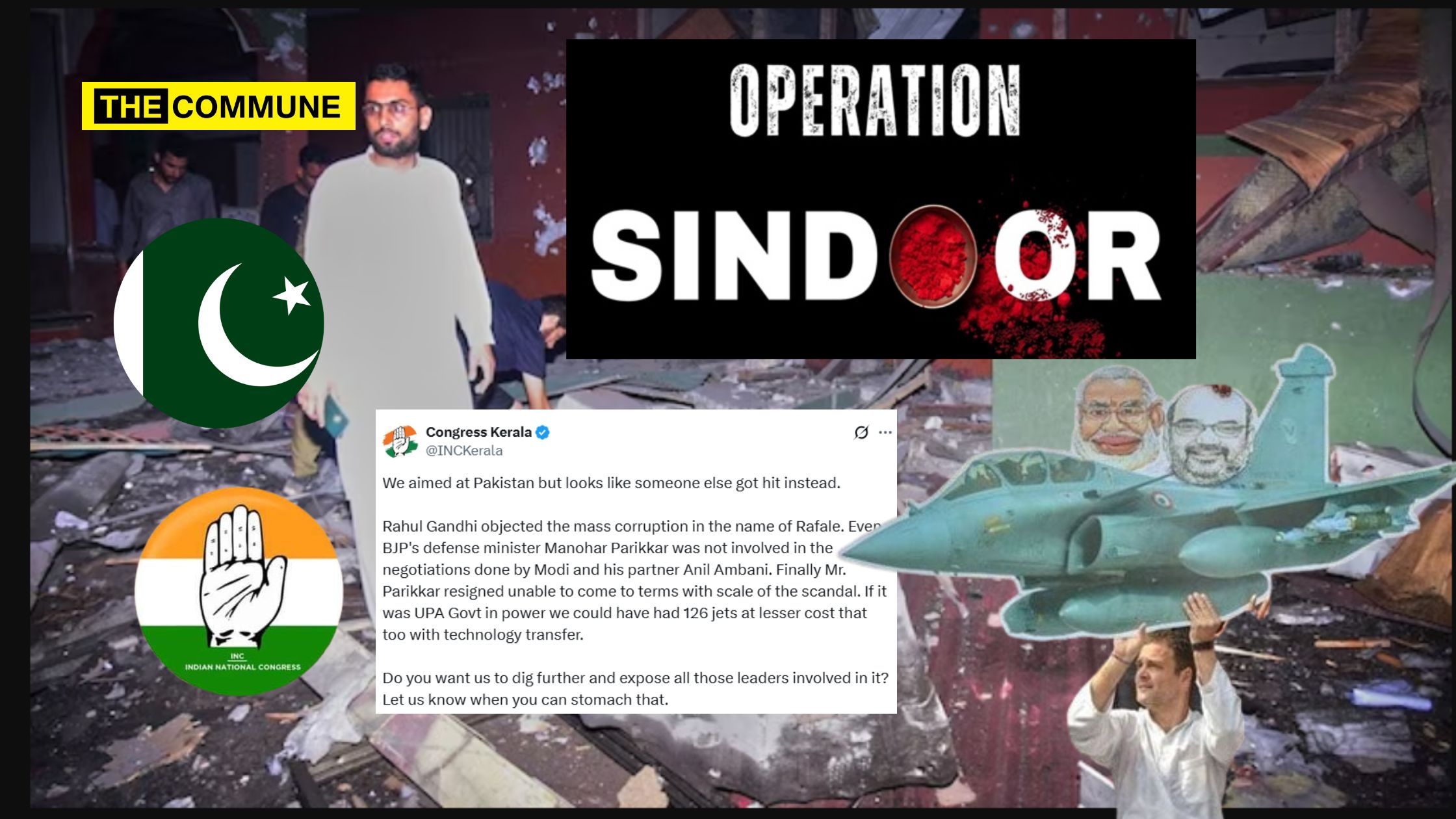
At War Time, Congress Kerala Echoes Pak Lies: Posts Debunked Rafale Claims, Later Deletes

congress kerala rafale pakistan

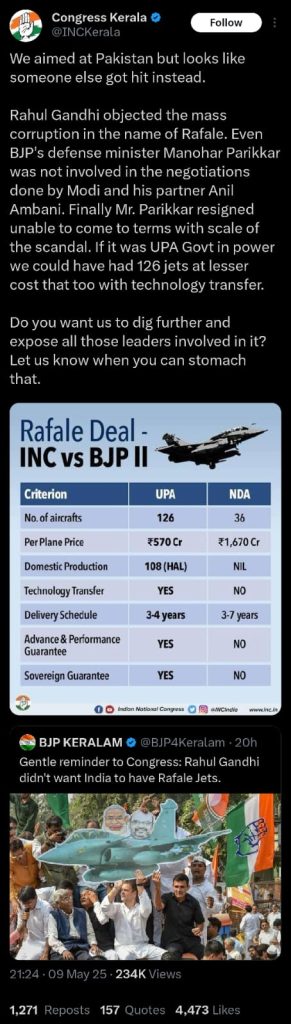
In a surprising and controversial move, the Kerala unit of the Indian National Congress (INC) posted on its official X (formerly Twitter) account a message that mirrored Pakistani propaganda, falsely claiming that Indian Rafale jets had been shot down. This aligns with a now-debunked narrative Pakistan had been pushing until recently, using doctored images of a supposed downed Rafale jet—images that have since been proven fake and manipulated.

What’s more troubling, at a war like situation the Congress party chose to revive old and unsubstantiated corruption allegations against the BJP over the Rafale deal that were scrutinized and dismissed in court by boasting pride.

In its 9 May 2025 post, the official INC Kerala handle stated, “We aimed at Pakistan but looks like someone else got hit instead. Rahul Gandhi objected the mass corruption in the name of Rafale. Even BJP’s defense minister Manohar Parikkar was not involved in the negotiations done by Modi and his partner Anil Ambani. Finally Mr. Parikkar resigned unable to come to terms with scale of the scandal. If it was UPA Govt in power we could have had 126 jets at lesser cost that too with technology transfer. Do you want us to dig further and expose all those leaders involved in it? Let us know when you can stomach that.”

Netizens from across the board called out the party for the timing of the post and exposed where it stood at the time of crisis. The post has been deleted at the time of publishing this article.

The exchange began when the Kerala Congress posted a celebratory message on X, saying, “Gentle reminder to Pakistan!” alongside an iconic image from the 1971 Indo-Pak war, depicting the surrender of 93,000 Pakistani troops and the creation of Bangladesh. This post was intended to highlight India’s historic military strength.

In response, the Kerala BJP took a jab at Congress, reminding the public of Rahul Gandhi’s opposition to the Rafale jet deal. The BJP’s post read, “Gentle reminder to Congress: Rahul Gandhi didn’t want India to have Rafale jets.” The BJP emphasized that if the deal had not been fast-tracked by the current government, India wouldn’t have the critical air superiority it demonstrated in recent operations.

The Kerala Congress retaliated with its controversial 9 May post, reviving the Rafale corruption allegations—allegations that courts have already dismissed due to lack of evidence. The timing of this political back-and-forth, coinciding with rising tensions following a deadly terror attack in Kashmir and India’s retaliatory missile strikes on May 7, has raised serious concerns. Critics argue that Congress’s rhetoric undermines national unity and inadvertently aligns with discredited Pakistani narratives.

Subscribe to our channels on TelegramWhatsApp, and Instagram and get the best stories of the day delivered to you personally.

Operation Sindoor: Escalation Continues As India Responds To Pakistan’s Intensified Hostilities

pakistan air base operation sindoor escalation

Operation Sindoor did not stop with the strikes on terror camps inside Pakistan. The ongoing attack by Pakistan and retaliation by India will be covered by The Commune on a regular basis. Here is a list of updates as reported so far.

Pakistan’s “Solid Wall of Lead” and Initial Strikes

Pakistan has declared the commencement of “Operation Bunyan Al-Marzoos,” a phrase with religious connotations implying an impenetrable barrier. This announcement has been accompanied by a surge in hostile actions. We’ve received direct information indicating this operation is underway from their side of the border. The initial phase has involved widespread drone attacks targeting both the Jammu region and areas in South Kashmir. Notably, areas with significant Hindu and Sikh populations in northern Jammu, such as Arnia and RS Pura, have experienced severe drone incursions. Simultaneously, densely populated villages in the mountainous regions of Poonch, Rajouri, and the Baramulla area of South Kashmir, where a majority of residents are Muslim, have also been subjected to intense drone attacks. These aerial assaults were not confined to Jammu alone; a coordinated wave of drone strikes hit 26 cities in our northern territories, commencing earlier than previous nights. While our defenses have been largely successful, with a claimed 99% interception rate, some drones managed to penetrate, causing injuries to civilians in rural areas. Thankfully, no lives have been reported lost in these initial attacks.

The Enemy’s Growing Drone Threat and Tactics

The scale of the drone attacks has alarmingly increased, escalating from approximately 400 to over 1,000 in this recent wave. Intelligence sources suggest a substantial buildup of Pakistan’s drone capabilities, with over one hundred thousand drones reportedly acquired from Turkey and China. There are even reports of a dedicated “Drone Brigade” established near Arul in Jammu a few years prior. Their current tactics seem to mirror those employed by Hamas, indicating a potential strategic alignment or knowledge transfer. This significant increase in drone deployment represents a dangerous escalation in their offensive capabilities.

India’s Measured Response and Defensive Actions

In response to these provocations, India is carefully calibrating its counter-measures. While an initial retaliatory action occurred last night, it appears to have been a calculated and perhaps limited response. Our air defense systems are actively engaged in neutralizing the incoming drone threats. It’s worth noting that prior to these large-scale attacks, there was likely a reconnaissance phase involving unarmed drones to probe the effectiveness of our defenses. This suggests a deliberate and planned escalation on their part, and we must remain vigilant.

Ballistic Missile Launch and Our Successful Interception

Pakistan has further intensified the conflict by launching short-range ballistic missiles, identified as a Chinese variant that they have curiously painted green with a star marking. Approximately eight to ten of these missiles were launched, with targets including Jammu, a city in Rajasthan, and alarmingly, our nation’s capital, Delhi. An attack on Delhi is unequivocally an act of war, leaving no room for ambiguity. However, our defense forces demonstrated exceptional capability by successfully intercepting and shooting down every single one of these missiles in the Haryana region. It’s noteworthy that some of these missiles displayed signs of depressurization. The continued use of Chinese-origin missiles, even with attempts at disguise, underscores their reliance on external military support.

Targeting Strategic Enemy Air Assets

Our forces have initiated a strategic counter-offensive, focusing on key airbases within Pakistan that are critical to their military operations. The first targeted location was Nur Khan Airbase in Rawalpindi, a vital hub situated close to their military headquarters. This airbase houses a significant portion of their air power, including F16 and JF7 fighter jets, Mirage aircraft, and essential transport assets like their AWACS and Hercules planes. Furthermore, it hosts their VIP transport fleet, the Air Force College, and their transport wing. This crucial airbase was struck by our air-to-surface missiles. Subsequently, a significant drone base, housing Turkish-made Pyrocopter DB2 drones and Chinese “shopper” drones, was also targeted and successfully attacked. The third key target was Rafiqui Airbase, located near the border and home to JF7 and Mirage fighters, which also came under our missile attack.

Airbases targeted include the Nur Khan airbase, Murid air base at Chakwal, Rafiqui air base at Shorkot, Rahim Yar Khan air base in Southern Punjab, Sukkur air base and Chunian air base.

Air Engagement Over Srinagar and Enemy Propaganda

Fierce air combat erupted over Srinagar earlier in the day. There are credible reports of three Pakistani aircrafts being shot down in these engagements. This intense aerial activity echoes previous conflicts. The specific targets in Srinagar include the Badami Bagh cantonment military headquarters and the old airfield, where our forces are actively engaged. Simultaneously, the enemy has attempted to spread disinformation, falsely claiming that an Indian plane crashed in Sialkot, attributing recovered debris to our aircraft when it was, in fact, remnants of their own downed drone. We urge everyone to disregard such baseless rumors. Remember, if any of our aircrafts were lost, we would be the first to report it truthfully.

A Nation United in the Face of Aggression

India is facing a serious escalation, potentially drawing in other external actors like Turkey and China, who are reportedly providing military and financial assistance to Pakistan. The IMF has also reportedly extended significant financial support. In response to our counter-offensive, the Pakistani Prime Minister convened a meeting of their National Command Authority, the body that controls their nuclear arsenal, likely in an attempt to intimidate and create international panic. We must remain resolute and not succumb to such fear-mongering tactics. Similar threats were made in the past and proved to be empty. Any use of nuclear weapons by them would be met with a devastating response. We must stand together as one nation, supporting our government and military during this critical time.

This is the grim reality of war, and we must be prepared to face it with strength and unity. Our objective is clear: to decisively address this aggression. The Indian Navy has yet to fully engage, indicating the potential for further action. Our strategic approach, focusing on key military targets, aims to systematically degrade their ability to wage war. We are on a path towards war, though not yet fully immersed in it. Our Prime Minister is in constant consultation with defense officials. As a nation, we must remain vigilant against misinformation and trust in the strength and capability of our armed forces.

Subscribe to our channels on Telegram, WhatsApp, and Instagram and get the best stories of the day delivered to you personally.

Operation Sindoor Updates: India’s Multi-Front Retaliation – From LoC Strikes To Cyber Warfare & Global Diplomacy

operation sindoor dravidianists

Operation Sindoor did not stop with the strikes on terror camps inside Pakistan. The ongoing attack by Pakistan and retaliation by India will be covered by The Commune on a regular basis. Here is a list of updates as reported so far.

Heavy Attacks Along Line of Control

The Indian Army has intensified its operations along the Line of Control (LoC), deploying a variety of weapons including AK-series rifles, light and medium machine guns, and shoulder-fired anti-tank guided missiles (ATGMs) to target enemy bunkers and posts. The Army has officially released video footage of these operations, signaling a strategic shift towards psychological and information warfare—similar to methods employed by the Israeli Defense Forces. The release of such visuals marks a more assertive stance in the ongoing conflict with Pakistan.

Seven Terrorists Neutralized in Samba Sector

In a major counter-terrorism success, security forces eliminated seven heavily armed Pakistani infiltrators in the Samba sector along the international border in Jammu and Kashmir. The terrorists, identified as operatives of the Lashkar-e-Taiba (LeT), were intercepted and killed by the Border Security Force (BSF). This operation comes amid heightened alerts across all military cantonments following fears of attacks similar to the 2016 Pathankot incident. No casualties were reported on the Indian side.

Clarification on Government Blackout Advisories

Amid circulating concerns, authorities have clarified the rationale behind recent government advisories urging citizens to switch off lights at night. The blackout is a precautionary defense measure designed to disrupt the enemy’s use of electro-optical sensors (EOS) mounted on drones, missiles, and other surveillance platforms. These sensors, which rely on infrared signatures, can use artificial lighting to identify and lock onto targets. By reducing visible and thermal emissions, such blackouts aim to deny adversaries navigational and targeting advantages. Additionally, India retains the capability to jam or spoof GPS signals, further complicating hostile targeting systems.

Strikes Inside Pakistan: Lahore, Mianwali, and Bahawalpur Targeted

India is reportedly expanding its operations beyond border skirmishes, targeting strategic locations within Pakistan. Drone strikes have reportedlyhit military installations and cantonment gates in Lahore, while similar activity has been reported in Mianwali and Bahawalpur. Intense war drills are also underway on the Indian side, with anti-tank guided missiles being deployed in tactical exercises. Unconfirmed reports suggest that around 40 Pakistani soldiers have been killed in the recent engagements, though no official Indian statement has been issued on these figures.

India Gains Upper Hand in Information Warfare

In a notable shift, India appears to be dominating the propaganda and information space for the first time in the history of Indo-Pak hostilities. The release of verified combat footage by Indian forces has garnered widespread attention and support, both domestically and internationally. Meanwhile, Pakistan’s disinformation efforts have seen limited traction. Economically, the conflict has had a significant impact: Pakistan’s stock market has seen steep declines, while Indian defense stocks—particularly those linked to drone manufacturing—are witnessing strong gains.

Geopolitical Landscape: Mixed Global Reactions

International reactions to the conflict are evolving. India has received vocal online support from Israelis and Jewish communities around the world, marking a notable show of solidarity. In contrast, traditional supporters of Pakistan within the Organization of Islamic Cooperation (OIC) have shown restraint. Countries like Saudi Arabia and the UAE are reportedly distancing themselves from Islamabad’s position, with the UAE even offering to mediate between the two nuclear-armed neighbors. Turkey has limited its involvement to official statements, while the United States has indicated a hands-off approach. U.S. Vice President JD Vance recently stated that the India-Pakistan conflict is “not his business,” hinting at a broader recalibration of U.S. foreign policy in South Asia.

Cybersecurity Alert and Public Advisories

With cyber warfare between India and Pakistan escalating, Indian authorities are urging citizens to secure their digital presence. Citizens are advised to use strong passwords for Wi-Fi networks, phones, and email accounts to avoid becoming soft targets in the cyber conflict. Cyberattacks, even on individuals, are viewed by adversaries as symbolic victories, and the public has been urged to stay vigilant online.

Meanwhile, the activation of air raid sirens in cities like Chandigarh is being described as a standard wartime control protocol. Authorities have assured citizens that there is no cause for panic and urged restraint in sharing unverified information, especially regarding essential commodities such as fuel. The government has committed to issuing official statements should any real shortages arise.

As tensions remain high, Indian defense forces are maintaining operational readiness, and officials have warned that any further provocation from Pakistan will be met with a decisive and overwhelming response.

Subscribe to our channels on Telegram, WhatsApp, and Instagram and get the best stories of the day delivered to you personally.
Tamil Nadu Man Muhammad Abdul Azim Shares Pro-Pakistani Posts On Instagram Amid War, Deletes & Apologizes After Severe Backlash

tvs pakistan

In the wake of the recent horrific Pahalgam Hindu massacre, where 26 innocent Hindu pilgrims were brutally killed, some individuals continue to push hypocritical narratives, urging India not to retaliate against Pakistan-based terrorists. Disturbingly, certain anti-national elements are now circulating videos showing Pakistani citizens burning the Indian national flag and photos of Indian Prime Minister Narendra Modi—an alarming trend that raises serious concerns about internal sympathies with hostile foreign interests.

One such case involves a social media user named Muhammad Abdul Azim, who allegedly shared a status video showing people holding Pakistani flags while burning images of PM Modi and the Indian flag. The video is believed to be of Pakistani origin, but what shocked many was that Azim reportedly works at TVS in Tamil Nadu.

In another alleged post, he reportedly shared a message claiming, “Pakistan’s missile has destroyed an Indian aircraft. Allahu Akbar,” appearing to celebrate the act with a religious exclamation.

In another controversial post, he reportedly wrote, “Dua for Pakistan. As-salamu alaykum, please pray for our Pakistani Muslim our Islamic relatives should not suffer any loss of life. No matter how bad they are. They are our people.” 

In a recent post, after facing backlash and being exposed for his anti-India posts, he released a video apology, claiming his actions were a mistake and promising not to repeat them. Following the apology, he deleted all the controversial content from his social media accounts.

Sharing such content during a period of heightened tension between India and Pakistan not only undermines national unity but also sets a dangerous precedent. Netizens have since called on authorities to take strict legal action against individuals promoting anti-India propaganda.

Subscribe to our channels on TelegramWhatsApp, and Instagram and get the best stories of the day delivered to you personally.