Home Blog Page 299

Israeli Drone Strikes Kill Hezbollah Member In Lebanon
israel airstrike hezbollah lebanon

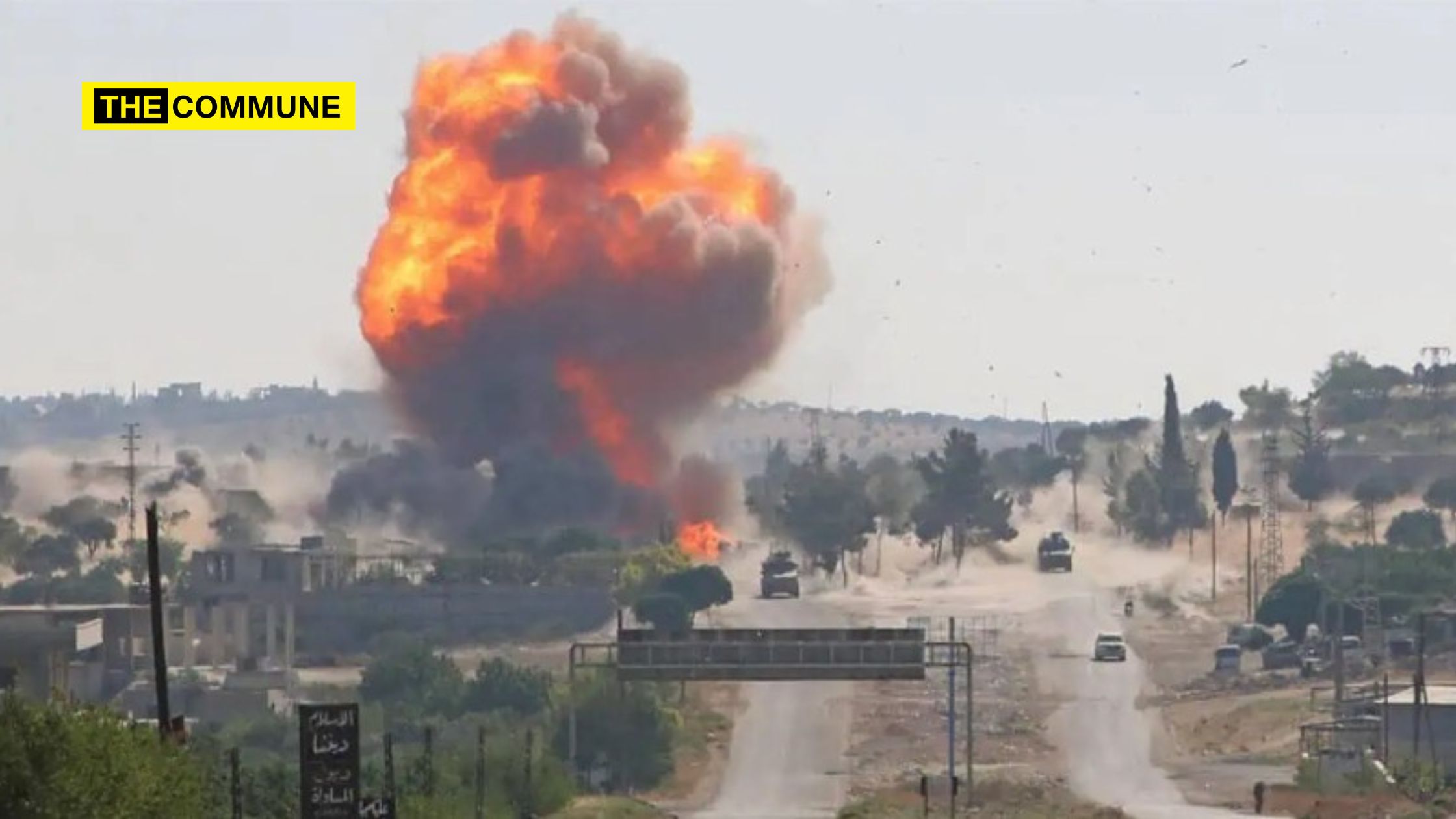
Israeli drones carried out multiple airstrikes across southern Lebanon, killing a Hezbollah member and destroying several prefabricated structures, Lebanese security and official sources said. Lebanon’s Ministry of Health said on 15 May in a statement that an Israeli drone strike targeting a vehicle on the Arnoun-Yohmor road killed one person, Xinhua news agency reported. A Lebanese security source identified the victim as Mohammad Ali Marouni, a Hezbollah member from the town of Arnoun in the Nabatieh district, deep in southern Lebanon.

According to Lebanese official sources, three Hezbollah members have been killed and a fourth wounded in separate Israeli strikes on southern Lebanon over the past 48 hours. In a related incident, Lebanon’s state-run National News Agency reported that an Israeli Apache helicopter carried out three consecutive strikes within half an hour on the village of Houla in southeastern Lebanon, targeting a prefabricated structure belonging to the Wataawano Association. The agency added that at dawn, the Israeli army struck another prefabricated building in the village of Adaisseh.

Separately, a drone dropped a stun grenade on a house in Kfar Kila, while another drone dropped a similar device over the ruins of al-Dhahira School in the western sector of southern Lebanon. The cross-border strikes come despite a ceasefire agreement reached on 27 November 2024, intended to halt more than a year of hostilities tied to the war in Gaza. An Israeli drone strike killed a Hezbollah member in southern Lebanon on Wednesday, targetting a vehicle near Qaaqaait al-Jisr in the Wadi al-Hujayr area, Lebanese security and official sources said.

Lebanon’s state-run National News Agency (NNA) reported on Wednesday that “an enemy drone targeted a car at the entrance of Wadi al-Hujayr near Qaaqaait al-Jisr in the Nabatieh district this morning”. The Lebanese Ministry of Health’s Public Health Emergency Operations Center confirmed one fatality in the strike. Civil Defence officials said the vehicle caught fire, and the body was transported to a hospital in Nabatieh. The truce, mediated by the US and France, has largely held, though sporadic flare-ups have continued. Israel has said its strikes are intended to neutralise Hezbollah threats. However, the Lebanese government and several Arab states have accused Israel of repeatedly violating the ceasefire agreement. Despite the truce’s provision requiring a full Israeli withdrawal, Israeli forces continue to hold several strategically important positions in southern Lebanon.

-IANS

Subscribe to our channels on TelegramWhatsApp, and Instagram and get the best stories of the day delivered to you personally.
India Remains Fastest-Growing Major Economy Despite Global Uncertainty: UN

india growth plan domestic

India remains the fastest-growing large economy and is expected to record a 6.3 per cent growth this fiscal year, while the global economy faces a “precarious moment,” according to the UN.

“India remains one of the fastest growing large economies driven by strong private consumption and public investment, even as growth projections have been lowered to 6.3 per cent in 2025” from the 6.6 per cent made in January, Ingo Pitterle, a senior economic affairs officer, said on 15 May 2025.

The UN’s mid-year update of the World Economic Situation and Prospects (WESP) report said India’s economy is projected to grow a tad faster next year at 6.4 per cent, even though it is also 0.3 per cent lower than the January projection. “The world economy is at a precarious moment,” the report warned.

“Heightened trade tensions, along with policy uncertainty, have significantly weakened the global economic outlook for 2025. It’s been a nervous, time for the global economy,” Shantanu Mukherjee, the director of the Economic Analysis and Policy Division, said at the release of the WESP. “In January this year, we were expecting two years of stable, if subpar growth, and since then, prospects have diminished,” he added. Against this picture, the growth of the world’s fifth-largest economy, India, contrasts with the global rate of 2.4 per cent this year, and that of other major economies, according to the WESP.

The projection for China is 4.6 per cent, for the US 1.6 per cent, Germany (negative) -0.1 per cent, Japan 0.7 per cent, and the European Union 1 per cent. “Resilient private consumption and strong public investment, alongside robust services exports, will support economic growth” for India, the report said. On inflation and employment, the WESP saw positive trends for India. “Inflation is projected to slow from 4.9 per cent in 2024 to 4.3 per cent in 2025, staying within the central bank’s target range,” it said. “Unemployment remains largely stable amid steady economic conditions,” it said, but added a note of caution that “persistent gender disparities in employment underscore the need for greater inclusivity in workforce participation“. The WESP drew attention to the risks to the export sector from the US tariff threats. “While looming US tariffs weigh on merchandise exports, currently exempt sectors — such as pharmaceuticals, electronics, semiconductors, energy, and copper — could limit the economic impact, though these exemptions may not be permanent,” it said. The International Monetary Fund last month projected India’s economy to grow by 6.2 per cent this year and 6.3 per cent next year.

-IANS

Subscribe to our channels on TelegramWhatsApp, and Instagram and get the best stories of the day delivered to you personally.
Germany, UK Embark On Joint Effort For Long-Range Precision Strike Capability

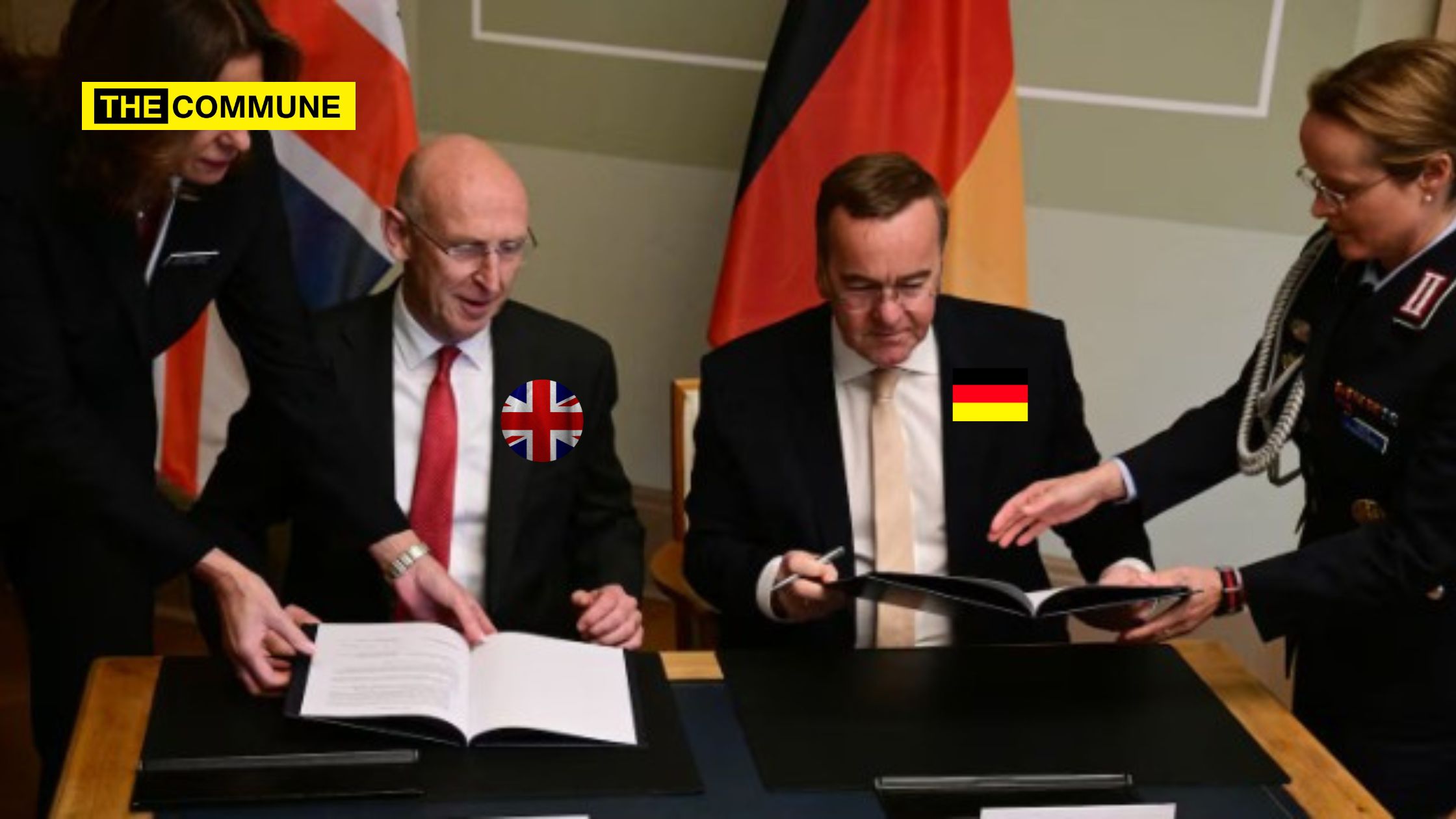
German Defence Minister Boris Pistorius and visiting British Defence Secretary John Healey have agreed to start working on a new “Deep Precision Strike Capability” system aimed at a range of more than 2,000 km. Given the current threat situation, there is an urgent need for such long-range weapons and to close the “Deep Precision Strike” capability gap, said a statement issued by the German Defence Ministry on 15 May  after their meeting.

British Ministry of Defence said that the new 2,000-km precision deep strike capability will be among the most advanced systems ever designed by Britain, to safeguard the British public and reinforce NATO deterrence, while boosting British and European defence sectors. Germany’s Boris Pistorius said work on the missiles had begun and would be critical for European security. “The current threat situation makes it absolutely clear that we need to close all capability gaps,” Pistorius said. “And we need to do that as quickly as possible.” Europe’s governments have looked to establish more independence from US military technology amid doubts about Washington’s future commitment to Europe’s security.

Both Germany and Britain also agreed to strengthen cooperation in terms of equipment systems, countering undersea threats, and developing further connectivity between their air forces. The two Ministers also discussed support for Ukraine as well as the upcoming NATO summit in June, where discussions are expected to focus on defence budget sharing among NATO member countries. The new German federal government has promised to step up its spending on national defence and build a strong army.

German Chancellor Friedrich Merz said in February that Europe would have to work to achieve “real independence” from the US, whose leadership now seemed “largely indifferent” to the fate of Europe. The Defence Ministers also pointed to other projects their countries were working on, including joint procurement of torpedoes and the establishment of a new forum bringing together defence firms from each nation.

European nations in NATO must do more and step up to strengthen European security,” Healey said. “The best way to do that is for leading nations like Germany and the UK to do more together.” Germany’s Foreign Minister Johann Wadephul said earlier on Thursday that the country backs proposal to increase defence spending to five per cent of GDP.

-IANS

Subscribe to our channels on TelegramWhatsApp, and Instagram and get the best stories of the day delivered to you personally.

India-EU Partner On Marine Plastic And Waste-to-Hydrogen Tech

India and the European Union (EU) have launched two major research and innovation initiatives that focus on marine plastic litter and waste-to-green-hydrogen solutions. The initiatives were launched under the India-EU Trade and Technology Council (TTC), established in 2022 by Prime Minister Narendra Modi and European Commission President, Ursula von der Leyen to strengthen the bilateral partnership on trade and technology.

With a joint investment of ₹391 crore, the initiatives focus on two coordinated calls in the areas of Marine Plastic Litter (MPL) and Waste to Green Hydrogen (W2GH), co-funded by Horizon Europe — the EU’s research and innovation framework programme — and the Indian government. “Collaborative research is the cornerstone of innovation. These initiatives will harness the strengths of both Indian and European researchers to develop solutions that address our shared environmental challenges”, said Professor Ajay Kumar Sood, Principal Scientific Adviser to the government.

Highlighting the increasing momentum of the EU-India collaboration, Herve Delphin, EU Ambassador to India, remarked, “These research calls under the EU-India Trade and Technology Council demonstrate the dynamism of the EU India partnership, renewed by our leaders in Delhi last February”. “By tackling concrete issues like marine pollution and sustainable energy together, we’re driving innovation, circular economy and energy efficiency. Development of cutting-edge technologies in these areas makes both economic and environmental sense. We are committed to a cleaner, more sustainable future that will benefit both the EU and India,” Delphin mentioned.

Despite global efforts, marine pollution continues to threaten biodiversity, disrupt ecosystems, and impact human health. Dr M. Ravichandran, Secretary, Ministry of Earth Sciences, said “Marine pollution is a global concern that requires collective action. This joint call will enable us to develop advanced tools and strategies to protect our marine ecosystems.”​ The second coordinated call addresses the urgent need for sustainable energy solutions through the development of waste-to-green hydrogen technologies. Santosh Kumar Sarangi, Secretary, Ministry of New and Renewable Energy, said that “Advancing waste-to-hydrogen technologies is crucial for our energy transition goals. This collaboration will accelerate the development of sustainable hydrogen production methods.”

-IANS

Subscribe to our channels on TelegramWhatsApp, and Instagram and get the best stories of the day delivered to you personally.
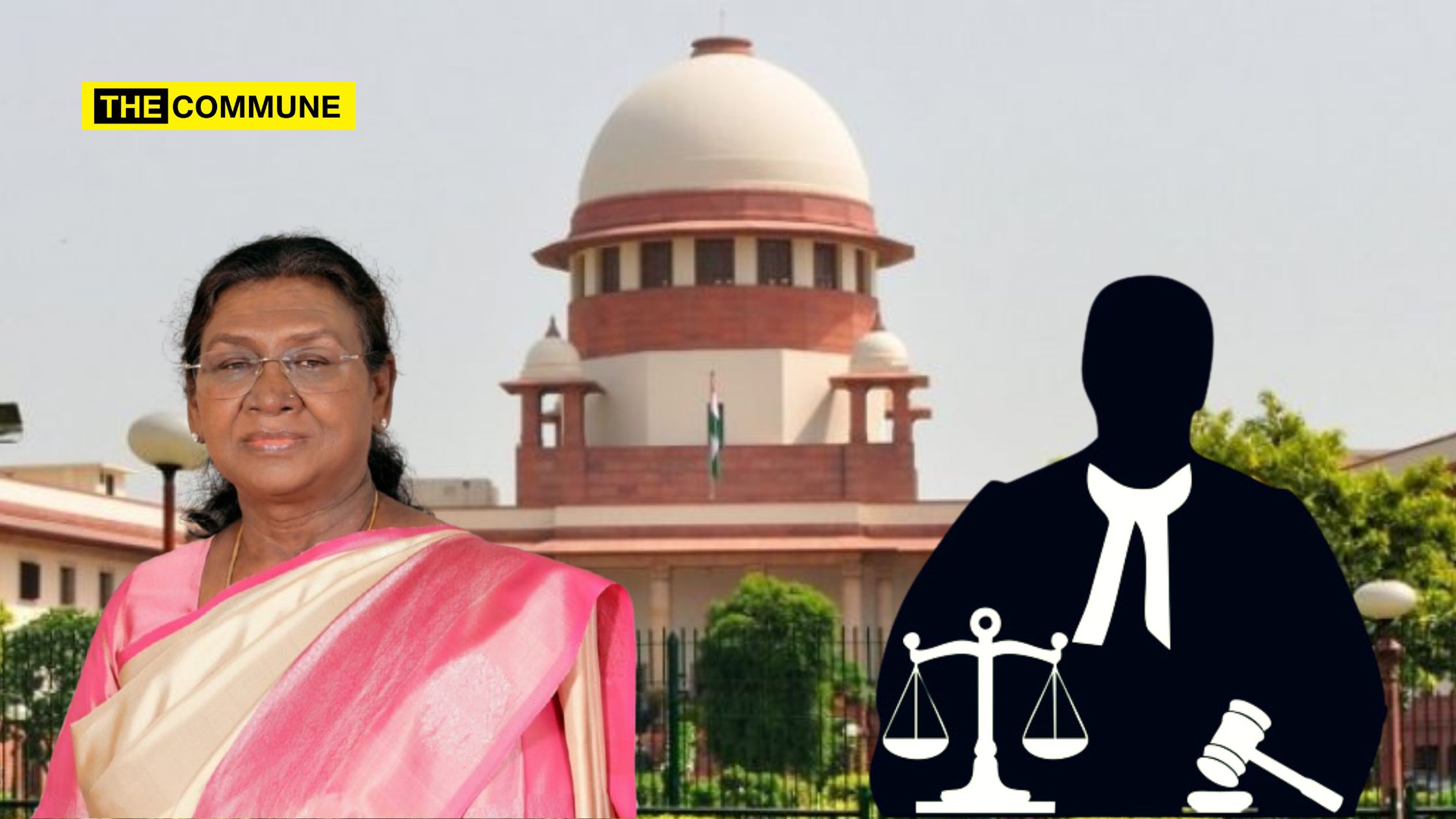
President Murmu Invokes Article 143 To Challenge Supreme Court’s Ruling On President & Governor’s Assent To Bills

Supreme Court Rules Against Fixed Timelines Or 'Deemed Assent' For Governor And President On Bills

In a significant move, President Droupadi Murmu has referred a series of constitutional questions to the Supreme Court under Article 143(1), challenging aspects of the Court’s 8 April judgment regarding the powers and responsibilities of Governors and the President in granting assent to state bills. The judgment in question, delivered by Justices J.B. Pardiwala and R. Mahadevan in the Tamil Nadu government vs. Governor case, had established strict timelines for decision-making under Articles 200 and 201 of the Constitution—provisions which outline the assent process for state legislation.

The President expressed concern over the Court’s interpretation, questioning its legal basis given the absence of any time-bound directives in the Constitution regarding the assent procedure. Noting that the Constitution provides no explicit deadlines for such decisions, she sought the Court’s advisory opinion on 14 critical constitutional issues, invoking Article 143—a rarely used provision allowing the President to consult the apex court on matters of legal complexity or public importance.

Key Constitutional Questions Raised

Among the 14 questions presented to the Court are:

  1. What are the constitutional options before a Governor when a Bill is presented to him under Article 200 of the Constitution of India?
  2. Is the Governor bound by the aid & advice tendered by the Council of Ministers while exercising all the options available with him when a Bill is presented before him under Article 200 of the Constitution of India?
  3. Is the exercise of constitutional discretion by the Governor under Article 200 of the Constitution of India justiciable?
  4. Is Article 361 of the Constitution of India an absolute bar to the judicial review in relation to the actions of a Governor under Article 200 of the Constitution of India?
  5. In the absence of a constitutionally prescribed time limit, and the manner of exercise of powers by the Governor, can timelines be imposed and the manner of exercise be prescribed through judicial orders for the exercise of all powers under Article 200 of the Constitution of India by the Governor
  6. Is the exercise of constitutional discretion by the President under Article 201 of the Constitution of India justiciable?
  7. In the absence of a constitutionally prescribed timeline and the manner of exercise of powers by the President, can timelines be imposed and the manner of exercise be prescribed through judicial orders for the exercise of discretion by the President under Article 201 of the Constitution of India
  8. In light of the constitutional scheme governing the powers of the President, is the President required to seek advice of the Supreme Court by way of a reference under Article 143 of the Constitution of India and take the opinion of the Supreme Court when the Governor reserves a Bill for the President’s assent or otherwise?
  9. Are the decisions of the Governor and the President under Article 200 and Article 201 of the Constitution of India, respectively, justiciable at a stage anterior into the law coming into force? Is it permissible for the Courts to undertake judicial adjudication over the contents of a Bill, in any manner, before it becomes law?
  10. Can the exercise of constitutional powers and the orders of/by the President / Governor be substituted in any manner under Article 142 of the Constitution of India?
  11. Is a law made by the State legislature a law in force without the assent of the Governor granted under Article 200 of the Constitution of India?
  12. In view of the proviso to Article 145(3) of the Constitution of India, is it not mandatory for any bench of this Hon’ble Court to first decide as to whether the question involved in the proceedings before it is of such a nature which involves substantial questions of law as to the interpretation of constitution and to refer it to a bench of minimum five Judges?
  13. Do the powers of the Supreme Court under Article 142 of the Constitution of India limited to matters of procedural law or Article 142 of the Constitution of India extends to issuing directions /passing orders which are contrary to or inconsistent with existing substantive or procedural provisions of the Constitution or law in force?
  14. Does the Constitution bar any other jurisdiction of the Supreme Court to resolve disputes between the Union Government and the State Governments except by way of a suit under Article 131 of the Constitution of India?

President: ‘Deemed Assent’ Undermines Constitutional Balance

The President took strong exception to the concept of “deemed assent”, which the Supreme Court invoked to resolve a prolonged impasse involving ten bills pending with the Tamil Nadu Governor. The Court had held that these bills would be considered assented to if not acted upon within the prescribed timeframes. President Murmu argued that such an interpretation is “alien to the constitutional scheme”, and compromises the intended checks and balances between legislative and executive functions at both the Union and State levels.

She further emphasized that Articles 200 and 201 do not specify any timeframe or procedural guidance, suggesting that any judicially imposed timelines could disrupt the delicate balance of federalism, separation of powers, and executive discretion. The President maintained that decisions under these Articles involve complex policy considerations and should not be strictly constrained by judicial mandates.

Concerns Over Judicial Overreach and Use of Article 142

The Court’s reliance on Article 142, which empowers it to do “complete justice,” was also called into question. The President noted that this provision should not be used to override or alter substantive constitutional or statutory requirements. She called for clarity on whether Article 142 allows the judiciary to issue directions inconsistent with the constitutional framework, particularly concerning executive decisions on legislation.

Moreover, she raised concerns about state governments bypassing Article 131—the appropriate mechanism for adjudicating disputes between the Centre and States—by filing writ petitions under Article 32, which is primarily intended for individual rights enforcement.

Call for Constitutional Clarity

Citing divergent judicial precedents and the serious implications of the April 8 ruling, the President urged the Supreme Court to clarify the extent of its powers in relation to gubernatorial and presidential discretion over legislative assent. The reference seeks to resolve long-standing ambiguities over the justiciability, scope, and limits of constitutional discretion under Articles 200 and 201, and the appropriate judicial mechanisms for addressing inter-governmental disputes.

The Union Government has supported this reference, viewing the Court’s April verdict as a case of judicial overreach that risks upsetting the constitutional equilibrium between the legislature, executive, and judiciary.

(With Inputs From TOI & Bar And Bench)

Subscribe to our channels on TelegramWhatsApp, and Instagram and get the best stories of the day delivered to you personally.
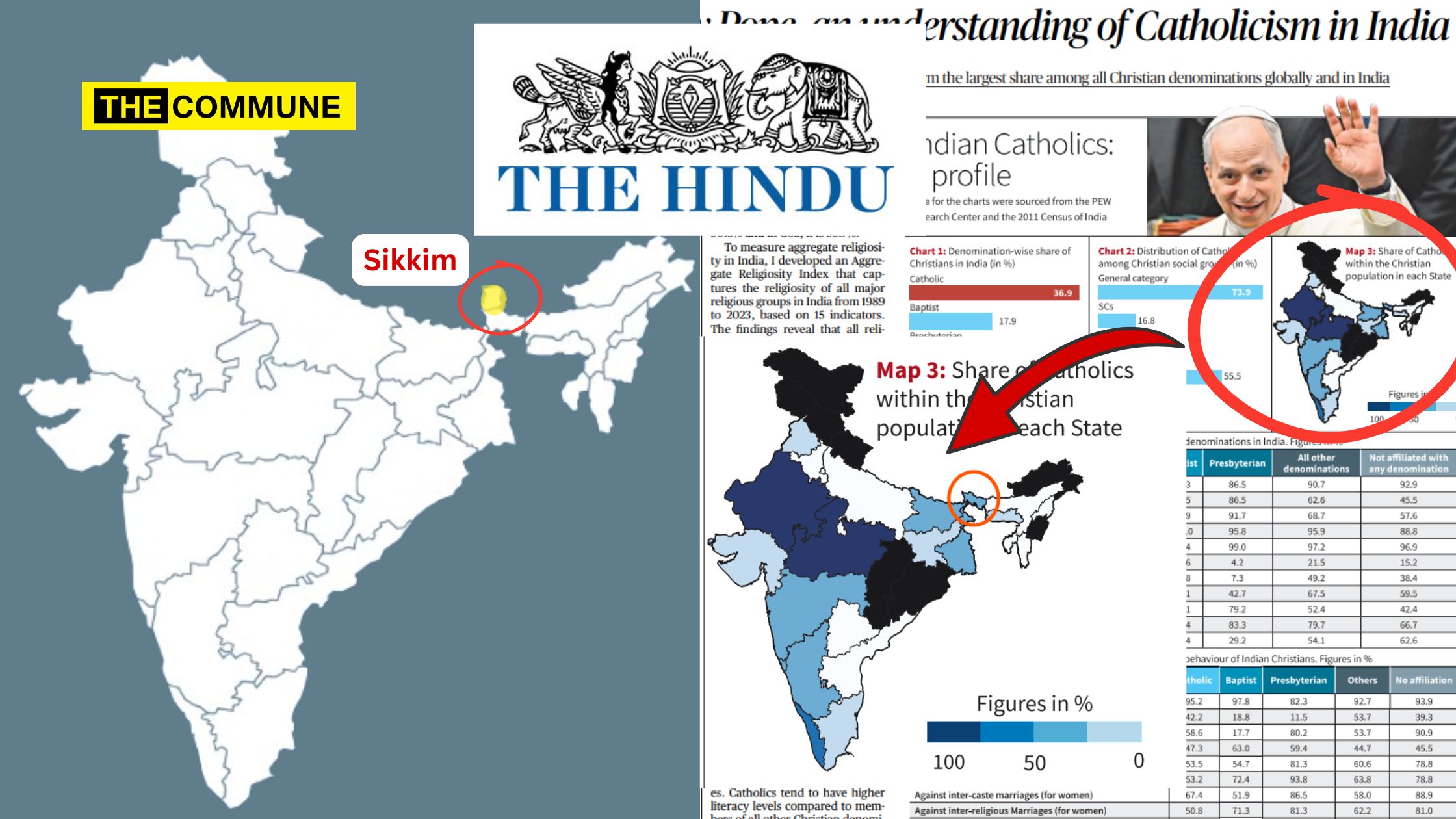
The Hindu Publishes Distorted India Map Omitting Sikkim, Faces Backlash, Issues Apology Later

The Hindu has once again found itself at the center of a major controversy following the publication of its 13 May 2025 edition. In the Opinion section on page 7, the newspaper featured a map of India that conspicuously omitted Sikkim — an integral part of the country. This omission has sparked significant public outcry and backlash across social media platforms. As in previous instances, The Hindu has once again issued an apology, accompanied by unconvincing excuses.

The Hindu stated, “Due to a data input error, the India map in the article, ‘With a new Pope, an understanding of Catholicism in India,’ which appeared in the Data Point section on May 13, 2025, was incorrectly presented with the contours of Sikkim State being shaded out. We apologise for the error. The map and the references have been removed from the story online, and corrected in our e-paper editions. — The Editor”

Critics have accused The Hindu of intentionally misrepresenting the national map, raising concerns over its editorial stance. The newspaper, often viewed as sympathetic to opposition voices and left-leaning ideologies, has recently faced allegations of promoting narratives that undermine India’s national integrity and security.

This incident follows a previous controversy where The Hindu reported — without verification — that Pakistan had downed Indian Rafale fighter jets, a claim later debunked. The newspaper was forced to retract the report and issue an apology after facing intense scrutiny. The recent map error has further fueled accusations that The Hindu is adopting an anti-India posture, prompting many netizens to label it as “anti-national.”

The Hindu’s Dubious Track Record: A Pattern Emerges

This is far from the first time The Hindu has shown questionable editorial judgment in matters of national interest. In fact, under the guise of “independent journalism,” the publication and journalists like Vijaita Singh have repeatedly eroded public trust through selective, inflammatory, and often erroneous reporting.

During the Rafale controversy, The Hindu was accused of editing and misrepresenting official documents to manufacture a scandal. Now, as India defends its citizens after a brutal terrorist attack in Pahalgam, the paper once again published misleading reports suggesting aircraft crashes—claims immediately debunked by defense experts as misinterpreted fuel tank jettisoning. After facing backlash, The Hindu quietly deleted the post—without apology or correction—underscoring the dangerous impact of real-time misinformation.

Vijaita Singh’s Coverage of Manipur: Irresponsible And Inflammatory

Beyond the Kashmir-Pakistan narrative, Vijaita Singh’s reporting during the Manipur ethnic conflict stands out for its recklessness. Since violence erupted in May 2023, her articles have repeatedly highlighted unverified claims, inflammatory statements, and misleading headlines that have only deepened the rift between the Meitei and Kuki-Zo communities.

In March 2025, Singh quoted a protester who accused security forces of saying, “We are not Indians”—a claim that was later walked back by the protester themselves. Still, Singh chose to amplify the quote without context, potentially stoking anti-security sentiment in a state already teetering on the edge.

In January 2024, she authored a report claiming that “Meitei MLAs call for positive action,” which was later clarified by The Hindu itself to be factually incorrect. The resolution in question had not been passed exclusively by Meitei MLAs, as originally reported—an error with significant communal implications.

In another instance, Singh reported on Chief Minister N. Biren Singh skipping a North Eastern Council meeting, framing it as a rebuke of the central government. Once again, her narrative placed the state and Centre at odds during a period requiring collaboration and restraint.

Vijaita Singh has also been accused of leaking sensitive information, including the names of Army officers stationed in Manipur. This reckless act drew comparisons to the infamous 2008 Barkha Dutt controversy, where journalism blurred into national compromise.

The Real Cost of Misinformation

In a volatile democracy like India, journalistic irresponsibility can escalate crises. Reports like those by Vijaita Singh not only inflame public sentiment but also risk undermining the very institutions tasked with maintaining order. The Hindu, by repeatedly pushing such narratives, is no longer just failing at journalism—it is actively eroding national cohesion and aiding disinformation networks, wittingly or not.

Subscribe to our channels on TelegramWhatsApp, and Instagram and get the best stories of the day delivered to you personally.

Suspicious Surveillance Drone Found Near India-Pakistan Border In Rajasthan’s Sriganganagar

A suspicious drone was discovered on 15 May near the India-Pakistan border in the Anupgarh area of Rajasthan’s Sriganganagar district. The drone was found in a damaged condition on land belonging to the Forest Department near village 12A, raising concerns about cross-border surveillance or espionage.

Around 9.45 a.m., local villagers spotted the drone-like object and immediately informed the Anupgarh Police Station. SHO Ishwar Jangid reached the location with a police team, and the Border Security Force (BSF) was also alerted. The area was quickly cordoned off, and civilians were prohibited from approaching the site. Eyewitnesses reported that the object resembled a drone measuring approximately 5 to 7 feet in length, with a damaged camera detached from its body.

Its design and structure suggest possible use for reconnaissance or intelligence gathering. SHO Jangid stated that multiple security agencies are investigating the scene. A bomb disposal unit has also been deployed as a precaution. The drone will be taken into custody and sent for forensic and technical analysis to determine its origin and purpose. The discovery of such an object so close to the international border is being treated as a serious security concern.

Additional SP Surendra Kumar said a sheepherder had alerted the village sarpanch, who then informed the police and BSF. Senior officers from the police, BSF, Army, and Air Force arrived at the location to examine the drone. A special team has been tasked with checking the drone for any explosive material, and investigations are underway to verify whether the drone was sent from across the border or entered Indian territory accidentally during a military exercise.

Access to the area has been strictly restricted as the probe continues. Meanwhile, three flights, which were suspended between Jaipur and Chandigarh, resumed from Thursday. These flights were stopped on May 7. Along with this, flights to Kullu and Ghaziabad are also being operated from Thursday.

-IANS

Subscribe to our channels on TelegramWhatsApp, and Instagram and get the best stories of the day delivered to you personally.

West Bengal Police Uncovers Massive Fake Passport Racket Involving Non-Existent Individuals

The West Bengal Police, investigating a multi-crore fake passport racket, have uncovered documents indicating that several passports were issued to individuals who do not exist at all. In a recent report submitted to the Calcutta High Court, investigators claimed that at least 37 such passports were found to have been issued to persons who could not be traced at the addresses mentioned in the documents.

During interrogation and field verification, officials could not find any evidence suggesting these individuals ever lived at the listed addresses. Sources familiar with the investigation said the findings point to serious lapses in the physical verification process, which is mandatory for passport issuance.

As per norms, police verification officers are required to visit the applicant’s address in person for on-ground verification before clearing the application. Two police personnel tasked with this verification process have already been named as accused in the case. They are Abdul Hai, a retired sub-inspector of Kolkata Police, and Mohammad Imran, a home guard attached to the Chandernagore Police Commissionerate in Hooghly district.

According to insiders in the state police, the discovery of passports issued to non-existent individuals raises serious concerns, especially in light of several cases involving Bangladeshi nationals living in West Bengal with both Indian and Bangladeshi passports. Investigations have revealed that many of these individuals initially entered India legally on valid visas and subsequently acquired fake Indian identity documents, including passports, through such rackets.

In a related development, the Enforcement Directorate (ED) recently arrested a former Pakistani national, Azad Mullick, from his residence on the northern outskirts of Kolkata. He was allegedly operating a network dealing in fake passports, visas, and hawala transactions. What made his case more complex was that he had first obtained Bangladeshi citizenship using forged documents and then used a similar method to acquire an Indian passport.

-IANS

Subscribe to our channels on TelegramWhatsApp, and Instagram and get the best stories of the day delivered to you personally.
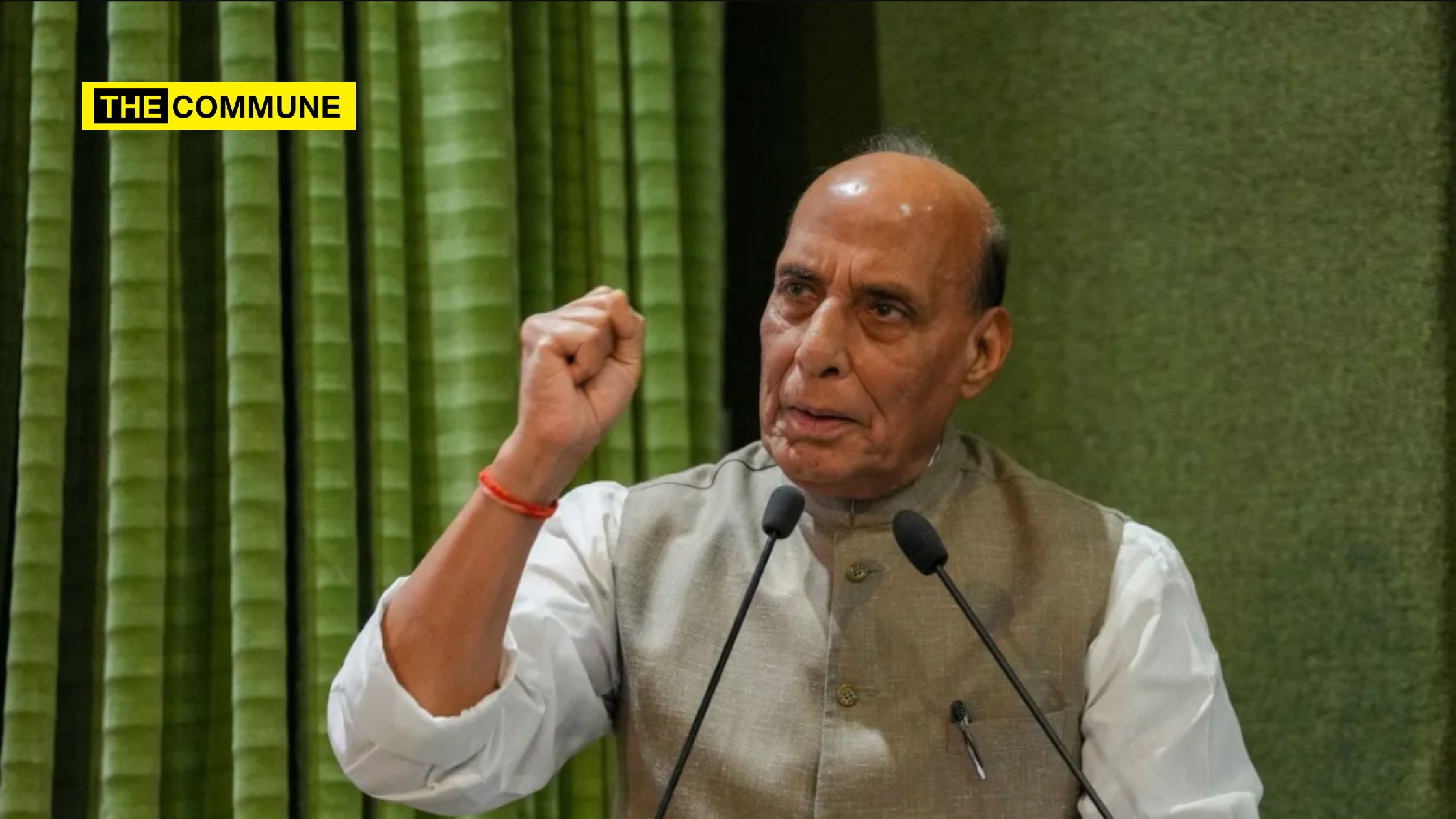
“It’s Time The World Took Over Pakistan’s Nuclear Facility”: Indian Defense Minister Rajnath Singh

Indian Defence Minister, Rajnath Singh said on 15 May that the present ceasefire understanding is respected by India only as long as no terrorist attack takes place in the country. He also said that it was time that the Nuclear facility of Pakistan was taken over by a global watchdog.

Addressing the Indian Army soldiers at the Badami Bagh Cantonment area of Srinagar city, which is the headquarters of the Army’s 15 Corps, Defence Minister Rajnath Singh said, “Our ‘Operation Sindoor’ is undoubtedly the biggest anti-terrorist operation ever undertaken by India. We hit their chest and left a huge wound on it after they tried to attack our head.”

The Defence Minister started his address by paying homage to the bravehearts of the country who laid down their lives during the recent hostilities between India and Pakistan. He also paid tribute to the 26 people killed by terrorists in Baisaran meadow in Pahalgam on 22 April. “Operation Sindoor is the dream seen by every Indian soldier who aims to track down and destroy terrorism across the border. They tried to break our social fabric by killing innocent civilians after segregating them on the basis of religion. We attacked them on the basis of their evil intentions”, he said.

He also said, “India will not succumb to any Nuclear blackmail by Pakistan as has been proved by the strikes on terror targets by us. It is time that the Nuclear facility of Pakistan is taken over by an international body so that their Nuclear bluff is called forever.” The Defence Minister quoted Swami Tulsi Das and said, “Swami Tulsi Das has said in ‘Ramcharitmanas’ that whenever intentions are noble and honest there is peace and prosperity and whenever intentions are evil and vengeful, misery and violence becomes their destiny.”

Rajnath Singh also quoted poet Ramdhari Singh Dinkar and said, “National poet Ramdhari Singh Dinkar has said nobody wants to be afflicted by disease, but once disease inflicts a person, serving him sweets will not cure him. Hard remedies have to be sought and used. India has always stood for peace, but when our sovereignty and integrity is challenged we have to make hard choices.” The Defence Minister added that Pakistan had assured Atal Bihari Vajpayee that they would not allow their soil to be used for terrorism but they did not fulfil that commitment. “Let me tell you that the present understanding is based on the assurance that no terrorist activity will be undertaken from across the border. I know there was huge anger in your hearts and in every heart across the country. I must commend you for not letting that anger overtake you. You have avenged the innocent killings of civilians by hitting the right targets,” Rajnath Singh said.

“Where has Pakistan landed itself today? It is said that the line of beggars begins from where Pakistan stands. They begged to get the IMF loan while India is among those countries who give funds to IMF to be given to poor countries. “If any terror attack takes place in our country then our revenge and message will go a long way. The Prime Minister has already redefined the country’s response to terrorism. “A new normal has been created and this will be resorted to by us whenever there is a terror attack in India”, the Defence Minister asserted.

He said the Prime Minister Modi had made it clear that terror and talks will not go together. “The only talk with Pakistan would be about Pakistan-occupied-Kashmir”, the Defence Minister reiterated. Rajnath Singh said it was a fulfilling experience for him to be among the brave soldiers of the country who made the nation proud. Jammu and Kashmir Chief Minister Omar Abdullah, Army chief General Upendra Dwivedi, GoC-in-C Northern Command Lt Gen Pratik Sharma, GoC of 15 Corps Lt Gen Prashant Srivastava and other senior Army officers were present during the Defence Minister’s address.

-IANS

Subscribe to our channels on TelegramWhatsApp, and Instagram and get the best stories of the day delivered to you personally.
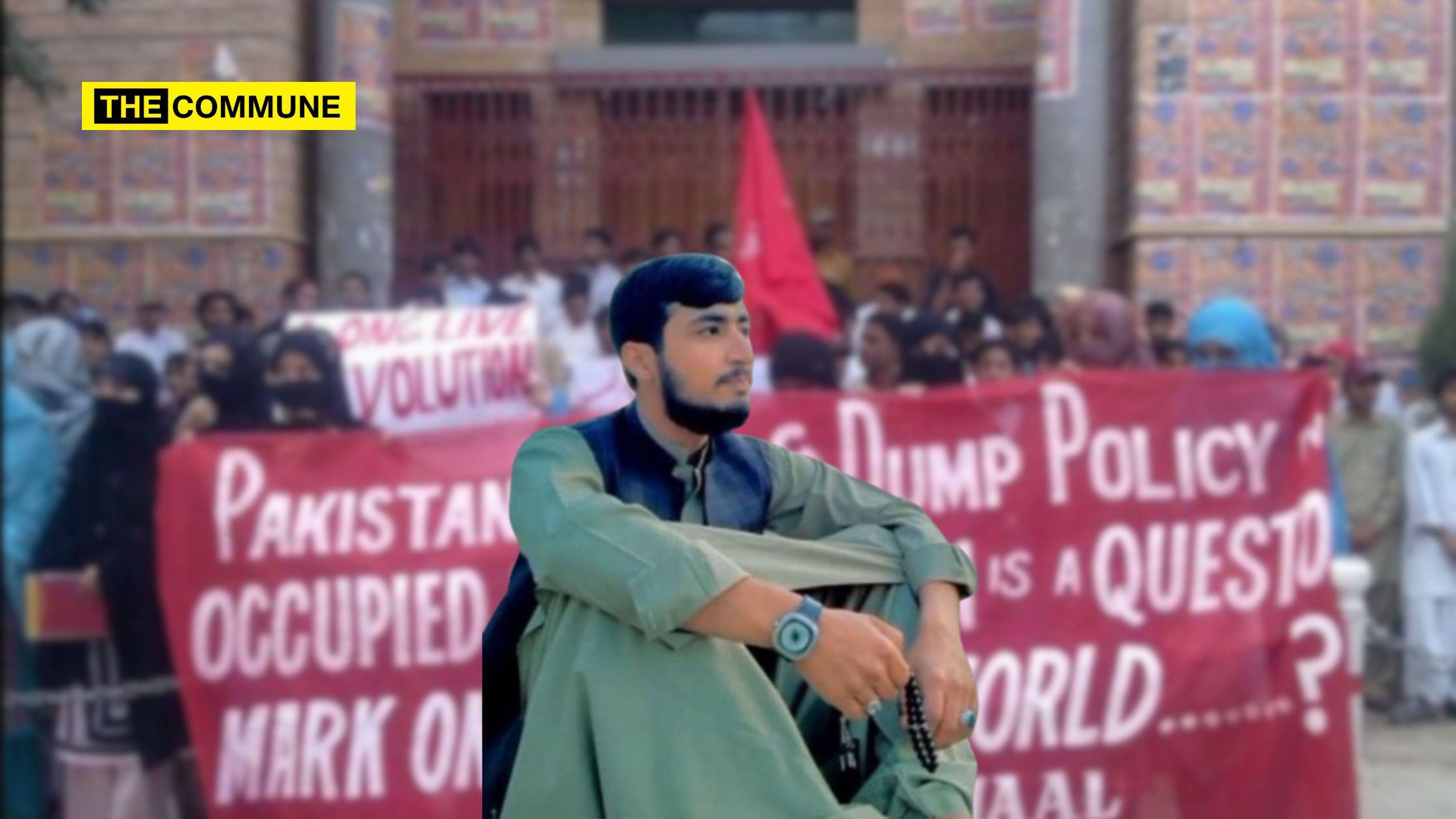
‘Kill And Dump’ Continues As Fahad Lehri And 7-Year-Old Baloch Girl Rokia Become Latest Victims Of Pakistan-Backed Brutality In Balochistan

The Baloch Yakjehti Committee (BYC) on Thursday condemned the murder of Fahad Lehri, a student of Balochistan, calling it a continuation of Pakistan’s “kill and dump” policy to suppress the Baloch identity. In a statement, the BYC stated that Fahad, a student and resident of Mastung, Balochistan, was forcibly disappeared on 4 May, and his bullet-riddled body was discovered in the same region on Wednesday.

“The ‘kill and dump’ policy has become an institutionalised method of silencing Baloch voices. From students and labourers to political workers and artists, no one is safe. Fahad was neither presented in court nor allowed legal recourse; his only “crime” was being a Baloch youth in a region where identity alone is deemed a threat,” read the statement.

“This ongoing strategy of targeting young Baloch men is intended not only to eliminate those who might question the state but to instil fear deep within Baloch society. Fahad Lehri now joins a long list of names, victims whose lives were erased without trial, whose families continue to mourn in the shadows of state violence,” the statement added.

Highlighting the brutality of Pakistan, the Baloch forum stated that even in grief, it will not remain silent. “The people of Balochistan will continue to resist this brutality through our voices, our truth, and our collective memory. The bullets may bury bodies, but they cannot erase the will of a people determined to live with dignity and justice,” said the statement.

The BYC in another statement also revealed that a 7-year-old girl, Rokia Baloch, died on Thursday after she was fatally shot a few days ago while sleeping outside her home in Khudabadan, a town in District Panjgur, Balochistan. Highlighting the incident, it stated that in the early hours on Monday, personnel from Pakistan’s Frontier Corps (FC) indiscriminately opened fire in the area, and a bullet struck Rokia in the abdomen while she was asleep.

The child was immediately rushed to the hospital in Panjgur and later referred to the District Headquarters Hospital in Kech (Turbat), and despite efforts by her family, she succumbed to her injuries on Thursday, the BYC stated. “The tragedy was compounded by the dire condition of the healthcare facility. Upon admission, there was no proper oxygen supply, no emergency medicines, no functioning air conditioning, and no reliable electricity. These life-saving necessities were absent, reflecting the systemic neglect and underdevelopment of Balochistan’s public services, especially in critical healthcare,” read the statement by the BYC.

“This is not an isolated incident. Such acts of indiscriminate violence by state forces have become a recurring reality in Balochistan. In the aftermath of attacks or confrontations, it is often the civilian population, including children, women, and the elderly, who bear the brunt of state retaliation,” the statement read. “The ongoing militarisation of civilian areas, the impunity enjoyed by security forces, and the systematic denial of basic rights have created a humanitarian crisis in Balochistan that demands international attention,” the statement further added.

The BYC urged international human rights organisations, medical humanitarian groups, and global civil society to acknowledge and act against this violence, stating that Rokia’s name joins a long list of innocent lives lost not to conflict, but to state-sponsored brutality.

-IANS

Subscribe to our channels on TelegramWhatsApp, and Instagram and get the best stories of the day delivered to you personally.