Home Blog Page 291

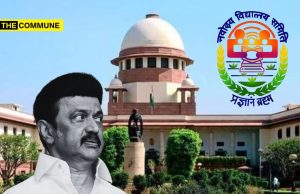
From Saying First Terrorist Of India Was A Hindu, To Calling For Plebiscite In Kashmir And Kissing Women Without Consent: Meet Actor And DMK Stooge Kamal Haasan Who Is Going To Rajya Sabha

kamal haasan dmk

Kamal Haasan, actor-turned-politician and founder of Makkal Needhi Maiam (MNM), is set to enter the Rajya Sabha after being nominated by ally DMK, following a poll pact ahead of the 2024 general elections. Though offered a Lok Sabha seat, the 70-year-old chose a Rajya Sabha berth, citing national interest. Once a critic of Dravidian parties, Haasan has now fully aligned with the ruling DMK, marking a dramatic shift in his political stance. Having launched MNM in 2018 as an alternative to the DMK and AIADMK, Haasan had earlier declared, “Our voice will be heard in Parliament,” signaling his ambition.

From stating that his party was to eradicate corruption to calling Stalin an “insult to Karunanidhi” to saying “he will never ally with thieves”, he has made a 180 degree turn to ally with the DMK in the 2024 Lok Sabha polls to begging for a Rajya Sabha seat to ensure his survival.

In a series on “This Day That Year” by Dinamalar on social media platform X, a remark made by Kamal Haasan in 2021 has come to the fore. On 8 March 2021, Kamal is said to have made the statement, “If you want to insult Karunanidhi, all you need to say is MK Stalin.” MNM President Kamal Haasan said that if he wanted to be humiliated, he would lie down.

Leave politics aside for the moment, as they say in politics there is no permanent enemy or friend. Let us take a look at his misogynist behaviour and his anti-India attitude over the years.

Anti-India Kamal Haasan

Despite making films like Kuruthi Punal, Hey Ram on partition which was a minority appeasement movie or Indian, Kamal Haasan has exhibited a deep anti-India bias on most occasions. Here are a few instances of his anti-India attitude.

Called For Plebiscite In Kashmir

Part-time-politician Kamal Haasan, made his alignment move with the DMK in pursuit of a single Rajya Sabha seat in 2024, voiced strong opposition to the central government’s actions in Kashmir at the time of Article 370 abrogation. In 2019, he called the move to revoke Jammu and Kashmir’s special status and bifurcate the state into two Union Territories a “direct blow to democracy,” and called the move as an autocratic decision-making process.

“This move is highly regressive. Article 370 and 35A have historical significance, and any changes should have been made through a consultative and inclusive process,” he said.

Not only this, back in February 2019, during a public event in Chennai, Kamal Haasan raised several provocative questions, stating, “Why do the soldiers die? Why should our home’s watchman die? If politicians on both sides (in India & in Pakistan) behave properly, no soldier needs to die. The Line of Control will be under control. Why is India not holding a plebiscite in Kashmir? What are they (Indian government) afraid of?” 

Said India’s First Terrorist Was A Hindu

In May 2019, actor-politician Kamal Haasan stirred controversy by calling Nathuram Godse, Mahatma Gandhi’s assassin, “free India’s first terrorist.” While campaigning in Aravakurichi, a Muslim-majority constituency in Tamil Nadu, Haasan stated, “I am not saying this because this is a Muslim-dominated area, but I am saying this before a statue of Gandhi. Free India’s first terrorist was a Hindu, his name is Nathuram Godse. There it [terrorism] starts.” Emphasizing unity and equality, he added, “Good Indians desire for equality and want the three colours in the Tricolour to remain intact. I am a good Indian, will proudly proclaim that.”

His remarks drew sharp criticism from BJP leaders. Tamil Nadu BJP chief Tamilisai Soundararajan condemned the statement, calling it “strongly condemnable” and accused Haasan of inciting “communal violence” through “divisive vote bank politics.” She urged the police to take action and ban his campaign.

In response, Haasan later clarified, “Let me tell you terrorists abound all religions. Every religion has its own terrorists, and we cannot claim that we are sanctimonious.” He emphasized that his speech aimed at maintaining harmony and warned that arresting him would escalate tensions: “Let them arrest. But if they arrest me tensions will escalate.”

His film Hey Ram was another attempt at minority appeasement in which he would’ve shown Hindu nationalists as Nazis.

Misogynist Kamal Haasan

For all the women empowerment dialogues he may have made in his films, Kamal Haasan has his share of harassment behaviour that he meted out to his female colleagues and female family members. Here’s a recap of those incidents.

Kisses Underage Co-Star, Voices Support For Sexual Harassment Protest – Irony Of Ironies

On 23 May 2023, Kamal Haasan tweeted, “Today marks 1 month of protests by athletes of the wrestling fraternity. Instead of fighting for national glory, we have forced them to fight for personal safety. Fellow Indians, who deserves our attention, our national sporting icons or a politician with an extensive criminal history?”

It is worth noting that Kamal Haasan, who has come out in support of wrestlers protesting the arrest of their molester, was once accused of kissing an underage actress on screen without her consent. The alleged incident occurred during the shooting of the movie Punnagai Mannan, during which he kissed Rekha, a 16-year-old actress who had just completed 10th grade back then.

The visuals of the song “Enna Satham Indha Neram” show Kamal Haasan having sex with the 16-year-old actress semi-naked.

In an interview with a YouTube channel, actress Rekha said, “I had no idea about the kissing scene. I was only 16 at the time. Neither Kamal nor Director Balachander informed me that there would be a kissing scene. I felt horrible after filming the kissing scene.”

Kamal Haasan’s support for female wrestlers was mocked on social media, as there are already calls to file a POCSO case against him for kissing an underage actress without her permission.

Suhasini Maniratnam Reveals How Her Uncle Kamal Haasan Used To Drop Her At College Without Wearing Pants

After the above anecdote went viral, another anecdote by former actress and filmmaker Suhasini Maniratnam who is also the niece of Kamal Haasan surfaced in which she noted how her uncle Kamal used to drop her at college without wearing pants.

In part/episode 13 of Zee Tamil’s show titled “Weekend With Stars” that was aired in 2018, Suhasini Maniratnam shares about her early life and her relationship with Kamal Haasan.

Sharing her experience with anchor Archana Chadhoke, Suhasini saysSometimes, shooting happens opposite to our college. The shooting of Ilamai Oonjal Aadugiradhu was going on. Till then, I had kept it as a secret and nobody knew the fact that Kamal is my chitthapa (uncle). The song ‘Nee Kettal Naan Maatenendra Solven Kanna’ where Kamal will be smoking and Sripriya takes it off, that scene was being shot there. Everybody were going crazy saying ‘Kamal Haasan has come, Kamal Haasan has come, We’ve to go and see’ and I told them ‘I won’t come, I won’t come’ but they took me anyway. After going there, I was standing somewhere hidden at the back and then Kamal shouts ‘Aye!’ and calls me by a name. Shall I tell that name? ‘Chu Chu, come here’, he said. I was so embarrased

She jovially says “I’ve a beautiful name Suhasini and he called me Chu Chu! Yea that’s my name. He called me that and people beside me started asking ‘Why is Kamal calling you with a weird name?’ to which Kamal said ‘You don’t know? She’s my daughter. My brother’s daughter’. That’s it. I got jittered. After that I became quite popular in college.

She further goes on to say “Then, sometimes Kamal used to drop me at college. In those times, I don’t know whether you remember. There used to be a dress for karate. He won’t be wearing anything under. He used to be doing karate at home. Down, only his underpants will be there. He used to say that he has bought a new car and will drop me at college in that. I used to beg him saying ‘Please wear pants and come. Or atleast wear shorts and come.’ to which he would say ‘Chee chee, I won’t get out of the car. I’m a big star. And that too will I step outside ladies college?’. But then correctly he will come, he will get down and open the door for me. That’s it! The entire Queen Mary’s will be watching Kamal Haasan and his legs would.. Ayyo! I would be so ashamed! I used to yell ‘why are you doing like that?’. But he is like that only. Always doing galatta.

Anti-Hindu Kamal Haasan

While he may have made statements in public claiming he is atheist, Kamal Haasan ensured to inject anti-Hindu themes into his films, often portraying Hindu symbols and traditions in a negative light. In Kaathala Kaathala (1998), a Hindu religious figure—also depicted as a liquor merchant—converts a classroom into a cow shed and forces the hero to fake a miracle for a fraudulent Hindu godman, a trope more commonly associated with Christian evangelists.

In Manmadhan Ambu (2010), Haasan himself penned a controversial song in which a woman mockingly prays to goddess Varalakshmi for a sexually satisfying husband, even expressing willingness to convert religions. The song also ridicules the goddess’s husband as someone who is “always sleeping.”

Facing backlash from Hindu groups like Hindu Munnani, Haasan was forced to remove the song, though he claimed he did so to protect producer Udhayanidhi Stalin’s interests.

On Sacred Thread

In July 2018, actor-politician Kamal Haasan held a Q&A session on Twitter where he candidly answered questions from his fans. When asked which books (“nool” in Tamil) had influenced his life, Haasan replied with a pointed wordplay that sparked controversy. He said, “There is a thread I avoided. The thread affected me a lot – Poonool. That is why I avoided it.”

The remark, referring to the sacred thread traditionally worn by Brahmins, drew sharp criticism from members of the Brahmin community. Offended by what they saw as a dismissive statement about a significant religious symbol, the community issued a statement condemning his comment. “The poonool is the most secular thread and his statement has no logic,” they declared. The statement further accused Haasan of disrespecting his own roots, stating, “Kamal Haasan has no respect for his parent heritage and is putting forth a poor personality in front of the people and now people are more aware of it.”

Chozhas Are Not Hindus

Kamal Haasan supported Tamil director Vetrimaaran’s controversial claim that Raja Raja Chola “wasn’t Hindu.” Vetrimaaran, speaking at an event after the release of Ponniyin Selvan: 1, said, “They (BJP) are trying to steal our identity. They have already tried to saffronize Thiruvalluvar. We should never allow that.”

Kamal Haasan echoed this view, stating, “There was no name called ‘Hindu religion’ during Raja Raja Chola’s period. There was Vainavam, Shaivam, and Samanam, and it was the British who coined the term Hindu since they didn’t know how to refer to it collectively.” He compared it to the colonial renaming of places, saying, “It is similar to how they changed Thuthukudi into Tuticorin.”

BJP leader H Raja responded by pointing out that the king called himself Sivapadha Sekaran, and challenged, “Let him point out two churches and mosques built by Raja Raja Chola.” This controversy follows earlier criticism in 2019 by director PA Ranjith, who called the Chola period a “dark age” for Dalits.

Derogates Hindu Gods

While talking about women’s issues on a stage back in 2020, Kamal Haasan said, “Gods too wear less dress. A few Gods don’t wear any dress. When the mind is not spoiled by seeing those Gods, how come it is spoiled while seeing my sisters”. This statement of the MNM chief has invited severe backlash.

While addressing the women audience Kamal Haasan said, “I have never felt shy to speak in front of women. Because my house was mostly dominated by women. Women play an important role in the transformation of the world. Even before Gandhiji, women took part in the freedom struggle. They say that women wearing less dress is the reason for the rape crimes. Gods too wear less dress. A few Gods don’t wear any dress. When you don’t get the urge on seeing ‘that’, how come you feel the urge while seeing my sisters. It is mutual consent when there is love but when they want to have that without love, then is the problem”.

This remark of his came just days after he refused the ‘poornakumbham’ honours offered by Hindu priests on behalf of a Murugan Temple in Kanchipuram on 21 December 2020.  According to sources, a member belonging to Kamal Haasan’s party and known to one of the Sivachariyars had approached to make arrangements for welcoming Kamal Haasan. Since the person was known to the priest, he had obliged to the request. However, they did not expect that the actor-politician would refuse it.

Kamal Haasan’s Political Chameleon Act Exposed


Kamal Haasan’s descent from a self-styled reformer to a supplicant at the feet of the very political establishment he once denounced is nothing short of disgraceful. From launching Makkal Needhi Maiam to “cleanse” Tamil Nadu’s politics to now grovelling for a Rajya Sabha seat from the DMK—a party he labeled corrupt and dynastic—Haasan has shredded every ounce of credibility he once claimed.

His alliance with Stalin is not just political opportunism—it is a spineless surrender. His statements various issues, his habitual denigration of Hindu culture, and his deeply problematic behavior towards women all reveal a man intoxicated by his own delusions of relevance. Kamal Haasan has not evolved—he has eroded.

In chasing power, he has betrayed every principle he once preached. His transformation is not that of a visionary stepping into politics for the people—it is of a fading actor scrambling for a seat at any cost, even if it means aligning with the very forces he vowed to fight. His entry into Parliament is not a triumph of idealism, but the coronation of hypocrisy.

Subscribe to our channels on TelegramWhatsApp, and Instagram and get the best stories of the day delivered to you personally.

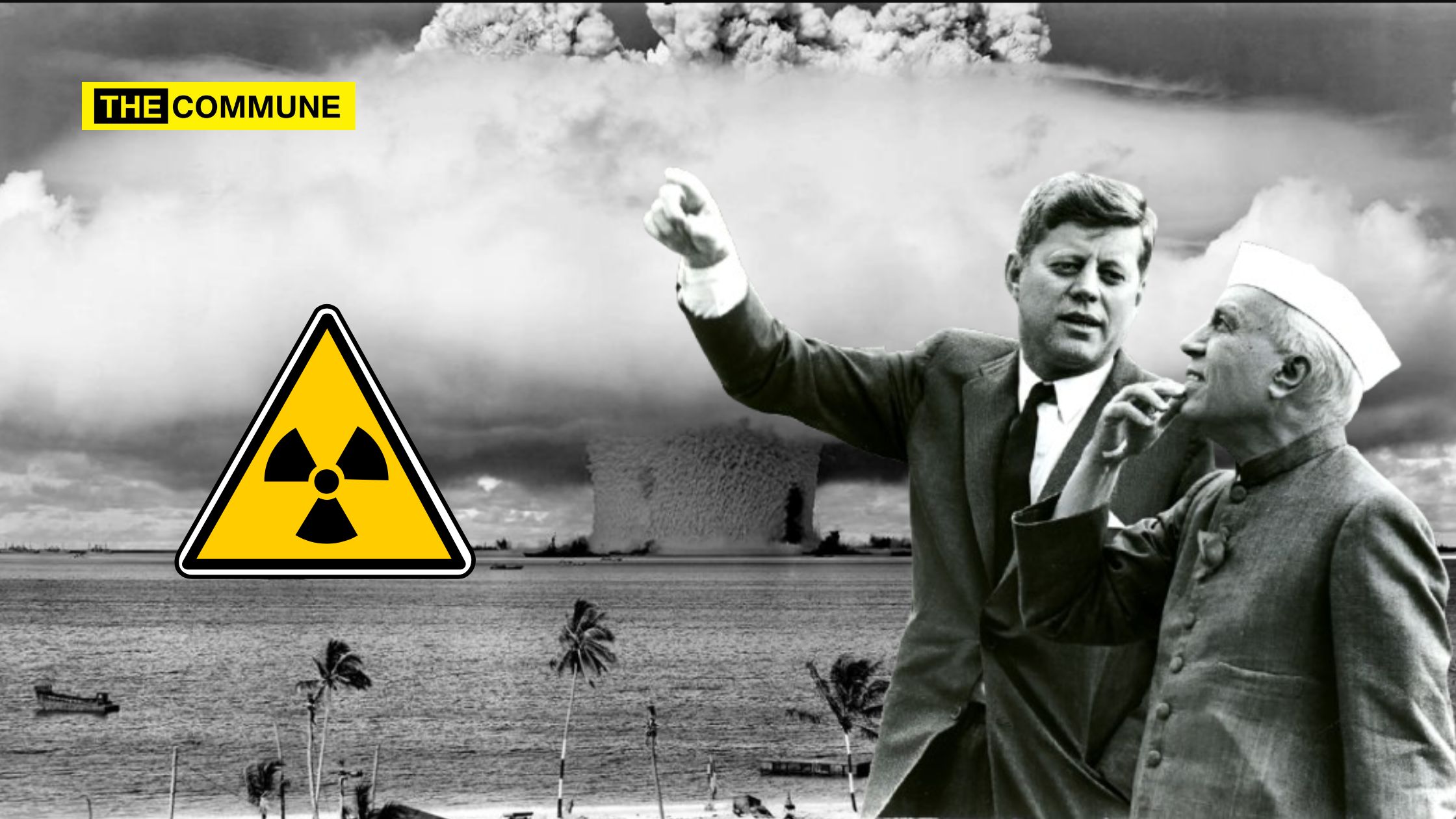
When Nehru Said No To JFK: The Nuclear Proposal That Might Have Changed Asia Forever

jfk nehru nuclear test asia

India’s post-independence history is marked by pivotal decisions, some of which have had long-lasting consequences. Among the most debated are the choices made during the early years of the Indian Republic, especially under the leadership of its first Prime Minister, Jawaharlal Nehru.

While Nehru is remembered as a founding architect of modern India, critics argue that his ideological commitment to global moralism often eclipsed pragmatic national interests. Two decisions, in particular, are viewed as costly strategic missteps: declining a permanent seat at the United Nations Security Council (UNSC) and refusing an offer from the United States to become the first Asian nuclear power ahead of China.

Educated in elite Western institutions, many early Congress leaders, including Nehru, imbibed liberal and internationalist ideals. However, this worldview often underestimated the realpolitik motivations of global powers. Nehru, inspired by concepts of disarmament and peaceful coexistence, envisioned India as a moral leader rather than a strategic player. While noble in principle, this approach at times left India vulnerable on the global stage.

The Nuclear Test Offer from JFK

Another historic episode involves an alleged proposal from U.S. President John F. Kennedy in the early 1960s. As tensions mounted over China’s rapidly advancing nuclear program, Kennedy reportedly offered India technical and logistical support to become the first Asian country to conduct a nuclear test—before China’s successful detonation in 1964.

According to former Indian diplomat M.K. Rasgotra and scientist Ashok Parthasarathi, Nehru received a personal letter from Kennedy outlining this unprecedented offer. While Nehru was known for his strong opposition to nuclear weapons and advocacy for global disarmament, he did not dismiss the proposal outright. He reportedly discussed it with key advisors including diplomat G. Parthasarathi and scientist Dr. Homi Bhabha. While Bhabha was inclined to proceed, the decision was eventually shelved, influenced in part by GP’s caution and Nehru’s own convictions.

Rasgotra later suggested that accepting Kennedy’s offer could have significantly altered India’s strategic posture. A preemptive Indian nuclear test might have discouraged China from its aggressive actions, including the 1962 war, and sent a powerful signal to adversaries like Pakistan.

Rasgotra contends that accepting Kennedy’s proposal could have altered the strategic balance in Asia, potentially deterring China’s 1962 aggression and dissuading Pakistan from launching the 1965 war. Moreover, an early nuclear test might have placed India among the original architects of the Nuclear Suppliers Group (NSG), instead of being a latecomer seeking membership decades later.

The UNSC Seat That Never Was

Another pivotal decision that remains a subject of historical debate is Nehru’s rejection of a purported U.S. offer in the early 1950s to back India’s claim for a permanent seat on the United Nations Security Council (UNSC). According to diplomatic correspondence, including letters from Nehru’s sister and Indian envoy Vijaya Lakshmi Pandit, the U.S. State Department considered replacing the People’s Republic of China with India at the UNSC. However, Nehru rejected the idea, believing it would be unjust to China and disruptive to global diplomacy.

In 1955, Soviet Premier Nikolai Bulganin proposed that India be granted a permanent seat on the United Nations Security Council, independently of China’s status. However, Prime Minister Jawaharlal Nehru declined the offer, perceiving it as a diplomatic overture intended to gauge India’s position. He maintained that India should not ascend to such a role by displacing China, whose rightful representation in the UN he strongly supported.

Nehru firmly believed that recognizing China’s legitimate place in the international order was essential for ensuring long-term peace and stability in Asia. He regarded any attempt to elevate India at China’s expense as ethically unacceptable and potentially damaging to regional diplomacy. In correspondence with his sister, Nehru made it clear that India would not consider such an offer, as it risked alienating China and deepening Cold War divisions.

Critics of this decision contend that Nehru missed a rare opportunity to establish India as a global power. By prioritizing ideological principles over realpolitik, they argue, he may have set India back in the international hierarchy.

Jawaharlal Nehru remains a towering figure in Indian history, lauded for his role in shaping a democratic, secular, and scientifically inclined nation. Yet, some of his international decisions invite scrutiny—not for lack of patriotism, but perhaps for excessive idealism.

The controversies surrounding the UNSC seat and the nuclear test offer illustrate the tension between values and interests that define foreign policy. Nehru’s choices reflected a commitment to a global moral order, but in retrospect, they may have cost India valuable strategic ground.

Subscribe to our channels on TelegramWhatsApp, and Instagram and get the best stories of the day delivered to you personally.

Chennai Court Finds DMK Man Gnanasekaran Guilty In Anna University Sexual Assault Case, Sentencing On 2 June 2025

DMK Worker By Day, Biriyani Seller By Afternoon, Burglar By Night: Report Reveals Shocking Details Of Anna University Sexual Assault Culprit Gnanasekaran

A Mahila Court in Chennai on 28 May 2025 convicted Gnanasekaran, the accused in the Anna University sexual assault case, declaring all charges against him proven. The court will pronounce the quantum of punishment on 2 June 2025, with the accused seeking leniency citing his mother’s health.

The Incident & Arrest

The case pertains to an alleged assault on December 23 last year, when Gnanasekaran, a Kottur resident who ran a biryani stall near the campus, reportedly entered the university premises and sexually assaulted a female student in a secluded area. He also allegedly assaulted her male friend, filmed the incident, and later blackmailed the duo.

Following a complaint, the Greater Chennai Police arrested Gnanasekaran, who has been in judicial custody since.

Profile Of Gnanasekaran

Gnanasekaran, a 37-year-old alleged DMK functionary from the Kotturpuram area in Chennai, reportedly works as a roadside biryani vendor. He is reported to have two wives, one of whom he married under compelling circumstances after she became pregnant while they were both in school. Remarkably, both his first and second wives live with him at his Kotturpuram house.

One wife is a contract worker, believed to be a professor at Anna University, which granted him unimpeded access to the campus—a connection he reportedly exploited to carry out his criminal activities there. Gnanasekaran is facing charges for multiple offences.

A resident of Kotturpuram had told a private YouTube channel that Gnanasekaran and his friends shared sexual photos of women through Facebook and WhatsApp groups.

Additionally, Gnanasekaran’s affiliations with the ruling DMK party have come to light, with photos of him alongside prominent DMK leaders, such as Deputy Chief Minister Udhayanidhi Stalin and Minister Ma. Subramanian. These connections have fueled speculation that his political ties may have played a role in attempting to cover up his actions.

Criminal History And Background:

A repeat offender with a long criminal history, Gnanasekaran has been booked for shocking activities that span over a longer period before the Anna University incident, with numerous charges pending against him.

  • Total Pending Cases: 14 with convictions in 6
  • Previously Filed Cases: Gnanasekaran has been involved in at least six criminal cases before this incident, including allegations of molestation, trespassing, theft, and other serious charges.
  • Prior Offenses: He is accused of molesting multiple individuals in separate incidents, including one woman within Anna University and one woman who is the daughter of a Tehsildar. However, many of the victims have not come forward to file formal complaints.

Anna University Sexual Assault Incident:

  • Victim: A second-year engineering student inside the college.
  • Incident Location: Anna University campus, Chennai.
  • Details: Gnanasekaran, along with an accomplice, attacked the victim and her boyfriend at a secluded spot on the campus. He filmed the assault victim without consent and threatened to release the footage unless the victim complied with his demands. The perpetrator forced the victim to strip, harassed her, and then sexually assaulted her.
  • FIR Details: Gnanasekaran’s actions included:
    • Voyeurism – recording private moments of the girl with her boyfriend and threatening to leak the footage to college authorities and the victim’s parents.
    • Sexually assaulting the girl and recording the same
    • Forcing the victim to choose between expulsion from the university or “spending time” with him and another man.

Connection To DMK And Alleged Political Protection:

  • DMK Affiliation: Gnanasekaran is a DMK functionary with documented ties to the party, despite official claims from DMK leaders denying his affiliation.
  • Party Role: He was reportedly a Deputy Organizer for the Saidapet area, as confirmed by party leaflets and the DMK mouthpiece Murasoli.
  • DMK Ties: He has been photographed with senior DMK leaders, including Deputy Chief Minister Udhayanidhi Stalin and Minister Ma. Subramanian, showing his strong political connections.
  • Political Interference: Gnanasekaran’s past offenses were allegedly covered up with political backing. For instance, it is alleged that in the current sexual harassment case, the DMK circle secretary Shanmugam reportedly intervened during a police inquiry to protect Gnanasekaran from being arrested immediately.

Additional Allegations and Investigations:

  • Criminal Record: Apart from the recent sexual assault case, Gnanasekaran has a shocking history of criminal activities, including trespassing, theft, and molestation.
  • Unlawful Activities: He was involved in illicit activities, such as selling alcohol and drugs in the Saidapet area, where he had ties to the deceased rowdy ‘Gym’ Ezhumalai, according to AIADMK IT Wing head Kovai Sathyan.
  • Use of Campus Access: His wife’s position as a temporary sanitation worker at Anna University allowed him unrestricted access to the campus, which he reportedly exploited to target victims and plan assaults.
  • Cover-Up Allegations: Despite clear evidence linking Gnanasekaran to the DMK, certain party elements have attempted to downplay or cover up his affiliation. Controversy surrounds the leak of the FIR, which contained sensitive details about the victim’s identity. The police have filed a case against the matter and investigations are underway.

(With inputs from India Today)

Subscribe to our channels on TelegramWhatsApp, and Instagram and get the best stories of the day delivered to you personally.

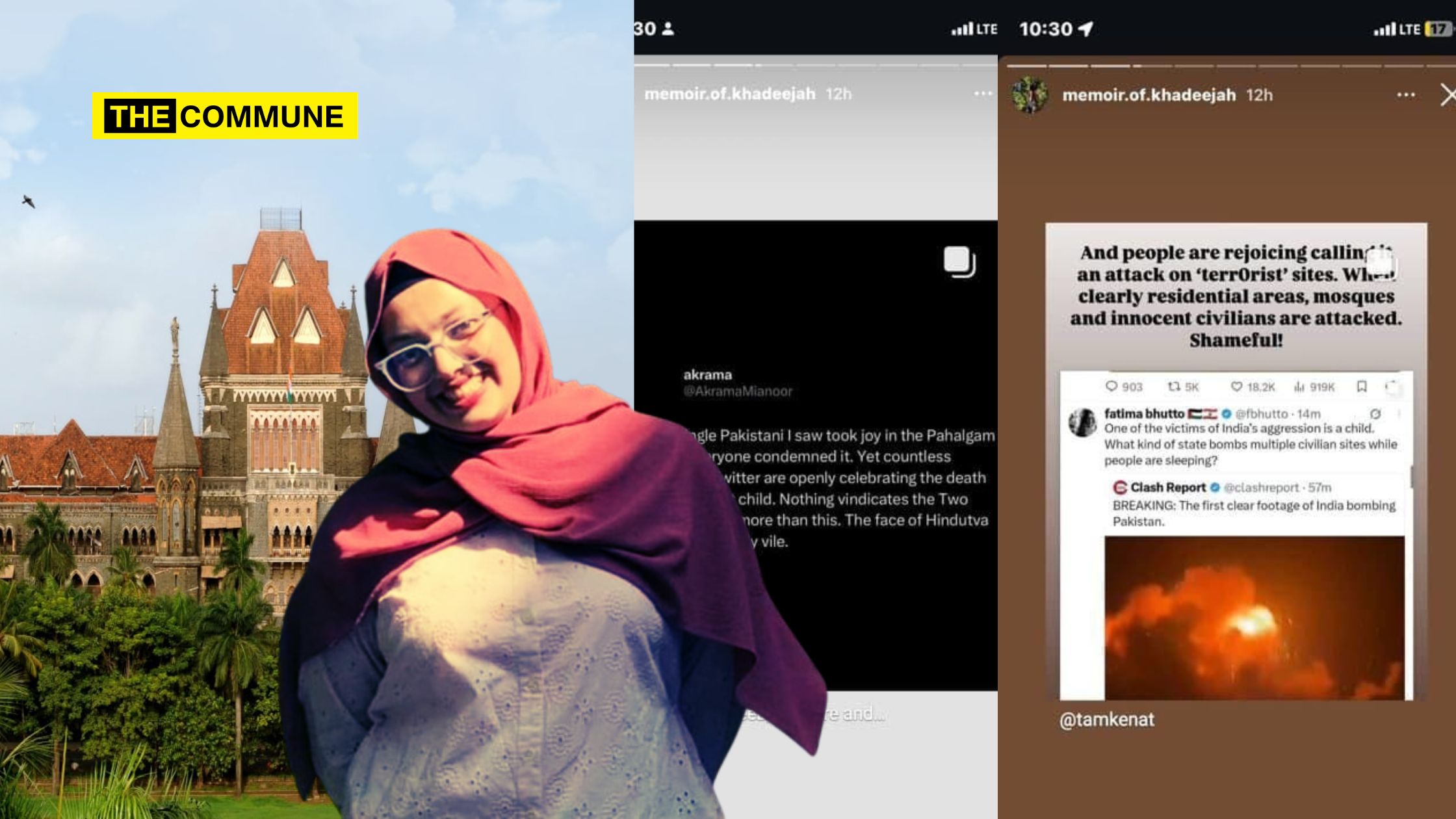
“She Is No Criminal”: Bombay High Court Orders Release Of Khadija Sheikh, Arrested Over Pro-Pak Instagram Post, Slams Police, College For “Ruining Her Life” Despite Apology And Deletion

khadija sheikh sinhagad college engineering student pune arrested rusticated pakistan bombay high court

The Bombay High Court on 27 May 2025 strongly criticized the Maharashtra Police and Sinhgad Academy of Engineering for the arrest and rustication of a 19-year-old engineering student who had shared a controversial Instagram post about Operation Sindoor. The post, which reshared content critical of the Indian Army’s operations and included pro-Pakistan sentiments, allegedly sparked protests and calls for her arrest.

The student, Khadija Shahabuddin Sheikh, a second-year Information Technology student, was arrested on 9 May 2025 by Pune’s Kondhwa Police and is currently lodged in Yerwada Central Prison. She faces charges under Sections 152, 196, 197, 299, 352, and 353 of the newly enforced Bharatiya Nyay Sanhita, 2023.

A division bench comprising Justices Gauri Godse and Somasekhar Sundaresan expressed “shock” at the state’s response. During the morning hearing, the bench rebuked both the police and the college authorities, saying, “She is no criminal,” and questioned why the authorities did not make an effort to reform rather than punish her.

The Court noted that Sheikh had shared the contentious post on her Instagram, deleted it within two hours, and issued a public apology after receiving death threats. An FIR was filed on May 9. “According to us, it is shocking that after she deleted the post an FIR was lodged against her on May 9 without even considering the fact that she deleted the post and even apologised,” the Court said in its order.

Justice Godse further remarked, “This is absolutely shocking. It appears like police officers are bent upon ruining her life. Equally the college.”

The bench also criticised the institute for rustication without due process, saying the action was “hurriedly issued without giving an opportunity to the petitioner to respond,” and failed to acknowledge her apology and remorse. The rustication order, issued on 6 May 2025, accused her of harbouring “anti-national sentiments” and being a “risk to the campus community and society.”

During the hearing, the Court directed authorities to release the student before sunset and allow her to appear for upcoming exams. “We do not want any public assault etc… Give her a separate classroom for writing exams, if you can,” the Court instructed the college. The police were ordered to ensure her safety and refrain from calling her in for questioning during the exam period.

The Court also allowed her to apply for re-examinations for two missed papers and asked her counsel, Advocate Farhana Shah, for an assurance that Sheikh would use social media responsibly in the future. “As far as the two missed papers are concerned, we will grant you to make applications to the University to let her give the same. Also, we will need an assurance from your client that she will not engage in such activities on social media in future and use social media responsibly,” the judges stated.

In response to the college’s argument that students must adhere to discipline, the Court retorted, “Who is stopping you from this? First inculcate some discipline in the institute then discipline students. Practice what you preach.”

According to police sources, Sheikh had reposted content from the Instagram handle ‘Reformistan’, including screenshots of tweets by Pakistani nationals—one of which said “Pakistan Zindabad” and another criticizing “Hindutva extremism.” These posts surfaced shortly after India launched retaliatory strikes on Pakistani positions under Operation Sindoor, following the killing of 26 Indian tourists in Pahalgam by Pakistan-backed militants.

Deputy Commissioner of Police (Zone 5) Rajkumar Shinde confirmed the arrest, stating, “She has been booked under Sections 152, 196, 197, 299, 352, and 353 of the Bharatiya Nyay Sanhita. The content she shared had the potential to incite unrest, especially during this sensitive period. Further investigation is underway.”

The student challenged her rustication in court, arguing that it was arbitrary and violated her constitutional rights, including the right to free speech (Article 19(1)(a)), equality before the law (Article 14), and the right to life (Article 21). Her legal plea also asserts that she was not served any show-cause notice before the disciplinary action.

The High Court has ordered the suspension of the rustication order and directed the student to cooperate with the investigation while ensuring her academic future is not jeopardized.

(With inputs from Live Law)

Subscribe to our channels on Telegram, WhatsApp, and Instagram and get the best stories of the day delivered to you personally.
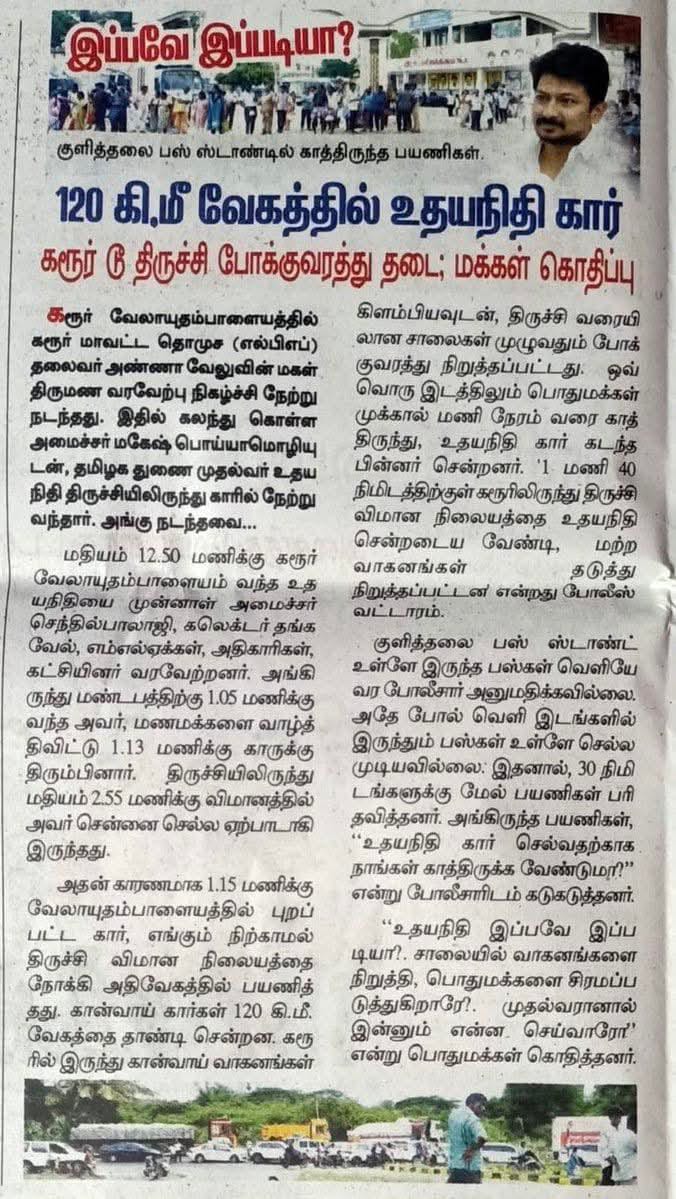
When Traffic Was Stopped And Public Inconvenienced To Let Udhayanidhi’s Car Pass At High Speed

udhayanidhi stalin traffic car

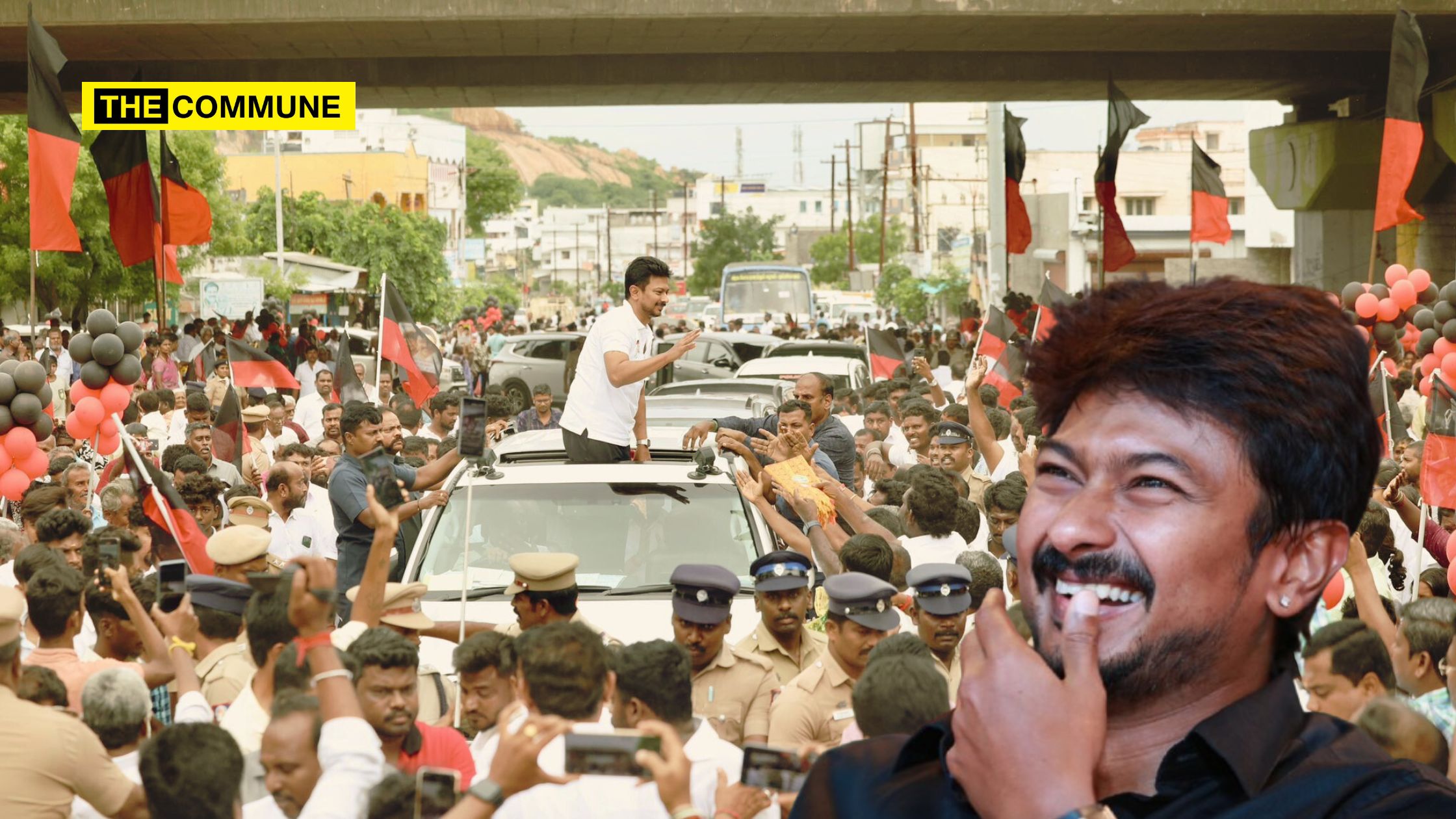
When political power is wielded without regard for ordinary citizens, it’s often the public that bears the consequences. A recent example unfolded in Karur, where commuters and bus passengers were caught in long delays during the visit of Tamil Nadu Deputy Chief Minister Udhayanidhi Stalin.

The disruption occurred during the wedding reception of the daughter of Anna Velu, President of the Labour Progressive Federation (LPF) in Karur district. The event took place in Velayudhampalayam on Sunday. Deputy Chief Minister Udhayanidhi Stalin, along with Minister Mahesh Poyyamozhi, traveled from Trichy by car to attend the ceremony.

Udhayanidhi arrived at the venue around 12:50 PM and was welcomed by former minister Senthil Balaji, local MLAs, district officials, and DMK functionaries. He entered the Angi Rundu Hall by 1:05 PM, briefly greeted the newlyweds, and departed by 1:13 PM. He was scheduled to board a flight to Chennai from Trichy at 2:55 PM, prompting a high-speed return trip.

In order to ensure the Deputy CM reached the airport on time, his convoy moved at speeds allegedly exceeding 120 km/h. Police cleared roads ahead of the convoy, halting traffic in multiple areas along the route to Trichy. Reports from the ground indicate that vehicles were stopped for up to 45 minutes in several places until the motorcade had passed.

One significant bottleneck was at the Kulithalai bus stand, where buses were prevented from entering or exiting for over 30 minutes. Passengers were left waiting without clear communication, leading to frustration and anger.

Some among the public voiced their irritation, “Should we really be stuck here just because a minister is passing by?” said one commuter. Another questioned the broader implications, “If this is how things are now, what will happen if he becomes the Chief Minister?”

Subscribe to our channels on TelegramWhatsApp, and Instagram and get the best stories of the day delivered to you personally.

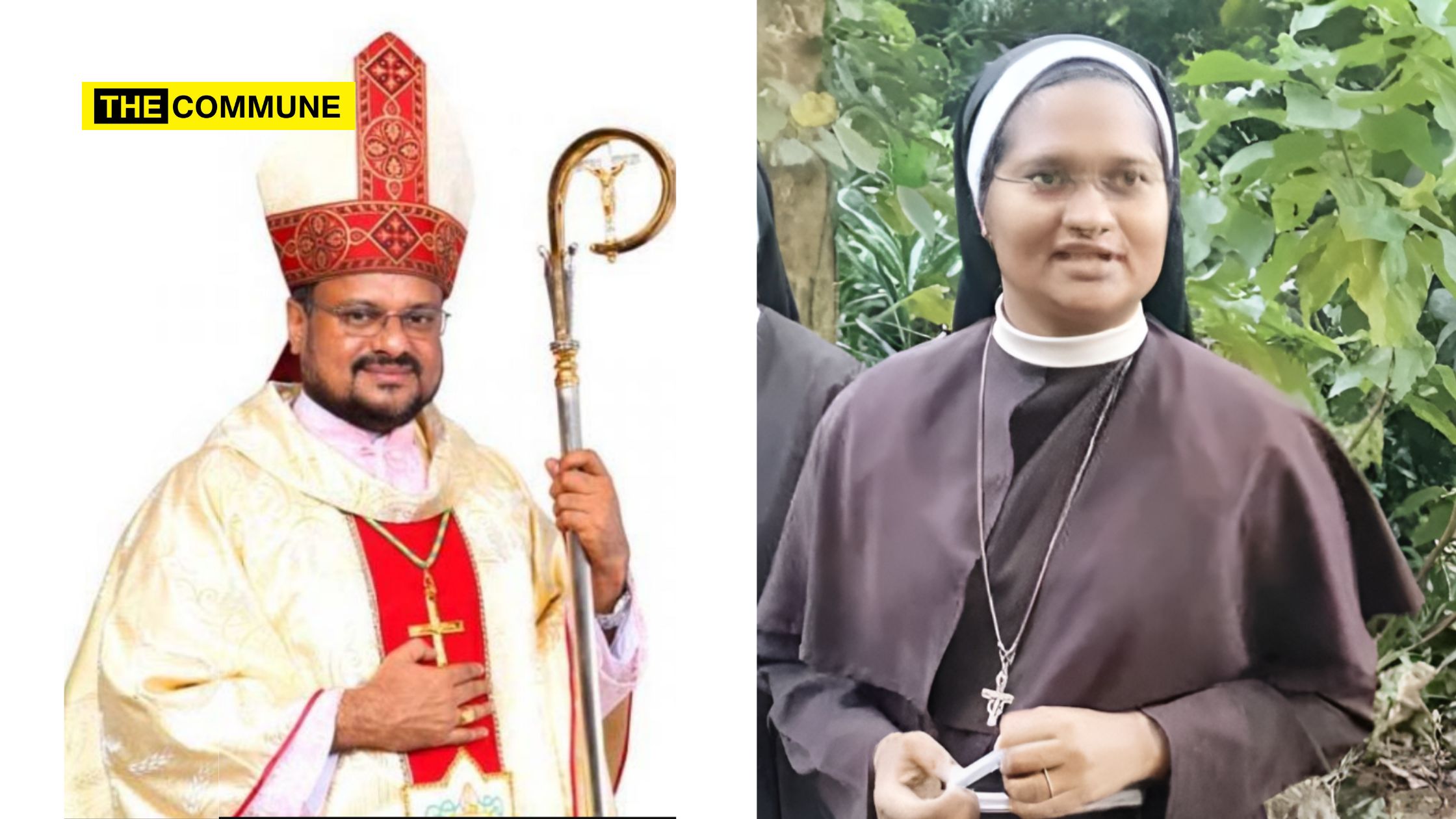
How Nuns Were Punished For Exposing Abuse In Kerala’s Syro Malabar Catholic Church

franco mulakkal nuns bishop syro malabar catholic church

In a deeply unsettling development from Kerala, six nuns of the Syro-Malabar Catholic Church, who bravely spoke out against former Bishop Franco Mulakkal—later acquitted in a high-profile rape case have faced serious consequences for their stand. Once active members of religious life, they now find themselves ostracised, unsupported by Church administration, and under mounting pressure to leave their convents. Half of them have already stepped away from their religious vocations.

Back in 2018, these six nuns from the Jalandhar Diocese courageously supported a fellow nun who accused Bishop Franco of sexually assaulting her multiple times between 2014 and 2016. Despite filing a police complaint, initial inaction led them to protest publicly, demanding justice. Their actions, however, came at great personal cost.

Although Bishop Franco was arrested and later acquitted by a trial court in 2022—a verdict now under appeal in the Kerala High Court—his accuser and her supporters continue to face social and institutional exclusion. While Pope Francis accepted Franco’s resignation in 2023, the former bishop remains involved in Church-related events outside his previous diocese.

The nuns who stood by the survivor have since been marginalised by their religious community. Stripped of roles and left without support, they were excluded from convent life, with some reduced to taking secular jobs or returning to their families. Among them, Sister Anupama Kelamangalathuveliyil has left the convent and now works in a private IT company. Her story is one of many reflecting a wider pattern of institutional neglect and retaliation.

Sisters Neena Rose and Josephine, who also left the congregation, have likewise faced immense hardship. Sister Neena, in particular, suffered a serious accident and endured extended medical treatment. Financial strain and internal tensions further deepened their struggles, leading to a split among the original group.

The remaining three—Sisters Alphy, Aansita, and the complainant—continue to live in near-isolation within the Kuravilangad convent. Cut off from resources and surrounded by hostility, they are reportedly in a state of extreme vulnerability. Though police protection is still formally in place, their daily lives are marked by silence and scarcity.

Previously, the convent ran a hostel and farm operations, with all earnings sent to the Jalandhar Diocese, which in return was responsible for their upkeep. But after the hostel closed, the sisters turned to small-scale farming and poultry for survival. Even these modest efforts were used to target them, with accusations of “running a business” made to discredit them.

Sister Lucy Kalapura, a prominent voice in the protests, confirmed that those who challenged the Church’s silence were met with relentless exclusion. From being removed from responsibilities and banned from communal spaces, to being forced to eat separately, their treatment reflected deep-rooted institutional hostility.

The convent leadership eventually vacated the premises—owned by the diocese—taking everything from animals to the nameplate. Elderly residents were shifted, and access to basic support such as food and medicine was withdrawn. Despite vague promises of assistance, the nuns were repeatedly told to leave.

Left with no alternative, the women turned to basic self-employment like tailoring and farming, but were again criticised for doing so. Having spent decades in service to the Church, they were abandoned when they needed support most. The diocesan administrator even went as far as to publicly declare Bishop Franco “not guilty.”

This saga is not just about a legal battle—it is about systemic silencing, power imbalance, and the cost of standing up for truth within religious institutions.

(With inputs from South First)

Subscribe to our channels on Telegram, WhatsApp, and Instagram and get the best stories of the day delivered to you personally.
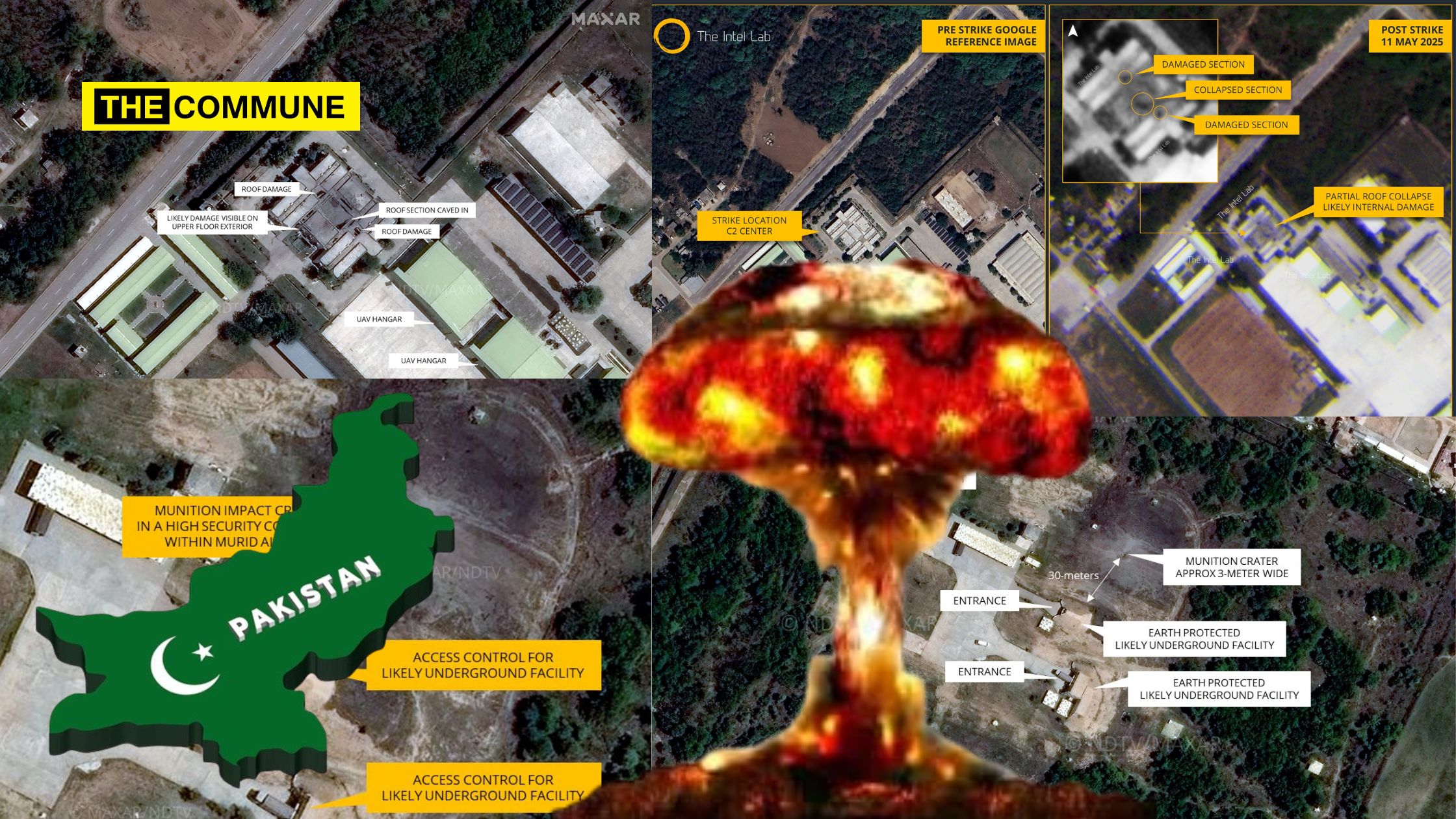
Bullseye On Murid Airbase: Satellite Data Shows India’s Strike Nearly Collapsed Murid’s Secret Military Bunker

murid airbase pakistan india
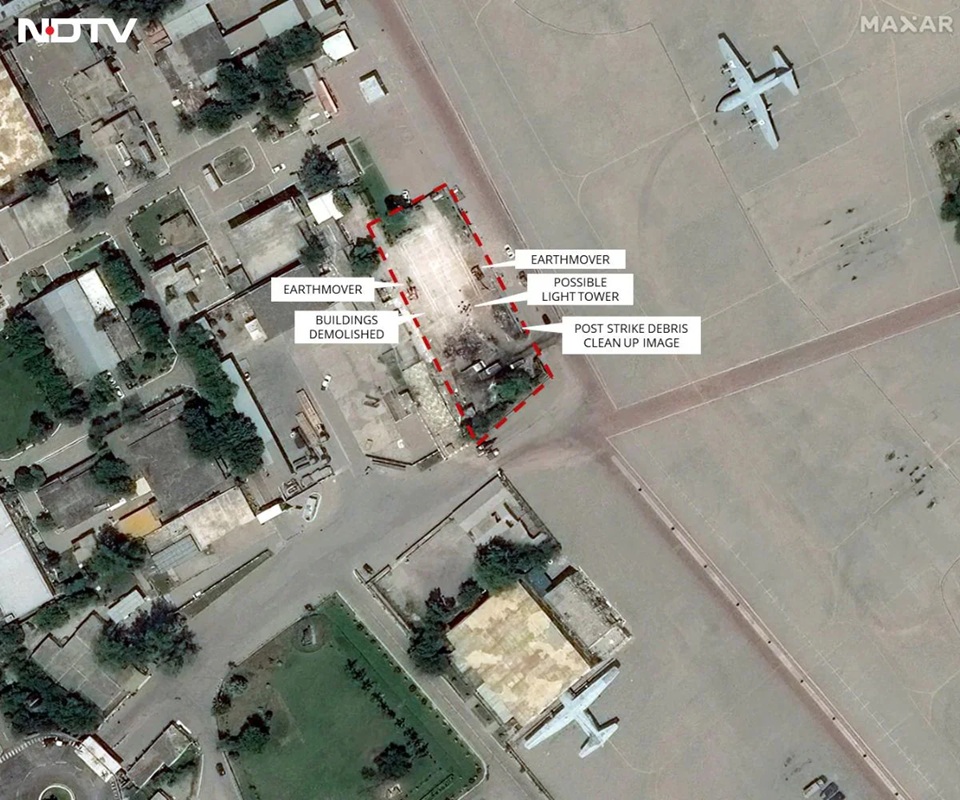
Image Source: NDTV

High-resolution satellite imagery accessed exclusively by NDTV reveals devastating structural and strategic damage inflicted on multiple Pakistani military air installations during India’s precision strikes conducted under Operation Sindoor on 10 May 2025. These images, provided by Maxar Technologies and analysed by renowned geospatial intelligence researcher Damien Symon of Intel Lab, show extensive destruction at Pakistan’s Murid, Nur Khan, Sargodha (Mushaf), Jacobabad, Bholari, Sukkur, and Rahim Yar Khan air bases.

Murid Air Base: Underground Facility Nearly Hit

The most telling damage is at the Murid Air Base, located in Pakistan’s Chakwal district, approximately 150 km from the Line of Control in Jammu and Kashmir. Satellite images show a three-meter-wide crater just 30 metres north of an entrance to a likely underground facility — a highly secured compound within the airbase.

According to Symon, the targeted zone isthe most guarded complex within Murid Airbase,enclosed within a 250m x 250m double-fenced area, equipped with four guard towers, an internal security cabin, and gated access control. The heavy security perimeter and earth-covered entryways suggest that this was not an ordinary installation but aspecial weaponsunderground storage site—potentially housing sensitive or high-value military assets.

Additionally, the presence of earth-protected entrances and the design of the facility indicate hardened operational shelters or storage for special equipment. The compound is about 680 meters from the main runway, connected via internal roads to six Hardened Aircraft Shelters (HAS) and a surface ammunition depot.


Further analysis indicates signs of burn marks and a small penetrator entry, pointing to the use of a deep-penetration bunker-buster munition. The internal detonation appears to have led to acook-off— an explosion of stored munitions — inside the underground vault. The blast doors reportedly contained the explosion, but the resulting heat scorched vegetation on the roof, further confirming internal combustion.

An additional image shows a truck parked at what appears to be a second underground entrance, potentially in the process of removing sensitive materials or special weapons to a safer location.

A 2019 post by intelligence analyst Damien Symon further corroborates the strategic significance of Murid Airbase in Pakistan. He noted that the base was “almost certainly now a special weapons delivery station,” citing visible infrastructure consistent with such a role. The post highlighted multiple layers of security, including fencing within an already heavily secured perimeter, and pointed to a massive underground facility equipped with guard towers. An inset image showed a connecting tunnel under construction at the time. Additionally, Symon identified special aircraft hangars directly connected to the runway, suggesting the presence of a dedicated mating and storage area for special weapons, along with restricted zones inaccessible to regular base personnel.

Structural Damage to Command and Control Building

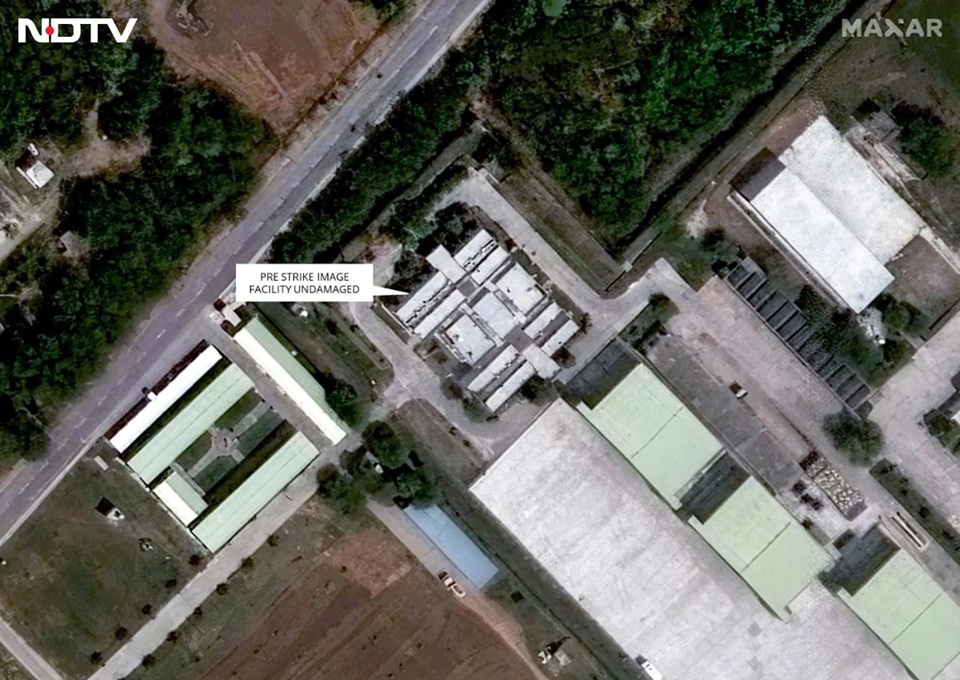
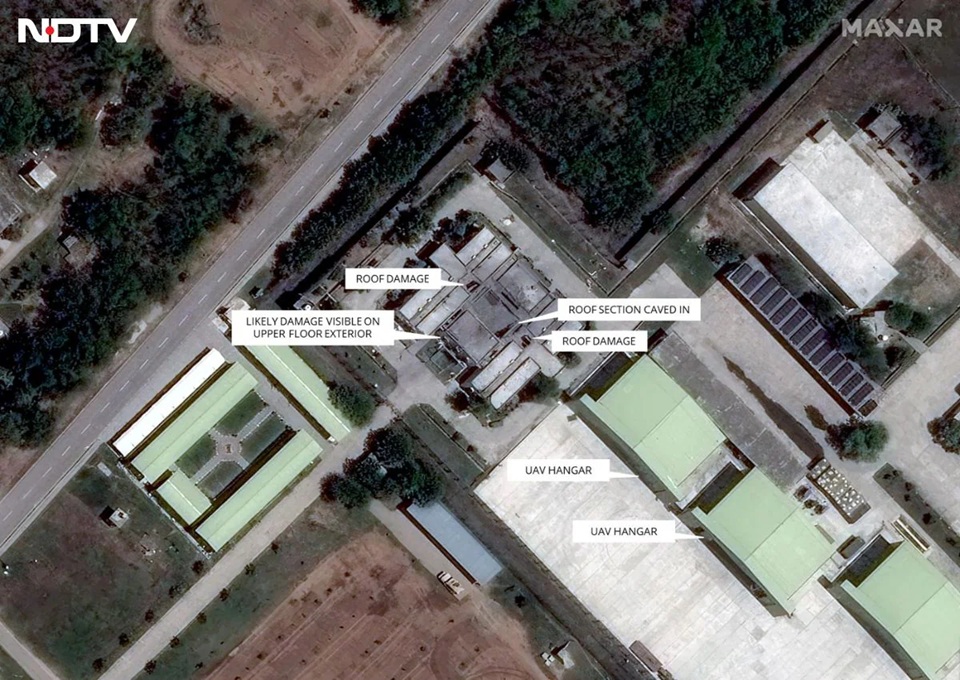
A second strike at Murid targeted a building believed to house a command-and-control node, located near a UAV complex. The pre-strike image from 16 April 2025 shows an intact facility, whereas the post-strike image from 10 May 2025 reveals a collapsed roof and stressed outer walls, possibly due to concussive force.

April 16 pre-strike image
Image Source: NDTV
April 16 pre-strike image
Image Source: NDTV

It is observed that such damage could have caused significant internal structural compromise, especially to the upper floors. The building’s proximity to UAV hangars suggests operational importance, and the scale of the blast indicates a high probability of casualties among air traffic controllers and adjacent hangar staff, possibly exceeding 50 personnel, according to military analysts.

Nur Khan Air Base: Command Trucks and Facility Obliterated

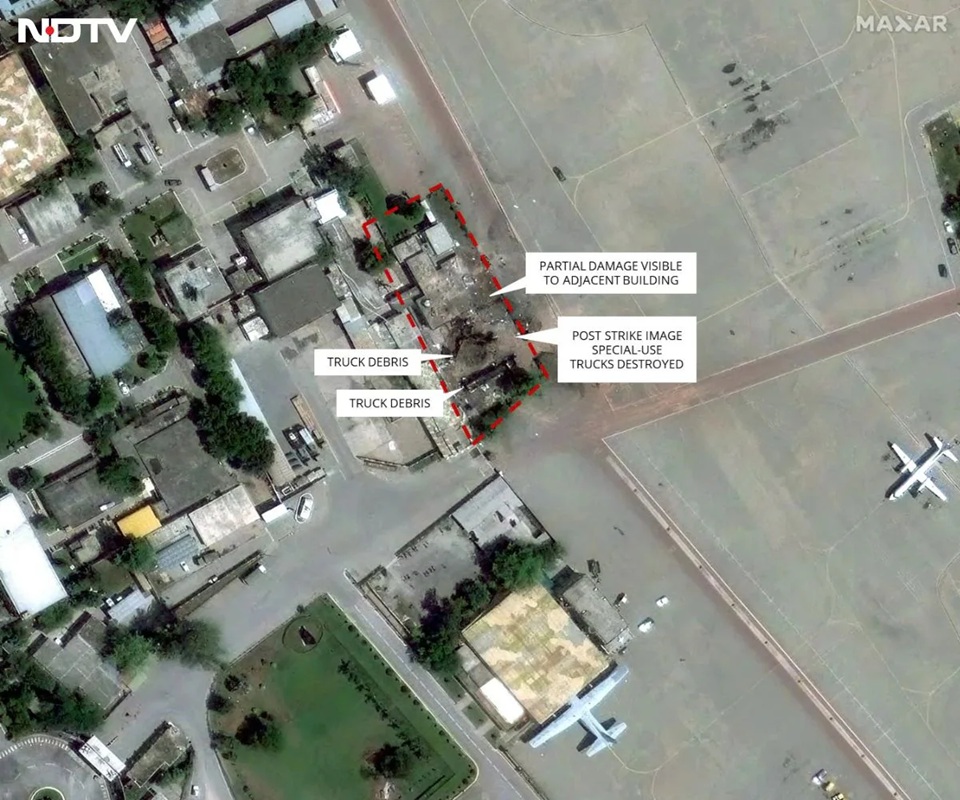
At the Nur Khan Air Base, located between Rawalpindi and Islamabad — Pakistan’s military and political nerve centers — India executed another surgical strike. Pre-strike satellite imagery from April 25 showed two special-purpose trailer trucks, suspected to be mobile command and control centers, parked intact.

Image Source: NDTV

On 10 May 2025, satellite images revealed both trucks had been completely destroyed, with visible debris scattered nearby and partial damage to an adjacent building. By 17 May 2025, a week after a declared ceasefire, follow-up imagery captured Pakistan’s clean-up operation at the site.

Image Source: NDTV

Damien Symon noted that beyond the trucks, the adjacent 7,000-square-foot facility was also demolished. This points to a larger operational impact than initially assessed, rendering the site unrepairable for Pakistan’s Air Force due to the internal structural devastation.

Jacobabad and Bholari Air Bases: Hangars Destroyed

In Jacobabad, satellite imagery confirmed that aircraft hangars were directly hit. Debris is visible around the destroyed structure, indicating that maintenance and repair facilities suffered crippling damage. Hangars serve as vital protection for aircraft and support crews.

At Bholari Air Base, Indian strikes caused severe damage to the hangar roof, as shown in Maxar’s 11 May 2025 imagery. This base, key to forward aerial operations in Sindh, saw its operational infrastructure seriously compromised.

Sukkur Air Base: Structural and Vegetation Damage

Further south, Sukkur Air Base, located west of India’s Rajasthan border, also faced significant damage. Imagery from May 10 captured severe structural collapse, scattered debris, and vegetation burns — likely a result of fire or the blast itself. Analysts suggest a burn scar is visible adjacent to the impacted building, indicating intense post-strike heat or ignition.

Rahim Yar Khan: Cratered Runway

At Rahim Yar Khan, a strategic installation in Punjab province, India’s strikes left a large crater on the runway, rendering it inoperable for aircraft takeoffs or landings. Runway denial is a classic objective in such strikes to paralyze air mobility.

Sargodha (Mushaf) Air Base: Dual Runway Cratering

One of Pakistan’s premier airbases, Sargodha, also known as Mushaf Airbase, was targeted with precision. Indian munitions created craters in two locations: one at a runway intersection and another on the main runway. Imagery from May 10 shows both sites severely impacted, suggesting a deliberate effort to paralyze the base’s operational readiness.

Strategic Analysis and Implications

The images substantiate claims of India’s deep-penetration capabilities, high-precision munitions, and strategic targeting acumen. Each of the bases hit played a critical role — either in logistics, UAV operations, special weapons storage, or as command hubs.

The strike on Murid’s underground bunker is particularly significant, as it demonstrates India’s willingness and ability to hit deep strategic targets — sites previously assumed protected even within heavily fortified bases.

These actions were part of ameasured and calibratedresponse to prior escalations, executed under Operation Sindoor, according to Indian officials.

The scale of damage, precision, and choice of targets suggests a broader message: India now possesses the technological and operational sophistication to strike deep into enemy territory, neutralizing high-value military infrastructure while controlling escalation.

(With inputs from NDTV)

Subscribe to our channels on Telegram, WhatsApp, and Instagram and get the best stories of the day delivered to you personally.
DMK Stooge Actor Kamal Haasan Says ‘Kannada Was Born Out Of Tamil’ In Thug Life Film Audio Launch

kamal haasan thug life kannada apologise

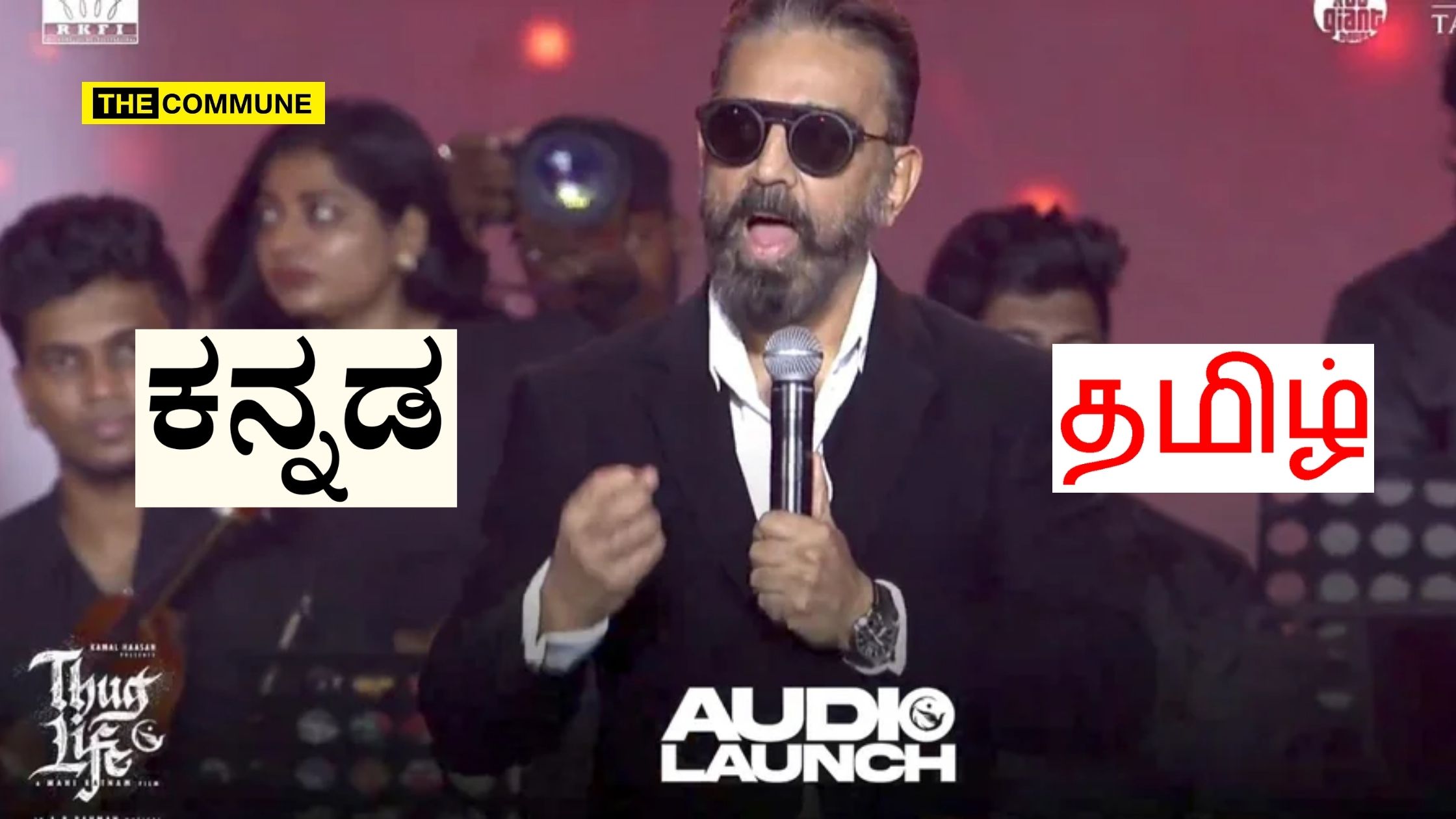
Actor Kamal Haasan has stirred a fresh controversy over language identity after claiming that Kannada “was born out of Tamil” during a public event in Chennai, Tamil Nadu.

The remark has triggered sharp political reactions and public outrage in Karnataka, with the BJP and pro-Kannada groups condemning his statement and demanding an unconditional apology.

Speaking at an event in Chennai just weeks after the trailer release of his upcoming film ‘Thug Life’, Haasan opened his speech with the phrase “Uyire Urave Tamizhe”, which translates to “My life, and my family, is in Tamil language”.

Referring to the presence of Kannada actor Shivarajkumar at the same event, Haasan said, “This is my family in that place. That’s why he (Shivarajkumar) has come here. That’s why I began my speech by saying, life, family and Tamil. Your language (Kannada) was born out of Tamil, so you too are included (part of it).”

His comments, perceived as undermining the Kannada language’s independent heritage, drew swift criticism in Karnataka. State BJP president B.Y. Vijayendra lashed out at the actor, calling his remarks “uncultured”, accusing him of insulting Kannada and its speakers.

“One should love one’s mother tongue, but showing disrespect in its name is uncultured behaviour. Especially, artists should have a culture of respecting every language. It is the height of arrogance and arrogance that an actor, Kamal Haasan, who has acted in many Indian languages, including Kannada, has insulted Kannada by including actor Shivarajkumar in the glorification of his Tamil language,” Vijayendra posted on X. He further accused Haasan of forgetting the “generosity of Kannada and Kannada people” and of revealing his “ungrateful personality”.

“Kamal Haasan, who is supposed to bring harmony to South India, has been continuously insulting Hinduism and hurting religious sentiments for the past few years. Now, he has insulted Kannada by hurting the self-respect of 6.5 crore Kannadigas. Kamal Haasan should immediately apologise unconditionally to Kannadigas,” he added.

The BJP leader also questioned Haasan’s authority to make historical claims about the origin of languages. “Let us remember Kamal Haasan, who spoke like a true sage who said that Kannadigas are not language haters but have never sacrificed self-respect when it comes to Kannada land, language, people, water, and ideas,” he said. Pro-Kannada groups, too, expressed their anger. Activists from Karnataka Rakshana Vedike tore posters of ‘Thug Life’ in Bengaluru and issued warnings of a potential statewide ban on the film. Praveen Shetty, leader of the outfit, slammed Hassan, stating, “We are warning you that if you talk against Kannada and Kannadigas, we will ban your movie.” The controversy comes just days ahead of the release of ‘Thug Life’, scheduled to hit theatres on June 5.

Subscribe to our channels on TelegramWhatsApp, and Instagram and get the best stories of the day delivered to you personally.
Congress Allies VCK And Communists To Hold Protest Condemning Modi Govt For Eliminating Naxals

vck communists maoists protest

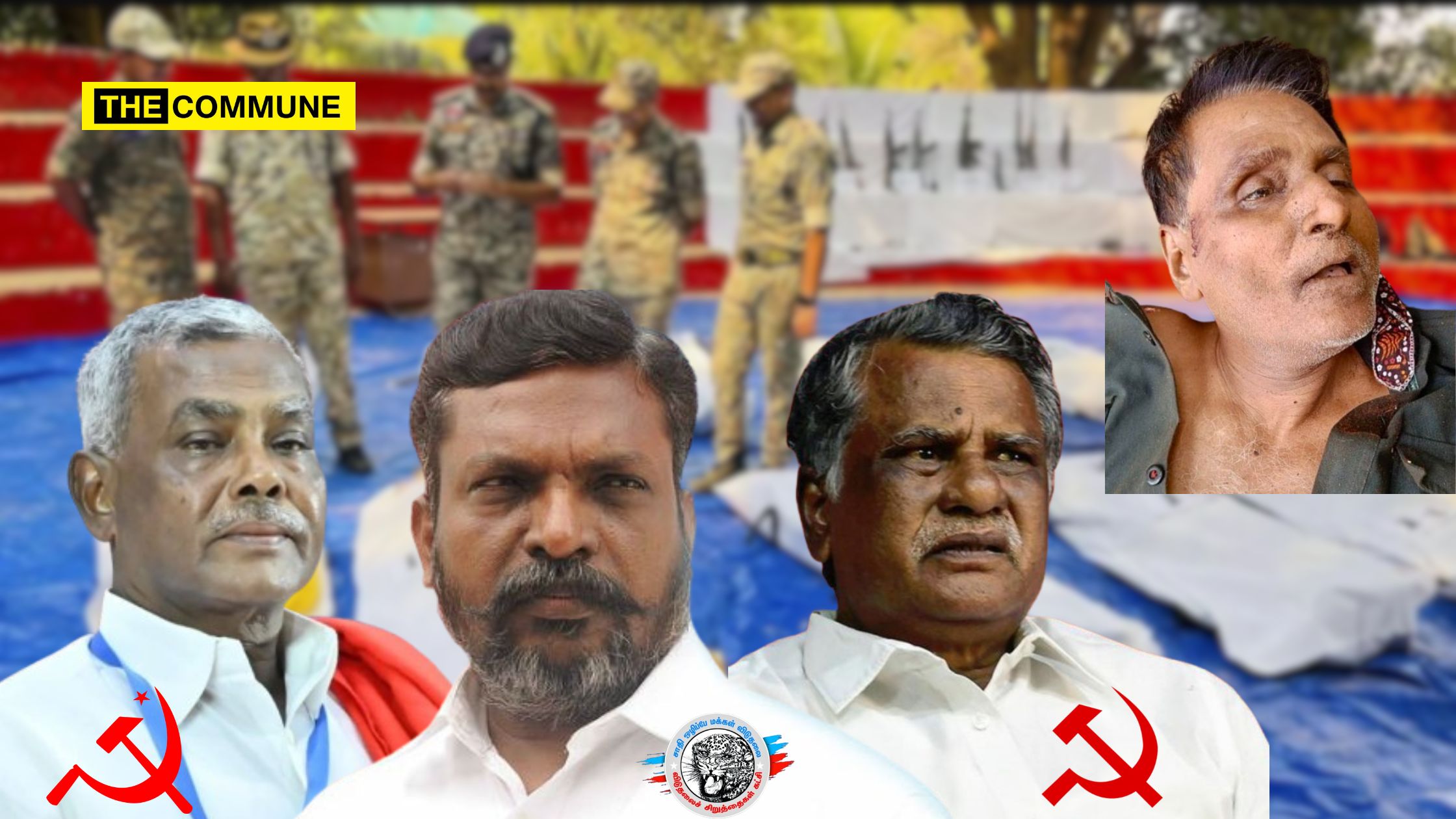
In a shocking and outrageous move, the left parties—CPI(M), CPI, CPI (ML), and VCK—on 26 May 2025 shamelessly condemned the killing of Maoists in Chhattisgarh, calling it a fake encounter and have announced a joint protest in Chennai on 2 June 2025, backing clearly the extremist violence instead of condemning it.

In their joint statement, signed by CPM state secretary P. Shanmugam, CPI state secretary R. Mutharasan, CPI (ML) state secretary P. Aasai thambi, and VCK president Thol Thirumavalavan, they baselessly accused the central government and the BJP-led Chhattisgarh administration of “violent operations” disguised as anti-Naxal campaigns. They dubbed the anti-Maoist operation as “27 people killed” on May 22, deliberately ignoring the brutal violence and fear these armed extremists unleashed in the jungles.

Through a official X statement, CPM’s Shanmugam stated, “Joint Statement by CPI(M), CPI, VCK, CPI(ML) Liberation: 26.05.2025 Stop the fake encounter killings of Maoists – Order a judicial inquiry! On 2 June, a protest demonstration will be held in Chennai behalf of CPI(M), CPI, VCK, and CPI(ML) Liberation parties!! 

The Union government and the BJP-led Chhattisgarh state government are carrying out intense armed operations to eliminate Maoists under the guise of anti-Naxal measures. On the 22nd, 27 people were brutally killed in one day alone. It is highly condemnable, even after the Maoists expressed their willingness to hold talks with the government, the Union and state governments have intensified their extermination operations. This is a blatant abuse of power aimed at completely suppressing the tribal people who are fighting against the wholesale handover of forest, natural, and mineral resources to corporate and foreign companies, as well as those who support their struggles.

Likewise, when the tribal communities fight for their right to live and forest rights, they do not accept Maoists acting as their protectors in the deep forest regions. We completely reject the Maoists’ methods, unacceptable ideologies, and practices. But we cannot allow the terrorist act of eliminating everyone who holds a differing opinion. Such actions cannot be the hallmark of a civilized, democratic government. What remains there is nothing but barbarism. We strongly condemn the repressive operations unleashed by BJP governments in Chhattisgarh.

We urge the Union and Chhattisgarh state governments to immediately stop the extermination operations against the Maoists and instead initiate talks to reach a political solution. More importantly, the Union and Chhattisgarh governments must immediately stop handing over the rich resources of the hills to private entities. The CPI(M), CPI, VKC, and CPI(ML) Liberation parties have decided to hold a joint protest in Chennai on Monday, 2 June 2025, demanding a full judicial inquiry into the fake clashes that have taken place so far, among other demands. We call upon all democratic forces to participate in this just protest against state terrorism, in support of democracy, and in defense of the rights of tribal communities, and to extend their full solidarity.”

Subscribe to our channels on TelegramWhatsApp, and Instagram and get the best stories of the day delivered to you personally.
Calling Out TNM’s Propaganda War On Auroville: How They’re Twisting Truths And Ignoring Court Verdicts To Whitewash Illegal Non-Indian Squatters Who Are Undermining Mother’s Vision

On 17 March 2025, the Supreme Court of India delivered a landmark verdict (Auroville Foundation v. Natasha Storey and related cases), dismissing allegations of mismanagement, environmental violations, and political interference in Auroville. The judgment explicitly termed many claims as “ill-motivated litigation” by a small group of residents opposing development of the township.

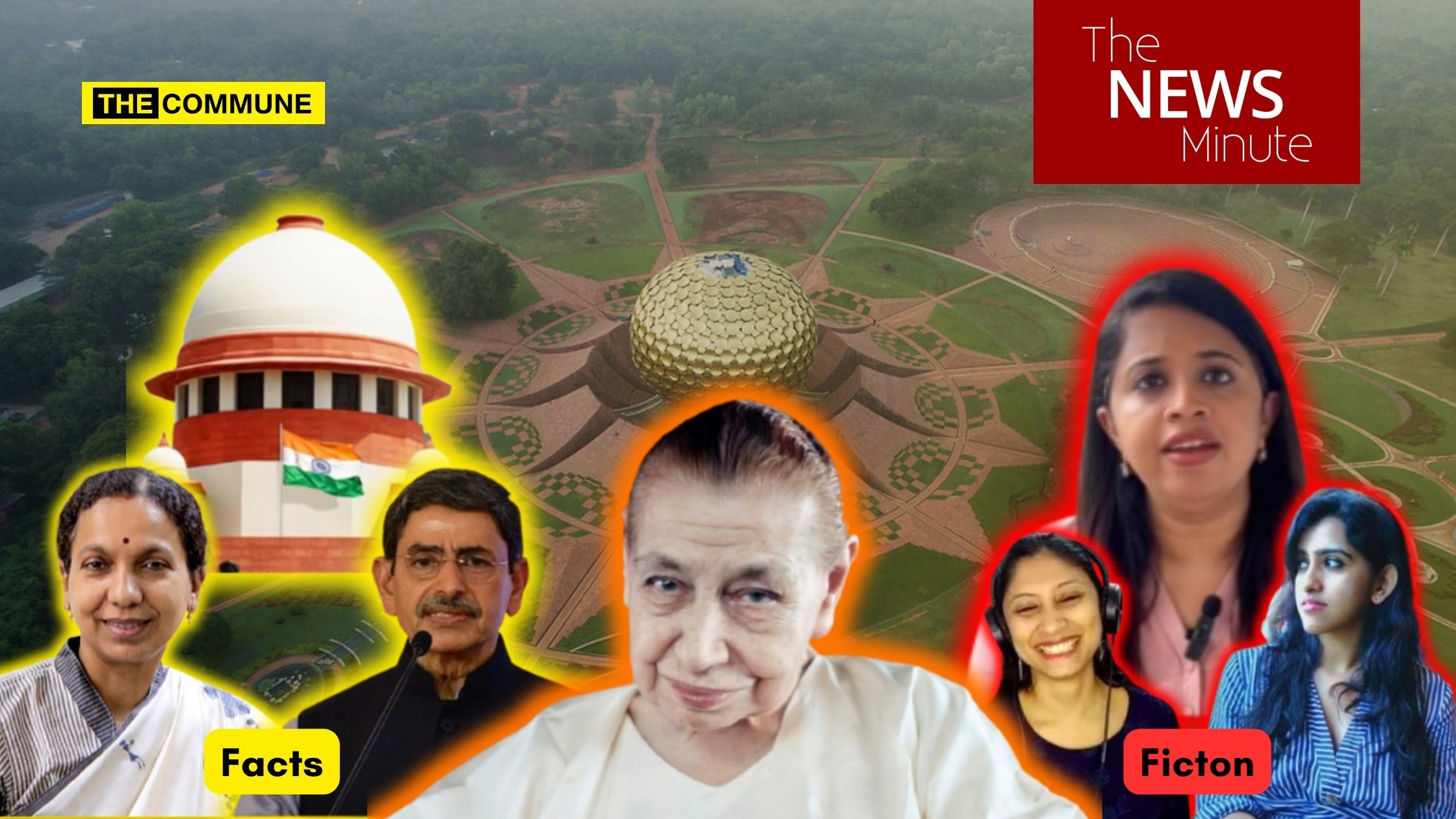
This article reveals the factual inaccuracies, unsubstantiated claims, and ignored legal realities that the The News Minute’s (TNM) so-called two-part ‘investigation‘ won’t tell you.

The Supreme Court’s March 2025 verdict in Auroville Foundation v. Natasha Storey established critical factual findings that directly contradict several allegations made in The News Minute’s articles.

Auroville’s Stand

The Auroville Foundation, governed by the Auroville Foundation Act, 1988, appealed against Madras High Court orders that undermined its statutory authority. The case traces Auroville’s history since its 1968 inception by the Divine Mother, whose Galaxy Plan envisioned a 50,000-resident spiritual township. Despite this, progress stalled post-1973 due to mismanagement, prompting Supreme Court intervention in SP Mittal v. Union of India (1983), which upheld central oversight.

The Foundation asserts that the Governing Board (GB) holds exclusive powers under Sections 6, 7, 11, and 17 of the Act to implement the 1999 Master Plan (approved by residents and the Union government). However, a faction led by Hemant Lamba and others disrupted governance by:

  • Illegally occupying the Working Committee’s office (FIR 134/2022 for trespass, data theft).
  • Challenging GB orders like the Auroville Town Development Council (ATDC) reconstitution.
  • Delaying the Register of Residents update since 2005, enabling vested interests to control land.

The Foundation argues that the Residents’ Assembly (RA) has only advisory roles (Section 19), yet the Single Judge erroneously expanded RA’s powers beyond statutory limits. The First Bench stayed this order, noting judicial overreach.

Key Developments:

  • 13.10.2022: HC dismissed Natasha Storey’s petition, reaffirming GB’s supremacy.
  • 07.12.2022: GB issued a corrigendum clarifying its authority under the Act.

The Foundation seeks to quash the Single Judge’s order, emphasizing that non-compliance with the Master Plan and frivolous litigation by a minority hinder Auroville’s growth as envisioned by its founders.

Now let us take a look at the allegations made by The News Minute in its articles and video.

Allegation: “BJP-RSS Quiet Takeover Of Auroville”

One of TNM’s central claims was that the BJP government engineered a “quiet takeover” of Auroville by appointing figures allegedly aligned with the RSS, including IAS officer Jayanti Ravi as Secretary, and Tamil Nadu Governor RN Ravi and Puducherry LG K. Kailashnathan to the Governing Board.

The Truth?

First, regarding governance, the Court unambiguously affirmed the statutory authority of Auroville’s Governing Board (GB) under Section 11(3) of the Auroville Foundation Act, 1988. Justice Bela Trivedi’s judgment states: “The general superintendence, direction and management of the affairs of the Foundation shall vest in the Governing Board which is empowered to exercise all the powers and discharge all the functions which may be exercised or discharged by the Foundation.” This legal framework predates the current administration by decades, having been established during Congress-led governments.

The Court emphasized that previous boards included Congress appointees like Karan Singh.

How TNM Claims BJP & RSS Are Involved?

The article reads, “In its bid to gain a stronger foothold in Tamil Nadu, the Bharatiya Janata Party (BJP) has been seeking a cultural icon to rally around. Past attempts to appropriate Tamil poets Thiruvalluvar and Subramania Bharati faced intense pushback. Now, the party seems to have found a more fitting figure in Aurobindo Ghosh, whose blend of nationalism and spirituality aligns well with its ideological narrative.”

Here’s more, “Aurobindo’s political philosophy, rooted in religious nationalism, which provides an ideal ideological foundation for the BJP’s brand of politics.”

So, what’s The News Minute’s problem here? That Shri Aurobindo was a nationalist who spearheaded a Hindu revivalist movement? Shri Aurobindo anyway doesn’t fit in their secular scheme of things and is someone who can never be appropriated by the leftist-Dravidianist ecosystem.

Here’s even more: “The BJP needs a cultural icon in Tamil Nadu, someone around whose historical footprint they can make inroads. And Aurobindo Ghosh seems like a perfect fit. Although the RSS completes 100 years this year, their appeal has been still limited to traditional bases. So appropriating other leaders helps them expand the party’s appeal while reshaping historical memory. For example, appropriating Subhas Chandra Bose with his nationalism serves as a contrast to the Congress’ legacy of freedom struggle. Sardar Vallabhbhai Patel’s co-opting serves to reduce Jawaharlal Nehru’s significance in the formation of independent India. Even claiming Ambedkar, the BJP has sought to bolster its Dalit outreach, despite his strong critiques of Brahmanical Hinduism.”

Co-Opting Shri Aurobindo!

TNM’s attempt to paint Sri Aurobindo as a victim of “co-option” by the BJP-RSS in their first installment is not only disingenuous but laughably shallow. Shri Aurobindo’s own writings speak louder than any political spin. He explicitly equated Sanatana Dharma with Indian nationalism and envisioned a united India rooted in spiritual awakening. These aren’t quotes cherry-picked by today’s ‘right wing‘—they’re Shri Aurobindo’s core beliefs, long before any modern party emerged. To now frame this as “appropriation” simply because contemporary political figures resonate with his vision is intellectually lazy.

It’s especially ironic that TNM tries to distance Shri Aurobindo from the very ideals he espoused—unity, dharma, and spiritual nationalism—by suggesting that acknowledging them is somehow sinister. If the RSS or BJP cites his legacy, it’s not a hijacking; it’s alignment. Shri Aurobindo’s vision of an Akhand Bharat and rejection of the Partition wasn’t a political stunt—it was his lifelong conviction. That doesn’t make him anyone’s “tool”; it makes him timeless. TNM’s narrative reeks of ideological insecurity. When history doesn’t fit their preferred frame, they don’t engage with it—they accuse others of theft.

As for the claim on “RSS involvement”, there is no evidence of it nor was it presented in court. The “Hindutva agenda” claim relies on the TNM’s subjective interpretations of cultural events (e.g., Ramayana exhibitions in Bharat Nivas) and the alleged leanings of the members of the GB.

Allegation: “Forced Galaxy Plan Implementation & Environmental Destruction”

TNM claims that the administration bulldozed forests, felled 900+ trees, and ignored eco-concerns to fast-track the Crown Road project. Additionally, they state that the residents alleged the “Mother’s vision” was distorted.

The Truth?

The Master Plan (approved in 2001) mandates infrastructure development, including the Crown Road. The Supreme Court noted,

“The Master Plan was approved by the Governing Board and the Residents’ Assembly of the Appellant Foundation in 1999. The said 1999 Master Plan was further approved by the Competent Authority- the Town and Country Planning Organisation (TCPO), Ministry of Urban Development, on 15.02.2001 under the Model Town and Country Planning Act. The said Master Plan was notified on 16.08.2010 and published in the Gazette on 28.08.2010.”

The court further noted, “It appears that some disgruntled residents of Auroville, instead of cooperating the Governing Board of the Foundation in the implementation of the said legally approved Master Plan and in carrying out the development work of Auroville as per the said Master Plan envisioned by the “Mother,” started causing obstructions by filing the Petitions in the High Court of Judicature at Madras one after the other, dragging the Appellant-Foundation into unnecessary litigations.”

Additionally, the Division Bench dismissed the writ petition through a detailed order dated 7 June 2022, citing grounds of maintainability and an inordinate delay of over 12 years in challenging the Gazette Notification issued on 28 August 2010.

Overturning a Madras High Court judgment, the bench of Justices Trivedi and Varale clarified that the Residents’ Assembly’s role is purely advisory under the Auroville Foundation Act. The Court criticized “disgruntled” residents for obstructing development through litigation and imposed ₹50,000 costs on petitioner Natasha Storey.

It must be noted that this process provided multiple opportunities for resident input over a 12-year period prior to finalization.

Auroville Vs NGT

The Auroville Foundation challenged the National Green Tribunal (NGT)’s order directing the creation of a “proper township plan” and environmental clearance (EC) for Auroville, arguing it exceeds NGT’s jurisdiction and ignores statutory approvals. Here are some of the key arguments against the NGT.

Master Plan Legally Valid & Pre-Existing

  • Auroville’s development follows the 1968 Galaxy Plan and 1971/1972 Master Plans by the Divine Mother and architect Roger Anger. The 1999 Master Plan, approved by the Residents’ Assembly and Union Ministries (2001), is a formalized update.
  • NGT cannot mandate a new plan without first declaring the existing one invalid—a legal overreach.

No EC Required Under EIA 2006

  • Construction began in 1968, predating the EIA Notification (2006), which applies prospectively. MoEF’s affidavit confirmed EC is unnecessary, but NGT ignored this expert opinion.
  • Supreme Court precedent (PV Krishnamoorthy, 2021) holds EC applies only to new projects, not ongoing ones.

Limitation & Jurisdictional Issues

  • The original plea concerned tree felling, but NGT later introduced EC/township issues via an unrecorded rejoinder affidavit, violating natural justice.
  • NGT lacks authority to review Master Plans—its mandate is limited to environmental disputes (Sterlite Industries case, 2019).

Statutory Override

  • The Auroville Foundation Act, 1988 (Section 27) superseded state planning laws. NGT’s order to create a “proper township plan” conflicts with this central statute.

The NGT order was ultra vires, ignores settled law, and disrupts Auroville’s 50-year development under a legally sanctioned plan. The Foundation seeks quashing of the directive to uphold statutory autonomy.

The NGT initially halted construction (2021) but later permitted it after finding: “The Tribunal, on the question as to whether the area in question was a Forest, held that it could not be treated as a Forest, as in none of the Government documents produced, it was treated as Forest, and admittedly it was man-made plantation of some species. The Tribunal therefore held that it would not come under the definition of “Forest” for the purposes of obtaining clearance under the Forest (Conservation) Act, 1980.”

The SC overturned NGT’s remaining restrictions, calling them “beyond jurisdiction.”

Case Against Hemant Lamba

The Auroville Foundation filed a petition in the Madras High Court in May 2022 seeking urgent action (No. 134/2022), where a group of individuals illegally seized the Working Committee’s office, tampered with records, and stole confidential data. The accused, including Hemant Lamba and Sauro Mezzetti, allegedly broke into the office on May 13, 2022, changed locks, deleted critical files, and misused official letterheads—actions that violate multiple sections of the IPC and IT Act.

Despite FIRs and complaints, the Auroville Police delayed filing a chargesheet for over a year. The Foundation requested the court to direct the police to include additional charges (Sections 34, 120B, 379 IPC and 66B, 84C IT Act) and expedite the investigation within three months.

The accused also created an unauthorized email domain (auroville.services) to impersonate the Working Committee, spreading misinformation and damaging Auroville’s reputation. The Foundation warned that such lawlessness threatened the governance of this statutory body, established by Parliament in 1988 to uphold Sri Aurobindo and the Mother’s vision.

Allegation: “Land Scams & Undervaluation”

TNM’s report accused the Governing Board of causing a ₹240 crore loss through unequal land swaps (1 acre for 1.4 acres) involving AuroOrchard, and claimed that 1,054 acres were exchanged, jeopardizing farms and forests.

It is noteworthy that land management falls within the Governing Board’s purview under the Auroville Foundation Act. Objections raised by residents were deemed procedural rather than substantive.

Moreover, the “investigation” by TNM has no supporting audit reports, FIRs, or legal documentation to back its claims of a land scam. Allegations were based largely on anonymous sources or unverified resident statements.

It is noteworthy that anti-BJP and self-styled ‘activist’, Dravidianist supporter Piyush Manush also peddled the same allegations about land swaps a few months ago and he did not produce any supporting documents to make his case.

One must note that if some such allegations are being made by a person of such credibility and if it is further propagated by the likes of TNM, readers and observers must take it all with a kilogram of salt!

Allegation: “Visa Threats & Suppression Of Dissent”

TNM also reported that the administration used visa cancellations to suppress dissent and targeted foreign critics such as Serge “Satprem” Maïni, director of the Auroville Earth Institute. There are allegations that residents’ visa was cancelled for ‘protesting’.

It must be noted that visa recommendation authority has rested with the Foundation since 1991, under Rule 12 of the Auroville Foundation Rules.

Protests by foreign nationals are violations of visa norms and authorities have every right to cancel visas as necessary.

Allegation: “Marginalization Of Tamils & Sanskrit Imposition”

Another point in TNM’s reporting was the alleged marginalization of Tamil residents and an imposed preference for Sanskrit over Tamil.

This is a totally unfounded claim, since Tamils comprise around 20% of Auroville’s population, many of whom hold administrative roles. There is no evidence of exclusion.

Cultural programs at Bharat Nivas, cited by TNM, have consistently included diverse Indian traditions. Events have ranged from Christian choral performances (December 2022) to Islamic calligraphy exhibitions (March 2023), as documented in the Foundation’s event records.

Court Rebukes Pattern Of Litigation

The ruling’s strongest language came in the court order, where the Court stated, “It appears that some disgruntled residents of Auroville, instead of cooperating the Governing Board of the Foundation in the implementation of the said legally approved Master Plan and in carrying out the development work of Auroville as per the said Master Plan envisioned by the “Mother,” started causing obstructions by filing the Petitions in the High Court of Judicature at Madras one after the other, dragging the Appellant-Foundation into unnecessary litigations.”

The order further said, From the above array of litigations, it is explicitly clear that a small group of disgruntled residents of Auroville, who instead of supporting and cooperating the Governing Body of Appellant-Foundation, in implementing the approved Master Plan and developing Auroville as envisioned by the “Mother,” kept themselves busy by filing the litigations one after the other, and causing obstructions in the smooth implementation of the Master Plan.”

The order further warned, “The party invoking extraordinary jurisdiction of the High Court under Article 226 of the Constitution of India must come with clean hands and disclose all correct and material facts in his Writ Petition. If it is brought to the notice of the Court that the petition has been guilty of suppression of material and relevant facts or has not come with clean hands, such conduct must be seriously viewed by the courts as the abuse of process of law and the petition must be dismissed on that ground alone without entering into the merits of the matter.”

The factual record now shows that what was framed as a “takeover” was in fact the lawful implementation of a 24-year-old development plan, while allegations of malfeasance crumbled under evidentiary scrutiny. This leaves Auroville’s future where the Court determined it belongsin the hands of its duly constituted Governing Board, implementing the long-approved vision for the township’s development.

A Case Of Activism vs. Administration Fanned By The News Minute?

The TNM investigation omitted key legal realities:

  • The Residents’ Assembly had decades to shape the Master Plan but failed to reach consensus.
  • There is no evidence of illegal land grabs, RSS control, or eco-violations.
  • The “federal enclave” theory is speculative—Auroville has always been under Central governance.

While dissent is valid, the Supreme Court’s verdict confirms that Auroville’s administration acted within the law. The TNM’s narrative, as always, relies heavily on activist rhetoric over verifiable facts.

Irony in Neutrality: TNM Relies On DMK Voice To Critique BJP’s Role In Auroville

In the News Minute’s (TNM) video report “Chaos, Conflict and Hindutva: What is Happening in Auroville?”, a striking irony emerges when TNM brings in a DMK functionary – Gayatri Srikanth, the State Convener of DMK Puducherry’s Women’s Wing, to substantiate its claims of a BJP-led ideological and administrative takeover of Auroville.

She parrots the same lies that TNM has been peddling, she said, “The Government of India is also allocating several crores of rupees for the development of Auroville. Whereas very few less number of people are residing over there. But you see 10+ IPS, IFS, lot many civil service people are been working in Auroville, where they are trying to make it as a union territory with special powers with RSS ideologies, slowly built with their own conventions, their own satsangs and all those things. This is continuously happening with a lot of ideologies which enhances is their extension of Akhand Bharat.”

This inclusion is ironic because DMK, a political party with its own strong anti-Hindu, bordering on anti-national/secessionist ideological stance and a history of central-state tensions, is presented as a neutral voice of concern rather than a political counterweight. The video uses this DMK figure to critique the Union government’s involvement in Auroville, portraying it as an imposition of “RSS ideology” and central authority, while sidestepping the DMK’s political motivations or vested interest in opposing the BJP.

By amplifying a DMK voice and not including more of what the other side has to say, TNM’s portrayal appears less like balanced journalism and more like a partisan narrative and activism. This undermines the documentary’s claim to neutrality, especially in a report that criticizes alleged ideological bias.

.

Last Word

If anyone is encroaching on this land, it’s the illegal foreign settlers occupying it without authorization. Will it be possible for an Indian to carve out enclaves or squat on a property like how the so-called “Aurovillians” are laying claim to the land?

Their outrage isn’t truly about the environment — it’s about the fear of losing control over land they have no legal right to. Just think about it: could an Indian go to a European country or the United States, settle illegally, and then demand ownership of large swathes of land simply because they’ve been there for some time? Of course not. Having been defeated in the highest court of the land, the losing side is now attempting to twist the facts through a calculated media campaign aimed at misleading the public.

Maybe it is time TNM rebrand themselves as ‘activists’ or ‘mouthpieces’ of political parties, leftist organizations and vested interests – that will make them more credible than claiming to be ‘journalists’.

Subscribe to our channels on TelegramWhatsApp, and Instagram and get the best stories of the day delivered to you personally.