Home Blog Page 266

Tiruchanur: Varahi Amman Temple Vandalized In Midnight Attack, Idols Desecrated, Thrown In River

varahi amman temple tiruchanur

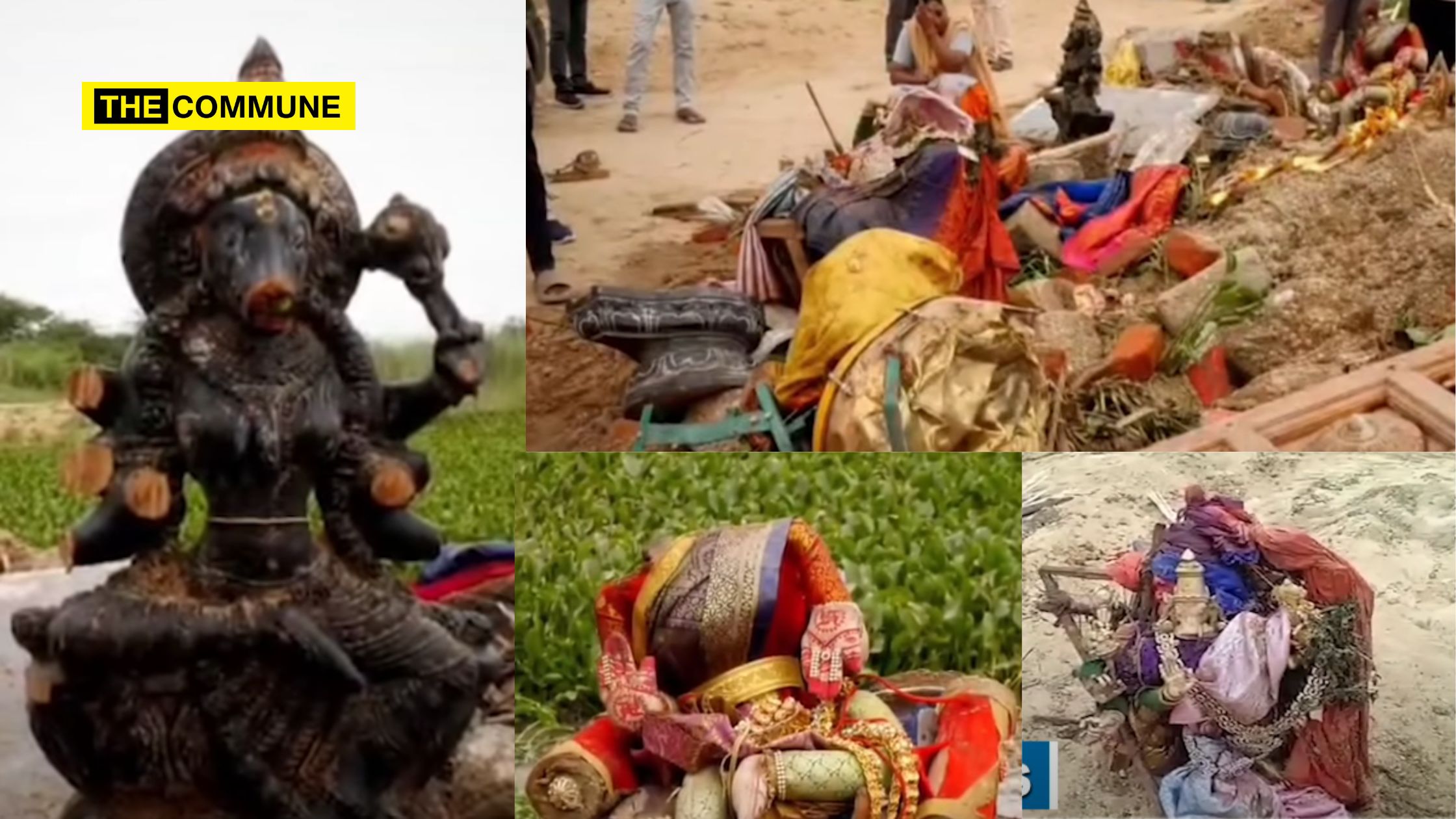
In a shocking turn of events, unknown assailants have vandalized the Varahi Amman Temple in Tiruchanur, located in the Tirupati district. The idol of the goddess, along with other sacred statues, was destroyed and thrown into the Swarnamukhi River, causing outrage among the local community. This temple, situated near the famous Padmavathi Temple, has been the subject of an ongoing dispute over its land ownership, which some claim to be theirs. This disagreement appears to have escalated into the temple’s destruction.

The incident took place around midnight on 10 June 2025, when a group of unidentified individuals demolished the temple structure and destroyed the principal idol (Moolavirat) and other statues. The debris was then thrown into the nearby Swarnamukhi River, sparking an uproar in the local community.

For several days now, there has been a legal dispute regarding the ownership of the land on which the temple stands. Reports indicate that two individuals, Mani Reddy and Rami Reddy, have filed a petition in a local court, asserting that the land on which the Varahi Amma Temple stands belongs to them. Despite the case being pending, the duo, along with around 30 unidentified individuals, reportedly attacked the temple on 9 June, vandalizing the premises and manhandling women who tried to intervene. A complaint was filed with the Tiruchanur police, but no action was taken, even though the entire incident was captured on CCTV footage.

Locals believe that the police’s inaction is due to alleged political influence, with the two men purportedly receiving backing from the ruling Telugu Desam Party (TDP).

Emboldened by the lack of a police response, the group of miscreants returned to the temple on the night of 10 June with earthmovers and destroyed the structure. They also desecrated the idols and discarded them into the Swarnamukhi River. Upon learning of the incident, members of the Bajrang Dal and other Hindu organizations arrived at the site, retrieved the damaged idols from the river, and have since demanded strict action against those responsible. They have warned of large-scale protests unless the culprits are apprehended and held accountable for the destruction.

According to reports, it is alleged that TDP leaders paid ₹10 lakh to the miscreants in exchange for their involvement in taking control of the temple land. The vandalism was reportedly spearheaded by TDP leader Kishore Reddy, who is known to be a supporter of Chandragiri MLA Pulivarthi Nani.

Furthermore, locals have raised suspicions that the destruction of the temple is part of a broader scheme to enable illegal sand mining operations by a sand mafia active along the banks of the Swarnamukhi River. The incident has sparked widespread anger among local communities and religious groups, who are demanding immediate intervention and accountability for the attack on the sacred site.

This incident has caused significant outrage among Hindu groups, who are now demanding stringent action against those responsible. On Wednesday, Union Minister Bandi Sanjay visited Tirupati and met with concerned citizens to address the issue. Hindu organizations attempted to lodge complaints with the minister, but police obstructed their efforts. As a result, the groups staged a protest near the local police station, calling for strict action against the culprits.

The desecration of the Varahi Amma Temple has left the local community in shock and has sparked further unrest over the growing tensions surrounding the site. Hindu organizations are adamant that the government take immediate action to ensure the perpetrators are held accountable and that religious harmony is preserved.

(With inputs from Sakshi Post)

Subscribe to our channels on TelegramWhatsApp, and Instagram and get the best stories of the day delivered to you personally.

DMK Scion Udhayanidhi Stalin’s Son Inbanidhi Joins DMK Mouthpiece Kalaignar TV’s Management Team

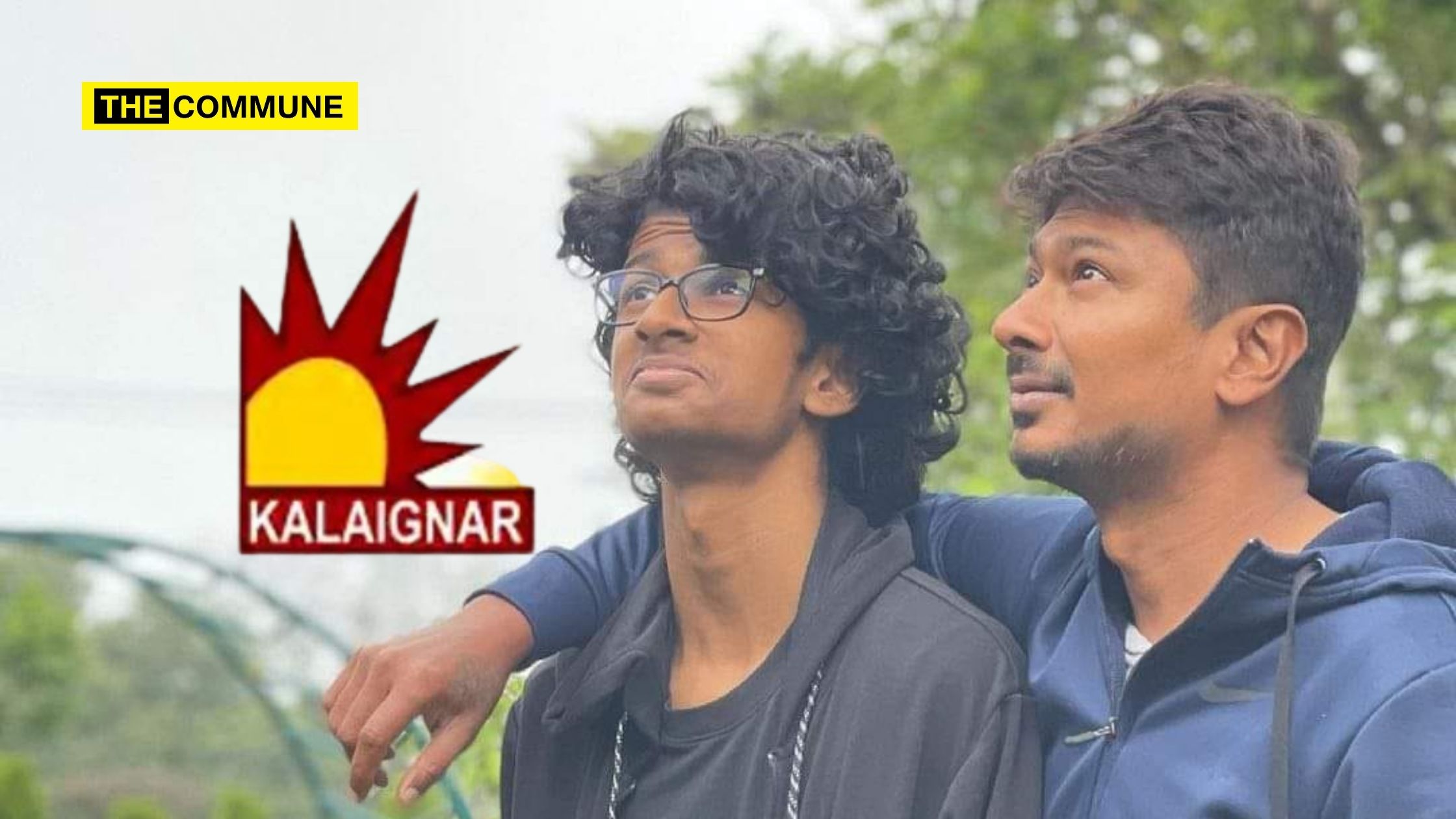
Inbanidhi, the 21-year-old son of Tamil Nadu Deputy Chief Minister Udhayanidhi Stalin and grandson of Chief Minister M.K. Stalin, formally assumed responsibilities in the management team of Kalaignar TV on 3 June 2025 — the birthday of DMK patriarch M. Karunanidhi.

Inbanidhi, who holds a degree in financial management from London, was accompanied by his mother Kiruthiga to the Kalaignar TV office located at the DMK headquarters in Arivalayam.

He was warmly received by Karthikeyan — son of Chief Minister Stalin’s wife Durga’s sister — who currently serves as the company’s Chief Financial Officer. According to DMK officials, Inbanidhi is involved in financial management and regularly consults with key team members.

Dinamalar reports that Inbanidhi is said to work from 11:00 AM until 5:30 PM each day at the television network’s office in Neelankarai, Chennai.

(With inputs from Dinamalar)

Subscribe to our channels on Telegram, WhatsApp, and Instagram and get the best stories of the day delivered to you personally.

Protests Erupt At Rameswaram Ramanathaswamy Temple Over New Paid Darshan System

rameshwaram ramanathaswamy temple paid darshan protests

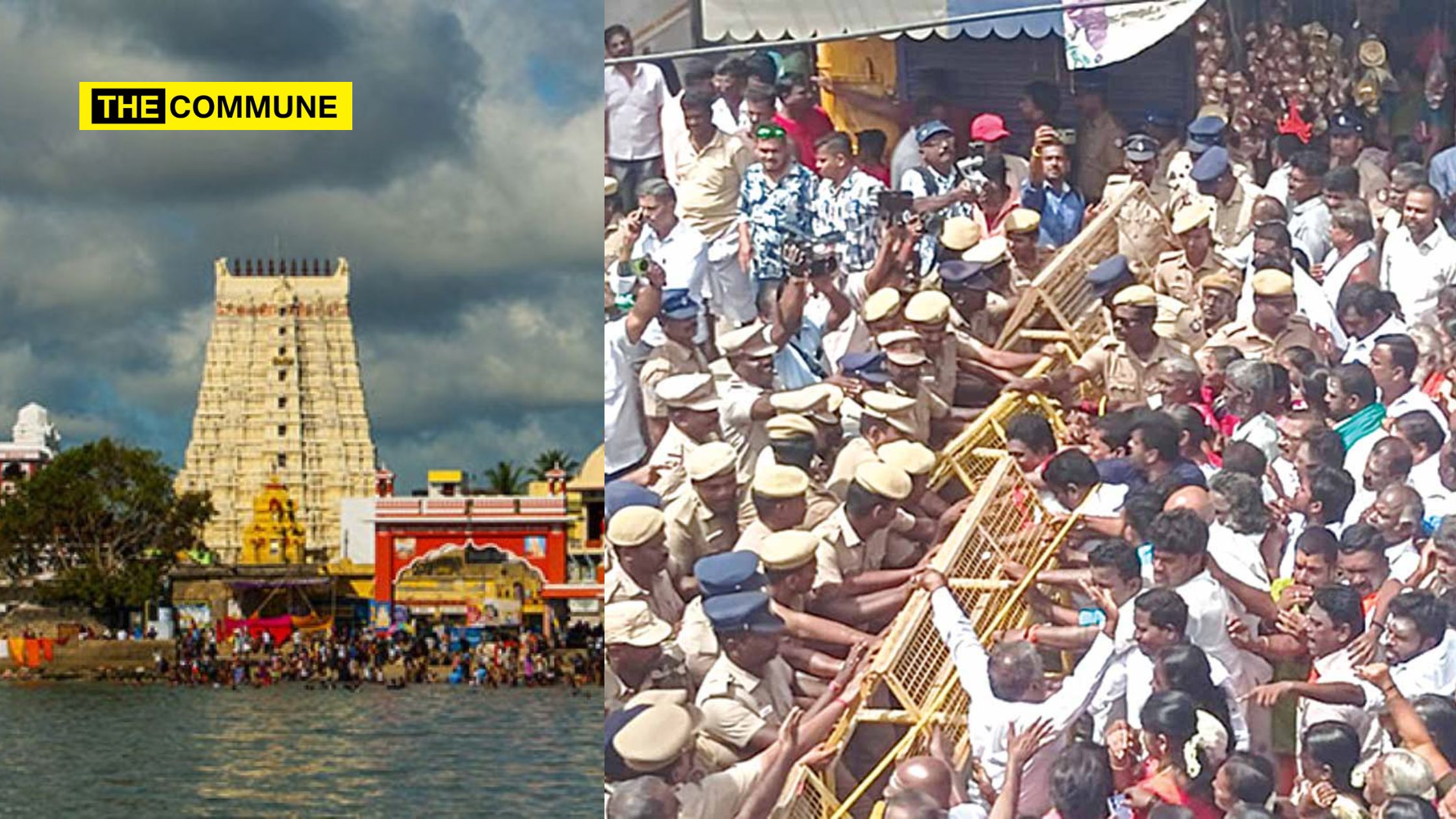
Tensions flared at the historic Ramanathaswamy Temple as local residents clashed with authorities over the temple administration’s controversial decision to impose fees of ₹200-500 for accessing traditional worship routes.

The controversy arose after the temple administration set up special barriers along the main path used by locals for darshan (worship) and introduced a fee of ₹200 and ₹500 for entry through these routes. This new policy has forced many locals to abandon their traditional path and pay if they wish to view the deity up close — a move that has triggered significant resentment in the community.

Protesters say they have been following their traditional routines — especially on auspicious occasions like weddings, birthdays, Amavasya, and Pradosham — for generations. The administration’s decision to prohibit their entry through the longstanding path is viewed as unfair and discriminatory.

While the administration maintains that free darshan is still available through a separate path, locals say this disregards their longstanding practices and traditions. After repeated appeals fell on deaf ears, political parties and civic groups also came forward today to support the locals’ cause.

Police intervened to keep the protest from turning aggressive, arresting more than 100 people and strengthening their presence at all four main entrances of the temple. This heavy police deployment aims to ease tensions and avoid further escalation, even as the controversy shows no sign of resolution.

Pilgrims from both nearby villages and other parts of the country continue to arrive to pay their respects, adding urgency to the ongoing dispute over access to their place of worship.

TTV Dhinakaran, General Secretary of AMMK, criticized the DMK-led Tamil Nadu government for imposing a ₹200 fee on locals for darshan at Rameswaram’s Ramanathaswamy Temple. Traditionally, locals used a special path for free darshan, but now they’re forced to pay due to a new policy enforced by the Joint Commissioner of HR&CE. This decision triggered strong opposition from locals alleging violation of their religious rights. Dhinakaran demanded the withdrawal of the fee, stating it unfairly restricts access for locals and disregards longstanding traditions at the historic shrine.

Tiruvannamalai Chaos

Earlier in June 2025, tensions rose at Tiruvannamalai’s Arunachaleshwarar Temple after locals alleged unfair treatment and chaos during darshan. The administration’s new ₹50 paid darshan system, alongside brokers charging up to ₹1,000 and preferential access for devotees from Andhra Pradesh, ignited disquiet among locals. Security was poor, causing scuffles and injuries, while many locals said they hadn’t been able to worship there for years due to long queues and overcrowding. Residents demanded an end to the paid darshan, action against brokers, and equal treatment for all devotees, arguing that the current approach disregarded their traditional rights and disrupted the sanctity of the shrine.

Subscribe to our channels on TelegramWhatsApp, and Instagram and get the best stories of the day delivered to you personally.

The Surrender Family: A Look At Nehru-Gandhi Surrenders That Shaped Modern India

surrender family nehru-gandhi

Congress scion Rahul Gandhi, recently sparked controversy by echoing Western sentiments and promoting narratives aligned with Pakistan’s viewpoint. During his speech at the launch of his party’s Sangathan Srijan Abhiyan in Bhopal, he made claims regarding Prime Minister Narendra Modi’s dealings with the United States. He suggested that Modi had bowed to pressure from former U.S. President Donald Trump, saying, “Trump made one gesture from there (the U.S.), picked up the phone and said, ‘Modiji, what are you doing? Narendra, surrender.’ And Modiji said, ‘Yes, sir,’ and followed Trump’s instructions.”

However, this assertion was far from the truth. In reality, India’s military might had already incapacitated Pakistan’s military plans before they could even execute their own strike. Pakistan’s Defence Minister himself acknowledged this, stating, “Our armed forces were prepared to act at 4:30 in the morning after Fajr prayers to teach a lesson. But before that hour even arrived, India launched a missile attack using BrahMos.” Despite this clear evidence, Rahul Gandhi opted to ignore the national interest and instead pushed a foreign agenda.

The larger truth is that Congress, particularly the Gandhi family, has a long history of “surrenders,” many of which they conveniently fail to recognize. The following events highlight key moments of surrender in India’s history, involving Rahul Gandhi’s ancestors.

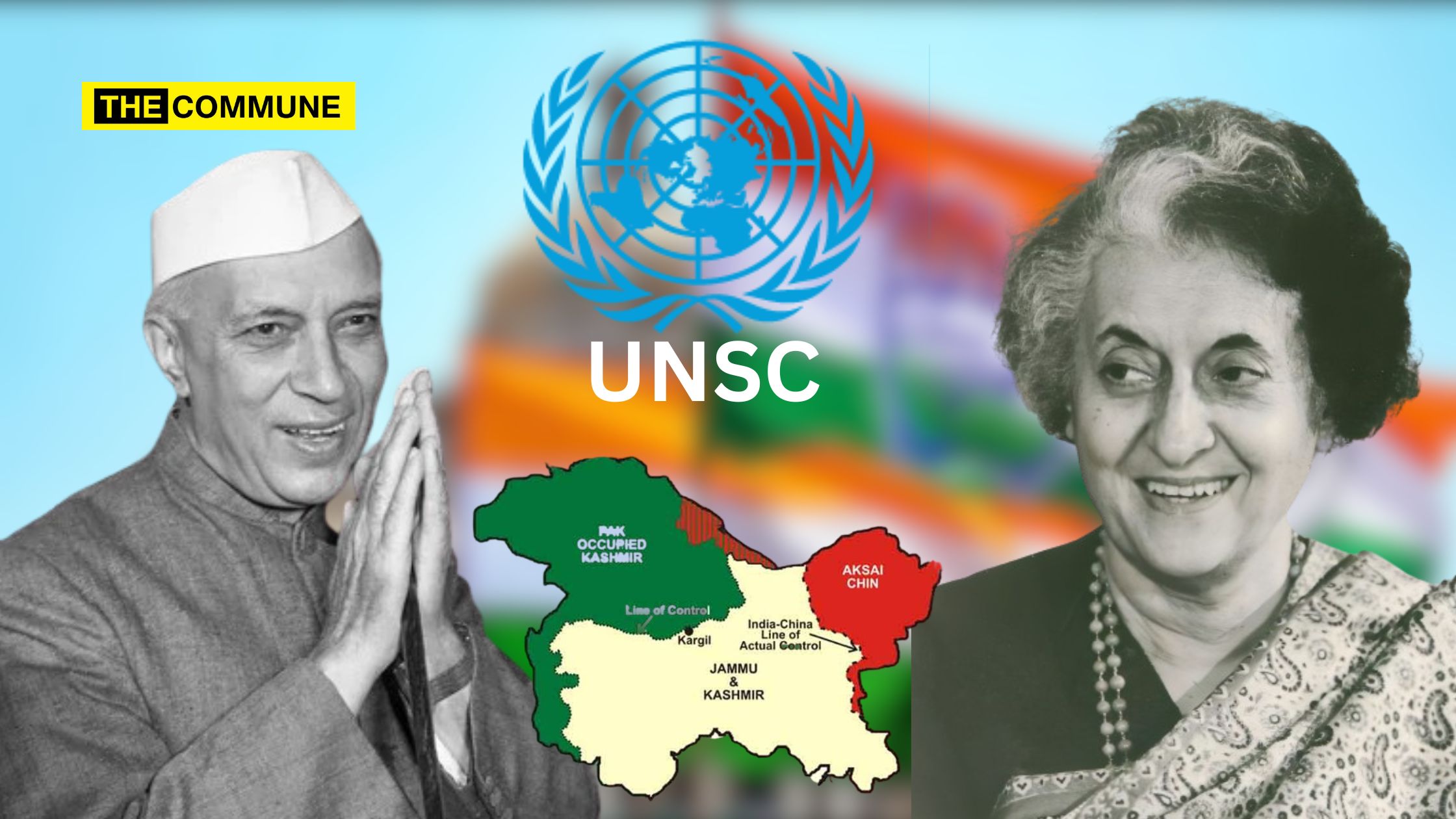
1948: How India Lost A Large Part Of Kashmir To Pakistan Under Nehru

By mid-1947, Maharaja Hari Singh of Kashmir had already made up his mind to accede his state to India. He was simply waiting for the opportune moment to secure the best terms for the accession. However, the events that follow was completely different.

When the Maharaja offered Kashmir’s accession to India unconditionally, Jawaharlal Nehru refused the offer. Nehru insisted that Sheikh Abdullah, who had been imprisoned by the Maharaja, be released and made the Prime Minister of Kashmir before the region could merge with India. This was a non-negotiable condition for the Maharaja, and understandably so. While one could argue that the political climate at the time was challenging, it’s difficult to comprehend why Nehru would turn down such an offer unless there was an underlying political agenda. Some speculate that Lord Mountbatten may have influenced Nehru’s decision, pushing for an unusual demand that seemed to prolong the crisis unnecessarily.

October 1947: Pakistan’s Invasion and the Delay in Action

By October 1947, Pakistani raiders had invaded Kashmir and by the 22nd of the month, they were already nearing the gates of Srinagar. Maharaja Hari Singh, realizing the gravity of the situation, urgently requested military assistance from India. At this critical juncture, Sardar Patel, a key leader, proposed sending the Indian army to defend the region. However, it was Lord Mountbatten—who, despite India’s newfound independence, still held significant sway over decisions—who insisted that the Maharaja first sign the Instrument of Accession.

The delay in sending immediate military aid to Kashmir is hard to overlook when examined in hindsight. Mountbatten’s reluctance to act swiftly seemed to suggest a hidden agenda, one that favored Pakistan’s control over the region. The sequence of events that unfolded is telling:

  • October 24: Srinagar goes into blackout as Pakistani forces advance.
  • October 25: Instead of sending military help, Mountbatten sends a defense delegation to assess the situation.
  • October 26: The delegation reports that Srinagar will be lost if action is not taken immediately. Yet, Mountbatten still insists on signing the Instrument of Accession before any military intervention.

Finally, on 27 October, the Instrument of Accession was signed by the Maharaja, and it was formally accepted by Mountbatten, making Kashmir legally a part of India. However, the fact remains that even after this, Mountbatten delayed deploying the Indian Army, while Nehru—despite being the Prime Minister—was not decisive enough to take action.

Sardar Patel’s Intervention

Field Marshal Sam Manekshaw, who was present during the critical meetings regarding Kashmir’s defense, recalled how Nehru stalled the decision-making process, “As usual, Nehru talked about the United Nations, Russia, Africa, and God almighty, everybody, until Sardar Patel lost his temper. He said, ‘Jawaharlal, do you want Kashmir, or do you want to give it away?’ Nehru replied, ‘Of course, I want Kashmir.’ Then Sardar Patel said, ‘Please give your orders.’ And before Nehru could respond, Patel turned to me and said, ‘You have got your orders.’”

The Ceasefire and Its Aftermath

Despite the Indian Army’s strong position and success in repelling the Pakistani forces, Nehru eventually ordered a ceasefire in 1949, which prevented India from fully reclaiming the region. Thanks to Sardar Patel’s resolve, India retained control over two-thirds of Kashmir. Had Patel been the Prime Minister, it’s likely that the entire region would have been integrated into India, and the tragic displacement of Kashmiri Pandits may have been avoided.

In the end, the reluctance and delay in decisive action—especially by Nehru—led to India’s inability to fully secure Kashmir. The consequences of these decisions still echo today, and the region remains a source of contention. If Sardar Patel had been in charge, history may have taken a very different course.

1950: Nehru Indifference On US Proposal To Replace China With India For UNSC Seat

According to a widely cited report by The Hindu (10 January 2004), former United Nations Under-Secretary-General Shashi Tharoor revealed that Nehru declined an offer from the United States in 1953 to take over China’s seat in the Security Council. Tharoor documented this in his biography Nehru: The Invention of India, stating that Nehru instead suggested the seat be given to the People’s Republic of China, despite its recent Communist takeover. The report stated, Jawaharlal Nehru declined the United States offer to India to take the permanent seat on the United Nations Security Council around 1953 and suggested that it be given to China.”

Further corroboration comes from letters written by Vijayalakshmi Pandit, Nehru’s sister and India’s Ambassador to the United States at the time. During a 1950 meeting with U.S. adviser John Foster Dulles, Pandit was reportedly offered a proposal to have India replace China in the Security Council. Pandit’s correspondence with Nehru relays that he declined, explaining, India, because of many factors, is certainly entitled to a permanent seat in the Security Council, but we are not going in at the cost of China.”

Nehru believed that such a move would provoke Beijing and compromise India’s stance on Asian solidarity. Ironically, twelve years later, China invaded India in 1962.

1955: Soviet Offer To Expand UNSC And Include India

In 1955, a second documented offer was made by the Soviet Union. This time, the proposal was not to replace any country but to expand the UNSC and include India as the sixth permanent member. Soviet Premier Nikolai Bulganin made the offer directly to Nehru.

Nehru once again declined, citing similar reasons. His statement at the time was, We are opposed to pushing ourselves forward to occupy certain positions because that may itself create difficulties… This should not be done till the question of China’s admission and possibly of others is first solved.”

This position was consistent with what scholars refer to as “Nehruvian foreign policy,” which prioritized the idealistic unity of developing nations and respect for multilateral norms over strategic self-interest.

A detailed analysis of this offer is provided by the Wilson Center’s Cold War International History Project, titled Not at the Cost of China: India and the United Nations Security Council, 1950”. The article confirms that Nehru’s primary objection was based on the principle—that the People’s Republic of China should first be admitted to the UN in place of the Chinese Nationalists (Taiwan), and only after resolving that issue should India be considered.

1962: Nehru Losing Aksai Chin To China

The 1962 Indo-China War is a significant chapter in India’s military history, marked by India’s unexpected defeat at the hands of China. The war, which took place from October to November 1962, exposed critical weaknesses in India’s military preparedness, leadership, and strategic planning, leading to a loss of territory and confidence. The defeat was a direct result of a series of decisions made by Jawaharlal Nehru and his government, who, despite having been warned by intelligence agencies and military officials, remained unaware and unprepared for the scale of the Chinese threat. Here’s a detailed look at why India lost the war and how Nehru’s ignorance played a key role in the defeat:

Overconfidence in Non-Violence and a Weak Military Preparedness

Nehru, a champion of non-alignment and peaceful diplomacy, often underestimated the importance of military preparedness. His belief in peaceful coexistence and the post-independence idealism around international diplomacy led him to overlook India’s growing defense needs. After the partition of 1947, India was left with a weakened military, and Nehru focused more on building India’s democratic institutions rather than strengthening its defense forces.

Nehru’s administration did not prioritize modernizing the Indian military, and the country’s defense infrastructure was inadequate. The military lacked modern weaponry, equipment, and logistical support for a full-scale conflict, especially with a formidable neighbor like China. Nehru’s focus on social and economic development, although important, meant that the military’s needs were neglected.

Nehru’s Misjudgment of China’s Intentions

Nehru had a fundamental misjudgment about China’s strategic intentions. Initially, India and China had enjoyed cordial relations, with Nehru even being one of the prominent proponents of the “Hindi-Chini Bhai-Bhai” (Indians and Chinese are brothers) slogan. Nehru believed that India and China could coexist peacefully due to their shared anti-colonial history and similar ideological stances at the time. However, China’s rise as a regional power under Mao Zedong was accompanied by increasingly aggressive territorial claims, especially in areas like Aksai Chin and Arunachal Pradesh.

Nehru’s belief in China’s peaceful intentions blinded him to the military threat China posed. Despite warnings from military leaders, intelligence reports, and border skirmishes with China, Nehru continued to downplay the possibility of a war. He relied too much on diplomacy, believing that China, having gained international recognition and support from the newly established People’s Republic of China (PRC), would not engage in aggressive territorial expansion at India’s expense.

Ignoring Military Advice and Intelligence Warnings

One of the most significant reasons for India’s defeat in 1962 was Nehru’s ignorance of military advice. India’s defense chiefs, including the then Chief of Army Staff, General Kodandera Madappa Cariappa and Lieutenant General B. M. Kaul, repeatedly warned Nehru and his government about the impending threat from China. The Indian military had also reported that China had been building up its forces along the borders. However, Nehru, who had little military experience, did not act on these warnings.

When military officers urged Nehru to strengthen India’s defenses along the Sino-Indian border, he ignored them and maintained his belief that China would not initiate an attack. Nehru was also convinced that China would respect the boundary agreements that had been in place since the British Raj.

Nehru’s Over-Dependence on Diplomacy

Throughout the build-up to the war, Nehru remained hopeful that diplomatic engagement would prevent an armed conflict. He attempted to resolve the border issue with China through talks, while China was preparing for war. Nehru continued to pursue diplomacy even after the border clashes in 1959, which should have served as a warning. Nehru’s ignorance about China’s military preparations and expansionism left India vulnerable to a surprise attack.

China, on the other hand, had already made up its mind to assert its territorial claims, especially in the Aksai Chin region, which it had occupied by 1950 and was building roads to connect Tibet with Xinjiang. India’s appeasement policy failed to recognize China’s growing ambitions, which led to disastrous consequences for India.

Nehru’s belief in India’s political and military superiority over China led to misplaced confidence. The Indian public, the military, and political leaders believed that India’s democratic nature and large population would be sufficient to deter Chinese aggression. The Cultural Revolution in China further led many to underestimate China’s military capability.

Furthermore, Nehru’s domestic political agenda and the associated focus on economic reforms diverted attention from military needs. Nehru’s reluctance to spend on defense during the early 1960s—prioritizing infrastructure, education, and poverty alleviation—made it difficult for India to prepare adequately for the threat China posed.

In October 1962, China launched a full-scale offensive on India’s northeastern border (Arunachal Pradesh) and the Aksai Chin region. Despite being caught off guard, the Indian army initially fought bravely, but the lack of equipment, logistics, and poor strategic planning led to an embarrassing defeat. The war ended with a ceasefire brokered by the United Nations, and India was forced to cede significant territory to China.

Nehru’s role in the defeat was critical. His failure to prepare India militarily, his over-reliance on diplomacy, and his ignorance of intelligence warnings directly contributed to the collapse of India’s defenses. The war also exposed the lack of a coherent strategy to safeguard India’s borders.

1965: Withdrawal From Lahore

In 1965, Indian troops had advanced deep into Lahore, Pakistan, during the conflict. However, after a ceasefire was called, India ordered its forces to pull back. Indira Gandhi, although not the Prime Minister at the time, was a senior cabinet member who endorsed this decision. The military gains were surrendered without any strategic leverage, and a golden opportunity to resolve the Kashmir issue permanently was missed.

1971: The Shimla Agreement

Following India’s victory in the 1971 war and the creation of Bangladesh, Pakistan had surrendered, with 90,000 prisoners of war in Indian custody. Yet, India released these prisoners without securing any resolution on Kashmir, thus squandering a strategic advantage. Indira Gandhi, despite having won the war, made the decision to release the prisoners and engage in the Shimla Agreement, leaving the Kashmir issue unresolved.

Each of these episodes highlights moments in history where significant concessions were made under Congress leadership—whether it was Nehru’s decisions in Kashmir, his refusal of the UNSC seat, or Indira Gandhi’s surrender during the Shimla Agreement. The narrative of “surrender” that Rahul Gandhi’s family conveniently ignores has shaped much of India’s modern history. It was not Narendra Modi or the BJP, but Nehru, Indira Gandhi, and Congress that were behind these decisions.

(This article is based on an X Thread By Anand)

Subscribe to our channels on TelegramWhatsApp, and Instagram and get the best stories of the day delivered to you personally.

HR&CE-Administered Madurai Kallazhagar Temple Introduces Break Darshan For ₹500

The administration of the ancient Sri Kallazhagar Temple in Azhagarkoil, Madurai District — one of the 108 Vaishnava Divya Desams — is under fire after it introduced a controversial “Break Darshan” fee of ₹500 per person. Activists and devotees say the move disregards tradition and constitutes financial misconduct.

Recently, the Executive Office at the Kallazhagar Temple issued a notification (No. 1156/2025-A4, dated June 5, 2025) stating that “quick darshan” and “general darshan” (priced at ₹10) will be suspended. Instead, a “Break Darshan” costing ₹500 per person is being implemented, except during major festivals and auspicious days. With the ₹500 system applying on all but 33 days annually, the temple has effectively placed a paywall around devotion for 91% of the year.

The notification lists days when break darshan will not be available, including new moons, film festivals, Saraswati Puja, Diwali, Vaikunta Ekadashi, Thirukalyanam ceremonies, and the first day of Thirupavithra festival.

The new ₹500 fee represents a staggering jump from the current ₹10 charge – a 5,000% price hike that has left devotees reeling. Critics argue the term ‘Break Darshan’ carries no religious significance, with its transactional phrasing revealing a commercial rather than spiritual motive.

It will also only be (mis)used by the affluent and VIPs who can afford to pay ₹500 while the common public suffer in long queues.

Temple activists accuse the Hindu Religious and Charitable Endowments Department (HR&CE) of illegally managing the 2000-year-old shrine in violation of orders by the Madras High Court and Supreme Court. According to them, the department fails to collect the income due from the vast properties owned by the Kallazhagar Temple and instead focuses on commercializing darshan.

Allegations further state that more than ₹30 crore from the Temple’s funds have been misappropriated in the last few years under the department’s oversight, fueling suspicion of financial irregularities.

Subscribe to our channels on Telegram, WhatsApp, and Instagram and get the best stories of the day delivered to you personally.
Dravidian Model Drama Exposed: DMK OoPi Hires African Tribals To Do PR For Stalin

african tribal dmk dravidian model

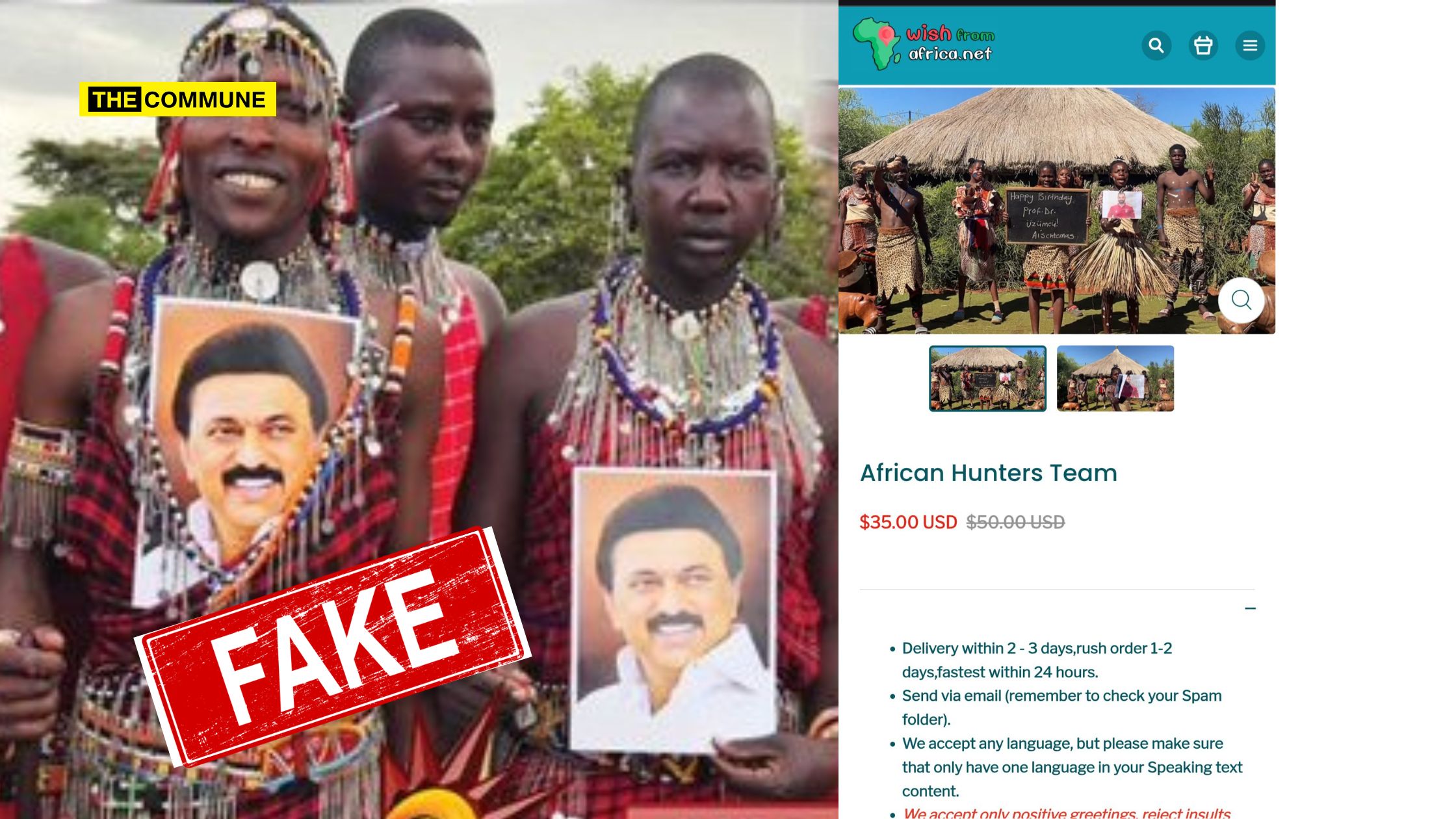
The ruling DMK’s propaganda machinery has hit a new low after a viral video claiming Tanzanian tribals were “spontaneously” praising Tamil Nadu Chief Minister M.K. Stalin was exposed as a paid PR stunt.

The video, shared by DMK’s (one of the many) mouthpieces, Kalaignar Seithigal’s X handle, claimed, #WATCH | African tribes extend greetings to the Chief Minister! In appreciation of the initiatives undertaken by the Tamil Nadu government for tribal communities, a video of tribal people from Tanzania, one of the East African countries, performing a traditional dance while holding a photo of Chief Minister M.K. Stalin to convey their greetings has gone viral on the internet. The tribal communities learned about the initiatives of the Tamil Nadu government through Dr. Sukumar, a native of Tamil Nadu engaged in social service there.”

However, upon closer inspection, it emerges that these “greetings” were anything but spontaneous or sincere. A fact-check revealed that for a small fee — roughly ₹4,000 or $40 — anyone can pay for a group of individuals in Tanzania or elsewhere in Africa to perform a short video message with a photo or poster of their choosing. A fact check handle exposed the DMK’s propaganda drama.

Websites like africanjoyflix.com, wishesmadevisual.com, africanbirthdaywishes.com, and wishfromafrica.net openly provide these services — allowing clients to select a group and script their messages — all for a flat fee.

Furthermore, there’s no credible or independent information suggesting that the people in the video were aware of, much less appreciative of, the initiatives implemented by the DMK government in Tamil Nadu. Dr. Sukumar’s supposed role in this production also stands unsubstantiated.

The fact check handle wrote, “A video titled African tribes congratulate the Chief Minister! @Kalaignarnews. A video was uploaded on the X website, showing Tanzanian tribes dancing and singing in their traditional style and congratulating Chief Minister Stalin.

When we investigated the authenticity of this, we found that the people can send their photos and information about the person they want to congratulate through websites like http://africanjoyflix.com, http://wishesmadevisual.com, http://africanbirthdaywishes.com, http://wishfromafrica.net and send their wishes through the group one chooses on that website. The group charges a service fee of $33 to $40 for this. Doctor Sukumar serves the people in Tanzania and is assisted by the DMK government through programs. It is noteworthy that there is no news, support or information about it to say that people who know about it have congratulated Chief Minister Stalin. Therefore, it has been revealed that this video was created solely for promotional purposes.”

In terms of Indian rupees, it comes to about INR 4000 as mentioned on the website.

Subscribe to our channels on Telegram, WhatsApp, and Instagram and get the best stories of the day delivered to you personally.
Dravidianist Director Karthik Subburaj Blames “Paid Hate Reviews” For Retro Flop

karthik subburaj retro flop paid hate reviews

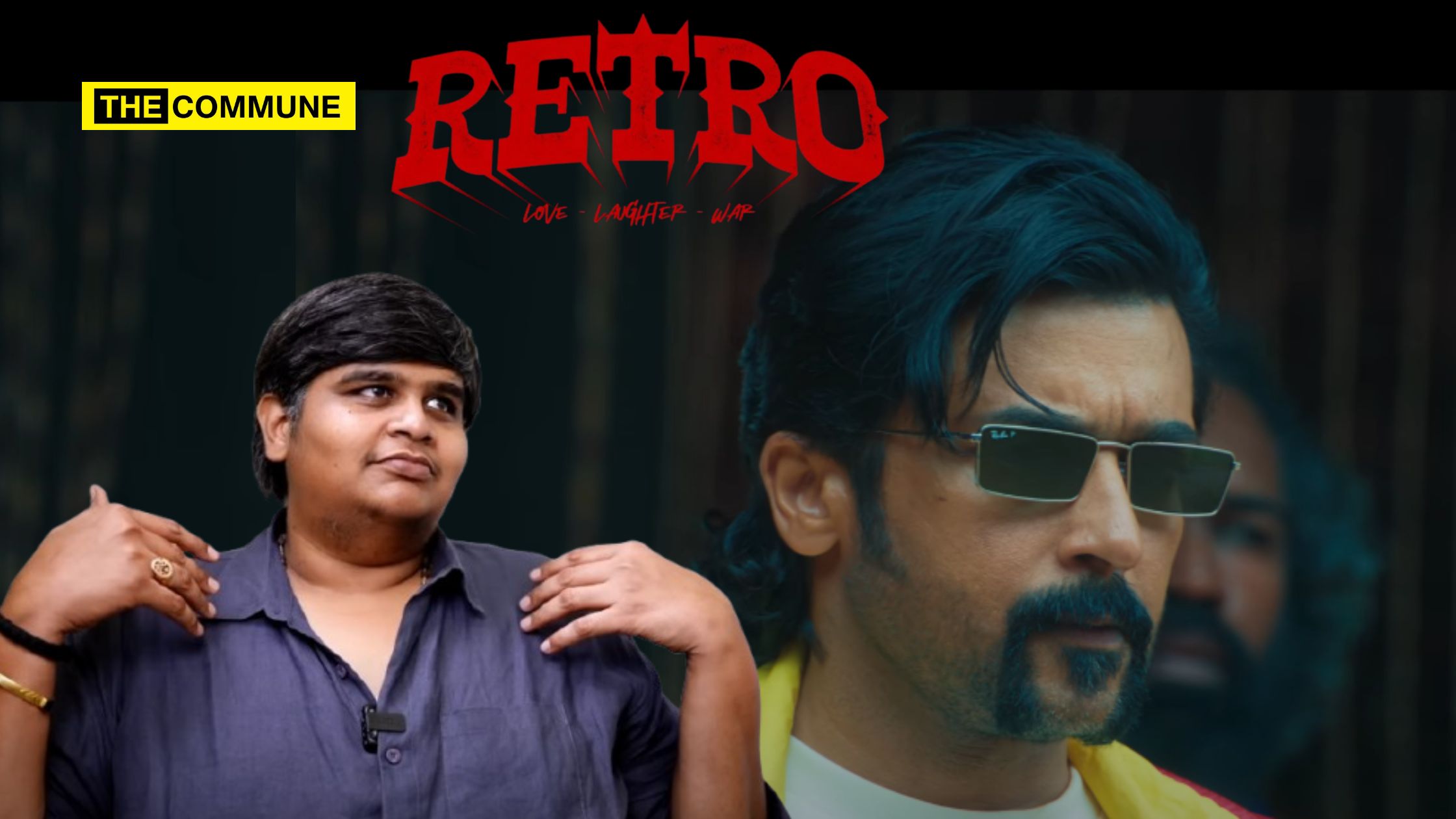
Kollywood director Karthik Subbaraj is widely regarded as one of the finest filmmakers in the industry. With a unique style and a string of successful films, he has established a distinct brand for himself. However, in a recent interview with a private YouTube channel and a movie critic, he made some controversial remarks regarding his latest film Retro, which starred Dravidianist actor Suriya. Subbaraj defended the film, which he considered a success despite its underwhelming reception, and blamed critics for the negative reviews. He went further to label these reviews, even from common moviegoers, as “paid hatred” driven by an agenda. His reaction to the criticism left many feeling that he missed an opportunity to address the film’s shortcomings and correct his style.

In the interview, Karthik Subbaraj also touched upon the pressures of filmmaking, including financial gains and expectations, while discussing the critical reception of Retro. His comments on movie reviews quickly went viral, sparking a storm of controversy, with many netizens even taking to the comments to school him.

Regarding movie reviews, Subbaraj explained, “Recently, there’s a lot of conversation going on now, it’s not about reviews at all. Reviews actually help a filmmaker in some way. I’m talking about good reviews, I mean constructive criticism and all that. But nowadays, it’s mostly about paid reviews. Paid reviews are not the problem, but paid hatred and paid agenda-oriented things, and that’s what’s happening, right away. So, when I look at this, it will affect an artist by their heart. We should come out of it. This is a journey, even the experience coming from this is something new for mee too. Right away something is going on and happening to everyone and happening so fast. I think everyone is talking about it, and something has to be done and this has to stop. It’s more like a campaigning. A paid campaign.”

The interviewer, Baradwaj Rangan, added, “I was speaking to somebody the other day, and they told me that every actor has an enemy camp, that is on Twitter or whatever it is, right? So, when an actor has a movie coming out, start a campaign against it. Even if someone says something good about the movie, discredit the individual. That’s true, right?”

Karthik Subbaraj responded, “That is what happening. Somehow heard a shocking thing like they have an office for that, and some people are actually working for it, while many people are paying for it. You can only do that if you do it full-time. Now, everyone is busy with their work, but doing their work they can’t do this as a work. When we went to the theater, I went to watch it during the second weekend’s Thursday or Friday in Madurai, Trichy, and Coimbatore. Most of the people I sat with were enjoying it. I expected them to clap, enjoy the movie, and they did all of that. At the end of the film, I heard people saying, “The film was good, but why are they saying this?” This was the common thing. Some people were saying, “This was the reason why I didn’t come last week, but now many people are saying it’s good, So I came to watch it. Is this whether affecting them or reducing the movies collection. This is very dangerous happening because it is very paid, targeted and as you said, I also learned that there’s a paid team behind it. It was really shocking to me.”

Contrary to Karthik Subbaraj’s defense of Retro, the film was widely regarded as a failure, as confirmed by regular moviegoers.

Some of the audience reactions and criticisms are summarized below:

One of the netizens lamented, #Retro – an overstuffed tiring, exhausting bore fest that loses engagement after the 25 min mark. At times had to look at my watch as to when the movie would end. @Suriya_offl deserves better than this film, not one bit a comeback.”

Another netizens reviewed the movie stating, “#Retro too many layers , too many plots and too many minutes precisely 168 minutes wasted as well , though there are exceptional scenes here and there it lacks the coherence and is disappointing.”

Another netizen lamented, “After Watching Retro, we are the Joker. Worst Movie.”

Another netizens reviewd the movie stating, “#Retro review. Dei Karthik Subbaraj, you’ll never be okay… why did you make it this cringe? 😭😭😭😭😭😭 Suriya could’ve toned down his overacting… the jail scene was straight-up laughable. Please quit cinema… you’ve made us cry like this… Hey sk fans, you will pay for this.” 

Another netizen reviewed the movie stating, “Retro Movie Review #RetroReview FDFS Review from my US Friend. Another disaster from Surya. deadly boring Positives: Pooja Hegde Negatives: All others Criticism: Poor screen play. Karthik Subburaj should have given the screenplay impacting, or film should have been sprinkled with comedy. Mixed with both, film struggles where to be serious and where to sow comedy Result? Painful for the watchers.”

Another netizen shared a video of a frustrated moviegoer who slammed the film, saying it was a complete waste of money. The viewer sarcastically remarked, “For spending ₹250 in the morning, they made us to laugh (comedy show). It wasn’t goosebumps it was Kanguva 2.” Alongside the video, the netizen trolled, “Kanguva 2, huh? I thought he’d move up from tier 2 to tier 1… but Suriya’s fallen to tier 3 instead.” in the video the audience lamented saying, “For spending 250 ruppe they have made us laugh. It was not a goosebump, its Kanguva 2” 

Another netizen mocked, “At least in Kanguva you could have run out of the theater saying the shouting gave you ear pain… 😂 But Retro? It’s not like that — you can peacefully fall asleep… 😂 Despite this if you are still thinking of watching it? Then you’re going to end up like ‘3-movie Dhanush’”

Another netizen mocked the film by sharing a satirical news card claiming that Suriya’s ‘Retro’ struggled to fill seats even for its First Day First Show, leaving theatre owners stunned.

One of the audience, frustrated after watching the movie Retro, told the media, “Retro didn’t really connect with me. It felt like they combined two or three movies into one and stuffed on us. I don’t understand why they took such lengthy one. It’s a three-hour film, and it has so much content takes that long just to tell the story. There’s so much drag and lag. Once the first half is over, it feels like the movie ends there, the second half  is entirely different content for film.”

He continued, “It felt like Suriya wanted to showcase everything his emotions, action in a single film. And the climax of this film felt like a remake of Jigarthanda 2 climax. If you look at the film in parts, Santhosh Narayanan did well with the music, and Pooja Hegde gave her career-best performance. But when you see it as a whole, you’re left wondering—why such huge content, such length? It was very lengthy and dragging.” He added, “He goes in search of love, then full action, then back to love, and again full-on action. It starts in one place, wanders off somewhere else, and finally ends in Jigarthanda 2 climax.” He rated the film 6 out of 10.

Another audience member shared their thoughts, “Both the first and second halves are too lengthy. Suriya’s presence was good, and the songs was also good. The vibe of the ‘Kanima’ song was awesome. What else? Well, we expected more from the story, but if you go in with low expectations, the movie is enjoyable. It was a comeback for Suriya he performed his part well.”

He continued, “I’d say go in with lower expectations, and you’ll probably enjoy the movie more. I went in with high expectations, so I felt a bit let down. The film runs for three hours, so there’s definitely a lag. They tried to make up for it with fight sequences—it worked to some extent, but not entirely. There’s a lot of action, and he has done martial arts in the film too.”

 Another viewer harshly criticized the film, calling it strictly average even when watched in theatres. He remarked, “Bro, this is just an average movie. It’s nowhere to claim being ‘super’ or ‘awesome.’ Even with the theatre experience, it felt average and if you’re watching on OTT, you can’t watch.”

He went on to say the script felt very plain and unimpressive. “Usually, movies pick up pace in the second half, but here, only the first half had some energy. After the flashback scene, people were just watching it casually. I don’t think it really made an impact on anyone.”

He lamented, “The entry and opening for him were solid, and his fight scene was impressive—but once the actual story began, there was nothing. That is the problem”

Subscribe to our channels on TelegramWhatsApp, and Instagram and get the best stories of the day delivered to you personally.

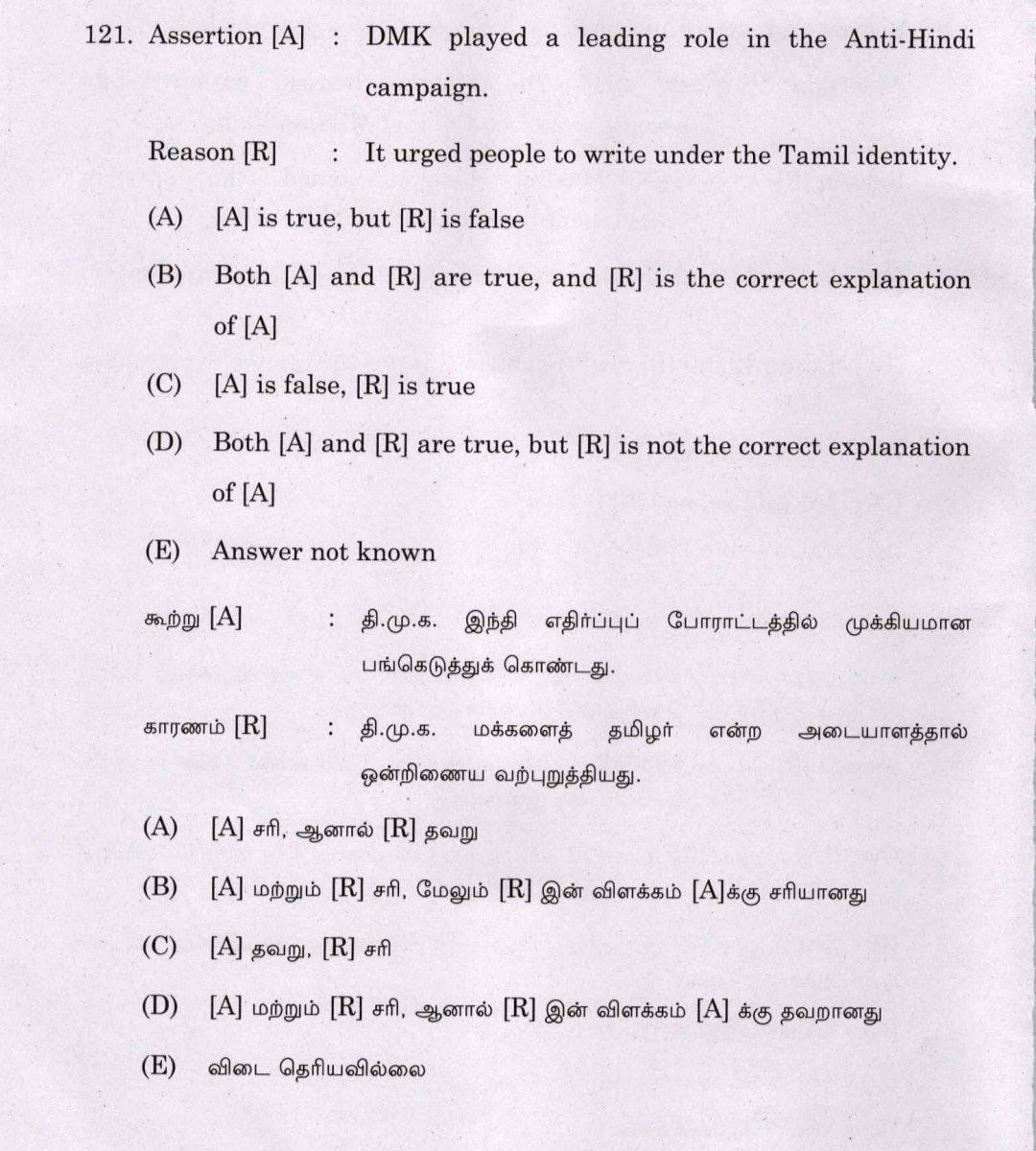
TN Public Service Commission Or DMK Service Commission? Group 1 Exam Question Glorifies DMK’s Anti-Hindi Agitation

tnpsc group 1 exam dmk propaganda

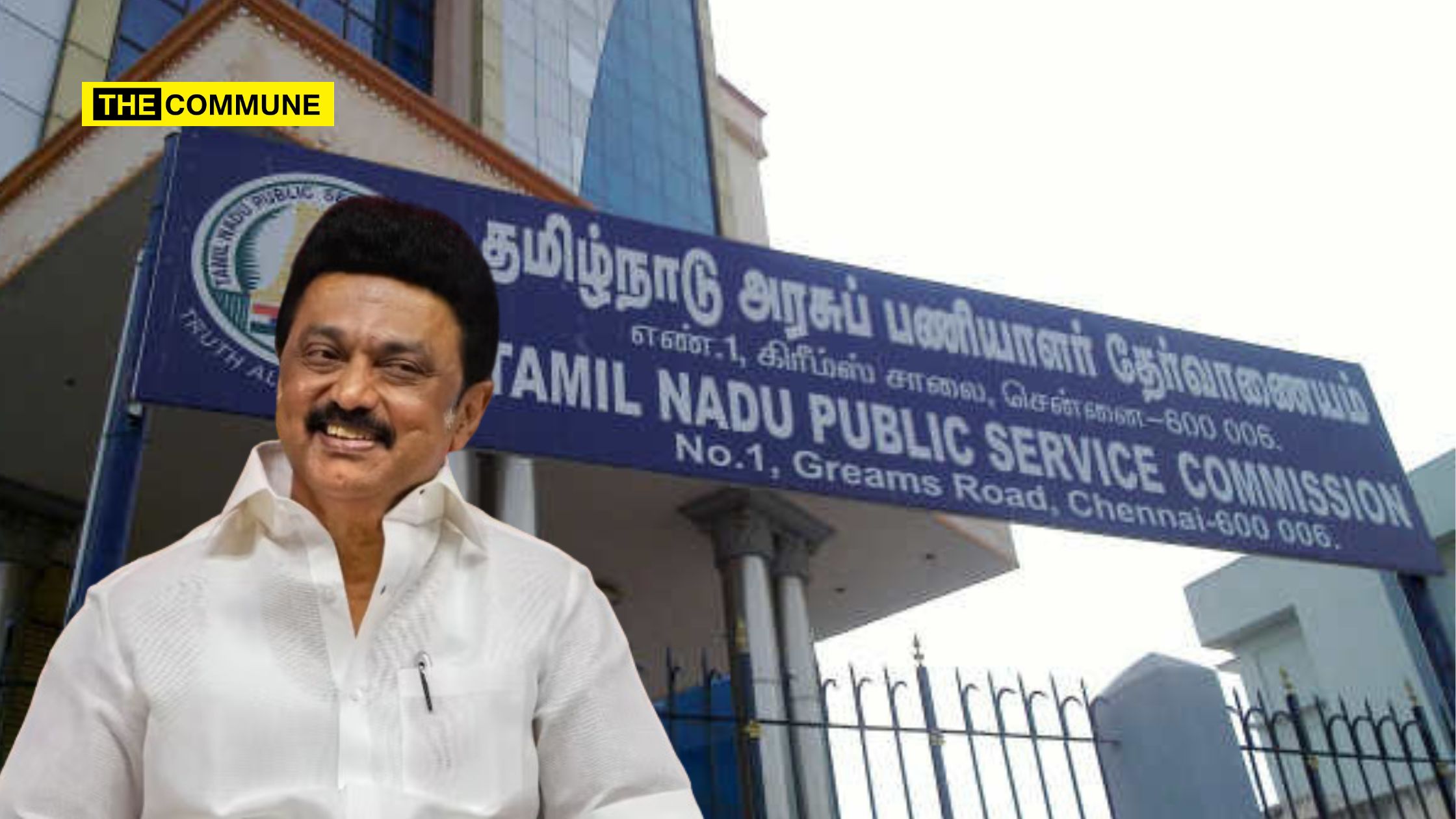
The Tamil Nadu Public Service Commission (TNPSC) has faced intense backlash following the inclusion of an exceptionally trivial question in yesterday’s TNPSC Group 1 exam. Instead of focusing on core topics like governance, law, or public administration, the exam featured a question that raised eyebrows. The question read: “Assertion [A] DMK played a leading role in the Anti-Hindi campaign. Reason [R]: It urged people to write under the Tamil identity.”

By framing the question in this manner, it not only promoted the DMK’s ideological stance but also implied that answering in line with the party’s agenda would benefit candidates seeking top-tier state positions such as Deputy Collector and DSP. This has sparked widespread criticism from various quarters.

Reacting to the controversy, Tamil Nadu BJP president Nainar Nagendran vehemently condemned the move, issuing a statement on his official X account, stated, “The question asked in yesterday’s TNPSC Group 1 exam, “Did the DMK unite people with the Tamil identity during the anti-Hindi agitation? Or not?” is shocking. In the Group 2 exam held last February, a question referring to the Honorable Chief Minister, Mr. @mkstalin, as “Thayumanavar” was raised, which sparked controversy. Now, yet another question related to the ruling party, DMK, has been asked, which is condemnable.

While the glorious history of Tamil Nadu and the great political leaders like Kamaraj, who led noble initiatives, are part of the curriculum, is it the specialty of the Tamil Nadu Public Service Commission to design questions in a way that praises the ruling party in order to test the candidates’ knowledge? Is this the hallmark of the Tamil Nadu Public Service Commission? Is it necessary to ask such questions in exams for posts like Deputy Collector or Deputy Superintendent of Police? Or, is this question included in the eligibility test as a starting point to suggest that those in high-ranking positions must always support the ruling government? Or, questions arise in people’s minds such as whether this question was included in the eligibility test as a starting point for those in high positions to always support the ruling government. Such questions arise in minds of the public. It is not right for the DMK government to focus solely on placing self-promotional questions in candidates exam papers, by not conducting TNPSC exams regularly, by not publishing the results of the exams and leaving the youth of Tamil Nadu without employment opportunities,  and not fulfilling its election promise of “filling 3.5 lakh government posts”. Therefore, I urge @arivalayam to stop using government exam papers as a platform for their empty advertisements and instead focus on increasing job opportunities, keeping the students’ futures in mind.”

Prior to the current controversy, the recently held Group 2 exam also drew criticism for featuring a frivolous question. It asked candidates to identify which government scheme in Tamil Nadu led people to refer to the Chief Minister as “Thayumanavar

Candidates had to choose from five options: the School Breakfast Program, Vidiyal Bus Scheme, Neengal Nalama Scheme (“Are You Fine?”), Makkaludan Mudhalvar Scheme (“CM with the People”), and a fifth option indicating that the answer was unknown.

The question, widely perceived as an attempt to glorify the ruling Chief Minister, shocked not only aspirants but also academicians and the general public, raising concerns about the politicization of competitive exams.

Subscribe to our channels on TelegramWhatsApp, and Instagram and get the best stories of the day delivered to you personally.

Madurai Murugan Devotees Conference Showcases All Six Arupadaiveedu Together

murugan devotees conference arupadaiveedu madurai

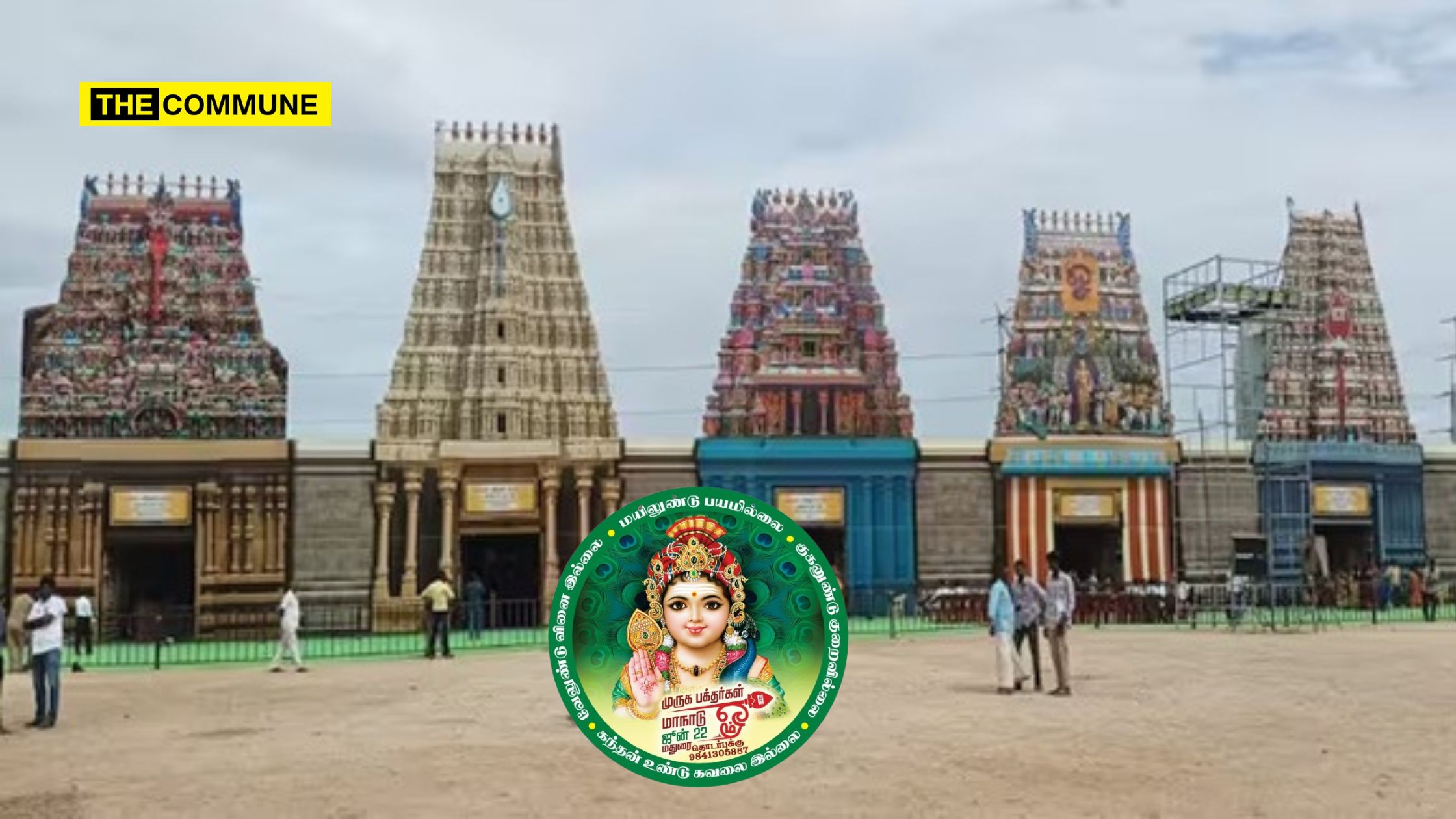
A major spiritual gathering is underway in Madurai as the Hindu Munnani inaugurated a special exhibition of Murugan’s Arupadaiveedu (six sacred abodes) ahead of the Muruga Bhaktas’ Conference/Murugan Devotees Conference scheduled for 22 June 2025 near Pandikovil. The event saw participation from prominent figures including Puducherry Home Minister Namachivayam and Hindu Munnani State President Kadeswara Subramaniam.

The exhibition features meticulously crafted replicas of all six Murugan temples, complete with their moolasthanam (sanctum sanctorum) and frontal structures. Devotees can offer prayers to the sacred vel (divine spear) placed at each replica, while detailed displays highlight the unique spiritual significance of every shrine – from Palani’s Rajaa Alankaram to Tiruchendur’s Vel.

The June 22 conference will feature cultural performances and spiritual discourses, culminating in a massive gathering where lakhs of devotees are expected to collectively chant the Kanda Sashti Kavasam at 6 PM. Organizers emphasize this as the event’s spiritual highlight.

The exhibition offers devotees, especially the elderly, a rare opportunity to experience all six sacred sites in one location – a pilgrimage that would normally require extensive travel across Tamil Nadu. Many attendees expressed gratitude for this innovative approach to devotion.

The conference continues tomorrow with spiritual discourses and cultural programs, expected to draw thousands of Murugan devotees from across South India.

Subscribe to our channels on Telegram, WhatsApp, and Instagram and get the best stories of the day delivered to you personally.
Anti-Hindu, Anti-India Propagandist Rana Ayyub Meets DMK Leader And Tamil Nadu CM MK Stalin

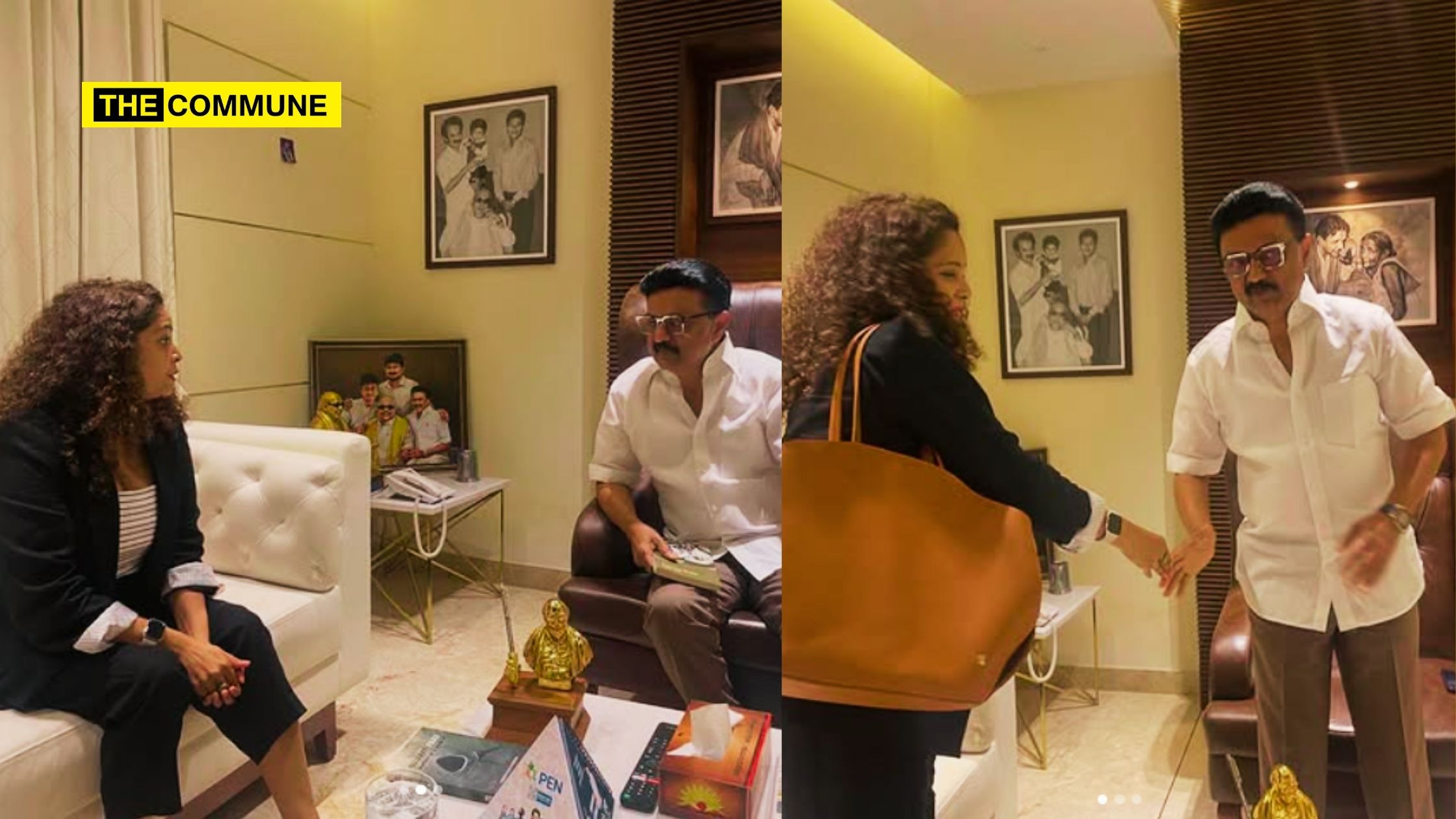
Alleged journalist and anti-India, anti-Hindu propagandist Rana Ayyub met Tamil Nadu Chief Minister MK Stalin on 16 June 2025. Ayyub shared the pictures of the meeting on her Instagram handle.

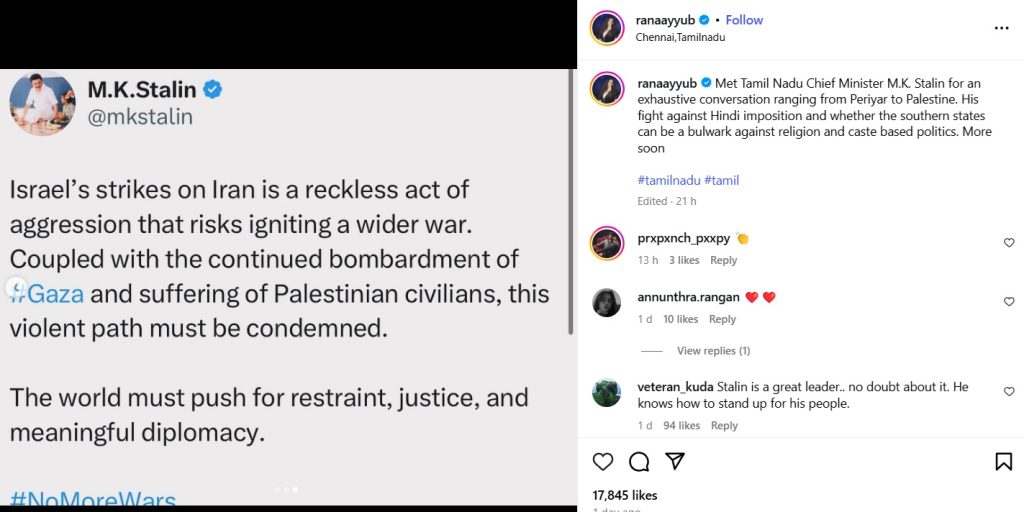
She wrote, “Met Tamil Nadu Chief Minister M.K. Stalin for an exhaustive conversation ranging from Periyar to Palestine. His fight against Hindi imposition and whether the southern states can be a bulwark against religion and caste based politics. More soon” 


View this post on Instagram


A post shared by Rana Ayyub (@ranaayyub)

In addition to the images of the meeting with Stalin, Ayyub also shared a screenshot of Stalin’s post on the Israel-Iran war.

The “more soon” at the end of the post makes one wonder if there will be any sort of collaboration between the two.

The meeting comes at a time when several Dravidianist YouTubers have been pushing the Pakistani propaganda amid Operation Sindoor. It is noteworthy that in the aftermath of India’s precision strikes on terror hubs inside Pakistan, Rana Ayyub faced severe backlash for amplifying unverified claims from Pakistani sources, including false reports of downed Indian jets and captured soldiers.

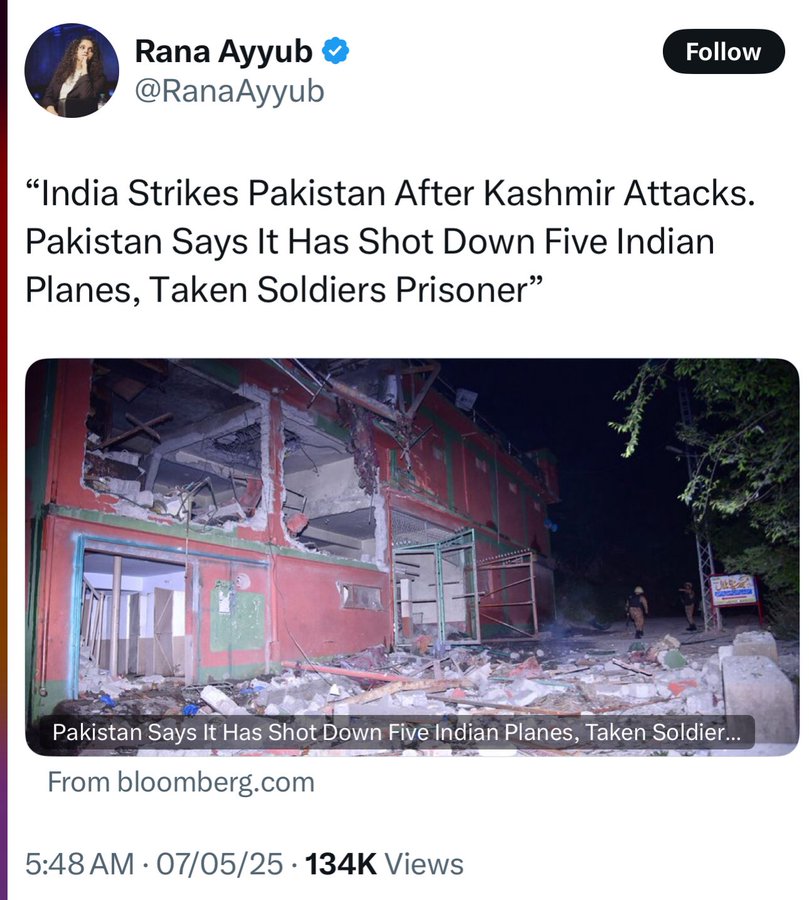
As India’s operation unfolded, Pakistani media and online propaganda networks began circulating false narratives about retaliatory strikes. Among the most prominent voices echoing these claims was ‘journalist’ Rana Ayyub, who shared a Bloomberg article titled, “India Strikes Pakistan After Kashmir Attacks. Pakistan Says It Has Shot Down Five Indian Planes, Taken Soldiers Prisoner.”

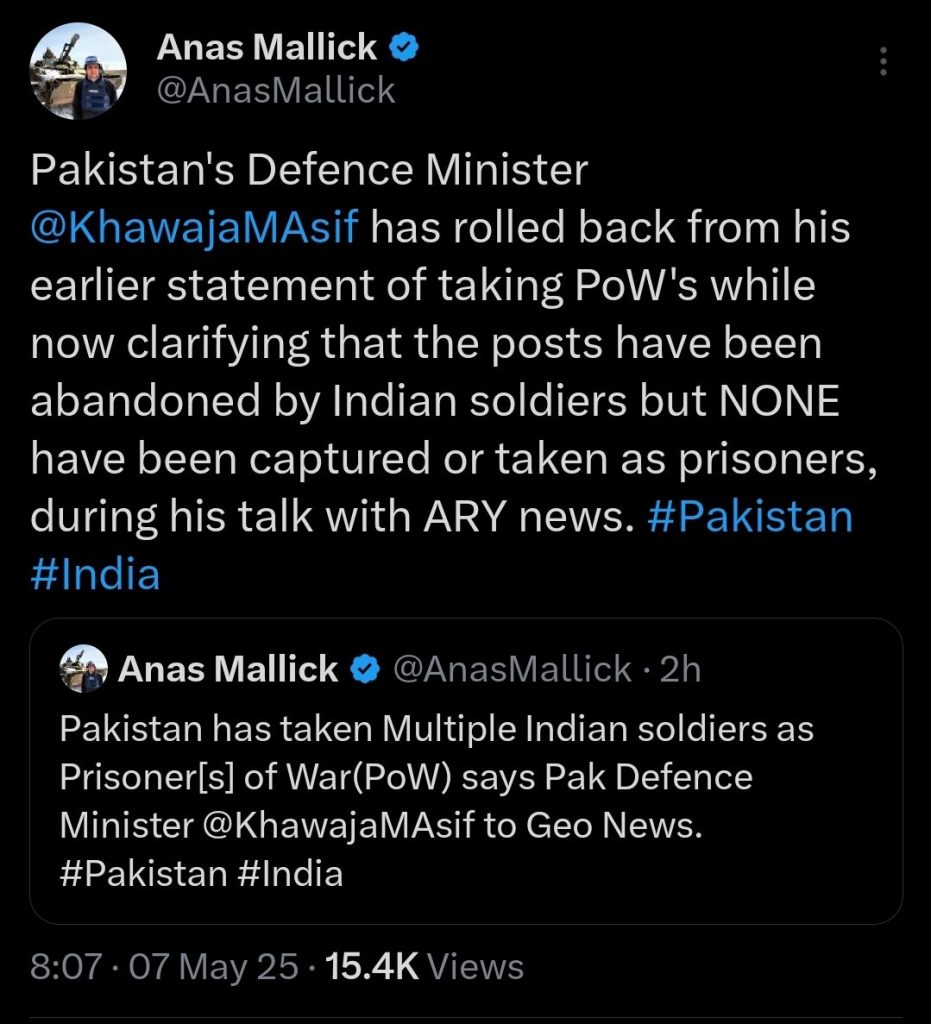
This claim, was widely debunked, and was also not corroborated by Pakistan’s own military, as clarified by the Pakistani Defence Minister, who publicly confirmed that no Indian aircraft were shot down and no Indian soldiers were captured.

Despite mounting evidence that the reports she amplified were false, Ayyub did not retract or delete her tweet. Experts and fact-checkers have also confirmed that videos and images circulated to support Pakistan’s narrative are outdated, including footage from sectarian clashes in Khyber Pakhtunkhwa in 2024 and an old IAF jet crash in Rajasthan.

It is noteworthy that several Dravidianist “influencers” and journalists were also peddling Pakistani propaganda akin to what Rana Ayyub did. Additionally, apart from simping for Pakistan, there are several Dravidianists who also simp for Palestine.

About Rana Ayyub

Rana Ayyub has long been accused of pushing a narrative that is not only anti-Hindu but also alarmingly sympathetic to Islamist extremism and Pakistan’s propaganda machinery. In May 2024, she sparked outrage by declaring that there is “no proof of Islamic terrorism” in India — a statement seen as a blatant attempt to whitewash decades of Islamist attacks, including the 26/11 Mumbai massacre and bombings by groups like Indian Mujahideen and ISIS affiliates.

She has also repeatedly downplayed Pakistan’s role in sponsoring cross-border terrorism, while instead attacking Indian security forces and the government. On global platforms and social media, Ayyub often parrots talking points that mirror Pakistan’s attempts to portray India as a fascist, intolerant state. Whether it’s defending radical elements under the guise of human rights or questioning Indian judicial outcomes in terror-related cases, Ayyub’s interventions frequently align with narratives that seek to undermine India’s sovereignty, destabilize social harmony, and demonize the Hindu majority

Subscribe to our channels on Telegram, WhatsApp, and Instagram and get the best stories of the day delivered to you personally.