Home Blog Page 254

AIADMK IT Wing Member Arrested For Satirical Post On MK Stalin

The ruling DMK has now escalated its crackdown on free speech, entering a new phase where it targets opposition voices through arrests rather than responding with reason or counter-arguments. Instead of engaging in democratic discourse, the government is using state power to go after AIADMK IT Wing members, alleging that they “defamed” and “criticised” Chief Minister and DMK leader M.K. Stalin. In a healthy democracy, challenging those in power especially by the opposition is not just a right, but a vital duty. Yet, the DMK appears more intent on crushing dissent than upholding democratic norms.

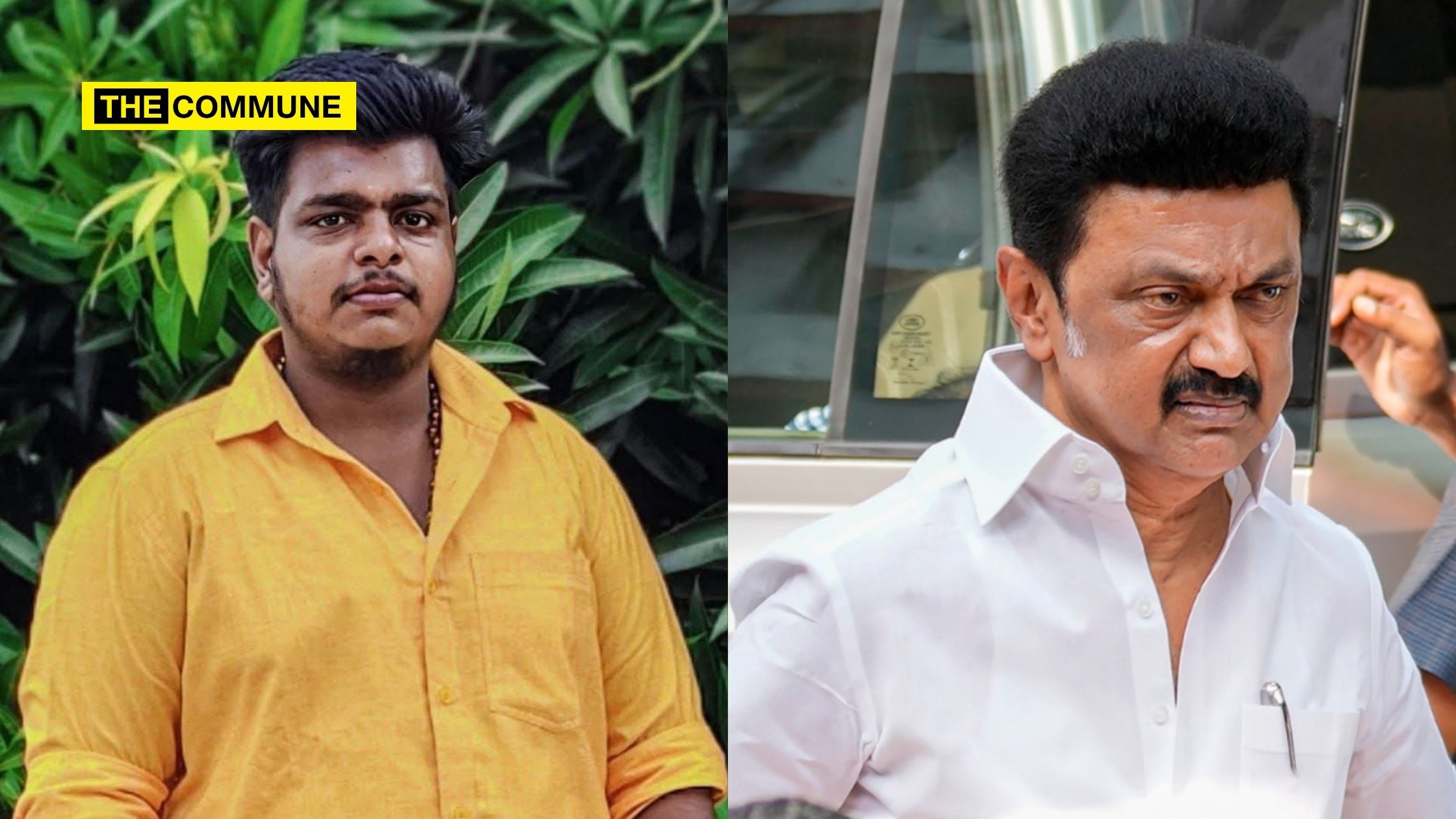
The latest to face this political crackdown is AIADMK IT Wing member Surya Shankar from Thittai Panchayat in Mayiladuthurai District.

The move has sparked widespread condemnation from political observers, especially with the 2026 Tamil Nadu Assembly elections on the horizon. As both Dravidian majors ramp up their rhetoric, it’s the DMK that has stooped to undemocratic methods, arresting AIADMK functionaries instead of responding to criticism politically—a shocking display of authoritarian instinct.

In response, the AIADMK IT Wing slammed the arrest, issuing a statement on their official X (formerly Twitter) handle, “The @AIADMKITWINGOFL, has strongly retaliated against the @DMKITwing, for their derogatory portrayal of the General Secretary of the AIADMK, Puratchi Thamizhar @EPSTamilNadu. Following this, various AIADMK functionaries and cadres also condemned the post and demanded its immediate removal, delivering fitting responses.

In this regard, we strongly condemn the Stalin-model DMK government for its arbitrary arrest of Surya Shankar, a member of @AIADMKITWINGOFL from Thittai Panchayat, Mayiladuthurai District, who shared a cartoon of the puppet Chief Minister that is similar to the one they posted. Does the police have the strength to take action against @DMKITwing, which published a derogatory cartoon depicting the honorable Puratchi Thamizhar @EPSTamilNadu with the same swiftness? The people of Tamil Nadu in just ten months will crush the arrogance of this fascist DMK government, which operates with the hubris of power, believing it can do anything and that no one should speak against it.” 

Subscribe to our channels on TelegramWhatsApp, and Instagram and get the best stories of the day delivered to you personally.

How Kamal Haasan Left Lingusamy In The Lurch, Bankrupted Him, And Destroyed His Film Career

DMK stooge Kamal Haasan, a part-time politician and full-time actor, has now officially secured a Rajya Sabha seat—by effectively mortgaging his party for a deal with the DMK. In doing so, he’s abandoned the very fans and supporters who once placed their hopes in him and stood by his vision for change. What remains is Kamal Haasan—a man of theatrical flair, but political emptiness. Soon, he’ll likely be seated in the Rajya Sabha for the Monsoon Session, parroting the DMK’s line without hesitation.

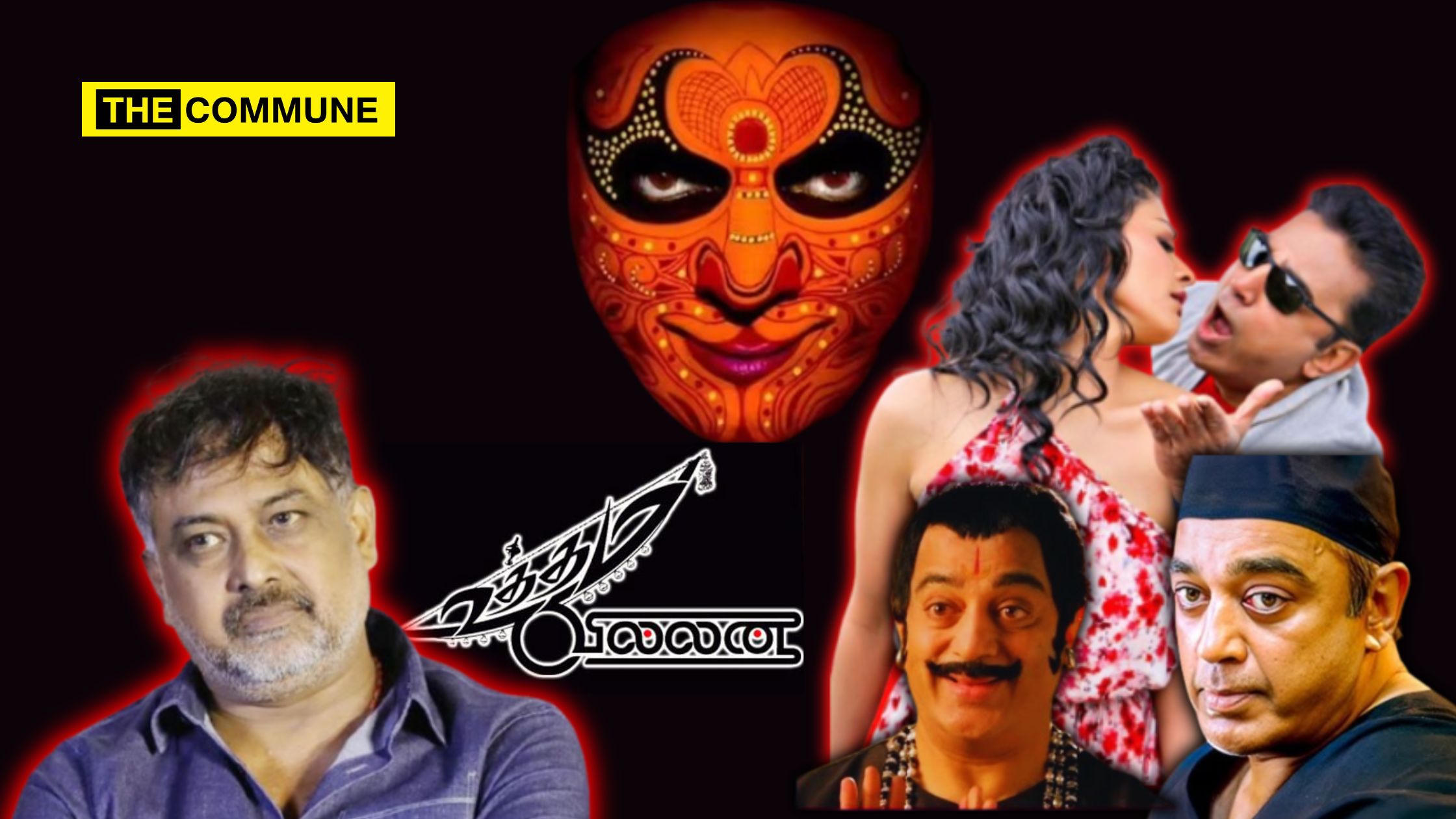
But this isn’t a new chapter in his story—it’s a continuation. The lack of consistency and integrity we now see in his political career mirrors his time as a filmmaker. Director Lingusamy once revealed his experience during the chaotic production of Uttama Villain is a telling example. He described how Kamal’s endless script rewrites derailed the film, drained finances, and ultimately left the production house in ruins. The pattern of unpredictability and self-serving decisions seems all too familiar—on screen or off it.

In a candid interview with journalist Chithra Lakshmanan, director-producer Lingusamy recounted his challenging experience working with Haasan on the film Uttama Villain. While acknowledging Kamal as a brilliant artist, Lingusamy didn’t shy away from sharing how the actor’s unpredictable working style and constant script revisions derailed the film’s production.

He recalled that Uttama Villain started as a promising emotional story, initially meant to feature actor Siddharth in a key role. However, the script was frequently changed—almost weekly, according to Lingusamy causing chaos for the production team and financial strain for his company, Thirrupathi Brothers. Despite Kamal agreeing in writing to compensate by doing another low-budget film (around ₹30 crore), the financial losses had already mounted.

Actor and journalist Chithra Lakshmanan asked, “was ‘Uttama Villain’ the film that put you in the biggest financial trouble?”

Lingusamy responded, “Definitely. I’m not saying this to criticize, but that’s the truth. He had promised to do another film for us; he even gave it in writing that he’d make a film for 30 crores. We didn’t put any pressure on him; it was out of immense respect for him that I would frequently go and ask him about it. We even asked him recently, and he’s still said he’ll do a film for us. We went to him willingly, but what we asked for was different. As Gautham Menon said in that comedy, ‘What I asked for…’ Don’t you know what we would wish for, sir? We came wanting films like ‘Thevar Magan’ or ‘Apoorva Sagodharargal’. Those are the kinds of films we wished for based on his body of work. He narrated a story, a super commercial script, like Velu Nayakar going from here to save his younger brother and returning. He described the action as a superb film. We were thinking of casting Siddharth as the brother. The thing is, he would change things every week; that’s his issue. He’s done that with many films before, and they’ve been successful. That’s his artistic pursuit, his way of doing things. If I had gone only as a director, it might have been balanced differently, but because I went as a producer, he would constantly change things and narrate new ideas on the fly. Bose sir asked him to do the film ‘Drishyam,’ but noting two prominent actors he said they wouldn’t do it, “Why brother is even asking for this?” Sir, I respect him immensely. Bose might deal with him a bit like a producer, but I see him as a great artist. That’s my problem too.”

Adding to the frustration, Lingusamy revealed that when he proposed to remake the Malayalam hit Drishyam with Kamal in the lead, the actor declined—only to go ahead and do the project later with a different production house. This move, Lingusamy implied, felt like a betrayal.

Lingusamy recounted, “At that time, there was good content, you know, sir? We were doing five films continuously, and all doing well. Then he said he wanted to do the story for ‘Uttama Villain’. Bose didn’t like it at all. He was waiting to acquire the full rights to ‘Drishyam.’ He had even shown him the film. After seeing it, he said he wouldn’t do it and went to another company to make a film.”

He then lamented, “Honestly, as an artist, you can’t find anyone like Kamal sir. I myself have learned so much from his films, like ‘Thevar Magan’ – how many times do I say it? As an artist, he is a truly amazing artist.”

During the post-production phase of Uttama Villain, Lingusamy attempted to bring the film back on track, suggesting several changes after viewing rough cuts. Although Kamal appeared to agree at the time, none of those suggestions made it to the final edit.

Lingusamy said, “After I make this film, if you face any issues, let me know, and I’ll take care of whatever’s needed. But I’m going to make this film as my dream project. I just made one request, ‘I won’t interfere at all, sir, but for every film, we usually suggest a few corrections after watching the final cut. I’ll watch the film and suggest corrections, sir. You can do that then.’ He said, ‘Please, do tell.’ So, Balaji sir and I prepared a list and took it to him. He said he’d consider everything we asked for, but he didn’t implement them, sir. If he had, the film might have turned out much better, honestly. Even now, that edit is such a fantastic one, I genuinely believe it. He honestly agreed, but I don’t know what he thought; he didn’t do it the next day. He just left it as is. The next day, when I went home, a show was playing. Khushbu madam and everyone were sitting and watching the film. He says again, ‘They were really enjoying it! Trust me, just leave it as it is.’ He then said again, ‘Tell your brother too, tell him I said this.'”

Subscribe to our channels on TelegramWhatsApp, and Instagram and get the best stories of the day delivered to you personally.

Meet IIT Gandhinagar PhD Scholar Thanglienmang Haokip, Who Has Expressed His Perversion Against Meiteis & Love For Militancy

Meet IIT Gandhinagar PhD Scholar Thanglienmang Haokip, Who Has Expressed His Perversion Against Meiteis & Love For Militancy

Over the past few weeks, The Commune has been reporting on how IITs in India have begun emerging as leftist dens. IIT Bombay, IIT Gandhinagar, IIT Guwahati, and IIT Chennai feature in that list.

Just recently, we reported on how IIT Bombay Humanities professor Suryakant Waghmore had mocked Hindus and called vegetarianism as “casteist” and a “social illness”.

IIT Gandhinagar saw a professor supporting Hamas and separatist Umar Khalid. Yet another IIT Gandhinagar professor in the Humanities department made his MA students work on theses focusing on topics related to Islam.

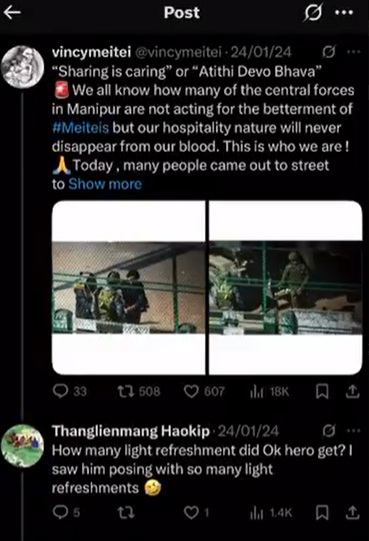
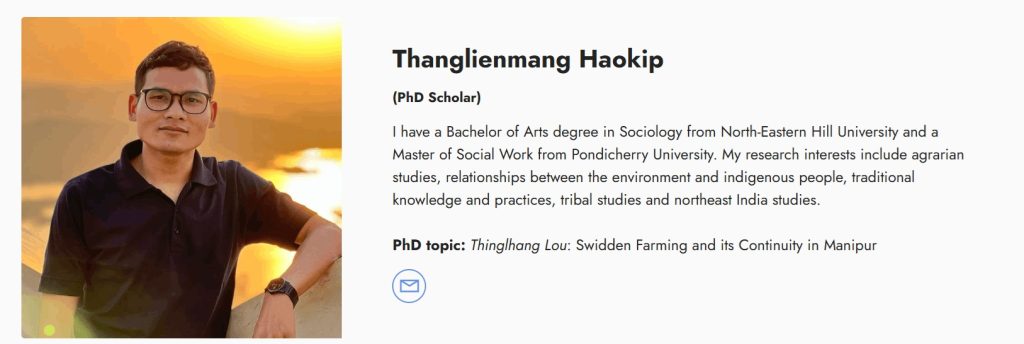
Now, another case of perversion and leftist ideological thinking has surfaced, this time from a PhD scholar named Thanglienmang Haokip.

Who Is Thanglienmang Haokip?

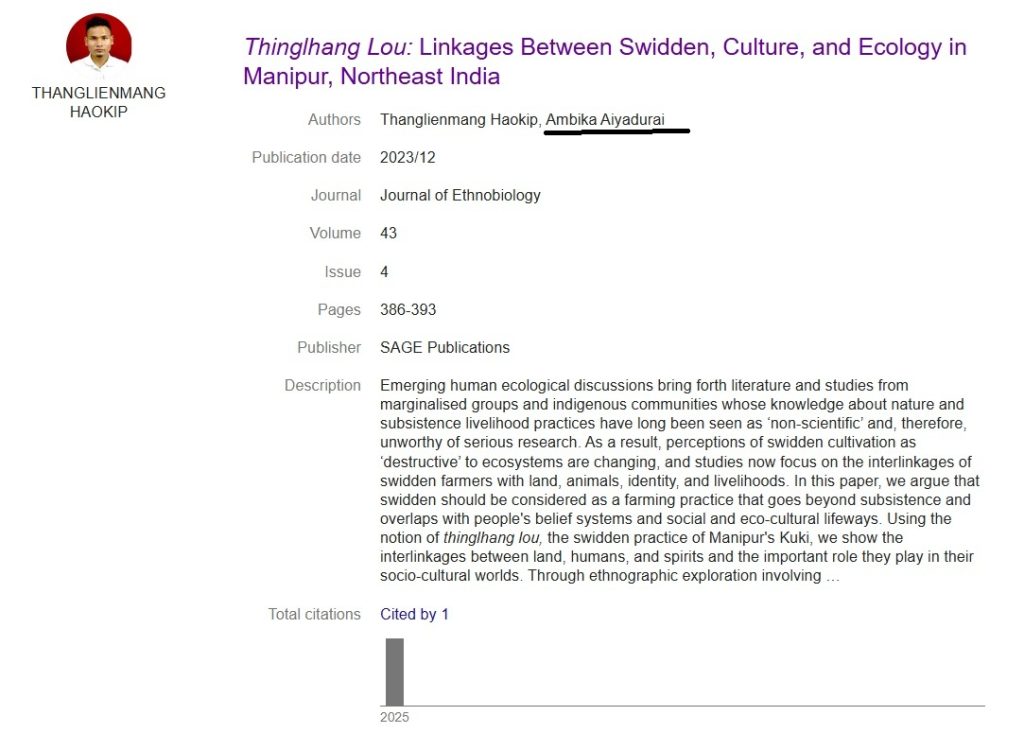
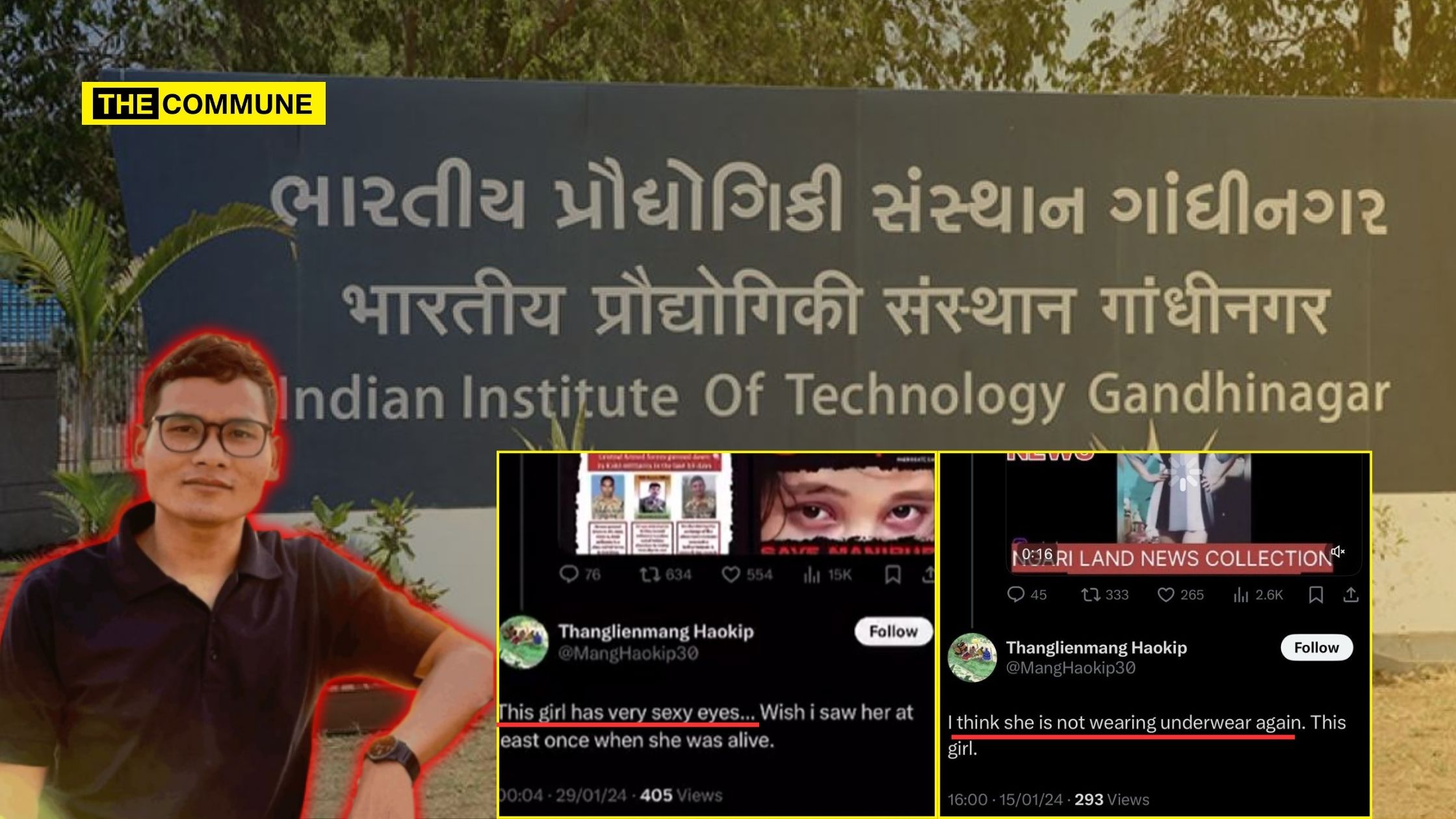
A series of his inflammatory and perverse posts have come to light from his X handle. As per the institute’s website, Haokip has a Bachelor of Arts degree in Sociology from North-Eastern Hill University and a Master of Social Work from Pondicherry University. My research interests include agrarian studies, relationships between the environment and indigenous people, traditional knowledge and practices, tribal studies and northeast India studies. His PhD topic was Thinglhang Lou: Swidden Farming and its Continuity in Manipur

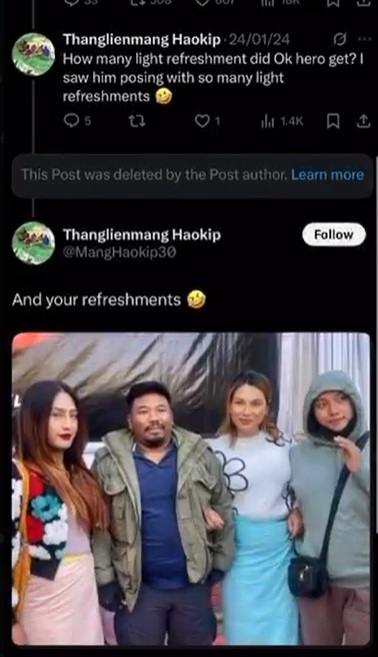
Let’s take a look at some of his perversive behaviour online that was exhibited through his social media posts.

Perverted Comments Against Meitei Hindus

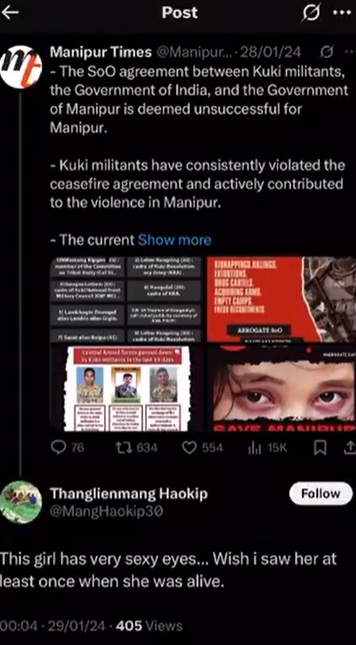
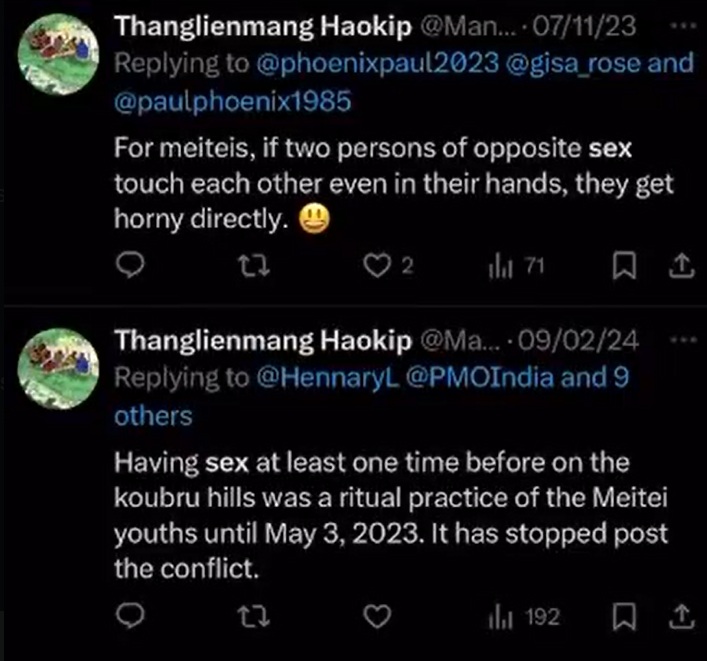
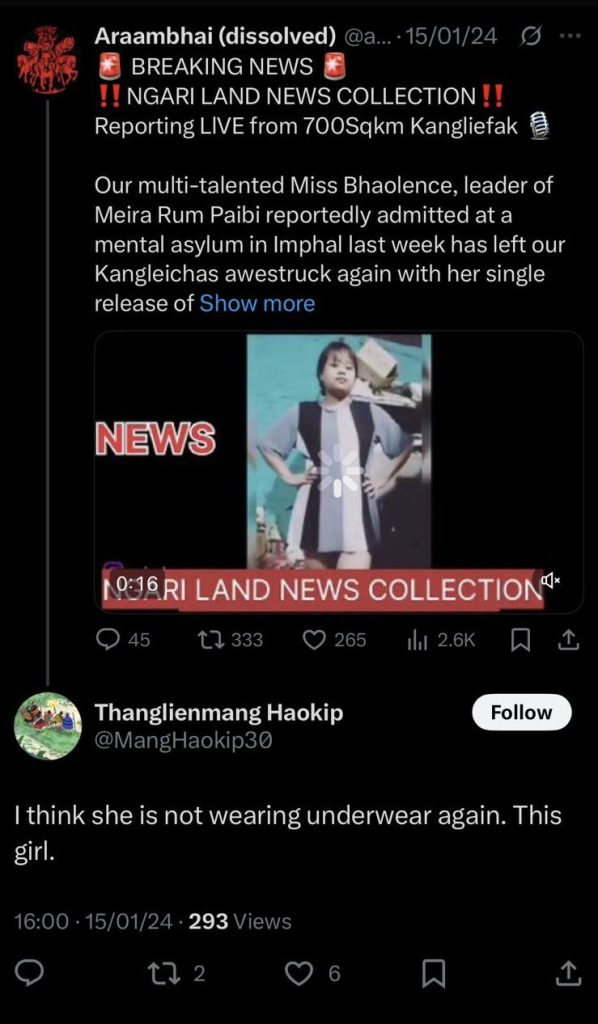
Screenshots of his posts, which have been widely circulated, appear to show advocacy of extremist positions and include offensive and sexually suggestive remarks directed at underage girls belonging to the Meitei Hindu community. Here are a few examples.

He even went to the extent of mocking the rape and murder of minor Meitei girl by the Kuki militiants by sexualizing it.

In some older tweets, he couldn’t stop talking about the Meiteis in a derogatory manner which only exposed his extreme perversion.

Supporting Militancy

Haokip has been seen promoting militant rhetoric in connection with the Manipur ethnic conflict.

PhD Thesis, Guide & Present Work

Haokip is said to have completed his doctoral research under the supervision of Prof. Ambika Aiyadurai in the Humanities and Social Sciences department at IIT Gandhinagar.

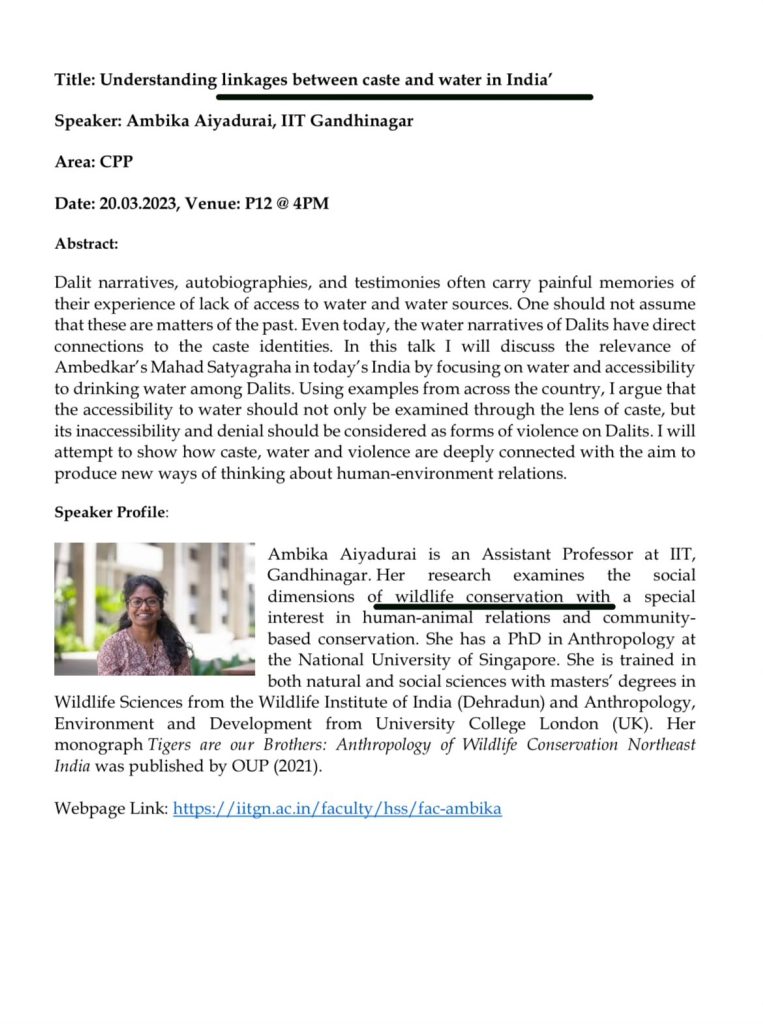
Interestingly, Aiyadurai is a wildlife conservation professor but why is she researching on caste and water at a premier technological institute?

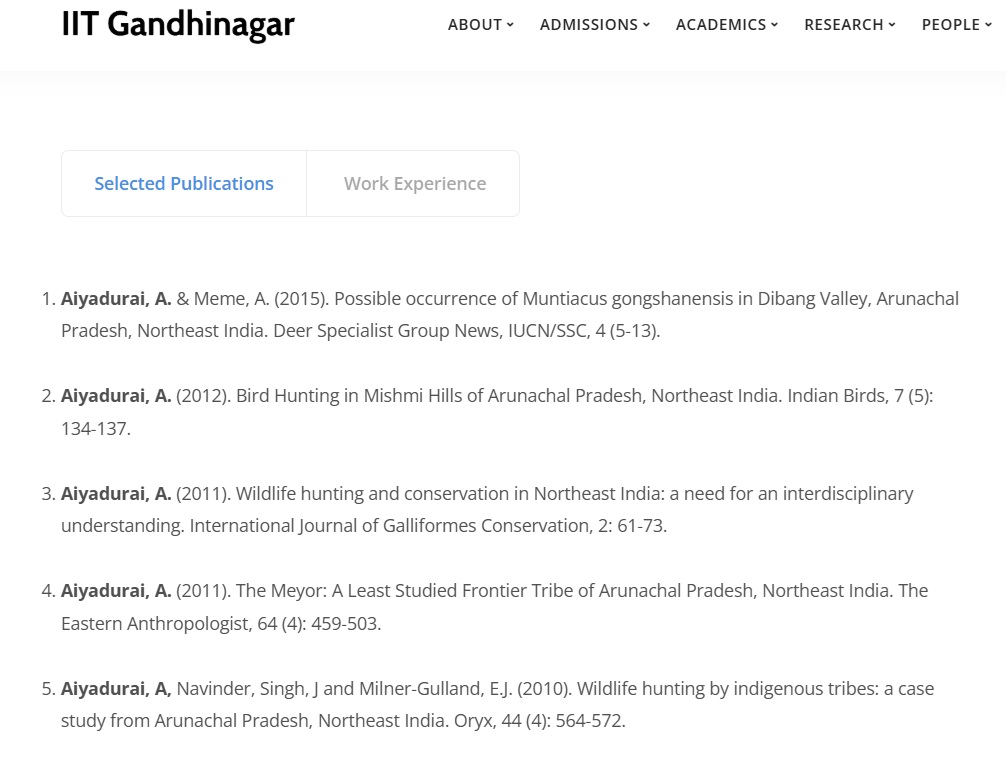
As per her IIT Gandhinagar website profile, Aiyadurai’s area of research intersts include ● biodiversity conservation, human-animal relations, natural resources management, indigenous people and livelihoods, conservation and development. Most of her research papers are centered around the North-east. Is that the region why most of her students are also from the north east?

Another interesting information that has surfaced is that Haokip has been selected for an IKS post-doctoral fellowship for 2025-26 and the topic of his project is “Indigenous Beliefs and Practices in Northeast India: A Case Study of the Kukis” hosted by IIT Guwahati!

As we dig deeper, the IITs and their Humanities departments keep throwing up muck that only prove why it was a wrong decision to bring in the social sciences into their campuses – one that has led to its complete rot.

Subscribe to our channels on Telegram, WhatsApp, and Instagram and get the best stories of the day delivered to you personally.

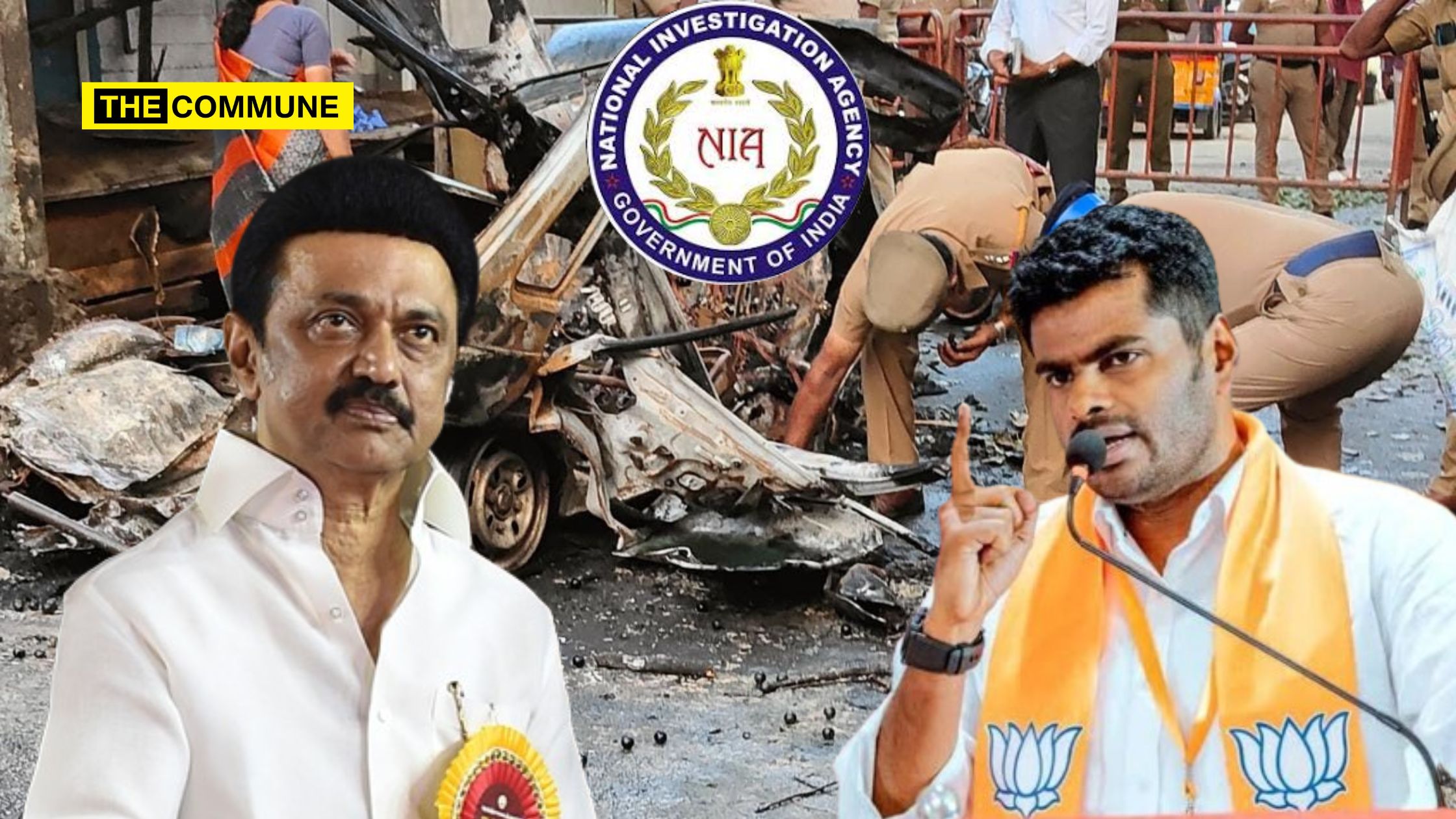
‘”Just A Cylinder Blast”, They Said’: Annamalai Slams DMK As NIA Links 2022 Coimbatore Bomb Blast To ISIS Recruitment

BJP Annamalai slams DMK for minority appeasement in 2022 Coimbatore blasts case. DMK for minority appeasement in 2022 Coimbatore blasts case. NIA arrests 4

Former Tamil Nadu BJP chief K. Annamalai has sharply criticized the DMK and its allies for downplaying the 2022 Coimbatore car bomb blast, which involved a suicide attack carried out by Jamesha Mubeen using a vehicle-borne improvised explosive device (VBIED) near the Sangameswarar Temple. Annamalai accused the ruling coalition of attempting to label the incident as a cylinder blast in an effort to appease minority communities, particularly Muslims.

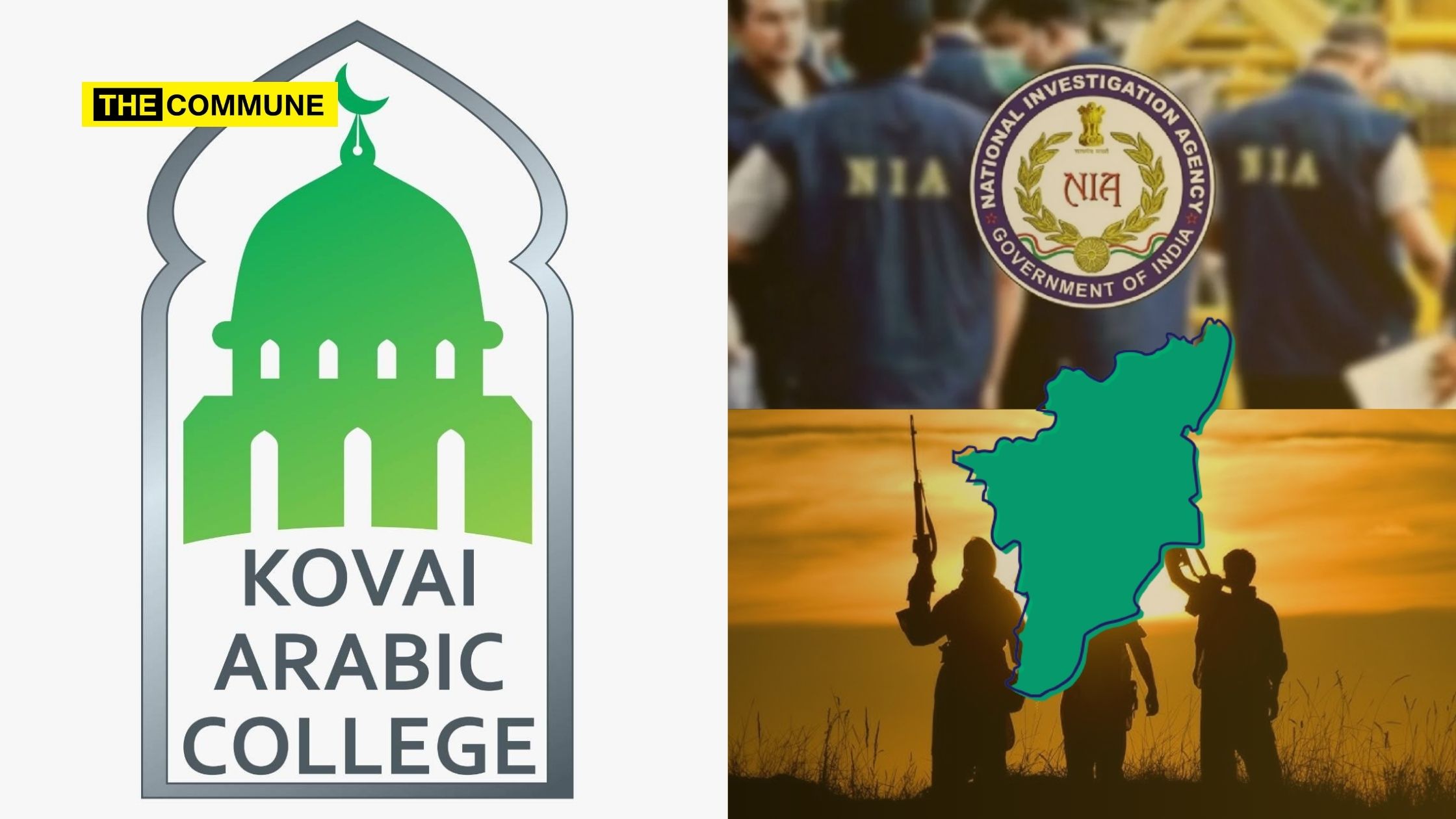
On 18 June 2025, the National Investigation Agency (NIA) arrested four more individuals in connection with the ISIS-linked radicalisation and recruitment network tied to the Coimbatore-based Kovai Arabic College. These arrests bring the total number of individuals apprehended in the case to eight. The case stems from the investigation into the Coimbatore car bombing incident.

Reacting to the latest developments, Annamalai posted on X, stating, ““Just a cylinder blast”, they said. It turns out it was a full-blown ISIS-linked radicalisation and recruitment network operating under the nose of the DMK Govt, using classrooms as terror factories. 4 more were arrested yesterday, 8 in total, all linked to the Coimbatore Suicide Bombing in October 2022. While the NIA is working tirelessly to dismantle these terror cells, the DMK continues to downplay threats, brushing off suicide bombing incidents as mere accidents. When appeasement replaces accountability, national security pays the price. TN deserves better.”

K. Annamalai also attached NIA’s press release which read, “NIA Press Release 4 MORE ACCUSED ARRESTED BY NIA IN TN RADICALISATION AND RECRUITMENT CASE INVOLVING KOVAI ARABIC COLLEGE New Delhi, 18th June 2025 The National Investigation Agency (NIA) has arrested four more accused in the Tamil Nadu Radicalisation and Recruitment case, an off-shoot case of Coimbatore car bomb blast case, taking the total arrests to eight in this case so far. The accused persons identified as Ahmed Ali, Jawahar Sathik, Raja Abdullah @ MAC Raja, and Sheik Dawood the four accused had been radicalized by Jameel Basha, the founder of Madras Arabic College, who, along with his associates, was involved in recruiting gullible youth and subtly infused Salafi-Jihadi ideology to them in the guise of imparting Arabic language classes in Tamil Nadu. NIA had earlier arrested and Charge sheeted Jameel Basha and his associates Irshath, Syed Abdur Rahman and Mohammed Hussain, who were using the class-rooms and social platform to carry out their anti-national radicalization and recruitment activities. NIA investigations have revealed that the accused had promoted Khilafat ideology and martyrdom through jihad, advocating violence and armed struggle to establish an Islamic state after removing the democratically elected government. The radicalization and recruitment activities had led to the Coimbatore car bomb blast in October 2022, in which the suicide bomber Jamesha Mubeen carried out a Vehicle Borne IED attack in front of an ancient temple in Coimbatore NIA is continuing with its investigation in the case RC.No.01/2023/NIA/CHE (TN ISIS Radicalization and Recruitment Case), as part of its efforts to check radical terror activities against the nation.”


Subscribe to our channels on TelegramWhatsApp, and Instagram and get the best stories of the day delivered to you personally.

How “Arabic Colleges” Targeted Orphans, Offered Free Arabic Classes In Tamil Nadu For ISIS Recruitment

nia isis recruitment arabic college

What seems to have begun as a ‘charitable’ initiative offering free Arabic education has now been exposed as a sinister front for ISIS recruitment in Tamil Nadu. In a sweeping crackdown, the National Investigation Agency (NIA) arrested four individuals accused of running Arabic colleges that targeted orphaned and emotionally vulnerable youth to indoctrinate them with extremist ideology.

The arrests were made on Tuesday in coordinated raids across Chennai, Coimbatore, and Dindigul. The accused — Jawahar Sadiq and Ahmed Ali from Coimbatore, Sheikh Dawood from Palavakkam in Chennai, and Raja Ahmed from Dindigul — are alleged to have played key roles in a network that used Arabic language education as a cover for radicalization. It is believed that these four individuals were brainwashed into terrorists by Madras Arabic College founder, Jamal Basha.

Arabic Colleges As A Cover For Recruitment

According to NIA investigators, the arrested individuals operated Arabic institutions that provided free language classes, specifically attracting students from disadvantaged backgrounds. The strategy, officials say, was deliberate: identify and isolate youth lacking parental care — orphans, children from broken homes, or those emotionally adrift — and gradually radicalize them under the guise of religious education.

One of the accused, Sheikh Dawood, has reportedly served as coordinator of the Trichy Arabic College since 2022. Authorities believe that the institution, like others in the network, was used not only to recruit but also to shape and harden young minds for violent jihad.

The Mastermind And Network

The operation is believed to have been orchestrated by Jamal Basha, the founder of Madras Arabic College. Pasha was arrested earlier, along with key associates Isha Syed Abdul Rahman and Mohammed Hussain, and a chargesheet has been filed against them. Their method involved using both physical classrooms and online platforms to spread Salafi jihadi teachings and promote pro-Khilafat ideology — rejecting democratic governance in favor of an Islamic state.

The NIA’s probe has also linked this ideological network to the October 2022 Coimbatore car bomb blast, carried out by suicide bomber Jamisha Mubeen. Officials say Mubeen had been radicalized through the same ecosystem and may have been financially and ideologically supported by its members.

The hallmark of this recruitment strategy, according to investigators, was emotional manipulation. By targeting those without strong family structures or parental guidance, the recruiters created dependency and loyalty. Students were first groomed under the pretense of religious learning, and over time, exposed to extremist narratives and calls to jihad.

The recent arrests are seen as key to understanding how the façade of Arabic education was used to mask operations aimed at building a homegrown terror base. Currently, all four newly arrested suspects are being interrogated in Chennai. Investigators are now working to identify how many students were radicalized, whether any sleeper cells were formed, and the extent of this network’s reach across Tamil Nadu and beyond.

Subscribe to our channels on TelegramWhatsApp, and Instagram and get the best stories of the day delivered to you personally.

The Forgotten Genocide: The Brutal History Of Tamil Indentured Laborers In Guadeloupe

For over 150 years, the horrific suffering of Tamil indentured laborers in Guadeloupe remained buried under colonial silence. But a groundbreaking research paper presented at the 2025 Global India Diaspora Conference has finally exposed the genocide of over 30,000 Tamil Hindus in this French Caribbean colony.

A System of Deception and Death

Between 1845 and 1900, tens of thousands of Tamils from the Madras Presidency were lured into indentured servitude in Guadeloupe under false promises of prosperity. Instead, they were subjected to:

  • Brutal working conditions on sugar plantations, with 16-hour workdays under scorching heat.
  • Starvation, disease, and torture, leading to an estimated 30,400 deaths—a figure derived from French colonial records.
  • Forced Christian conversions, with Hindu practices banned and Tamil language suppressed.

The Guadeloupe Gandhi: Henry Sidambaram’s Fight for Justice

One remarkable figure who challenged these oppressive conditions and secured justice for his community was Henry Sidambaram (1863–1955) — a Guadeloupe-born man of Tamil ancestry — often called the French Caribbean’s Gandhi. His crusade for justice and civic rights for the Girmityas stands as a powerful affirmation of human dignity and resistance against systematic racial discrimination.

Starting his legal battle in 1904, Henry Sidambaram fought relentlessly for nearly two decades against a policy that kept Girmityas stateless, powerless, and without civic representation. His struggles culminated in a landmark French court ruling in 1923, which recognized the Girmityas’ French citizenship and their fundamental right to vote — a dramatic reversal after decades of systematic disenfranchisement. This ruling opened a path toward civic participation for Guadeloupe’s diaspora community and a new era in their collective future.

Henry’s resistance went far beyond securing the vote; it challenged the oppressive structures that kept the Girmityas stranded at the margins of society. His campaigns drew upon the moral power of justice, fairness, and human dignity — much in the way Mahatma Gandhi used non-violence and civic resistance in India’s freedom struggle. His achievements forced the French administration to account for its crimes and to dismantle its policy of systematic subjugation.

He fought this battle not just in the courtrooms but through education, civic organizing, and extensive campaigns to raise awareness about the Girmityas’ condition. His legal team presented extensive archival documents, testimony from survivors, and data demonstrating the systematic violation of human rights. This sustained pressure forced French lawmakers and administrators to confront their own conscience — or at least their own legal obligations — and to enable the Girmitya community to vote, own property, and pursue education alongside their fellow Guadeloupeans.

Today, Guadeloupe’s Girmitya descendants view Henry Sidambaram as their greatest leader — a symbol of resistance, reconciliation, renewal, and justice. His persistence resonates profoundly within the diaspora, affirming their collective ability to conquer oppressive regimes and illuminate the path toward fairness. His story stands as a powerful reminder that historical crimes must be recognized and addressed if reconciliation and healing are to be genuine.

Furthermore, the Girmitya community’s struggles under French policy underscore the universal necessity for vigilance, education, civic participation, and justice. Without these safeguards, the ghosts of the past can continue to undermine the future. Henry Sidambaram’s struggles illuminate a powerful precedent — a precedent affirming that justice can be secured through persistence, civic activism, and moral conviction — even under the most oppressive regimes.

A Legacy Erased, Now Revived

For years, left-leaning historians in India ignored this genocide, while French textbooks whitewashed colonial crimes. But thanks to scholars like B. Jagannath and M. Kumaresan who have written a paper on the Girmitya genocide, the truth is finally emerging. Their research, backed by archival evidence from India and France, proves, this was not just exploitation—it was systematic extermination. Tamil laborers were treated worse than slaves, with no legal protections. France needs to acknowledge this genocide, just as it has for other colonial atrocities.

Why This Matters Today

The Tamil diaspora in Guadeloupe, now numbering over 100,000, still preserves its heritage through Hindu temples, Thee Midhi (firewalking), and folk songs. But justice remains denied. As global calls for colonial reparations grow louder, this research demands official recognition of the Tamil genocide by France, that this genocide be included in school curricula worldwide. They also demand reparations for descendants of indentured laborers.

The world can no longer ignore this hidden Holocaust of the Caribbean.

(With inputs from B Jagannath’s paper on the genocide)

Subscribe to our channels on Telegram, WhatsApp, and Instagram and get the best stories of the day delivered to you personally.
“Not Our Problem”: University Of Madras Distances Itself From Loyola College’s Dubious Don Bosco France Film Diploma Scandal

loyola college don bosco paris rti

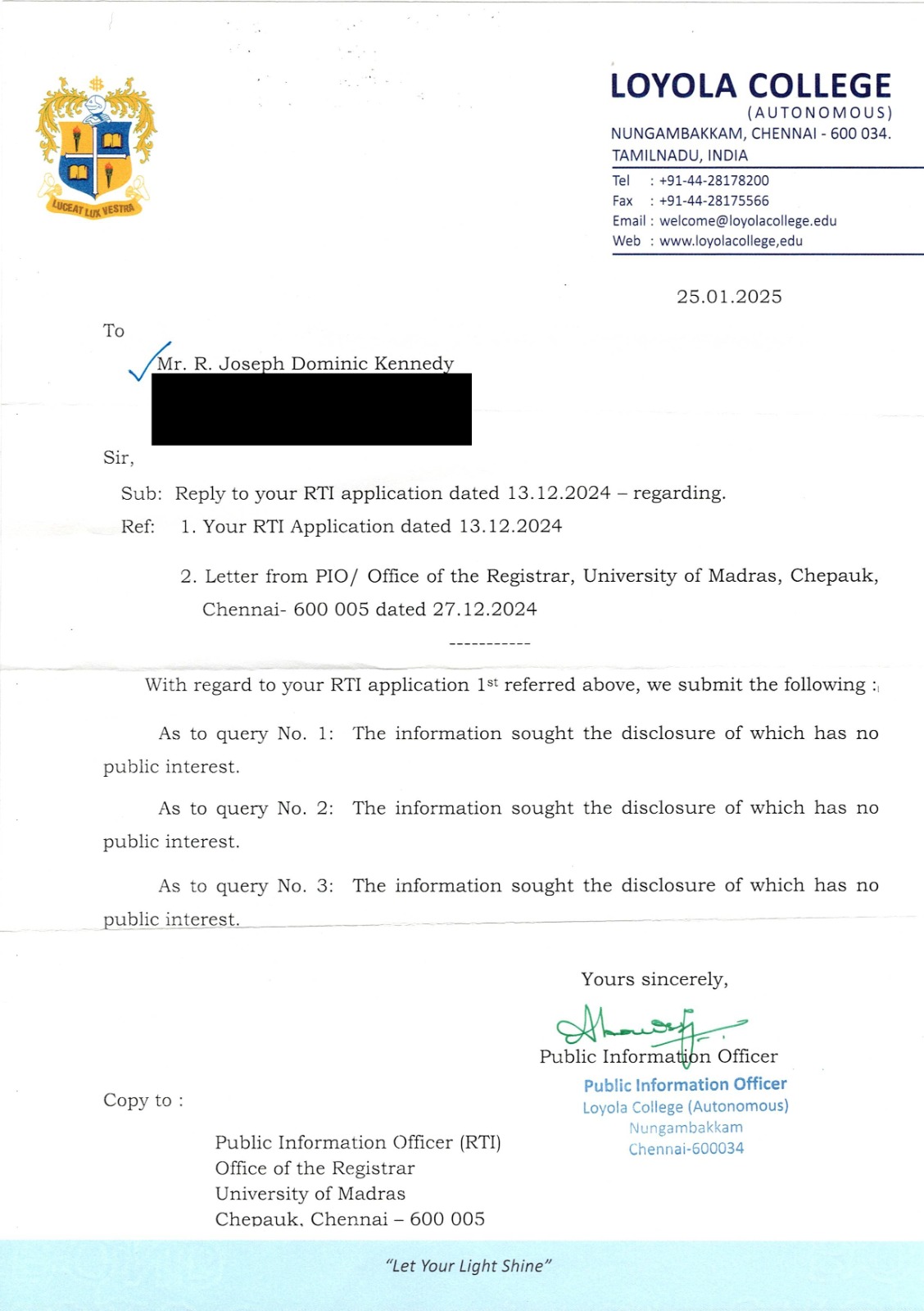
In a bizarre development, the University of Madras, which has 131 affiliated colleges has sidestepped direct accountability for Loyola College’s controversial “Diploma in Filmmaking (AI) France” program, instead directing the affiliated institution to respond to queries about the unauthorized collaboration with Paris-based Don Bosco International Media Academy (DBIMA).

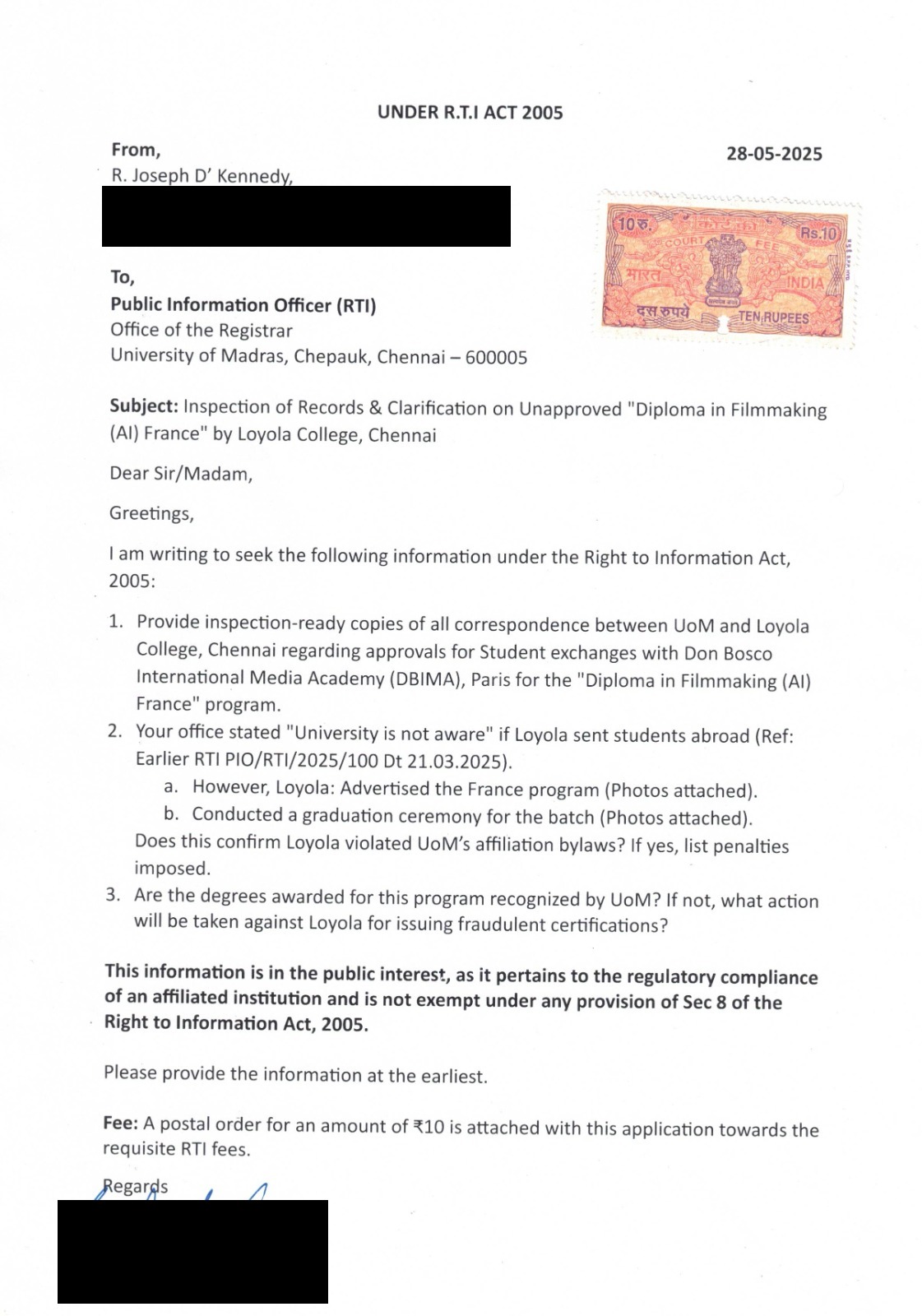
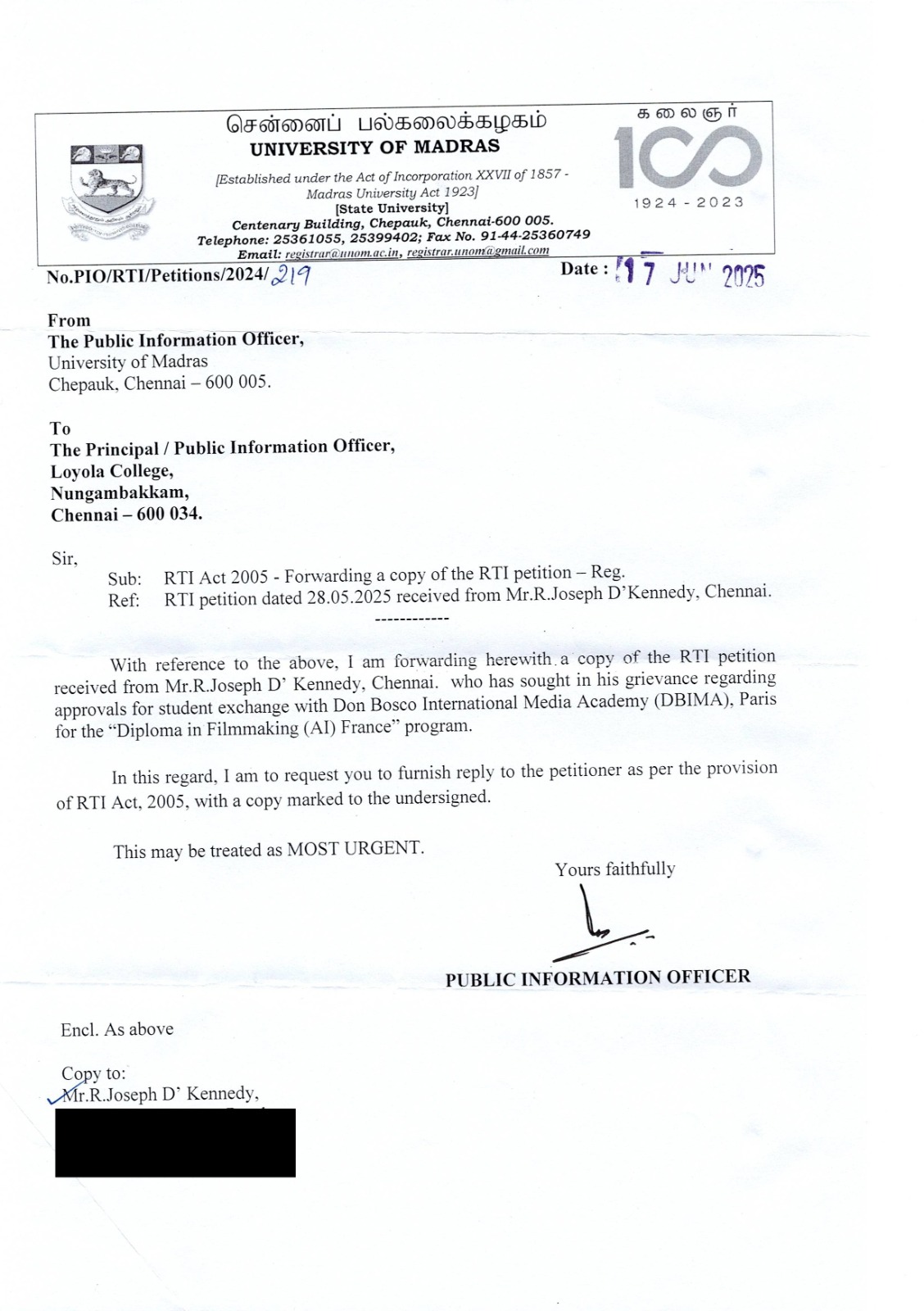
The controversy came to light when the university’s Public Information Officer, responding to a Right to Information (RTI) application filed by R. Joseph Kennedy, an alumnus of Loyola College, Chennai and representative of ECA (Ending Clergy Abuse) India, forwarded the query to Loyola College rather than providing definitive answers about program approvals. The RTI sought clarification on correspondence between the university and college regarding the France exchange program, potential violations of affiliation bylaws, and the validity of degrees awarded – raising serious questions about why the parent university would defer to its affiliate on matters of regulatory compliance.

This shuffle has raised serious questions about University of Madras oversight mechanisms, particularly since Loyola College had aggressively marketed the program as a prestigious international qualification. The institution went so far as to organize a full-fledged graduation ceremony for students despite the University of Madras now suggesting it never approved the collaboration.

Adding star power to the questionable program, Loyola had enlisted prominent figures from the Tamil film industry, including renowned cinematographer P.C. Sreeram, actor Arya, veteran actor Nassar, and acclaimed editor Lenin. These high-profile associations lent an air of legitimacy that now appears potentially misleading to students who invested significant sums in the program.

Kennedy expressed outrage at the development. “This isn’t just administrative negligence – it’s a complete failure of the university’s duty to safeguard academic standards and protect students, The fact that they’re asking the accused party to investigate themselves reveals the depth of the problem.”

“They routinely dismiss legitimate queries about their operations by hiding behind vague claims of ‘no public interest.’ I won’t be surprised if they respond to this current scandal with similar evasions rather than providing transparent answers.” said Kennedy.

“DBIMA must come clean about what due diligence—if any—was conducted before attaching its name to Loyola College, an institution whose repeated scandals have made it synonymous with academic corruption in India. If this partnership proves fraudulent, I expect DBIMA to immediately revoke all certifications and publicly account for its role in misleading students. The Salesian order must not dare handle this with the same institutional cowardice displayed during the DBPPA Egmore scandal—that debacle exposed their willingness to sacrifice integrity to protect reputations.” Kennedy added.

As the Loyola-Don Bosco diploma scandal unfolds, it raises broader questions about the proliferation of international collaborations in Indian higher education and the adequacy of existing regulatory frameworks to ensure their legitimacy. With both the University of Madras and Loyola College now under scrutiny, the academic community awaits clearer answers about how such a program could operate without proper approvals.

Subscribe to our channels on TelegramWhatsApp, and Instagram and get the best stories of the day delivered to you personally.
Indore Love Jihad Case: MP CM Gives Free Hand To Police To Nab Congress Councillor Anwar Qadri Accused Of Giving Money To Muslim Boys To Trap Hindu Girls And Convert Them

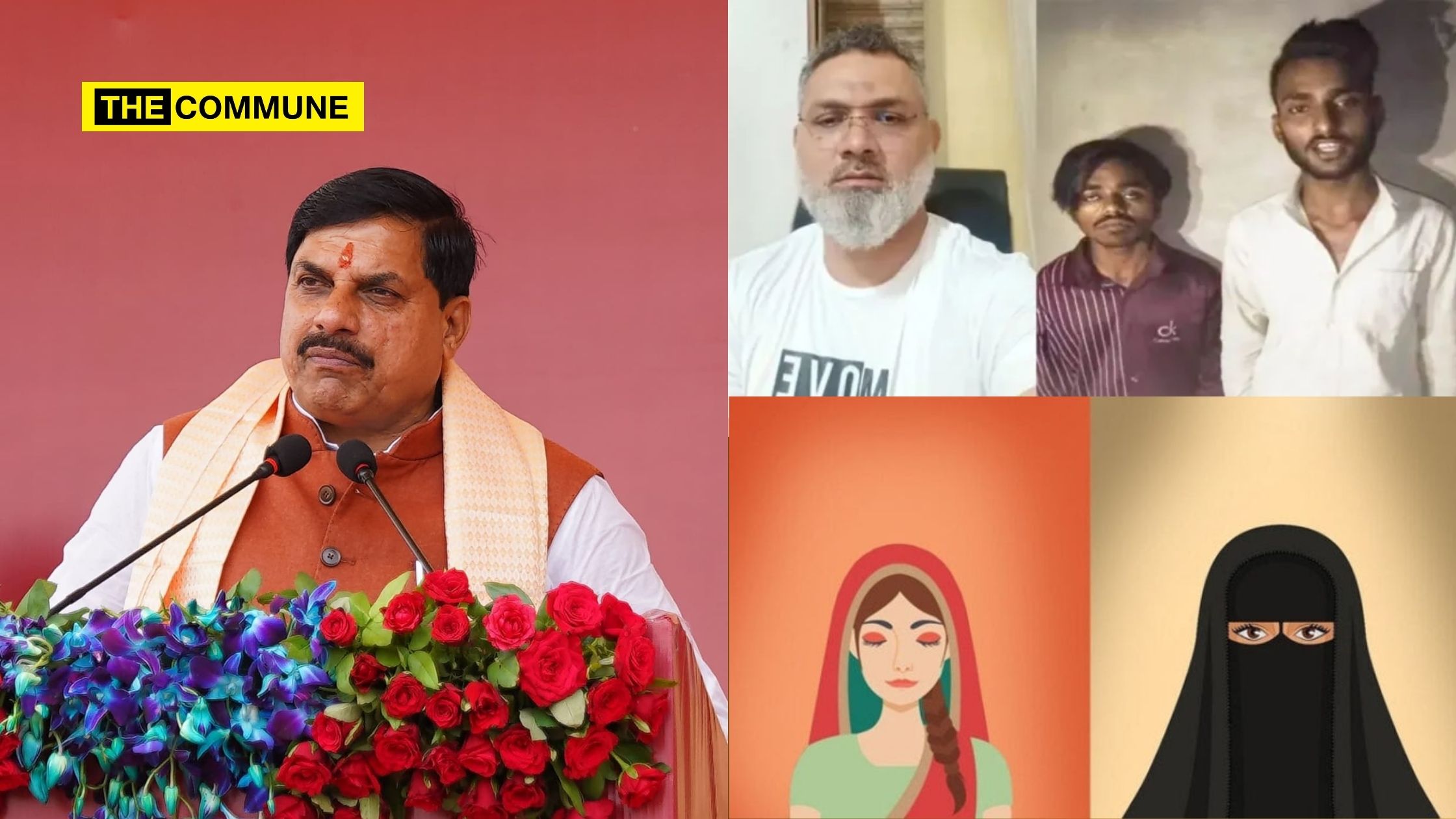
Madhya Pradesh Chief Minister Mohan Yadav said on Thursday that he has given a free hand to the police to deal with the Congress councillor Anwar Qadri, asserting that he will be put behind bars very soon. Qadri has been booked for his alleged involvement in carrying out religious conversion through funding. Indore police said that they have initiated an extensive search to nab the Congress councillor; however, Qadri has been absconding for the last four days.

An FIR has also been registered against him at Banganga police station on June 16. Responding to the issue, the Chief Minister said that he has instructed Indore police to find Qadri at the earliest. “I have asked the police to find him as soon as possible. Those who commit a crime will be punished as per the law. I have given a free-hand to the police. They can do whatever they want against such criminals,” said the Chief Minister, without naming Qadri.

According to police, a case against Qadri was registered at the Banganga police station in Indore based on the statement of two persons, Shahil Shaikh and Altaf Ali, who were arrested for allegedly sexually harassing Hindu women and forcing them for religious conversions. In a purported video, the arrested accused Sheikh and Shah were seen being questioned by an unidentified individual, and claimed that they were paid Rs 2 lakh and Rs 1 lakh, respectively, by Qadri to “marry a Hindu woman.”

The police officer said that while the men were initially booked under rape charges, sections related to criminal conspiracy and provisions of the Madhya Pradesh Freedom of Religion Act, 2021, were subsequently invoked. Qadri was also named as an accused. The members of the Vishwa Hindu Parishad (VHP), along with the Indore BJP unit, had staged a protest at Banganga police station, demanding Congress leader Anwar Qadri’s arrest.

–IANS

Subscribe to our channels on TelegramWhatsApp, and Instagram and get the best stories of the day delivered to you personally.
Why India’s Education System Must Shift Focus From Marks To Skills

For decades, India’s education system has been driven by an obsession with marks and standardised examinations. From board exams to competitive entrance tests, academic performance is measured almost exclusively through a numerical lens. While this has produced a large population of degree-holders, it has not necessarily translated into a skilled and employable workforce. As India strides into an era of technological disruption, economic transformation, and global competition, the time has come to shift our national focus from mere academic scores to practical skills and real-world capabilities.

The Problem with Marks-Driven Learning In most Indian schools and colleges, student performance is measured by how well they can reproduce textbook knowledge in a written exam. This system rewards rote memorization over conceptual understanding, speed over depth, and short-term cramming over long-term learning. The consequences are far-reaching. • Limited Creativity and Critical Thinking: The pressure to score high often curtails creativity.

Students are discouraged from questioning, debating, or exploring alternative solutions. In a marks-centric system, there is little room for curiosity or divergent thinking.

• Mental Health Concerns: The high stakes attached to board exams, entrance tests, and university cut-offs have made academic performance a source of stress and anxiety for millions of students. Depression, burnout, and even suicides linked to exam results are tragically common. • Employability Crisis: A 2023 report by the Confederation of Indian Industry (CII) found that nearly 50 per cent of Indian graduates are not employable in industry due to lack of skills. Despite high academic scores, many students fail to meet basic requirements in communication, problem-solving, or digital literacy.

• Inequity in Opportunity: A rigid exam-based system tends to favor those with access to coaching centers, private tuitions, and supportive environments. Students from under- privileged backgrounds often fall behind, not due to a lack of intelligence or ambition, but because of structural disadvantages. Global Trends: Skills Over Scores Many leading economies have already begun reorienting their education systems to focus on skills. Finland, consistently ranked among the top in global education indices, emphasizes student well-being, creativity, and collaboration rather than standardized testing. In Germany, the dual education system integrates classroom learning with hands-on vocational training, making graduates highly employable. Even in India, the National Education Policy (NEP) 2020 has acknowledged the need to transition towards holistic, skills-based education. The policy emphasizes critical thinking, experiential learning, and flexibility in subject choices. However, implementation at a scale remains a challenge. What Skills Should Indian Education Prioritize? To align with the future of work, the Indian education system must prioritize a diverse set of cognitive, technical, and socio-emotional skills:

• Digital and Technological Literacy: Foundational knowledge in computing, coding, and digital tools is essential.

• Communication and Collaboration: The ability to express ideas clearly, work in teams, and resolve conflicts.

• Critical Thinking and Problem Solving: Analyze information, think independently, and devise practical solutions.

• Creativity and Innovation: Encourage experimentation and original thinking across disciplines.

• Emotional Intelligence: Empathy, resilience, and adaptability are key to navigating the modern world.

• Vocational and Entrepreneurial Skills: Practical training in trades and entrepreneurship can open up alternative career paths. How to Make the Shift: Concrete Steps

• Curriculum Reform: Boards must reduce content overload and include modules on skill-building, coding, and design thinking.

• Assessment Redesign: Move towards application-based assessments, open-book exams, and portfolio evaluations.

• Teacher Training: Equip teachers to deliver experiential, project-based, and interdisciplinary education.

• Industry-Academia Partnerships: Offer students internships, workshops, and real-world exposure through collaborations.

• Technology Integration: Use EdTech platforms to provide accessible, skill-focused education at scale.

• Recognition of Diverse Talents: Broaden entrance and scholarship criteria to reward innovation and creativity.

The Role of Parents and Society Education reforms can only succeed if there is a collective change in mindset. Indian society has traditionally equated marks with success and failure. This attitude needs to evolve. Parents must recognise that a child scoring 70 per cent but excelling in communication and creativity may have greater potential than a 95 per cent scorer with no practical skills. Schools should celebrate diverse talents and redefine what constitutes ”success”.

Media and public discourse can also play a role by highlighting role models who succeeded not because of marks, but because of skills — entrepreneurs, artists, coders, athletes, and social change-makers. India stands at a crucial juncture. With the world’s largest youth population and a rapidly digitizing economy, the opportunity to become a global knowledge leader is within reach.

But this vision cannot be achieved through mark sheets alone. It requires an education system that nurtures thinkers, builders, creators, and leaders. By shifting from a marks-driven to skills-driven paradigm, India can unlock the full potential of its young minds — building not just careers, but a stronger, more resilient, and more inclusive nation. (The writer is a PhD graduate from IIT Kharagpur. Views expressed above are his own)

Subscribe to our channels on TelegramWhatsApp, and Instagram and get the best stories of the day delivered to you personally.
DMK MP Dayanidhi Maran Sends Legal Notice To Brother Kalanithi Maran Over Sun TV Ownership Dispute, Accuses Him Of Fraud And Money Laundering

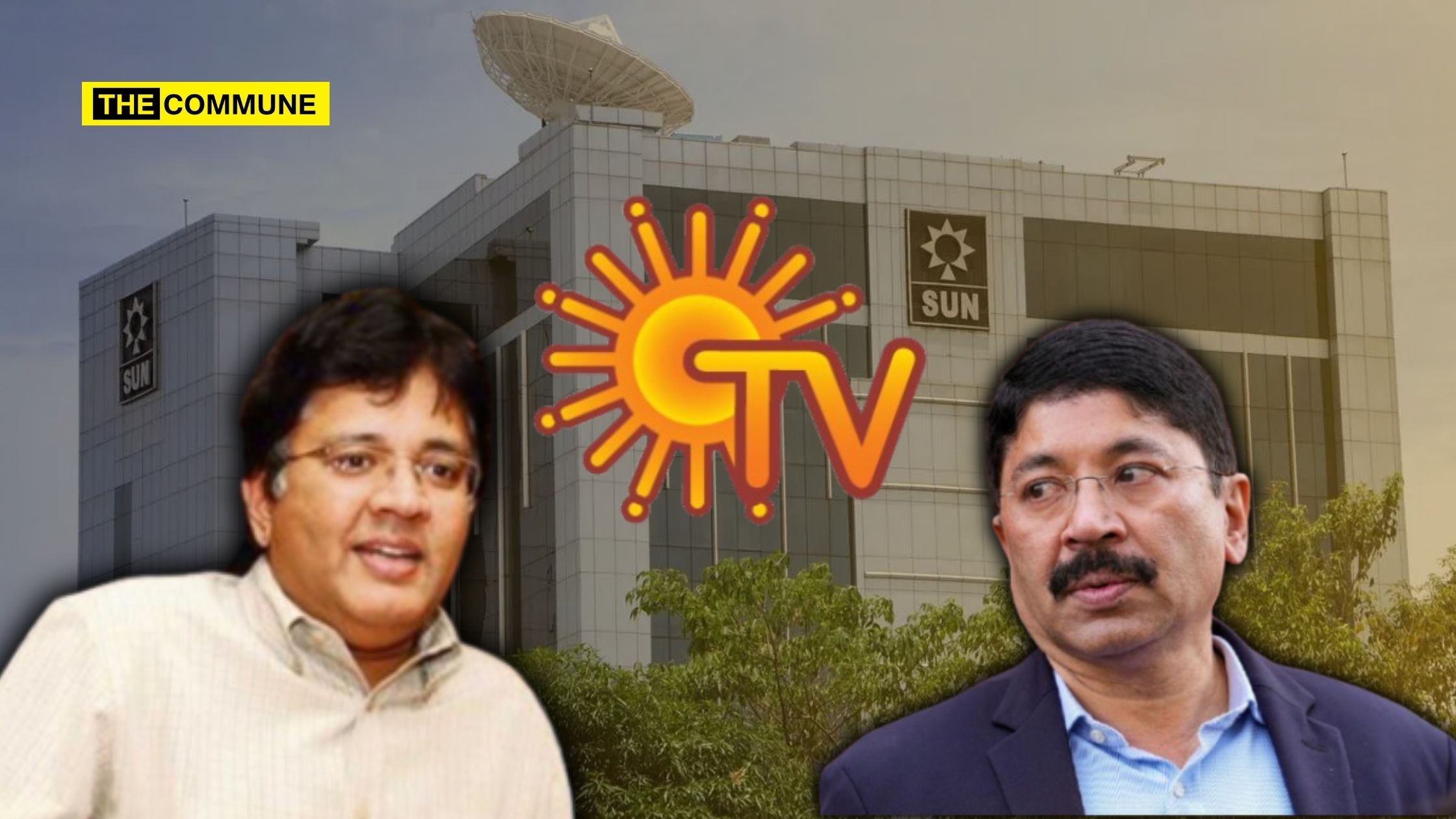
Dayanidhi Maran, former Union Minister and current DMK MP, has issued a legal notice to his elder brother Kalanithi Maran, highlighting an internal feud within the family that owns Sun TV Network Limited, one of India’s largest media companies.

The notice, dated June 10, 2025, accuses Kalanithi Maran — Chairman of Sun TV and a billionaire media baron — of engaging in alleged fraudulent activities, including financial misconduct and money laundering. It calls for the reinstatement of the company’s shareholding structure to its original format from 2003, invoking the legacy of their father, the late Murasoli Maran, and MK Dayalu, the spouse of former Tamil Nadu Chief Minister M. Karunanidhi.

The legal communication has been addressed not just to Kalanithi, but also to seven others including his wife, Kaveri Maran.

According to Moneycontrol, the document claims that during a period when the Maran patriarch was critically ill in 2003, Kalanithi and Kaveri allegedly devised a plan — with the involvement of others — to secure control of the company. It alleges that on September 15, 2003, Kalanithi illegally allocated 12 lakh shares to himself at a face value of ₹10 each, despite the market value being estimated between ₹2,500–₹3,000 per share at the time. This move, the notice says, gave him a controlling stake in Sun TV while significantly diluting the shares of the original family members.

At the time of the alleged transaction, the company was not in need of capital, raising further questions about the intent behind the allotment. According to the notice, prior to this move, Kalanithi held no shares in the company, but this transaction elevated his ownership dramatically, sidelining the original promoters.

Currently, Kalanithi Maran owns 75% of the listed Sun TV Network and is valued at $2.9 billion. The notice accuses him of benefiting from dividends worth ₹5,926 crore in 2023 and ₹455 crore in 2024 alone.

Dayanidhi Maran now seeks government intervention and has stated his intent to approach the Serious Fraud Investigation Office (SFIO), claiming the actions in question violate both corporate and criminal laws. He alleges that the difference between the ₹1.2 crore paid for the 12 lakh shares and their actual estimated worth of ₹3,500 crore constitutes criminal proceeds, and further accuses all respondents of laundering this money.

The notice also revisits a past dispute between the Marans and the Karunanidhi family, citing that MK Dayalu’s shares were undervalued and bought out for ₹100 crore despite a significantly higher post-IPO valuation of the company.

It also raises concerns about misleading claims in the company’s 2006 Red Herring Prospectus (RHP), specifically regarding a supposed ₹10.64 crore dividend payment to Mallika Maran — a claim the notice disputes.

In addition, the notice claims the allegedly ill-gotten wealth was used to acquire major assets and companies under the Sun Group umbrella, including Sun Direct TV, Kal Airways, Kal Publications, South Asian FM, Sun Pictures, and even sports franchises like Sunrisers Hyderabad and teams in South Africa and the UK.

The legal demand is for Kalanithi to restore the shareholding to its 2003 structure and return all profits, dividends, assets, and other financial gains accrued since then to the rightful heirs of Murasoli Maran and MK Dayalu.

The notice warns of civil, criminal, and regulatory consequences if these conditions are not met. It also references an earlier legal notice sent in October 2024, which received only a vague reply. Following that, Kalanithi allegedly made a ₹500 crore settlement payment to another sibling, Anbukarasi.

While Moneycontrol has yet to verify whether Kalanithi has formally responded to the latest notice, sources close to the matter suggest this is a private family issue that may not affect Sun TV’s operational affairs.

Subscribe to our channels on TelegramWhatsApp, and Instagram and get the best stories of the day delivered to you personally.