Home Blog Page 253

Homes Of ‘Love Jihad’ And Sexual Exploitation Accused Face Bulldozer Action In Bhopal

Bulldozer operations have started at the homes of the accused in a high-profile ‘love jihad’ and sexual exploitation case in Bhopal. The move targets the residences of Sahil and Saad (often referred to as Shamsuddin alias Saad) amid heavy police deployment.

The accused, Farhan, Sahil, Saad, and others, stand charged in a case involving alleged sexual assault, blackmail, and forced religious conversion of Hindu students at a private engineering college. Victims claim that some accused posed as Hindus, recorded obscene videos, and used them for extortion. The episode has drawn considerable public and legal scrutiny.

SDM Ravish Srivastava said, “We had received complaints regarding three individuals. The actions against two of them are now being processed by our team. The work is almost complete.” One prominent site of action is Club‑90, a restaurant alleged to have been used in the exploitation. The facility (or portions of it), particularly areas claimed to be illegally constructed, has come under demolition by bulldozers.

In addition, the city’s municipal authorities have reportedly cancelled the lease of the premises. Authorities stress that while bulldozer action is underway in some locations, the home of Farhan is reportedly not being targeted at this time. Meanwhile, a Special Investigation Team (SIT) formed earlier is continuing with gathering evidence and chasing the absconding accused. The case has stirred intense debate and protests in Bhopal. It raises questions about abuse of vulnerable young women, religious identity, and coercion, while administrative action seeks to demonstrate no tolerance for alleged criminal activity in educational institutions.

A complaint submitted to the National Human Rights Commission (NHRC) has unveiled chilling details about the exploitation of female students at a private engineering college in the city. As per the complaint, several female students were systematically lured into relationships under false pretenses. The accused allegedly misrepresented their religious identities during initial interactions, gaining the trust of the victims through prolonged emotional manipulation. Once trust was established, the girls were allegedly sexually assaulted. What followed was a pattern of blackmail and coercion, the accused reportedly recorded obscene videos of the victims, which were then used to threaten and silence them. The victims further alleged that they were subjected to pressure not only to remain silent but also to convert to Islam and undergo forced marriage ceremonies.

-IANS

Subscribe to our channels on TelegramWhatsApp, and Instagram and get the best stories of the day delivered to you personally.
National Lok Adalat Held Across India To Fast-Track Legal Dispute Resolution

In a major push towards reducing the backlog of legal cases and providing speedy justice, National Lok Adalat is being held on Saturday across India. The one-day legal initiative, organised by legal services authorities in every state, is aimed at settling pending disputes, including millions of traffic challans, through amicable compromise and resolution.

Citizens with minor traffic violations such as over-speeding, riding without a helmet, not wearing a seatbelt, or lacking valid documents like a Pollution Under Control (PUC) certificate, can visit their local courts to resolve their cases. In many cases, individuals can avail significantly reduced fines or even complete waivers, depending on the severity and nature of the offence.

In the national Capital, the Delhi State Legal Services Authority (DSLSA) is conducting the Lok Adalat at the Delhi High Court, all district courts, Debt Recovery Tribunals, the Delhi State Consumer Disputes Redressal Commission, and Permanent Lok Adalats, from 10 A.M. to 4 P.M. According to DSLSA, the settlement of disputes through Lok Adalat ensures speedy disposal, amicable settlement, and refund of court fee paid. Award passed in Lok Adalat shall be final and binding on all the parties to the dispute and no appeals can be made to any court against the Award. Citizens in Delhi were also given the option to pre-register for traffic challan settlements through the official Delhi Traffic Police website, and are required to bring all relevant documents, including a copy of the e-challan and identity proof, when appearing in person.

Similar Lok Adalats are being conducted today by legal services authorities in other states, including Maharashtra, where sessions are being held in Mumbai and across multiple cities to resolve a wide range of civil, criminal (compoundable), consumer, and traffic-related cases.

National Lok Adalats, held four times a year, are part of a countrywide effort by the National Legal Services Authority (NALSA) to provide accessible, affordable, and efficient dispute resolution. The initiative is especially impactful for minor legal matters that would otherwise languish in courts for months or years. With legal authorities expecting millions of cases to be resolved today, the National Lok Adalat is once again proving to be an essential tool for decongesting India’s overburdened judicial system and promoting justice through reconciliation.

-IANS

Subscribe to our channels on TelegramWhatsApp, and Instagram and get the best stories of the day delivered to you personally.
Judicial Overreach On Steroids: Why Chief Justice Gavai’s Call For Nationwide Firecracker Ban Is Elitist, Hypocritical, And Unconstitutional

In what can only be described as a severe case of breathtaking judicial overreach that ignores economics, federalism, and common sense, Chief Justice of India B.R. Gavai on Friday mused about imposing a nationwide ban on firecrackers. His reasoning? If Delhi’s “elite” deserve clean air, so should everyone else. This simplistic and dangerously uniform approach threatens to bulldoze a centuries-old cultural tradition and destroy the livelihoods of lakhs of Indians, all while failing to address the complex, regional nature of India’s air pollution crisis.

The Human Toll: A Livelihood Crisis In The Making

Behind every firecracker lies an industry that sustains entire communities. As of 2023, over 800,000 families in Sivakasi alone depend on fireworks for survival. Across India, the industry provides direct and indirect employment to over 500,000 families and sustains a business worth more than ₹6,000 crore annually.

Sivakasi, which produces 90% of India’s firecrackers, employs about 300,000 people directly and another 500,000 indirectly. Most are from economically vulnerable backgrounds; many are women earning about ₹500 per day for 10-hour shifts. They lack alternative job opportunities or transferable skills.

When CJI Gavai rhetorically asks “what about the poor who make their livelihood from this,” it rings hollow. His court’s own bans have already slashed demand—Delhi alone created a 20% shortage for Sivakasi manufacturers, leaving thousands unemployed. While the Chief Justice talks about equality in pollution, the reality is families face hunger and destitution.

Cultural Vandalism Disguised As Environmentalism

The Supreme Court’s interventions have all but crippled a vibrant sector worth ₹6,000 crore. This does not just affect manufacturers. The entire ecosystem of transporters, packaging suppliers, raw material providers, and retailers feels the shockwaves.

The losses ripple outward:

  • SMEs supporting the fireworks trade face closure.
  • Tamil Nadu alone collected about ₹40 million annually in nuisance tax from fireworks businesses.
  • Banks are staring at potential NPAs worth ₹16 billion if the industry collapses.

Far from eliminating firecrackers, bans only push the trade underground. In 2024, Delhi’s Chandni Chowk saw vendors openly selling through carts and covered shops, bypassing regulations. The result is a thriving parallel economy, proving judicial prohibition is both ineffective and counterproductive.

Economic Destruction Through Judicial Activism

The Supreme Court’s approach to the firecracker industry exemplifies the worst kind of judicial overreach – making policy decisions without considering economic consequences or constitutional limits. CJI Gavai’s court has effectively destroyed an entire sector worth ₹6,000 crore annually, affecting not just manufacturers but entire supply chains including transportation, packaging, raw materials, and retail sectors.

The ripple effects extend far beyond direct employment. Small and medium enterprises supporting the firecracker industry face closure, while related service sectors including hospitality and retail suffer massive losses. The government loses substantial revenue – Tamil Nadu alone collected ₹40 million annually through nuisance tax from fireworks businesses. Banks face potential NPAs worth ₹16 billion due to the industry’s collapse.

Most perversely, the court’s ban will push the trade underground. In 2024, in Delhi’s Chandni Chowk, vendors operated cart systems and covered shops, creating a parallel economy that the court’s orders cannot touch. This demonstrates the futility of judicial prohibition against deeply rooted cultural practices.

Constitutional Overreach And Democratic Deficit

Article 19(1)(g) of the Constitution guarantees every Indian the right to practice a profession or trade. The court has no authority to simply extinguish a legal industry. At most, it can impose licensing conditions or safety standards. As Justice S.A. Bobde remarked in 2019: “If the trade is legal and they have licence, how can you stop the trade?”

Today’s court has abandoned that wisdom. Instead of working with industry to create cleaner alternatives like green crackers or encouraging safer practices, it has chosen the blunt instrument of prohibition. This is policymaking by judges, not by Parliament or elected governments. It undermines democracy, federalism, and the principle of proportionality in law.

Elitism At Its Tone-Deaf Best

Ironically, in trying to strike at “elitism” in Delhi, the Court’s approach reeks of elitism itself. Sitting in air-conditioned courtrooms, judges imagine that banning firecrackers will cleanse India’s skies, while ignoring coal plants, factories, and trucks that poison the air every single day.

And what of tradition? For millions, fireworks are not mere entertainment; they are a luminous expression of faith, celebration, and cultural memory. This isn’t about defying science or denying pollution; it’s about asking whether judicial diktats should so easily override collective cultural practice without meaningful dialogue or democratic consent.

This is a tone-deaf, knee-jerk reaction that confuses symbolism for solution.

We will burst crackers in this country because that’s how we celebrate, and we’ve thousands of families dependent on it. And no amount of judicial activism can change that fundamental truth.

(With inputs from The Hindu)

Subscribe to our channels on Telegram, WhatsApp, and Instagram and get the best stories of the day delivered to you personally.
Tamil Nadu Government To Honour Ilaiyaraaja’s 50-Year Musical Legacy With Grand Celebration

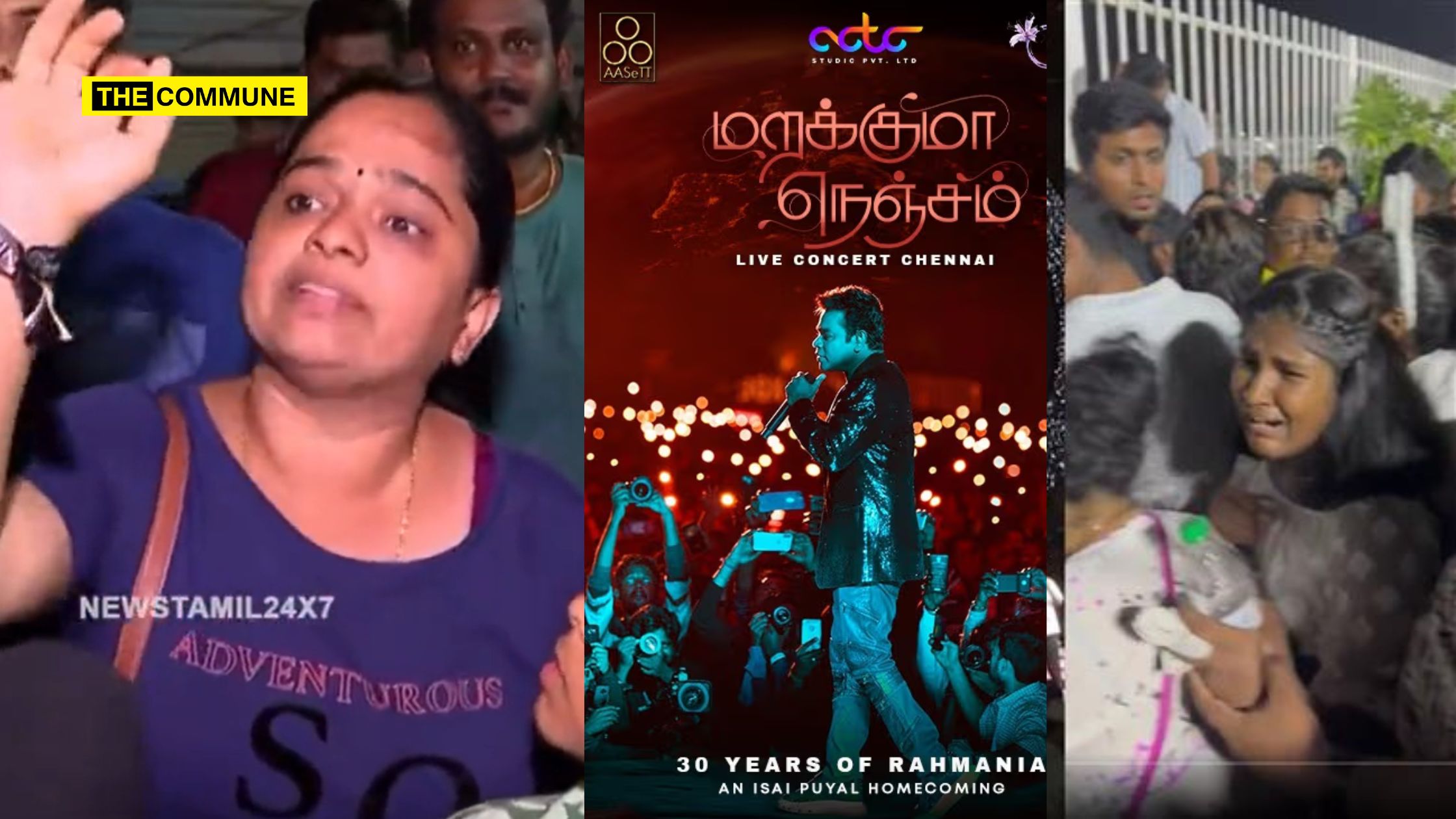
The Tamil Nadu government will host a grand felicitation ceremony for legendary music composer Ilaiyaraaja on Saturday at the Nehru Indoor Stadium, celebrating his illustrious 50-year journey in the world of music. The event, titled ‘The Tamil Maestro Who Scaled the Heights of Symphony’, has been organised under the leadership of Chief Minister M.K. Stalin.

It was earlier announced by Chief Minister M.K. Stalin in March, following Ilaiyaraaja’s acclaimed symphony performance in London, which was widely hailed as a landmark in his career. The ceremony, scheduled to begin at 5.30 p.m., is expected to bring together the biggest names from Indian cinema.

Superstar Rajinikanth, actor-filmmaker Kamal Haasan, and several other prominent film personalities are set to participate in the golden jubilee celebrations, marking a rare occasion where stalwarts of different generations and industries come together on a single stage. Notably, the event will not be confined to Tamil cinema alone. Artists, directors, and producers from other major film industries, including Telugu, Malayalam, Kannada, and Hindi, are also expected to attend, highlighting Ilaiyaraaja’s unmatched contribution to Indian music across linguistic and cultural boundaries. The celebration will showcase not only his vast repertoire of film compositions but also his pioneering achievements in symphonic music.

Ilaiyaraaja, fondly known as “Isaignani” (musical genius), has composed over 7,000 songs and scored music for more than 1,000 films, influencing generations of musicians and music lovers alike. In a unique gesture, the Tamil Nadu government has arranged special transport facilities for international musicians who are participating in the jubilee event. A dedicated bus service has been organised to ferry these foreign artists, underscoring the global stature of Ilaiyaraaja’s music and the state’s commitment to honouring him in style. For Chennai, this evening promises to be a historic cultural gathering, a moment where music, cinema, and state recognition converge to celebrate the life and work of a man who has redefined the soundscape of Indian film music.

-IANS

Subscribe to our channels on TelegramWhatsApp, and Instagram and get the best stories of the day delivered to you personally.
After Acquittal In 2006 Mumbai Train Blasts, Wahid Shaikh Seeks ₹9 Crore Compensation

2006 Mumbai Train Blasts compensation

Dr Wahid Deen Mohammad Shaikh, who was acquitted after spending nine years in prison in connection with the 2006 Mumbai train blasts, has filed a formal plea seeking ₹9 crore in compensation for the prolonged incarceration and its devastating impact on his life and family.

Shaikh has approached the National Human Rights Commission (NHRC), Maharashtra State Human Rights Commission (MSHRC), and the National Minority Commission (NMC), asserting that the state owes him reparations for his unjust imprisonment and the emotional, physical, and financial toll it took.

The 2006 Mumbai serial train bombings involved coordinated explosions on seven local trains during peak hours, claiming 187 lives and injuring over 800 passengers. The case was investigated by Maharashtra’s Anti-Terrorism Squad (ATS), which arrested 13 individuals, including Shaikh, under the Maharashtra Control of Organised Crime Act (MCOCA).

Following a prolonged legal battle, a special court acquitted Shaikh in 2015 due to lack of evidence, while sentencing the remaining 12 accused to either life imprisonment or death. However, in July this year, the Bombay High Court overturned those convictions as well, acquitting all the remaining co-accused.

Now 46, Shaikh recounted his traumatic experience, “I was only 28 when I was wrongly accused under MCOCA. I spent nine years in prison, suffering inhumane treatment, until I was finally cleared of all charges on 11 September 2015. Though I walked free, those lost years and the suffering my family endured can never be reclaimed.”

Shaikh detailed the personal and familial damage caused by his incarceration. He spoke of the physical abuse he suffered in custody, which led to lasting health problems including glaucoma and chronic pain. His father passed away while he was in jail, his mother’s mental health declined, and his wife struggled alone to raise their children, who faced social ostracism and stigma. Financially devastated, Shaikh continues to carry a debt of nearly ₹30 lakh.

“Those years took away my youth, my dignity, and my future,” he said. “My education and career were derailed. I now work as a school teacher, trying to rebuild my life while living with the burden of a false label.”

When asked why he delayed seeking compensation, Shaikh explained that out of moral responsibility, he chose to wait until the other accused still imprisoned were also acquitted. “I didn’t want to file for compensation while my co-accused were suffering harsher sentences. I feared it might worsen their condition. Now that we’ve all been acquitted, it’s clear the entire case was fabricated. Justice demands that I be compensated.”

In his submissions to the human rights and minority commissions, Shaikh has cited legal precedents where compensation was granted to victims of wrongful imprisonment, insisting that he is entitled to meaningful restitution.

“No amount of money can return what I’ve lost,” he said. “But compensation is a recognition of the injustice done to me and a step toward ensuring that innocent people are not subjected to similar suffering.”

The relevant commissions are expected to review and respond to Shaikh’s compensation petitions in the coming months.

(With inputs from India Today)

Subscribe to our channels on TelegramWhatsApp, and Instagram and get the best stories of the day delivered to you personally.
How Dravidian Model Police Destroyed A Man’s Marriage And Livelihood

dravidian model police

On 11 September 2025, the Tamil Nadu State Human Rights Commission (SHRC) ordered a penalty of ₹1 lakh to be imposed on a sub-inspector and a constable for unlawfully detaining and physically assaulting a man from Donavur in 2018. The commission found that the victim, Joseph Selvakumar, had been wrongfully accused and mistreated by police officers despite having secured anticipatory bail in a separate case.

The officers, Sub-Inspector Immanuel and Constable Muthukumar, were attached to the Eruvadi police station at the time of the incident. SHRC member V. Kannadasan ruled that Selvakumar had successfully proved the allegations of police abuse both physical and psychological through the evidence presented and arguments made during the proceedings.

Selvakumar, who had been working in Saudi Arabia, had returned to his hometown in 2018 to get married. During the wedding preparations, a dispute erupted between painter Nelson hired by Selvakumar’s family and their neighbour, Jeba Thai. Following a complaint from the neighbour, Eruvadi police registered a case against both Nelson and Selvakumar. With his wedding approaching, Selvakumar obtained anticipatory bail from the Madurai Bench of the Madras High Court, which required him to report to the police station daily.

According to the SHRC’s findings, Selvakumar was slapped by the constable on 24 August 2018, while reporting at the station. The officer reportedly questioned how he had dared to get anticipatory bail. The next day, both officers mocked his recent marriage. When Selvakumar attempted to record their conduct using his phone, they forcibly took the device and severely beat him with batons. They later arrested him based on a complaint from Anbarasi, the daughter-in-law of Jeba Thai, even though he was still within the station premises.

The commission noted inconsistencies in the complaint, including the misnaming of Anbarasi as Kalaiyarasi in the remand report and contradictions in her affidavit during cross-examination. Additionally, the police failed to submit CCTV footage as evidence, further weakening their case.

Given the gravity of the misconduct, the SHRC directed the state government to compensate Selvakumar with ₹1 lakh, to be recovered equally from the two accused officers (₹50,000 each). It also recommended disciplinary proceedings against both.

The incident had far-reaching consequences for Selvakumar. His wife left him after the episode, and he lost his overseas job because he couldn’t renew his passport due to the criminal charges filed against him.

(With inputs from The New Indian Express)

Subscribe to our channels on TelegramWhatsApp, and Instagram and get the best stories of the day delivered to you personally.
DMK Town Panchayat President Arrested For Alleged Murder Of Activist In Tiruppur District

dmk town panchayat president tiruppur

On 11 September 2025, police arrested the president of the Samalapuram Town Panchayat in Tiruppur district, affiliated with the DMK, on suspicion of deliberately killing a local activist by ramming his car into the victim’s two-wheeler.

According to police reports, the Town Panchayat president, identified as 60-year-old Vinayagam Palanisamy, allegedly struck down 57-year-old social activist Palanisamy from Karugampalayam. The incident occurred on the evening of 10 September near the Karugampalayam Government Primary School, along the Samalapuram-Karnampettai Road. The activist, who was riding a two-wheeler, was hit from behind by a car, thrown off the vehicle, and died at the scene.

Initially treated as a traffic accident, the case took a turn during the investigation led by the Mangalam police, who traced the vehicle involved to the Town Panchayat president. Further inquiries revealed a possible motive: the activist had previously submitted a petition to the Tiruppur District Collector, criticizing a local road project initiated by the Town Panchayat. Following the complaint, the project was suspended, allegedly causing friction between the two.

Police now suspect that the Panchayat president, reportedly under the influence of alcohol at the time, intentionally targeted the activist in retaliation for halting the road work. The investigation remains ongoing.

In response to the incident, Tamil Nadu BJP president Nainar Nagendran condemned the event via his official X account stating, “The news that DMK town panchayat president, Palanisamy, ran over and killed a social activist in Tiruppur for complaining against the laying of a tar road in a place that is not useful to the public is very shocking. If the mistakes of the Dravidian model government are pointed out, will death be the reward? Does the single identity of being a ‘DMK person’ and the power of office give one the right to take a life? When such crimes come to light, arrests are made only for the sake of eyewash, but they continue like the ‘Kannithivu’ serial. DMK members should be ashamed to boast about ‘good governance praised by the country’ after making people’s lives hell for four years and taking the lives of those who raise their voices against it!” 

(With inputs from The Hindu)

Subscribe to our channels on TelegramWhatsApp, and Instagram and get the best stories of the day delivered to you personally.
Government Bus Stolen From Koyambedu Depot Found In Andhra Pradesh; One Arrested

In an unusual case of bus theft, a government-owned AC bus was stolen from the Koyambedu depot in Chennai and later traced to Atmakur in Nellore district, Andhra Pradesh. The suspect has been taken into custody.

The incident came to light when the driver and conductor, preparing to depart for Tirupati, discovered that the bus, which had been parked at the Koyambedu depot, had gone missing. Shocked by the disappearance, they reported the matter to the depot authorities.

Following a complaint lodged by the branch manager of the Koyambedu bus workshop, the Koyambedu Police (K-11 CMBT station) registered a case and launched an investigation. The crime branch team, led by an inspector, reviewed CCTV footage from the premises and tracked the vehicle using its GPS system. The data revealed that the bus had crossed into Andhra Pradesh and was located in Nellore.

Acting swiftly, the Koyambedu police coordinated with their counterparts in Nellore and successfully recovered the stolen Tamil Nadu State Transport Corporation bus from Atmakur. The suspect, identified as Gnana Sanjan Sahu from Odisha, was arrested at the scene.

The bus was brought back to Chennai, and police are currently questioning Sahu to determine his motive and whether he acted alone or with assistance. Further investigation is ongoing.

(With Inputs From Hindu Tamil)

Subscribe to our channels on TelegramWhatsApp, and Instagram and get the best stories of the day delivered to you personally.
Dal Procurement Price Higher In Tamil Nadu Compared To Gujarat, ₹45 Crore Loss Risk Estimated

Food Department officials in Tamil Nadu is holding discussions with suppliers to reduce the quoted prices for ration dal, following concerns over inflated costs compared to other states. While suppliers initially quoted ₹90 per kg, they later agreed to bring the price down marginally to ₹88.50 during negotiations.

However, it has come to light that the same companies are supplying similar imported dal to the Gujarat government at ₹81 per kg. This discrepancy has raised serious concerns, as it could potentially lead to a loss of nearly ₹45 crore for the Tamil Nadu government for a total procurement of 60,000 tonnes.

According to a senior Food Department official, the Tamil Nadu Civil Supplies Corporation had floated a tender to purchase 60,000 tonnes of imported dal for distribution through ration shops. Some of the participating companies had quoted ₹90 per kg as the lowest price.

This figure is significantly higher than the prevailing open market rate of approximately ₹75 per kg. Allegations soon surfaced suggesting that the inflated price may have been aimed at benefiting select companies and facilitating kickbacks. Following media attention and public scrutiny, the procurement process was paused, and negotiations were reopened to bring down the cost.

Meanwhile, it was discovered that the same suppliers had agreed to provide the same dal to Gujarat’s Food Department for ₹81 per kg. During the renewed negotiations, Tamil Nadu officials confronted the suppliers with this data and questioned why they couldn’t offer a similar rate.

The suppliers, however, responded vaguely, citing “higher costs in Tamil Nadu” without providing a breakdown or justification for the price gap. Officials noted that no concrete explanation was offered regarding where the additional cost difference was going.

If the state proceeds with the revised ₹88.50 rate, it would pay ₹7.50 more per kg compared to Gujarat, amounting to a total excess expenditure of ₹45 crore. Officials emphasized the need for continued negotiations to bring the price in line with the Gujarat rate of ₹81 per kg to prevent unnecessary financial losses.

(With Inputs From Dinamalar)

Subscribe to our channels on TelegramWhatsApp, and Instagram and get the best stories of the day delivered to you personally.

Velachery Congress MLA Runs To Madras High Court Seeking Relief From ECI’s Disqualification Notice For Failing To Disclose Election Expenses

Velachery Congress MLA Aassan Maulaana J.M.H. has filed a petition in the Madras High Court challenging a show-cause notice issued by the Election Commission of India (ECI) on 16 March 2023 which had asked him to explain why he should not be disqualified for allegedly failing to disclose a portion of his election expenses from the 2021 Assembly elections.

The matter was heard on 12 September 2025, by the First Division Bench, comprising Chief Justice Manindra Mohan Shrivastava and Justice G. Arul Murugan. After hearing submissions from senior advocate P. Wilson, representing the MLA, the bench issued notice to the ECI. The Commission’s counsel, Niranjan Rajagopalan, was directed to file a counter affidavit within two weeks.

Allegation Of Undisclosed Expenditure

The ECI’s notice was based on a report from the District Election Officer (DEO), forwarded via the Chief Electoral Officer, which claimed that Mr. Maulaana had failed to report ₹33.05 lakh spent on 10 advertisements published in regional newspapers on 27 and 28 March 2021. These advertisements reportedly featured the MLA’s photograph and sought votes on his behalf.

As per Sections 77 and 78 of the Representation of the People Act, 1951, candidates are legally required to maintain accurate records of all campaign expenditures and submit them within 30 days of the election results. Failure to comply can result in disqualification for a period of three years under Section 10A of the Act.

While Maulaana acknowledged the advertisements, he claimed that the expenses were borne not by him but by the Tamil Nadu Congress Committee (TNCC). However, the DEO rejected this explanation, asserting that the ads directly promoted his candidacy.

In his plea to the High Court, Maulaana argued that the advertisements in question were part of a broader campaign during Congress leader Rahul Gandhi’s visit to Tamil Nadu on 28 March 2021. According to him, these ads were placed by the TNCC to promote all 234 alliance candidates, not just himself. He stated that the advertisements featured multiple candidates and were not exclusively linked to his campaign.

The MLA also claimed that he had neither authorised the advertisements nor received any individual support from Gandhi during that visit. He argued that these details were not properly considered before the ECI issued the notice.

Maulaana also addressed the delay in challenging the ECI’s 2023 notice. He explained that although he had already submitted a detailed explanation to the Commission, he received a fresh notice on 14 August 2025, indicating a hearing without acknowledging his prior response. This prompted him to approach the High Court. The petition now seeks to have the show-cause notice quashed entirely.

(With Inputs From The Hindu)

Subscribe to our channels on TelegramWhatsApp, and Instagram and get the best stories of the day delivered to you personally.