A report by Dinamalar has confirmed that the priests of Srivilliputtur’s Periyamariamman Temple who were seen drunk and obscenely dancing in a viral video, were trained under the DMK government’s much-touted “All Castes Archakas” scheme.
Four priests – Vinod, Ganesan, Gomathi Nayagam, Sabarinathan – were suspened and case filed against them after videos of them engaging in obscene dancing and misbehaving with women devotees went viral. The incident, which sparked outrage among devotees, occurred during pre-consecration rituals at the Periya Mariamman temple in Srivilliputhur, the birthplace of Andal, one of the 12 Azhwars.
According to reports from Hindu Munnani and eyewitnesses, the priests were those who were enrolled in government-funded training program under “All Caste Archaka” scheme introduced by the DMK government.
However, DMK-supporting Dravidian Stockist handles like ‘We Dravidians’ have been spreading misinformation, falsely labeling the priests as Brahmins and resorting to their customary inflammatory rhetoric to deflect criticism.
It is noteworthy to mention that We Dravidians, is an X handle supported by the DMK ecosystem that peddles anti-Hindu, anti-India and hate against Hindi-speakers. One of the admins of We Dravidians is Kathir RS who is associated with PEN (a political consultancy firm founded and run by Stalin’s son-in-law Sabareesan).
Report by DMK-supporting sleazy gossiping tabloid Nakkheeran had also falsely claimed that the priests in question were from traditional archaka community and were not from the All Caste Archaka scheme.
Traditional archakas from various temples across Tamil Nadu, including the renowned Madurai Meenakshi Amman Temple, have strongly condemned attempts to malign their community by falsely portraying the accused as traditional archakas. They have denounced the spread of misinformation and clarified that the individuals involved are not part of the hereditary archaka tradition.
“The priests of Srivilliputtur’s Periyamariamman Temple who have been caught in controversy studied in the ‘all caste archaka’ training schools. They’re burying this fact and slinging mud on the entire archaka community.“, they’ve said.
The Dinamalar report quoting the traditional archakas said that the incident of the priests drinking and obscenely dancing and throwing Vibudhi powder on women were unacceptable to the archaka community and those going to temple with devotion.
The report stated that none of the traditional archakas were able to identify the culprits involved in the obscene acts.
“They had come for the kumbabishegam. They’re not traditional archakas. They were trained under the ‘All Caste Archaka’ centres run by the HR&CE department of the Tamil Nadu government and are currently under training. It is condemnable that they’ve hidden this fact and are involving in mud-slinging to defame the entire archaka community.“, the archaka community was quoted saying.
“Those who are trained as archakas traditionally, enrol in Veda Patashalas and Agama schools at a very young age, often immediately after completing primary school. Students who are enrolled in such schools before the age of ten naturally have feelings of shame and fear. Due to the rigorous discipline training they receive, even after they have passed the age of ten, their psychologically wired about shame and fear throughout their lives. That is the defensive weapon that prevents them from engaging in such activities. That cannot be expected from those who have studied and trained in “all caste archaka” centres.“, they further added.
Subscribe to our channels on Telegram, WhatsApp, and Instagram and get the best stories of the day delivered to you personally.
A 27-year-old man employed as a security guard at a temple died while in police custody in Sivaganga on Saturday, following his detention by the Thirupuvanam police for questioning in a theft case. Confirming the incident, a senior police official stated that Superintendent of Police Ashish Rawat has initiated an internal investigation. Authorities have indicated that more time is needed to ascertain the full details of the incident.
According to police sources, the theft was reported on Friday near the Madapuram Kaliamman Temple, which is under the administration of the HR&CE department. J Nikita (42), a resident of Thirumangalam in Madurai, had visited the temple with her family, including her 75-year-old mother Sivakami. B Ajithkumar (27), a security guard employed through outsourcing, was on duty at the time.
Nikita is said to have asked Ajithkumar for assistance in helping her mother enter the temple for darshan and handed over her car keys to him for parking. After returning, she reportedly discovered that jewellery worth approximately 9.5 sovereigns—including a gold thali chain, two bangles, and two rings—was missing from her bag inside the car. She lodged a complaint with both the temple management and the Thirupuvanam police.
Ajithkumar was initially questioned and let go on Friday. However, the following day, a special police team took him in for further interrogation. During the process, he was allegedly assaulted by officers after giving conflicting statements, which reportedly led to his death while in custody.
It remains unclear whether Ajithkumar was responsible for the theft, according to police sources. A case has been filed under Section 176 of the Bharatiya Nagarik Suraksha Sanhita (BNSS), which deals with procedures related to custodial deaths. His body has been sent to the Government Rajaji Hospital for postmortem examination. SP Ashish Rawat is currently conducting an inquiry involving the officers concerned.
Selective Outrage: Where Are the Voices Now?
What is most glaring in the aftermath of Ajithkumar’s custodial death is the deafening silence from the very voices that led national outrage during the Jeyaraj-Bennix case in 2020. When that incident occurred under a previous regime, it triggered a wave of outrage across Tamil Nadu and beyond. Celebrities, activists, and so-called “Dravidian intellectuals” were quick to condemn police brutality—rightly so. But today, the silence is not just troubling—it’s telling.
Where is Rajinikanth, who relased a picture of his ‘angry face’ expressing shock over Jeyaraj & Bennix calling for all the officials to be severely punished? Where is Kamal Haasan, who used the Jeyaraj-Bennix incident to launch political salvos? Where are actors like Suriya, Karthi, and Vishal, who released statements and videos lamenting state violence? Why hasn’t singer-activist Suchitra—who vocally amplified the custodial death case earlier—spoken up now?
And what about the usual suspects in Dravidianist media—those who flooded timelines with hashtags and op-eds during the Sathankulam tragedy? The channels and journalists who frame every incident around “Brahminical patriarchy” or “fascist policing” seem curiously disengaged when the ruling regime is one they are ideologically aligned with.
This silence exposes what many have long suspected: for certain influential figures and outlets, human rights are a convenient tool, not a consistent principle. Their outrage is not rooted in justice but in politics. When the narrative doesn’t suit them, they simply look away.
Custodial deaths must be condemned regardless of which party is in power, and justice must not be selective. But in Tamil Nadu today, it seems silence is the price for ideological loyalty.
Subscribe to our channels on Telegram, WhatsApp, and Instagram and get the best stories of the day delivered to you personally.
The News Minute’s recent so-called “ground report” on the Keezhadi excavations is yet another example of a troubling trend in its reportage: the tendency to construct narratives on selective facts, half-truths, and speculative interpretations. While it seeks to pitch Keezhadi as a civilisational revelation distinct from mainstream Indian history, the video is riddled with contradictions, omissions, and ideological insinuations masquerading as archaeological analysis.
1. Misrepresenting The ASI’s Role And Scientific Procedure
One of the key claims made in the video is that the Archaeological Survey of India (ASI) has asked the excavating officer to “revise” the report—an implication that hints at censorship or interference. This is factually incorrect. The ASI has merely requested that any extraordinary claims in the excavation report be backed with proper and verifiable evidence—especially with regard to carbon dating that purportedly places the site as early as the 6th century BCE. As of now, there is no conclusive carbon dating evidence from Keezhadi beyond the 3rd century BCE.
Is it not basic scientific rigour to demand that reports, especially on matters of national historical importance, be evidence-backed? Why should scientific clarifications trigger political outrage unless the goal is to avoid scrutiny altogether? Those who make sweeping claims must have the courage and intellectual honesty to back them with verifiable evidence, withstand scientific scrutiny, and accept when facts do not align with their ideological expectations.
2. Religious Structures And The ‘Secular Sangam’ Myth
The report claims there are “no religious structures” in Keezhadi, and proceeds to use that as a foundation to argue that Tamil civilisation was a secular civilization distinct from Vedic and deity-worship traditions.
How can such sweeping conclusions be drawn merely from viewing a few brick walls? Are we to expect Kanchipuram-style temples from 600 BCE? Religious architecture of the time would have been minimal and may not have survived the ravages of time. The real contradiction, however, lies in the simultaneous claim that Keezhadi belongs to the Sangam era—an era that is replete with religious and ritualistic references.
Take, for instance, the Pandiyan King Pal Yāgasālai MuduKudumi PeruVazhudhi of Sangam period, who is said to have performed a thousand Vedic yajnas as per Purananuru (verse 25):
“Performed per rules of the Four Vedas, Pouring sacred ghee into the flaming altars…”
Karikala Chola was praised as the one who performed an Yajna using a Yajnakunda in the shape of a Kite (எருவை நுகர்ச்சி யூப நெடுந்தூண் வேத வேள்வித் தொழில்முடித் ததூஉம் ). There are kings named as Rajasuyam VEtta Perunarkilla indicating that he performed Rajasuya Yajna. Sangam texts like Purananuru, Agananuru, Kalithogai, Maduraikanchi mentions Gods like Shiva, Vishnu, Parvathi, Murugan, Krishna, Balarama among others – hardly signs of a deity-less, non-religious, non-ritualistic society.
If Keezhadi is Sangam-era, then dismissing its religious significance based solely on the absence of temples is either careless or ideologically motivated.
3. The False Binary Of Two Civilisations
The video posits the lack of religious symbols at Keezhadi as proof that the Tamil civilisation was somehow isolated from the rest of India. But consider this: less than 200 km away in Adichanallur—a site dated to an even earlier period—clear religious symbols have been excavated.
The site presents compelling archaeological evidence of early ritual practices closely aligned with Vedic and proto-Hindu traditions. The discovery of copper antennae swords, often associated with ceremonial rather than combat use, mirrors ritual objects found in early Vedic contexts. Similar swords have been found in other parts of India in contexts associated with Vedic rituals and Kshatriya warrior culture. The urn burials, containing human remains along with offerings like gold diadems, copper vessels, and carnelian beads, indicate a belief in the afterlife and structured funerary rites—core elements of Hindu thought. Terracotta figurines resembling human and animal forms likely served as votive offerings, reflecting the aniconic and symbolic nature of early Hindu worship. Additionally, the use of shell bangles and the systematic alignment of burial mounds suggest cosmological awareness and ritual orientation, both of which are integral to Hindu religious practice. Scholars such as K. Rajan and R. Nagaswamy have argued that these findings place Adichanallur within the cultural and ritual continuum of early Vedic society, challenging claims that ancient Tamil civilisation was separate from or devoid of Hindu religious influence.
Are we to assume two entirely distinct civilisations existed within this small geographical space? Or is it more reasonable to believe that Keezhadi’s deeper layers may yet reveal signs of worship?
Such premature conclusions do a disservice to the scientific process. Archaeology is cumulative. It demands patience, not ideological posturing.
4. On The Officer’s Transfer – A Red Herring
The video makes much ado about the so-called “abrupt” transfer of the excavation officer, Amarnath. But such transfers in the ASI are routine and occur every 2–3 years. In this case, one of the transfers was accompanied by a promotion. It is misleading to imply a conspiracy in what is an ordinary bureaucratic reshuffle.
Unless ofcourse your video script came straight from ‘PEN’.
5. The Harappan Comparison – An Inaccurate Stretch
The attempt to compare Keezhadi with the Harappan civilisation is not only inaccurate but borders on academic dishonesty. Harappan sites like Mohenjo-daro and Dholavira are known for their large urban planning, uniform seals (like the unicorn motif), Great Bath, script, and drainage systems—none of which have been found at Keezhadi.
Also, Harappan civilisation dates back to 2600–1500 BCE, while Keezhadi’s most ambitious estimates place it around 600 BCE. That’s a gap of a thousand years. The comparison is misleading and only serves to elevate Keezhadi into a civilisational symbol that it cannot yet bear.
6. Cultural Continuities Ignored
Interestingly, the excavation of carnelian beads—known to be manufactured in the Gujarat region—clearly points to trade and cultural connections between the Tamil region and northern India. Far from being a separate civilisational island, Keezhadi may well be part of the broader Indian civilisational continuum. But this aspect receives little attention in the video, perhaps because it doesn’t fit the desired narrative.
7. The Politics Of Supposed Silence
Finally, if the excavation report was truly robust and methodologically sound, why were clarifications to ASI queries not promptly provided? These were not political questions—they were scientific concerns. The politicisation of archaeology only emerges when evidence-based inquiry is stonewalled in favour of ideological storytelling.
Let the Spade Speak, Not the Spin
Keezhadi is undoubtedly a significant site in India’s archaeological landscape. But its true value will emerge not from media campaigns or selective reporting, but from rigorous science and peer-reviewed findings. Let archaeology remain in the realm of research—not rhetoric.
The News Minute’s report reflects a deeper problem: the temptation to project ideological biases onto scientific explorations. If we truly wish to honour Tamil heritage and Indian history, we must demand more evidence, less emotion—and most importantly, the integrity to let the truth emerge as it is, not as we wish it to be.
Subscribe to our channels on Telegram, WhatsApp, and Instagram and get the best stories of the day delivered to you personally.
Radical Islamist who is now a New York State Assemblyman, Zohran Mamdani, secured his position with support from only a sliver of the city’s electorate. According to voting records, Mamdani received backing from less than 5% of eligible New York voters in the primary that catapulted him to prominence.
A report by Front Page Magazine says that less than 30% of Democrats voted in the party’s mayoral primary. Of those 43% supposedly voted for Mamdani. While over 6 million New Yorkers are eligible to vote and nearly 5 million are registered Democrats, just around 1 million participated in the relevant Democratic primary—an election that determined the future leadership in one of the most influential cities in the world. Within that already small turnout, Mamdani emerged victorious with the support of a narrow base.
Critics argue that such low voter engagement has allowed candidates with radical ideologies and niche support bases to gain disproportionate influence in city and state politics. Observers also point to a worrying trend where grassroots-sounding movements are increasingly powered by elite networks, ideological agendas, and global alliances—despite minimal public endorsement at the ballot box.
The figures highlight a growing disconnect between elected officials’ platforms and the wider electorate’s concerns, raising questions about how much democratic legitimacy can be claimed when turnout is so low—and when fewer than 1 in 20 New Yorkers voted for a candidate now shaping progressive discourse across the city.
Subscribe to our channels on Telegram, WhatsApp, and Instagram and get the best stories of the day delivered to you personally.
The Dravidianist ecosystem appears to be once again pushing its long-standing narrative of “North flourishes, South perishes,” this time using the backdrop of the Keezhadi excavation controversy. In May 2025, the Archaeological Survey of India (ASI) returned a 982-page excavation report submitted by archaeologist K. Amarnath Ramakrishna in January 2023, citing the need for technical revisions. The ASI raised concerns over dating estimates (like the proposed 8th–5th century BCE timeline), stratigraphic inconsistencies, mapping, and terminology.
However, instead of addressing these expert critiques and making the necessary clarifications, Ramakrishna stood his ground—defending his methodology based on stratigraphy and radiocarbon dating. This defiance has sparked suspicion. Since his excavation efforts began, Ramakrishna has increasingly aligned himself with the Dravidianist separatist discourse such as Dravidar Kazhagam platforms, often amplifying their narrative through their platforms. Rather than allowing the data to speak through rigorous peer-reviewed publication, he has been seen leveraging this issue to promote a politicized Dravidianist agenda—frequently taking aim at well-established frameworks like the Harappan civilization, and in the process, undermining academic objectivity.
But first things first. Let’s bust the DMK’s rhetoric about the Central Government denying Keezhadi’s place in history.
Is The Central Government Trying To Suppress Keezhadi Findings?
If the Dravidianist claim is that the Central Government wants to suppress Tamil heritage, then it defies logic for the very same BJP-led government under Prime Minister Narendra Modi to have unveiled a comprehensive excavation report on Adichanallur, a major Iron Age burial site in Tamil Nadu. This site has a long history of archaeological interest—beginning with Dr. Jagor in 1876, followed by more in-depth excavations by Alexander Rea between 1899 and 1905, and later by Dr. Sathya Murthy in 2004–2006. Yet, the full excavation report wasn’t released until 2020, under this very government—clearly demonstrating that detailed and peer-reviewed archaeological work takes time.
As for the current Keezhadi controversy, the Archaeological Survey of India (ASI) has explained the process clearly, “Reports submitted after excavation go through a standardized vetting process. After receiving the draft report from the excavator, it is reviewed by subject matter experts. Their recommendations—whether technical, editorial, or scientific—are passed on to the author for revision. Only after these are incorporated is the report prepared for publication, typically under the Memoirs of the ASI (MASI) series.”
This same process was followed with the Keezhadi report. ASI states that suggestions were communicated to the archaeologist K. Amarnath Ramakrishna, but he has not incorporated them to date. Despite this, a section of the media continues to push a narrative suggesting suppression one that ASI has strongly denied as misleading and politically motivated. The ASI has emphasized that no report, no matter how significant, bypasses peer review, proofreading, editing, and final formatting. To claim that ASI is deliberately stalling the Keezhadi report is a distortion of standard academic procedure, designed to politicize the issue and cast the department in a negative light.
What Were The Experts’ Concerns?
The fourth phase of the Keezhadi excavation, conducted between 2017 and 2018, unearthed 5,820 artifacts. Unlike the first three phases, which were carried out by the Archaeological Survey of India (ASI), this phase was led by the Tamil Nadu State Department of Archaeology.
However, several prominent archaeologists have raised serious questions about the report’s scientific rigor and clarity:
Dr. Bisnupriya Basak from the University of Calcutta expressed skepticism about the dating of the pottery sherds. She questioned whether the potsherds containing Tamil-Brahmi script truly came from the same stratigraphic layer dated to the 6th century BCE. She also cautioned that some of the markings may have resulted from the pottery-making process itself, rather than being deliberate script. “This unfortunately is not clear from the report and is very crucial,” she noted, highlighting the lack of transparent stratigraphic data.
Dr. E. Harsha Vardhan of Dravidian University, Chittoor, echoed similar concerns, stating that the report does not provide sufficient scientific basis to confidently date the Tamil-Brahmi script to the 6th century BCE. He emphasized that drawing such conclusions from a single report is premature and lacking in academic robustness.
Dr. Prabodh Shirvalkar, archaeologist at Deccan College, Pune, also pointed out that while Tamil-Brahmi inscriptions on potsherds are not unusual in the region, the Keezhadi report is opaque when it comes to key archaeological essentials—such as the exact dating of the sherds, their layering, and the associated cultural period.
P.A. Krishnan, a former bureaucrat, has raised critical concerns about the methodologies used to date findings from Keeladi. He argues that relying on a single carbon-dated sample—in this case, a piece of charcoal dated to around 580 BCE is not a scientifically valid basis for drawing broad conclusions about the site’s age or historical significance. He points out that carbon dating only determines when the organic material, such as wood, stopped living—not when surrounding artefacts like pottery or inscriptions were actually created or used.
Adding context, T. Udhayachandran, commissioner of the Tamil Nadu Archaeology Department, explained that the Madras High Court had expressed dissatisfaction with the delay in publishing the excavation report. As a result, the team opted to release a version that focused only on select highlights, potentially leaving out detailed contextual data that is typically critical for expert validation.
Meanwhile, instead of engaging in constructive academic dialogue or addressing the feedback from experts, Ramakrishna has chosen to align himself with the Dravidianist political ecosystem, particularly the DMK, using their platforms to promote a narrative that fits their ideological stance. His findings, instead of moving forward through proper peer review, have become stuck in a political echo chamber—echoing claims that undermine established historical frameworks like the Saraswati/Indus Valley civilization.
Why Amarnath Ramakrishna Is An Arivalayam Gatekeeper Using Archaeology For Separatist Ideology
Archaeologist K. Amarnath Ramakrishna is often portrayed as someone who has unveiled the truths of ancient Tamil society. However, even he has openly admitted that he is a product of the Dravidar Kazhagam (DK), having been ideologically shaped by the movement from his student days onward. Given this deep-rooted affiliation—as intrinsic to him as blood—it’s reasonable to question whether such a figure can approach history with objectivity or data-driven analysis.
Indeed, rather than grounding his claims in hard archaeological evidence, Ramakrishna frequently leans on rhetoric, often appealing to emotional Tamil identity politics, stirring North-South divisions, and consistently dismissing Hinduism and its epics as mere myths to deride them. A pattern of this bias is evident across many of his public interviews.
In 2023, while speaking at Dravidar Thidal, he openly declared, “Speaking at the Dravida Kazhagam, speaking on the Dravidar thidal, speaking at Periyar Thidal, is something I consider a great honor. This is because I studied in the IAS coaching class right here. As a student who trained at this center’s IAS coaching class in 1997, I always consider this a matter of great pride. At that time, Professor M.F. Khan and Professor Kaliamoorthy managed that training center. I trained there, but I couldn’t become an IAS officer. However, I got the opportunity to join the Archaeology Department. I feel proud of that position too, because the Periyar Research Center, Periyar Thidal, is a place that speaks about humanity and serves as a guide for the whole world. I am extremely proud to be associated with it. For this, I want to express my foremost gratitude.”
Right after introducing himself as someone shaped by the Dravidar Kazhagam—a group that outwardly claims to be atheist yet often engages in selective pseudo-secularism while consistently targeting Hinduism—Amarnath Ramakrishna followed suit. As a product of this ideological ecosystem, he adopted the same pattern, using his platform to mock Hindu epics, question sacred sites like Ram Janmabhoomi, and undermine Hindu traditions all while avoiding similar scrutiny but praising of other belief systems similar to marx historians.
Amarnath Ramakrishna said, “Our professor very clearly explained who first taught us history. He said it was the Muslim rulers who lived during the medieval period who taught us this history. The autobiographies they wrote at that time were our first history books. Before that, it was all Puranas. Only stories based on the Puranas were told, and no historical facts were truly presented. Even if historical truths were embedded within them, the stories were made more popular. And even today, research is based on these stories. We’re researching the Mahabharata, we’re researching the Ramayana, but we’re not getting any archaeological evidence. That’s what makes it very difficult. It’s extremely difficult. Because when we search for archaeological evidence for the stories of the Mahabharata and Ramayana, they both stand in contradiction. That is today’s surprising news. They want to construct it in some way, but it’s proving to be an impossible task. It’s something that can never be constructed, that’s my opinion. This is because it’s a story.“
He then proceeded to mock the Ram Setu (Adam’s Bridge) and dismissed the significance of archaeological efforts related to sacred Hindu sites. Speaking critically about Ram Janmabhoomi, he asserted that archaeology cannot be used to prove the birthplace of a historical figure, implying that such claims lack any scientific basis.
He remarked, “I’m not denying that a temple existed there. A temple did exist. The place referred to as Ram Janmabhoomi is an archaeological mound. On that archaeological mound, there was a temple built in the 9th century. What we’ve found are parts of that temple, but there is no evidence whatsoever that Rama was born in that exact spot. That is the truth. Scientifically or archaeologically, it is impossible to prove that any individual was born in a specific location for any reason. I can’t say I was born here. There’s no evidence to prove I was born in this specific place. It might be recorded in oral tradition and literature, but archaeologically, we cannot retrieve any such evidence. However, temples did exist there. Those temples were from the 9th and 10th centuries. Based on the existence of those temples, our Supreme Court also delivers its verdict that temples were there. Therefore, the verdict is given that it is Ram Janmabhoomi.”
Then peddling Marx-historian theory he added, “The period when the religion called Hinduism developed was during the Gupta period. Before the Guptas, there was no prominence for Hinduism. If you look at that time, we would refer to it as the Brahmanical religion. It was the Brahmanical religion, the Vedic religion, that existed in India; there was no name like ‘Hinduism’. The name ‘Hinduism’ was given by the British. Before Hinduism, Buddhism and Jainism flourished here, and that is the absolute truth. We must ask why Buddhism and Jainism flourished here. We need to understand the reasons for their proliferation.”
In 2019, archaeologist K. Amarnath Ramakrishna attended a conference at the Annai Maniammai Hall in Chennai, a venue often associated with Dravidar Kazhagam events. During his speech, he appeared to use the platform to ridicule Hindu epics like the Mahabharata and Ramayana, commenting on ongoing efforts to locate and connect archaeological sites with these texts. He remarked dismissively, “In the North, they’re searching for sites related to Mahabharata and Ramayana. They won’t find them, but it’s a myth.”
He said, “We’ve been saying that our Tamil Nadu is a semi-tribal civilization. They used to claim there were no urban structures here, no governance, no monarchy. They’d say everything mentioned in your literature, in Sangam literature, was mere imagination. But no, that’s not the case. My opinion is that for almost 70 years, we haven’t done proper work in Tamil Nadu. For 70 years, no one has undertaken any work with a research objective. We’ve been speaking emotionally everywhere. We’ve been speaking emotionally about our language, without any basis or evidence to support our claims. Look even now, in the North, they’re searching for sites related to Mahabharata and Ramayana. They won’t find them, but it’s a myth. However, they are searching, searching, searching, and there’s even an effort to link them. But what can we do about all that? Because our Sangam literature is a people’s literature. It’s literature that talks about the lifestyle of the people. But there hasn’t been proper research about it. If you ask in Tamil Nadu, they’ll say we’ve only excavated burial sites. They’ve excavated almost 150 to 170 sites, all of them burial sites. In all these burial sites, you’ll only find evidence of a burial ritual, but you won’t know anything about how people lived, not a single system.”
Tamil Sangam texts can't be imaginary, as they claim, we haven't studied them, we only have emotional approach abt our language!"
"Even now in North, they are digging Ramayana & Mahabharata sites, but they can't find anything, bcoz they are myths".
In another Q&A session, an elderly participant asked a thoughtful question, “I’d like to know the similarities and differences in religion between the Indus Valley Civilization and Keezhadi Civilization?”
Archaeologist K. Amarnath Ramakrishna gave a curt reply, saying, “If you ask about things that aren’t available, how can I tell you? Because in the Indus Valley too, we only assume. That’s all.”
He then shifted into a narrative often associated with Western Marxist historians, downplaying any potential religious or cultural continuity with Hindu traditions. He said, “Was there a religion? Actually, in the Indus Valley Civilization, what we call ‘lingam’ is a symbol of a fertility cult. Similarly, there was Mother Goddess worship. But how can we confirm? We don’t have any concrete evidence like inscriptions to confirm. Similarly in Keezhadi also. Both are legacy. We have to try to find out, don’t, don’t poke the nose for searching of religion. It’s not needed. For us, culture means religion is one component of culture. Religion developed later. Let’s look at humanity first.” His core argument seemed to imply that neither the well-documented Indus Valley Civilization nor the Keeladi site contained any symbols or artefacts that could be associated with Hinduism, thereby rejecting any continuity between these ancient cultures and later Indic religious traditions.
He added, “Fear itself is devotion. Nothing else. From the day man came into existence and started to fear, that’s when it turned into devotion. We created that too. Religion was created by us; it didn’t come from anywhere. But when we look at historical records, these things came later.”
“We Shouldn’t Approach History From Indian Perspective”
Amarnath Ramakrishna views Indian history through the ideological lens of the Dravidar Kazhagam which is nothing but a separatist Nazi-style racial view of history.
He objects to a unifying Indian view of history saying that this was a land inhabited by different people of different identities.
“The different identities that we get through archaeological evidence should be separated and analyzed. Instead if we try to unite them, the resulting distortions in history will be a historic distortion. It will be contradictory to history.”, Amarnath says.
He further goes on to say, “We call ourselves as Indians today. Our view is that we shouldn’t approach history from an Indian perspective. We should approach history from a human perspective here,” which naturally limits his objectivity and data-driven approach.
Just as the Dravidar Kazhagam continues to promote dubious claims—such as branding E.V. Ramasamy Naicker as the “South-east Asian Socrates”—Ramakrishna too seems more invested in narrative-building than evidence-based scholarship. The real obstacle, therefore, is not the academic process itself, but a wilful refusal to engage with it honestly, turning what should be a rigorous archaeological inquiry into a politicised performance.
Peddling Aryan Vs Dravidian Narrative
Much like the Nazi obsession with glorifying a “pure” Aryan race, Amarnath Ramakrishna seems to be reading from the Dravidia(Nazi) playbook—only this time, trying to glorify a so-called “pure Dravidian race.” Speaking at the “Dravidian Historical Research Centre” at Periyar Thidal, one moment he claims that the Indus Valley Civilization was created by the Dravidian tribes. A few minutes into the same speech, he claims that the Indus Valley Civilization was built by people with ancient Ancestral South Indian (ASI) DNA mixed with Iranian farmer ancestry. But he doesn’t seem to realize the obvious contradiction: if it was a mix, how can it be a pure Dravidian race? In trying too hard to separate Tamil history from the rest of India, he ends up making no sense—even by his own logic.
He tries very hard to drive the Aryan vs Dravidian narrative, saying that the burial practice of Aryans is different from Dravidians—claiming that Aryans burn their dead while Dravidians bury them. The fact is, most prehistoric communities across the world practiced burial, and cremation evolved gradually over time with deeper religious, philosophical, and cultural developments. Even within ancient India, both practices coexisted depending on region, belief system, and caste. To reduce a complex evolution of funerary rites into a rigid racial binary is not only historically inaccurate, but also a deliberate distortion aimed at reinforcing separatist identity politics rather than genuine scholarship.
Is There A Hidden Agenda Behind The Keezhadi Excavations?
There appears to be cause for concern. Dr. B.S. Harishankar, a respected archaeologist and member of the Academic Committee at the Indian Institute of Advanced Study (Shimla), has alleged that the archaeological findings at Keezhadi are being manipulated. According to him, certain ideologically driven individuals, NGOs, and political figures are working to fit Keezhadi into a pre-determined narrative, even at the cost of tampering with or suppressing evidence.
Dr. Harishankar specifically names Father Jegath Gasper Raj—a Catholic priest and founder of the NGO Tamil Maiyam—as a key figure involved in influencing the excavation. Gasper Raj is known to be close to DMK MP Kanimozhi. U.S. security analysts Douglas C. Lovelace Jr. and Siobhan O’Neil have identified him under the name Gaspar Raj Maria Paulian in official crime records, accusing him of aiding the LTTE, which is classified by the U.S. State Department as a Foreign Terrorist Organization.
Dr. Harishankar alleges that Tamil Maiyam, with DMK backing, has interfered in the Keezhadi project. Notably, Kanimozhi and Gasper Raj were among the first to arrive at the excavation site after initial findings were announced. It was Kanimozhi who approached the Madras High Court to block the Archaeological Survey of India (ASI) from transferring samples to its authorized labs. This stay was only lifted after the ASI presented the necessary documentation.
According to Dr. Harishankar, the standard excavation protocols have been violated at Keezhadi. He points out that even Dr. T. Satyamurthy, a former Director of ASI and a senior archaeologist, was denied access to examine the findings. “Why such secrecy,” he asks in his detailed paper titled Global Interventions in Keezhadi Excavations, “when excavations across India are usually transparent?”
He warns that these efforts appear aimed at constructing a narrative of a separate “Dravidian civilization”, designed to fuel separatist sentiment. He also criticizes the decision to send Keezhadi samples abroad to Beta Analytics in the U.S., despite India having reliable carbon-dating facilities. “They seem to be pushing for distinct genetic findings to assert a separate Dravidian identity, which could then be used to justify secessionist politics,” he claims.
Dr. T. Satyamurthy, backing Dr. Harishankar’s observations, has called the entire process at Keezhadi suspicious and in need of investigation, stating plainly that “history should not be manufactured or assembled.”
An intelligence source tracking foreign funding has further claimed that Tamil Maiyam has received large amounts of international funds, allegedly intended to support a secessionist movement under the Keezhadi banner, with DMK support. The same source suggests that Christian theologists have entered the excavation sphere, mirroring earlier controversies such as the Pattanam site under the Muziris Heritage Project, which faced criticism for allegedly distorting South Indian history.
Prof. C. Issac, a member of the Indian Council of Historical Research (ICHR), has also expressed concern. He warns that if certain historians and groups succeed in linking Keezhadi with sites like Pattanam and ancient Rome, the entire historical narrative of the region could be altered. He further adds that the Tamil Nadu government’s move to establish a Keezhadi museum is part of a broader Dravida Nadu agenda long championed by the DMK.
Amarnath Not Excavating History But Sowing Seeds Of Separatism
When excavation becomes excavationism—driven not by science but by sectarian and political purpose—it risks eroding public trust in both archaeology and historiography. Keezhadi, under the stewardship of those with overt ideological leanings and political patronage, threatens to become less a discovery and more a dangerous tool of identity engineering.
The real question is no longer about carbon dates or pottery shards, but about who controls the narrative—and for what end.
Keezhadi is being transformed from an archaeological site into an ideological weapon—used not to illuminate the past, but to redraw cultural and political boundaries. Far from fostering unity, the DMK’s narrative risks deepening divisions and reviving fault lines long buried, all in the name of Dravidian racial supremacy
Subscribe to our channels on Telegram, WhatsApp, and Instagram and get the best stories of the day delivered to you personally.
Two weeks after it made an emergency landing at Thiruvananthapuram airport, the UK’s F-35B Lightning II stealth fighter jet continues to remain grounded, awaiting a specialised team of engineers. In the meantime, the high-tech jet has become the subject of viral jokes and memes across social media.
Renowned for its short take-off and vertical landing (STOVL) capabilities, the fifth-generation fighter part of the UK’s HMS Prince of Wales Carrier Strike Group was returning from joint maritime exercises with the Indian Navy in the Indo-Pacific when it was forced to land in Kerala’s capital. Despite its cutting-edge design and engineering pedigree, the jet has been lying idle in the open for 14 days now, enduring Kerala’s punishing heat and torrential rains.
A team of British officials who had earlier flown in failed to resolve the technical issue. Now, a full-fledged team, including senior engineers from Lockheed Martin the American manufacturer of the F-35 is expected to arrive in the coming week to fix the persisting snag. Social media, meanwhile, has had a field day.
One widely shared post features an image of the stranded aircraft with a mock caption offering it “for sale,” inviting bids from interested buyers.
Another popular discussion draws a parallel with a classic Malayalam comedy film, Vellanakalude Nadu, directed by Priyadarshan and starring Mohanlal. In the film, Mohanlal’s character takes possession of a long-defunct road roller after winning a local body tender. Despite help from a bumbling mechanic (played by the late comedian Pappu), the machine refuses to start. The situation escalates when the local council chief (played by Shobana) threatens legal action unless the eyesore is removed. Eventually, a chaotic attempt to tow the roller ends with it crashing into her compound a sequence now being compared, tongue-in-cheek, to the ongoing plight of the British jet.
The memes have even sparked speculation over whether standard aviation parking fees will be applied to the parked aircraft. As of Saturday, however, the F-35B remains in the same spot it landed, with no decision yet taken to tow it into a hangar. Until the technical team arrives and finds a fix, the world’s most advanced fighter jet remains grounded — and an unlikely star of Kerala’s meme culture.
Detected, Identified and now stuck in Kerala, India.
British F-35B did emergency landing in Kerala. They blamed it on bad weather & then fuel shortage.
— Adityajay Khajuria 🇮🇳 (@I_Am_Adityajay) June 22, 2025
British F-35B jet remain stranded on Indian soil for 6 days. Imagine if it was Indian jet. Dhruv Rathi would have made one more video & his Bhakts would have been crying for foreign policy by now. #f35emergencylandingpic.twitter.com/1Rr61RKxMK
Prime Minister Narendra Modi’s forthcoming visit will underscore the warm and enduring friendly relations between Ghana and India and the importance of strengthening bilateral ties, the Ghana Presidency has said.
PM Modi is scheduled to undertake a five-nation visit starting 2 July, visiting Ghana, Trinidad and Tobago, Argentina, Brazil, and Namibia, the Ministry of External Affairs (MEA) announced on 27 June. In the first leg of his visit, PM Modi will visit Ghana (2-3 July), which will be the Prime Minister’s first-ever bilateral visit to Ghana. This Prime Ministerial visit from India to Ghana is taking place after three decades.
“The Presidency of the Republic of Ghana is pleased to announce that the Prime Minister of India, Narendra Modi, will undertake a two-day Official Visit to Ghana from Wednesday… The visit highlights the warm and longstanding friendly relations between Ghana and India, as well as the importance both nations place on strengthening their strategic partnership,” said Felix Kwakye Ofosu, the Presidential Spokesman and Minister of State in-charge of Government Communications of Ghana on 27 June.
During the visit, he will hold talks with Ghana President John Dramani Mahama to review the strong bilateral partnership and discuss further avenues to enhance it through economic, energy, and defence collaboration and development cooperation partnership. “The leaders will engage in discussions aimed at deepening cooperation across various sectors, including trade, investment, agriculture, technology, education, healthcare, and energy. They will also exchange views on regional and global issues of mutual interest,” the statement added.
The statement further mentioned that key highlights of the visit will include the signing of several bilateral agreements to consolidate cooperation frameworks between Ghana and India, followed by a joint Press Conference addressed by President Mahama and Prime Minister Modi. President Mahama will also host a State Dinner in honour of Prime Minister Modi and his delegation. “The visit by Prime Minister Modi is expected to strengthen bilateral ties, foster deeper economic cooperation, and solidify the bonds of friendship between the peoples of Ghana and India,” read the statement. Meanwhile, the MEA said that this visit will “reaffirm the shared commitment of the two countries to deepen bilateral ties and strengthen India’s engagement with the Economic Community of West African States (ECOWAS) and the African Union.”
-IANS
Subscribe to our channels on Telegram, WhatsApp, and Instagram and get the best stories of the day delivered to you personally.
In a major crackdown on illegal immigration, the Foreigner Cell of the Delhi Police apprehended 18 Bangladeshi nationals, including five individuals who posed as transgender women, during a coordinated combing operation in Ashok Vihar, North-West Delhi.
The action followed weeks of surveillance and targeted intelligence inputs. Police teams conducted a meticulous verification drive across over 100 jhuggis and 150 lanes, strategically cordoning off the area to ensure no suspect could escape. During the operation, a suspicious individual was stopped for verification. Initially evasive, he eventually confessed to being a Bangladeshi national living without valid travel documents. Acting swiftly on the leads provided, police located and detained 12 more members of his family, including 10 adults and three children, all residing illegally in India.
In a second part of the operation, police teams identified five individuals involved in street begging who presented themselves as transgender women. According to Delhi Police, it was found that these individuals had altered their physical appearance to resemble women by using heavy makeup, traditional female attire such as sarees and salwar suits, artificial hair (wigs), bangles, bindis, breast enhancement techniques, and other feminine accessories.
“Some had also modified their voice and body language to closely mimic female mannerisms. These calculated efforts appeared to be aimed at blending into densely populated areas and leveraging social sensitivities towards women and transgender persons, thereby complicating routine identification and verification by enforcement agencies,” said Additional Deputy Commissioner of Police (North-West) Sikandar Singh. During detailed questioning, they revealed that they had adopted these disguises and had even undergone minor surgeries and hormonal treatments to alter their sex and appearance in an attempt to evade detection.
From the suspects, seven smartphones were seized — all installed with the banned IMO app, used to communicate with contacts in Bangladesh. The use of banned apps and illegal residency is a direct violation of the Foreigners Act, 1946, and other immigration laws. All 18 individuals have been taken into custody and shifted to the Foreigner Cell for further interrogation and legal processing. A deportation procedure is being initiated in coordination with the following FRRO (Foreigners Regional Registration Office).
-IANS
Subscribe to our channels on Telegram, WhatsApp, and Instagram and get the best stories of the day delivered to you personally.
New York State Assemblyman Zohran Mamdani, a self-styled progressive Democrat, has been linked to a Brooklyn Mosque where imams have openly prayed for Hamas terrorists, called for the annihilation of Jews, and preached hatred against Christians and Americans.
In a January 2025 post on social media, Mamdani stated that he was attending Jummah prayers at the Islamic Society of Bay Ridge. He also appeared in photos standing next to Imam Muhammad Al-Barr, a religious leader known for praising Hamas and calling for divine guidance for their attacks on Israel.
It was a privilege to join Jummah prayers at the Islamic Society of Bay Ridge today. pic.twitter.com/3WjtQLohtv
Just five months earlier, Al-Barr had been recorded in the same mosque delivering a prayer calling for violent jihad, “Oh Allah, grant victory to all of them, and do not grant anyone victory over them. Oh Allah, lift the enemy’s hands from them. Oh Allah, protect their honor and their life. Oh Allah, annihilate those who occupied their lands, those who betrayed and deserted them and those who spilled their blood. Annihilate all of them and show us your fierce punishment and revenge upon them.”
He further said, “In 1967, enormous Arab armies were not able to stand in the face of the Israeli aggression for more than 6 days. Our armies were destroyed, and our lands were occupied in a matter of 6 days. The (Arab) armies raised the white flags and retreated from the battlefield. They declared their defeat, and they took pride in this for the whole world to see. This took place in 1967. In 1973, the armies of Egypt and Syria together were not able to keep standing in the face of aggression for more than 3 months. Then disengagement and ceasefire agreements were signed, and so on. And we are talking about armies with many soldiers, armed to the teeth. So what should we say about men who do not have even one percent of what these armies have, and despite this, they are still holding out steadfast, after 316 days? 316 days! We ask Allah to make them strong and guide their shooting. We ask Allah to accept their martyrs. Enormous armies have not been able to hold out steadfastly, and their commanders declared defeat after defeat, while these people receive no support save that of Allah. We ask Allah to reward all this effort and sacrifice with a great victory for them and for all the Muslims.”
#ICYMI: Brooklyn Friday Sermon by Imam Muhammad Al-Barr: Oh Allah, We Ask You to Liberate Palestine from the Occupiers and Annihilate Them; Grant Victory to Our Mujahideen Brothers and Guide Their Shooting pic.twitter.com/IasIkvqEDe
The mosque’s former imam, Reda Shata, has previously been profiled by The New York Times and is known for spreading deeply antisemitic messages. Shata has claimed that Jews are “the biggest liars among all of God’s creation,” attributing their behavior to a so-called “lying gene,” and describing them as “masters of forgery.”
The Islamic Society of Bay Ridge has also been linked to public rallies where Hamas flags were openly displayed and has hosted memorial services for Hamas leaders.
The mosque was also reportedly involved in events surrounding the 1994 murder of a Jewish teenager.
The Islamic Society of Bay Ridge, where Mamdani chose to pray publicly, has a long and documented history of promoting extremist ideologies. Multiple sermons captured and archived by MEMRI (Middle East Media Research Institute) show clerics delivering inflammatory statements targeting Jews, Christians, and non-Muslims.
In one such sermon, a speaker told the congregation, “Teach [your children] to hate everything about kufr (infidels): the holidays, the dress, the manners, and everything.”
Mamdani, a Democratic Socialist and member of the New York State Assembly representing Queens, has previously drawn criticism for his pro-Palestinian stances and controversial rhetoric. Additionally, he has exhibited Hinduphobic behaviour by abusing Hindus. In 2020, Mamdani led an aggressive protest in Times Square against the construction of the Ram Mandir in Ayodhya. According to videos circulated at the time, slurs like “Hindus are bastards” were shouted during the protest, statements Mamdani has neither disavowed nor clarified. That protest was backed by Khalistani separatists.
NYC Candidate for Mayor Zohran Mamdani led a mob of protestors in Times Square calling Hindus as bastards and heaping abuses upon Lord Rama, who is worshipped by Hindus
His critics note that Mamdani often conflates Hindus with India’s ruling BJP, turning political dissent into religious animosity. When fellow politicians like Jennifer Rajkumar and Kevin Thomas refused to denounce Modi during his 2023 New York visit, Mamdani labeled them as complicit, again stoking intra-community rifts.
The Communist sympathizer and Chinese mouthpiece ‘The Hindu’, once again, has demonstrated its loyalty to China, earning praise from Yu Jing, the spokesperson for the Chinese Embassy in India, by promoting Lhasa, the religious and administrative capital of Tibet. This came as part of a media delegation from The Hindu, which trekked to Kailash Manasarovar in Tibet, where they lauded China’s developments in the region.
In a video, The Hindu’s reporter Suhasini Haidar states, “We’ve finally reached Lhasa, though this isn’t our final stop on our way to Kailash Manasarovar yatra, where we’ll meet the first batch of Indian pilgrims in six years. What we’re seeing here in Lhasa is the new airport. I can tell you. this is my third trip to Lhasa—I’ve visited in 2007, 2014, and now in 2025—and each time, there’s been a new airport. More tourists, more migrations into Lhasa from the mainland in China. Lot of people moving here, a lot of people being moved here as well and what we’re really seeing is the development of the area on our way in and the final approach to Lhasa Gongar Airport. What we were able to see was the plethora of solar panels that have been put in and the tunnels that have been dug the highways that are being put there. Obviously, Tibet has seen a lot of development in these years. A lot of military development as well and of course this is the route to the line of actual control with India and these supply chains these roadways as well as the railroads have definitely been improved over this time. What you’re seeing here is the spectacular views of old Lhasa as it’s known now, but this was Lhasa many of these homes have been restored or many of the roads certainly recreated you can see the roads below having been rebuilt. But what you’re seeing in the distance is really the iconic part of Lhasa the Potala Palace, the home of the Dalai Lamas from 1649 uh to 1959. When the present Dalai Lama fled from Tibet.”
In response to The Hindu’s glowing portrayal of China’s development in Tibet, Yu Jing shared the video on her official X (formerly Twitter) account, saying, “Follow the steps of Ms. Suhasini Haidar to witness the development of #Lhasa in #Xizang Autonomous Region, China. Credit: @suhasinih @the_hindu.”
This praise from Yu Jing further amplifies The Hindu’s role in promoting China’s narrative on Tibet.
This is not the first time The Hindu has been criticized for its bias. The newspaper has long been recognized as a media outlet that frequently adopts positions hostile to India, while aligning itself with China’s strategic interests. Over the years, The Hindu has solidified its reputation as a consistent promoter of narratives that undermine India’s sovereignty, national security, and internal stability. Whether covering border issues, defense matters, or domestic policies, the newspaper has often echoed adversarial views that align closely with China’s geopolitical agenda.
There are 32 documented instances where The Hindu has either directly supported China’s stance or published content critical of India’s armed forces, democratic institutions, and sovereignty, often reflecting China’s voice in its narratives.
#1 The Hindu Publishes Distorted India Map Omitting Sikkim, Faces Backlash, Issues Apology Later
In a glaring and controversial oversight, The Hindupublished a map of India that completely omitted the state of Sikkim in its 13 May 2025 edition. The map accompanied an article titled “With a New Pope, an Understanding of Catholicism in India” and appeared in the newspaper’s Data Point section. The state’s boundaries were missing, effectively erasing Sikkim from the national map. This comes against the backdrop of the Chinese government’s periodic claims that Sikkim is part of Tibet, referring to it as “South Tibet” as part of its ‘Five finger‘ territorial expansion strategy.
Following a wave of public backlash and criticism over this “grave error,” The Hindu issued an official apology the next day, on 14 May 2025. The editorial team acknowledged the mistake and attempted to downplay the incident as a technical glitch. Their corrigendum read, “Due to a data input error, the India map in the article, ‘With a New Pope, an Understanding of Catholicism in India’, which appeared in the Data Point section on May 13, 2025, was incorrectly presented with the contours of Sikkim State being shaded out. We apologise for the error. The map and the references have been removed from the story online and corrected in our e-paper editions.” — The Editor.
Due to a data input error, the India map in the article, “With a new Pope, an understanding of Catholicism in India”, which appeared in the Data Point section on May 13, 2025, was incorrectly presented with the contours of Sikkim State being shaded out. We apologise for the…
Despite the correction, the incident added to growing concerns about The Hindu’s editorial integrity and its recurring tendency to mishandle sensitive national subjects, reinforcing its image as a publication pushing questionable narratives under the guise of journalism.
#2 The Hindu Spreads False Report on Crash of Three Indian Fighter Jets
On 7 May 2025, The Hindu published a misleading report falsely claiming that three Indian Air Force aircraft had crashed in different parts of Jammu and Kashmir — specifically in Akhnoor, Ramban, and Pampore. The report included photographs to support the claim, suggesting that the debris belonged to downed jets.
However, the images used by The Hindu were later revealed to be misleading — the so-called “crashed jets” were actually external fuel tanks, not aircraft wreckage. The publication failed to verify basic facts before running the story, leading to widespread confusion and panic.
Once the false claim was exposed, The Hindu quietly deleted the article from its platform and issued a weak clarification, merely expressing “regret” for the confusion caused.
We have deleted an earlier post about Indian aircraft involved in Operation Sindoor. There is no such on-record official information from India. We therefore decided to remove the post from our platforms. We regret that it created confusion among our readers.
This incident further solidified The Hindu’s growing reputation as a purveyor of unchecked and irresponsible journalism — a media house increasingly accused of spreading misinformation, especially when it involves India’s defense and security matters.
#3 Hindu Echoes Chinese Talking Points on BRI Deal with Nepal
On 4 December 2024, The Hindu published an article that openly praised China’s Belt and Road Initiative (BRI) following the signing of a cooperation framework between Nepal and China. Instead of offering a critical or balanced perspective, the piece amplified pro-China narratives, portraying the BRI as a game-changing opportunity for Nepal’s economic development.
The article highlighted supposed benefits of the BRI, including improved infrastructure and regional connectivity, while praising China’s influence in Nepal—particularly under the leadership of former Prime Minister KP Sharma Oli, known for his Beijing-friendly stance. It even echoed the Chinese propaganda line that BRI could help transform Nepal from a “landlocked” to a “land-linked” nation.
By uncritically promoting China’s strategic initiative—which many countries and experts have criticized as a debt-trap diplomacy tool—The Hindu once again demonstrated its inclination to align with China’s geopolitical agenda, further fueling concerns about its editorial loyalties and its role in shaping public opinion in favor of foreign interests.
#4 The Hindu Echoes Beijing’s Narrative on U.S. Sanctions Against China’s Chip Industry
On 3 December 2024, The Hindu published a report covering new U.S. sanctions targeting China’s semiconductor sector. Rather than providing a balanced analysis, the article leaned heavily in favor of China’s narrative, portraying Beijing as a resilient and technologically advancing nation unfairly targeted by Washington.
The report downplayed the strategic and security rationale behind the U.S. restrictions and instead framed American actions as unjustified aggression, painting China as a victim. The Hindu’s coverage praised China’s progress in chip technology and positioned it as bravely resisting Western pressure.
This framing is yet another example of The Hindu’s increasingly pro-China editorial stance, where it amplifies Chinese state talking points and casts suspicion on democratic nations, especially when their policies challenge Beijing’s expansionist or technological ambitions.
#5 The Hindu Glorifies Chinese Military Power After Warship Display in Hong Kong
On 21 November 2024, China showcased its growing naval strength by docking its advanced amphibious assault ship Hainan in Hong Kong—a move widely interpreted as a demonstration of Beijing’s military assertiveness and strategic signaling.
Rather than offering a critical or balanced view, The Hindu, in its article published the next day, amplified Chinese propaganda, framing the warship’s presence not as a threat, but as a justified act of self-defense. The report portrayed China’s military buildup as a necessary response to regional instability, downplaying concerns about Chinese aggression and expansionism.
By endorsing Beijing’s narrative and portraying its rising military power in a positive light, The Hindu once again aligned itself with China’s strategic messaging—defending the CCP’s militarization efforts under the pretense of maintaining “sovereignty” and “regional balance.” This coverage further cements The Hindu’s image as a publication sympathetic to foreign authoritarian interests over India’s strategic concerns.
#6 The Hindu Undermines India While Applauding China’s Healthcare System
On 18 November 2024, The Hindu published an article on India’s diabetes crisis that appeared to downplay India’s efforts while glorifying China’s healthcare model. Instead of focusing on India’s challenges and strategies, the piece leaned heavily toward praising China, presenting its healthcare response as a superior example.
The article suggested that China’s initiatives—such as improving healthcare access, curbing tobacco use, and increasing public awareness—were worth emulating, positioning Beijing as a global role model in diabetes control. It implied that India, in contrast, was lagging and struggling to meet the World Health Organization’s 2030 targets.
Once again, The Hindu chose to highlight China’s strengths while casting India in a negative light, subtly promoting the narrative that India should follow China’s lead—even in public health. This editorial choice reflects a pattern of undermining India’s achievements by constantly projecting China as the more competent and capable nation, thereby reinforcing the paper’s growing reputation as sympathetic to foreign agendas over national pride.
#7 The Hindu Promotes Nepal-China Alignment While Undermining India
In its 14 November 2024 coverage of Nepal Prime Minister K.P. Sharma Oli’s visit to China—his first foreign trip since taking office—The Hindu subtly endorsed Kathmandu’s growing proximity to Beijing, while downplaying India’s role in regional diplomacy.
The article emphasized Nepal’s request for a loan waiver from China for the Pokhara International Airport and drew attention to the stalled airspace negotiations with India, framing the narrative in a way that appeared sympathetic to Nepal’s pivot toward China.
#8 The Hindu Portrays India’s Foreign Policy as Weak Over U.S. Sanctions
In its 1 November 2024 article on the U.S. sanctions imposed on Indian entities for alleged links to Russia, The Hindu used the situation to implicitly criticize India’s foreign policy stance, portraying it as passive and ineffective.
The report emphasized India’s “silence” following the sanctions—despite being one of the most affected countries—as a sign of diplomatic weakness. Instead of contextualizing India’s strategic balancing between global powers, The Hindu framed the lack of a public response as a failure in asserting national interest on the global stage.
The article focused heavily on the U.S. Treasury Department’s decision to sanction nearly 400 entities, including several from India, over accusations of supplying “dual-use” technology to Russia. Yet, rather than analyzing the broader geopolitical landscape, The Hindu used the development to subtly question the Indian government’s foreign policy priorities, reinforcing a narrative that undermines India’s global diplomacy while aligning with Western criticisms.
#9 The Hindu Applauds China’s New Information Warfare Force
In its 19 April 2024 report, The Hinducommended China’s strategic move to establish a powerful new Information Support Force under President Xi Jinping, portraying it as a visionary step in modernizing China’s military infrastructure.
Rather than examining the potential global risks or regional threats posed by this expansion of China’s information warfare capabilities, the article framed the development in a positive, almost admiring tone, emphasizing the force’s role in supporting “military struggles” across all domains—cyber, space, land, sea, and air.
#10 The Hindu Portrays China’s Military Outreach in South Asia as Harmless Cooperation
In its 13 March 2024 article, The Hindu reported on a Chinese military delegation’s visits to Maldives, Sri Lanka, and Nepal, presenting the development as a benign push for regional stability and cooperation—rather than a calculated expansion of Beijing’s strategic influence in South Asia.
The article emphasized China’s “military assistance” agreement with the Maldives, framing it as part of a cooperative vision under President Mohamed Muizzu, who has openly aligned with Beijing. It also highlighted China’s defense ties with Sri Lanka and Nepal, portraying the strengthening of military relationships as positive bilateral progress.
Rather than scrutinizing the geopolitical and security risks of China’s deepening military presence in India’s immediate neighborhood, The Hindu cast these developments in a favorable light—further reinforcing its pattern of echoing Chinese strategic narratives while downplaying their consequences for India’s regional security and influence.
#11 Chinese Ambassador’s Visit to ‘The Hindu’ Headquarters Raises Eyebrows
On 1 June 2022, during a two-day trip to Tamil Nadu, Chinese Ambassador to India Sun Weidong paid a visit to the headquarters of the left-leaning English daily The Hindu. During his visit, he held a private meeting with Editor Suresh Nambath and engaged with other senior editorial staff.
Visited the headquarters of @the_hindu. Face-to-face communication leads to mutual understanding and trust. Welcome you all to explore and know more about a real, objective and 3-dimensional China. pic.twitter.com/MpJ3hWLYF3
The visit, which appeared more than just a courtesy call, raised serious questions about The Hindu’s proximity to Beijing. Given the publication’s editorial slant and its history of favorable coverage of Chinese interests, this interaction was widely seen as a reflection of the newspaper’s deep ideological and strategic alignment with China.
#12 The Hindu Echoes China’s Narrative on Galwan Clash
In its coverage of the deadly Galwan Valley clash, where 20 Indian soldiers were martyred in a brutal confrontation with Chinese troops, The Hindu appeared to amplify Beijing’s version of events rather than India’s official stance.
The article gave prominence to statements issued by the Chinese People’s Liberation Army (PLA) and the Chinese Ministry of Foreign Affairs (MFA), which accused India of breaching prior agreements and provoking the skirmish. It went so far as to reiterate China’s claim that “the sovereignty of the Galwan Valley has always belonged to China”—a position that India categorically denies.
Instead of fairly presenting India’s viewpoint or underlining the loss suffered by Indian forces, The Hindu seemed to minimize India’s position by focusing heavily on China’s diplomatic protests and its portrayal of the incident as a defensive response. This coverage reflected a pattern of favoring adversarial narratives over national interest, even in matters of national security and territorial integrity.
#13 The Hindu Sides with Beijing in Coverage of Galwan Valley Clash
Following the violent Galwan Valley clash on June 15, 2021, The Hindu published an article centered on the diplomatic fallout between India and China. Instead of presenting a balanced narrative, the report gave prominent attention to China’s official protest, in which Beijing accused Indian soldiers of crossing the Line of Actual Control (LAC) to carry out “illegal activities”, allegedly provoking the confrontation.
The article primarily reflected China’s version of events, portraying Indian actions as the trigger for the incident. This coverage echoed Beijing’s stance, framing the border clash as a reaction to Indian provocation, while downplaying India’s legitimate territorial concerns and the loss of its soldiers.
Such selective reporting again underscored The Hindu’s tendency to amplify Chinese perspectives on critical national security issues—at the cost of India’s own narrative and interests.
#14 The Hindu Echoes China’s Denial of LAC Violations in Ladakh
In its coverage of the ongoing tensions along the Line of Actual Control (LAC) in Ladakh, The Hindu published a report that prominently amplified China’s official stance, downplaying Indian concerns over border intrusions.
The article focused on China’s rebuttal of allegations that its troops had crossed into Indian territory to obstruct an irrigation project. Instead, it highlighted Beijing’s claims that its military personnel were operating strictly within Chinese territory and reiterated their position that no side should attempt to alter the status quo unilaterally.
Rather than critically assessing these claims or reflecting India’s perspective, the piece appeared to endorse China’s narrative, portraying it as a responsible actor advocating for peace—despite repeated instances of aggression on the ground. Once again, The Hindu’s coverage leaned toward normalizing China’s rhetoric in a sensitive national security context.
#15 The Hindu Glorifies Communist China on CPC’s 100th Anniversary
On the centenary of the Communist Party of China (CPC), The Hindu, a known left-leaning outlet, published a piece that read more like praise for Beijing’s authoritarian regime than objective journalism.
The article, authored by Alka Acharya, a professor of Chinese Studies at JNU and often presented as a “China expert,” lauded the CPC under Xi Jinping, describing it as Qiang Qilai—a “rising power.” She credited the Party for effectively overcoming internal and external challenges and positioning China as a global force to reckon with.
In the piece, Acharya celebrated the CPC’s role in shedding China’s so-called “colonial mindset” and promoted the narrative of a ‘resurgent China’ ready to challenge global powers—a vision tightly aligned with Beijing’s propaganda.
That The Hindu chose to publish such a glowing endorsement of China’s totalitarian regime on a landmark occasion for the CPC raises serious concerns about the outlet’s editorial leanings and its willingness to amplify Chinese state narratives.
#16 The Hindu Runs Full-Page Chinese Advertorial Celebrating 100 Years of Communist Rule
On 1 July 2021, The Hindu published what can only be described as a glaring example of soft propaganda—a full-page advertorial paid for by the Chinese government, marking the 100th anniversary of the Communist Party of China (CPC).
This sponsored content appeared on Page 3 of the newspaper, blending seamlessly with regular editorial content, making it difficult for casual readers to recognize it as a paid promotion. However, a closer look revealed that it was clearly planted by Chinese interests, designed to celebrate the CPC’s rise and present it in a flattering light.
Adding to this coordinated media push, The Hindu also released a podcast discussing the CPC’s achievements, growth, and global influence—further amplifying China’s narrative through a platform widely seen as sympathetic to left-wing ideologies.
By offering its space and credibility to Beijing’s state-funded propaganda, The Hindu raised serious ethical concerns about its editorial independence and willingness to serve foreign influence under the guise of journalism.
#17 The Hindu Glorifies China’s Political Evolution Under the Communist Regime
On 26 June 2021, The Hindu published an article titled “CPCBack to the Future for China’s Communists,” authored by Ananth Krishnan. The piece paints a glowing narrative of the Communist Party of China (CPC), portraying its political transformation as a sign of strength and adaptability.
The article highlighted how the CPC has shifted from the era of collective leadership under Deng Xiaoping to a centralized, authoritarian model under Xi Jinping, which the piece describes as a revival of Mao-style strongman rule. Rather than critiquing this consolidation of power, the article frames it as a natural and effective evolution of China’s political structure.
In simple terms, the article attempts to legitimize the CPC’s increasingly autocratic governance, presenting its journey from 1921 to the present as a model of resilience and strategic leadership—downplaying the lack of political freedom, human rights concerns, and international criticism surrounding China’s regime under Xi.
Once again, The Hindu appears to champion Beijing’s narrative, raising questions about its editorial intentions and alignment with Chinese interests.
#18 The Hindu Echoes China’s Narrative on LAC Tensions; Blames India
In an article published on 11 December 2020, The Hindu took a stance that seemed to closely mirror China’s official narrative regarding the ongoing border disputes between India and China. The piece prominently featured China’s Foreign Ministry spokesperson Hua Chunying, who asserted that India was solely responsible for the situation along the Line of Actual Control (LAC).
The article portrayed China’s position as advocating for a diplomatic solution to the standoff, with Hua Chunying emphasizing Beijing’s commitment to regional peace and stability. This stance was presented alongside India’s External Affairs Minister S. Jaishankar’s assertions that China had breached previous border agreements, particularly by deploying large military forces along the LAC.
By highlighting China’s perspective and framing India’s response in contrast, The Hindu appeared to amplify China’s narrative, subtly aligning with Beijing’s position in the ongoing border conflict.
#19 The Hindu Profits from Chinese Propaganda
On 1 October 2020, The Hindu published a full-page advertorial sponsored by China to mark the occasion of China’s National Day. This paid content appeared on the third page of the newspaper. In a bid to make profits and promote Chinese Communist propaganda, The Hindu disregarded the sacrifices made by Indian soldiers, opting to publish the advertorial without any apparent hesitation.
Interestingly, while the advertorial was prominently featured in the print edition, it was notably absent from The Hindu’s digital platform, suggesting a selective approach to the content’s distribution.
#20 The Hindu Voices for China’s Defence Minister Claims
On 5 September 2020, The Hindu published an article that closely mirrored Chinese state rhetoric, quoting China’s Defence Minister, General Wei Fenghe. During a meeting with India’s Defence Minister, Rajnath Singh, in Moscow, General Wei firmly stated that India was entirely to blame for the ongoing tensions at the border. He emphasized China’s restraint and reiterated that Beijing was dedicated to resolving the dispute through diplomatic dialogue, in accordance with the agreement between President Xi Jinping and Prime Minister Narendra Modi.
#21 ‘The Hindu’ Echoes China’s Claims of Controlling 1,000 Sq. Km in Ladakh
On 31 August 2020, the Chinese Embassy in India released a statement regarding the recent confrontation along the LAC in eastern Ladakh. Hours before the embassy’s statement, The Hindu published a report suggesting that China controls 1,000 sq. km of land in Ladakh. The report claimed that intelligence provided to the Indian government indicated that China had gained control of this territory along the Line of Actual Control (LAC).
The Indian Army had earlier reported that on the night of August 29-30, 2020, the Chinese People’s Liberation Army (PLA) attempted provocative military actions aimed at changing the status quo. However, the Indian Armed Forces successfully preempted these movements along the Southern Bank of Pangong Tso Lake, thwarting China’s efforts.
#22 ‘The Hindu’ Amplifies China’s Narrative on India-China Border Tensions
The Hindu published an article that seems to echo China’s perspective regarding the tensions with India. The article delves into China’s internal discussions following the June 2020 clash along the Line of Actual Control (LAC). It primarily focuses on the views of Chinese strategists, who defend the confrontation as a response to what they perceive as India’s provocative actions, such as border infrastructure development and its growing ties with the United States.
This coverage appears to bolster China’s narrative, giving prominence to Beijing’s justification for the conflict while minimizing the broader context of India’s legitimate security concerns.
#23 ‘The Hindu’ Downplays Chinese Aggression in Ladakh, Shifts Blame to India
During the border standoff at the Line of Actual Control (LAC), India accused China of violating the 1993 peace agreement, particularly due to the military build-up. However, The Hindu emphasized in its article that India’s claims may oversimplify the situation. The piece argued that the border dispute between the two countries is complex and longstanding. It suggested that India’s military deployments and actions in the disputed areas may have triggered a defensive response from China. Furthermore, The Hindu suggested that India’s aggressive stance, including its counter-deployments, contributed to the escalating tensions.
#Ladakh | This is the first time the government has formally acknowledged the scale of the build-up along the #LAC since early May, and is a departure from previous statements that attributed the tensions to a “difference in perception” of the LAC.https://t.co/hf0Tg61mCM
Following the deadly clash between Indian and Chinese troops in the Galwan Valley, which resulted in the deaths of an Indian Army Commanding Officer and two soldiers, The Hindu newspaper’s coverage appeared to favor a more sympathetic view of China. The paper repeatedly highlighted China’s narrative and its calls for de-escalation, while downplaying India’s grievances. The Hindu seemed to place greater emphasis on diplomatic efforts with China, rather than addressing the provocations and losses faced by India.
#25 ‘The Hindu’ Echoes China’s Stance on LAC, Implies Support for Beijing’s Border Claims
In this article, The Hindu reflects a sympathetic stance toward China‘s consistent position on the ongoing border dispute with India. The piece underscores China’s longstanding desire to maintain the post-1962 status quo along the Line of Actual Control (LAC), dating back to the 1962 conflict. It highlights China’s transparency over the years regarding its territorial claims and its firm stance on these boundaries. By focusing on these points, the article seems to imply support for China’s demand that India respect the established border lines, presenting Beijing’s position in a more favorable light.
#26 Linking Article 370 to LAC Tensions
A report by Wang Shida, Deputy Director of the China Institutes of Contemporary International Relations (CICIR), highlighted the rising tensions along the Line of Actual Control (LAC) and connected them to India’s decision to revoke Article 370 and alter the status of Jammu and Kashmir. This viewpoint sharply contrasts with the stance taken by The Hindu, which seems to increasingly align with China’s position on territorial sovereignty. While The Hindu appears to support India’s actions, it overlooks the broader geopolitical dynamics, instead focusing on nationalist narratives that downplay the complexity of the situation.
#27 ‘The Hindu’ Celebrates 70 Years of China-India Relation Amid Agression
On 1 April 2020, The Hindu ran a paid advertorial celebrating 70 years of diplomatic ties between China and India, even as China continued to renege on its promises to India. The Chinese Embassy, which financed the piece, framed it as a “special page,” giving the impression that The Hindu had independently published the content to commemorate the anniversary of their diplomatic relations, disregarding the ongoing tensions and unresolved issues between the two nations.
#28 The Hindu Says “State-Breaking is Not Nation-Making” on Abrogating Article 370 aligning with China’s narrative
In 2019, the newspaper’s stance on issues like the abrogation of Article 370 and the downgrading of Jammu and Kashmir’s status appeared to align with China’s perspective on territorial integrity and centralized power. This alignment is both surprising and concerning, as The Hindu, a prominent Indian media outlet, seemed to support the consolidation of authority, a concept often linked with authoritarian regimes like China’s, which prioritize national unity over the importance of regional diversity.
Particularly worrisome is The Hindu’s endorsement of the abrogation of Article 370, which disregards the critical importance of regional autonomy in maintaining India’s diverse social fabric. This autonomy has been instrumental in preventing ethnic conflicts across the country, and its erosion could destabilize the very unity The Hindu seeks to uphold.
#29 The Hindu Says “The Idea of India” is Failing Aftermath Amending Article 370
In its 2019 article, The Hindu strongly criticized the Indian government’s amendment of Jammu and Kashmir’s special status under Article 370, portraying it as a major break from the foundational “Idea of India”—a vision rooted in constitutional values, pluralism, and regional diversity. The article argued that the move, carried out without meaningful public engagement or local consent, eroded the principles of federalism and dismissed the unique identity of Jammu and Kashmir. It also condemned the Modi government’s top-down, centralized strategy, drawing comparisons to historical authoritarian approaches, and cautioned that the decision could fuel long-term unrest, deepening alienation and triggering further instability in the region.
#30 The Hindu Praises China’s BRI as a Model for Global Progress
The Hindu published a piece that strongly endorsed China’s revamped narrative around the Belt and Road Initiative (BRI), emphasizing its supposed shift toward greater transparency and inclusivity. The article presented the BRI as a visionary project designed to enhance global collaboration and economic connectivity, largely echoing Beijing’s official stance.
While India opted out of the Belt and Road Forum (BRF) due to objections over the China-Pakistan Economic Corridor (CPEC), which runs through Indian territory, The Hindu framed China’s role as a constructive global leader. The article portrayed China’s efforts as a bold step in reimagining global governance, promoting economic interdependence, and leading the future of international development.
#31 The Hindu Promotes Chinese National Day with Full-Page Coverage
On 28 September 2018, The Hindu published an elaborate special page dedicated to the celebration of China’s National Day. The feature prominently included a message from Chinese Ambassador Luo Zhaohui, along with promotional content showcasing China’s major diplomatic milestones from 2018.
The page also highlighted China’s so-called achievements under 40 years of economic reform and opening-up, the expansion of the Belt and Road Initiative (BRI), and the Communist Party’s strategic plan to build a “modern socialist nation.” The tone and content reflected open support for China’s narrative, presenting the nation’s political and economic ambitions in an overwhelmingly positive light.
#32 The Hindu Justifies Chinese Crackdown on Religious Freedom
On 11 August 2018, The Hindu published an article that echoed Beijing’s justification for the planned demolition of the Grand Mosque in Weizhou, Ningxia. The piece closely mirrored the Chinese government’s narrative, asserting that “no religion is above the law.”
Subscribe to our channels on Telegram, WhatsApp, and Instagram and get the best stories of the day delivered to you personally.

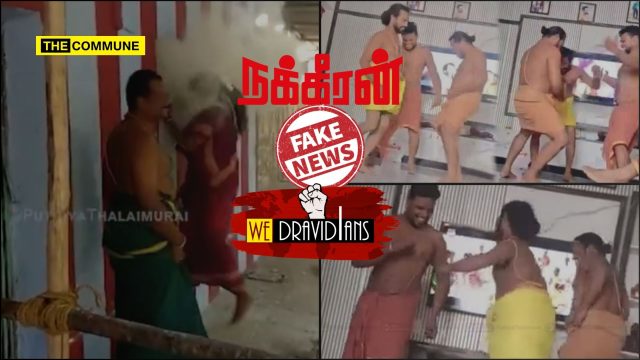
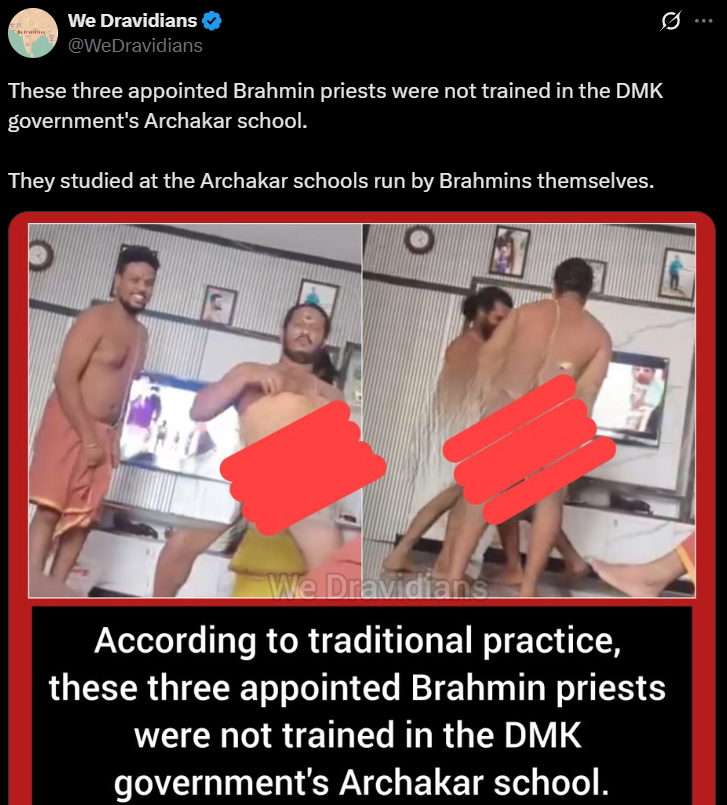
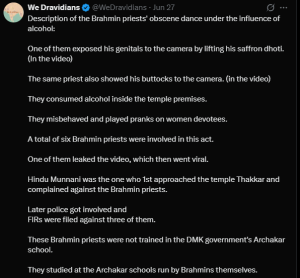
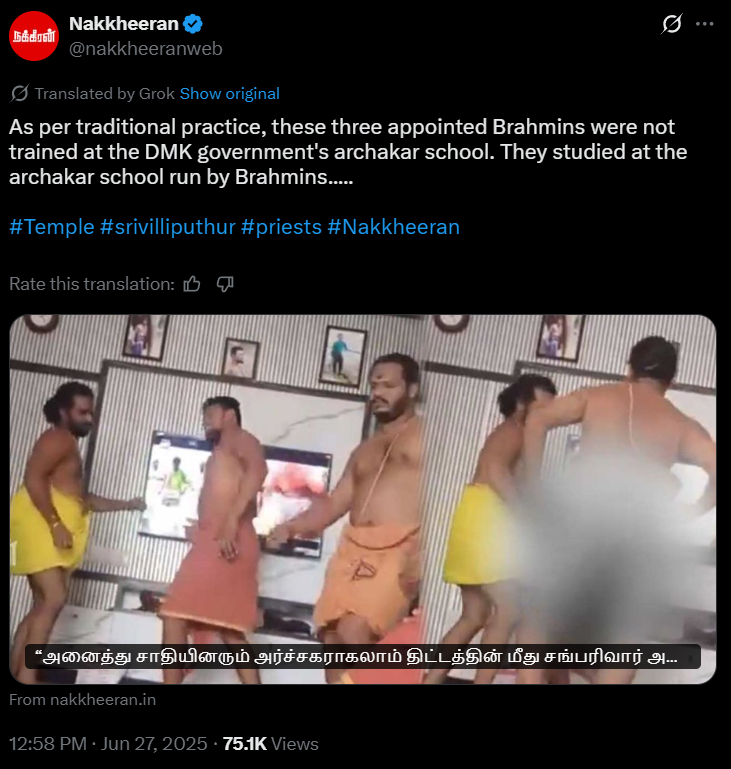
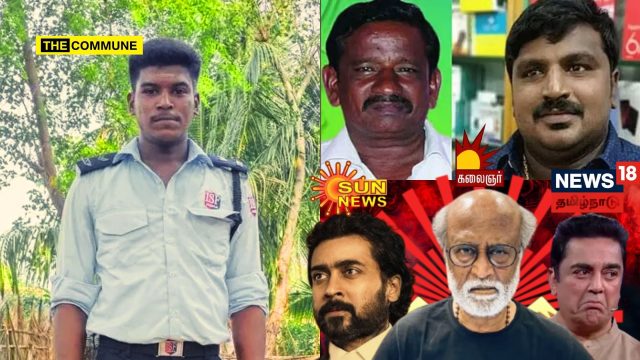
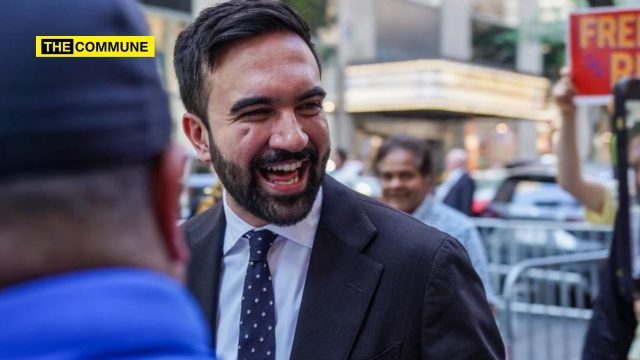
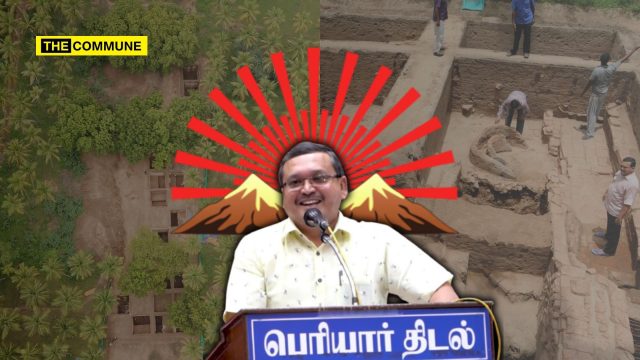
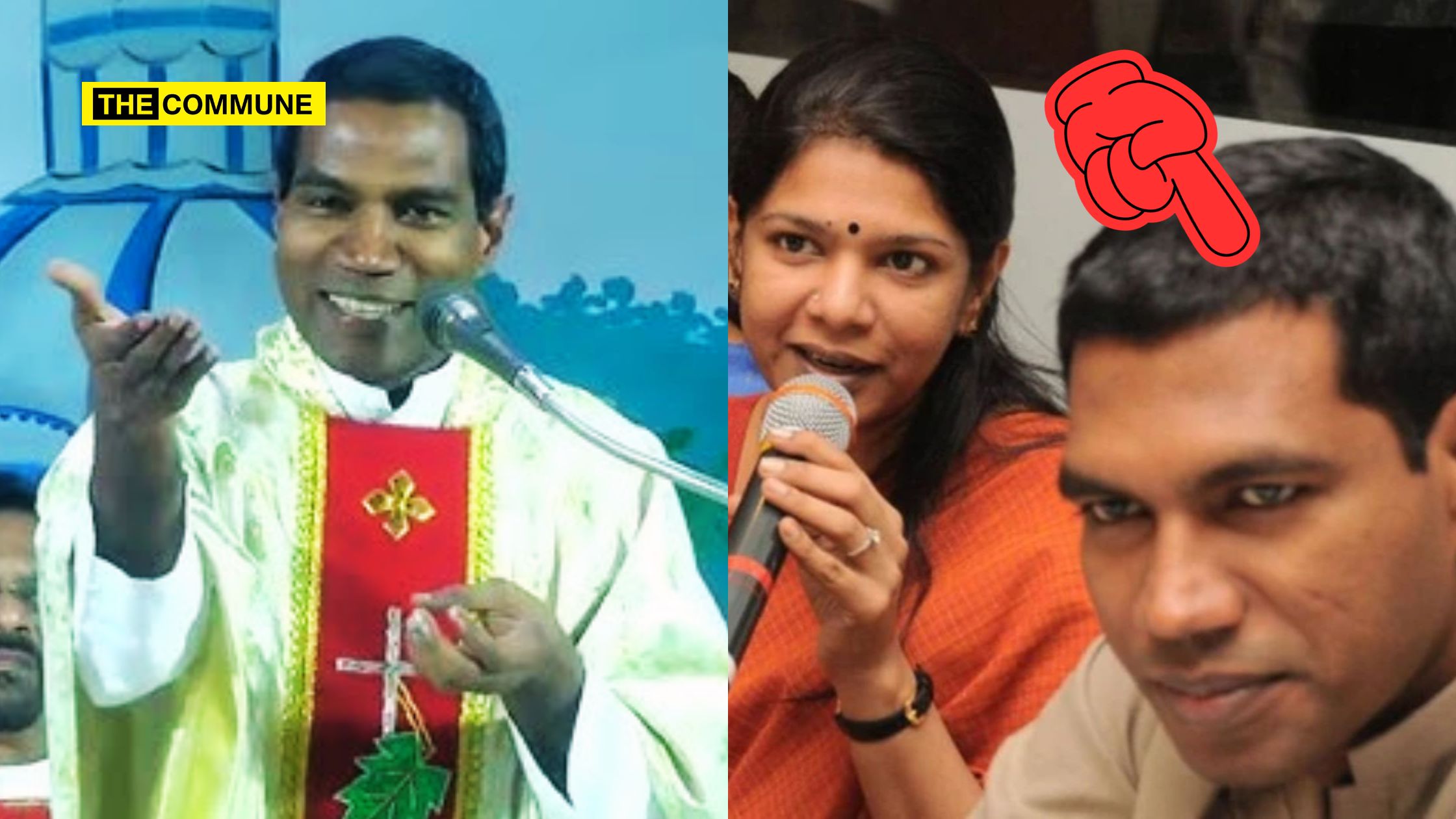
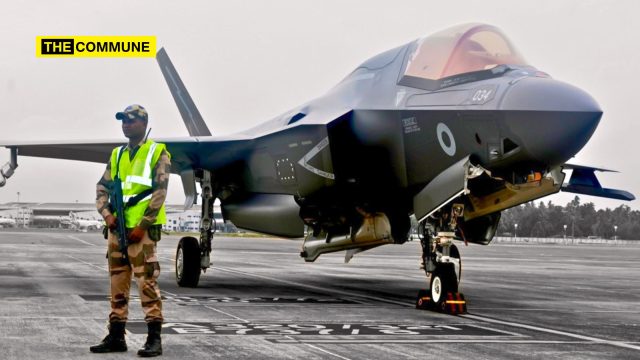
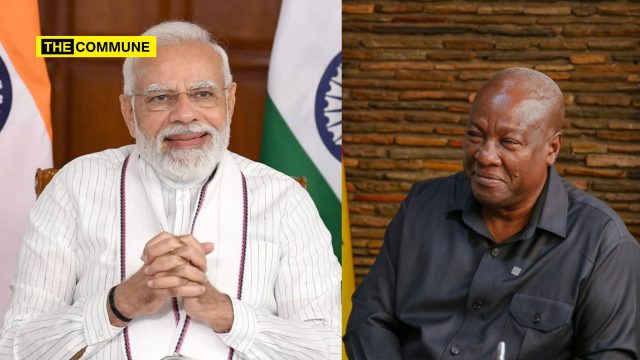
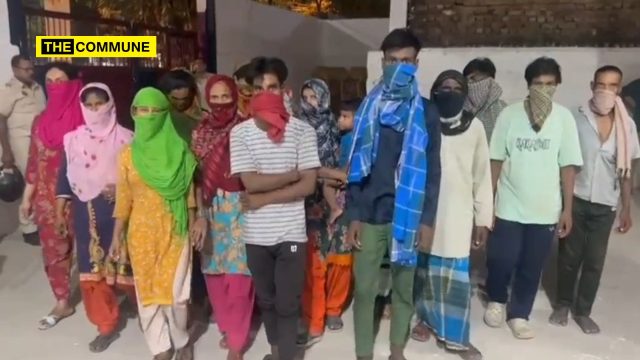
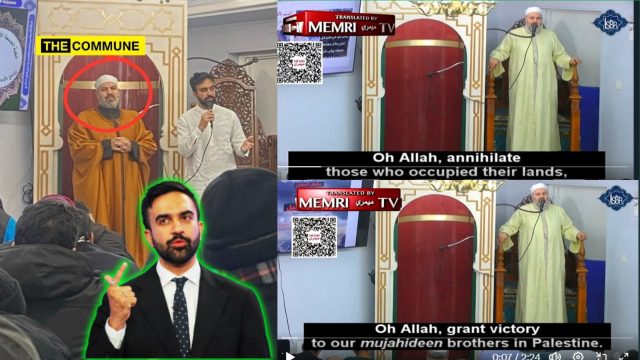

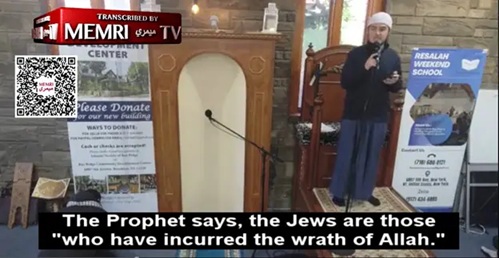
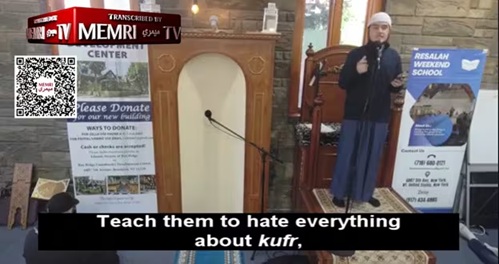

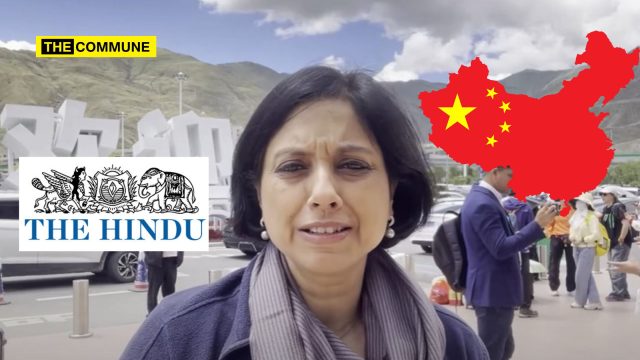

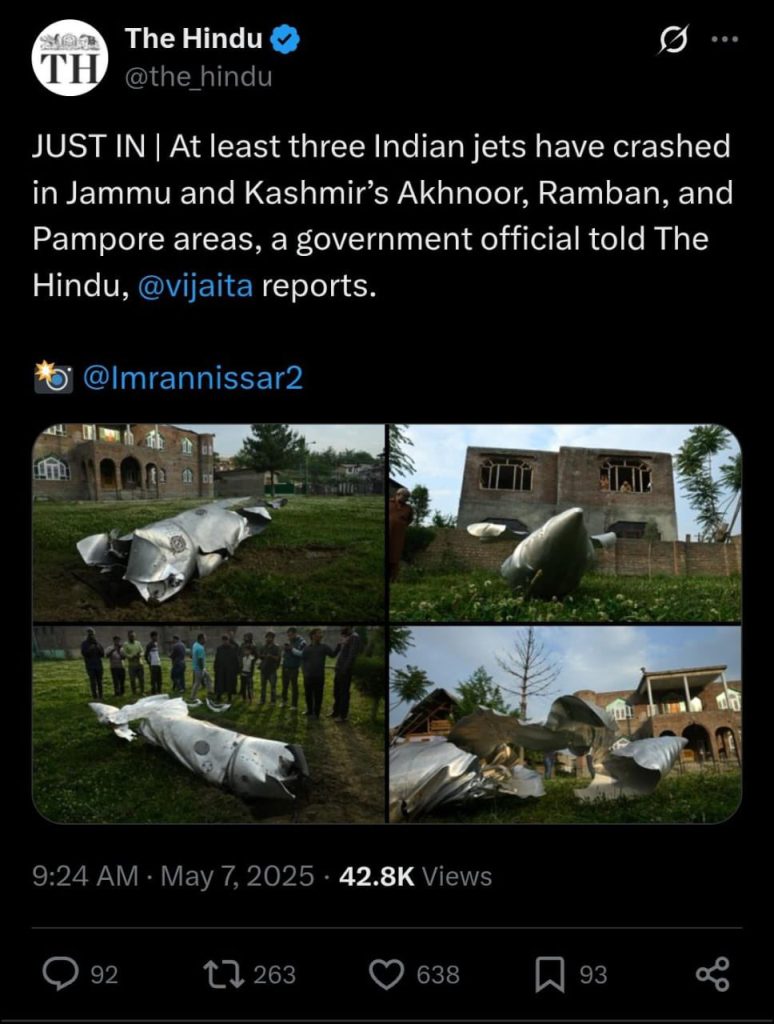
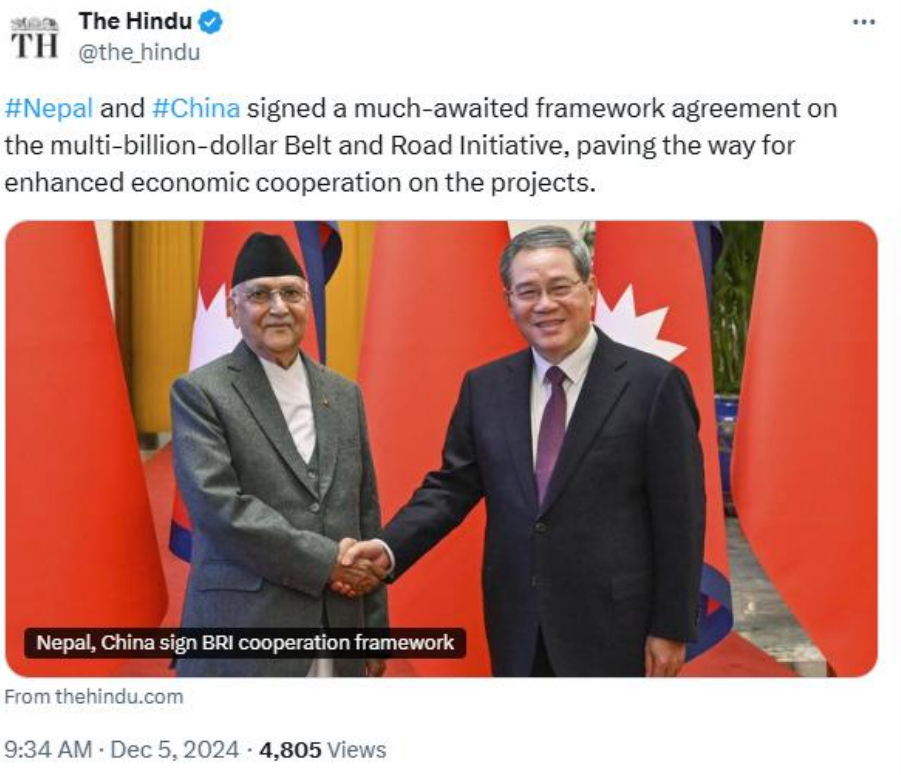
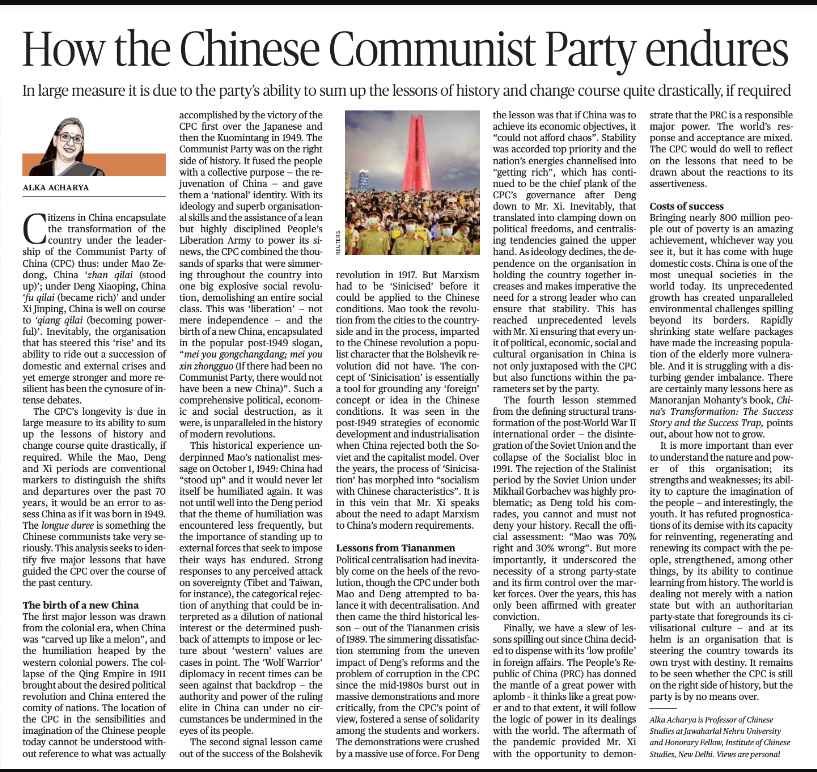
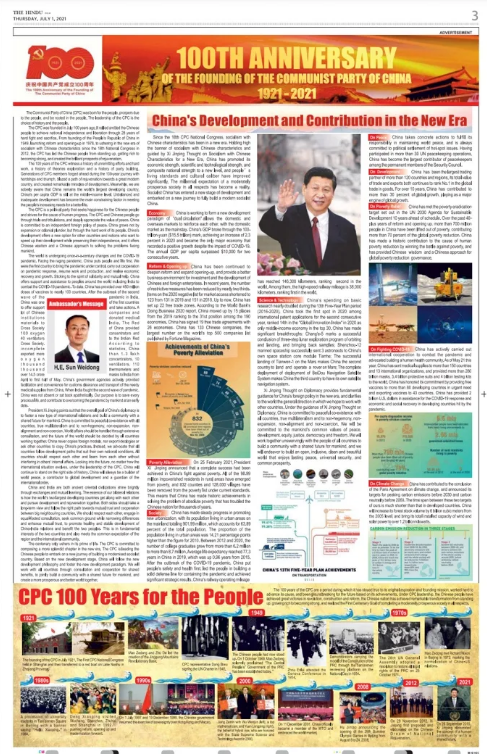
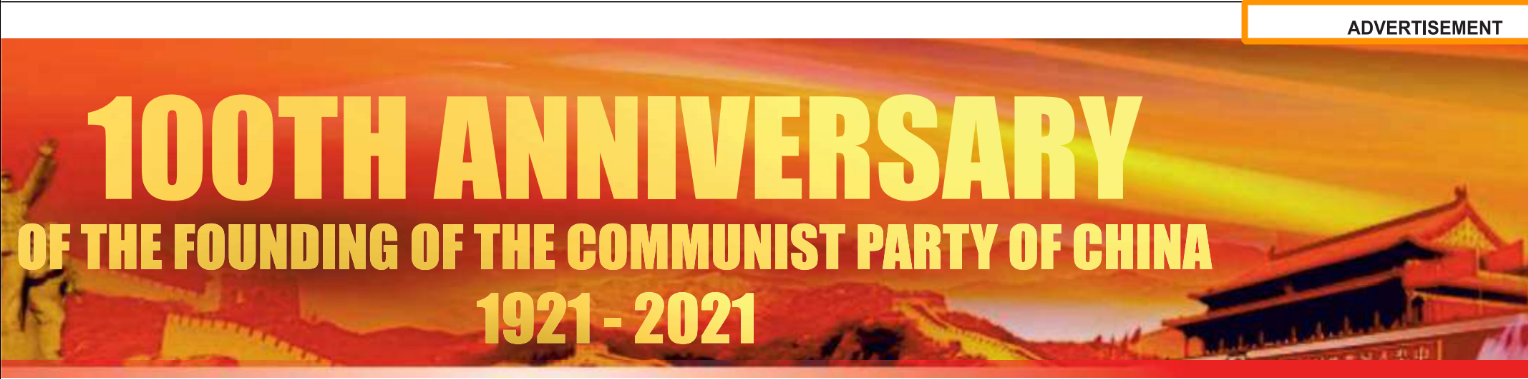
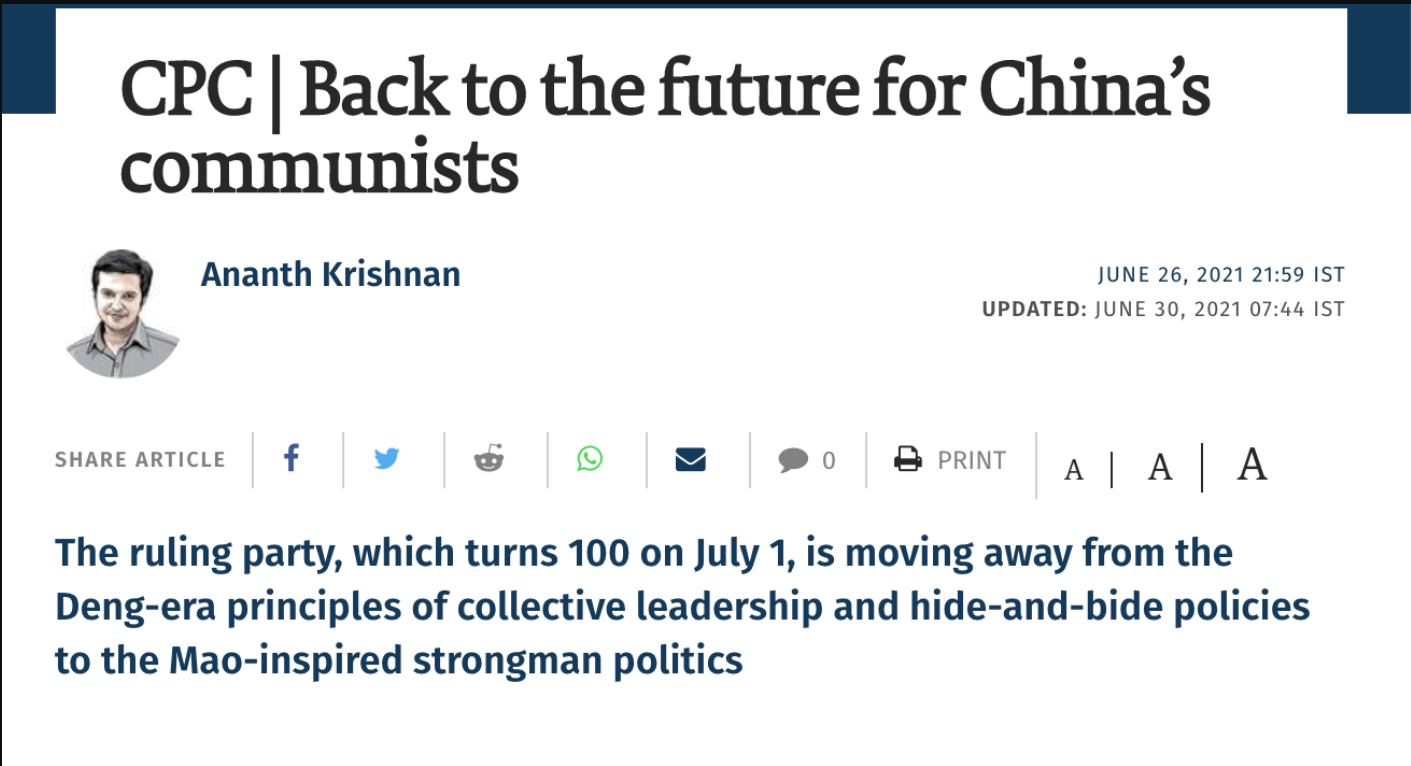
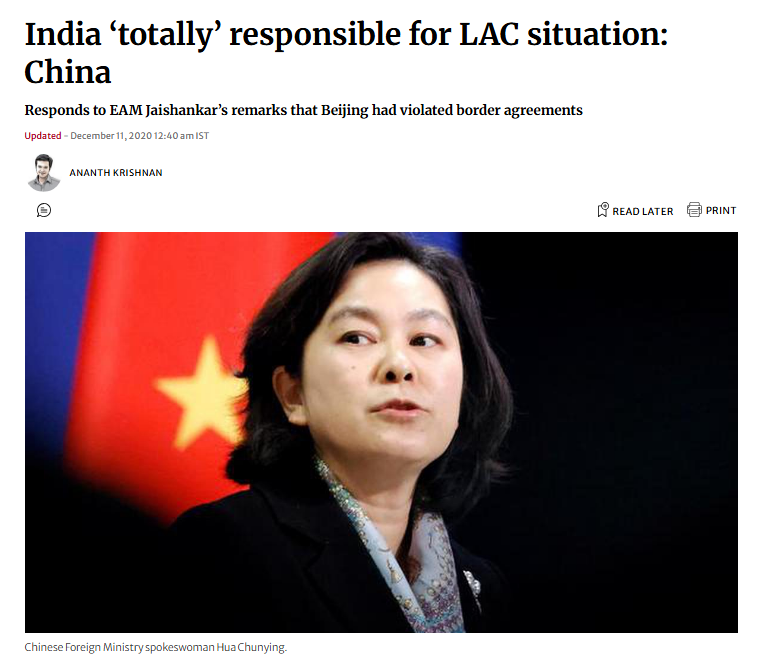
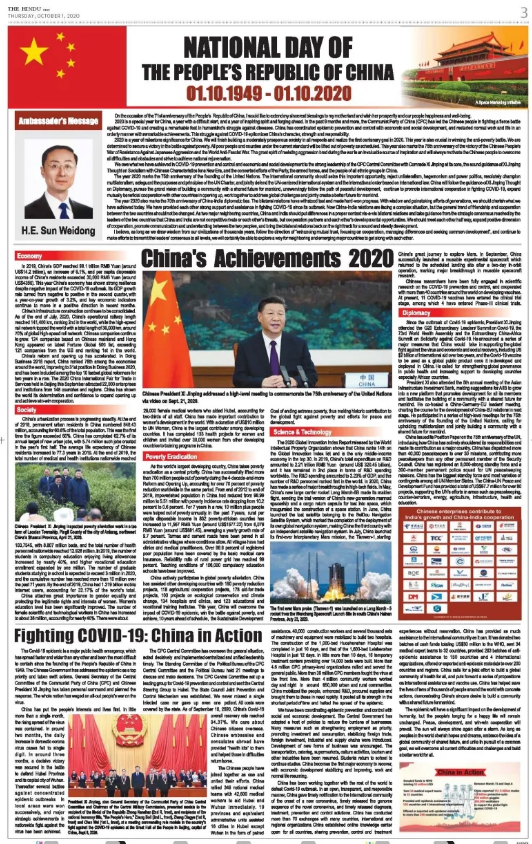

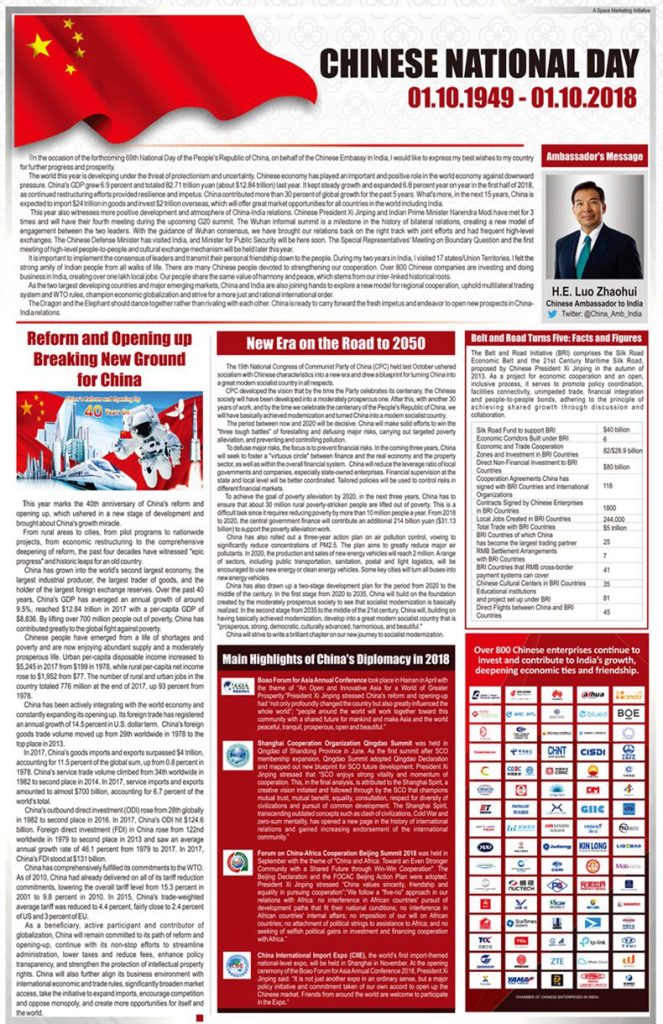

When Ground Reports Become Groundless: Calling Out The News Minute’s Half-Truths And Dravidianist Propaganda On Keezhadi
The News Minute’s recent so-called “ground report” on the Keezhadi excavations is yet another example of a troubling trend in its reportage: the tendency to construct narratives on selective facts, half-truths, and speculative interpretations. While it seeks to pitch Keezhadi as a civilisational revelation distinct from mainstream Indian history, the video is riddled with contradictions, omissions, and ideological insinuations masquerading as archaeological analysis.
1. Misrepresenting The ASI’s Role And Scientific Procedure
One of the key claims made in the video is that the Archaeological Survey of India (ASI) has asked the excavating officer to “revise” the report—an implication that hints at censorship or interference. This is factually incorrect. The ASI has merely requested that any extraordinary claims in the excavation report be backed with proper and verifiable evidence—especially with regard to carbon dating that purportedly places the site as early as the 6th century BCE. As of now, there is no conclusive carbon dating evidence from Keezhadi beyond the 3rd century BCE.
Is it not basic scientific rigour to demand that reports, especially on matters of national historical importance, be evidence-backed? Why should scientific clarifications trigger political outrage unless the goal is to avoid scrutiny altogether? Those who make sweeping claims must have the courage and intellectual honesty to back them with verifiable evidence, withstand scientific scrutiny, and accept when facts do not align with their ideological expectations.
2. Religious Structures And The ‘Secular Sangam’ Myth
The report claims there are “no religious structures” in Keezhadi, and proceeds to use that as a foundation to argue that Tamil civilisation was a secular civilization distinct from Vedic and deity-worship traditions.
How can such sweeping conclusions be drawn merely from viewing a few brick walls? Are we to expect Kanchipuram-style temples from 600 BCE? Religious architecture of the time would have been minimal and may not have survived the ravages of time. The real contradiction, however, lies in the simultaneous claim that Keezhadi belongs to the Sangam era—an era that is replete with religious and ritualistic references.
Take, for instance, the Pandiyan King Pal Yāgasālai MuduKudumi PeruVazhudhi of Sangam period, who is said to have performed a thousand Vedic yajnas as per Purananuru (verse 25):
“Performed per rules of the Four Vedas,
Pouring sacred ghee into the flaming altars…”
Karikala Chola was praised as the one who performed an Yajna using a Yajnakunda in the shape of a Kite (எருவை நுகர்ச்சி யூப நெடுந்தூண் வேத வேள்வித் தொழில்முடித் ததூஉம் ). There are kings named as Rajasuyam VEtta Perunarkilla indicating that he performed Rajasuya Yajna. Sangam texts like Purananuru, Agananuru, Kalithogai, Maduraikanchi mentions Gods like Shiva, Vishnu, Parvathi, Murugan, Krishna, Balarama among others – hardly signs of a deity-less, non-religious, non-ritualistic society.
If Keezhadi is Sangam-era, then dismissing its religious significance based solely on the absence of temples is either careless or ideologically motivated.
3. The False Binary Of Two Civilisations
The video posits the lack of religious symbols at Keezhadi as proof that the Tamil civilisation was somehow isolated from the rest of India. But consider this: less than 200 km away in Adichanallur—a site dated to an even earlier period—clear religious symbols have been excavated.
The site presents compelling archaeological evidence of early ritual practices closely aligned with Vedic and proto-Hindu traditions. The discovery of copper antennae swords, often associated with ceremonial rather than combat use, mirrors ritual objects found in early Vedic contexts. Similar swords have been found in other parts of India in contexts associated with Vedic rituals and Kshatriya warrior culture. The urn burials, containing human remains along with offerings like gold diadems, copper vessels, and carnelian beads, indicate a belief in the afterlife and structured funerary rites—core elements of Hindu thought. Terracotta figurines resembling human and animal forms likely served as votive offerings, reflecting the aniconic and symbolic nature of early Hindu worship. Additionally, the use of shell bangles and the systematic alignment of burial mounds suggest cosmological awareness and ritual orientation, both of which are integral to Hindu religious practice. Scholars such as K. Rajan and R. Nagaswamy have argued that these findings place Adichanallur within the cultural and ritual continuum of early Vedic society, challenging claims that ancient Tamil civilisation was separate from or devoid of Hindu religious influence.
Are we to assume two entirely distinct civilisations existed within this small geographical space? Or is it more reasonable to believe that Keezhadi’s deeper layers may yet reveal signs of worship?
Such premature conclusions do a disservice to the scientific process. Archaeology is cumulative. It demands patience, not ideological posturing.
4. On The Officer’s Transfer – A Red Herring
The video makes much ado about the so-called “abrupt” transfer of the excavation officer, Amarnath. But such transfers in the ASI are routine and occur every 2–3 years. In this case, one of the transfers was accompanied by a promotion. It is misleading to imply a conspiracy in what is an ordinary bureaucratic reshuffle.
Unless ofcourse your video script came straight from ‘PEN’.
5. The Harappan Comparison – An Inaccurate Stretch
The attempt to compare Keezhadi with the Harappan civilisation is not only inaccurate but borders on academic dishonesty. Harappan sites like Mohenjo-daro and Dholavira are known for their large urban planning, uniform seals (like the unicorn motif), Great Bath, script, and drainage systems—none of which have been found at Keezhadi.
Also, Harappan civilisation dates back to 2600–1500 BCE, while Keezhadi’s most ambitious estimates place it around 600 BCE. That’s a gap of a thousand years. The comparison is misleading and only serves to elevate Keezhadi into a civilisational symbol that it cannot yet bear.
6. Cultural Continuities Ignored
Interestingly, the excavation of carnelian beads—known to be manufactured in the Gujarat region—clearly points to trade and cultural connections between the Tamil region and northern India. Far from being a separate civilisational island, Keezhadi may well be part of the broader Indian civilisational continuum. But this aspect receives little attention in the video, perhaps because it doesn’t fit the desired narrative.
7. The Politics Of Supposed Silence
Finally, if the excavation report was truly robust and methodologically sound, why were clarifications to ASI queries not promptly provided? These were not political questions—they were scientific concerns. The politicisation of archaeology only emerges when evidence-based inquiry is stonewalled in favour of ideological storytelling.
Let the Spade Speak, Not the Spin
Keezhadi is undoubtedly a significant site in India’s archaeological landscape. But its true value will emerge not from media campaigns or selective reporting, but from rigorous science and peer-reviewed findings. Let archaeology remain in the realm of research—not rhetoric.
The News Minute’s report reflects a deeper problem: the temptation to project ideological biases onto scientific explorations. If we truly wish to honour Tamil heritage and Indian history, we must demand more evidence, less emotion—and most importantly, the integrity to let the truth emerge as it is, not as we wish it to be.
Subscribe to our channels on Telegram, WhatsApp, and Instagram and get the best stories of the day delivered to you personally.