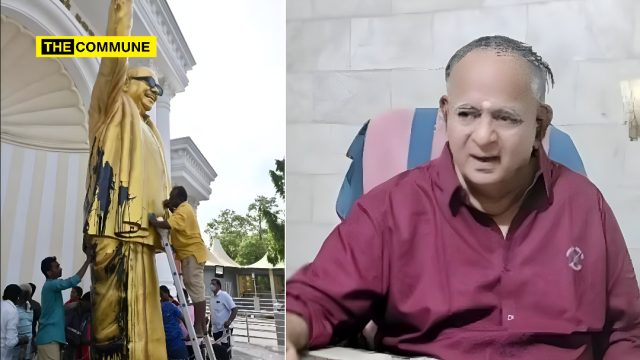
A 77-year-old ENT doctor was taken into custody by Hastampatti police in Salem for defacing a 16-foot bronze statue of former Tamil Nadu Chief Minister & DMK patriarch M. Karunanidhi with black paint at Anna Park on 16 July 2025. Authorities reported that the act was driven by emotional distress linked to personal and family problems.
The individual arrested has been identified as Dr. H. N. Viswanathan, a resident of the Four Roads locality. He operates the Arunagiri ENT Nursing Home in the same area.
Police were able to trace the suspect after reviewing CCTV footage from the vicinity. “During questioning, he confessed to pouring black paint on the statue,” said Assistant Commissioner K. M. Aswini, who further explained that the doctor had been under intense psychological strain for several weeks due to ongoing family issues.
Dr. Viswanathan has been charged under relevant provisions of the Bharatiya Nyaya Sanhita (BNS) including sections related to inciting enmity and intentional provocation — as well as sections of the Tamil Nadu Public Property (Prevention of Destruction and Loss) Act, 1982. He has since been remanded to judicial custody.
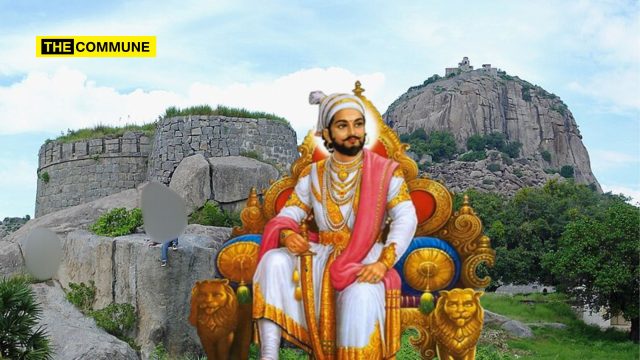
The recent UNESCO recognition of Gingee Fort on 12 July 2025, as part of the “Maratha Military Landscapes of India” has triggered backlash from Dravidianist media outlets, particularly NewsTamil24x7. The recent coverage sought to cast Gingee Fort primarily as a symbol of Tamil identity rather than acknowledging its prominent historical association with Chhatrapati Shivaji Maharaj and the Marathas.
In its news segment, the outlet questioned, “Is Tamil identities being sacrificed? Is the Central BJP government distorting history? Is Gingee Fort a Maratha fort?” It then pushed a narrative crediting local Tamil rulers like Senjiyar Ko Kadavan of the Kadava dynasty and Anandha Kon of the Idaiyar lineage as the true architects of the fort. However, historical records paint a far more nuanced and comprehensive picture.
Historical Layers Of Gingee Fort: A Multi-Dynastic Legacy
The history of Gingee Fort traces back to the 9th century, when it was initially constructed by the Chola dynasty. Some historical accounts suggest that the Kon dynasty may have laid the earliest foundations even before the Cholas. Over time, the fort underwent several phases of expansion and fortification, with significant contributions from the Kurumbar chiefs, the Vijayanagara Empire, the Bijapur Sultanate, and later, the Marathas under Chhatrapati Shivaji Maharaj, who captured it in 1677 AD.
Throughout its history, the fort changed hands multiple times, reflecting the region’s turbulent political landscape. Among its most prominent custodians were the Nayaks, who ruled from the 16th to the 18th century. They transformed the fort into a powerful citadel by constructing key structures such as the Kalyana Mahal, Ranganatha Temple, and Venkataramana Temple, and further enhanced its defenses by building the Krishnagiri and Chandrayandurg citadels on nearby hills.
Nicknamed the “Troy of the East” and the “Fortress of a Thousand Pillars,” Gingee Fort is an architectural and strategic marvel. It spans three fortified hillocks Rajagiri, Krishnagiri, and Chandrayandurg each interconnected by strong defensive walls. Within the complex are granaries, temples, palaces, water tanks, bastions, and other military installations that reflect both its tactical significance and its engineering sophistication.
The fort faced numerous invasions and sieges over the centuries from the Deccan Sultanates, Mughals, and Marathas, to the French and British. A defining moment in its history came during Shivaji Maharaj’s southern campaign in 1677, when he laid siege to the fort. Recognizing its formidable defenses and strategic value, Shivaji eventually captured it in 1684 AD, reportedly calling it the “most impregnable fortress in India.” He then appointed his son, Rajaram, as the fort’s governor.
The Marathas controlled Gingee until 1698, when it was seized by Zulfikar Khan, a general of Mughal Emperor Aurangzeb. The fort later came under French control in 1750, serving as a military base. By 1761, the British had taken over, dismantling parts of the fort, including its cannons, before eventually abandoning it.
Though Gingee Fort passed through the hands of several rulers including the Nayaks, Mughals, French, and British its capture and use by Shivaji Maharaj remains a particularly significant chapter, marking it as a vital stronghold in Maratha military history.
Why Gingee Fort Is Strongly Linked to Shivaji Maharaj and the Marathas
As part of his southern expedition, Chhatrapati Shivaji Maharaj captured Gingee Fort from the Bijapur Sultanate in 1677. Recognizing its tactical advantages natural defenses, elevated terrain, and massive fortifications he fortified it further and integrated it into the expanding Maratha military landscape.
2. “Most Impregnable Fortress”: Shivaji Hailed
Shivaji reportedly hailed Gingee as the “most impregnable fortress in India”, impressed by its strength and layout. The British later likened it to Troy due to its formidable structure.
3. Turned the Fort into Formidable Military Outpost:
According to historians, Chhatrapati Shivaji seized Gingee Fort from the Bijapur Sultanate in 1677, turning it into a formidable military base. The following year, in 1678, Jesuit missionary Andrew Breira documented Shivaji’s substantial fortification work, noting that the improvements were so expertly executed that they would have earned the admiration of even European military engineers. These strategic upgrades later played a crucial role in enabling the Marathas to withstand a seven-year-long Mughal siege.
4. Maratha Capital in Exile (1690–98):
After Shivaji’s passing, the fort gained critical prominence again when his son Rajaram Maharaj, along with Tarabai, escaped the Mughal siege in Maharashtra and took refuge in Gingee in 1689. For eight years, from 1690 to 1698, the fort served as the de facto capital of the Maratha Empire. From there, they coordinated resistance against Aurangzeb’s Mughal forces, ensuring the Maratha legacy endured.
5. UNESCO Recognition in 2025:
The fort’s recent inscription as part of the “Maratha Military Landscapes” directly affirms its strategic and historical value under the Maratha Empire. This listing does not diminish the site’s earlier histories, but it clearly acknowledges the Maratha chapter as central to its military and cultural legacy.
Dravidianist Response: Revisionism Or Regional Insecurity?
Despite Gingee’s well-documented Maratha significance, Dravidianist outlets like News Tamil 24×7 have attempted to spin the recognition as a “North Indian hijacking of Tamil history.” This reaction reflects a broader trend where any acknowledgment of contributions from non-Dravidian rulers, especially those linked to Hindu or pan-Indian identities, is framed as cultural appropriation.
But history is not a zero-sum game.
While it’s true that Gingee Fort saw rulers from multiple dynasties Cholas, Nayaks, Mughals, French, British, and more it is factually inaccurate and politically motivated to downplay the role of Shivaji Maharaj, whose strategic foresight ensured Gingee’s pivotal role in safeguarding the Maratha Empire during its most vulnerable years.
A Shared Legacy, Not an Erased One
Gingee Fort’s inclusion in UNESCO’s list as part of the Maratha Military Heritage does not erase its Tamil roots it elevates its pan-Indian importance. Rather than seeing this as a threat to Tamil identity, it can be recognized as a celebration of India’s layered, interconnected history, where Tamil kings built, and Maratha rulers preserved and fortified.
Attempts to politicize this recognition only serve to divide, not enrich our understanding of a remarkable monument that has stood the test of time and empire.
Subscribe to our channels on Telegram, WhatsApp, and Instagram and get the best stories of the day delivered to you personally.
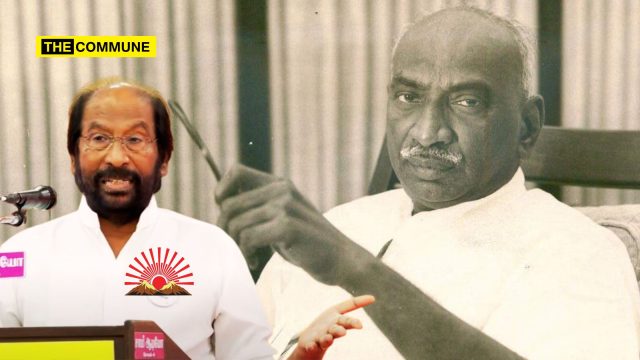
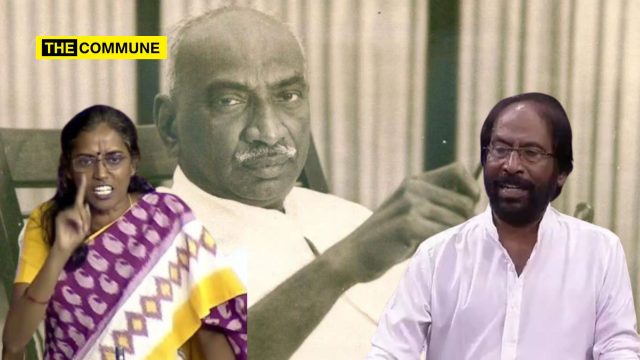
After triggering controversy for making disparaging remarks about the late former Chief Minister K. Kamaraj (referred to as Kamarajar), DMK Deputy General Secretary and Rajya Sabha MP Tiruchi Siva has issued a vague explanation that lacks both an apology and a clear sense of regret. Instead, he appealed for an end to the criticism.
The backlash stems from a speech Siva gave at a DMK meeting in Perambur, where he claimed that before his death, Kamaraj had held then Chief Minister M. Karunanidhi’s hand and urged him to “save the country and democracy,” adding that Kamaraj could not sleep without air conditioning. These remarks sparked widespread outrage across political and public circles, with many accusing Siva of disrespecting the legacy of a widely respected leader.
In response, Siva issued a statement through the DMK’s official X (formerly Twitter) account, attempting to clarify his comments. However, his message failed to include an apology or express regret.
The statement read, “Statement by Thiru. @tiruchisiva, MP, Deputy General Secretary of the Party! Discussions are intensifying with the view that I spoke in a manner that tarnishes the reputation of Perunthalaivar Kamarajar. Many are aware that even when I speak about leaders in the opposing ranks, I criticize them with dignity. It is my usual practice to speak with emotion and passion on many platforms about Kamarajar, who opened the eyes of education, and how he served as a guide for all of India by bringing poor children to school through the midday meal scheme.
Following in the footsteps of Perarignar Anna, who wrote, “Kunalaa! Manaalaa! Kulakkozhundhe! Go to Gudiyatham! Conquer!” and Muththamizharingar Kalaignar, who, after Kamarajar’s demise, accorded him all respects and named the domestic terminal of Chennai Airport after him and working under the leadership of our current Party President, Tamil Nadu Chief Minister Thalaivar and brother M.K. Stalin, who celebrates Kamarajar’s birthday as “Education Development Day” and constantly enhances his glory. I am not someone who would in any way accept anyone tarnishing the reputation of deceased leaders. I hold immense respect and high regard for Perunthalaivar Kamarajar, who spent many years in prison during the freedom struggle, bore the scars of sacrifice, served the people as Chief Minister and All India Congress Party President, and holds a unique place in everyone’s hearts. I am a dutiful party cadre who upholds dignity, following the path of Anna, Kalaignar, and Thalaivar. I kindly request everyone to accept this explanation and not turn the content of my speech into a further subject of debate!”
கழகத் துணைப் பொதுச் செயலாளர் திரு @tiruchisiva எம்.பி., அவர்கள் அறிக்கை!
பெருந்தலைவர் காமராசரின் புகழுக்குக் களங்கம் விளைவிக்கும் தன்மையில் நான் பேசியதாகக் கருத்து கொண்டு விவாதங்கள் வலுத்துக் கொண்டு வருகின்றன. நான் எதிர்வரிசையில் இருக்கும் தலைவர்களைப் பற்றிப் பேசும்போதுகூட… pic.twitter.com/wcKUXFGLvB
However, the absence of a direct apology or any expression of remorse in this clarification has only fueled further criticism. Many have viewed the explanation as evasive and inadequate, failing to address the seriousness of the remarks made.
What Did DMK MP Tiruchi Siva Say?
Speaking at the DMK meeting, Tiruchi Siva said, “Similarly, when I was around 23 or 24, Kalaignar (Karunanidhi) would take me in his car and recount some events. Some people would question why he was telling these things to a young kid. But he knew I would speak about them in public meetings and convey them effectively to the people. He would tell me many such stories. One day, he told me this, ‘Kamarajar has organized condemnation meetings all over Tamil Nadu against electricity shortage. Kamarajar would get an allergy if he didn’t have air conditioning. So, he (Karunanidhi) ordered that all the visitors’ bungalows where he stayed be equipped with air conditioning. Even though he (Kamaraj) was speaking against him, considering his health, I made sure all those bungalows had air conditioning.”
Later he peddled another story saying, “During the Emergency, they were desperate to arrest him but couldn’t do it in Tamil Nadu. Just then, he was about to leave for an event in Tirupati. A message went from the Chief Minister’s office, saying, ‘Please don’t go to Tirupati.’ He retorted, ‘I’m not a DMK member; I’m a Congress member, Who is he to tell me that tell me I can’t go?’ Then, he told, ‘I’m not a DMK leader, I’m the Chief Minister of Tamil Nadu. My order is that you shouldn’t go there.’ Immediately, he shot back, ‘What? You’re ordering me? I’m the one who gave up that chair! Is this guy so big that he can order me around? I’m going!’ So, thalaivar called Rajaram Naidu and said, ‘Please make him understand. I’m not a big shot who can order him around. There’s nothing above him. The Central Government is desperate to arrest him. As long as he’s within Tamil Nadu’s borders, I will protect him. If he crosses this border and goes to Tirupati, which is in Andhra, I won’t be able to save him if they arrest him. That’s why I asked him not to go.’ It was only then that he (Kamaraj) said, ‘I spoke without understanding him. He has such a big heart. ‘Finally, holding his hand, before his death, he said, ‘You are the one who must save this country and democracy.’”
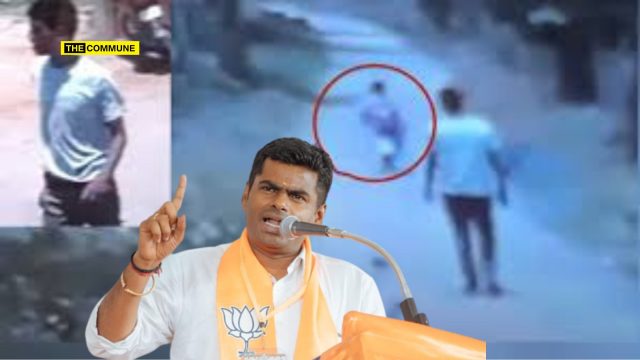
A disturbing CCTV footage showing a man attempting to abduct and sexually assault a 10-year-old girl in Gummidipoondi, Tiruvallur district, has gone viral, sparking outrage over child safety and law enforcement delays. The incident occurred on 12 July 2025 when the minor was returning home from school.
The video captures the accused stalking the girl before suddenly grabbing her and dragging her toward bushes. The child, displaying remarkable presence of mind, screamed and struggled, forcing the attacker to flee. She later informed her grandmother, who filed a police complaint at Arambakkam police station.
Despite the viral video and public pressure, the culprit remains unidentified and at large, raising concerns over police efficiency. Former Tamil Nadu BJP chief K. Annamalai shared the footage on his X handle, demanding urgent action. He wrote, “InTiruvallurdistrictnearGummidipoondi,onlastSaturday,CCTVfootageshowingaten-year-oldgirlwalkingontheroadbeingabductedwithhermouthcoveredandsexuallyassaultedisheart-wrenching.Itisdeeplydistressingthatevenafterfivedayssincethecrime,theculprithasnotyetbeenarrested.Thefactthatsuchcriminals,whoengageinsexualoffenseswithoutregardforthevictimbeingaminor,arefreelyroamingoutsideshowshowdangeroustheenvironmentsocietyisin.Thequestionarisesnotonlyabouthowmanytimessuchacriminal,whosoboldlycommitssexualassaultonaminorwalkingontheroad,mighthaveengagedinsexualcrimesbefore,butalsothathisnotbeingarrestedyetcreatesthepossibilityforhimtocommitfurthercrimes.Istronglyurgethepolicetotakeimmediateactiontoarrestthiscriminalwithoutfurtherdelay.”
திருவள்ளூர் மாவட்டம் கும்மிடிப்பூண்டி அருகே, கடந்த சனிக்கிழமை அன்று, சாலையில் நடந்து சென்ற பத்து வயது சிறுமியை, வாயை மூடிக் கடத்திச் சென்று பாலியல் வன்கொடுமை செய்த சிசிடிவி காட்சி, நெஞ்சைப் பதைபதைக்க வைக்கிறது.
This incident follows other recent child assault cases, including:
Three Krishnagiri schoolteachers arrested for sexually assaulting a 13-year-old student.
Earlier last year, a minor was assaulted at a fake NCC camp in the same district.
In Vedaranyam, a volleyball coach Mohammed Kalilur Rahman was arrested for repeated sexual assault on minor student under pretext of sports training.
Auto driver Taufeeq Umar from Mettupalayam was arrested under POCSO Act for sexually assaulting minor and forcing abortion.
A Trichy government doctor Samson Daniel was arrested under POCSO Act for sexually assaulting minors at the school hostel.
The list keeps going on and on. Law and order and safety for minors and even adult women has gone to the dogs in Tamil Nadu under the Dravidian model regime.
DMK Deputy General Secretary and Rajya Sabha MP Tiruchi Siva has stirred a major political controversy following remarks made during a party meeting in Perambur, Chennai, where he made contested claims about late Congress leader and former Chief Minister K. Kamaraj.
Speaking at the gathering, Siva asserted that Kamaraj, shortly before his death, had held the hand of then Chief Minister M. Karunanidhi and urged him to “save the country and democracy.” He also made claims about Kamaraj’s personal preferences, stating that the veteran leader would not sleep without air conditioning.
Siva recounted, “Similarly, when I was around 23 or 24, Kalaignar (Karunanidhi) would take me in his car and recount some events. Some people would question why he was telling these things to a young kid. But he knew I would speak about them in public meetings and convey them effectively to the people. He would tell me many such stories. One day, he told me this, ‘Kamarajar has organized condemnation meetings all over Tamil Nadu against electricity shortage. Kamarajar would get an allergy if he didn’t have air conditioning. So, he (Karunanidhi) ordered that all the visitors’ bungalows where he stayed be equipped with air conditioning. Even though he (Kamaraj) was speaking against him, considering his health, I made sure all those bungalows had air conditioning.’”
Further narrating a political anecdote from the Emergency period, Siva claimed that Karunanidhi sought to protect Kamaraj from being arrested by the Central Government when he planned to travel to Tirupati. “During the Emergency, they were desperate to arrest him but couldn’t do it in Tamil Nadu. Just then, he was about to leave for an event in Tirupati. A message went from the Chief Minister’s office, saying, ‘Please don’t go to Tirupati.’ He retorted, ‘I’m not a DMK member; I’m a Congress member, Who is he to tell me that tell me I can’t go?’ Then, he told, ‘I’m not a DMK leader, I’m the Chief Minister of Tamil Nadu. My order is that you shouldn’t go there.’ Immediately, he shot back, ‘What? You’re ordering me? I’m the one who gave up that chair! Is this guy so big that he can order me around? I’m going!’ So, thalaivar called Rajaram Naidu and said, ‘Please make him understand. I’m not a big shot who can order him around. There’s nothing above him. The Central Government is desperate to arrest him. As long as he’s within Tamil Nadu’s borders, I will protect him. If he crosses this border and goes to Tirupati, which is in Andhra, I won’t be able to save him if they arrest him. That’s why I asked him not to go.’ It was only then that he (Kamaraj) said, ‘I spoke without understanding him. He has such a big heart. ‘ Finally, holding his hand, before his death, he said, ‘You are the one who must save this country and democracy.’”
These remarks have drawn widespread criticism, especially from Congress leaders and Kamaraj supporters who view the statements as distortions of historical fact and an attempt to elevate Karunanidhi at the expense of Kamaraj’s legacy.
Responding strongly, Congress MP from Karur, Jothimani, issued a statement on social media platform X, saying, “The great leader Kamarajar is renowned worldwide not only for his integrity and administrative prowess but also for his simplicity. Is there any place in Tamil Nadu where Kamarajar’s footsteps have not tread? Such is the extent of his travels across every nook and corner of Tamil Nadu. In those nooks and corners, there were no air-conditioned rooms or five-star hotels. As a Chief Minister, he stayed in government guest houses, and if it was too hot, he would sleep under a tree on a cot. He was a simple man who even told his security personnel to rest and was accustomed to sleeping alone.
The claim by brother Thiru Trichy Siva that Kamarajar would not sleep without an air-conditioned room is entirely contrary to the truth.
This must be seen as a continuation of the myths propagated in the past with political malice against our leader Kamarajar.
The Congress Party paid rent for the house where Kamarajar lived. The myth propagated by the DMK that it was his personal mansion is what led to the defeat of this great personality of our land in the electoral arena, as history records.
If we fail to give a fitting reply to the myths spread against Kamarajar, his soul will not forgive us. Every Congress worker must remember that it is because of his name that the Congress Party still stands in the political arena of Tamil Nadu to this day.”
பெருந்தலைவர் காமராஜர் நேர்மைக்கும்,நிர்வாகத்திறமைக்கும் மட்டுமல்ல எளிமைக்கும் பெயர் போனவர் என்பதை உலகறியும்.
தமிழ்நாட்டில் காமராஜர் கால்தடம் படியாத இடம் ஏதாவது இருக்கிறதா என்று ஆச்சர்யப்படக்கூடிய அளவில் தமிழ்நாட்டின் மூலை முடுக்கெல்லாம் பயணம் செய்தவர் பெருந்தலைவர் காமராஜர்.…
Historians and critics have also pointed out that contemporary records indicate Kamaraj’s last known words were to his aide, “Vairava, turn off that lamp”, before retiring to bed on the night of his death, casting doubt on the dramatic account relayed by Tiruchi Siva.
Subscribe to our channels on Telegram, WhatsApp, and Instagram and get the best stories of the day delivered to you personally.
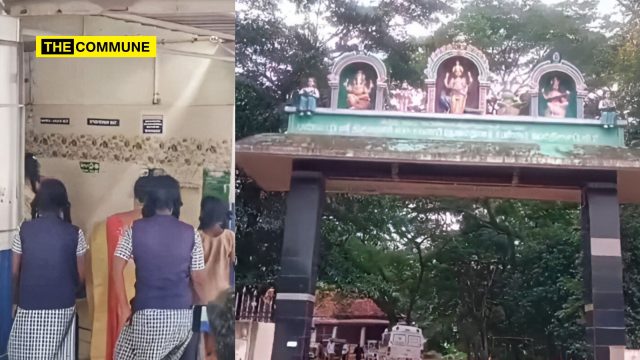
A fresh case of food poisoning involving nine female students has caused concern in Tenkasi district after they fell ill shortly after having breakfast at a government-run hostel. The students were quickly admitted to the Tenkasi Government Hospital for treatment.
The incident occurred at the Government Girls’ Higher Secondary School hostel in the Courtallam region, which is allegedly managed by the Hindu Religious and Charitable Endowments Department. The affected students belonging to classes 6, 11, and 12 were from areas including Punnaiyapuram, Boganallur and Kerala.
All nine are currently under medical observation, and the school administration has begun a probe to identify if any other students have experienced similar reactions.
This troubling episode comes amid a series of recent food safety scares in the district. Earlier, six residents of an old age home died after consuming contaminated food, and in a separate case, over a dozen professors fell ill from contaminated food containing a dead lizard during a Naan Muthalvan training at Madras University, prompting hospitalisation and protests over poor food safety in June 2025.
With multiple food-related health incidents surfacing in a short span, public concern over food hygiene and safety in the region continues to intensify.
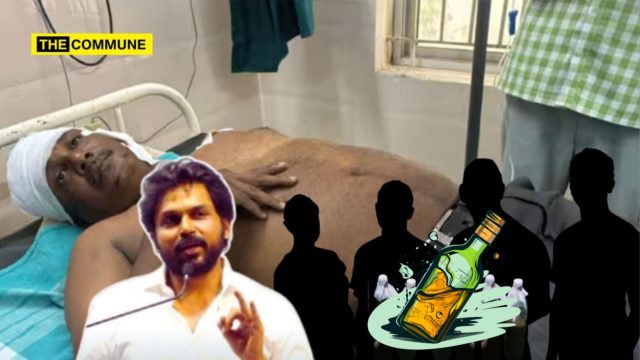
While Kollywood actor and Dravidianist sympathiser Karthi showered praise on Tamil Nadu’s School Education Minister Anbil Mahesh, claiming government schools were thriving under his stewardship, the reality on the ground tells a very different story.
In a disturbing incident highlighting concerns over substance abuse among youth, a teacher at a government school in Sivakasi, Virudhunagar district, was assaulted by students who were allegedly intoxicated.
The incident took place at S.R. Government Higher Secondary School in Tiruthangal. Four Class 12 students arrived late to school, and they had strong smell of alcohol. When teacher Chandramoorthy questioned them about it, the students denied being under the influence. However, as he attempted to escort them to the headmaster’s office for further inquiry, the situation turned violent. One of the students attacked him with a bottle, causing a severe head injury.
The teacher was immediately rushed to the government hospital for treatment. Following the assault, local police have arrested the students involved and an investigation is underway.
This shocking event has sparked renewed criticism of the state-run TASMAC liquor outlets, which many believe are contributing to rising alcohol abuse among school-aged youth.
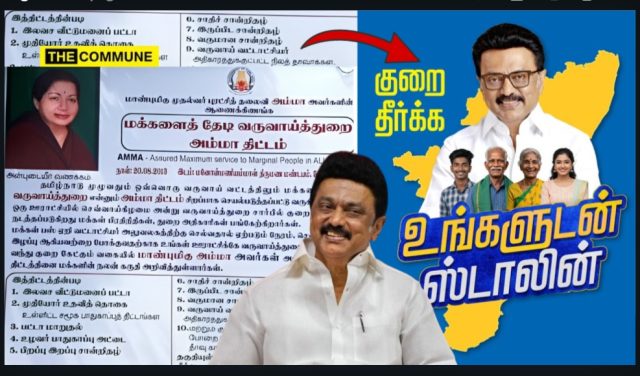
The DMK, often criticized for repackaging schemes initiated by rival parties, is once again facing backlash for rebranding a previous AIADMK scheme. The DMK’s newly launched initiative, ‘Ungaludan Stalin’ (Stalin With You), closely mirrors the AIADMK’s flagship ‘Assured Maximum Service to Marginal People in All Villages’ (AMMA) scheme, with only minor modifications.
Unveiled by Chief Minister M.K. Stalin on 15 July 2025, the ‘Ungaludan Stalin’ initiative promises to bring government services directly to the public through special camps set up in both urban and rural areas. According to official announcements, these camps will operate until November 2025, offering a wide range of services 43 from 13 departments in urban areas and 46 from 15 departments in rural areas. The idea is to streamline access to services such as obtaining caste and income certificates, correcting Aadhaar and ration card details, accessing health insurance cards, pension applications, patta changes, and eligibility verification under the Women’s Rights Scheme. The goal, the government claims, is to make service delivery faster, simpler, and more transparent, eliminating the need for people to visit government offices repeatedly.
However, this scheme has striking resemblance to the AIADMK’s AMMA scheme, which was launched on 24 February 2013 the birthday of the then Chief Minister J. Jayalalithaa. Under that program, the Revenue Department organized camps where officials provided essential services on-site, particularly for the elderly and economically disadvantaged. The AMMA camps addressed issues such as old-age pension distribution, patta transfers, community certificates, birth and death certificates, and other key government services—all delivered at the grassroots level.
An official release at the time highlighted the challenges faced by citizens who had to make multiple visits to tahsildar offices without often meeting the concerned officials. The AMMA scheme was seen as a solution to reduce bureaucratic delays and make governance more accessible, particularly in rural areas.
— கே.ஏ.செங்கோட்டையன் – Say No To Drugs & DMK (@KASenkottaiyan) July 15, 2025
Now, with the launch of ‘Ungaludan Stalin’, many on social media have mocked the DMK for yet another example of rebranding rather than initiative, accusing the party of simply slapping a new label on an old scheme without any efforts. Memes and posts ridiculing the initiative have been circulating widely, reigniting the ongoing political rivalry between the two Dravidian parties over credit for pro-people governance.
Netizens criticised this move and called out the “sticker” job of the ruling party. Here are some comments:
— Sai Jayathi Kovai AIADMK- #SayYesToWomenSafety (@SaiAiadmk) July 16, 2025
இதய தெய்வம் புரட்சித்தலைவி அம்மா அவர்கள் ஆட்சி காலத்தில் கொண்டு வரப்பட்ட 'அம்மா திட்டம்'
இந்த திட்டத்தின் பெயரை மாற்றி தமிழக அரசின் ஆகச் சிறந்த ஆளுமைகள் நான்கு மூத்த IAS அதிகாரிகளின் திறமையை வீணடிக்கும் விடியா திமுக ஆட்சியை வீட்டுக்கு அனுப்புவோம்#ByeByeStalin#2026aiadmkpic.twitter.com/uL3aVJ0eKV
2013 ல் செல்வி ஜெயலலிதா முதல்வராக நடைமுறைப்படுத்திய AMMA திட்டம் தான் இன்று முதல்வர் ஸ்டாலின்அறிவித்த “ உங்களுடன் ஸ்டாலின் “ திட்டம் . முந்தைய அரசிடம் காபி அடித்து ஒரு நல்ல திட்டத்தை அறிவித்தது தவறல்ல . ஆனால் அரசின் திட்டத்துக்கு ஸ்டாலின் பெயரை சூட்டிக்கொண்டது மிகவும் தவறு . pic.twitter.com/kuLZUMLz7j
Through Assured Maximum Service to Marginal People in All Villages (AMMA) Scheme 76,879 camps were conducted and 64.39 lakh petitions were received out of which 64.30 lakh petitions were disposed.
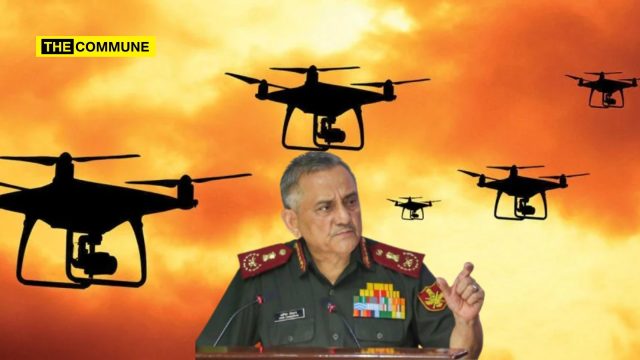
Chief of Defence Staff (CDS) General Anil Chauhan on Wednesday underscored the critical transformation in modern warfare, calling for a robust indigenous drone and counter-UAV capability to meet future challenges.
Speaking at the Manekshaw Centre in New Delhi, General Chauhan highlighted how the nature of combat has fundamentally evolved, especially in light of recent experiences like ‘Operation Sindoor’. “In the history of warfare, we have witnessed revolutionary changes — from heavy rifles to lighter, more sophisticated long-range weapons,” said the CDS. “But the biggest shift is the emergence of drones and unarmed aerial systems. Their utility has grown multifold — from basic surveillance tools to becoming effective force multipliers on the battlefield.”
Referring to ‘Operation Sindoor’, Gen Chauhan revealed that on May 10, Pakistan used unarmed drones and loitering munitions during the conflict. “None of them inflicted any damage on Indian military or civilian infrastructure,” he stated, adding that “most were neutralised by kinetic and non-kinetic means.”
The operation, he said, clearly demonstrated the need to secure lower airspace and develop integrated counter-UAV systems. Gen Chauhan emphasised that drones, despite being smaller and less aerodynamic, are reshaping conventional warfare.
“They are cheaper, harder to detect, and yet sophisticated. This defies traditional military thinking,” he noted. A central theme of his address was the importance of self-reliance.
“Our ‘Operation Sindoor’ has shown us why we must not depend on imported drone or counter-drone technology. Indigenous systems are critical. Foreign systems come with limitations — their specifications are widely known, allowing adversaries to anticipate tactics,” Gen Chauhan warned.
He advocated for accelerated development of homegrown drone technology and counter-UAS grids, cautioning that outdated technology cannot be relied upon in modern battlefields.
“Today’s wars must be fought with tomorrow’s technology,” he emphasised. The CDS’ remarks come amid a global shift towards drone-dominated conflicts and highlight India’s strategic focus on self-sufficiency in Defence technology, especially in the face of asymmetric and aerial threats.
–IANS
Subscribe to our channels on Telegram, WhatsApp, and Instagram and get the best stories of the day delivered to you personally.
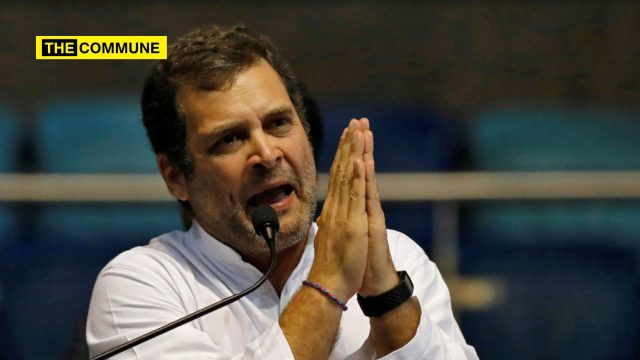
Congress MP and Leader of Opposition in Lok Sabha, Rahul Gandhi, surrendered before the MP/MLA Special Magistrate Court in Lucknow on Tuesday in connection with a criminal defamation case over alleged derogatory remarks made against the Indian Armed Forces during his Bharat Jodo Yatra in December 2022.
Appearing personally after missing five previous hearings, Gandhi presented himself before Additional Chief Judicial Magistrate Alok Verma. The court granted him bail after accepting his surrender and allowing his bail application. He was released upon furnishing two personal bonds of ₹20,000 each, along with two sureties of the same amount.
The court had earlier denied repeated exemption requests and insisted on Gandhi’s personal appearance, especially after the Allahabad High Court in May 2025 rejected his plea to quash the defamation case and the summoning order issued by the lower court.
During Tuesday’s proceedings, the crowded courtroom prompted the police to escort Gandhi directly to the judge’s chamber, where the bail formalities were completed. Gandhi did not issue any public statement or apology before the court regarding the remarks in question.
His legal team, led by Advocate Pranshu Agrawal, maintained that no offence was made out and pleaded for discharge. The complainant’s counsel, however, opposed bail, alleging that Gandhi had insulted the Indian Army and attempted to undermine its morale through his comments.
The complaint, filed by former Border Roads Organisation (BRO) Director Uday Shankar Srivastava, pertains to remarks Gandhi allegedly made on 16 December 2022, in the aftermath of the Tawang clash between Indian and Chinese troops. Gandhi was accused of repeatedly claiming that the Chinese Army was “thrashing” Indian soldiers and that the Indian media was failing to question the government over the incident.
Let’s take a look at the number of times Rahul Gandhi apologised for his loose tongue and surrendered in court.
Surrender Man – Rahul Gandhi
Here are some of the instances where Rahul Gandhi has had to apologize or clarify his statements and surrender in court, for bail, particularly those that have caused outrage and controversy.
#1 National Herald Case
The National Herald case, initiated by BJP leader Subramanian Swamy in 2012, alleged financial irregularities in the acquisition of Associated Journals Ltd (AJL) by Young Indian Ltd (YIL), a company controlled by Congress leaders Sonia and Rahul Gandhi. Swamy claimed YIL, with no commercial operations, was created to acquire AJL’s assets worth over ₹2,000 crore, for just ₹50 lakh, through a “malicious” and “illegal” transaction. He contended this was a breach of trust and involved misappropriation of Congress party funds, originally given to AJL as a loan.
On 19 December 2015, Sonia Gandhi, Rahul Gandhi, and three other accused – Motilal Vora, Oscar Fernandes, and Suman Dube, appeared before the Patiala House court in Delhi after being summoned. The court granted them unconditional bail on personal bonds of ₹50,000 each, despite Swamy’s opposition citing their influence and risk of fleeing the country. Former PM Manmohan Singh and Priyanka Gandhi stood as sureties for Sonia and Rahul, respectively. The court, however, refused to impose travel restrictions or passport seizure. It also made clear that no exemptions from personal appearances would be granted for the next hearing. The accused face charges of cheating, conspiracy, and criminal breach of trust under various IPC sections.
#2 Blaming RSS For Mahatma Gandhi Killing
One of the most prominent controversies involving Rahul Gandhi is his statement made in 2014 during an election rally, where he accused the Rashtriya Swayamsevak Sangh (RSS) of killing Mahatma Gandhi. The RSS worker, Rajesh Kunte, filed a case against him for defaming the organization, and the courts reprimanded him for making defamatory remarks. Initially, Rahul Gandhi refused to retract his statement, asserting that he would provide evidence to support his claim. However, he changed his stance after the Supreme Court criticized him for collective denunciations and required him to face trial. Rahul Gandhi then “clarified” that he did not blame the RSS for Mahatma Gandhi’s assassination but rather people “associated” with it, which was a flimsy rebuttal far from the truth.
#3 “Chowkidar Chor Hai”
In 2018, the Supreme Court dismissed all petitions seeking a court-monitored probe of the Rs 59,000 crore contract for Rafale fighter planes made by Dassault Aviation of France, saying that there was no reason to doubt the decision-making process. Despite the Supreme Court judgement, in 2019, Rahul Gandhi based his entire campaign on the Rafale deal, coining the slogan “Chowkidar Chor Hai.” During a media interaction, he alleged that the Supreme Court had confirmed the “Chowkidar” was involved in theft and had accepted corruption in the Rafale issue. Rahul Gandhi even called the Prime Minister “Chor” (Thief) on the floor of the Lok Sabha, which was expunged. The Court, on a petition filed by BJP leader Meenakshi Lekhi, sent Gandhi a criminal contempt notice for misrepresenting it and attributing “Chowkidar Chor Hai” to the Court’s decision.
Rahul Gandhi issued an apology to the Supreme Court for incorrectly attributing his “chowkidar chor hai” (watchman is a thief) comment to the apex court. The court had issued a contempt notice to Rahul Gandhi for the remark. However, Rahul Gandhi clarified that he had made the statement in the heat of political campaigning and that it was not intended to attack the court or its judges. Consequently, he expressed regret and apologised for the same.
#4 “Khoon Ki Dalali” Remark On PM
In 2016, during an election rally, Rahul Gandhi accused Prime Minister Narendra Modi of doing “khoon ki dalali.” His comments were widely condemned, prompting him to clarify that he supported the surgical strikes but not using the Army for political propaganda. His controversial remarks about the surgical strikes evoked strong reactions from the public and other opposition parties. The incident also reminded people of his mother and former Congress President’s infamous “maut ka saudagar” jibe against then Gujarat CM, Modi.
#5 Defaming Modi Surname
On 4 August 2023, the Supreme Court stayed the conviction of Congress leader Rahul Gandhi in a 2019 criminal defamation case concerning his “Modi surname” remark made during a rally in Karnataka. Gandhi had been sentenced to two years in jail by a Surat court and was immediately granted bail, but the conviction had triggered his disqualification under Section 8(3) of the Representation of People Act. The Supreme Court stated that Rahul Gandhi’s remarks were “not in good taste” and emphasized that individuals in public life must exercise caution in speeches.
BJP MLA Purnesh Modi, the complainant, argued Gandhi defamed the entire Modi community. The Supreme Court acknowledged the controversial nature of Gandhi’s remarks but stressed the broader electoral consequences of disqualification. Gandhi had challenged both the conviction and the High Court’s refusal to stay it.
#6 Derogatory Comments On Savarkar
tIn April 2025, The Supreme Court strongly criticised Congress leader Rahul Gandhi for calling freedom fighter Vinayak Damodar Savarkar a “British collaborator” who received a pension from the British. While staying the summons issued to Gandhi by a Lucknow Magistrate in a related criminal case, the Court warned that any repeat of such remarks would attract suo motu action. A Bench of Justices Dipankar Datta and Manmohan labelled the statements “irresponsible” and disrespectful, stressing that freedom fighters must be spoken of with respect. The Court reminded Gandhi’s counsel that even Mahatma Gandhi and Indira Gandhi had acknowledged Savarkar’s contributions. The case stems from Gandhi’s 2022 Bharat Jodo Yatra speech, where he made controversial remarks about Savarkar, prompting a complaint for promoting enmity. The trial court had earlier found a prima facie case under IPC Sections 153A and 505, and fined Gandhi ₹200 for prior non-appearance. The Supreme Court issued a stay but warned against future defamatory comments.
In a separate case, a Pune court summoned Gandhi on 9 May 2025 over derogatory remarks on Savarkar that Gandhi made in London, where he alleged Savarkar and his associates beat up a Muslim, calling it cowardice.
#7 Ahmedabad Bank Defamation Case
In July 2019, Congress leader Rahul Gandhi was granted bail by an Ahmedabad Metropolitan Court in a criminal defamation case filed by the Ahmedabad District Cooperative Bank (ADCB) and its chairman Ajay Patel. The case stemmed from allegations made by Gandhi and Congress spokesperson Randeep Singh Surjewala, who accused the bank, of which Union Home Minister Amit Shah is a director, of swapping ₹745.59 crore in demonetised currency within five days of the 2016 demonetisation announcement.
The accusations were based on an RTI reply from NABARD, but ADCB and Patel denied any wrongdoing, calling the claims false and defamatory. After a preliminary inquiry under Section 202 of the CrPC, the court found prima facie evidence and issued summonses in April 2019. During the hearing, Gandhi denied the charges, stating, “I am not a criminal.” He was granted bail on a personal bond of ₹15,000.
#8 Defaming RSS In Gauri Lankesh Killing
On 4 July 2019, a Mumbai court granted bail to Rahul Gandhi in a defamation case filed by a Rashtriya Swayamsevak Sangh (RSS) activist. The case stemmed from Gandhi’s alleged remarks linking the RSS to the 2017 murder of journalist Gauri Lankesh. The complainant accused Gandhi of saying that anyone opposing the BJP-RSS ideology was attacked or killed, implying RSS involvement in Lankesh’s death.
Gandhi pleaded not guilty in court, and bail was granted after former MP Eknath Gaikwad furnished a ₹15,000 surety on his behalf. The case came just a day after Gandhi formally resigned as Congress president.
Gauri Lankesh, known for her criticism of Hindutva politics, was shot dead outside her Bengaluru home in September 2017. Investigations later linked her killers to the Hindutva outfit Sanatan Sanstha.
#9 RSS Defamation Case Over Barpeta Satra Remarks
On 29 September 2016, Congress leader Rahul Gandhi was granted bail by the Chief Judicial Magistrate (CJM) of Kamrup, Assam, in a defamation case filed by an RSS volunteer. The court released Gandhi on a personal recognizance (PR) bond of ₹50,000 and scheduled the next hearing for November 5.
The case pertained to Gandhi’s visit to the Barpeta Satra, a 16th-century Vaishnavite monastery, in December 2015. Gandhi had later alleged that RSS workers prevented his entry into the Satra and incited local women to block him. These statements, made in New Delhi, led to the defamation suit, with the petitioner claiming Gandhi had tarnished the image of the Satra and wrongly accused the RSS.
#10 BJP Defamation Case Over Karnataka Poll Ads
On 7 June 2024, a Bengaluru court granted bail to Rahul Gandhi in a defamation case filed by the Karnataka BJP unit. The case pertained to a 2023 election advertisement in which the Congress accused the then BJP-led government of rampant corruption, including a “40% commission” for public works. The advertisement, published ahead of the state Assembly elections, was deemed defamatory by BJP MLC Keshava Prasad, who also named Congress leaders Siddaramaiah and D.K. Shivakumar in the complaint.
Earlier, on 1 June 2024, both Siddaramaiah and Shivakumar were granted bail. Rahul Gandhi, who had sought exemption from personal appearance citing election commitments, was directed by the court to appear without fail on 7 June 2024. He complied and was granted bail after a brief appearance, bringing temporary relief in the ongoing legal battle over Congress’s corruption allegations.
#11 Defamation Case Over Remarks On HM Amit Shah
Rahul Gandhi recorded his statement on 12 July 2024, in a defamation case filed by BJP leader Vijay Mishra for alleged derogatory remarks against Union Home Minister Amit Shah during a 2018 rally in Bengaluru. The case, filed in the Sultanpur MP-MLA Court, accuses Gandhi of attempting to malign Shah’s image during a Karnataka election speech. Gandhi denied the allegations, claiming they were politically motivated. He had earlier appeared before the court on February 20, where he surrendered and was briefly taken into custody before being granted bail. His lawyer asserted his innocence and stated he made no defamatory remarks.
Subscribe to our channels on Telegram, WhatsApp, and Instagram and get the best stories of the day delivered to you personally.